来自 ASLA 对 gooood 的分享。
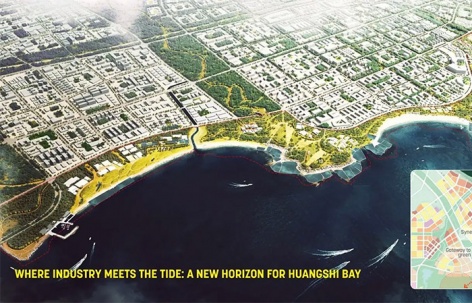
Where Industry Meets the Tide: A New Horizon for Huangshi Bay | Sasaki – Shanghai
项目陈述
PROJECT STATEMENT
数十年来,黄石湾水产养殖的无序扩张破坏了其自然生态系统,阻断了公众亲海通道,并加剧了海岸线对自然灾害的脆弱性。该规划将水产养殖作业迁往内陆,在保持经济产出的同时,为生态与社区用途重新夺回海岸线。
设计将场地上的海洋水产养殖设施重新组织为多层景观,将现代生产与栖息地修复、社区记忆保护融为一体。通过将破碎的海岸屏障转变为具有韧性的滨水公园,该倡议为融合经济可行性、生态韧性与社区福祉的海岸修复创造了一个可推广的模式。
For decades, the uncontrolled expansion of aquaculture in Huangshi Bay disrupted its natural ecosystems, blocked public access, and increased the coastline’s vulnerability to natural disasters. The plan relocates aquaculture operation inland to reclaim the shoreline for ecological and community uses while maintaining economic output.
The design reorganizes marine aquaculture facilities on site into a multi-layered landscape that integrates modern production with habitat rehabilitation and the preservation of community memory. By transforming a fragmented coastal barrier into a resilient waterfront park, this initiative creates a scalable model for coastal restoration blending economic viability, ecological resilience, and community wellbeing.
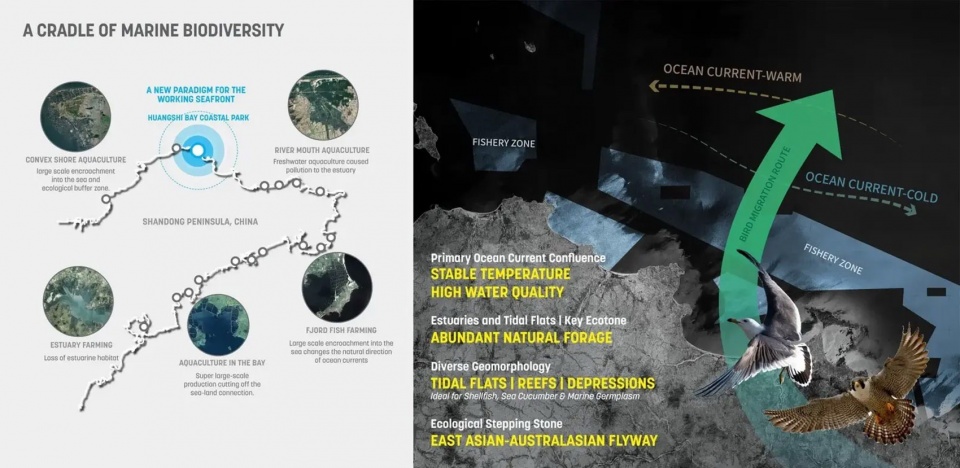
▲海洋生物多样性的摇篮 | 在黄石湾,营养丰富的洋流与温和的气温交汇,为海洋生物和候鸟提供了丰富的饵料。A Cradle of Marine Biodiversity | At Huangshi Bay, the confluence of nutrient-rich currents and mild temperatures provides abundant bait for marine life and migratory birds. © Google Earth / Sasaki
项目说明
PROJECT NARRATIVE
冲突中的海岸:工业的遗产
黄石湾海岸线,黄海在此与悬崖、沙滩和河口相遇,是海洋生物多样性的摇篮。营养丰富的洋流与温和气温的交汇滋养着这片水域,为海洋生物和候鸟提供了丰富的饵料。这些条件孕育了延续数代的渔业文化,塑造了该地区的空间与精神特质。然而,正是这片生态系统所孕育的产业,已成为其最大的威胁。
四十余年间,水产养殖的扩张使该海湾成为中国领先的贝类、海参和鱼类海洋种质基地之一。这种增长付出的代价是自然海岸线被鱼塘和育苗场取代,导致土地利用效率低下、公共空间丧失、栖息地退化、海岸破碎化,削弱了海岸线的韧性。对当地村民的访谈揭示了一个深层次的悖论:水产养殖虽然具有重要的文化意义,却成为将他们与大海隔绝的屏障。
编织生态、经济与社区
这项海洋育苗升级的区域规划使场地得以修复其海岸线。作为试点项目,这片988英亩的场地将成为一个融合生产、生态修复与社区可达性的多层公园。通过将生产迁往内陆或与场地内其他用途整合,该规划在不牺牲经济产出的前提下,为生态与社区用途恢复了海岸。
活着的缓冲带:修复生态脊柱
该规划重建海岸生态系统,以增强韧性并减缓气候变化。这包括修复海滩-沙丘系统、保护悬崖与礁石,以及种植防护林带。通过重新引入本土植物,设计创造了应对海岸灾害的多层防御,同时最大化碳封存。它还再利用拆除废弃物和现有结构,以减少项目的碳足迹。
生产性边缘:叠加工业与公共活力
设计引入三种叠加模式,使现代化的海洋育苗场得以留在场地内,在利用海湾独特资产的同时,将环境和视觉影响降至最低:
* 将公共功能的城市界面附着于育苗场
* 与现有地形整合,将生产模块布置在较低层级,酒店或商业用途布置在上层层级
* 将育苗场包裹在沙丘之中,使其能够在紧邻大海的地方运营,而不干扰沙丘景观或栖息地
文化锚点:重新夺回公共通道
为解决该地区的工业遗留问题,规划采用“记忆映射”——源自村民访谈——来复兴传统渔业文化,并重新夺回失去的海岸景观。连续的步道网络重新打开了公众通往大海的通道。通过将工业结构改造为遗产地标,并引入全年性项目,设计在尊重场地过往的同时,建立了一个精神与社会锚点。
中国海岸修复的典范
该规划将生产性海滨重新定义为可持续的经济引擎、生态缓冲带,以及充满活力的身份与休闲圣地。通过调和工业、自然与文化之间的冲突,它为中国可持续海岸修复树立了一个可复制的模式。该成果已获得众多设计奖项的认可,包括来自IFLA、WLA、BSLA、Architizer A+和Fast Company的荣誉。
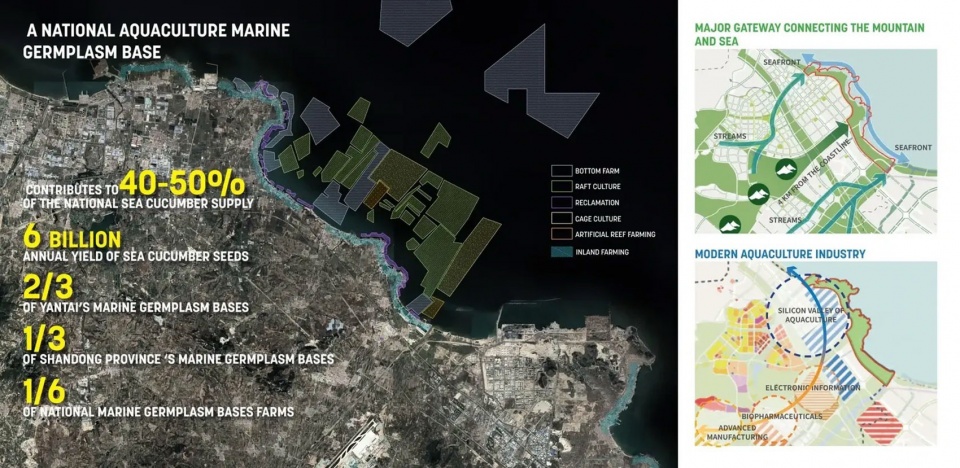
▲国家水产养殖海洋种质基地 | 该海湾占中国海参产量的50%,占全国海洋种质产业的六分之一。A National Aquaculture Marine Germplasm Base | The bay accounts for 50% of China’s sea cucumber production and 1/6 of its national marine germplasm industry. © Google Earth / Sasaki
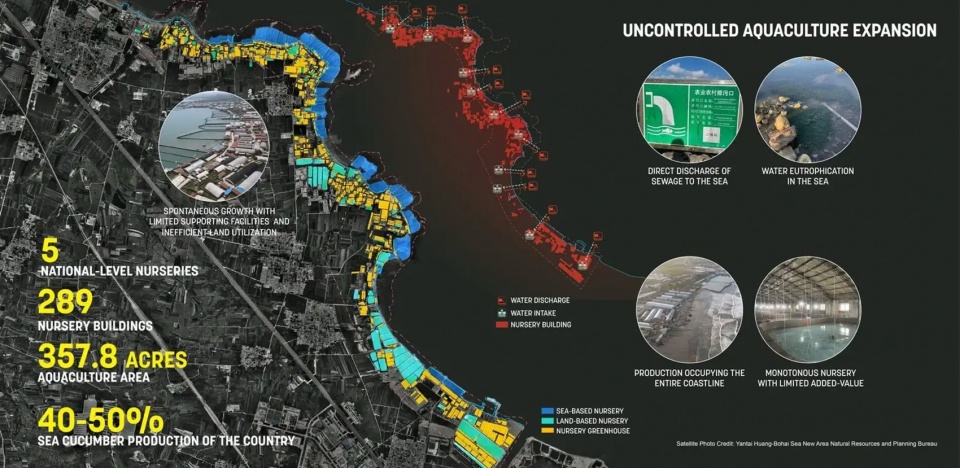
▲水产养殖的无序扩张 | 作为中国领先的海洋种质基地之一,场地的自然海岸线已大部分被鱼塘和育苗场取代。Uncontrolled Aquaculture Expansion | Being one of China’s leading marine germplasm bases, the site’s natural coastlines has been largely replaced by fishponds and hatcheries. © Google Earth / Sasaki
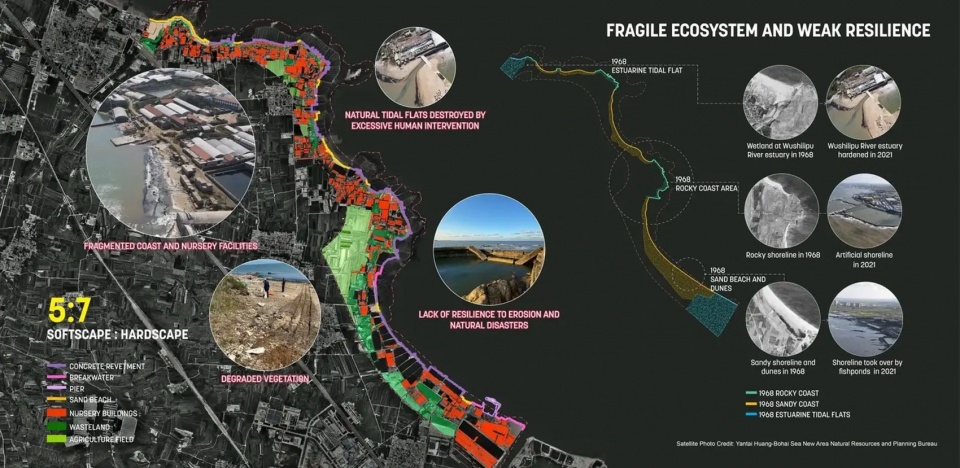
▲脆弱的生态系统与薄弱的韧性 | 育苗场的发展从物理上重塑了海岸线,导致不可避免的生态退化、栖息地丧失和韧性不足。Fragile Ecosystem and Weak Resilience | The nursery development has physically reshaped the coastline, resulting in inevitable ecological degradation, loss of habitats, and poor resilience. © Google Earth / Sasaki
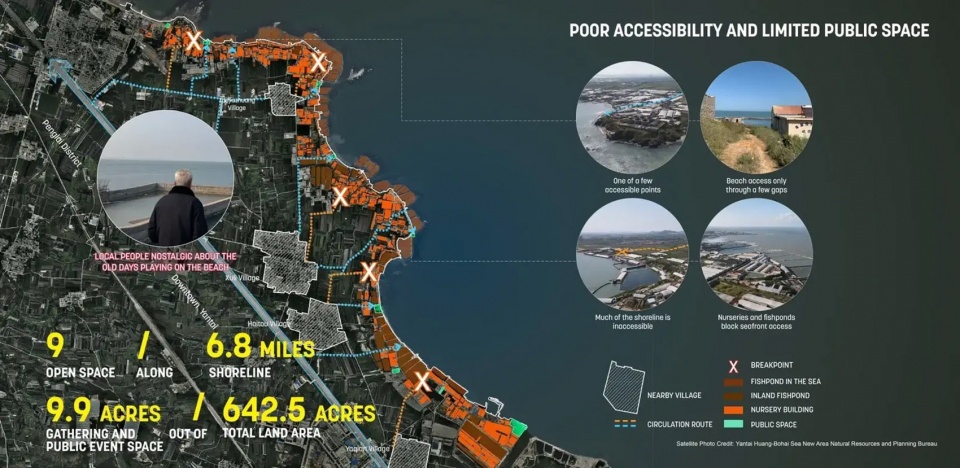
▲可达性差与公共空间有限 | 现有的育苗建筑和鱼塘占据了海岸沿线的公共空间,将当地社区与海滨隔绝开来。Poor Accessibility and Limited Public Space | Existing nursery buildings and fishponds took over public spaces along the coastline and isolated local communities from the seafront. © Google Earth / Sasaki
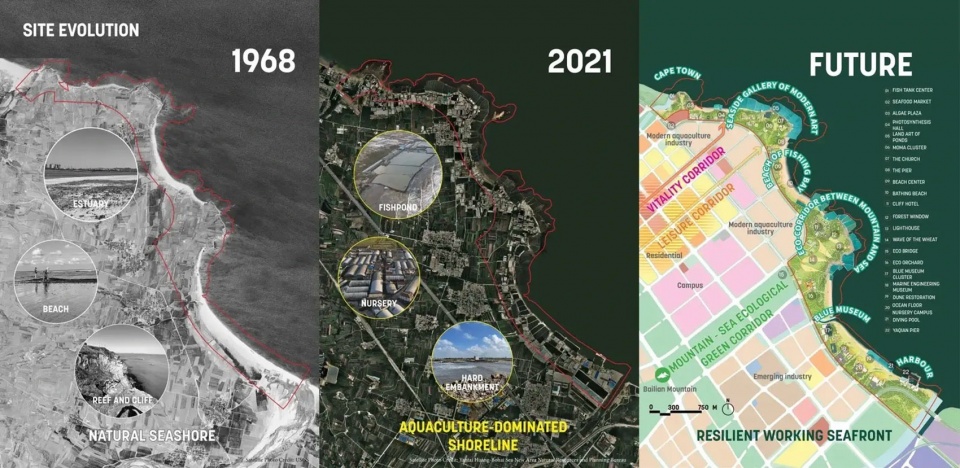
▲场地演变 | 从自然海岸转变为水产养殖枢纽,该海湾如今正被引向具有韧性的生产性海滨。Site Evolution | Transformed from a natural coast to an aquaculture hub, the bay is now guided toward a resilient working seafront. © United States Geological Survey / Google Earth / Sasaki
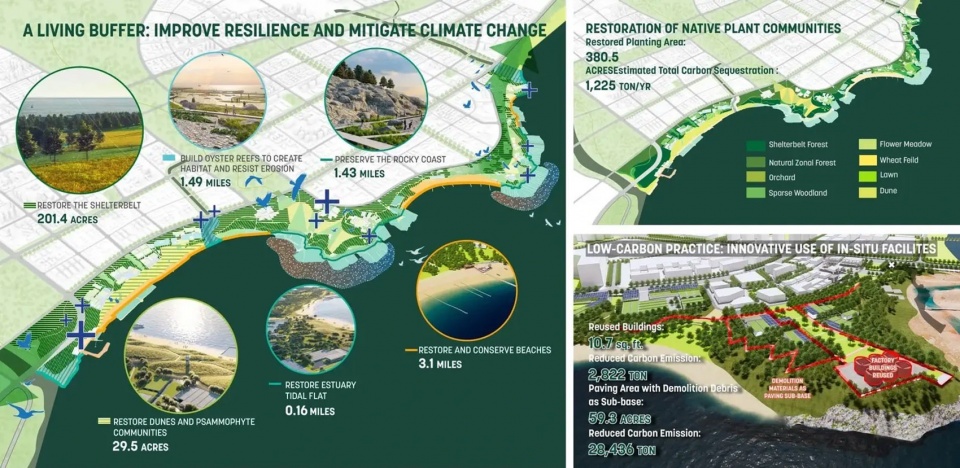
▲活着的缓冲带:提升韧性并减缓气候变化 | 建立抵御强风暴和海平面上升的韧性海岸线,同时减少项目的碳足迹以减缓气候变化。A Living Buffer: Improve Resilience and Mitigate Climate Change | Establish resilient coastline against heavy storms and rising sea levels as well as reduce the project’s carbon footprint to mitigate climate change. © Sasaki
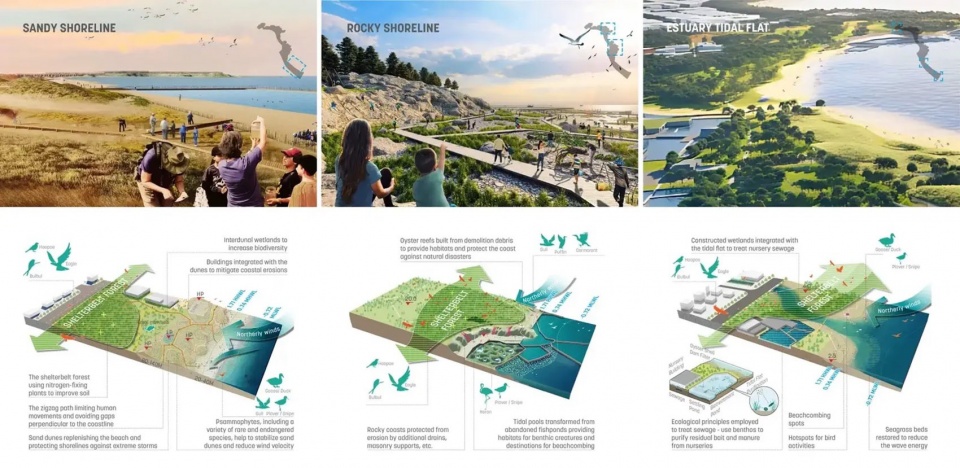
▲活着的缓冲带:修复生态系统 | 基于具体的海岸条件,采用多种设计方法创造多样化的栖息地和多层防护。A Living Buffer: Rehabilitate Ecosystems | Based on specific shoreline conditions, various design approaches are employed to create diverse habitats and multi-layered protection. © Sasaki
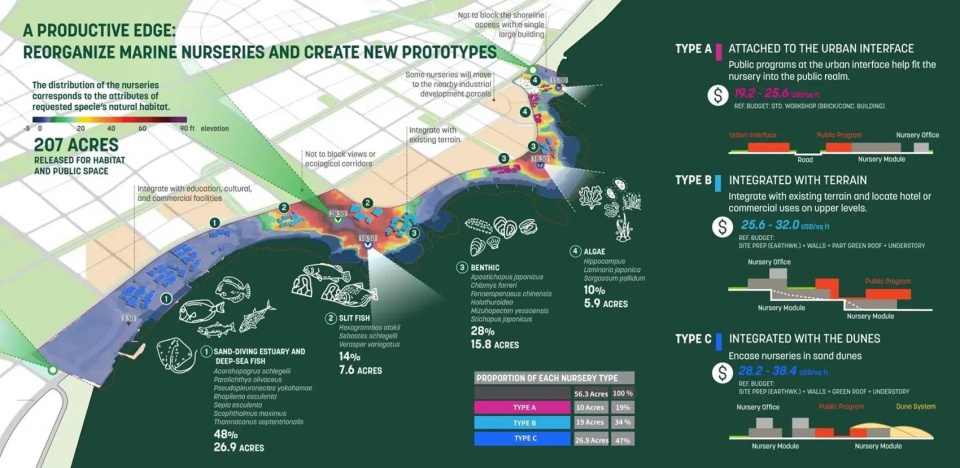
▲生产性边缘:重新组织海洋育苗场并创造新原型 | 将海洋育苗设施编织进海岸景观,使其不再干扰海岸生态系统或景观视野。A Productive Edge: Reorganize Marine Nurseries and Create New Prototypes | Weave marine nursery facilities into coastal landscapes so that it is no longer interfering with the coastal ecosystem or views. © Sasaki
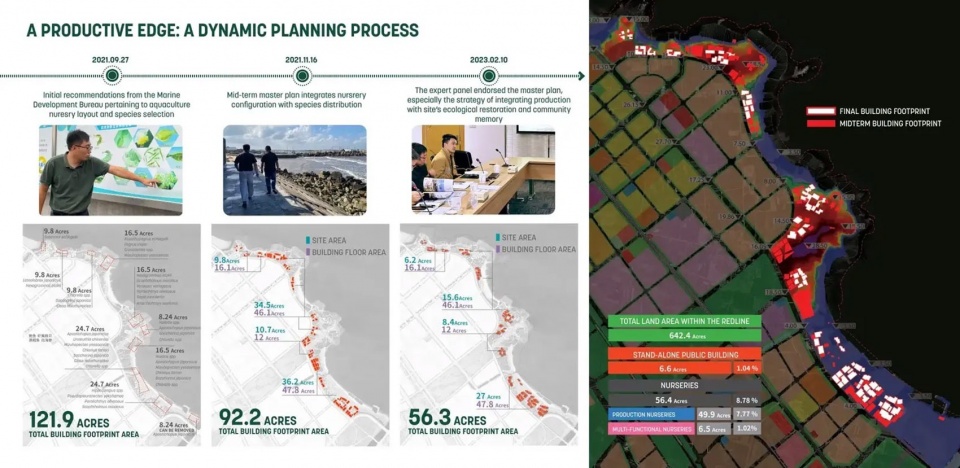
▲生产性边缘:动态规划过程 | 一个协商并平衡利益相关者需求与公共利益的过程。A Productive Edge: A Dynamic Planning Process | A process of negotiating and balancing stakeholders’ needs and public interests. © Sasaki
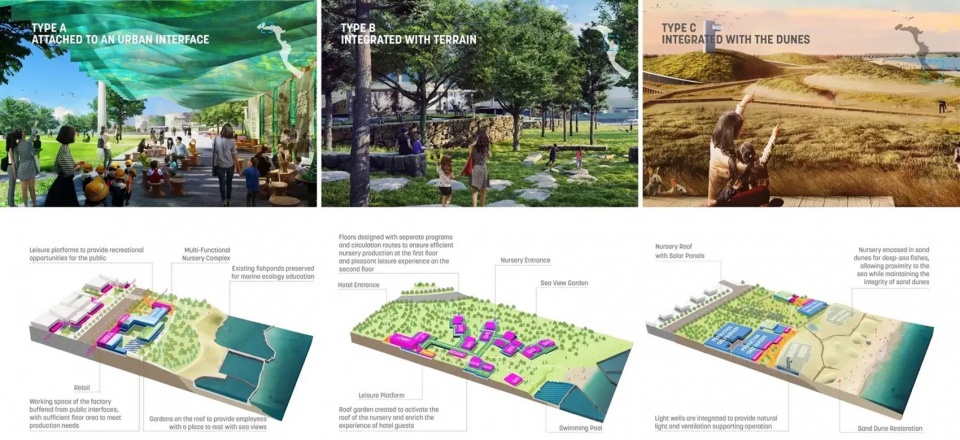
▲生产性边缘:重新组织海洋育苗场并创造新原型 | 引入三种叠加模式,使高效且环境友好的海洋育苗场得以留在场地内。A Productive Edge: Reorganize Marine Nurseries and Create New Prototypes | Introduce three compounding models to allow efficient and environmentally friendly marine nurseries to remain on site. © Sasaki
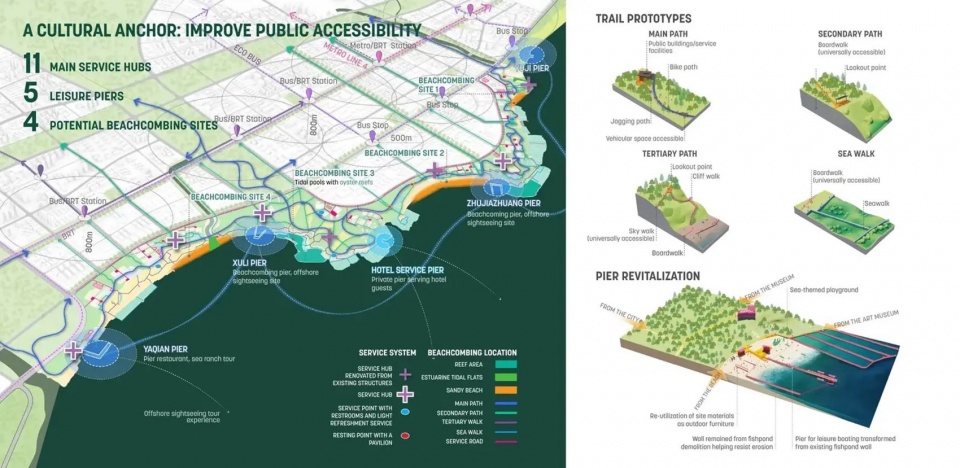
▲文化锚点:提升公共可达性 | 建立连接海岸与城市的慢行系统,并提供服务于社区和游客的多样化公共目的地。A Cultural Anchor: Improve Public Accessibility | Establish a slow traffic system connecting the coast with the city and provide diverse public destinations serving both community and visitors. © Sasaki
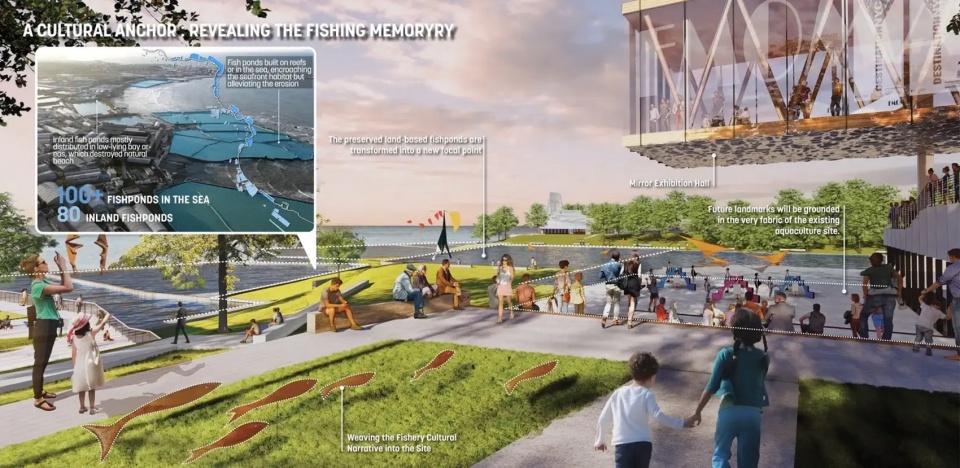
▲文化锚点:揭示渔业记忆 | 将渔业遗产编织进公共领域,将工业遗存转化为文化记忆与共享叙事的触点。A Cultural Anchor: Revealing the Fishing Memory | Weave fishery heritage into the public realm, transforming industrial relics into touchpoints of cultural memory and shared narrative for all. © Sasaki
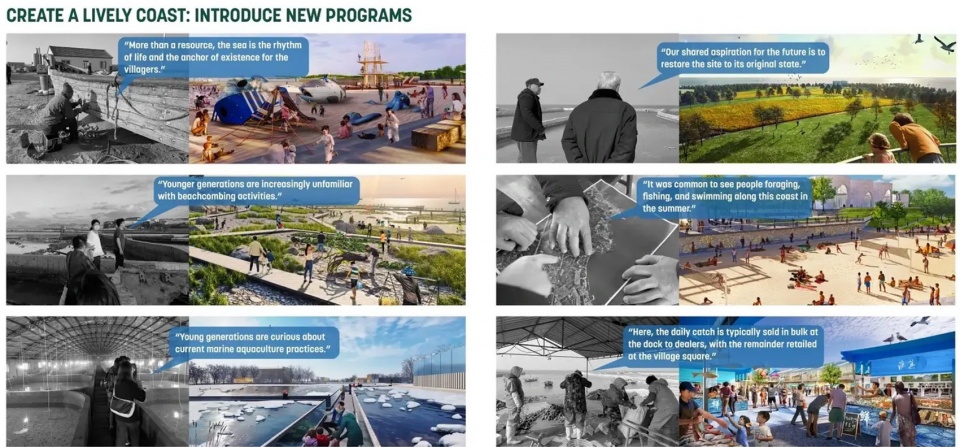
▲创造活力海岸:引入新项目 | 源自村民访谈的“记忆映射”,帮助复兴传统渔业文化并重新夺回失去的海岸景观。Create a Lively Coast: Introduce New Programs | “Memory mapping”, derived from villager interviews, helps revive traditional fishing culture and reclaim lost coastal vistas. © Sasaki
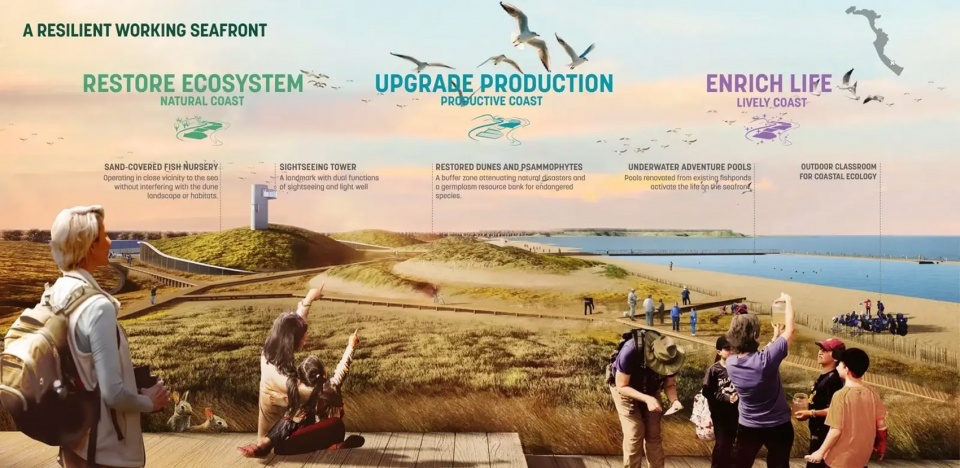
▲具有韧性的生产性海滨 | 在创造融合生态、生产与休闲的新型生产性海滨模式方面的开创性努力。A Resilient Working Seafront | A pioneering effort in creating a new model of working seafronts that combines ecology, production, and leisure. © Sasaki
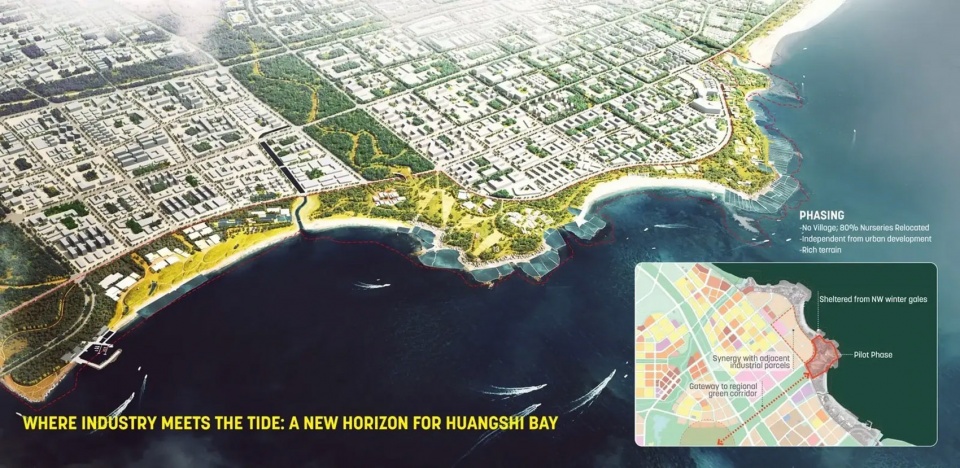
▲鸟瞰 | 通过调和工业、自然与文化之间的冲突,该规划为中国可持续海岸修复树立了一个可复制的模式。Bird’s Eye View | By reconciling the conflict between industry, nature, and culture, the plan sets a replicable model for sustainable coastal rehabilitation in China. © Sasaki
PROJECT NARRATIVE
Coast in Conflict: The Legacy of Industry
The Huangshi Bay shoreline, where the Yellow Sea meets cliffs, beaches, and estuaries, is a cradle of marine biodiversity. Nourished by the confluence of nutrient-rich currents and mild temperatures, it provides abundant bait for marine life and migratory birds. These conditions fostered a generations-old fishing culture that shaped the region’s spatial and spiritual character. Yet, the very industry this ecosystem nurtured has become its greatest threat.
Over forty years, aquaculture expansion has transformed the bay into one of China’s leading marine germplasm bases for shellfish, sea cucumbers, and fish. This growth has come at a cost of natural coastlines being replaced by fishponds and hatcheries, resulting in inefficient land use, loss of public space, habitat degradation, and coastal fragmentation, diminishing the shoreline’s resilience. Interview with local villagers reveal a deep-seated paradox: while aquaculture is culturally significant, it stands as a barrier isolating them from the sea.
Weaving Ecology, Economy, and Community
This regional plan for marine nursery upgrades enables the site to rehabilitate its coastline. As a pilot project, the 988-acre site will become a multi-layered park integrating production, ecological restoration, and community access. By relocating production inland or integrate it with otheron-site uses, the plan restores the shore for ecological and community uses without sacrificing economic output.
A Living Buffer: Restoring the Ecological Spine
The plan rebuilds the coastal ecosystems to enhance resiliency and mitigate climate change. This involves restoring beach-dune systems, protecting cliffs and reefs, and planting shelterbelt forests. By reintroducing native plants, the design creates multi-layered defense against coastal hazards while maximizing carbon sequestration. It also repurposes demolition debris and existing structures to reduce the project’s carbon footprint.
A Productive Edge: Compounding Industrial and Public Vitality
The design introduces three compounding models that allow modernized marine nurseries on-site, leveraging the bay’s unique assets while minimizing environmental and visual impacts:
* Attach urban interfaces of public programs to nurseries
* Integrate with the existing terrain by laying the production modules on lower levels, and hotel or commercial uses on upper levels.
* Encase nurseries in sand dunes, allowing them to operate in close vicinity to the sea without interfering with the dune landscape or habitats.
A Cultural Anchor: Reclaiming Public Access
To resolve the area’s industrial legacy, the plan uses “memory mapping”—derived from villager interviews—to revive traditional fishing culture and reclaim lost coastal vistas. A continuous trail network reopens public access to the sea. By repurposing industrial structures into heritage landmarks and introducing year-round programs, the design honors the site’s past while establishing a spiritual and social anchor.
A Model for China’s Coastal Rehabilitation
The plan redefines the working seafront as a sustainable economic engine, an ecological buffer, and a vibrant sanctuary of identity and leisure. By reconciling the conflict between industry, nature, and culture, it sets a replicable model for sustainable coastal rehabilitation in China. The achievement has been recognized with numerous design awards, including honors from IFLA, WLA, BSLA, Architizer A+, and Fast Company.
PROJECT CREDITS
* Yantai Huang-Bohai Sea New Area Natural Resources and Planning Bureau, Client
* Yantai Economic and Technological Development Area Ocean Economic Development Bureau, Consultant
* Ocean University of China College of Marine Life Sciences, Consultant
PLANT LIST
* Prunus serrulata
* Ginkgo biloba
* Morus alba
* Pinus thunbergii
* Pistacia chinensis
* Pyrus betulifolia
* Quercus acutissima
* Salix matsudana
* Ulmus pumila
* Arundinella hirta
* Chrysanthemum indicum
* Elaeagnus angustifolia
* Imperata cylindrica
* Lespedeza daurica
* Limonium sinense
* Lysimachia mauritiana
* Medicago sativa
* Poa annua
* Viola philippica
* Asparagus dauricus
* Calystegia soldanella
* Carex kobomugi
* Glehnia littoralis
* Ischaemum barbatum
* Ixeris repens
* Lathyrus japonicus
* Rosa rugosa
* Vitex trifolia








发表评论
你需要先 才能发表评论
社交登录