感谢 合尘建筑 予gooood的分享。更多关于:HCCH Studio on gooood
Appreciation towards HCCH Studio for providing the following description:
机器人咖啡必须看起来很科技吗?
苹果店式的极简风格还能表达当下吗?
Does a robot café have to look technological?
Can Apple Store-style minimalism still represent the present?
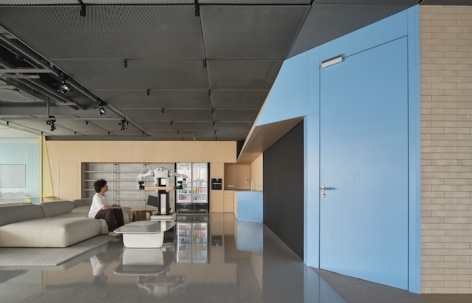
▼项目概览,overview of the project © 朱清言
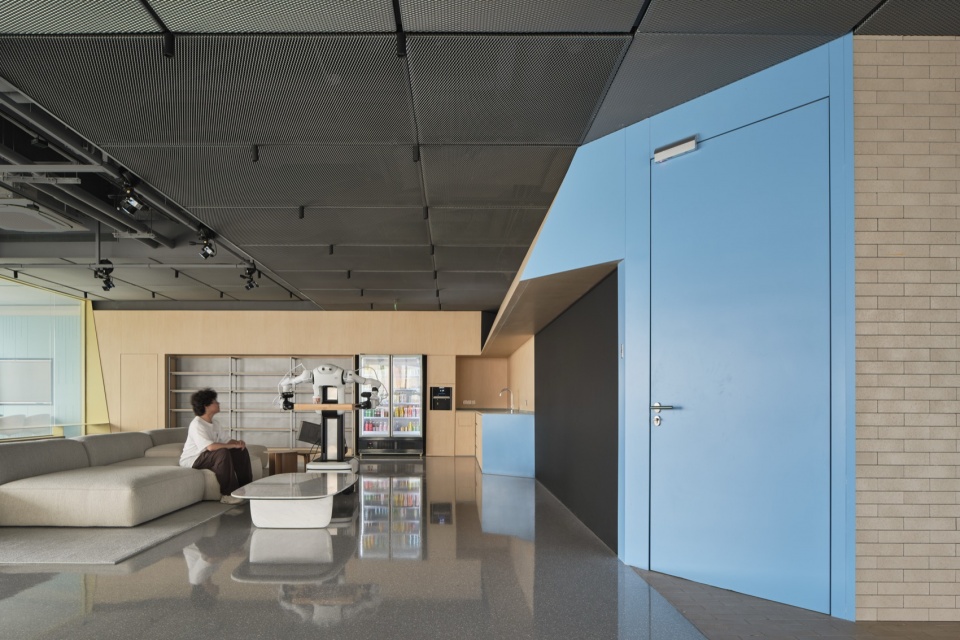
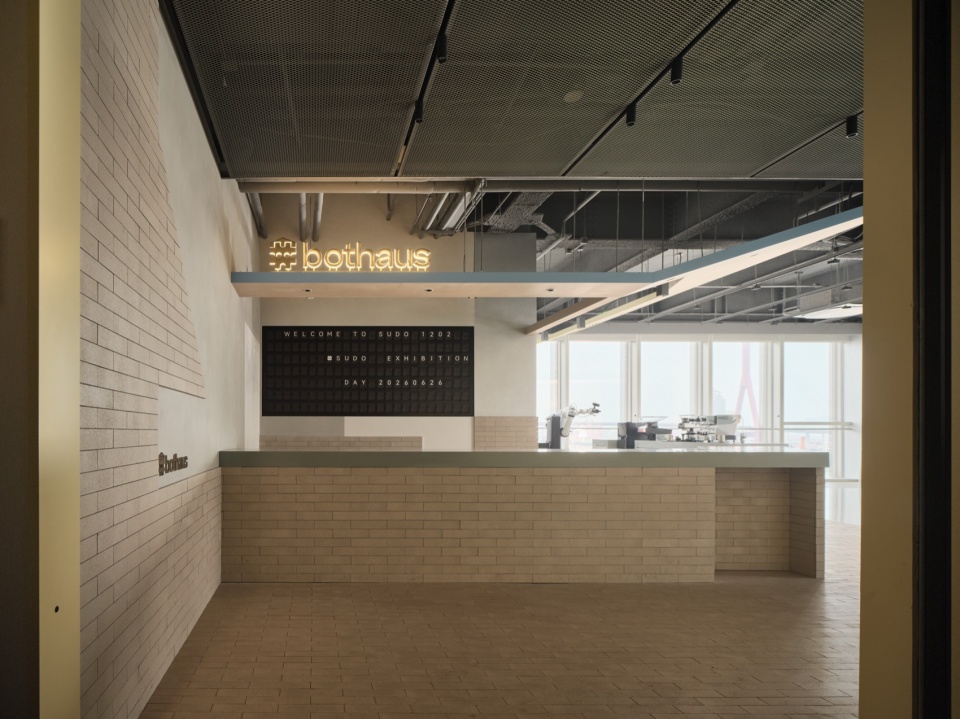
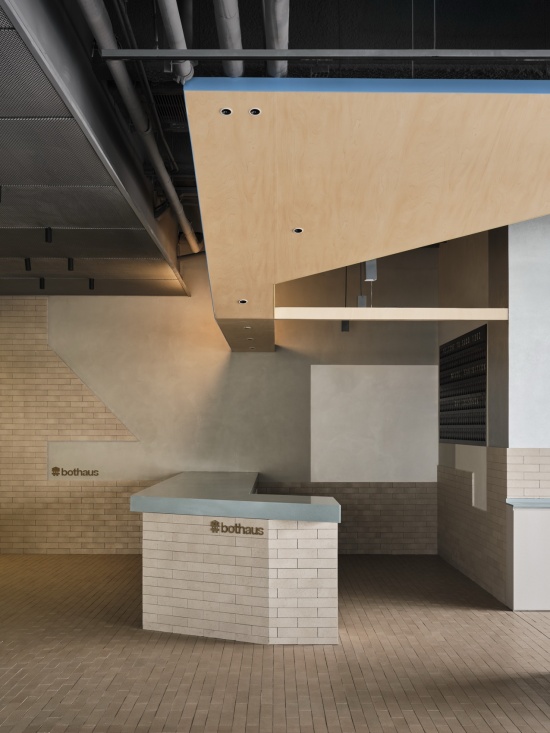
Bothaus位于上海杨浦滨江一栋塔楼内,我们为具身智能公司苏度科技设计的办公与实验室空间下层,作为面向特定用户的小型接待展示空间。
▼轴测图,axonometric diagram © HCCH Studio
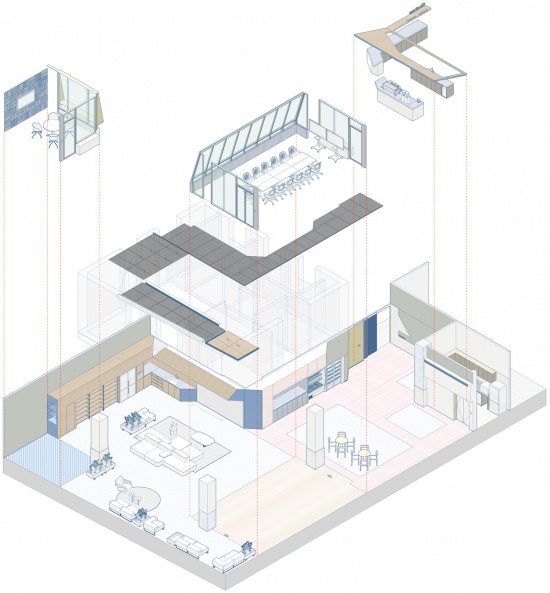
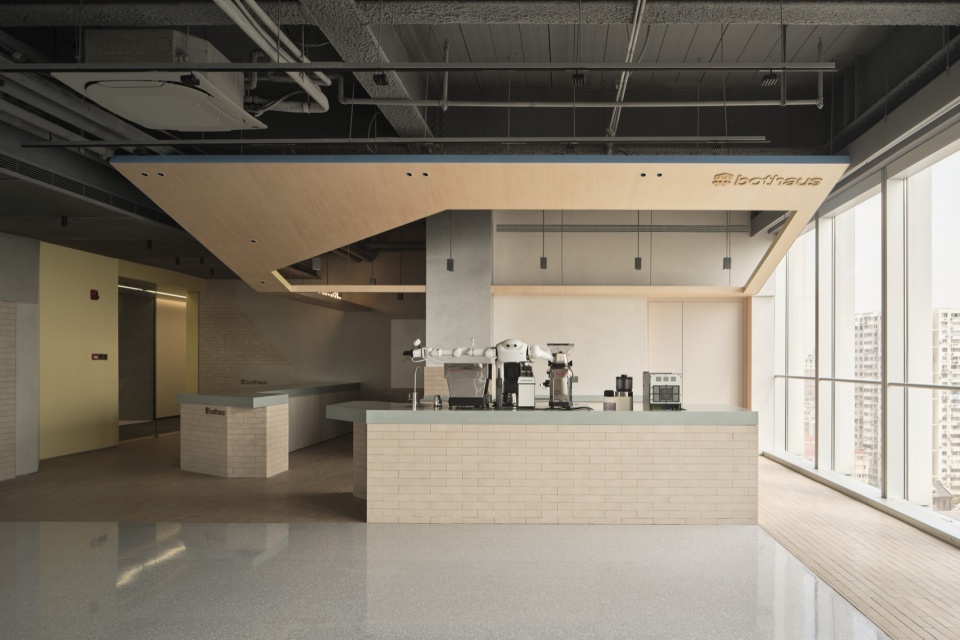
Located on the lower floor of Sudo Technology’s office and robotics laboratory in a tower along Shanghai’s Yangpu waterfront, Bothaus is a small reception and exhibition space designed for the embodied intelligence company and its invited users.
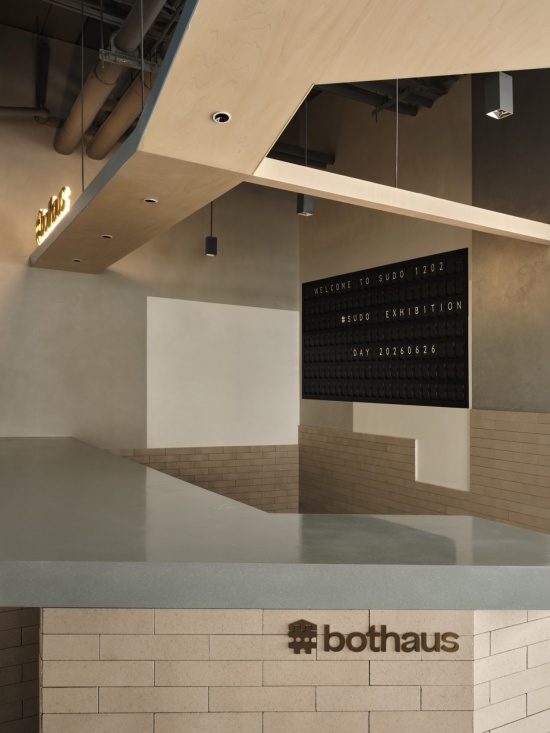
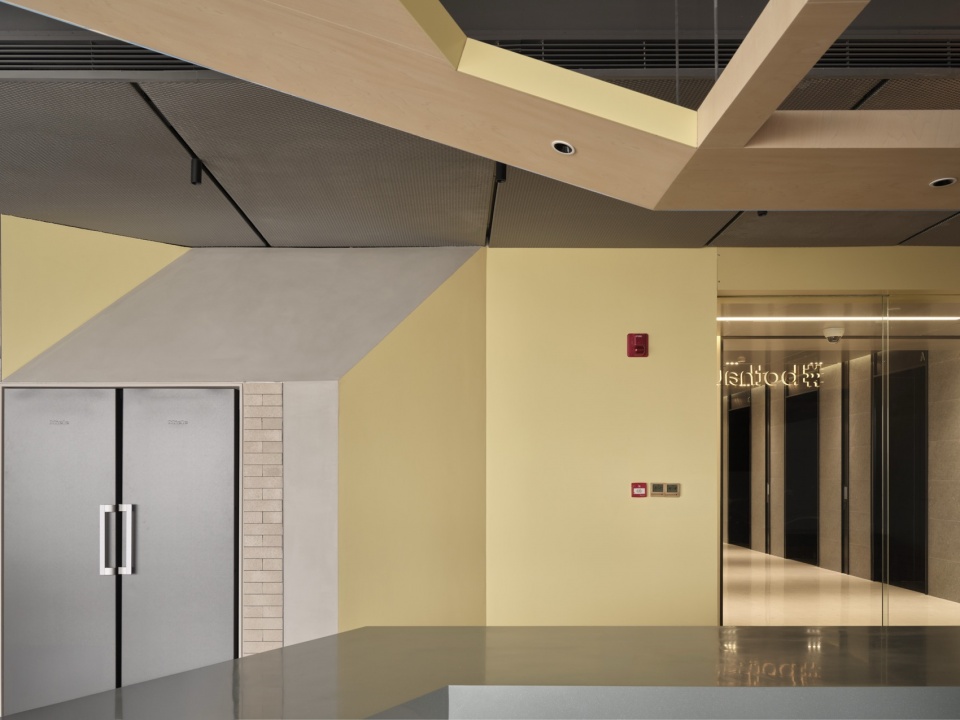
▼入口吧台,entrance bar © 朱清言
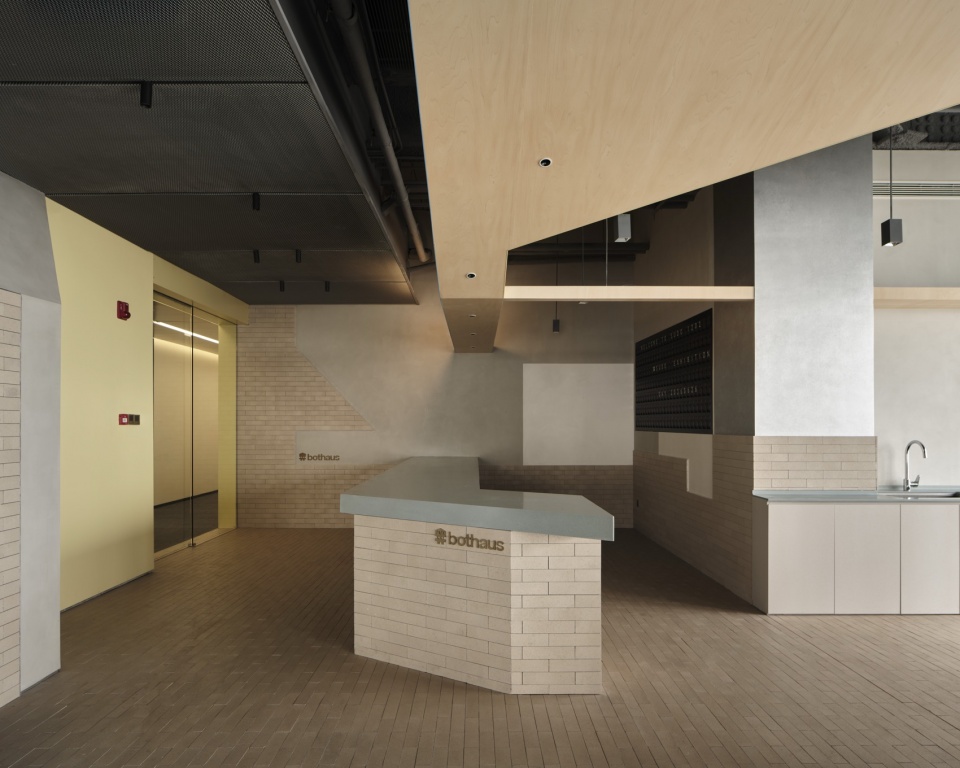
设计伊始,业主提出的关键词就是“弱科技感”。我们觉得这个定义很有意思,它不只出于主观要求,更像是包含了对未来科技将与日常更无感贴合的想象。
At the outset of the project, the client introduced an unusual brief: the space should have a “low-tech feel”. We found the phrase intriguing. Rather than simply describing an aesthetic preference, it seemed to suggest a broader idea of the future — one in which technology becomes increasingly embedded in everyday life, and increasingly less conspicuous.
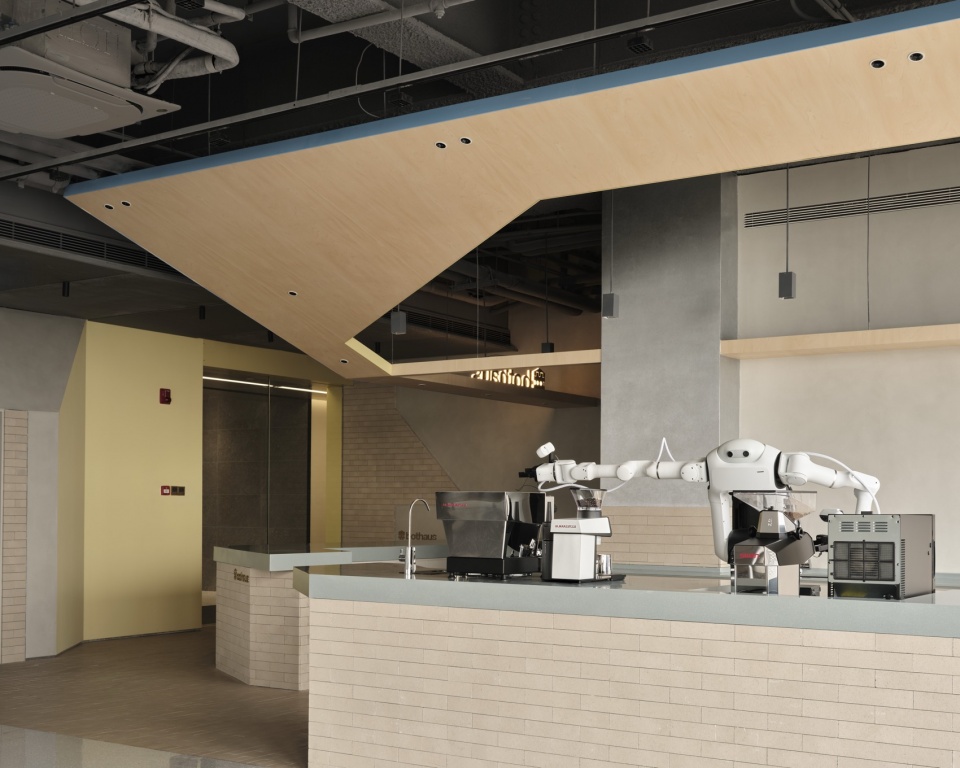
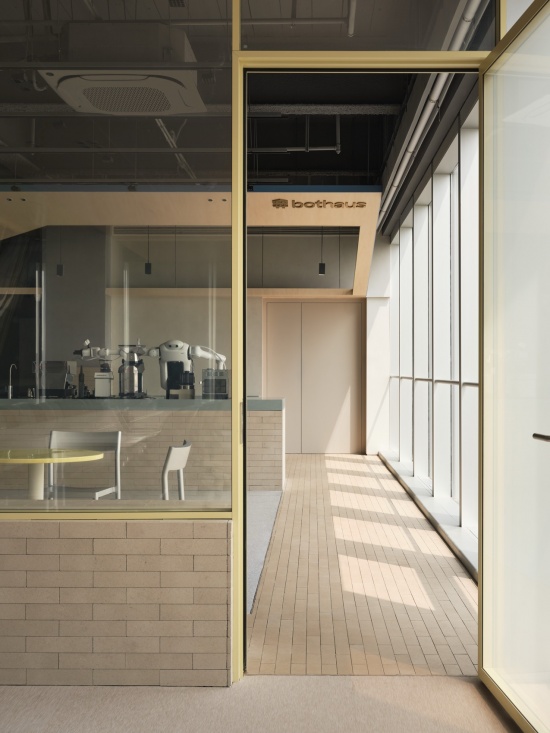
▼咖啡制作区,coffer bar © 朱清言
▼走廊,corridor © 朱清言
二十年前,科技消费品的展示常常被塑造成无菌的、去物质化的表达,来彰显技术的力量与“够不着“。它必须显得“指引未来”或者像个“抽象预言”来获得信徒。
Two decades ago, spaces for displaying consumer technology were often conceived as sterile, immaterial environments. Technology was presented as something exceptional and almost out of reach. Its surroundings were expected to “point towards the future”, or to operate as a kind of abstract prophecy.
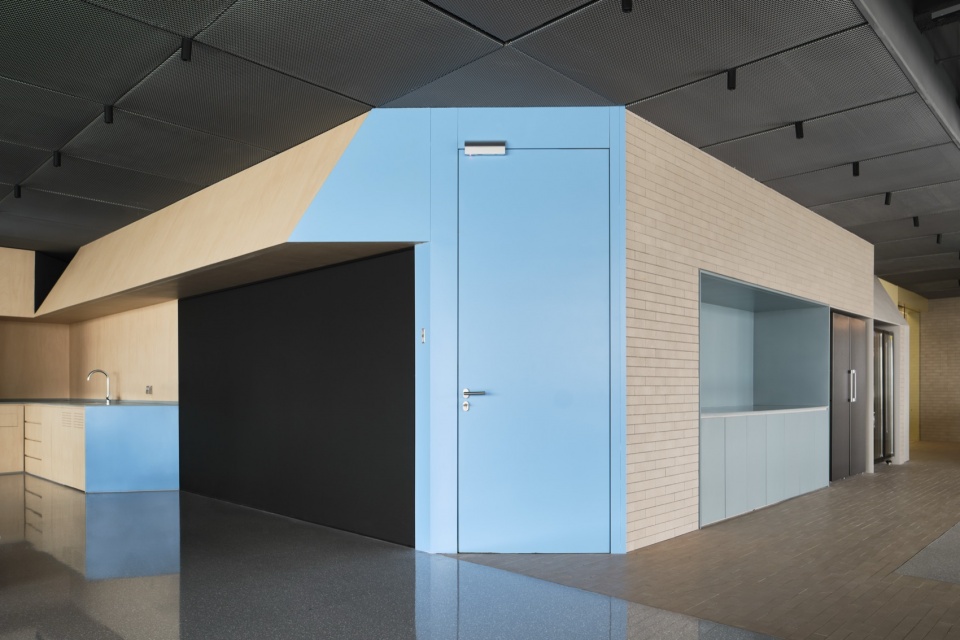
▼不同色彩的面板,different color panels © 朱清言
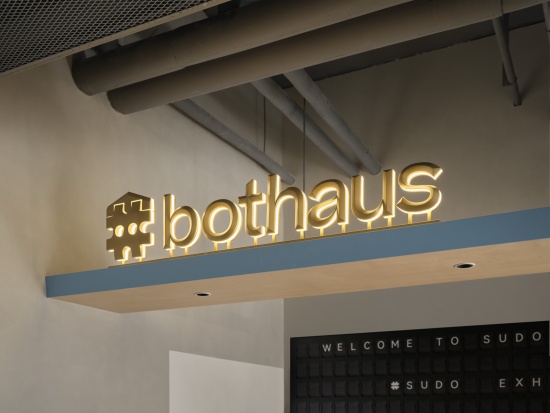
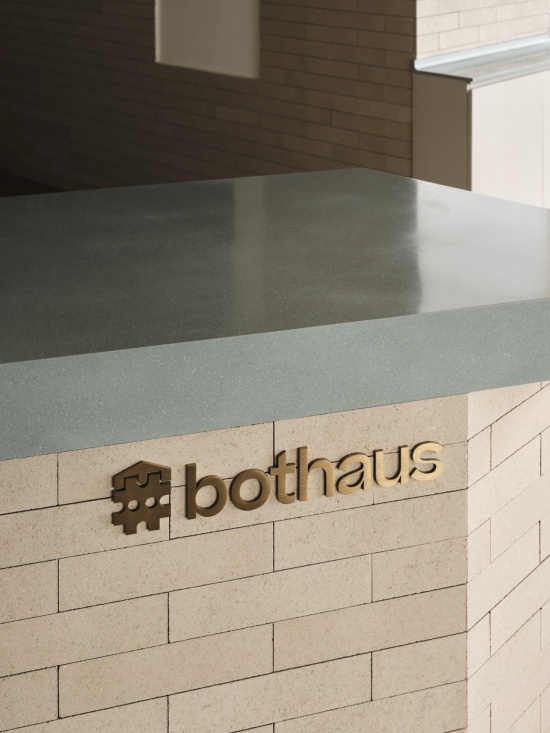
▼图标,logo © 朱清言
当下,具身智能已经无处不在地真实发生。机器人更需要被阐释为能干、可靠、帮助人类生产生活的朋友。
Today, embodied intelligence is becoming a tangible part of everyday life. Robots no longer need to appear mysterious or futuristic. They increasingly need to be understood as capable, reliable companions that can assist with everyday tasks and forms of production.
▼座位区,seating area © 朱清言
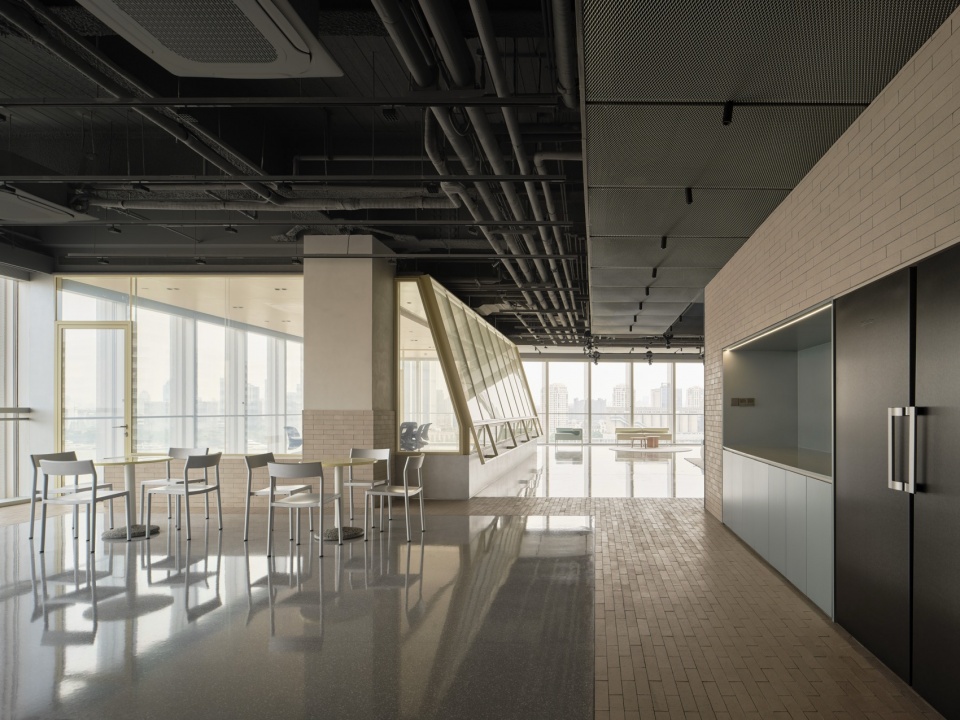
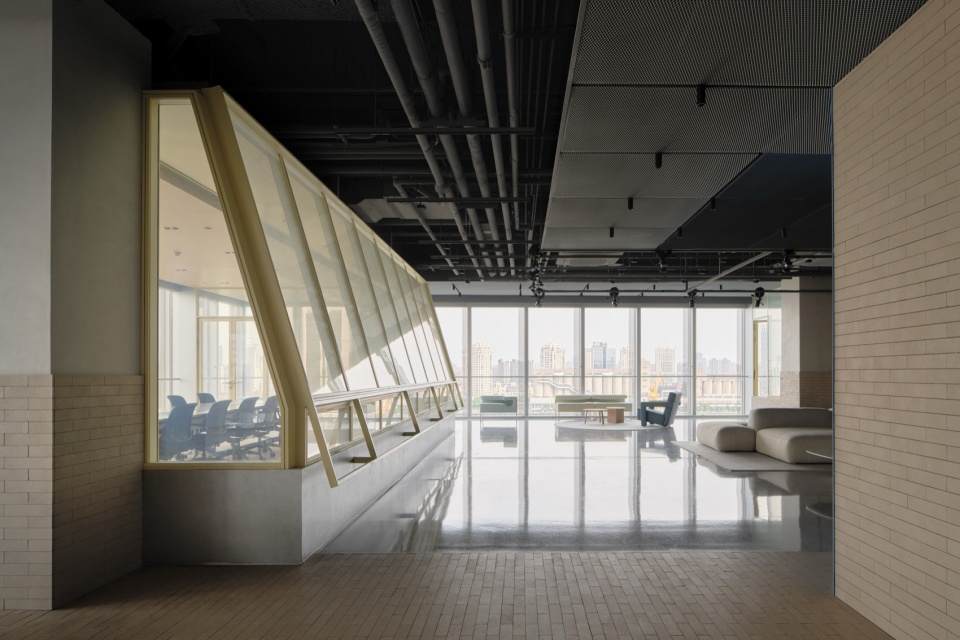
▼座位区,seating area © 朱清言
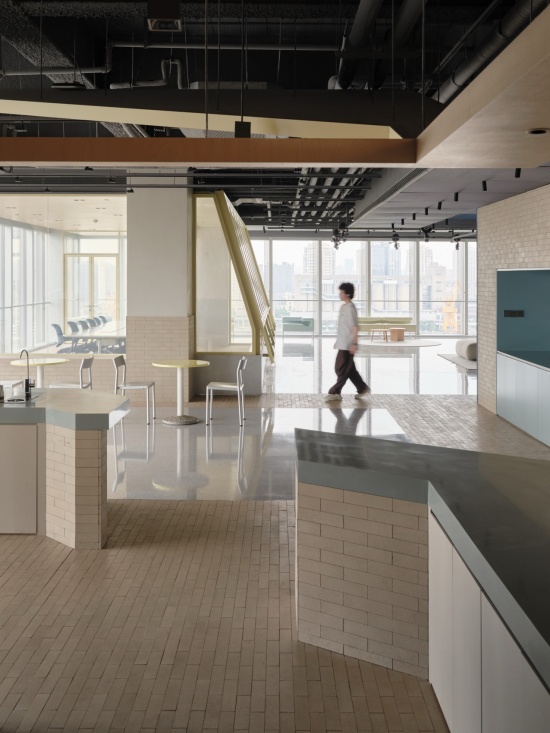
因而,我们想象其展示氛围或许更像一个“家”——科技被呈现为一种环境状态而非视觉物体。空间侧重于让用户感觉“技术很亲近”,而非教育用户“未来很酷炫”。
We therefore imagined the exhibition space less as a showroom and more as a kind of home — an environment in which technology is experienced as an ambient condition rather than displayed as a visual object. Instead of telling visitors that “the future is exciting”, the space attempts to make technology feel familiar and approachable.
▼休闲洽谈区,informal lounge © 朱清言
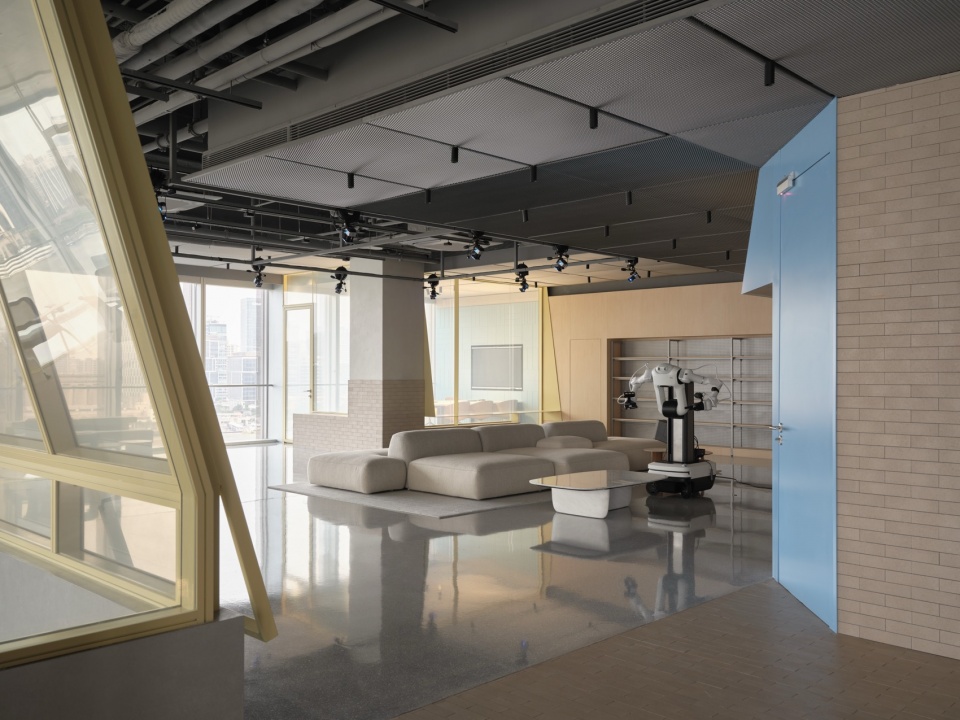
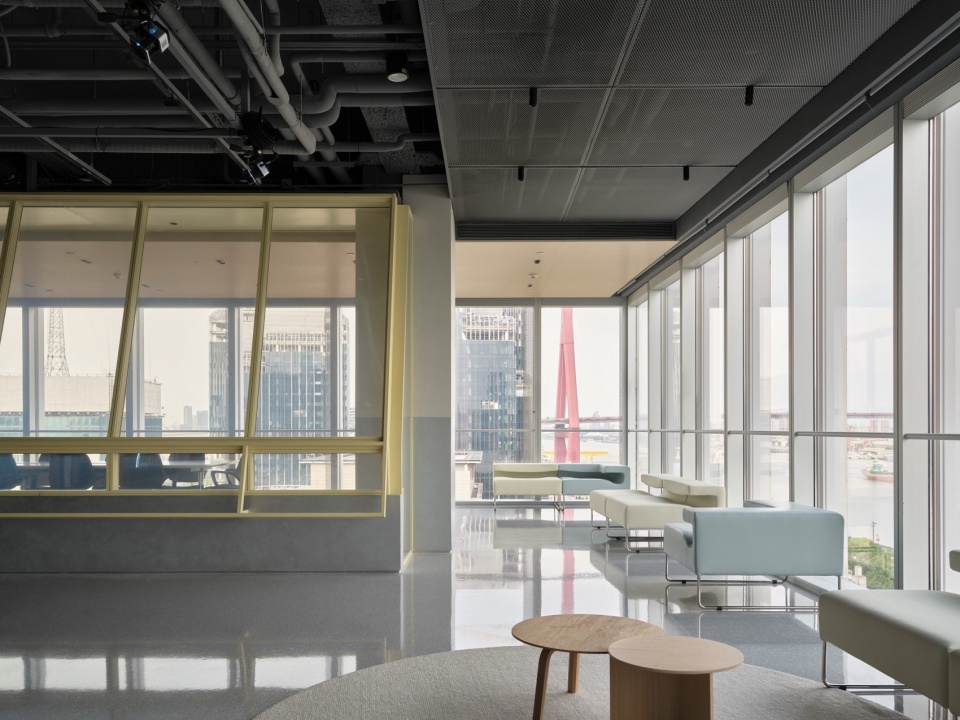
Bothaus即是,机器人的家;机器人是这里的主理人,做咖啡、卖零食、日常维护。乍一看,这是个日常舒适的人类空间,但在平面布置、细节尺度、材料选择、设备布置上都综合考虑了现阶段机器人识别、移动、操作的环境条件和技术人员调试、监测、记录等科研需求。
Bothaus is, quite literally, a house for robots. The robots are its hosts: they make coffee, sell snacks and carry out routine maintenance. At first glance, it appears to be a comfortable and familiar space designed for people. Yet its layout, dimensions, materials and equipment have all been calibrated to accommodate the current requirements of robotic perception, movement and manipulation, as well as the testing, monitoring and recording carried out by technicians.
▼大会议室,large meeting rooms © 朱清言
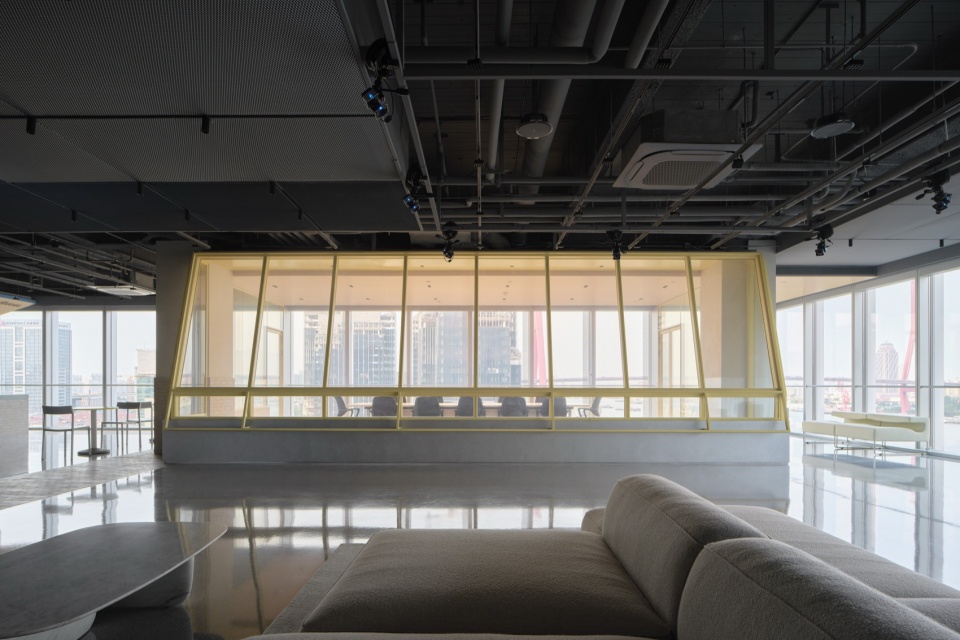
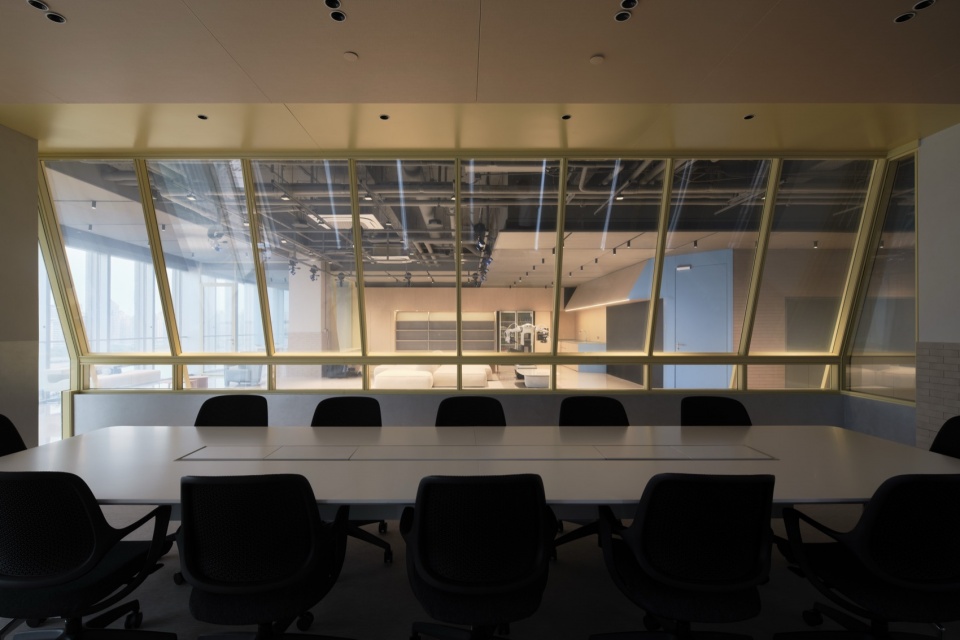
▼大会议室内部,interior of the large meeting rooms © 朱清言
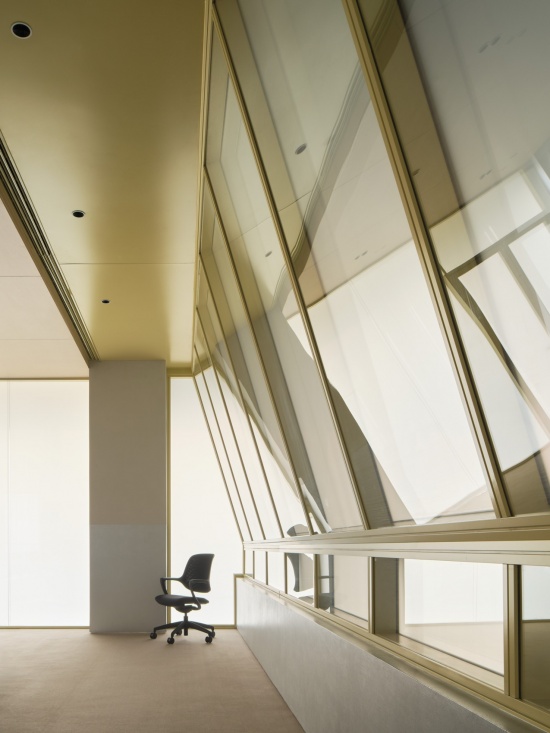
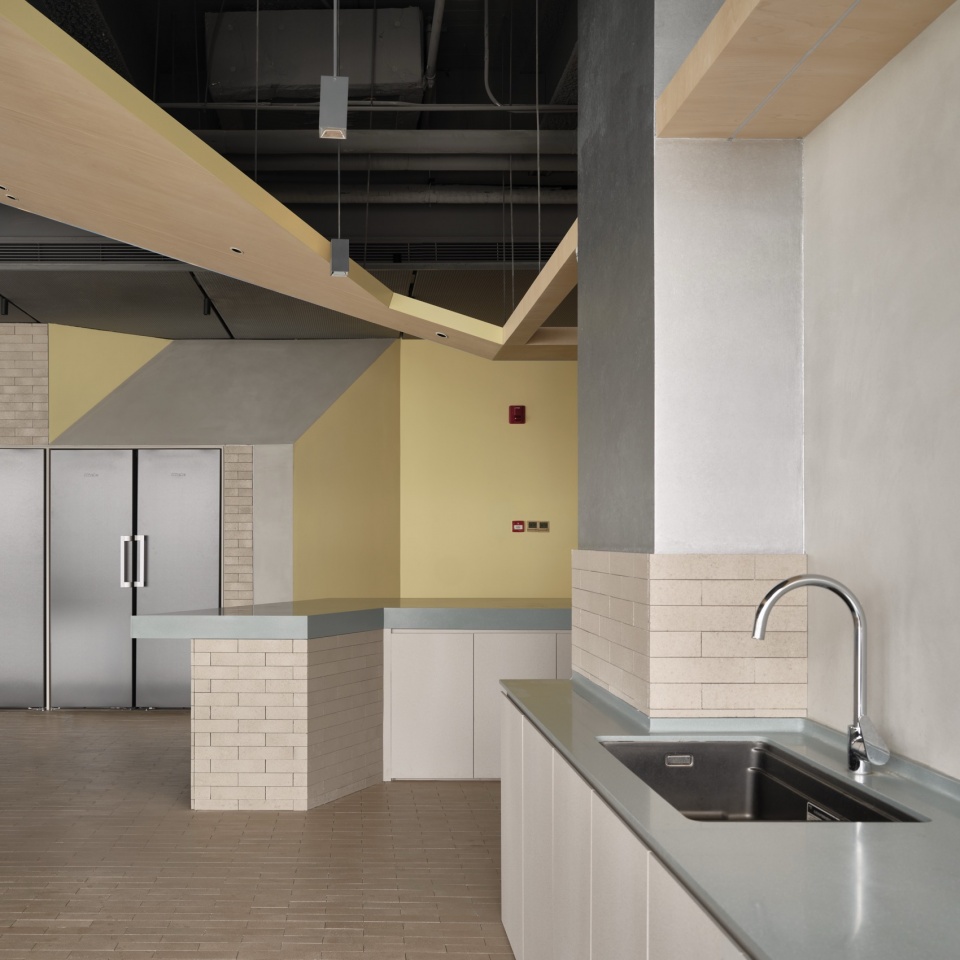
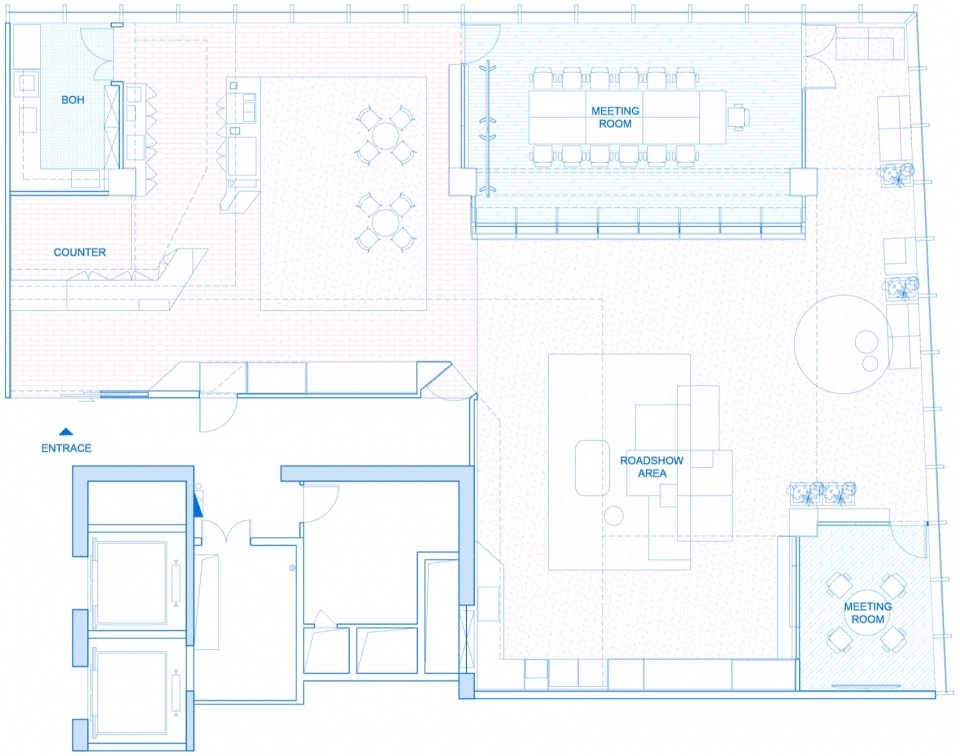
项目从使用场景上包含了:咖啡制作区、路演展示区、休闲洽谈区和大小会议室。空间连续完整,只以材料变化定义空间,供机器人自由穿行并利于监测。材料使用上,混合了多种低反射的墙面、相对平整的地面、半暴露的天花。以丰富的色彩、手工感的材料、细腻的纹理变化,建立起介于平滑抽象和自然质朴之间的物质性。
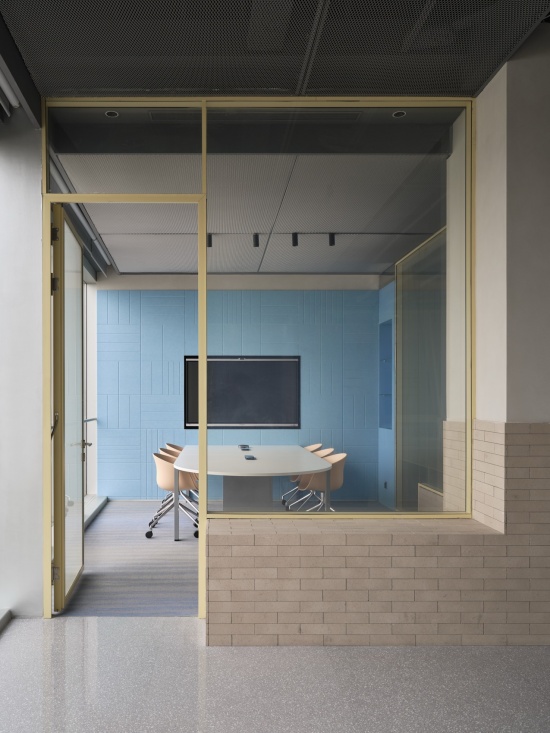
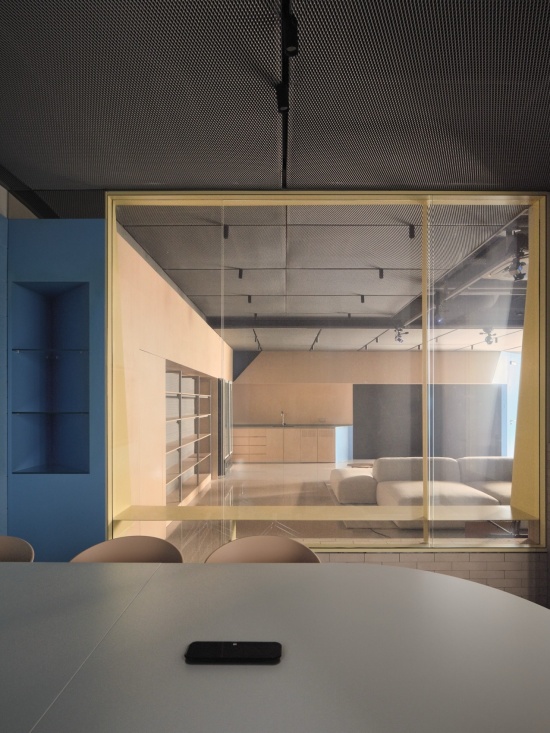
The program includes a coffee-making area, a presentation space, informal lounge and meeting areas, and meeting rooms of different sizes. Rather than dividing these functions into separate rooms, the interior is conceived as a continuous environment, with shifts in material defining different zones. This allows robots to move freely throughout the space while remaining easy to observe and monitor. Materially, the project combines low-reflectance wall surfaces, relatively even flooring and a partially exposed ceiling. Rich colors, tactile finishes and subtle variations in texture introduce a material character that sits somewhere between smooth abstraction and natural roughness.
▼会议室,meeting rooms © 朱清言
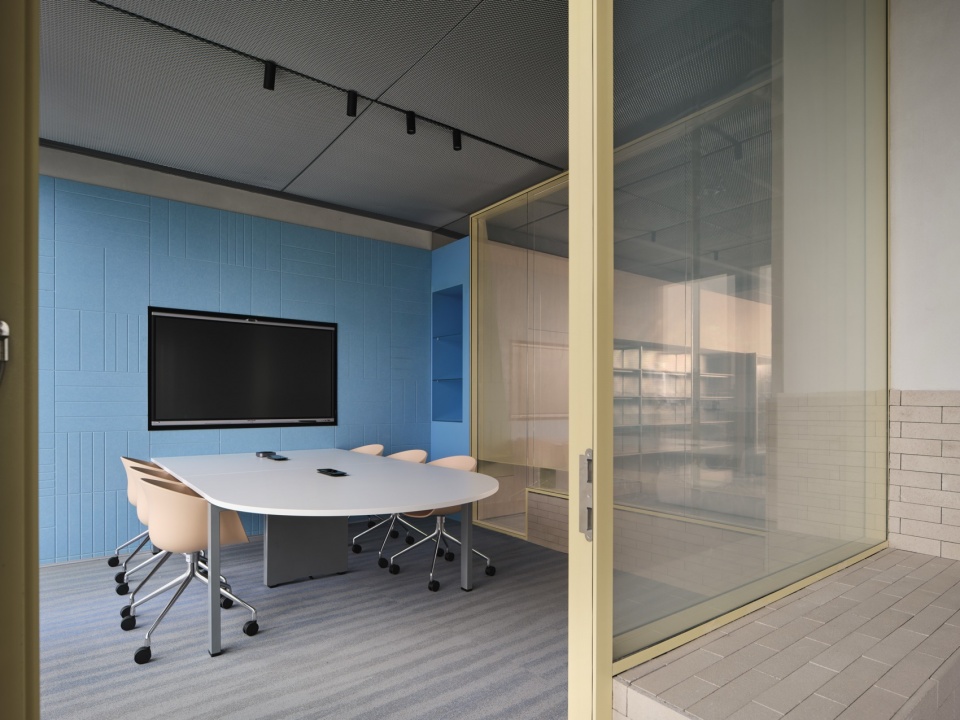
空间如何被技术改变,是由来已久的命题。人类的观念与审美也随技术发展不断刷新和摇摆。本项目或许是具身智能伊始,我们如何看待人机关系的迷你时代切片。
The relationship between technology and space is hardly a new question. As technologies evolve, our ideas of how the future should look — and our aesthetic expectations of it — continually shift with them. Bothaus can perhaps be understood as a small snapshot of this particular moment in embodied intelligence: a space that records, at an intimate scale, how we currently imagine the relationship between humans and robots.
▼平面图,Plan © HCCH Studio
项目名:BOTHAUS开发者中心
设计师:HCCH合尘建筑
设计团队:陈昊、胡琛琛、杨启森、张璞纯、丁雅周
项目地点:上海市杨浦滨江智慧广场
项目业主:苏度科技
项目面积:300平方米
项目功能:展厅、咖啡、会议
项目时间:2025.10-2026.2
摄影师:朱清言
Project Name: Bothaus Coffee – Sudo Developer Center
Architect: HCCH Studio
Design Team: Hao Chen, Chenchen Hu, Qisen Yang, Puchun Zhang, Yazhou Ding
Location: China Enterprise Riverfront Wisdom Plaza, Shanghai, China
Client: Sudo Technology
Area: 300 sqm
Program: Exhibition, Café, Meeting Spaces
Project Period: October 2025 – February 2026
Photo: Qingyan Zhu
更多关于:合尘建筑 More:HCCH Studio on gooood
发表评论
你需要先 才能发表评论
社交登录