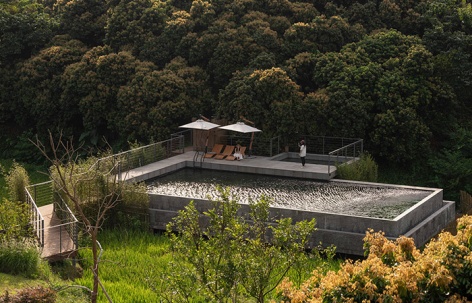
感谢 line+ 予gooood的分享。更多关于他们:line+ on gooood
Appreciation towards line+ for providing the following description:
设计初衷没有选择追随当下流行的设计表达,也没有为了制造短暂的视觉关注而堆叠过多造型语言。相比一个被设计“完成”的空间,我们更希望保留空间的余白,把场所留给人,也留给乡野。营造从场地本身出发,顺应山地原有高差,梳理空间关系,恢复部分原生景观面貌,让建筑、植物与乡野环境重新建立联系。
2023年项目完成后,我们选择等待三年。等待植物生长,记录四季变化,观察风吹雨落之后空间留下的痕迹。稻子熟了三次,荔枝落了三次。
三年的时间里,人与自然共同滋养着这个空间,它逐渐褪去人工雕琢的痕迹,形成属于当地土地与环境的独特气质,也呈现出我们最初期待的状态。我们始终相信,最好的景观并不是被设计出来的,而是来自自然、来自本土乡野。一个真正有生命力的空间,不只是在完成之时成立,更要经得起岁月沉淀,穿越时间周期。
自然,就是最好的设计。—— 李上阳
The original intention of the design was not to follow the current popular design expressions, nor to stack excessive aesthetic languages for the sake of fleeting visual attention. Compared to a space that is ‘completed’ by design, we prefer to preserve the space’s blankness, leaving the place for people and for the countryside. The aim was to start from the site itself, follow the original elevation differences of the mountains, organize spatial relationships, restore some of the original landscape, and allow buildings, plants, and the rural environment to reconnect.
After the project was completed in 2023, we chose to wait for three years. To wait for plants to grow, to record the changes of the seasons, and to observe the traces left in the space after wind and rain. Rice ripened three times; lychees fell three times.
During these three years, humans and nature nurtured this space together. It gradually shed the traces of artificial carving, forming a unique character belonging to the local land and environment, and presenting the state we initially hoped for. We have always believed that the best landscapes are not designed, but come from nature and the native countryside. A truly vibrant space is not only established upon completion but must also withstand the passage of time and endure through cycles of time.
Nature is the best design.—— ShangYangLi
▼山间屋宇,mountain cabin © 畿·云瑶度假酒店
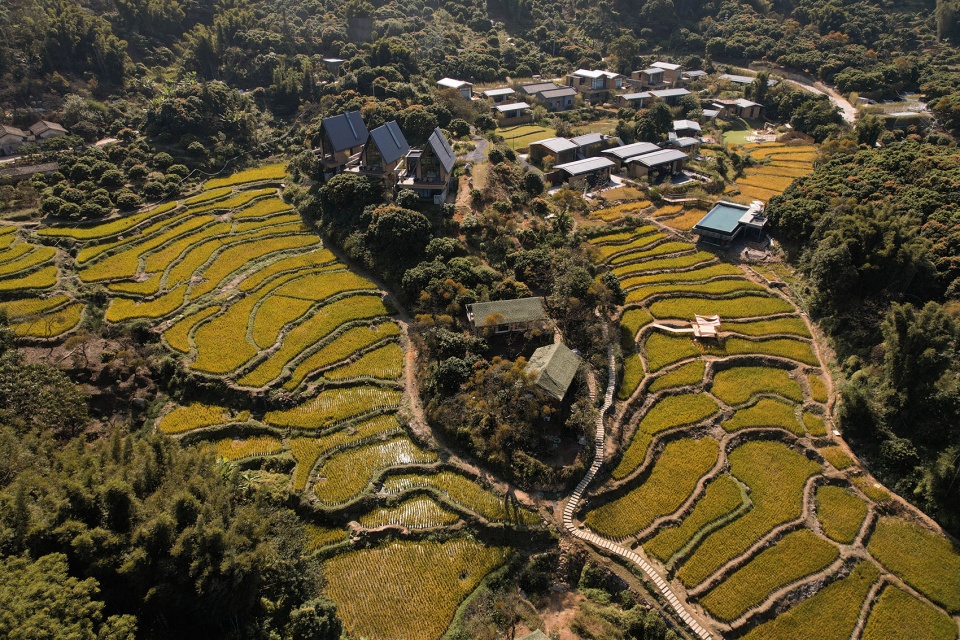
▼山间屋宇,mountain cabin © 畿·云瑶度假酒店
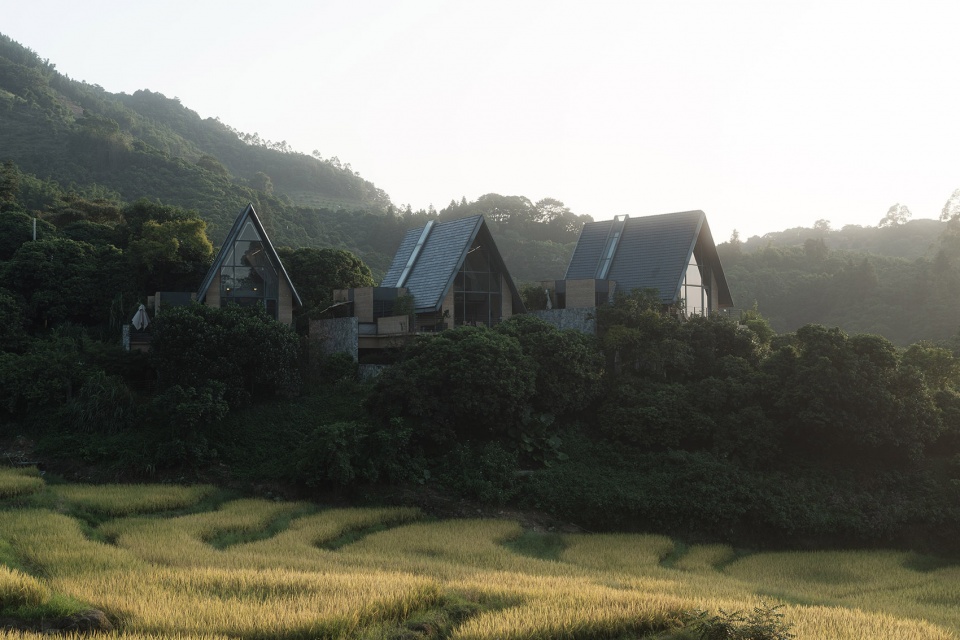
▼稻田中的无边泳池,infinity pool in the rice field © 畿·云瑶度假酒店
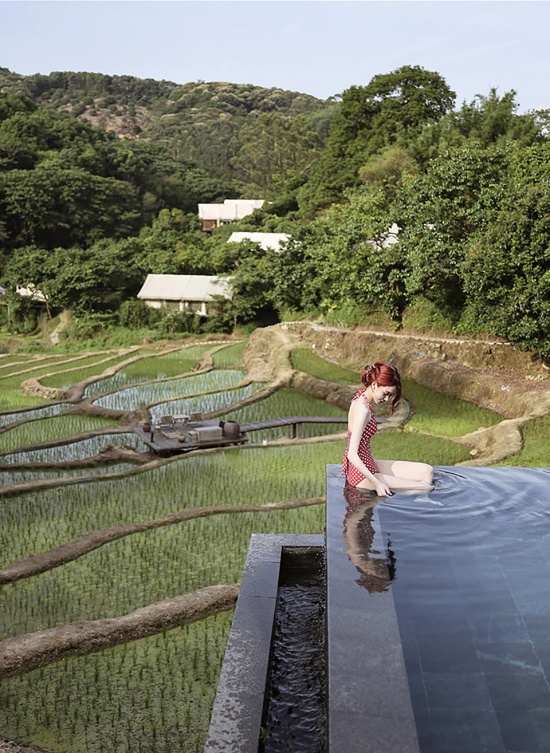
01故事线索|一场沿山而归的客家旅程
Story Clues|A Hakka Journey Back Along the Mountains
我们不是在为这片土地设计一个景观,而是在为这片土地寻找一个让人们可以安心靠近的方式。所有图纸上的线条,最终都要回到那个站在风里的下午——闭上眼,想象自己是一棵树、一块石头、一丛野草,会怎么在这片山坡上待下来。那个想象里的姿态,就是设计最后的答案。
▼现场故事线梳理,Sorting out the on-site storyline © line+

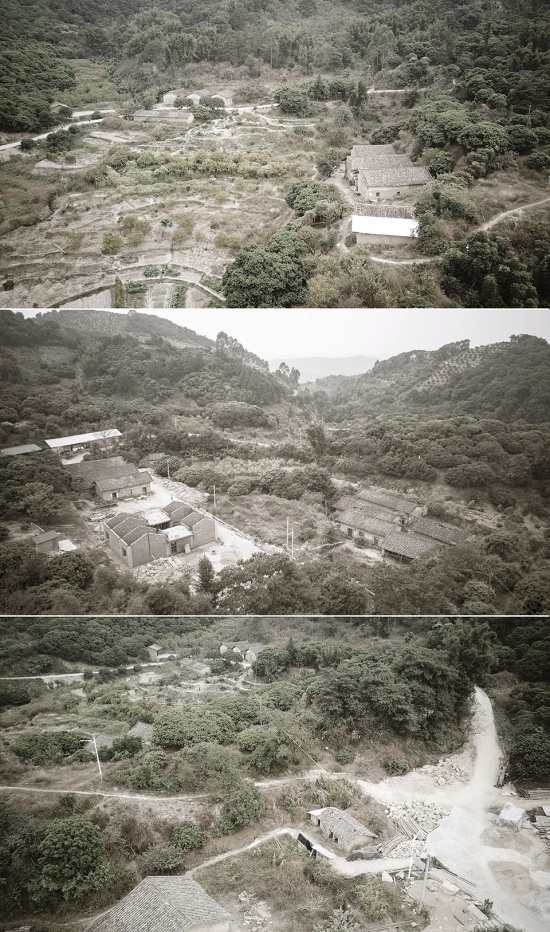
▼场地原生样貌,The site’s original appearance © 畿·云瑶度假酒店
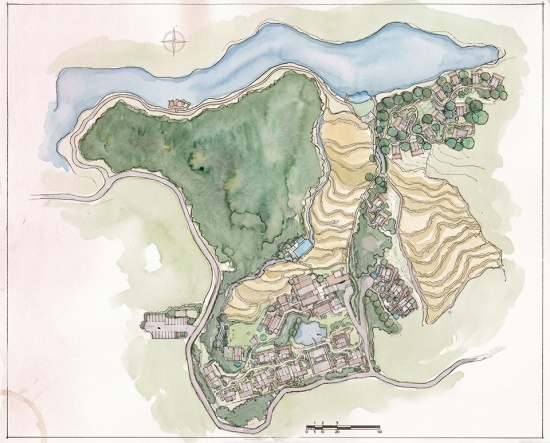
▼概念平面总览,Concept Plane Overview © line+
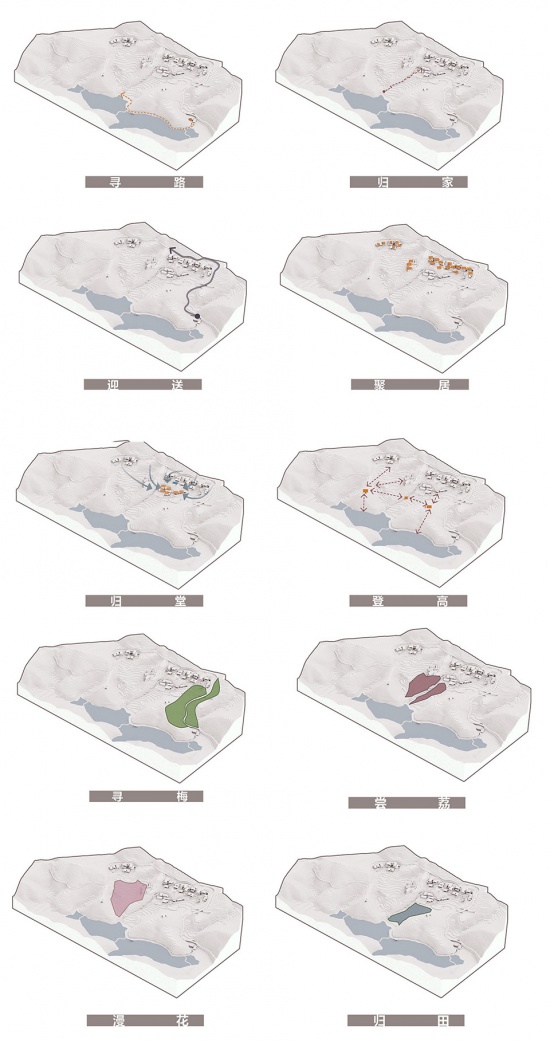
▼将场地原生乡野元素植入酒店体验概念,
Incorporate the site’s native rural elements into the hotel experience concept © line+
We’re not designing a landscape for this land; we’re looking for a way for people to feel safe and connected to it. All the lines on the drawings ultimately lead back to that afternoon standing in the wind—close your eyes and imagine yourself as a tree, a rock, or a patch of wild grass, and think about how you’d stay on this hillside. That imagined posture is the final answer for the design.
▼将场地原生乡野元素植入酒店体验概念,Incorporate the site’s native rural elements into the hotel experience concept © DONG建筑影像.
酒店的体验并非从建筑开始,而是从抵达的那一刻展开。我们以客家文化中的“归家”情感为线索,将水路、山路、入口、庭院、客房与公共空间串联成一段渐进式的归家旅程。
The hotel experience doesn’t start with the building itself, but from the moment you arrive. We take the ‘feeling of coming home’ from Hakka culture as a thread, connecting waterways, mountain paths, entrances, courtyards, guest rooms, and public spaces into a gradual journey of coming home.
▼码头的自然处理,Natural treatment at the dock © 畿·云瑶度假酒店
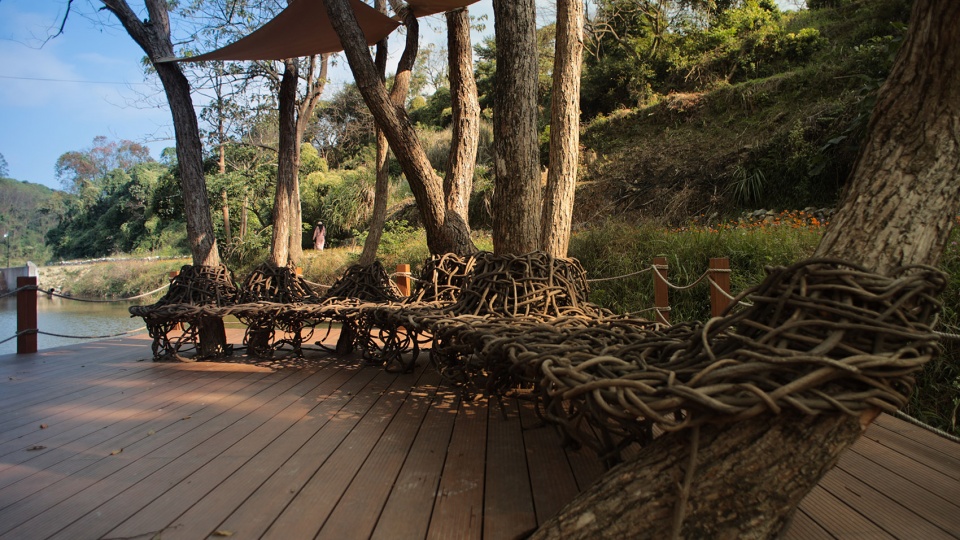
▼码头的自然处理,Natural treatment at the dock © 畿·云瑶度假酒店
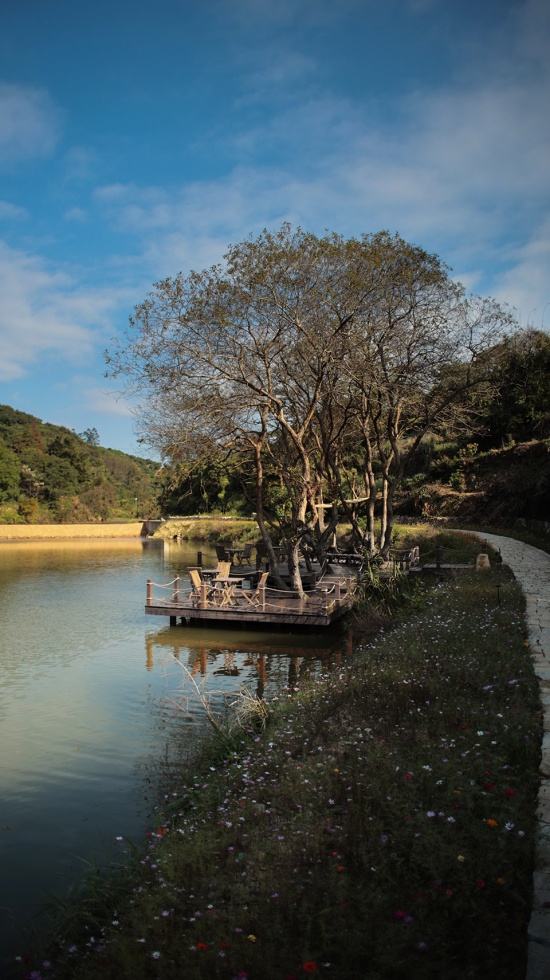
空间随着山势展开,人在行走过程中不断感知环境的变化,从远山眺望、田野穿行,到院落停留,每一个节点都承载着关于故土、迁徙与团聚的文化记忆。设计将客家的生活方式融入场景之中,让酒店不只是住宿空间,而成为一段关于回归、相遇与安放心灵的故事。
The space unfolds along the mountain terrain, and as people walk through it, they constantly sense changes in the environment. From gazing at distant mountains and wandering through fields to pausing in courtyards, each spot carries cultural memories of homeland, migration, and reunion. The design incorporates Hakka living styles into the scenes, making the hotel more than just a place to stay, but a story about coming home, meeting others, and finding peace of mind.
▼从田野遥望屋舍,Looking at the houses from the fields © 畿·云瑶度假酒店
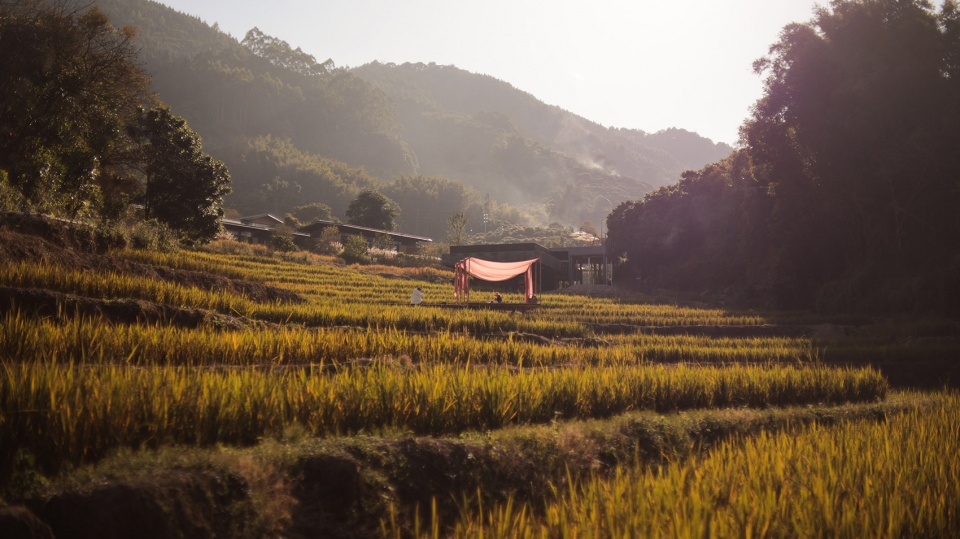
▼原生田野轻介入,Light intervention in original fields © 畿·云瑶度假酒店
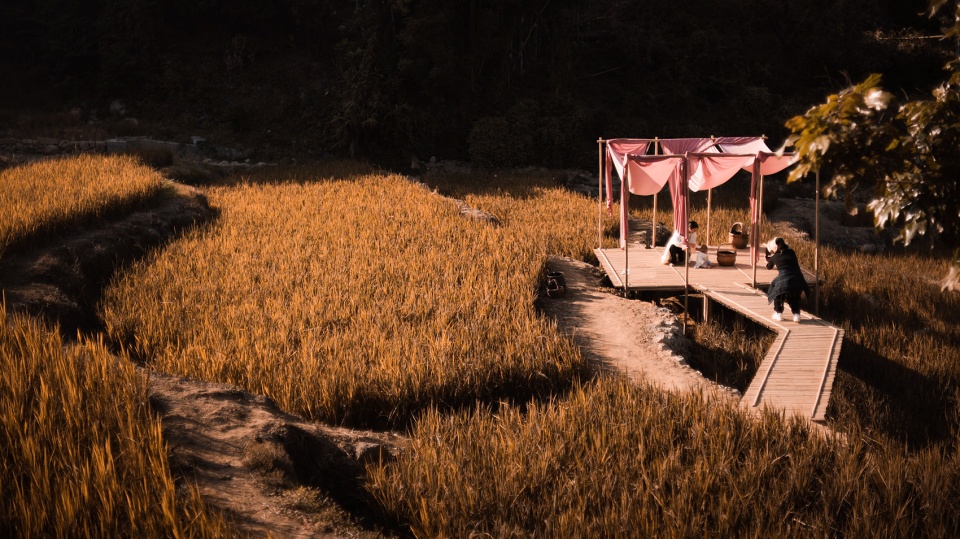
▼消隐于自然的酒店标识,Hotel signs that blend into nature © 畿·云瑶度假酒店
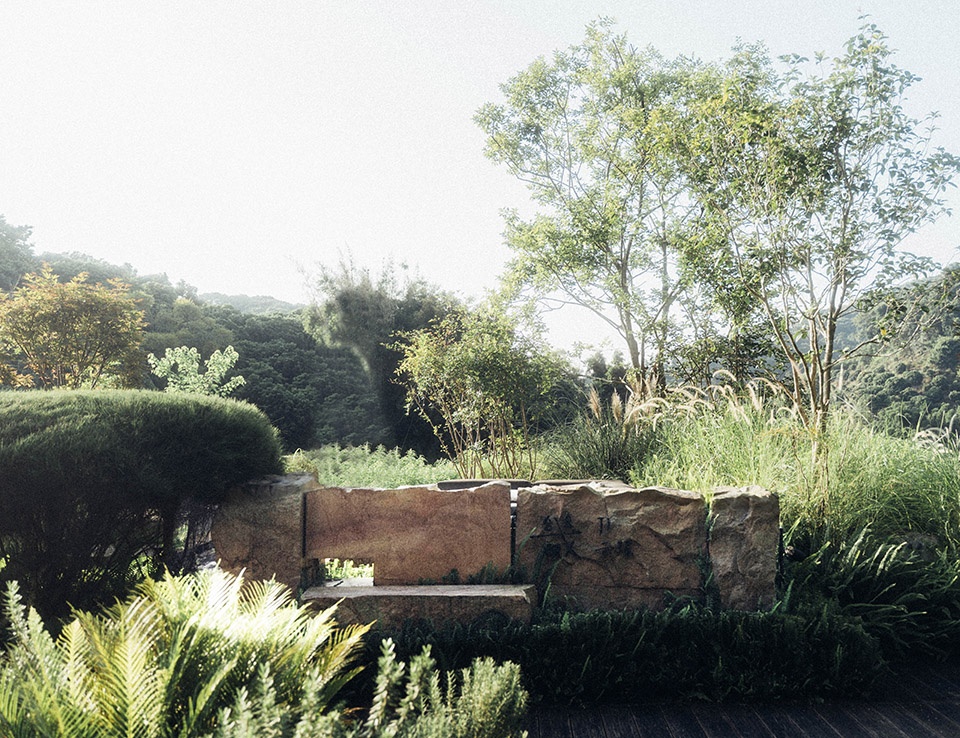
▼由山林步入,Walking in from the woods © 畿·云瑶度假酒店
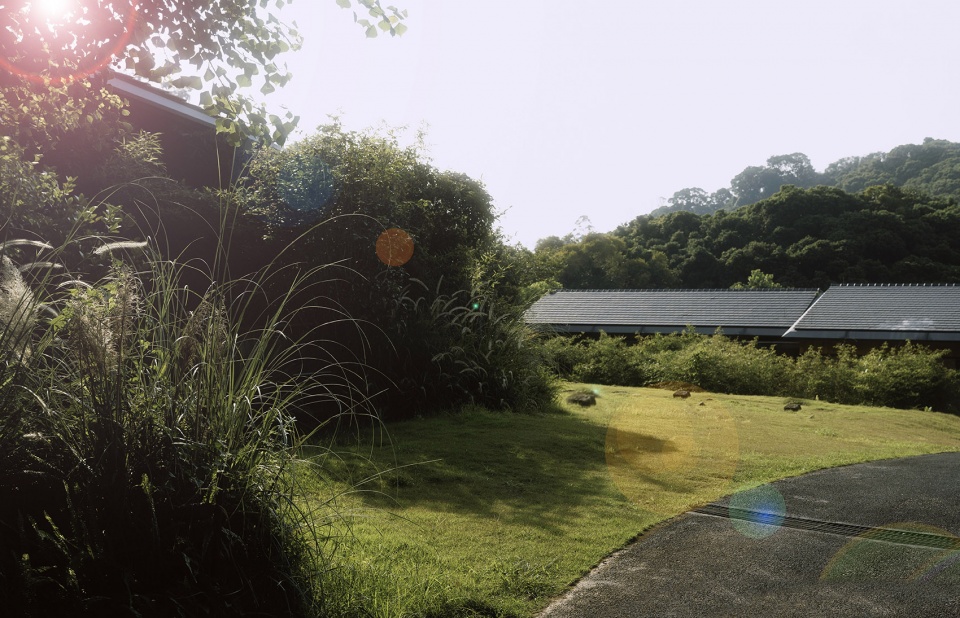
入口并不刻意,甚至有些含蓄。一道低矮的石墙从坡面伸出,与一棵老树形成对视,墙面上苔藓的痕迹深浅不一,像是已经站在那里等了你很久。门廊以本地石材砌成,不高不低,恰好让远处山影成为其背景。人还未踏进,就已经被挡在外的嘈杂剥离干净——这里的声音只剩下风、树叶以及偶尔的鸟鸣。
The entrance isn’t flashy, even somewhat understated. A low stone wall stretches out from the slope, meeting the gaze of an old tree. Moss stains of varying depth cover the wall, as if it’s been standing there waiting for you for a long time. The porch is built from local stone, neither too high nor too low, perfectly framing the distant mountains in the background. Before you even step inside, the noise from outside is already stripped away—here, all you hear is the wind, the rustle of leaves, and the occasional bird call.
▼由山林步入,Walking in from the woods © 畿·云瑶度假酒店
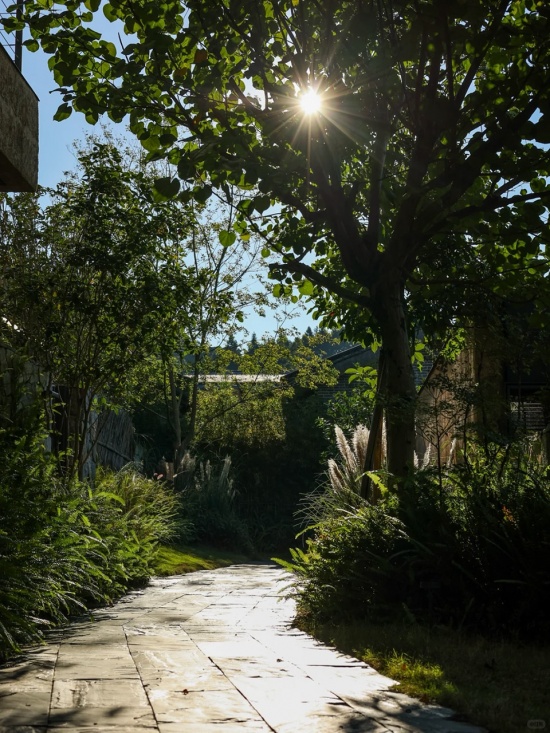
由自然间抵达居所,呼吸慢下来,目光放远,于是抵达便不再是物理位置的转换,而是一种状态的回归。景观利用梯田与山形的节奏,将路径倚靠山体延展,最终串联从进入到居住再到游玩的立体流线。
Arriving at the residence from nature, you slow your breathing and let your gaze wander, so arriving is no longer just a change of physical location, but a return to a certain state. The landscape uses the rhythm of terraced fields and the shape of the mountains, extending the path along the slopes, finally connecting the three-dimensional flow from entering to living and to leisure.
▼背靠山景的休闲公区,A chill common area with a mountain view © DONG建筑影像
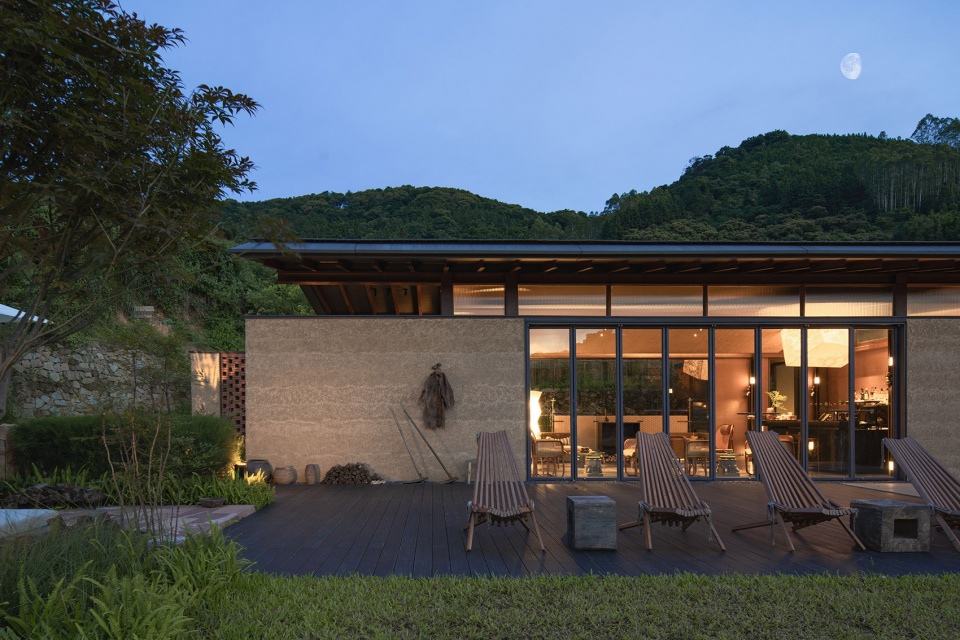
▼回望田野,Looking Back at the Fields © 畿·云瑶度假酒店
视野在没有任何遮挡的情况下完全展开,近处的草坡从脚边直接向下倾泻,草尖被风吹向一侧,形成流动的纹理;几棵老树站在坡面不同高度,树冠彼此交错,枝条的伸展清晰可辨,更远处,田野也沿着山谷铺开。
The view opens up completely with nothing blocking it. The nearby grassy slope drops straight down from my feet, the grass tips bending in the wind, creating a flowing texture. A few old trees stand at different heights on the slope, their canopies interlacing, and you can clearly see how the branches stretch out. Further away, the fields spread out along the valley.
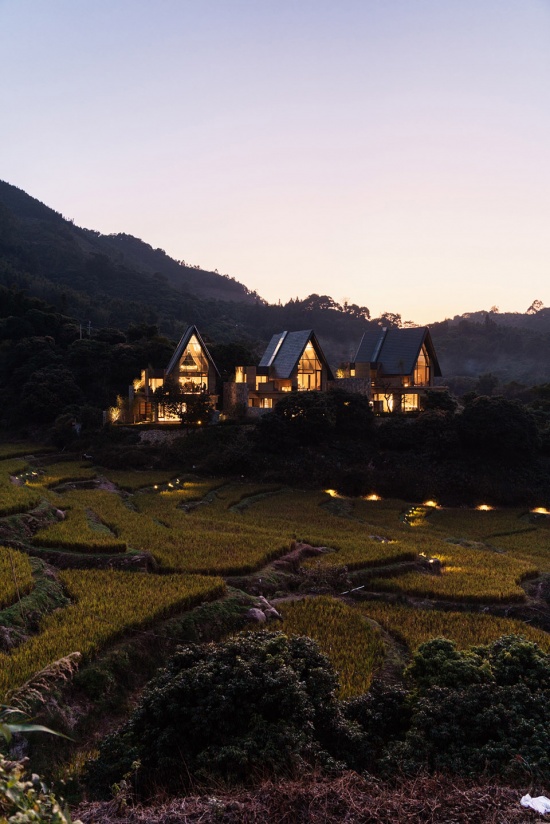
▼观山居所,Mountain View Residence © line+
▼观山居所,Mountain View Residence © line+
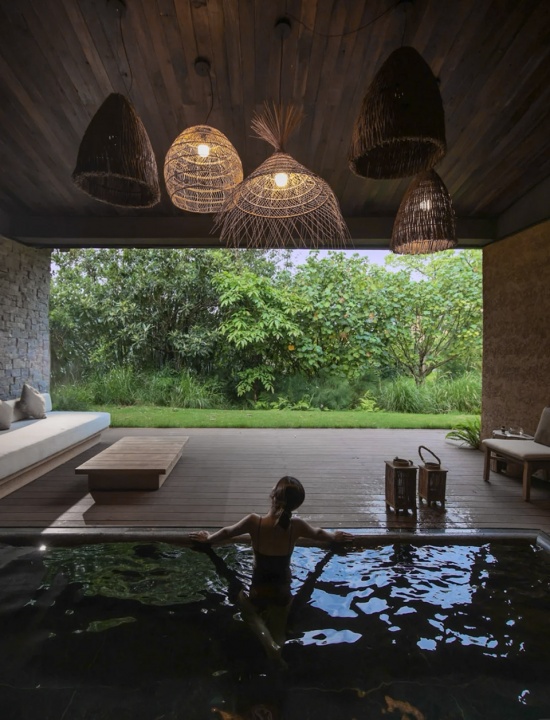
▼望林泡池,The hot spring pool with a view of the forest © 畿·云瑶度假酒店
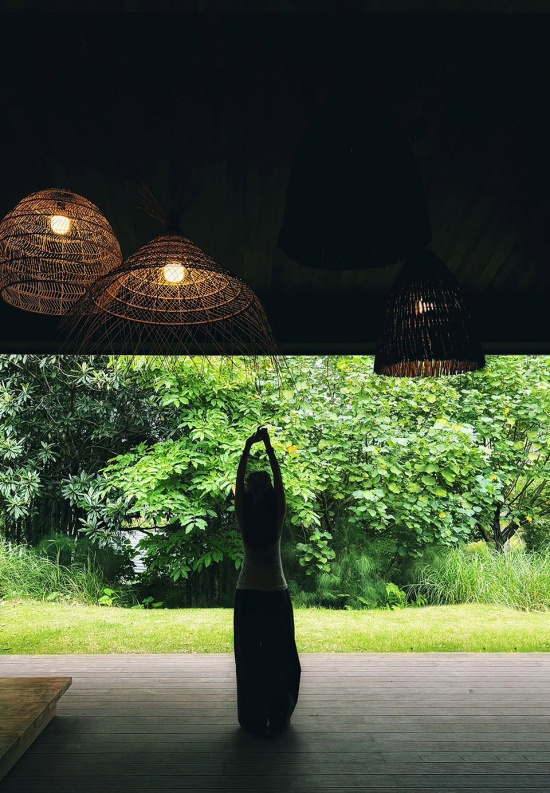
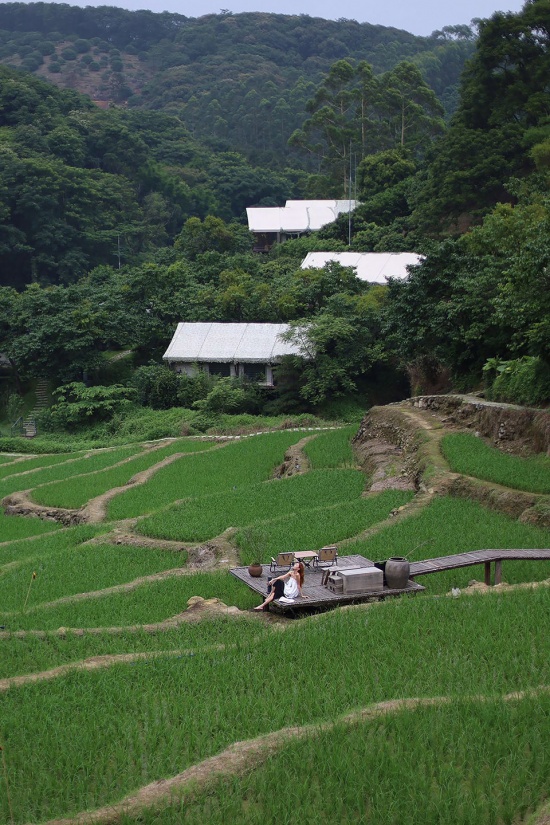
▼消隐于山间的沿路休闲平台,A leisure platform along the road that blends into the mountains © 畿·云瑶度假酒店
坐在这里的时候,身体的高度刚好与周围的灌木丛持平。视线不用仰望也不用俯视,平着扫出去,可以看见各种层次的绿——远处乔木的墨绿、中层灌丛的翠绿、近处草叶的嫩绿,它们层层叠叠地铺展,像一幅未干的水彩,颜色还在缓慢地洇开。故事线索的开端,是一张旧地图上被反复描摹的山脉轮廓——那些从北向南延伸的岭南山系,曾是客家人迁徙的道路。他们沿着山脚行走,在溪谷旁停下,用双手开垦土地、夯筑墙垣、种下树苗,在陌生的山野里重建故乡的秩序。
Sitting here, my body’s height is just level with the surrounding bushes. I don’t need to look up or down; my eyes sweep straight ahead and I can see all kinds of green— the dark green of distant trees, the bright green of mid-height shrubs, and the tender green of nearby grass leaves. They layer on top of each other, spreading out like a watercolor painting that hasn’t dried yet, the colors still slowly bleeding. The story kicks off with an old map, where the outline of mountains has been traced over and over—the Lingnan mountain range stretching from north to south, once a route for Hakka migrations. They walked along the foot of the mountains, paused by the streams, used their hands to cultivate the land, build walls, and plant trees, recreating the order of their homeland in unfamiliar mountains and fields.
▼步入田园,Step into the countryside © 畿·云瑶度假酒店
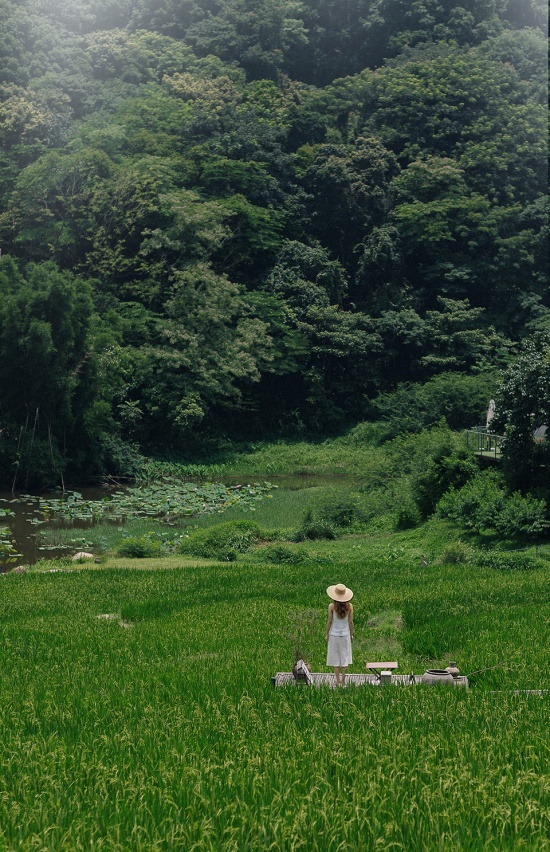
02场景植入|让空间生长于山水之间
Scene Integration | Let the Space Grow Among Mountains and Waters
场地原有的山地高差,是设计最重要的空间资源。我们没有通过大规模改造改变自然,而是尊重原始地形关系,根据不同高度、视线与环境条件植入适宜人的活动场景。
The site’s natural slopes are the most valuable feature for our design. We didn’t reshape the land on a large scale; we just worked with the existing terrain, placing activity spots that fit people based on height, views, and the surroundings.
▼隐藏在山林中的院落,A courtyard hidden in the mountains and forests © DONG建筑影像
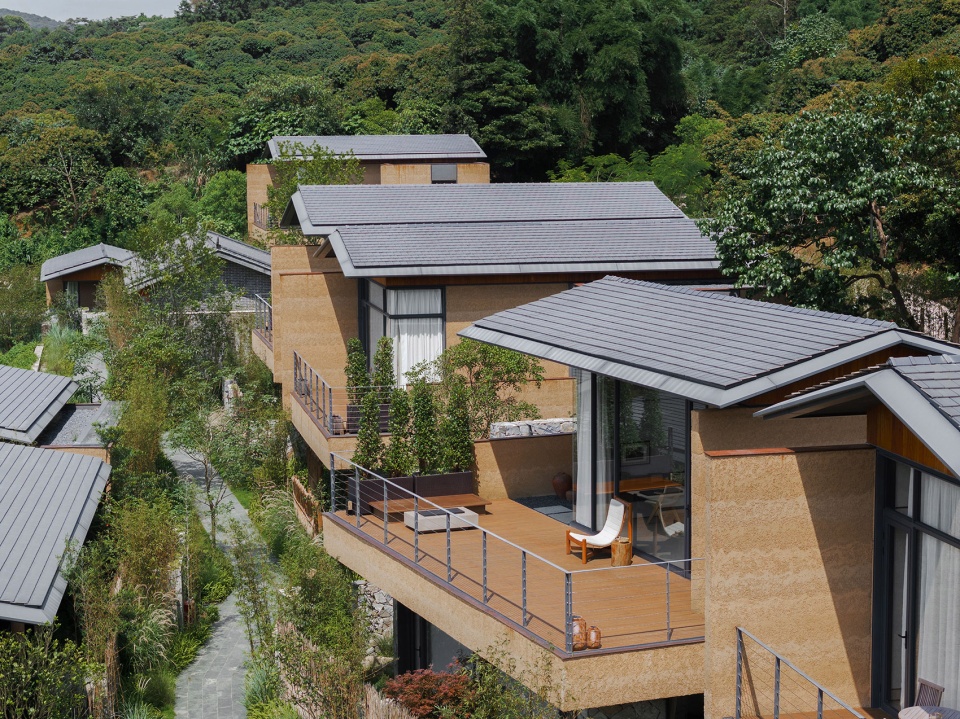
▼山体的延伸平台作为休闲空间,The extended mountain platform serves as a recreational space © DONG建筑影像
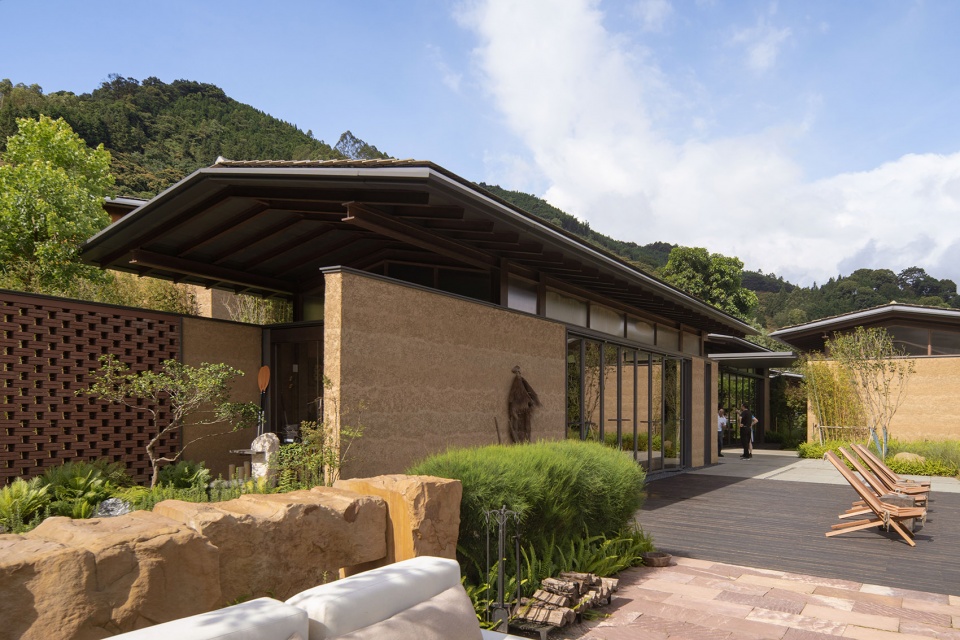
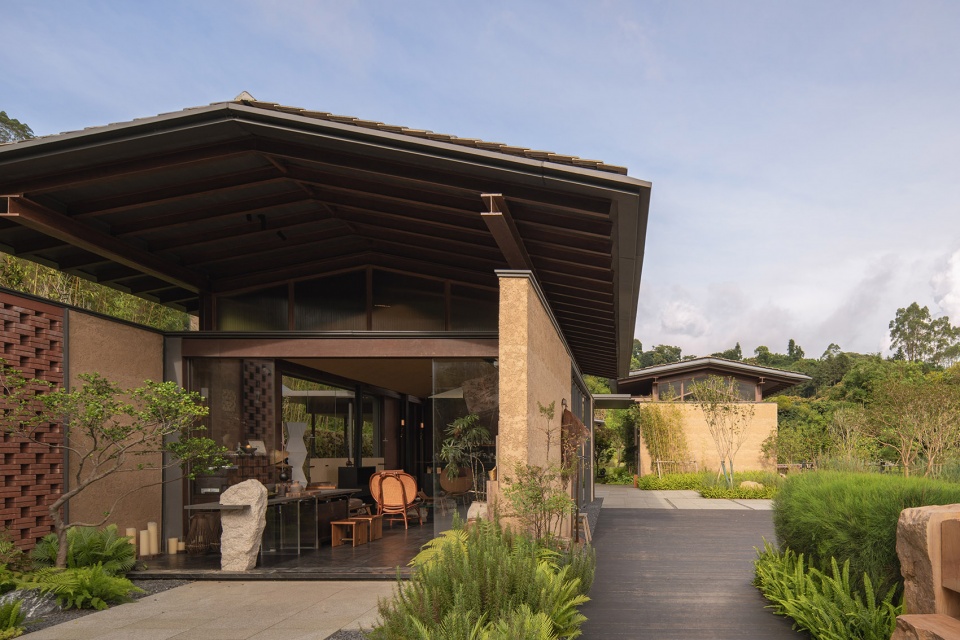
早晨阳光斜照在台阶和平台上,树影投在地面形成细碎的图案;正午荫蔽范围收缩,人们自然聚集到靠林的边缘;傍晚阴影重新扩张,暖色的光线铺满整个场地,那是最多人愿意坐下来的时刻。这些变化不需要人为控制,空间只是顺应了自然的节奏。
In the morning, sunlight slants across the steps and platform, and the tree shadows create intricate patterns on the ground; by noon, the shaded areas shrink, and people naturally gather along the edges near the trees; in the evening, the shadows stretch out again, and warm light fills the whole space—that’s when most people want to sit down. These changes don’t need any human intervention; the space just follows the rhythm of nature.
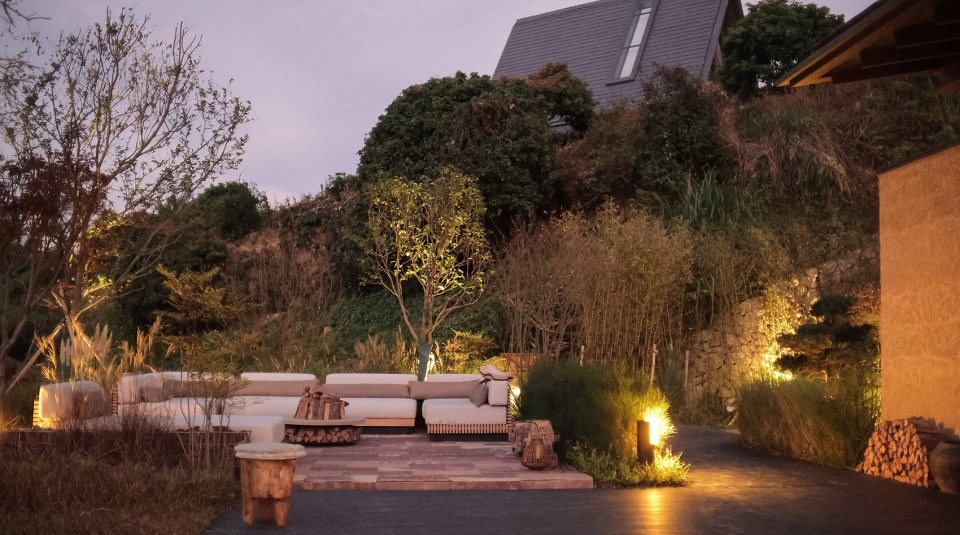
▼夜幕下的休闲庭院,A relaxing courtyard at night © DONG建筑影像
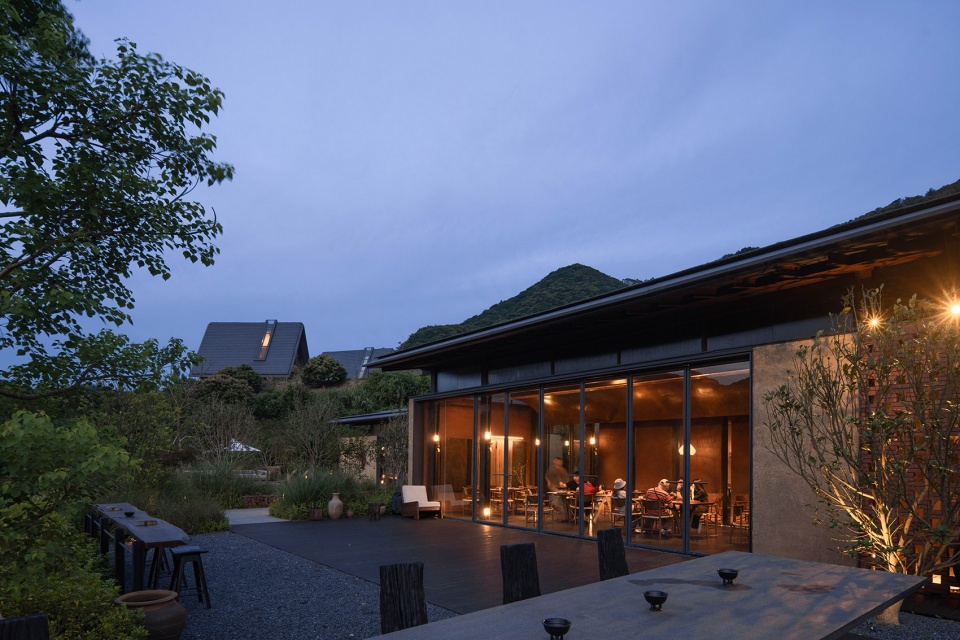
人在不同高度,拥有不同的观看方式。下行时俯视溪石纹理与蕨类丛生,平视时与林间飞鸟的轨迹交错,上行时视线渐渐抬升,最终与远山齐平。每一处选点都经过日照与风向的测算,夏日午后有浓荫庇护,冬日斜阳能照进坐椅区域——自然并未被驯服,只是被倾听之后,得到了恰如其分的回应。
People have different ways of seeing things at different heights. When looking down, you can see the textures of the stream rocks and clusters of ferns; when looking straight ahead, your view intersects with the flight paths of birds in the forest; as you go up, your line of sight gradually rises until it’s level with the distant mountains. Every spot was chosen after considering sunlight and wind direction, so in summer afternoons you have shady cover, and in winter the slanting sun reaches the seating area—nature hasn’t been tamed, it’s just listened to and responded in just the right way.
▼俯瞰无边泳池,Overlooking the infinity pool © DONG建筑影像
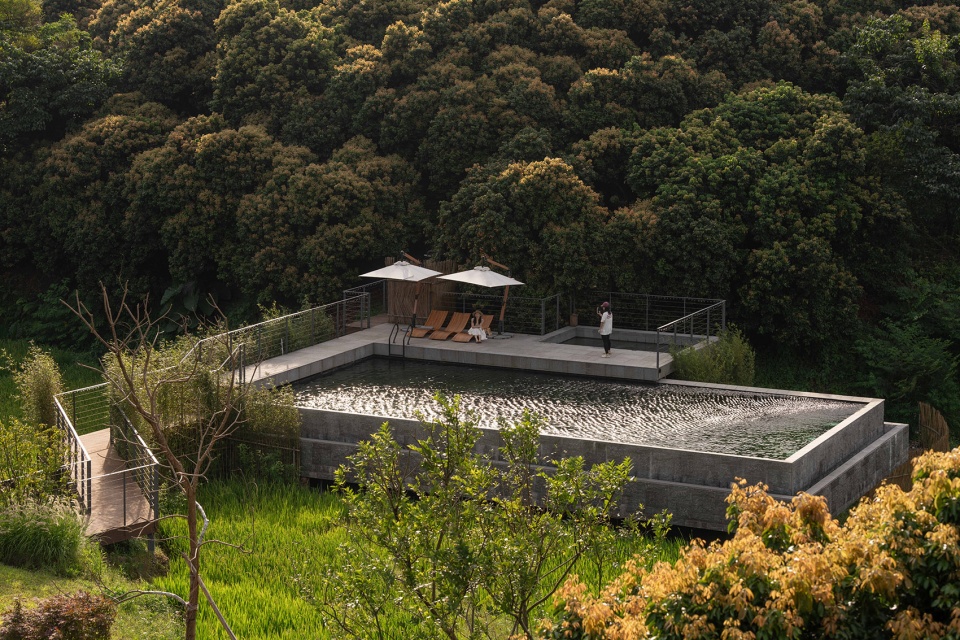
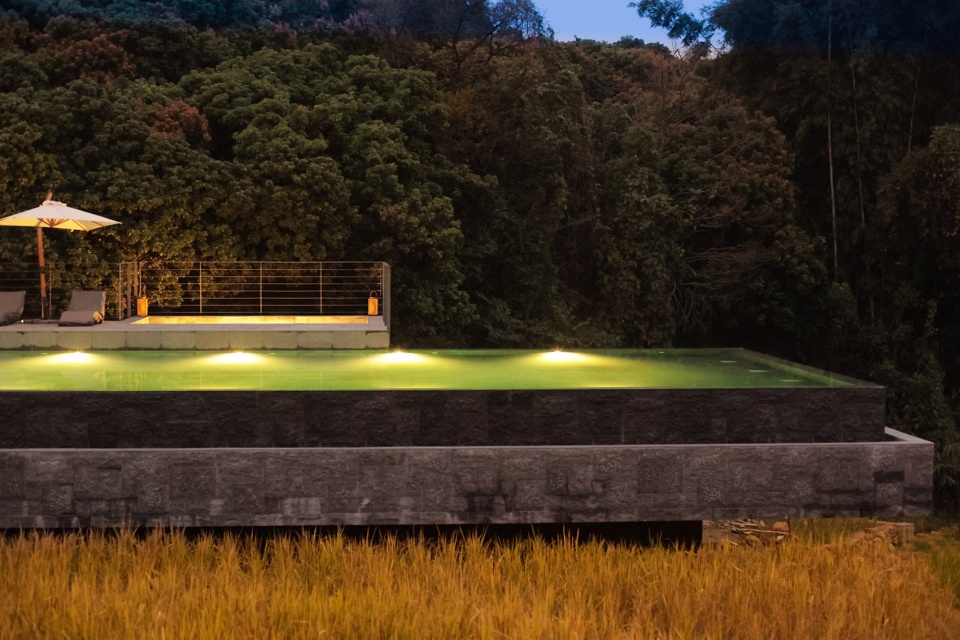
利用山地原有的高差,让泳池的边缘恰好与坡面的起伏对齐。水面与远处的山影处在同一水平线上,人靠在池边时,视线贴着水面平推出去,分不清哪里是池水的尽头,哪里是山谷的开始。
Make use of the natural elevation of the mountain so that the edge of the pool aligns perfectly with the slopes. The water surface and the distant mountain shadows are at the same level, and when you lean on the edge of the pool, your line of sight glides along the water, making it hard to tell where the pool ends and the valley begins.
▼无边泳池的观山视野,Mountain view from the infinity pool © DONG建筑影像
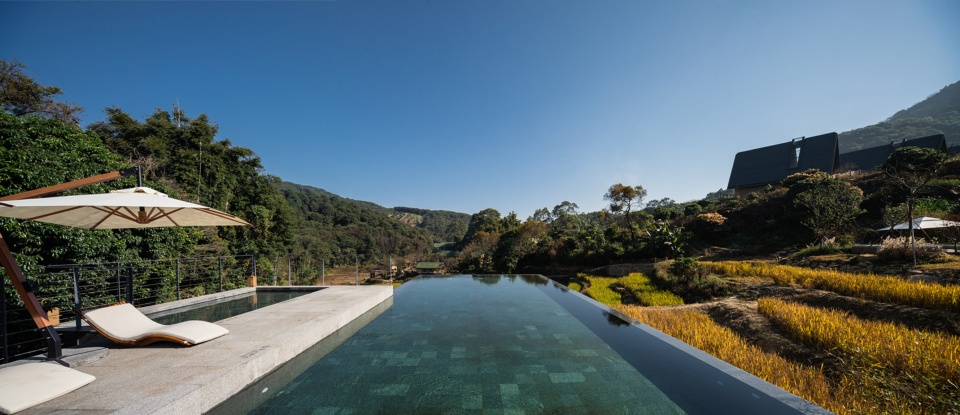
空间之所以被记住,往往不是因为造型,而是因为身体曾在那里感受过风的温度、光的角度、地面材质的触感。这些记忆附着在每一级台阶、每一段矮墙、每一片被特意保留的老树荫下。当我们说“让空间生长于山水之间”,其实是在说:让每一处落笔,都像是山体自己的意愿;让每一次停留,都像是时间自然的馈赠。
Spaces are often remembered not for their design, but because our bodies once felt the temperature of the wind, the angle of the light, and the texture of the ground there. These memories stick to every step, every low wall, and every bit of shade from an old tree that’s been intentionally preserved. When we say ‘let the space grow among the mountains and rivers,’ what we really mean is: let every stroke feel like the mountain’s own will, and let every pause feel like a gift from time itself.
▼田野中的儿童活动场所,Children’s play area in the fields © 畿·云瑶度假酒店
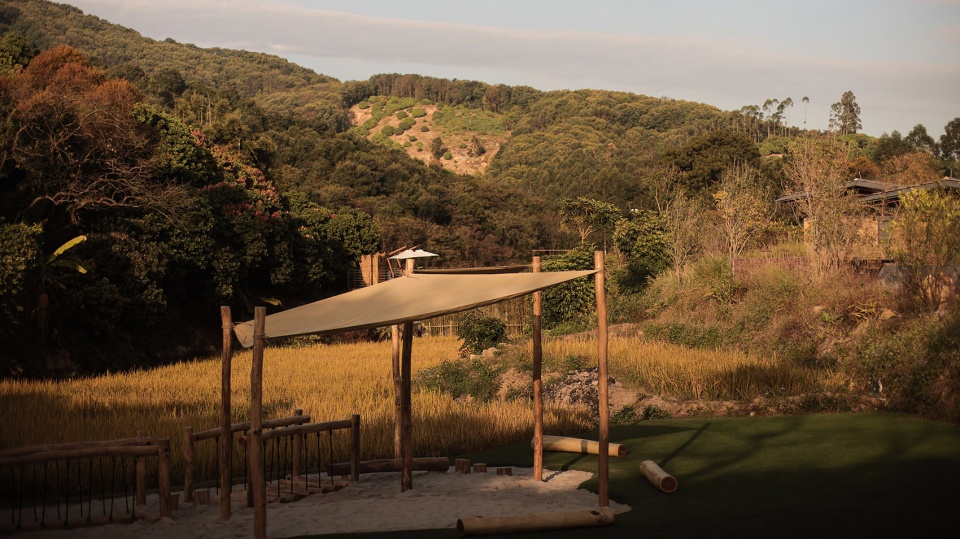
▼自然介入的码头,Naturally Intervened Pier © 畿·云瑶度假酒店
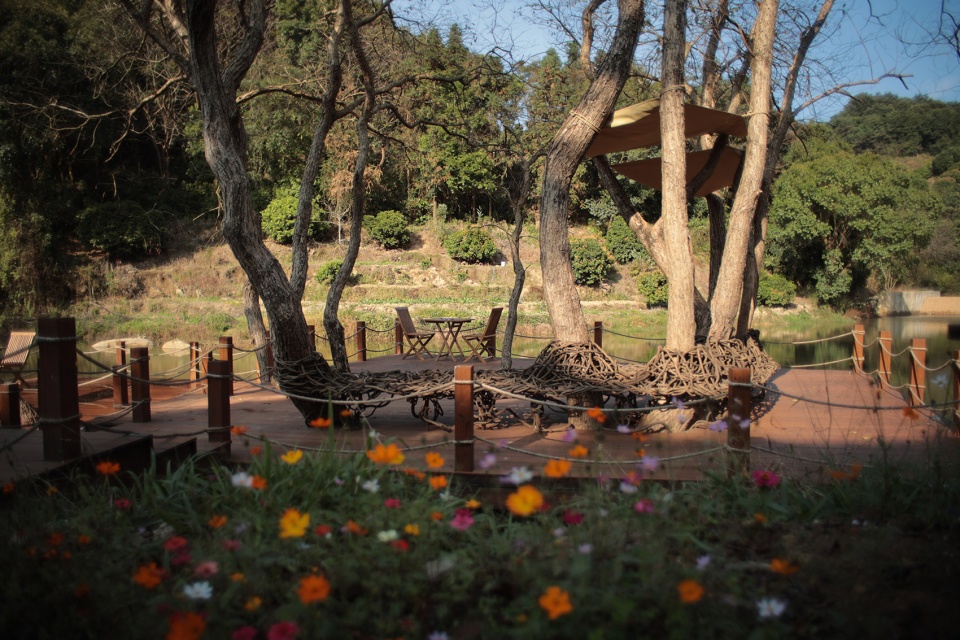
活动空间的选择,几乎不费力气——因为场地早已准备好了最合适的位置。我们只在田野与山林交界的过渡带上,找到那些天然平整、视野开阔的角落,轻轻安放人的痕迹。
▼山体中的空间置入关系,The spatial placement relationships in the mountain © line+
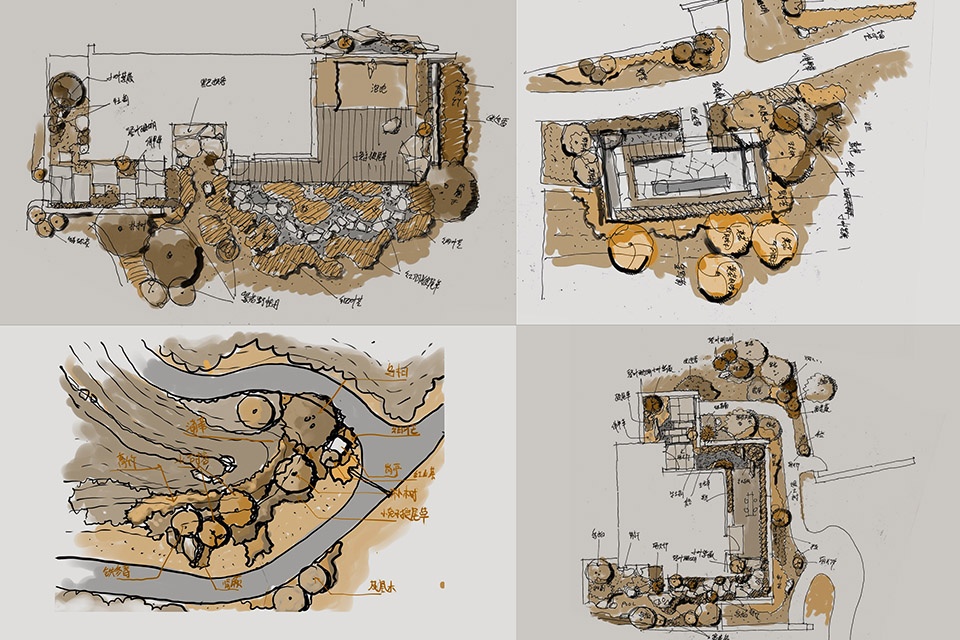
Choosing a space for activities was almost effortless — because the perfect spots had already been prepared. We just found those naturally flat, open-view corners in the transition zone between the fields and the forest, and gently placed traces of human presence there.
▼建筑之间的绿植空间,Green spaces between buildings © line+
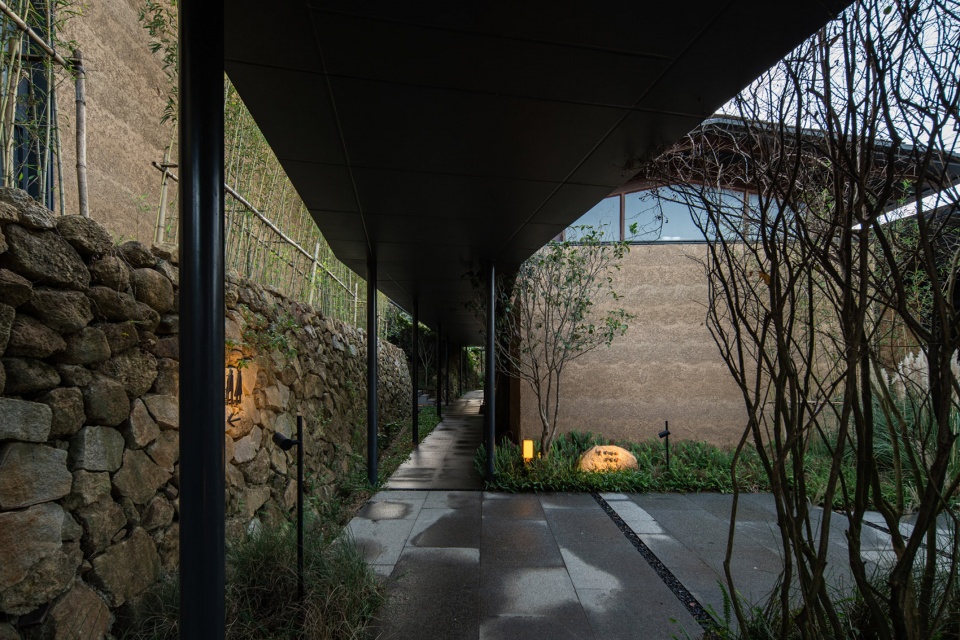
▼建筑之间的绿植空间,Green spaces between buildings © line+
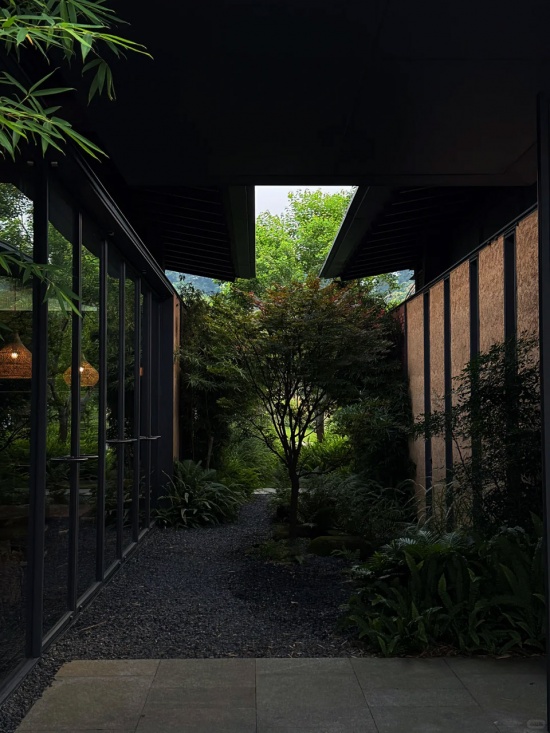
▼山野包裹的交流庭院,A courtyard wrapped by the mountains and fields © 畿·云瑶度假酒店
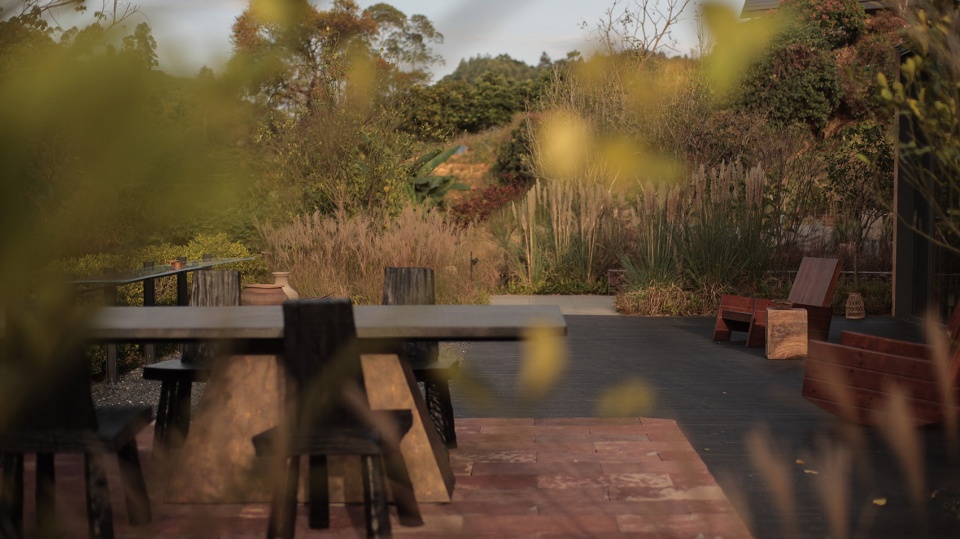
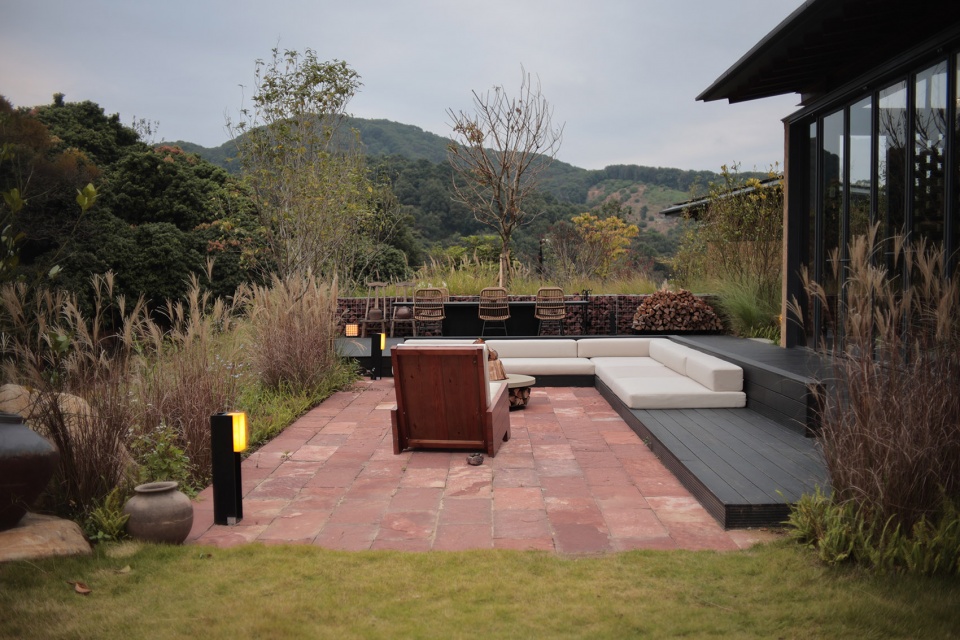
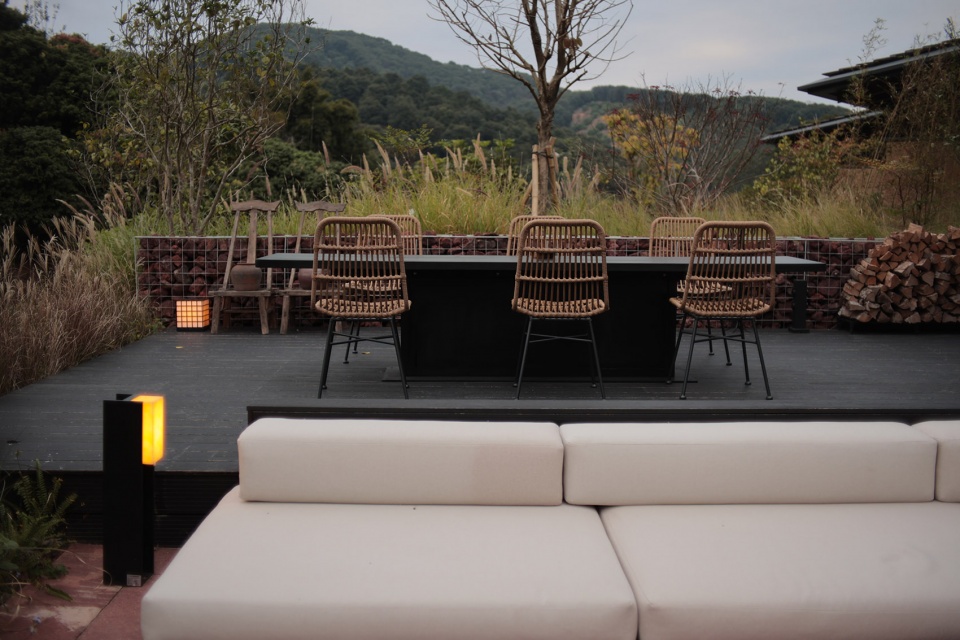
休闲平台的围合关系,由地形与植被共同完成,不加一堵多余的墙。背靠山体的一侧,地面自然抬升,坡面上保留的原生乔木与补种的灌木形成一道厚实的绿色屏障。树冠在头顶上方收拢,枝叶交错成半透明的顶界,光线被层层过滤后落下来,变得柔和而均匀。这一侧的围合是实的——视线被植被收住,声音被叶片吸收,人坐在这里,背后有一种被靠住的安稳感。
The enclosure of the leisure area is shaped by the terrain and vegetation together, without adding any unnecessary walls. On the side backed by the hillside, the ground naturally rises, and the original trees along with newly planted shrubs form a thick green barrier on the slope. The tree canopies close above, with branches and leaves interweaving into a semi-transparent top boundary, letting light filter down softly and evenly. The enclosure on this side feels solid—your view is held by the vegetation, sounds are absorbed by the leaves, and sitting here, there’s a comforting sense of support behind you.
▼山野包裹的交流庭院,A courtyard wrapped by the mountains and fields © 畿·云瑶度假酒店
03植被恢复|让被扰动的山体重新呼吸
Vegetation Restoration | Letting Disturbed Hillsides Breathe Again
面对部分受扰动的山体环境,设计以生态恢复为核心,通过引入适应当地气候的乡土植物,逐步修复原有山林生态。
In dealing with some disturbed mountain areas, the design focuses on ecological restoration by introducing native plants suited to the local climate, gradually repairing the original mountain forest ecosystem.
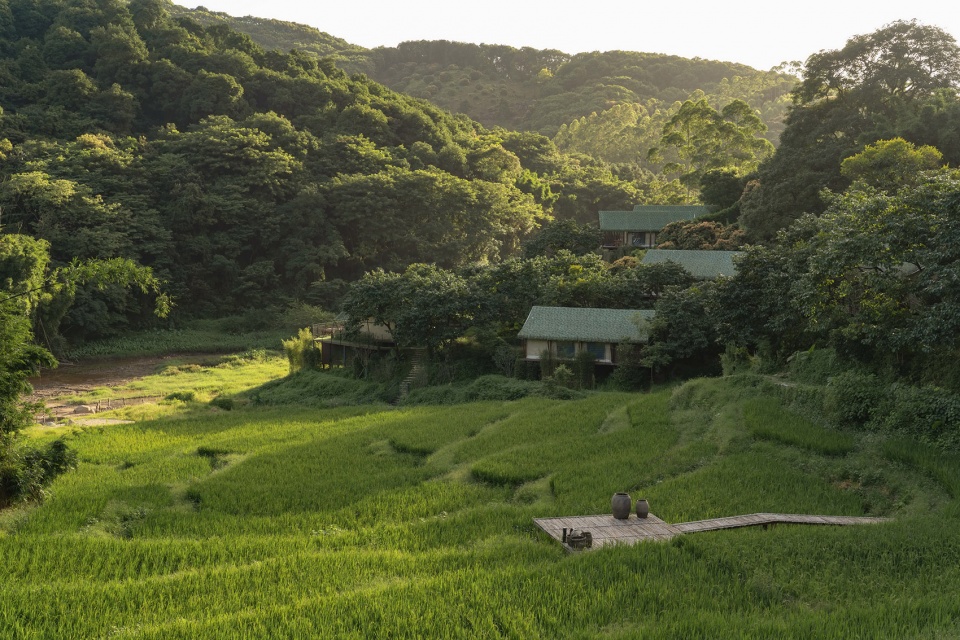
▼俯瞰田野,Overlooking the fields © 畿·云瑶度假酒店
▼山野中的村落,A village in the mountains and fields © DONG建筑影像
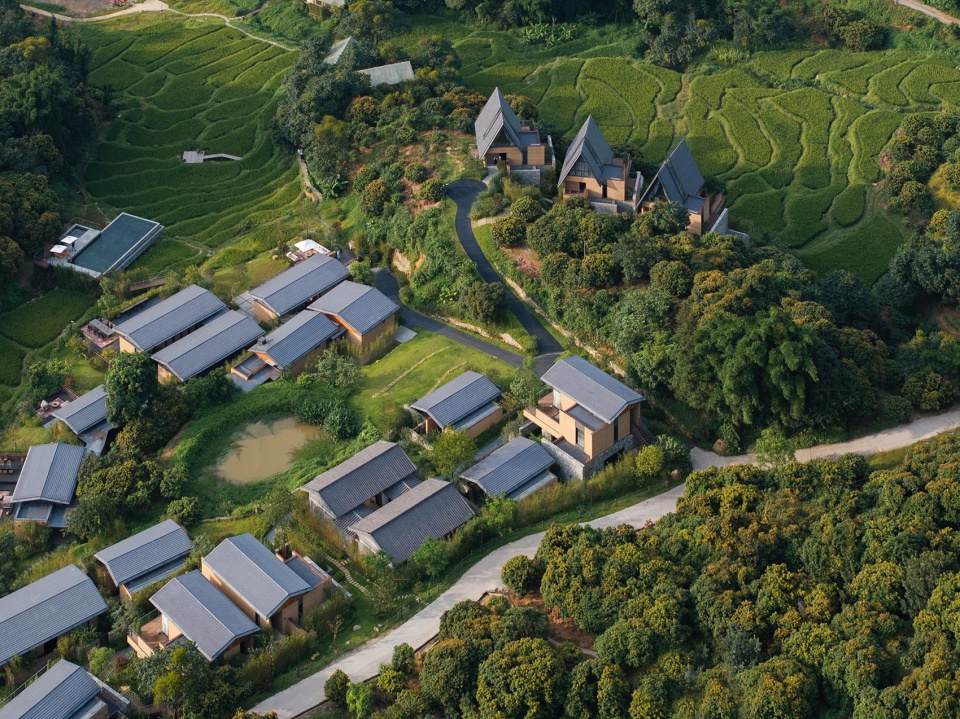
场地上的原生植被,是我们最不愿去惊动的部分。那些高大的乔木、低矮的灌丛、贴着地面蔓延的蕨类与野草,它们已在这里生长了许多年,彼此之间形成了稳定的关系——谁占据上层,谁填补林隙,谁在阴湿处蔓延,各自有各自的秩序。设计要做的,不是重新编排这套秩序,而是顺着它已有的结构,找到那些可以被轻轻填补的空隙。
The native vegetation on the site is the part we least want to disturb. Those tall trees, low shrubs, and ferns and wild grasses spreading along the ground have been growing here for many years, forming a stable relationship with each other—who takes the upper layer, who fills the gaps, who spreads in the shady, damp spots, each has its own order. What the design needs to do is not to rearrange this order, but to work with its existing structure and find the gaps that can be gently filled in.
▼山路顺田野往上攀爬,The mountain path climbs up through the fields © 畿·云瑶度假酒店
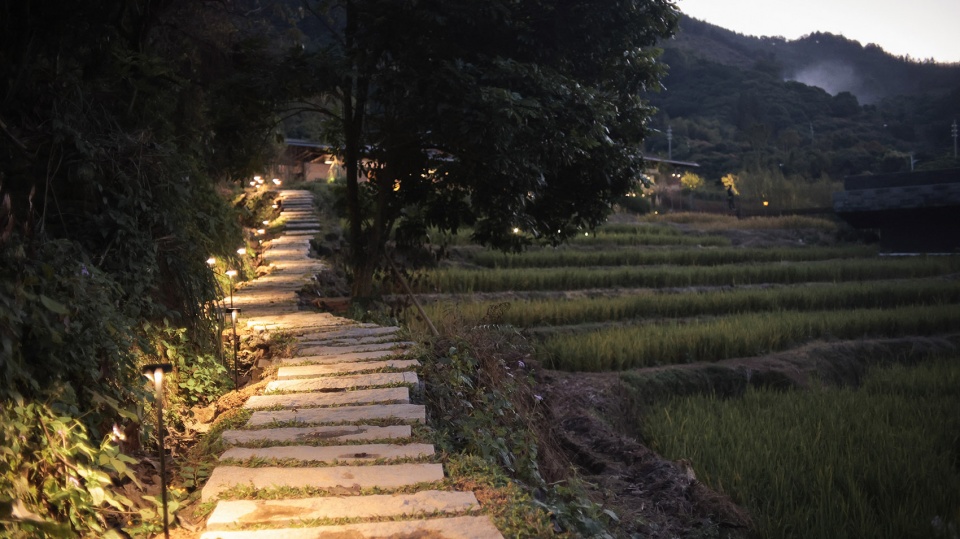
▼层层梯田连接山野,Terraced fields connect the mountains and countryside © 畿·云瑶度假酒店
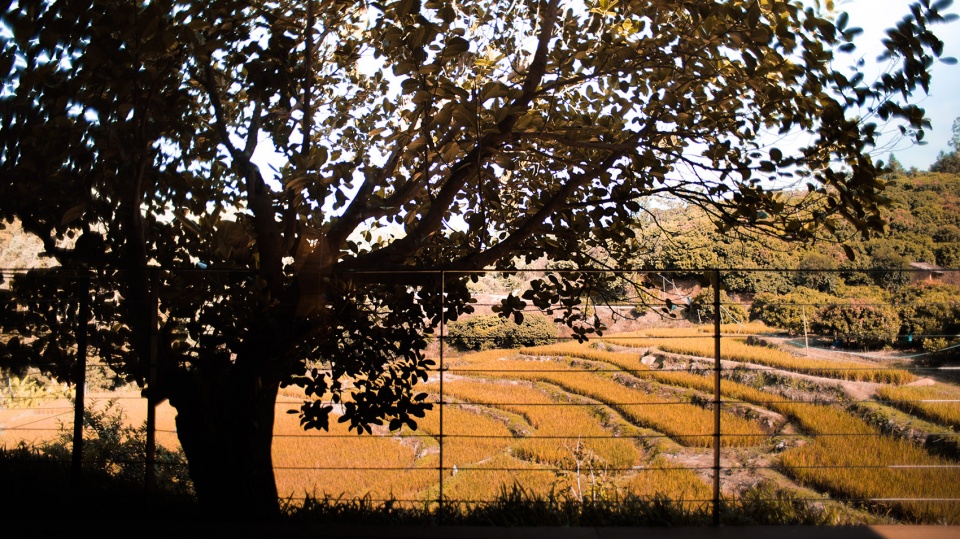
▼梯田中的休闲时刻,Leisure moments in the terraced fields © 畿·云瑶度假酒店
位置选在田埂与坡面的交会处,利用地形本身的高差,让构筑的地面与上一级田面齐平,又高出下一级田面。人从田埂走过来,不需要上台阶,平着迈一步就能进去。构筑的体量压得很低,不至于在这一片开阔的梯田中显得突兀。
The location is chosen at the intersection of the ridge and the slope, using the natural elevation difference so that the constructed ground is level with the upper terrace and slightly higher than the lower terrace. People can walk over from the ridge without needing to climb steps—just a flat step and they can get in. The structure is kept low, so it doesn’t look out of place in this open terraced field.
▼梯田中的休闲时刻,Leisure moments in the terraced fields © 畿·云瑶度假酒店
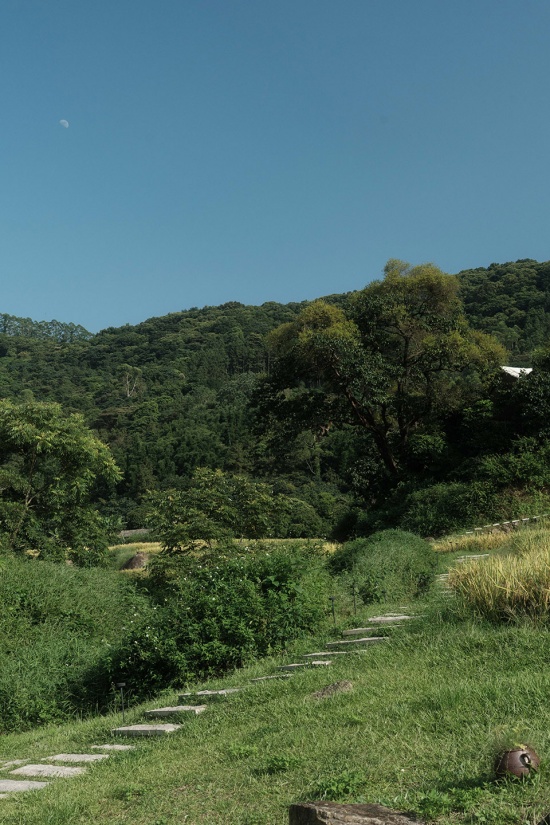
我们先让出空间,给土地以喘息的时间。面对那些因施工或人为活动留下的裸露坡面与破碎林缘,设计不急着一夜填满,而是像对待一道伤口那样,先清创,再敷养。表层覆以本地腐殖土,混入草籽与微生物菌剂,让土壤自身的活力先于植物苏醒。
Let’s first give some space, allowing the land some time to breathe. When facing bare slopes and broken forest edges left by construction or human activity, the design doesn’t rush to fill it all overnight. Instead, it treats it like a wound—first cleaning it up, then nurturing it. The surface is covered with local humus, mixed with grass seeds and microbial inoculants, letting the soil’s own vitality wake up before the plants.
▼山林背景下的无边泳池,Infinity pool set against a mountain forest backdrop © 畿·云瑶度假酒店
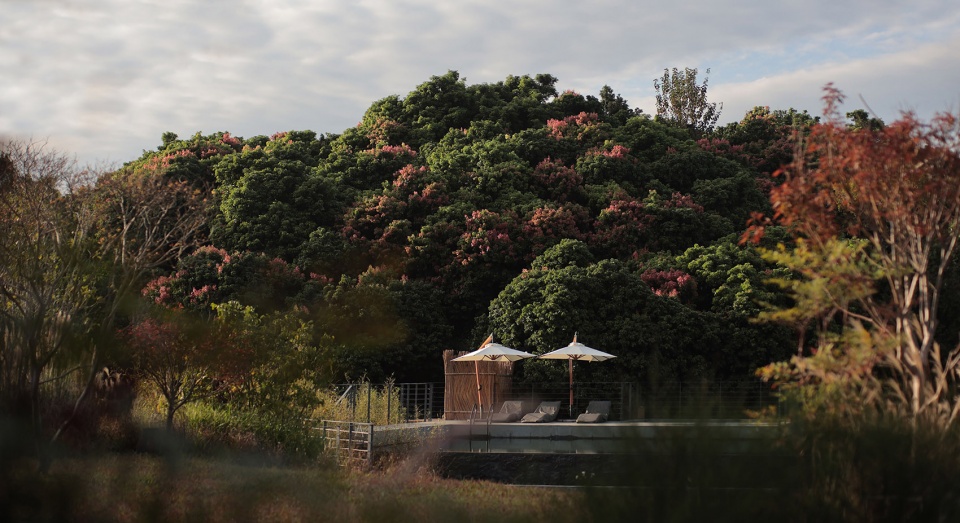
▼山林背景下的无边泳池,
Infinity pool set against a mountain forest backdrop © 畿·云瑶度假酒店
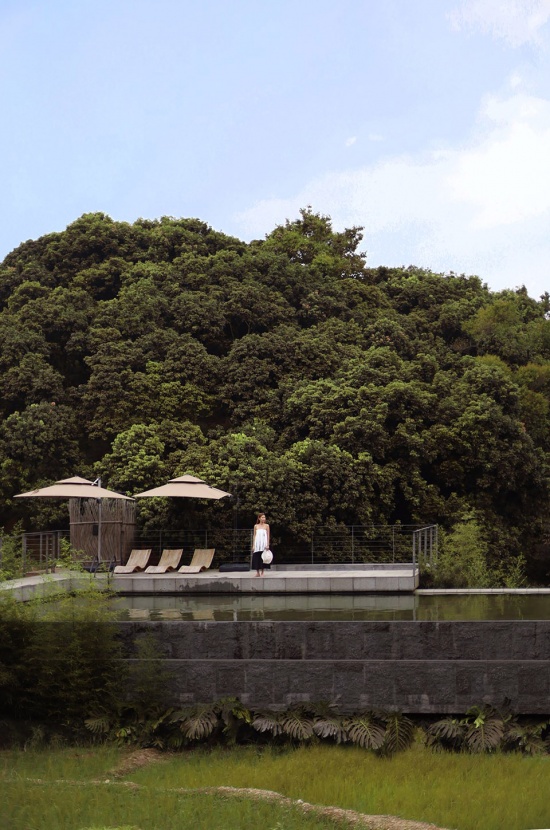
▼活动场地周边增加孤赏树,Add a solitary tree around the event venue © 畿·云瑶度假酒店
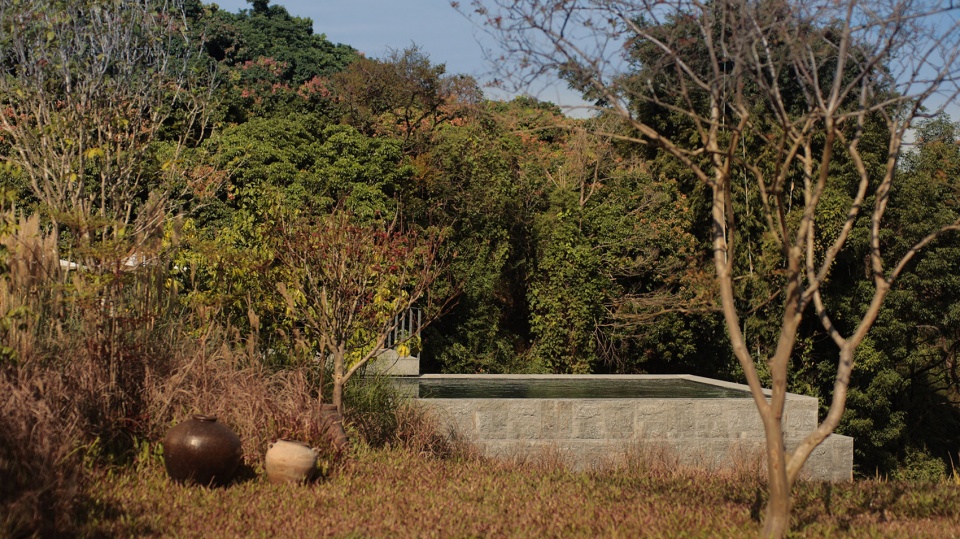
植物选择遵循岭南地域特征,以乔木构建山林骨架,以灌木与地被丰富空间层次,通过季相变化形成不同时间维度的景观体验。春夏繁茂、秋冬沉静,植物的生长成为酒店持续变化的风景,让场地重新回归自然状态,呈现具有岭南气质的山林色彩与生命力。
The plant selection follows the characteristics of the Lingnan region, using trees to build the forest backbone and shrubs and ground cover to enrich the spatial layers. Seasonal changes create different landscape experiences over time. Lush in spring and summer, calm in autumn and winter, the growth of the plants becomes an ever-changing scenery for the hotel, letting the site return to a natural state, showcasing the forest colors and vitality typical of the Lingnan area.
▼原生植物包裹的庭院,
A courtyard wrapped in native plants © 畿·云瑶度假酒店
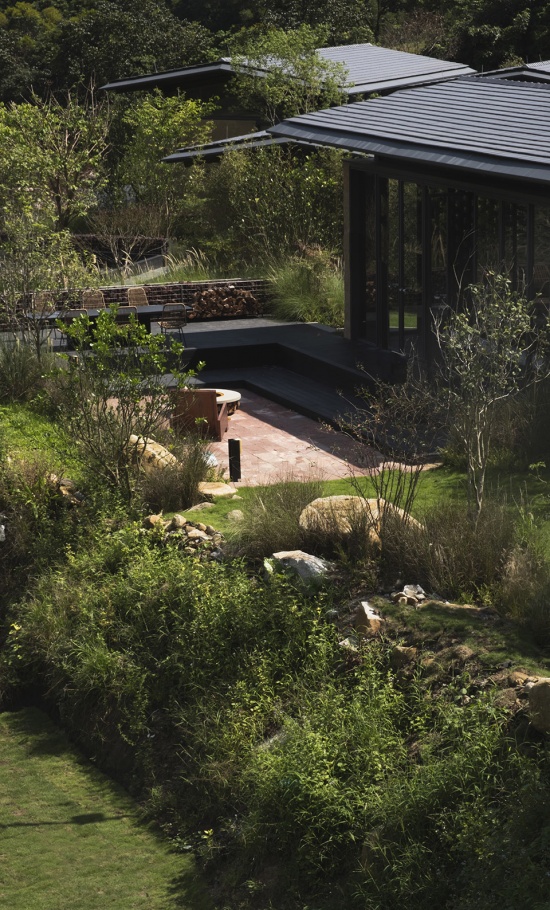
雨季时,雨水沿天然沟谷汇聚成细流,裹挟落叶与腐殖质,在低洼处短暂停留,又顺着坡面继续下行——它不是需要被排走的“水患”,而是场地的血脉,滋养着每一层植被的根系,也塑造着地形的肌理。
▼雨水排水系统,rainwater drainage system © 畿·云瑶度假酒店
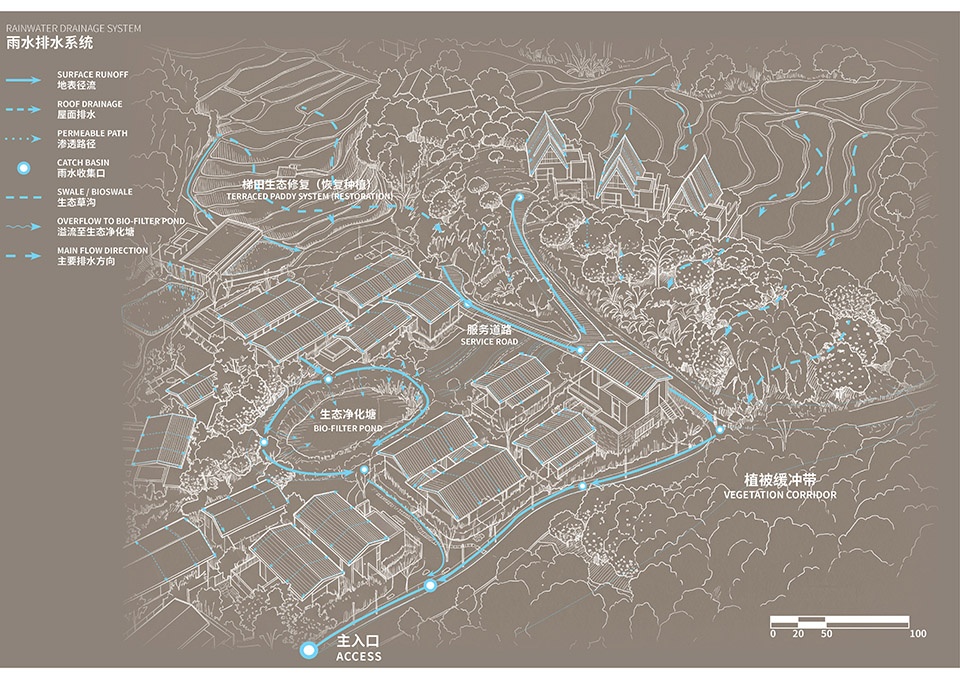
During the rainy season, rainwater gathers along natural gullies into small streams, carrying fallen leaves and humus, pausing briefly in low-lying areas, and then continuing down the slopes—it’s not a ‘flood’ that needs to be drained away, but the lifeblood of the land, nourishing the roots of every layer of vegetation and shaping the texture of the terrain.
▼野趣植物,Wild plants © 畿·云瑶度假酒店
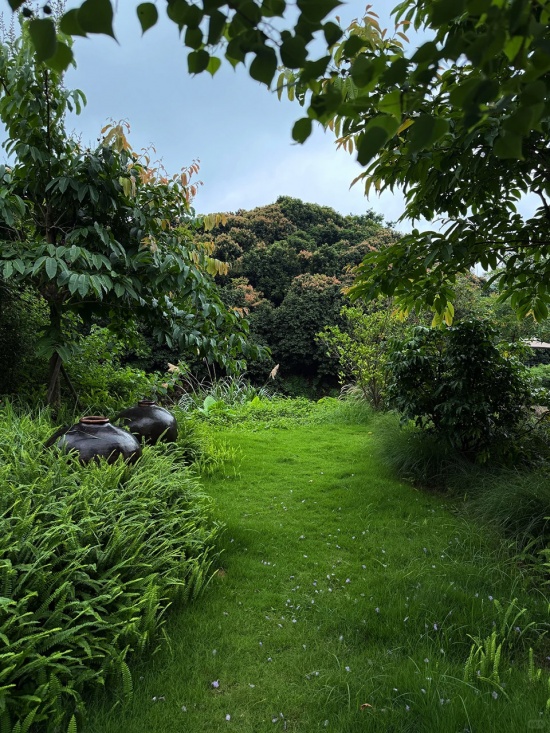
在原生乔木构筑的深绿背景之上,只于少数节点轻轻落笔——转角处添几株开花的小树,点亮季节的讯号;林间空地边缘引入低矮灌丛,回应山野的节奏;溪畔湿润处点缀几丛高草,风过时摇曳出柔软的线条。增补的植物全部来自本地,数量克制,位置精确,不喧宾夺主,只为在穿行途中偶尔让人眼前一亮。
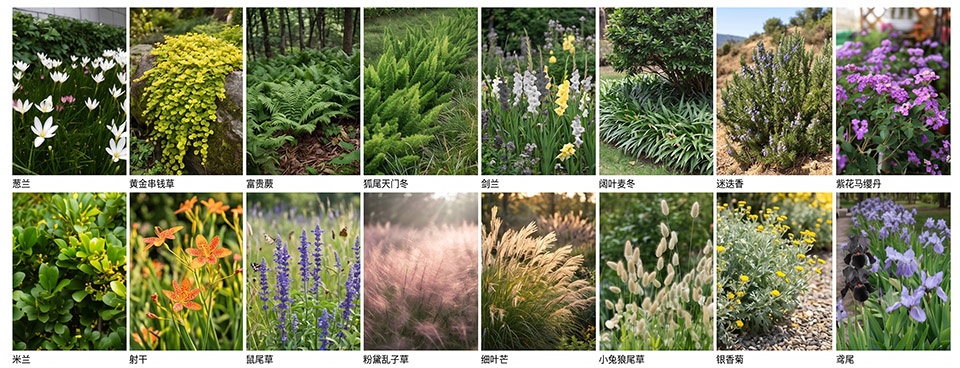
▼局部苗木选择,Local Seedling Selection © 畿·云瑶度假酒店
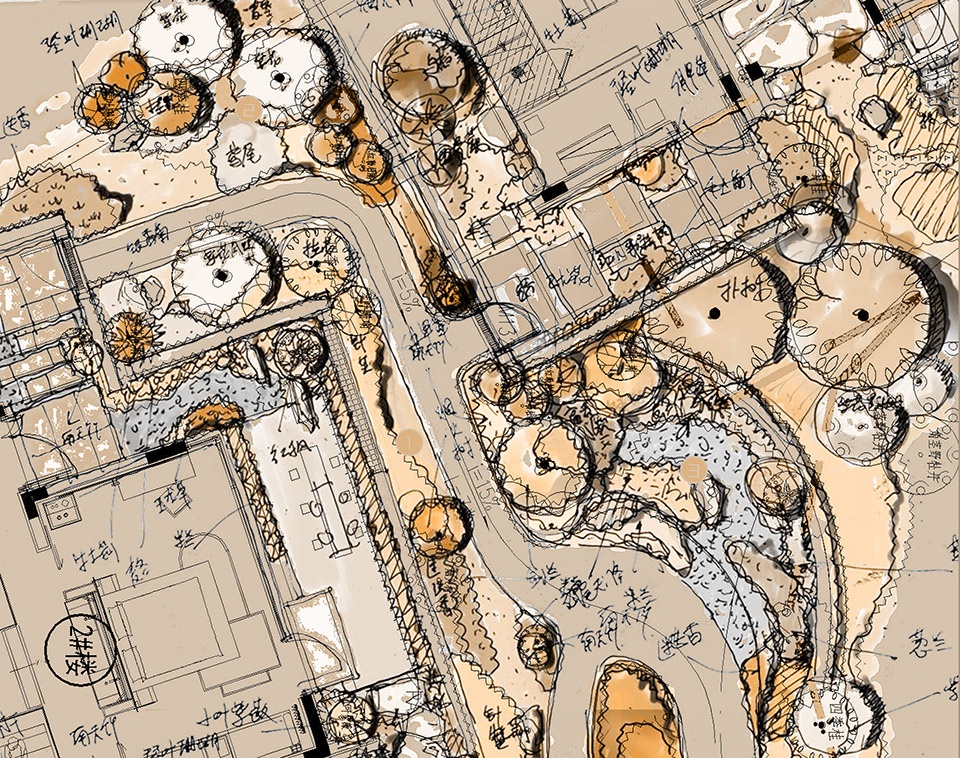
▼局部苗木选择,Local Seedling Selection © 畿·云瑶度假酒店
On the deep green backdrop built by native trees, I only lightly touch a few spots—adding a few flowering small trees at corners to signal the season; introducing low shrubs along the edges of clearings to echo the rhythm of the hills; scattering some tall grass in the damp areas by the stream, swaying softly in the wind. All the added plants are local, kept to a modest number and placed precisely so they don’t steal the show, just to give people a pleasant surprise as they walk through.
▼野趣植物与墙体搭配,Wild plants paired with walls © 畿·云瑶度假酒店
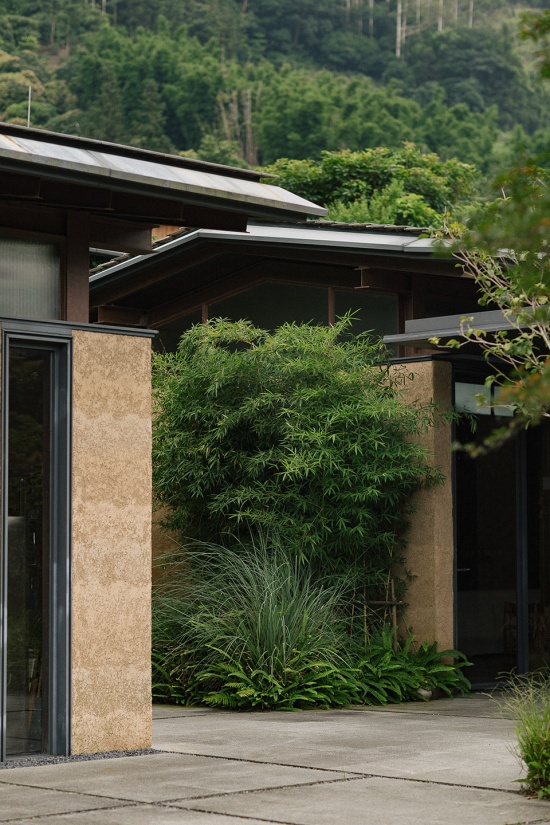
人站在恢复后的山前,看见的不再是人工造景,而是一片正在自然演替的森林。风穿过林冠发出深沉的啸声,落叶堆积成厚软的腐殖层,偶尔有松鼠从枝头跃过——这些迹象表明,山体已经重新开始呼吸。我们做的,不过是给它一个重新开始的机会,然后,安静地退到旁边,看着绿色自己回来。
Standing in front of the restored mountain, people no longer see an artificial landscape, but a forest undergoing natural succession. The wind whistles deeply through the canopy, fallen leaves pile up into thick, soft humus, and sometimes squirrels leap from branch to branch—these signs show that the mountain has started breathing again. All we did was give it a chance to start over, and then quietly step aside and watch the green return on its own.
▼野趣植物,Wild plants © 畿·云瑶度假酒店
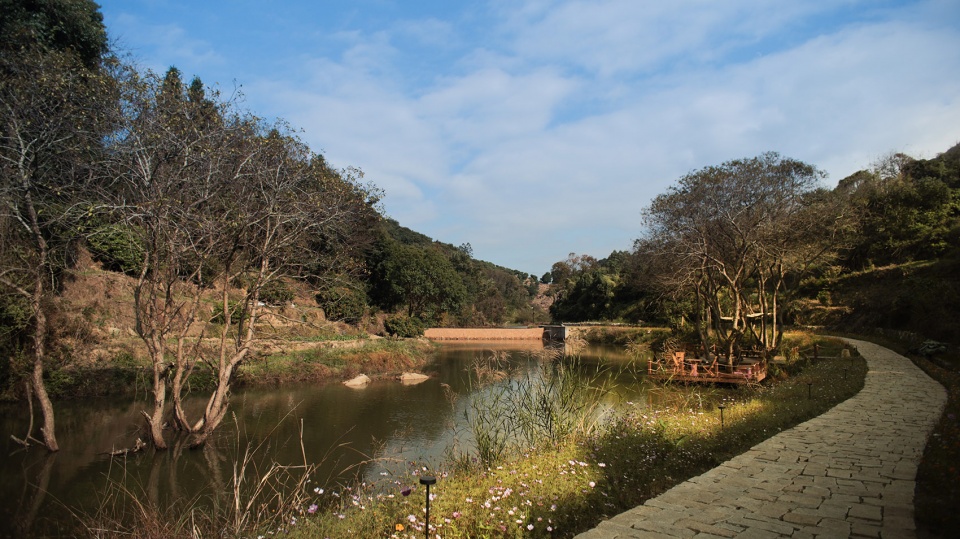
04乡愁记忆|一座酒店一段归家的时间
Memories of Home | A Hotel, a Moment of Returning Home
一个好的酒店,并不只是提供一次停留,而是创造一段可以被记住的经历。
A good hotel isn’t just about providing a place to stay, it’s about creating an experience you’ll remember.
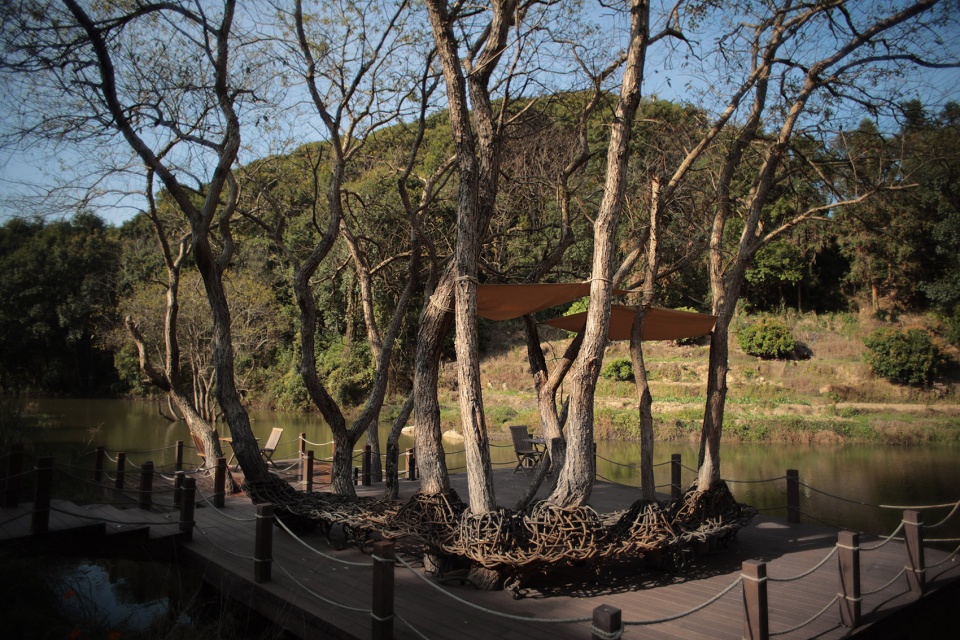
▼码头还原原生居民的生活动线,The pier restores the daily life patterns of the native residents © 畿·云瑶度假酒店
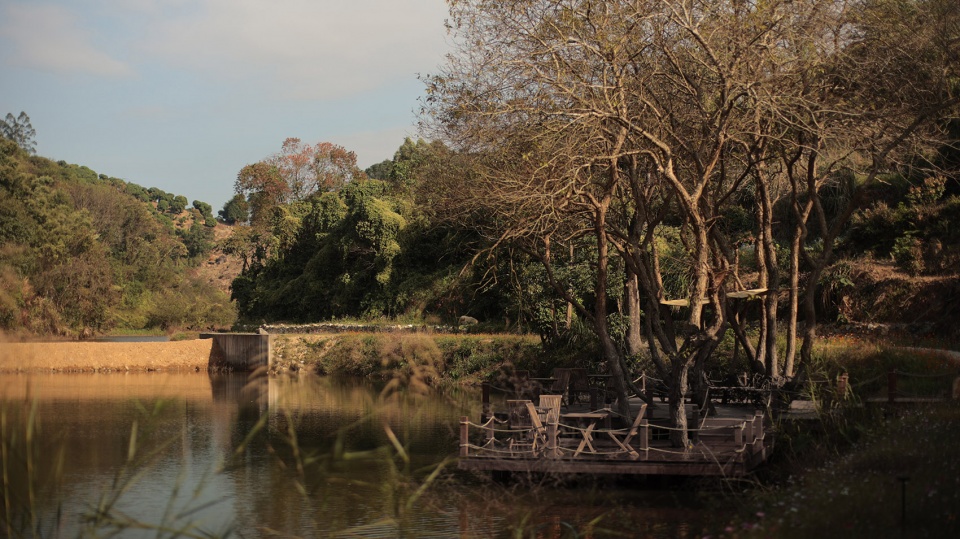
在所有的客家村落里,几乎都有一棵这样的树——樟树、榕树、苦槠或枫香,不知哪一辈人随手种下,或者干脆是鸟衔来的种子自己长出来的。它站在进村的路口,像一个不说话的老人,用树荫接纳每一个归来的人,也用枝叶目送每一个远去的人。在酒店的设计里,这棵树成了最重要的锚点,承载着原生场地的乡愁。
In almost every Hakka village, there’s usually a tree like this—camphor, banyan, Chinese cork oak, or sweet gum. Nobody really knows which generation planted it, or maybe it just grew from a seed carried by a bird. It stands at the entrance of the village, like a silent elder, welcoming everyone who comes back under its shade, and seeing off everyone who leaves with its branches. In the hotel’s design, this tree became the most important anchor, carrying the nostalgia of the original site.
▼自然湖畔的休闲场景,A relaxing scene by a natural lakeside © 畿·云瑶度假酒店
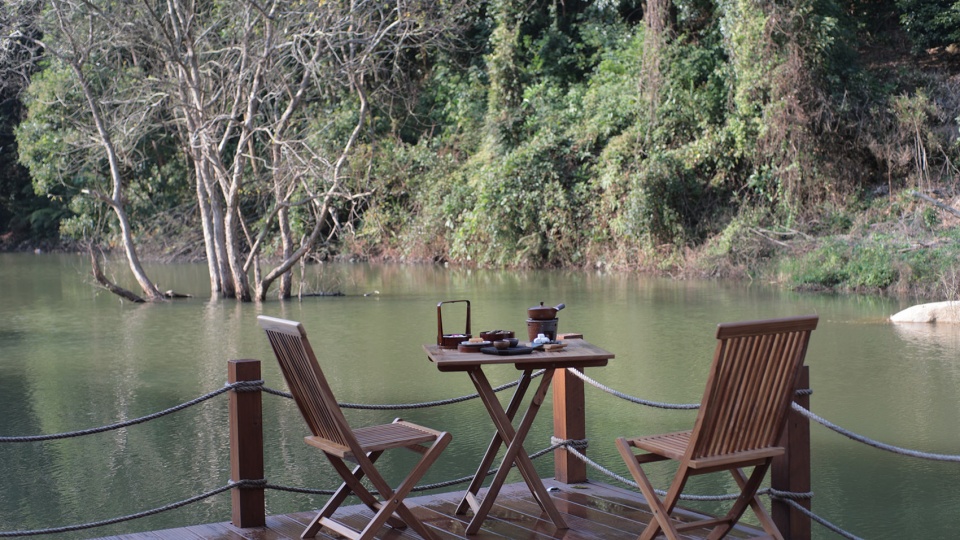
乡愁是一种奇怪的东西——它不指向某栋具体的房子,而是指向某种气味、某种光线、某种让人忽然松弛下来的瞬间。我们试着让酒店成为这样的容器:不提供标准化的舒适,而是制造那些让人恍惚想起“好像在哪里经历过”的时刻。
Homesickness is a strange thing—it doesn’t point to a specific house, but to a certain smell, a certain light, a moment that makes you suddenly relax. We try to make the hotel into that kind of container: not offering standardized comfort, but creating those moments that make you hazily think, ‘I feel like I’ve experienced this somewhere before.’
▼田野萤火,Fireflies in the field © 畿·云瑶度假酒店
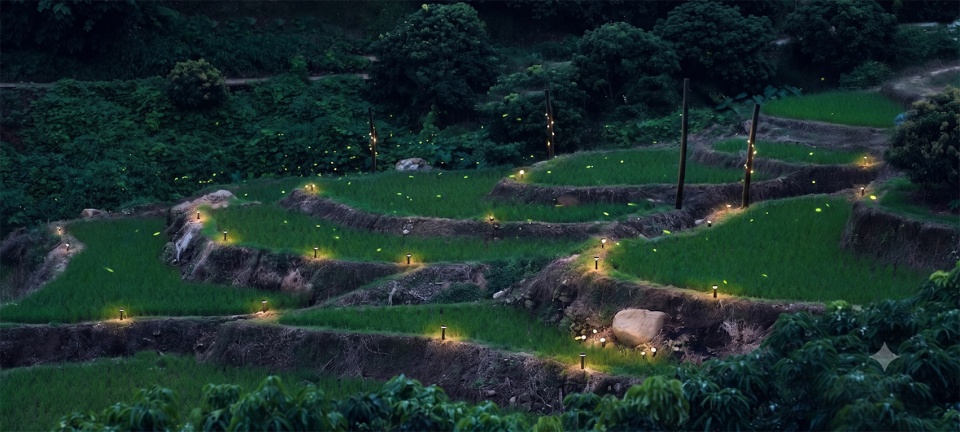
▼感受真实的田园场景,Experience the real countryside scene © 畿·云瑶度假酒店
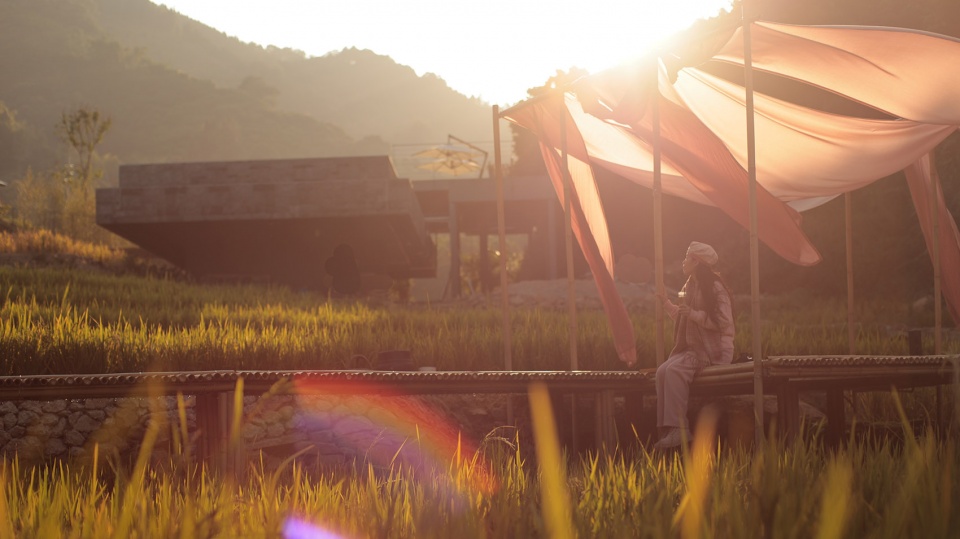
▼在乡野感知四季,Sensing the seasons in the countryside © line+
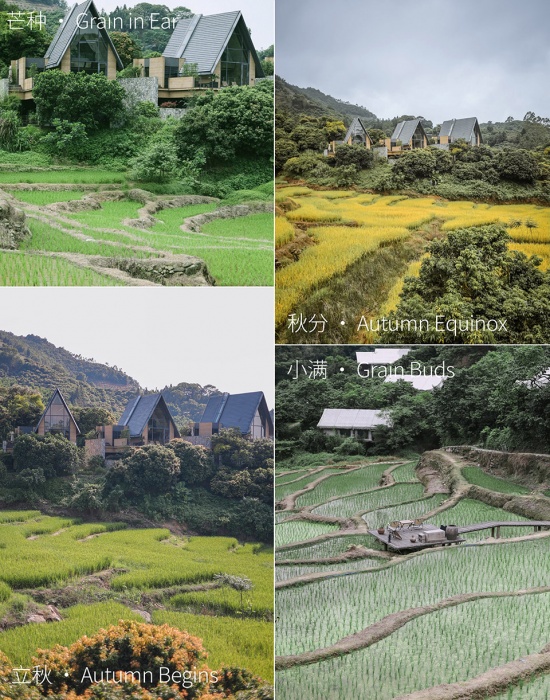
田野的四季有自己的颜色和节奏。人站在田埂上看完一整年的轮回,便明白这片土地的风景不是设计出来的——它只是被季节一页页翻出来,被时间的手轻轻摊开。设计所做的,不过是翻到某一页时,在空白的边角添几行小注。真正的叙述者是风、是雨、是种子自己决定在哪道田埂边停下。
The fields have their own colors and rhythms throughout the seasons. When you stand on the ridge and watch a whole year’s cycle, you realize that the scenery of this land isn’t designed—it’s just revealed page by page by the seasons, gently spread out by time. What design does is merely add a few little notes in the blank corners when a certain page comes up. The real storytellers are the wind, the rain, and the seeds themselves, deciding where to pause along the ridge.
▼归于田园,Return to the countryside © 畿·云瑶度假酒店
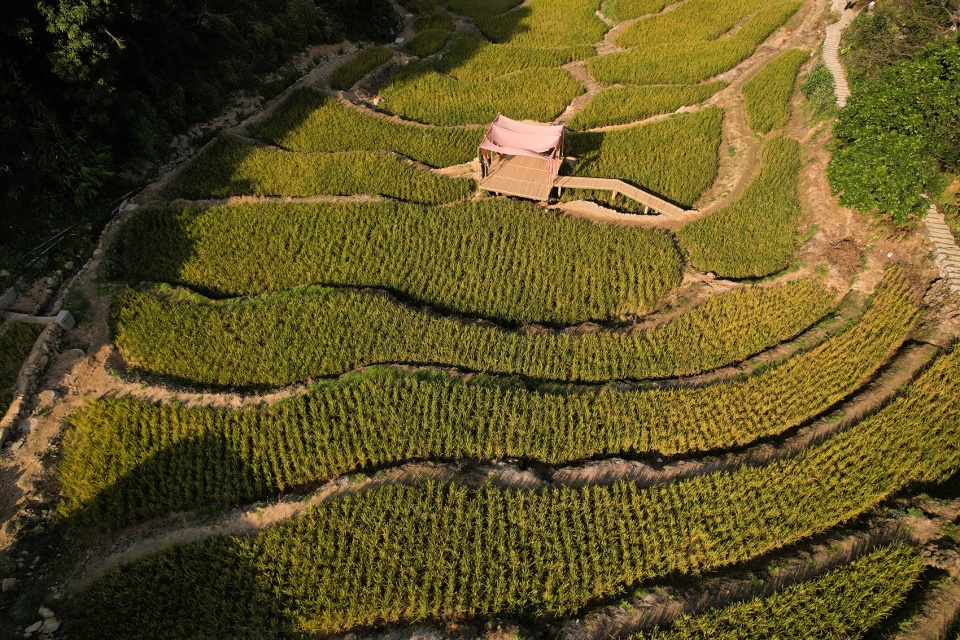
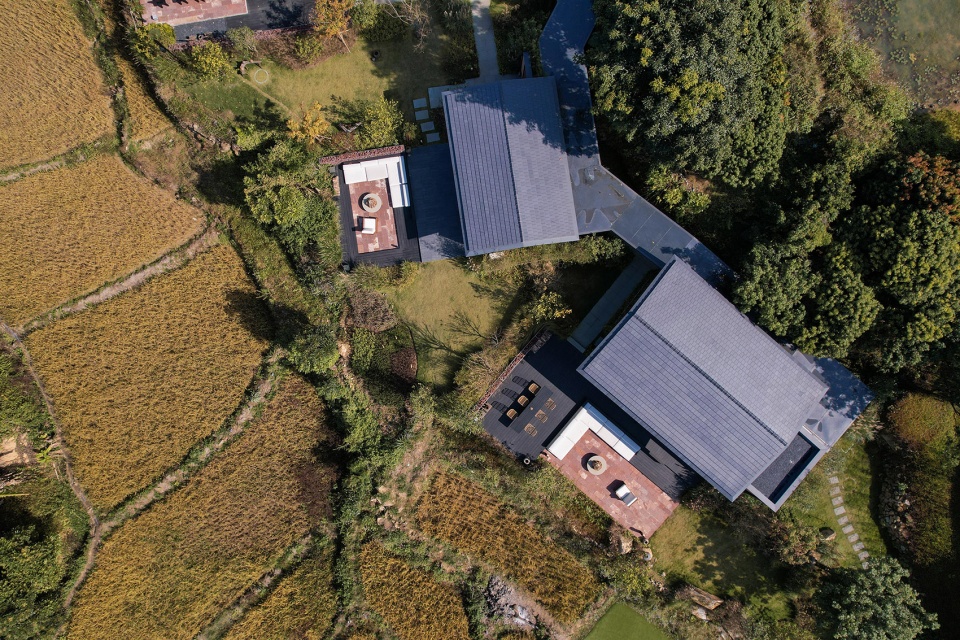
▼归于田园,Return to the countryside © 畿·云瑶度假酒店
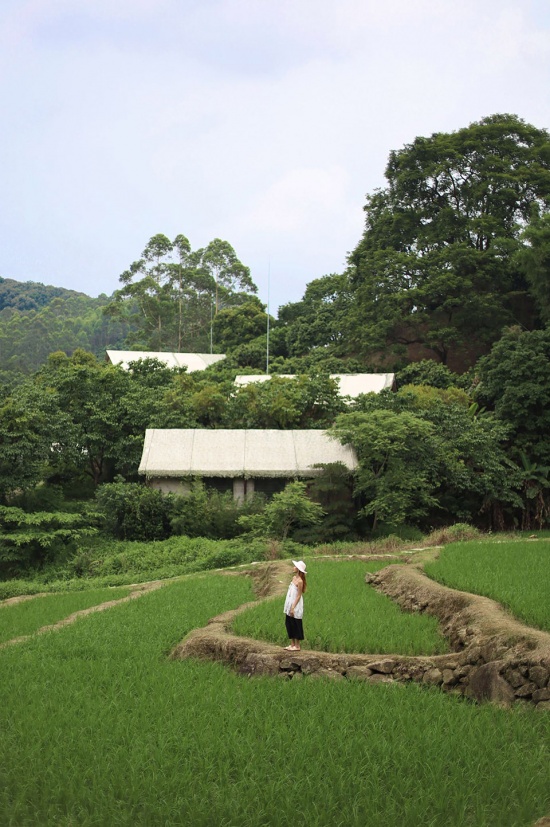
我们希望通过建筑、植物与自然环境的融合,让每一位到访者在这里找到属于自己的情感连接。或许是一段山间漫步、一处庭院停留、一缕晨光穿过树林,又或是一场与家人共享的晚餐,这些细微的场景最终沉淀为空间记忆。
We hope that by blending architecture, plants, and the natural environment, every visitor can find their own emotional connection here. It might be a walk through the mountains, a pause in a courtyard, a ray of morning light shining through the trees, or a dinner shared with family—these small moments eventually settle into lasting memories of the space.
▼归家山径,The Path Home Through the Mountains © 畿·云瑶度假酒店
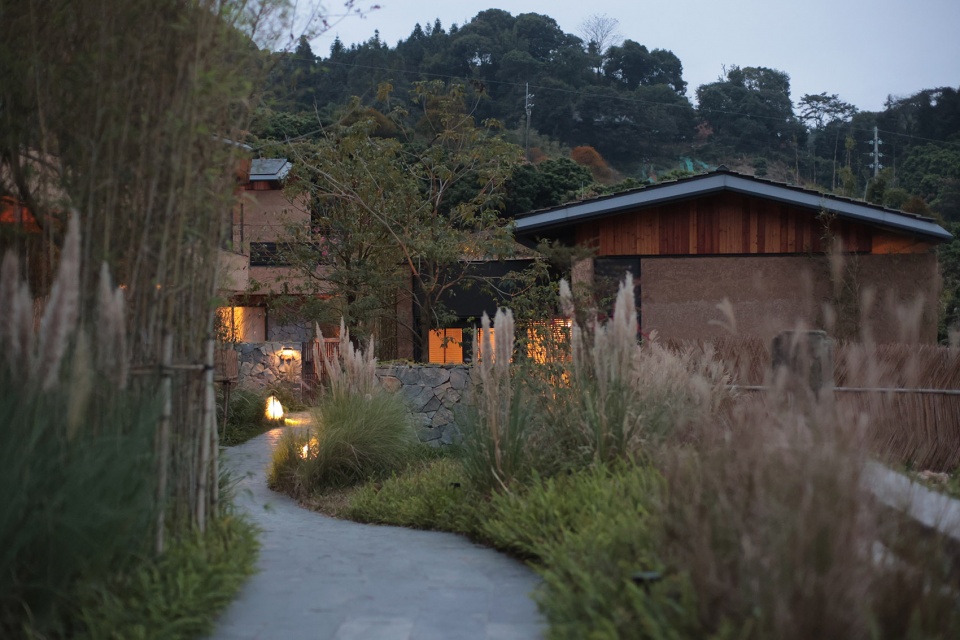
▼归家山径,The Path Home Through the Mountains © 畿·云瑶度假酒店
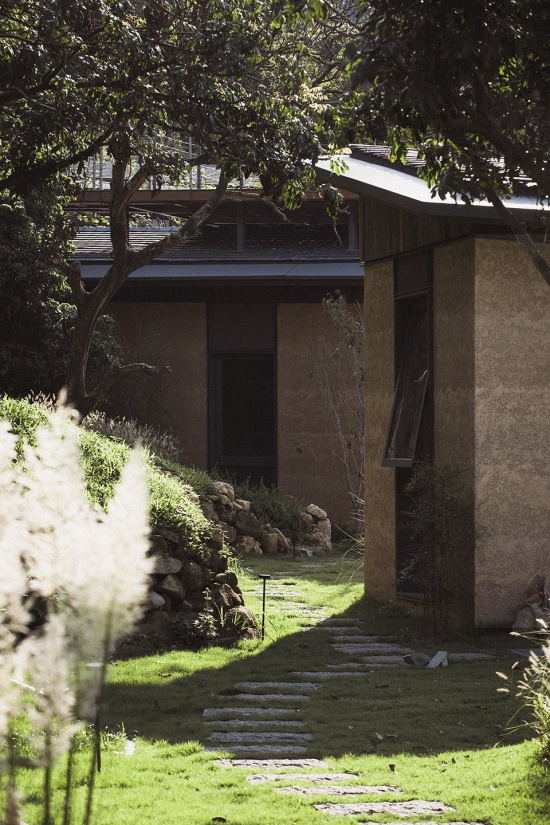
▼村落活动中心,Village Activity Center © DONG建筑影像
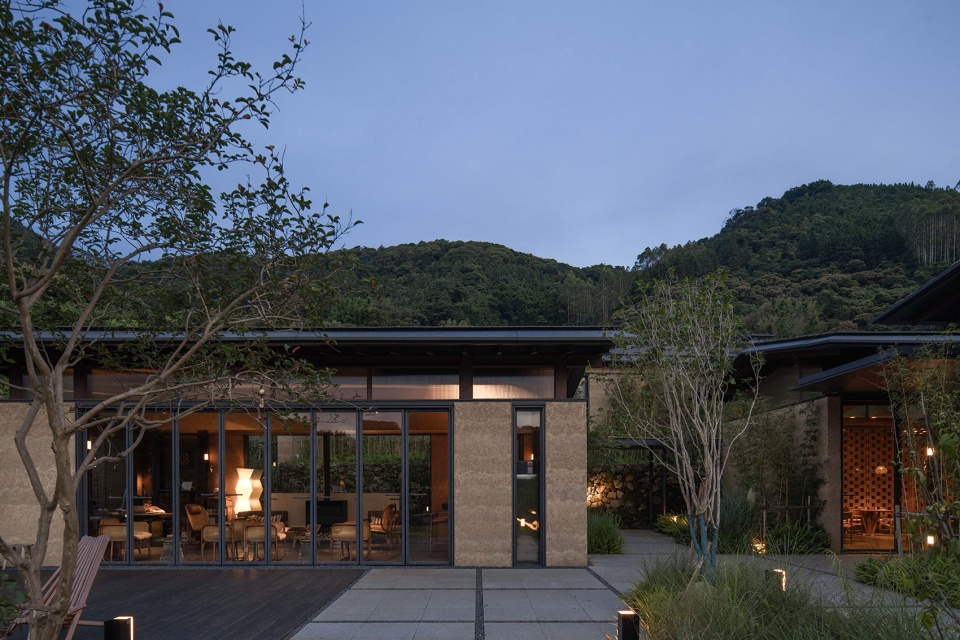
▼面向山林的居所,
A home facing the mountains and forests © 畿·云瑶度假酒店
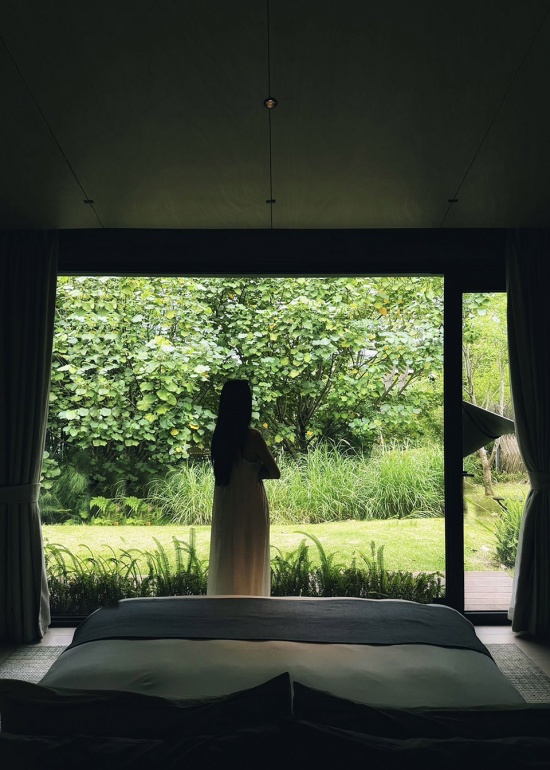
▼遥望夜间的泳池,Gazing at the pool at night © 畿·云瑶度假酒店
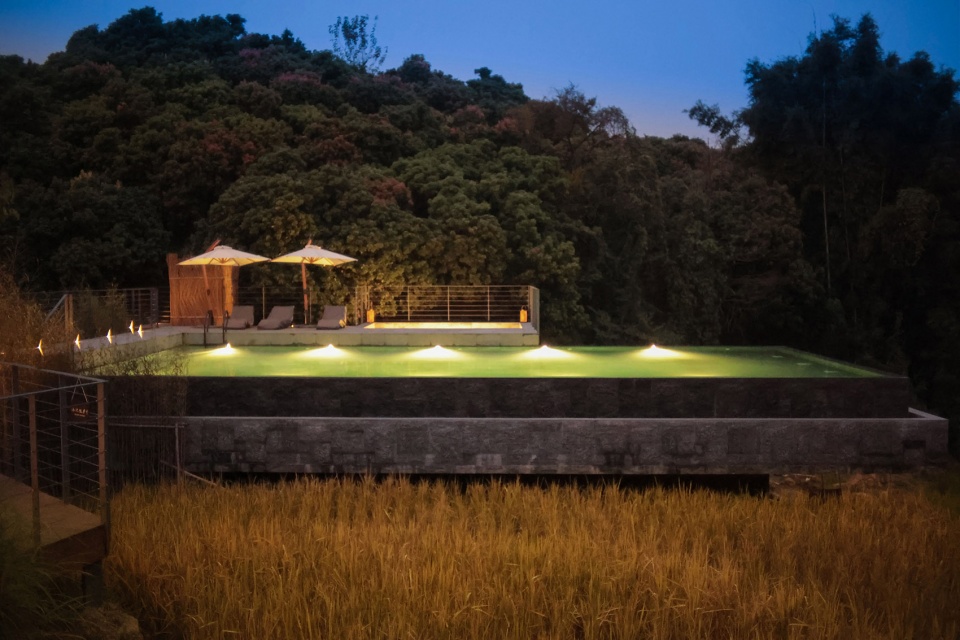
酒店不追求短暂的视觉惊艳,而希望留下具有本土气质、时间温度与乡愁情感的场所,让人在离开之后,依然记得这里的山、水、植物,以及那段归家的时光。
The hotel doesn’t aim for a fleeting visual wow, but hopes to create a place with local character, a sense of time, and a touch of nostalgia, so that even after leaving, people still remember the mountains, water, plants, and that feeling of coming home.
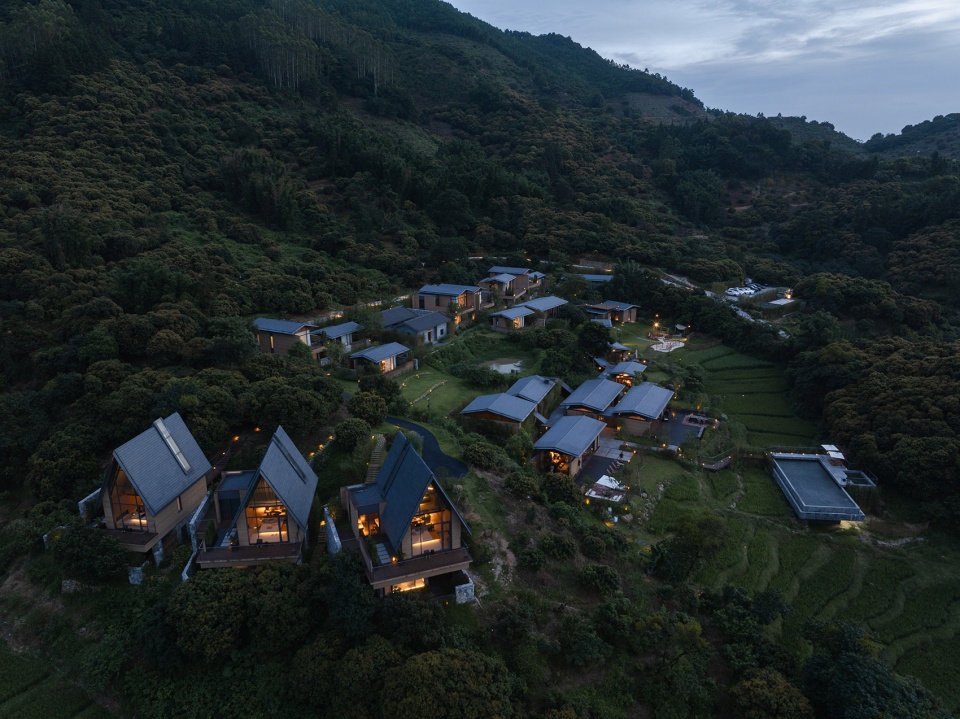
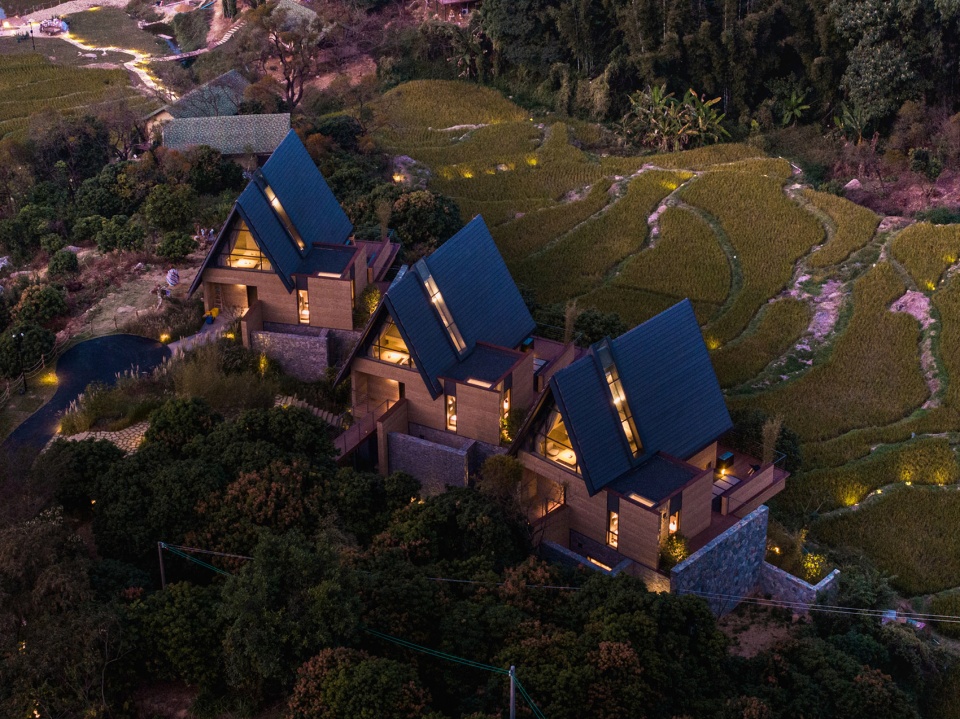
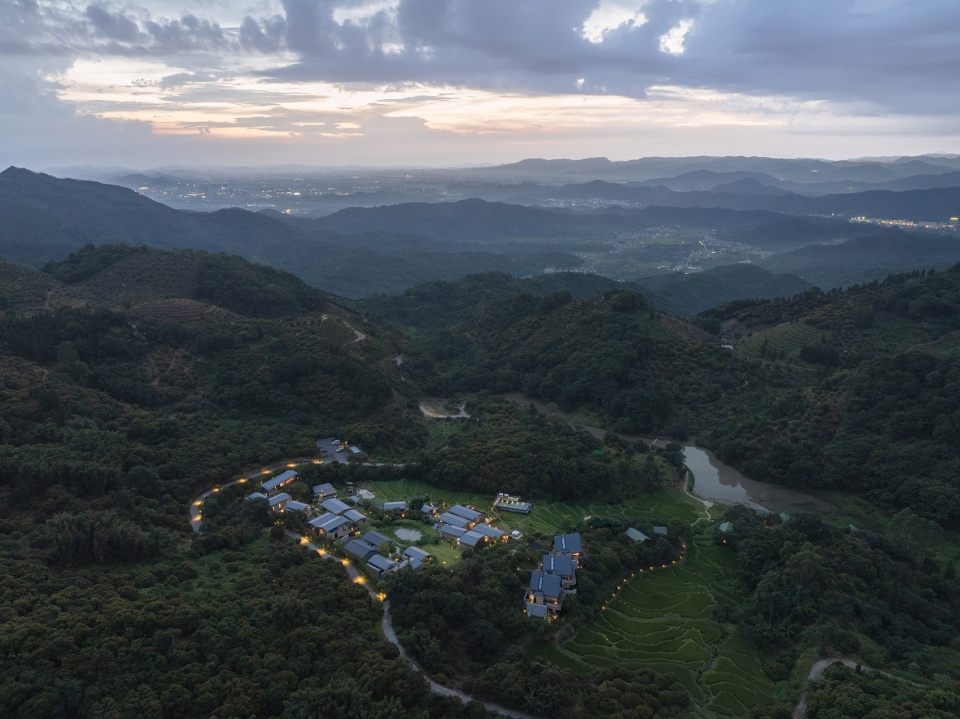
▼酒店傍晚鸟瞰,aerial view of the hotel at dusk © 畿·云瑶度假酒店
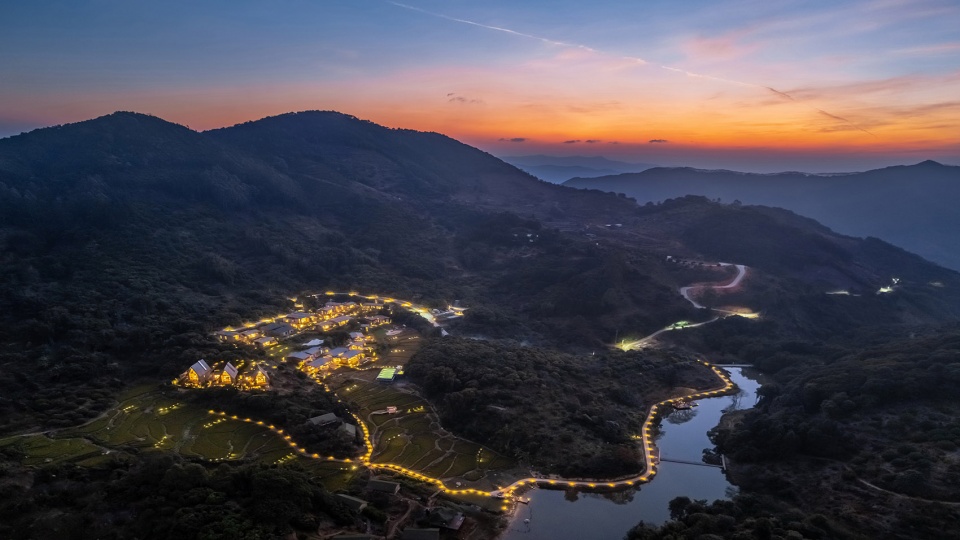
设计从头到尾只做了一件事:倾听,然后回应。我们倾听地形的起伏,于是有了顺着山势生长的路径与平台,高差被尊重而非削平,每一处停留都安放在地形原本就想让人停下的位置。我们倾听植被的秩序,于是有了融入而不打扰的植物策略,原生乔木站在它们站了半生的地方,新来的补种谦逊地填补空隙,直到时间抹去人为的痕迹。我们倾听水流的方向,于是有了顺着径流展开的空间,溪沟与洼地被保留为风景的一部分,水走水的路,人走人的路。我们倾听土地的往事,于是有了老树下的石凳、旧墙基上长出的新墙、田野边缘那个用来避雨的小棚子——它们让到访者在不自觉中,走入一段已经存在了很久的时光。
The design did just one thing from start to finish: listen, then respond. We listened to the ups and downs of the terrain, which gave rise to paths and platforms that grow along the slopes; the height differences were respected rather than flattened, and every stopping point was placed where the land naturally invites people to pause. We listened to the order of the vegetation, which led to a planting strategy that blends in without disturbing; native trees stand where they’ve spent half a lifetime, and new additions quietly fill the gaps until time erases any human trace. We listened to the direction of the water, which created spaces that follow the flow; streams and depressions were preserved as part of the scenery—water goes its way, people go theirs. We listened to the history of the land, which brought us the stone benches under old trees, new walls growing on top of old foundations, the little shelter by the edge of the field for taking cover from the rain—they let visitors unconsciously step into a stretch of time that has existed for a long while.
▼酒店傍晚鸟瞰,aerial view of the hotel at dusk © DONG建筑影像
项目名称:畿·云瑶度假酒店
项目类型:度假酒店建筑景观设计
设计方:line+
公司网站:https://www.lineplus.studio/
联系邮箱:pr@lineplus.studio
项目设计:2021.3-2022.1
完成年份:2022.6-2023.9
设计团队:设计总监|孟凡浩;景观主创|李上阳;建筑团队|陶涛、袁栋、杨含悦、邢舒、陈彬、李昕光、郝军、施宇航、沈瑞;景观概念团队|金剑波、饶非儿、池晓媚、李俊;景观深化单位|广州天泓房地产开发有限公司、萤火景观科技发展有限公司;景观深化团队|庄海城、莹雪、张雪莹、曾定煌;室内设计单位|TOMO東木筑造
项目地址:广东省广州市从化区温泉镇龙新村瑶山社
景观面积:约5万㎡
摄影版权:DONG建筑影像、line+、畿·云瑶
Project name:Guangzhou Ji Yun Yao Resort
Project type:Architectural and Landscape Design
Design:line+
Website: https://www.lineplus.studio/
Contact e-mail: pr@lineplus.studio
Design year:2021.3-2022.1
Completion Year:2022.6-2023.9
Leader designer & Team:Design Director | Meng Fanhao; Lead Landscape Designer | Li Shangyang; Architecture Team | Tao Tao, Yuan Dong, Yang Hanyue, Xing Shu, Chen Bin, Li Xinguang, Hao Jun, Shi Yuhang, Shen Rui; Landscape Concept Team | Jin Jianbo, Rao Feier, Chi Xiaomei, Li Jun; Landscape Development Units | Guangzhou Tianhong Real Estate Development Co., Ltd., Firefly Landscape Technology Development Co., Ltd.; Landscape Development Team | Zhuang Haicheng, Ying Xue, Zhang Xueying, Zeng Dinghuang; Interior Design Unit | TOMO Dongmu Construction
Project location:Yaoshan Community, Longxin Village, Wenquan Town, Conghua District, Guangzhou City, Guangdong Province
Gross built area:About 50,000 square meters
Photo credit: Dong Image, line+,Ji Yun Yao Resort
More: line+ 。更多关于他们:line+ on gooood



看网上评论说酒店运维很不好,乡野酒店还是有些模式短板
都是line+自己的建筑景观一体化项目,24年时孟凡浩发了一篇,26年李上阳再发一篇,图片还都有重复性