感谢 CABLE + 梓集 予gooood分享以下内容。更多关于他们,请至:CABLE on gooood, fabersociety on gooood
Appreciation towards CABLE + fabersociety for providing the following description:
在深圳迎接2026年亚太经合组织会议的背景下,“深圳叙事”展览以改革开放以来四十余年的城市成长为主线,讲述这座城市在高速发展过程中,如何持续调适人与自然、城市与区域、技术与生态之间的关系。
As Shenzhen prepares to host APEC 2026, “Shenzhen Narratives” traces over four decades of urban growth since Reform and Opening-up, exploring how the city continually reshapes relationships between people and nature, city and region, technology and ecology.
▼引桥全景,Exhibition view © CABLE
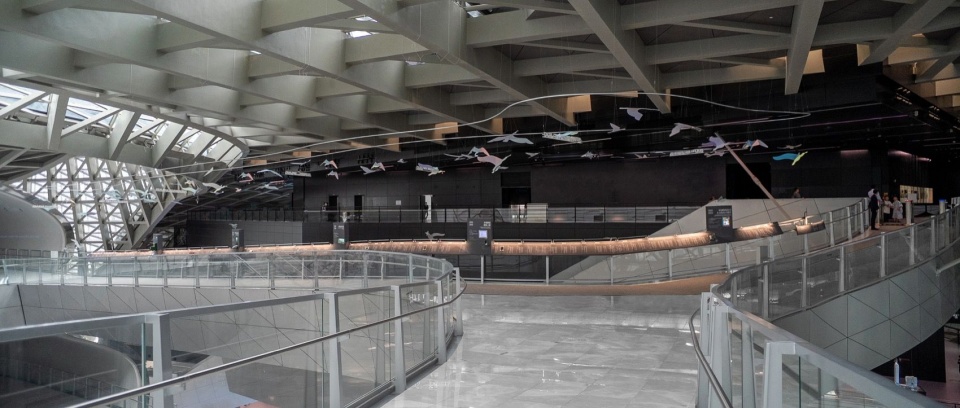
位于展览引桥的“互联时空”单元,是整个大展的水平向步道,也是一条重新认识深圳的坐标轴。展览将原本承担通行功能的空中连桥转化为一条“迁徙长廊”:一侧展开深圳的城市时间,另一侧则借候鸟迁徙呈现深圳所处的亚太生态网络。两条线索沿着同一段行进路径并置,让深圳的发展历程不再是一段孤立的地方历史,而成为全球化、区域协作与生态流动共同塑造的城市进程。
“Connected Space-Time” turns the exhibition’s elevated bridge into both a horizontal promenade and a new axis for understanding Shenzhen. This “migration corridor” pairs the city’s timeline with the Asia-Pacific ecological network revealed by migratory birds. Along one route, Shenzhen’s history emerges as a process shaped by globalization, regional cooperation and ecological flows.
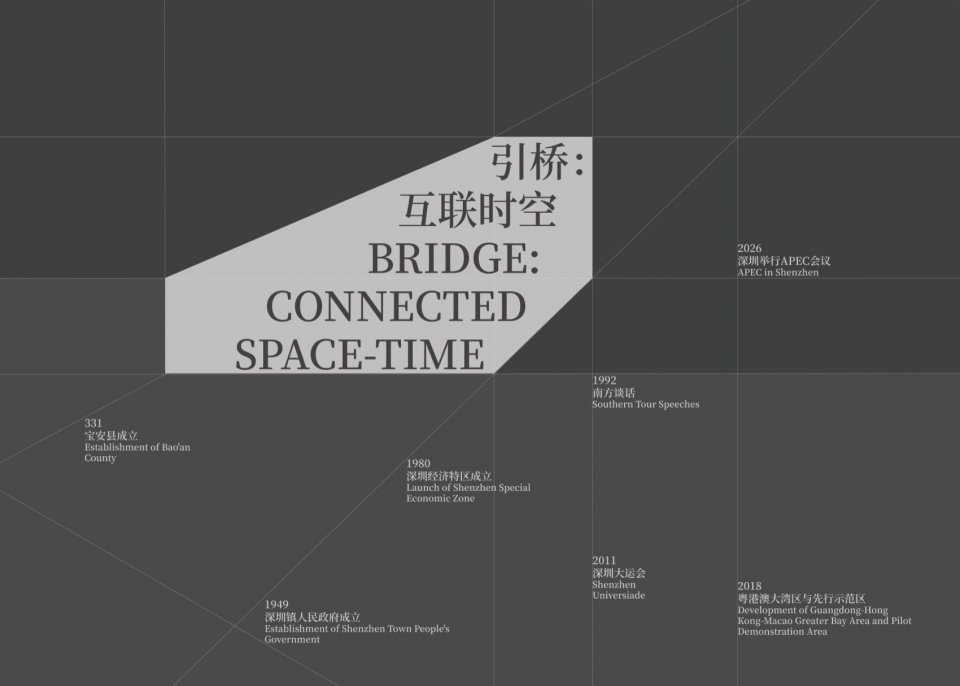
▼展览视觉,Exhibition visual © CABLE
展览叙事
Exhibition Narrative
如果将两馆五层通高的中庭空间想象成一座壮阔河谷,横架高空的引桥则是人们穿梭文明岸间的通路,同时还将在这里想象鸟群循着亘古不变的航线掠过水面。
Imagine the museums’ five-storey atrium as a vast river valley: the bridge becomes a passage between shores of civilization, where birds can be imagined skimming the water along ancient flight paths.
时间:城市的来时路
Time: The City’s Journey
“互联时空”的第一条线索是时间。展览以深圳的发展历程为基础,将不同年代的政策突破、城市建设、产业演进、科技创新与社会生活组织在一条连续的时间线上。从经济特区的建立、“深圳速度”的形成,到互联网、移动通信、人工智能等技术浪潮,深圳的发展不断回应着中国与世界的结构性变化。
Time is the first thread of “Connected Space-Time.” A continuous timeline brings together policy breakthroughs, urban construction, industrial change, technological innovation and everyday life. From the Special Economic Zone and “Shenzhen Speed” to the internet, mobile communications and AI, the city has continually responded to structural changes in China and the world.
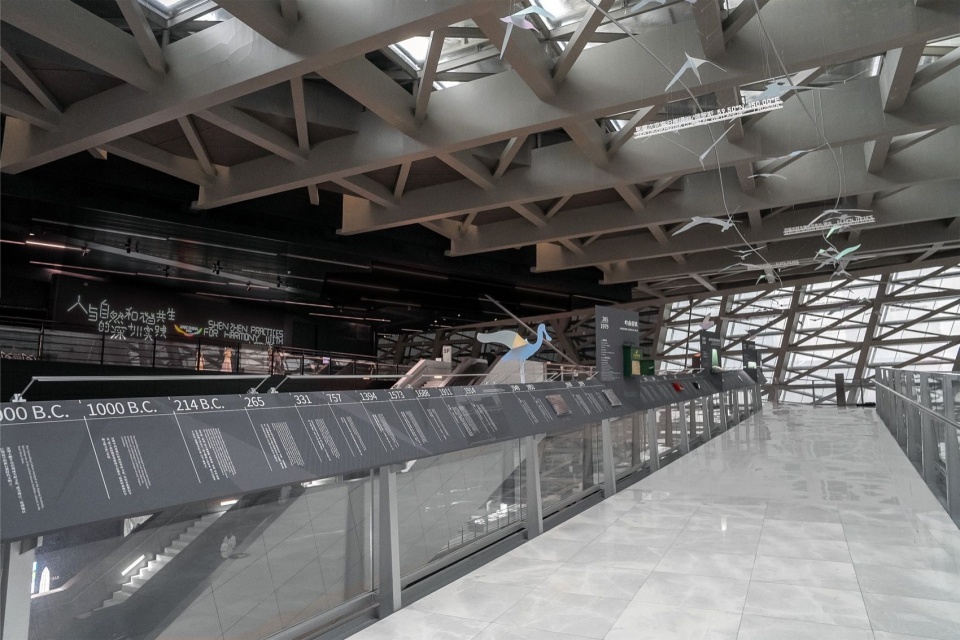
▼深圳大事记图面(节选),Shenzhen timeline (detail) © CABLE
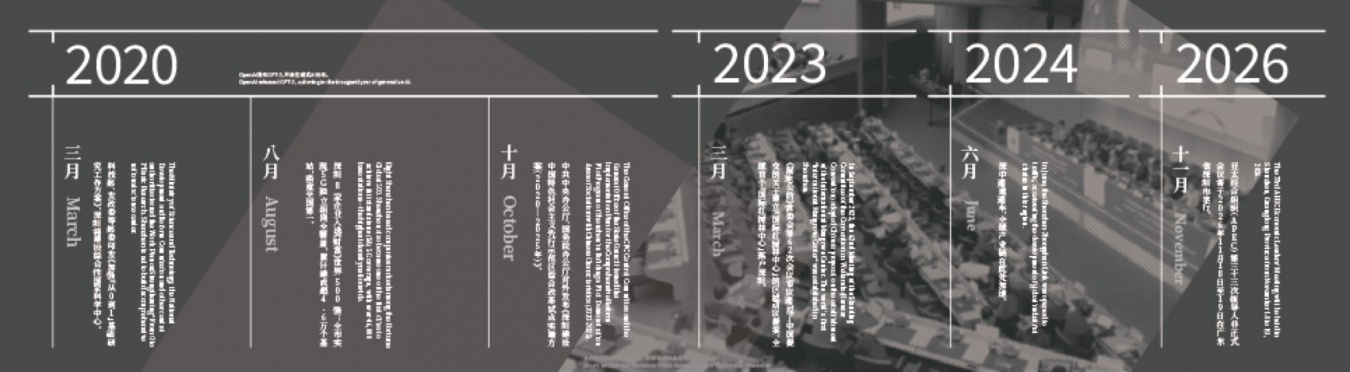
但这条时间线并不只是对城市成就的线性罗列,而是将深圳的发展节点与同时期的全球重大事件并置,呈现一座城市如何在世界变化中不断重新认识和定义自我。从宝安县到经济特区,从“三天一层楼”的深圳速度,到互联网、人工智能时代的创新突破,从亚太经合组织成立、万维网诞生,到中国加入世界贸易组织、生成式人工智能兴起,两条时间线相互交织,共同构成深圳的发展轨迹,也展现了这座城市不断连接世界、参与全球创新进程的坐标。
The timeline places local milestones alongside global events to show how Shenzhen continually redefines itself. Bao’an County’s transformation into a Special Economic Zone, the “one floor every three days” building pace and breakthroughs in internet technology and AI intersect with APEC’s founding, the birth of the World Wide Web, China’s WTO accession and the rise of generative AI. Together, these histories locate Shenzhen within global innovation.
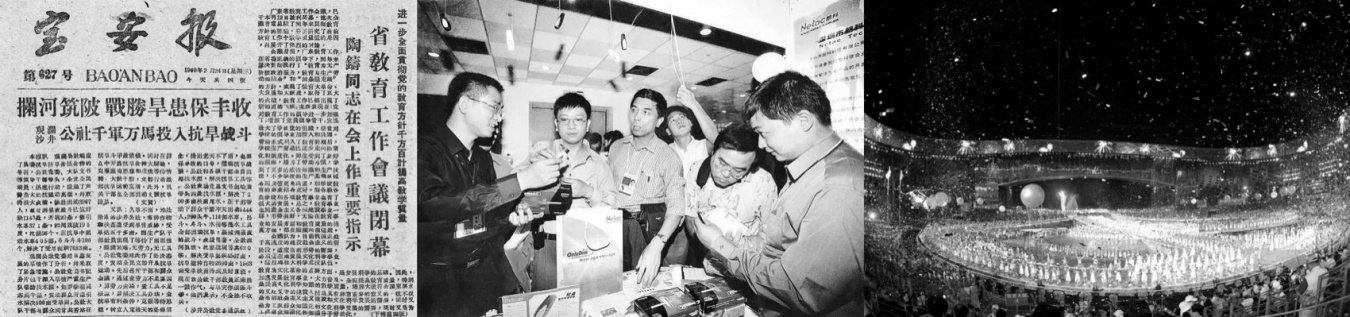
▼图(左):1960年2月24日宝安报;图(中):1999年10月5日,首届高交会展会上;图(右):2011年大运会开幕现场
Left: Bao’an Daily, 24 February 1960 Centre: The inaugural China Hi-Tech Fair, 5 October 1999 Right: Opening ceremony of the 2011 Universiade
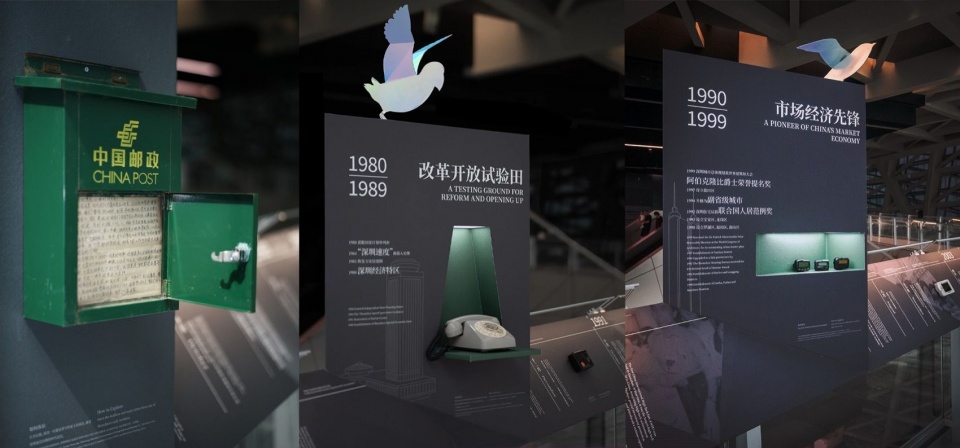
时间线以五个十年为节点设置里程碑,嵌入了书信、座机电话、寻呼机、电脑和移动终端等通讯装置。这些物件并不是对旧时代生活方式的简单复原,而是理解深圳城市发展的一组媒介接口。从书信、座机到移动互联网,通讯方式的变化也映射了传播距离的不断扩大:最初是个人与家乡之间的联系,继而是城市与全国市场之间的连接,最终延伸为深圳与全球产业、技术和信息网络之间的实时互动。展览通过对这些深圳建设者口述史的整理,并借助可触摸、可操作的互动装置,让观众仿佛跨越时空,与不同年代的城市建设者展开一场“对话”。由此,宏观的城市发展史被转化为可感知的个人经验;时间也不再只存在于年份与数据之中,而被重新嵌入声音、记忆以及人与人建立联系的方式之中。
Milestones across five decades incorporate letters, landline phones, beepers, computers and mobile devices as interfaces to Shenzhen’s growth. Communication expands from ties with home to national markets and real-time global networks of industry, technology and information. Drawing on oral histories, hands-on installations let visitors “speak” with those who built the city in different eras. Urban history becomes personal experience, with time embodied in voices, memories and human connections.
▼里程碑上的互动装置,Interactive milestone installations © CABLE
因此,这条时间线讲述的,不只是深圳如何从一座边陲小城成长为现代化都市,也呈现了一座高速发展的城市如何逐步形成面向未来的城市观:发展并非一场单向度的速度竞赛,而是在技术创新、区域合作与自然共生之间不断调适、持续寻找新的平衡。
The timeline traces both Shenzhen’s transformation from a border town into a modern metropolis and its evolving vision of the future. Development becomes an ongoing search for balance between technological innovation, regional cooperation and coexistence with nature.
空间:从湿地进入亚太网络
Space: From Wetlands to the Asia-Pacific
与城市时间线同时展开的,是由候鸟构成的空间线索。
展览以东亚—澳大利西亚迁飞区为地理基础,通过黑脸琵鹭、勺嘴鹬、蒙古沙鸻等候鸟的迁徙路径,将深圳与东亚、东南亚、大洋洲及环太平洋地区连接起来。对于候鸟而言,城市之间并不存在行政边界,它们所依赖的是由滩涂、湿地、河口、森林和海岸共同组成的跨区域生态网络。
深圳湾及福田红树林正处于这一迁飞网络的重要节点。候鸟在此停歇、觅食和补充能量,再继续跨越海洋和大陆。由此,深圳不再仅仅作为一个经济、科技城市或行政区域被理解,而成为亚太生态系统中的一处关键位点。
Alongside the urban timeline, migratory birds reveal a spatial narrative.
Following the East Asian–Australasian Flyway, the routes of black-faced spoonbills, spoon-billed sandpipers and lesser sand plovers connect Shenzhen with East Asia, Southeast Asia, Oceania and the Pacific Rim. Birds cross administrative boundaries, depending on a regional network of mudflats, wetlands, estuaries, forests and coasts.
Shenzhen Bay and the Futian mangroves are vital stops where birds rest, feed and refuel before crossing oceans and continents. Shenzhen thus emerges as a key node in the Asia-Pacific ecosystem as well as an economic and technological centre.
▼迁徙候鸟物种与节点示意图,Migratory bird species and stopover nodes © CABLE
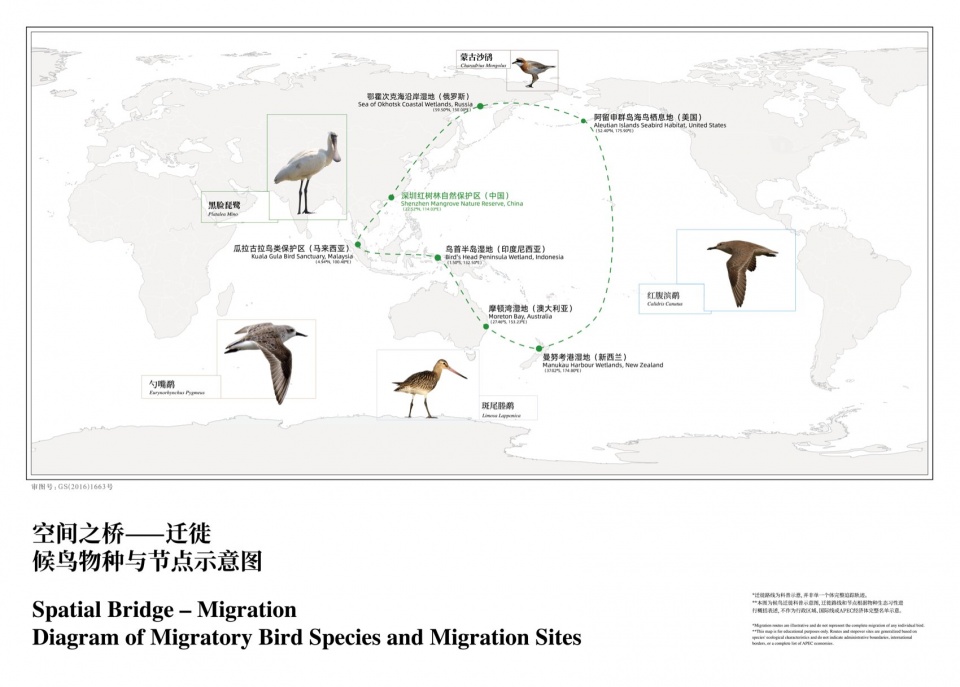
这一空间视角也回应了APEC语境中的“互联”概念。区域之间的联系不仅存在于贸易、产业、技术和基础设施之中,也存在于水系、气候、迁徙路线和物种生境之中。候鸟以一种比城市更古老的方式连接着亚太地区,区域协作不仅意味着共享发展的机会,也意味着共同承担生态责任。
This perspective broadens APEC’s idea of connectivity. Regions are linked through waterways, climate, migration routes and habitats as well as trade, industry, technology and infrastructure. Birds have connected the Asia-Pacific since long before cities existed; regional cooperation means sharing ecological responsibility alongside development opportunities.
时空交汇:未来畅想
Time and Space Meet: Imagining the Future
时间回答深圳如何走到今天,空间则回答深圳处于怎样的世界之中。
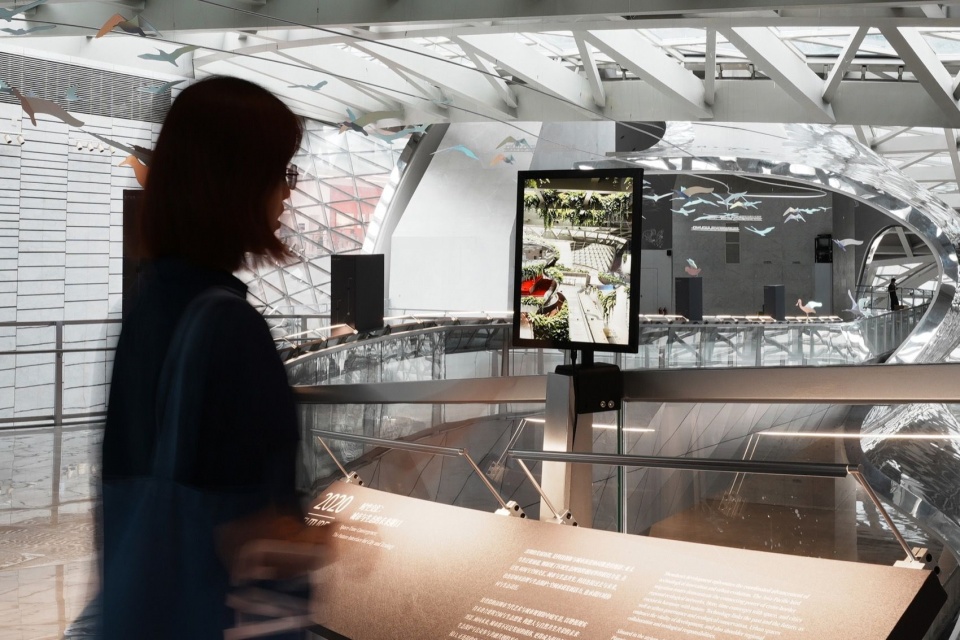
当观众行走至引桥的尽端,面对的不再是一个确定的历史结论,而是一幅仍在生成中的未来图景。时间与空间线索最终汇入尾部的增强现实(VR)装置,观众可以通过数字界面,观看生态网络、城市建筑与未来图景叠加在真实的场馆中庭空间之上。在这里,深圳的发展历程与候鸟迁徙网络发生交汇:科技连接过去与未来,也连接城市治理与生态保护;城市空间承载经济和社会活动,也承载区域协作与生态责任。未来城市因此不再只是不断扩张的物质容器,而应成为政府、产业、社会公众与自然生态共同参与的平台。
Time explains how Shenzhen arrived here; space reveals the world it belongs to.
At the bridge’s end, visitors encounter a future still taking shape. Time and space converge in a visual reality installation, overlaying ecological networks, urban architecture and future scenarios onto the real atrium through a digital interface. Shenzhen’s development meets bird migration: technology links past and future, urban governance and conservation. Urban space supports economic and social life alongside regional cooperation and ecological responsibility. The future city becomes a shared platform for government, industry, the public and nature.
▼增强现实(VR)装置,Visual reality installation © CABLE
展陈设计
Exhibition Design
行进中的展场
An Exhibition in Motion
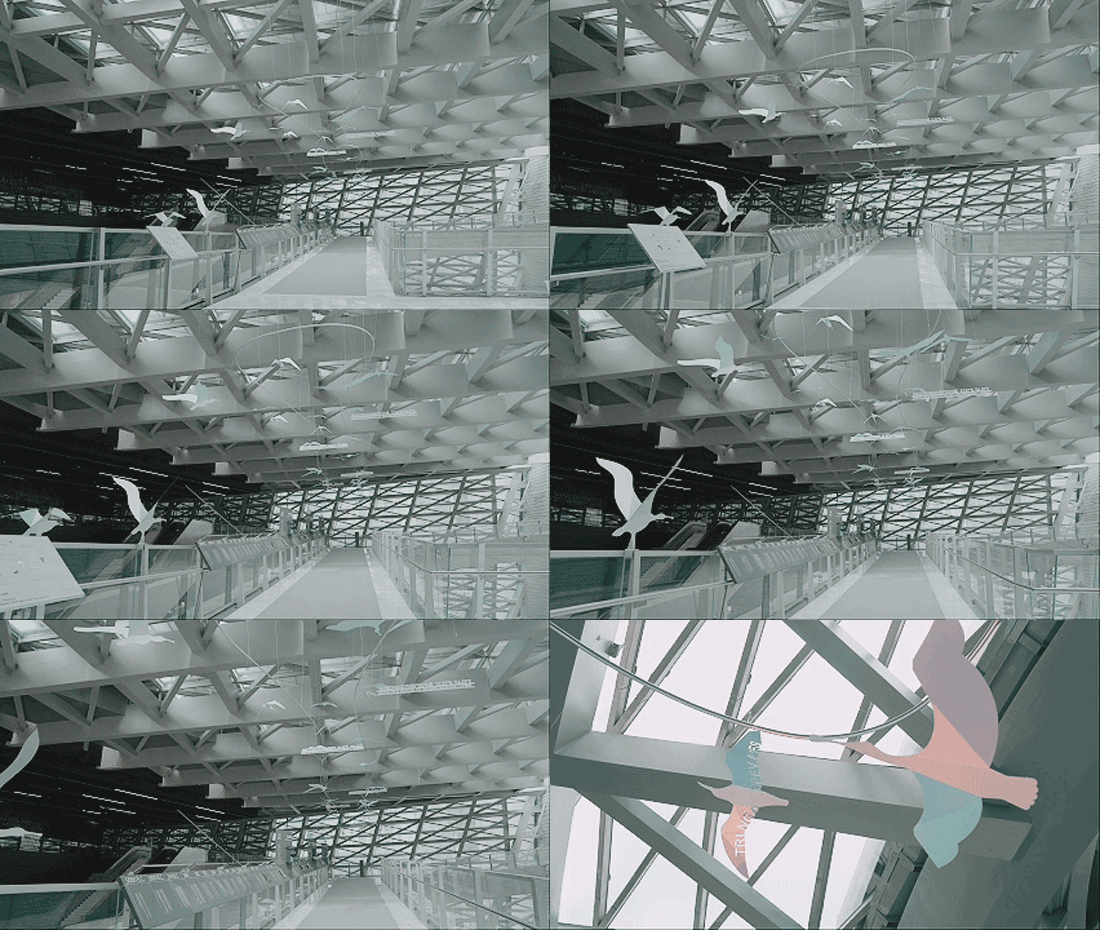
展览设计首先回应引桥本身狭长、连续的空间特征。设计没有将引桥处理为若干彼此独立的展项,而是将观众的行进过程直接转化为阅读过程。时间线沿着桥体持续延伸,观众在向前行走的同时,依次穿越深圳发展的不同阶段。展览因此不是停留在某个观看点上的静态陈列,而是一段由身体运动推动的城市叙事。
The design follows the bridge’s long, continuous form, turning movement into reading. As the timeline unfolds along the bridge, visitors walk through successive stages of Shenzhen’s development. The exhibition becomes an urban narrative experienced through motion.
▼引桥空间,Exhibition site © CABLE
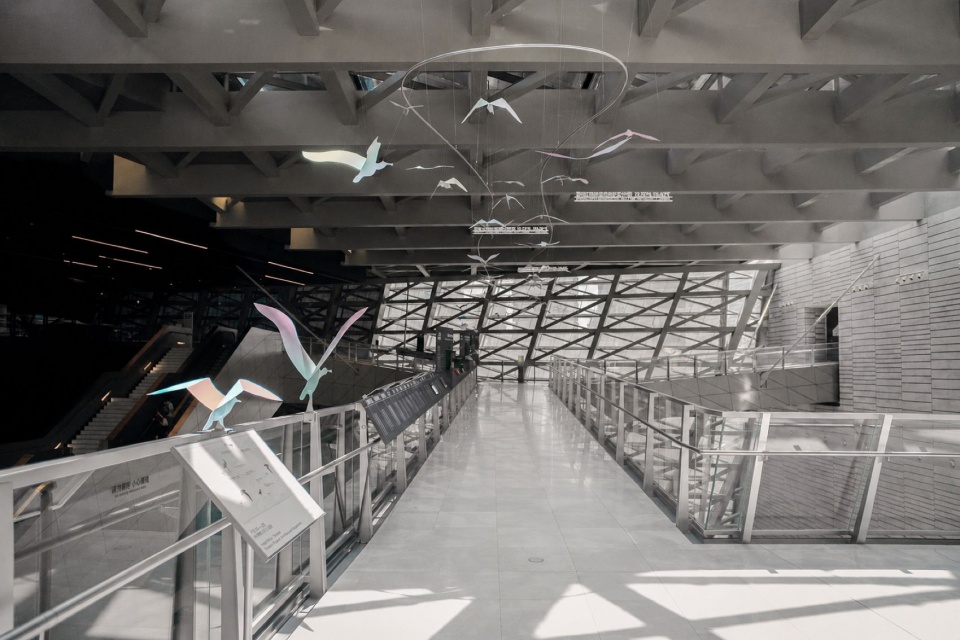
引桥原有的交通属性也被最大化保留下来。它依然连接建筑中的不同展厅,但在展览介入之后,这种物理连接被赋予了新的意义:观众从一个空间走向另一个空间的过程,也成为从城市历史进入区域生态、再由现实走向未来的过程。
The bridge retains its role connecting galleries, while gaining new meaning. Moving between spaces also becomes a journey from urban history to regional ecology, and from the present into the future.
▼穿行引桥,Walking through the bridge © CABLE
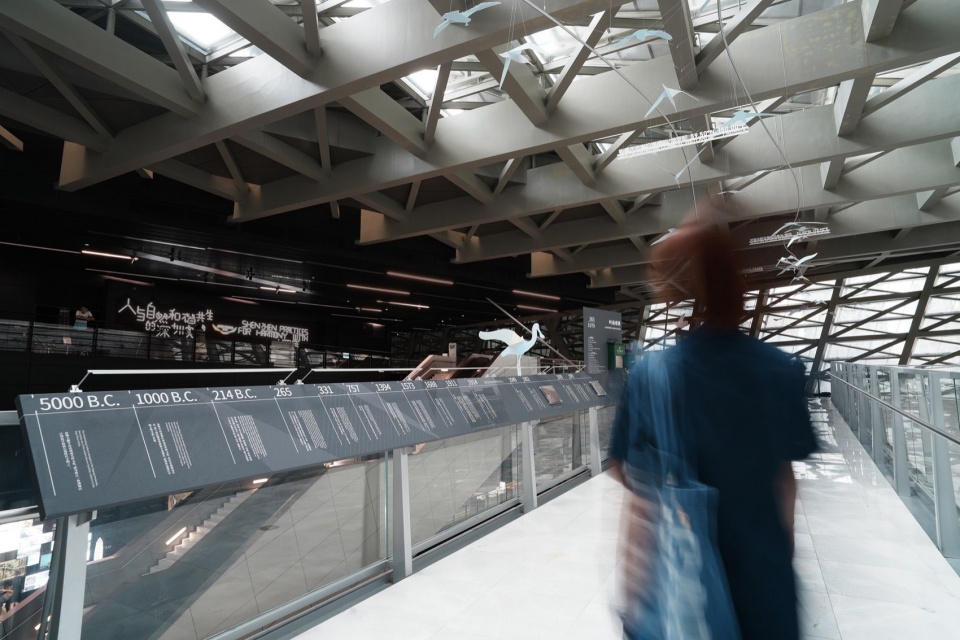
空间设计通过垂直方向上的分层,将“时间”与“空间”转化为可以被直观感知的现场关系。
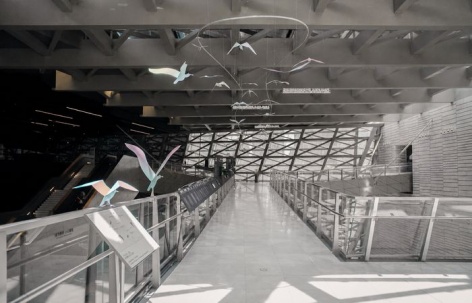
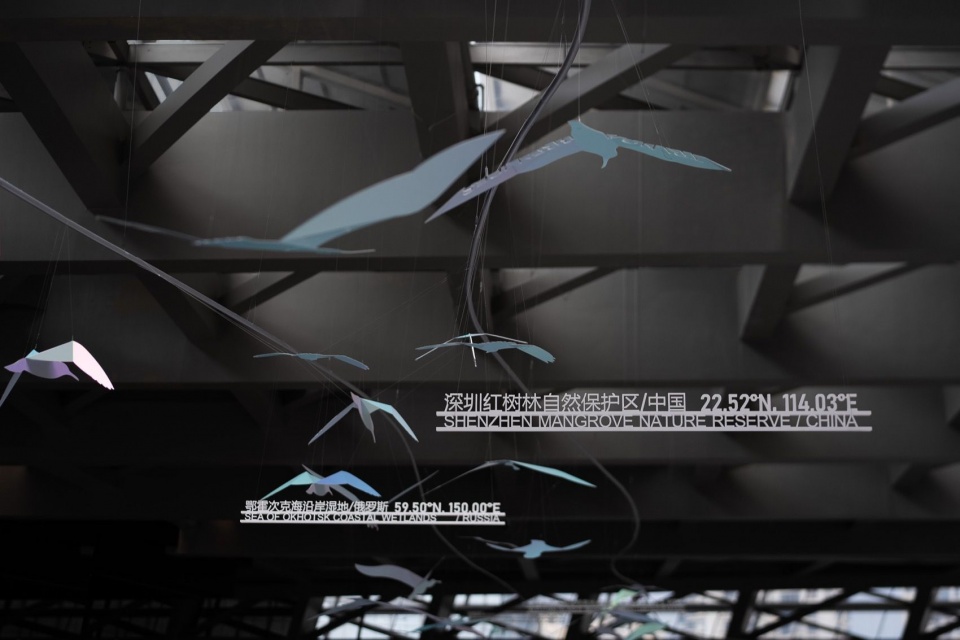
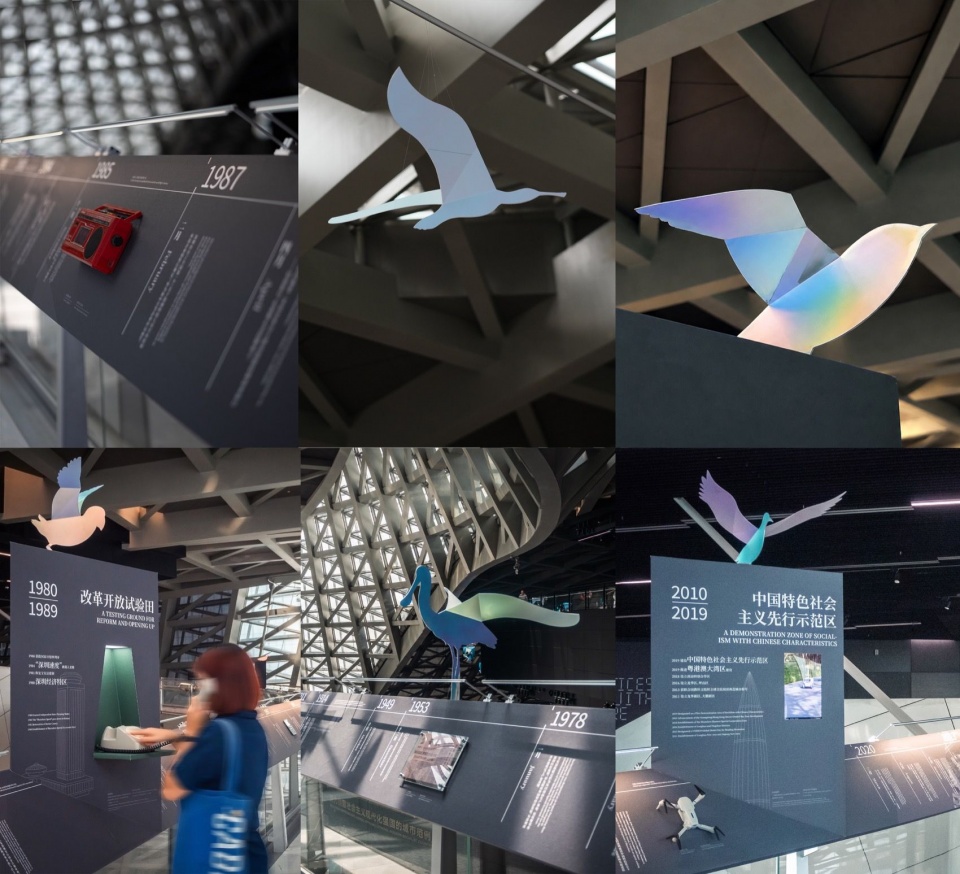
沿引桥一侧展开的深色长条形展板承载深圳时间线,形成一条连续而稳定的城市发展基线。与之相对,大量轻薄的鸟形构件被悬挂在引桥上方的屋面结构下。它们以不同高度、方向和姿态分布在建筑桁架之间,并与迁徙距离、生态节点及地区信息共同构成一条跨越亚太的空中路径。观众向前看,阅读的是深圳的发展时间;抬头看,感受到的则是超越城市边界的迁徙空间。身体沿着时间前进,视线却不断被引向更广阔的区域网络。时间与空间由此不再只是文字中的抽象概念,而成为同时作用于行走、观看和感知的空间结构。
Vertical layers make the relationship between time and space tangible.
A long, dark panel carries Shenzhen’s timeline along one side of the bridge, forming a steady baseline. Above, lightweight bird forms hang among the roof trusses at varied heights, angles and poses. Migration distances, ecological nodes and regional information map an aerial route across the Asia-Pacific. Looking ahead, visitors read urban time; looking up, they encounter migration beyond city boundaries. Walking, looking and sensing bring time and space into one physical experience.
▼施工过程,Installation in progress ©CABLE
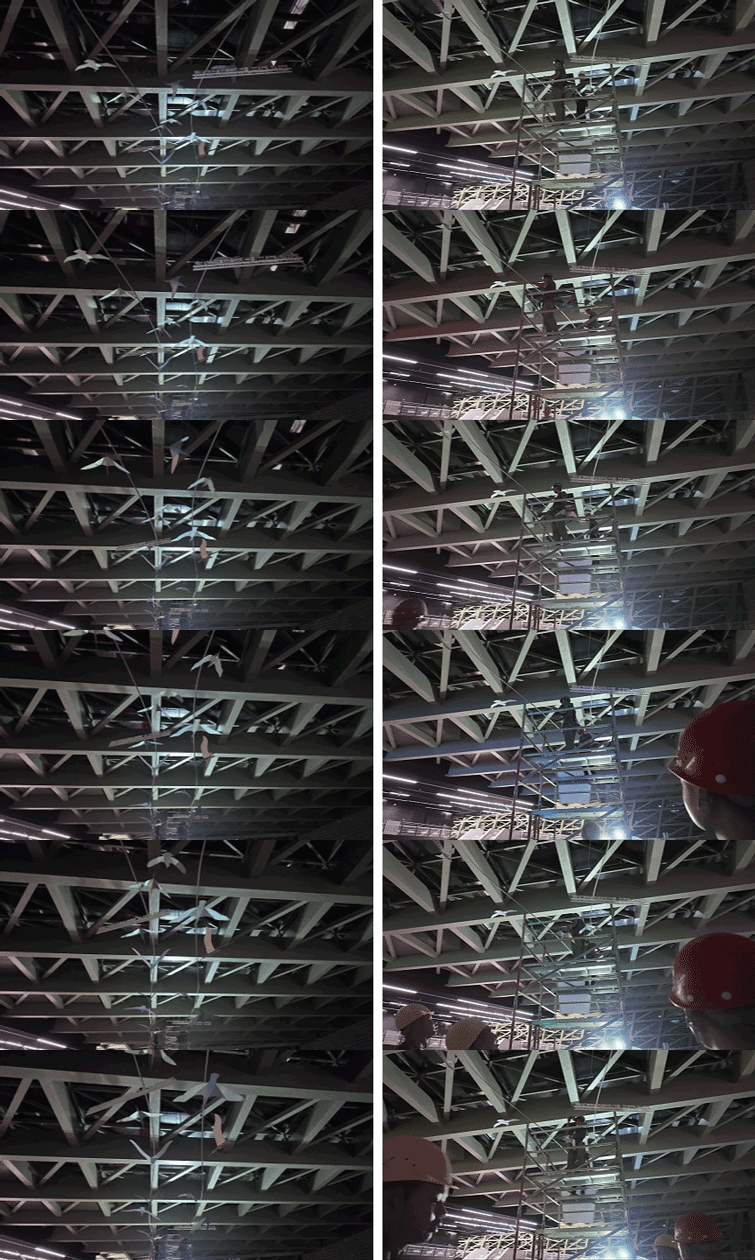
▼“迁徙”中的鸟,Birds in “migration” © CABLE
轻质构造
Lightweight Construction
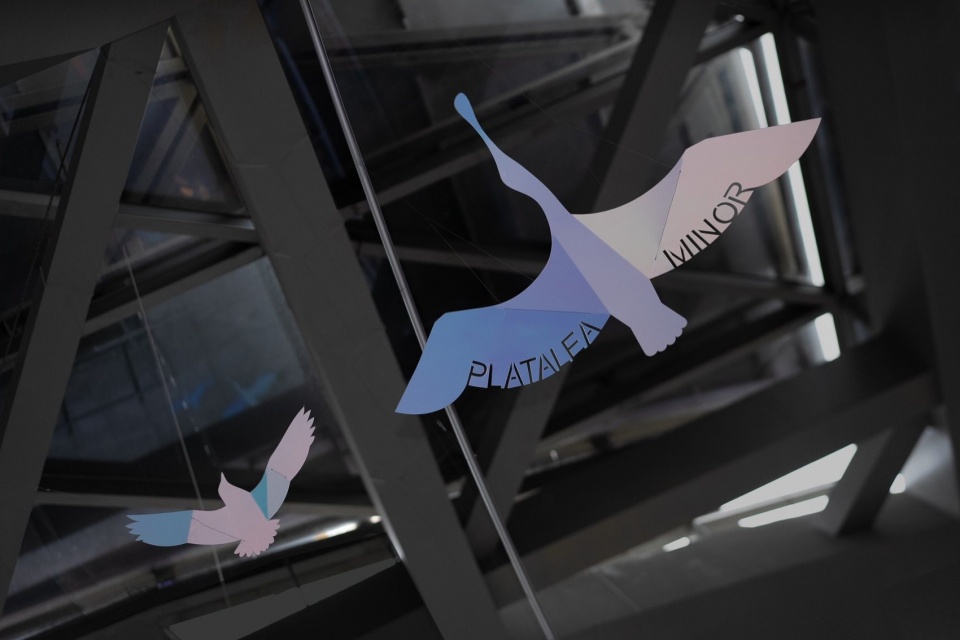
面对中庭复杂而具有力量感的钢结构、桁架与天窗,装置设计选择了相对轻盈的介入方式。飞翔、滑翔与停歇等不同姿态的鸟类造型,均由铝板弯折成形,表面覆以哑光幻彩膜。轻薄的金属板材既保证了悬挂构件所需的结构强度,也削弱了实体装置的体量感,使鸟群仿佛穿行于建筑梁架之间。
Against the atrium’s powerful steelwork, trusses and skylights, the installation takes a light touch. Birds in flight, gliding and resting are folded from aluminium sheets coated with matte iridescent film. The thin metal provides strength while reducing visual bulk, making the flock appear to move through the structure.
▼鸟装置,Bird installation © CABLE
▼迁徙长廊,Migration corridor ©深圳市当代艺术与城市规划馆
随着观众视角与自然光线的变化,幻彩膜表面呈现出细微而流动的色泽,在灰色钢结构背景中形成轻盈、克制的视觉层次。装置没有遮挡原有建筑,而是借助高低错落的悬挂方式,与桁架、天窗及中庭光影共同构成一条动态的迁徙路径,让“空间中的流动”成为可被直接感知的展览语言。
Changing viewpoints and daylight create subtle shifts of colour against the grey steelwork. Suspended at varying heights, the birds leave the architecture visible and combine with trusses, skylights, light and shadow to form a dynamic migration route. Movement through space becomes a tangible exhibition language.
▼“休憩”的鸟,Birds at “rest” © CABLE
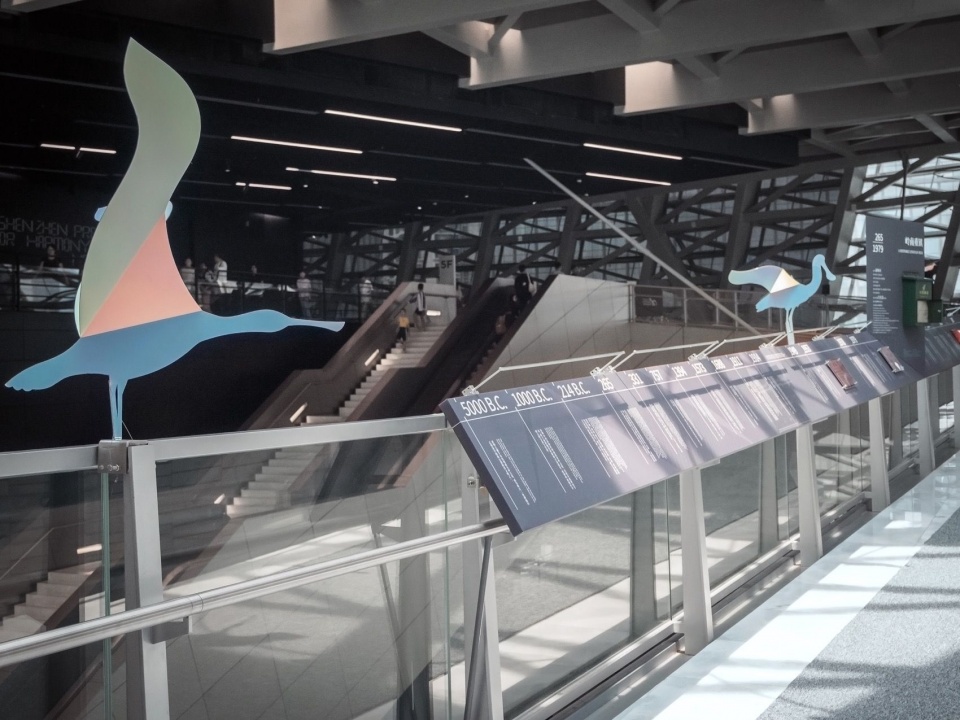
时间线则沿玻璃栏杆布置,以较低的连续界面贴合引桥边缘,在保持通行和考虑观展视线方向的同时,将原本零散的展项整合为完整的叙事路径。展览并没有重新建造一个空间,而是利用既有建筑的方向、尺度和结构,让引桥本身成为叙事装置。不同年代的节点被设计为向外突出的“里程碑”,打断平直的时间表面,提示城市发展中的关键转折。
The timeline follows the glass balustrade as a low, continuous surface, preserving circulation and sightlines while unifying separate exhibits into a narrative route. The design uses the building’s existing orientation, scale and structure to make the bridge itself a storytelling device. Projecting “milestones” mark key turning points in the city’s growth.
▼“里程碑”节点,Milestone nodes © CABLE
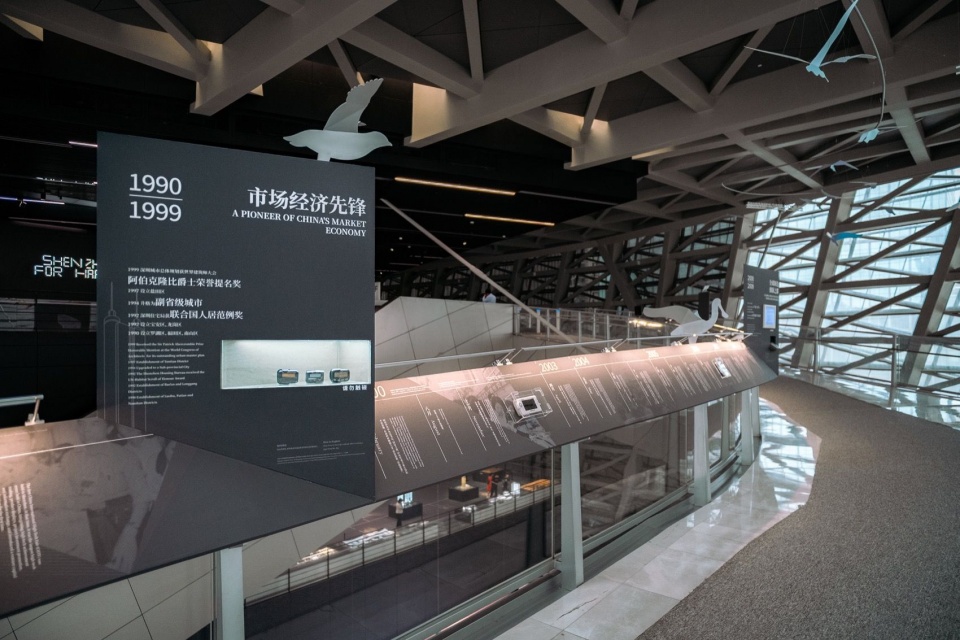
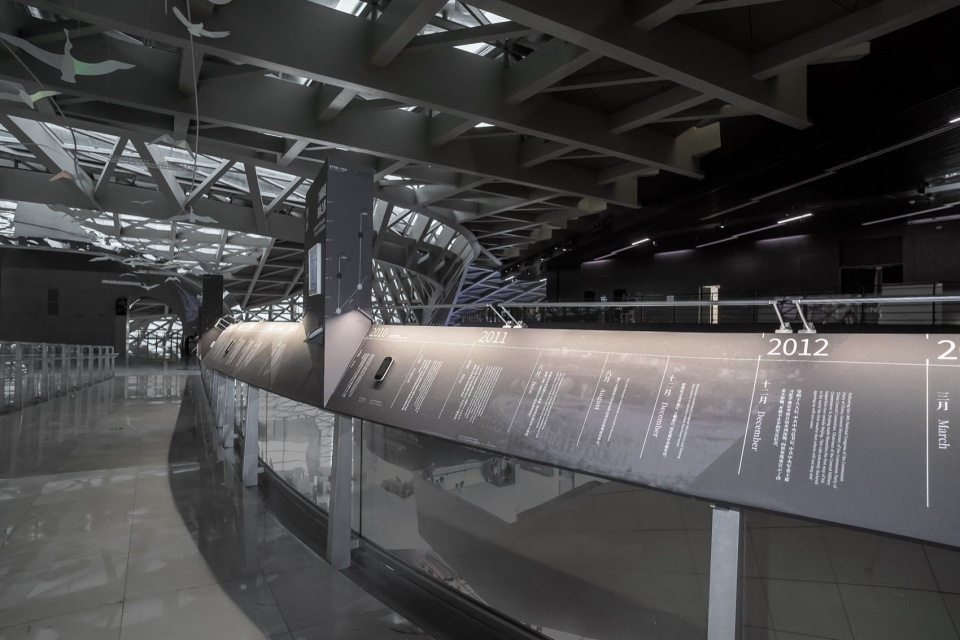
▼展览现场,Exhibition site © CABLE
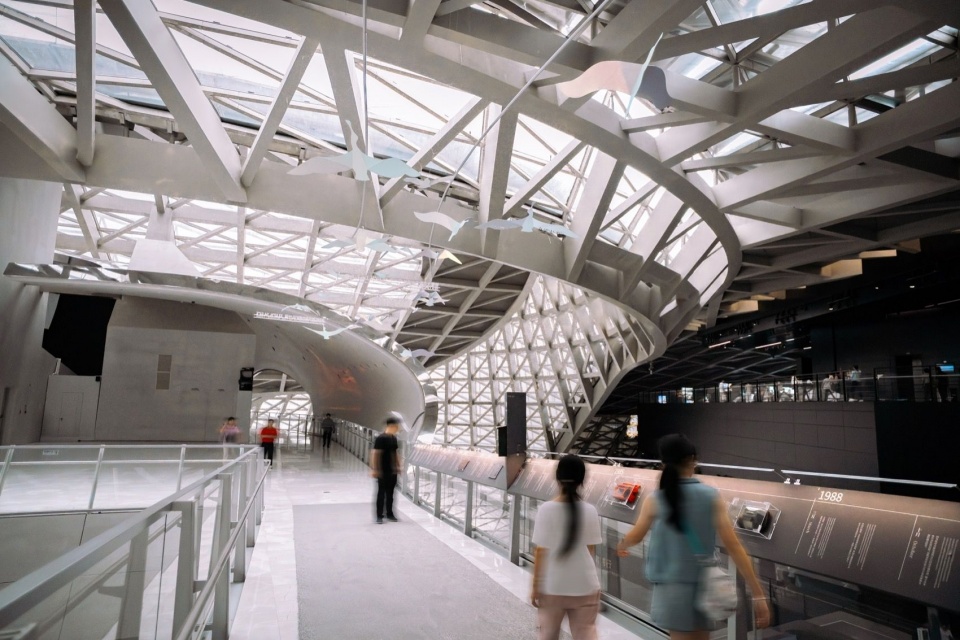
▼展览细节,Exhibition details © CABLE
总展览名称:深圳叙事:人与自然和谐共生的城市实践
指导单位:深圳市规划和自然资源局
主办单位:深圳市当代艺术与城市规划馆
总策划/统筹:深圳市城市规划馆
开放时间:2026年8月11日—2026年12月31日
展览板块名称:引桥:互联时空
建筑面积:171.5㎡
设计时间:2026年
建成时间:2026年
展览策划:CABLE
策展团队:何柳、卢雪婷、陈沛、曾珩
展陈设计:梓集fabersociety
设计团队:左龙、胡悦、王一凡、赵启帆、陈雅雪、韦博骏
施工团队:乐造展务
摄影:CABLE、深圳市当代艺术与城市规划馆
项目地址:中国广东省深圳市福田区福中路当代艺术与城市规划馆五层
Overall exhibition: Shenzhen Narratives: The Urban Practices for Harmony with Nature
Guidance: Shenzhen Municipal Planning and Natural Resources Bureau
Host: Shenzhen Museum of Contemporary Art and Urban Planning
Overall planning and coordination: Shenzhen Urban Planning Museum
Dates: 11 August–31 December 2026
Exhibition section: Bridge: Connected Space-Time
Floor area: 171.5 m²
Design: 2026
Completed: 2026
Curation: CABLE
Team: He Liu, Lu Xueting, Chen Pei, Zeng Heng
Exhibition design: Fabersociety
Team: Zuo Long, Hu Yue, Wang Yifan, Zhao Qifan, Chen Yaxue, Wei Bojun
Construction: LEZAO
Photography: CABLE; Shenzhen Museum of Contemporary Art and Urban Planning
Location: Level 5, Shenzhen Museum of Contemporary Art and Urban Planning, Fuzhong Road, Futian District, Shenzhen, Guangdong, China
More:CABLE + fabersociety 。更多关于他们:CABLE on gooood, fabersociety on gooood

发表评论
你需要先 才能发表评论
社交登录