感谢 广州多重建筑工作室 予gooood分享以下内容。更多关于他们,请至:Multi-Architecture on gooood
Appreciation towards Multi-Architecture for providing the following description:
应南海大地艺术节邀请,多重建筑设计了渔耕粤韵片区的一个作品。南海自古以“桑基鱼塘”闻名,人们在鱼塘边种桑、养蚕,塘中养鱼,水与土地相互滋养,形成一种循环的生产与生活方式。在这样的环境中,渔网是捕鱼的工具,也常被挂起来晾晒,成为日常中熟悉而自然的劳作景象。
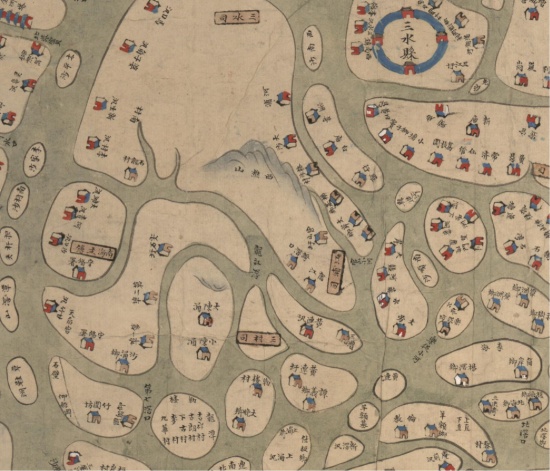
▼1816年广东通省水道图(局部),
Guangdong Province Waterway Map (partial), 1816 ©网络
At the invitation of the Art at Qiaoshan – Art Field Nanhai, Multi-Architecture designed an installation for the “Yugengyueyun Section – Fishing and Farming Cabanas 2.0” zone. Nanhai has long been renowned for its “mulberry-dike-fish-pond” system—a cyclical mode of production and living where mulberry trees are grown and silkworms raised on the dikes, while fish are cultivated in the ponds, with land and water mutually nourishing one another. In this setting, fishing nets serve not only as tools for the catch but also as familiar, natural elements of daily labor when hung out to dry.
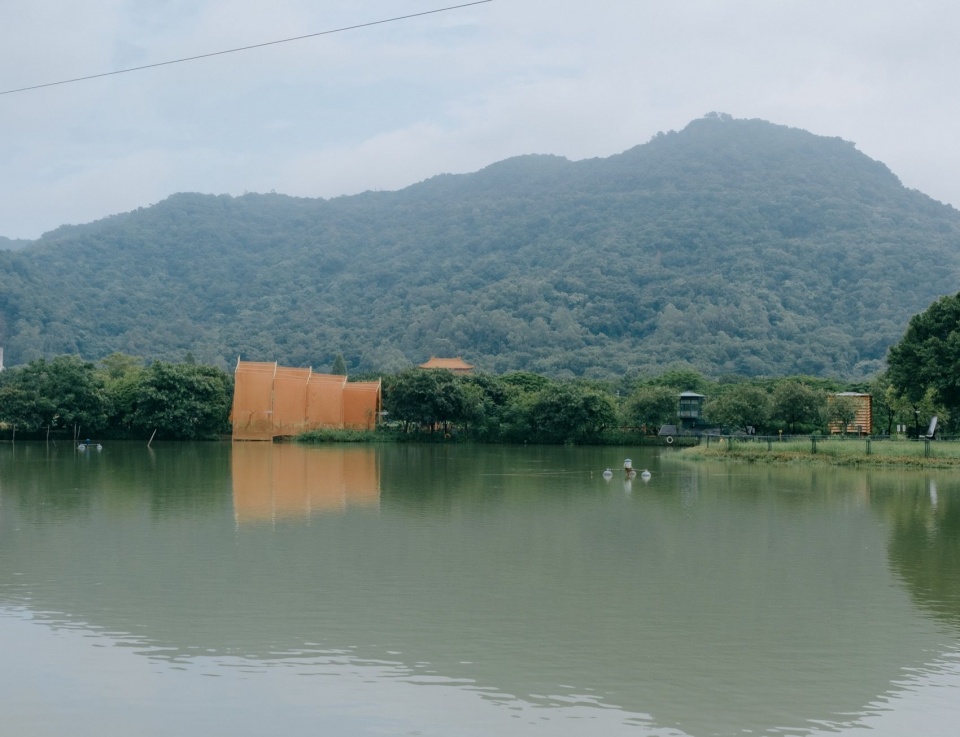
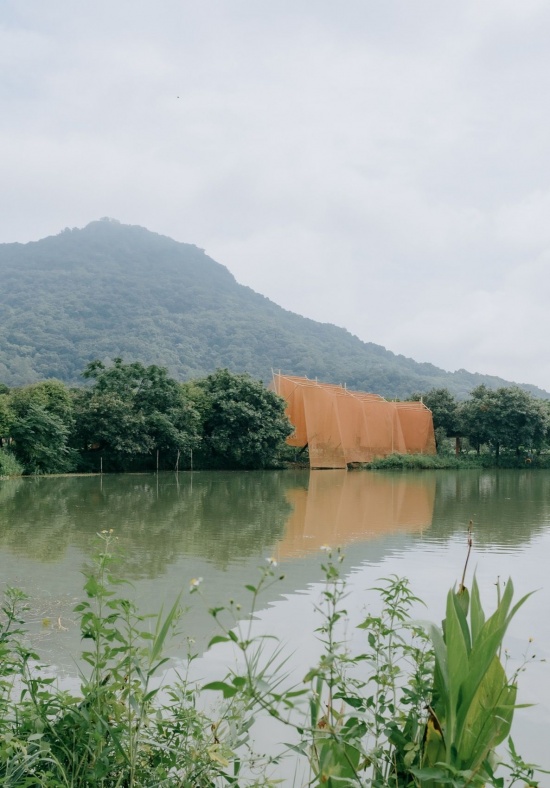
▼晒渔网与西樵山,The drying nets and Xiqiao Mountain © 朱雨蒙
.
1 水影冬瓜的内部性
The Interiority of “Water-Shadow Winter Melons”
场地在旧时与现今,一直是连片的桑基鱼塘。在几十年前,桑基鱼塘和果基鱼塘的面貌并非我们今天所见,而是相当繁茂,基梗上种着遮天蔽日连片的水影冬瓜,顺势构建了一种内部性,这种内部性给人带来强烈的包裹感,其场所身体感想必非同一般。
▼桑基鱼塘与水影冬瓜,Mulberry-dike fish ponds and water-shadow winter melons © 段佳卉《广东三大汉民系核心区传统村落景观特征研究》,华南理工大学 & 网络
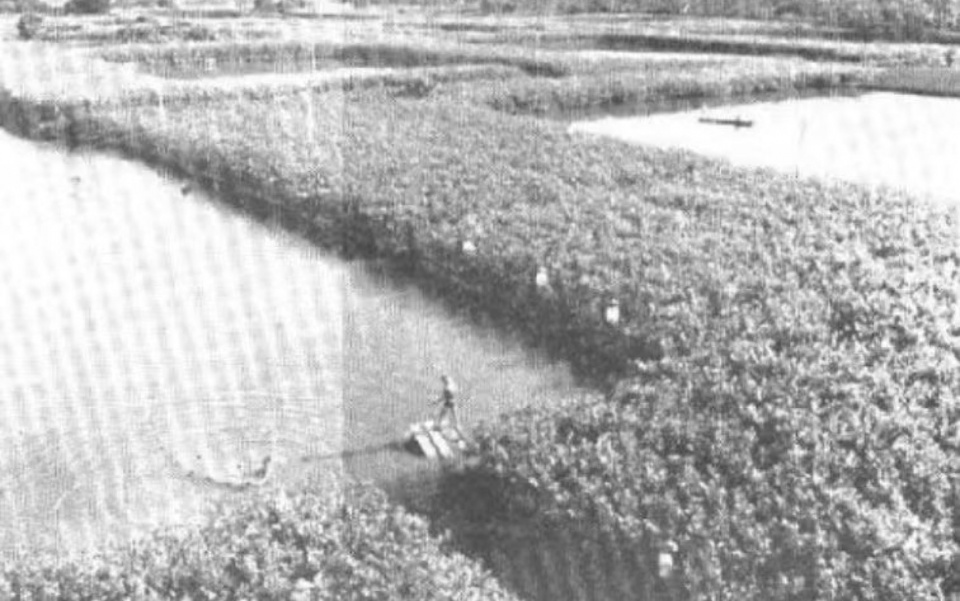
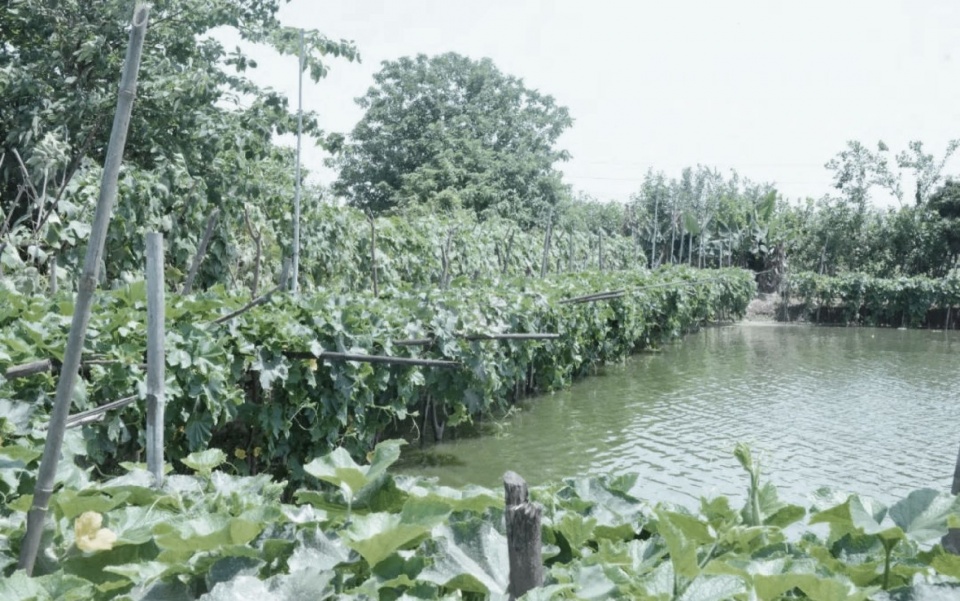
Throughout history and into the present, the site has consisted of contiguous mulberry-dike-fish-pond landscapes. Decades ago, the appearance of these ponds differed significantly from what we see today; the landscape was lush and dense, with “water-shadow winter melons”—a local variety—growing on the dikes and forming a canopy that blocked out the sky. This created a distinct sense of interiority and a powerful feeling of enclosure, offering a unique bodily experience of the space.
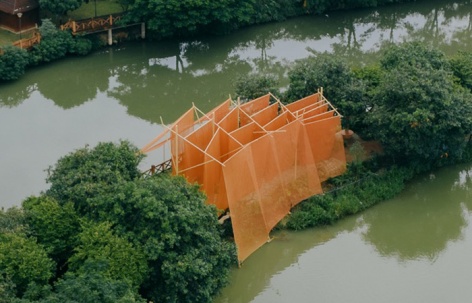
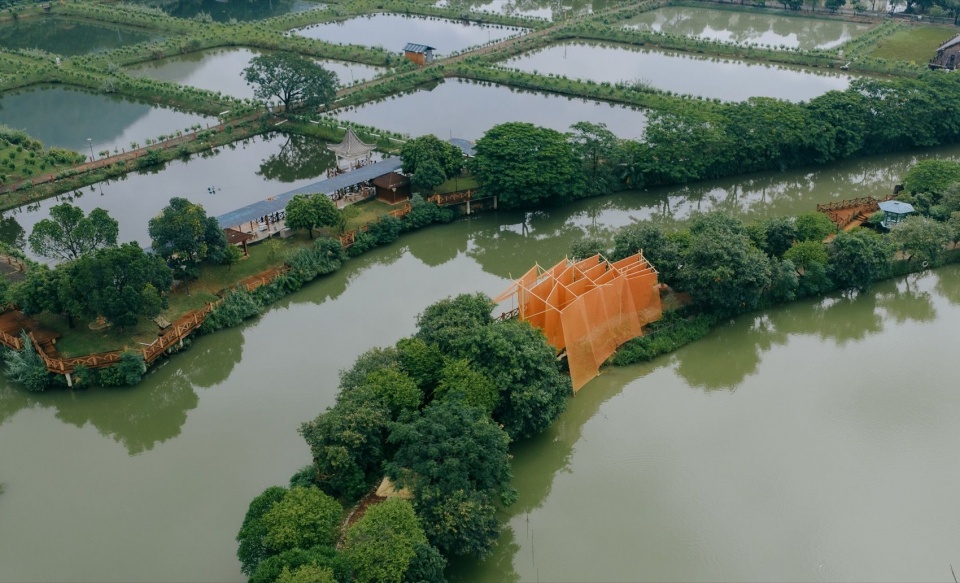
▼场地鸟瞰,aerial view of the site © 朱雨蒙
.
2 遮阳的需求和晒渔网
The Need for Shade and the Drying of Nets
渔网是桑基鱼塘体系最熟悉也最经济易得的劳动工具,另一方面,场地原本是园区中一段凉廊,渔网有提供基础遮阳功能的可能,顺势成为了这种包裹性的场所的语言。
Fishing nets are the most familiar and cost-effective tools within the mulberry-dike-fish-pond system. Furthermore, as the site was originally a section of a covered walkway within the park, the nets offered a potential solution for basic shading, naturally becoming the architectural language for this enclosed space.
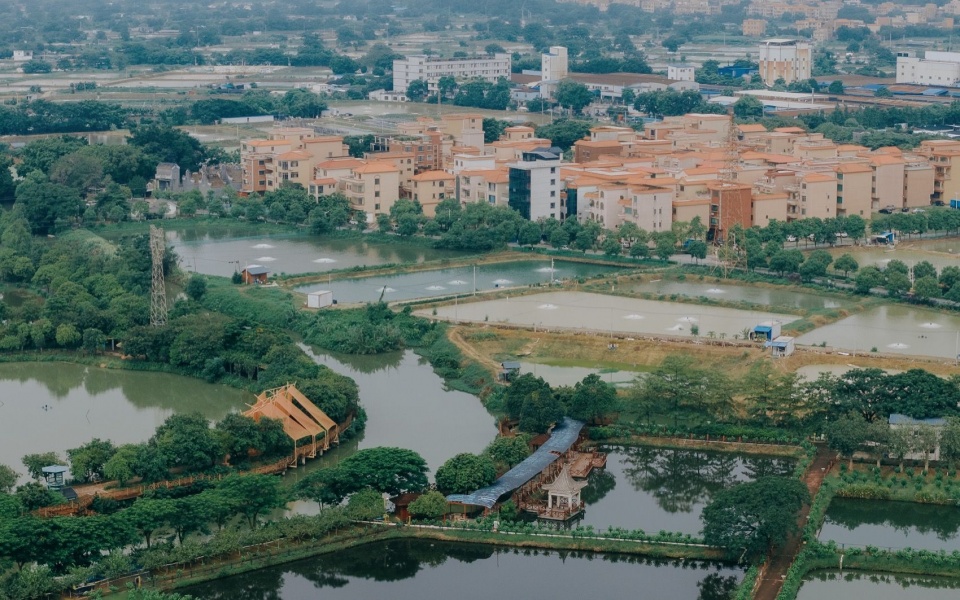
▼场地鸟瞰,aerial view of the site © 朱雨蒙
.
3 体量计算与对话西樵山
Volumetric Calculation and Dialogue with Xiqiao Mountain
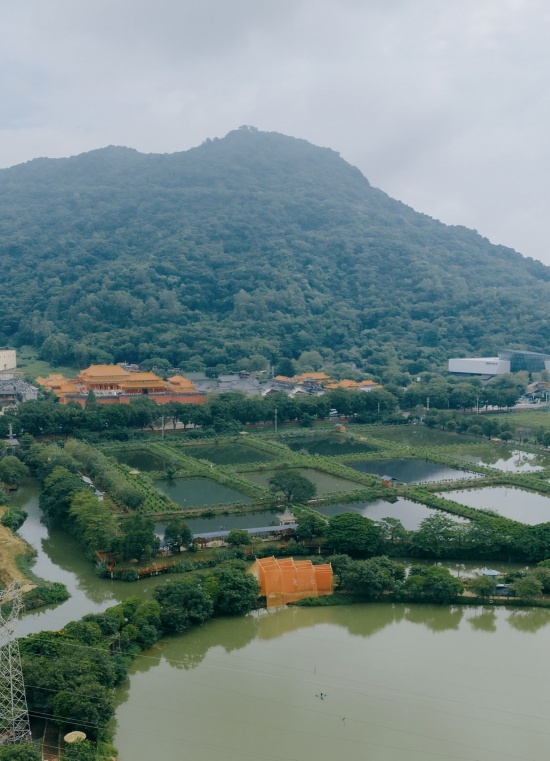
在有限造价和塘基无法承载大型施工设备的建造条件下,我们和iStructure结构团队进行了体量计算。我们的共识是在低造价的情况下尽量做到最大体量。体量是大地艺术创作中的最关键因素,低廉的渔网使得我们得以从小场地走向大场地:扩展到水边,对话西樵山,使山和水成为我们真正意义上的场地。
▼整体轴测,Overall axonometric © 多重建筑 Multi-Architecture
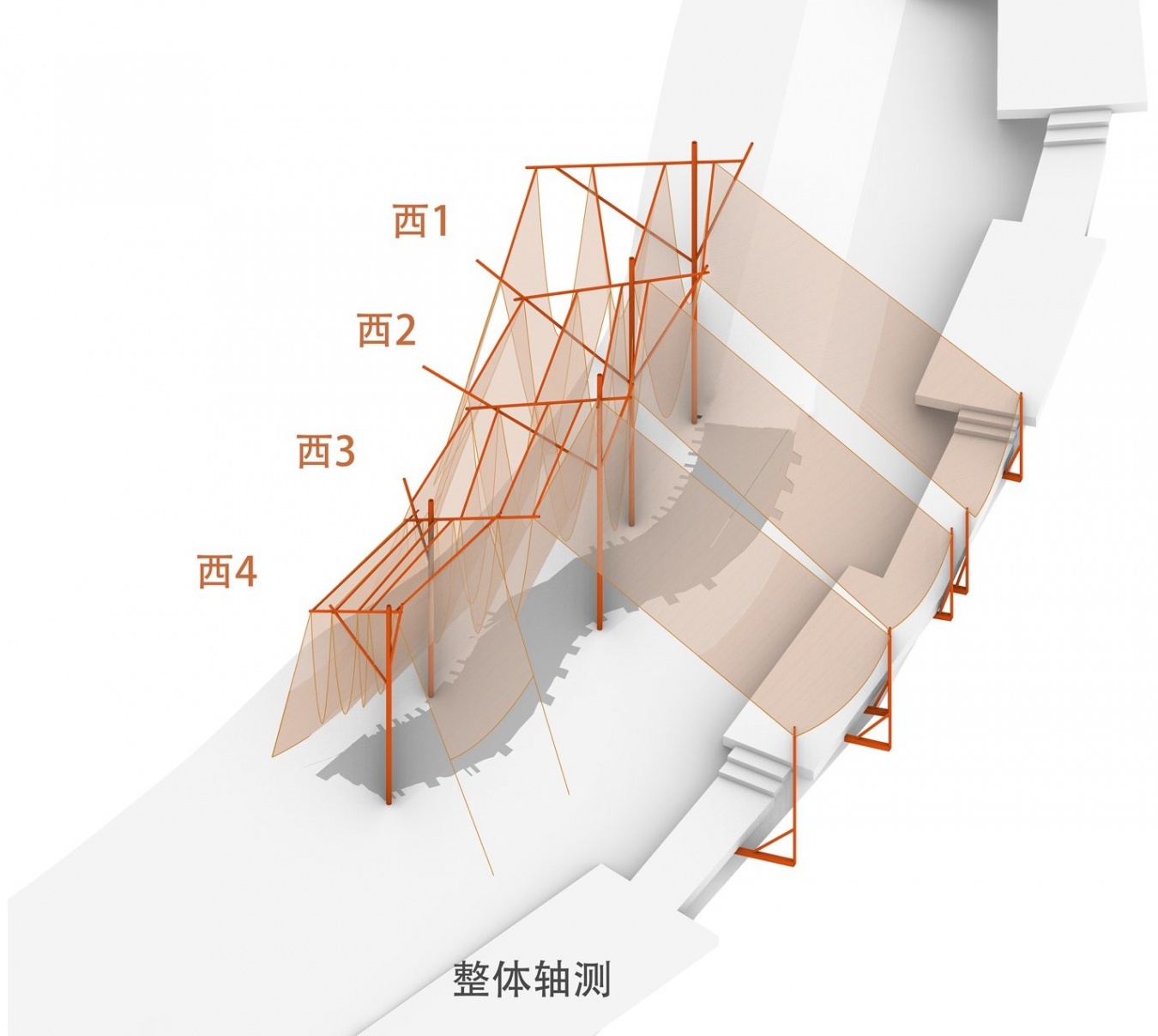
Constrained by a limited budget and the inability of the pond dikes to support heavy construction machinery, we collaborated with the structural team at iStructure to calculate the installation’s volume. We reached a consensus to maximize the volume despite the low budget. Scale is a crucial factor in land art; the affordability of fishing nets allowed us to expand from a small footprint to a larger one—extending to the water’s edge and engaging in a dialogue with Xiqiao Mountain, effectively making the mountain and water integral parts of our site.
▼场地鸟瞰,aerial view of the site © 朱雨蒙
4 民间结构
Vernacular Structure
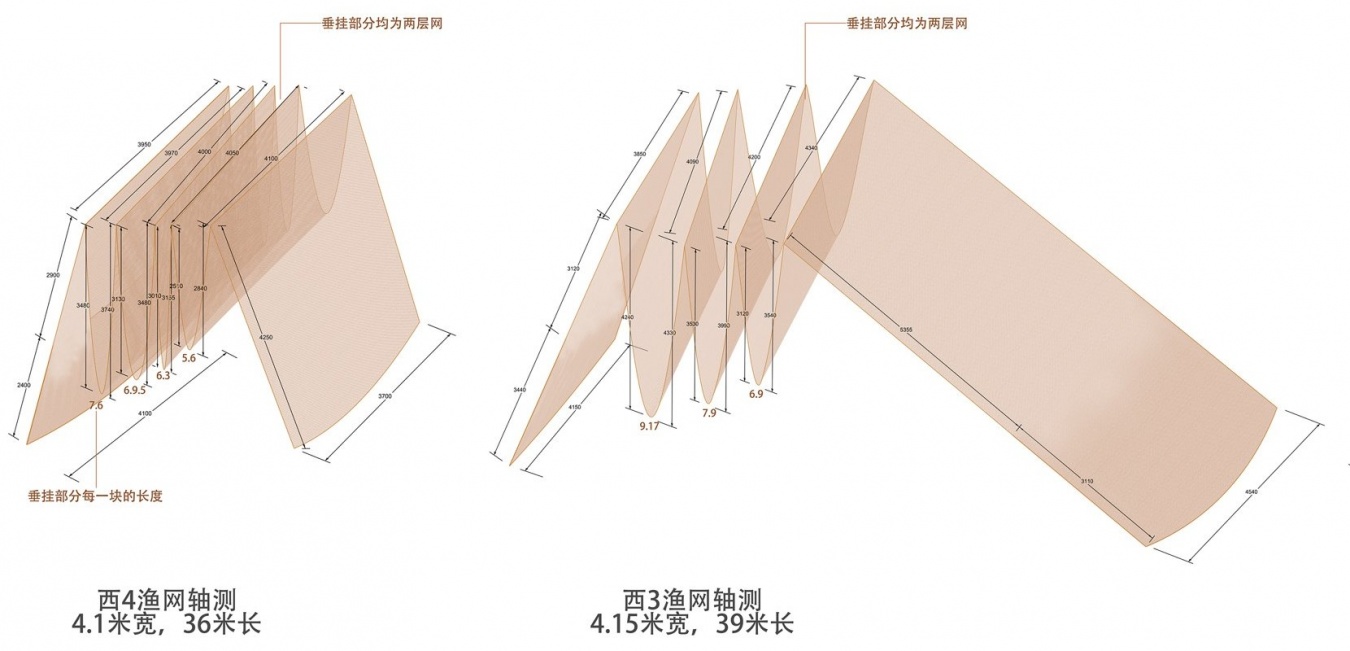
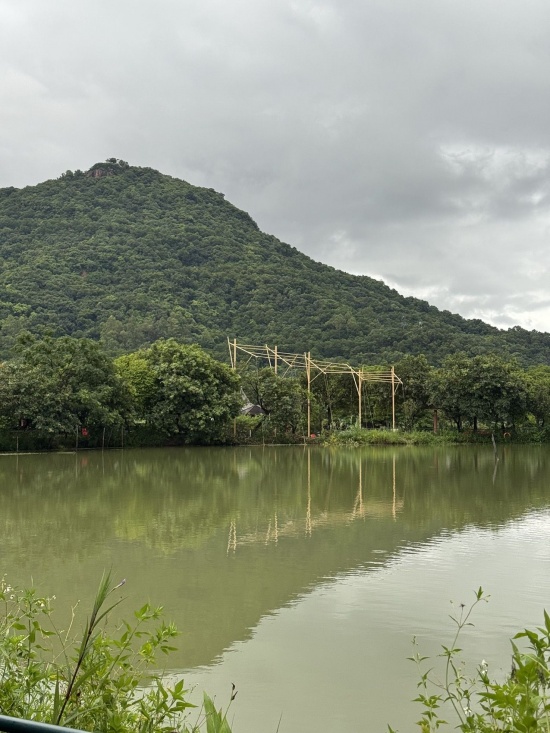
支撑渔网的钢结构灵感来源于民间下海捕鱼的工具——三角罾(zēng)网。叉状呈现出随机和民间感,在计算理性与乡土写意之间,顺着山势由高向低排布。
▼西4、西3渔网轴测,Axonometrics of West-4 and West-3 nets © 多重建筑 Multi-Architecture
▼西2、西1渔网轴测,Axonometrics of West-2 and West-1 nets © 多重建筑 Multi-Architecture
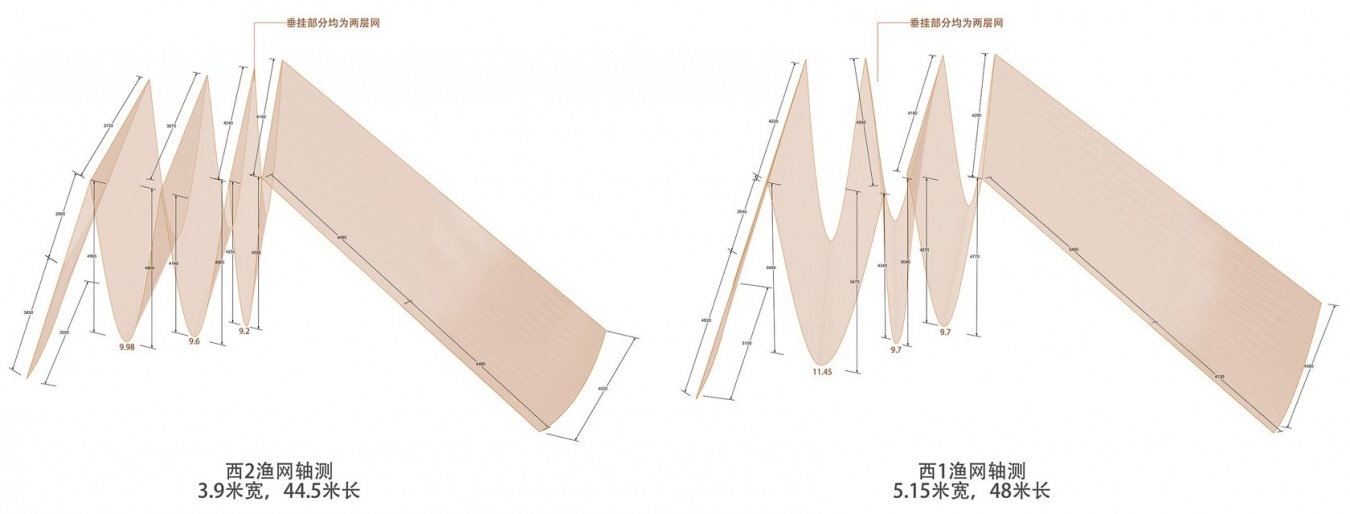
The steel structure supporting the nets draws inspiration from the sanjiao zeng (triangular lift net)—a traditional tool used for fishing at sea. The fork-like forms evoke a sense of randomness and vernacular charm; balancing structural rationality with a rustic, expressive aesthetic, the structures are arranged to follow the terrain, descending from higher to lower elevations.
▼晒渔网结构,Structure of the drying nets © 董京宇
▼晒渔网结构,Structure of the drying nets © 朱雨蒙
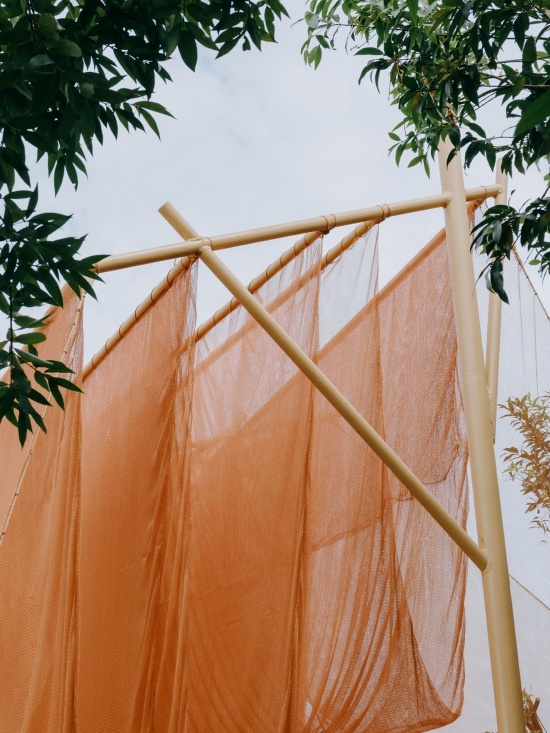
▼晒渔网结构,Structure of the drying nets © 朱雨蒙
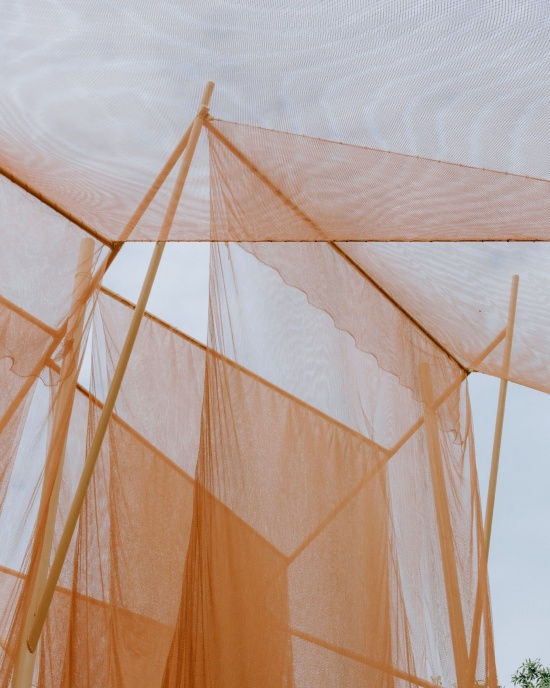
5 巨大之物
An Object of Immense Scale
结构之上,渔网通过“叠”与“垂”两个动作,实现“动”与“静”双重模式。两侧叠网张拉固定,顶部则以垂幔的形式高高悬挂,在风动的情况下,渔网帷幔在头顶上空缓缓漂浮移动,如同呼吸着的巨大之物。
▼结构轴测图,Structural axonometric © iStructure
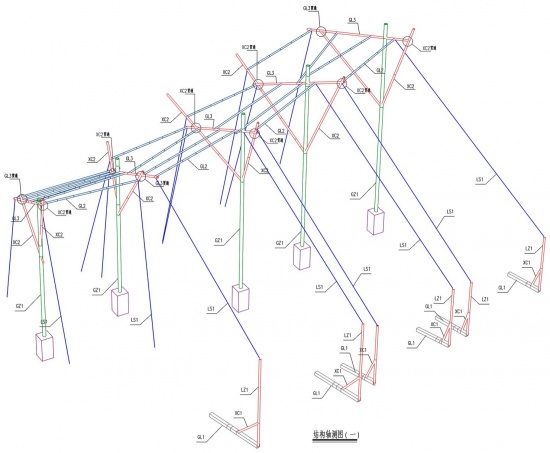
Above the structure, the fishing nets are manipulated through actions of “layering” and “draping,” creating a dual mode of both “movement” and “stillness.” The layered nets are tensioned and anchored on both sides, while the top section hangs high like draped curtains; when the wind blows, the net canopies drift slowly overhead, resembling a massive, breathing entity.
▼顶部则以垂幔的形式高高悬挂,
the top section hangs high like draped curtains © 田方方
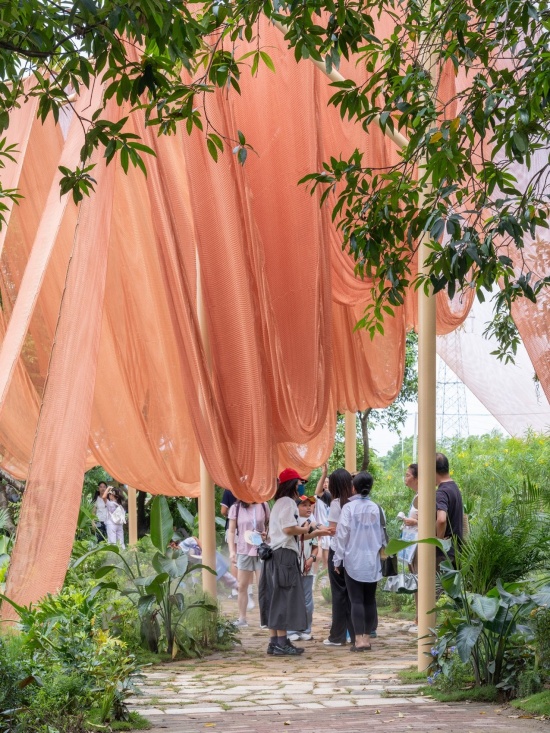
▼顶部则以垂幔的形式高高悬挂,
the top section hangs high like draped curtains © 朱雨蒙
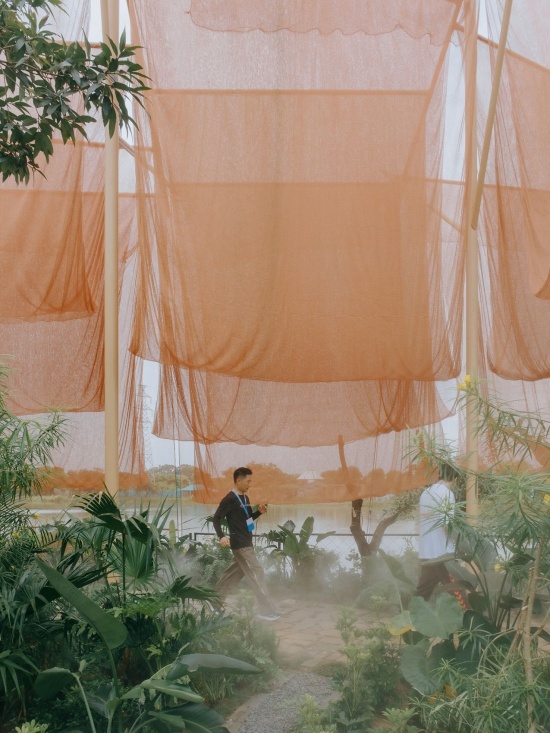
6 不断生长的内部性
An Ever-Evolving Interiority
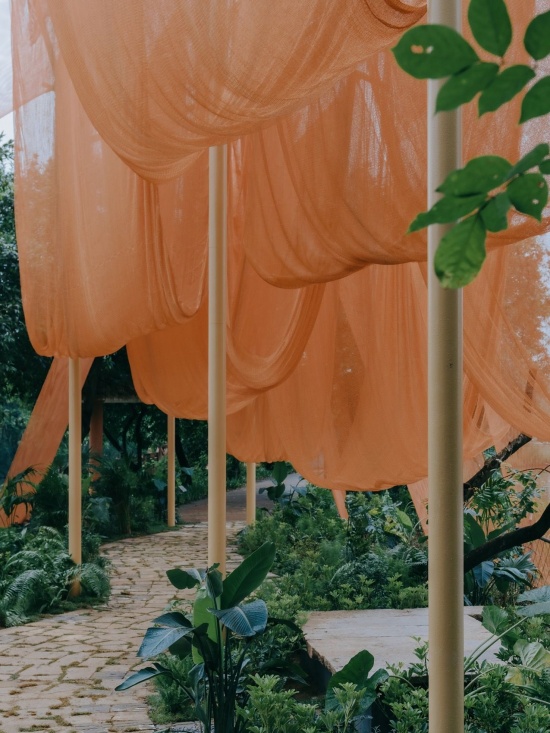
内部小径随落柱点位呈现S型走势,以老青砖和碎石板搭配铺设,既要古朴自然,也要保证打理园区的阿叔可以开三轮车通过。两侧以热带植物高低错落点植,和渔网一起形成更强烈的包裹感,回应桑基鱼塘时期的劳作记忆。我们还把佛山村子里水边常有的石板床,“搬”到了这里。
The interior path winds in an S-shape, following the placement of the structural columns. Paved with a mix of reclaimed grey bricks and broken stone slabs, the design balances a rustic, natural aesthetic with the practical need for maintenance workers to navigate the area on three-wheeled carts. Tropical plants of varying heights are interspersed along the sides; together with the fishing nets, they create a heightened sense of enclosure, evoking memories of the traditional “mulberry-dike-and-fish-pond” agricultural era. We also “relocated” the stone slab platforms—common sights by the waterside in Foshan villages—to this space.
▼和渔网一起形成更强烈的包裹感,
create a heightened sense of enclosure © 朱雨蒙
雾森系统的加入,来自南方身体的直觉。广东经常处于暴晒晾干和雨露潮湿两种不断切换的状态之中。喷雾,既是浇灌也是景观,呼应南方的气候,带来朦胧温润的感觉。随着季节更替,湿度、光线与植被不断变化,使这一空间始终处于缓慢生成之中。
The inclusion of a misting system stems from an intuitive, embodied understanding of the South. Guangdong frequently oscillates between scorching, drying heat and damp, dewy humidity. The mist serves a dual purpose—irrigation and landscape feature—echoing the southern climate and evoking a hazy, gentle atmosphere. As the seasons shift, the interplay of humidity, light, and vegetation ensures the space remains in a state of constant, gradual evolution.
▼和渔网一起形成更强烈的包裹感,
create a heightened sense of enclosure © 朱雨蒙
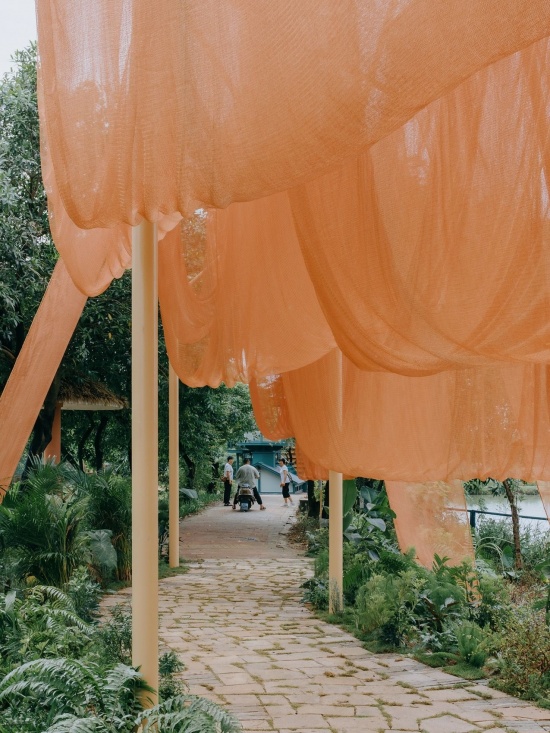
▼雾中的晒渔网,The drying nets in the mist © 靳远
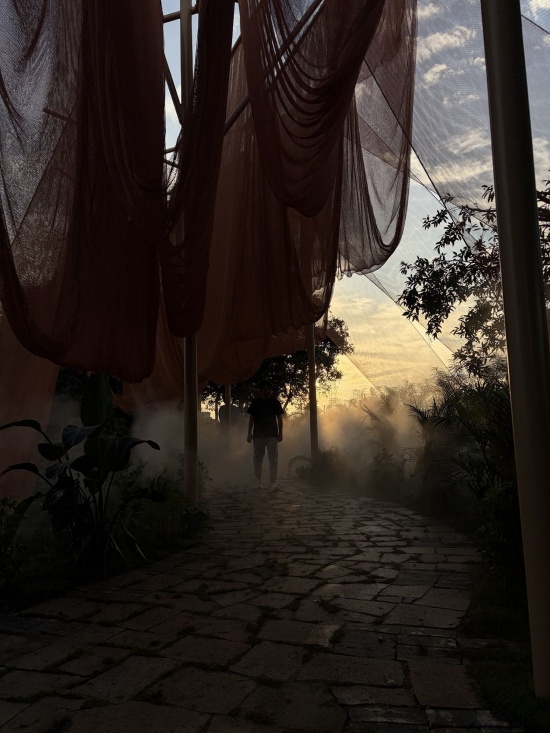
在这里,渔网被悬起、展开、离开水面同时以一种更异常的尺度展开时,其原有的用途被抽离,但与之相关的经验却逐渐显现:因为风阻而变的形态、雨后常留的湿润气息、渔网本身带给人的关于劳作的想象,以及人与水之间反复发生的关系。导览志愿者雪姑说,这里和她记忆中小时候的广东有点像,这种“有点像”与我们知觉感受之间的暧昧联动,正是我们希望的。
Here, as the fishing nets are hoisted, unfurled, and lifted from the water—expanding to an extraordinary scale—their original utilitarian function falls away, yet the experiences associated with them emerge: the shapes sculpted by wind resistance, the lingering dampness after rain, the evocative imagery of labor, and the enduring relationship between people and water. Xuegu, a volunteer guide, remarked that the place reminds her of the Guangdong of her childhood. This subtle resonance—where a sense of familiarity intertwines with our immediate sensory experience—is precisely what we hoped to achieve.
▼回想起小时候的广东,
reminds her of the Guangdong of her childhood © 朱雨蒙
项目名称:《晒渔网》
项目类型:景观 / 大地艺术
设计方:广州多重建筑工作室 Multi-Architecture
公司网站:multi-architecture.com
联系邮箱:media_multiarch@foxmail.com
完成年份:2026年
项目建筑师:靳远、陈利、计少敏
设计团队:张志逸、谭泽熙、周欣扬、刘彬娜、张泽宏、薛童
项目地址:中国 佛山市 南海区 西樵镇 渔耕粤韵
建筑面积:180㎡
摄影版权:朱雨蒙、田方方、董京宇、靳远
材料:渔网
项目背景:艺术在樵山—广东南海大地艺术节2026
总策划:孙倩
策展:HUBRAT
「渔耕粤韵」板块 · 樵湖新筑
策展人:王子耕
执行策展人:任宇晴
Project name: Under the Drying Nets
Project type: Landscape / Land Art
Design: Guangzhou Multi-Architecture Studio (Multi-Architecture)
Website: multi-architecture.com
Contact e-mail: media_multiarch@foxmail.com
Completion year: 2026
Project architects: Jin Yuan, Chen Li, Ji Shaomin
Design team: Zhang Zhiyi, Tan Zexi, Zhou Xinyang, Liu Binna, Zhang Zehong, Xue Tong
Project location: Yugengyueyun, Xiqiao Town, Nanhai District, Foshan, China
Gross built area: 180㎡
Photo credits: Zhu Yumeng, Tian Fangfang, Dong Jingyu, Jin Yuan
Materials: fishing nets
Background: Art at Qiaoshan – Art Field Nanhai 2026
Chief curator: Sun Qian
Curation: HUBRAT
“Yugengyueyun” Section · Qiaohu New Architecture
Curator: Wang Zigeng
Executive curator: Ren Yuqing
More:广州多重建筑工作室。更多关于他们,请至:Multi-Architecture on gooood





发表评论
你需要先 才能发表评论
社交登录