感谢 GOLEM 予gooood分享以下内容。更多关于:GOLEM on gooood
Appreciation towards GOLEM for providing the following description:
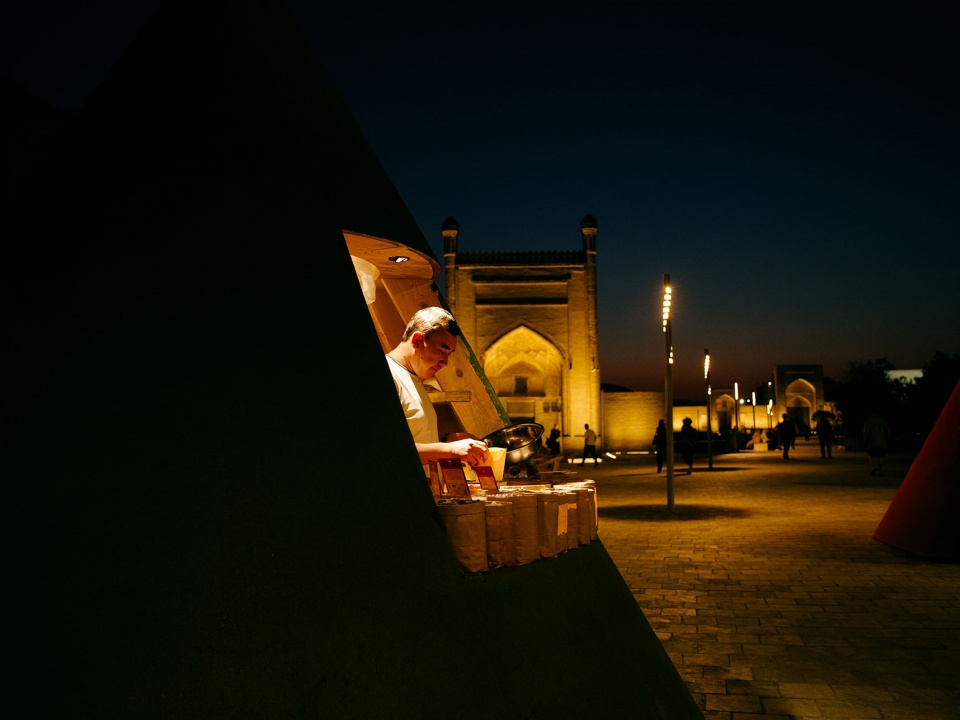
在布哈拉双年展期间,在Gayane Umerova的委托以及Diana Campbell的策展指导下,GOLEM受邀设计老城的各个入口节点:一座作为双年展门槛的集市,以及分散设置于老城多个入口处的售货亭。
For the Bukhara Biennial, under the commission of Gayane Umerova and the curatorial direction of Diana Campbell, GOLEM was asked to stage the Old City’s points of entry: a bazaar as the Biennial threshold, and kiosks dispersed throughout the Old City’s entry points.
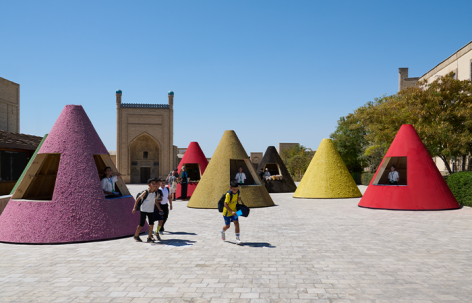
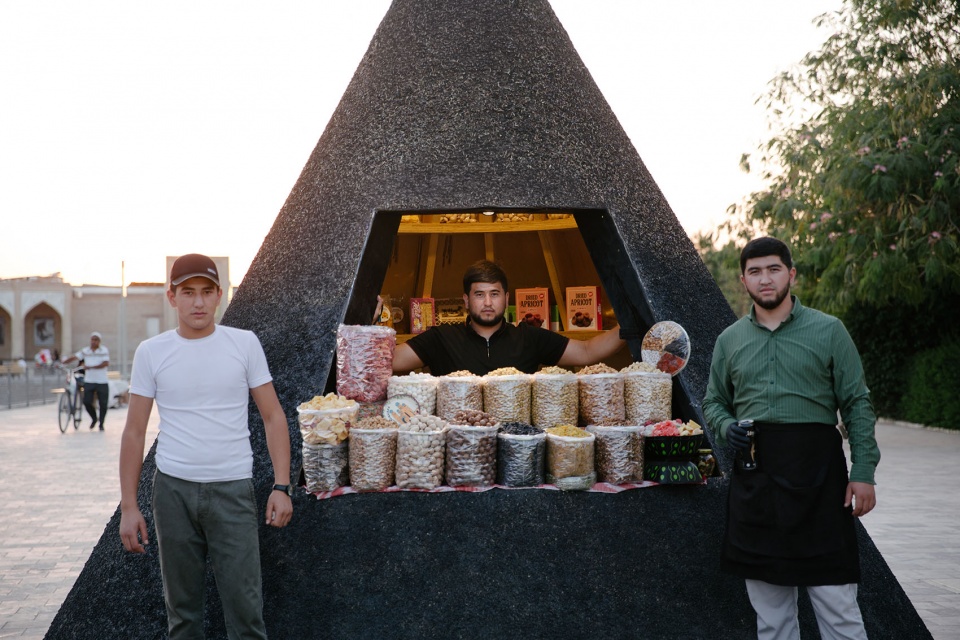
▼锥形售货亭群,Conical Kiosk Cluster © Kamila Rustambekova, Adrien Diran
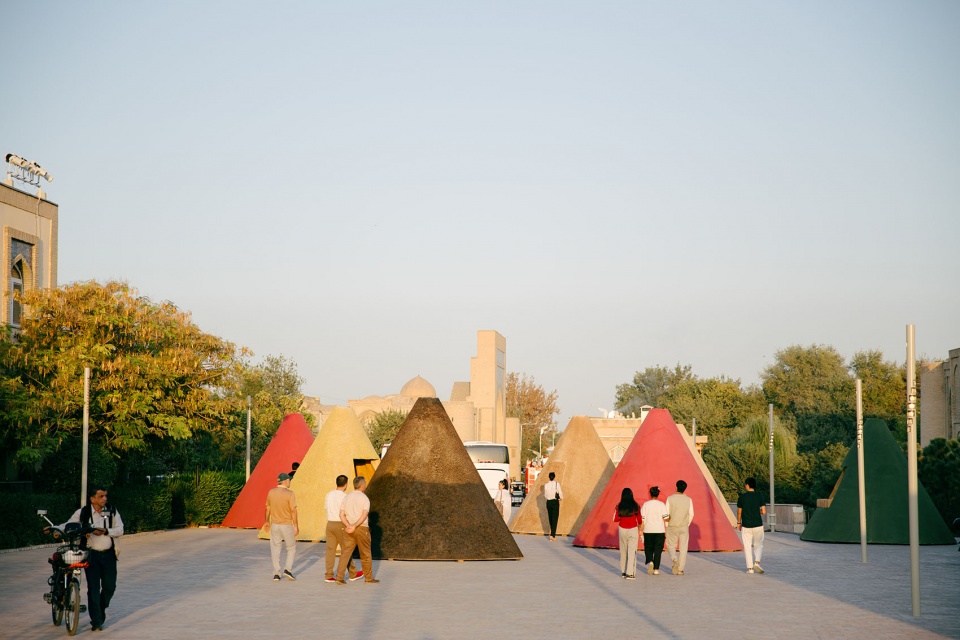
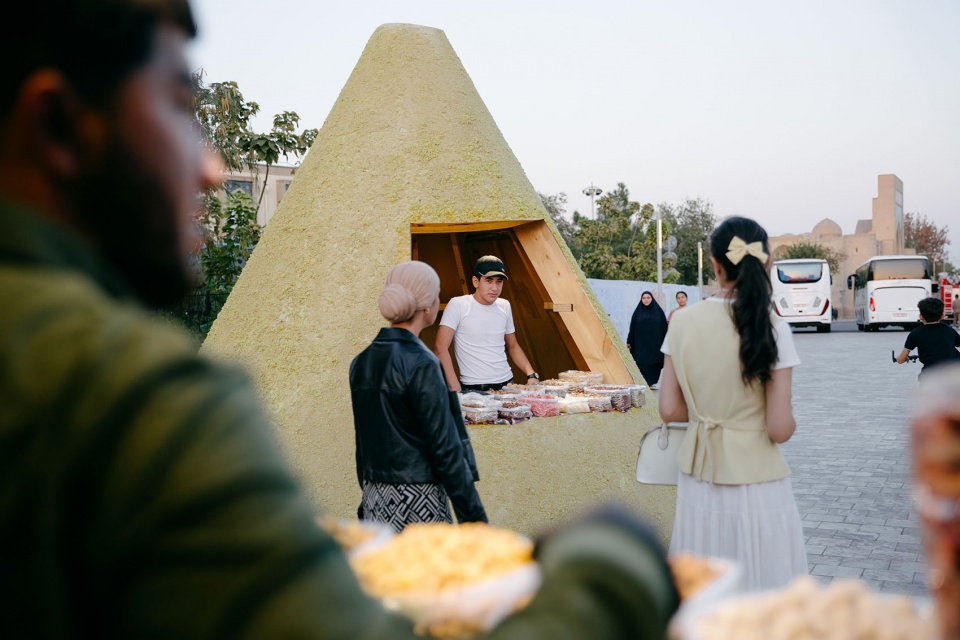
▼集市中的售货亭,Kiosk within the Bazaar © Kamila Rustambekova
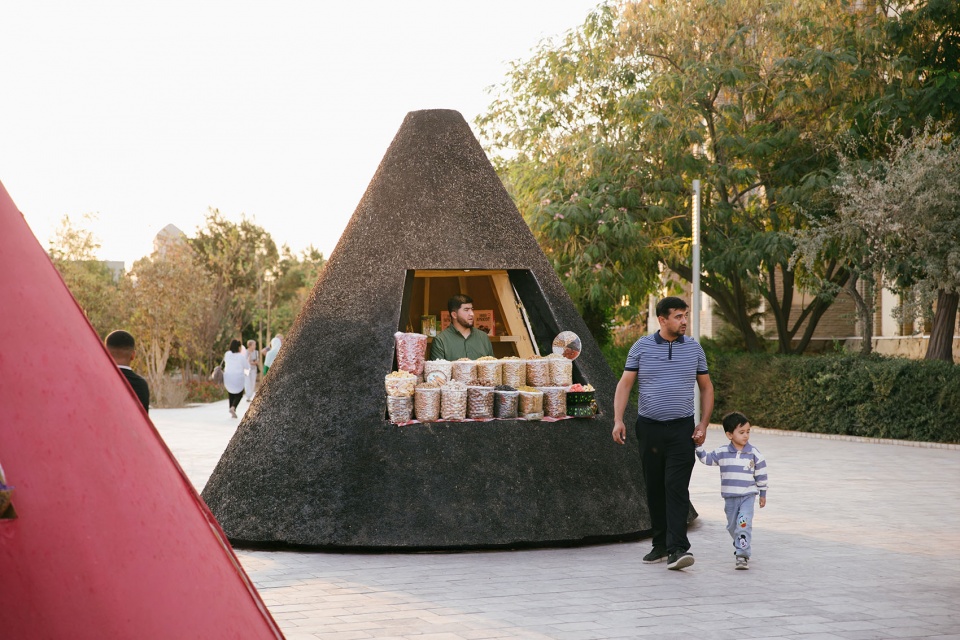
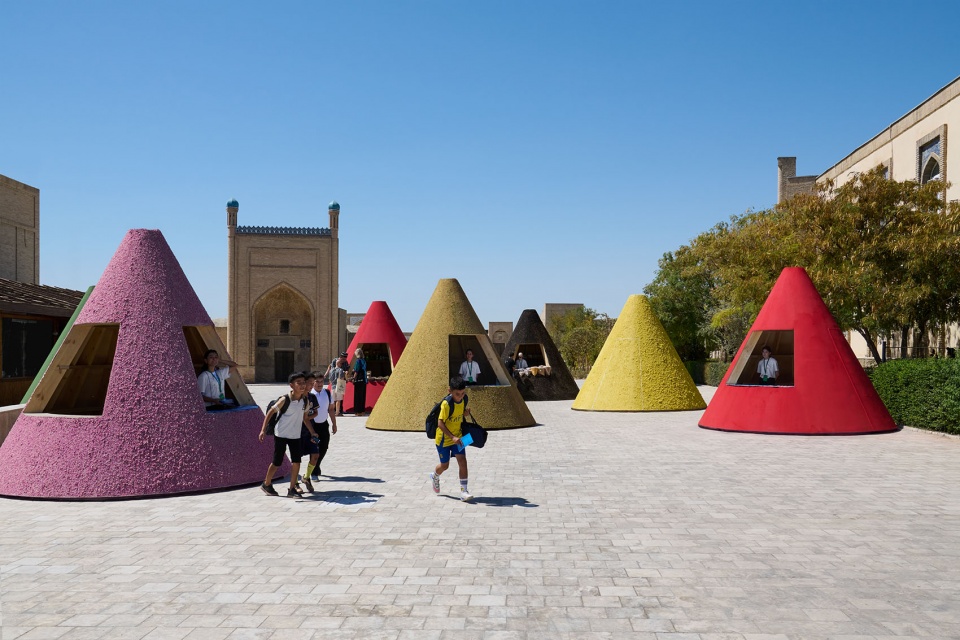
▼售货亭群一角,Corner of Kiosk Cluster © Adrien Diran
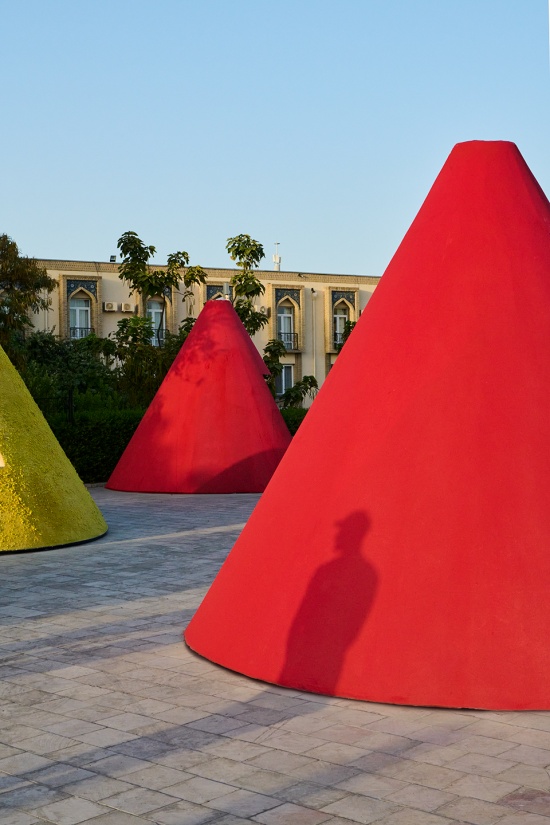
GOLEM向自己提出了一个简单却激进的问题:如果建筑在人们看见它之前,就已经能够被感知,会怎样?项目并未首先诉诸视觉,而是将那些并不通过“看”来认识建筑者的视角作为出发点——包括盲人、未经训练的观看者,甚至非人类生命。
GOLEM asked themselves a simple but radical question: what if architecture could be felt before it is seen? Rather than addressing vision first, the project takes as its starting point the point of view of those who do not see architecture – the blind, the untrained eye, and even the non-human.
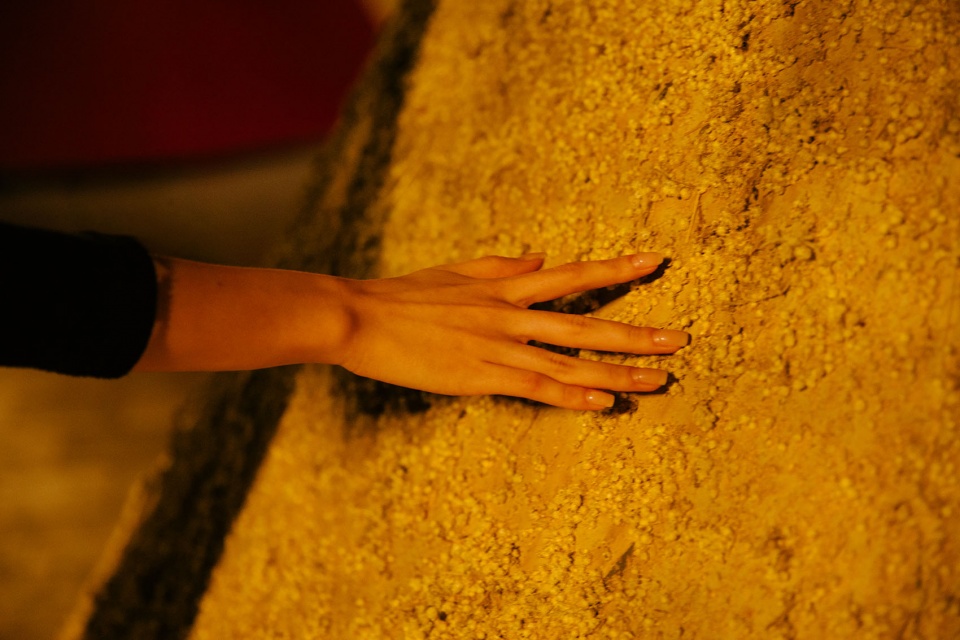
▼触摸香料表皮,Touching the Spice Surface © Kamila Rustambekova
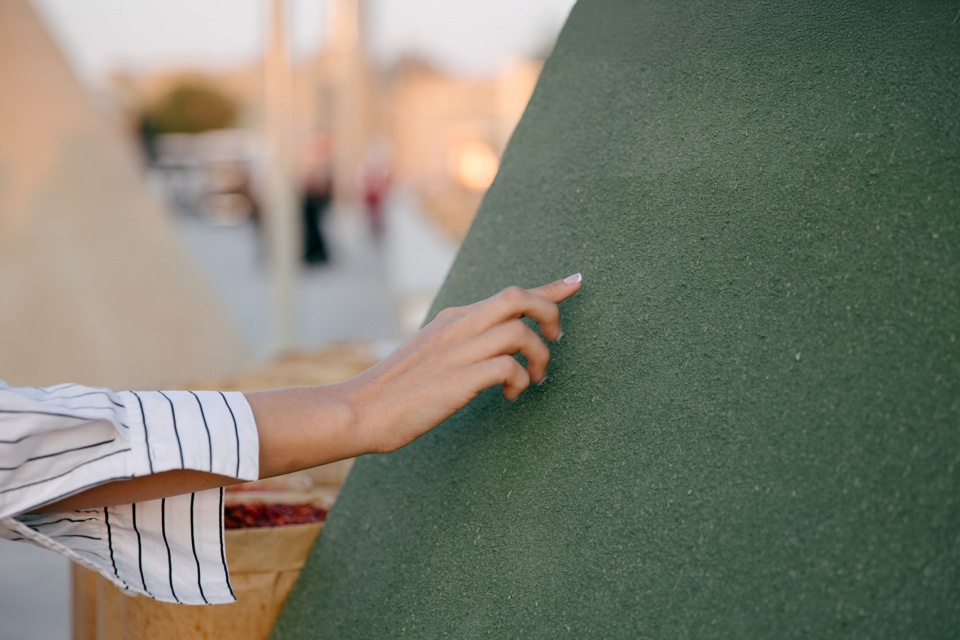
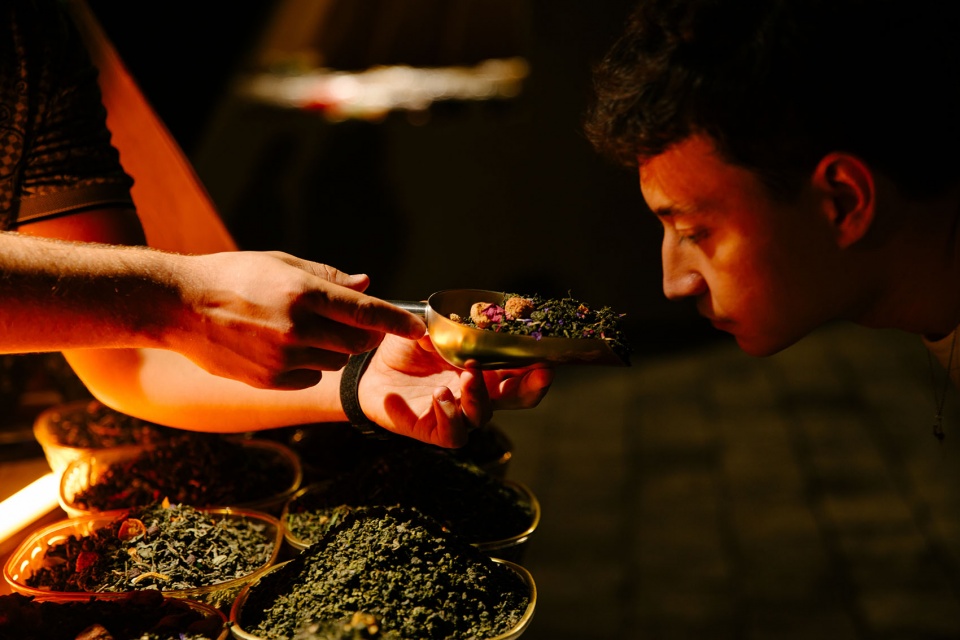
▼通过气味感知表皮,Sensing the Surface by Smell © Kamila Rustambekova
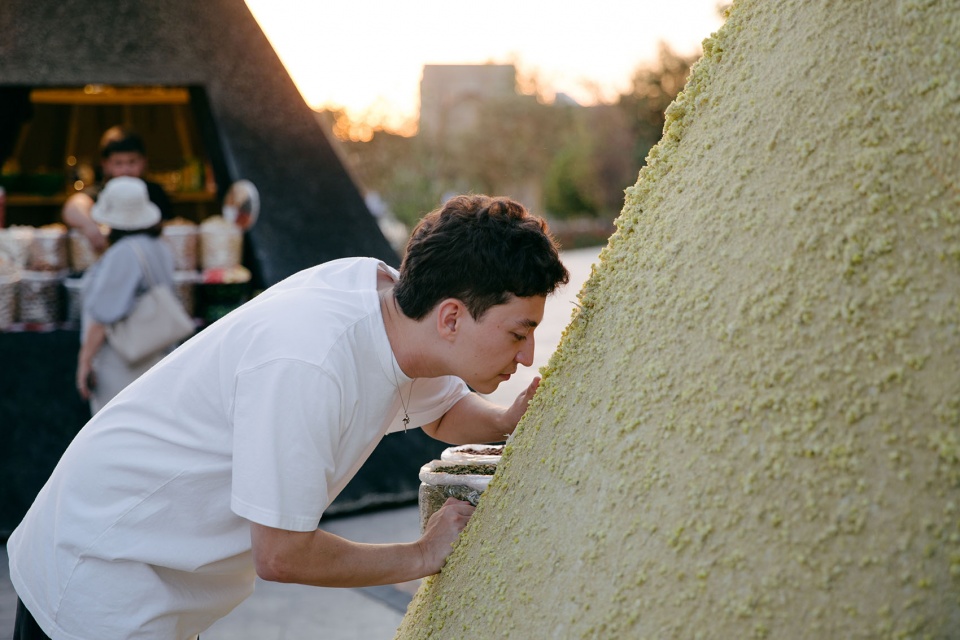
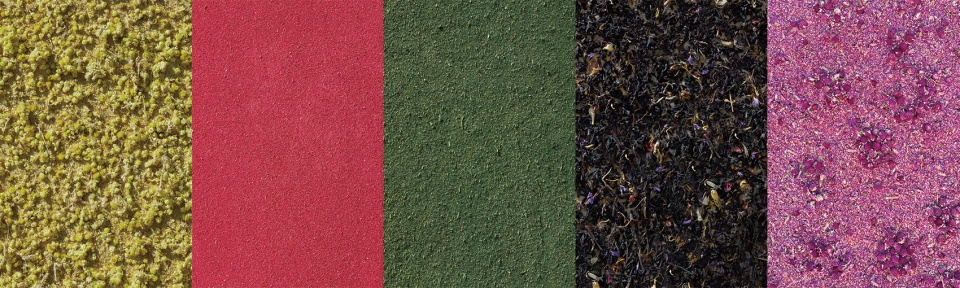
答案来自乌兹别克斯坦自身的文化遗产:香料。一堆堆红椒粉、茶叶与花朵重新出现在旧集市原址,它们的气味穿透城市新近铺设、熠熠生辉的石质路面。锥形售货亭呼应了乌兹别克市场中的香料陈列方式,以及乡村住宅的坡屋顶。售货亭被设计为便于运输的结构,之后将捐赠给当地社区。
▼香料作为设计理念,Spices as design concept © Vladimir Murudov, Arthur Chebb
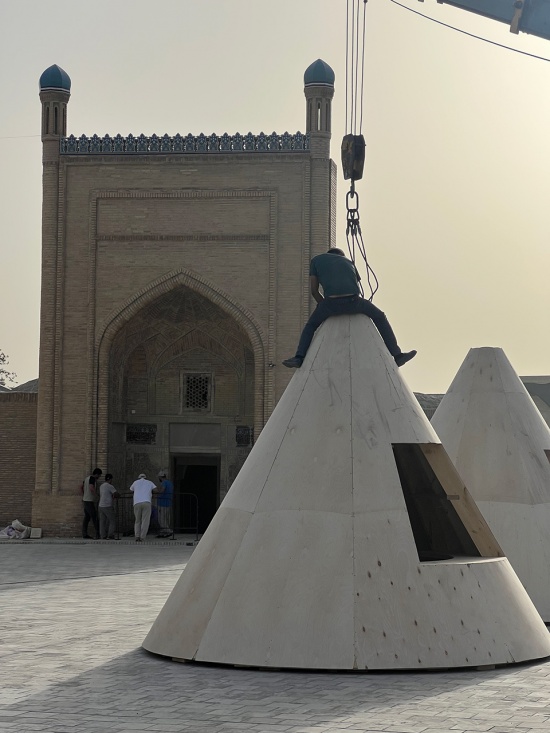
▼售货亭安装,Kiosk Installation © Ariel Andre
The answer emerged from Uzbekistan’s own heritage: spices. Mounds of paprika, teas, and blossoms reappeared at the very site of the old bazaar, their scents piercing through the city’s newly gleaming pavestones. The conical kiosks echo spice displays in Uzbek markets and the pitched roofs of rural houses. Conceived for easy transport, they will later be donated to local communities.
▼售货亭外观,Kiosk Exterior View © Adrien Diran
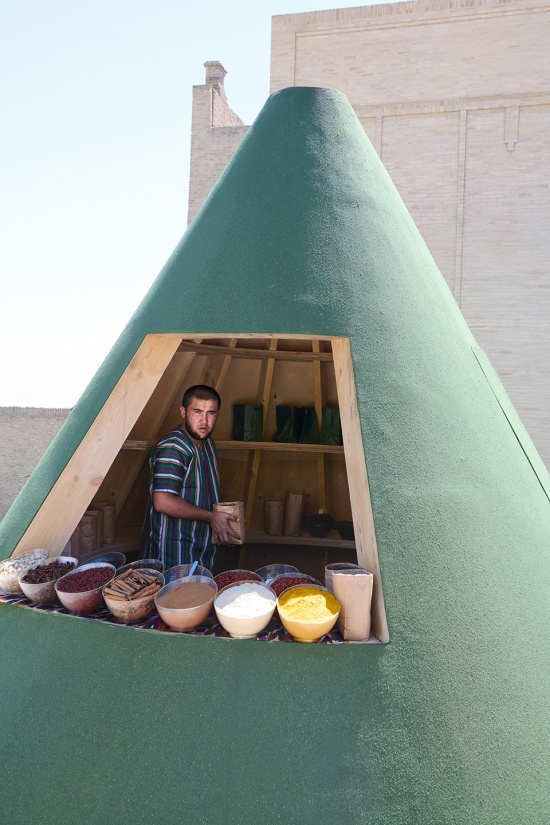
▼售货亭正面,Kiosk Front View © Kamila Rustambekova
▼香料表皮近景,Spice Surface Close-up © Vladimir Murudov
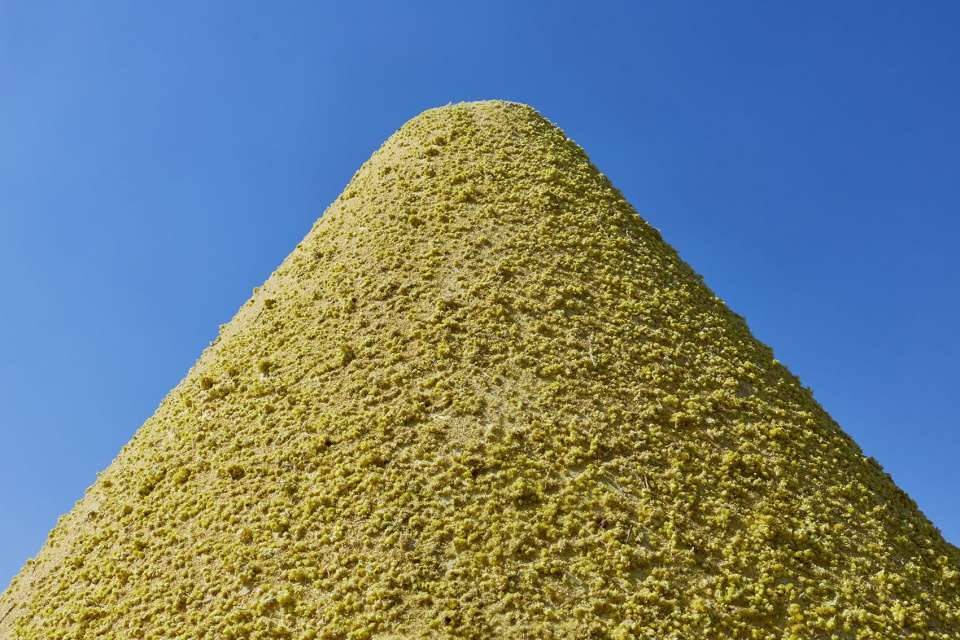
▼售货亭窗口,Kiosk Window © Kamila Rustambekova
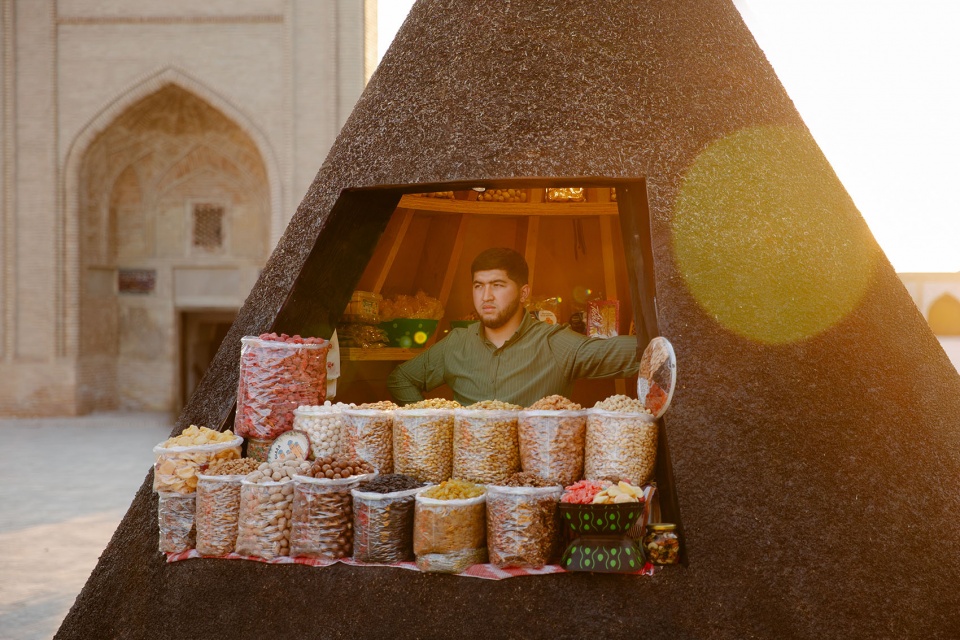

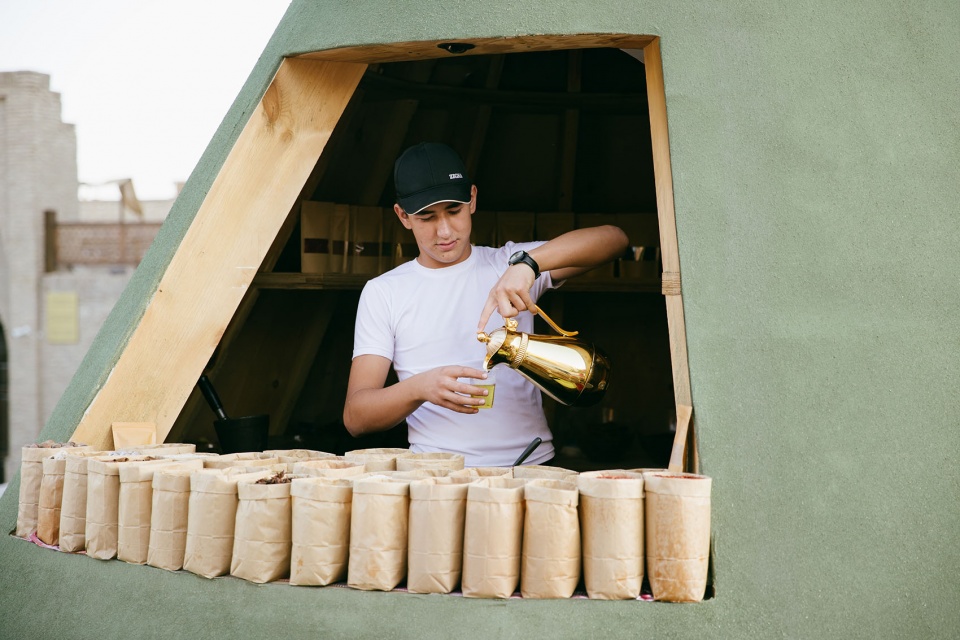
▼售货亭窗口互动,Exchange at the Kiosk Window © Kamila Rustambekova
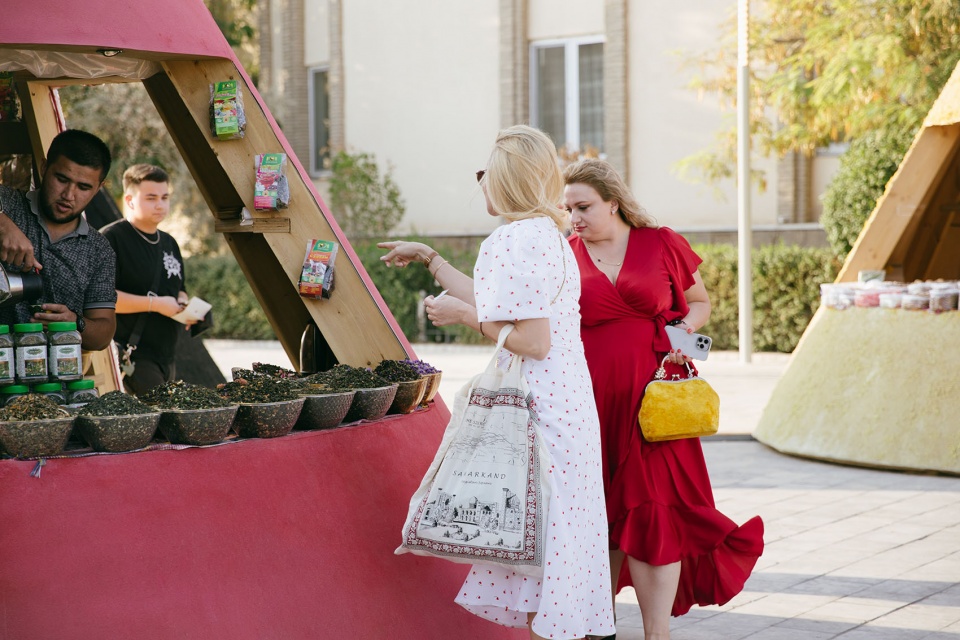
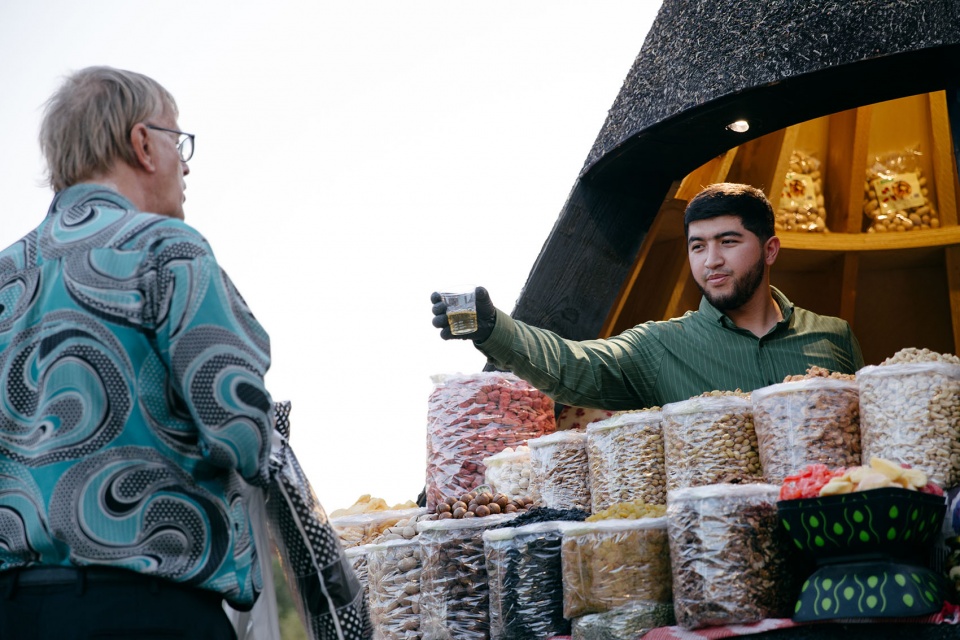
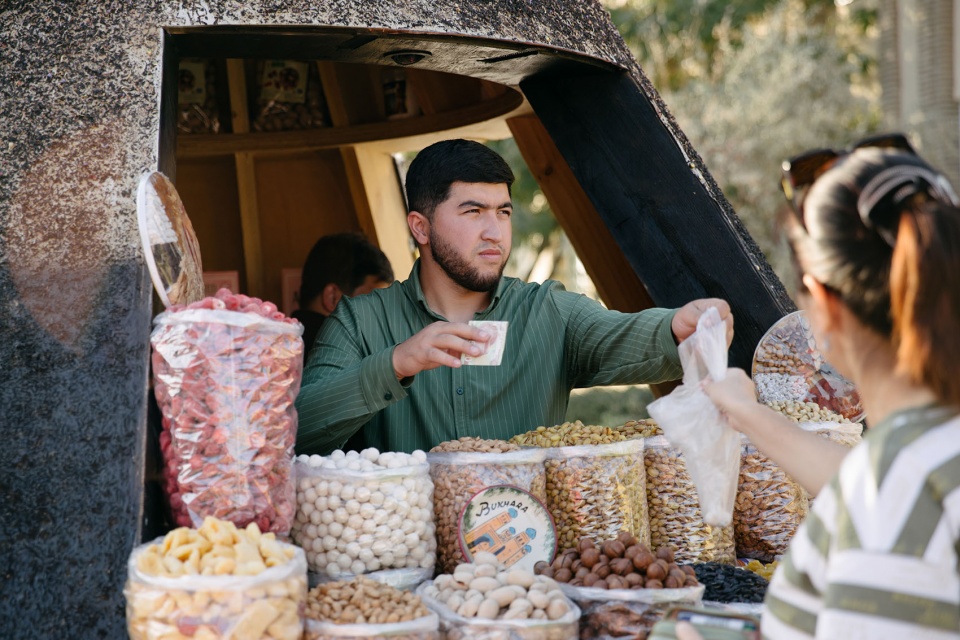
▼售货亭窗口一角,Corner of Kiosk Window © Kamila Rustambekova
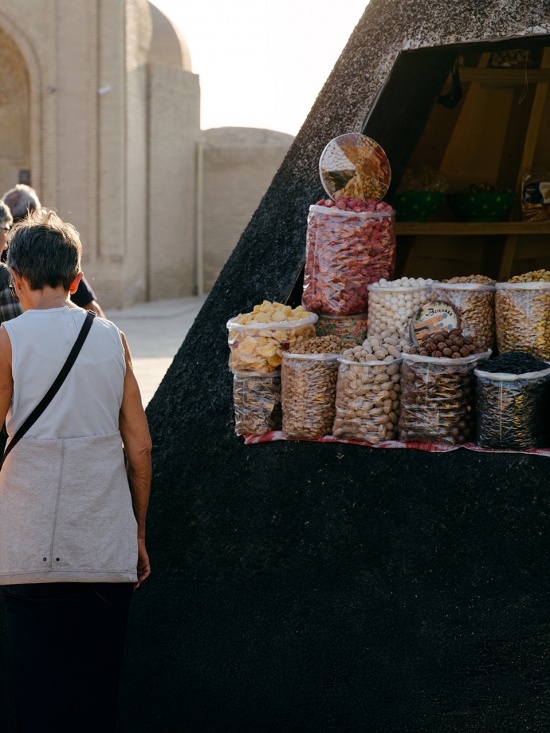
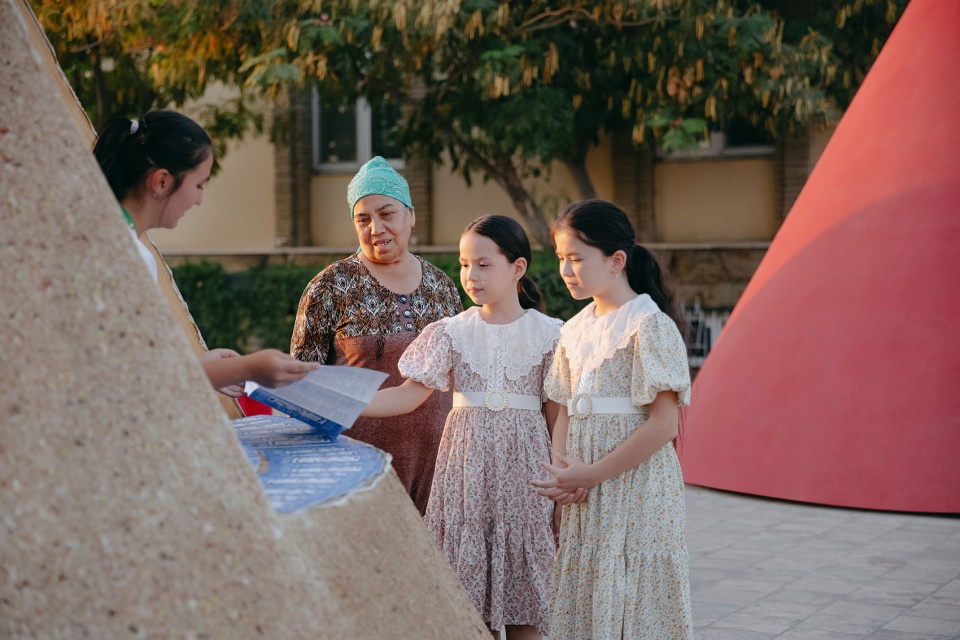
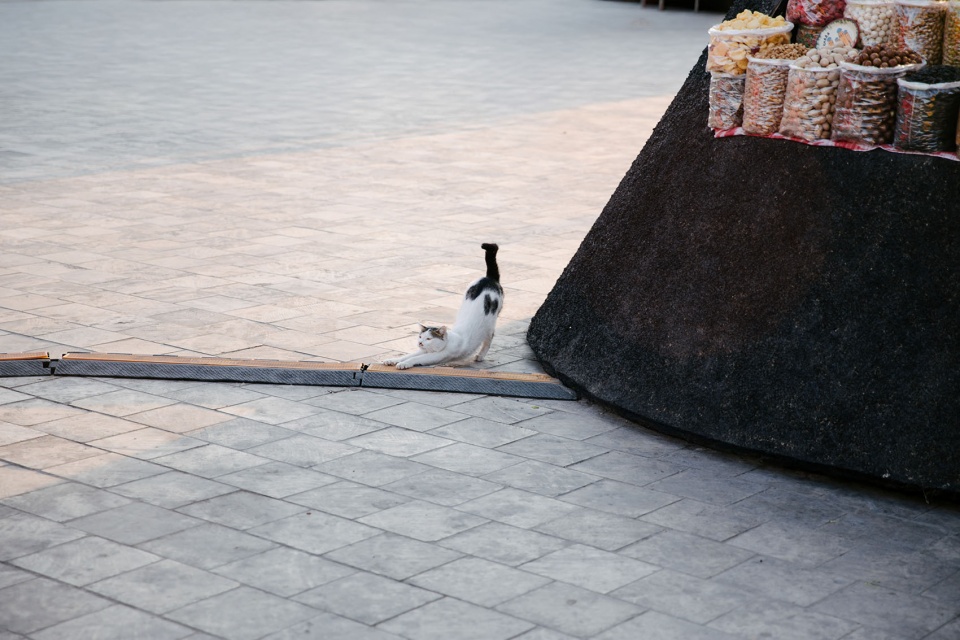
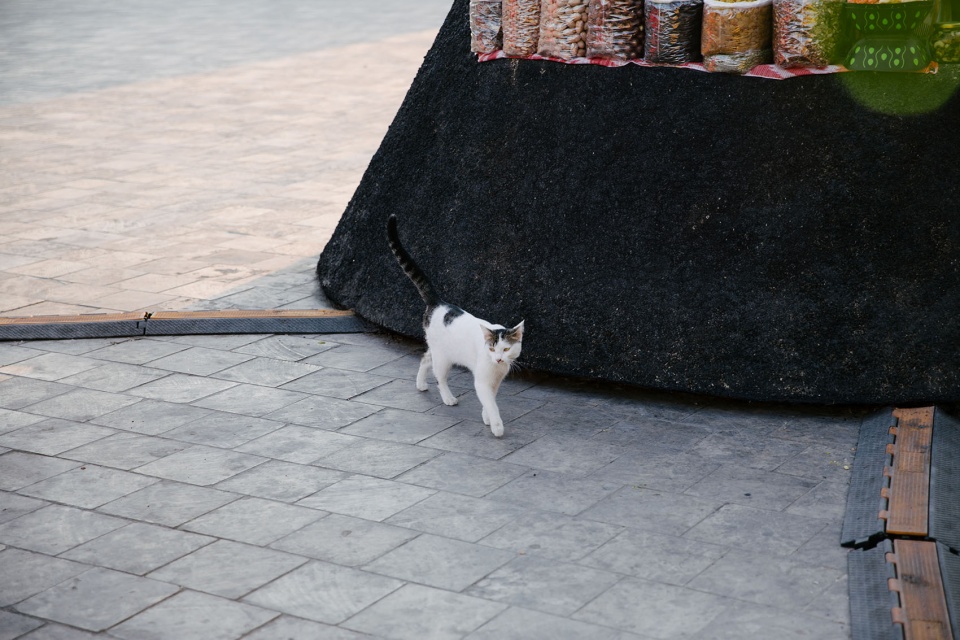
这些构筑物很快成为交流与游戏发生的场所。一位盲人路人随后带着十五位同伴再次来到这里,通过气味辨识这些锥形构筑物。一位导览员开始将关于药用草本植物的民间知识融入她的讲解之中。蜜蜂停落在三叶草花朵上,猫则舔舐着覆有红椒粉的墙面。这些相遇恰如其分地体现了GOLEM对建筑的理解:建筑的使命,是重新思考设计究竟为谁服务。
The structures quickly became sites of exchange and play. A blind passerby returned with fifteen companions to identify the cones by scent. A guide began weaving folk knowledge of medicinal herbs into her tours. Bees rested on clover blossoms, cats licked paprika walls. These encounters perfectly embody GOLEM’s vision of architecture as a mission to shift who design is for.
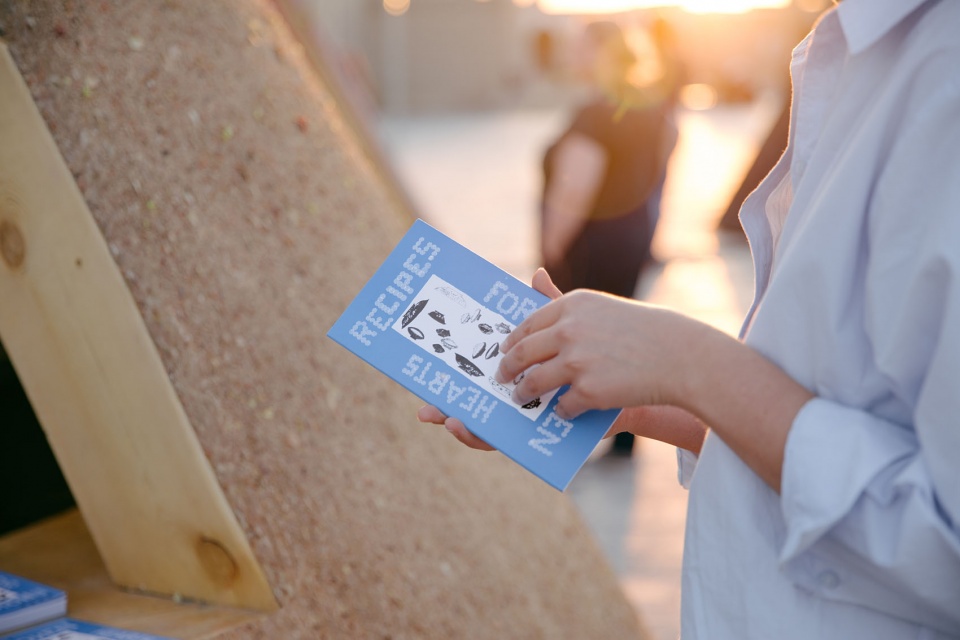
▼项目导览资料,Project Guide © Kamila Rustambekova
▼猫与售货亭,Cat and Kiosk © Kamila Rustambekova
用建筑师的话来说:“这个项目旨在拓宽建筑的边界,让建筑向那些被忽视的人开放,从他们的立场出发——并在这一过程中,创造出新的形式与空间,丰富每一个人的生活体验。”
In the Architects’ words: “This project is about broadening the spectrum of architecture, opening it to those overlooked, starting from their standpoint – and in doing so, creating new forms and spaces that enrich the experience of life for everyone.”
▼售货亭窗口夜景,Kiosk Window Night View © Kamila Rustambekova
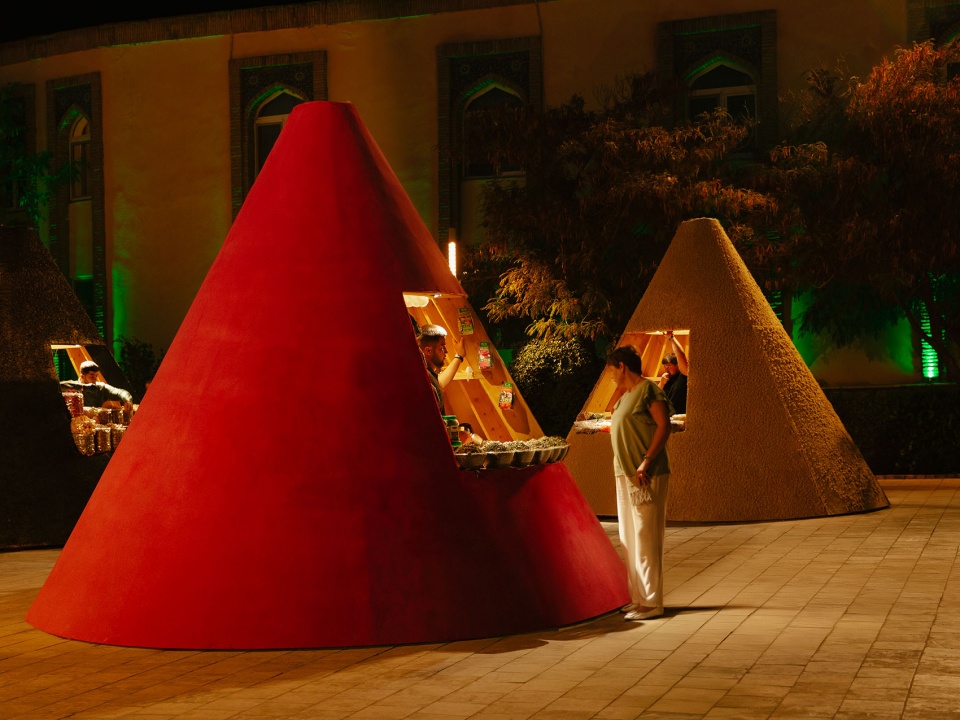
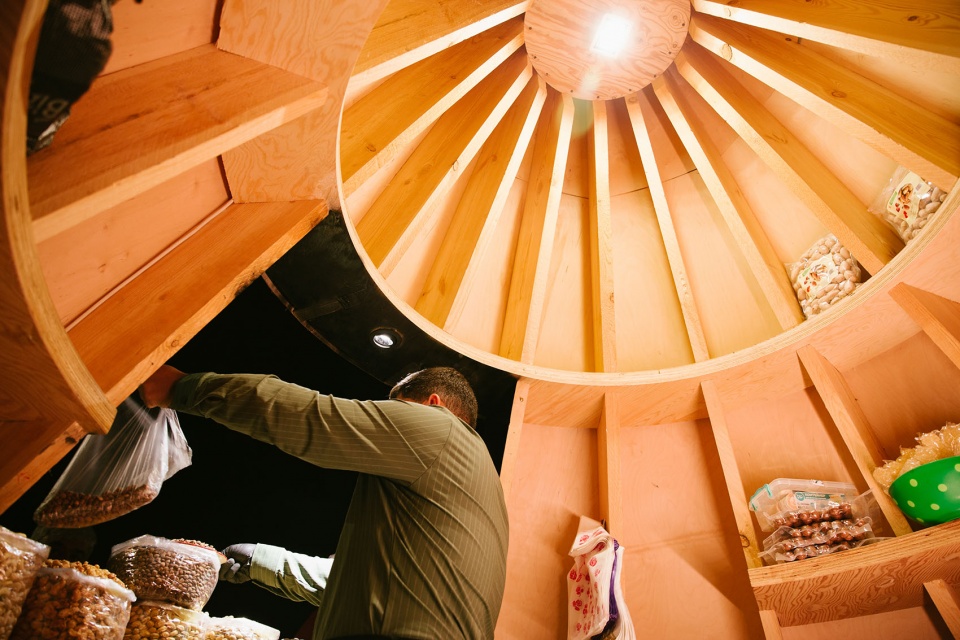
▼售货亭内部夜景,Kiosk Interior Night View © Kamila Rustambekova
▼夜晚触摸香料表皮,Touching the Spice Surface at Night © Kamila Rustambekova
▼夜晚香料气味体验,Spices Scent Experience at Night © Kamila Rustambekova
More:GOLEM。更多关于:GOLEM on gooood









感觉BUG挺多的,1.有效陈列少,2.整体这个坡形阻挡了顾客和产品接触
挺可爱的临时装置构筑物
有颜色、香味和触觉的建筑,是个有意义的尝试