非常感谢 云南杨永铨建筑设计事务所 (联系邮箱:318644750@qq.com) 予gooood分享以下内容。更多请至:QAD on gooood
Appreciation towards QAD (contact: 318644750@qq.com) for providing the following description
秀山寺位于石屏县宝秀镇西向3.5公里,座南朝北。据康熙十二年(1673年)石屏州事江夏人程封撰《石屏县志》载:“宝秀吴家营有秀山,其寺创于唐,又名鹫岭”; 乾隆二十四年(1759)重修的《石屏县志》也载:“秀山寺始建于唐,原名真觉寺”。秀山寺目前为省级文物保护单位,由山门、中殿、大雄宝殿、凌云阁及阁前园林区组成。
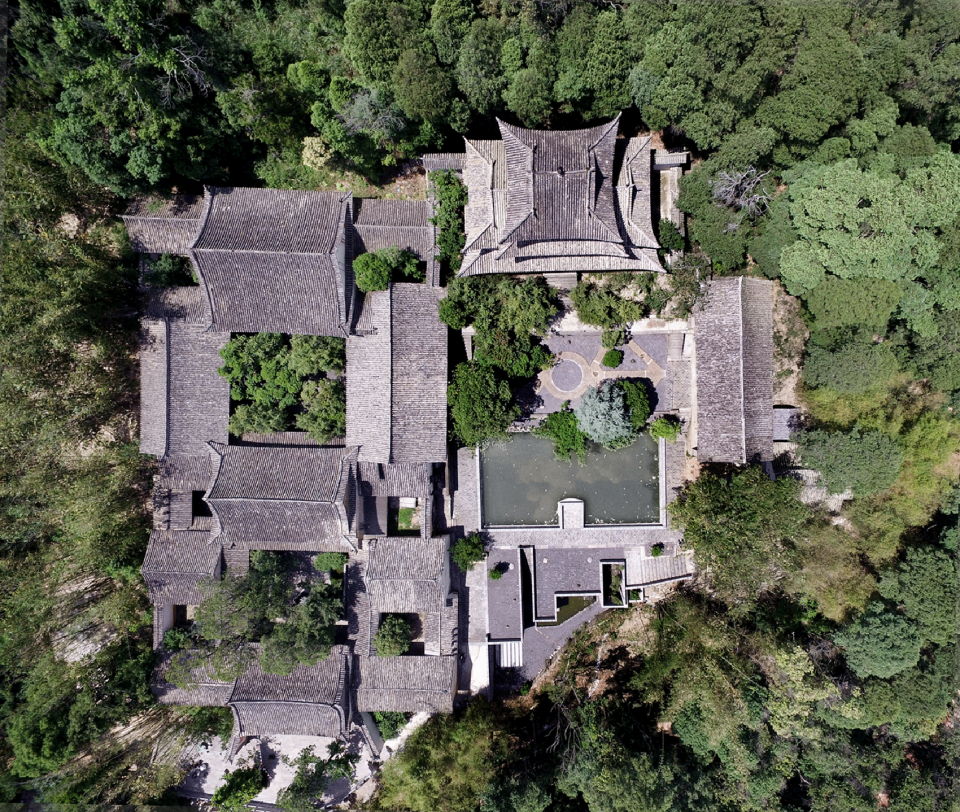
Xiushan Temple is located 3.5 kilometers west of the Baoxiu Township of Shiping County. The temple faces north. “In the Wujiaying Village of the Baoxiu Township, sits Xiushan Mountain— also known as Jiuling Mountain. The temple on this mountain was built during the Tang Dynasty.” The excerpt above comes from the version of the “Shiping County Annals” that was written by Cheng Feng, Governor of Shiping, in Emperor Kangxi’s 12th reign year (1673 A.D.). An updated version of the annals was published in Emperor Qianlong’s 24th reign year (1759 A.D.). The 1759 version of the text reads: “The Xiushan Temple was built in Tang Dynasty. It was originally named Zhenjue Temple.”The Xiushan Temple is a historical and cultural site protected by the provincial-level government. The temple consists of the Main Gate, the Middle Hall, the Main Hall, the Lingyun Pavilion, and a garden that is adjacent to the pavilion.
▼ 秀山寺鸟瞰,禅修室位于图中右下,the aerial view of Xiushan Temple (right below: Zen Meditation Rooms)
秀山林茂竹修,花草四时不绝,景致优雅绝俗,真觉古寺深藏于浓荫之中。钟岳山人涂应恒书狂草“秀山”二字悬于山门,故人们也将真觉寺称为秀山寺。清末明初,云南著名书法家陈荣昌、赵藩、袁嘉谷等人先后为秀山真觉寺题书对联,更使该寺名闻遐迩。
This ancient temple is surrounded by a lush bamboo forest and some of the most elegant, otherworldly scenery. During every season of the year, there are some flowers that are in bloom on the mountain. Tu Yingheng, the Zhongyue Shanren, once wrote the two characters “秀山” (literally meaning “elegant mountain”) in wild cursive (caoshu) on the temple’s main gate. From that day on, people began to call the temple Xiushan Temple. In the late-Ming and early-Qing period, well-known calligraphers, including Chen Rongchang, Zhao Fan, Yuan Jiagu and others, wrote couplets referencing Xiushan Temple, which in turn contributed to the temple’s fame.
秀山山脚有一弯人称“净水碗”的池塘,池塘边的玲珑六角小亭为“憩亭”,亭柱悬一联:“此处何妨小坐,大观还在上头。”沿林间石径拾级而上,便抵山门。门额上悬挂的“秀山”二字笔力混厚雄劲,“秀”似美人迎风起舞,“山”如卧龙起势待飞。进山门转至中殿前院,天井中植有唐樱、宋梅、元罗汉。据传,寺中罗汉松迄今已600余年,是当年徐霞客考察南盘江西源时树移植于此。每年冬末初春,石屏人有到寺中赏梅踏春的习惯,沿袭至今。庭中古木遒劲、四时翠叶如盖。稍作停歇,顿觉清心静气,俗念即抛。
At the foot of the mountain, there is a pond called the “Basin of Pure Water.” Adjacent to this pond stands a small hexagonal pavilion named the “Pavilion of Respite.” The couplet on this pavilion reads: “Why stay here when there is more to see up ahead?” The stone steps in the woods lead to the temple’s main gate. Above the gate hangs the lintel upon which the characters for “Xiushan” are written in forceful strokes. The character “xiu” (秀) appears like a beauty dancing in the wind, while “shan” (山) resembles a dragon ready to fly. In the courtyard before the middle hall, there are cherry trees from the Tang, plum trees from the Song, and arhat pines from the Yuan. It is said that the arhat pines were transplanted here over 600 years ago by Xu Xiake when he was traveling to the western source of the Nanpan River. In late winter and early spring, the people of Shiping are traditionally found appreciating the beauty of the temple’s plum trees’ blossoms. The ancient trees are robust as they grow verdant leaves year upon year. After making a visit to this temple, you will leave with a clear mind, free from trivial worries.
中殿楼上塑有佛、儒、道三教的创始人释迦牟尼、孔子、老子像。明清时期石屏历史文化交融发展盛况,由此可见一斑。大雄宝殿前院种有百年以上青梅、金桂、山茶等,院内花木葱茏,古意清幽,禅意如莲。殿门前柱上悬有袁嘉榖对联一副:“游世界三千,只爱此空山风月,古寺烟霞,听澈梵钟声声入耳;览营盘十二,问谁将绿雨桑麻,黄云稼穑,写来试卷字字关心。”大殿西,是依山而建的凌云阁,阁高三层,依阁前台阶徐徐而下,是青梅园与放生池。登上阁楼远眺,宝秀坝静卧盆地中央,四围群山连绵、田畴交错,宝秀十二营盘环坝子分布,人间烟火与古刹名寺,咫尺之隔。
Inside the Middle Hall stand the statues of Gautama Buddha, Confucius, and Laozi, respectively, the founders of Buddhism, Confucianism, and Taoism. These statues exemplify the melding of cultures that took place in Shiping during the Ming and Qing. Adjacent to the Main Hall is a verdant grove of green plum trees, cassia bark trees, and camellia flowers. Here, you can experience a tranquility of old and come closer to understanding Zen, often allegorized as a lotus flower. Hanging on the pillars before the hall is a couplet written by Yuan Jiagu. The couplet reads: “Among all the beautiful places, I love Xiushan Mountain most of all. With its wind and moon, its temple and scenery, and its ringing bell. Who from the twelve villages wrote the words ‘mulberry and sesame leaves green as rain, working in the soil, yellow as the clouds’ with such care during the imperial exam?” The three-story tall Lingyun Pavilion, with a mountain behind it, stands to the west of the Main Hall. At the sides of the path to the pavilion are green plum trees and Fangsheng Pond (to release fish into). Observed from the top of the pavilion, the small Baoxiu plain can be seen as it is located in a spot that is surrounded by mountains and fields. The twelve villages of Baoxiu are located around this small plain. Secular life is not very far from this ancient temple.
2015年底,云南杨永铨建筑设计有限公司对秀山寺进行环境整治设计与施工。
At the end of 2015, entrusted by Shiping’s Bureau of Culture, Sports, Radio and Television, Yang Yongquan Architecture Firm designed and implemented the Xiushan Temple Environmental Restoration Project.
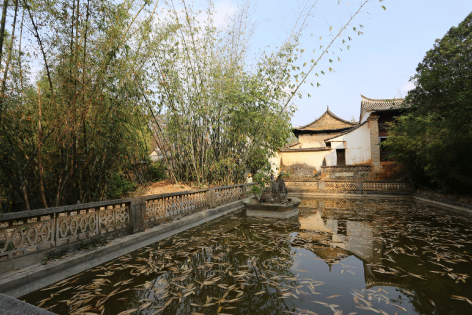
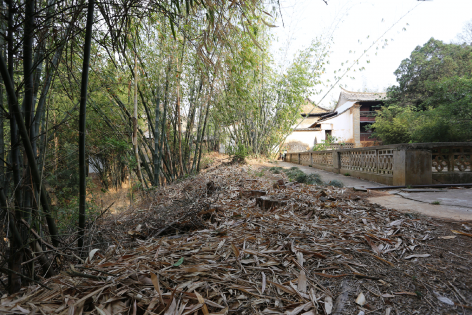
▼ 施工前环境,before renovation
经过一年的实地勘察、测绘,综合诸多信息,我们提出了“以设计复活一座寺庙核心精神”的理念,并在设计、施工中注重优秀传统文化和时代精神的结合,找到秀山寺重生与复兴的切入点,使在社会发展过程中流失的信仰和群体回归到本源。尊重历史的同时选择性吸收当代生活信念,赋予秀山寺更包容的宗教、文化意义。
After a year of field surveys, mapping, and collecting information, we suggested “reviving the temple through design.” The design and plans for restoration combined the spectacular traditions of the temple with contemporary aesthetics. In this way, we aimed to revive and rejuvenate the temple, while encouraging the beliefs and people—once dislocated from the surrounding area—to return. The restoration appeals to modern sensibilities, while still respecting the history of the temple. Thus the restoration has made the religious and cultural significance of the temple more inclusive.
▼ 改造过程,process
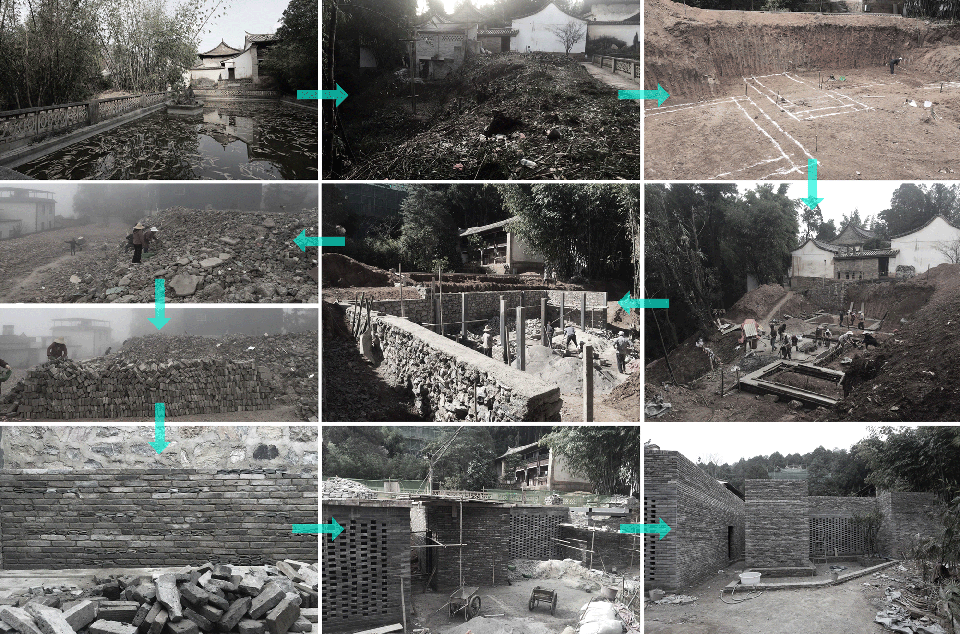
本次设计中,以“自然、惜物”理念贯穿始终,充分考虑秀山寺作为省级文物保护单位的身份,尊重其历史风貌,不破坏文物建筑本体的外墙,保持青梅园、放生池面积不变,清理凌云阁一楼两侧的空地及青梅园杂草,移除放生池边的部分毛竹,拆除90年代建盖但已废弃不用的厕所,清理放生池北面斜坡的垃圾,施工中尽量采用仍有使用价值的木、石、青砖等老旧材料。
Fully considering the temple’s status as a historical and cultural site protected by the provincial government, the firm has valued the temple’s original style and features. The restoration has not damaged the outer walls nor reduced the size of the green plum tree grove and Fangsheng Pond. We tidied up the open space on both sides of the Lingyun Pavilion and removed weeds from around the green plum tree grove. We removed some of the mao bamboos near the pond too. The outdated and unusable restroom facilities, built in the 90’s, were demolished and the garbage on the slope north of the pond was removed. During the construction process, we used as much of the old materials as possible, including wood, stone, and blue brick.
▼ 禅修室建筑外观,The Exterior of the Zen Meditation Rooms
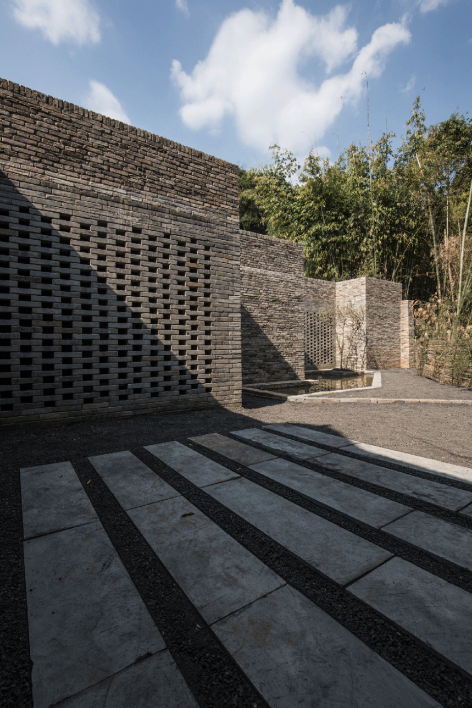
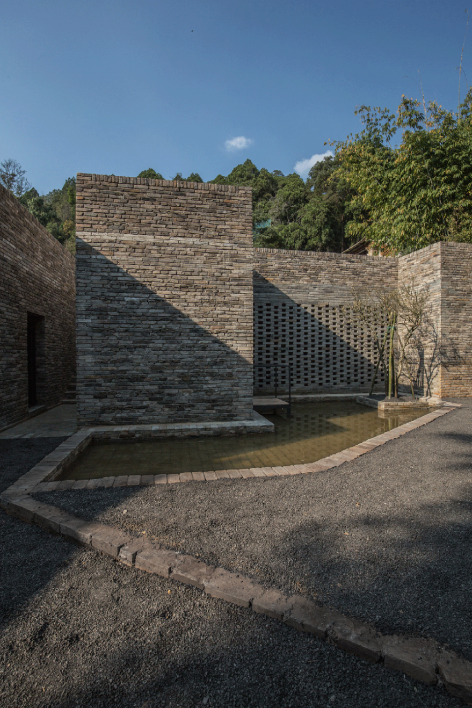
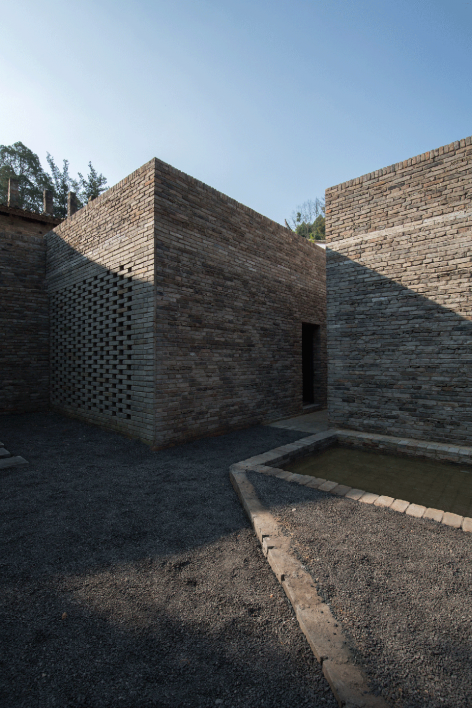
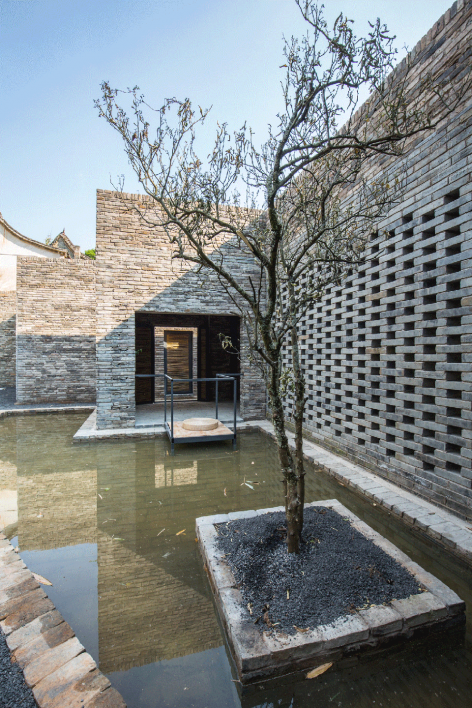
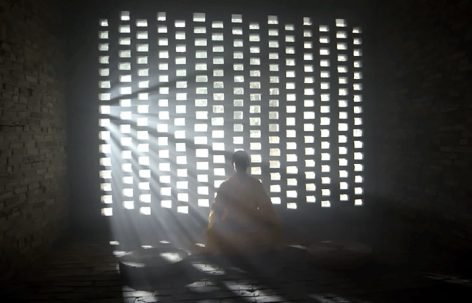
考虑到放生池周边环境及水体质量,移除毛竹后建挡墙以加固和拓展北面斜坡。为充分利用好加固后的北面斜坡,设计师结合现代禅修理念,在放生池北面坡下筑隐藏式禅修室三间,以砖墙留孔的形式借光入室,营造出光影的流动与神秘感,使室内外景观呼应、互补。禅修室顶部借用孤寂山水的理念,整理出游客、香客驻足观景的两个区域。
We took the surrounding environment, including the pond’s water quality, into account when we constructed a retaining wall to reinforce and expand the northern slope. To make full use of the newly expanded and enforced slope, we designed three concealed rooms for Zen meditation, located within the slope. The traditional plum-blossom-shaped bricks were used on the meditation rooms’ walls to let sunlight flow in and create a beautiful mystique. This design enables the rooms’ view from the inside to blend with the outside scenery. Above the Zen meditation rooms, there are two viewing areas for visitors and Buddhist practitioners. The meditation rooms’ design is in line with the ideas of lonely shanshui scenery.
▼ 禅修室室内,the interior of the Zen Meditation Rooms
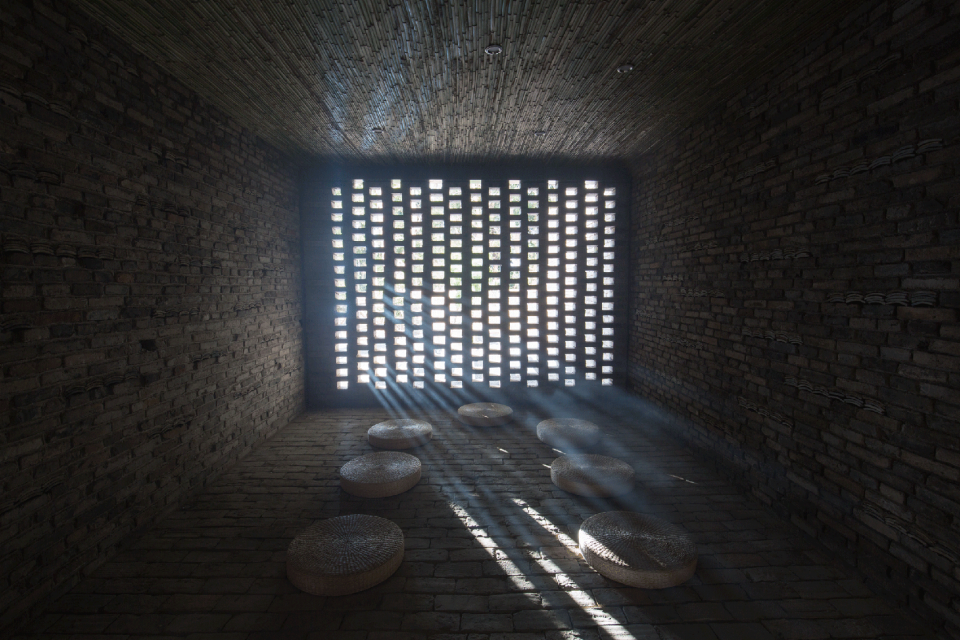
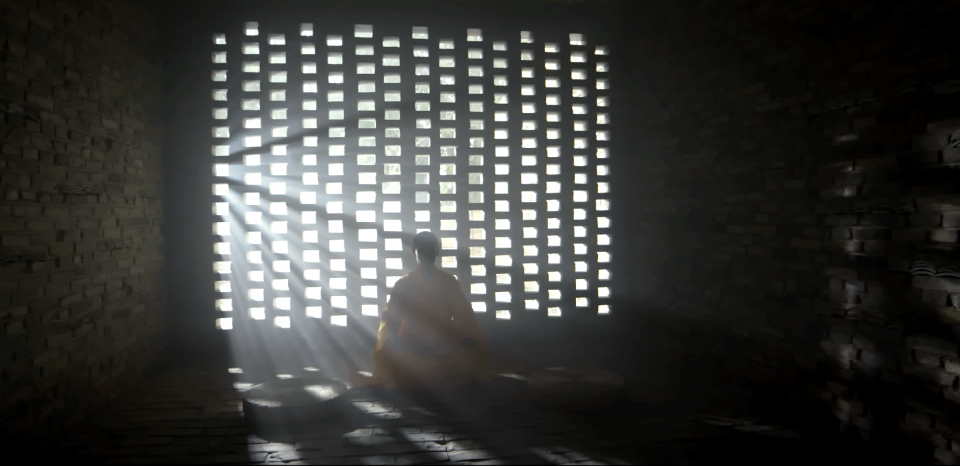
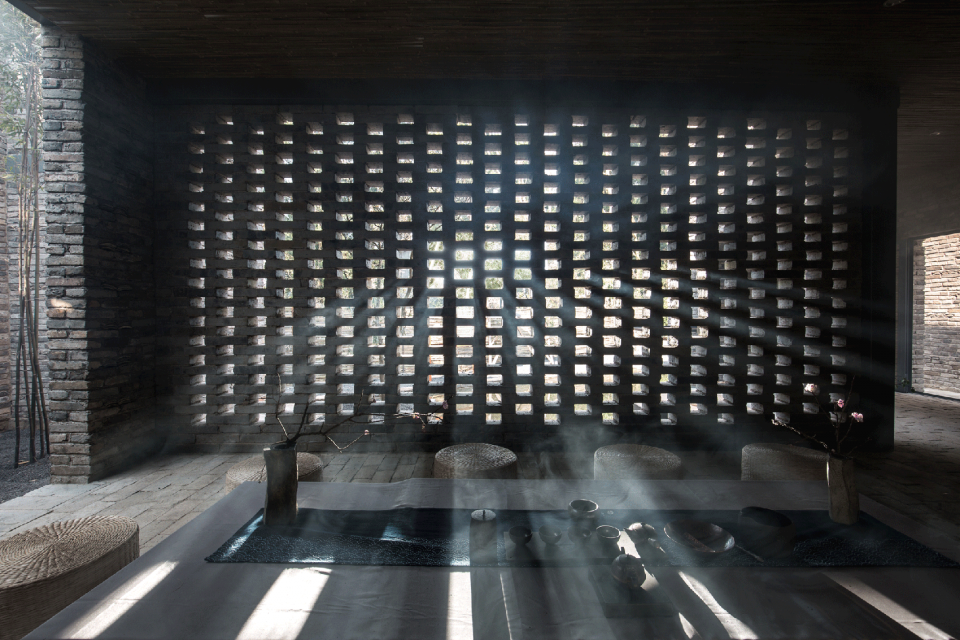
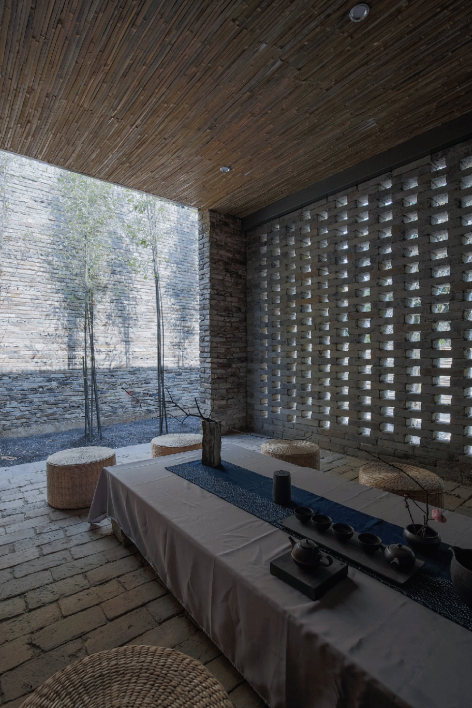
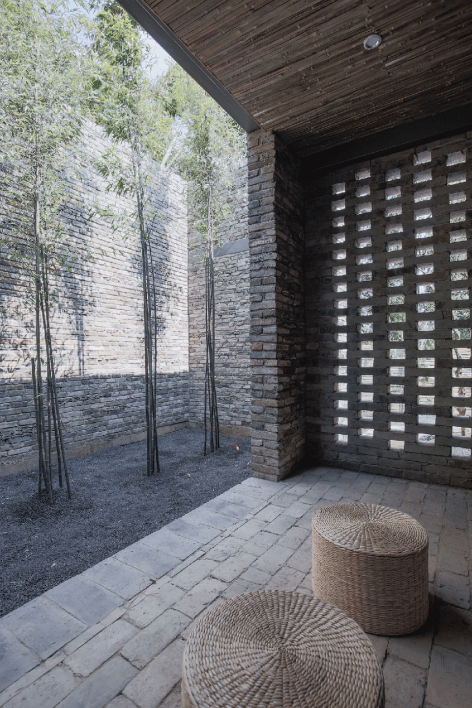
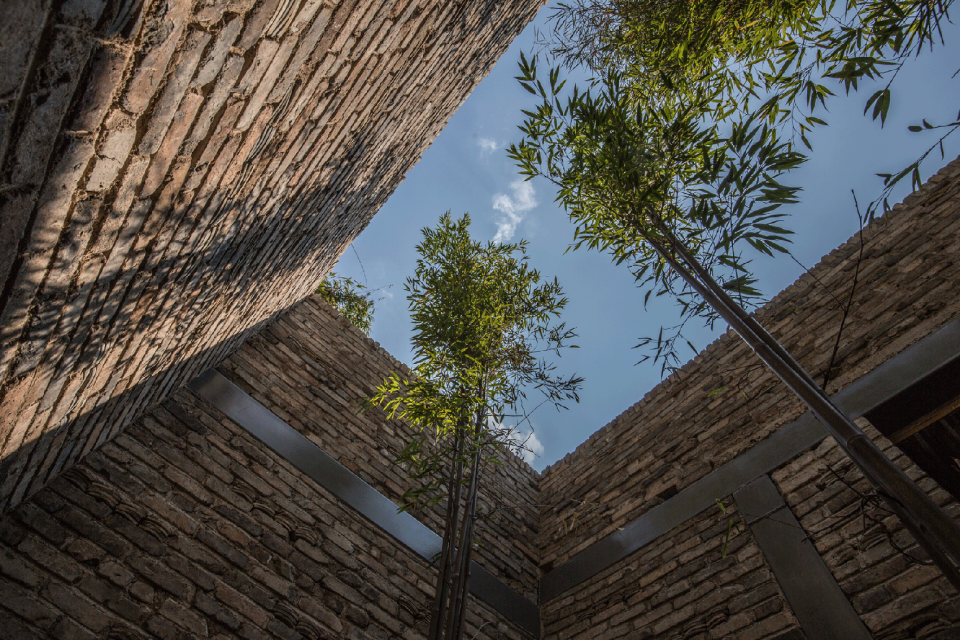
2017年3月施工完成,自凌云阁一楼到放生池依地势高低及历史状态被整理为紫竹苑、青梅园、放生池、禅修室。整治后的凌云阁区域环境清朗有致,与周边森林及东面寺庙建筑群浑然一体,从空间利用、建筑风格上既延续了历史功能又相互补充;从管理、发展角度,既满足僧人、居士、香客的需求,也充分考虑到普通游客的游览需求及精神与灵魂升华所需的静修空间。
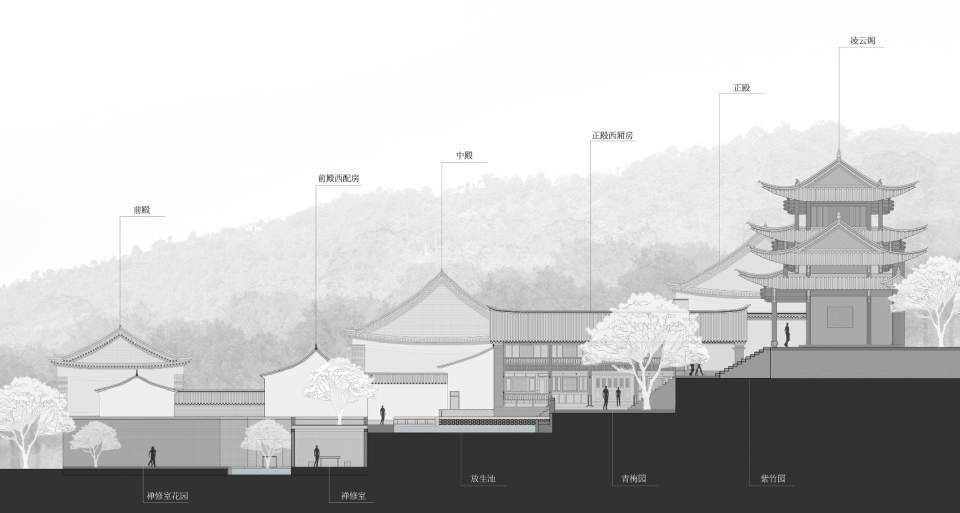
The project was completed in March 2017. Walking from Lingyun Pavilion to Fangsheng Pond, you will pass the Purple Bamboo Garden, the Green Plum Tree Grove, Fangsheng Pond and the Zen Meditation Rooms. This layout is meant to highlight the original features of the temple and showcase them according to height. The Lingyun Pavilion is now spacious and clear, as it blends with the surrounding woods and the temple’s eastern buildings. The space use and construction style complement one another while allowing for the continued use of the temple’ historic function. In terms of management and development, the restoration meets the needs of the monks, lay Buddhists, and Buddhist practitioners. It also meets the needs of the average tourist, as it provides a refuge for relaxation and meditation.
▼ 与自然环境的融合,into the environment
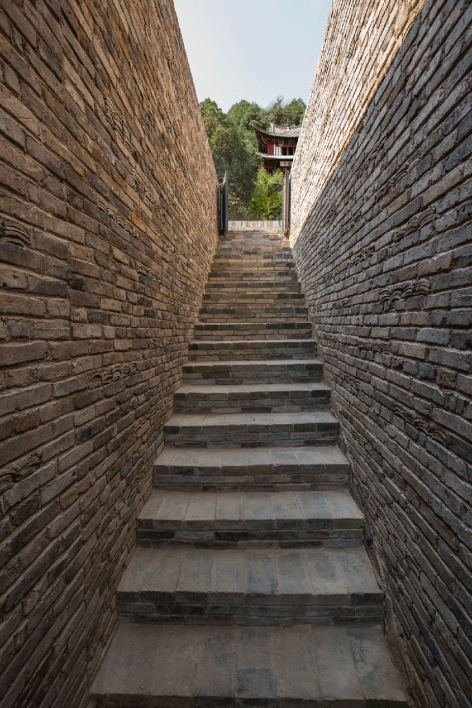
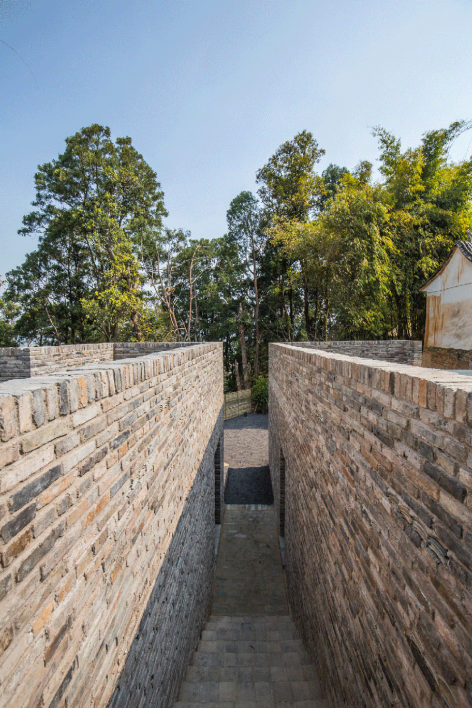
▼ 景观营造,landscape design
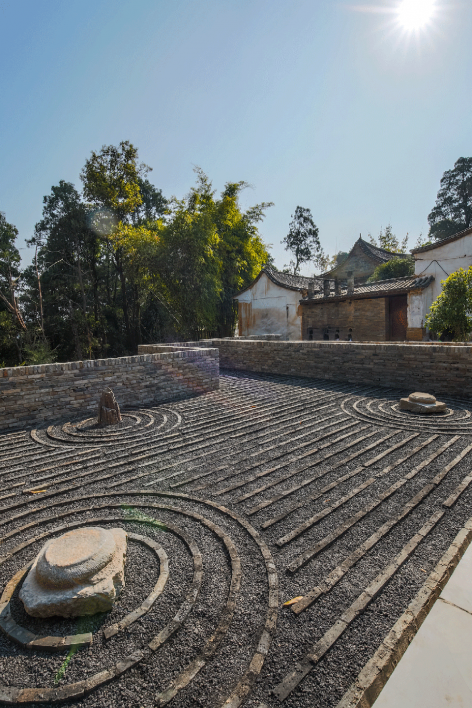
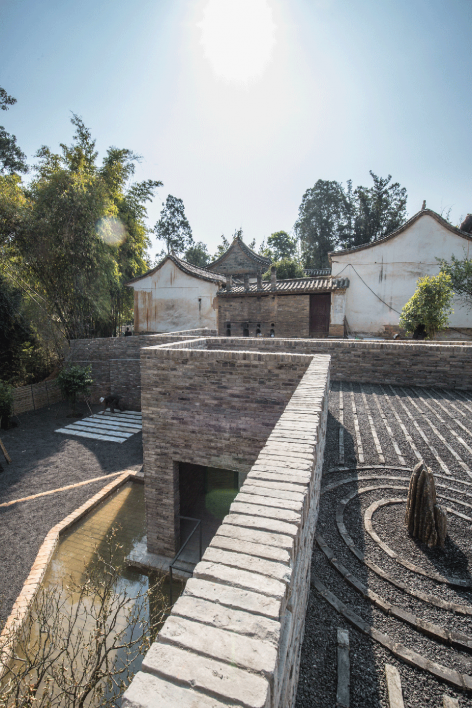
此次秀山寺环境整治,我们深切感受到了前人对自然与文化的尊重与依托、养护与延续;也使我们更清晰地认识到,对自然与文化遗产,我们更应该多一份慎重和尊重。这也是当前我们在文化遗产保护中应该清醒认识到的中华文化之本源。
Through this restoration project, we have come to better understand how people of the past respected, supported and protected nature and culture. We have also come to understand the importance of treating nature and cultural relics with respect. This attitude is essential to preserving cultural relics, and to Chinese culture itself.
▼ 总平面图,the general layout
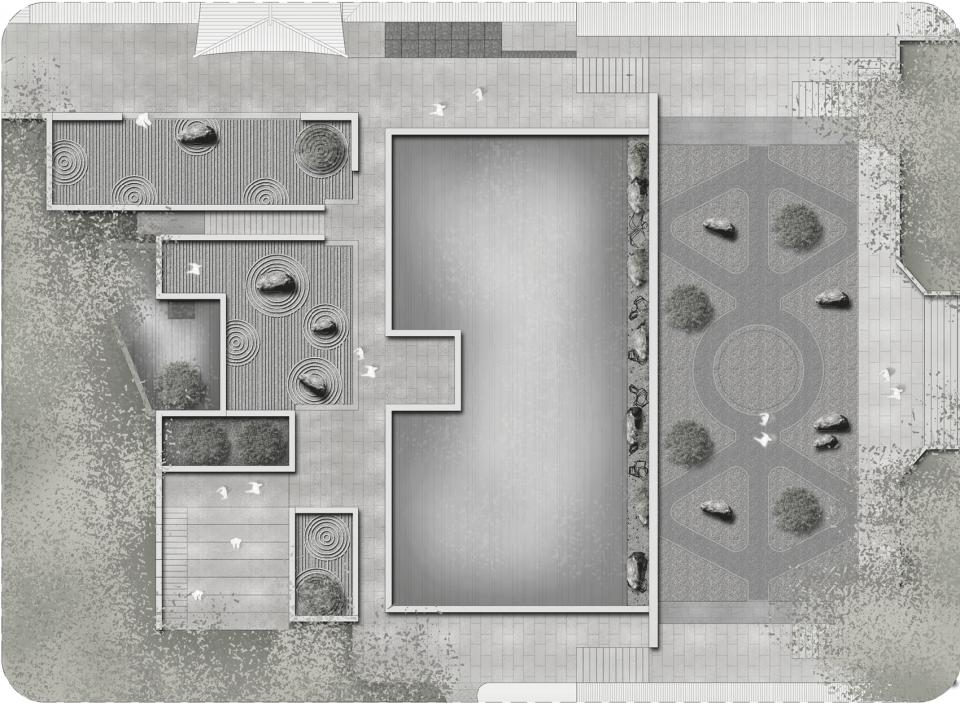
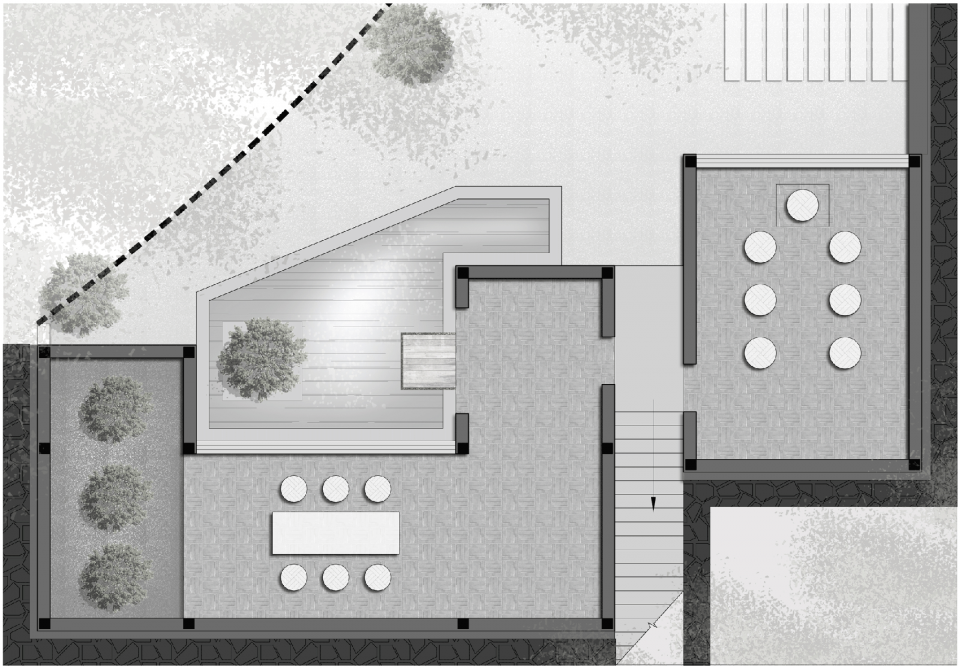
▼ 禅修室平面图,the general layout of the Zen Meditation Rooms
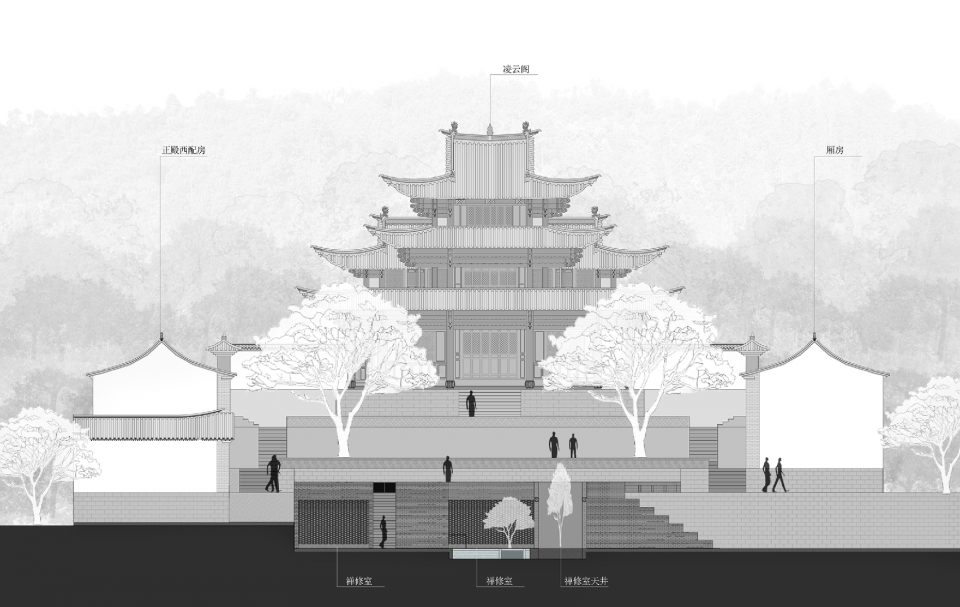
▼ 立面图,the elevation
项目名称:秀山寺环境整治设计
项目地址:云南红河石屏
项目类型:宗教建筑、景观
整治面积:1393㎡
禅修室建筑面积:119.5㎡
总 造 价:49.6万
设计时间:2015.05-2016.05
施工时间:2017.01-2017.03
主要材料:旧青砖、旧瓦、竹、毛石
主创团队:云南杨永铨建筑设计有限公司
总设计师:杨永铨
撰 稿:朱晓燕(石屏县博物馆馆长、石屏县文物管理所所长)
视 频:赵晓伟
摄 影:李瑞敏
Project Name: Xiushan Temple Environmental Restoration Project
Project Site: Shiping County, Honghe Prefectur, Yunnan Province
Project type: Religious Architecture, Landscape
Restoration Area: 1393㎡
Area of the Zen Meditation Rooms: 119.5㎡
Total Cost: 496,000 yuan
Design Time: May 2015 – May 2016
Building Time: Jan 2017 – Mar 2017
Main Materials: old blue brick, old tile, bamboo, stone
Project Team: Yunnan Yang Yongquan Architectural Design Co., Ltd.(YAD)
Chief Architect: Yang Yongquan
Contributor: Zhu Xiaoyan (the curator of the Museum of Shiping County, the head of County Cultural Relics Bureau)
Video: Zhao Xiaowei
Photography:Li Ruimin
更多请至:云南杨永铨建筑设计事务所 (联系邮箱:318644750@qq.com)。更多请至:QAD on gooood






坐在禅修室里面,会不会有一种被扔在炉子里烤的感觉。。。。
说枯山水的以下各位,连枯山水都没搞懂是什么就别在这丢人了……
大师普及一下您眼中的枯山水是个啥?
交学费了么?
感觉摆个十字架也可以 设计师是不是应该研究一下宗教和自然的关系
看吐了
好硬
确实
枯山水那部分是个啥。。。。。
比起反向拿来主义的枯山水,我反而觉得以前满是落叶的小径踩上去更有禅意
挺朴实,材质特别棒,最主要是造价低,很不错
那么多光打在禅修者身上 普通修行者的定力根本不行的 禅定少则半小时 多则几个小时 一般都会保持恒温 无风 弱光
枯山水太糟糕了!设计师要提高姿势水平啊
我觉得寺庙里的和尚应该会很开心,毕竟住在里面的不是评论的诸位呀
日本的枯山水?
两个字:生硬!!
确实没有做出应该有的品格
只能说这个寺庙的企业文化混乱 😛
抄袭的我尴尬证 都范了 、
对禅文化的认知 太低了 所以做了 枯山水
对禅的理解尬的一匹
改了还不如不改,很生硬,原来更自然
寺庙文化本来就是中国的传统文化 禅意就是来自于附佛家 你说人家乱改 外行就不要多嘴
这很不传统
枯山水得败笔堪称恶俗,瞬间拉低了逼格
就禅意说,枯山水做的没错,只是这里做的太形式了,反而不好。
金属型材的质感可能有点突兀
改平庸了
素材
静修的小房子还行。但其他部分实在有点说不过去。不是太明白为什么要在一个红河的庙宇里面来做枯山水,找不到联系。而且就枯山水本身来说,无论构图,材料,工法都有点东施效颦。如果想做枯山水建议好好研究一下枡野俊明老师的东西吧。难得在谷德上看到云南建筑师自己的作品,很开心,但也觉得有很多需要继续走的路。前面说的直接了一点,希望看到杨老师有更好的作品出来。
清明明初,小编鸡腿没有了
清末明初。。。应该是清末民初吧,ps英文翻译里也搞错了,写的明末清初。
云南的冬天好像没有那么冷吧,云南舍友寒假都可以穿短袖。。。就是枯山水用的像小孩子借鉴一样。
禅修需要一定的物理环境,如果设计者体验禅修,对隔音,空气,温度等的考虑就会更合理。
砖带模拟的枯山水完全没有禅的意境,太具象,棱角太锐利了。
借鉴枯山水没有问题 但是没有得到枯山水的美学意境 青砖陶瓦也没有和老建筑呼应上 当然空间逻辑也没有和保留院落产生关系 当然或许要求有点高
枯山水究竟是哪儿的呢
日本的
枯山水?
错误的借鉴。
应该是清末民初才对
周边景观在审美上让我联想到日本园林的枯山水
这种镂空的墙体根本不能算围合结构,冬天还不得冻死
我也觉得镂空的几点禅修=房,光线是到位了,就是云南冬天怎么办?大冷天的。枯山水新法,有点唐突,东施效颦,不如留白。整个原始的房子和氛围不错。另外造价感觉控制的不错。至少有几张不错的照片,氛围还是有点
《通风管道中的禅意》233333