感谢 Cierto Estudio + h3o architects + Metrònom予gooood的分享。更多关于:Cierto Estudio on gooood + h3o Architects on gooood + Metrònom on gooood
Appreciation towards Cierto Estudio + h3o architects + Metrònom for providing the following description:
2026年7月17日至30日,Cierto Estudio、h3o architects与Metrònom将以“雨下得够吗?”对密斯·凡·德·罗馆进行艺术介入。该项目入选“巴塞罗那2026世界建筑之都”公开征集。“雨下得够吗?”邀请人们重新思考建筑、水与气候危机之间的关系。该作品将密斯·凡·德·罗馆激活为一个围绕水资源管理展开实验、相遇与文化生产的空间,将水视为一种资源,也视为一种集体经验。
▼概念拼贴图,Concept Collage © Cierto Estudio + h3o architects + Metrònom
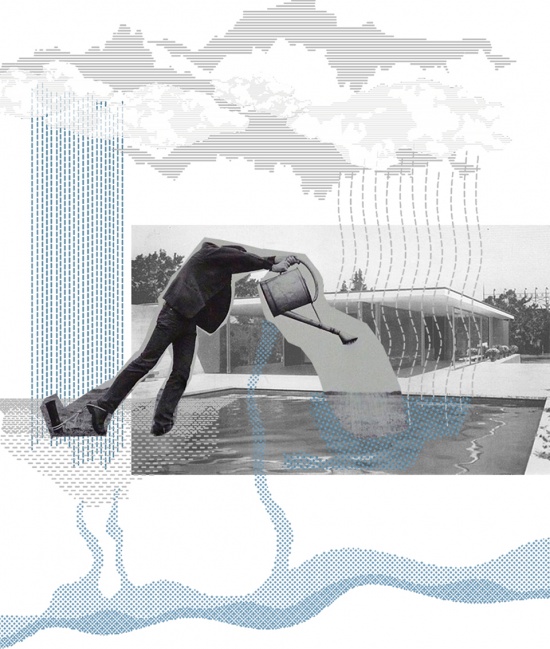
From 17 to 30 July 2026 Cierto Estudio, h3o architects and Metrònom intervene in the Mies van der Rohe Pavilion with Plou Prou?, an artistic intervention selectedin the open call for Barcelona 2026 World Capital of Architecture. Plou Prou? (Is it raining enough?) invites us to rethink the relationship between architecture, water and the climate crisis. The work activates the Mies van der Rohe Pavilion as a space for experimentation, encounter and cultural production around water management as a resource and collective experience.
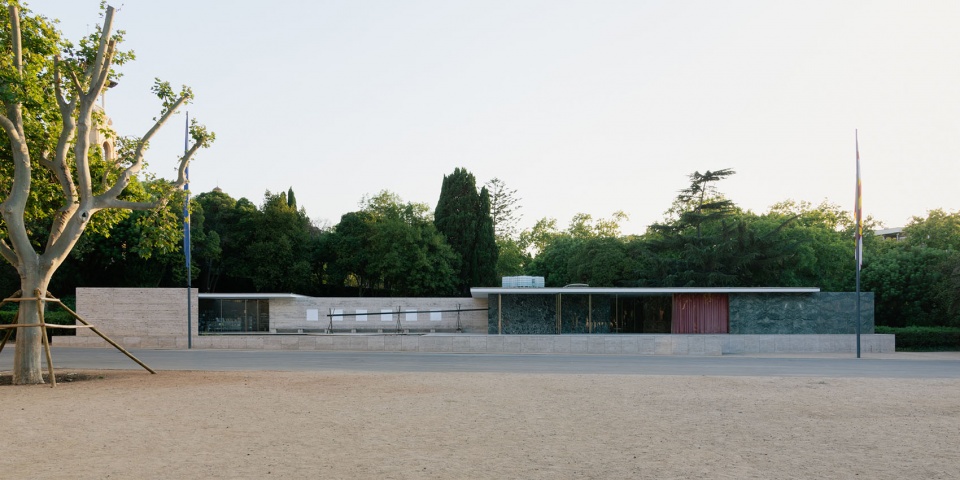
▼展馆沿街整体视角,Pavilion Overall View from the Street © Simone Marcolin
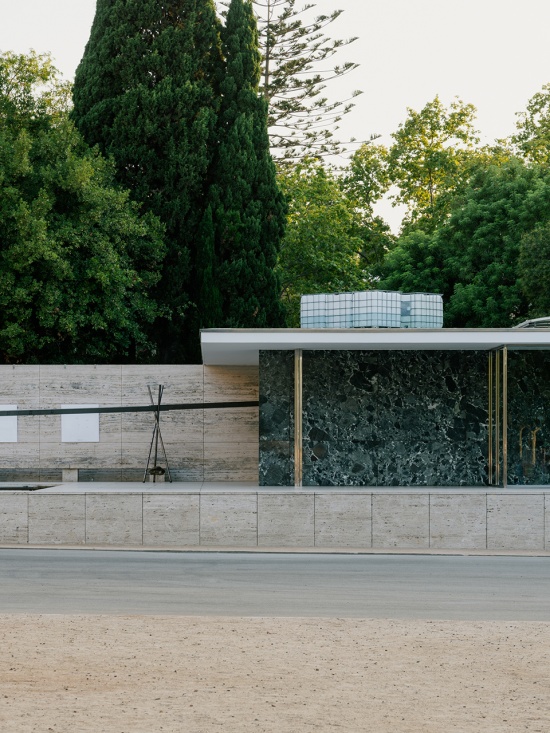
▼展馆沿街视角近景,Pavilion Close View from the Street © Simone Marcolin
▼展馆与装置概览,Pavilion with Temporary Installation Overview © Cecilia Coca, Simone Marcolin
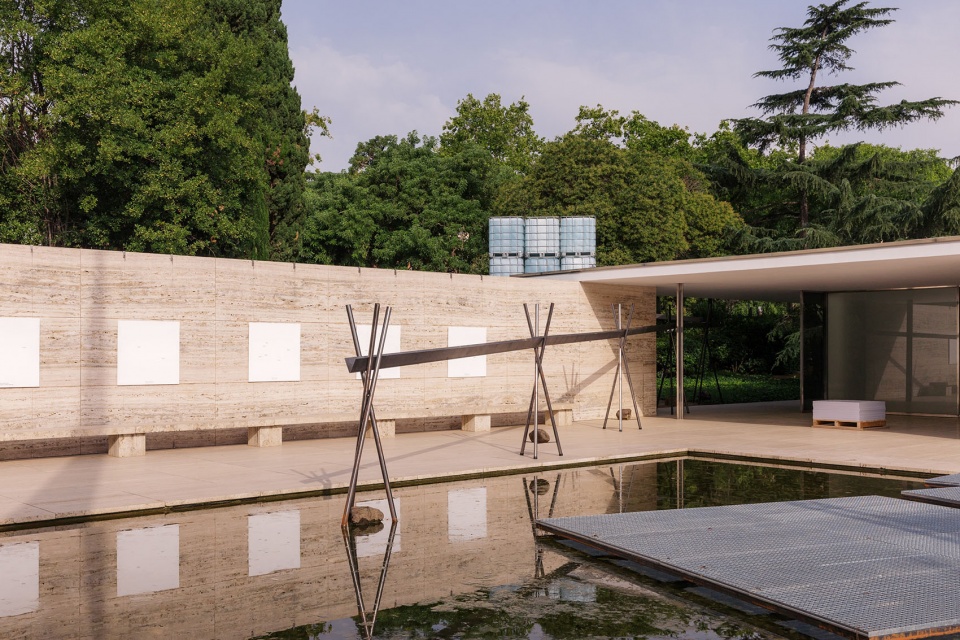
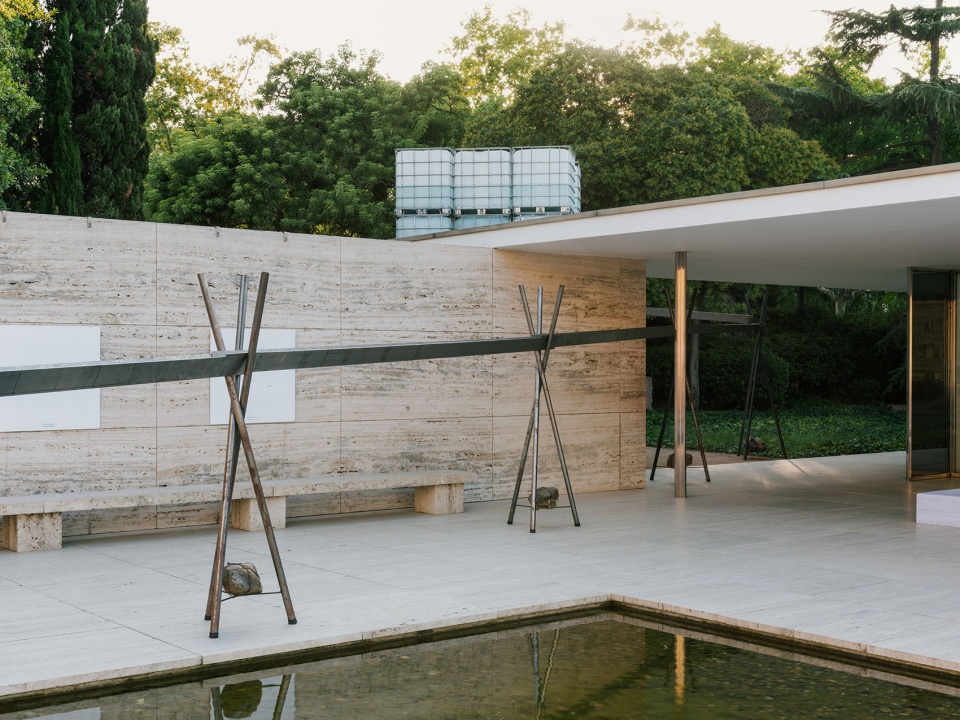
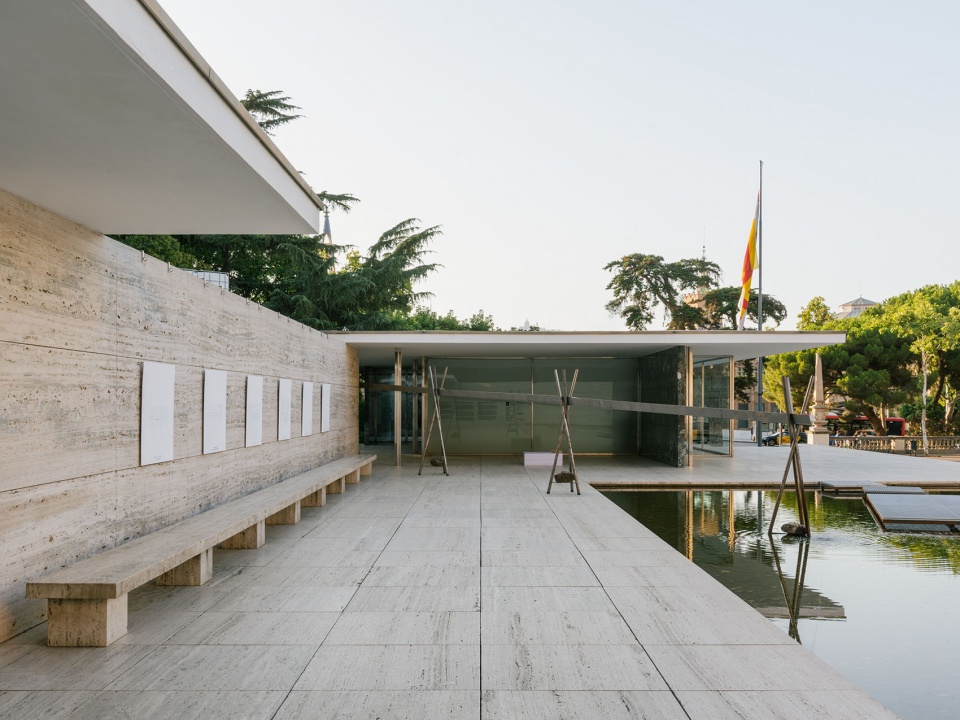
▼展馆与水渠装置,Aqueduct Installation in Pavilion © Simone Marcolin
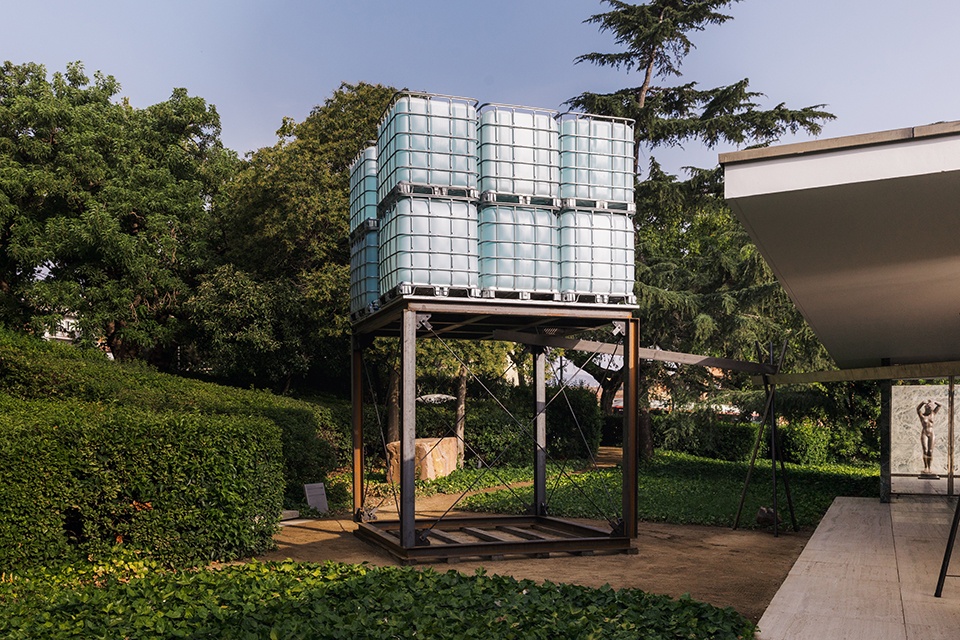
▼展馆与水箱装置,Water Tanks Installation in Pavilion © Cecilia Coca
三个建筑事务所表示:“此次合作源于我们共同参与2025年威尼斯双年展加泰罗尼亚馆策展竞赛的经历,当时的提案名称是《不下雨》。此前我们从未合作过,但这次经历极具启发性。成为最终入围者之后,恰逢‘巴塞罗那2026世界建筑之都’公开征集,我们决定继续推进这项研究,并以一种新的形式介入密斯·凡·德·罗馆,同时将原本的陈述改为一个直接抛向参观者的问题:我们所获得的降雨,足以支撑当前的用水消耗吗?”
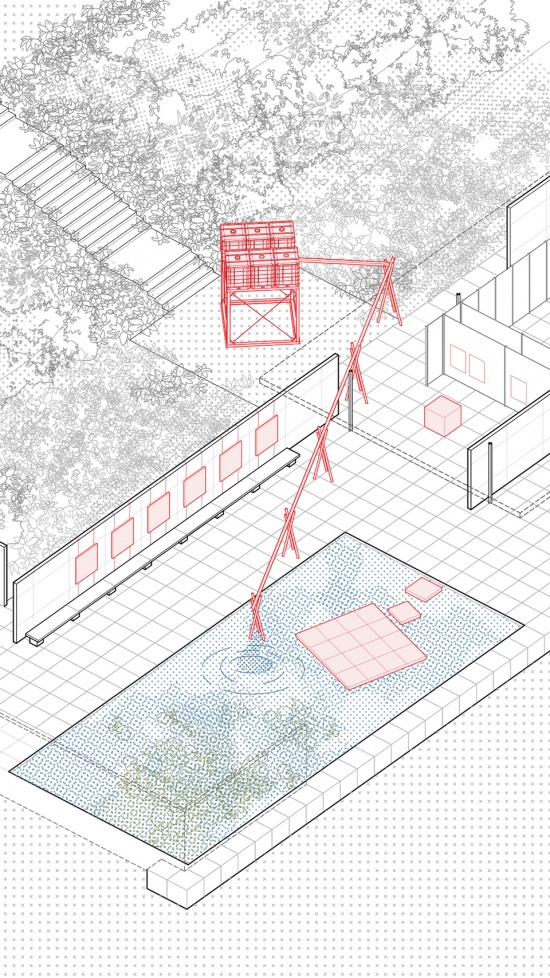
▼装置轴测图,
Installation Axonometric © Cierto Estudio + h3o architects + Metrònom
In the words of the three architecture studios: “The collaboration arose as a result of our joint participation in the competition for the curatorship of the Catalan Pavilion at the Venice Biennale 2025 (then under the title It Doesn’t Rain). Until then we had never worked together, but the experience was very stimulating. After being finalists, and coinciding with the open call for Barcelona 2026 World Capital of Architecture, we decided to continue developing that research by giving a new shape to the Mies van der Rohe Pavilion, and changing the statement for a direct question to the visitor: Does it rain enough to sustain the consumption we make of water?”
▼水渠与主水池,Aqueduct and Main Pond © Simone Marcolin
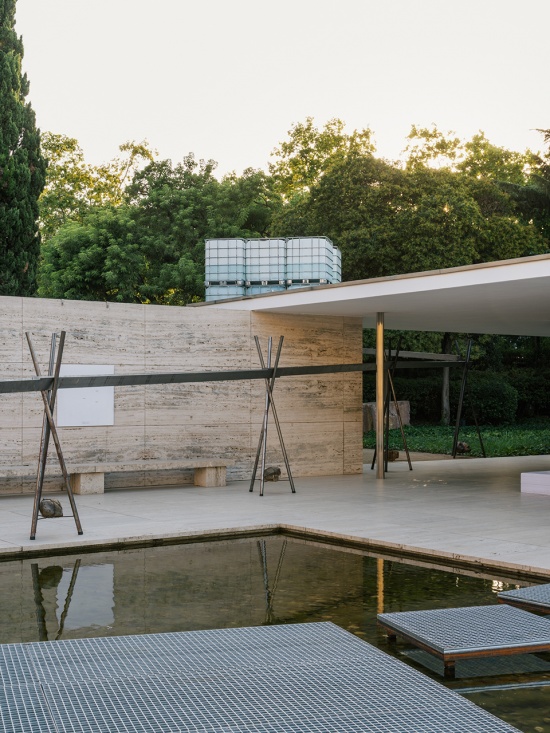
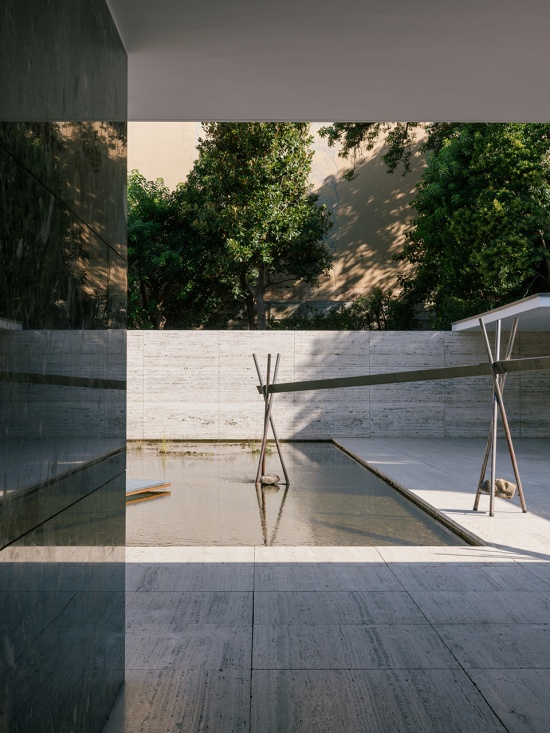
▼水箱装置概览,Water Tanks Installation Overview © Cecilia Coca, Simone Marcolin
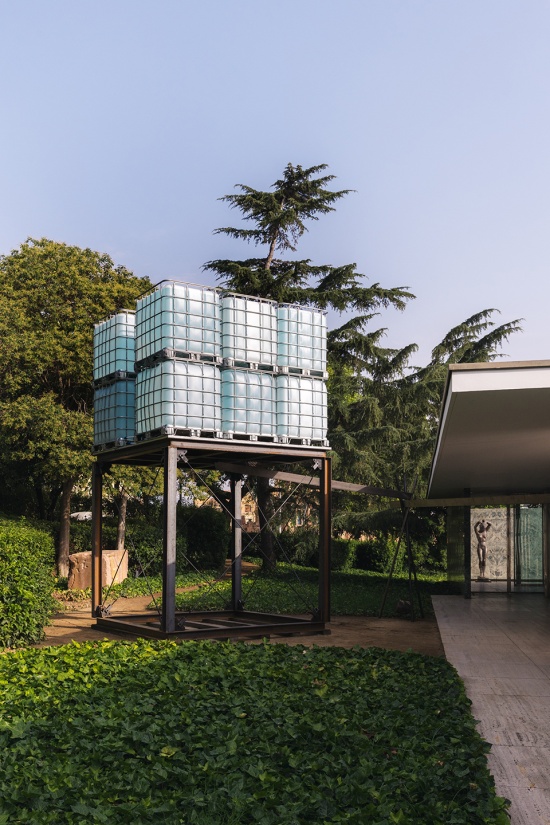
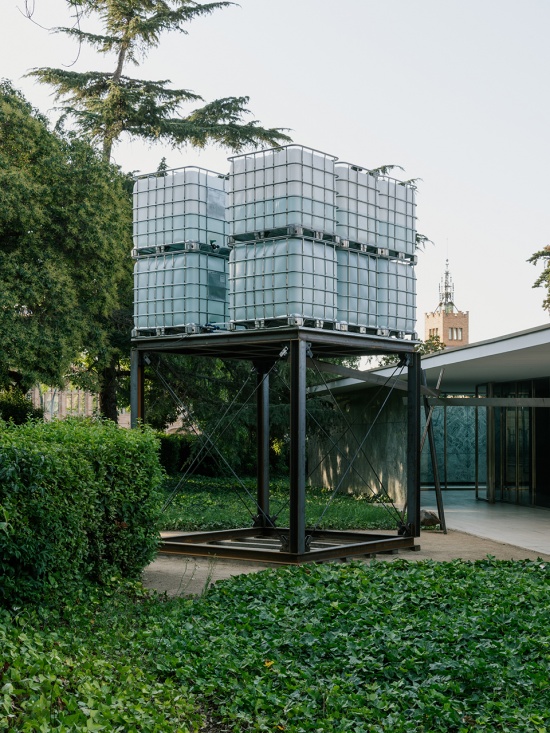
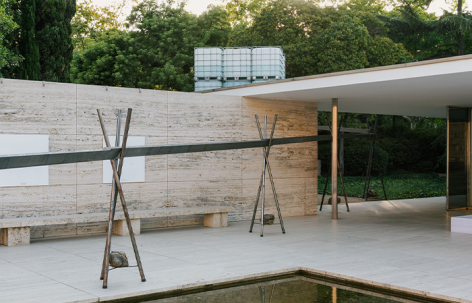
这一临时性介入突出了馆内水池的动态变化,而水池正是该建筑身份中的关键元素。由于水体过热与蒸发,为维持建筑著名的“反射水面”,必须持续进行技术维护。此次介入聚焦于那些不易被察觉、不断蒸发并消失无踪的水,并通过一系列装置,将蒸发且持续补充的水量进行量化、显现与记录,使其成为装置的核心材料:12个架高的工业水箱储存着相当于大型水池在14天展期内所蒸发的水量,水源为由负责巴塞罗那城市供水管理的BCASA提供的地下水,总量超过12,000升。一条架高的水渠如同临时渡槽般穿过展馆空间,并通过持续滴水将水引入主水池。这条细流将建筑与城市隐藏的基础设施连接起来,同时以物理方式度量时间的流逝。
▼装置运行示意,
Installation Operation Diagram © Cierto Estudio + h3o architects + Metrònom
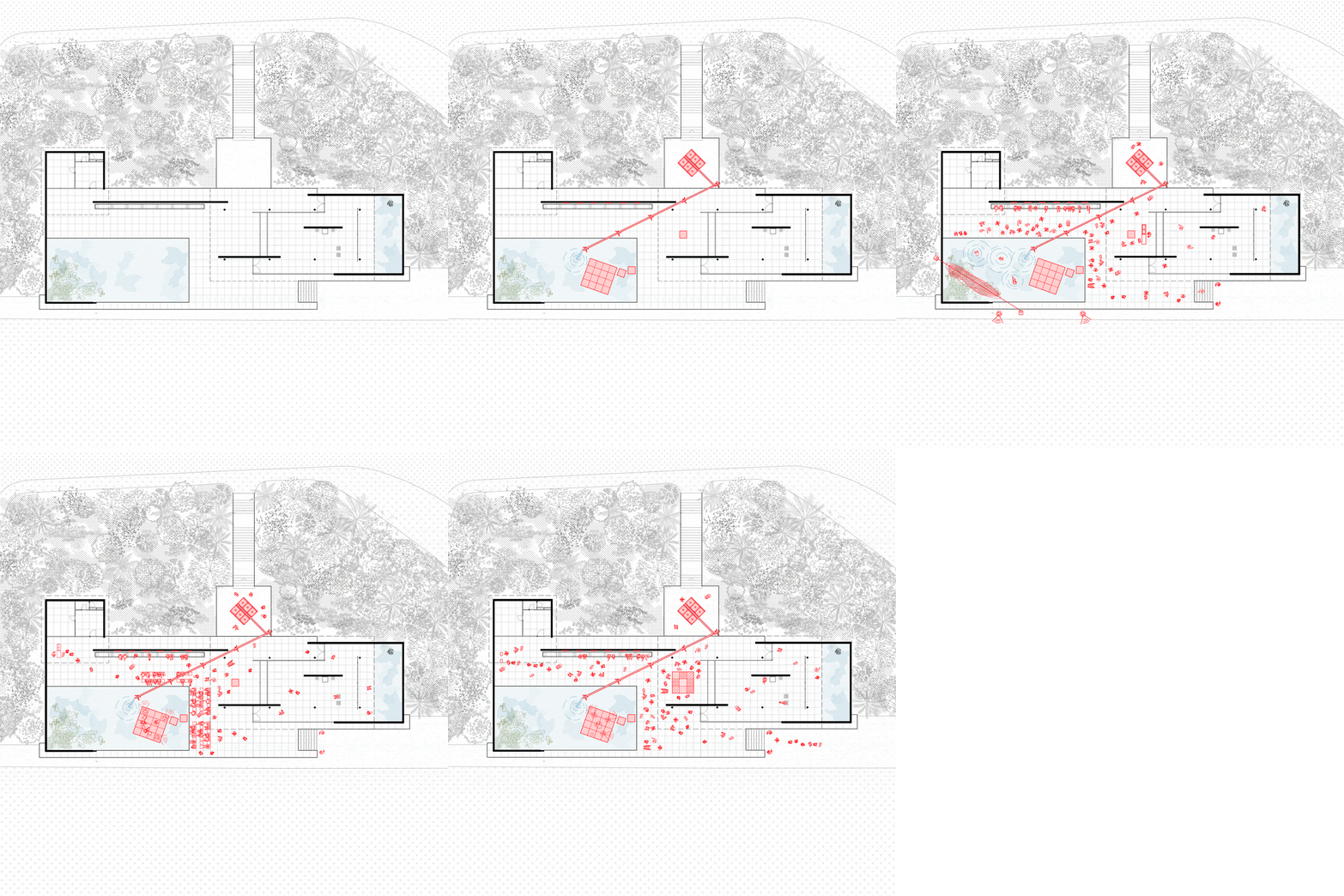
The ephemeral intervention highlights the dynamics of the Pavilion’s ponds, key elements of its architectural identity. The overheating and evaporation of water requires constant technical maintenance in order to preserve the famous “reflective sheet” of the building. The intervention focuses on this water that imperceptibly evaporates and disappears without a trace and turns it into the central material of the installation through a cycle of elements that quantifies, makes visible and records this volume of water that evaporates and is constantly refilled: 12 elevated industrial tanks accumulate the volume equivalent to that which will evaporate from the large pond in the fourteen days that the intervention lasts, of groundwater (ceded by BCASA, the company that manages the supply to the city of Barcelona): more than 12,000 litres. An elevated channel crosses the Pavilion space as a temporary aqueduct and conducts water to the main pond through a constant drip. The water thread connects architecture with the city’s hidden infrastructures and physically measures the passage of time.
▼架高水箱,Elevated Water Tanks © Simone Marcolin
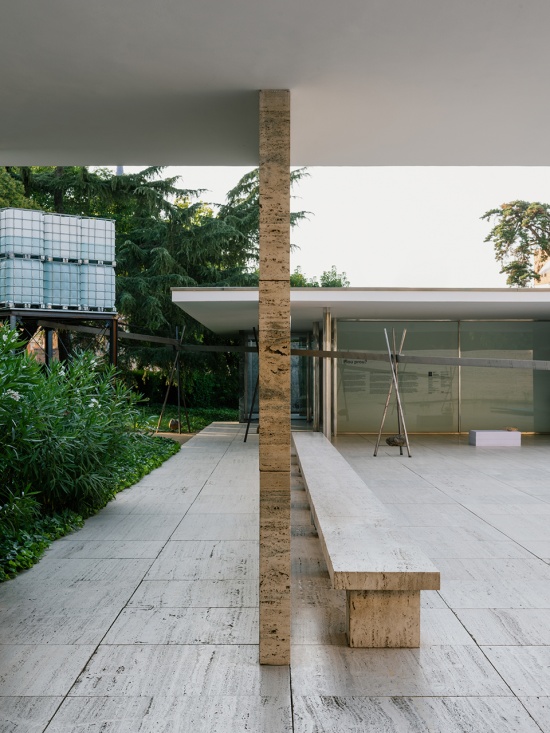
▼水渠与展馆入口,Aqueduct at the Pavilion Entrance © Simone Marcolin
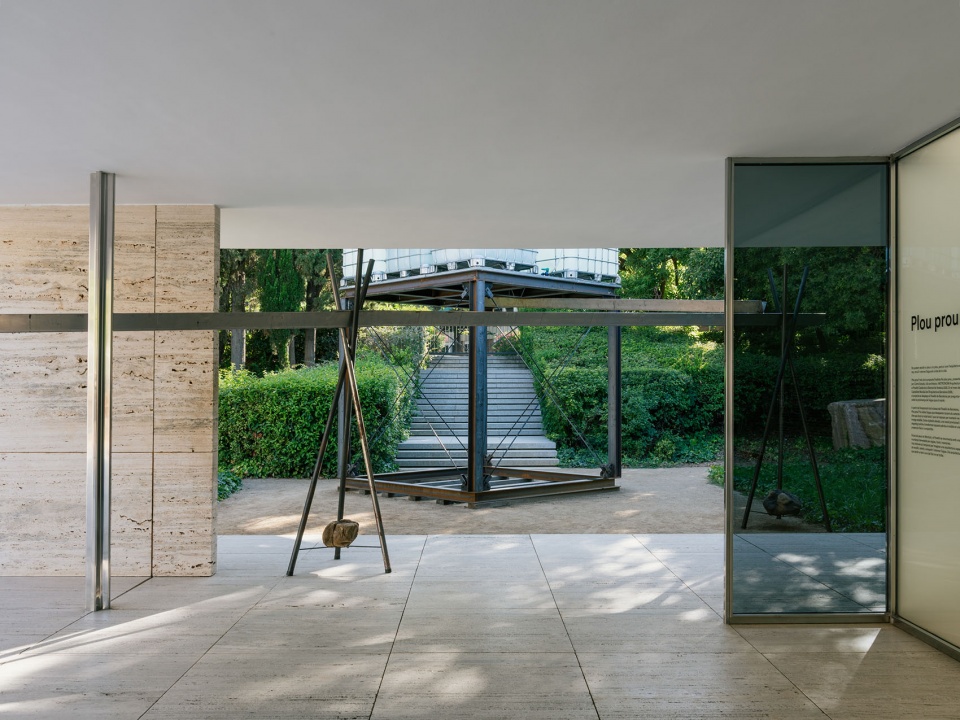
▼水渠穿过展馆,Aqueduct Crossing the Pavilion © Simone Marcolin
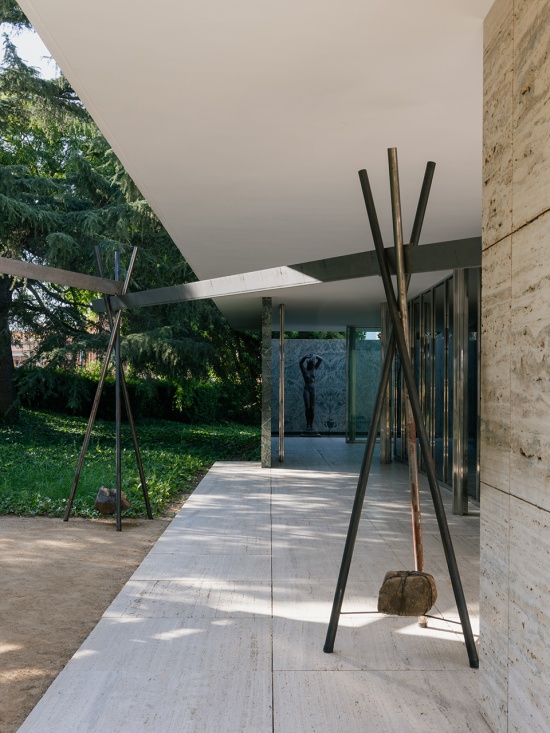
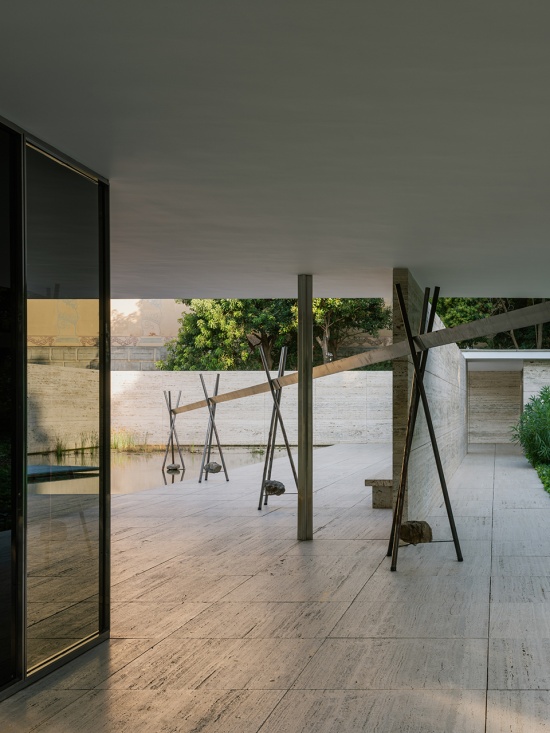
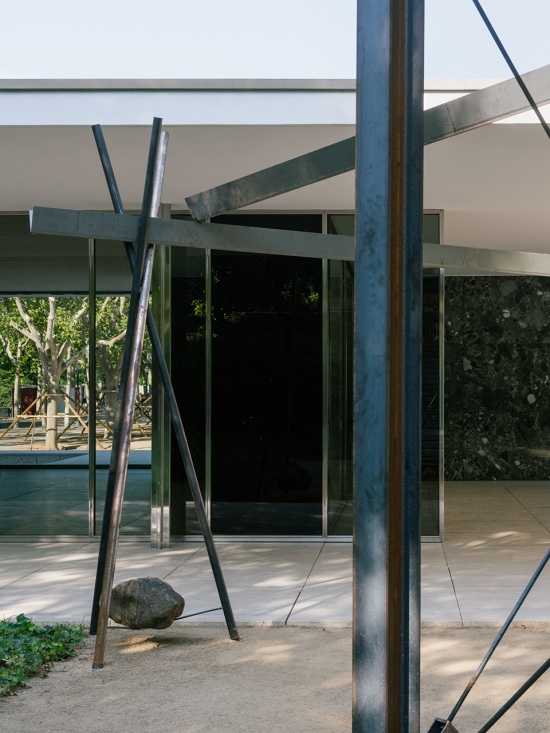
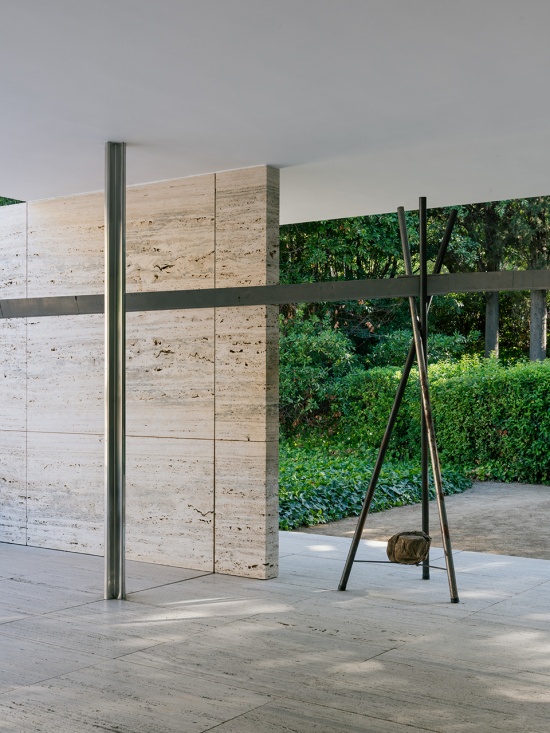
▼水渠延伸至主水池,Aqueduct Extending to the Main Pond © Simone Marcolin
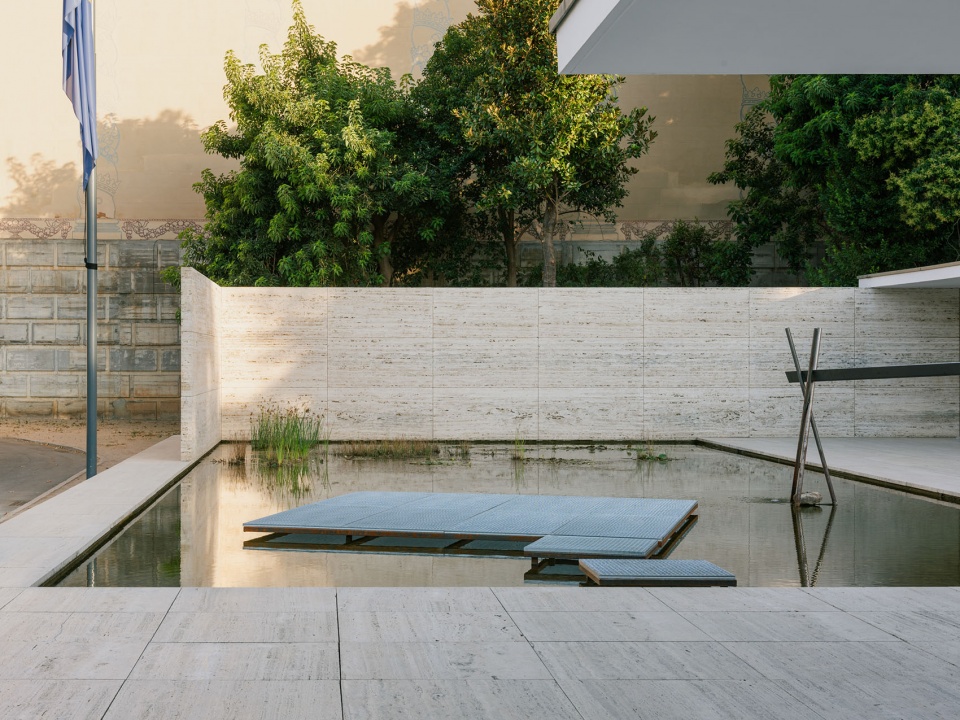
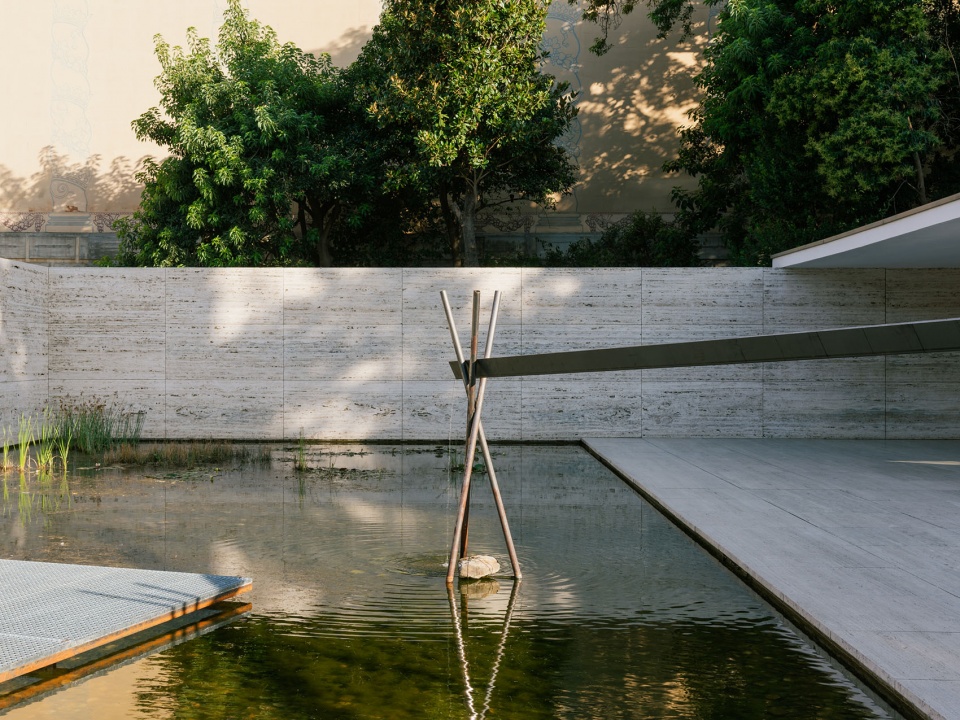
▼滴水进入主水池,Water Dripping into the Main Pond © Simone Marcolin
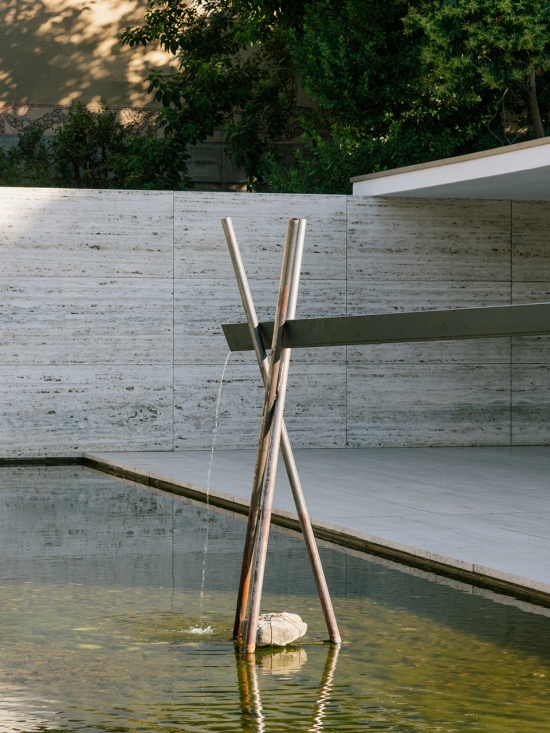
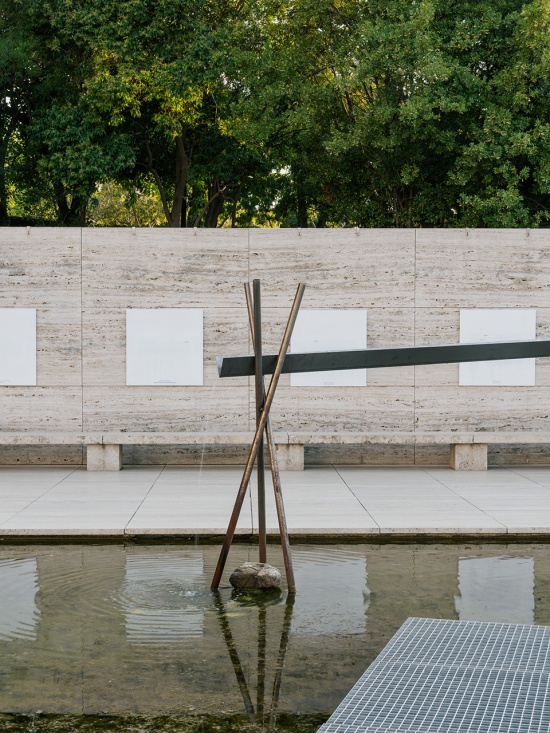
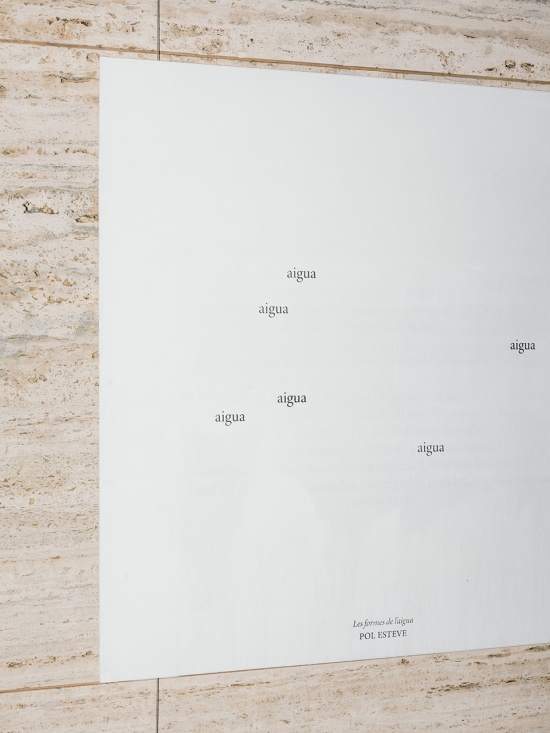
此外,展馆外墙设置了六块一平方米的展板,汇集了六位来自不同领域的专业人士——Marina Garcés、Pol Guasch、Pol Esteve、Miriam García、Marcos Navarrete、Marina Povedano 与 Arnau Pascual——围绕蒙锥克山的生态史、水文史与政治史展开的研究。此次展示的特别之处在于,文字并不会直接显现:参观者需要使用喷水器将水喷洒在展板上,才能激活并阅读其中的内容。
In addition, on the exterior wall of the Pavilion, six one-square-metre panels are installed where the research of six professionals from different fields (Marina Garcés, Pol Guasch, Pol Esteve, Miriam García, Marcos Navarrete, Marina Povedano and Arnau Pascual) are collected) on the ecological, water and political history of Montjuïc mountain. The particularity of the exhibition is that the texts are hidden from plain sight: visitors have to spray the panels with water sprayers to activate them and be able to read them.
▼遇水显现的展板,Water-activated Display Panel © Simone Marcolin
为唤起思考,这一装置重新唤回喷泉作为聚会场所的角色,并在为期两周的介入期间配套推出一系列公共活动,通过感官体验拓展相关讨论:开幕活动将于7月16日星期四晚9:30举行,由Jou Serra、Aurora Bauzà与Pere Jou带来诗意舞蹈表演,将云朵解读为一种大气建筑。门票可在此获取。两场圆桌讨论分别于7月21日晚7:00和7月22日晚7:00举行。首场嘉宾为Arnau Pascual、Miriam García与Marcos Navarrete;第二场嘉宾为Marina Povedano、Pol Guasch与Pol Esteve。活动将把研究成果带给公众,并围绕水、景观、城市、思想与建筑展开讨论。门票可分别在此与此获取。7月30日晚9:00将举行闭幕美食与音乐活动,由Tiberi Club与Clara Aguilar参与。活动将雨水与听觉、味觉相连接,重新唤起扎根于蒙锥克地区的烹饪知识、干旱记忆与共生方式。“雨下得够吗?”将展馆与不可见的水基础设施,以及蒙锥克山的水景体系连接起来,使人们将建筑理解为生态系统与共同责任中的主动组成部分,而非一个孤立的对象。在为期两周的介入中,“雨下得够吗?”邀请人们围绕这一象征性的水源相聚,并通过表演、诗歌、讨论、研究、美食与音乐,从多种不同视角共同探索这一主题。
With the aim of awakening reflection, the installation recovers the role of fountains as a meeting space and is accompanied by a public program designed to expand the debate through the senses during the two weeks that the intervention lasts: The inaugural event, which will take place on Thursday, July 16 from 9:30 p.m., proposes a reading of the cloud as atmospheric architecture through a poetic dance performance by Jou Serra + Aurora Bauzà and Pere Jou. Tickets available here. Two round tables, which will take place on July 21 at 7:00 p.m. with Arnau Pascual, Miriam García and Marcos Navarrete; and on July 22 at 7:00 p.m. with Marina Povedano, Pol Guasch and Pol Esteve; allow research to be shared with the public and open the debate on water, landscape, city, thought and architecture. Tickets available here and here. The gastronomic and musical event, as a closing, on July 30 at 9:00 p.m., with Tiberi Club and Clara Aguilar, which will link rainwater with the senses of hearing and taste, recovering culinary knowledge, dry memories and forms of coexistence rooted in the Montjuïc territory. Plou Prou? connects the Pavilion with the invisible infrastructures of the water and with the waterscape of Montjuïc, to understand architecture not as an isolated object, but as an active part of an ecosystem and a shared responsibility. During two weeks of the intervention, Plou Prou? invites us to gather around this symbolic source to explore this theme from very different points of view through performance, poetry, debate, research, gastronomy and music.
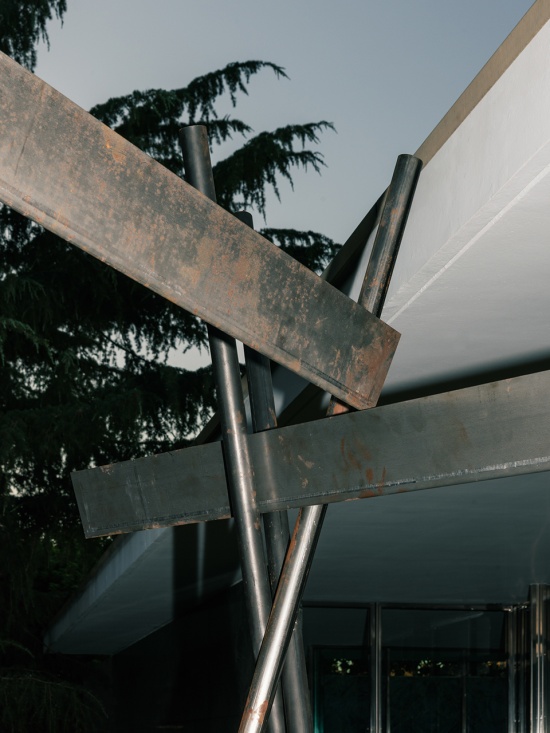
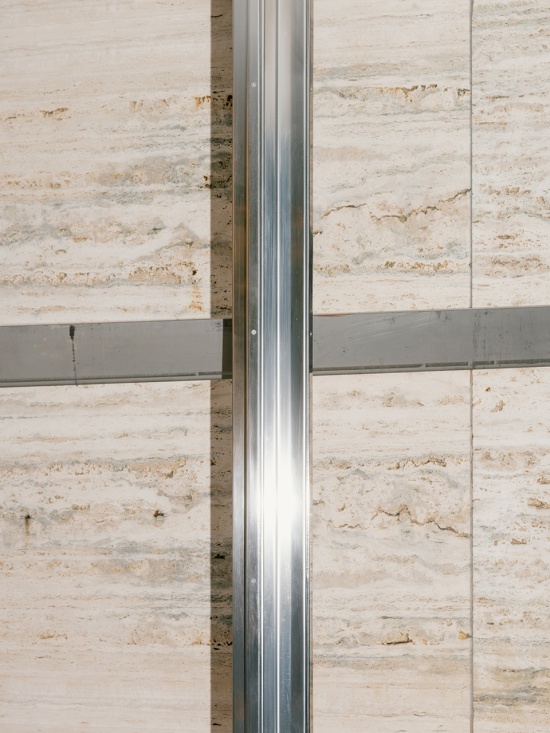
▼材质细部,Material Detail © Simone Marcolin
More: Cierto Estudio + h3o architects + Metrònom 更多关于:Cierto Estudio on gooood + h3o Architects on gooood + Metrònom on gooood








这是搁这儿捣乱呢?有种要把德国馆改成僵尸毁灭工程里避难所的感觉
现在是联动馆