非常感谢 蔡国强工作室 将项目介绍和项目图片授权gooood发行。更多请至:Cai Guo-Qiang Studio on gooood
Appreciation towards Cai Guo-Qiang Studio for providing the following description:
摄影-林毅
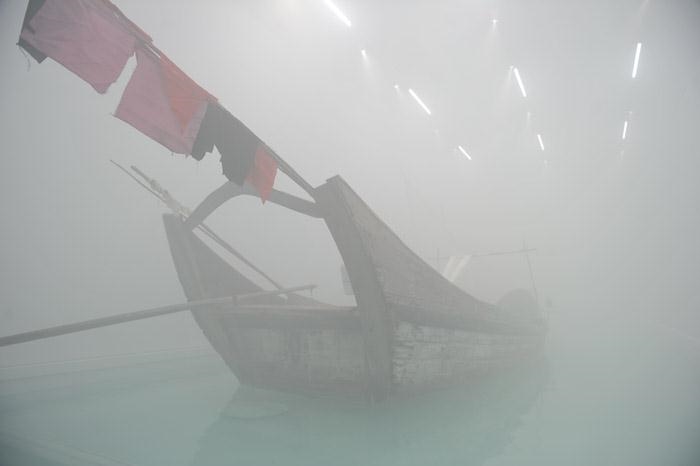
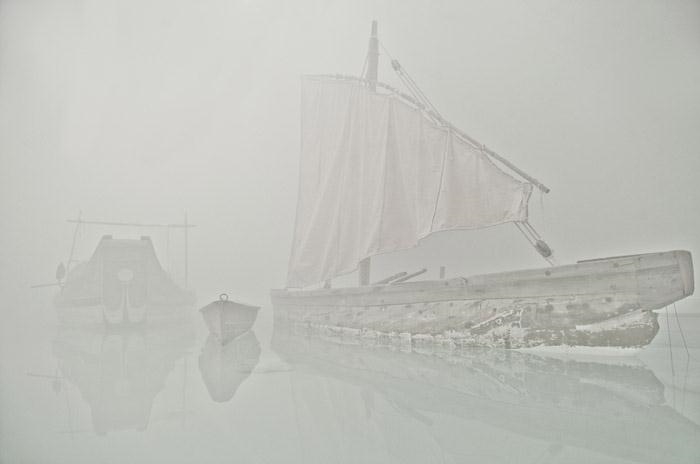
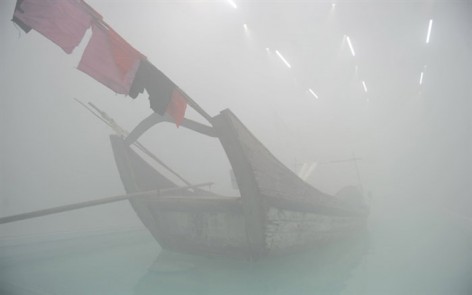
▲ 无穷尽
Mathaf to explore historical and contemporary links across asia with the exhibition
Cai Guo-Qiang: Saraab
on view December 5, 2011 – May 26, 2012 in Doha,
Doha, September 21, 2011: Mathaf: Arab Museum of Modern Art will break new ground this December when it opens its first single-artist exhibition, Cai Guo-Qiang: Saraab. Featuring commissioned work created in dialogue with Doha by renowned artist Cai Guo-Qiang, the exhibition continues Mathaf’s commitment to presenting an Arab perspective on modern and contemporary art as it turns eastward to consider dynamics across Asia for the first time.
Presenting more than 50 works by one of the most influential contemporary artists on the international art scene, Saraab (―mirage in Arabic) is Cai Guo-Qiang’s first solo exhibition in the Middle East. The show is a journey of personal and artistic discovery that demonstrates the emotional breadth of Cai’s work, from the intimate to the spectacular. Saraab is inspired by the multi-layered history of the artist’s hometown of Quanzhou, China, and will illuminate the long-standing but little-known relationship between China and the Arab world dating back to the ancient maritime Silk Road. On the opening day of the exhibition, Cai will create a large-scale daytime ―explosion‖ event, titled Black Ceremony.
“Part of the mission of Mathaf, and of the entire Qatar Museums Authority, is to expand people’s ideas about art and culture in this region—to show that the story is bigger, more exciting and more surprising than might be supposed,” said Qatar Museums Authority Chairperson Her Excellency Sheikha Al Mayassa bint Hamad bin Khalifa Al- Thani. “With this exhibition by Cai Guo-Qiang, which marks so many firsts for both the artist and for us, we again open fascinating new territory for our audience to explore as we continue to encourage global cultural dialogue and exchange.”
“Mathaf seeks to shift perceptions and understanding of both Arab art and the larger context of modern and contemporary art from an Arab perspective, and Saraab is a wonderful opportunity to show the world the potential of this idea,” said Mathaf director Wassan Al-Khudhairi.
“Our goal is to build connections between discourses—in the Arab world, in the international art world, and now too within the greater history of Asia—and Saraab will be a seminal event for the museum.”
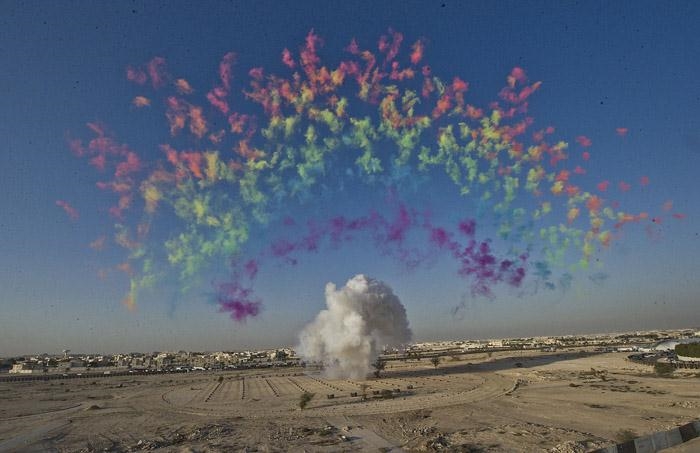
▲ 爆破艺术—彩虹
Exhibition Overview
Featuring the artist’s characteristic use of symbols and stories about local history and transnational movements, Cai Guo-Qiang: Saraab explores the historic and contemporary iconography of the Arabian Gulf and its seafaring culture, as well as the Islamic history of Quanzhou. Works on view also address the ambiguity of Qatar and China’s relationships to one another, as well as Cai’s own creative development over a lifetime. A millennial and symbolic journey, Saraab questions whether there is something illusory or unobtainable about the process of cultural, temporal and geographic translation.
Since his youth, Cai had been curious about the traces of Islamic influence that can be seen to this day throughout his hometown, including the local streetscape, the grand Ashab Mosque and cemeteries with countless Arabic-inscribed tombstones. Located on the southeast coast of China, Quanzhou was a significant maritime port on the ancient Silk Road and a trade hub for silk, porcelain, tea leaves and spices. The city also hosted some of the earliest Muslim missionaries, now buried in the city’s Holy Mausoleum. Saraab offers Cai’s perspective on the complex web of conceptual and material connections between China and the Arab world, of dynamics between historic localities marked as much by the passage of ideas and lived experience as by material trade.
Saraab will feature more than 50 works, including 16 newly commissioned pieces, 30 recent works and nine documentary videos. The exhibition will showcase Cai’s diverse body of work, ranging from his signature “gunpowder drawings”, large-scale site-specific installations and the celebrated “explosion” events. Recent works will illustrate Cai’s artistic approach, tracing his creative development through the years and expanding awareness and understanding of his unique art-making process.
“The new commissions reflect my relationship with Arab culture, and draw from the relationship between my hometown Quanzhou with the Arab world,” said the artist. “Through the collaboration and exchange with volunteers in making gunpowder drawings and by opening the creative process to the public, I will have the chance to work together with local artists, and discuss how to transform traditional mediums and cultural symbols into contemporary concepts and art forms. The past works and documentary videos on the second floor of the museum form a mini retrospective that attempts to share with the Arab audience my growth as an artist in a multicultural world.”
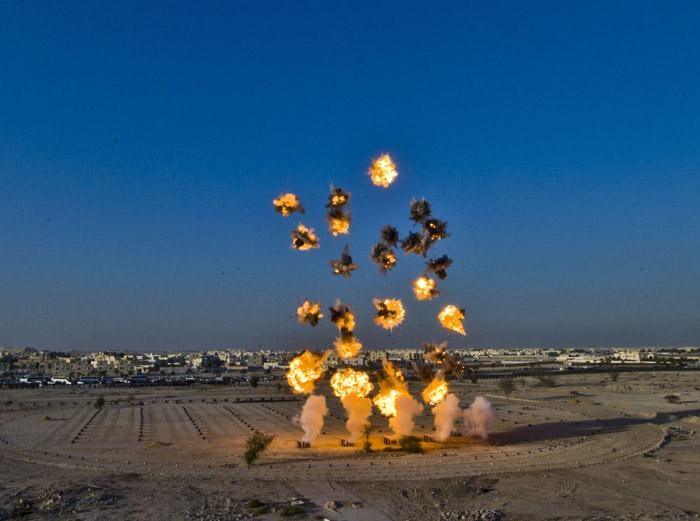
▲ 爆破艺术—火球
Exhibition Highlights
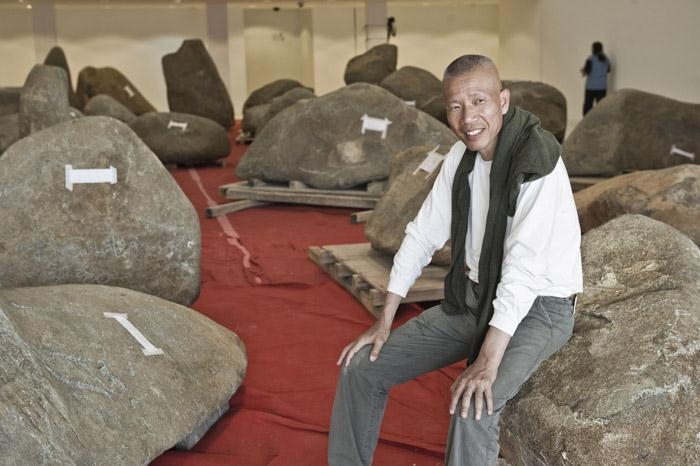
Among the new works in Saraab is Homecoming, an installation of 60 rocks from Quanzhou, into which Cai has re-carved excerpts of Arabic inscriptions from the Koran and sayings of the Prophet Muhammad that are seen on the Muslim tombstones in his hometown. These boulders will form a winding path from Mathaf’s exterior courtyard to the inner atrium and visitors will be able to walk between the rocks, encountering the inscriptions one by one. According to Cai, the journey of the rocks from Quanzhou to Doha symbolizes a homecoming for Muslims in distant lands from the past millennium, offering solace and closure to their long awaited voyage to return home.
Cai also will produce a number of new gunpowder drawings for the exhibition with the assistance of local volunteers, creating works that trace the maritime route from ancient Arabia to Quanzhou and echo the botanical patterns seen in Islamic decorative art and textiles. These gunpowder drawings provide a symbolic avenue for rebirth or healing, a measured tension between destruction and creation. Documentary video of this creative process and Cai’s preparatory sketches for the exhibition also will be shown in Saraab. The works to be produced include Fragile, a unique 18-metre
long by 3-metre wide porcelain mural comprised of more than 480 individual panels, marking the first time Cai is incorporating porcelain on a large scale into his work with gunpowder. Select gunpowder drawing events will be open to the public in October and all volunteers will be from the Doha community, a critical element both for the artist‗s methodology and the museum‗s philosophy of social engagement (information on how to participate can be found at www.mathaf.org).
In keeping with Mathaf‗s focus on education and broader contextualization, Saraab will include a documentary about the making of other commissioned works in the exhibition, as well as examples of Cai’s past work to illustrate his creative process, including experimental tests of gunpowder and fireworks, preparatory sketches, and video projections of the public ―performance‖ of explosion projects and social artworks.
Many featured past works directly link to the newly commissioned pieces, including the documentation of Bringing to Venice What Marco Polo Forgot (1995), a performance and installation piece at the 46th Venice Biennale of a wooden fishing boat from Quanzhou carrying Chinese herbs and ginseng. A conceptual precursor to many of the works in Saraab, this work deals with the transportation of symbolic objects from China, linking the historic Silk Road to contemporary personal, even spiritual, pilgrimages.
Other documented works featured in Saraab include Footprints of History: Fireworks Project for the Opening Ceremony of the 2008 Beijing Olympic Games that demonstrates Cai‗s fearless approach to ambitious spectacle, and Man, Eagle and Eye in the Sky (2003), a social art project of painted kites flown in the Sahara Desert that mobilized the local population and was the artist’s first engagement in the Arab world.
A bilingual Arabic-English catalogue will accompany the exhibition, featuringconversations between Cai Guo-Qiang and scholars on Sino-Arab history, an overview of regional art historical dynamics, and a monographic essay on the artist by Yuko Hasegawa, as well as images of never-before-published early works and new work created for Saraab.
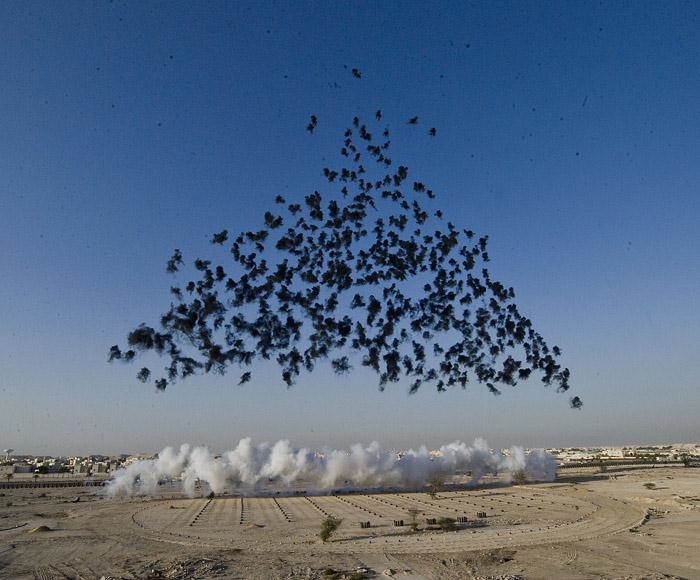
▲ 爆破艺术—-金字塔
About Cai Guo-Qiang
Cai Guo-Qiang was born in 1957 in Quanzhou, Fujian Province, China, and was trained in stage design at the Shanghai Theater Academy. His work has since
crossed multiple mediums within art, including drawing, installation, video and performance art. While living in Japan from 1986 to 1995, he explored the properties of gunpowder in his drawings, an inquiry that eventually led to his experimentation with explosives on a massive scale and to the development of his signature explosion events. Drawing upon Eastern philosophy and contemporary social issues as a conceptual basis, these projects and events aim to establish an exchange between viewers and the larger universe around them, utilizing a site-specific approach to culture and history. Cai was awarded the Golden Lion at the 48th Venice Biennale in 1999, the 7th Hiroshima Art Prize in 2007, and the 20th Fukuoka Asian Culture Prize in 2009. He was Director of Visual and Special Effects for the opening and closing ceremonies of the 2008 Summer Olympics in Beijing. In 2008, he was the subject of a retrospective at the Solomon R. Guggenheim Museum, New York. In fall 2010, Cai created Odyssey for the Museum of Fine Arts Houston. Installed as part of the museum’s ongoing Portal Project, it is one of his largest gunpowder drawings to date. He currently lives and works in New York.
About Mathaf
The first institution of its kind in the region, Mathaf offers an Arab perspective on modern and contemporary art and supports creativity, promotes dialogue and inspires new ideas. The 5,500-square-meter (59,000-square-foot) Museum, located in a former school building in Doha‗s Education City, has a collection that offers a rare comprehensive overview of modern Arab art, representing the major trends and sites of production spanning the 1840s through the present. Mathaf presents exhibitions that situate the Arab world in relation to a larger art context and also offers programs that engage the local and international community, encourage research and scholarship and contribute to the cultural landscape of the Gulf region, the Middle East, the Arab Diaspora and beyond.
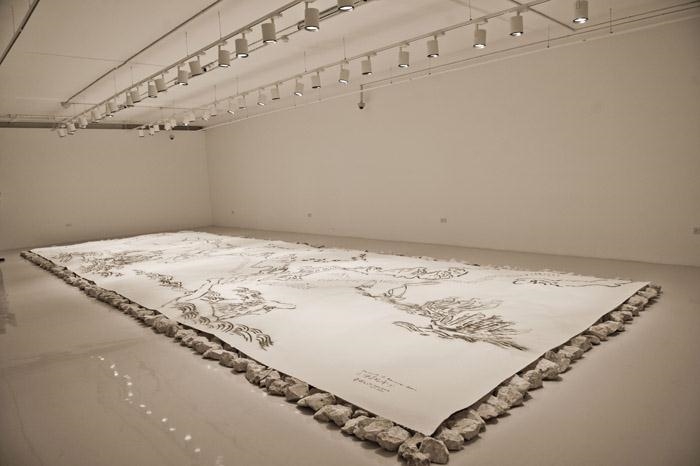
▲ 往来的路
阿拉伯 现代美术馆《蔡国强:海市蜃楼》展览
从故乡出发的千年旅程
2011年12月5日至于 2012年5月26日于卡塔尔多哈举行
今年12月,阿拉伯现代美术馆有一个大胆的突破,首次举办艺术家个人大型展览–《蔡国强:海市蜃楼》。展览以著名艺术家蔡国强与多哈对话,接受委托
制作的新作为主要构成,延续阿拉伯现代美术馆以 阿拉伯本土的角度看现代与当代艺术的宗旨,继而第一次放眼东方,关 注横跨亚洲的各种动态。
《海》展是国际艺术界里最具影响力的艺术家之一,蔡国强首次在 中东举办个展,超过五十件作品的展览是一次艺术家对个人和艺术的发 现之旅,显示出蔡国强作品中从平易亲和到壮观充沛的丰富情感。展览 的灵感来自艺术家家乡–泉州。多层次的历史关联,通过“海上丝绸之路”源头和尽头,讲述中国与阿拉伯世界之间渊源关系。开幕当日,蔡国强还将实施大型白天爆破计划《黑色仪式》。
卡 塔 尔 博 物 馆 管 理 局 主 席 谢赫 〃 阿尔 〃 玛 雅 沙 〃 本 〃 哈马德〃本〃哈里发〃阿勒萨尼 公主殿下 (Her Excellency Sheikha Al Mayassa bint Hamad bin Khalifa Al-Thani) 称:「阿拉伯现代美术馆和卡塔尔博物 馆管理局的宗旨一样,要展开本地区的人对艺术和文化的想法,展示比 我们以前所知更伟大、更精彩和更令人惊喜的历史故事。这次蔡国强的 展览给我们和艺术家都带来许多“第一次”,随着我们持续鼓励全球文化对话和交流,我们亦再次开拓引人入胜的新领域,让我们的观众探勘 。 」
阿拉伯现代美术馆瓦桑〃阿尔〃库戴里 (Wassan Al-Khudhairi) 馆长说:「 美术馆力图使人们对阿拉伯艺术、以及阿拉伯人对现代和当代 艺术的意识和理解整体改观,而《海市蜃楼》展正是一个很好的机会, 向世界展现这个理念的潜力。我们的目标是要把阿拉伯世界、国际艺坛、 和整个亚洲的历史的不同学术论点连接起来,所以《海》展对美术馆将 会是一个崭新且具开创性的活动。」
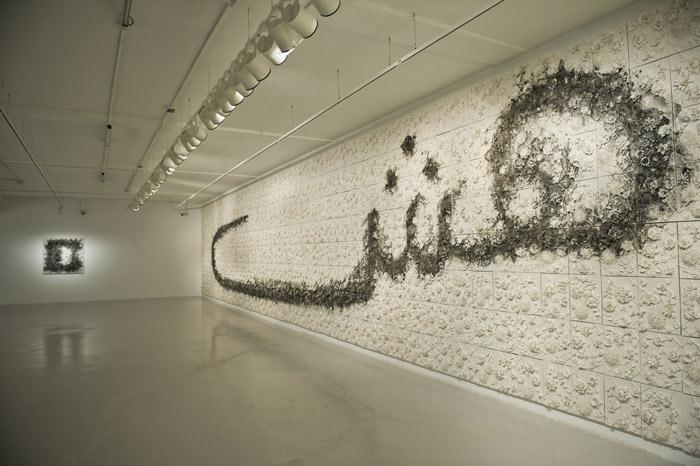
▲ 脆弱
展览概况:
《海》展透过艺术家特别运用阿拉伯当地历史和跨国来往的象征和故事,探索海湾地区海洋文化的古代和当代符号,以及泉州的伊斯兰历史。展出作品也同时表达出卡塔尔和中国相互的模糊关系,以及蔡国强自己人生和创作的发展。《海》展作为一个象征性的千年之旅,也对文 化、时间和地理的演绎过程是否带些幻觉或不能掌握的性质做出提问。
蔡国强从小对家乡时至今日仍随处可见、受伊斯兰影响的痕迹感到 好奇,当中包括当地的街景、清净寺和许许多多铭以阿拉伯文的墓碑。 座落中国东南海岸的泉州曾经是海上丝绸之路的重要港口,是丝绸、瓷 器、茶叶和香料的贸易中枢。中国史上最早期的穆斯林传教士(圣贤) 亦曾在泉州居住,并于圣墓长眠。《海》展也展示了蔡国强个人对中国 与阿拉伯世界之间错综复杂的历史与现况的反映,以及对当代阿拉伯与 国际的思考。
《海市蜃楼》将展出五十多件作品,其中十六件是特别委托制作的 新作,另外有三十件近作和九部录像纪录片。这次展览将呈现蔡国强作品的多样性,从他代表性的“火药草图”、因地制宜的大型装置作品、到为人熟知的爆破计划。展出的近作陈述蔡国强的艺术手法,描绘他历 年创意的成长,意识上的拓展,让观众了解他独特的艺术创作过程。
艺术家蔡国强说:「这次的新作反映我和阿拉伯文化之间的关系, 也取源自我的家乡泉州与阿拉伯世界的关系。我邀请本地的艺术家和学 生们当义工参与新火药草图作品的公开创作。通过合作和交流,我们会 学习和尊重相互的文化。我将有机会与本地的艺术家们一起工作,研究 如何把传统的媒材和文化符号转换为当代艺术的理念和形式。美术馆二 楼过往的作品会成为一个小型回顾展,尝试与阿拉伯观众分享我作为艺 术家在世界多元文化中的成长过程。」
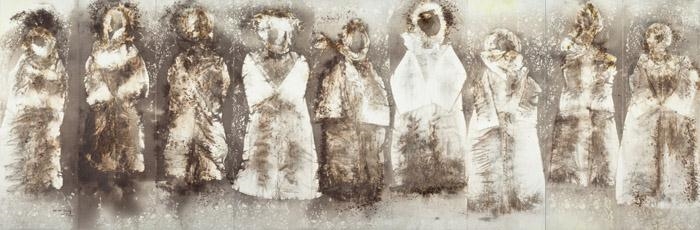
▲ 记忆
展览亮点:
《海市蜃楼》其中一件新作是用上六十块巨石的《返乡》装置作品, 巨石来自蔡国强家乡,上面都刻以泉州穆斯林墓碑上的摘录自阿拉伯可兰经和先知穆罕默德的训言,这些巨石会形成一条从美术馆外面一直 延伸至室内大堂的蜿蜒小径,观众能穿插于石头间,逐一细读石头上的 铭文。据艺术家的描述,巨石从泉州到多哈的旅程象征流散远方的穆斯 林古人期待千年的精神性返乡。
蔡国强也将会为此次展览与当地义工创作新的火药草图作品,追溯古代阿拉伯通往泉州的海路,和呼应伊斯兰纺织品和刺绣中的植物图 案。这些火药草图为重生或治愈提供一条象征性的途径,在破坏和创造 之间展开的张力。草图创作过程的录像纪录,以及艺术家为筹备本展所放,而所有义工均来自多哈社区,对艺术家的方法论和美术馆让社会参与的哲学都是重要的元素。
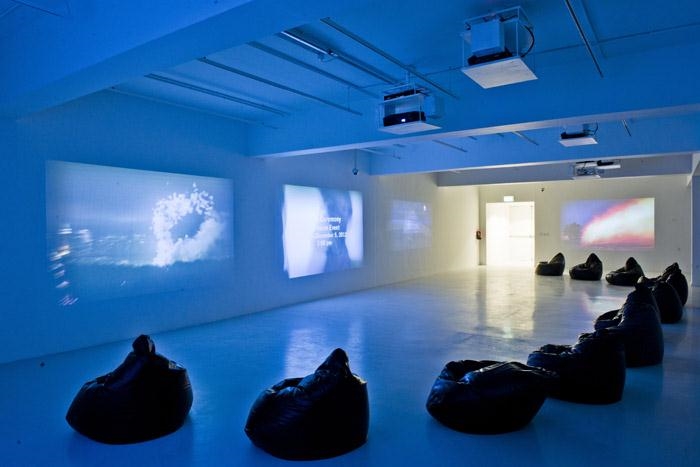
阿拉伯美术馆持续透过教育,以为艺术提供更广泛的语境为目标, 而《海》展将包括一部关于其他新作品制作的纪录片,以及蔡国强以往 的作品来描述他的创作过程,当中包括实验性的火药和焰火作品,手稿, 爆破计划的公开“表演”和社会艺术计划的视频投影。
许多旧作介绍和展览委托制作新作有直接的关联,包括 1995年于第46届威尼斯双年展的行为和装置作品《马可波罗遗忘的东西》。当中的 泉州木制渔船载着象征中国的中药和人参,将古代丝路和当今个人的精 神朝圣连在一起,理念上可算得《海》展中许多新作的先导 。
其他纪录作品包括《 历史足迹:为2008年北京奥运开幕式作的焰火计划》 展示蔡国强以无畏的方法实现雄心勃勃的奇观;2003年的社会 艺术项目《天空中的人、鹰与眼睛:为埃及錫瓦作的风筝计划》,调动 当地儿童在撒哈拉沙漠放彩绘风筝,是艺术家第一次投入阿拉伯世界的 活动。
一本双语--阿拉伯语和英语——的画册会随着展览出版。里面会 包含蔡国强与中阿历史学者的访谈、关于中东艺术史动态概况的文章,以及长谷川佑子对蔡国强作品的专题讨论。画册也会收录这次专门为《蔡国强:海市蜃楼》作的新作,和一些从未发表过的早期作品图片。
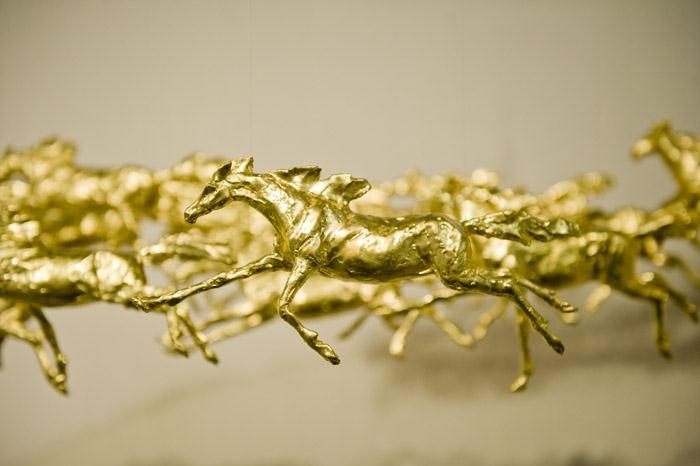
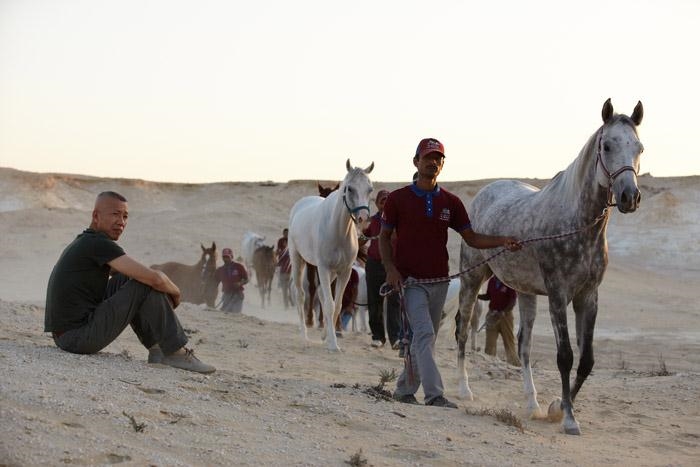
▲ 99匹马
关于蔡国强
蔡国强一九五七年出生于中国福建泉州,一九八五年毕业于上海戏剧学院舞台美术系,隔年赴日发展,一九九五年旅居纽约。二十几年来,他 的足迹几乎遍及所有的国际大展,并且在众多世界著名的艺术殿堂举办 展览,如纽约大都会博物馆、纽约现代美术馆、伦敦泰德现代美术馆、 巴黎蓬皮杜当代艺术中心等,主要作品也永久收藏于这些美术馆。一九 九九年,他获得第四十八届威尼斯双年展金狮奖的殊荣。二oo八在纽约 古根海姆美术馆成功举办了大型个人回顾展,二∝一∝年秋受休斯敦美 术馆委托制作的永久性火药草图装置《远行》。他也成功实现了众多规 模宏大的艺术计划,如北京奥林匹克运动会开幕式。蔡国强除此之外还 跨领域与科学家、服装设计师、建筑师、作曲家、舞蹈家、电影导演等 合作。他的艺术表现领域涉及装置艺术、行为艺术、观念艺术、多媒体 艺术等当代最为前卫性的艺术范围,成为国际当代艺术领域中最受瞩目 和最具开拓性的艺术家之一。
关于阿拉伯现代美术馆
阿拉伯现代美术馆(Mathaf: The Arab Museum of Modern Art)是中东地 区同类机构的第一所,提供一个阿拉伯对现代和当代艺术的视角,并支 持创意,促进对话,激发新的想法。
美术馆占地5,500平方米(59,000平方英尺),位于卡塔尔多哈教育城。美 术馆的藏品提供了阿拉伯现代艺术难得的全面概述,代表19世纪40年代 至今所有的主要趋势和重要产地。美术馆为与阿拉伯世界有关的展览铺 植一个更广泛的艺术背景,同时提供让本地和国际社区参与的活动,鼓 励学术研究,助长中东海湾地区,以及海外阿拉伯裔侨人民的文化景观。
关于卡塔尔博物馆管理局
米尔〃哈马德〃本〃哈里发〃阿勒萨尼 殿下(His Highness the Emir,Sheikh Hamad Bin Khalifa Al Thani) 于2005年成立,是一个把卡塔尔国内 所有的博物馆资源结合起来的政府组织。其职责是发展博物馆和文化机 构,并提供一个能有效地收藏、保护、保存和传译历史遗址、遗迹和文 物的制度。在主席 谢赫〃阿尔〃玛雅沙〃本〃哈马德〃本〃哈里发〃阿 勒萨尼 公主殿下的领导下,卡塔尔博物馆管理局正在把卡塔尔改造成为 中东的文化枢纽。伊斯兰艺术博物馆是管理局辖下的旗舰项目, 于2008 年正式启用。2010年12月阿拉伯现代美术馆开馆,为该组织赢得进一步 的全球赞誉。QMA 朝着 “作为博物馆、艺术和文物界的全球先锋”的 目标进发,在未来几年内,将雄心勃勃的建设世界一流的项目,包括由法国建筑师努维尔(Jean Nouvel)设计的卡塔尔国家博物馆。欲知详情, 请浏览网站: www.qma.org.qa.
蔡国强的亲笔文字:
来自故乡的千年旅行
记得在准备北京奥运会开幕式期间我们专门去多哈看了亚运会。当卡塔尔王子骑马在雨水中奋力冲上去点火时,我们大吃一惊!没想到这个阿拉伯小国这么利害。回来后,我和艺谋及其他核心创意成员花很久的时间去想一个不走这个方向的点火方案。因为,这样不依靠科技,英雄悲壮式的强攻方向,已经很难做了,我们只有想别的招式。
2010年, 卡塔尔公主看了我2008年在古根海姆博物馆的回顾展,就到我工作室来。他们马上要建阿拉伯现代美术馆,问我能否为开馆做一个展览及爆破项目。虽然我建议应该先做阿拉伯艺术家的展览,没有参加开馆活动,但是已启动了我脑海里与那片土地的对话。之前,我曾在埃及的锡瓦和当地的孩子一起做过风筝计划,但那好像只是一个穿越神奇土地的游客。这次多哈的大型个展,给予我机会思考和整理我个人,及家乡泉州跟阿拉伯文化之间的关系。
为这个展览我多次前往多哈,在这长160公里、宽58公里的国土上,考察卡塔尔的历史、文化和自然。一边是干燥、热烫的沙漠戈壁;一边是深蓝无边的海洋。可以理解古代人们生存的艰辛和海洋贸易的必然。也能感受这一、二十年里突然冒出的海市蜃楼般的万丈高楼,既似虚构、也是神奇。
我的家乡中国泉州是海上丝绸之路的起点。元代曾是世界最大的港口。从唐代开始,有很多阿拉伯人来到了泉州。甚至在穆罕默德刚创建了伊斯兰教不久,据称就派弟子来了泉州。在宋元交替时期,这些伊斯兰教的信徒们就有逊尼派、什叶派之分,他们都不同深度地卷入了中国当时社会的政治、经济和军事等领域的事件中。漫长的历史里,他们的后裔很多成了福建各地和泉州市的重要官员,从商业管理到海关关长(市舶司)或军队将领等。就这样,一个个伊斯兰家族在泉州代代相传。现在唯一保留下来的清真寺为公元1009年建造于宋代,寺庙长期成为阿拉伯人传递自己文化和语言的教育基地。同时这些阿拉伯后裔也成为中国文化的传承人并留下了不少中文的诗歌和书法石刻。
返乡少年泉州
当泉州还没有高楼大厦,宋代的伊斯兰教寺院一直和唐开元寺的东西双塔是这个城市的高大建筑。在清真寺院周边就有香火旺盛的关帝庙,儒雅朴实的文庙等,显示了泉州文化的多元性和宽阔的包容胸怀。今天泉州还处处保留着伊斯兰风的遗产,尖拱门窗、屋顶,数万的丁姓、郭姓的回民。象我奶奶包的头巾叫蕃巾,就是指外邦,阿拉伯来的头巾。那己有千年的历史了。泉州有这个包头巾的习惯,可以想像曾经有很多很多阿拉伯人居住在这个城市,汉民也要尊重阿拉伯人的习惯。而且,包头巾的优点是泉州靠海, 不容易把女性的头发弄乱。
泉州曾有好多处穆斯林墓地,小时候我和朋友会在晚上骑自行车去他们的墓地玩。在荒郊野岭里泡茶聊天,既练胆,也享受神秘的异国情趣。其中最有名的叫圣墓,离我的家仅15分钟自行车程。墓地的中央就长眠着被称为三贤丶四贤的圣人。墓旁几块石碑里也有700多年前中国航海家郑和下西洋前到此祈佑时所写下的碑文。为这个展览让我想起了应该去了解这些穆斯林墓碑上的古阿拉伯文是在说什么……可以看到不同岁月里的人们,很多是商人,也有做官的,有世家贵族,也有穷苦的阿拉伯母亲,还有4岁可怜的孩子。有的墓碑雕刻的极其豪华,有的墓石才寥寥几笔,甚至有些阿拉伯文还是错别字。
在中国文化里人们避讳谈死,更不大愿意在墓碑上说死这样的事情,但成千上百的穆斯林墓碑上的可兰经文,或穆罕默德的语录,内容大都是对来世今生的态度,很多在说死,比如‘人人将尝死的滋味’、‘一切活的都要死去’、‘死是门’,等等。他们直面死的存在,令人印象深刻。现在,不管是中国还是阿拉伯世界或是整个人类的无休止地追逐物质社会风潮中,看看另一句反复出现的"今生的享受都是虚假的"告诫,是很有现实意义的。
当我看到很多碑文都写着‘死在异乡,即为殉教’,我很吃惊并受到震撼,这更推动我做这个回归千年理想展览的动力。 一千多年来,阿拉伯先民在泉州,他们中有很多很多人成了回民,也是中国人,姓丁啊,姓蒲啊,远来的伊斯兰教徒们,不管经历多少世代,已经和这里的文化多么地融合,即使他的儿孙也将继续生活在这片土地,最终他仍是一个异乡人……可以想想,他们的故土很多是沙漠戈壁,但泉州这边有秀丽山川,满地生灵。可是不管汉化到什么程度,当他们死去的时候,即脱去汉服,完全按照伊斯兰教的习俗,被净礼后换上民族的殓衣包裹他们的尸体,入土后头永远向着西方—自己的故乡…坟墓上,刻着古阿拉伯文的墓志铭,配着云月图案。
我也会想到我自己,我在泉州出生长大,去上海读了大学,后来到日本近9年;之后又来了美国,二十几年来在世界各地生活定居,工作。但我也很热爱家乡这块土地,在精神上、感情上跟泉州一直保持着这样那样的关系。所以,这次把这些碑文转刻在泉州的石头上带到多哈,这些石头从阿拉伯现代美术馆外堆放到馆内中庭,形成了一个自然的小道。人们行走在石缝之间,与一个个碑文相逢。这不是为了表达对他们在异乡去世的遗憾,而是我作为同乡人的 艺术家给予他们的一次千年的旅程、一个返乡的慰藉。同时是我对家乡历史文化的索求,也是我自己的返乡旅行。
谈谈几件作品
黑色是穆斯林很重要的颜色。黑色仪式是关于死亡的艺术计划。火药产生的热量是洗礼和治愈;爆炸强烈的声音好像告诉天地他们归来的一个message,那声声感叹和感动。
美术馆的外面是一片戈壁沙漠。在开幕的当天,我将为当地和远来的客人创作一个白天的爆炸计划。这个计划是给予那些死在异乡的还乡者的一个精神的葬礼。阳光下,戈壁滩上,爆炸就像在蓝天里撒上一滴滴墨汁,瞬间开出了朵朵黑色的鲜花,声声爆炸,震天地,撼人心…结束时由高科技电脑芯片焰火弹组成的黑色金字塔耸立大地,像一座无言的墓碑。
如今,当代艺术似乎总是在轻松愉快、热闹时尚的氛围中。这个多哈计划却试图面对生死、追忆历史和先民,思考不同文化的关系,并通过艺术的时空隧道,呼唤我们对艺术来自生命的质朴的感动。这个项目也是我长期探索仪式性艺术的新发展。
作品
丝绸之路一个很重要的东西就是陶瓷,刚好我的家乡德化陶瓷自古闻名。阿拉伯热衷中国陶瓷,也影响了中国的陶瓷。打捞出来的古代沉船,来自阿拉伯的是香料等,而运往阿拉伯的是满满的陶瓷。这是我首次创作大型的火药陶瓷壁画。陶瓷上细密的阿拉伯风格的花虫藤蔓,意外的锐利,手不小心就会刮伤。在这白净的陶版上用火药撒出一个阿拉伯字"脆弱"点火后即炸出一幅阿拉伯书法。在陶瓷上放火药后不能压,不能盖,爆炸的能量不可炸毁陶瓷。因为陶瓷是脆弱的,火药和陶瓷、人与人、文化和文化之间的关系都是脆弱的。
和当地文化的对话
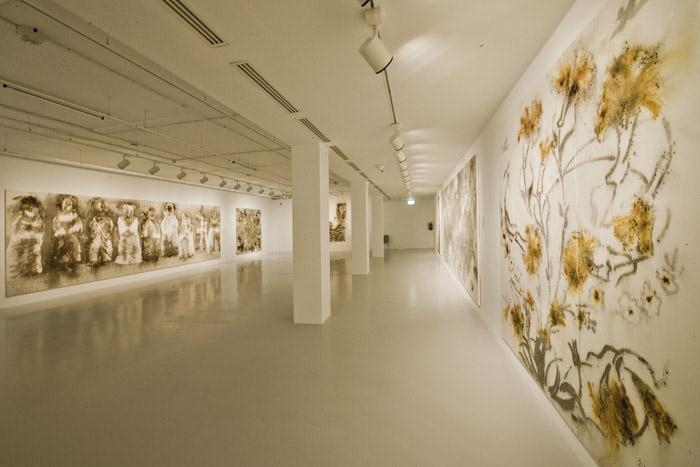
火药草图公开制作使各种不确定因素更多且复杂。本身火药材料是难以控制,充满偶然性,加上参与的当地阿拉伯义工,还有现场的观众。这些作品的题材来源和这里的文化有关,当地人的理解和参与将使作品的表现力更丰富和到位。具体创作中,一条线是该粗一点呢还是细一点,是密一点呢还是疏一点,他们的工作速度和兴趣冷热也会通过合作和对话,影响我的状态,并最终在作品上反映出来。有时候看到他们刻的花饰那样的精美,我会舍不得下猛药破坏,那怕有点小气也让它这样。所以,作品也就成了是在这块土地和这里的人们共同生长出来的。也成为了这个文化的共同记忆。与观众的互动,主要是我自己内心的修行过程。有些观众看我慢慢做或停下思考会不耐烦,走来走去或大声说话。当我做到紧要关头,大家又劈劈啪啪乱照一通。我需要修炼自己平静的心,同时又要利用好周边动荡的能量变化,适当借力使力地控制好我的进退得失。有时候我亦人来疯地激情澎湃,对创作有益也有害。不管我如何修行,其实我也会感受到观众慢慢地跟我一样, 都在期待和不安,在揣摩火药爆炸的结果到底会怎么样。那种时候我感到已经是大家和我一起在跟这些材料对话,感受到全场都跟我进入同样状态时,是非常开心的享受! 所以这个文化的对话,是从开始并贯穿艺术创作始终。是影响着我在这个土地所做作品的风格,和最后呈现的艺术效果。
这是我第一次在阿拉伯国家的个展,也是阿拉伯现代美术馆成立以来第一个艺术家的个展。一楼的8个展厅和美术馆旁边空地上的爆炸计划都是为这个展览特别打造的新作品,试图把我故乡的历史文化与多哈所处的阿拉伯历史文化相联系。 很多材料和造型从阿拉伯文化上吸取灵感, 艺术家与当地的义工合作,并向民众公开作品的制作过程。二楼的5个展厅以回顾性的方式打造。回顾的意义一是把我的工作放大到世界的范围里面,在不同的文化里面, 我在其他地方都做了什么, 这样可以与我在多哈做的作品比较。另一个方面,回顾性作品可以看到一个艺术家随着年龄的变化,在主题、材料上从早期到现在的成长过程。也期待让阿拉伯年轻的艺术家们有机会可以看到我是如何转换一些传统的材料和符号变成当代性的艺术。因为这个展览是我古根海姆等美术馆的回顾展之后,做的大规模新作展,亦是我这几年一些思考的呈现。
中国已经够复杂了,还加上阿拉伯就更复杂。在我们充满着各种复杂状态的时代,我们小心翼翼,又充满激情的做这件事情本身就特别有意思。
MORE: 蔡国强 Cai Guo-Qiang,更多请至:Cai Guo-Qiang Studio on gooood

推荐纪录片《天梯》,很感动!
艺术就是派大星
突然发现核爆蘑菇云那张照片是艺术。
艺术就是爆炸