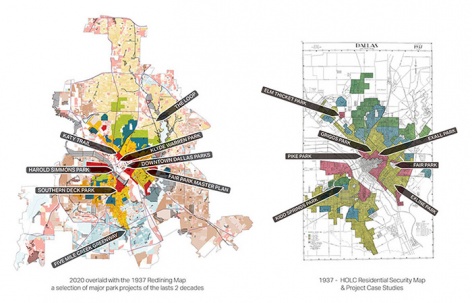
“这是一项关于美国公共公园种族化设计的深刻历史性与批判性研究,明确指出在未充分理解过去错误的情况下,无法实现真正公正的公共空间。”
– 2024年评审委员会“This is a powerful historical and critical study of racialized design of public parks that makes important statements about not being able to achieve a just public realm without understanding the past mistakes.”
– 2024 Awards Jury
来自 ASLA 对gooood的分享。
Race and the Control of Public Parks in Dallas, Texas|Isaac Cohen + buildingcommunityWORKSHOP
项目陈述
PROJECT STATEMENT
本研究通过对美国德克萨斯州达拉斯市公共公园系统长达一个世纪的历史分析,揭示了公共景观及景观建筑师的作品如何在物理和心理层面上分隔城市空间,以及应该如何应对这些既往的设计实践。通过重新审视既往的设计实践,本研究旨在提供一种新的设计思维和实践方法,从而创造一个更加公平的公共环境。
本研究将人口统计数据地图叠加于公共公园系统的发展历程及隔离与暴力事件之上,清晰地展示了种族不公的美国社会经济过程、公园设计与城市发展过程之间的密切联系。
This research uses a century long historical analysis of the public park system in Dallas, Texas, USA to uncover the physical and psychological ways in which public landscapes and the works of landscape architects have segregated urban spaces and how we might fight against these design practices. Through reframing past practice this work seeks to create a method for informing design thought and practices that seek to create a more just built environment.
Overlaying the mapping of demographic data with the development of the public park system and incidents of segregation and violence; the research creates a clear link between the social and economic process of racial injustice and the process of park design and urban development.
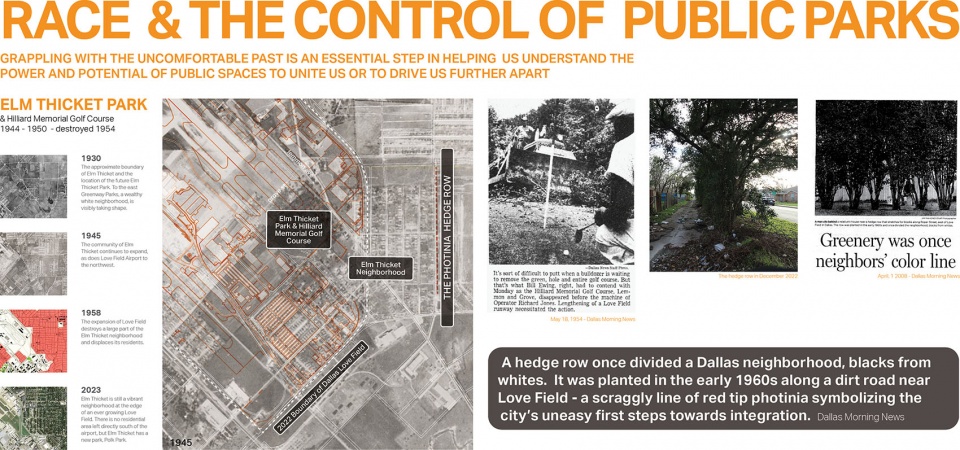
▲种族与公共公园的控制: 公园具有将人们团结在一起或分隔开来的力量,深刻理解这一过程的具体机制对于构建更加公正的未来至关重要,Race and the Control of Public Parks:Parks have the power to unite us or drive us apart, understanding the specifics of these processes is essential to build a more just future © Isaac Cohen, bcWORKSHOP, Dallas Morning News Archive, University of Texas at Arlington Libraries, Special Collections
项目说明
PROJECT NARRATIVE
在美国全国范围内对种族不公与暴力历史进行深刻反思的背景下,设计界必须认真审视景观在持续加剧“公共”空间的隔离中所起的作用。不可否认,景观建筑能够创造带来无尽欢乐的空间、促进公众健康,并修复受损的生态系统;然而,作为一个专业领域,景观设计界同样需要认识并反思自身,尤其是在维系城市景观中广泛存在的种族与经济暴力体系中所发挥的作用与影响。本研究项目通过对德克萨斯州达拉斯市公共公园系统长达一个世纪历史的分析,揭示了景观建筑作品在分隔城市空间方面的多种方式,并探讨美国景观设计界应如何应对这些体系与设计实践,从而推动建设更加公平与包容的城市环境。
要实现这一目标,必须深入识别公园在分隔人群与加剧公共空间分裂中所起到的作用。这一认知是制定消除空间隔阂的有效对策,并重新设计场地与系统以服务更广泛公众的重要前提。
通过培养揭示呈现历史中那些不为人知或令人不适部分的能力,景观建筑师就能够在设计项目中真实反映美国社区所经历的创伤。正视景观设计在历史进程中所扮演的角色,不仅有助于重建美国社会的信任,更能够推动形成更加公平的建成环境。
公共公园通常被视为所有市民参与城市生活的重要公共资源。尽管这一观点在技术层面上是准确的,但却未能反映公共公园更为复杂和细腻的现实。将公共公园视为对所有人开放的空间,忽略了在设计、建造与使用过程中,空间可能通过多种方式加剧人群之间的分隔,这种分隔既包括物理上的隔离,也包括心理上的隔阂。同时,公园的开发与设计作为一种特殊的空间形态,既可以促进人们的聚集与互动,也可能在无形中加深社会群体之间的隔离。本研究以公共公园和住宅种族隔离为视角,深入剖析城市空间的物理结构,揭示在规划、建设与使用过程中,人们与城市互动的多重方式及其深层次影响。
本项目通过叠加分析城市110年的人口普查数据、公共公园系统的发展历程,以及种族化暴力事件、相关政策与设计实践,揭示了公共空间与社会分隔之间的深层联系。此外,对公园规划文件和档案的分析促成了对七个特定地点的空间研究,这些地点均与种族化设计与暴力事件密切相关。通过对过去与当前设计实践的重新审视,本研究旨在为推动创建更加公正的建成环境提供设计思路与理论支持。
本研究对许多景观建筑师普遍持有的观点提出了挑战,即公共项目对所有人都是有益且可达的。本研究呼吁并强调在设计审查中应关注公共项目对社区可能带来的负面影响,并建立评估公园未来潜在影响的系统性框架。本研究提出了一种基于现实案例,并从社会视角评估设计的宝贵方法。无论是从城市更新的历史进程到当代基础设施建设,还是教育机构中的隔离现象,上述关于大型规划如何导致社会隔离的研究和理解已相当丰富,但在公共公园设计中,导致社会性隔离的机制及其社会影响却鲜有系统性的探讨。如果无法深刻理解公园在加剧和延续种族及社会经济的结构性分隔中的作用,又如何实现真正公正的公共空间理想,并建设能够服务于“所有人”的公园?
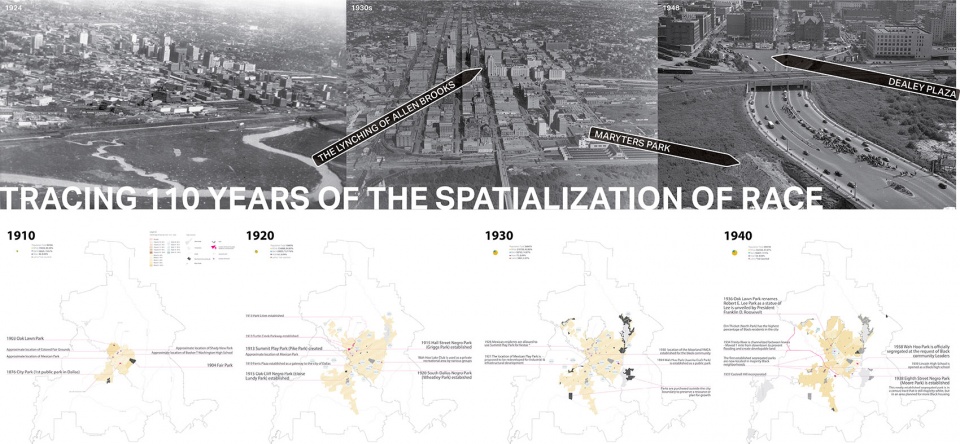
▲追溯110年的种族空间化(1910-1940):通过叠加显示110年的人口数据、公共公园系统的发展轨迹和公园中的种族隔离事件的多张地图,揭示空间与社会结构的联系,Tracing 110 Years of The Spatialization of Race1910 – 1940:110 years of demographic data is mapped with the growth of the public park system and incidents of racial segregation in public parks © Isaac Cohen, bcWORKSHOP, University of Texas at Arlington Libraries, Special Collections
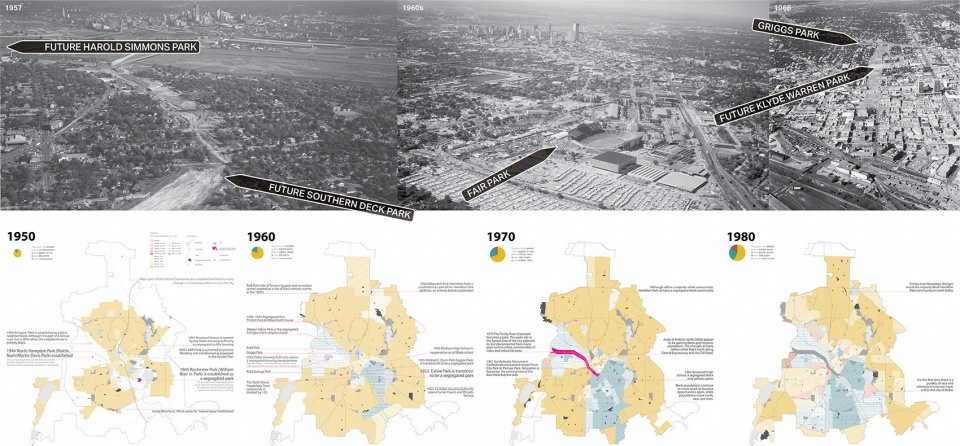
▲城市的扩张(1950–1980):城市航拍影像对应地图所示的各个时代,展现种族隔离的具体地理位置与空间分布,A Growing City 1950 – 1980:Aerial images of the city the correspond to the eras shown in the maps spatialize the mappings and show specific locations of segregation © Isaac Cohen, bcWORKSHOP, University of Texas at Arlington Libraries, Special Collections
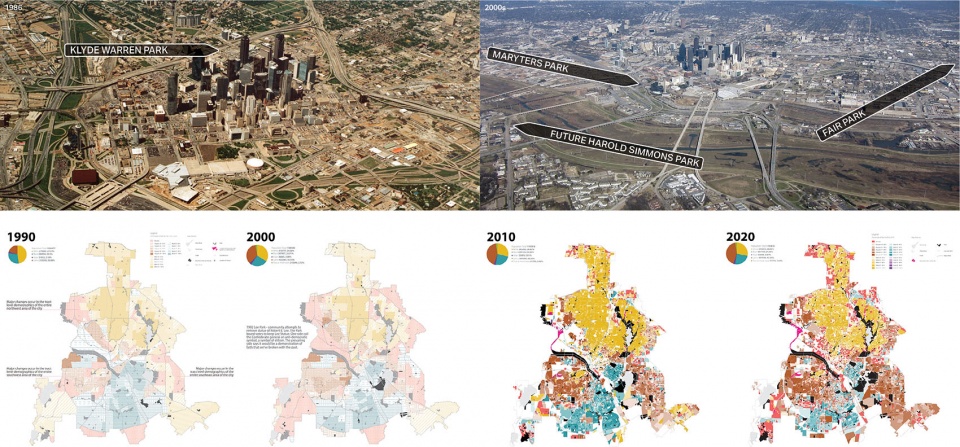
▲城市中心的演变(1990–2020):城市人口居住格局的变化揭示了公园在促进或加剧种族隔离方面所扮演的角色,A Developing City Center 1990 – 2020:The changing demographic residential patterns of the city reveal how parks play a role in countering or reinforcing segregation © Isaac Cohen, bcWORKSHOP, University of Texas at Arlington Libraries, Special Collections
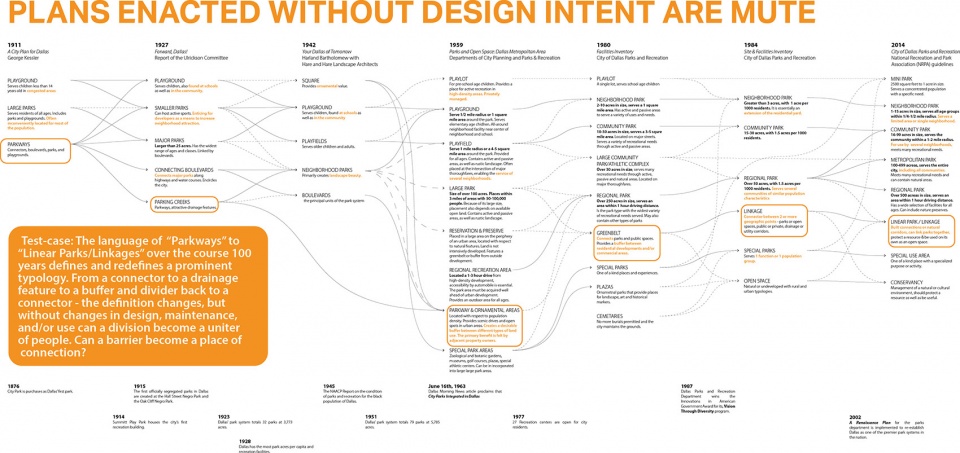
▲没有设计意图的规划是沉默的:对达拉斯公园规划语汇的演变进行分析,揭示规划与设计议程如何随着时间发生变化,Plans Enacted Without Design Intent Are Mute:The language of Dallas Parks Plans is analyzed as it evolved over time to reveal how planning and design agendas change © Isaac Cohen, bcWORKSHOP
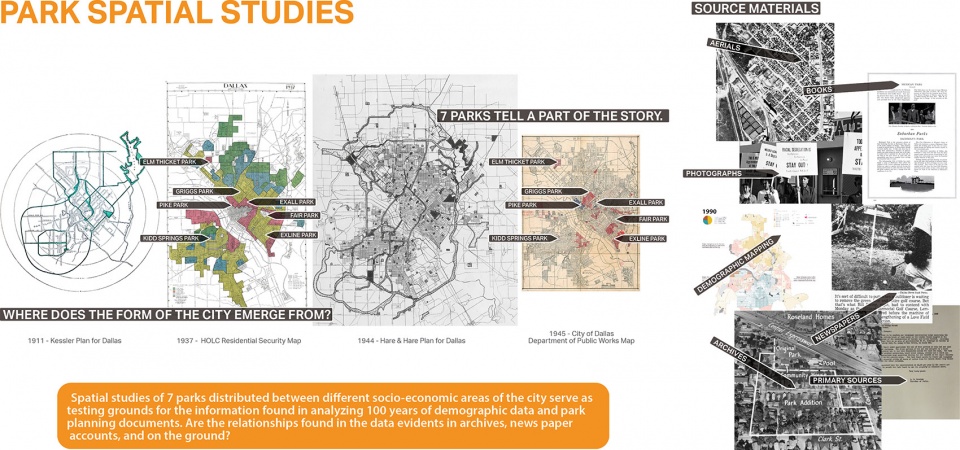
▲公园空间研究:通过对7个公园的空间研究,检验地图分析的发现,探讨物理环境如何影响公共空间的隔离,Park Spatial Studies:7 park spatial studies test what is found in the mappings to understand the physical impacts and actions the segregate public space © Isaac Cohen, bcWORKSHOP, Dallas Morning News Archive, University of Texas at Arlington Libraries, Special Collections, Dallas City Archives
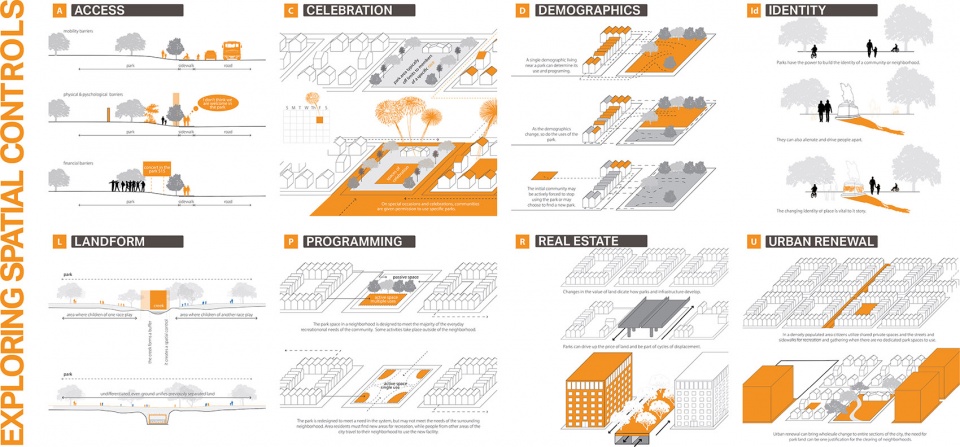
▲公园的空间控制:通过档案研究与地图分析,总结出公园内部及周边的8种具体的空间与心理控制机制,The Spatial Control of Parks:8 specific spatial and psychological controls the exist in and/or around parks were derived through archival research and mappings © Isaac Cohen, bcWORKSHOP, Camilo Manosalvas Travez
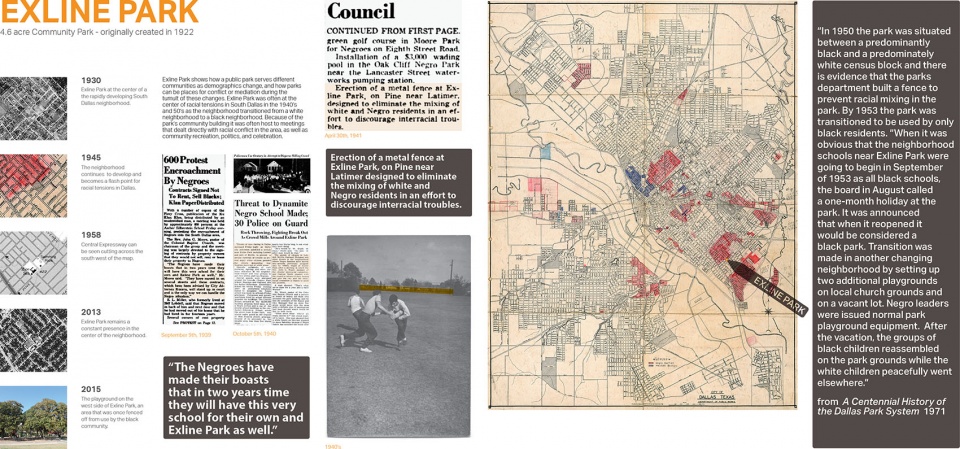
▲Exline公园研究:讲述Exline公园如何见证社区从白人社区转变为黑人社区的过程,以及公园在这一转变中的作用,Exline Park Study:The story of Exline Park details the process of demographic change in a neighborhood from white to Black and the role of a park in that change © Isaac Cohen, bcWORKSHOP, Dallas Morning News Archive, Dallas City Archives
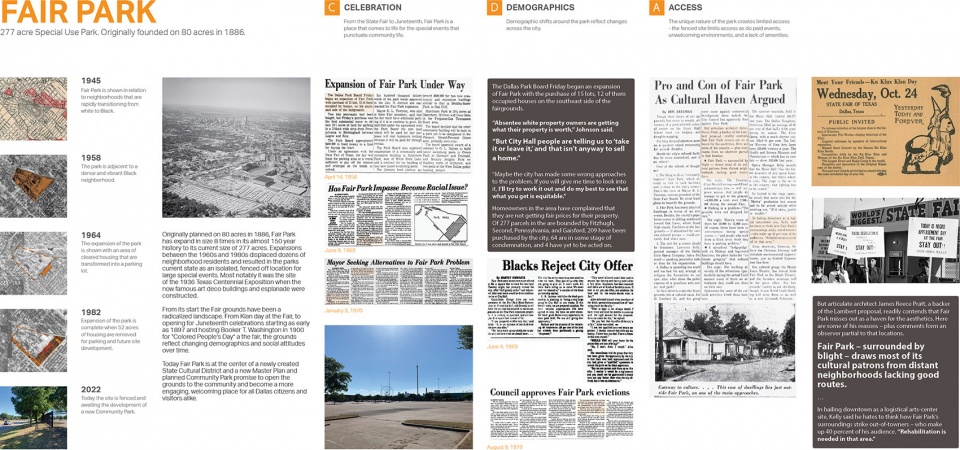
▲Fair公园研究:Fair 公园的历史反映了在“公园扩张”与“规划项目”的名义下,种族化的住宅迁移和强制搬迁现象,Fair Park Study:The story of Fair Park is one of racialized residential displacement under the guise of park growth and programming © Isaac Cohen, bcWORKSHOP, Dallas Morning News Archive, The Portal To Texas History, University of Texas at Arlington Libraries, Special Collections
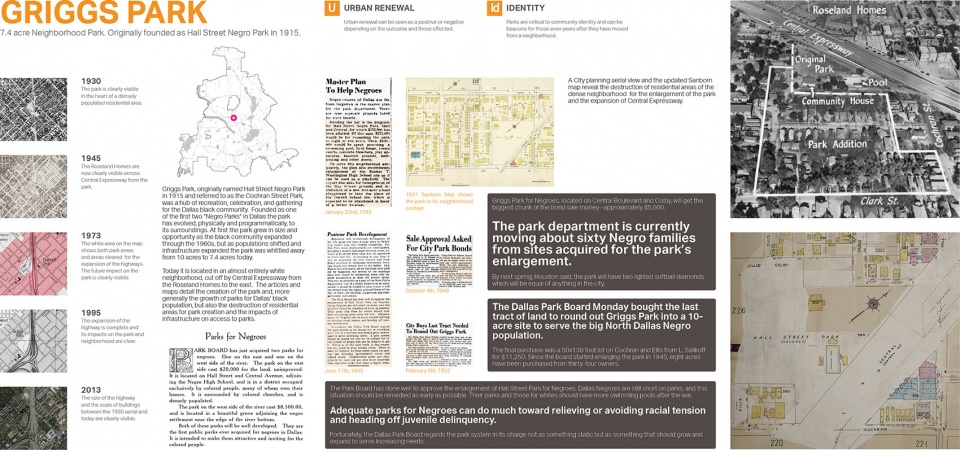
▲Griggs公园研究:Griggs公园的历史与高速公路基础设施的扩张和城市更新进程紧密相连,揭示了基础设施建设对社区的影响,Griggs Park Study:Griggs Park ties the story of a neighborhood to the expansion of highway infrastructure and urban renewal © Isaac Cohen, bcWORKSHOP, Dallas Morning News Archive, Dallas City Archives
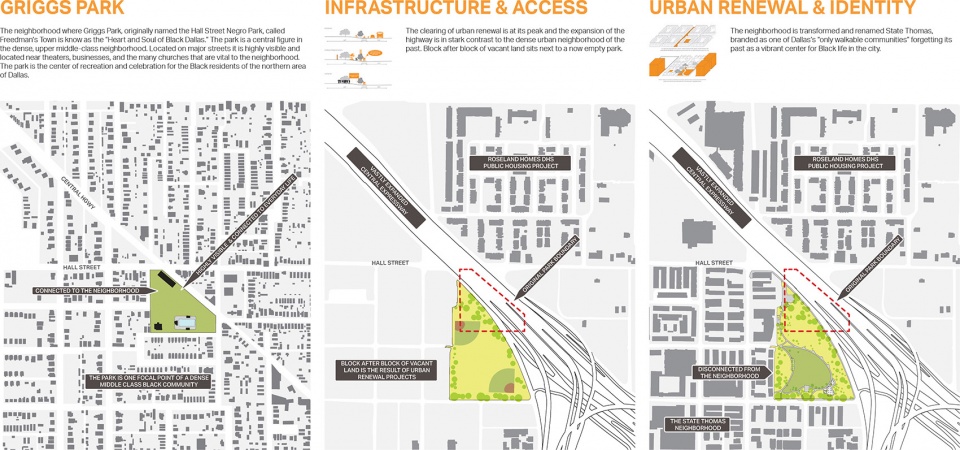
▲绘制城市更新: 当社区发生变化,而公园仍然存在,它的意义究竟是什么?Drawing Urban Renewal:If a neighborhood changes, but a park remains what is its significance? © Isaac Cohen, Camilo Manosalvas Travez
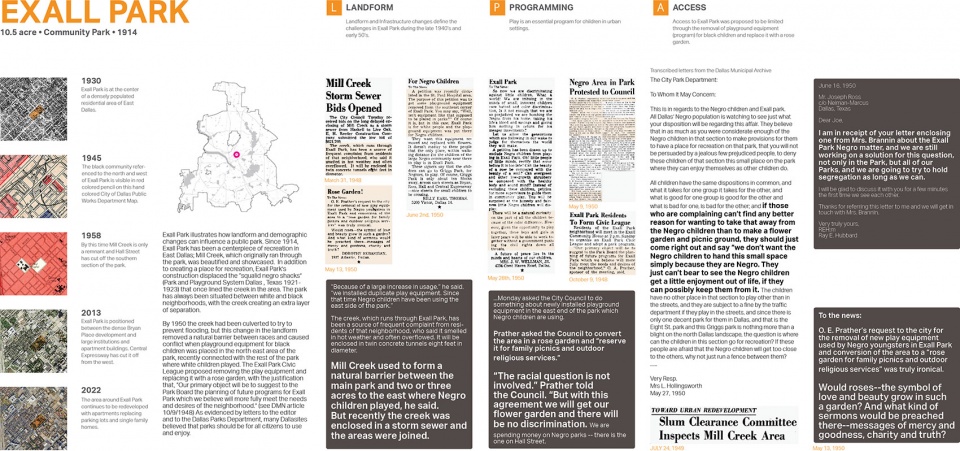
▲Exall公园:历史记录揭示了被美化为“公园发展”的背后,实则隐藏着种族斗争的故事,Exall Park:We must use the historical record to reveal narratives of racial struggle that masquerade as a story of beauty and park development © Isaac Cohen, bcWORKSHOP, Dallas Morning News Archive, Dallas City Archives
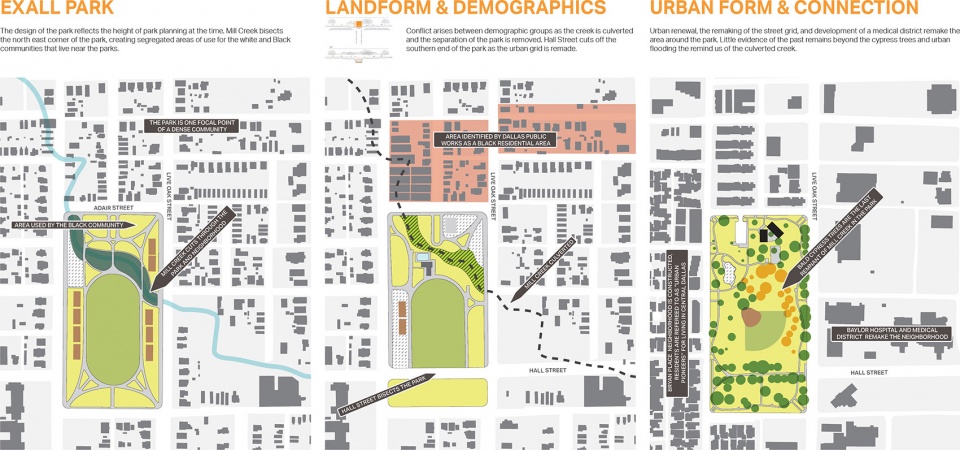
▲绘制社区变迁:在种族化的历史背景下,如今仍然能找到哪些证据?Drawing Neighborhood Change:What evidence remains of a racialized past? © Isaac Cohen, Camilo Manosalvas Travez
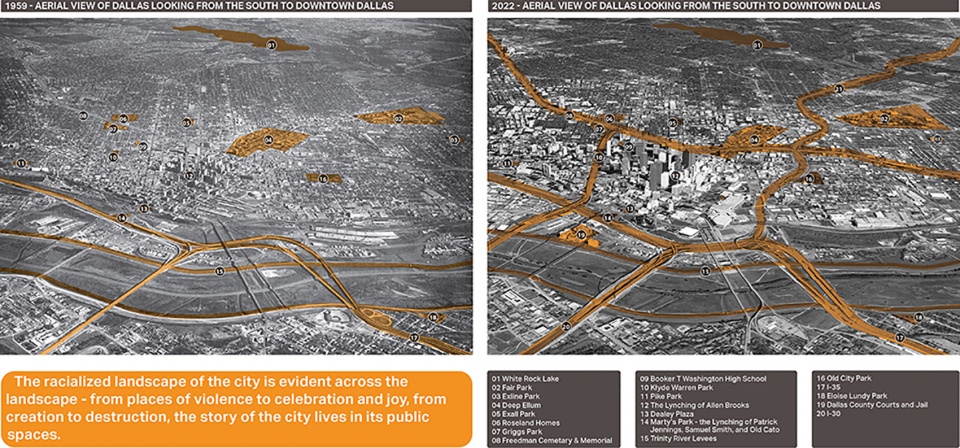
▲更广泛的种族化景观:公园与公共空间的历史揭示了种族化景观如何在城市肌理中蔓延并贯穿时间,A Broader Racialized Landscape:The stories of parks and public space reveal the racialized landscape spread across the urban fabric and through time © Isaac Cohen, bcWORKSHOP, University of Texas at Arlington Libraries, Special Collections
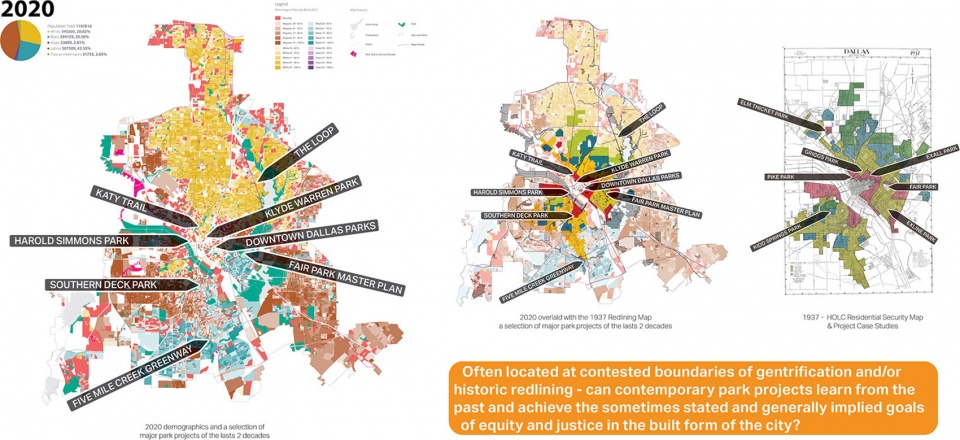
▲我们今天能学到什么?:从历史中吸取哪些教训?如何利用这些知识来构建更加公正的建成环境?What Lessons Can We Learn Today:What can we learn from the past and how can we utilize that knowledge to build a more just build environment? © Isaac Cohen, bcWORKSHOP, Dallas City Archive
Project Narrative
In the wake of our national reckoning with a history of racial injustice and violence, we must grapple with the ongoing role of designed landscapes in perpetuating the segregation of “public” spaces. It is undoubtably true that landscape architecture can produce works that create unbounded joy, support health, and regenerate damaged ecologies; as a profession we must also learn to recognize the ways that we have contributed to the systems that perpetuate racial and economic violence evident across the urban landscape. This research project uses a century long historical analysis of the public park system in Dallas, TX to uncover the many ways in which the works of landscape architects have segregated urban spaces and how we might fight against these systems and design practices.
To do this we must learn to identify the ways that parks serve to separate people and reinforce divisions in public. This knowledge is an essential step in developing strategies to counteract these separations and redesign sites and systems to serve a broad public. By developing the skills to uncover and articulate uncomfortable histories, landscape architects can frame design projects with a truthful recognition of a community’s trauma. Learning to do this while acknowledging our role in a painful past will position the profession to not only rebuild trust but to also be the designers of a more just built environment.
A pubic park is commonly viewed as a resource for all citizens to engage in the life of the city. This view, while technically accurate, does not reflect the more nuanced reality of public parks. The idea that all are welcome in a public park ignores the ways in which the design, construction, and use of a space can reinforce divisions, both physical and perceived, between populations. The development and design of parks are one type of space that can be used to bring people together or keep them apart. This research interrogates the physical city and reveals the multiple ways in which we plan, build, and interact with it, through the lens of public parks and residential racial segregation.
This project overlays the mapping of 110 years of census data and the growth of the public park system, with acts of racialized violence, policy, and design across the city. In addition, an analysis of park planning documents and archives led to the development of seven supporting spatial studies of specific sites of racialized design and violence. Through reframing past and current practice this work is part of informing design that seeks to create a more just built environment.
The work challenges the belief of many landscape architects that our public works are good for and accessible to all. This is a call to action to review work for its negative impacts on communities and to create a framework to evaluate the potential future impacts of parks. The work presents a valuable way to evaluate design from a social perspective, that draws on real world examples. While there is extensive research on and understanding of the segregating impacts of large-scale planning; from the history of urban renewal to contemporary infrastructure, and in educational institutions, the mechanisms and impacts of segregation within the design of public parks is little understood. How can we achieve an ideal of a just public realm and parks that serve “all” if we do not understand the ways in which they enforce and perpetuate structures of racial and socio-economic division.
Project Credits
Camilo Manosalvas Travez, Graduate Research Assistant
Lizzie MacWillie, Graduate Research Assistant
Thomas Simpson, Graduate Research Assistant
More:ASLA ;Isaac Cohen + buildingcommunityWORKSHOP










公正的公共空间是个伪命题
DK