“令人赞叹!这是一个极具视觉冲击力的湿地项目,它以富有力量的方式,同时呈现并激活了设计的艺术性与自然系统的韧性,如梦似幻,却又雄心勃勃。这座大尺度的城市公园,理应成为其他城市在修复被工业活动侵蚀和破坏的滨水景观时的重要范本,同时也为公众休闲提供了全新的可能性。设计师的勇气在这一全新的城市湿地范式中得到了淋漓尽致的展现。”
– 2025年评审委员会“Sublime! A visually stunning wetland project! The art of design and the resilience of natural systems are both engaged and displayed powerfully by this project. Dreamy as it is ambitious, this sprawling urban park should serve as a template for other cities seeking to resuscitate blighted waterfront landscapes marred by industry while also offering novel opportunities for recreation. The designer’s courage is on full display in the new paradigm for urban wetlands.”
– 2025 Awards Jury
来自 土人设计 和 ASLA 对gooood的分享。更多关于:Turenscape on gooood
Fish Tail Park in Nanchang City | Turenscape
点击查看谷德此前发布的南昌市鱼尾洲公园项目,link to Fish Tail Park in Nanchang City by Turenscape previously published on gooood
项目陈述
Project Statement
项目位于长江洪泛平原上的江西省南昌市。我们在有限的预算与紧凑的工期内,将一片严重退化的126英亩(51公顷)场地重塑为一座“漂浮森林”,实现了雨洪管理、生态栖息地修复与多样化公共活动空间的有机融合。这一创新性的城市自然模式不仅强化了新区的整体形象,也有效带动了周边区域的发展。鱼尾洲公园为洪涝高风险区域提供了一种可复制、可推广的解决方案,在洪泛适应性、生态修复与公共参与之间实现无缝整合,重新定义了人与自然力量共同作用下的城市空间。
In Nanchang, within the Yangtze River floodplain, we revitalized a heavily degraded 126-acre landscape into a floating forest that manages stormwater, restores habitats, and provides diverse recreational spaces—all within a limited budget and a short timeline. This innovative urban nature model strengthens the district’s identity and spurs surrounding development. Fish Tail Park offers a scalable solution for flood-prone regions, seamlessly integrating flood resilience, ecological restoration, and public engagement while redefining urban space for both people and natural forces.
▲一处占地126英亩的粉煤灰堆弃场,被重塑为具备防洪能力的漂浮森林,恢复生态栖息地、调蓄雨洪,并成为城市新地标。A 126-acre coal ash dump became a flood-resilient floating forest, restoring habitat, managing stormwater, and creating an urban landmark. ©土人设计
项目说明
PROJECT NARRATIVE
1. 场地挑战与设计目标
江西南昌长期面临季风性洪涝、城市径流污染以及快速城市化带来的生境退化问题。项目基地面积约126英亩,曾为鱼塘及粉煤灰堆弃场。设计需要在复杂受限的条件下,将其转化为一座具备雨洪调蓄、水质净化与生物多样性恢复功能的韧性城市公园,同时作为市民休闲活动中心,并成为带动周边开发的重要引擎。
2. 设计策略:水上的森林
2.1 从城市弃置地到岛链的“宝石湖”
通过将粉煤灰与原有塘泥回收再利用,项目营造了80余座岛屿,增强了水陆交错界面,促进了生物多样性,并实现了污染物的自然过滤。湖体总调蓄容量达100万立方米,可有效缓冲暴雨期间的径流冲击,同时为水生生物提供良好栖息环境。
2.2 适应洪水的森林:公园的核心
借鉴鄱阳湖湿地景观特征,场地种植了落羽杉(Taxodium distichum)和水杉(Metasequoia glyptostroboides)等耐淹水乔木,并辅以多样化湿地植物以稳固岸线结构。莲等水生植物的引入进一步提升了生态效益,共同构建起一个可自我维持的生态系统。
2.3 雨洪过滤系统与外围公共滨水空间
位于公园核心的森林区在汛期会被洪水淹没,营造出沉浸式的湿地体验;而公园外围则可安全应对20年一遇洪水。场地设置了自然式游乐空间、沙滩、喷泉及阶梯式湿地系统,在满足市民休闲需求的同时,对城市径流进行有效过滤。
2.4 组织“野性自然”:编织式栈道的沉浸体验
由步行路径与平台构成的栈道系统,引导公众深入自然环境。栈道在设计上允许在洪水期间被淹没,使游客与不断变化的水景形成动态互动关系。漂浮或架空的结构形式确保了洪水后的快速恢复与便捷维护。
2.5 空间塑造:自然景观中的现代构筑物
桥梁、亭廊与观景塔采用穿孔铝材建造,与野性的自然背景形成鲜明对比,同时框景重要视线,创造“观看”与“被观看”的空间节点。公园入口将咖啡馆与跨越式通道整合设计,显著提升了整体可达性与游园体验。
3. 项目成效
在约4美元/平方英尺的低预算控制下,鱼尾洲公园成功将一片污染严重的荒地转变为生机勃勃的城市绿洲。项目有效调节雨洪、支持野生动植物生境,并迅速成为南昌最受欢迎的公共公园之一,显著提升了新区形象并推动区域发展。如今,该公园已成为城市地铁系统中的重要地标节点,充分展示了可复制的城市生态韧性范式。
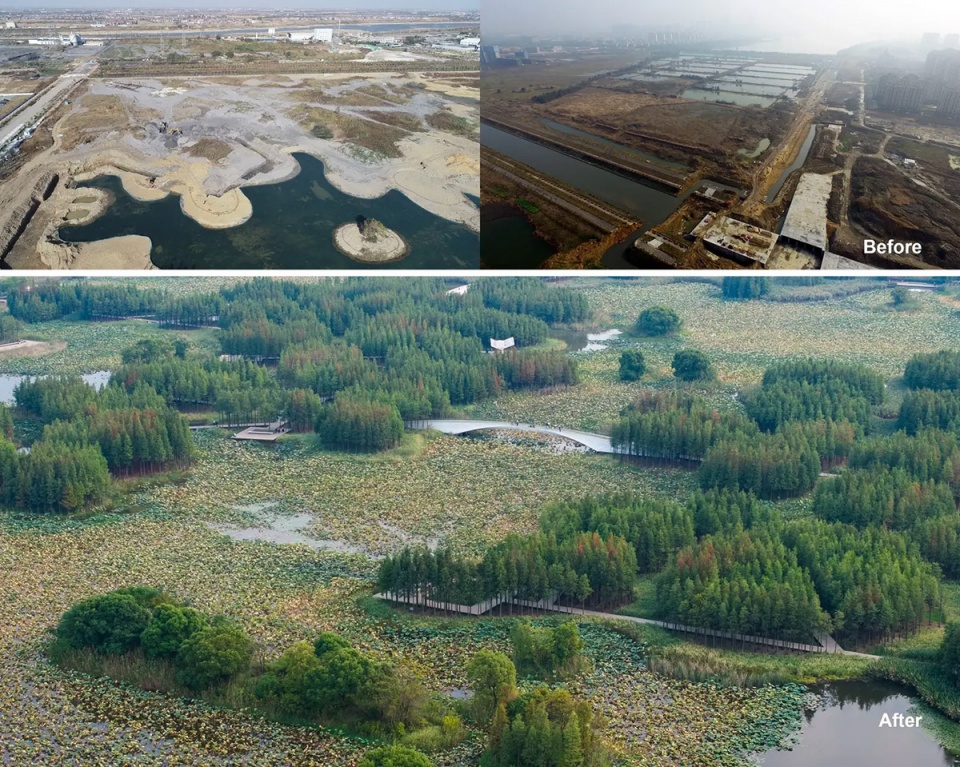
▲曾经污染严重的鱼塘,如今转变为一块可适应洪水的“海绵”,在调节水文系统、支持野生生物的同时提供充满活力的公共空间。Once a polluted fish farm, now a flood-adaptive sponge that regulates water, supports wildlife, and provides dynamic public space. ©土人设计
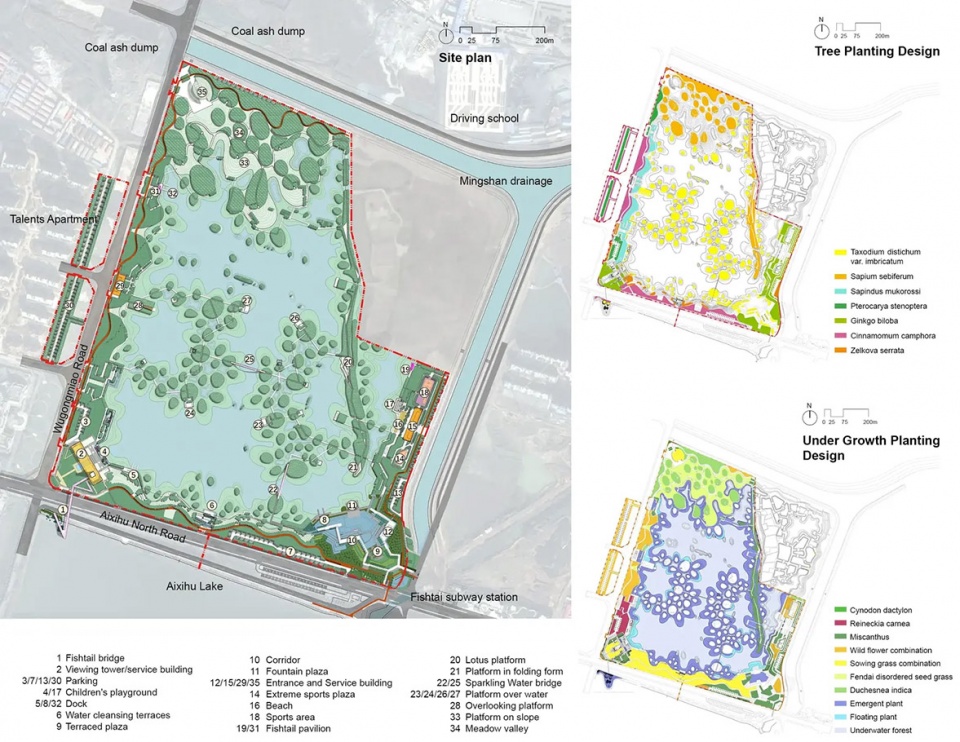
▲受湿地农耕方式启发,通过挖填结合的方式塑造了80余座岛屿,并种植多样化的本土耐洪植物。Inspired by marsh farming, 80+ islets were shaped using cut-and-fill techniques and planted with diverse native flood-resilient species. ©土人设计
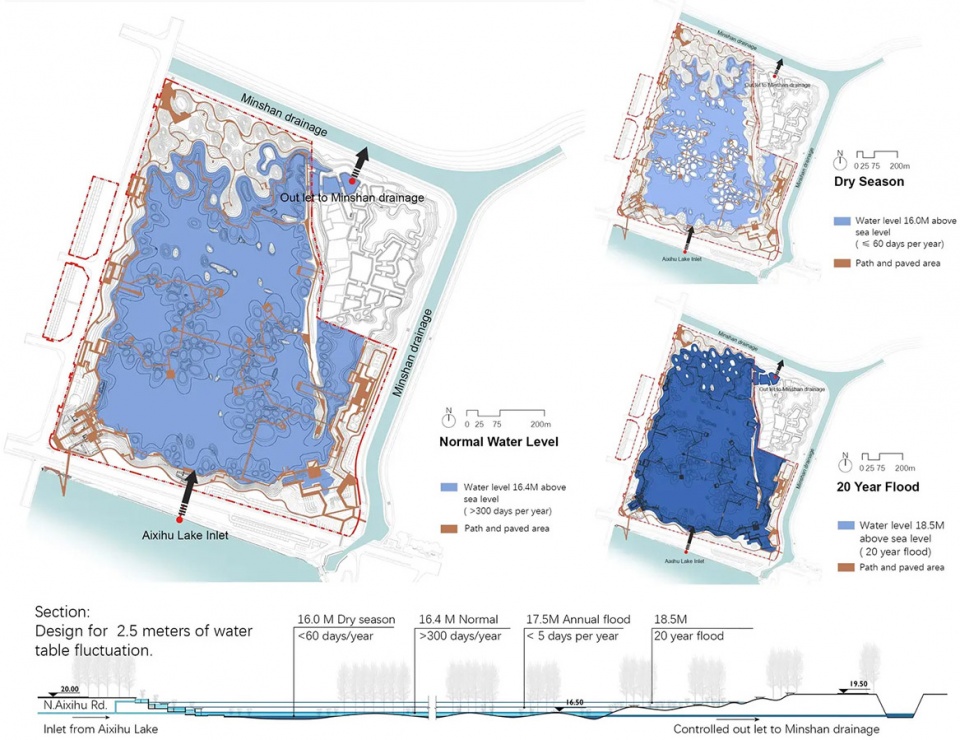
▲回收利用的粉煤灰与堤坝土壤共同构建湖体与岛屿系统,可调蓄100万立方米水量,适应最高2.5米的水位变化。Recycled coal ash and dike soil formed a lake with islets, regulating 1M m³ of water and adapting to 2.5m water-level fluctuations. ©土人设计
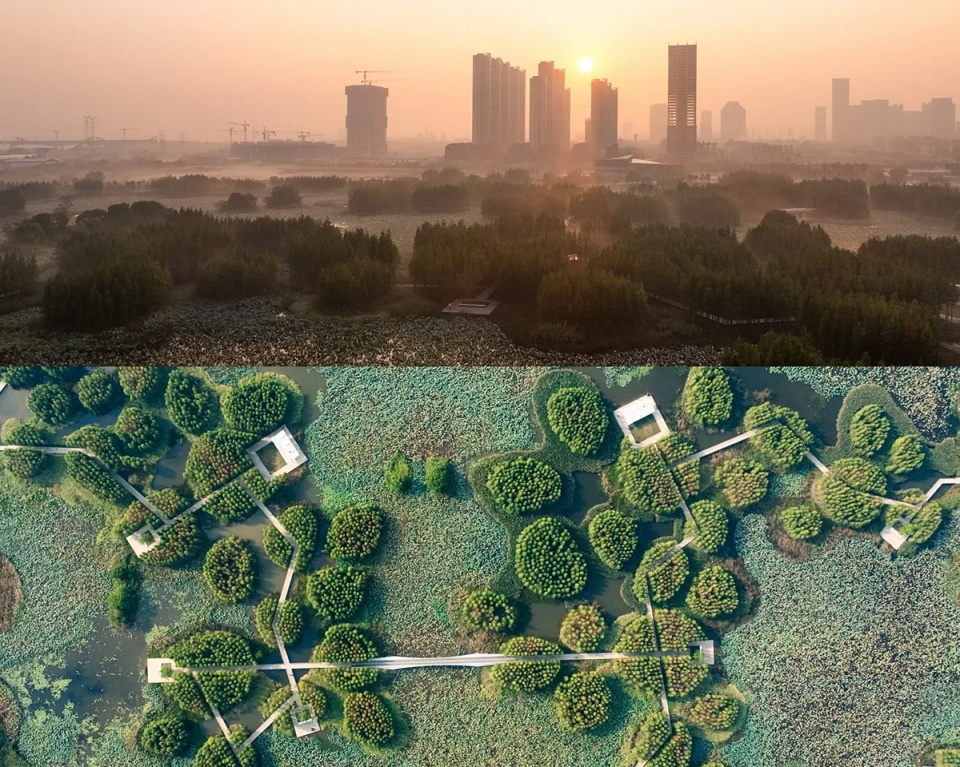
▲荷花点缀的湖面与薄雾缭绕的森林景观能够为城市降温,有效缓解热岛效应。Poetic views of lotus-filled lakes and misty forests help cool the city, reducing the urban heat island effect. ©土人设计
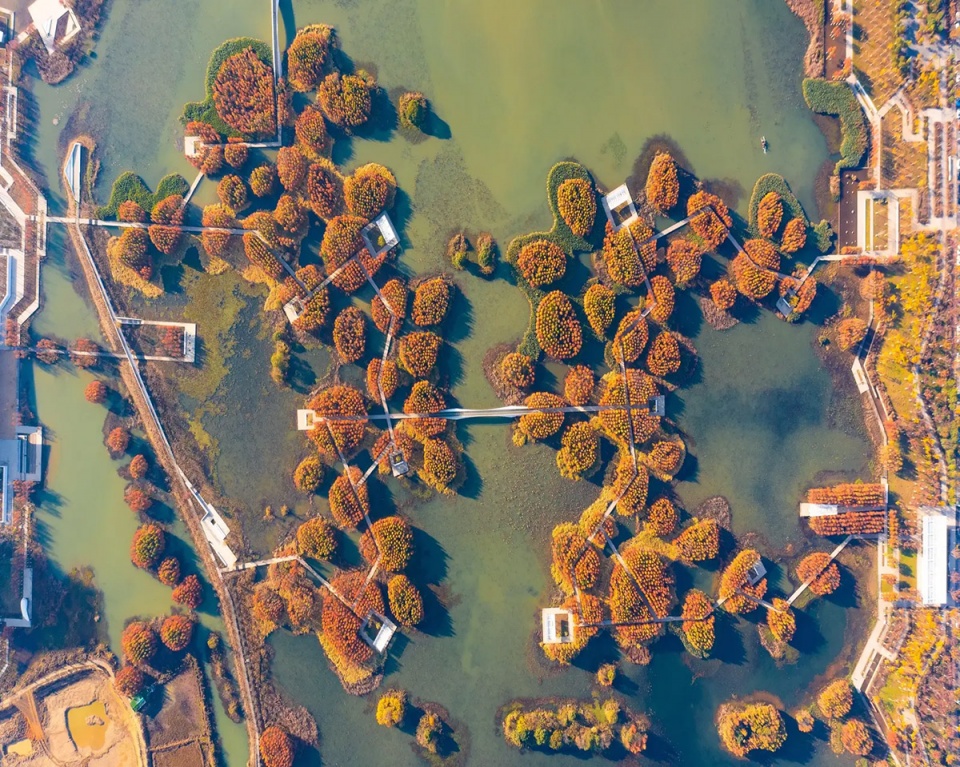
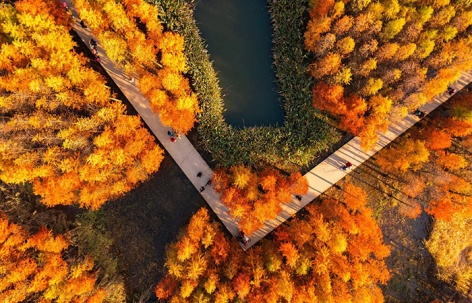
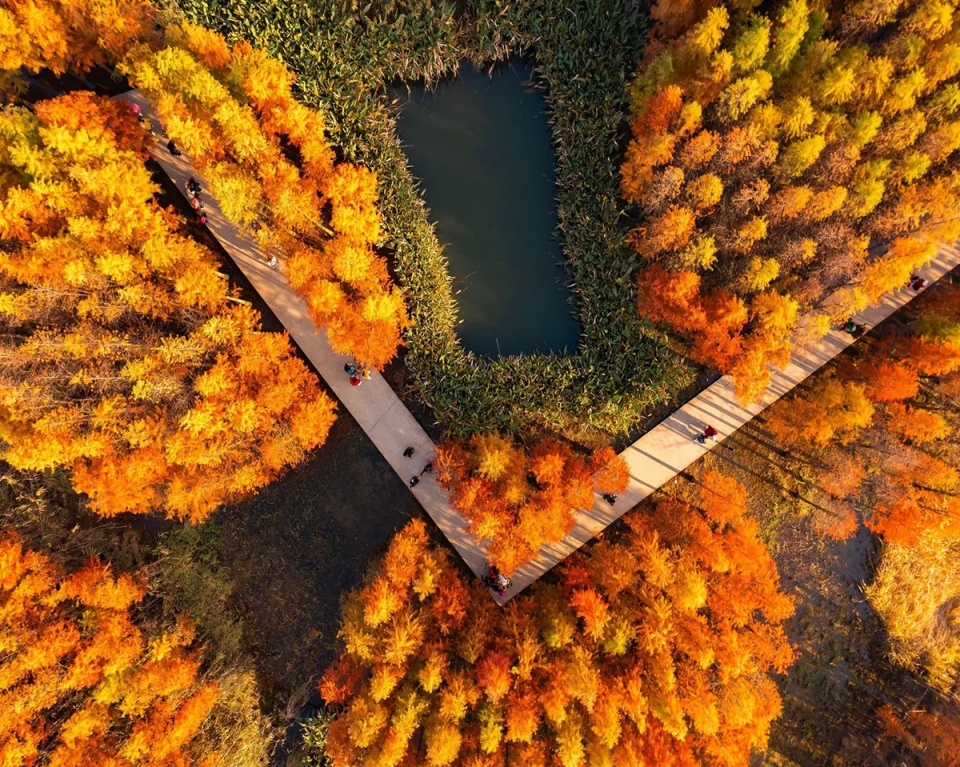
▲设计选用落羽杉属与水杉等耐淹树种,兼顾季相变化、生态功能与地域文化特征。Flood-resilient trees—Taxodium species and Metasequoia—were chosen for seasonal color, ecological benefits, and their regional significance. ©土人设计
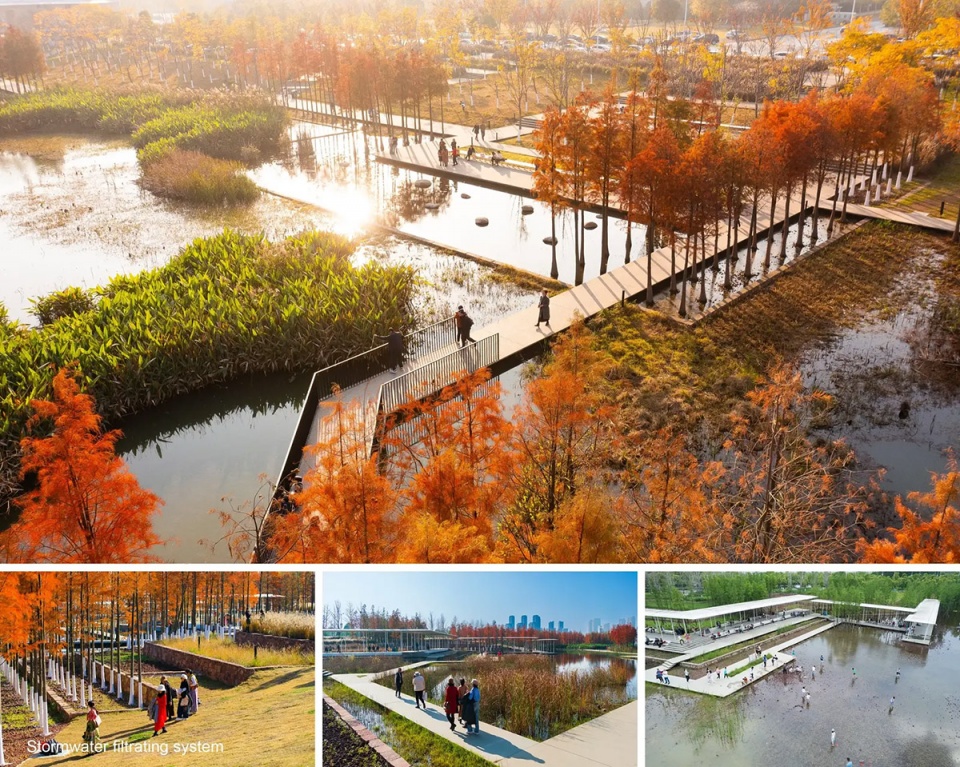
▲阶梯式湿地与生态植草沟过滤雨水径流,在公园边缘营造出兼具生态功能与活力的滨水空间。Terraced wetlands and bioswales filter stormwater, creating a vibrant, ecologically functional waterfront at the periphery. ©土人设计
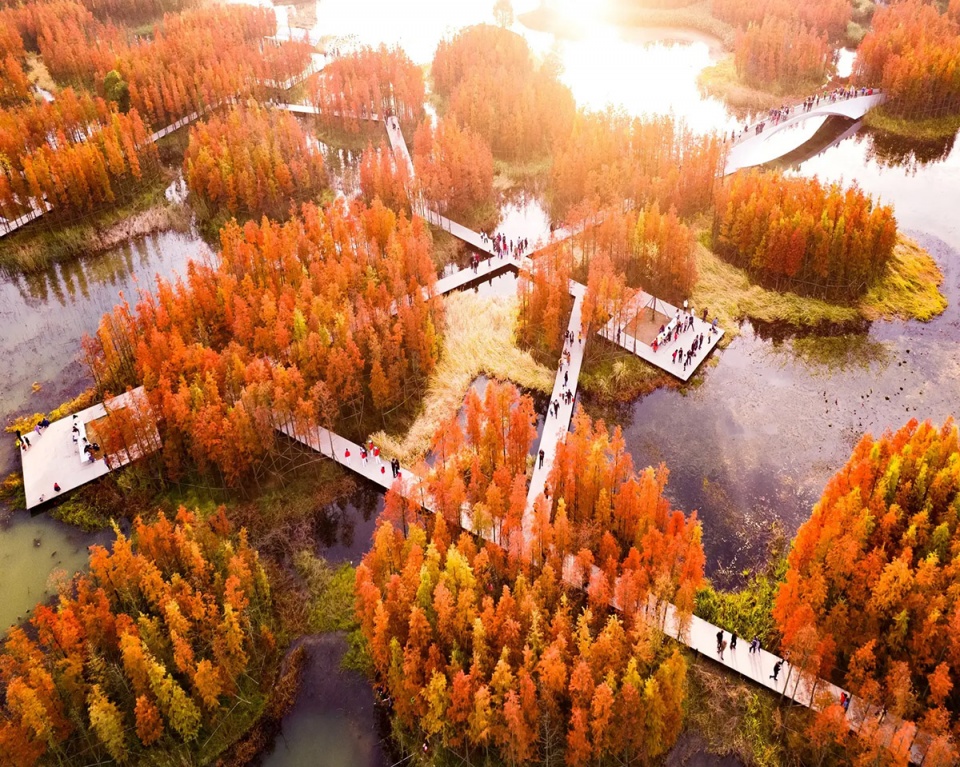
▲穿行于漂浮森林中的栈道在季风洪水期间浸入水面,强化人与水体之间的动态关系。Boardwalks weave through the floating forest, designed to submerge in monsoons and enhance the land-water relationship. ©土人设计
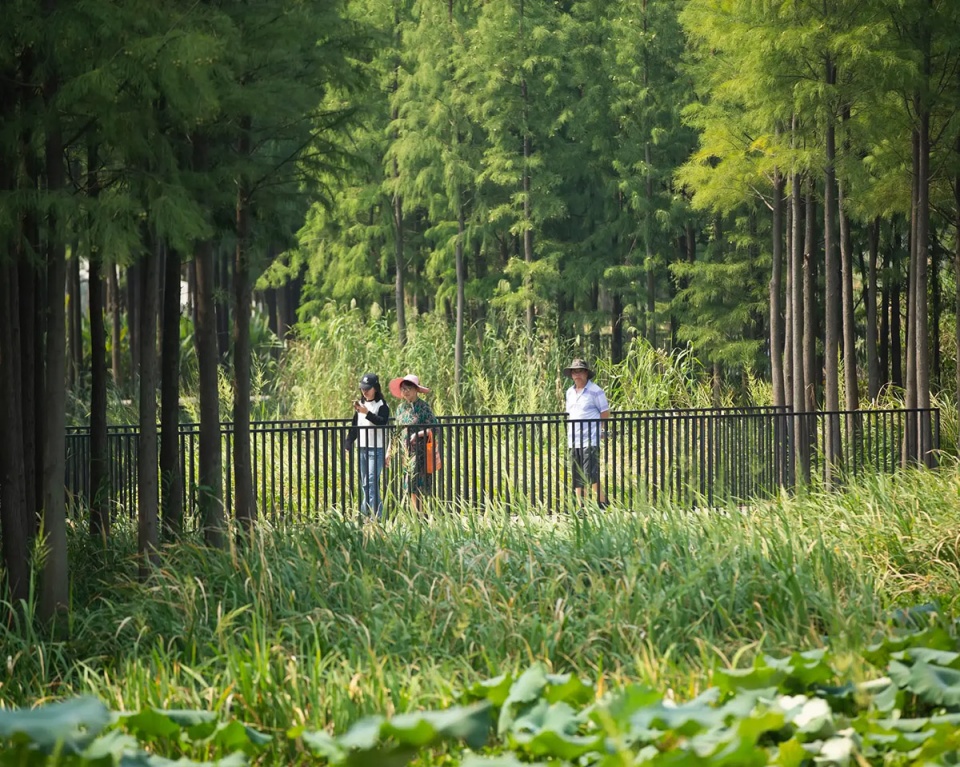
▲挺水、浮水与沉水植物共同覆盖泥质岸线,促进生态系统的自我维持与演替。A mix of emergent, floating, and underwater plants covers muddy shorelines, fostering a self-sustaining ecosystem. ©土人设计
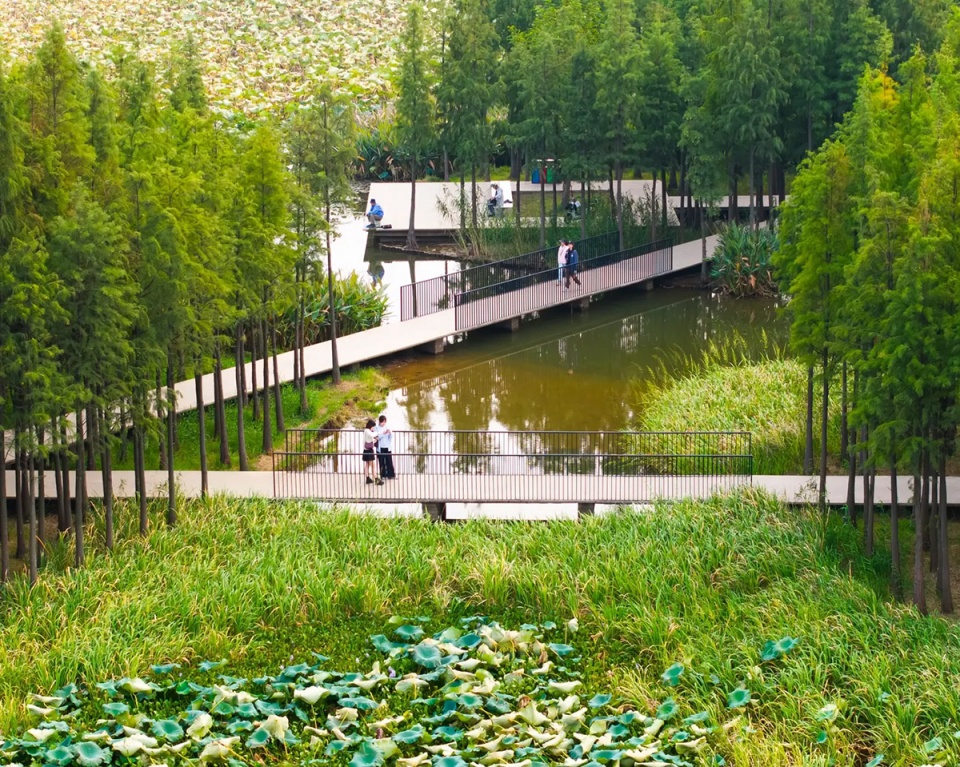
▲桩基预制混凝土栈道在保证耐久性的同时,最大限度降低对环境的影响。Prefabricated concrete boardwalks on piles ensure durability while minimizing environmental impact. ©土人设计
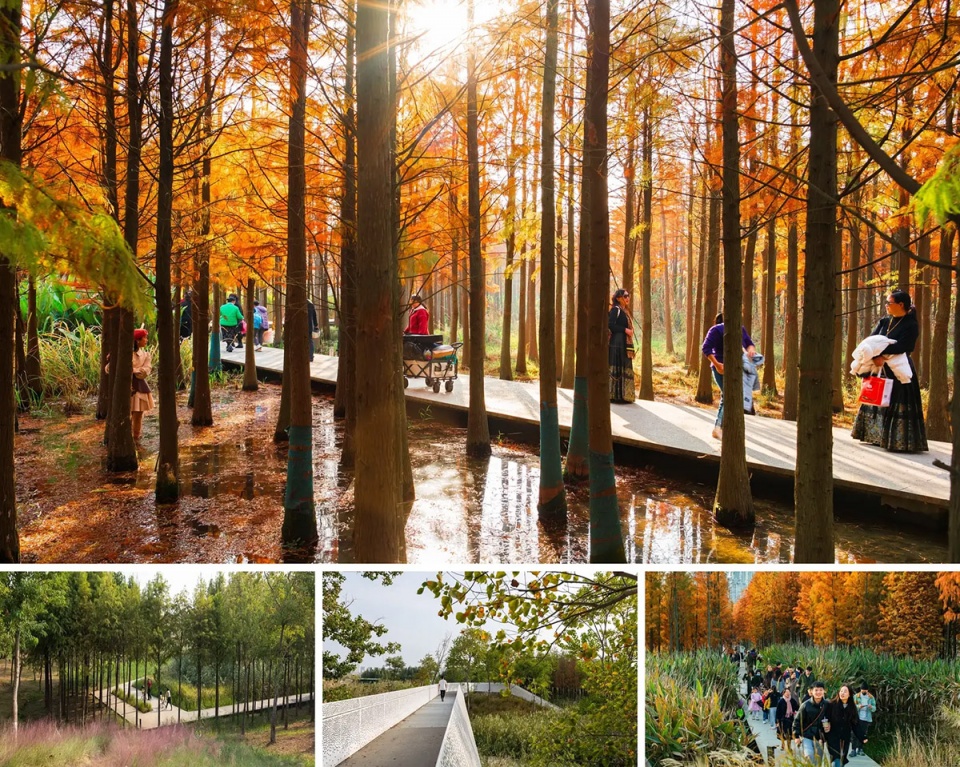
▲步道自然融入野化景观,让植被沿路径生长,形成连续而沉浸的感官体验。Pathways blend into rewilded nature, allowing vegetation to grow alongside for a seamless sensory experience. ©土人设计
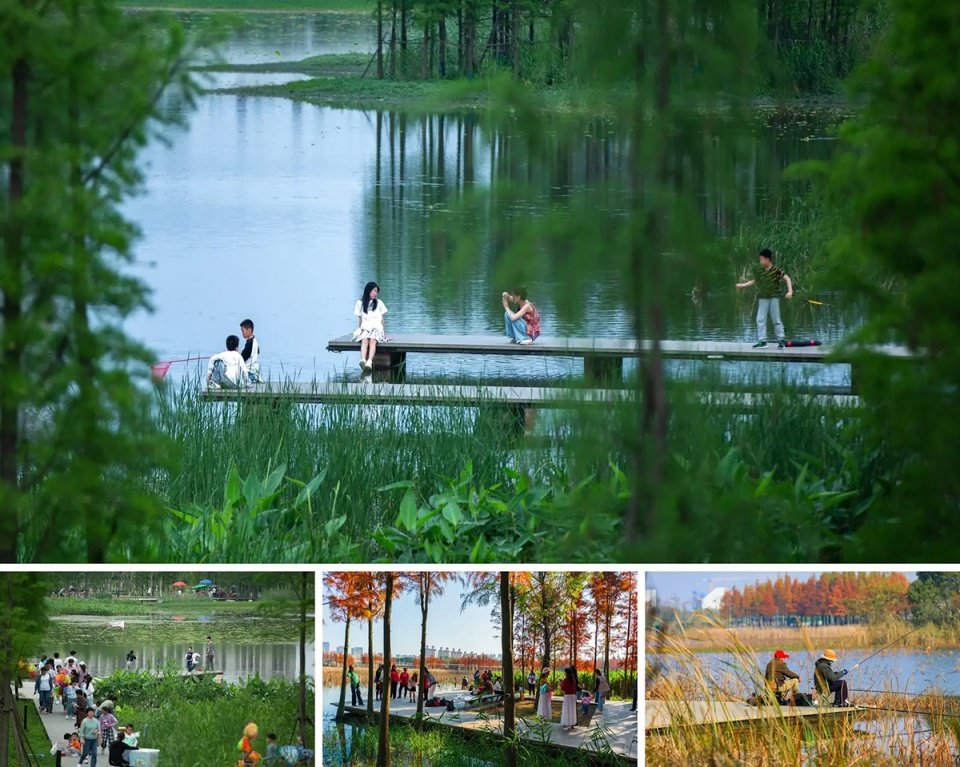
▲场地可容纳慢跑、垂钓、摄影、舞蹈及儿童自然教育等多样活动。Spaces accommodate jogging, fishing, photography, dancing, and children’s nature education. ©土人设计
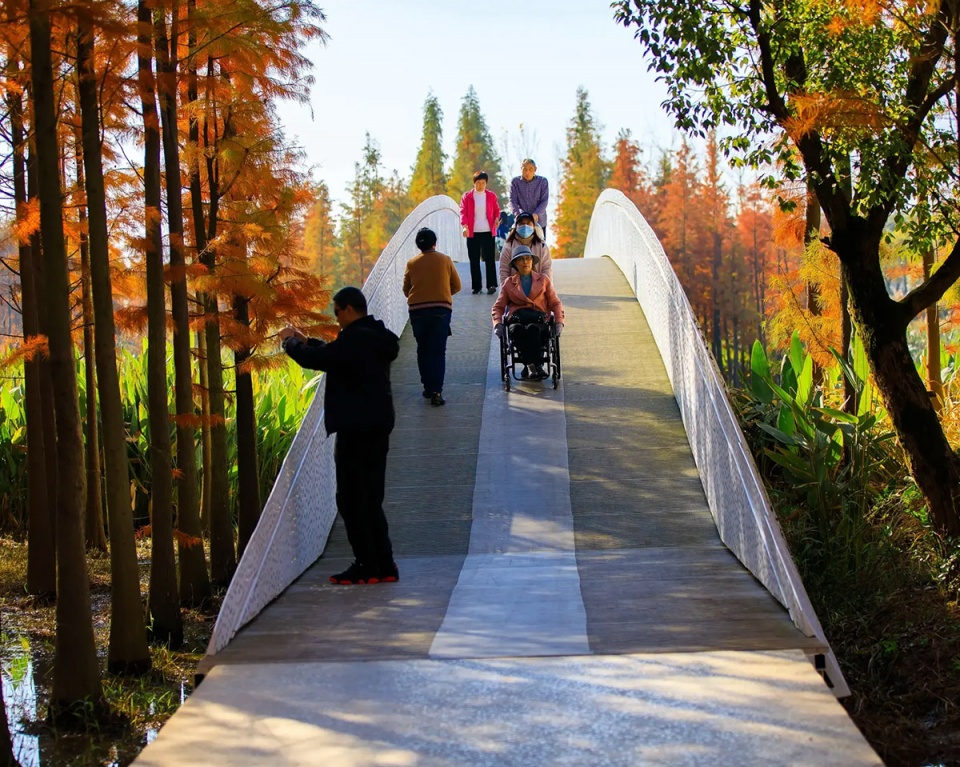
▲无障碍栈道与缓坡桥梁,确保不同人群均可轻松抵达湖景空间。Accessible boardwalks and a gently sloping bridge ensure inclusive access to scenic lake views. ©土人设计
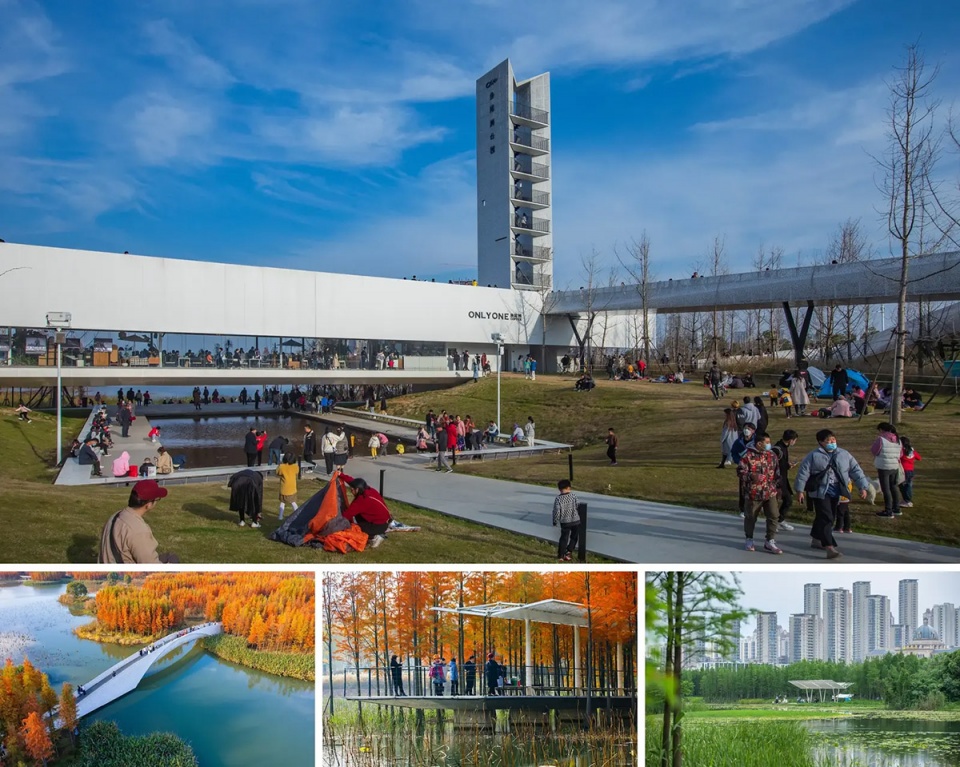
▲桥梁、亭廊与观景塔框定重要视线节点,入口处的咖啡馆与观景塔共同形成标志性界面。Bridges, pavilions, and viewing towers frame key vistas, with a café and tower marking the entrance. ©土人设计
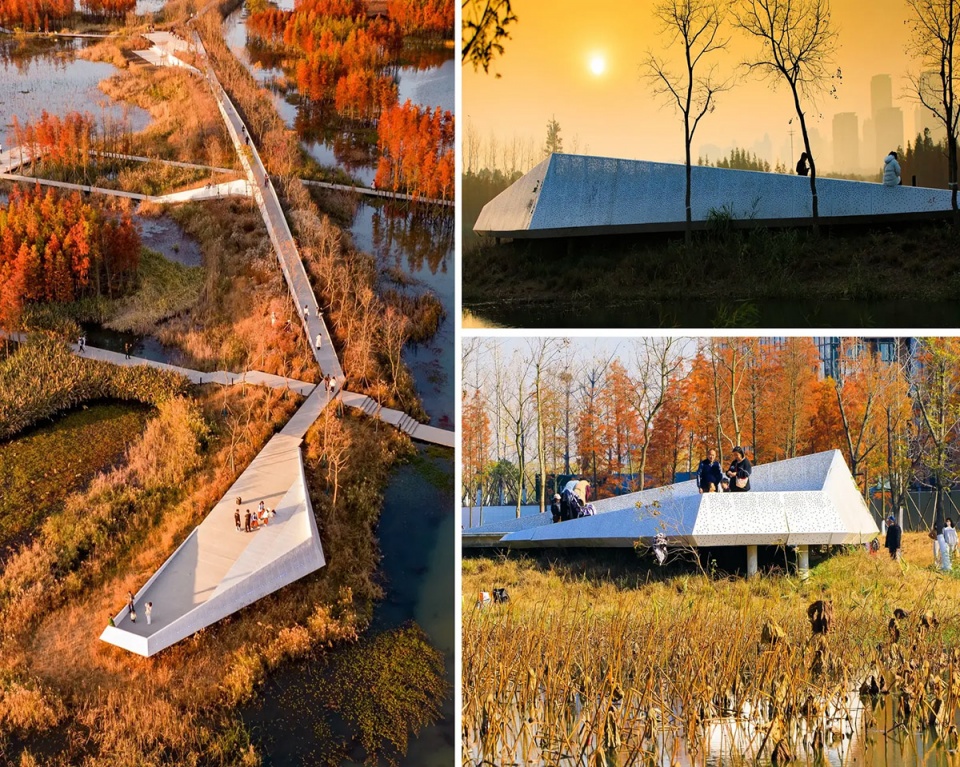
▲穿孔铝材质的漂浮平台在自然背景中形成对比,同时提升了空间可达性。A floating platform with perforated aluminum contrasts nature while enhancing accessibility. ©土人设计
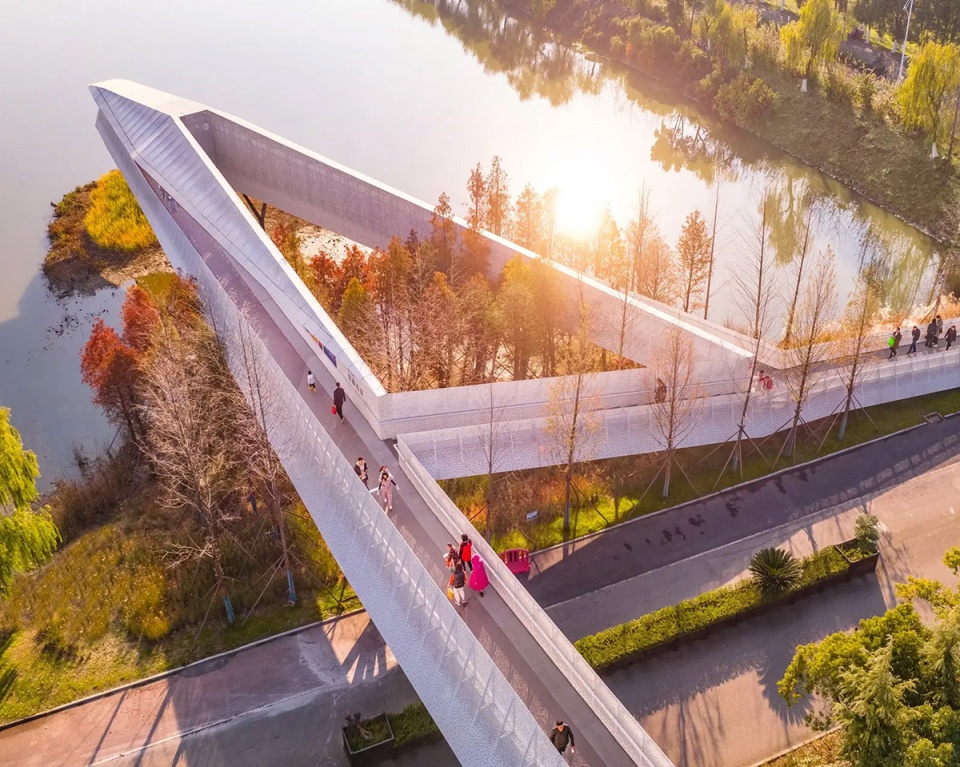
▲人行天桥将公园与艾溪湖公园相连,实现与城市公共空间系统的整合。A pedestrian overpass links the park to Aixi Lake Park, integrating it with the city. ©土人设计
PROJECT NARRATIVE
1. Site Challenges and Objectives
Nanchang, Jiangxi Province, faces chronic monsoon flooding, urban runoff pollution, and habitat degradation due to rapid development. The 126-acre site, a former fish farm and coal ash dumping ground, required an innovative approach to transform it into a resilient urban park that integrates flood management, water purification, and biodiversity restoration while serving as a recreational hub and a catalyst for surrounding development.
2. Design Strategy: A Forest on Water
2.1 Transform an Urban Dumping Ground into an Island-Jeweled Lake
By recycling coal ash with pond soil, we created over 80 islets that enhance land-water interactions, promote biodiversity, and naturally filter pollutants. A 1-million-cubic-meter-capacity lake buffers stormwater surges while supporting aquatic habitats.
2.2 A Flood-Adapted Forest: The Heart of the Park
Inspired by Poyang Lake’s marshlands, we planted water-resilient trees like Taxodium distichum and Metasequoia glyptostroboides, supplemented with wetland plants to stabilize shorelines. Lotus plants provide additional ecological benefits, fostering a self-sustaining environment.
2.3 Stormwater Filtration and Recreational Waterfront at the Periphery
The central forest, submerged during monsoons, creates an immersive marsh experience, while the park’s periphery accommodates 20-year flood events. Public amenities include natural playgrounds, beaches, fountains, and terraced wetlands that filter urban runoff.
2.4 Framing “Messy Nature”: A Weaving Boardwalk for Immersive Experience
A network of pedestrian paths and platforms offers deep engagement with nature. The boardwalk, designed to submerge during floods, fosters a dynamic relationship between visitors and the changing waterscape. Floating or elevated structures ensure resilience and easy maintenance post-flooding.
2.5 Sculpting Space: Modern Structures in a Natural Landscape
Bridges, pavilions, and viewing towers, crafted from perforated aluminum, contrast with the wild landscape while framing key vistas and creating moments of seeing and to be seen. The park’s entrance integrates a café with an overpass, enhancing accessibility and experience.
3. Achievement
Built on a modest $4/sq. ft. budget, Fish Tail Park has transformed a polluted wasteland into a thriving urban oasis. It regulates stormwater, supports wildlife, and has become one of Nanchang’s most-visited parks, boosting the New District’s identity and spurring development. Now a landmark stop on the city’s subway system, the park exemplifies scalable urban ecological resilience.




这次去南昌旅游专门去看了,很舒服的设计,效果很好,就算是工作日也有很多人在里面散步休息,不过很可惜的是观景塔关闭了,本来想上去看看全景的
从高纬度大格局出发来设计,最终效果很棒
DK
相当不错,蛮喜欢土人的设计