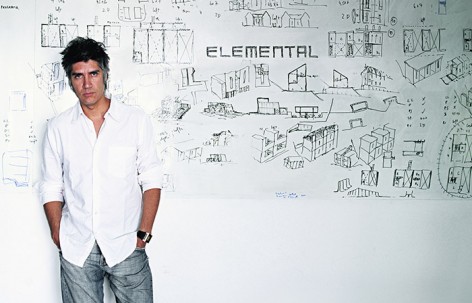
智利建筑师Alejandro Aravena赢得2016年Pritzker奖。
Alejandro Aravena曾经给gooood分享过他领衔的ELEMENTAL的代表作品UC Innovation Center,纯粹就是永恒,UC创新中心 (点击蓝色链接看完整项目报道)
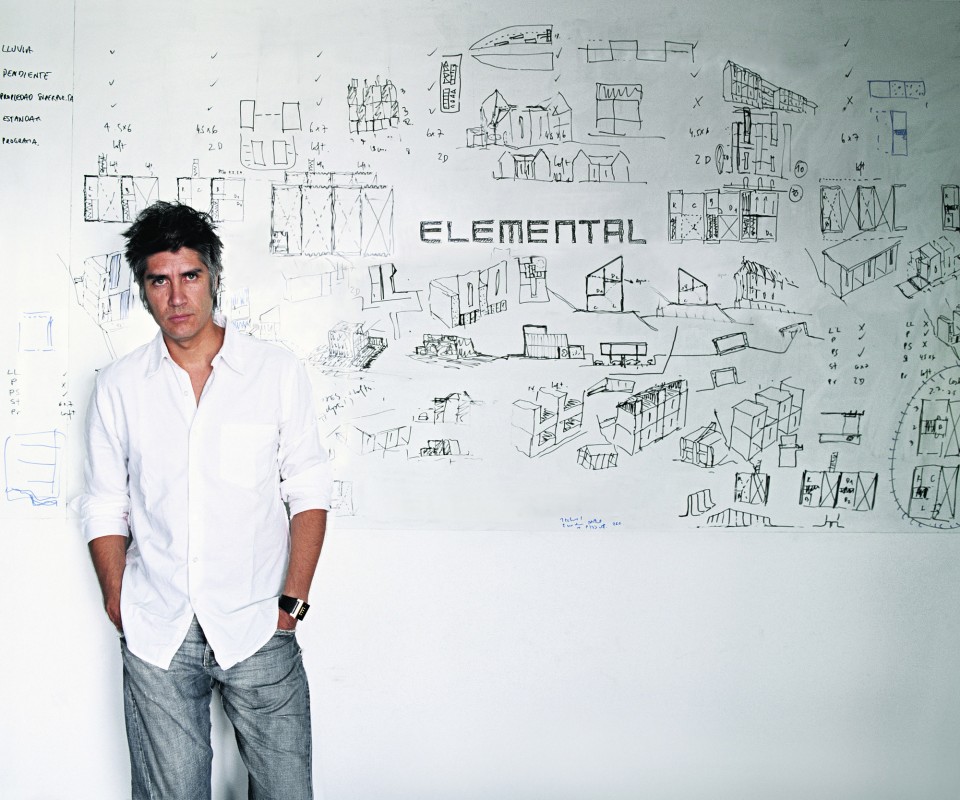
△ 亚历杭德罗·阿拉维纳 摄影:克里斯托瓦尔·帕尔马 Alejandro Aravena Photo by Cristobal Palma
以下信息来自Pritzker奖官方的分享:
Appreciation towards Pritzker Prize for providing the following description:
智利建筑师亚历杭德罗·阿拉维纳荣获2016年普利兹克建筑奖
Alejandro Aravena of Chile receives the 2016 Pritzker Architecture Prize
无论是私人委托,还是公共项目,他在建筑的设计上时刻不忘对艺术的追求,并成为更加注重社会参与的建筑学派复兴的典范。
2016年1月13日, 美国伊利诺伊州芝加哥:普利兹克建筑奖暨凯悦基金会主席汤姆士·普利兹克今天宣布,智利建筑师亚历杭德罗·阿拉维纳荣获2016年普利兹克建筑奖。普利兹克建筑奖是国际上公认的建筑界最高荣誉。正式颁奖典礼将于2016年4月4日在纽约联合国总部举行。
现年48岁的阿拉维纳是一名智利圣地亚哥的建筑师。他是第41位普利兹克建筑奖得主,并成为首位赢得普利兹克奖的智利人,也是第四位来自拉丁美洲的获奖者,在他之前,路易斯·巴拉甘(1980年)、奥斯卡·尼迈耶(1988年)和保罗·门德斯·达·洛查(2006年)曾经获此殊荣。
He practices architecture as an artful endeavor in private commissions and in designs for the public realm and epitomizes the revival of a more socially engaged architect.
Chicago, IL (January 13, 2016) — Alejandro Aravena of Chile has been selected as the 2016 Pritzker Architecture Prize Laureate, Tom Pritzker announced today. Mr. Pritzker is Chairman and President of The Hyatt Foundation, which sponsors the prize. The formal award ceremony for what has come to be known internationally as architecture’s highest honor will be at United Nations Headquarters in New York on April 4, 2016.
The 48-year-old Aravena is an architect based in Santiago, Chile. He becomes the 41st laureate of the Pritzker Prize, the first Pritzker Laureate from Chile, and the fourth from Latin America, after Luis Barragán (1980), Oscar Niemeyer (1988), and Paulo Mendes da Rocha (2006).
普利兹克先生表示:“评审团选出了一位令我们深刻理解什么是真正伟大的设计的建筑师。亚历杭德罗·阿拉维纳首倡的协作方式设计创造了具有强大影响力的建筑作品,同时也回应了21世纪的重要挑战。他的建造工程让弱势阶层获得了经济机会,缓和了自然灾害的恶劣影响,降低了能源消耗,并提供了令人舒适的公共空间。富于创新和感召力的他为我们示范了最好的建筑能够怎样改善人们的生活。”
阿拉维纳曾为圣地亚哥久负盛名的智利天主教大学设计了一系列杰出建筑,其中包括UC创新中心-阿纳克莱托·安西里尼(2014年)、连体塔楼(2005年)、医学院(2004年)、建筑学院(2004年)和数学学院(1999年)。这些节能建筑采用创新型高效外墙和楼层设计来应对当地的气候条件,并为使用者提供自然光照明和欢快的聚会场所。他的作品还包括目前正在中国上海兴建的诺华公司办公楼,其办公空间的设计能够适应不同的工作模式——如个体或集体,正式或非正式等。在美国,阿拉维纳曾为得克萨斯州奥斯汀的圣爱德华大学设计了学生宿舍(2008年)。
自2001年以来,阿拉维纳一直担任圣地亚哥ELEMENTAL公司的执行董事,该公司被誉为“行动库”而非“思想库”,其合伙人包括贡萨洛·阿特亚加、胡安·塞尔达、维克多·奥多和迭戈·托雷斯。ELEMENTAL专注于涉及公共利益和具有社会影响的项目,涵盖住房、公共空间、基础设施和交通运输等领域。ELEMENTAL曾设计过2500多套价格低廉的社会保障住房。该公司的特点是采用建筑师与公众和最终用户紧密合作的参与式设计流程。ELEMENTAL还以其称之为“半成品好房子”的社会保障住房设计而著称,它在设计上为居住者留出空间,让他们自己动手加以完善,从而将生活水平提高到中产阶级标准。这种创新的方法又被称为“增量住房”,允许在较为昂贵的土地上建造更加接近就业机会的社会保障住房,并培养居住者的成就感和个人投资意识。
Mr. Pritzker said, “The jury has selected an architect who deepens our understanding of what is truly great design. Alejandro Aravena has pioneered a collaborative practice that produces powerful works of architecture and also addresses key challenges of the 21st century. His built work gives economic opportunity to the less privileged, mitigates the effects of natural disasters, reduces energy consumption, and provides welcoming public space. Innovative and inspiring, he shows how architecture at its best can improve people’s lives.”
Aravena has completed remarkable buildings at the esteemed Universidad Católica de Chile in Santiago, including the UC Innovation Center – Anacleto Angelini (2014), the Siamese Towers (2005), Medical School (2004), School of Architecture (2004), and the Mathematics School (1999). These energy-efficient buildings respond to the local climate with innovative, efficient facades and floor plans and offer the users natural light and convivial meeting places. Currently under construction in Shanghai, China, is an office building for healthcare company Novartis, with office spaces designed to accommodate different modes of work — individual, collective, formal and informal. In the United States, Aravena has built St. Edward’s University Dorms (2008) in Austin, Texas.
Since 2001, Aravena has been executive director of the Santiago-based ELEMENTAL, a “Do Tank,” as opposed to a think tank, whose partners are Gonzalo Arteaga, Juan Cerda, Victor Oddó, and Diego Torres. ELEMENTAL focuses on projects of public interest and social impact, including housing, public space, infrastructure, and transportation. ELEMENTAL has designed more than 2,500 units of low-cost social housing. A hallmark of the firm is a participatory design process in which the architects work closely with the public and end users. ELEMENTAL is also known for designing social housing that they call “half of a good house,” in which the design leaves space for the residents to complete their houses themselves and thus raise themselves up to a middle-class standard of living. This innovative approach, called “incremental housing,” allows for social housing to be built on more expensive land closer to economic opportunity and gives residents a sense of accomplishment and personal investment.
在得知获得2016年普利兹克建筑奖之后,阿拉维纳先生在电子邮件中写道:“回顾过去,我们深深感到庆幸。没有任何成就是归属个人的,建筑设计是一项集体协作的学科。因此,我们对所有为这些千差万别的力量赋予形式而做出贡献的人表示感谢。展望未来,我们预见到的是自由!这一奖项的声望、影响和庄严是如此崇高,我们希望以它为动力,探索新的领域、面对新的挑战、展开新的行动。登上这座高峰之后的路径尚待开拓。所以我们的计划是不制定具体计划,直面其中的不确定性,敞开心胸接受所有不期而至的东西。最后,着眼当下,我们感到喜不自胜,幸福满怀。这是欢庆的时刻,我们希望与尽可能多的人分享我们的喜悦。”
In response to being named the 2016 Laureate of the Pritzker Architecture Prize, Mr. Aravena emailed: “Looking backwards, we feel deeply thankful. No achievement is individual. Architecture is a collective discipline. So we think, with gratitude, of all the people who contributed to give form to a huge diversity of forces at play. Looking into the future we anticipate Freedom! The prestige, the reach, the gravitas of the prize is such that we hope to use its momentum to explore new territories, face new challenges, and walk into new fields of action. After such a peak, the path is unwritten. So our plan is not to have a plan, face the uncertain, be open to the unexpected. Finally, looking at the present, we are just overwhelmed, ecstatic, happy. It’s time to celebrate and share our joy with as many people as possible.”
2016年普利兹克建筑奖评委会在评审辞中写道:“无论在他的祖国还是在世界其它地区,亚历杭德罗·阿拉维纳为私人、公众和教育部门设计的建筑作品都达到了杰出的程度……他承担过不同规模的项目——从单户住宅到大型机构建筑……他不仅谙熟材料和施工,而且深知诗意和建筑力量对于多层面交流的重要性。”
阿拉维纳和ELEMENTAL公司共同设计了大都市步道(1997年至今)和200周年纪念儿童公园(2012年),两者都位于圣地亚哥。 2010年,地震和海啸袭击了智利,ELEMENTAL应邀参与孔斯蒂图西翁市的重建工作;他们的任务包括紧急救援、总体规划、绿屋(增量房,2013年),以及孔斯蒂图西翁文化中心(2014年)。其它作品包括智利圣地亚哥的蒙台梭利学校(2001年)、为德国莱茵河畔威尔市的维特拉公司设计“无椅方案”家具(2010年);墨西哥蒙特雷的蒙特雷住宅(增量房,2010年);墨西哥哈利斯科州的拉斯克鲁塞斯朝圣之路观景台(2010年);智利卡拉马市的卡拉马PLUS总体规划(2012年至今);瑞士蒙特里谢尔的让·米哈尔斯基基金会作家小屋(2015年);和智利兰卡瓜的Ayelén学校(2015年)等。
亚历杭德罗·阿拉维纳是2016年威尼斯建筑双年展的总监,展览名为“来自前线的报告”,预定于2016年5月开幕。
The 2016 Pritzker Architecture Prize Jury Citation states in part, “Alejandro Aravena has delivered works of architectural excellence in the fields of private, public and educational commissions both in his home country and abroad…. He has undertaken projects of different scales from single-family houses to large institutional buildings…. He understands materials and construction, but also the importance of poetry and the power of architecture to communicate on many levels.”
Aravena and ELEMENTAL have designed the Metropolitan Promenade (1997 – ongoing) and Bicentennial Children’s Park (2012), both in Santiago. After the 2010 earthquake and tsunami that hit Chile, ELEMENTAL was called to work on the reconstruction of the city of Constitución; their work there includes emergency relief work, a master plan, Villa Verde (incremental housing, 2013), and the Constitución Cultural Center (2014). Other works include a Montessori School (2001) in Santiago, Chile; “Chairless” furniture (2010) for Vitra in Weil am Rhein, Germany; Monterrey Housing (incremental housing, 2010) in Monterrey, Mexico; Las Cruces Pilgrim Lookout Point (2010) in Jalisco, Mexico; Calama PLUS master plan (2012 – ongoing) in Calama, Chile; Writer’s Cabin for the Jan Michalski Foundation (2015) in Montricher, Switzerland; and Ayelén School (2015) in Rancagua, Chile.
Alejandro Aravena is the Director of the Venice Architecture Biennale 2016, titled “Reporting from the Front,” set to open in May 2016.
普利兹克建筑奖评委会主席彼得·帕伦博勋爵表示,评委会参观阿拉维纳的项目时,由衷感到惊奇和广受启发;他们深知,这是创造伟大建筑的创新方式——最好的还在后头。帕伦博勋爵引用约翰·济慈作品《初读查普曼译荷马有感》的诗句表示,“斯托特·科尔特斯鸟瞰着太平洋,而普利兹克评委会则感觉自己好像从空中观看一颗新生行星游入自己同类的行列:虽然达连峰顶并不安静,但他们面面相觑,充满疑惑,迷住了,惊呆了,被亚历杭德罗·阿拉维纳的作品和金色的未来前景倾倒了。”
The Chair of the Jury of the Pritzker Architecture Prize, Lord Peter Palumbo, said that, as the jury visited Aravena’s projects, they felt a sense of wonder and revelation; they understood that his is an innovative way of creating great architecture, with the best yet to come. Referencing John Keats’ poem “On First Looking into Chapman’s Homer,” Lord Palumbo said, “Stout Cortez stared at the Pacific with eagle eyes, whilst the Pritzker jury felt like some watcher of the skies when a new planet swims into his ken: And although not silent upon a peak in Darien, they looked at each other with a wild surmise, captivated, stunned, and overwhelmed by the work of Alejandro Aravena and the promise of a golden future.”
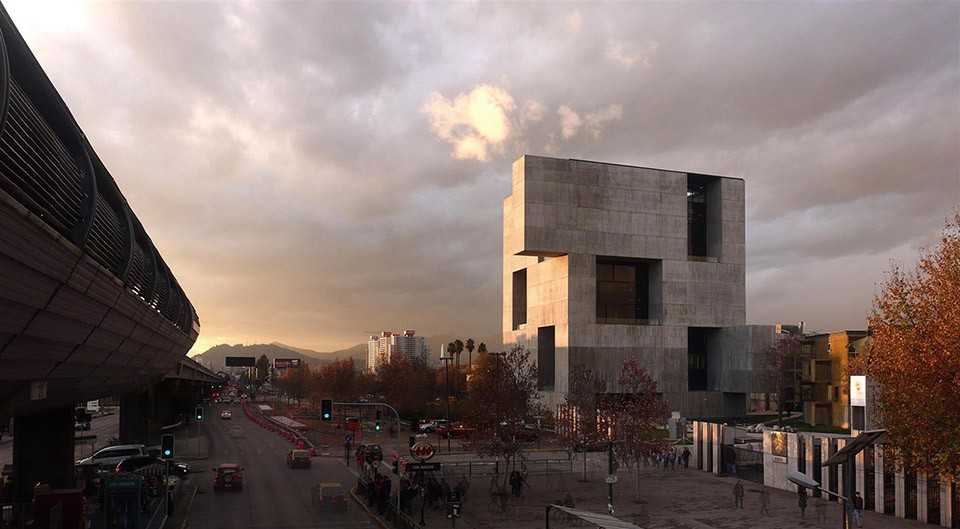
△ 智利天主教大学UC创新中心 – 阿纳克莱托·安吉里尼,2014年,圣华金校区, 智利圣地亚哥 (点击蓝色链接可看项目报道)
UC Innovation Center – Anacleto Angelini, 2014, San Joaquín Campus, Universidad Católica de Chile, Santiago, Chile ,Photo by Nina Vidic
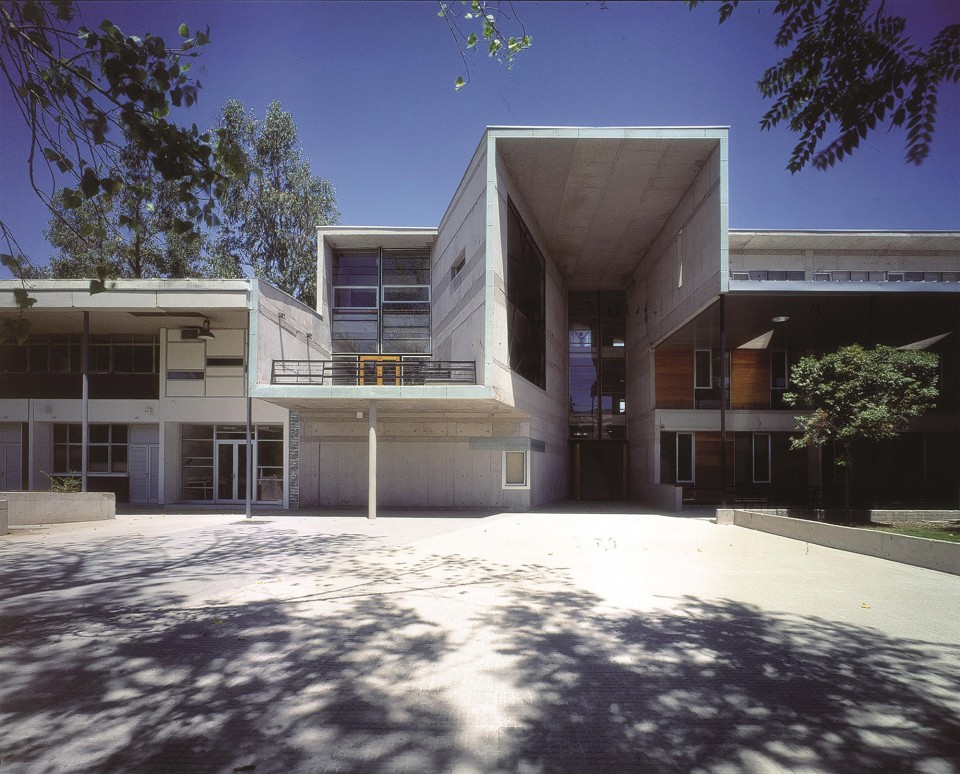
△ 智利天主教大学数学学院,1999年,智利圣地亚哥
Mathematics School, 1999, Universidad Católica de Chile, Santiago, Chile ,Photo by Tadeuz Jalocha
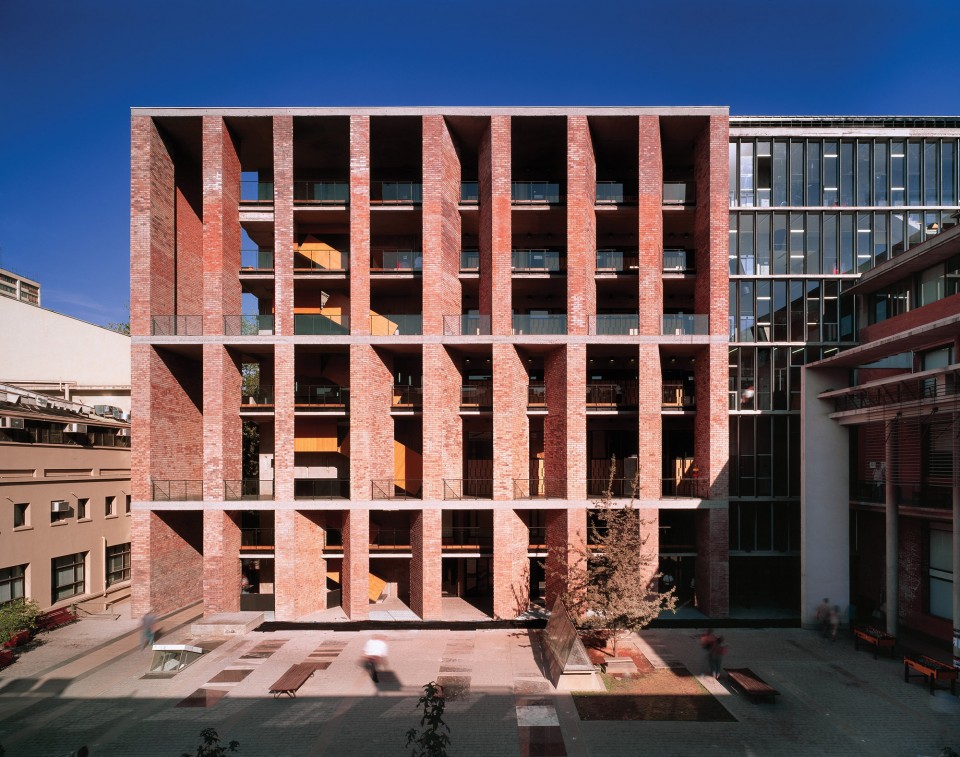
△ 智利天主教大学医学院,2004年,智利圣地亚哥
Medical School, 2004, Universidad Católica de Chile, Santiago, Chile , ©ROLAND HALBE
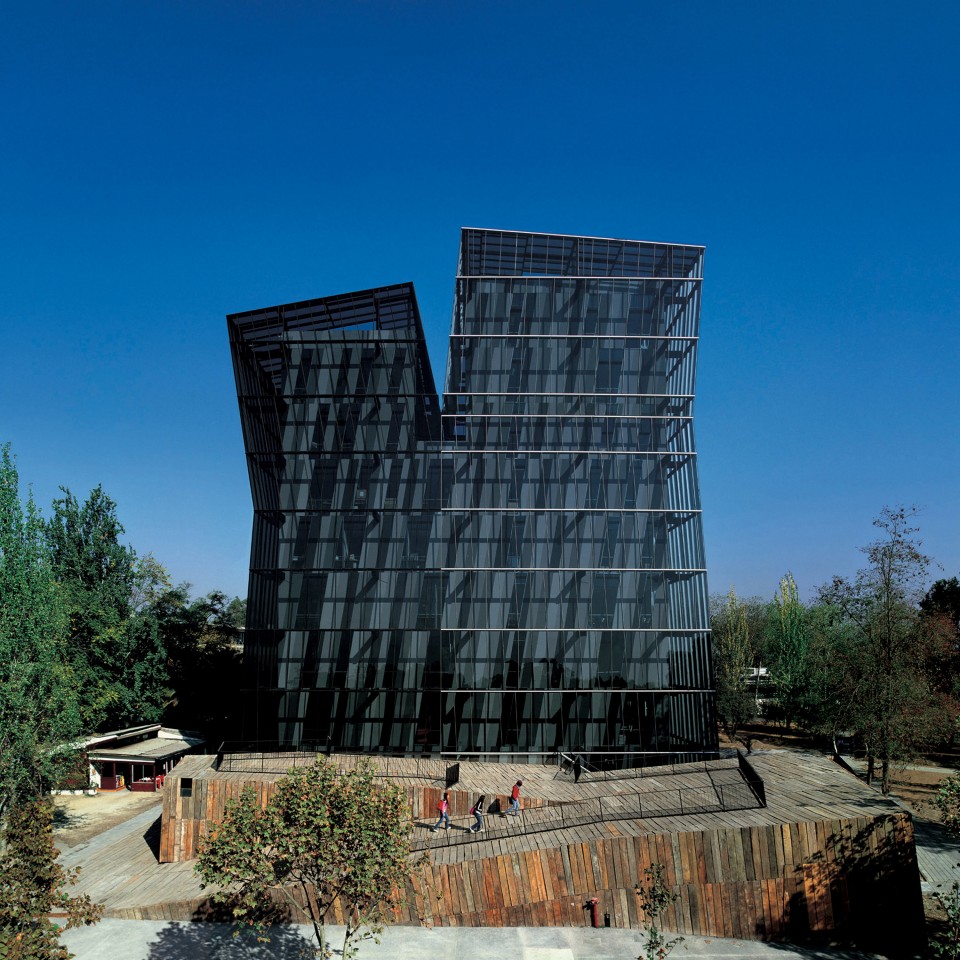
△ 智利天主教大学连体塔楼,2005年,圣华金校区, 智利圣地亚哥, 大学教室和办公室
Siamese Towers, 2005, San Joaquín Campus, Universidad Católica de Chile, Santiago, Chile, University classrooms and offices ,Photo by Cristobal Palma
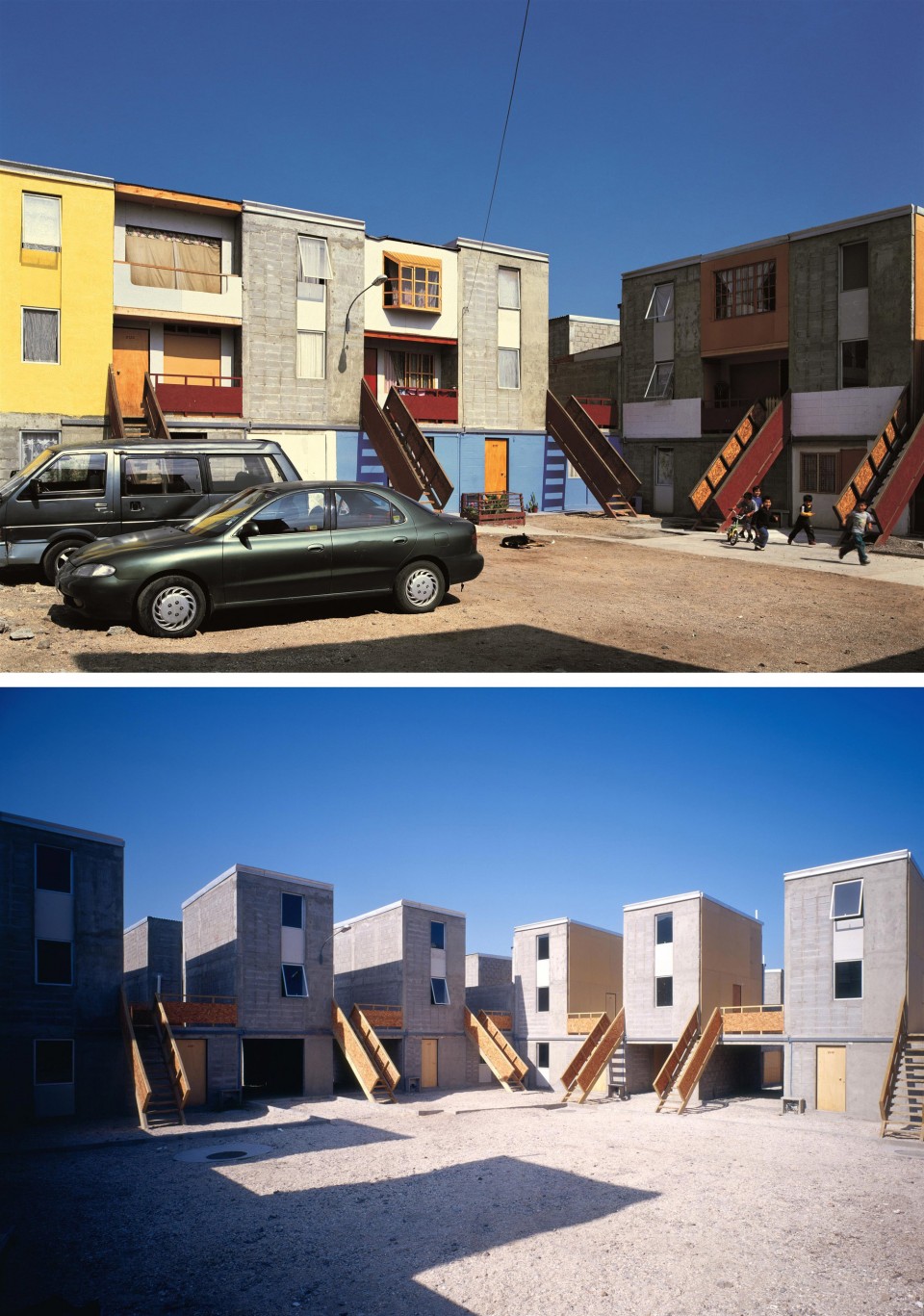
△ 金塔蒙罗伊住宅,2004年,智利伊基克
摄影:克里斯托瓦尔·帕尔马 ——上图:居民自己动手实现的中产阶层生活标准, 下图:得到财政资金支持的“半成品房子”
Quinta Monroy Housing, 2004, Iquique, Chile ,Photos by Cristobal Palma — Top: An example of middle-class standard achieved by the residents themselves. Bottom: An example of “half of a good house” financed with public money.
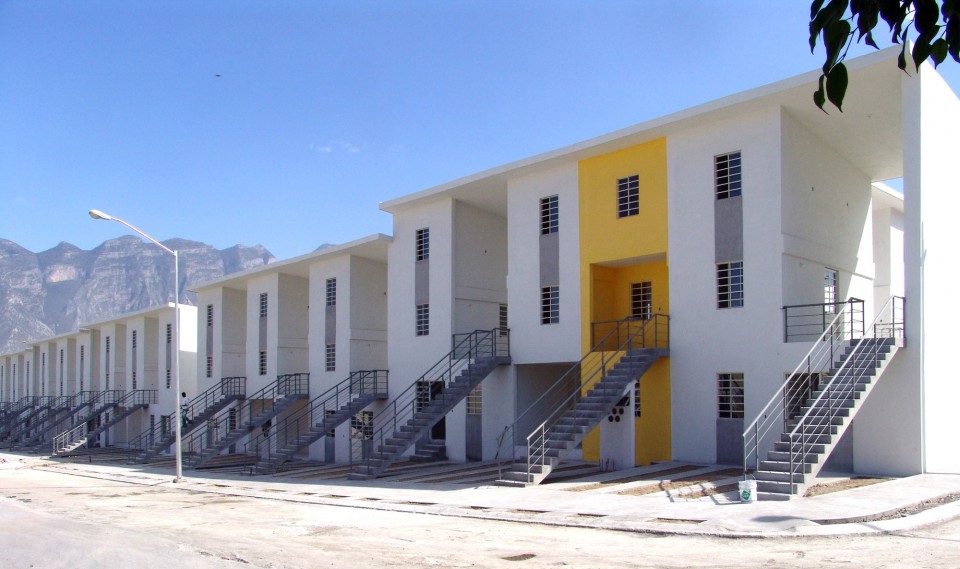
△ 蒙特雷住宅,2010年,墨西哥蒙特雷
摄影:拉米罗·拉米雷斯, 居民自己动手实现的中产阶层生活标准的案例之一
Monterrey Housing, 2010, Monterrey, Mexico ,Photo by Ramiro Ramirez — An example of middle-class standard achieved by the residents themselves.
评语
Jury Citation
亚历杭德罗·阿拉维纳引领着能够全面理解建造环境的新一代建筑师,并清晰地展现了自己融合社会责任、经济需求、居住环境和城市设计的能力。很少有人能像他一样,将人们对建筑实践需求上升到对艺术追求的高度,同时应对当今社会和经济挑战。阿拉维纳在他的家乡智利实现了上述两方面的目标,并以十分有意义的方式扩大了建筑师的作用。
阿拉维纳出生于1967年,自1994年执业至今,展现出始终如一的清晰愿景和高超技巧。他曾为自己的母校智利天主教大学设计了多座建筑,其中包括数学学院(1998年)、医学院(2001年)、建筑学院翻新(2004年)、连体塔楼(2005年)以及最近的UC创新中心-安纳科莱托·安西里尼(2014年)。每栋建筑都展现了设计师对人们如何使用设施的理解、对材料使用的周到恰当以及创造公共空间为更多人造福的承诺。安西里尼创新中心的设计彰显了这名建筑师的成熟老练。建筑的远观孔武有力,而实则非常人性化和温馨。建筑设计逆转常规,外观上是不透明的混凝土结构,内部却有一个滤光玻璃构成的中庭。建筑物的外围体量巨大,但能源消耗却被降至最低。其内部具有许多可供人们自发偶遇的空间以及能够通览各类活动的透明度。阿拉维纳创造了一个生动、有趣和温馨的空间。
无论在他的祖国还是在世界其它地区,亚历杭德罗·阿拉维纳为私人、公众和教育部门设计的建筑作品都达到了杰出的程度——从美国克萨斯州奥斯汀的圣爱德华大学住宅及食堂,到远在中国上海的诺华制药办公楼。他承担了不同规模的项目,从单户住宅到大型机构建筑。在他的所有作品中,他切入的方法总有一种新鲜感,并且能够在不预先设定任何想法或形式的情况下开始新任务。他不仅谙熟材料和施工,而且深知诗意和建筑力量对于多层面交流的重要性。
但真正让阿拉维纳与众不同的,是他对社会保障住房的投入。自2000年以来,特别是ELEMENTAL成立以来,他与合作者们一直带着明确的社会目标来实现自己的作品。他们把公司称为“行动库”而非思想库,他们采用富有想象力、灵活和直接的建筑解决方案,建成了2500多套低成本社会保障住房。ELEMENTAL团队参与了为弱势群体提供住房这一复杂过程中的每一个阶段:与政治家、律师、科研人员、居民、当地政府和建筑商接洽,力求为居民和社会争取最大的利益。他认识到居民愿望及其积极参与和投资于项目的重要性,再辅以自己的良好设计,有助于为家境贫困的社会成员创造新的机会。这种创造方法扩展了传统建筑学的范畴,让专才转化成为通才,力争为建筑环境寻求真正意义上的集体解决方案。
正在寻找机会影响变革的年轻一代建筑师和设计师都可以向亚历杭德罗·阿拉维纳学习,承担多重角色,而不仅是一名营造住房项目的设计师,并且在此过程中意识到,这样的机会是完全可以由建筑师自行创造的。通过这一方法,他给建筑师职业赋予一个应对建筑学领域当前要求和未来挑战所必须的全新维度。
亚历杭德罗·阿拉维纳集中体现了更加注重社会参与的建筑学派的复兴,尤其是在他长期致力于应对全球住房危机,并为所有人争取更好的城市环境。他对于建筑学和市民社会都有着深刻的理解,并反映在自己的作品、行动和设计中。当今,建筑师的角色正面临挑战,他们要服务于更广泛的社会和人道主义需求,而亚历杭德罗·阿拉维纳已明确、欣然且充分地应对了这一挑战。为了表彰他以身作则的榜样感召力,以及他曾经和将要对建筑和全人类做出的贡献,我们向亚历杭德罗·阿拉维纳颁发2016年普利兹克建筑奖。
Alejandro Aravena is leading a new generation of architects that has a holistic understanding of the built environment and has clearly demonstrated the ability to connect social responsibility, economic demands, design of human habitat and the city. Few have risen to the demands of practicing architecture as an artful endeavor, as well as meeting today’s social and economic challenges. Aravena, from his native Chile, has achieved both, and in doing so has meaningfully expanded the role of the architect.
Born in 1967, and practicing since 1994, Aravena has consistently pursued architecture with a clarity of vision and great skill. Undertaking several buildings for his alma mater, the Universidad Católica de Chile, including the Mathematics School (1998), Medical School (2001), the renovation of the School of Architecture (2004), Siamese Towers (2005) and more recently the UC Innovation Center – Anacleto Angelini (2014). Each building shows an understanding of how people will use the facility, the thoughtful and appropriate use of materials, and a commitment to creating public spaces to benefit the larger community. In the Angelini Innovation Center, the maturity of this architect is apparent. A powerful structure from a distance, it is remarkably humane and inviting. Through a reversal of convention, the building is an opaque concrete structure on the exterior and has a light filled glass atrium inside. With the mass of the building at the perimeter, the energy consumption is minimal. The interior has many places for spontaneous encounters and transparency that enables viewing activity throughout. Aravena has created a rich environment of lively, interesting and welcoming spaces.
Alejandro Aravena has delivered works of architectural excellence in private, public and educational commissions both in his home country and abroad, including the United States — a residence and dining hall at St. Edward’s University in Austin, Texas — and as far away as Shanghai, China for the pharmaceutical company Novartis. He has undertaken projects of different scales from single-family houses to large institutional buildings. In all his works, he approaches the task with a freshness and ability to start without any predetermined idea or form. He understands materials and construction, but also the importance of poetry and the power of architecture to communicate on many levels.
What really sets Aravena apart is his commitment to social housing. Since 2000 and the founding of ELEMENTAL, he and his collaborators have consistently realized works with clear social goals. Calling the company a “Do Tank,” as opposed to a think tank, they have built more than 2,500 units using imaginative, flexible and direct architectural solutions for low cost social housing. The ELEMENTAL team participates in every phase of the complex process of providing dwellings for the underserved: engaging with politicians, lawyers, researchers, residents, local authorities, and builders, in order to obtain the best possible results for the benefit of the residents and society. An understanding of the importance of the aspirations of the inhabitants and their active participation and investment in a project, as well as good design, have contributed to the creation of new opportunities for those from underprivileged backgrounds. This inventive approach enlarges the traditional scope of the architect and transforms the professional into a universal figure with the aim of finding a truly collective solution for the built environment.
The younger generation of architects and designers who are looking for opportunities to affect change, can learn from the way Alejandro Aravena takes on multiple roles instead of the singular position of a designer to facilitate a housing project, and by doing so, discovers that such opportunities may be created by architects themselves. Through this approach, he gives the profession of architect a new dimension, which is necessary to respond to present demands and meet future challenges of the field.
Alejandro Aravena epitomizes the revival of a more socially engaged architect, especially in his long-term commitment to tackling the global housing crisis and fighting for a better urban environment for all. He has a deep understanding of both architecture and civil society, as is reflected in his writing, his activism and his designs. The role of the architect is now being challenged to serve greater social and humanitarian needs, and Alejandro Aravena has clearly, generously and fully responded to this challenge. For the inspiration he provides through his example and his contributions to architecture and humanity past and future, Alejandro Aravena is the recipient of the 2016 Pritzker Architecture Prize.
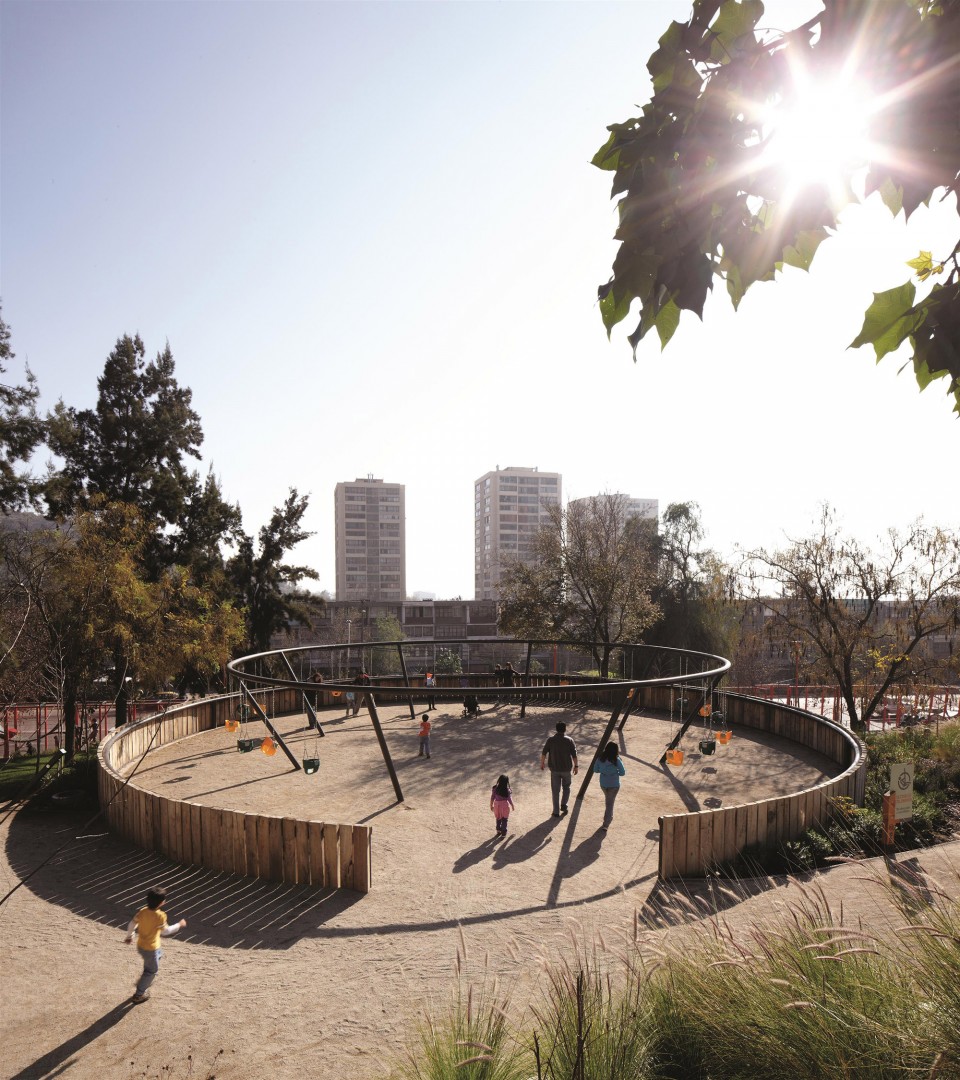
△ 二百周年纪念儿童公园,2012年,智利圣地亚哥
Bicentennial Children’s Park, 2012, Santiago, Chile ,Photo by Cristobal Palma
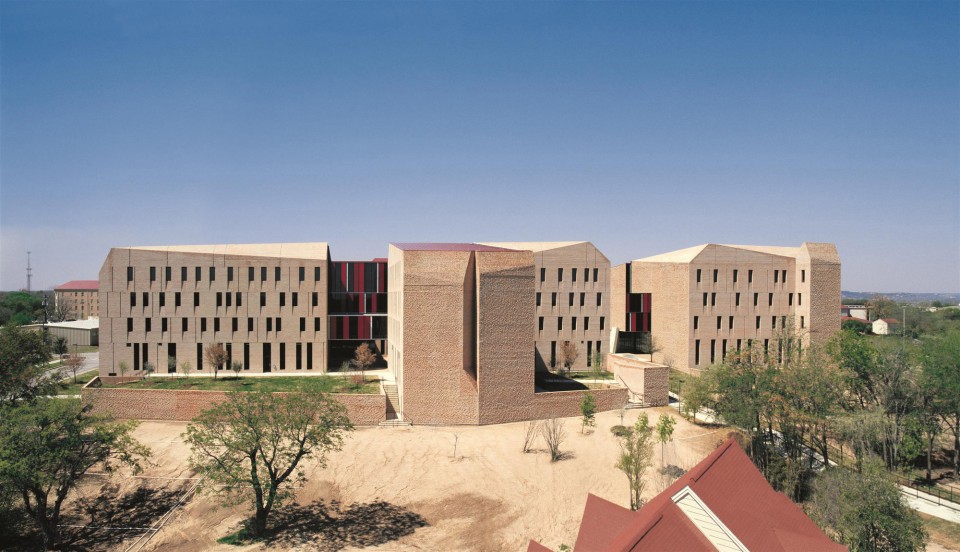
△ 圣爱德华大学宿舍,2008年,美国德克萨斯州奥斯汀
St. Edward’s University Dorms, 2008, Austin, Texas, USA ,Photo by Cristobal Palma
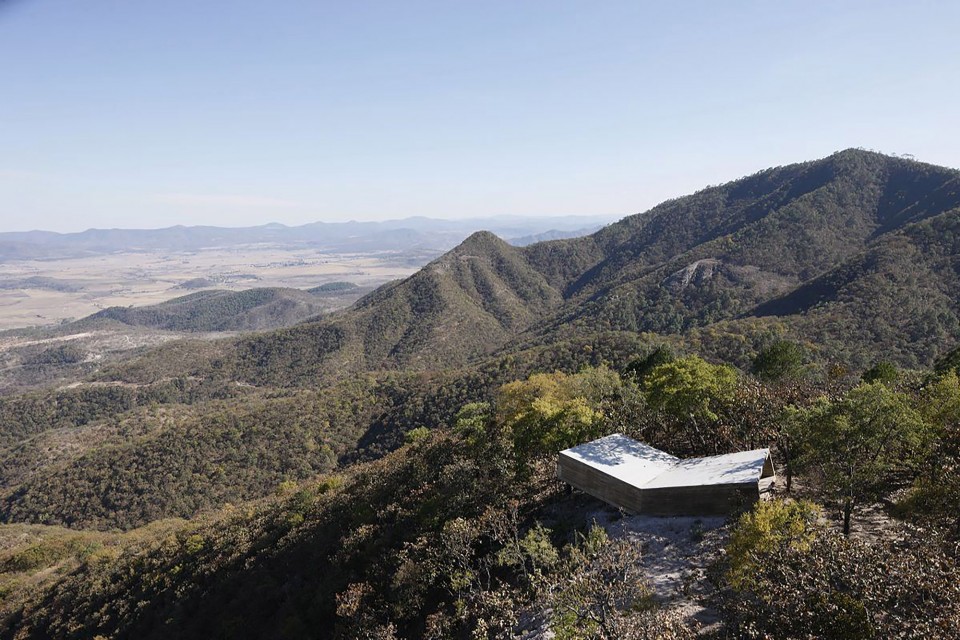
△ 拉斯克鲁塞斯朝圣观景台,2010年,墨西哥哈利斯科
Las Cruces Pilgrim Lookout Point, 2010, Jalisco, Mexico , Photo by Iwan Baan
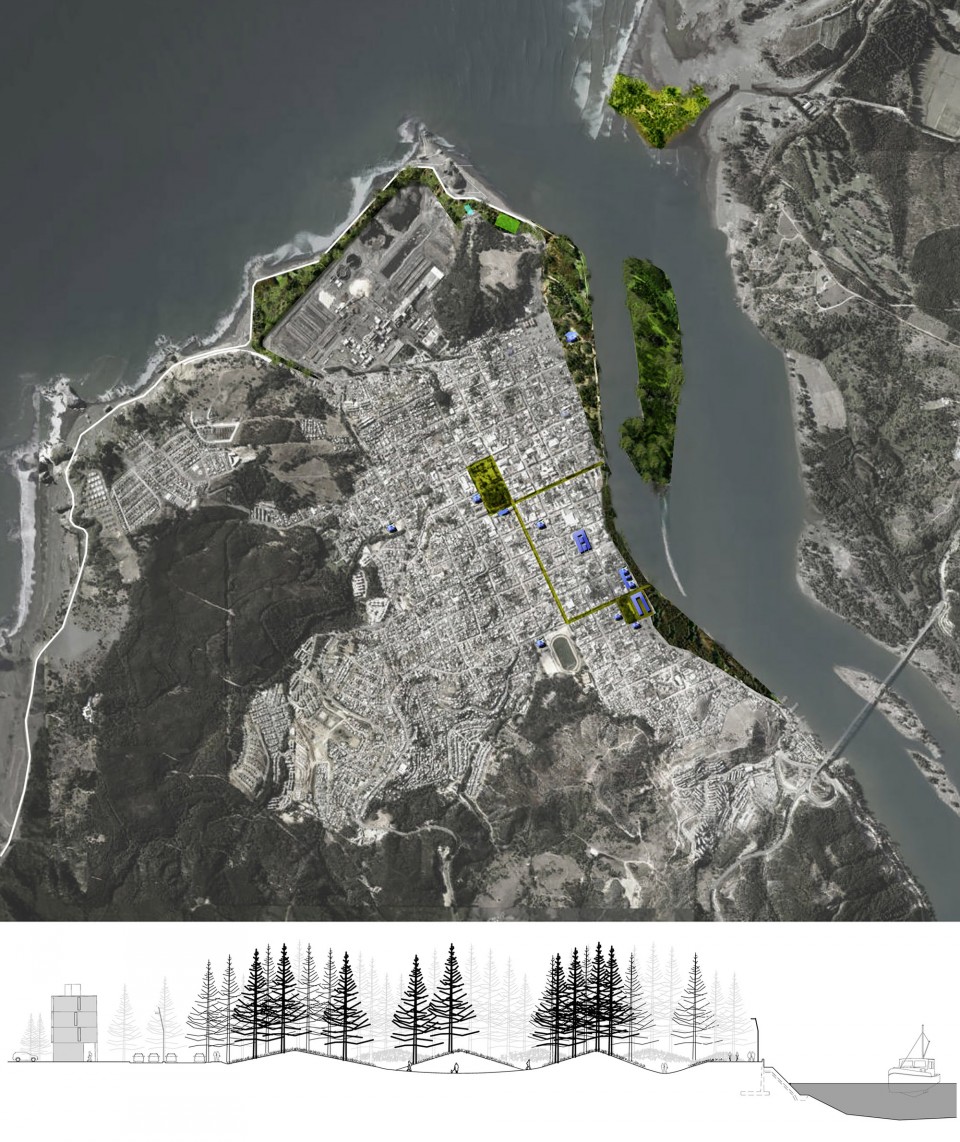
△ 孔斯蒂图西翁海啸后可持续重建计划,2010年 – 在建,智利孔斯蒂图西翁 Post-Tsunami Sustainable Reconstruction Plan of Constitución, 2010 – ongoing, Constitución, Chile ,Image by ELEMENTAL

△ 无椅解决方案,2010年, 为Vitra公司设计
Chairless, 2010, Design for Vitra ,Photo by Nicole Bachmann
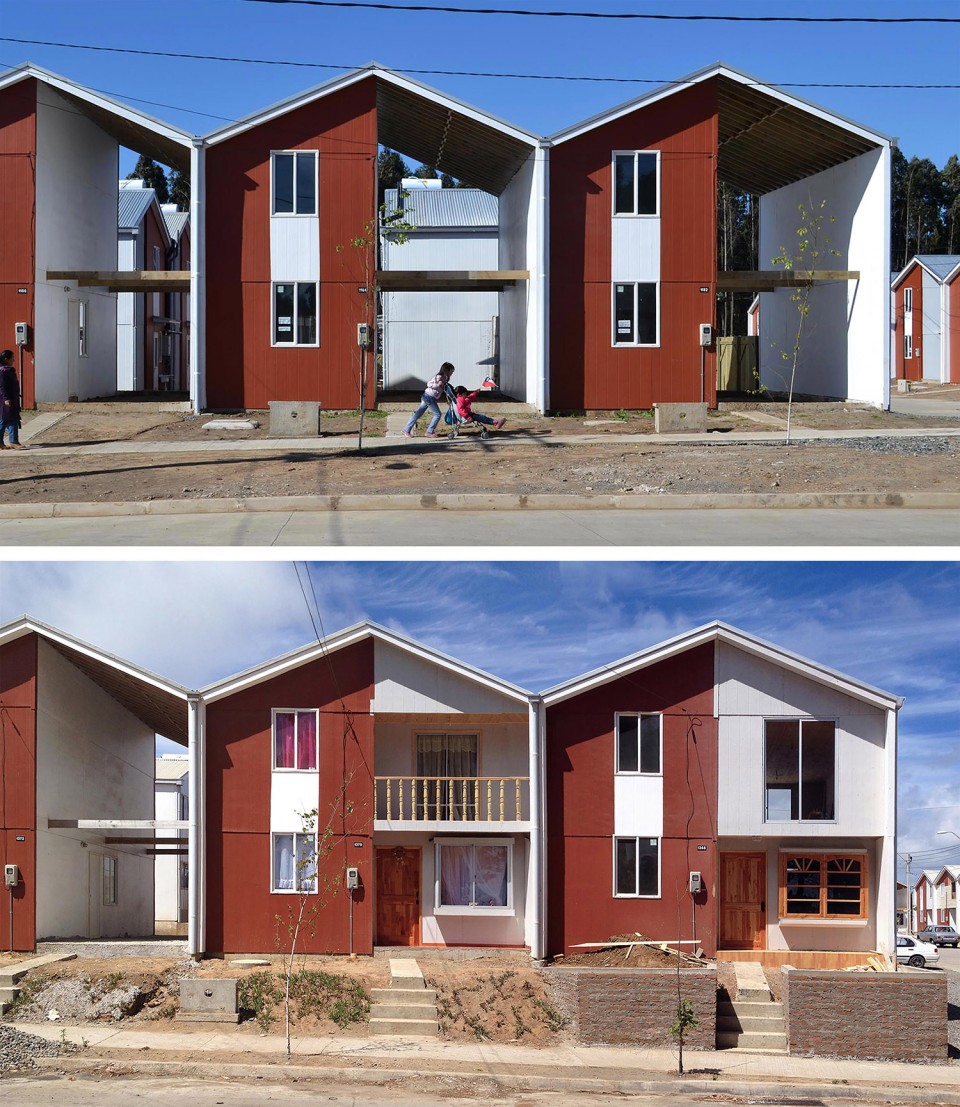
△ 绿屋,2013年,智利孔斯蒂图西翁
供图:ELEMENTAL —— 上图:得到财政资金支持的“半成品房子”建设, 下图:居民自己动手实现的中产阶层生活标准
Villa Verde Housing, 2013, Constitución, Chile
Photos by ELEMENTAL — Top: “Half of a good house” development, financed with public money. Bottom: Middle-class standard achieved by the residents themselves.
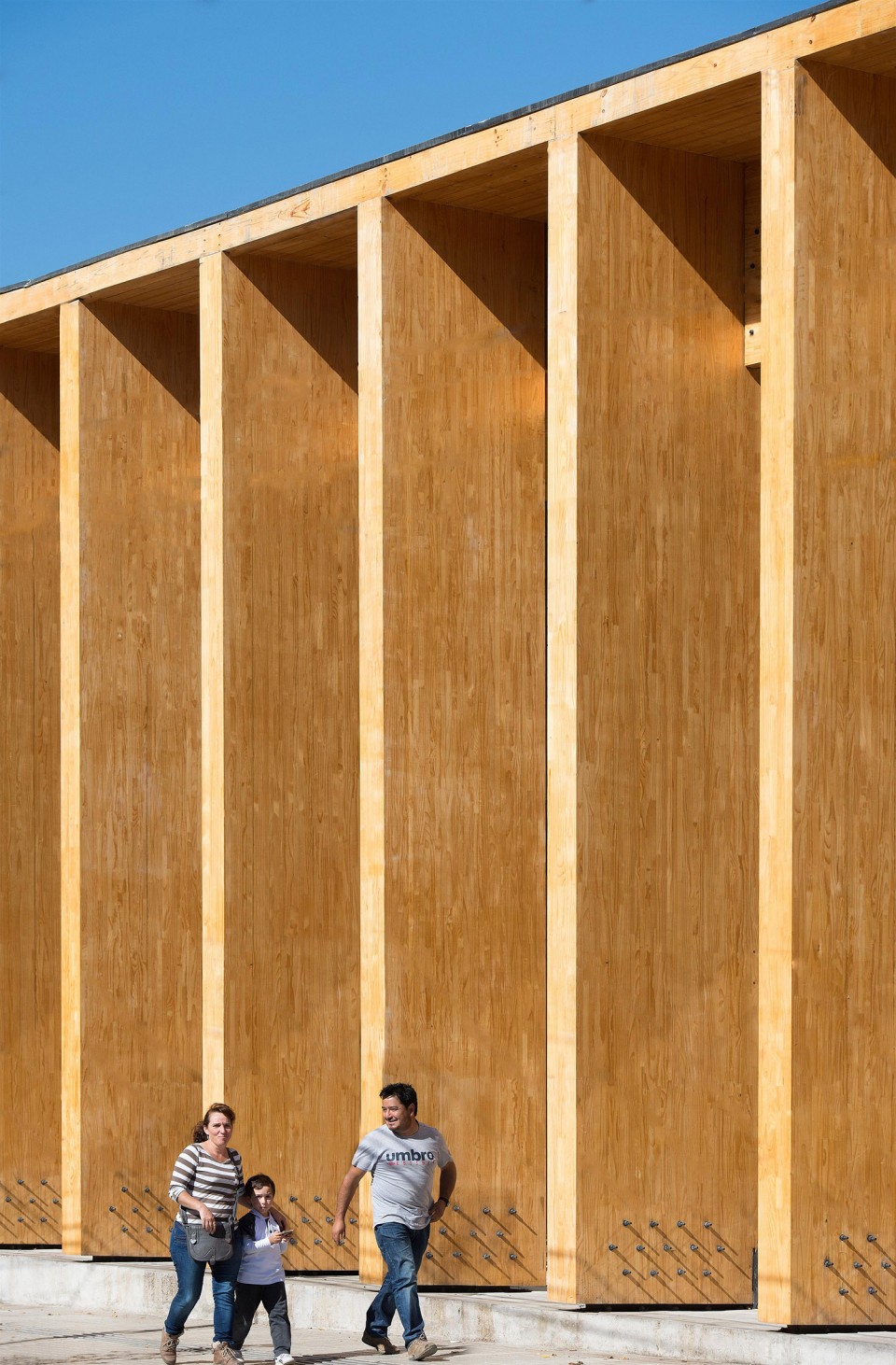
△ 孔斯蒂图西翁文化中心,2014年,智利孔斯蒂图西翁
Constitución Cultural Center, 2014, Constitución, Chile ,Photo by Felipe Diaz
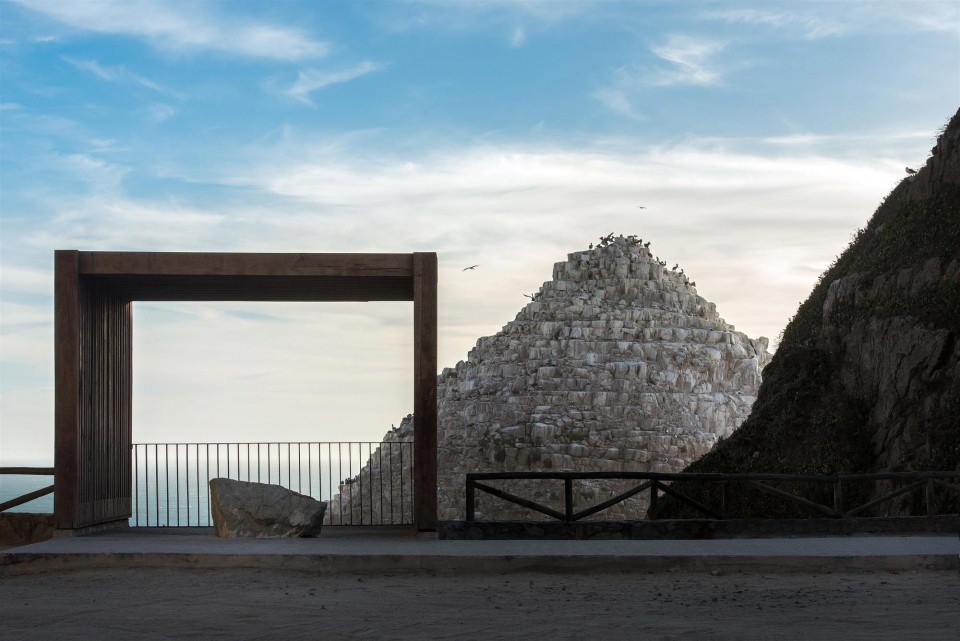
△ 孔斯蒂图西翁海滨长廊,2014年,智利孔斯蒂图西翁
Constitución Seaside Promenade, 2014, Constitución, Chile ,Photo by Felipe Diaz
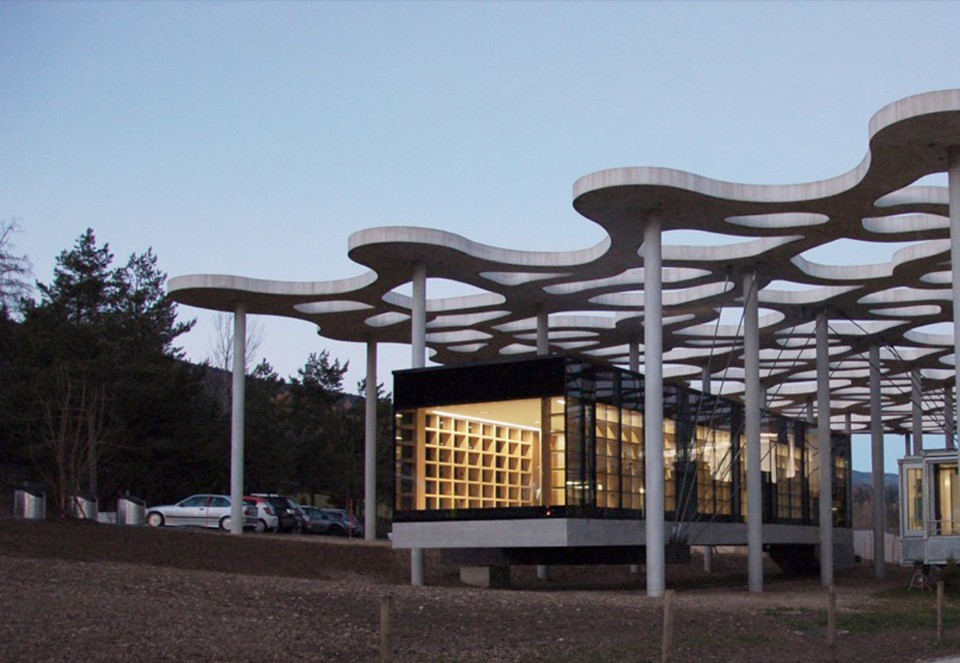
△ 作家小屋,2015年,瑞士蒙特里谢尔
Writer’s Cabin, 2015, Jan Michalski Foundation, Montricher, Switzerland , Photo by +2 Architectes
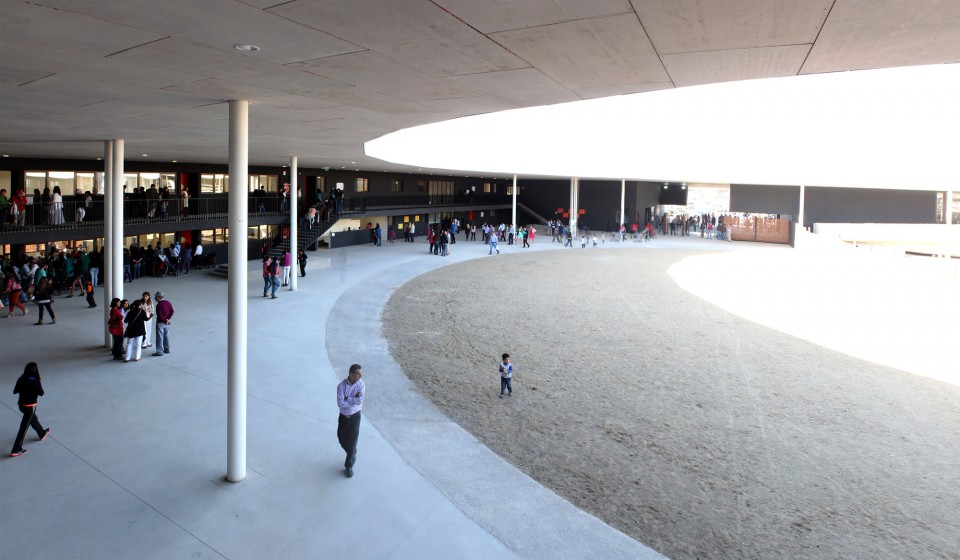
△ Ayelén学校,2015年,智利兰卡瓜
Ayelén School, 2015, Rancagua, Chile ,Photo by ELEMENTAL
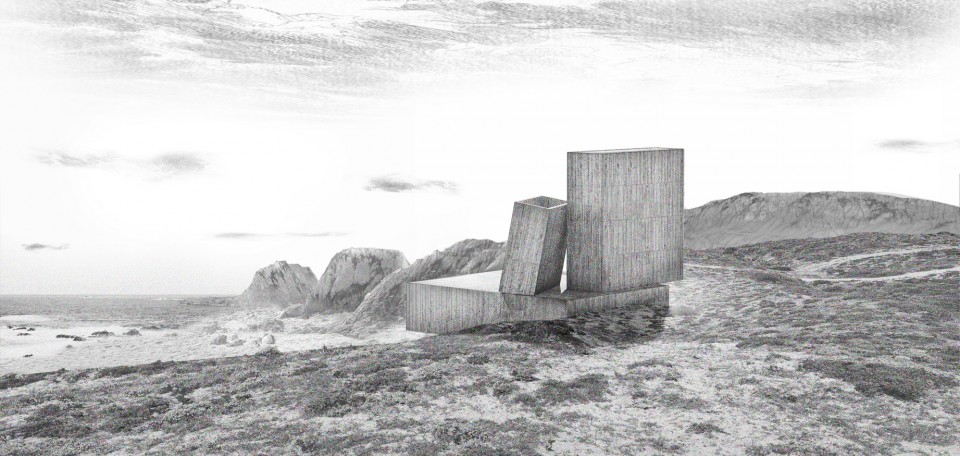
△ Ocho Quebradas住所,2013年 – 在建,智利洛斯维洛斯
Ocho Quebradas House, 2013 – ongoing, Los Vilos, Chile ,Rendering by ELEMENTAL
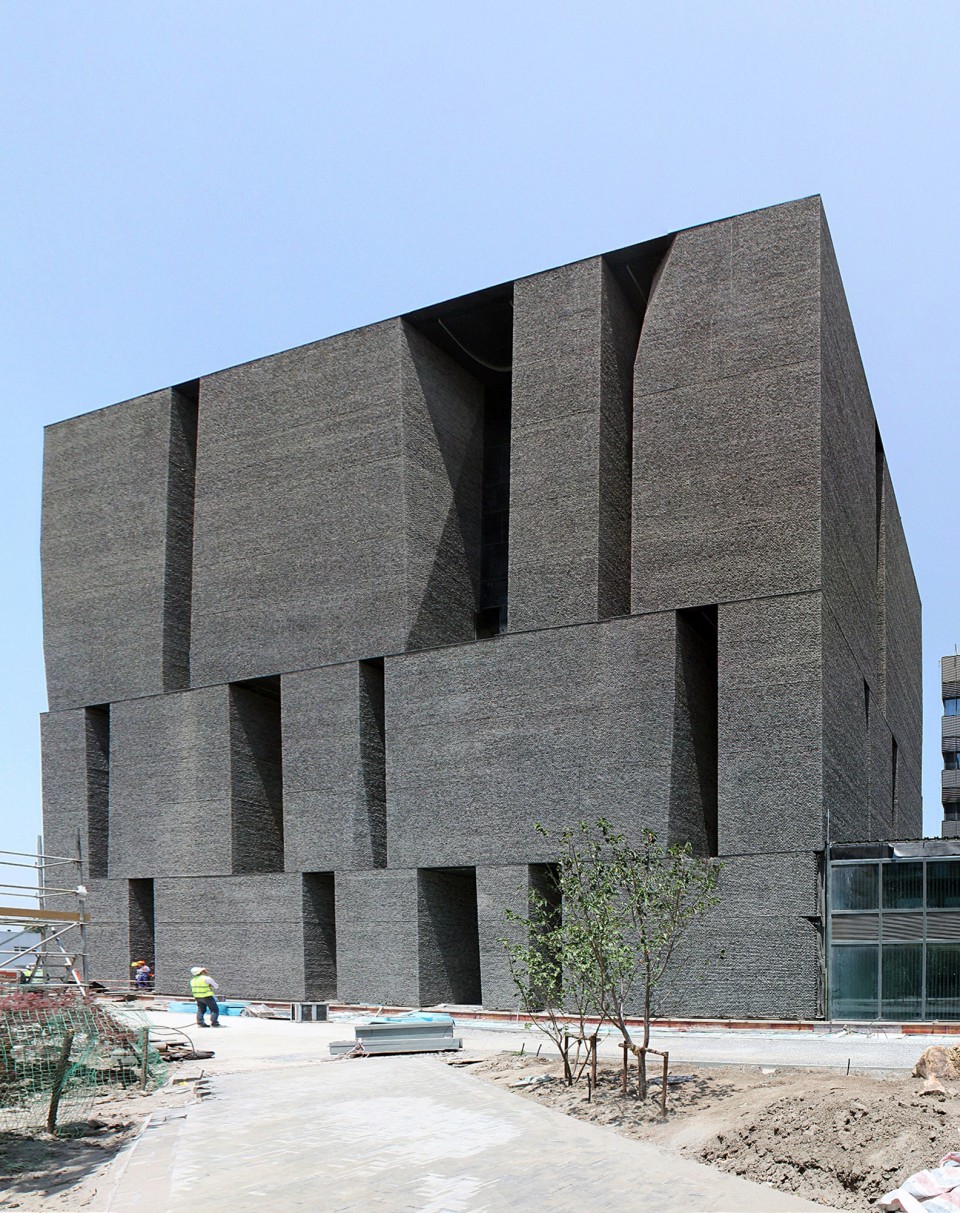
△ 诺华上海园区办公楼,2015年(在建),中国上海
Novartis Office Building, 2015 (under construction), Shanghai, China ,Photo by ELEMENTAL
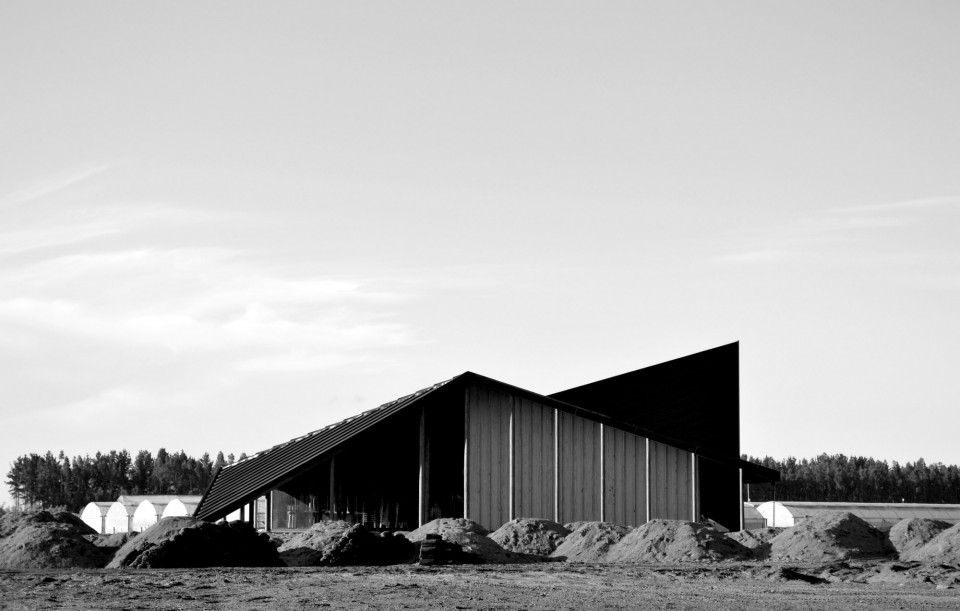
△ Arauco Vivero,2015年, 智利新奥尔科内斯, Arauco林业公司食 堂和办公楼
Arauco Vivero, 2015, Nuevo Horcones, Chile, Dining hall and office building for Arauco Forest Company ,Photo by ELEMENTAL
简历
Biography
亚历杭德罗·阿拉维纳1967年6月22日出生于智利首都圣地亚哥。1992年,他毕业于智利天主教大学,成为了一名建筑师。1994年,他成立了自己的公司“亚历杭德罗·阿拉维纳建筑师事务所”。自2001年以来,他一直领导ELEMENTAL公司,一个着眼于公共利益和社会影响的“行动库”,项目涉及住房、公共空间、基础设施和交通运输等领域。
ELEMENTAL曾在智利、美国、墨西哥、中国和瑞士承接建筑项目。2010年地震和海啸袭击了智利,ELEMENTAL应邀参与智利孔斯蒂图西翁市的重建工作。阿拉维纳在ELEMENTAL的合伙人包括贡萨洛·阿特亚加、胡安·塞尔达、维克多·奥多和迭戈·托雷斯。
亚历杭德罗·阿拉维纳是2016年威尼斯建筑双年展的总监。2014年他曾在TED全球巡讲的巴西里约热内卢站担任演讲嘉宾。2009年至2015年,他曾任普利兹克建筑奖评审委员会成员。
2010年,他被任命为英国皇家建筑师学会外籍院士,并被《Monocle》杂志评为全球20名新英雄之一。2011年以来,他一直担任伦敦经济学院城市项目委员会成员;大卫·洛克菲勒拉丁美洲研究中心区域咨询委员会成员;自2013年以来担任瑞士豪瑞基金会董事会成员;智利公共政策学会创始会员;以及芬兰政府创新基金SITRA旗下的赫尔辛基设计实验室负责人。他也是向2012年里约+20全球峰会做出贡献的100位名人之一。
阿拉维纳曾任哈佛大学设计研究生院教授(2000年及2005年);并曾任教于威尼斯世界建筑学院(2005年)、伦敦建筑协会(1999年)和伦敦经济学院。自2006年以来,他一直担任智利天主教大学ELEMENTAL-智力石油公司教授讲席。
他还是以下专著的作者:《建筑事实》(1999年),《建筑的地位》(2002年)和《建筑物料》(2003年)。他的作品曾在50多个国家发表,Electa出版了专著《亚历杭德罗·阿拉维纳;设计与建造》(米兰,2007年);Toto出版了《亚历杭德罗·阿拉维纳;建筑的力量》(东京,2011年)。Hatje-Cantz为ELEMENTAL出版了关于社会保障住房项目的第一本专著:《增量住房和参与式设计手册》(柏林,2012)并于第12届威尼斯国际建筑双年展上推出。
Alejandro Aravena was born on June 22, 1967, in Santiago, Chile. He graduated as an architect from the Universidad Católica de Chile in 1992. In 1994, he established his own practice, Alejandro Aravena Architects. Since 2001 he has been leading ELEMENTAL, a “Do Tank” focusing on projects of public interest and social impact, including housing, public space, infrastructure, and transportation.
ELEMENTAL has built work in Chile, The United States, Mexico, China and Switzerland. After the 2010 earthquake and tsunami that hit Chile, ELEMENTAL was called to work on the reconstruction of the city of Constitucion, Chile. Aravena’s partners in ELEMENTAL are Gonzalo Arteaga, Juan Cerda, Victor Oddó and Diego Torres.
Alejandro Aravena is the Director of the Venice Architecture Biennale 2016. He was a speaker at TEDGlobal in Rio de Janeiro, Brazil, in 2014. He was a member of the Pritzker Architecture Prize Jury from 2009 to 2015.
In 2010 he was named International Fellow of the Royal Institute of British Architects and identified as one of the 20 new heroes of the world by Monocle magazine. He is a Board Member of the Cities Program of the London School of Economics since 2011; Regional Advisory Board Member of the David Rockefeller Center for Latin American Studies; Board Member of the Swiss Holcim Foundation since 2013; Foundational Member of the Chilean Public Policies Society; and Leader of the Helsinki Design Lab for SITRA, the Finnish Government Innovation Fund. He was one of the 100 personalities contributing to the Rio +20 Global Summit in 2012.
Aravena was a Professor at the Harvard Graduate School of Design (2000 and 2005); and also taught at Istituto Universitario di Architettura di Venezia (2005), Architectural Association in London (1999), and London School of Economics. He has held the ELEMENTAL Copec Chair at Universidad Católica de Chile since 2006.
Author of Los Hechos de la Arquitectura (Architectural Facts, 1999), El Lugar de la Arquitectura (The Place in/of Architecture, 2002) and Material de Arquitectura (Architecture Matters, 2003). His work has been published in more than 50 countries, Electa published the monograph Alejandro Aravena; progettare e costruire (Milan, 2007) and Toto published Alejandro Aravena; the Forces in Architecture (Tokyo, 2011). Hatje-Cantz published the first monograph dedicated to the social housing projects of ELEMENTAL: Incremental Housing and Participatory Design Manual (Berlin, 2012) launched at the 12th International Architecture Exhibition of la Biennale di Venezia.
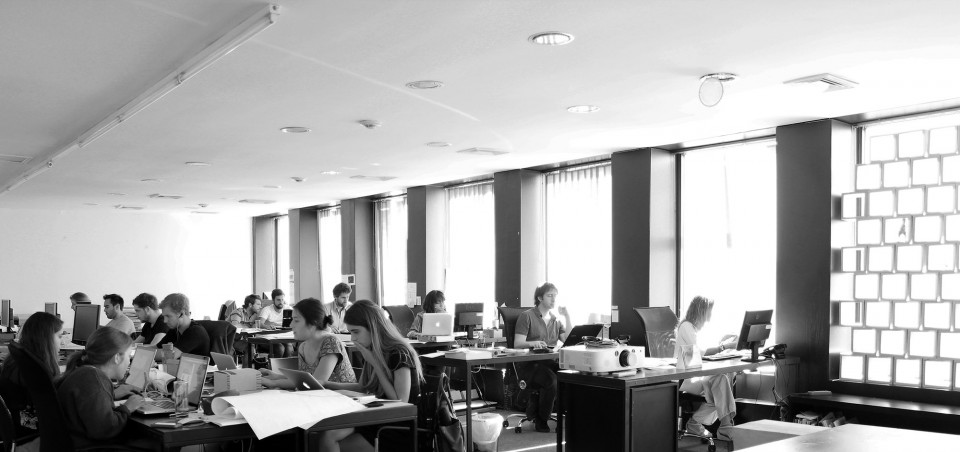
△ ELEMENTAL办公室,2013年, 智利圣地亚哥
ELEMENTAL, 2013, Santiago, Chile ,Photo by ELEMENTAL
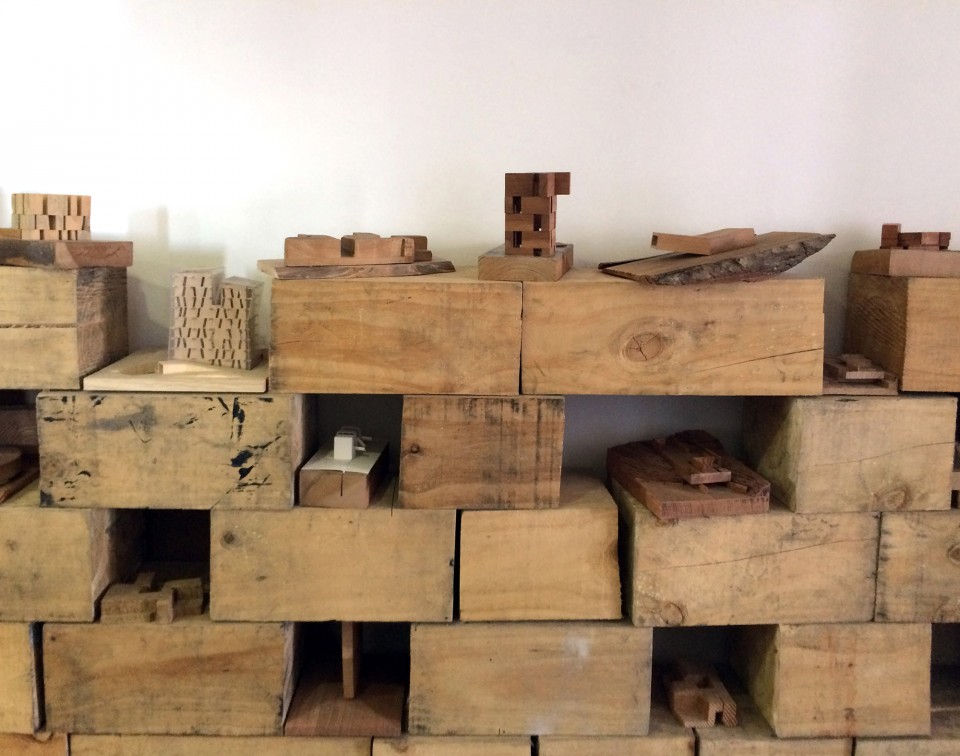
△ ELEMENTAL办公室,2015年, 智利圣地亚哥
ELEMENTAL, 2015, Santiago, Chile ,Photo by ELEMENTAL




都在说普奖政治,那他真是替12,14,15背锅了。
有点看不懂最近两届普奖。有点过分强调humanity,弱化了built environment。普奖说到底还应该是建筑奖,不应该是政治奖或者慈善奖吧?如果要强调“gives economic opportunitiy to the less privileged”的话,谢英俊更有资格得这个奖。