“该项目兼具粗犷而有力的整体气质,以及在建成环境与自然之间清晰、精致且耐久的细部处理。它积极回应了强烈的场地语境,同时又从中脱颖而出。”
– 2025年评审委员会“This project has both a rough strength to it and clearly refined yet durable detailing between the built and the natural. It engages its powerful context and stands out from it.”
– 2025 Awards Jury
来自 ASLA 对gooood的分享。
The Beach at Elliott Bay | Surfacedesign, Inc.
项目陈述
PROJECT STATEMENT
滨海公园与近岸生态的修复对于华盛顿州而言意义非凡:这里亟需兼具整体性和前瞻性的设计策略。围绕生态退化、海平面上升与雨洪径流等问题,艾略特湾海滩项目的设计团队对西雅图市中心以北一处面积约40英亩、公众可达的滨水用地及企业园区进行了系统性修复。通过土壤治理与雨洪管理,场地被重新激活,形成一个以社会与生态韧性为基础的公平、活跃的景观体系,并新增自行车道与多功能步道网络。项目坐拥普吉特湾与雷尼尔山的景观视野,体现了以系统为导向的可持续设计方法,全面关注社会、生态、经济与文化层面的福祉。
Coastal parks and nearshore restoration are key in Washington State, requiring holistic, forward-thinking design strategies. Addressing ecological degradation, sea level rise, and stormwater runoff, the design team for The Beach at Elliott Bay restored a publicly accessible, 40-acre waterfront site and corporate campus north of downtown Seattle. Soil remediation and stormwater management revitalize the site, creating an equitable, active landscape rooted in social and ecological resilience offering new bike paths and a multi-use trail system. With views of Puget Sound and Mount Rainier, the project demonstrates a systems-based approach to sustainability, prioritizing social, ecological, economic, and cultural well-being.
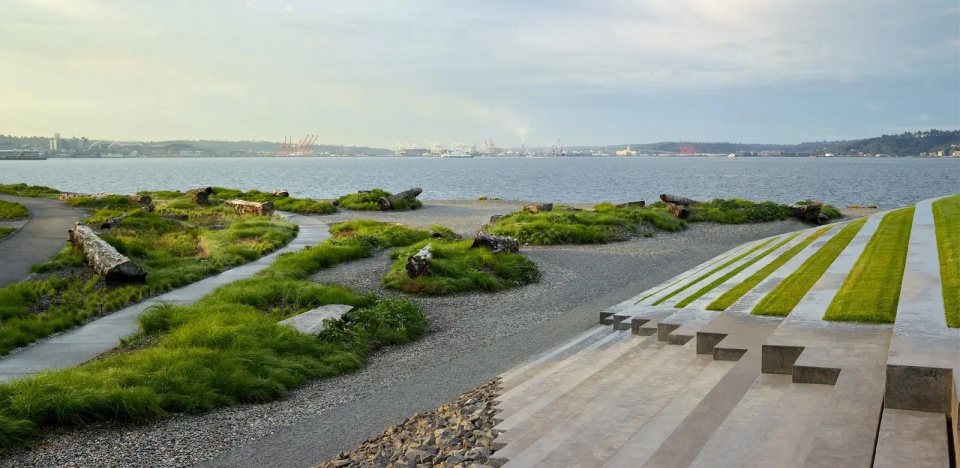
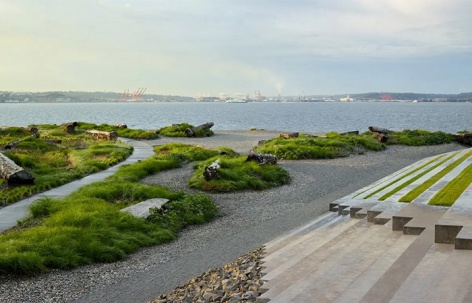
▲从大露台眺望,可以看见本土草甸、再利用原木以及以碎石步道勾勒出的滨水景观,构成了艾略特湾的水岸界面。From the terrace overlooking the native grasses, reclaimed logs, and gravel foot paths framing the waterfront of The Beach. © Marion Brenner
项目说明
PROJECT NARRATIVE
艾略特湾海滩位于西雅图市中心以北约一英里处,占地40英亩。该场地由一处利用率较低的生物科技园区及后工业用地,转变为一座绿意盎然、层次丰富且对公众开放的滨水公园,并显著提升了跑步与骑行步道的连通性。作为某科技公司国际总部所在地,设计团队被要求构想一个能够为员工提供深度亲近自然体验的园区环境,从而改善其日常工作与生活品质。鉴于场地紧邻海岸,设计需同时回应近期与远期的人类使用需求及气候挑战。
设计师与业主协作,重新整合公共通行地役权,沿普吉特湾形成连续的公园与步道系统,向公众开放。新建的层叠式观景平台与植被丰富的沙丘生境柔化了水岸边界,并在艾略特湾岸线处提供了全龄、无障碍的公共空间。自行车道与人行路径分流设置,穿行于以本土植物与乔木为主的景观之中,为传粉昆虫与鸟类提供栖息环境,同时满足“鲑鱼友好”认证的相关要求。
材料回收与适应性再利用是设计过程中的核心原则。原场地包含多处采用石材铺装与整体石构件的正式景观空间,拆除后的石材被集中保留,并在新园区中重新演绎,包括点缀于沙丘植被中的石头组景。受华盛顿州海岸漂流木的启发,来自安吉利斯港一处退役木材作业的结节云杉“原木梁”被引入场地,嵌入种植区与碎石沙丘之中。回收的巨石与漂流木在丰富植物层次的同时,也作为非正式的坐凳与活动空间使用。
土壤管理是本项目的关键重点,不仅决定了景观的整体成效,也支撑了以低维护、低投入为目标的长期养护策略。项目初期对以铺装为主、受扰动严重的场地进行了系统评估。经检测符合生态效益与长期健康要求的回收土壤,被用于改良堆肥与基底壤土,并调配出与场地不同植物群落相对应的八种定制土壤配比。土壤科学家在施工后持续检测与监测土壤状况,并据此制定堆肥茶配方,定期对土壤与植物进行生态“接种”,在不使用化学肥料的前提下,激发生物活性并提升系统韧性。
在实现业主打造亲自然、以体验为导向景观目标的同时,园区员工与公众可自由使用多样化的户外空间。从公园式露天剧场、静思花园到层叠水景,各类空间通过多重路径系统彼此串联,鼓励步行会议,营造更健康的工作方式,并与普吉特湾更广阔的城市与生态环境建立联系。
艾略特湾海滩邀请人们在海湾边驻足停留,通过对陆水交界面的精心塑造,结合广阔的区域景观视野、再生材料与充满生命力的本土植物,凸显场地起伏有致的地形特征。该项目在强化场所精神的同时,确立了一种以环境守护为核心的新型景观设计路径。
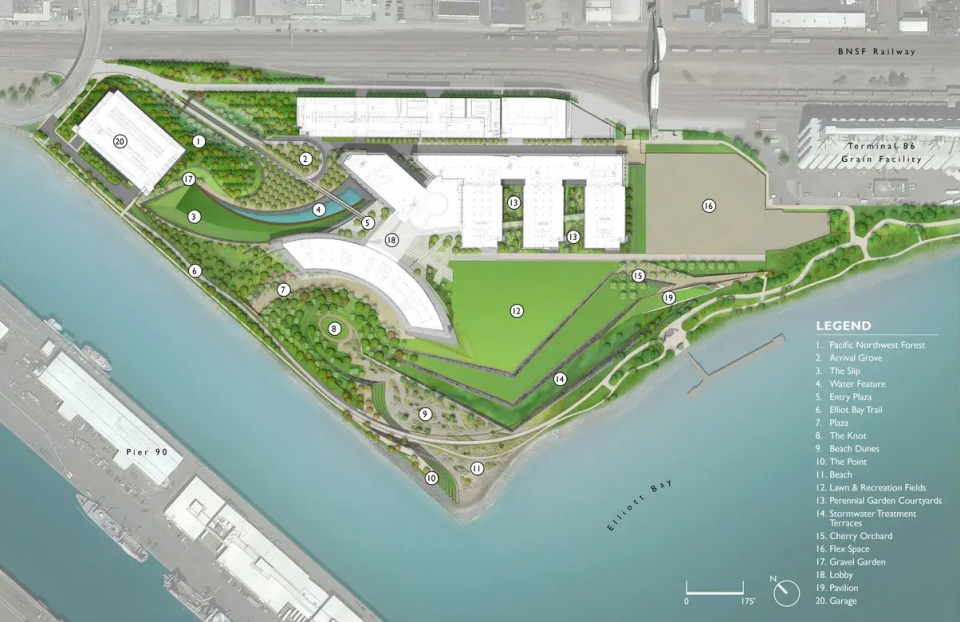
▲整个40英亩场地内的景观要素,均按可容纳5000名以上、集中于该办公枢纽的员工规模进行设计。Landscape features throughout the full 40-acre site are designed to accommodate an expansive workforce of 5000+ employees based near this office hub. © Surfacedesign, Inc.
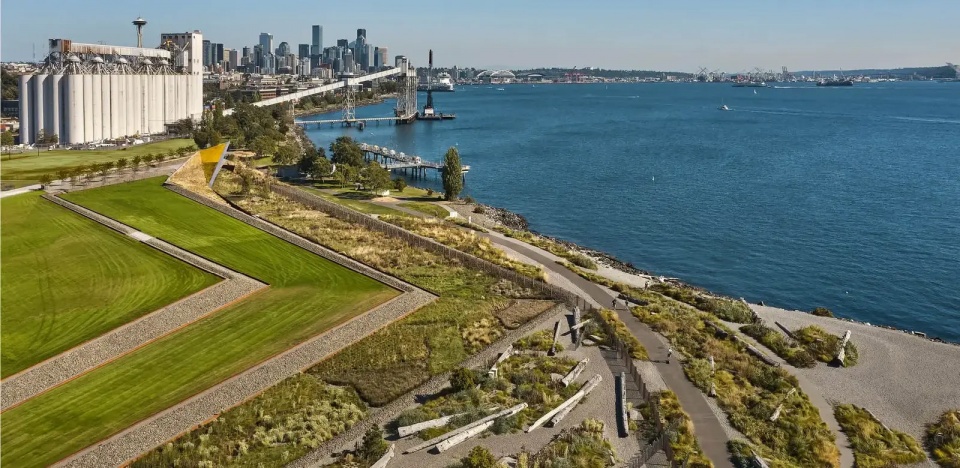
▲设计团队与业主协作,重新整合公共通行地役权,为公众打造了一套连续、集中的公园与步道系统。The designers collaborated with the client to re-aggregate public easements, creating a consolidated park and trail system for the public. © Adam Rouse
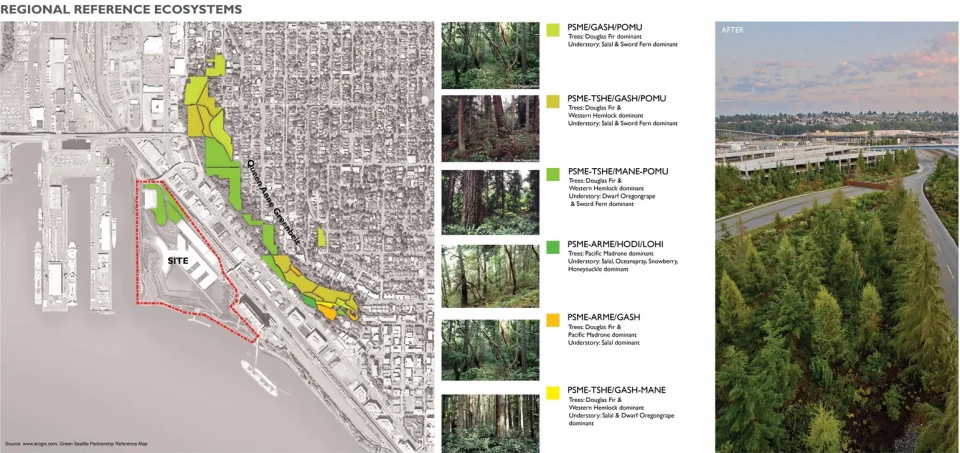
▲场地内林地的植被构成与区域性参考生态系统相呼应,包括相邻的安妮女王绿带。The planting composition of area’s woodland ties into regional reference ecosystems including the adjacent Queen Anne Greenbelt. © Surfacedesign, Inc (diagram)/ Marion Brenner (photo)
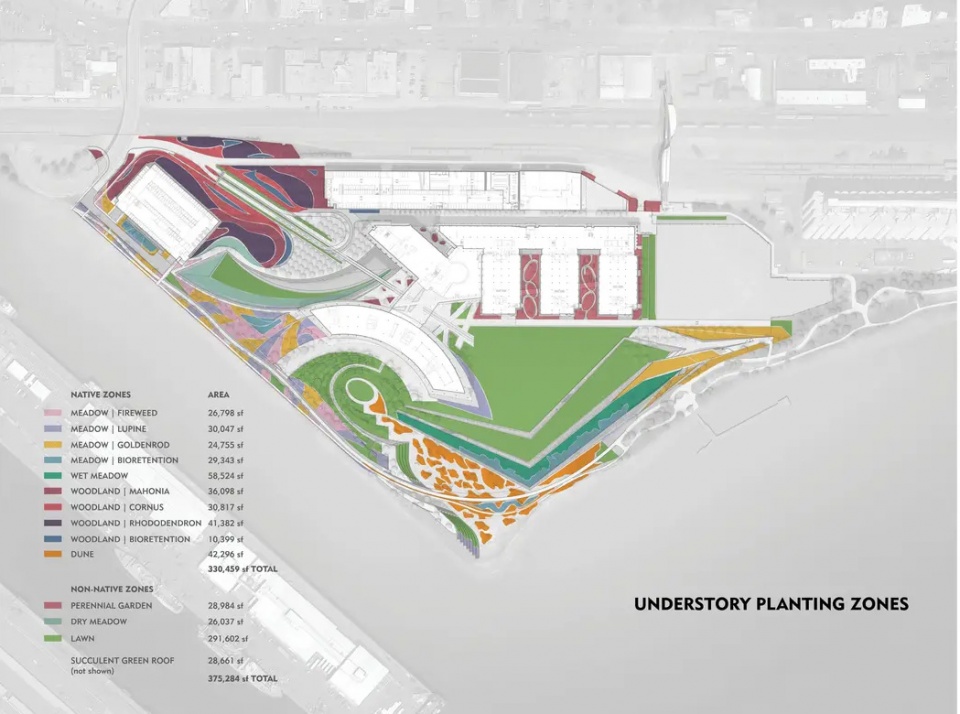
▲贯穿整个40英亩基地的多样化下层植物配置,均获得“鲑鱼友好”认证,以支持更广泛的滨水生态系统。The diverse understory planting palettes across the entire 40-acre site are certified Salmon Safe to support the larger waterfront ecosystem. © Surfacedesign, Inc.
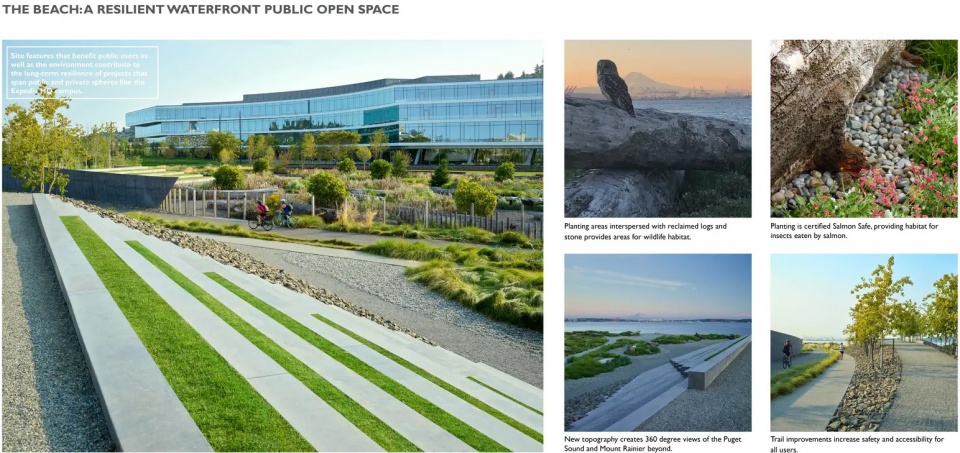
▲艾略特湾海滩是整体园区项目中面向公众开放的公共空间组成部分。The Beach is the public open space component of the larger campus project. © Marion Brenner
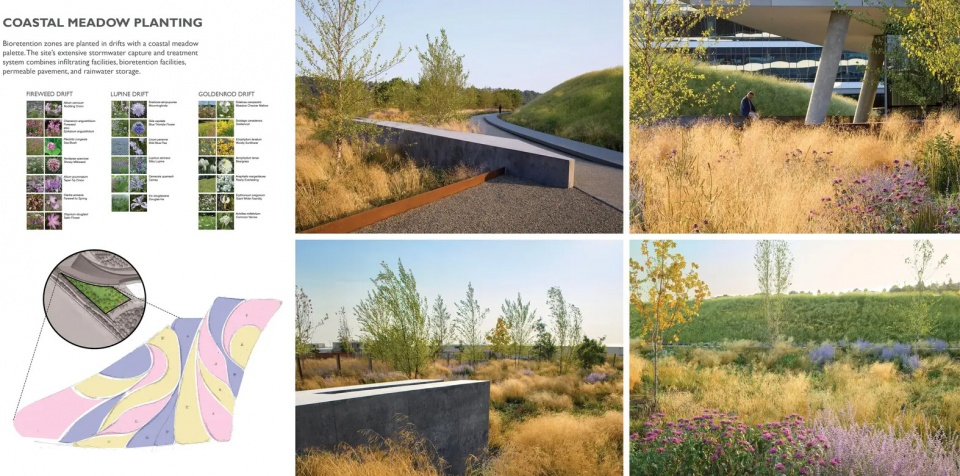
▲生物滞留区采用色彩丰富的多年生草甸植物配置,兼具鲜明的季节变化与生态栖息价值。Bioretention zones feature the colorful perennial meadow planting palette rich with seasonal interest and habitat value. © Surfacedesign, Inc (diagram)/ Marion Brenner (photo)
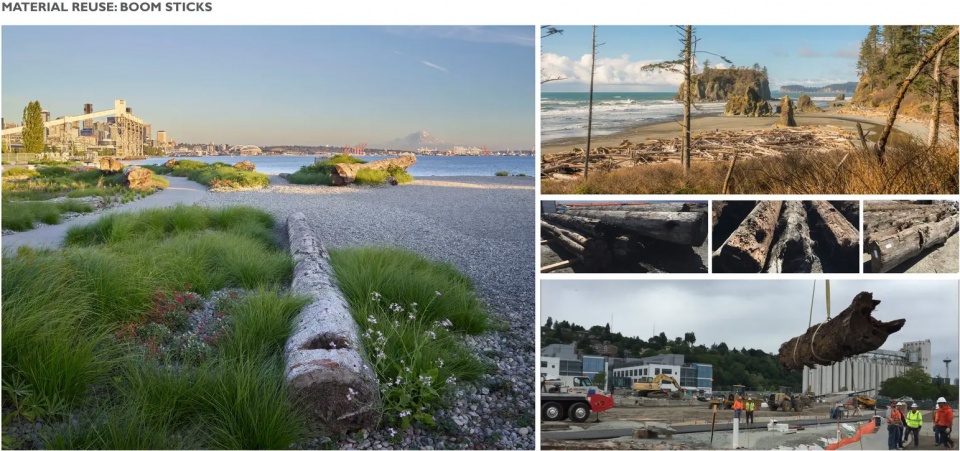
▲再利用木材被布置于海滩区域,其设计灵感源自太平洋西北地区海岸常见的漂流木。Reclaimed timber was placed at The Beach, drawing inspiration from the driftwood found on the beaches of the Pacific Northwest. © Marion Brenner (left) / Surfacedesign, Inc (right)
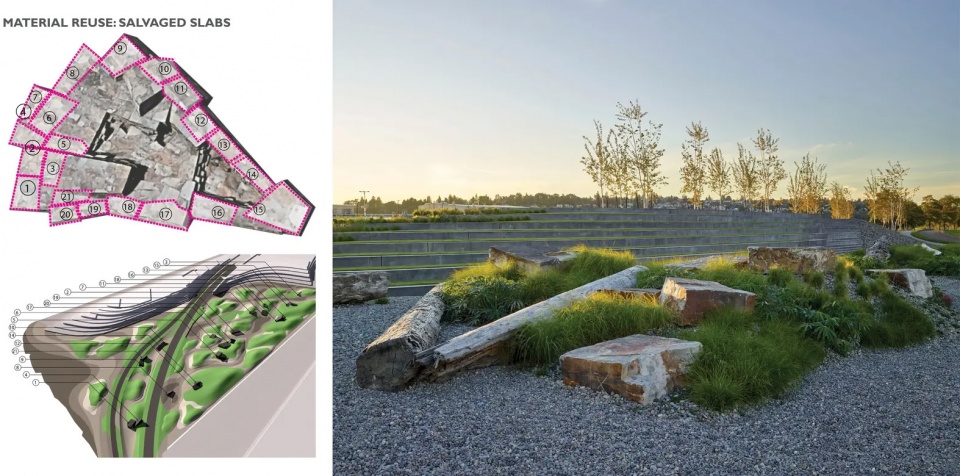
▲场地原有石材与回收原木一并在海滩区域重新使用,以唤起太平洋西北地区海岸景观的意象。Stone from the site was reused on The Beach along with reclaimed logs to evoke the beaches of the Pacific Northwest. © Surfacedesign, Inc (left) / Marion Brenner (right)
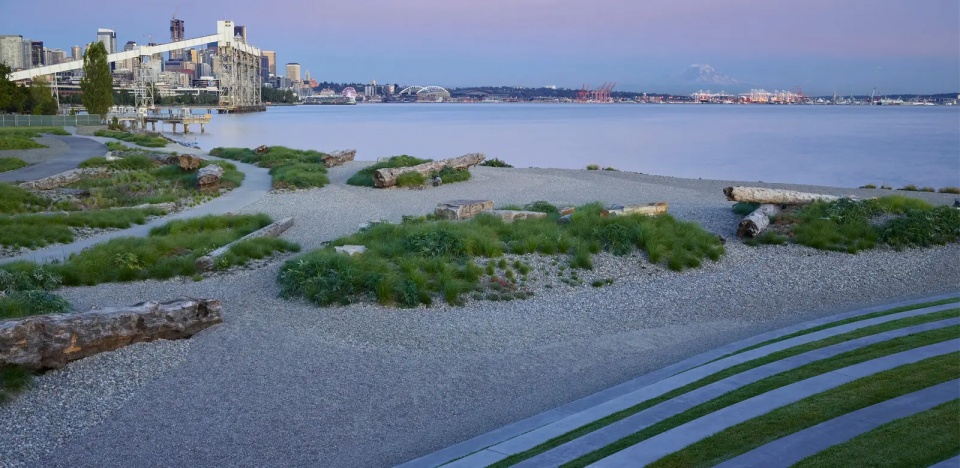
▲从艾略特湾海滩俯瞰普吉特湾,远处是雷尼尔山的地平线景观。The Beach at Elliott Bay overlooks Puget Sound with views to Mount Rainier on the horizon. © Marion Brenner
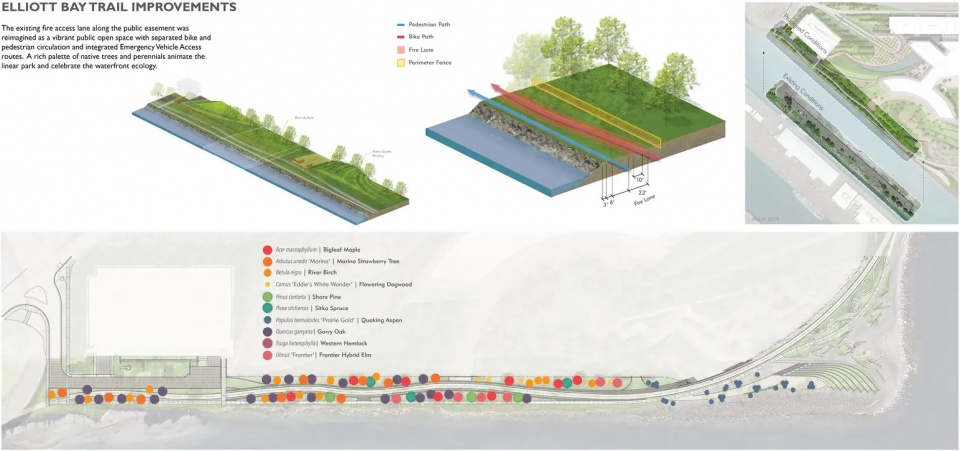
▲项目同时对艾略特湾步道进行了系统提升,增强了安全性、可见性与可达性。The project also consisted of improvements along the Elliott Bay Trail that increased safety, visibility, and accessibility. © Surfacedesign, Inc.
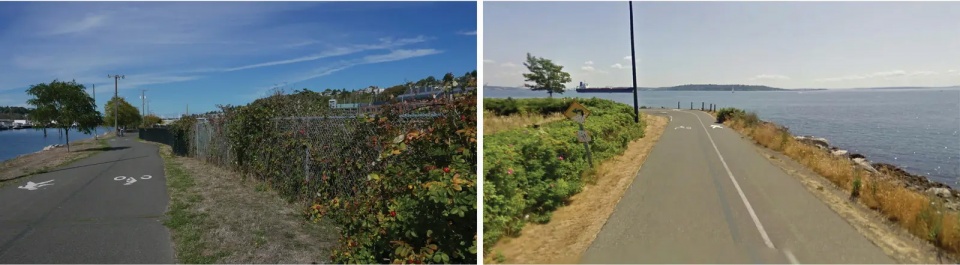
▲场地滨水区域改造前的状态。Before images of the waterfront edge of the site. © Surfacedesign, Inc / Google Earth
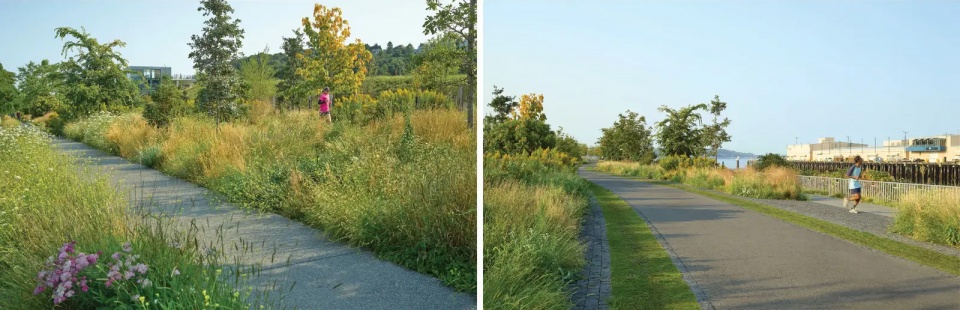
▲沿艾略特湾步道滨水一线布置的植物群落,为鲑鱼赖以取食的昆虫提供了重要栖息地。The planting that runs along the waterfront on the Elliott Bay Trail provides habitat for insects that salmon feast on. © Marion Brenner
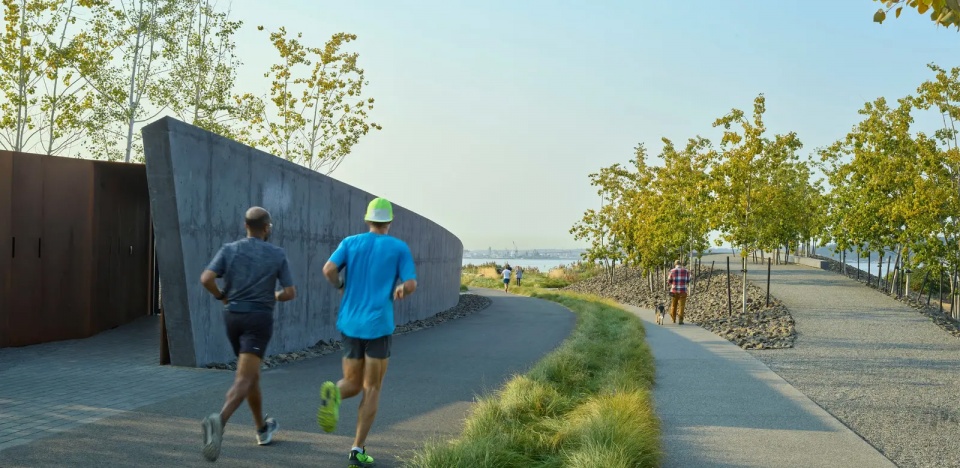
▲步道改造支持多种出行方式,并通过优化曲线路径形态提升整体通行安全性。Trail improvements facilitate multi-modal use and soften the curved path for improved safety. © Marion Brenner
PROJECT NARRATIVE
The Beach at Elliott Bay, located a mile north of downtown Seattle on a 40-acre waterfront site, was transformed from an under-used biotech campus and post-industrial site into a vibrant, lush, and sophisticated publicly accessible park with improved connectivity to trails for running and biking. Located at the site of a tech company’s international headquarters, the design team was tasked with envisioning a campus that provided workers with meaningful connectivity to nature to enhance their daily life. Given the site’s proximity to the waterfront, the team needed to configure a strategy responding to both human and climate needs for the near and far term.
The designers collaborated with the client to re-aggregate public easements, creating a consolidated park and trail system along the Puget Sound for the public. A new terraced overlook and a richly planted dune habitat softens the edge of the water and provides new universally accessible space at the edge of Elliott Bay. A separated system of bike and pedestrian paths weave through the landscape that is rich with native plants and trees, allowing habitat for pollinators and birds, and aligning with the Salmon Safe certification program requirements.
Material reclamation and adaptive reuse were core principles of the design process. The existing site had a series of formal landscape spaces that featured stone paving and monolithic stone elements. The reclaimed stone was stockpiled and reimagined for the new campus, including informal stone groupings nestled into the dune planting on the Beach. Inspired by the driftwood that washes onto the shores of Washington beaches, knotty spruce “boom sticks” from a decommissioned timber operation in Port Angeles were brought to the site and nestled into the planting and gravel dunes. The reclaimed stone boulders and driftwood break up the planting while also functioning as informal seating and play areas.
Soil management was a critical focus for the design, contributing to the success of the landscape and underscoring the long-term maintenance plan for the project focused on cultivating a low-maintenance and low-input landscape. A comprehensive assessment of the mostly paved, disturbed site was conducted at project onset. Harvested soil, tested for ecological benefits and long-term landscape health, was used to inoculate compost and base loam for the eight custom blends that correlated with the site’s planting communities. Soil scientists tested and monitored the soil after installation, informing the formulation of compost tea blends used to seasonally inoculate the soil and plants, stimulating biological activity and resilience without chemical fertilizers.
Beyond the client’s goals of creating a biophilic, experience-based landscape, employees and users have free reign to engage with a variety of outdoor rooms. From a park amphitheater to a contemplative garden or a cascading water feature, each space is connected by multiple path circuits, encouraging walking meetings—promoting a healthier workplace connected to the broader urban and ecological context of the Puget Sound.
The Beach invites users to pause at the edge of Elliott Bay. Celebrating the land-water threshold with views of the larger regional landscape, reclaimed materials and vibrant native plantings highlight the sculpted topography of the site. The expansive site is a place to celebrate and reinforce a sense of place while defining a new landscape approach centered on stewardship.
More: ASLA;Surfacedesign, Inc.






简单却有用
DK
不错