“这座占地5英亩的河滨公园将30多件被抢救出来的大型文物融入到教育性的“文物之路”体验当中,展示了标志性工业滨水区的历史。这些文物包括粗糖仓库中的21根柱子、门式起重机、螺旋输送机、斗式输送机和一系列糖浆罐。原生的植物物种减少了雨水径流。评审团对该项目发表了如下称赞:‘通过植入不同类型的公共集会场地和景观,旧的基础设施被赋予了新的生命’。”
– 2022年评审委员会“The 5-acre riverfront park showcases the history of an iconic industrial waterfront site by integrating over 30 large-scale salvaged relics into an educational “Artifact Walk.” The artifacts include 21 original columns from the Raw Sugar Warehouse, gantry cranes, screw conveyors, bucket conveyors and syrup tanks. Native plant species reduce stormwater runoff. The jury appreciated how ‘the old infrastructure was given new life with the insertion of so many different types of public forums and landscapes’.”
– 2022 Awards Jury
来自 ASLA 对gooood的分享。
Domino Park | James Corner Field Operations
项目概述
PROJECT STATEMENT
Domino公园是糖厂旧址改造项目的第一阶段,位于当地开放空间与人口比例最低的地区之一。改造后的场地将成为一个规模庞大的多功能区域。
Domino公园占地5英亩,其落成实现了威廉斯堡与东河在160年来的首次重连,为当地居民提供了亟需需的开放空间,同时纪念了其作为滨水作业区的历史。公园将30多件被抢救出来的大型文物融入到教育性的“文物之路”当中,包括原先粗糖仓库中的21根柱子、门式起重机、螺旋输送机、斗式输送机和一系列糖浆罐。抬升于洪水标高的地势加上大量能够减少雨水径流的本土植物,使公园成为一块具有吸水功能的“海绵”,为抵御海平面的上升筑起了第一道防线。
Domino公园现已接待超过400万名来自附近拉丁人社区、哈西德教派以及黑人社区的游客,并为当地组织举办了数百场活动和聚会。
Domino Park is the first phase of the transformation of the former Domino Sugar Factory site into an ambitious mixed-use development project, sited within an area with one of the lowest ratios of open space to people.
Inspired by community input and the site’s rich history, the 5-acre Domino Park reconnects Williamsburg to the East River for the first time in 160 years and provides much-needed open space for local residents while honoring its history as a working waterfront. The park integrates over 30 large-scale salvaged relics, including 21 original columns from the Raw Sugar Warehouse, gantry cranes, screw and bucket conveyors, and syrup tanks into an interpretive and educational “Artifact Walk.” Raised above FEMA flood elevations with many native plant species that reduce stormwater runoff, the park also functions as an absorbent sponge and first line of defense against sea level rise.
Domino Park has seen over 4 million diverse visitors from nearby Latino, Hasidic, and Black communities and hosted hundreds of events and gatherings for local organizations.
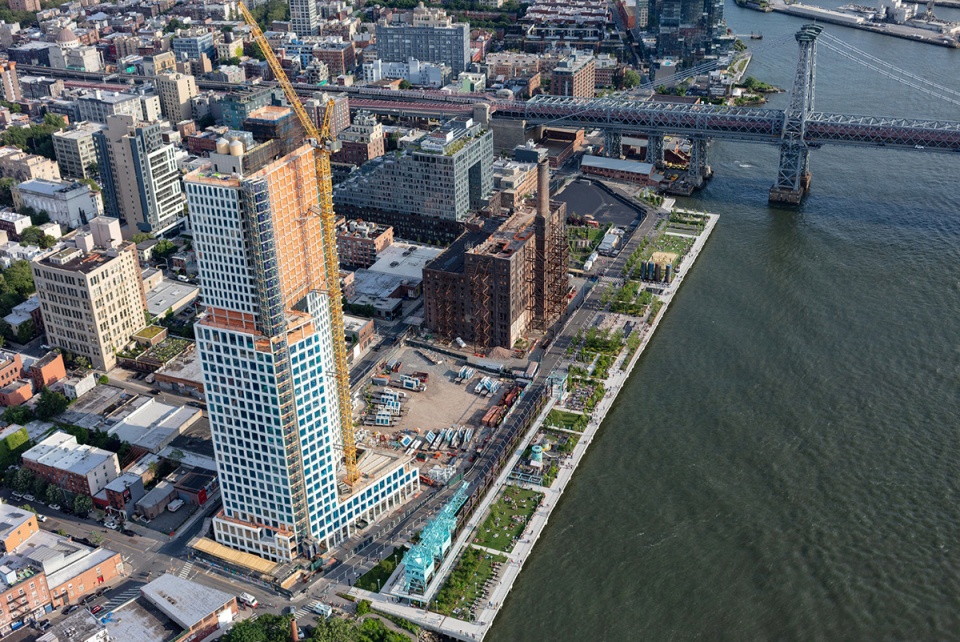
▲Domino公园提供各种不同的活动机会,包括沙滩排球、游乐场、遛狗跑道、玉米卷小吃摊、水景、草坪和充足的座位。公园已经为当地各类组织举办了数百场活动。Domino Park. Domino Park offers a range of activities such as beach volleyball, a playground, a dog run, a taco stand, water features, lawns, and plentiful seating. The park had already hosted hundreds of events and activations for local organizations. © Alex S. MacLean / Landslides
项目说明
PROJECT NARRATIVE
工业遗产
Domino公园被建造在Domino炼糖厂旧址上,后者对于威廉斯堡社区和布鲁克林东河滨水区的成长和发展具有着极其重要的意义。Domino炼糖厂曾是世界上最大、产量最高的炼糖厂,其生产的糖占据美国糖品消费量的98%。2004年,作为布鲁克林东河河滨最后一家大型工业企业的Domino炼糖厂宣告关闭。今天,新的公园成为了对这一历史的纪念,它讲述了关于一代代Domino工人、他们的家庭以及他们所生活的社区的多样性和复原力的故事。
Domino公园是占地11英亩的综合改造开发项目的第一阶段,回应了为周边社区提供公共空间的承诺,并在160年来首次实现了威廉斯堡与东河的重新连接。它为当地居民提供了亟需的开放空间,同时纪念了场地曾经作为滨水作业区的历史。 Domino公园在未来将与正在开发的“双树环河”(Two Trees’ River Ring)项目相结合,为创建全面连接的滨水区域提供至关重要的纽带。整体项目包含对标志性的炼糖厂建筑进行改造和再利用,使其成为服务于创意行业的办公空间;以及四座多功能住宅楼的修建,将提供700套经济适用住房。
文物之路
具有科普和教育功能的“文物之路”是公园的主要特色之一,它整合了30多件从场地中抢救出来的大型文物,向人们展示了炼糖厂的内部运作过程。这些经过修复的文物包括80英尺高的门式起重机和曾经用于卸糖的起重机平台、糖浆罐、斗式和螺旋输送机、升降桥以及粗糖仓库建筑中的21根柱子。横跨两个街区的高架步道重塑了原始工厂建筑群独具特色的步行体验,使游客有机会近距离地观赏文物、体验难得的高空视角并欣赏曼哈顿优美的天际线。Domino公园是一处新与旧的交汇点,它在追溯过去的同时也为人们带来了崭新的社交平台。
作为深入人心而又触手可及的历史片段,这些文物激发了人们对场地历史的好奇、发现和探索之情。
公园体验
河滨大街是进入公园的第一步体验,它将公园重新连接至城市网格之中,旨在加强公共属性而非成为新开发项目的私有场地。新的街道还显著改善了高地与滨水区域之间的衔接,在不需要楼梯和坡道的情况下提升了公园的通达性。
Domino公园为不同的用户群体提供了一系列多样的活动场所,同时又将游客和当地居民汇聚在同一处空间。活动场地集中在公园南侧靠近威廉斯堡大桥的位置,从而更加贴近喧闹的都市生活,人们可以在这里这里遛狗、运动、玩室外滚球或者排球。炼糖厂建筑本身有着独特的烟囱,展现了重建项目的物质与精神核心,同时凸显了场地与水体的亲密联系。大型的阶梯式座位为游客提供了聚集场所,从这里可以观赏到有趣的互动水景装置:当水流关闭时,它又变回一个开放的广场。云雾大桥横跨在河流的凿口上方,暴露出历史悠久的木桩结构,使游客们可以沉浸于海浪和潮汐的声响。大桥周围的喷雾装置散发出柔和的雨雾,将路人们笼罩在海岸的微风里,同时为通向巨大的糖浆罐创造了一个引人注目的入口。
公园北部区域由标志性的门式起重机和高架步道组成,重点关注被动的和以家庭为单位的使用。极具创造性的游乐场由艺术家Mark Reigelman设计,为孩子们创造了与场地历史有关的趣味旅程。Tacocina餐厅为游客带来休闲的环境,人们可以在这里品尝玉米饼、啤酒和鸡尾酒,旁边高低起伏的大草坪更是休憩和观赏日落的理想地点。
公园使用的材料从威廉斯堡海滨粗犷的工业特征中汲取灵感,包括耐候钢、镀锌钢、不锈钢、混凝土和来自工厂的再生木材。定制的家具,包括桌子、休闲座椅和长凳,由再生松木和带有粉末涂层的钢材制成。原有的金属饰面和铜锈质感被尽可能地保留下来。新置入的钢材被漆成近似于绿松石色的“Domino蓝”,与既有炼糖厂的色彩相匹配。起重机和泊船柱等历史元素也得到了重新装饰。
复原力
该项目在飓风桑迪过境后的几天启动,因此从很大程度上受到了纽约市关于抗灾和复原力的讨论的影响。最初的决策之一是将建筑群后退至规定的距离之外,并将平台抬高到联邦应急管理局(FEMA)预测的洪水标高之上。这一做法在保证公园宽敞度的同时保护了建筑和基础设施。公园43%的面积种植了近175棵新树以及耐寒的本地林下植物,不仅能够减少雨水径流,还使公园成为一块具有吸水功能的“海绵”,为周围街区筑起了第一道防线。
Domino公园是首批通过WEDG(滨水区边缘地带设计指南)认证的项目之一。WEDG是一个激励性质的评级系统,旨在促进滨水区提高复原力,营造更加健康环保、无障碍且对所有人公平的环境。公园景观100%采用有机方式管理,其内部的所有植物材料和废弃物都经过堆肥处理并重新分配至种植池中。
社区建设
在正式重新规划的过程中,还开展了大量的基层社区外联活动,包括大型公共论坛,以及和具有威望的社区团体及领袖进行的多次小型会议,以确保公园能够反映并服务于社区。该计划于2013年赢得了社区委员会的广泛支持,并交付了各部分密切协调且成本合理的总体方案。Domino公园还与教会联盟以及Los Sures等当地组织建立了长期合作关系,并通过St. Nicks联盟为当地提供了超过100个工作岗位。
从项目开始的第一天,设计团队就和“双树”(Two Trees)项目方举行了大量的社区研讨会,旨在将当地居民的需求融入新公园的规划,并为之赋予更多以家庭为导向的活动场地,包括排球场和滚球场等。由这些会议促成的关系直接反映在今天公园受众的多样性上。
截至今日,公园已接待超过400万名来自附近拉丁人社区、哈西德教派以及黑人社区的游客,并为当地组织举办了数百场活动和聚会,包括壁画绘制、读书会、写生课、萨尔萨舞和学生摄影展等。2020年6月,Domino公园引入了首个社区食品残渣投放点,以回应全市范围内的节约计划。此外,公园还宣布与“十亿牡蛎计划”(Billion Oyster Project)展开合作,在现场设立牡蛎研究站,帮助清洁、恢复和保护当地生态系统。
近日,Domino公园还作为开放空间、公民对话空间和弹性公共空间的全球范例而受到关注。公园采用快速且有效的“战略城市主义”技术,划定出30个社交隔离圈,鼓励游客在Covid-19大流行期间保持安全距离。世界各地的组织机构纷纷效仿这一举措,体现了Domino公园在建立公共设施的公平性和可达性方面的重要作用——尤其是在纽约这种人口密集的城市。
Domino公园不仅是一项私人投资公益事业的典范,同时还成为了当地社区的重要支柱和社区居民的聚集场所。2020年,在Domino公园获得ULI城市开放空间奖项之际,ASLA评审团主席Antonio Fiol-Silva发表了以下感言:“人们越来越认识到,可被公平获取的优质开放空间对于城市社区的物质、社会和经济健康都有着至关重要的意义。Domino公园是一个杰出的范例,它证明了此类空间能够对社区生活产生深远的积极影响”。
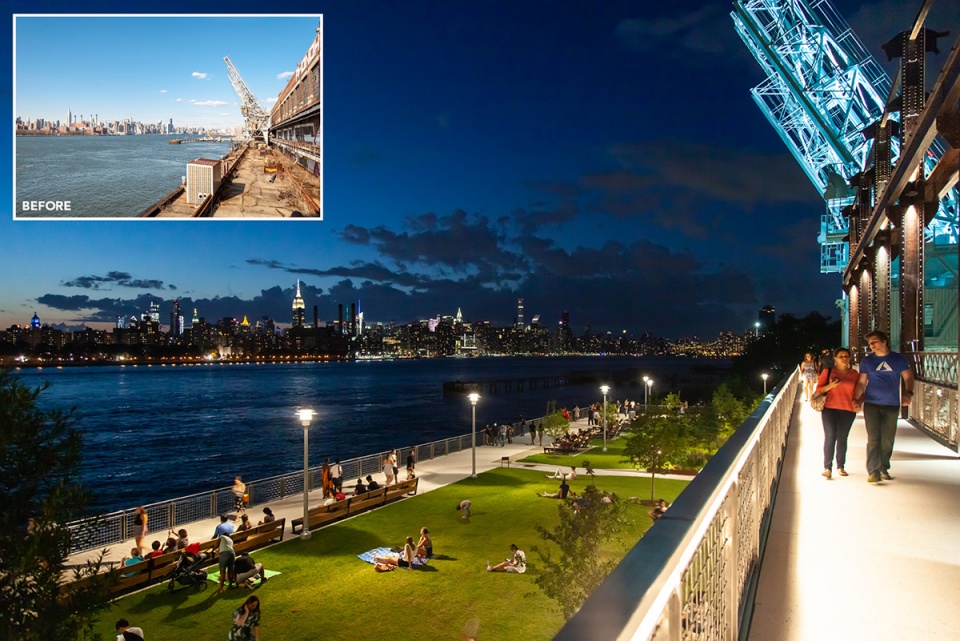
▲改造前后对比:Domino公园位于当地人均开放空间占有比率最低的社区之一。新的公园在160年来首次将威廉斯堡与东河重新连接起来,并为当地居民提供了亟需的开放空间。Before & After. Sited within a Community Board with one of the lowest ratios of open space to people, Domino Park reconnects Williamsburg to the East River for the first time in 160 years and provides much-needed open space for local residents. © Barrett Doherty (after), courtesy of Two Trees (before)
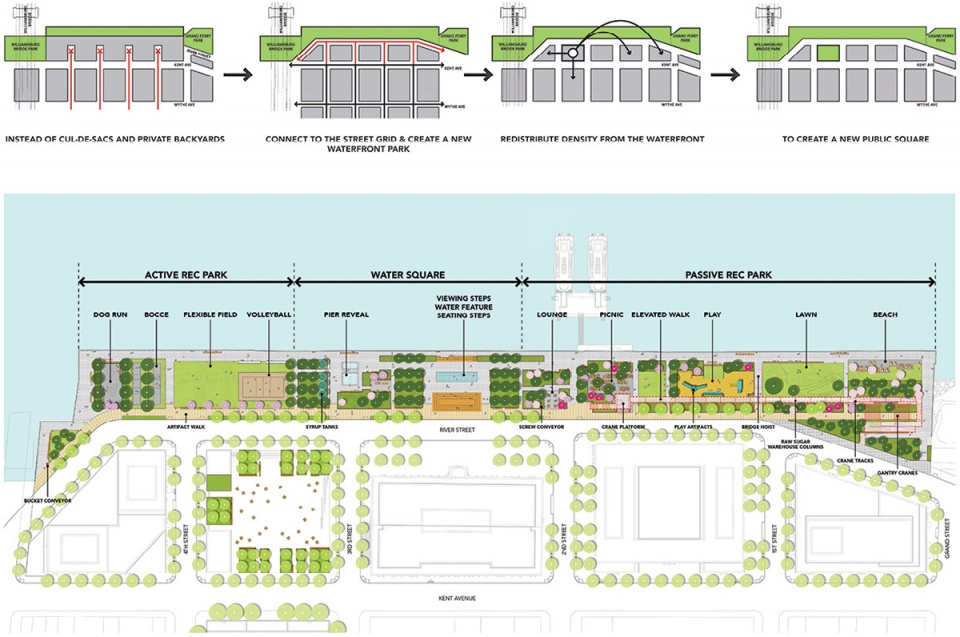
▲场地平面图:Domino公园占地5英亩,位于布鲁克林威廉斯堡东河沿岸,是占地11英亩的Domino糖厂旧址改造项目的第一阶段。改造后的场地将成为一个规模庞大的多功能区域。Site Plan. Domino Park is a 5-acre public park located along the East River in Williamsburg, Brooklyn, and the first phase of the transformation of the 11-acre former Domino Sugar Factory site into an ambitious mixed-use development project. © James Corner Field Operations
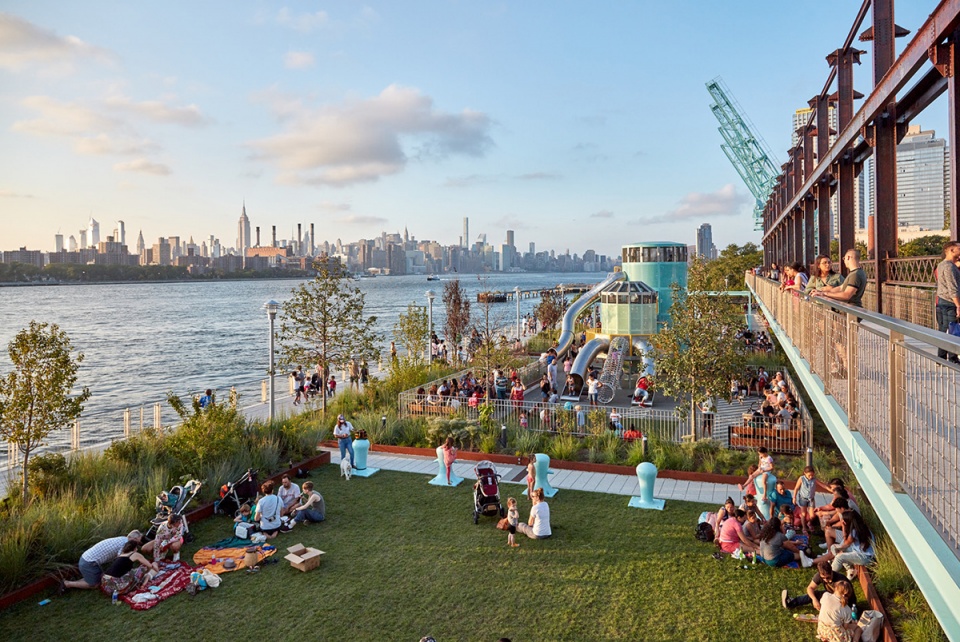
▲公园鸟瞰:公园北部区域由标志性的门式起重机和高架步道组成,重点关注被动的和以家庭为单位的使用。极具创造性的游乐场由艺术家Mark Reigelman设计,为人们创造了与场地历史有关的趣味旅程。Aerial. The northern part of the park is defined by the emblematic Gantry Cranes and Elevated Walk with a focus on passive and family-oriented uses. An inventive playground designed by artist Mark Reigelman provides a fun journey through the site’s history. © Daniel Levin
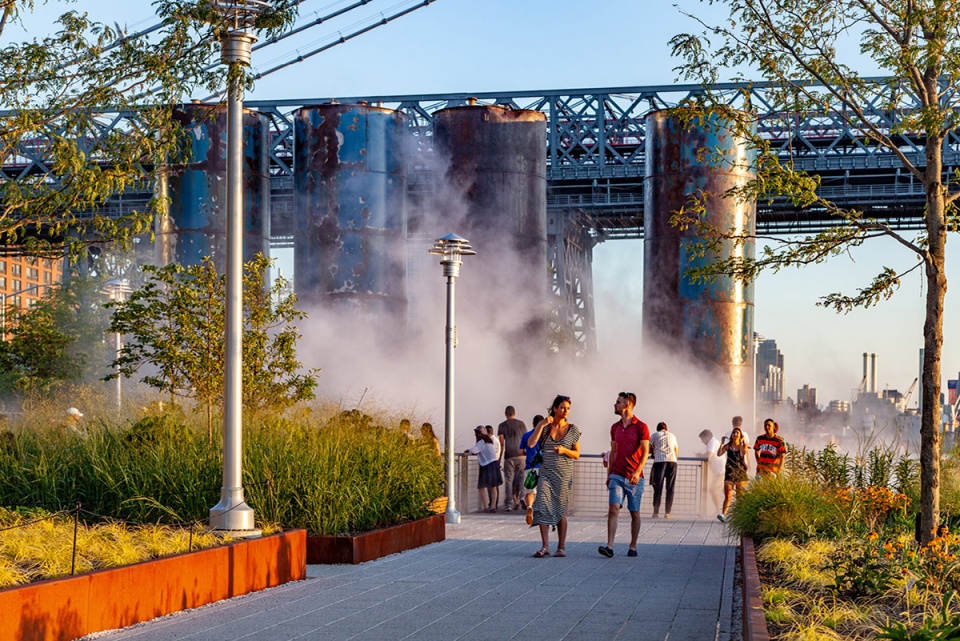
▲糖浆罐:从现场抢救并修复的糖浆罐是“文物之路”体验的一部分,展示了炼糖厂的内部运作过程。这些糖浆罐可以追溯到1950年代,用于存放大量的液体甜味剂。Syrup Tanks. Salvaged and restored Syrup Tanks are included as part of the Artifact Walk, showcasing the inner workings of the sugar refining process. The Syrup Tanks date back to the 1950s and were used to collect high volumes of liquid sweetener. © Barrett Doherty
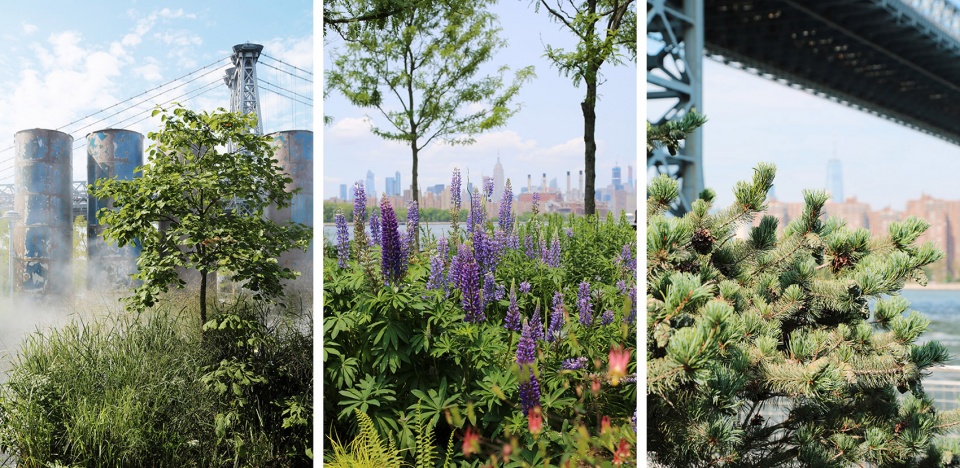
▲绿植:公园内种植了近175棵可持续的树木,并以本地草和多年生植物为主,形成了丰富的林下叶层,可以帮助界定整个公园的一系列活动空间。Planting. The park includes a sustainable plant palette with a mix of nearly 175 trees and a mix of primarily native grasses and perennials creates a rich understory that help define a series of programmatic rooms throughout the park. © Courtesy of Two Trees
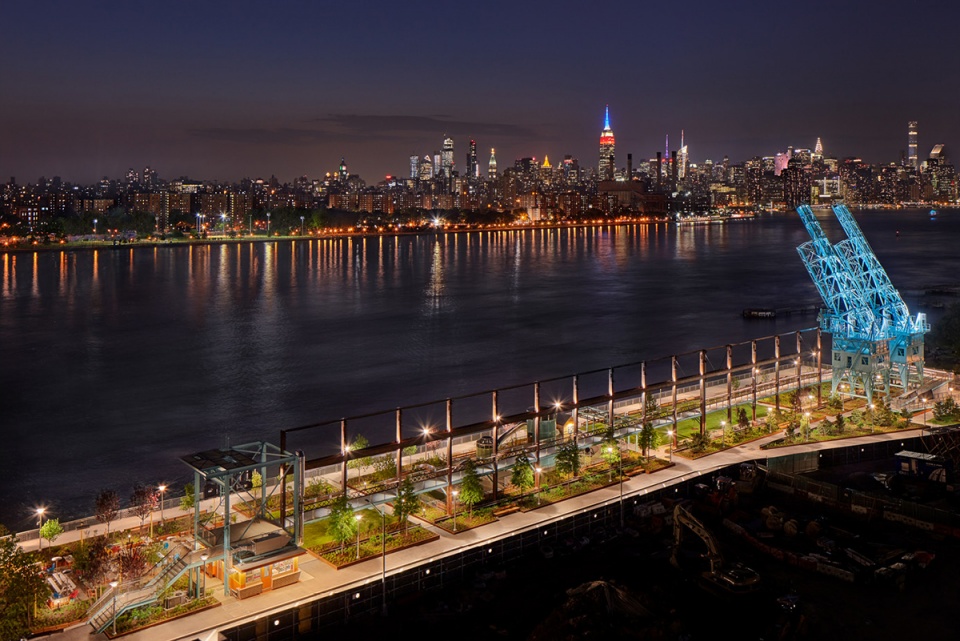
▲架高的步道:横跨2个街区的高架步道重塑了原有工厂建筑群独特的步行体验,使游客有机会近距离地观赏文物、体验难得的高空视角并欣赏曼哈顿优美的天际线。Elevated Walk. A 2-block-long elevated walk reinvents the catwalk experience that was distinctive of the original factory complex and provides an up-close view of the artifacts, a unique perspective from above, and views of the Manhattan skyline. © Daniel Levin
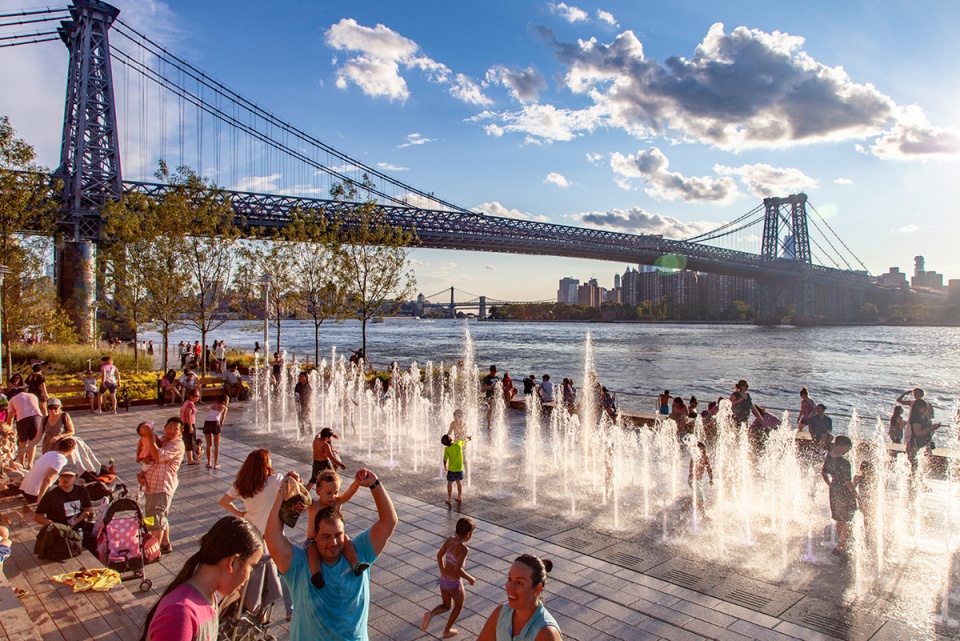
▲互动水景:中央水景吸引了来自不同背景的游客,从这里可欣赏到威廉斯堡大桥和东河的景色。Interactive Water Feature. The central water feature draws families from all backgrounds and offers views of the Williamsburg Bridge and East River. © Barrett Doherty
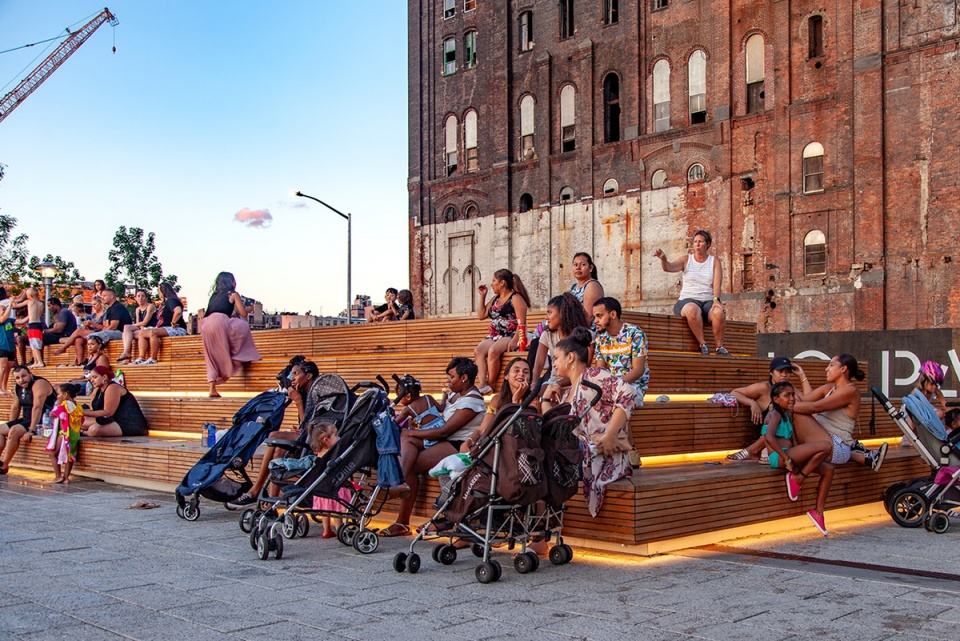
▲社区的据点:Domino公园如今已成为社区的重要支柱,为社区居民提供了聚集的场所。在周末高峰期,每天约有1.5万名游客到访。Neighborhood Anchor. The park has become an important anchor for the neighborhood and a place for the community to come together, with 15,000 visitors a day during peak weekends. © Barrett Doherty
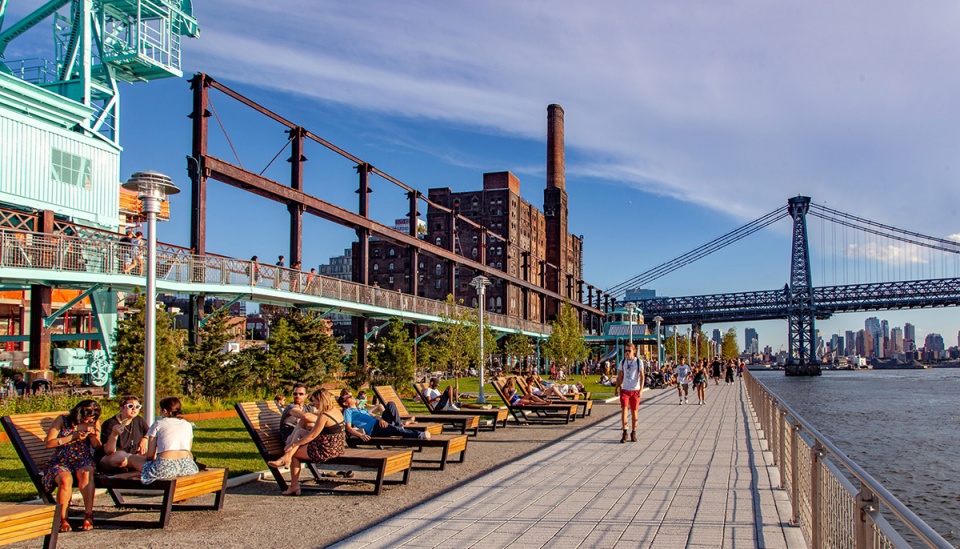
▲材质:公园使用的材料从威廉斯堡海滨粗犷的工业特征中汲取灵感,包括耐候钢、镀锌钢、不锈钢、混凝土和来自粗糖仓库的再生木材。Materiality. The park’s materials are inspired by the tough, industrial character of the Williamsburg waterfront including weathered steel, galvanized and stainless steel, concrete, and reclaimed wood from the Raw Sugar Warehouse. © Barrett Doherty
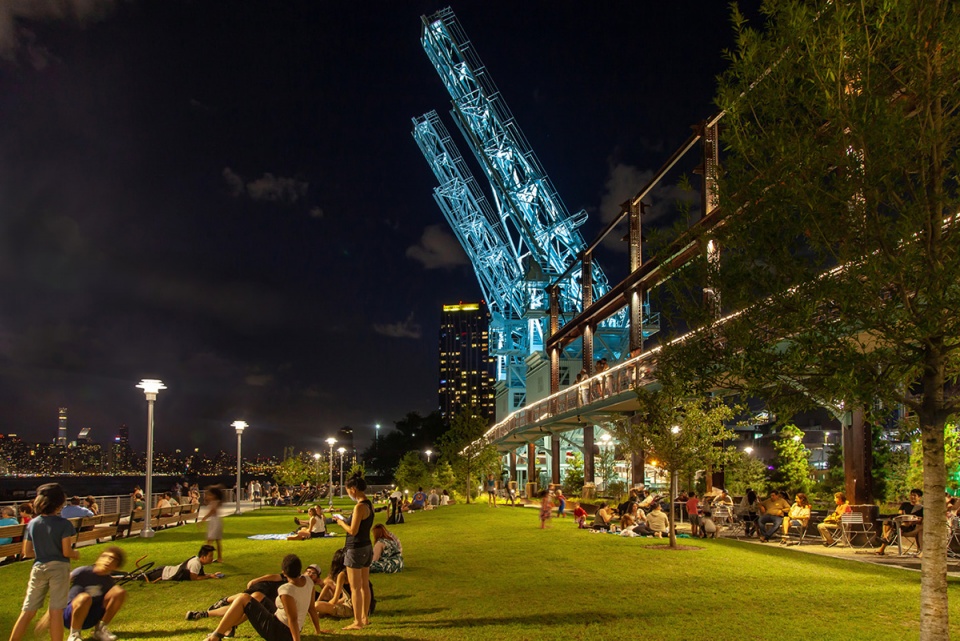
▲“文物之路”是公园的主要特色之一,其设计从滨水工业遗产中获得启发,整合了30多件从现场抢救出来的大型文物,向人们展示了炼糖厂的内部运作过程。Artifact Walk. Inspired by the legacy of the working waterfront, one of the primary features in the park is an “Artifact Walk,” which integrates over 30 large-scale salvaged relics into an interpretive walk and engaging journey. © Barrett Doherty
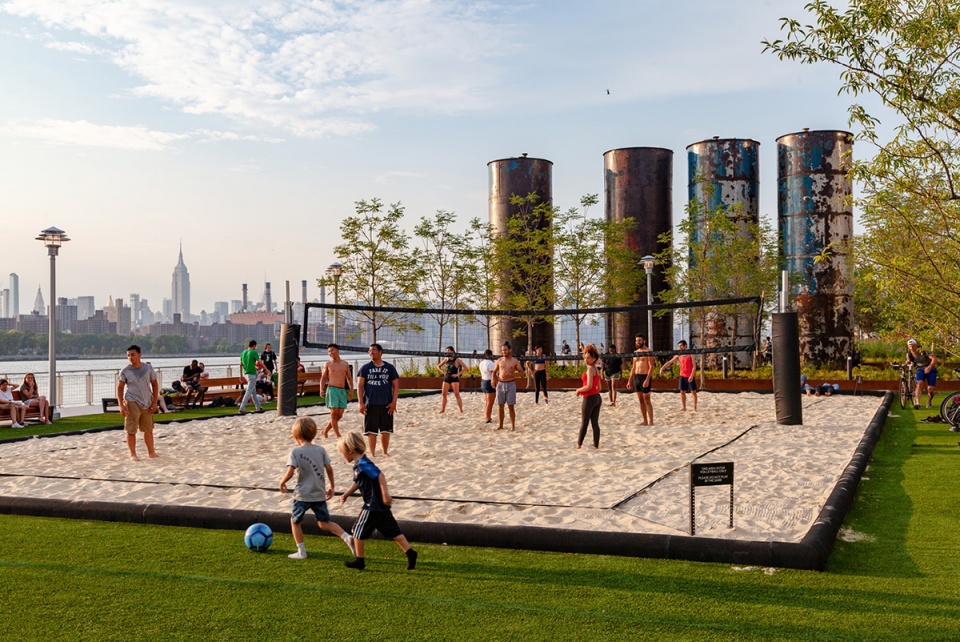
▲积极的娱乐活动:该公园的功能组合是与周边社区合作的直接结果,得到了民众的广泛支持,公园以家庭为导向,庆祝历史,并包括沙滩排球。Active Recreation. The park’s specific mix of programming is a direct result of engagement with the surrounding community, with popular support for the park to be family-oriented, celebrate history, and include a beach volleyball court. © Barrett Doherty
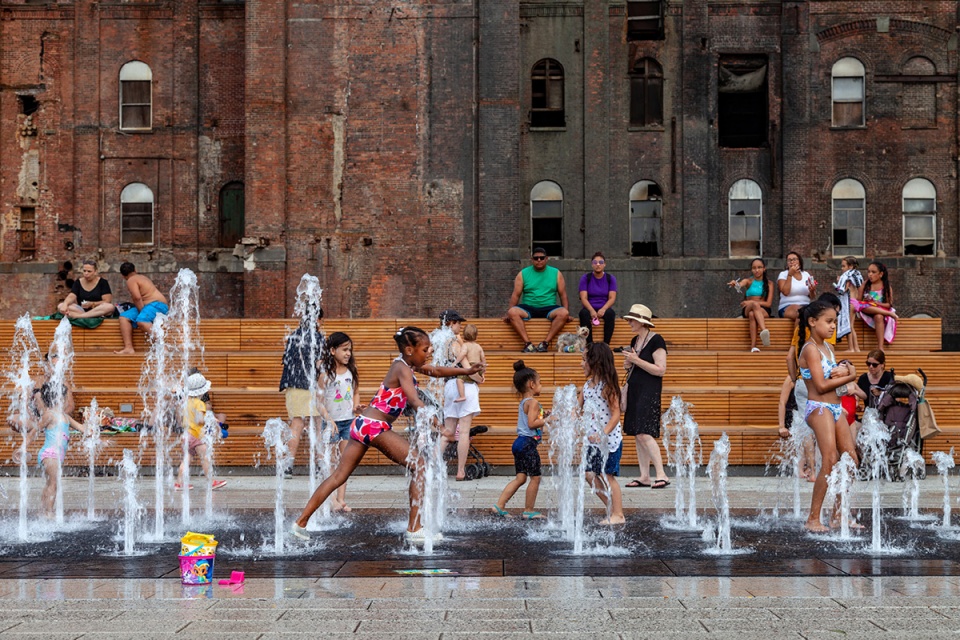
▲水景和阶梯式座位:中央水景和阶梯式座位设置在炼糖厂旁边的公园中心地带,是一个广受欢迎的聚会场所。Water Feature & Seating Steps. The central water feature and seating steps offer a popular gathering place at the heart of the park by the Refinery. © Barrett Doherty
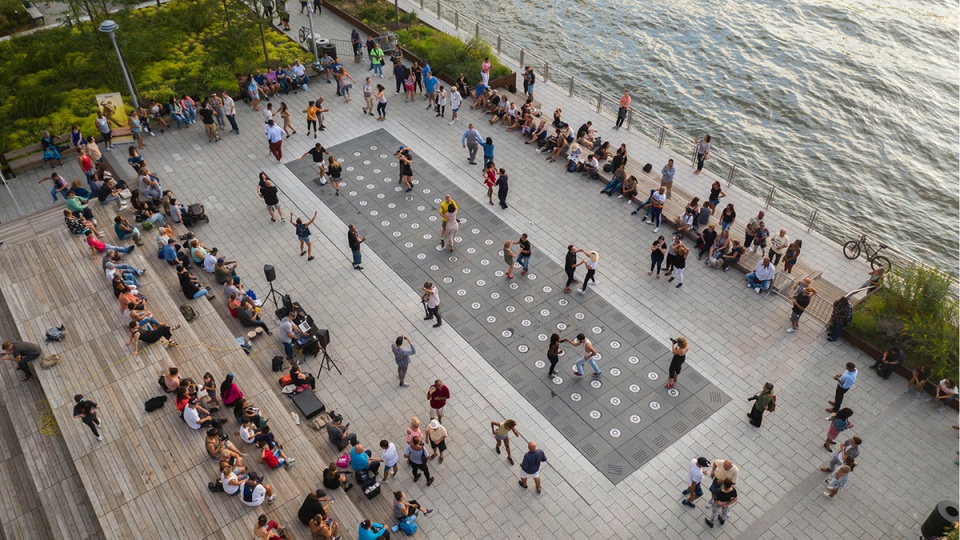
▲活动:Domino公园举办过许多活动,包括壁画绘画、读书会、写生课和萨尔萨舞课等。中央广场变成了一个开放式的场地,可以在水景关停时进行萨尔萨舞蹈课等公众活动。Programming. Domino Park has hosted many events, including mural painting, book clubs, sketching classes, and salsa. The central square transforms into an open plaza to host public gatherings such as salsa dance classes when the water is turned off. © Courtesy of Two Trees
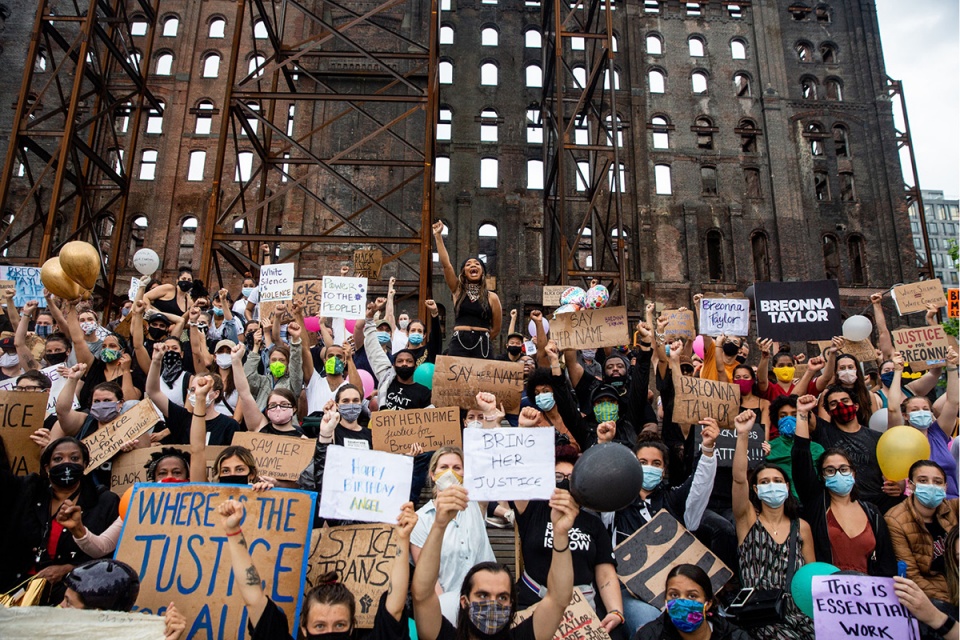
▲公民意见地:Domino公园一直以来都是公民们发表意见的集会场地。这里曾经进行过为George Floyd和Breonna Taylor举办的一系列抗议和守夜活动。 Forum for Civic Discourse. Domino Park has served as a forum for civic discourse including a series of protests and vigils for George Floyd and Breonna Taylor. © Adela Loconte/Shutterstock
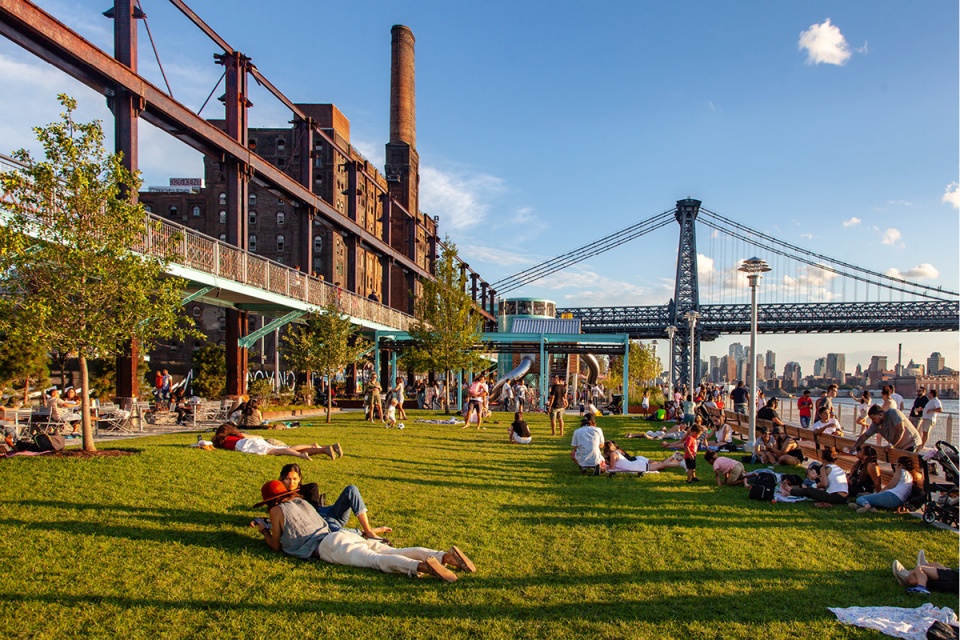
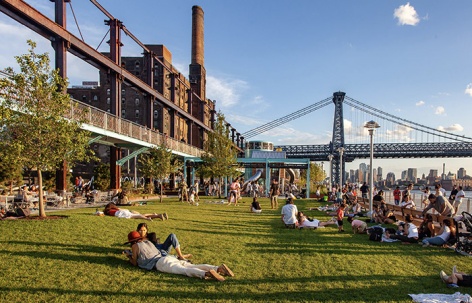
▲公园草坪的南侧是标志性的Domino炼糖厂旧址和威廉斯堡大桥,为游客们提供了日光浴、观景、野餐和休闲的理想去处。Lawn. The Lawn—with views south to the landmark Domino Refinery building and the Williamsburg Bridge—is a popular spot for sunbathing, people watching, picnicking, and leisure recreation. © Barrett Doherty
PROJECT NARRATIVE
Industrial Legacy
Domino Park is built on the former Domino Sugar Refinery, a site of incredible significance to the growth and development of the Williamsburg neighborhood and Brooklyn waterfront on the East River. It was once the largest and most productive sugar refinery in the world, producing up to 98% of the sugar consumed in the United States. Closing in 2004, the Refinery was the last major active industrial operation on Brooklyn’s once-bustling East River waterfront. Today, the park is a tribute to the story of this site and is dedicated to the diversity and resiliency of generations of Domino workers, their families, and their neighborhood.
Domino Park was the first built portion of the 11-acre site’s transformation into an ambitious mixed-use development project, representing a commitment to deliver public space for the surrounding community. The park reconnects Williamsburg to the East River for the first time in 160 years and provides much-needed open space for local residents, while honoring its history as a working waterfront. Combining with upcoming Two Trees’ River Ring development, Domino Park creates an integral link for a fully connected waterfront of the future. The overall project includes adaptive reuse of the landmark Refinery building for creative office space and four new mixed-use residential buildings, including 700 units of affordable housing.
Artifact Walk
One of the primary park features is an interpretive and educational “Artifact Walk,” which integrates over 30 large-scale salvaged relics that showcase the inner workings of the sugar refining process. Restored artifacts include 80-foot-tall gantry cranes and a crane platform that once unloaded sugar; syrup tanks; bucket and screw conveyors; a hoist bridge; and 21 columns from the Raw Sugar Warehouse. A 2-block-long elevated walk reinvents the catwalk experience that was distinctive of the original factory complex and provides an up-close view of the artifacts, a unique perspective from above, and views of the Manhattan skyline. It is a nexus of old and new—a trace of the past and a new social balcony.
As impressive and tactile pieces of history, the artifacts provoke a sense of wonder, discovery, and inquiry about the history of the site.
Park Experience
An important first move was the extension of River Street to reconnect the park back to the city grid and deepen a sense of publicness rather than a perception of a private front lawn for new development. The new street also significantly improves connections between the upland and the waterfront, eliminating the need for stairs and ramps and increasing the park’s accessibility.
Domino Park offers a range of activities that appeal to a diverse user group, with spaces for visitors and locals alike to come together. Active uses are clustered in the south near the Williamsburg Bridge, where there is more noise and urban context, including a dog run, bocce courts, a flexible playing field, and volleyball court. The Refinery building, with its distinctive smokestack, represents the physical and spiritual heart of the redevelopment, with features that awaken a strong connection to water. A large tiered seating feature serves as a gathering place and vantage point to view a playful interactive water feature, one which transforms into an open plaza for public gatherings when the water is turned off. The Fog Bridge spans an open cut to the river below, revealing historic timber piles and allowing visitors to see the waves and hear the sound of the tides. A set of misters surrounding the bridge emit a gentle cloud of fog that envelops passersby in the shoreline’s wind patterns, creating a dramatic entryway to the massive Syrup Tanks.
The northern part of the park is defined by the emblematic Gantry Cranes and Elevated Walk with a focus on more passive and family-oriented uses. An inventive playground designed by artist Mark Reigelman creates a fun journey through the site’s history for children. Tacocina offers a laid-back setting for tacos, beer, and cocktails enjoyed next to a large rolling lawn that provides a relaxing place to hang out and watch the sunset.
The park’s materials are inspired by the tough, industrial character of the Williamsburg waterfront including weathered, galvanized, and stainless steel, concrete, and reclaimed wood from the factory itself. A custom furniture palette constructed from reclaimed pine and powder-coated steel includes a mix of tables, lounge chairs, and benches. Original metal finishes and patinas were preserved where possible. New steel was painted a turquoise “Domino blue” to match a color found throughout the original Refinery, along with relics that needed a new finish, such as the gantry cranes and mooring bollards.
Resiliency
The project started days after Hurricane Sandy and was greatly influenced by that event and subsequent discussions in NYC regarding resiliency. One of the first decisions was to set the buildings back beyond the required distance and raise the platform to be above predicted post-Sandy FEMA flood elevations. This resulted in a more generous park while protecting the buildings and infrastructure. 43% of the park is vegetated with nearly 175 new trees and a hardy native understory that reduce stormwater runoff and function as an absorbent sponge and first line of defense for the neighborhood.
The park is one of the first projects to be certified under WEDG (Waterfront Edge Design Guidelines), an incentive-based ratings system to make waterfronts more resilient, environmentally healthy, accessible, and equitable for all. The park’s landscape is managed 100% organically, and plant material and debris from the park is composted and redistributed back into the plant beds.
Building Community
A robust grassroots community outreach effort complemented the official rezoning process, including large public forums as well as numerous small meetings with respected community groups and leaders to make sure the park reflected and served its community. The plan won widespread community board support in 2013 and has delivered fully integrated, deeply affordable units. Domino Park also has longstanding relationships with local organizations Churches United and Los Sures, as well as placement of over 100 local jobs through St. Nicks Alliance.
From day one, Two Trees and the design team held countless community charrettes to incorporate what the local residents wanted in the new park, which led to family-oriented activities, the popular volleyball and bocce courts, and a number of other programs. The relationships built in those meetings directly reflect the diverse park visitorship today.
To date, the park has seen over 4 million diverse visitors from nearby Latino, Hasidic and Black communities and hosted hundreds of events and gatherings for local organizations, including mural painting, book clubs, sketching classes, salsa, and student photography exhibitions. In June 2020, Domino Park welcomed its first community food scrap drop-offs in response to city-wide cuts and announced a partnership with the Billion Oyster Project to clean, restore, and protect the local ecosystem with Oyster Research Stations on-site.
Most recently, Domino Park has been spotlighted as a global model for open space, civil discourse, and adaptive public space. The park was able to deploy quick, effective “tactical urbanism” techniques that included drawing 30 social distancing circles to encourage visitors to keep a safe distance apart during the Covid-19 pandemic. Organizations around the world emulated this technique, and Domino Park demonstrated the importance of equity and access to public amenities, particularly in dense cities like NYC.
In addition to being a model for private investment for the public good, Domino Park has become an important anchor for the neighborhood and a place for the community to come together. “Equitably accessible quality open spaces are increasingly understood as vital to the physical, social and economic health of urban neighborhoods,” said Jury Chairman Antonio Fiol-Silva after Domino Park received the ULI Urban Open Space Award in 2020. “Domino Park [is a] brilliant example of the profoundly positive impact that such spaces can have in the lives of their communities.”


以往熟知的城市更新,旧区保护,要么是拆除原样重建,要么是抹掉破败的痕迹,重新分时粉饰一番;但是这个锈迹斑斑脱漆的大油桶没有被重新粉刷,坏掉的窗户没有被拆掉或者更换,积满灰尘的玻璃还在继续积灰,被油污熏得漆黑的红砖没有被陶板陶砖换掉,这些是我觉得这个改造项目最动人的地方。
是个得奖的底子,地域性真的是设计的出发点。
这个案子不错,人参与度极高,实用性极高的景观
纽约改造项目挺多的