“该项目让原本非常难解释的概念变得清晰而易于理解……手册中的图例做得十分精彩。”
– 2018年评审委员会“What are often very difficult concepts to explain is here very clearly expressed… The graphic clarity is wonderful.”
– 2018 Awards Jury
来自 ASLA 对gooood的分享。
Homeplace: Conversation Guides for Six Communities, Rebuilding After Hurricane Matthew by NC State University Coastal Dynamics Design Lab
项目概述
PROJECT STATEMENT
尽管大众对描述气候变化的信息已经有了认识,但在“如何利用信息来做出有效决策”这方面仍然有所欠缺。此外,目前还找不到太多与普通老百姓相关的、能够体现气候变化策略的故事,也很少有数字工具能够反映气候变化与复杂数据之间的关联性。
“家园:飓风马修之后,六个社区的重建”旨在填补类似的交流空缺。指南中提供了大量数据和生态背景,但事实上它是基于房屋与塑造房屋的景观之间的界面而提出的。这些指南旨在解决区域内的人居生态问题(包括应对洪水),并提出了能够反映当地人生存经验的策略。项目不仅充当了与受灾社区进行批判性对话的实体档案,还提供了方便传阅和分享的电子版本,以回应乡村社区资源匮乏的现状。在重建计划的未来阶段,“家园”项目还将提供可通过多平台进行修改、更新和分享的通信基础设施。
Although there is public awareness of information describing the effects of climate change, gaps remain in how information is communicated to enable impactful decision-making. There aren’t enough human-stories (relatable to everyday people) grounding climate change strategies, and there is a dearth of digital tools reflecting contemporary engagement with complex data.
Homeplace: Conversation Guides for Six Communities, Rebuilding from Hurricane Matthew were designed to address these communication gaps. Although the guides include data and ecological context, they are derived from the vernacular interface between house and landscape that defines home. The guides address the human ecology of the region—including the realities of living with and responding to floods—and feature strategies that reflect the lived experiences of people in the landscape. Additionally, Homeplace was designed to not only function as a physical document to initiate critical dialogue with affected communities—it responds to the realities of low-resource rural communities by being formatted to view and share electronically. In future phases of recovery planning, Homeplace offers a communication infrastructure that can be modified, updated and distributed using multiple platforms.
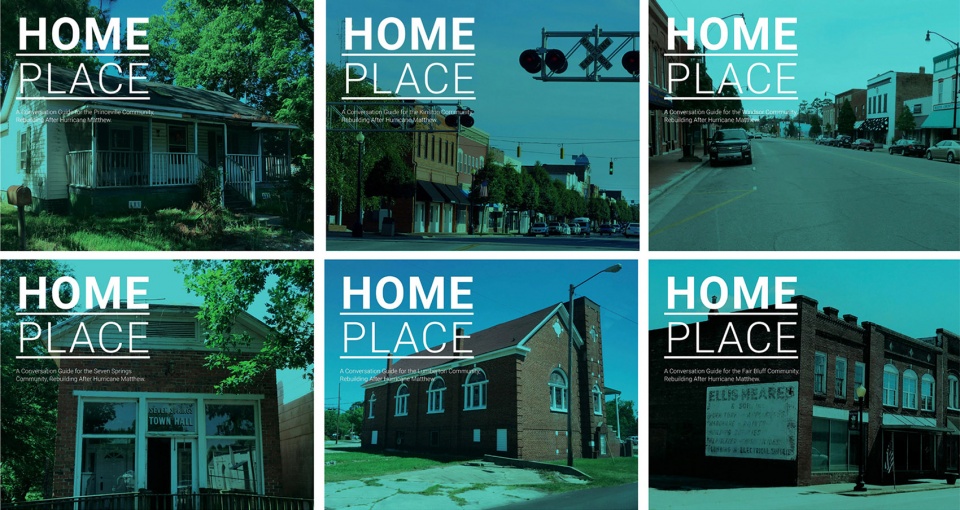
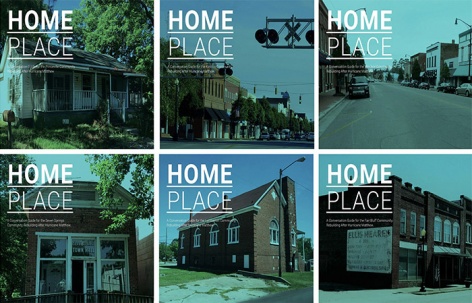
▲北卡罗莱纳州东部6个社区的对话指南封面:这些指南有助于帮助城市决策者、区域规划者和居民在飓风马修过后对社区重建的选择进行深入理解。Covers for 6 Eastern North Carolina community conversation guides. These guides were used by city leaders, regional planners, and residents to better understand options for the communities rebuilding after Hurricane Matthew.
项目说明
PROJECT NARRATIVE
2016年10月8日,飓风马修席卷了北卡罗莱纳州东部,降水量创下了历史记录。随之而来的是灾难性的洪水,使该州位于沿海平原地带的社区遭到严重破坏。此次飓风是北卡罗来纳州历史上的第三大破坏性灾害,造成31人丧生、约10万座建筑物被淹没,财产损失超过15亿美元。
灾后重建是充满压力、复杂且情绪化的。当地政府、州政府和联邦政府实施的政策和措施让幸存者们感到迷惑并且不知所措,他们一边试图从风暴的创伤中恢复过来,一边还要阅读繁琐的官僚式语言、晦涩难懂的缩写词,以及各种高技术含量的文件以期能够重建社区,让生活恢复常态。
目的
“家园”对话指南在风暴后应运而生,其目的是帮助洪灾的幸存者们解读有关恢复和重建工作的复杂信息。“家园”通过一系列传播工具来为灾区提供易于理解的技术援助,以解决典型的灾后问题。在这种大型的、以州政府主导的计划框架内实施重建,有助于促进居民、社区官员以及多方之间的对话。“家园”指南为居民提供了多尺度、高质量且以社区为重点的设计和策略以支持重建工作,同时也为社区在未来的稳固发展打下了重要的基础。
指南提供了从家庭到社区尺度的应用策略,同时考量了更加广泛的区域基础设施、开发模式以及人口趋势,其最终目的是增强北卡罗莱纳州易受洪灾影响的社区的抗灾能力,并为之提供设计、规划、政策策略和工具,以促进社区的长期发展,恢复社区及其居民的健康和活力。今天,为六个社区分别设计的指南已经被纳入到整个社区的重建计划当中,来自当地居民和利益相关者的意见也被转化为更具操作性的具体行动。
受众+方法
“家园”指南的音频、内容和设计均经过策略性的推敲,以便直接与受洪灾影响的居民进行交谈。从非专业人士的角度看,指南的目的是促进居民、设计师、社区规划人员和政府官员之间的讨论与对话。这种方法的特征是站在幸存者的角度来考虑问题,并根据经验推测了各种各样的可能性,以便居民们决定在何时、何处、以何种方式进行重建。此外,指南还重点指出了业主需要考量的原则问题,以决定他们是选择1)在原址上进行重建,还是2)搬到新的地址。“家园”指南解释并说明了在做出这些挑战性的决策时可能需要考虑的关键因素,包括可达性、美观程度、成本、舒适性、效率和灵活性等,通过这种方式来为居民赋予充分的主动权,使他们不再为做出选择而焦虑。指南所传递的信息创造了富有实践意义的对话,能够帮助社区成员建立知识体系,并教会他们如何在这些复杂的情况下做出足以改变生活的明智决定。
“家园”指南借助图例和平易近人的语言来实现这一目的。这样的语言可以简单有效地阐明建筑、景观和社区在灾后重建中所扮演的重要角色。这些文件还具体分析了搬迁房屋和使用空置土地时所要面临的一系列挑战和机遇,定义了关键的流程、步骤、条款以及由地方、州以及联邦制定的标准和原则。它为房主和决策者提供了为特定区域量身打造的高质量解决方案,其中包括为院落、街道和社区绿地制定的完整设计策略。这些策略彼此协同增效,最终创造出能够反映当地历史和特征的、具有高度敏感性和复原能力的居住空间。
信息+语言
“家园”(Homeplace)在北卡罗莱纳州常常被用来形容一种与基于场所而产生的、能够使人与建筑物、空间和景观形成关联的力量。“家园”不能被简化为房产或者建筑物的概念;相反,它蕴含着一个由无社会、文化和环境构成的无形的关系网络,正是这一网络为场所赋予了意义。它承认了好的设计和好的建造只能走到今天这样的程度——它们为社区间的互动提供和本地化的表达奠定了基础,也正因如此,场所才得以成为家园。
“家园”可以通过不同尺度的场景来表达,包括:
房屋和土地:在灾后恢复期间,家园意味着一座被重新修建的房子。土地的概念存在于各种政策和决策构架中,它定义了能够抵御洪灾风险的成本和生存标准。土地和房屋是人们进行创造、维持生活以及传承财富的基本单位,也是使人与场所保持密切联系时所处的一种最普遍的尺度。
社区:从整个城市到社会网络中的朋友和家人,社区在指南中也是基于场所而存在的。社区可以用来表述一个街区、一条街道或者任何使人们经常相遇和交流的单元。社区代表着一个关键的尺度,因为它是灾害防范中最重要的一个单元。比起连接性较弱的社区,那些具有稳固关系的社区往往具有更高的适应性和恢复能力。
地区:在北卡罗莱纳州东部,文化和生态遗产的交织明显地体现在城市和城镇的各个角落。“地区”这一尺度通常关乎土地利用、开发模式以及流域管理等一系列重要的考量因素,这些因素彼此形成紧密的联系,甚至可以决定风暴过后导致洪水的水量。单个流域的管理也可能对城市预防和抵御此类灾害的能力产生重大的影响。
“家园”指南在以上几个不同的尺度下发挥作用,反映当地的人与传统,定义作为设计和规划活动对象的环境特征。指南的使命是创造有利于个人与社区健康、保障安全与福祉、保护历史和遗产并提高整体生活质量的实体空间。而设计,则是将这些目标转化为实际结果、为居民们创造新生活的最直接的工具。
传播+成果
作为多媒体的传播工具,“家园”指南旨在以最大程度贴近公众。设计跨越了纸质和媒体终端,从字体大小到平面设计再到配色均经过了细致考量,最终以小册子的形式呈现,读者可以选择在手机、平板电脑和电脑上阅读和探索。交互式的功能提供了线上和线下的双重访问途径,对于条件不允许的用户,还可以通过代理商、政府部门或当地图书馆进行拷贝和打印。
“家园”文档(包括开发过程中的每个步骤)最终促进了持续、直接而深入的社区参与活动,同时推动了各类研究、宣传和教学的专业进程,包括但不限于:
· 在社区会议和工作研讨会上使用;
· 促进和加强跨学科和跨机构的合作,以帮助正在进行的灾后重建工作;
· 促进大学研究人员、设计和规划者以及机构代表之间的共同努力,为针对社区的重建计划提供信息;
· 在通常由政策和经济学定义的实践领域中发挥潜在的调解作用;
· 实现社区合作的连续性和持久性;
· 从非政府组织和政府机构获取资源并吸引投资,以开展更多实质性的工作。
“家园”指南与洪灾的幸存者进行了关于灾后重建的问题的深入沟通,内容涉及基础设施、住房、公共设施、企业以及社区开放空间等。它作为全面且易于理解的图文平台,使从灾害中恢复过来的大量社区重新找回丰富的历史、文化和发展机会。“家园”指南在未来将继续以这种方式协助北卡罗莱纳州提高抗洪能力、社会以及社区的凝聚力,同时促进公平并改善生活质量。
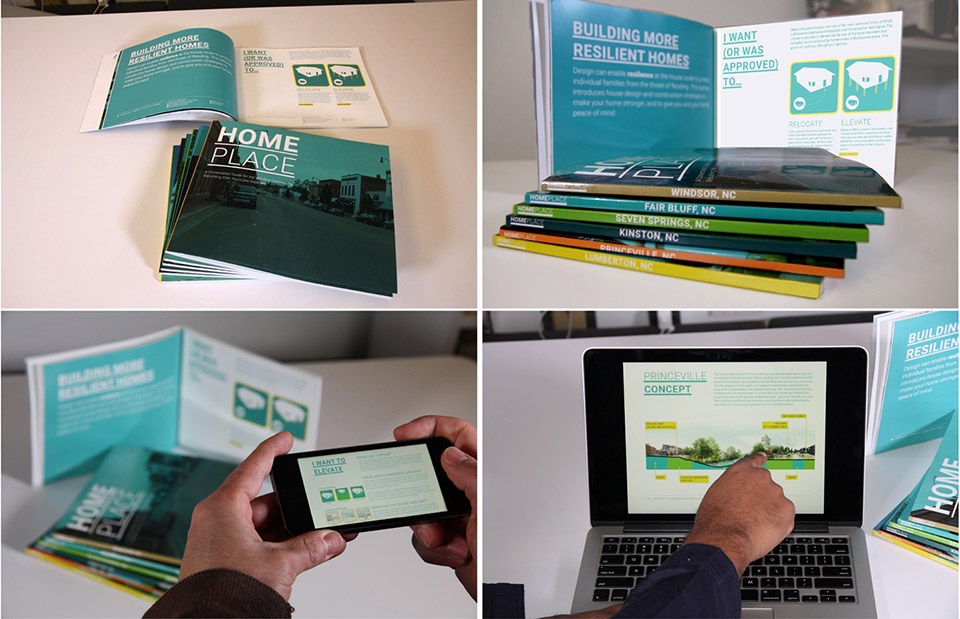
▲在不同平台上展示的指南:“家园”指南能够以数字和印刷方式在各类平台上访问,随时满足人们对于“现场”工具的需求。Guides shown in various platforms. The guides were designed to be accessed both digitally and in print, and on various platforms, anticipating the need for the tools “in the field.”
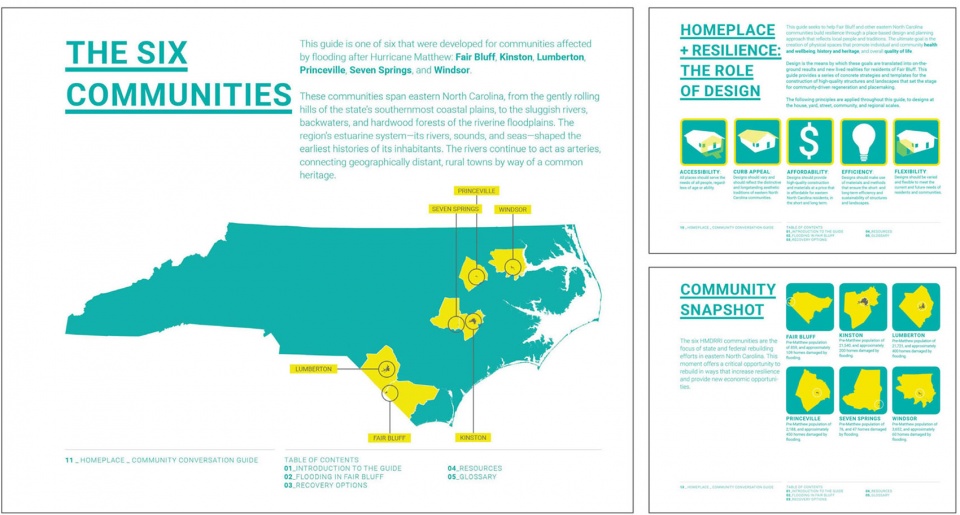
▲社区景观:基于对受众和社区的充分了解,指南将着重于评估社区的独特性和相似性。The community landscape. Emphasis on understanding the audience and communities these guides would ultimately serve, including evaluating the communities’ uniqueness and similarities.
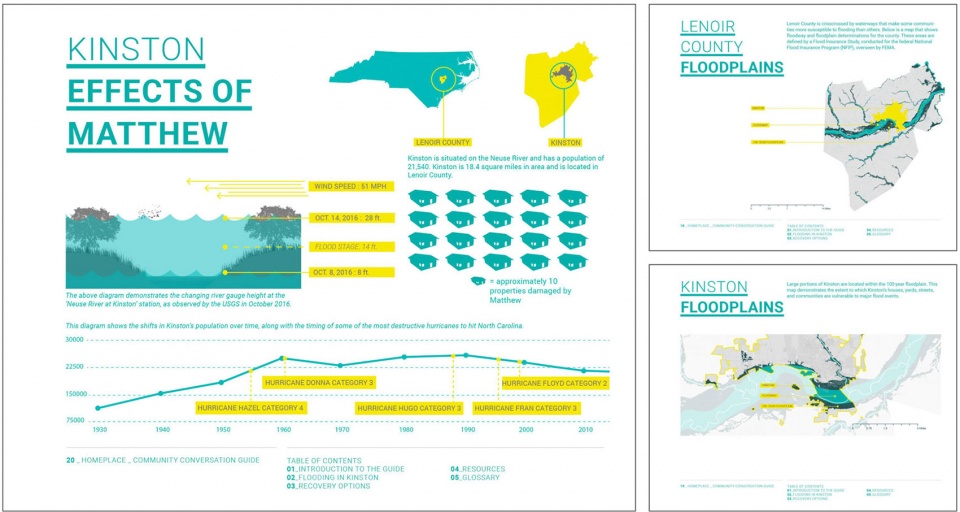
▲飓风马修的影响:影响的范围包括城市和地区的社会、环境以及历史状况。Effects of Hurricane Matthew. Scales of impact included the social, environmental, and historical effects of the towns and regions.
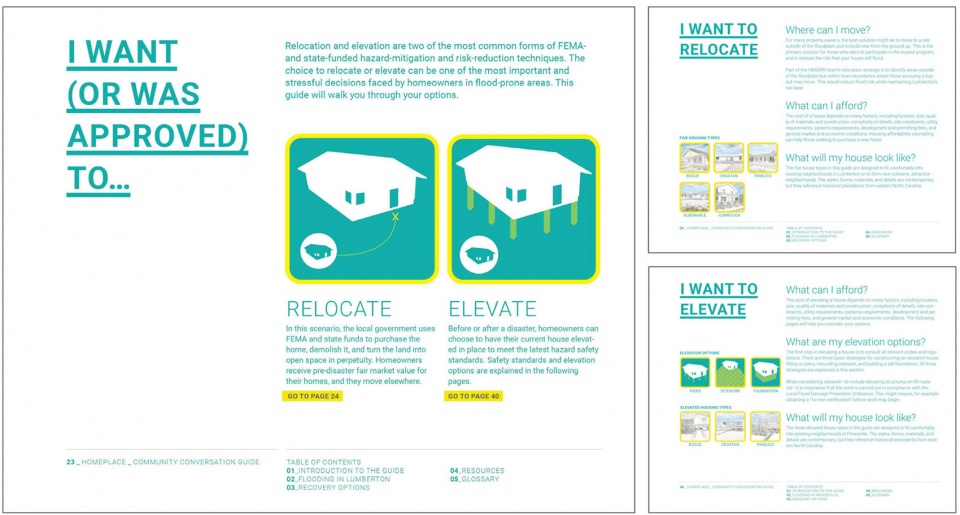
▲了解社区选择。重建或搬迁的决定涉及到资金、位置、建筑结构类型以及未来防洪能力等诸多方面的选择。Understanding community options. The decision to rebuild or relocate involved myriad options in terms of funding, location, types of building structure, and mitigating future impacts of flooding.
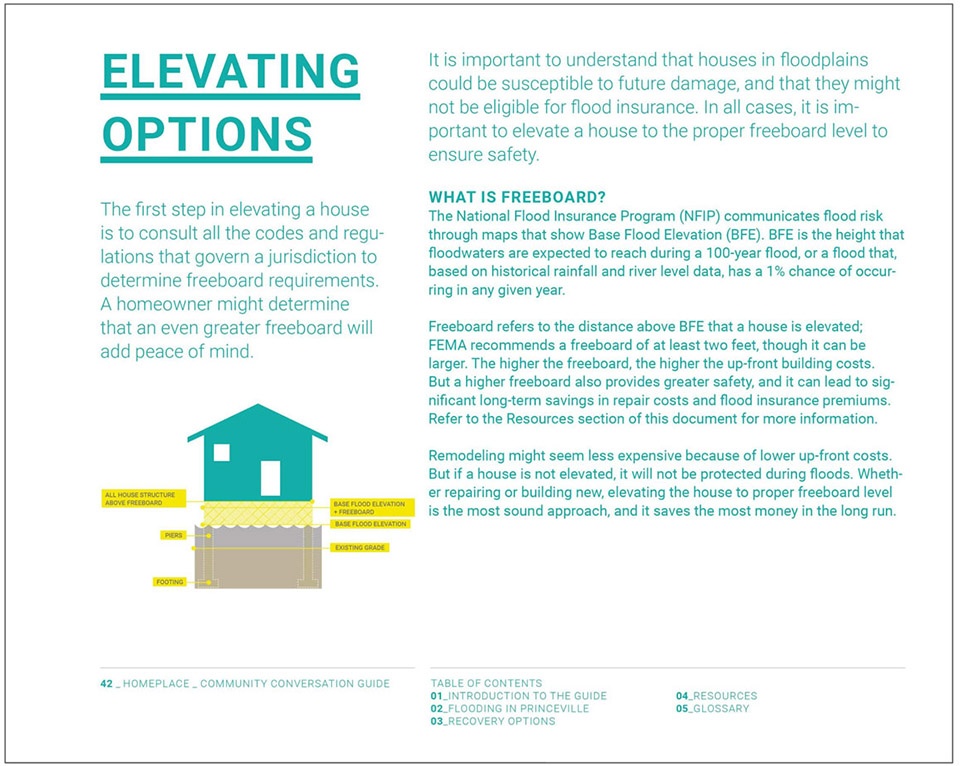
▲深入研究房屋标高:帮助居民了解抬升房屋高度的基本原理,使其在(重新)建造自己未来家园的时候做出更加明智的选择。Diving deeper into elevation. Helping residents understand the fundamentals of elevating to support them in making more informed decisions regarding their own future home (re)construction.
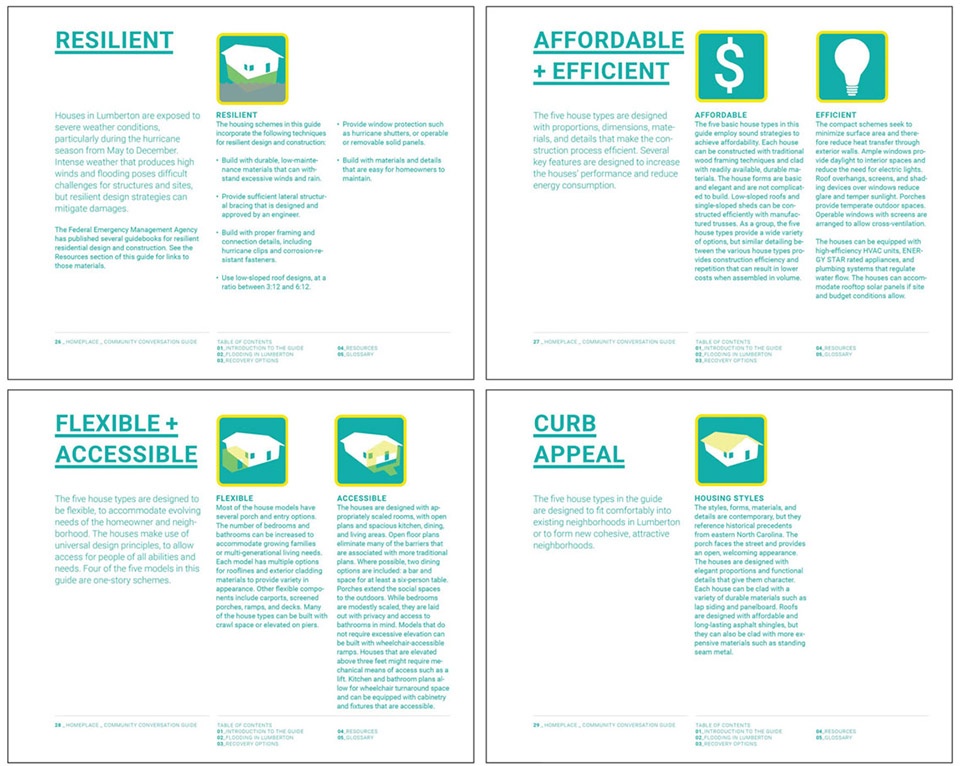
▲“家园”的建造原则:所有的建筑计划均基于6个关键原则:恢复力、可负担的成本、高效性、灵活性、可达性和美观性。Principles of construction for Homeplace. All architectural plans were based on 6 key principles: resiliency, affordability, efficiency, flexibility, accessibility, and aesthetics.
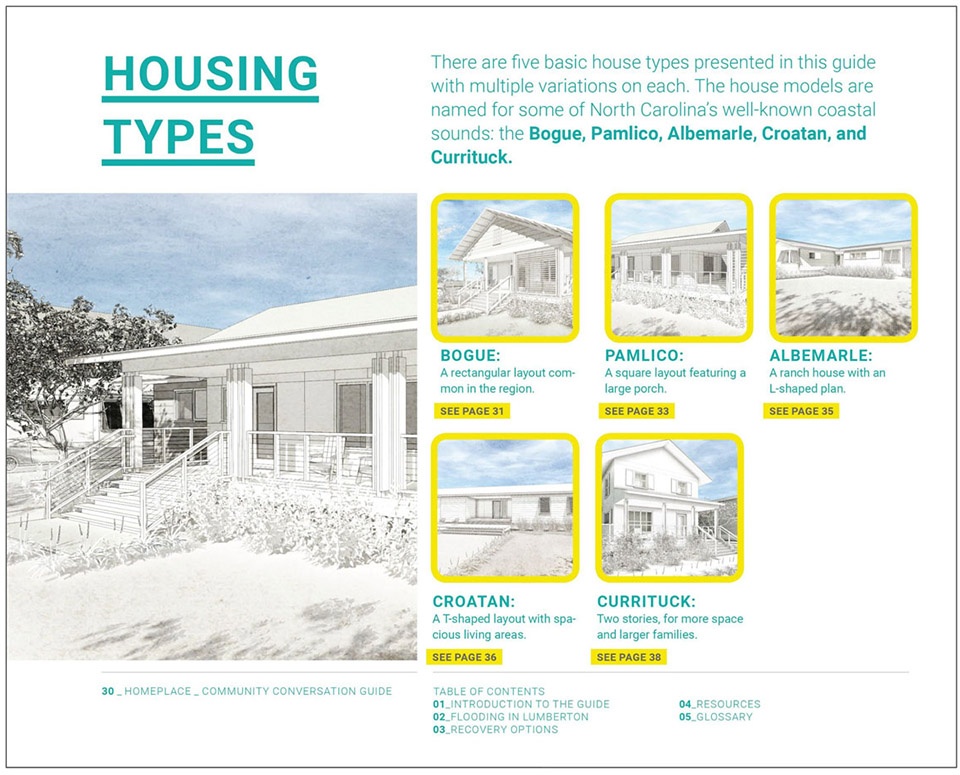
▲地区和本地特征:图中的5个核心住房类型均来自于该地区的本土建筑,并以该州著名的海岸地带命名。Regional and local identity. The 5 core housing schemes were derived from the region’s vernacular architecture and named for the state’s famed coastal sounds.
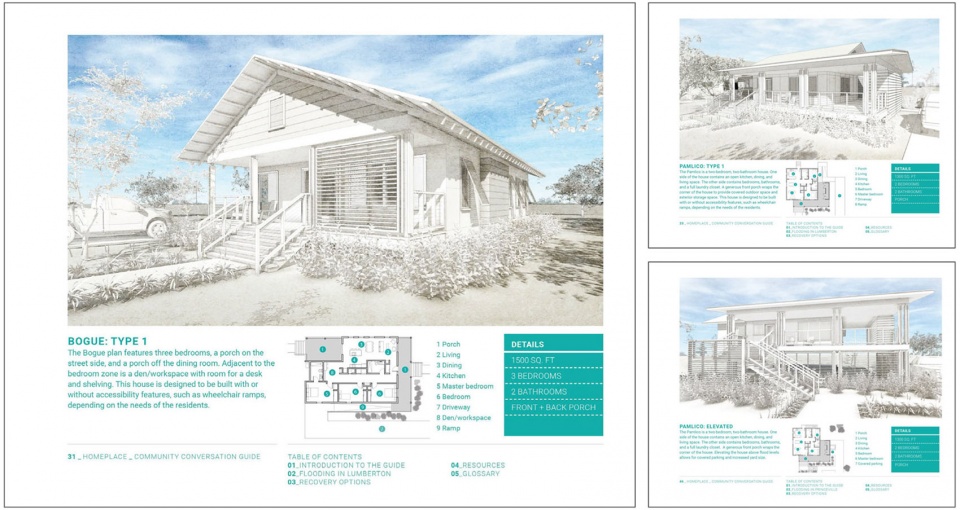
▲建筑设计方案:渲染图显示出房屋被抬升至不同的高度,以应对可能达到的洪水水位。Architectural schemes. Renderings show housing elevated to various heights above grade to illustrate appropriate responses given potential flood levels.
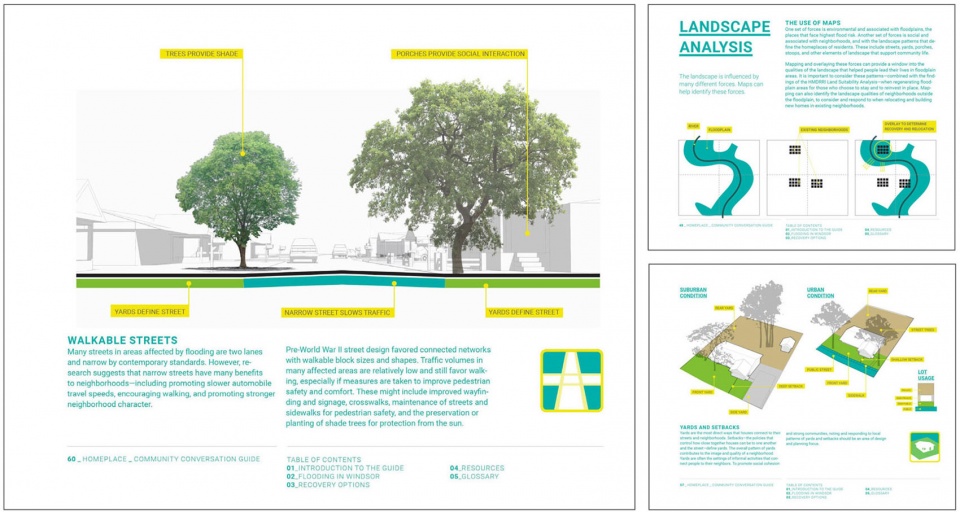
▲景观分析:测绘和覆盖力分析提供了了解景观质量的窗口,能够帮助易受洪水影响的社区中的居民应对生活中的问题。Landscape Analysis. Mapping and overlaying forces provided a window into the qualities of the landscape that help people lead their lives in flood-prone communities.
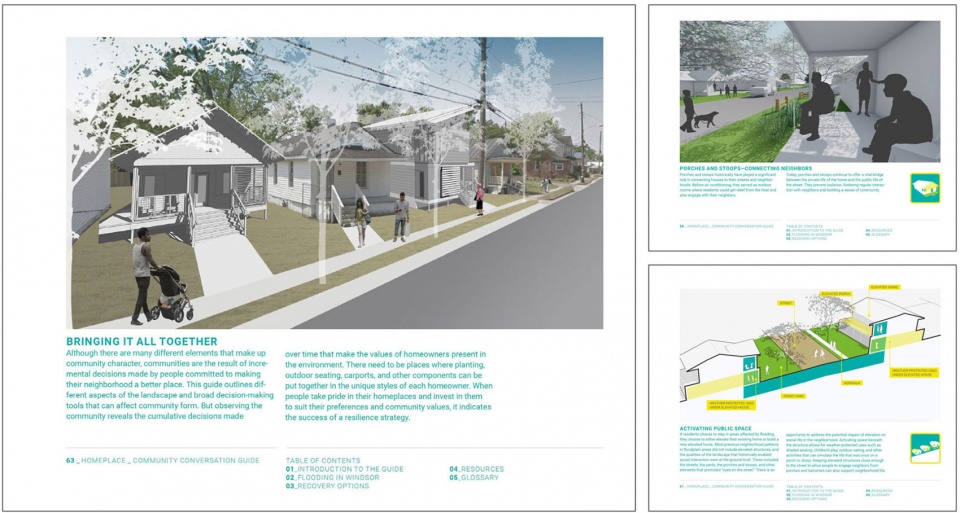
▲街区尺度:在街区的尺度下,“家园”的设计旨在通过共享的景观将个体联系在一起。Neighborhood Scale. At the neighborhood scale, the design of Homeplace connects individuals through their shared landscapes.
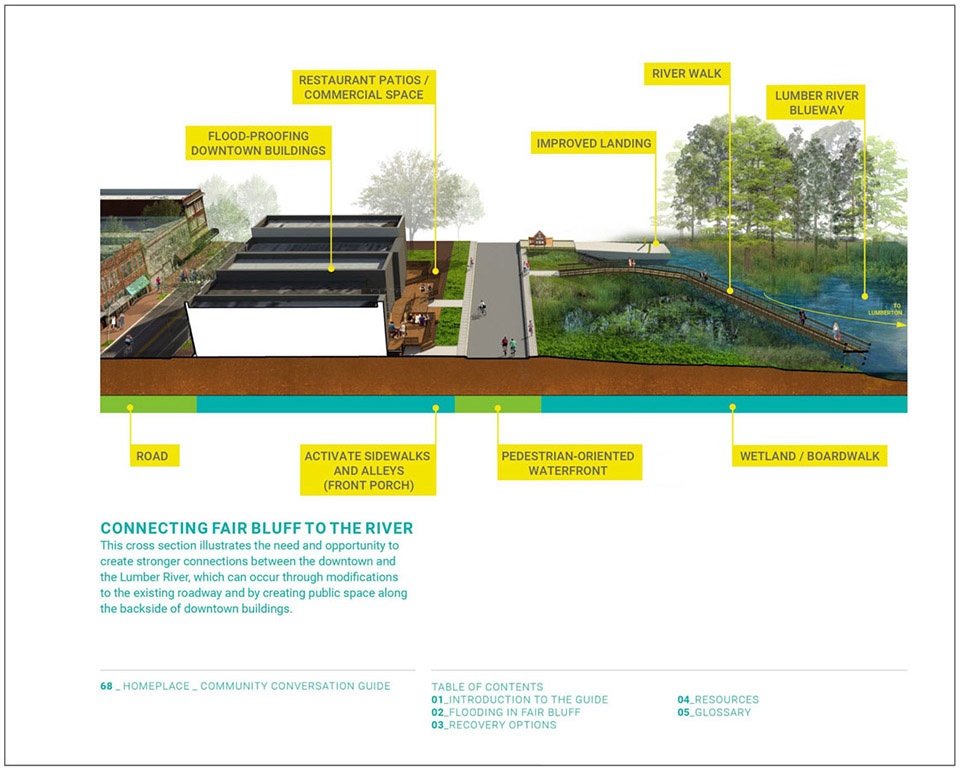
▲环境和背景:在街区尺度下,设计重点关注景观元素与水道的互联性,以及休闲功能和经济发展等问题。Environment and Context. At the neighborhood scale, the design focuses on the interconnectivity of landscape elements in relation to the waterways, with a focus on recreation and economic development.
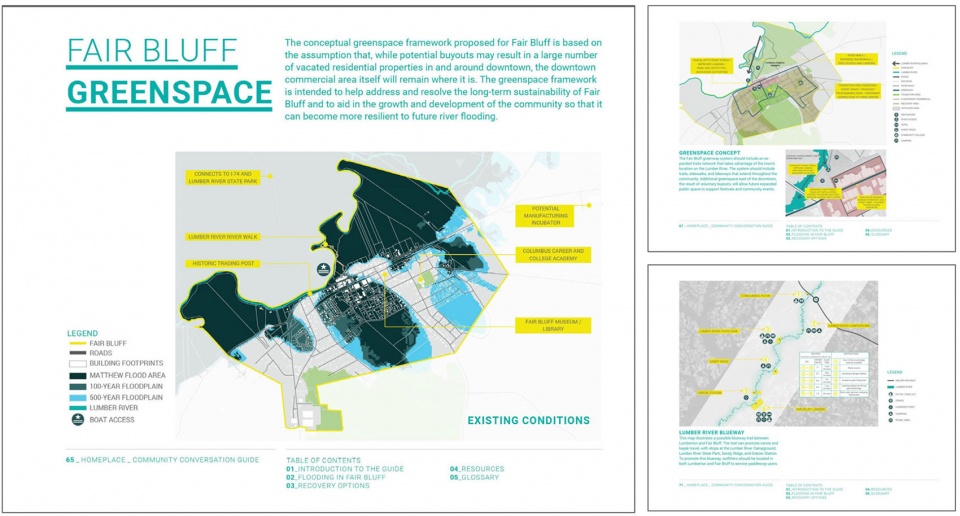
▲社区绿地:在社区的尺度下,设计的重点在于如何从社会、经济、环境等多个方面来激活社区的发展。Community Greenspace. At the scale of the community landscape, the design focuses on how rebuilding might activate the community socially, economically, environmentally.
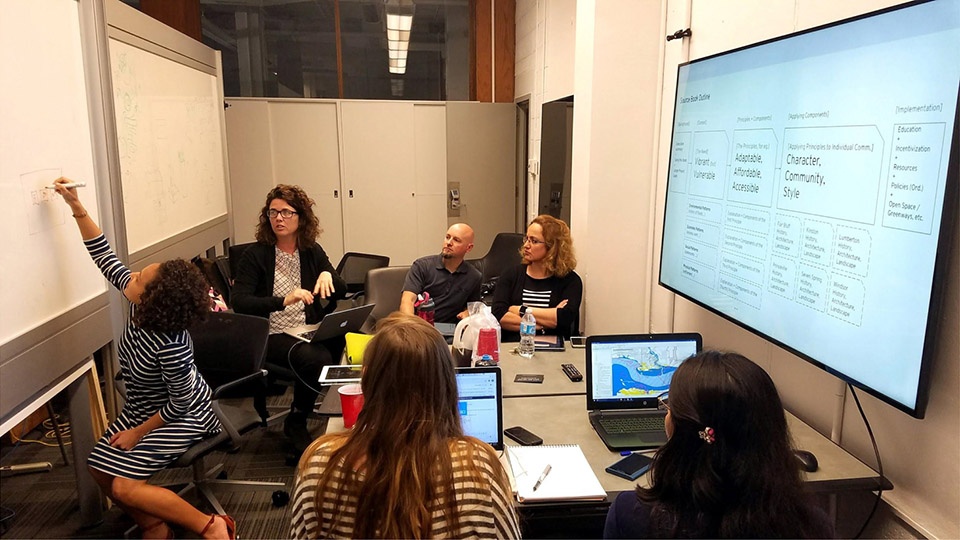
▲跨学科的激活作用:创建“家园”的过程吸引了各个领域专业人士的参与,并为未来的合作奠定了基础。Interdisciplinary Activation. The process of creating “Homeplace” engaged diverse professionals and enabled future collaborations.
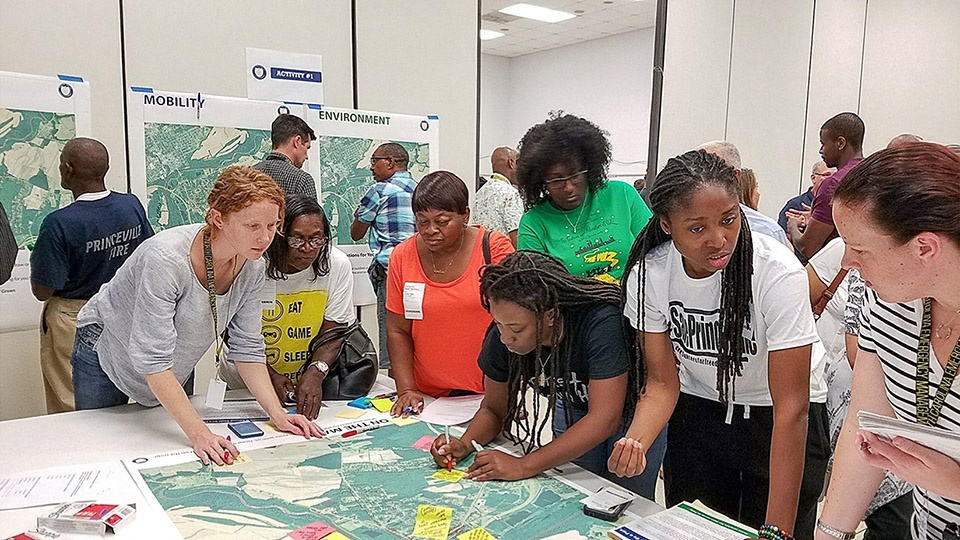
▲社区激活:地图和指南在公共场合中被大量使用,鼓励大众积极进行对话。Community Activation. The maps and guides are used in public settings as tools to activate conversation.
PROJECT NARRATIVE
On October 8, 2016, Hurricane Matthew stalled over eastern North Carolina, bringing with it record-setting rainfall. The resulting floods were catastrophic, leaving communities across the state’s coastal plain region devastated. The storm ranks as the third most destructive disaster in the state’s history, claiming 31 lives, flooding an estimated 100,000 structures, and exceeding $1.5 billion in damages.
Rebuilding in the aftermath of disaster is emotional, stressful, and complicated. Local, state and federal policies and procedures are confusing and overwhelming for survivors as they attempt to recover from the storm trauma while simultaneously navigating dense bureaucratic language, obscure acronyms, and highly technical documents in an attempt to piece back together their lives and communities.
Purpose
In the wake of the storm, the Homeplace conversation guides were developed to assist flood survivors decode and understand the complex information associated with recovery and resiliency building efforts. The purpose of the Homeplace suite of communication tools is to provide hard-hit communities with easy-to-understand technical assistance addressing typical post-disaster issues. Working within a larger, state-led recovery framework, the processes involved with the development and delivery of rebuilding programs enable dialogue with residents, community officials, and others. Homeplace supports these efforts by providing residents with a menu of high-quality, community-specific designs and strategies at multiple scales, resulting in a coordinated post-disaster rebuilding effort that strengthens communities in the long run. It offers strategies for application from household to community scales, along with consideration for broader regional infrastructures, development patterns, and population trends. The ultimate goal is to build the local capacity of North Carolina’s flood-prone communities, providing them with design, planning, and policy strategies and tools to promote the long-term function, health, and vitality of their residents and neighborhoods. The recommendations in each of the six community-specific guides are currently being woven into each participating community’s recovery plans, allowing for the integration of informed resident and stakeholder input into a more operational set of actions uniquely tailored to each community.
Audience + Approach
The voice, content, and design of Homeplace were strategically developed to speak to those individuals directly affected by the floods. Seen through the lens of the lay public, the guide is designed to facilitate community discussion between residents, designers, community planners and government officials. The approach considers the survivors’ point-of-view—residents with a variety of previous exposure to the complexities involved with deciding when, how and where to re-build. Additionally, emphasis is placed on the principles and potential trade-offs of why a homeowner might decide to either: 1) elevate and remain in place, or 2) relocate their home. Homeplace explains and illustrates key factors that might be considered when making these challenging decisions, including accessibility, curb appeal, affordability, comfort, efficiency, and flexibility. In these ways, the guide is intended to empower citizens to have agency during situations such as these—situations where options and choices are often ambiguous and uncertain. This information communicated via Homeplace creates informed dialogue, which ultimately assists community members build knowledge and increase understanding of the issues involved with making life-altering decisions in these complex circumstances.
Homeplace achieves this through graphics and non-jargonized language that simply and effectively communicate the significant roles that buildings, landscapes, and neighborhoods play in disaster recovery. The documents most specifically address the challenges and opportunities associated with the relocation of flood-prone housing and use(s) of resulting vacant lands. The guide defines important processes, procedures, terms, and principles that drive local, state, and federal rebuilding efforts. It provides homeowners and decision-makers with high-quality, locally distinct options for the redesign or rebuilding of housing, including integrated design strategies for yards, streets, and community greenspace. All of the designs work together toward the creation of responsive and resilient spaces that reflect local history and character.
Message + Language
“Homeplace” is a term used across North Carolina to describe the place-based forces that cause people to form connections to their buildings, spaces, and landscapes. Homeplace cannot be reduced to any single element of a property or its architecture. Instead it hints at the intangible web of social, cultural, and environmental relationships that give a place meaning. It acknowledges that good design and good construction can only go so far—they set the stage for the community interactions and local expressions that make a place home.
Homeplace is expressed in different scales of the landscape, including:
House and lot: in the case of recovery, the property where a home was affected or will be built. The lot exists within a range of policies and decision-making structures that can determine costs and living standards for people facing the risk of recurring floods. The lot and the house are the primary unit whereby people create, sustain, and pass along intergenerational wealth, and it is the most common scale at which people maintain strong attachments to places.
Community: ranging from an entire city to the group of friends and family relied upon in social networks, community for the purposes of this guide is place-based. Community can describe a neighborhood, a street, or any other defined unit where people regularly get to know and interact with each other in the landscape. Community is a critical scale because it is the most important unit in disaster preparedness. Communities with strong bonds are more resilient and respond better than those with weaker connectivity.
Region: Eastern North Carolina, where intertwining cultural and ecological legacies are apparent in the identities and locations of cities and towns. Important considerations at the regional scale include land-use, development patterns, and watersheds. Tightly coupled, these variables dictate the water volumes that cause flooding after major storms. The treatment and qualities of individual watersheds dramatically impact the ability of cities and towns to prepare for and withstand those events.
The Homeplace guides operate at each of these scales to reflect local people, traditions and defining environmental characteristics that design and planning activities are meant to serve. The mission is to create physical spaces that promote individual and community health, safety and wellbeing, history and heritage, and overall quality of life. Design is the means by which these goals are translated into on-the-ground results and new, lived realities for residents as they rebuild.
Distribution + Outcomes
Developed as a multimedia communication tool, Homeplace is designed to maximize public access. Spanning print and digital platforms, the design carefully considers everything from text size to graphic representation to color palette to enable easy reading and navigation in booklet form and on phones, tablets, and computers. The interactive functionality provides access digitally—with or without Internet access—and, in situations where individuals lack digital means, hardcopies via agencies, government offices, and local libraries.
The Homeplace document, including the processes undertaken in its development, have led to continued, direct, and deep community engagement activities. The campaign has resulted in ongoing research, outreach, teaching, and professional activities including, but not limited to:
· Use at facilitated community meetings and workshops;
· Catalyzed and deepened interdisciplinary, interagency collaborations to assist in ongoing disaster recovery efforts;
· Leveraged efforts between university researchers, design and planning practitioners, and agency representatives to inform community-specific resiliency plans;
· Mediated potential roles design can play in practice areas traditionally defined by policy and economics;
· Enabled continuity/continuation work in the partner communities; and
· Attracted resources and generated investment from NGOs and government agencies to enable more substantial work.
Homeplace communicates to flood survivors recovery issues that span infrastructure, housing, public facilities, businesses, and community open space. The multifaceted, easy-to-understand graphic platform leverages the rich history, culture, and development opportunities in numerous communities recovering from disaster. In doing so, Homeplace continues to assist North Carolina constituencies improve flood resilience, social and community cohesion, equity, and quality of life.









发表评论
你需要先 才能发表评论
社交登录