“这是一项清晰明确、分析详细且与时俱进的研究。讲述得很到位。”
-2017年评审委员会
“It checked the boxes on methodology—clarity, analysis, and update. It told the story well.”
– 2017 Awards Jury
来自 ASLA 对gooood的分享。
Abstracting Morphology by Richard Sutton, FASLA,更多请至:Richard Sutton, FASLA on gooood
Appreciation towards Richard Sutton, FASLA for providing the following description:
项目陈述
PROJECT STATEMENT
绿色屋顶能够起到控制径流和降低热负荷的作用,但其往往过于依赖外来的景天属植物,使生物多样性难以实现。不仅如此,修建绿色屋顶意味着额外的费用,因此常常难以在价值工程中通过考验并最终得以落实。本次研究对一套材料和技术进行了深入分析,旨在改进并加强本土天然草地在绿色屋顶上的种植和应用。一种简单易行的创新型方法使草地的种植速度得到提升。经研究证明,播种技术的改善能够降低绿色屋顶的建造成本,拓宽生物多样性,同时在两年或更短的时间内就能够实现80%的FLL覆盖标准。
Green roofs promise controlled runoff and reduced heat loads but current reliance on exotic sedums belies biodiversity. Furthermore, because a green roof is added as a premium, means it often fails to survive value engineering and never gets built. This research examined a suite of materials and techniques to improve and enhance establishment and use of native grasses on green roofs. An easily adopted, innovative procedure for planting fluffy-seeded native grasses speeded installation. Seeding techniques were shown to reduce green roof costs and expand biodiversity options while meeting the 80% FLL coverage standard in two or less years.
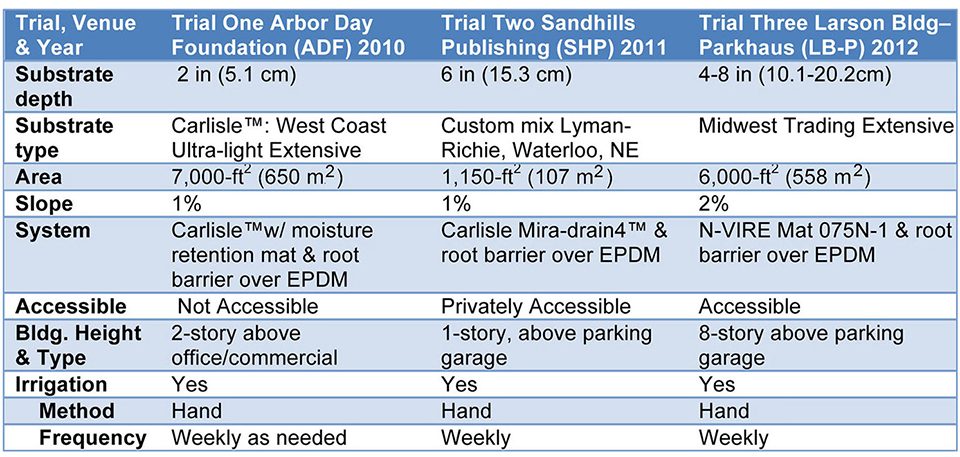
▲表格1.本土草种实验场地的基本属性。Table 1.Basic characteristics of native plant research trial venues.
项目说明
PROJECT NARRATIVE
问题描述
绿色屋顶上的植被层需要适应极端的温度、干旱和风吹,同时还要能够迅速地实现覆盖率,为植物的生长提供稳定的基质。在绿色屋顶建成之后,植物必须通过攀爬、生根或二次播种,才能够实现对风吹的阻滞以及对种植间隙的自我修复。目前的绿色屋顶大都以类型单一的景天属爬行植物为主,多数需要手栽或通过昂贵的预种植托盘或草垫来放置,少数情况下也会以嫩枝的形式种植,但对种植条件的要求较高。根据最初的种植规模和间隔,手栽的景天属植物大概需要两年或更多的时间才能够实现80%的FLL绿色屋顶覆盖标准。
根据栖息地的不同,绿色屋顶会种植一些本土的草种,例如格兰马草、垂穗草和小须芒草等。在LDS会议中心、温哥华会议中心和芝加哥市政厅这些屡获殊荣的绿色屋顶范例中,自播式的本土草得到了广泛种植,而北美地区的绿色屋顶却很少选用本土草,这一点实属奇怪。
不仅如此,经其它研究和LEED评委证明,在绿色屋顶中,植物多样性的内涵需要进一步拓宽:它不应只局限在简单的物种丰富性(例如三、四种景天属植物)方面,还应扩充至功能群落的多样性、功能形状多样性、系统发育多样性以及结构的复杂性等方面。一位研究人员曾发现,多样的种类和变化的树冠高度能够改善植物对于水分的捕获能力。将具有不同生长习性的本土草与草本植物结合种植,其捕水能力将远远超过单一的景天属植物。
对于本地植物(尤其是本土草)的应用和播种方式的研究往往乏善可陈,这可能是受到了一些当地研究报告的影响,例如密歇根州某绿色屋顶种植的景天属植物经测试被证明会导致干旱损失等。然而,一些研究者对这些关于本土草适应性的测试结果提出了质疑:它们被种植在较浅的土层,并且没有足够的生长时间,因此无法在第二年的生长季中期抵挡干旱。
方法与材料
本项研究调查了在绿色屋顶种植本土草的方法和材料。该研究于2007年被提出,其背景是一个种满本土草的小型绿色屋顶在第二年便通过自由播种实现了间隙的修复。该研究找到了3位合作者,并在3个不同的屋顶上进行了历时3年的实验,通过观察和技术对种植的过程进行了探索和评估。实验中的三个自变量包括:1)季节,2)方法,3)种植间距。三个因变量包括:1)植物活力,2)视觉覆盖率,以及3)播种材料及劳动力成本。
每个被测试的绿色屋顶(表格1)皆展示了与合作者自身目的、场地微气候、建设规范以及设施相适应的独特设计环境,这些环境对实验设计和对照(表格2)的时机、关系和程度起到了限制的作用。植树节基金会大楼(ADF)、Sandhills出版社大楼(SHP)以及Larson大楼停车场(LB-P)的屋顶花园共同组成了实验场地。
每块场地都包含一个6英寸宽的无种植缓冲带,并随机地分配以三种不同的种植方式。在生长季的末期,实验者将通过0.5平方米的样方来检测视觉覆盖率是否与预期相符,并将覆盖率四舍五入为最接近的百分数。在SHP的场地中,手栽的景天属植物和播种草被种植在尺寸不一的地块,并以一平方英尺为单位进行比较。不幸的是,基质深度、场地微气候以及种植时间均对屋顶之间的对照形成了干扰。
创新技术
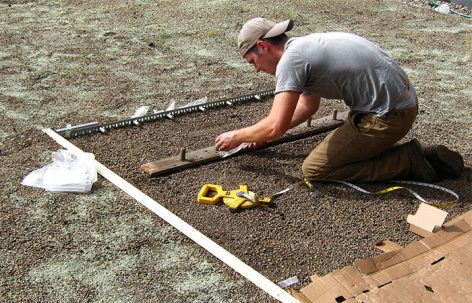
蓬松的种子有助于本土草的分散,但同时也会使其难以播种,这可能是本土草未能广泛被种植在绿色屋顶的原因。然而,利用普通的花园播种机将这些种子进行微粒化,便能够使其简单、迅速且均匀地扎根于特定深度的土层。虽然实验中仅使用了5个本土草种,但同样的制粒技术还能够适应多种不同的本土草和草本植物。单排播种机还可以通过捆绑配对的方式进一步提高播种效率。
发现
·在ADF场地中,格兰马草的种植取得了成功,但在没有侵蚀管控的情况下容易产生冬痢。在2011年的生长季末期,未能超过春季播种时期的视觉覆盖率。
·在ADF场地中,种植间距为4英寸的播种地块能够不受播种时间的影响(2010年秋季或2011年春季),在2012年底均达到或超过了2011年种植间距为6英寸和8英寸的的覆盖率。
·在SHP场地中,种植间距为6英寸的四个春播草种均在一个生长季内达到了80%的覆盖率。
·在LB-P场地中,种植间距为6英寸的春播野牛草在一个生长季内达到了80%的覆盖率。
·在LB-P场地中,种植间距为6英寸的72株手栽景天属植物所花费的材料和劳动力成本比播种的本土草高出6倍以上(5.07美元/平方英尺对0.79美元/平方英尺)。本土草的覆盖率在两个生长季内达到了80%,景天属植物未能达到。
·每英尺播种地块产生的蓬松种子的数量约为手栽地块种子数量的90%。
结论
在绿色屋顶上种植本土草种能够:
·缩短实现覆盖率的时间
·在微粒化种植的情况下,种植成本低于手栽景天属植物
·通过被测物种和多种其它潜在的本土草种增加生物多样性(表格3)
景观建筑实践方面的适应性
该研究结果已在行业内的各类出版物中发表,并传播至当地乃至全国范围。其概念和结论具有普遍的实用意义,易于量化,并且能够被轻松地应用于绿色屋顶的案例当中。通过将实验性的地块运用至实际的绿色屋顶设计,该研究为种植的监测以及结果的产生提供了有效的技术。
未来研究
本项研究表明,绿色屋顶的种植成本可以减少约5美元/平方英尺。然而,绿色屋顶的主要成本(重量)仍旧取决于种植层的基质。在扩大(尤其是改造)绿色屋顶的过程中,必须先找到减少重量和成本的有效方法。

▲表格2. 场地实验对象、地块以及变量概述。Table 2. Summary of venue objectives, plots, and variables.
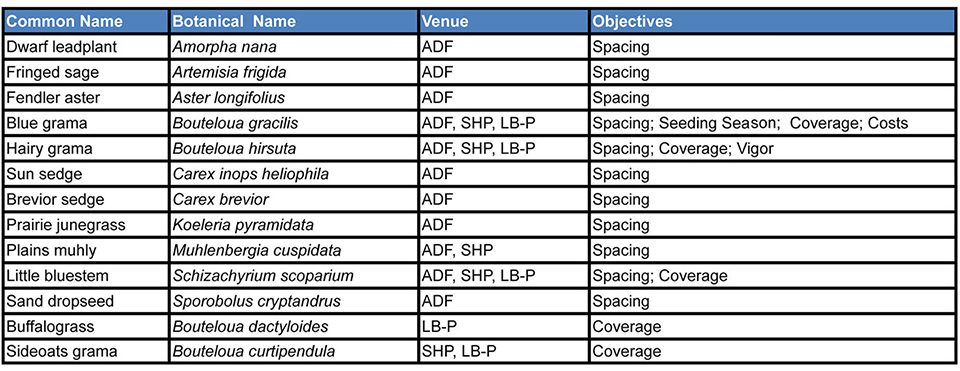
▲表格3.本土禾本科草种及非禾本科草种的概述,根据场地和实验对象划分。Table 3. Summary of native graminoids and forbs examined by venue and objectives.
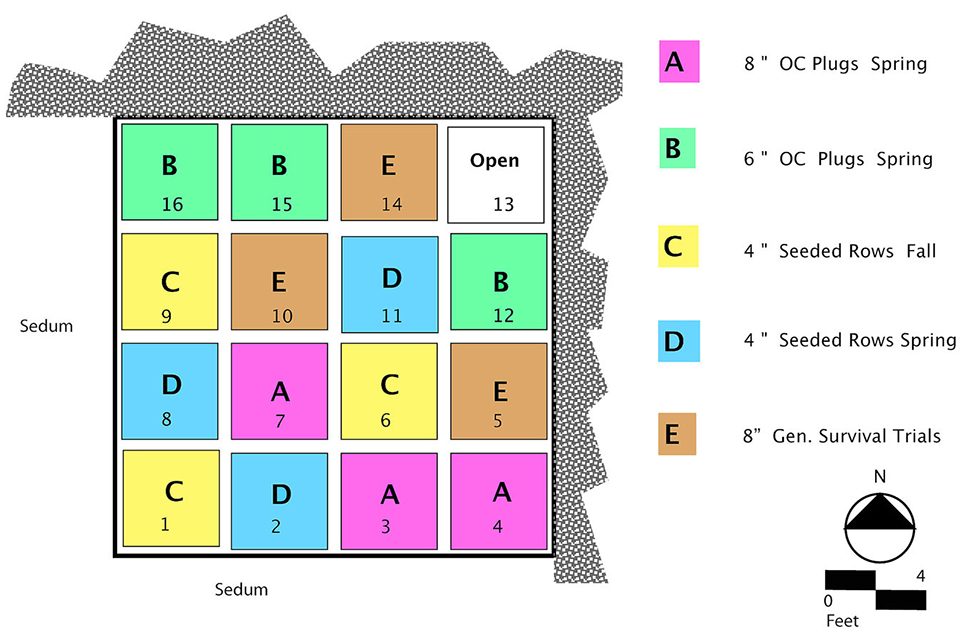
▲ADF场地中的地块。植树节基金会绿色屋顶地块的随机分布。ADF Plots. Plot randomization and layout for the Arbor Day Foundation (ADF) green roof plots.
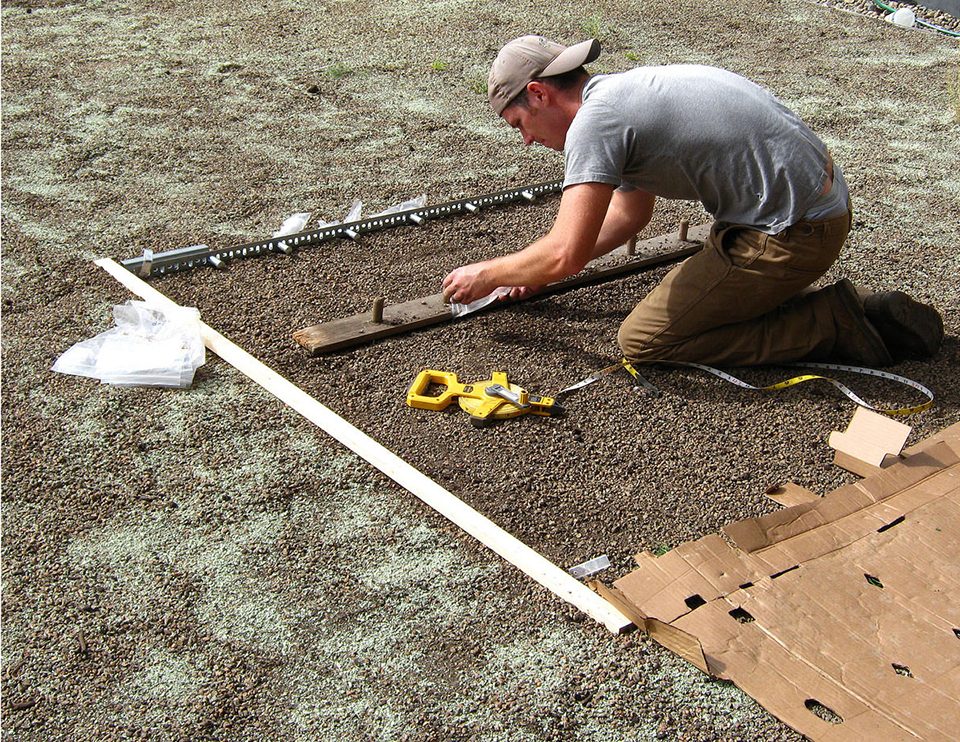
▲在ADF场地中种植的格兰马草对人工播种的细致程度有极高的要求。秋季播种需要借助聚丙烯酰胺材料来防止冬痢的产生。polyacrylamideFall seeding plots of blue grama on the Arbor Day Foundation (ADF) green roof required intensive painstaking distribution of seeds. Fall seeding requires the use of erosion control polyacrylamide to deter winter scouring of growing substrate.
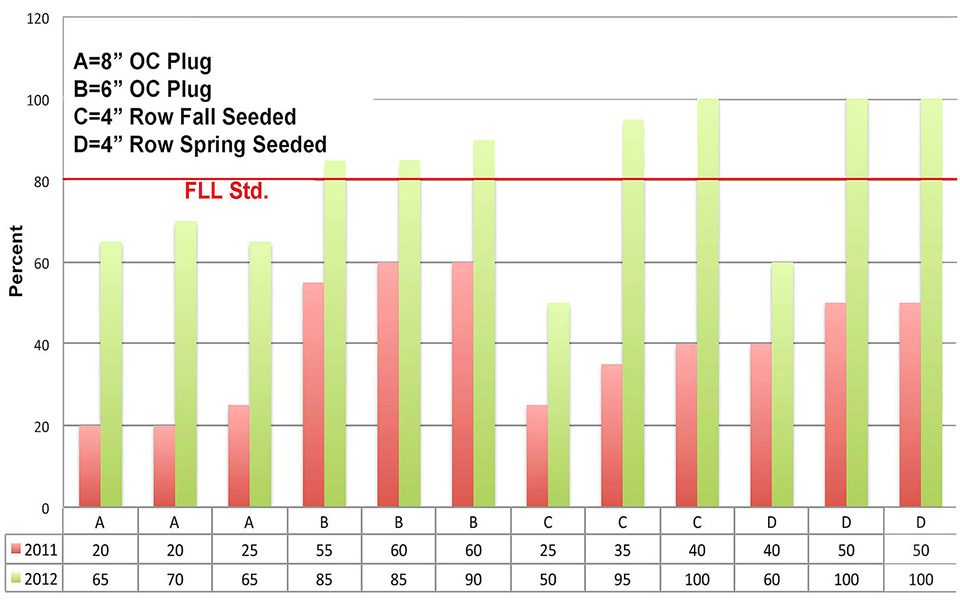
▲ADF地块的样本对照,变量为种植间距(8英寸、6英寸及4英寸)和播种时间(秋季和春季)。在第一个生长期内,没有样本达到 80%的覆盖率,但在第二个生长期内,一些本地草和种植间距为6英寸的手栽草种达到了这一标准。Arbor Day Foundation plots compared spacing (8″ vs. 6″ vs.4″) and fall versus spring seeding dates. None reached 80% FLL coverage growing season one, but some seeded rows and the 6″ plug spacing did in the second season.
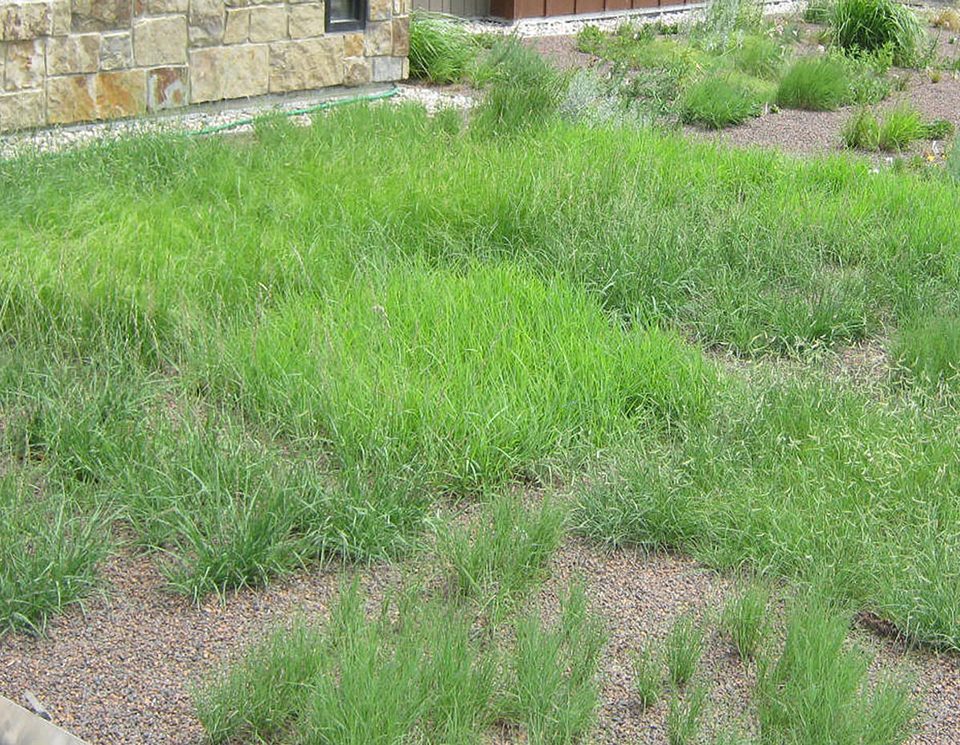
▲Sandhills出版社大楼的绿色屋顶,以手栽的本土草种为主。在以6英寸的宽度种植45天之后便获得了大幅度的增长。Hand-seeded, randomized native grass plots on the Sandhills Publishing green roof show substantial growth only 45 days after planting in 6-inches of growing substrate.
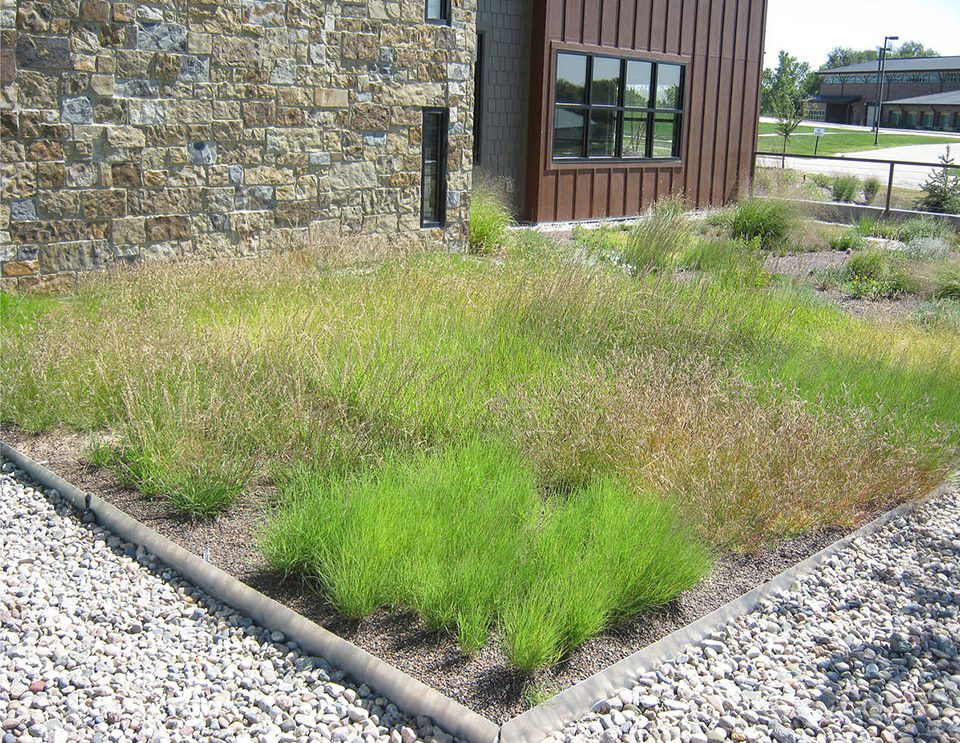
▲Sandhills出版社大楼的绿色屋顶,春季播种的5种本土草在夏季生长。背景处是另外三组实验中的本土草及草本植物。Late summer growth of five, spring-seeded native grasses at the Sandhills Publishing green roof. Background plantings display over 3 dozen native grasses and forbs also under trial.
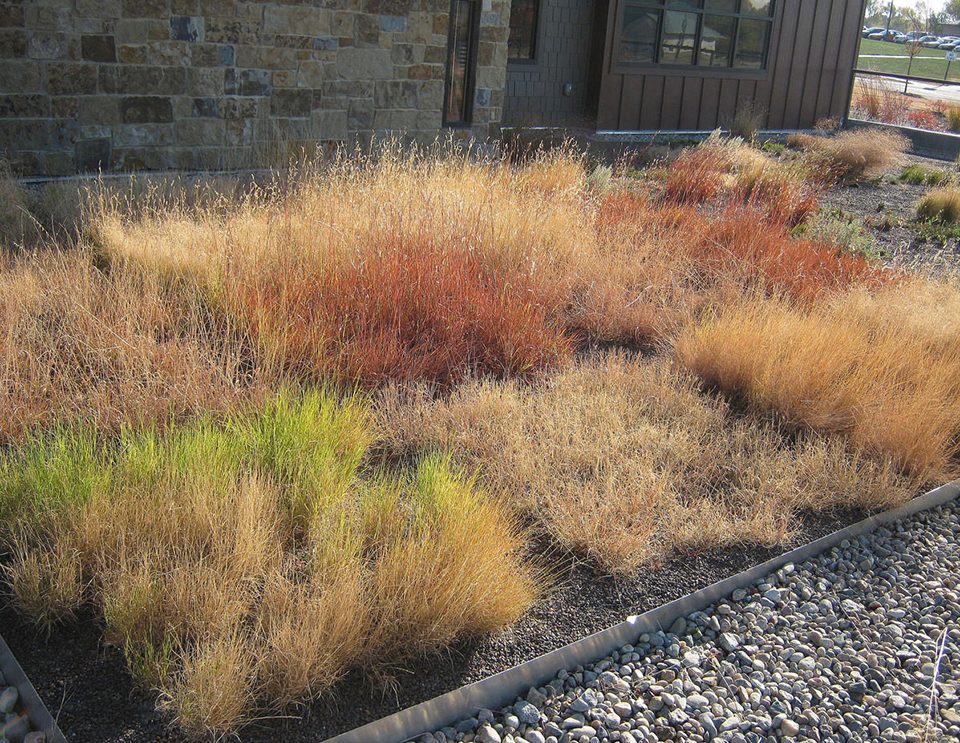
▲Sandhills出版社大楼的绿色屋顶,本土草在种植90天之后便显现出令人瞩目的色彩。On the Sandhills Publishing green roof, perennial native grasses show striking fall foliage colors after being seeded just ninety-days earlier.
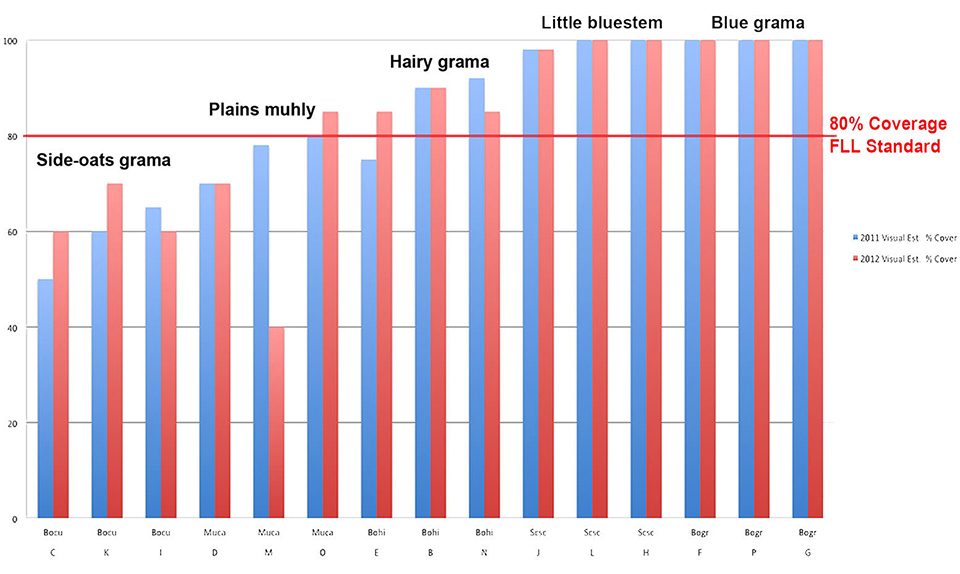
▲5个本土草种在2011年和2012年生长季的视觉覆盖率。垂穗草的覆盖率较低,原因是发芽率不足。Visual coverage of five, seeded, native grasses at the end of the 2011 and 2012 growing seasons. Poorer coverage by side-oats grama resulted from seed with low germination potential.
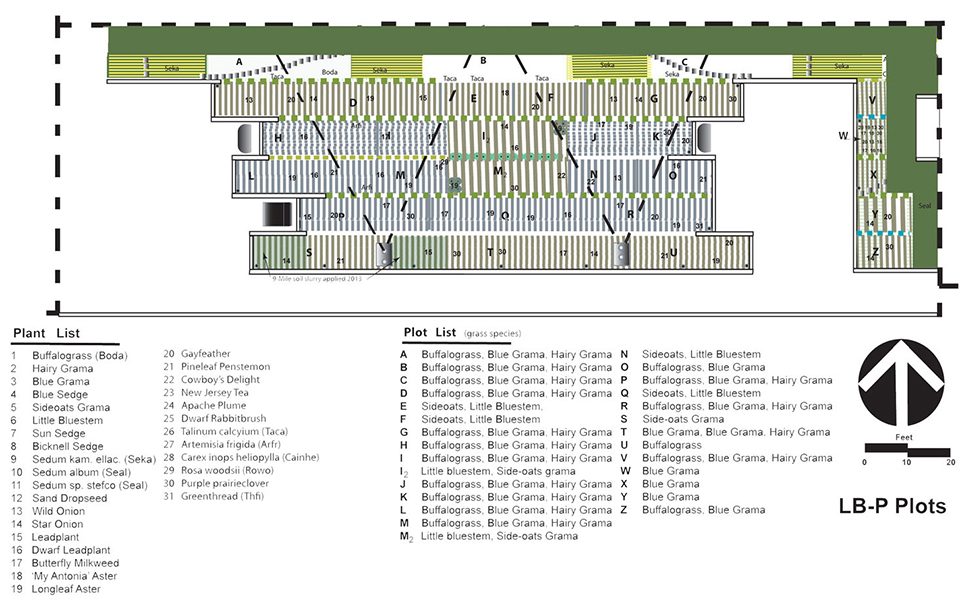
▲Larson大楼停车场的绿色屋顶中种植了种类丰富的本土草种、草本植物以及景天属植物。The Larson Building-Parkhaus (LB-P) apartments planting incorporates experimental plots using a wide range of native grasses, forbs, and Sedums.
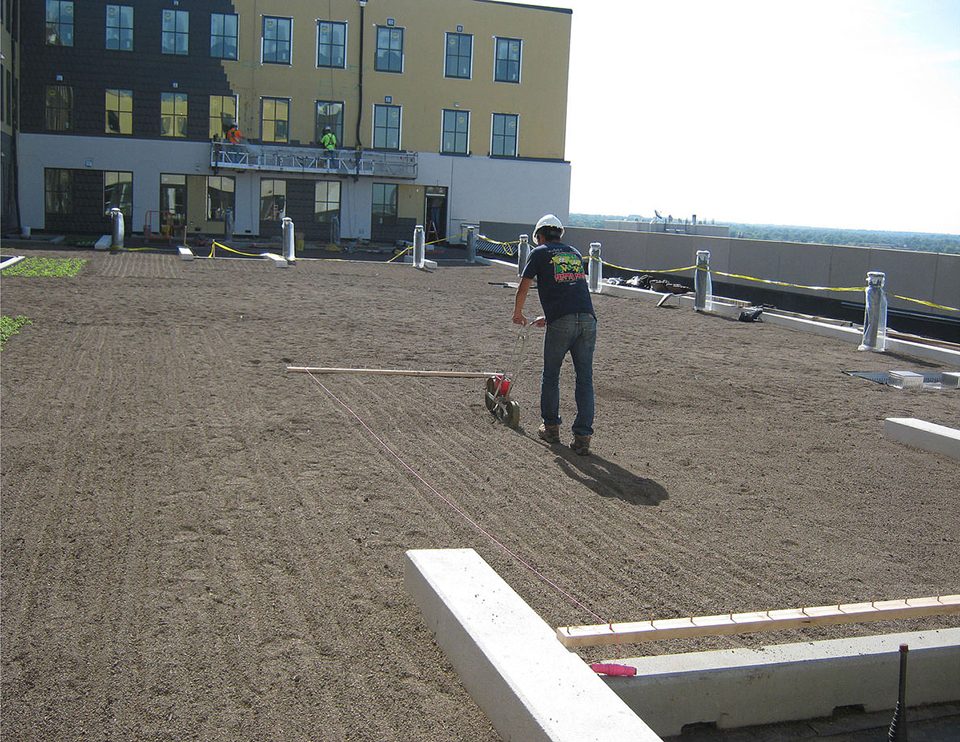
▲微粒化能够克服蓬松种子自身的一些问题。利用简单的播种机将种子进行分散,不仅能够减少种子堆积、降低成本,还能使播种速度和种子覆盖率得到提升。Pelletizing native grasses overcame problems with fluffy seeds; distributing the seeds with a simple garden seeder reduced crowding and planting costs while increasing the speed and precision of seeding coverage.
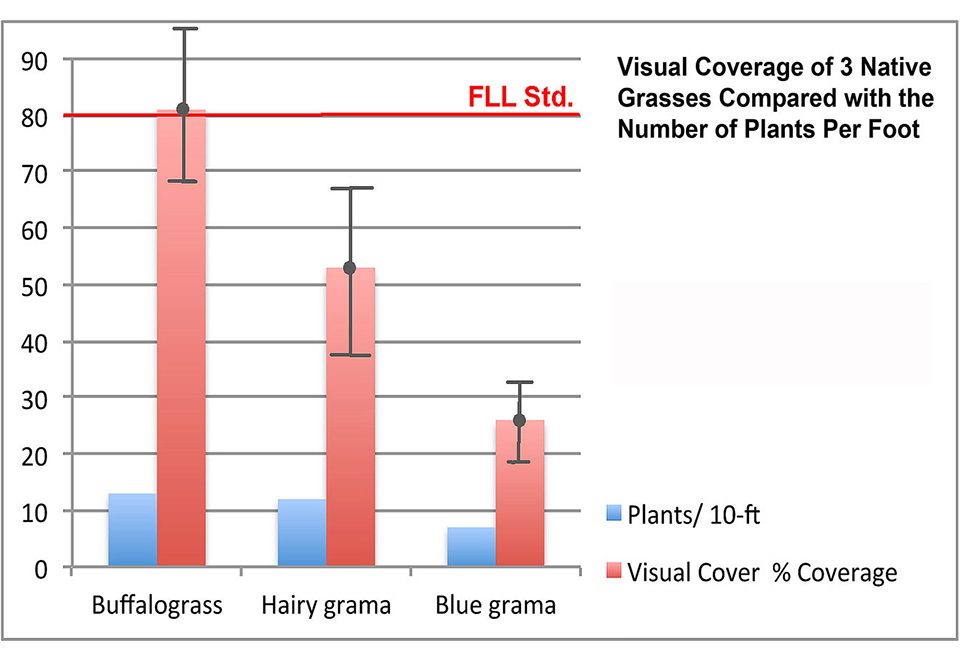
▲生长习性会影响本土草种的覆盖率。虽然野牛草、格兰马草和毛垂穗草的种植量相差不多,但经过微粒化种植的野牛草在一年之内便达到了80%的视觉覆盖率。Growth habit impacts native grass coverage. While similar numbers of plants emerged from buffalograss, blue grama and hairy grama rows, spreading stolons of deburred and pelletized buffalograss reached 80 percent visual coverage in one year.
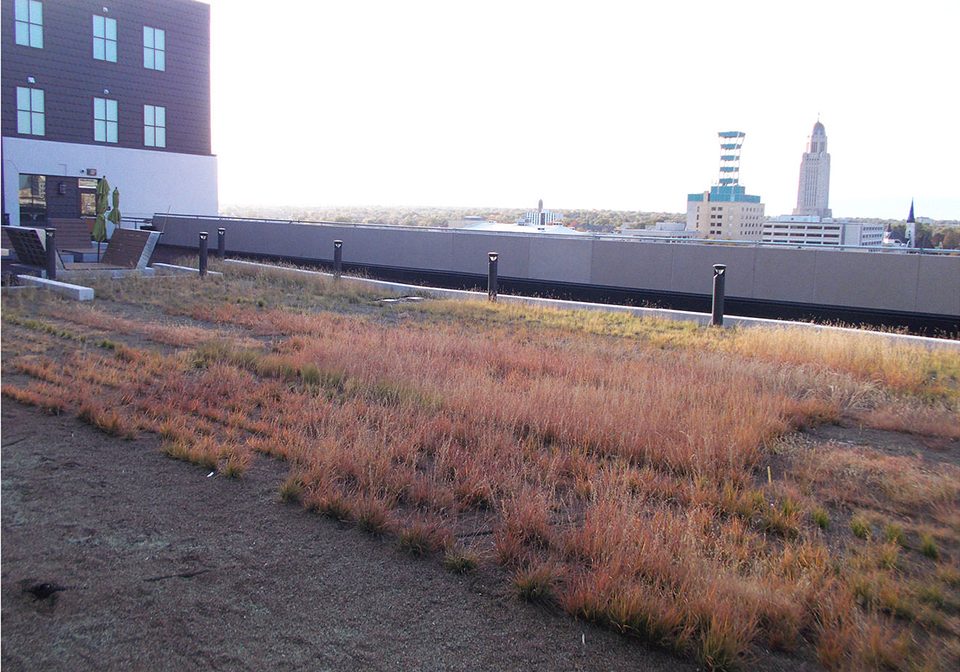
▲种植后的第一个秋季(2012年),Larson大楼停车场的屋顶已经布满本土草。First fall (2012) on the Larson Building-Parkhaus green roof showing infill of seeded grasses.
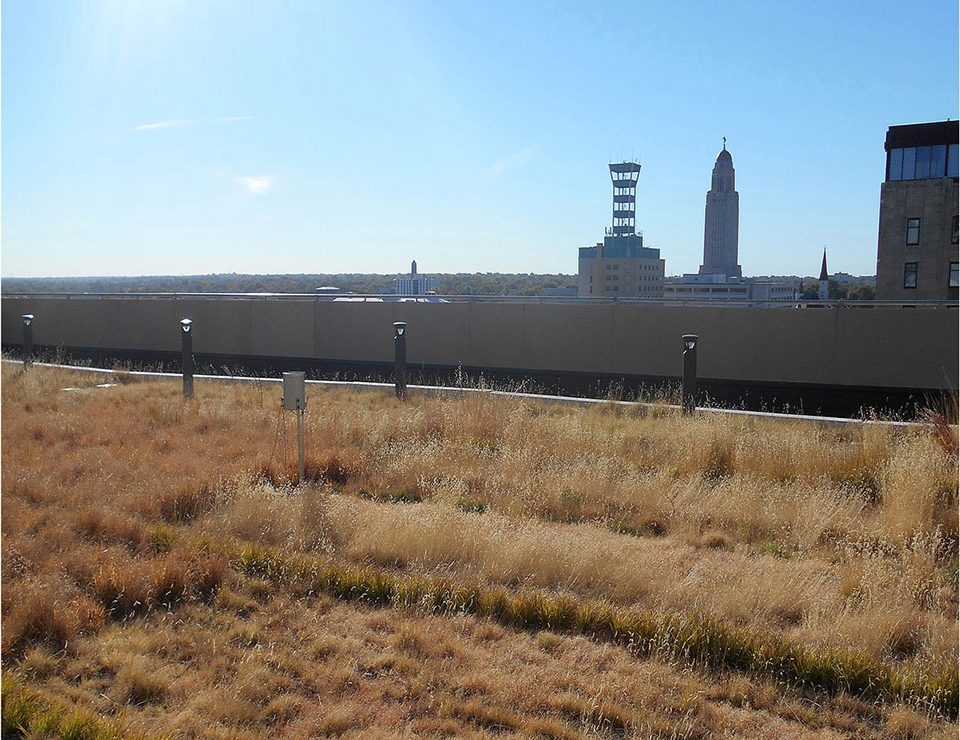
▲在第二个生长季末期(2013),茂密生长的本土草已经达到或超过80%的覆盖率标准。Tightly infilled native grasses at the end of the second growing season (2013) met or exceeded the 80% FLL coverage standard.
PROJECT NARRATIVE
Problem Description
While vegetated layers on green roofs must adapt to extreme temperature, drought, and wind, they must also quickly cover and stabilize growing substrates. After establishment, plants must limit wind scour and self-heal gaps with creeping and rooting stems or by reseeding. Currently mono-generic, creeping species of Sedum, predominate on green roofs and are most often hand-plugged into substrate or placed via expensive pre-grown trays or mats. In a few cases Sedum is sown as live sprigs, but requires intensive establishment. Plugged Sedum, depending on its initial size and spacing, may take two years or more to meet the 80% FLL, industry coverage standard.
Befitting of their diverse habitats, some native grasses such as blue grama, sideoats grama and little bluestem are already plugged on green roofs. Given that prominent, award-winning green roof examples like the LDS Conference Center, Vancouver’s Convention Centre, and the Chicago City Hall, all feature native grass plugs that have self-seeded, and filled gaps, it is odd that green roofs in North America are rarely established using native grass seed.
Furthermore, other research and LEED referees have suggested that plant diversity on green roofs needs to be more broadly interpreted beyond simple species richness, (e.g., three or four species of Sedum) and extended to functional group diversity, functional trait diversity, phylogenetic diversity and structural complexity. One researcher found diverse and varying plant canopy heights and types improved moisture capture. Native grasses with their different growth habits alone and in combination with forbs have the potential to capture more water than mono-generic Sedum spp.
Lack of research interest on the use of native plants – particularly grasses – and their installation by seeding perhaps has been stymied by widely cited research reporting drought losses of a few natives tested alongside Sedum on a Michigan green roof. However, some researchers question applicability of those results for native grasses because of the shallow substrate depth in which they were grown and insufficient establishment time to withstand drought in the middle of their second-year growing season.
Methods and Materials
This research investigated methods, techniques, and materials for seeding green roofs to native grasses. Its questions and objectives arose in 2007 when a small green roof planted to plugs of native grasses freely reseeded and during the second year readily filled gaps. That experience led to a series of on-the-roof trials and experiments on 3 different cooperators’ roofs spanning three years. Experiments, observations, and techniques on green roofs helped explore and evaluate a suite of independent variables for planting: 1) season, 2) method and 3) spacing. The dependent variables measured included: 1) plant vigor, 2) visual coverage, and 3) material and labor costs for seeding.
Each green roof venue (Table 1) presented its own unique design circumstances related to the cooperator’s goals, site microclimate, construction specifications, and installation that constrained the timing, relationship, and extent of experimental designs and comparisons (Table 2). The green roofs at Sandhills Publishing (SHP) and the Larson Building-Parkhaus (LB-P) were designed as green roofs which incorporated experimental plots.
All plots at all venues were randomly assigned treatments with 6-inch wide unplanted buffer strips. For all venues the estimated visual cover was examined at growing season’s end using one-half square meter quadrat frame and converted to percent visual estimates of cover rounded to the nearest 5%. At SHP, plugged Sedum versus seeded grass consisted of different-sized plots and compared on a square footage basis. Unfortunately differences in substrate depth, site microclimate and planting dates precluded comparisons between roofs.
Innovative Technique
Fluffy seeds aid native grass dispersal, but make them difficult to sow. That problem may be one reason native grasses have not been widely seeded on green roofs. However, pelletizing seeds allowed them be easily, quickly, and uniformly planted at a specified depth using a common garden seeder. While only 5 species of native grass were pelletized and planted, that technique would be suitable for many other native grasses and forbs. Single-row seeders could be paired and fastened to further increase planting efficiency.
Findings
·At ADF Fall 2010 seeding of blue grama was successful but without erosion control it was susceptible to winter scour. At the end of the 2011 growing season, it did not exceed the visual coverage of spring seeding.
·At ADF 4-inch row seeding regardless of date (Fall 2010 or Spring 2011) met or exceeded the coverage of both 2011, 6-inch and 8-inch spaced plugs by the end of 2012.
·At SHP 4 spring-sown grass species in 6-inch rows met 80% coverage in one growing season.
·At LB-P spring sown buffalograss in 6-inch rows met 80% coverage in one growing season.
·At LB-P material and labor costs for Sedum 72-plugs planted at 6-inches O.C. were over 6 times greater than seeding ($5.07/sf versus $0.79/sf). Seeding reached 80% coverage in two growing seasons, while Sedum did not.
·Number of seeds of hairy grama produced per foot in seeded plots was about 90% of that in plugged plots.
Conclusions
Native grass seeding for green roofs:
·Improves coverage times over plugging
·Reduces costs versus plugged sedum when planted as pelletized seed
·Increases biodiversity using the tested species plus many other potential native grasses and forbs (Table 3)
Applicability to Landscape Architectural Practice
Research results have been disseminated in peer-reviewed publications and through presentations to state, regional, and national audiences. Its ideas and conclusions can be widely used, easily specified, and readily adopted by landscape architects who design green roofs. Experimental plots were incorporated in the actual green roof design — a technique useful for practitioners wishing to monitor planting ideas and outcomes.
Future Research
This research shows the potential to reduce green roof planting costs by about $5 per square foot. However, the major portion of green roof costs (and weight) still resides with growing substrates. To expand green roof installation, especially as retrofits, ways must be found to reduce green roof weight and costs.
More: ASLA. Richard Sutton, FASLA,更多请至:Richard Sutton, FASLA on gooood








瞎耍
为什么国外建筑工人这么干净
之前看一个研究说单位面积的树带来的生态相应是单位面积草皮的27倍,屋顶种植物更多的是心理安慰
所以都是草本的话不会需要很大的浇灌嘛。。。这样的屋顶承重也是好大啊!