感谢 BUREAU 予gooood分享以下内容。更多关于他们:BUREAU on gooood
Appreciation towards BUREAU for providing the following description:
一张选票价值几何?或许,在我们的生活中,再没有其他情境能够像投票一样,让我们每个人在社会与民主制度中拥有完全且严格意义上的同等价值。每一张选票都具有同等价值。在自由投票中,没有差别之分;偏见与社会阶层无处容身。性别、权力、体能、受教育程度或经济状况,都不会构成任何限制。这或许正是投票行为对我们而言如此特殊的原因之一,而这一感受也为整个展览团队所共同认同。
How much is a vote worth? Perhaps there is no other situation in our lives in which each of us has, exactly and strictly speaking, the same value in society and in a democracy. Every vote has the same value. In a free vote, there are no distinctions; there is no room for prejudice or social class. There are no limitations based on gender, power, strength, literacy or economic status. This is probably one of the reasons why the act of voting is so special to us, a sentiment shared by the entire team responsible for the exhibition.
▼展柜面向庭院景观展开,Display tables facing the courtyard landscape © Dylan Perrenoud
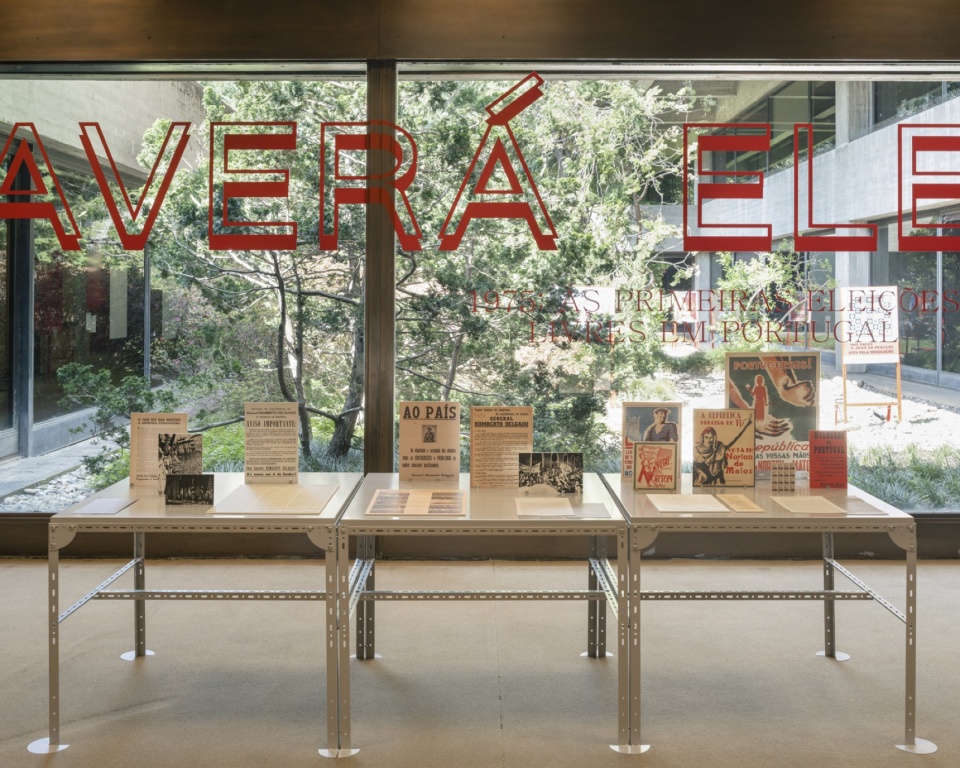
我们中的许多人并未亲历1974年4月25日,也未曾经历过无法投票或无法充分行使公民自由的时代。《1975即将举行选举:葡萄牙首次自由选举》展览,旨在纪念葡萄牙与投票行为紧密相连的自由精神,并追溯始于1975年4月25日首次自由选举的民主历程。选举的承诺,以及在实现这一承诺过程中所遭遇的种种困难,是本次历史与文献展览的两大核心主题。1974年四月革命之后,人们必须制定专门法律、进行人口登记、向公众解释投票程序、印制选票,并建设投票站及相关后勤基础设施。正因如此,到了选举当天,92%的已登记葡萄牙选民得以表达自己的政治意愿。
Many of us did not live through April 25th 1974, just as we did not experience the inability to vote or to fully exercise civic freedoms in Portugal. The exhibition “There Will Be Elections 1975: the first free elections in Portugal” celebrates the freedom associated with the act of voting in Portugal, from the first free elections held on April 25th 1975. The promise of elections and the difficulties encountered on the path to their realisation are two of the central themes of this exhibition of historical and documentary content. Following the April 1974 Revolution, it was necessary to draft specific legislation, register the population, explain voting procedures, print ballot papers and build voting booths and logistical infrastructure that would enable – as was the case on election day – 92% of registered Portuguese voters to express their political will.
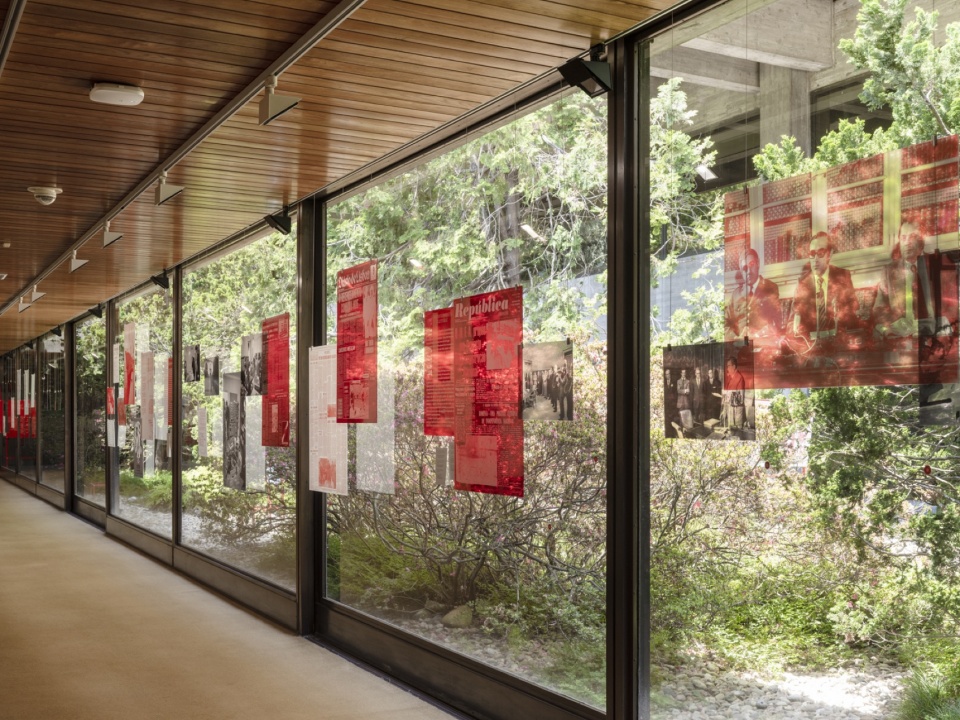
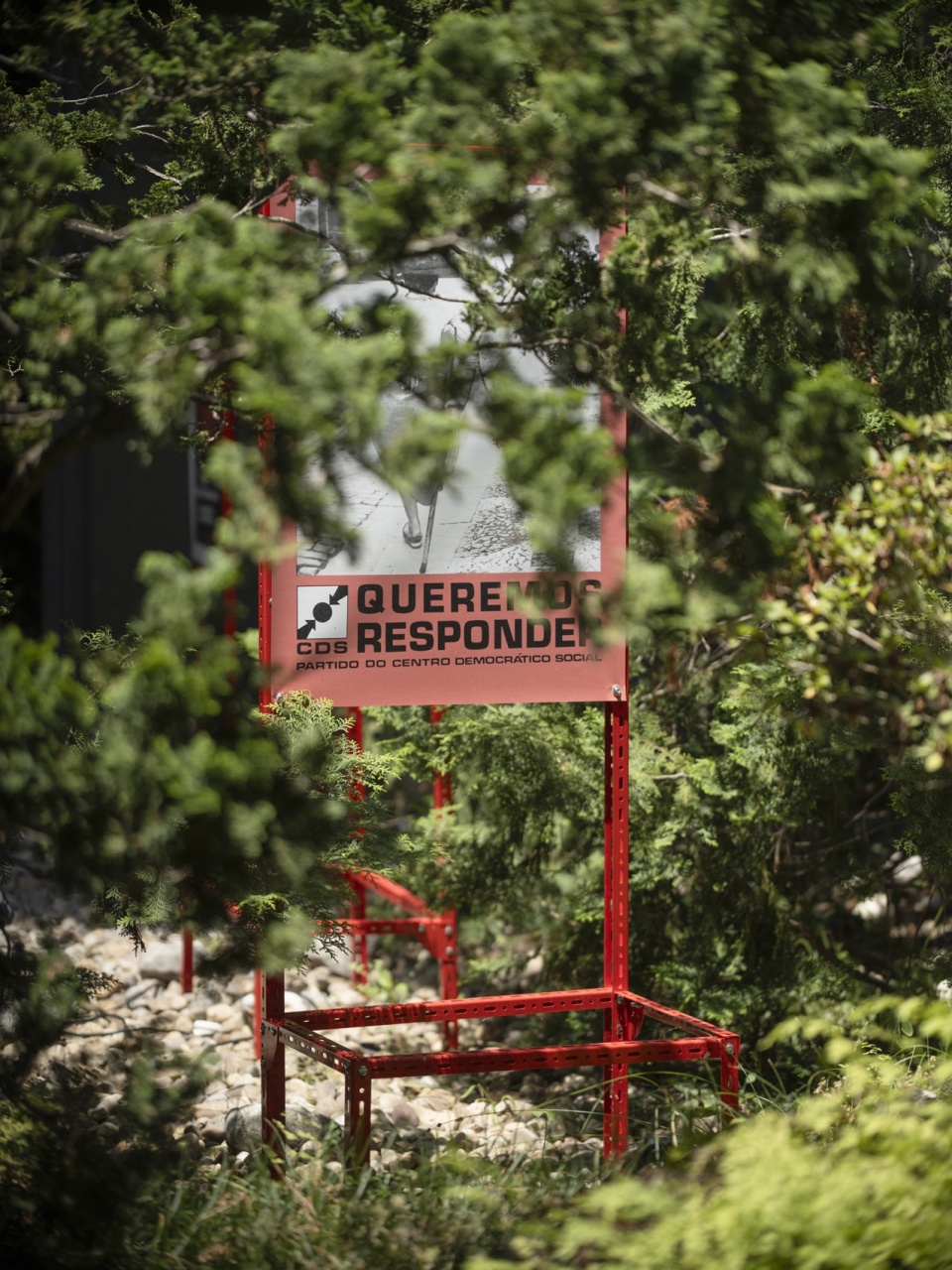
▼展陈构件隐现于庭院植被间,
Exhibition structure embedded within the courtyard landscape © Dylan Perrenoud
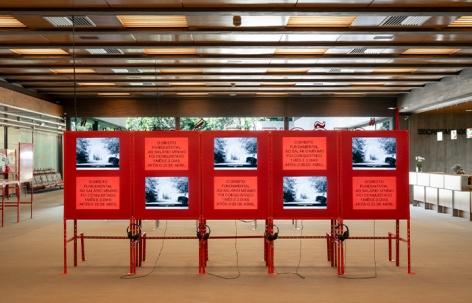
首批投票亭的原始设计成为本次展览展示系统创作的出发点。这些展示单元用于承载由策展团队精心挑选的各类文献资料与影音内容。作为展示单元的模块化“投票亭”贯穿整个展览,并随着展陈推进不断生长,直至在展览最后部分以完整形态呈现。色彩也经历着从灰色到红色的渐变:灰色象征1974年4月25日之前的时代,而红色则来自革命中的康乃馨。在我们的想象中,它同时象征着能量、团结与力量。
▼模块化种类,Modular types © Dylan Perrenoud
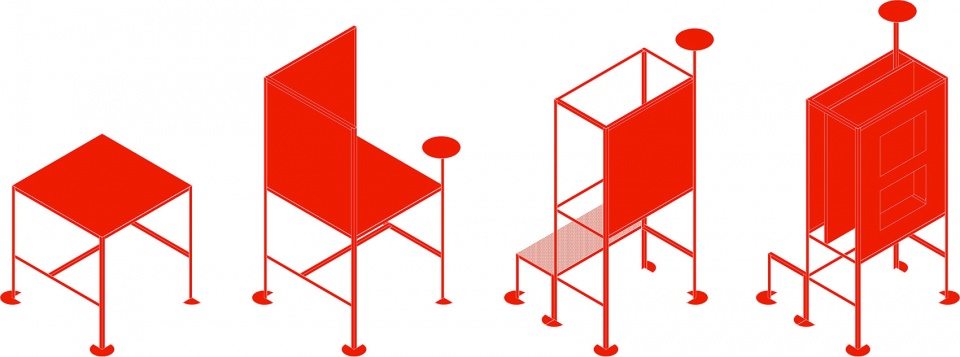
The original design of the first voting booths served as the starting point for the creation of display units intended to house a diverse range of documents and audiovisual content, carefully selected by the curatorial team. The modular “booth”, as a display unit, grows throughout the exhibition, until it appears in its entirety in the final section of the exhibition. The colour evolves from grey – associated with the period prior to April 25th 1974 – to red, the colour of the carnations of the Revolution, which is also the colour that, in our imagination, evokes energy, unity and strength.
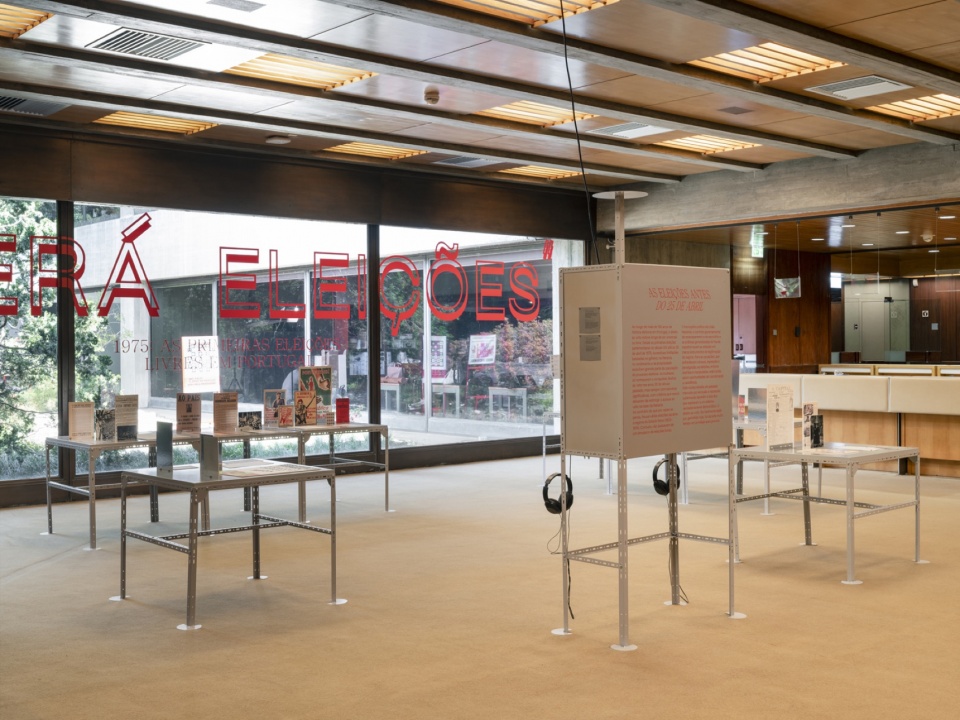
▼独立展陈模块分布于大厅,
Freestanding exhibition modules within the hall © BUREAU
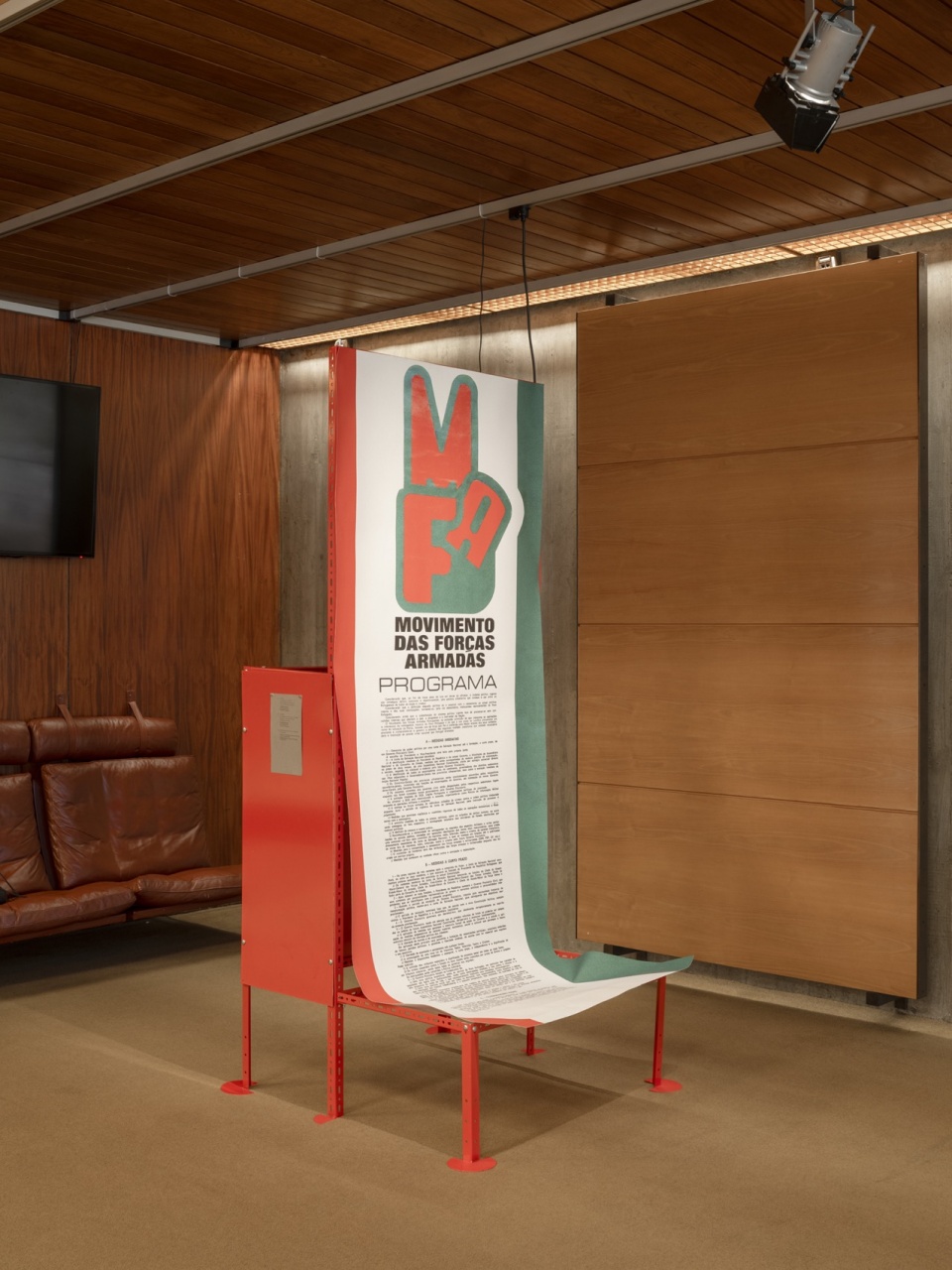
▼模块化展陈单元,Modular exhibition display units © BUREAU
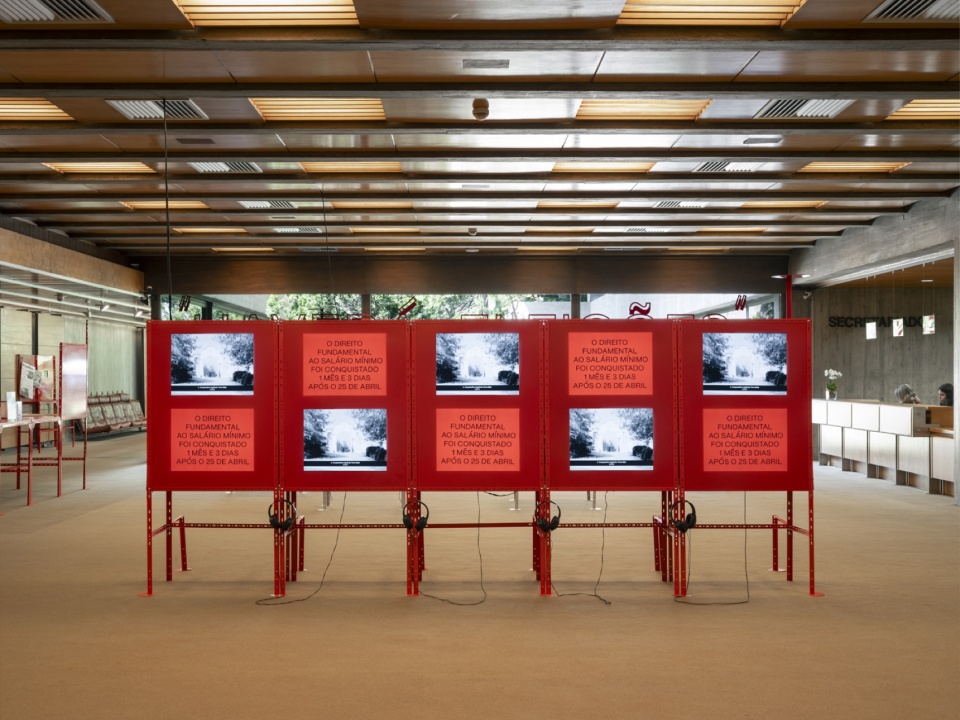
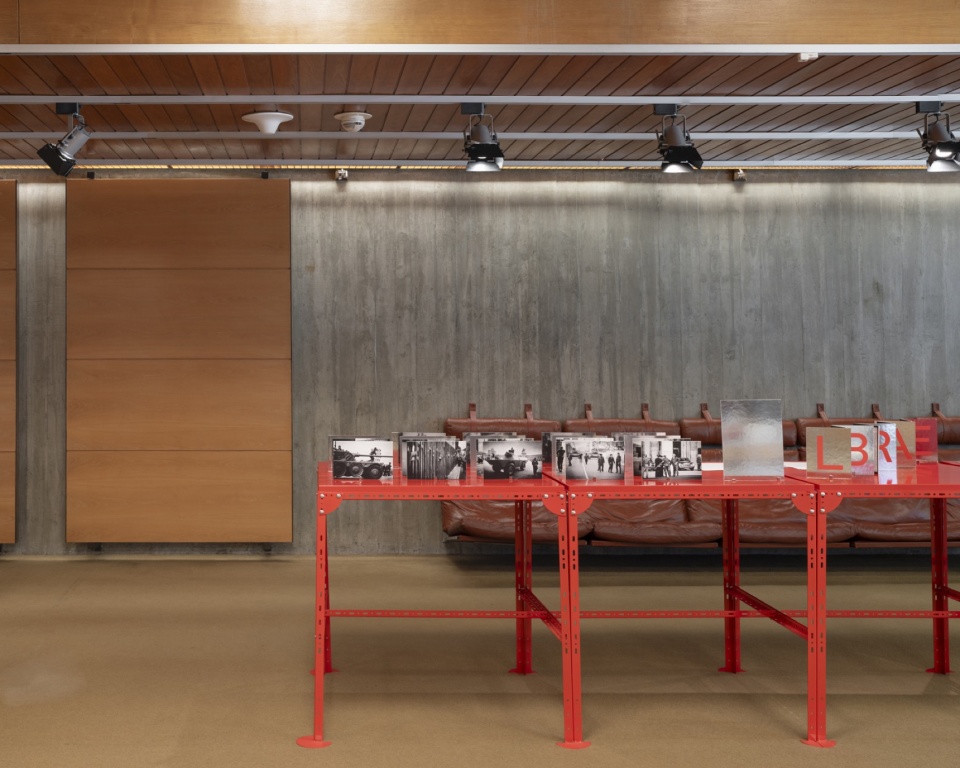
▼影像投影与文献展示结合,Projection and documentary displays combined © Dylan Perrenoud
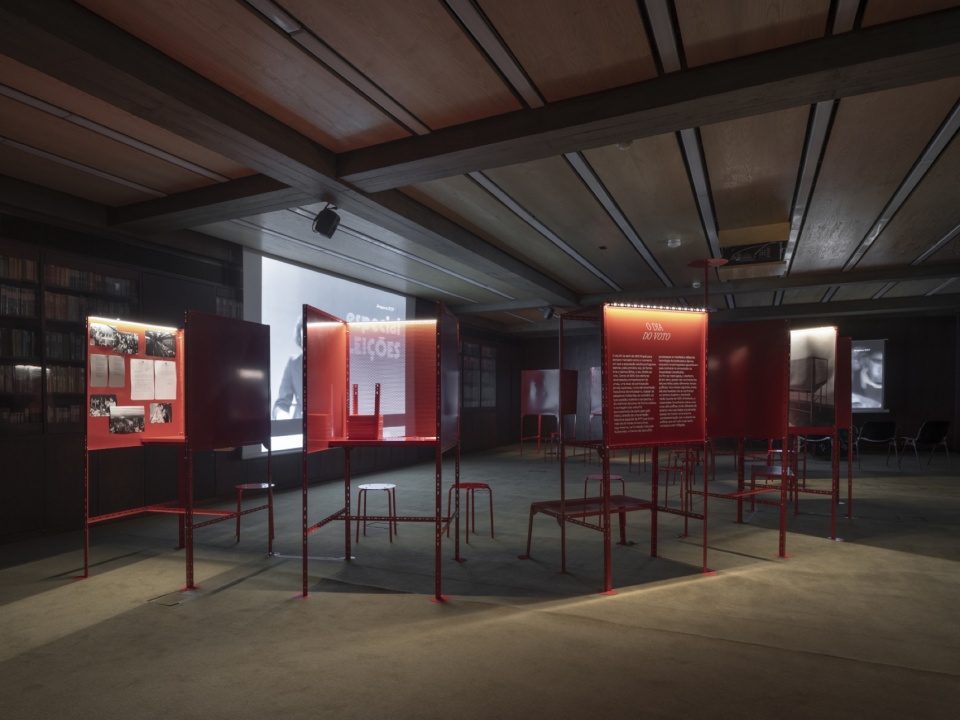
展览模块采用独立且可移动的设计,以便开展巡回展览,让这些内容抵达其应有的观众群体,使这一信息能够传播至全国各地。这种巡展机制本身也成为一种推动力量,体现文化活动与展览实践所蕴含的政治责任。尤其是在当下复杂的国际背景之中,本次展览的内容本身就属于政治领域。作为公共空间的展览,也旨在庆祝我们获取信息以及讨论过去与当下议题的自由。
▼场地轴测图,Site axonometric diagram © BUREAU
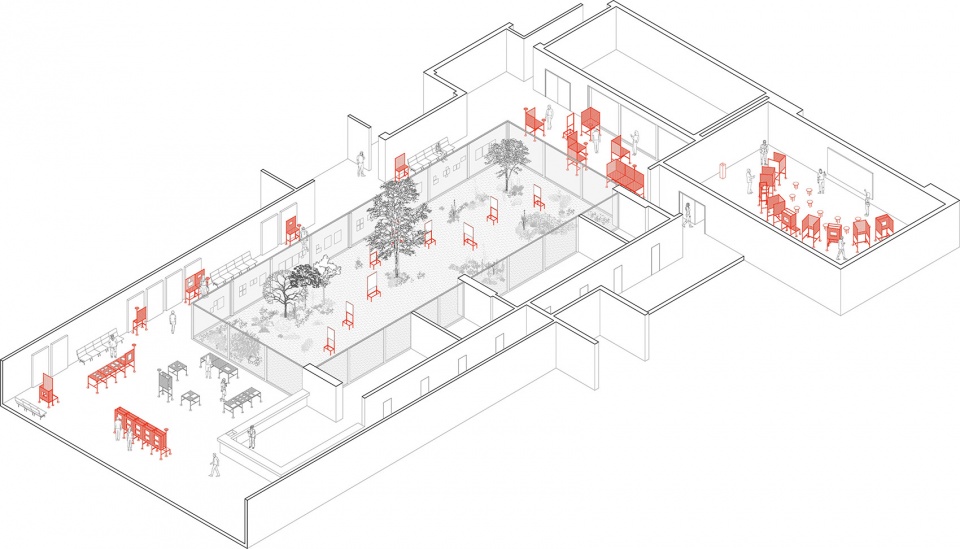
The exhibition modules are self-contained and portable, allowing for the touring that the content and audiences deserve, so that the message can travel throughout the country. This itinerancy serves as a driving force for the political commitment inherent in culture and in the act of staging exhibitions, especially in this case, where the content itself belongs to the political sphere, within a particularly complex international context. The exhibition itself, as a public space, aims to celebrate our freedom to inform ourselves and discuss issues of the past as well as the present.
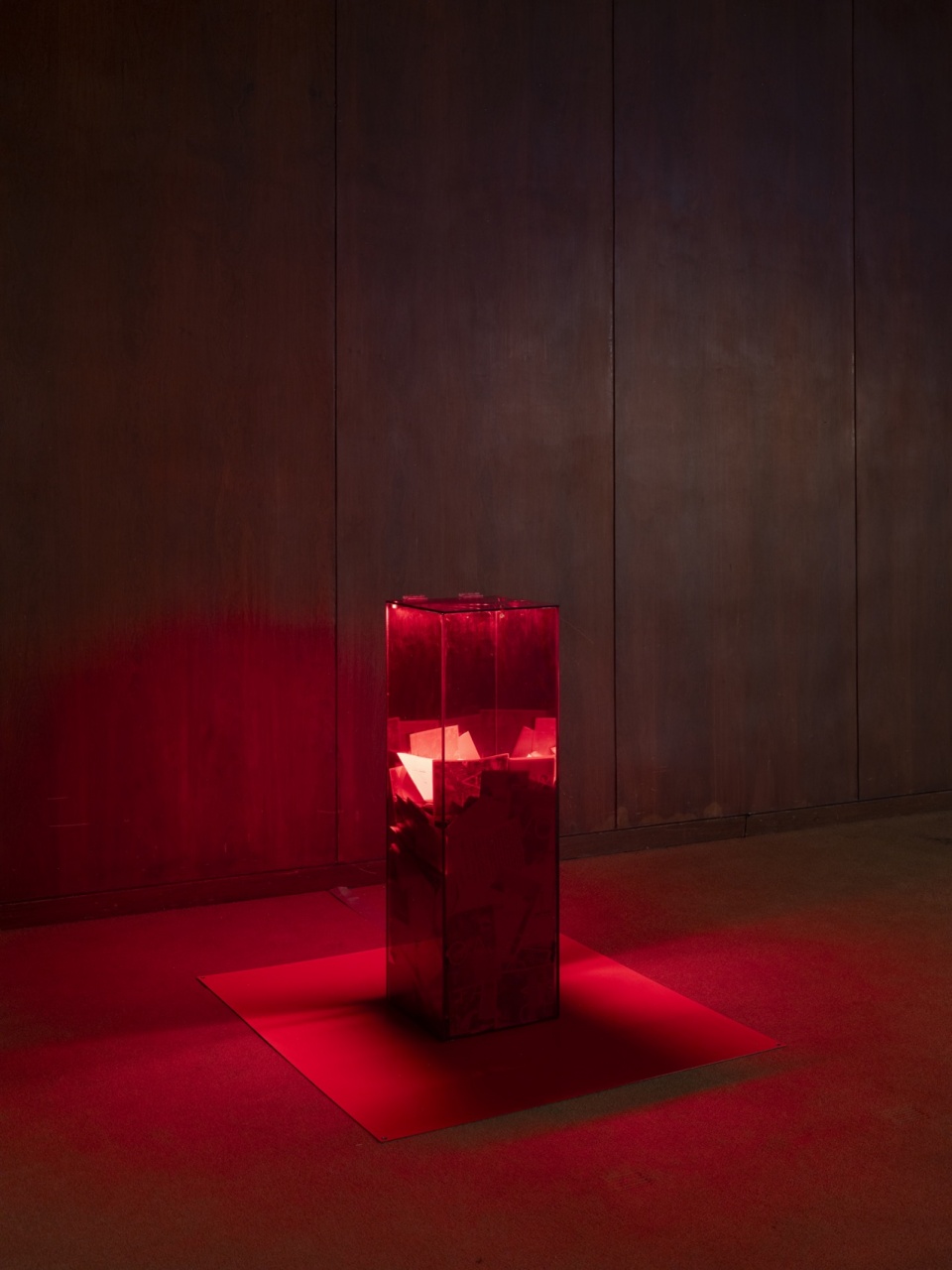
▼红色光线强化空间氛围,
Red lighting reinforcing the exhibition atmosphere © Dylan Perrenoud
“如今我们拥有了自由,那么我们将如何使用它?”
——玛丽亚·安东尼娅·帕拉(Maria Antónia Palla),记者(葡萄牙国家电视台档案馆)
“Now that we have freedom, what are we going to do with it?”
—Maria Antónia Palla, journalist (RTP Archive)
▼红色装置形成视觉标识,Red installation serving as a visual marker © Dylan Perrenoud
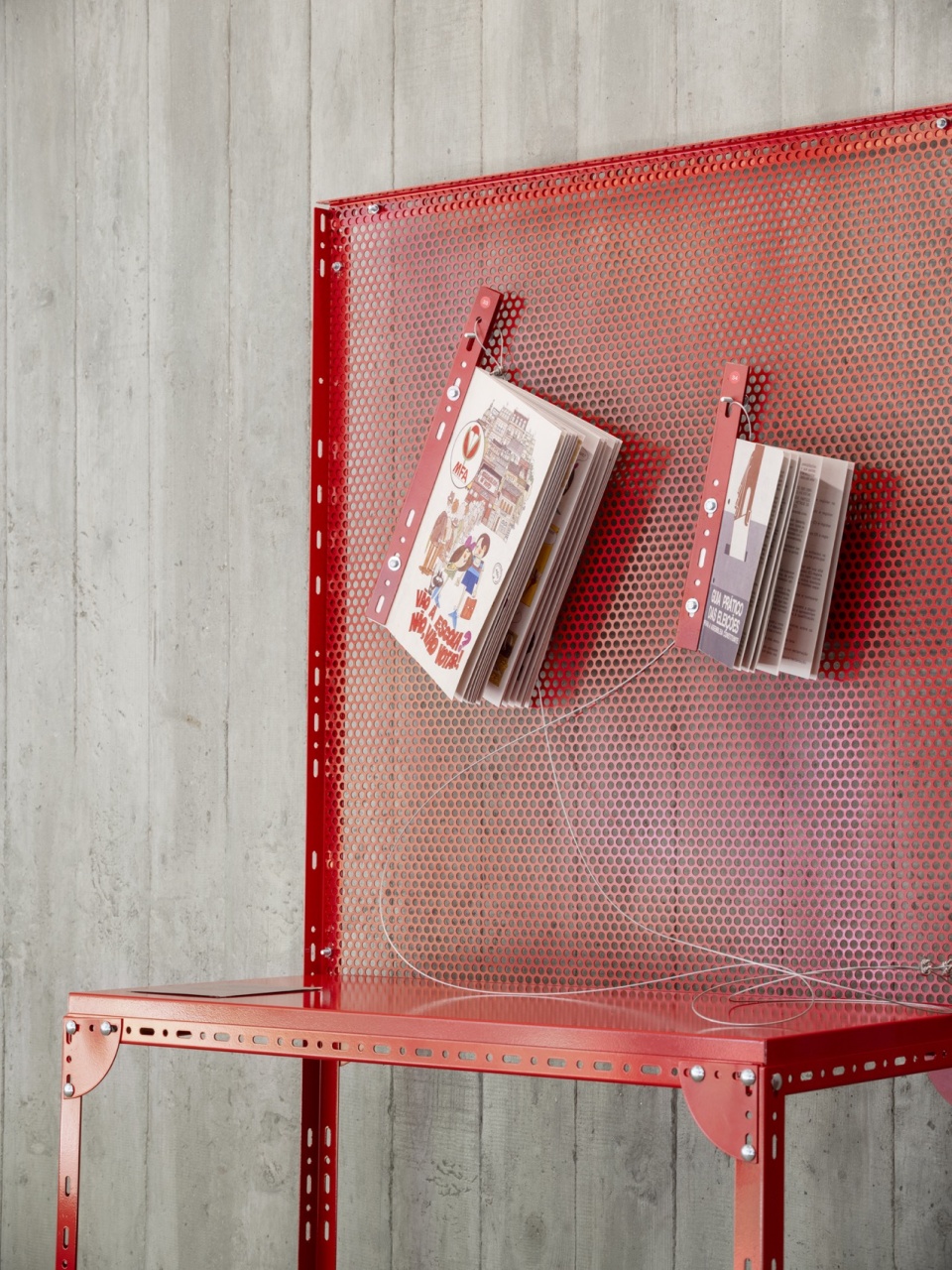
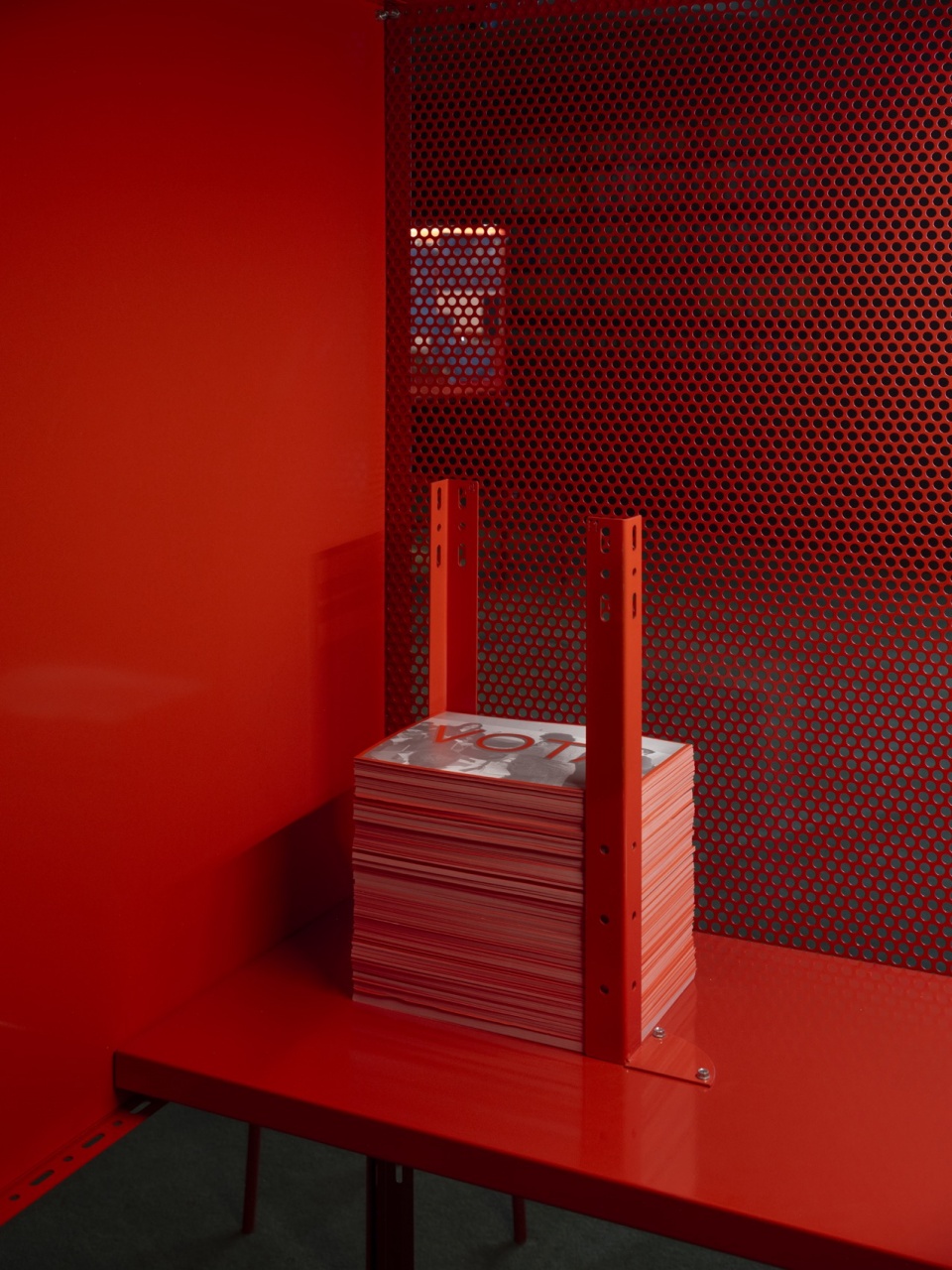
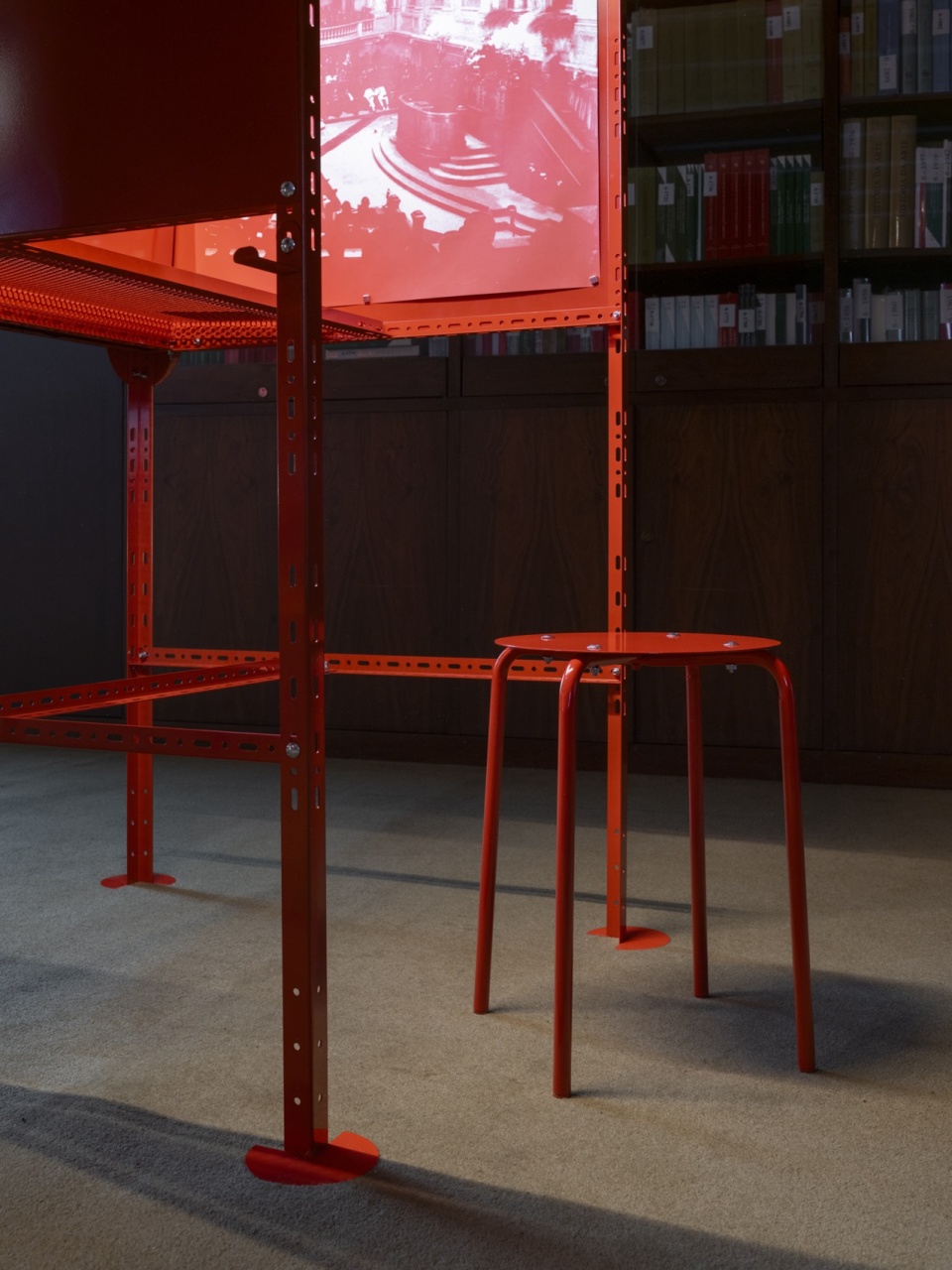
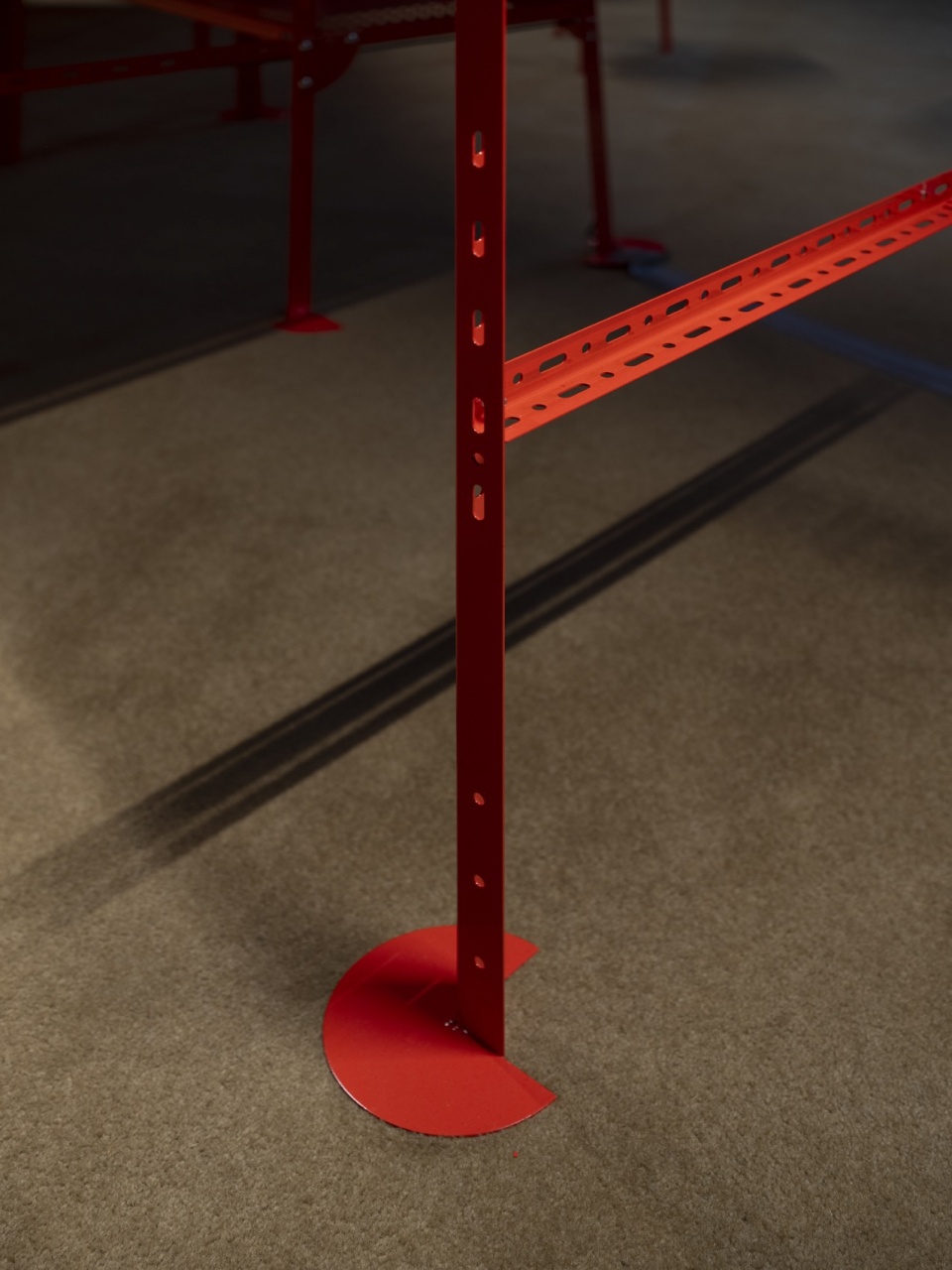
▼红色钢构系统细节,Detail of the red steel display system © Dylan Perrenoud
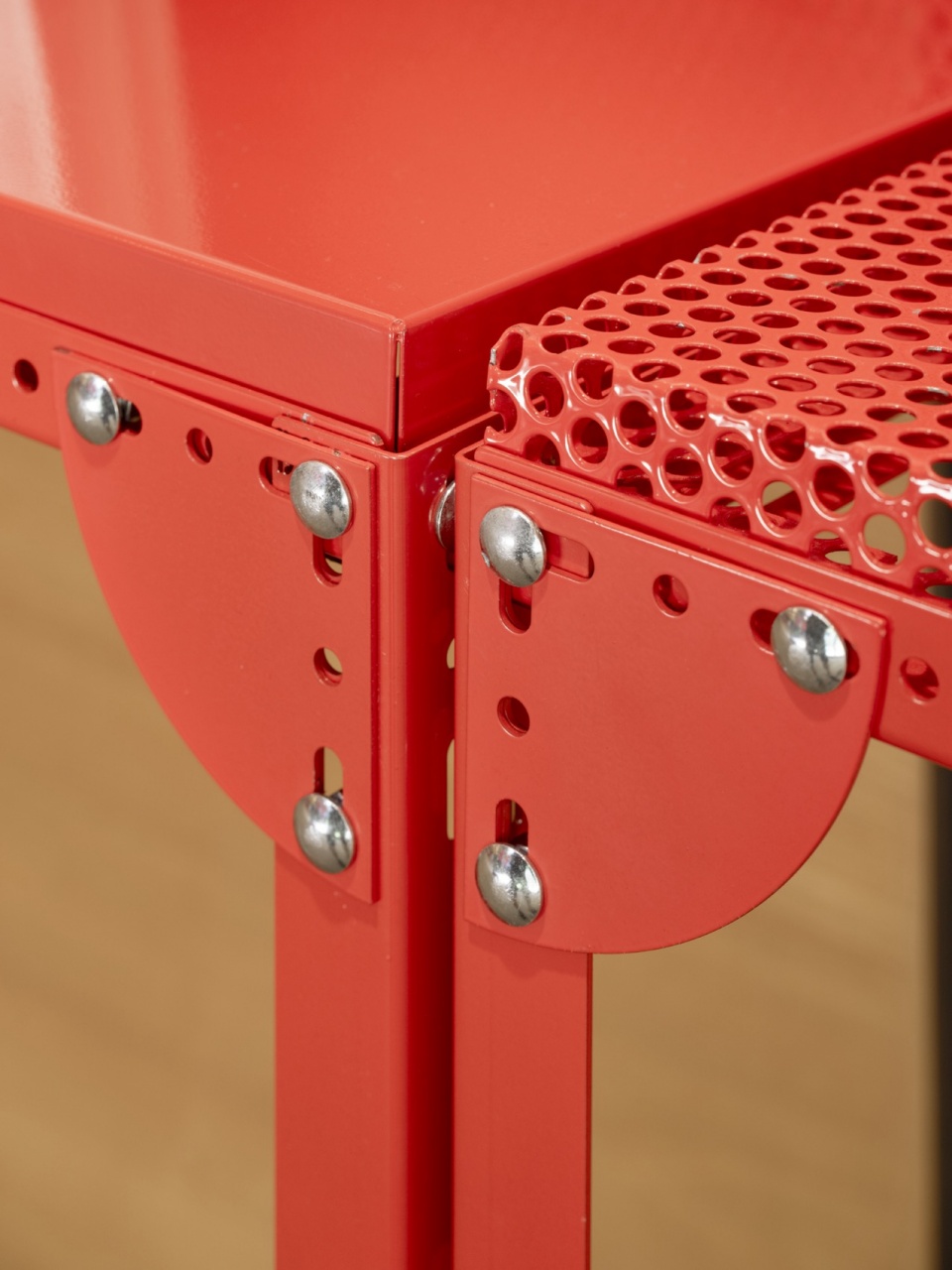
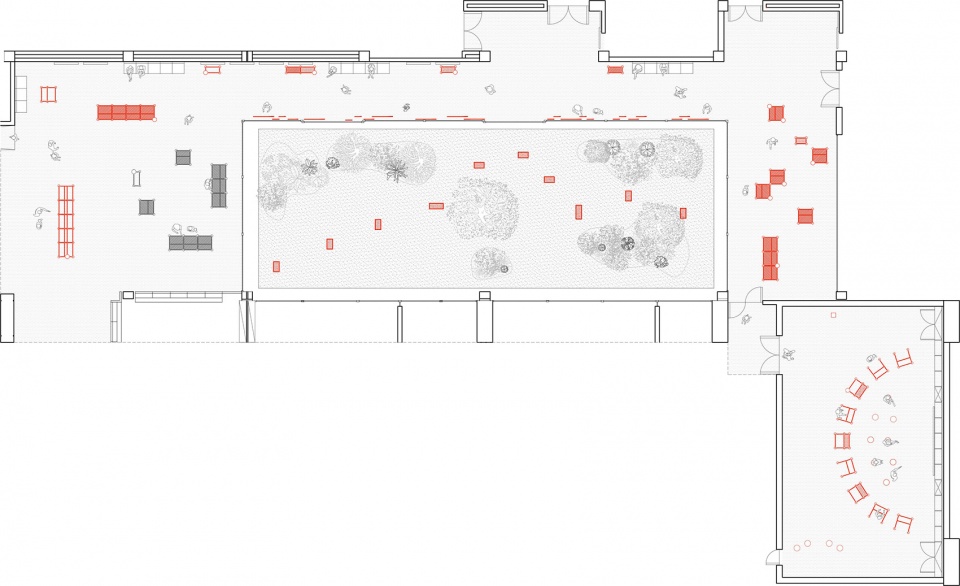
▼平面图,First level floor plan © BUREAU
卡琳·皮门塔
葡萄牙,里斯本
Carine Pimenta
Lisbon
Project: BUREAU (Daniel Zamarbide, Carine Pimenta, Galliane Zamarbide) | www.bureau.ac | @daniel_zamarbide
Concept design: Daniel Zamarbide, Carine Pimenta
Project execution: Carine Pimenta (project manager), Daniel Zamarbide, Romane Guillou, Valentin Racine, Finia Sonderegger
Construction supervision: Carine Pimenta
Publication drawings: Valentin Racine
Context: Exhibition “There will be Elections. 1975: the first free elections in Portugal” – Initiative of the 50th Anniversary of 25
April Commemorative Committee
Location: Calouste Gulbenkian Foundation, Lisbon, Portugal (PT)
Program: Exhibition and display modules design
Area: 900 m2
Status: Completed, 04-2025
Photography: Dylan Perrenoud
Curators: Catarina Vasconcelos, Pedro Magalhães
Graphic design: Ilhas Studio
Production: Metalúrgica Frontal (metalwork), GGS Productions (audiovisuals), XYZ Prints (prints)
More: BUREAU 更多关于他们:BUREAU on gooood

红色用得很合适
DK