非常感谢 Peter Böhm Architekten 予gooood分享以下内容。更多请至:Peter Böhm Architekten on gooood
Appreciation towards Peter Böhm Architekten for providing the following description:
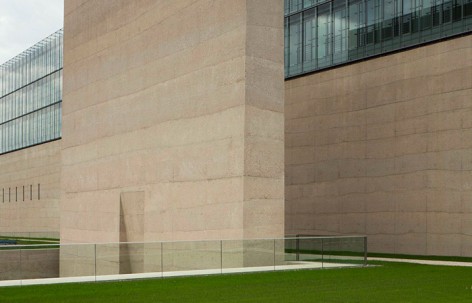
这个静谧的新博物馆位于老绘画陈列馆(Old Pinakothek)前的大广场南侧,与北面的老绘画馆面对面相辉映,其宏伟的建筑体量像是广场南面一扇紧闭的大门,其比例与老馆极为相似。为了与老馆以横向为主的比例相协调,新建筑突出的前庭和步道分别作为建筑东侧电影电视大学的入口和西侧埃及文化历史博物馆的入口。前庭下方下陷,像绿地下方埋葬起来的考古挖掘现场。
The extraordinary urban development with the large free square in front of the Old Pinakothek made it possible to close this square with a generous, quiet building in the south, which takes up approximately the proportion of the Old Pinakothek, vis-à-vis in the north, where the new building lies. In accordance with the lateral emphasis of the Old Pinakothek with its space-limiting risalits and avenue, is the entrance to the University of Film and Television located in the east of the new building and in the west the entrance to the State Museum of Egyptian Art, which is buried like an archaeological excavation underneath the green forecourt.
▼建筑外观,External View
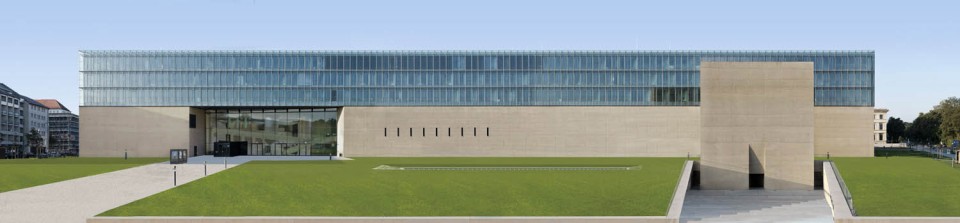
▼前庭下方下陷,像绿地下方埋葬起来的考古挖掘现场,an archaeological excavation underneath the green forecourt
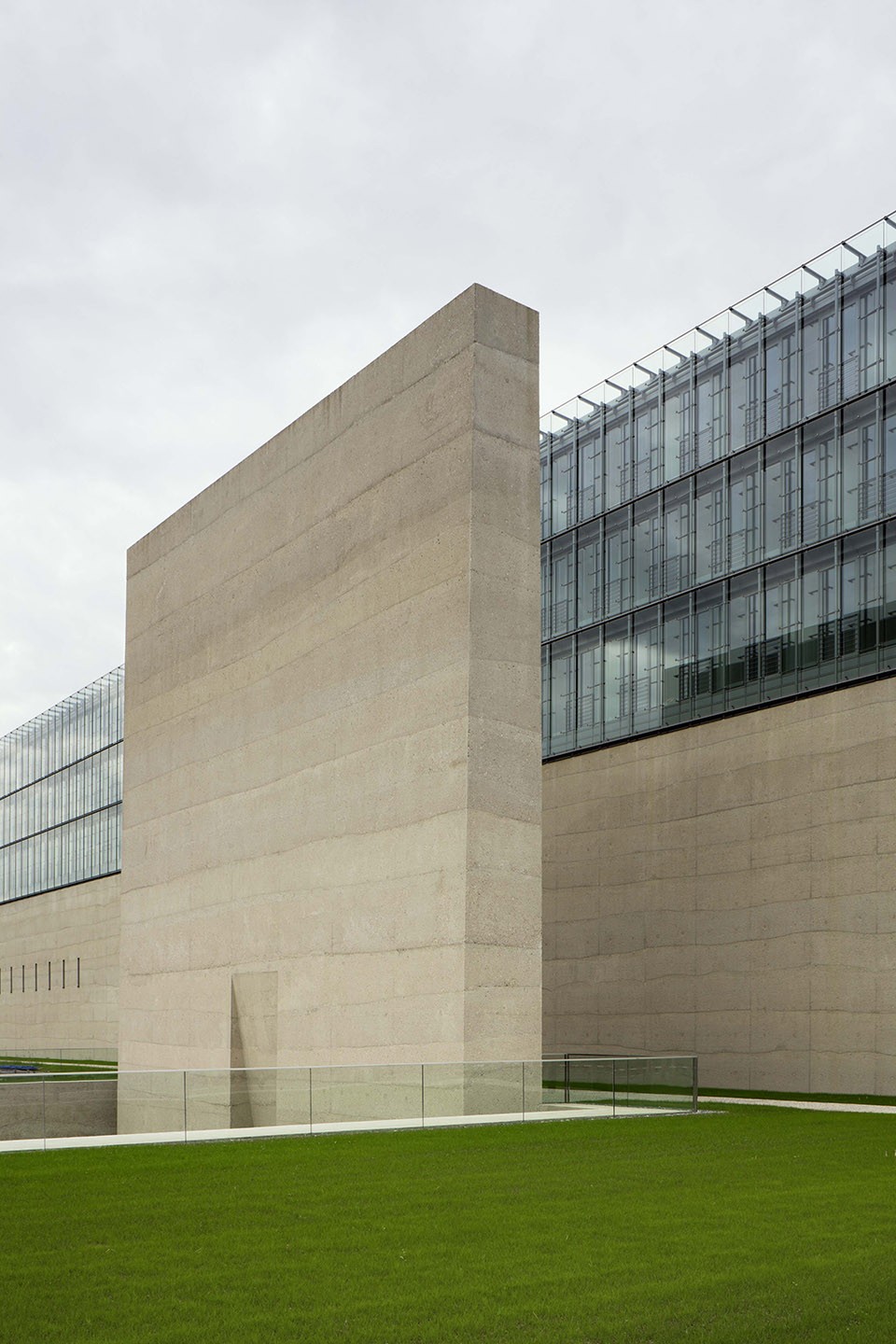
建筑前方标志性的一面墙是埃及博物馆的入口,通过一个倾斜的平缓坡道,可到达一个独立的前院。博物馆位于地下,一组组房间围绕着中庭布置,被草坪打断的部分区域也可用作展览用途。建筑内设施活动丰富多样,如图书馆,电影放映,和在大学前厅 – 一片开阔的石头基座上举办的讲座和文化节等。建筑内公共空间连贯一致,四周包围着电影院、研讨室、自助餐厅和图书馆等。与外向的前庭大相径庭的是,工作室都位于被混凝土包围起来的地下层,为了保护文物并让让工作人员专心工作。建筑上层由玻璃连包围起立,内部分布着小办公室和用作办公用途的空间。
The entrance to the Egyptian Museum, which is marked by a large wall slab, is reached via a separate forecourt, which is designed as a flat inclined ramp. The museum is based in the underground and its rooms are grouped around atrium, which is cut into the lawn area and is also used for exhibition purposes. The public is invited to use the numerous facilities and events like the library, movie screenings, lectures and festivals by the Foyer of the University- a large opening in the stone pedestal of the building. The public space continues inside the building, where it is surrounded by cinemas, seminar rooms, the cafeteria and a library. In contrast to the extroverted foyer, the studios are located in the protected concrete base to ensure a concentrated and protected work. In the glass upper floors, smaller offices and office-like uses are accommodated.
▼博物馆入口阶梯,Entrance stairs to the museum
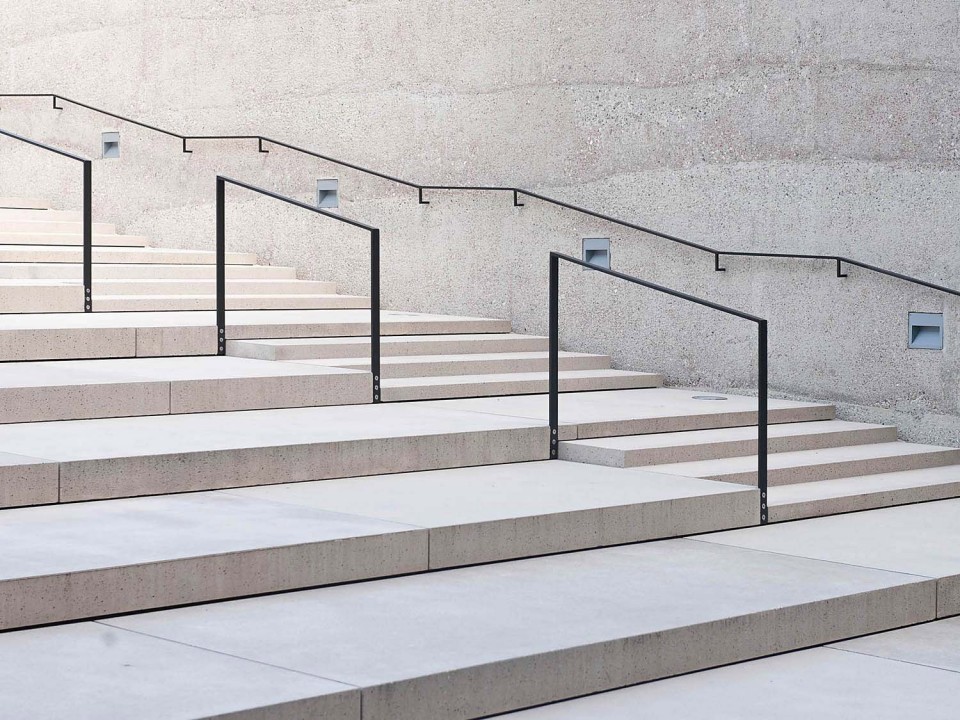
▼博物馆入口,Museum Entrance View
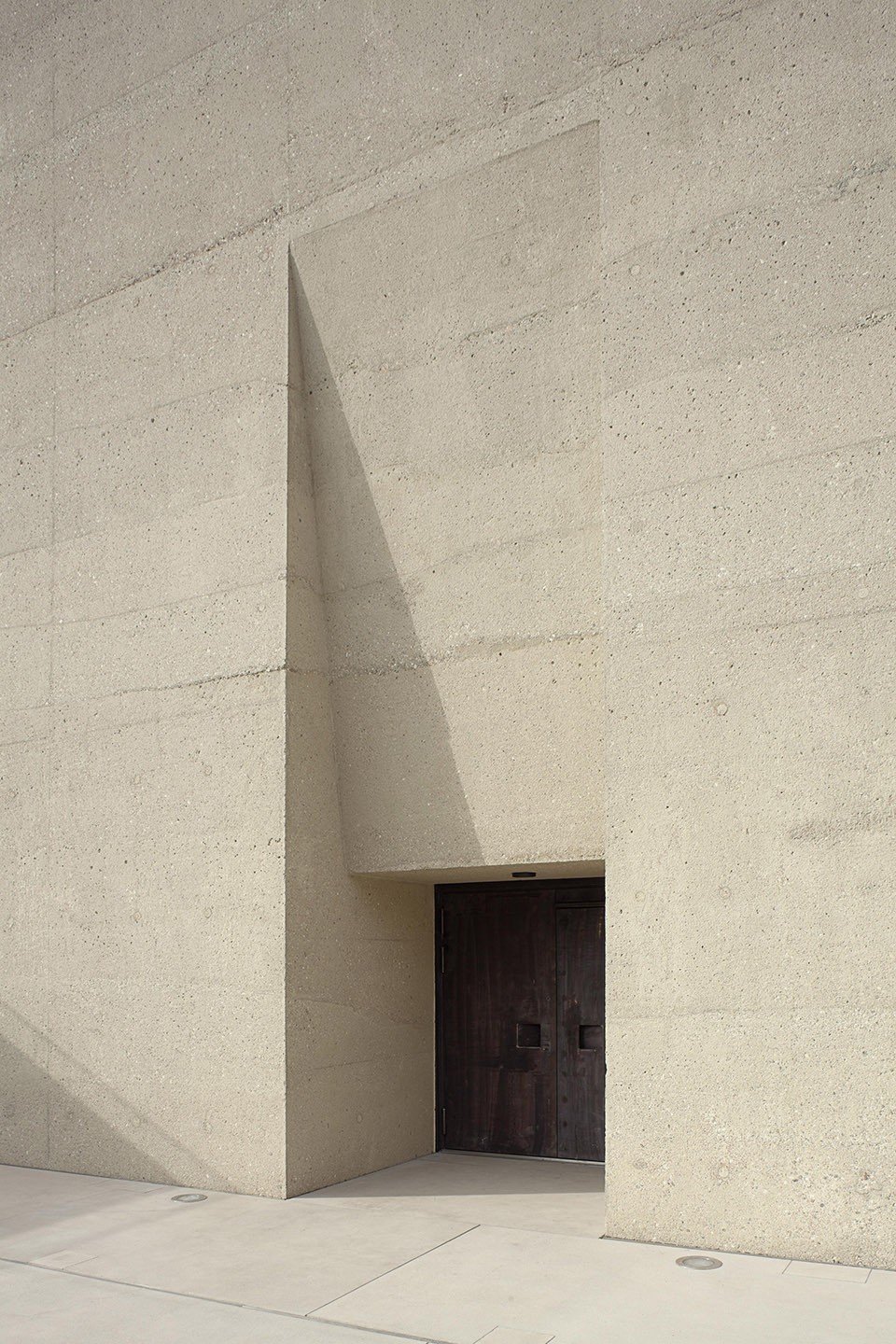
▼中庭,Atrium
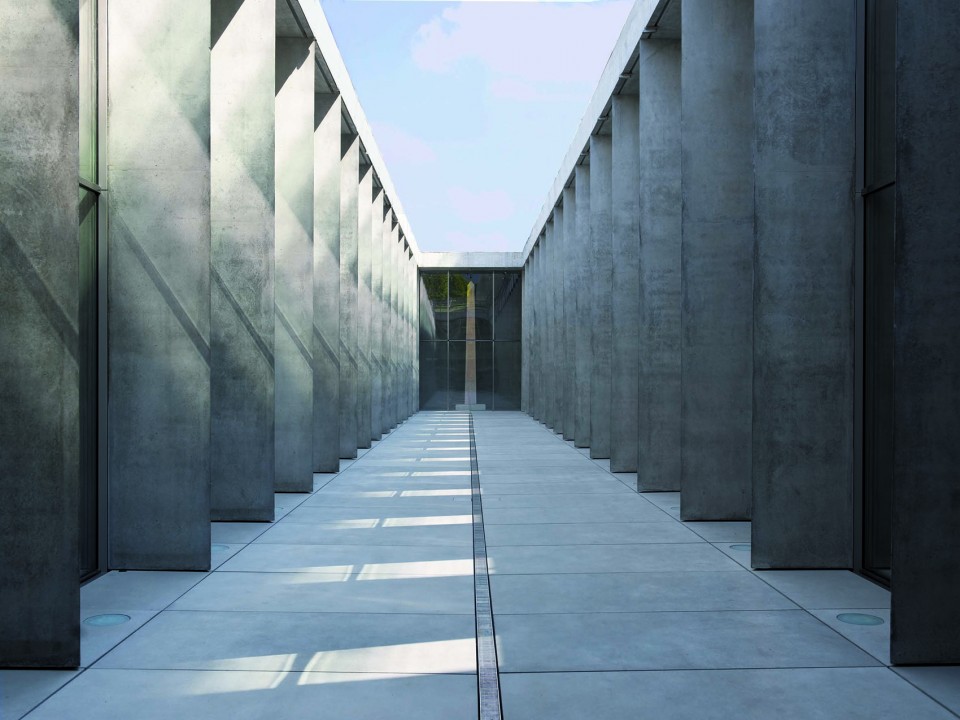
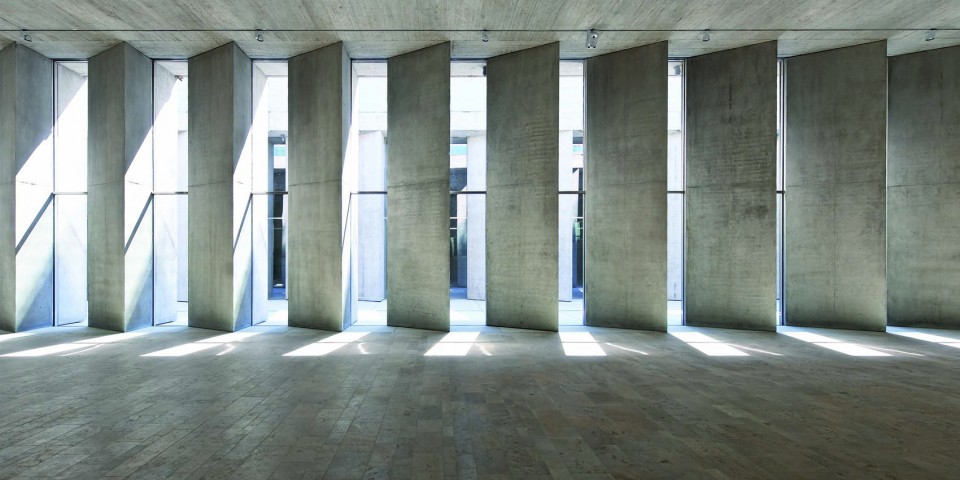
▼雕塑大厅,Museum Hall
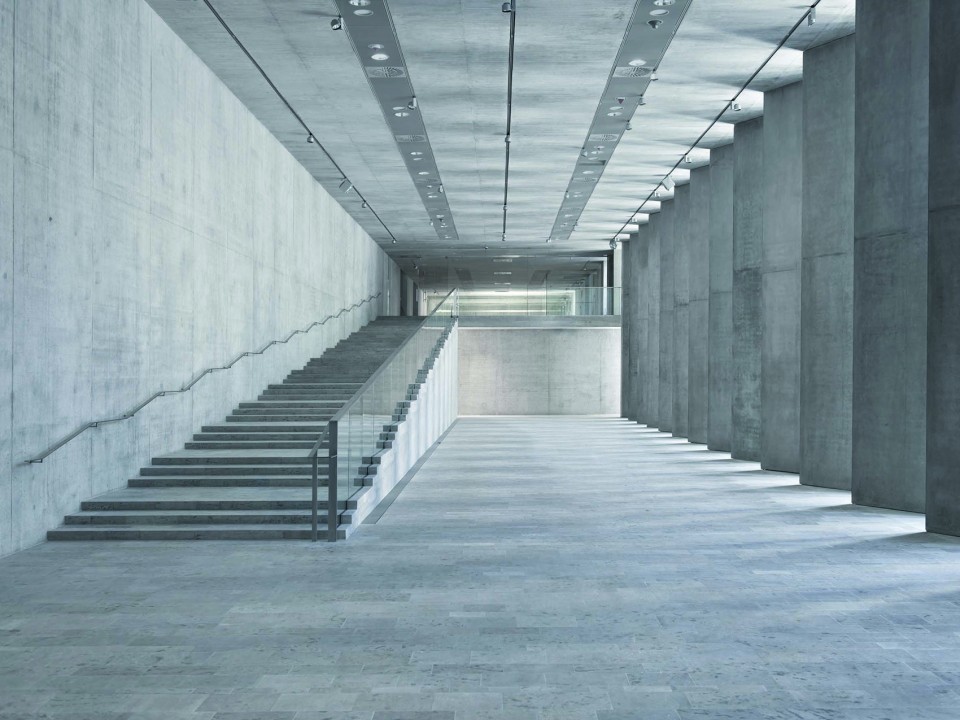
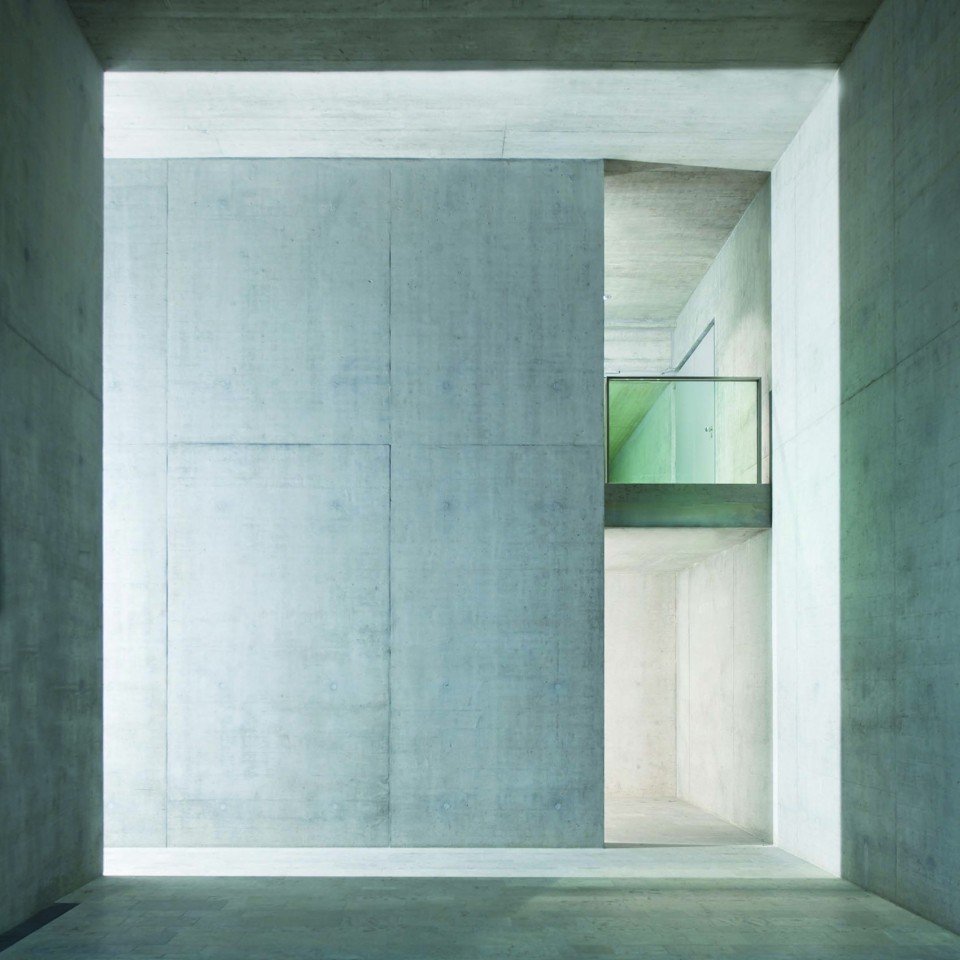
Peter Böhm说道:“博物馆旨在为珍藏品创造带有古代寺庙氛围的展览空间,将其发源地的历史感用现代的建筑语言传递出来。”
“In the museum, my aim was to create a place for the precious exhibits, in which the atmosphere of ancient temple complexes, from which they are largely derived, is translated into a modern architectural language.” Peter Böhm
▼楼梯,Staircase
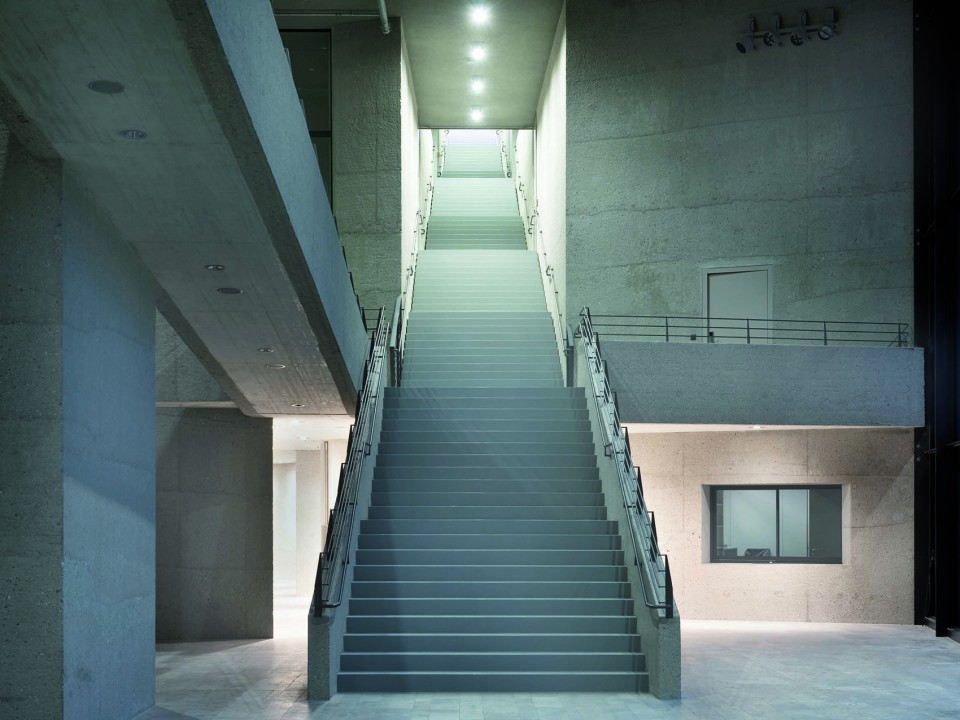
▼博物馆内部,Museum Hall
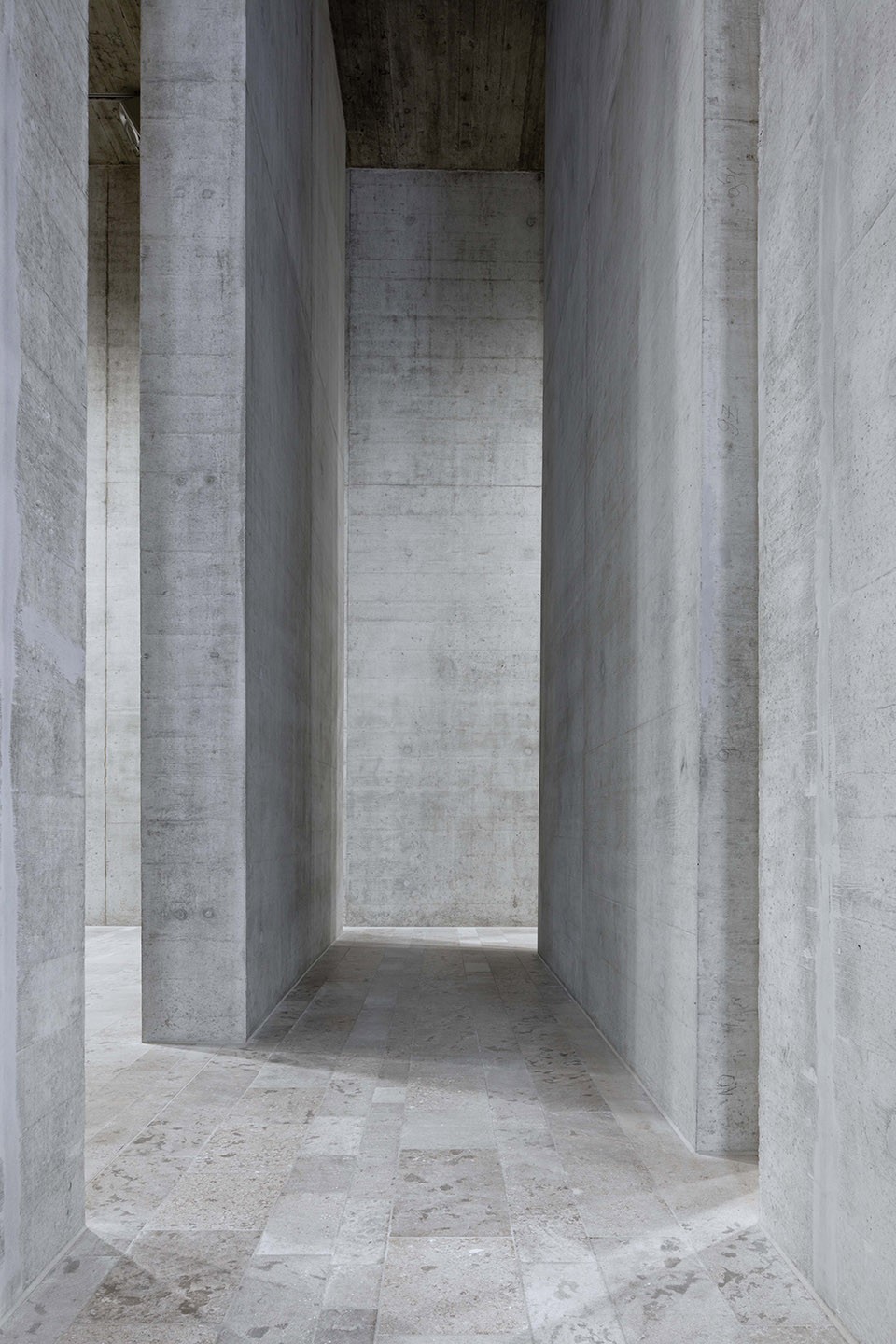
▼三角形柱子,Triangular cloumn
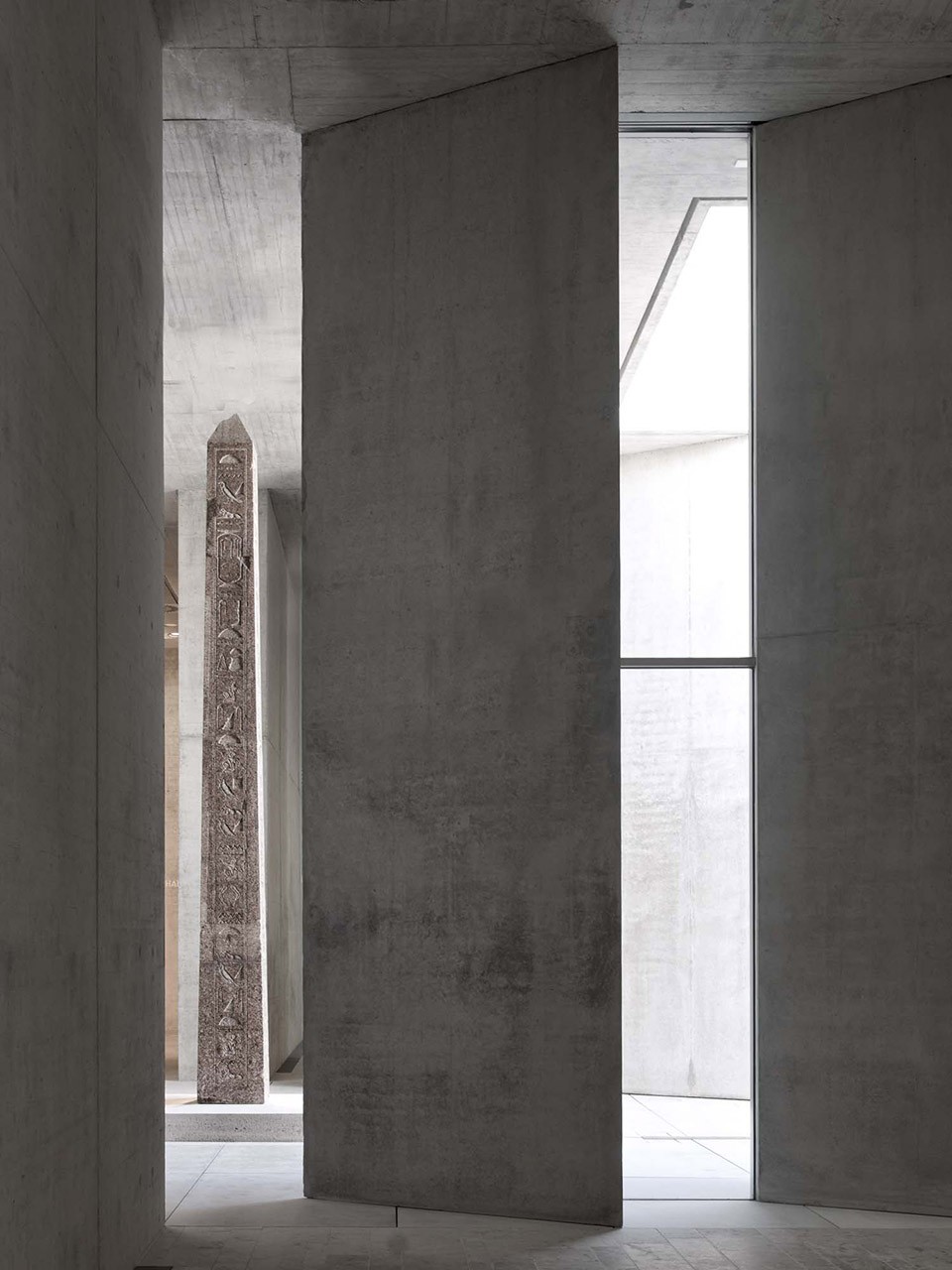
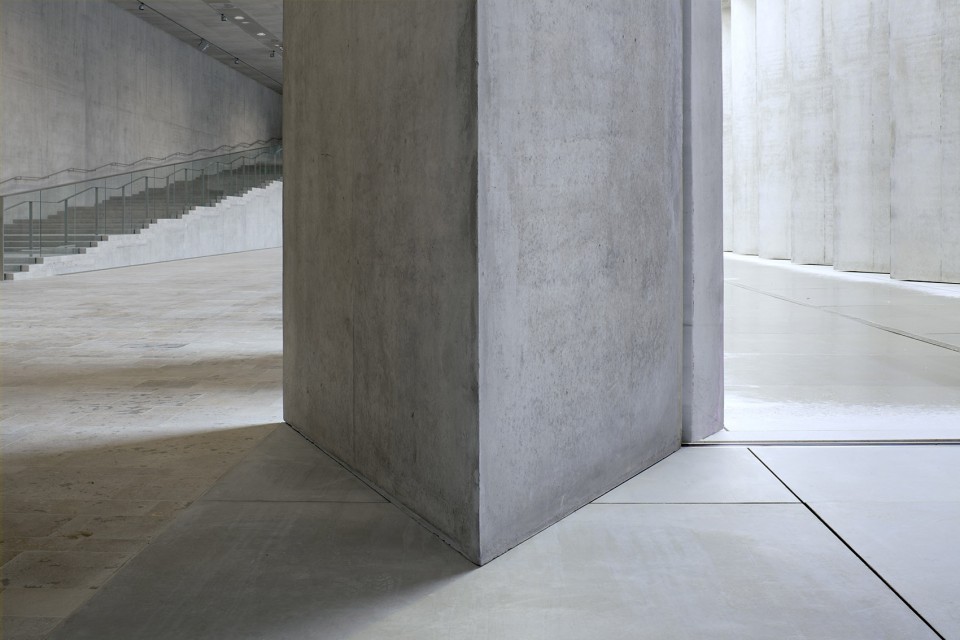
基座上方的大面墙体由带有轻微褐色的混凝土组成,埃及博物馆的墙则颜色较深,红色如花岗石般的颜色与老馆相呼应。上层的双层玻璃立面闪烁清脆,可旋转的玻璃圆盘和防晒薄片创造出丰富的光影效果。该建筑于2011年完工,总建筑面积两万平方米,主要用材为玻璃和混凝土。
The large walls of the pedestal are executed in a light, slightly ocher-colored concrete, while the wall of the Egyptian Museum is kept in a darker, red granite-like shade – a coloring game which is found in the Old Pinakothek (with the addition of Döllgast) . The double skin of the glass body of the upper floors is a chirping, flickering band with the light play of rotatable glass discs and sun protection lamellae in varying positions. The building has got a gross built area with 20.000 square meters and it’s main materials are glass and beton. The buidling was finished in 2011.
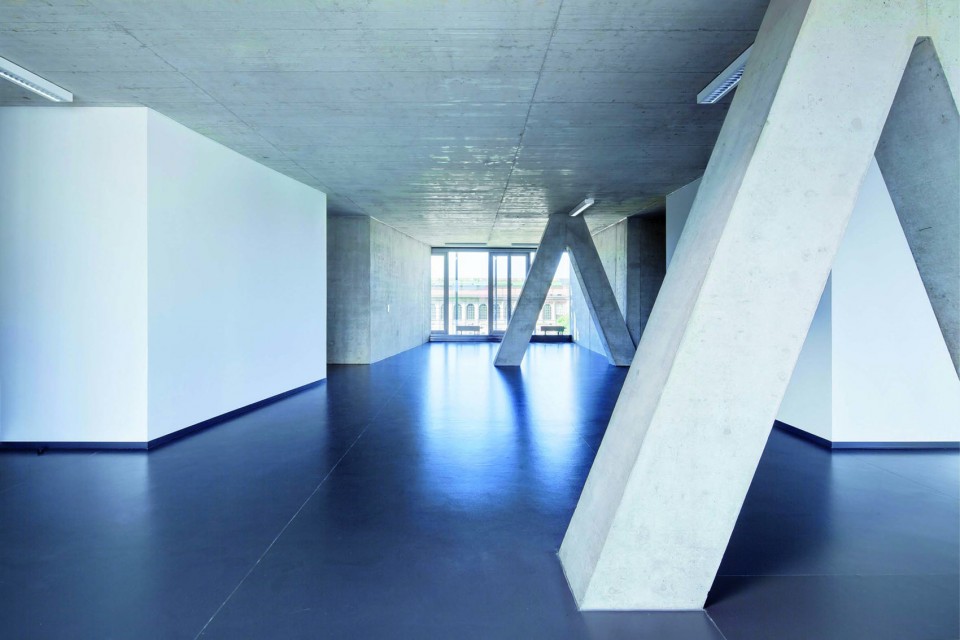
▼建筑上层V型柱子,V-Column
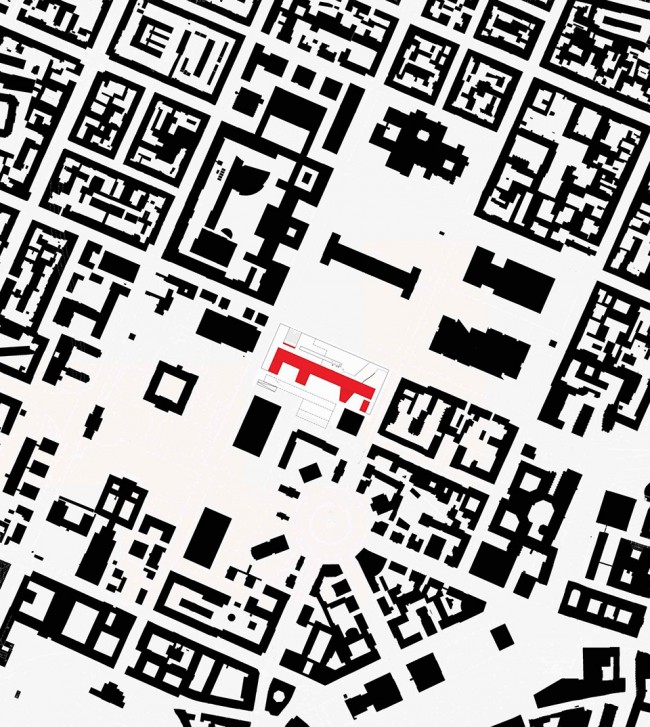
▼总平面,Site Plan
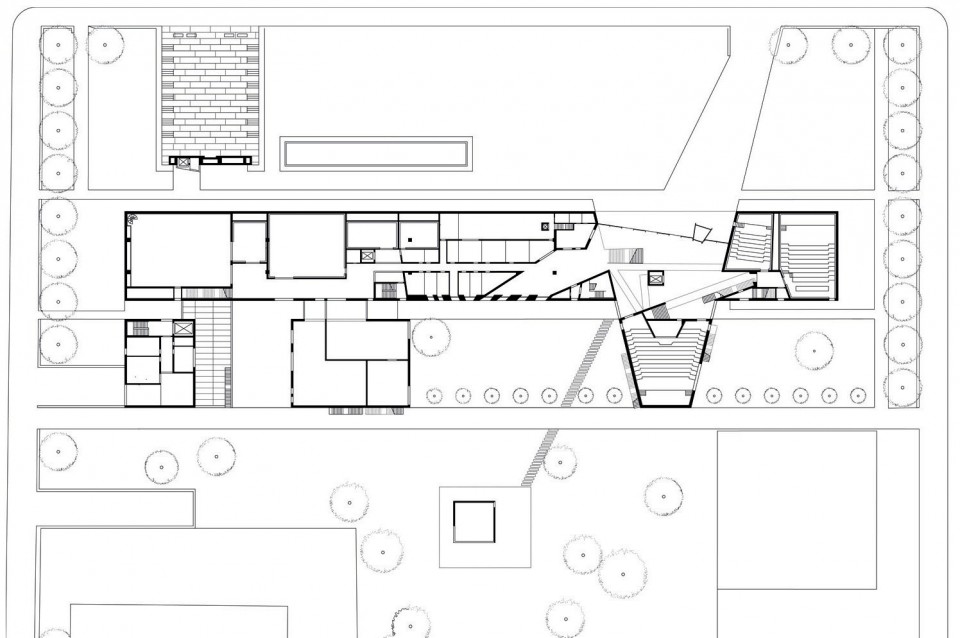
▼地面层平面图,Ground Floor Plan
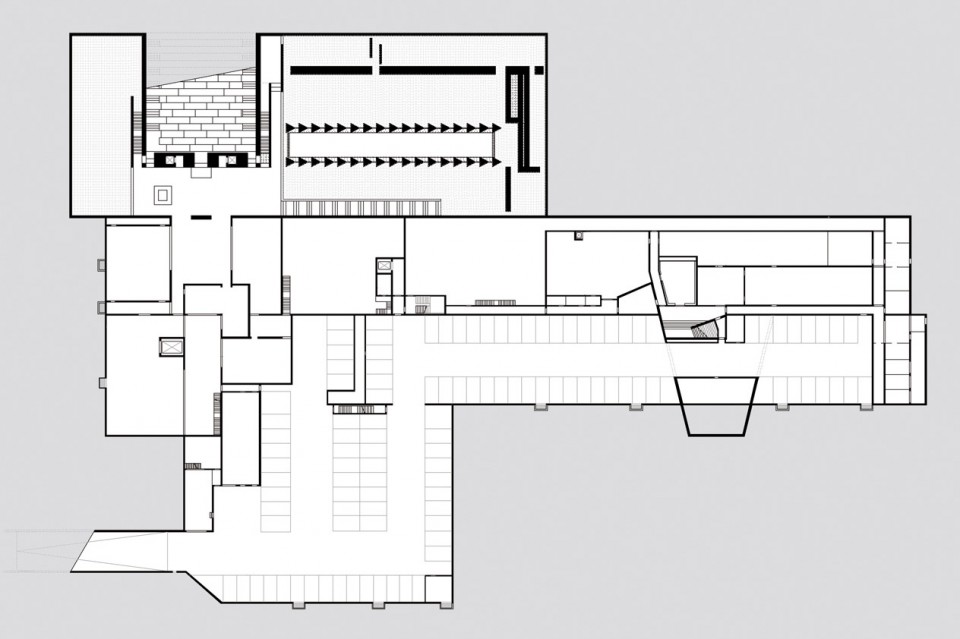
▼地下层平面图,Underground Floor Plan
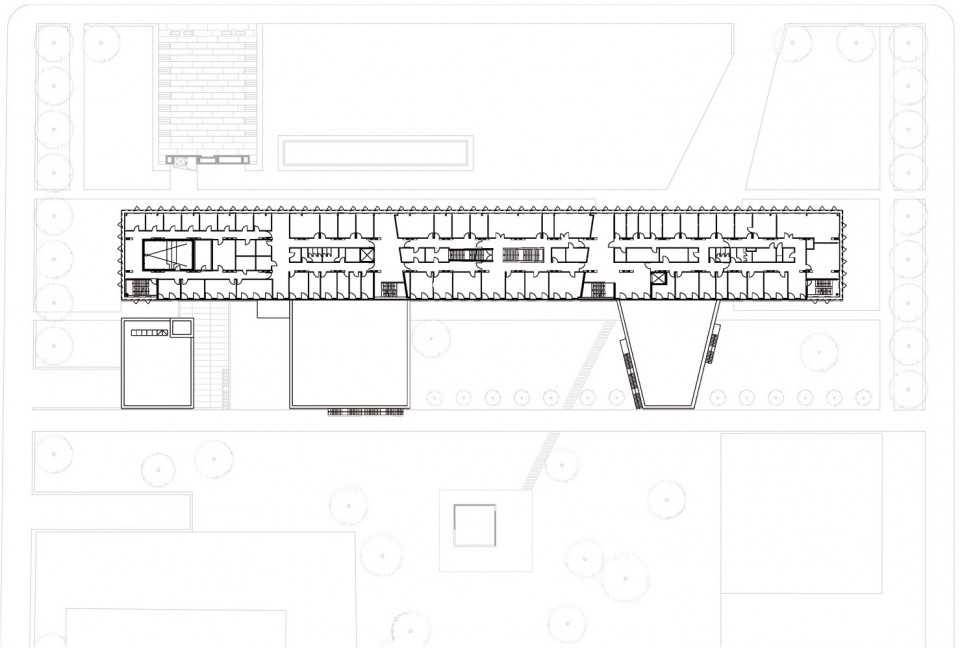
▼上层平面图,Upper Floor Plan
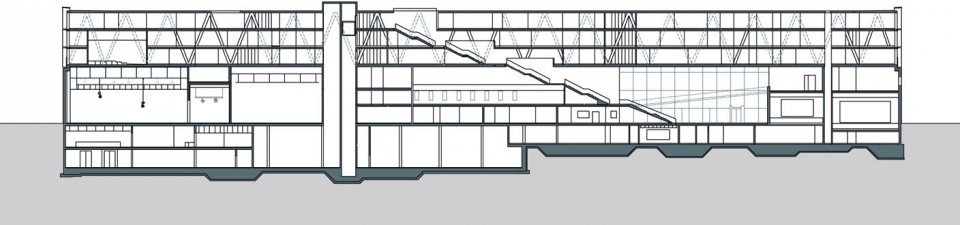
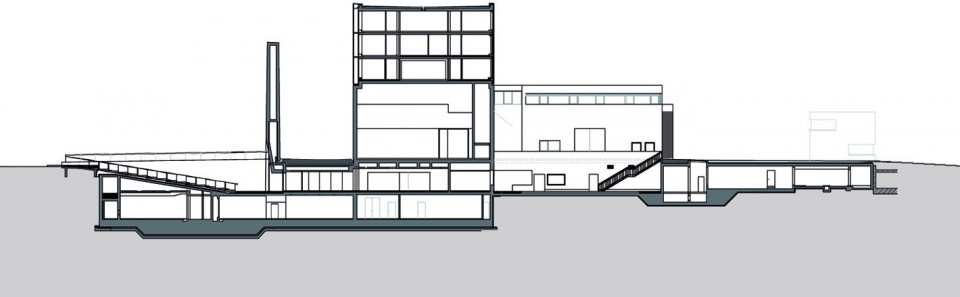
▼剖面图,Section
Architect’ Firm: Peter Böhm Architekten
Website: peterboehm-architekten.de
Contact e-mail: info@peterboehm-architekten.de
Lead Architects: Peter Böhm
Project location: Gabelsbergerstraße 35, 80333 München
Completion Year: 2011
Photo credits: Dieter Leistner
More: Peter Böhm Architekten,更多请至:Peter Böhm Architekten on gooood
德国博物馆的典型气质。细节控制的很好
仪式感好强
前面的墙是干性混凝土夯的吗?
用现在的材料变现原来神庙的样子,下沉的路通往神秘。不知道光纤有神有什么特别的地方。
这个建筑师说过,由于是做埃及文化的展馆,希望本埋于地下的仍然能藏于地下,才会有了这种一半石材一半通透玻璃的想法。
柱廊确实有一种宗教仪式的感觉。
外观是比较现代的装修,内部空间肃穆冰冷,很有历史感和博物馆的气质。从入口的门很大的进深,竖向柱子重复的排列及其带来的光影效果,都很有寺庙的感觉。举架很高,有种进入哥特式教堂的庄重感,三角形的柱子并不突兀,反而有种寺庙的推门的感觉。
气死苗木商
老派~硬气。