感谢 ACDF 予 gooood 分享以下内容。更多关于:ACDF on gooood
Appreciation towards Gallery by ACDF for providing the following description:
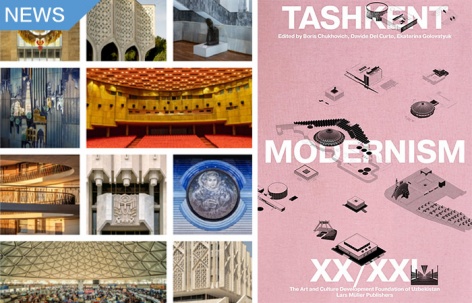
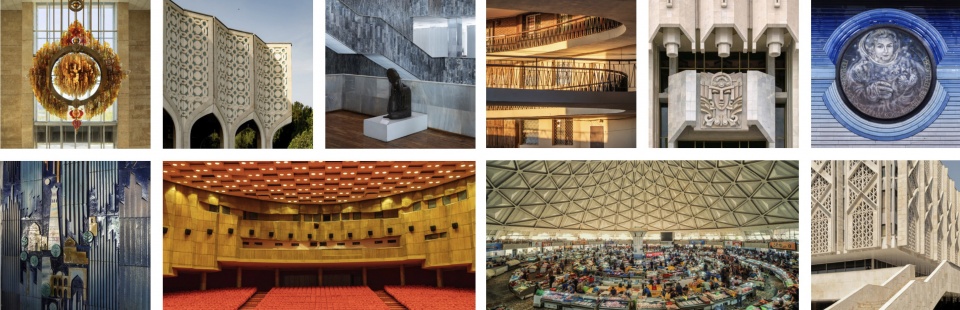
联合国教科文组织世界遗产委员会在第48届釜山会议上,正式将塔什干的现代主义建筑列入《世界遗产名录》。此次列入的十座地标性建筑位于乌兹别克斯坦首都,时间跨度从1960年代延续至1990年代初。
The UNESCO World Heritage Committee has inscribed Tashkent’s modernist architecture on the World Heritage List at its 48th session in Busan, Republic of Korea. These include ten landmark buildings in Uzbekistan’s capital dating from the 1960s to the early 1990s.
▼十座入选建筑,The ten inscribed buildings © ACDF
现代建筑早在1930年代便已在中亚萌芽,使该地区成为国际现代主义运动发展的参与者之一。塔什干1960年代至1990年代初的建筑代表了二十世纪现代化进程中更具创新性的第二阶段。这些建筑被列入世界遗产名录,既是对其突出普遍价值的肯定,也承认了国际现代主义与当时乌兹别克斯坦的社会抱负、物质文化、气候条件及空间传统是如何融为一体的。
Modern architecture emerged in Central Asia as early as the 1930s, making the region a participant in the development of the international modern movement. Tashkent’s architecture of the 1960s to early 1990s represents the second more innovative chapter of twentieth-century modernisation. The inclusion of these buildings on the World Heritage list acknowledges their Outstanding Universal Value and recognises how international modernity merged with Uzbekistan’s social ambitions, material culture, climate and spatial traditions at that time.
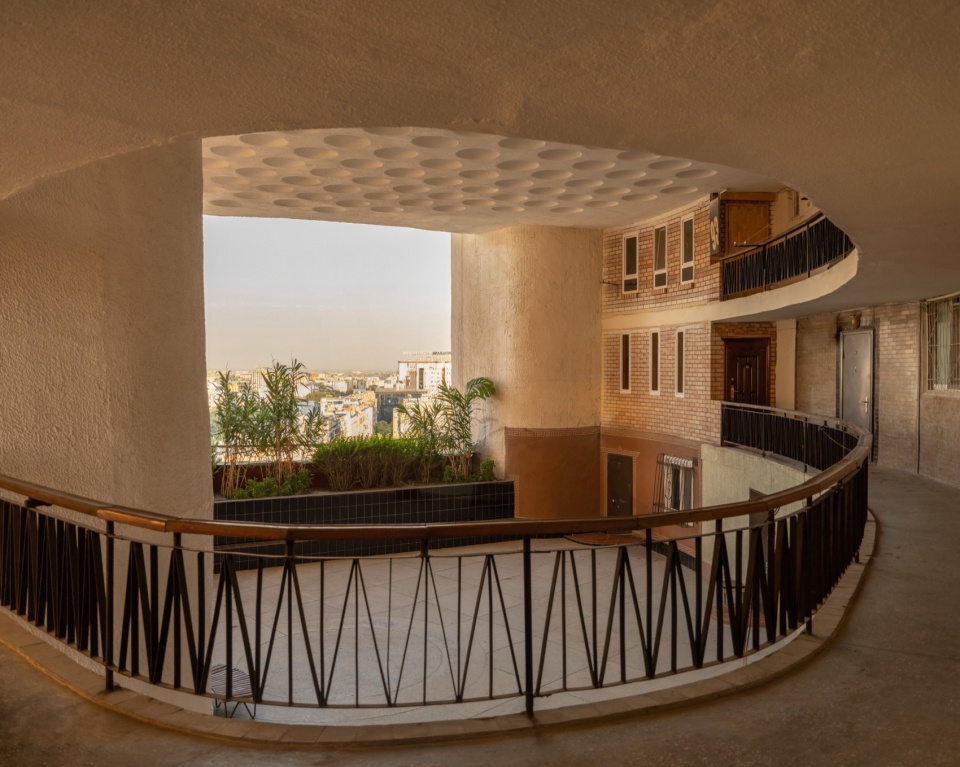
▼珍珠住宅楼,Zhemchug Residential Building © Karel Balas
此次列入依据世界遗产标准(iv),涵盖文化、市政、商业、基础设施、科研及住宅建筑。在不同功能和尺度下,这些建筑将标准化体系与特定场地的建造相结合,将环境与抗震性能与富有表现力的形式相结合,并将现代主义抽象与庭院、敞廊、几何装饰及纪念性艺术融为一体。
Inscribed under the World Heritage criterion (iv), the properties span cultural, civic, commercial, infrastructural, scientific and residential architecture. Across different programmes and scales, the buildings combine standardised systems with site-specific construction, environmental and seismic performance with expressive forms, and modernist abstraction with courtyards, loggias, geometric ornament and monumental art.
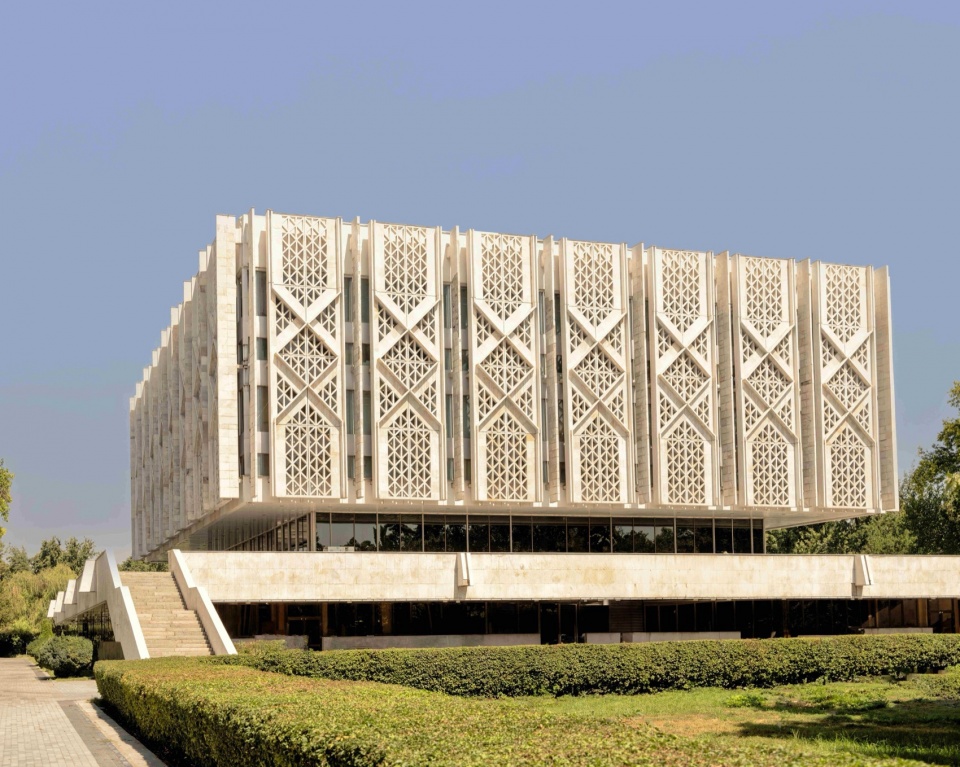
▼国家历史博物馆,State Museum of History © Karel Balas
此次联合国教科文组织的认可推进了乌兹别克斯坦总统沙夫卡特·米尔济约耶夫的战略愿景,将文化遗产定位为国家发展与复兴的根基性支柱。它彰显了国家遗产作为一种动态、持续演进的力量——一种在历史上能够将从古至今的多元影响融汇为统一而持久的集体认同的力量。
This UNESCO recognition advances the strategic vision of Uzbekistan’s President Shavkat Mirziyoyev, positioning cultural heritage as a fundamental pillar of national development and renewal. It highlights the nation’s legacy as a dynamic, evolving force—one historically capable of synthesizing diverse influences, from antiquity to the present, into a cohesive and enduring collective identity.
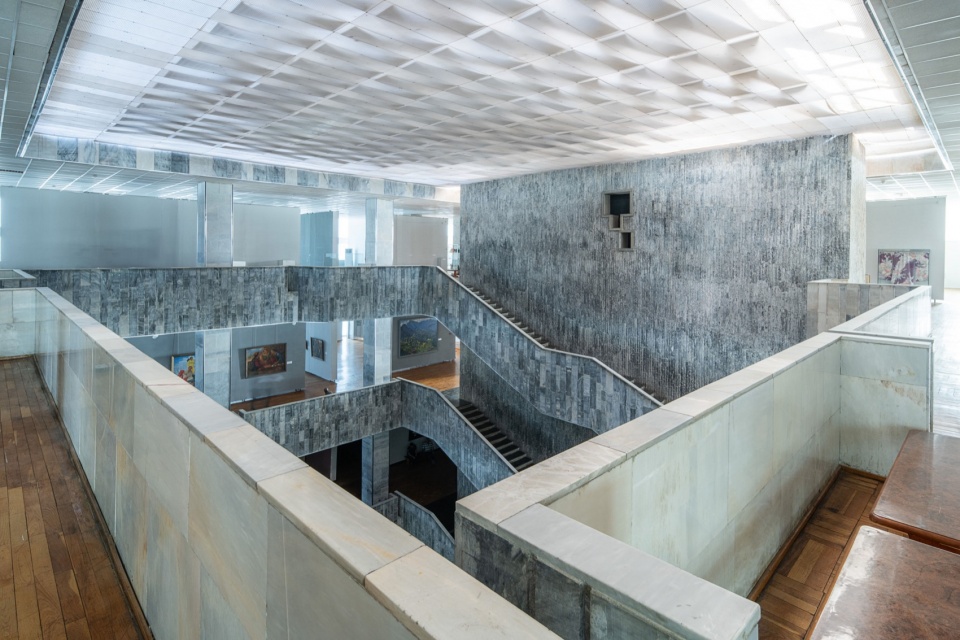
▼艺术国家博物馆,State Museum of Arts © Karel Balas
乌兹别克斯坦艺术与文化发展基金会主席、乌兹别克斯坦联合国教科文组织全国委员会主席加亚娜·乌梅罗娃表示:”此次列入将乌兹别克斯坦近期建筑史中至关重要的一部分纳入了二十世纪遗产和全球现代主义运动的国际叙事。这些建筑记录了塔什干如何通过建筑来构想公共生活、集体身份和未来。联合国教科文组织的认可也带来了一份长期责任:以严谨的态度保护这些建筑,让它们继续作为城市生活的一部分,并将它们的知识传递给后代。”
Gayane Umerova, Chairperson of the Uzbekistan Art and Culture Development Foundation and Chairperson of the National Commission of Uzbekistan for UNESCO, says: “This inscription brings a vital part of Uzbekistan’s recent architectural history into the international account of twentieth-century heritage and the global modernist movement. These buildings record how Tashkent imagined public life, collective identity and the future through architecture. The UNESCO recognition also carries a long-term responsibility: to conserve these buildings with rigour, keep them part of the life of the city and pass their knowledge to future generations.”
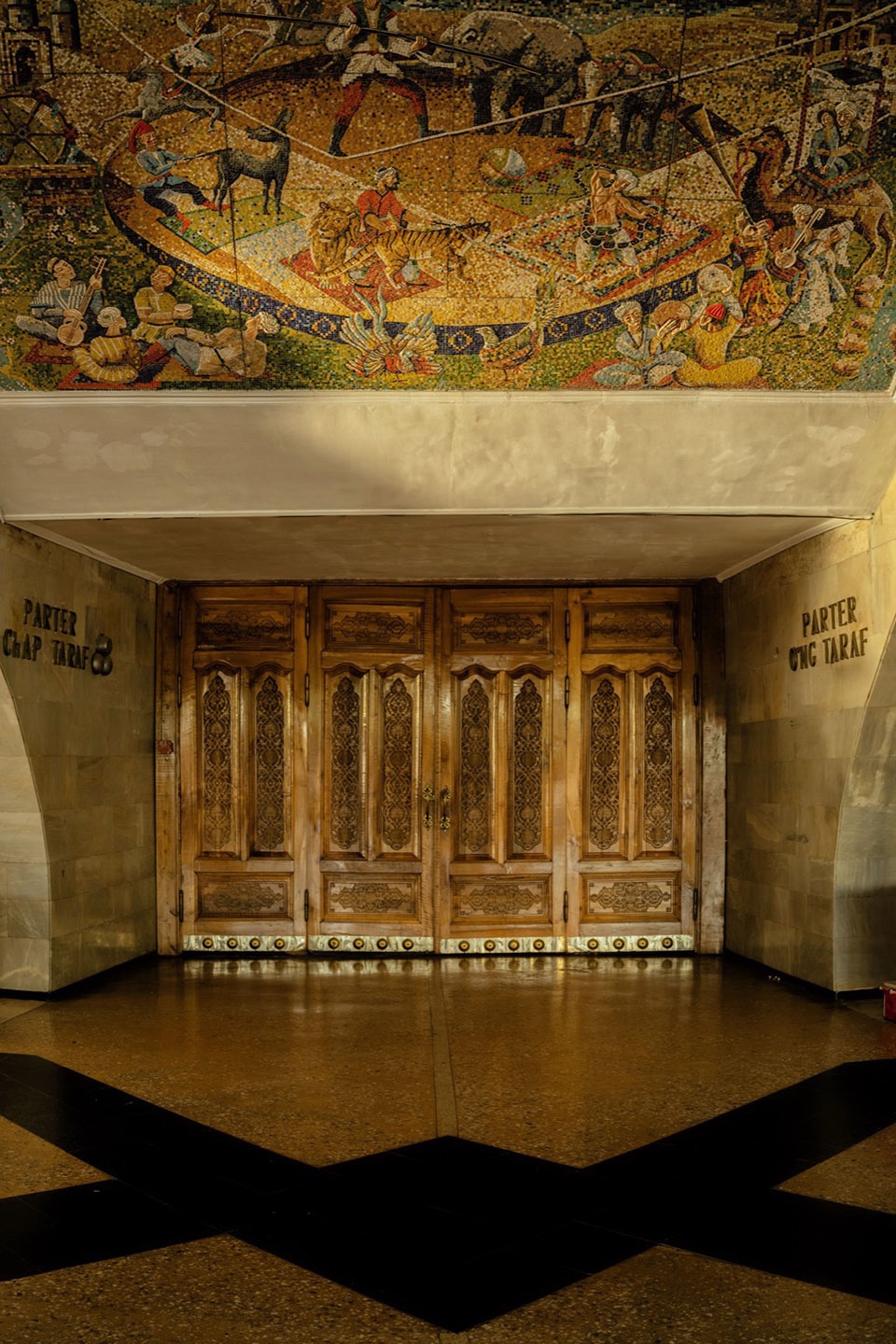
▼国家马戏团,State Circus © Karel Balas
塔什干现代主义
TASHKENT MODERNISM
塔什干的现代主义转型始于1966年4月26日地震之前,这场地震加速了已有规划,并使其得以在更大规模上实现。宽阔的林荫大道、公共广场、景观空间、住宅和市政机构重塑了首都的面貌,同时在预制化、钢筋混凝土、抗震工程和环境设计方面进行了探索。 建筑师将国际现代主义原则适配于乌兹别克共和国的社会与文化。遮阳装置、深邃的立面、庭院和水景回应了当地气候,而陶瓷、马赛克、雕刻和铸造饰面则将建筑与国家的艺术和手工艺传统相连接。
Tashkent’s modernist transformation began before the earthquake of 26 April 1966, which accelerated existing plans and allowed them to be realised on a far larger scale. Broad avenues, public squares, landscaped spaces, housing and civic institutions reshaped the capital, alongside experimentation in prefabrication, reinforced concrete, seismic engineering and environmental design. Architects adapted international modernist principles to the society and culture of the Uzbek Republic. Shading devices, deep façades, courtyards and water responded to the climate, while ceramic, mosaic, carved and cast surfaces connected architecture with the country’s art and craft traditions.
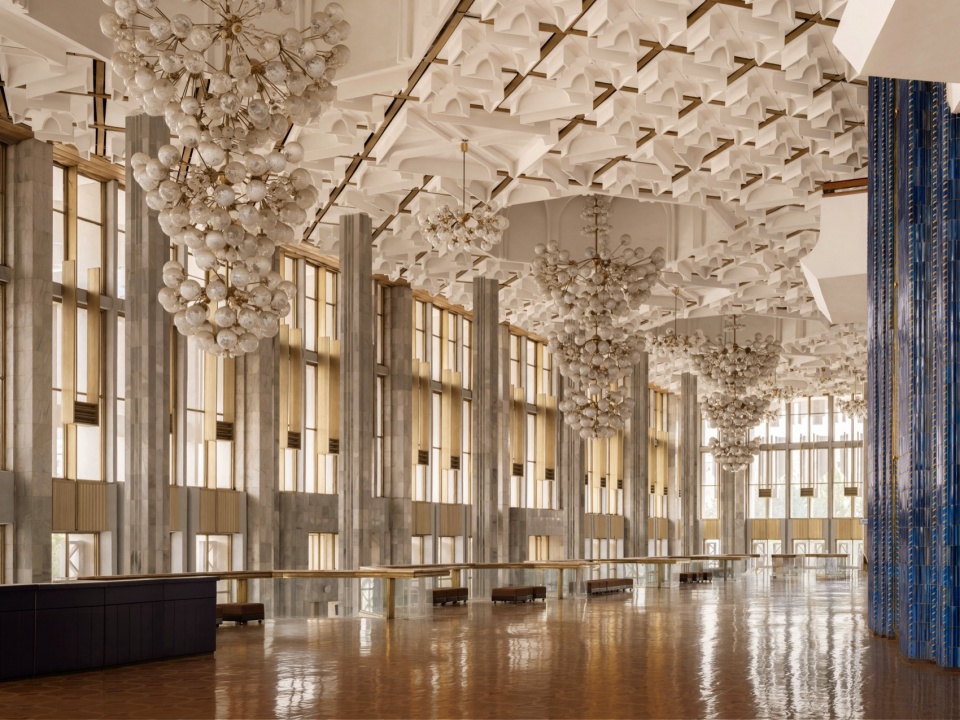
▼人民友谊宫,Peoples’ Friendship Palace © Karel Balas
熟悉的空间类型被重新演绎以适应新的用途。由此形成的是一个广阔的建筑思想场域——将现代主义的普世雄心置于乌兹别克斯坦的文化条件之下。它们的列入反映了对现代主义运动及其传统认知版图的更广泛重估。这些建筑——博物馆、研究所、文化场馆、一座市场、一个地铁站和一栋住宅楼——在1991年乌兹别克斯坦独立后一直使用至今,尽管它们此前很少被视为遗产。
Familiar spatial typologies were reworked for new uses. What emerged was a broad field of architectural ideas that set Modernism’s universal ambitions against the cultural conditions of Uzbekistan. Their inscription reflects a wider reassessment of the modernist movement and of the geographies through which it has traditionally been understood. These buildings – museums, research institutes, cultural venues, a market, a metro station and a residential building – remain in use after Uzbekistan gained independence in 1991, although they were seldom regarded as heritage.
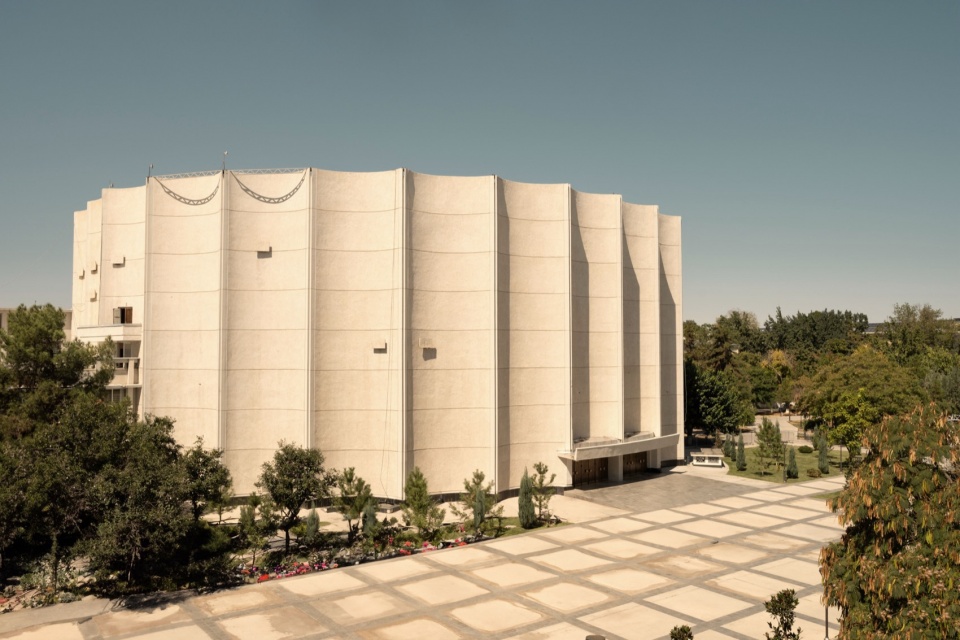
▼Alisher Navoi 电影院宫,Alisher Navoi Cinema Palace © Karel Balas
从研究到法律保护
FROM RESEARCH TO LEGAL PROTECTION
联合国教科文组织的认可源于“塔什干现代主义 XX/XXI”(Tashkent Modernism XX/XXI)研究项目。该项目由ACDF于2021年委托发起,由米兰建筑与设计工作室GRACE协调的国际团队承担。核心合作方包括:GRACE、米兰理工大学建筑与城市研究系、建筑历史学家鲍里斯·楚霍维奇、Laboratorio Permanente、Novaya Zemlya,以及摄影师阿尔敏·林克。雷姆·库哈斯和让-路易·科恩担任项目高级顾问。
The UNESCO recognition grew from Tashkent Modernism XX/XXI, a research project commissioned and initiated by ACDF in 2021 and undertaken by an international team coordinated by Milan-based architecture and design studio GRACE. Core collaborators include: GRACE, Politecnico di Milano’s Department of Architecture and Urban Studies, architectural historian Boris Chukhovich, Laboratorio Permanente, Novaya Zemlya, and photographer Armin Linke. Rem Koolhaas and Jean-Louis Cohen were close advisors to the project.
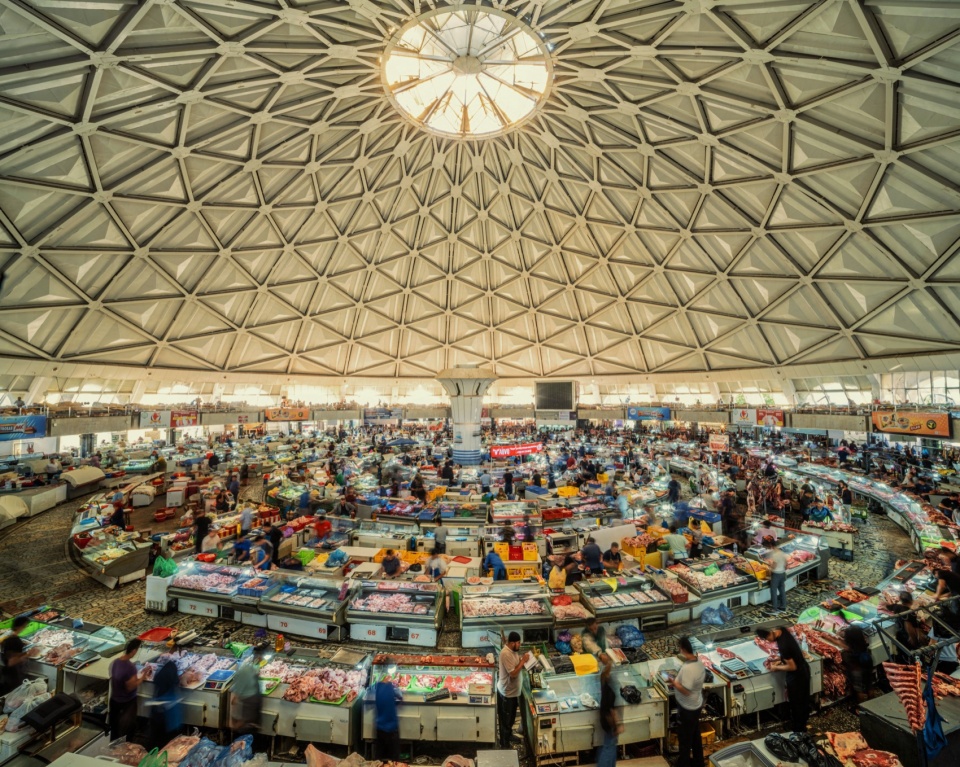
▼乔尔苏市场,Chorsu Market © Karel Balas
该团队记录了二十四座建筑,并编制了详细的档案卷宗,整合了档案研究、技术信息以及状况评估和保护需求。2019年至2024年间,二十一座现代主义建筑被列入乌兹别克斯坦国家文化遗产地籍。2024年,这些卷宗成为其保护与管理的法律参考文件。
The team documented twenty-four buildings and produced detailed passports combining archival research, technical information and assessments of conditions and conservation needs. Between 2019 and 2024, twenty-one modernist buildings were added to Uzbekistan’s State Cadastre of Cultural Heritage. In 2024, the passports became legal reference documents for their conservation and management.
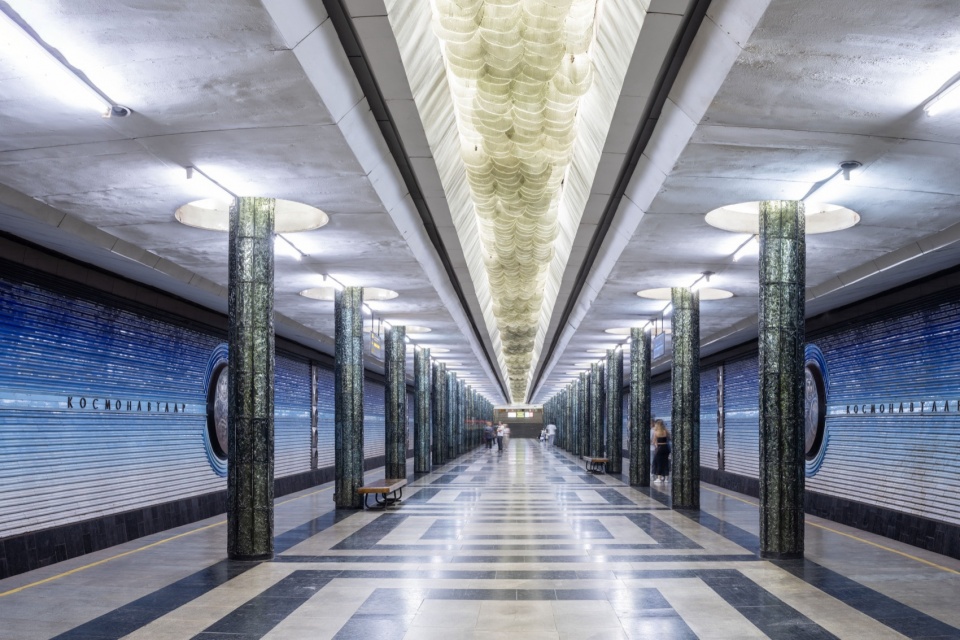
▼科斯莫纳夫特拉尔地铁站,Kosmonavtlar Metro Station © Karel Balas
该研究还通过展览、会议、工作坊、教学和出版物——甚至一款名为“塔什干现代主义”的应用程序——触及了更广泛的公众。其中包括在米兰三年展和塔什干艺术国家博物馆举办的“塔什干现代主义索引”展览(2023年);在沙迦建筑三年展举办的“塔什干:挪用现代主义”展览(2023-24年);在威尼斯双年展乌兹别克斯坦馆举办的“光辉之质”展览(2025年);以及《塔什干:现代主义之都》(Rizzoli,2024年)和《塔什干现代主义XX/XXI》(Lars Müller Publishers,2025年)两本著作。这些活动将这些建筑置于关于城市发展、类型学、制度史、东方主义以及二十世纪建筑如何成为遗产的更广泛讨论之中。
The research also reached a wider public through exhibitions, conferences, workshops, teaching and publications – even an app, Tashkent Modernism. These included Tashkent Modernism Index at Triennale Milano and the State Museum of Arts in Tashkent (2023); Tashkent: Appropriating Modernism at the Sharjah Architecture Triennial (2023–24); A Matter of Radiance, Uzbekistan’s pavilion at La Biennale di Venezia (2025); and the books Tashkent: A Modernist Capital (Rizzoli, 2024) and Tashkent Modernism XX/XXI (Lars Müller Publishers, 2025). These placed the individual buildings within broader discussions about urban development, typology, institutional history, Orientalism and the process by which twentieth-century architecture becomes heritage.
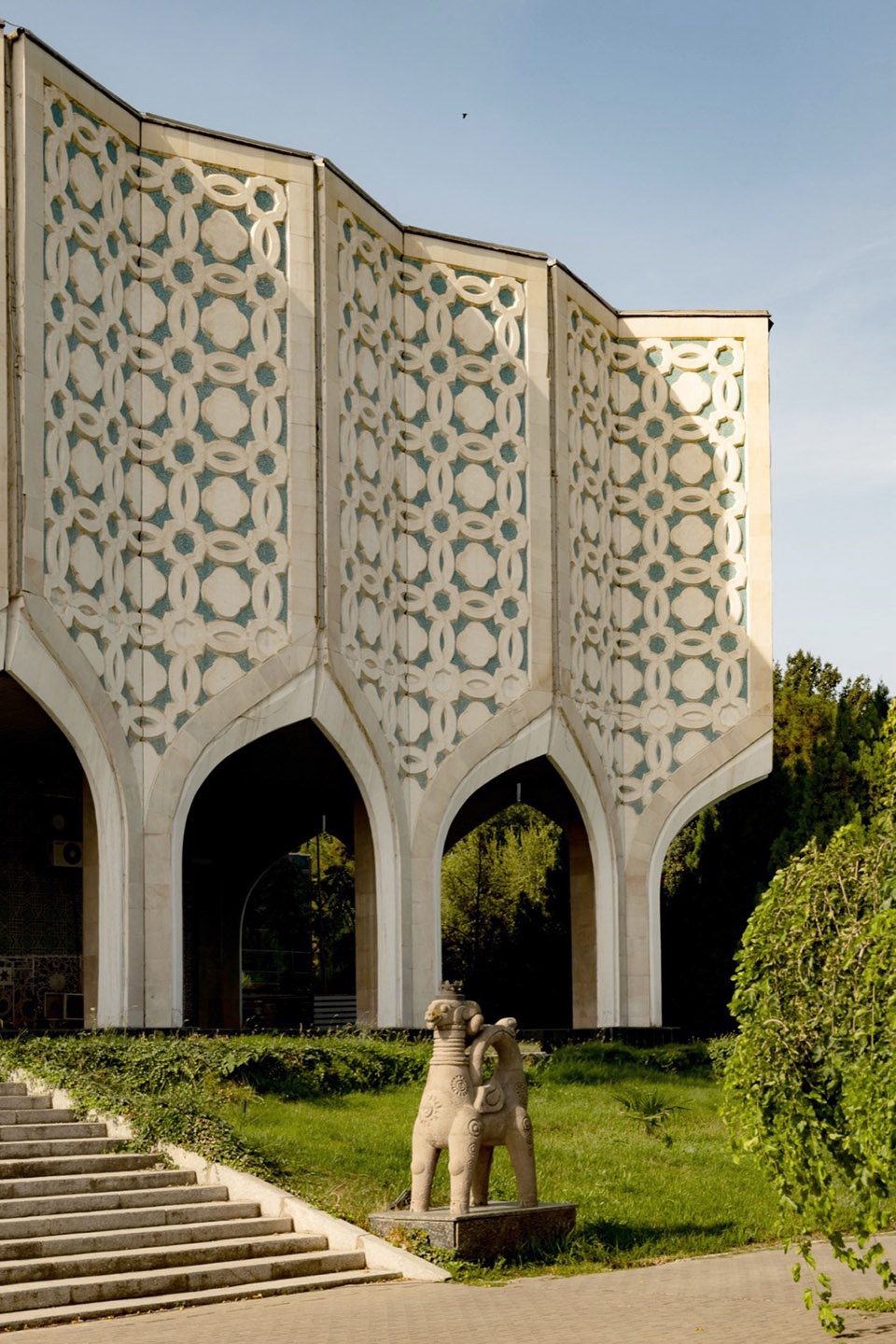
▼艺术学院中央展览馆,Central Exhibition Hall of the Academy of Arts © Karel Balas
GRACE联合创始人叶卡捷琳娜·戈洛瓦秋克与米兰理工大学建筑保护教授达维德·德尔·库尔托表示:”我们的研究旨在促进对现代主义在全球多样化表现的更广泛认知。它激发了对现代主义文化和地理根源及其在世界各地兴起和繁荣的方式与场所的概念性反思。”
Ekaterina Golovatyuk, co-founder of GRACE, and Davide Del Curto, Professor of Architectural Conservation at Politecnico di Milano, say: “Our research aimed to contribute to the broadening recognition of the diverse ways modernism has manifested itself globally. It stimulated a conceptual rethinking of modernism’s cultural and geographical roots and the way and places it arose and flourished worldwide.”
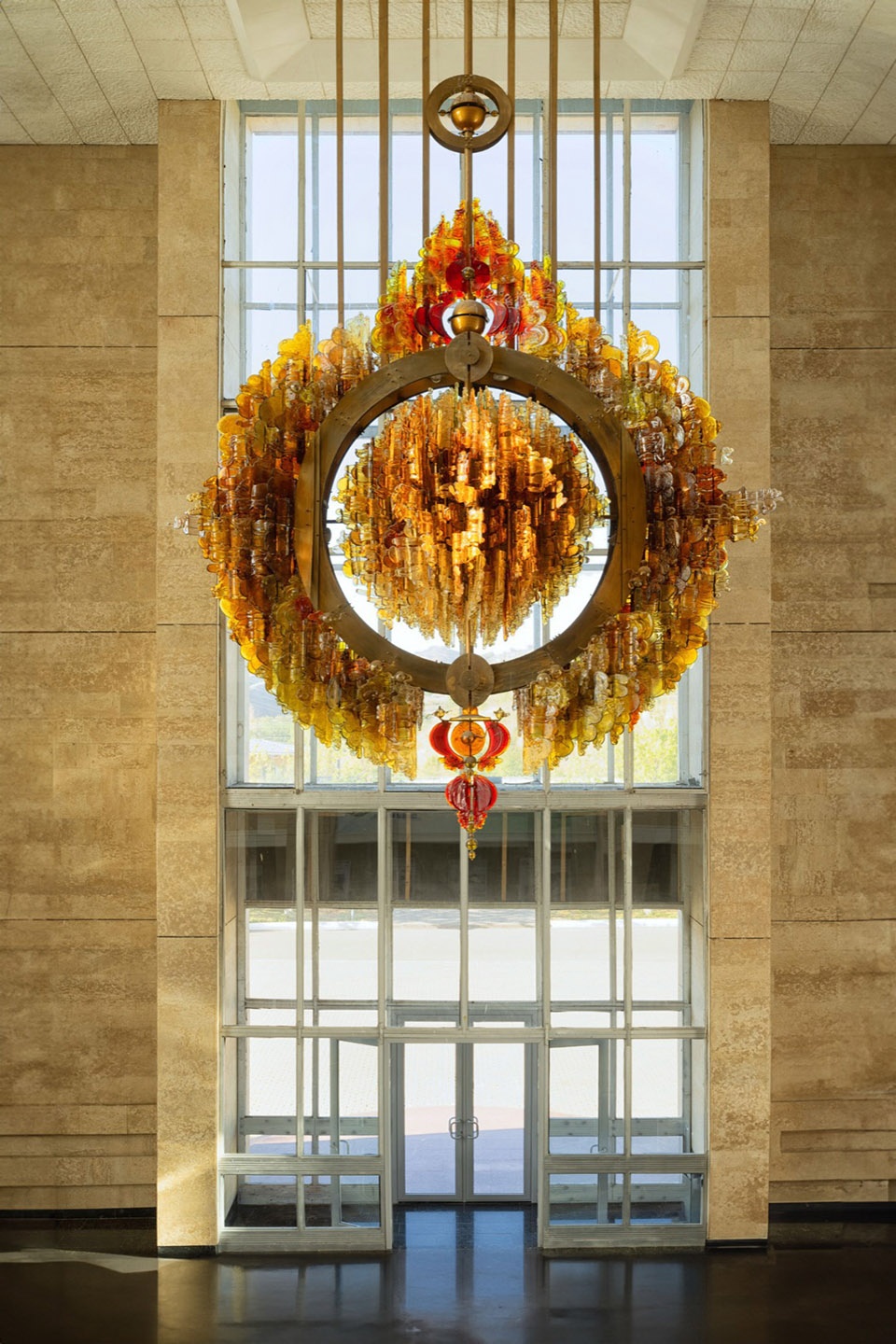
▼帕肯特大型太阳炉,Big Solar Furnace at Parkent © Karel Balas
联合国教科文组织世界遗产提名
THE UNESCO WORLD HERITAGE NOMINATION
该研究构成了世界遗产提名的基础。2024年2月,十六座建筑被列入乌兹别克斯坦预备名录,这是提名过程的第一阶段。乌兹别克斯坦文化遗产署与米兰理工大学曼图亚校区(由达维德·德尔·库尔托和索菲亚·切利协调)共同编制了提名档案。GRACE和国际专家为这项工作提供了支持。米兰理工大学团队包括贡采·乌兹戈伦和卡罗利娜·皮耶尼亚热克;GRACE团队由叶卡捷琳娜·戈洛瓦秋克、贾科莫·坎托尼和克谢尼娅·比斯蒂组成。参与专家包括鲍里斯·楚霍维奇、卢卡·斯坎西、弗朗切斯科·班达林、安娜·托斯托伊斯和特蕾莎·库尼亚·费雷拉。
The research formed the basis of the World Heritage nomination. In February 2024, sixteen buildings were entered on Uzbekistan’s Tentative List, the formal first stage of the process. The Cultural Heritage Agency of the Republic of Uzbekistan and Politecnico di Milano – Mantova Campus, under Davide Del Curto and Sofia Celli, coordinated the nomination dossier. GRACE and international experts supported this effort. The Politecnico di Milano team included Gunce Uzgoren and Karolina Pieniazek; the GRACE team comprised Ekaterina Golovatyuk, Giacomo Cantoni and Ksenia Bisti. Participating experts were Boris Chukhovich, Luka Skansi, Francesco Bandarin, Ana Tostões and Teresa Cunha Ferreira.
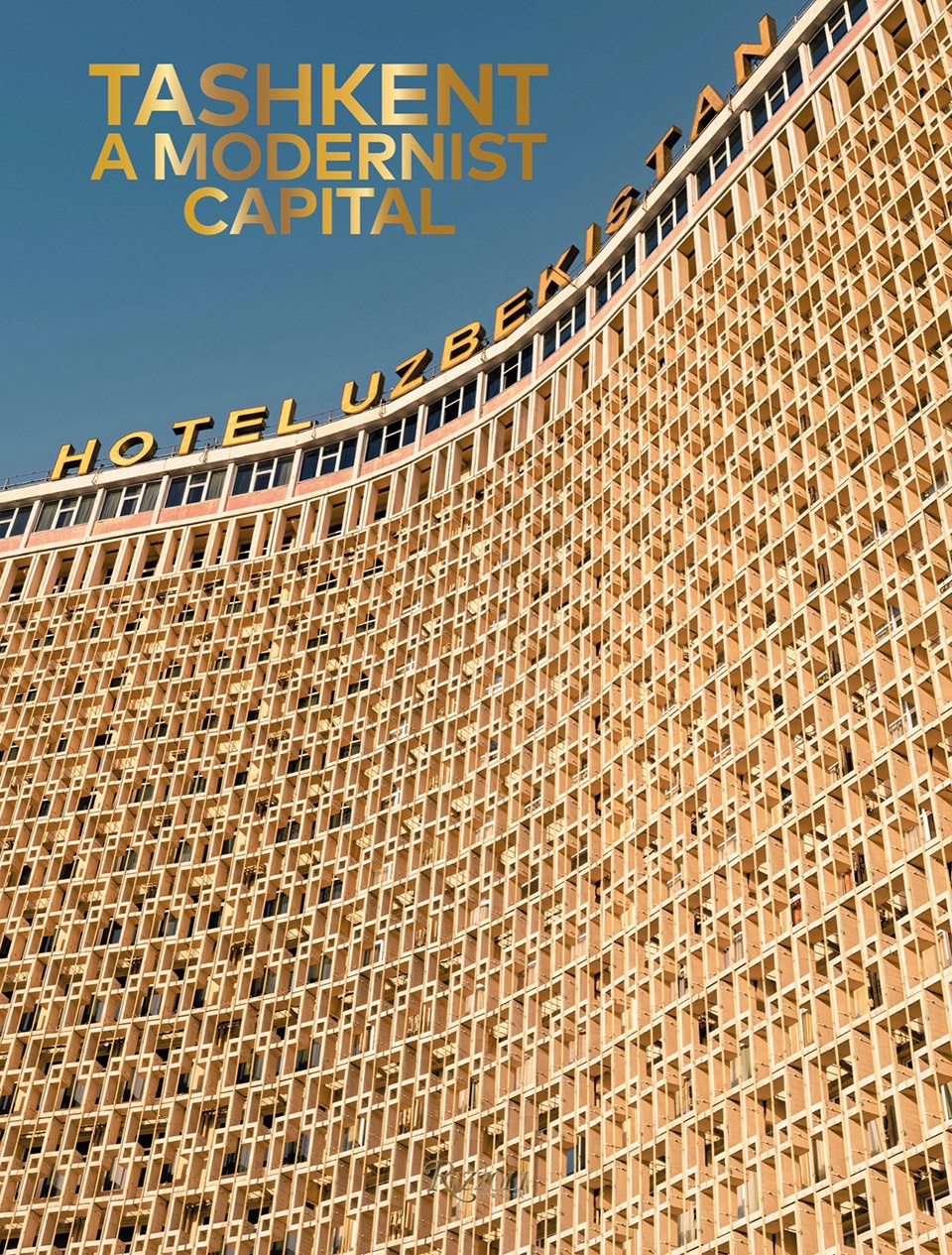
▼《塔什干:现代主义之都》,封面,
Tashkent: A Modernist Capital, Cover, Karel Balas, Beatrice Grenier, Rizzoli, 2024
该档案将预备名录中的十六座建筑精炼为十项组成部分,并阐述了该系列拟议的突出普遍价值、比较分析、保护证据、法律保护、缓冲区和管理系统。ACDF于2025年1月提交了该文件。世界遗产地位为这些资产的长期管理提供了一个国际框架。ACDF将在塔什干现代主义建筑专家委员会中担任联合管理者和协调机构。优先事项包括保护建筑实体和纪念性艺术品、保护城市与景观关系、加强监测,并确保未来的适应性改造尊重每座建筑的价值。
The dossier refined the selection from sixteen buildings of the Tentative List to ten component parts and set out the series’ proposed Outstanding Universal Value, comparative analysis, conservation evidence, legal protection, buffer zones and management systems. ACDF submitted it in January 2025. World Heritage status provides an international framework for the properties’ long-term stewardship. ACDF will serve as joint manager and coordinating body within the Tashkent Modernist Architecture Expert Council. Priorities include conserving the buildings’ architectural fabric and monumental artworks, protecting urban and landscape relationships, strengthening monitoring, and ensuring that future adaptation respects each building’s significance.
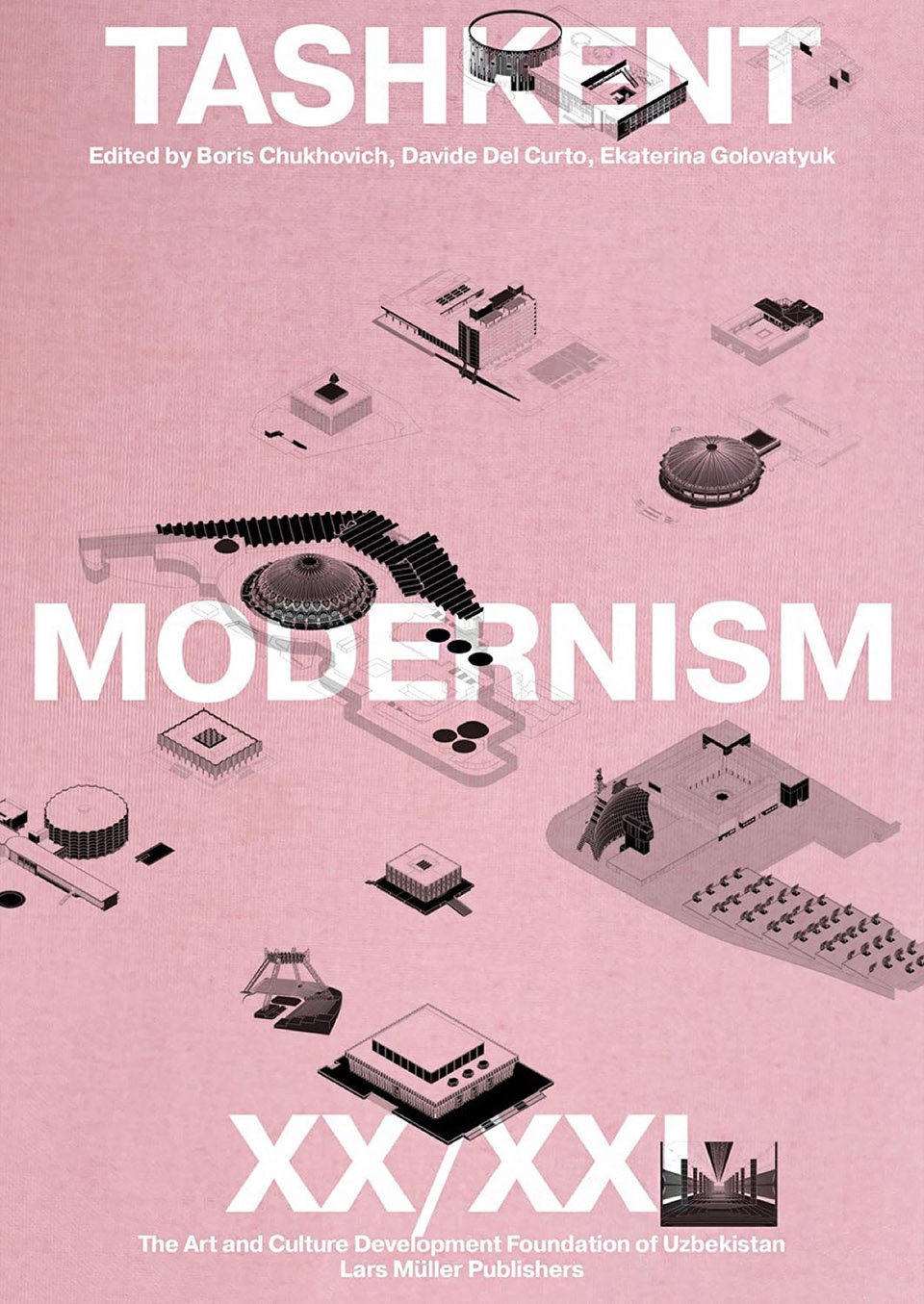
▼《塔什干现代主义 XX–XXI》,封面,
Tashkent Modernism XX–XXI, Cover, Boris Chukhovich, Davide Del Curto,
Ekaterina Golovatyuk, Lars Müller Publishers, 2025
十座列入建筑
THE 10 INSCRIBED BUILDINGS
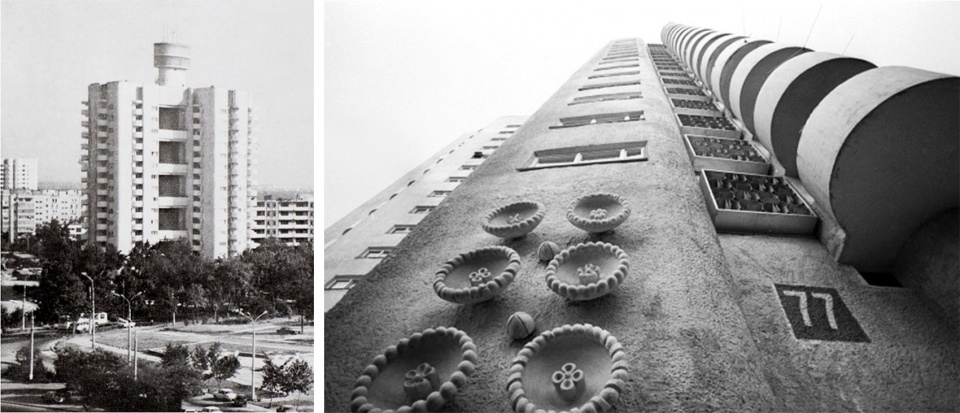
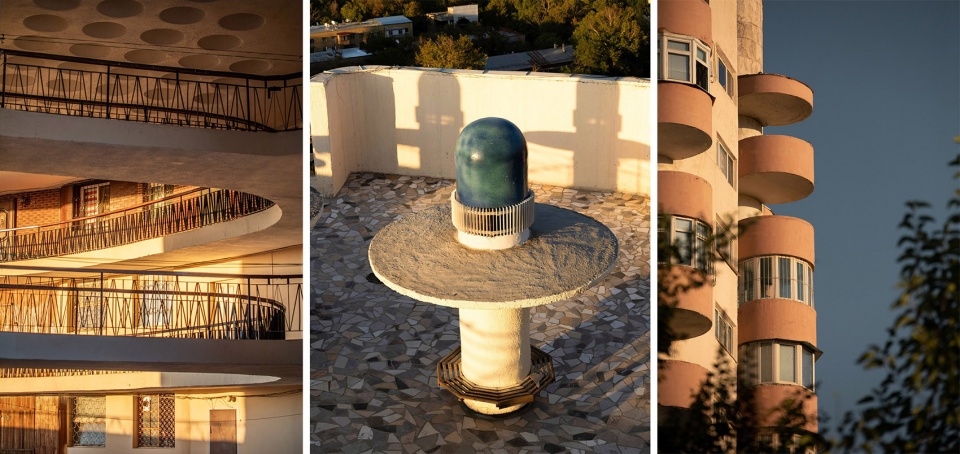
1.
珍珠住宅楼|Zhemchug Residential Building
Built c. 1975–1985
建筑意义:一座十六层集体居住实验,其整体混凝土结构和悬挂式公共庭院将马哈拉(传统社区)的社会与空间逻辑转化为高层建筑形式。
Architectural significance: A sixteen-storey experiment in collective dwelling whose monolithic concrete structure and suspended communal courtyards translate the social and spatial logic of the mahalla into a high-rise form.
▼珍珠住宅楼,档案照片,Zhemchug Residential Building, Archive © ACDF
▼珍珠住宅楼,Zhemchug Residential Building © Karel Balas
2.
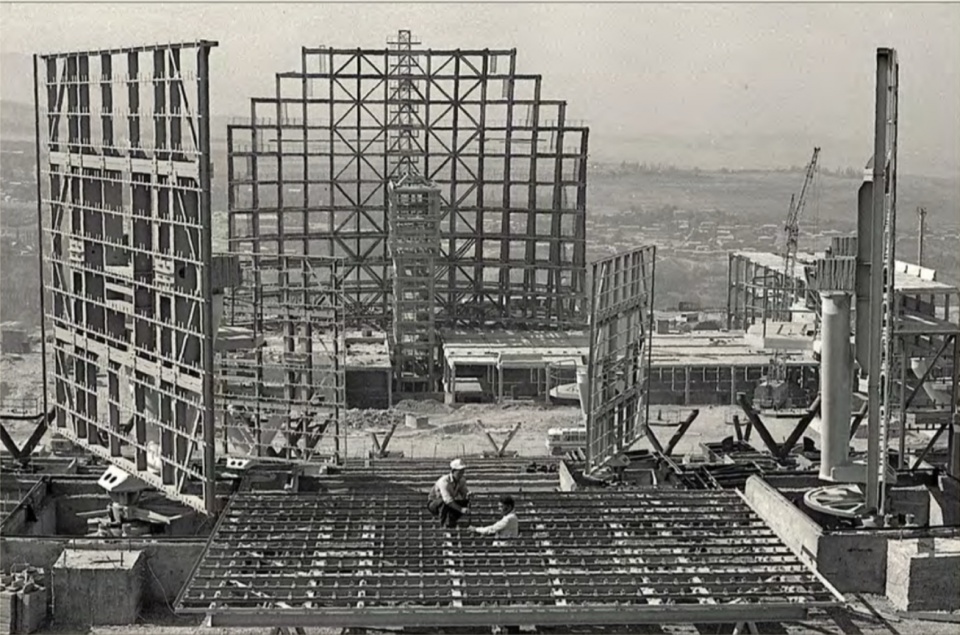
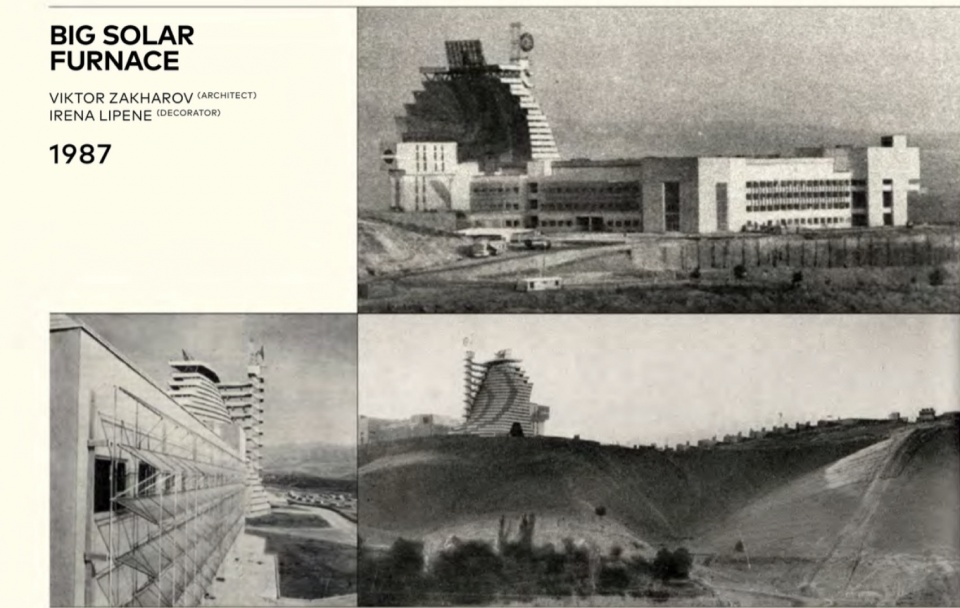
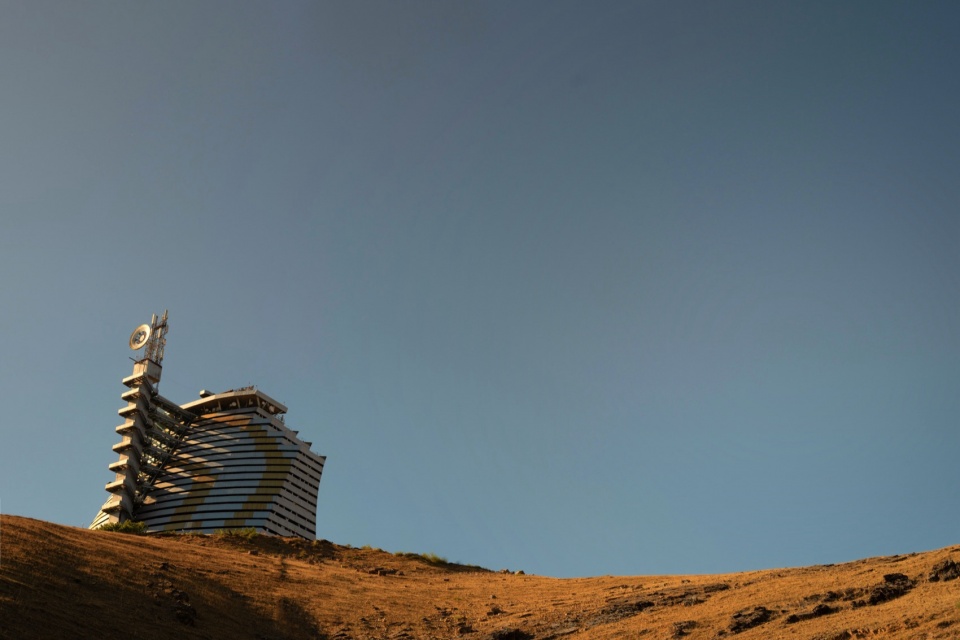
帕肯特大型太阳炉|Big Solar Furnace at Parkent
Built 1981–1987
建筑意义:塔什干以东山麓地带的一座纪念性科学综合体,将太阳光聚焦于巨大的抛物面聚光器上用于高温材料研究,将先进太阳能工程与独特的景观、建筑和艺术规划融为一体。
Architectural significance: A monumental scientific ensemble in the foothills east of Tashkent, which directs sunlight onto a vast parabolic concentrator for high-temperature materials research, uniting advanced solar engineering with a distinctive landscape, architectural and artistic programme.
▼大型太阳炉,档案照片,Big Solar Furnace, Archive © ACDF
▼大型太阳炉,Big Solar Furnace © Karel Balas
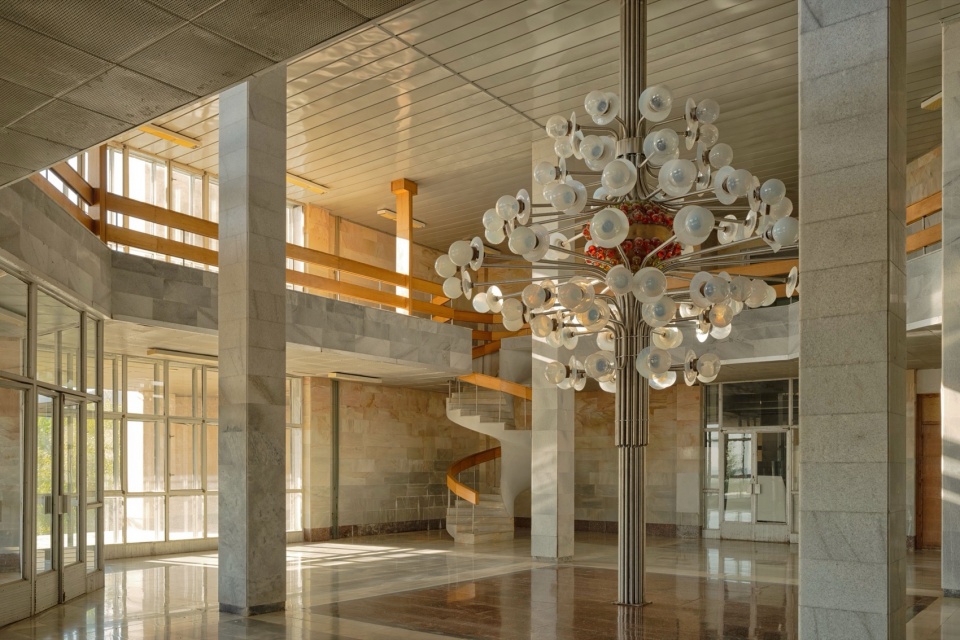
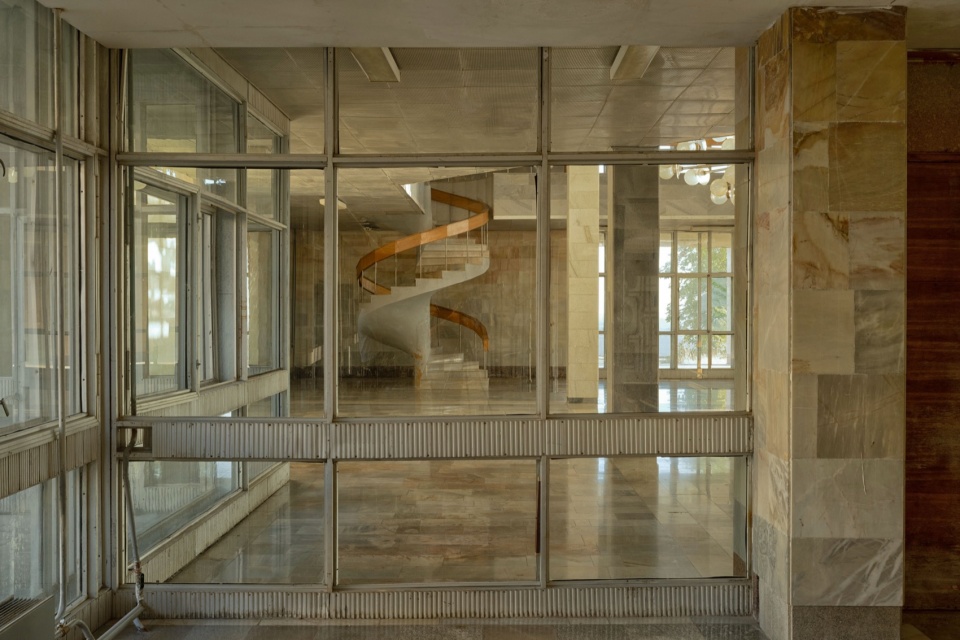
▼大型太阳炉,Big Solar Furnace © Karel Balas
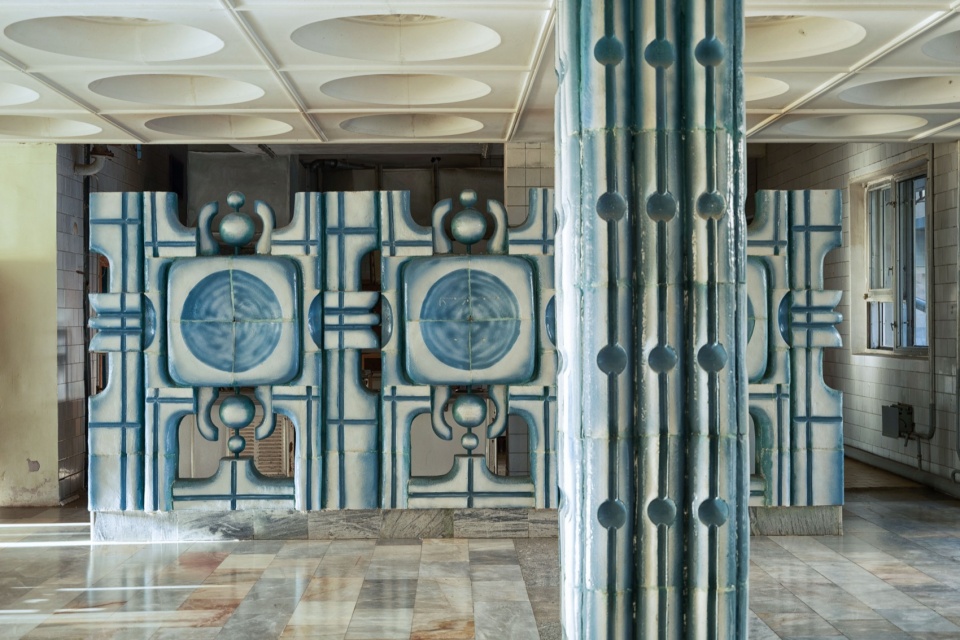
3.
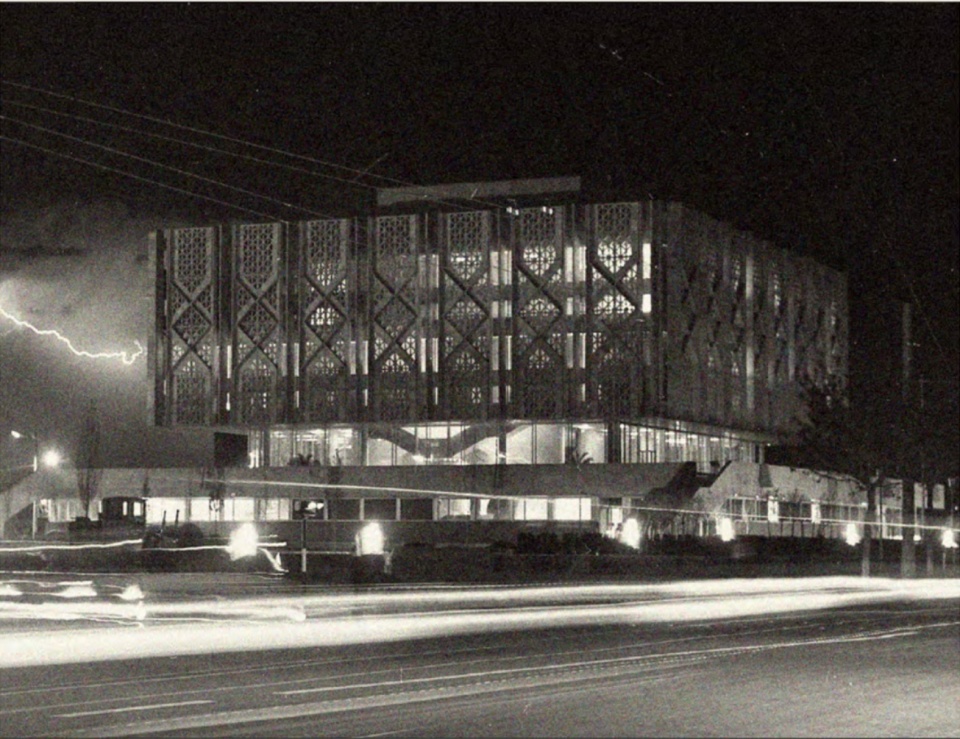
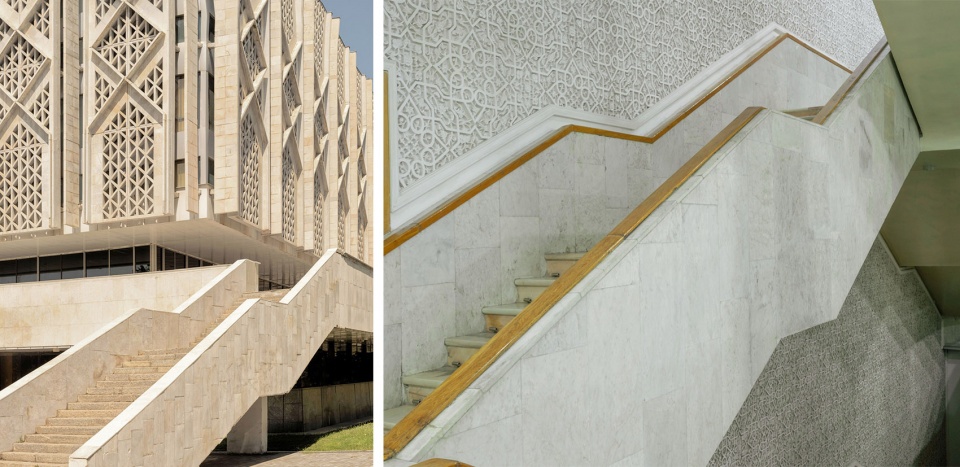
国家历史博物馆|State Museum of History
Built 1968–70
建筑意义:苏联最早的现代主义列宁博物馆之一,被构想为塔什干两个主要广场之间的城市枢纽,以现代建造与地域建筑语汇的融合为特色。
Architectural significance: One of the earliest modernist Lenin museums in the Soviet Union, conceived as an urban pivot between two Tashkent’s major squares and distinguished by the integration of modern construction with regional architectural references.
▼国家历史博物馆,档案照片,State Museum of History, Archive © ACDF
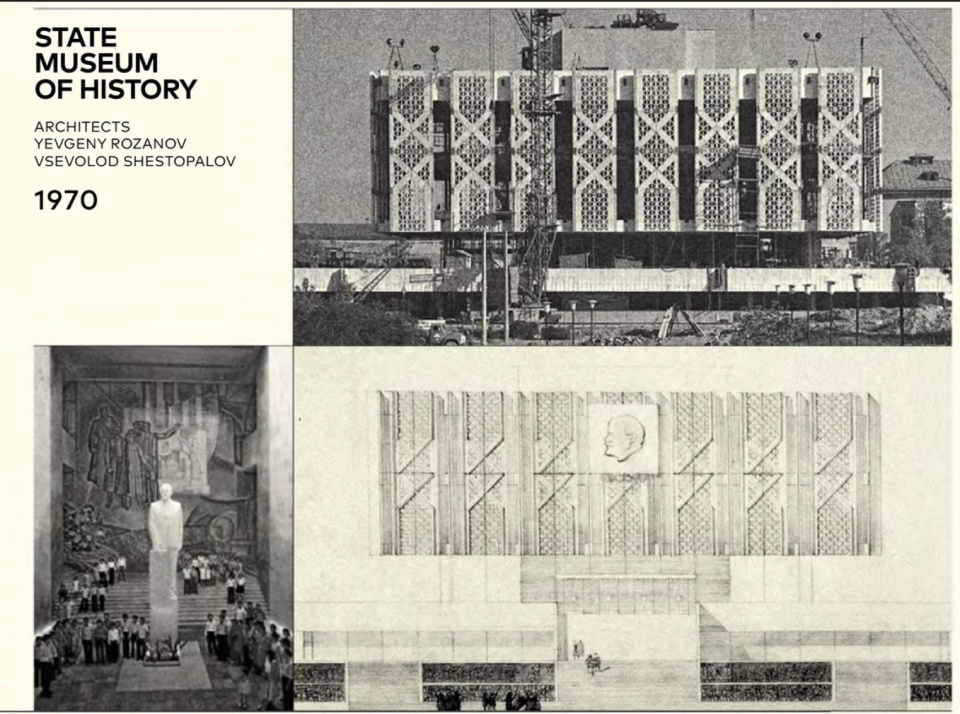
▼国家历史博物馆,State Museum of History © Karel Balas
4.
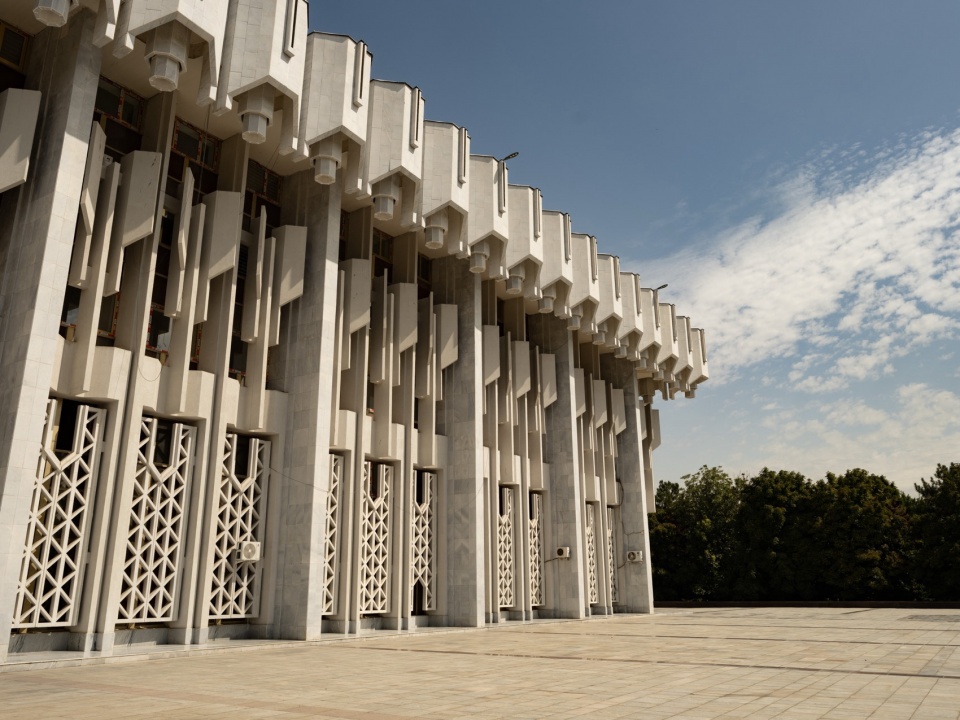
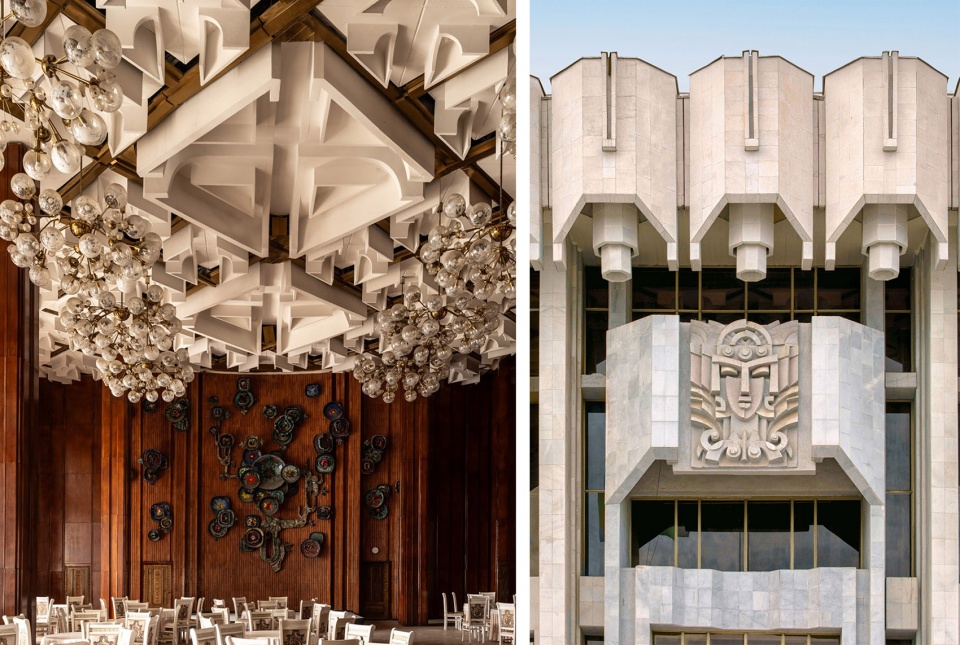
人民友谊宫|Peoples’ Friendship Palace
Built in the second half of the 1970s–1981
建筑意义:塔什干最大的现代主义会议与音乐厅:一座纪念性市民建筑,其深层的格栅屏风控制着日照与视线。
Architectural significance: Tashkent’s largest modernist congress and concert venue: a monumental civic building whose deep lattice screens control solar exposure and visibility.
▼人民友谊宫,档案照片,Peoples’ Friendship Palace, Archive © ACDF
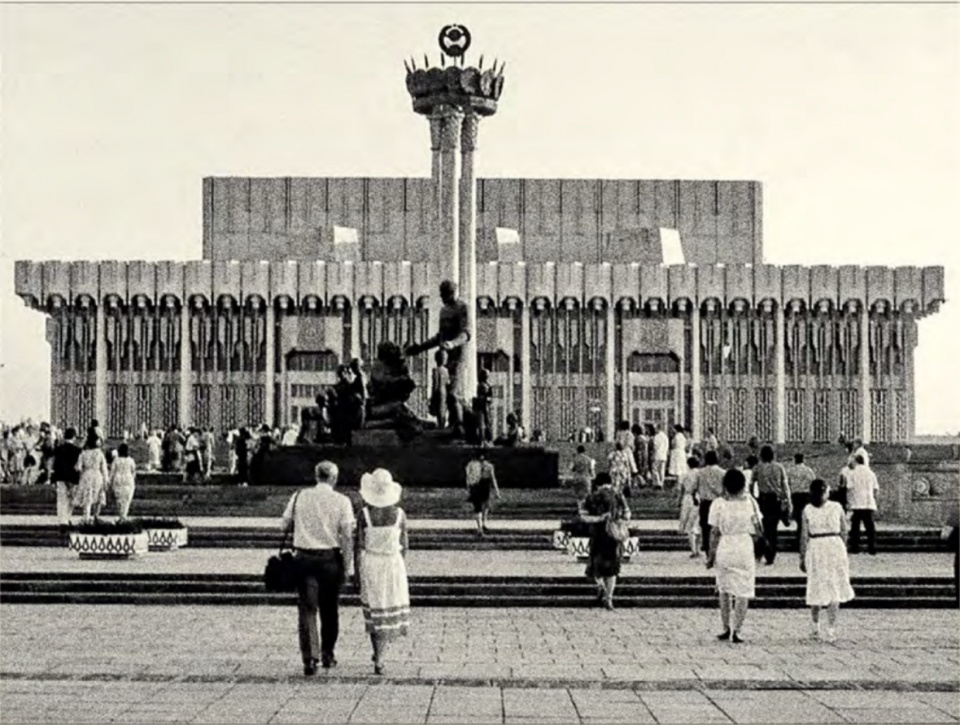
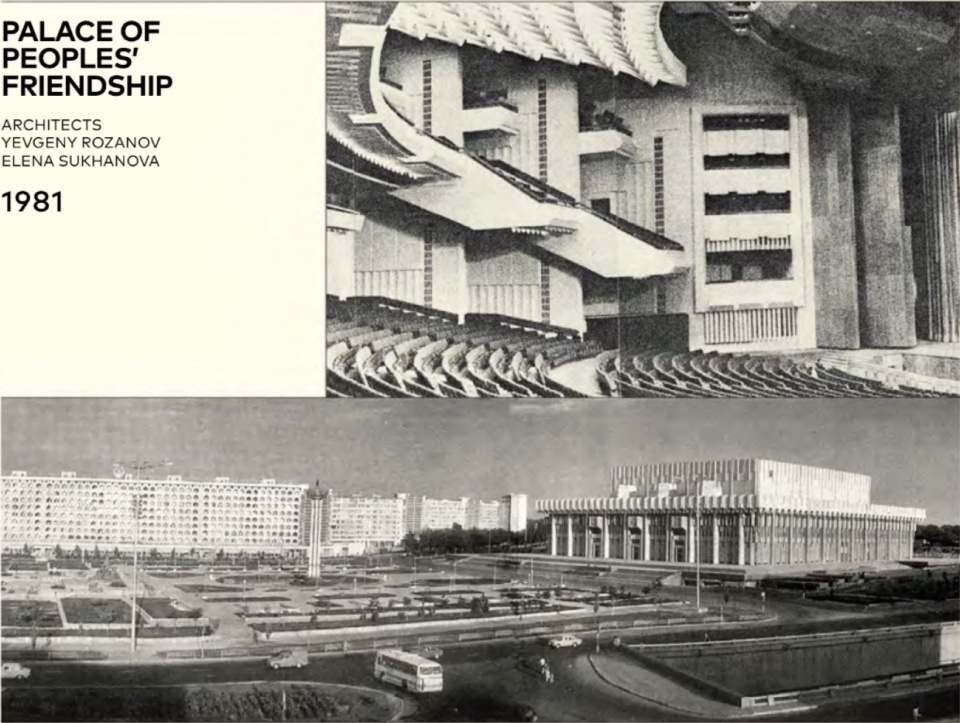
▼人民友谊宫,Peoples’ Friendship Palace © Karel Balas
5.
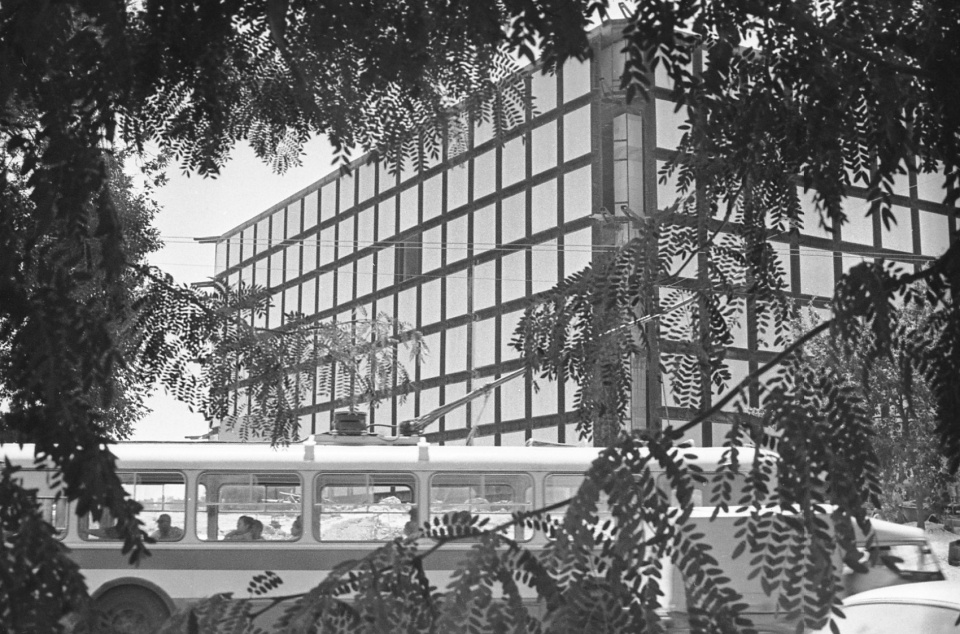
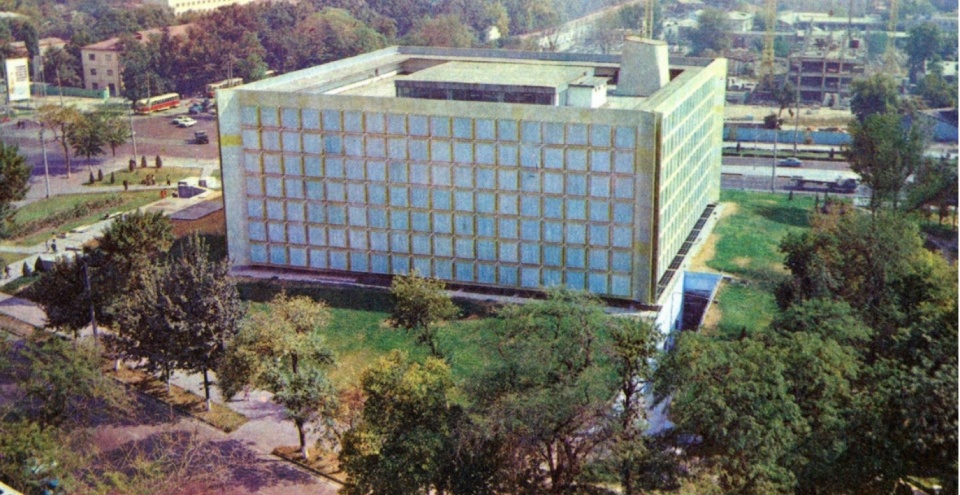
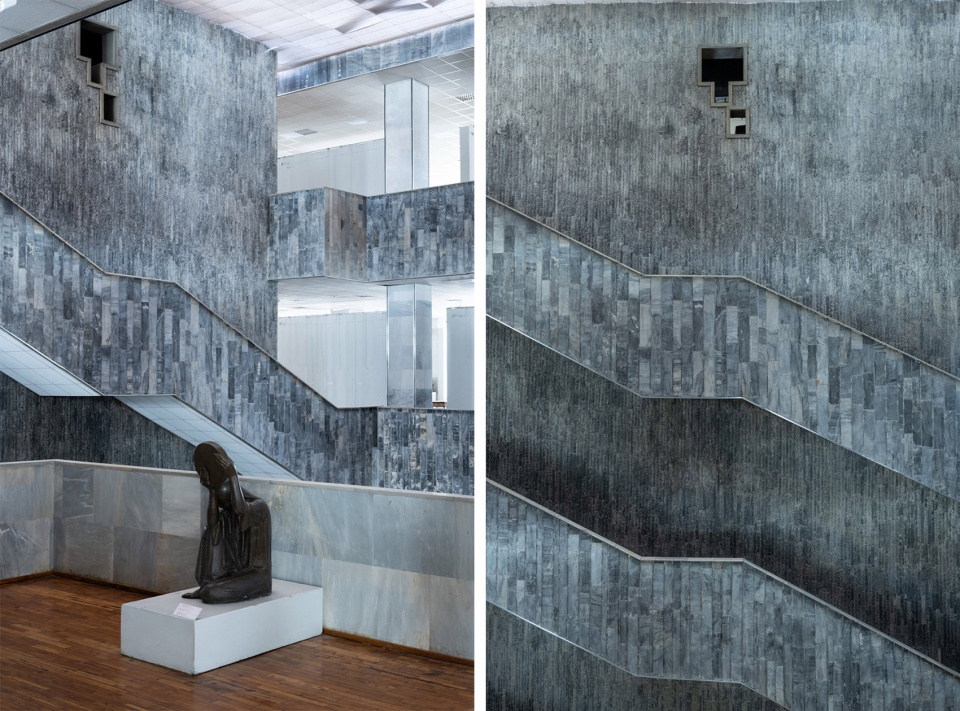
艺术国家博物馆|State Museum of Arts
Built 1967–74
建筑意义:由方形几何构图与四层中庭组成,将现代主义抽象与数学秩序、实验材料及中亚建筑传统相结合。
Architectural significance: A composition of square geometries and a four-storey atrium, bringing modernist abstraction into dialogue with the mathematical order, experimental materials and traditions of Central Asian architecture.
▼国家艺术博物馆,档案照片,State Museum of Arts, Archive © ACDF
▼国家艺术博物馆,State Museum of Arts © Karel Balas
6.
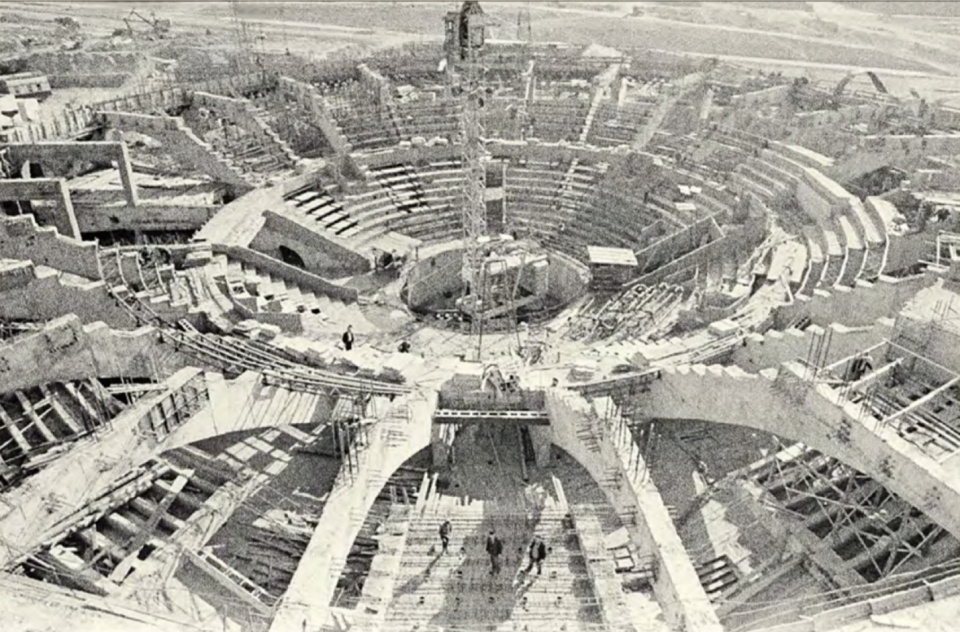
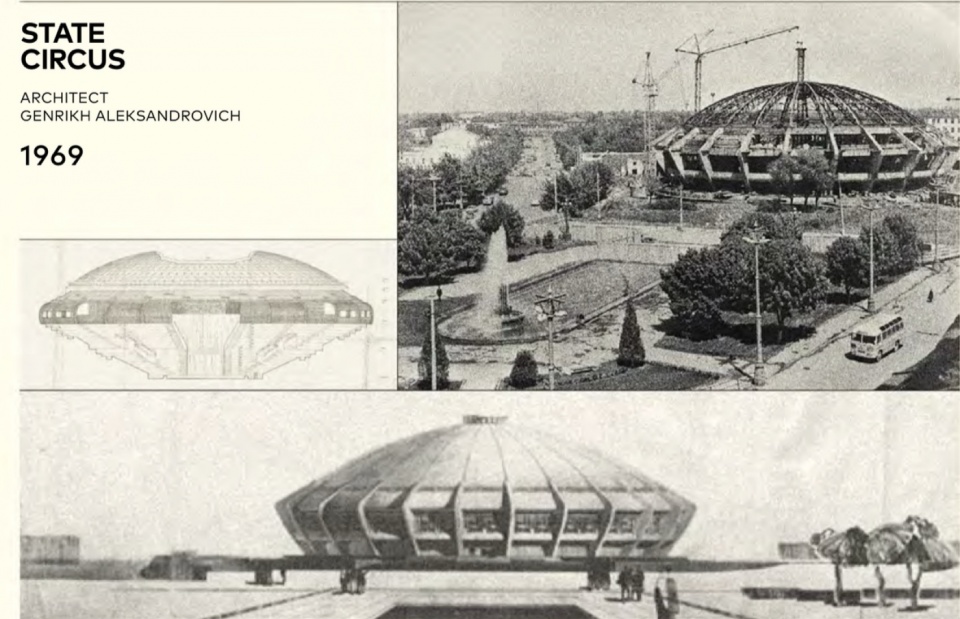
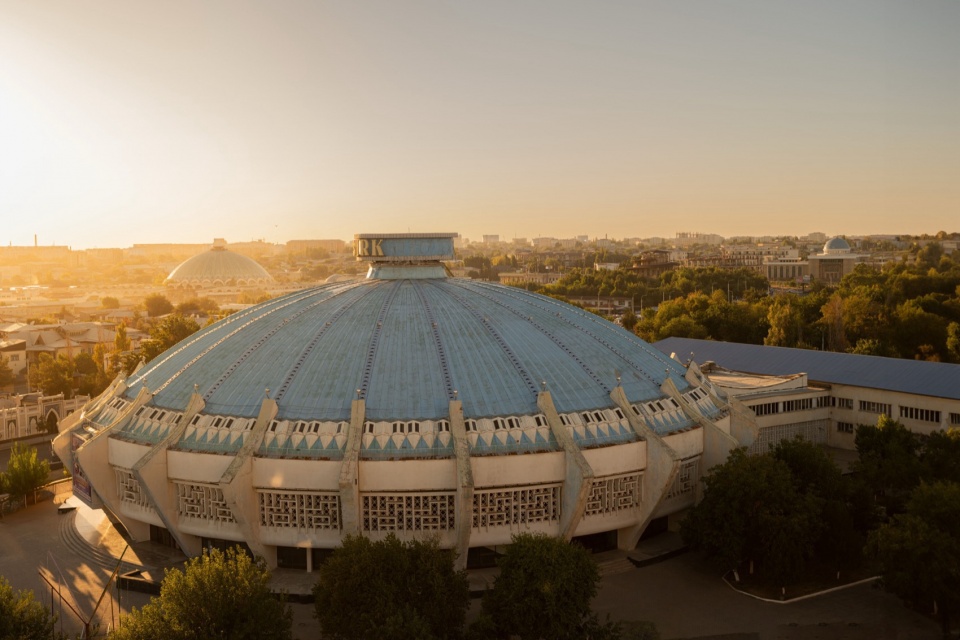
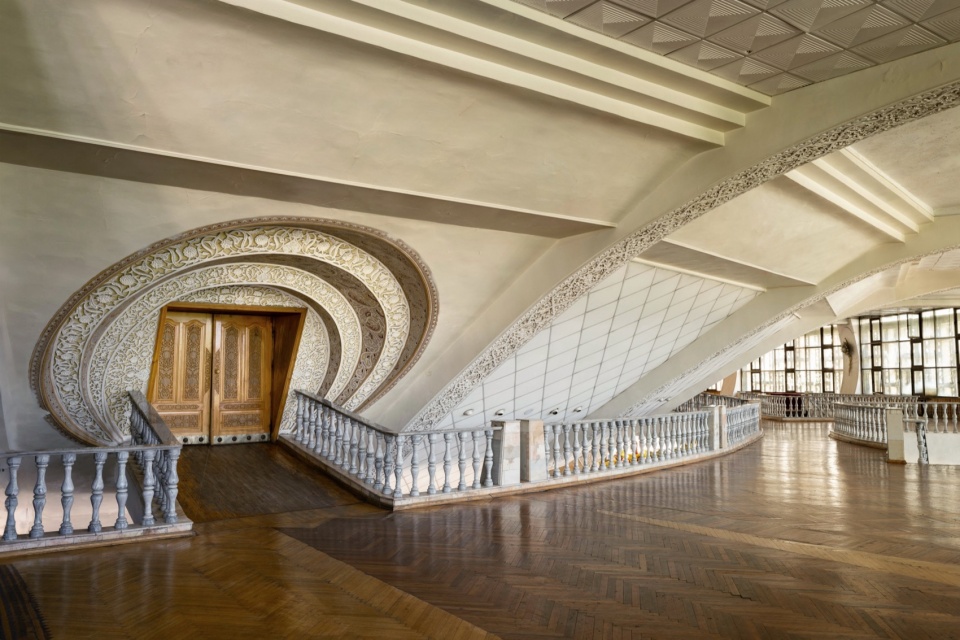
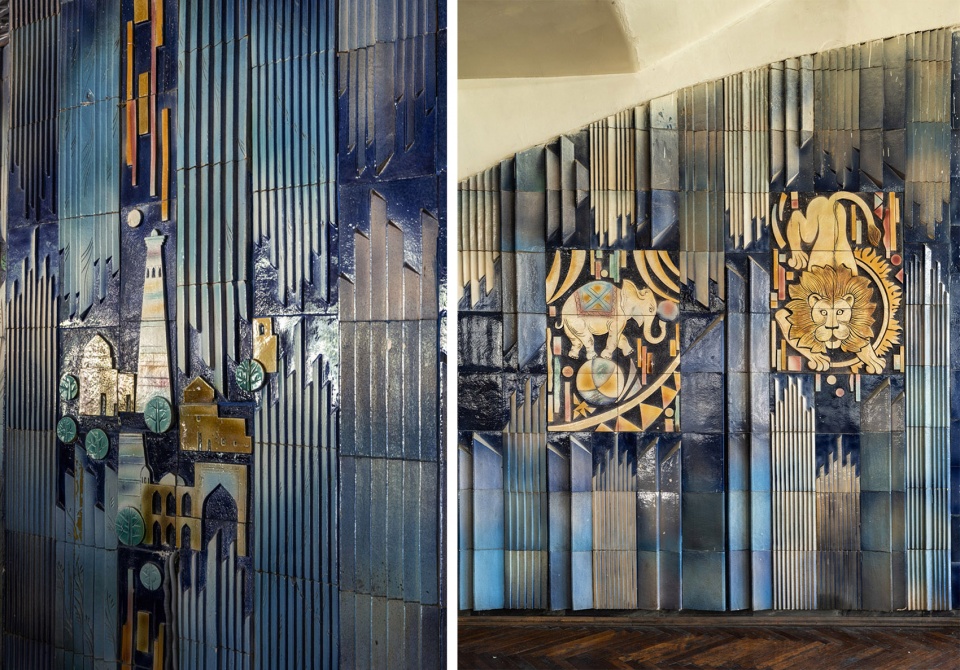
国家马戏团|State Circus
Built 1965–75; inaugurated 1975
建筑意义:一座拥有3000座位的专业马戏场,脱离了苏联标准原型,采用钢材和钢筋混凝土来回应塔什干特定的功能、抗震和气候条件。
Architectural significance: A purpose-designed, 3,000-seat circus that departed from standard Soviet prototypes, using steel and reinforced concrete to answer Tashkent’s particular functional, seismic and climatic conditions.
▼国家马戏团,档案照片,State Circus, Archive © ACDF
▼国家马戏团,State Circus © Karel Balas
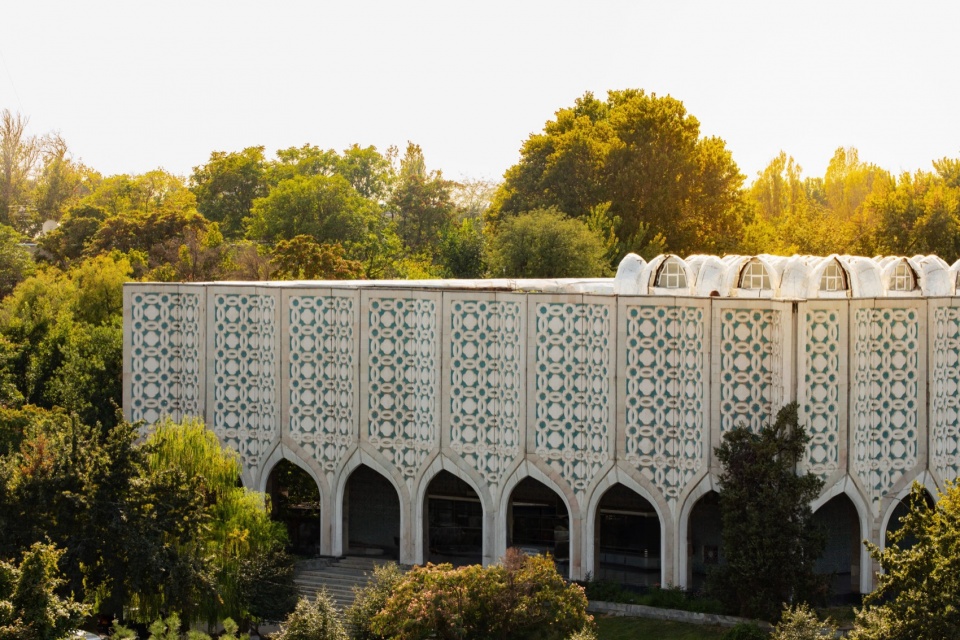
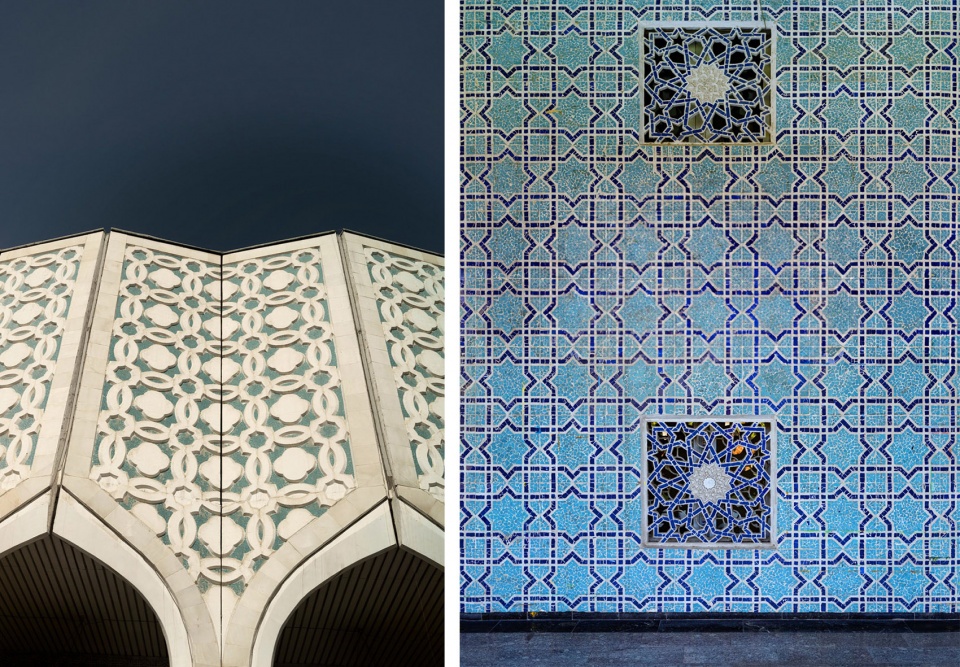
7.
艺术学院中央展览厅|Central Exhibition Hall of the Academy of Arts
Built 1972–74
建筑意义:一座位于市民基座上的多层展览建筑,其褶皱立面饰以几何与花卉马赛克,将现代主义构图与城市纪念性艺术传统相连接。
Architectural significance: A multi-level exhibition building set on a civic podium, with pleated façades in geometric and floral mosaic that bind modernist composition to the city’s tradition of monumental art.
▼艺术学院中央展览馆,档案照片,Central Exhibition Hall of the Academy of Arts, Archive © ACDF
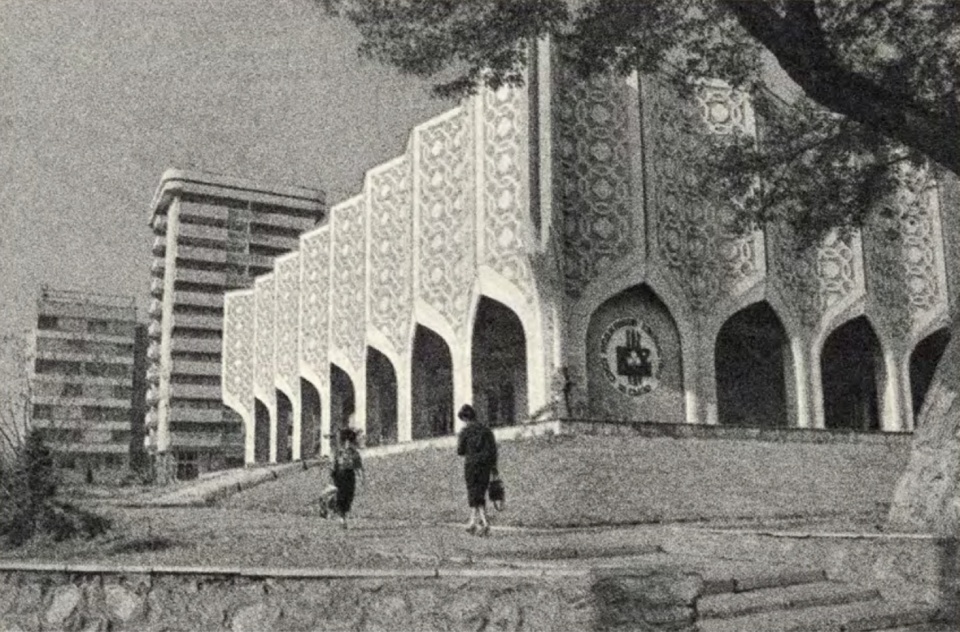
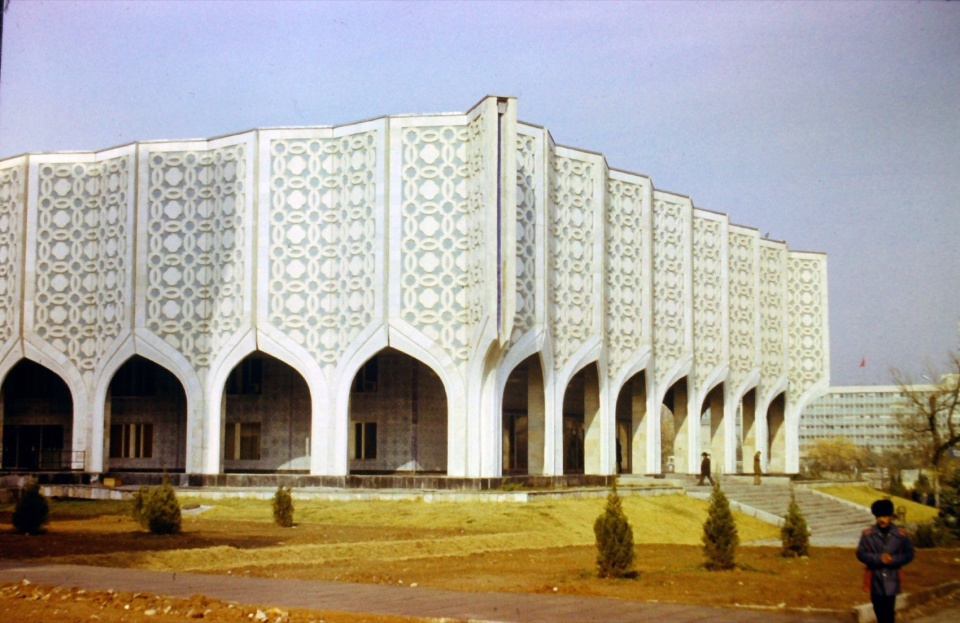
▼艺术学院中央展览馆,Central Exhibition Hall of the Academy of Arts © Karel Balas
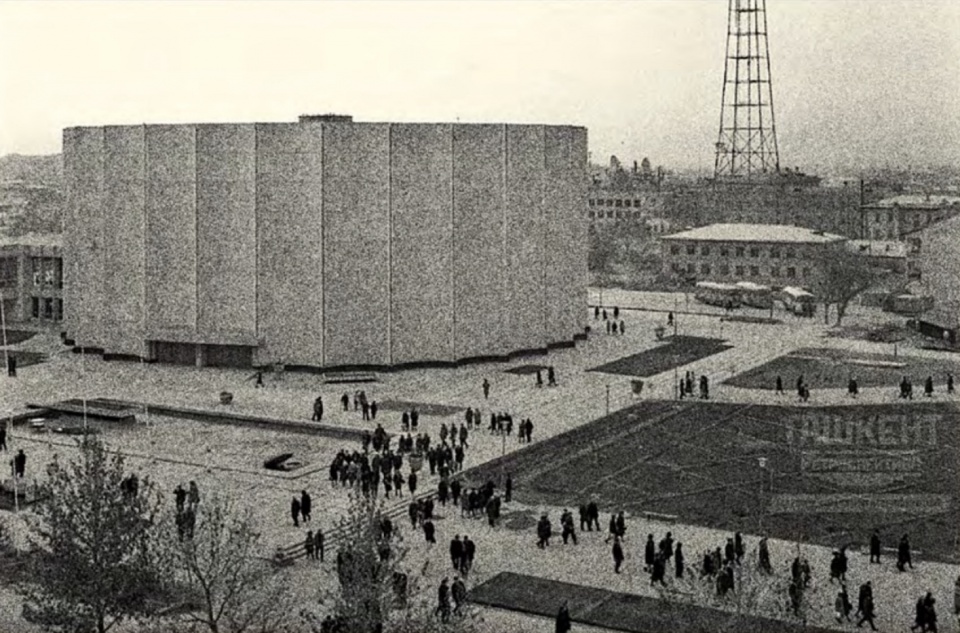
8.
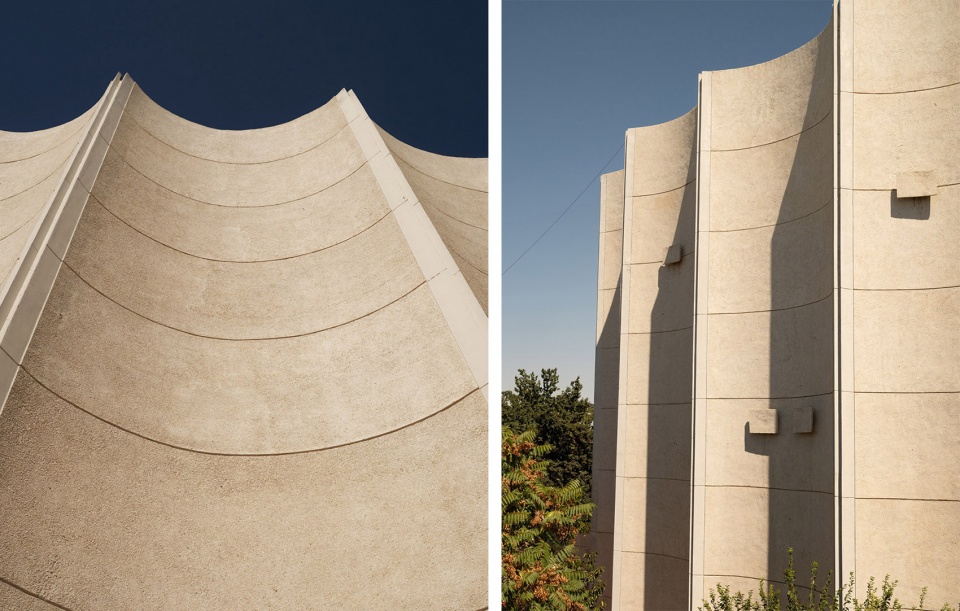
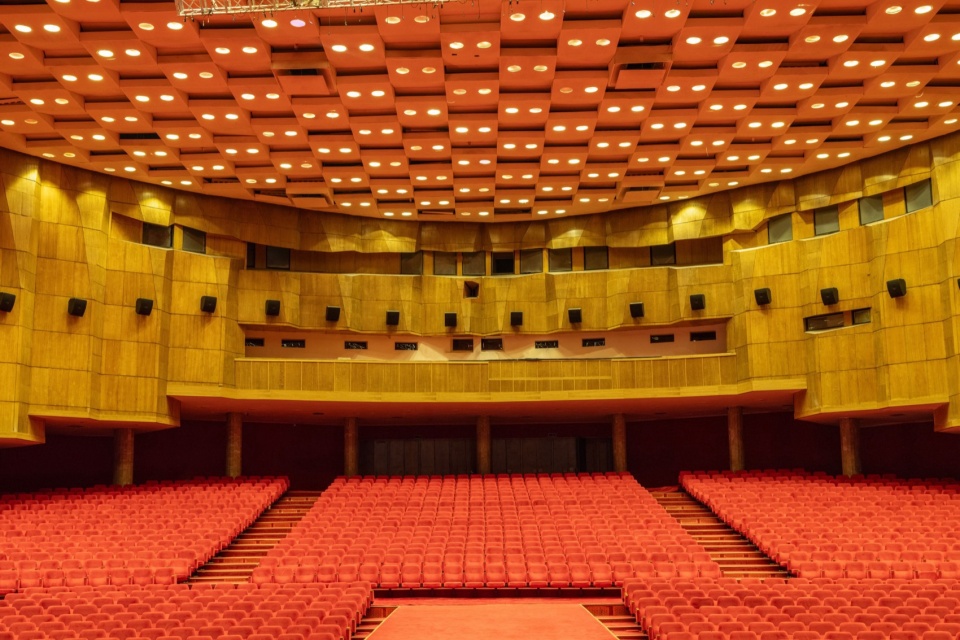
Alisher Navoi 电影院宫|Alisher Navoi Cinema Palace
Built 1962–64
建筑意义:对全景电影技术的激进回应:其圆柱形体量和2300座观众厅记录了1960年代向创新的转变。
Architectural significance: A radical response to panoramic cinema technology: its cylindrical volume and 2,300-seat auditorium register the 1960s shift towards innovation.
▼Alisher Navoi 电影院宫,档案照片,Alisher Navoi Cinema Palace, Archive © ACDF
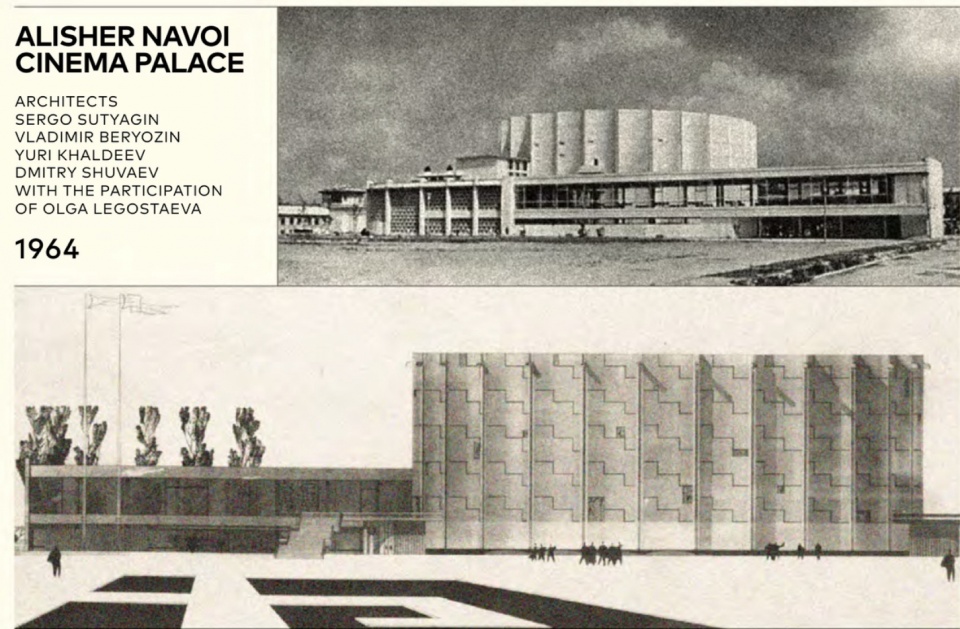
▼Alisher Navoi 电影院宫,Alisher Navoi Cinema Palace © Karel Balas
9.
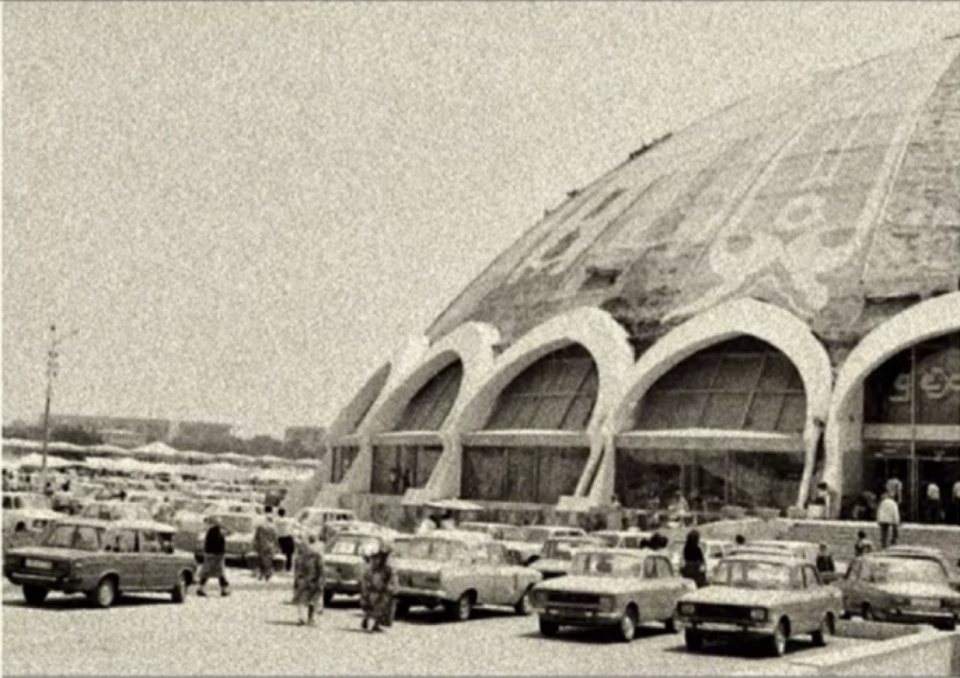
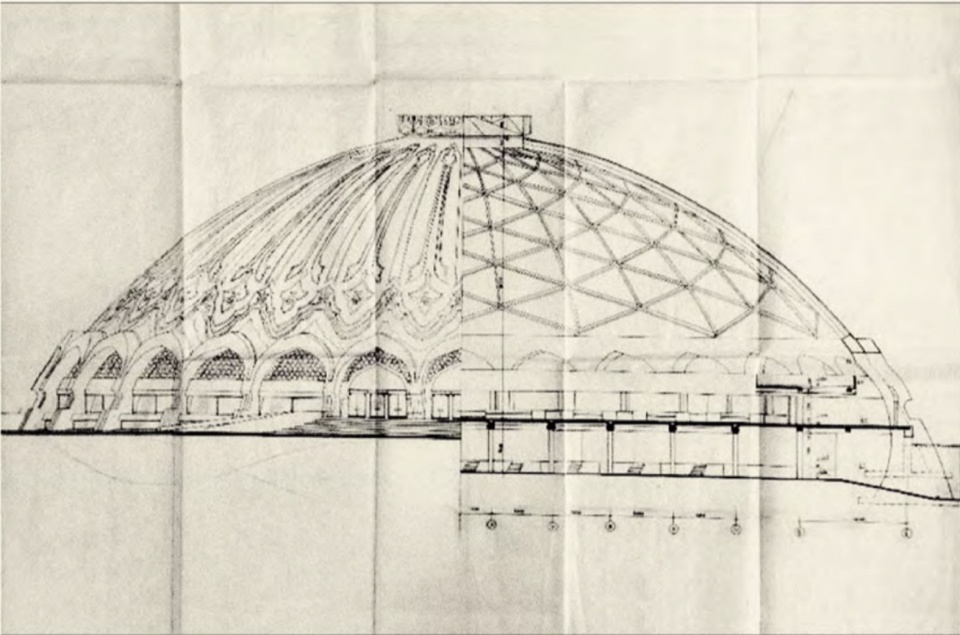
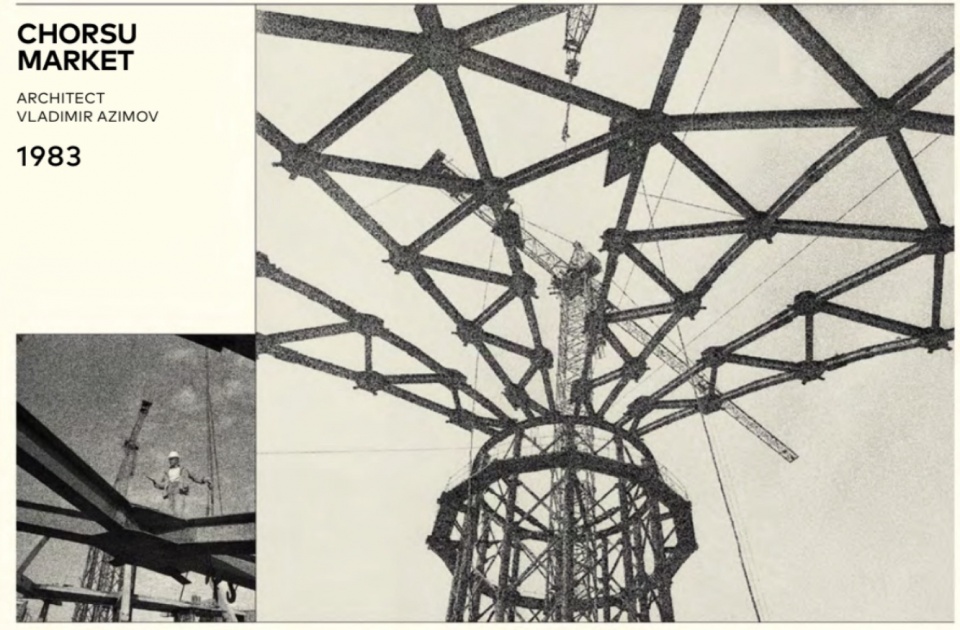
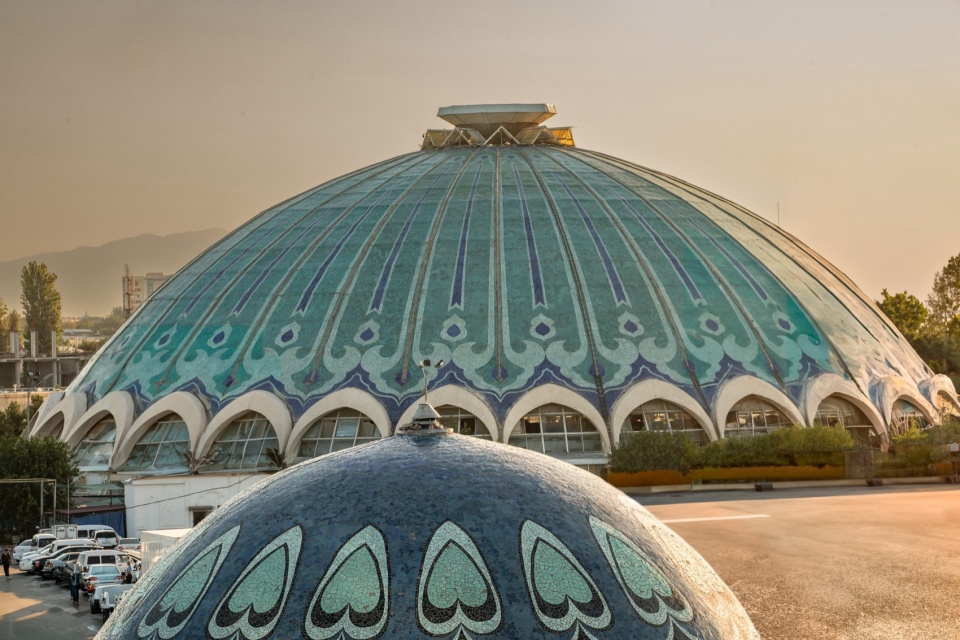
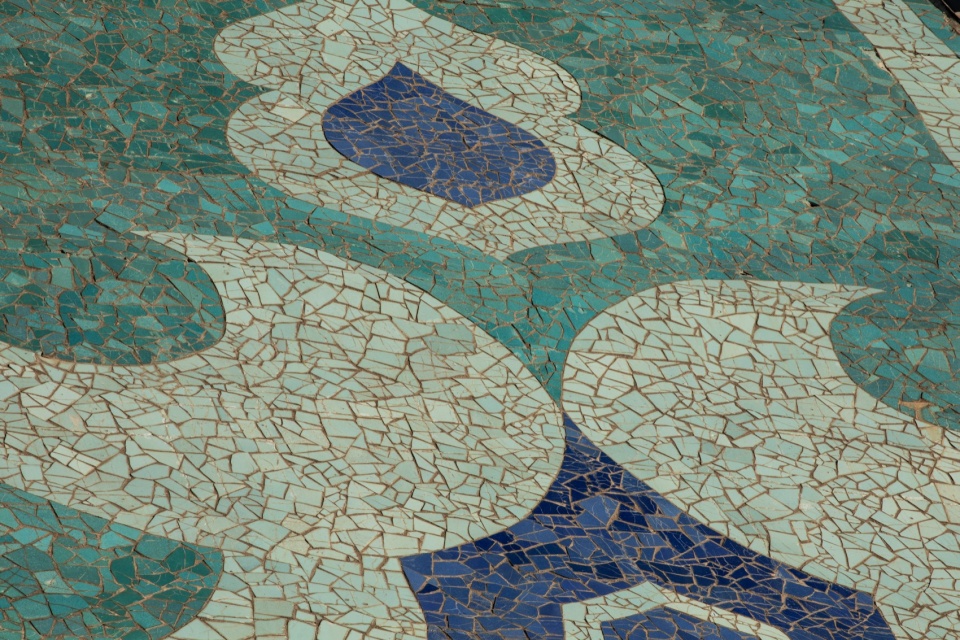
乔尔苏市场 | Chorsu Market
Built 1983–90
建筑意义:位于塔什干历史集市原址上的晚期现代市场建筑群,穹顶结构重新诠释了传统市场的空间强度。
Architectural significance: A late-modern market ensemble on the site of Tashkent’s historic bazaar, where domed structures reinterpret the spatial intensity of the traditional marketplace.
▼乔尔苏市场,档案照片,Chorsu Market, Archive © ACDF
▼乔尔苏市场,Chorsu Market © Karel Balas
10.
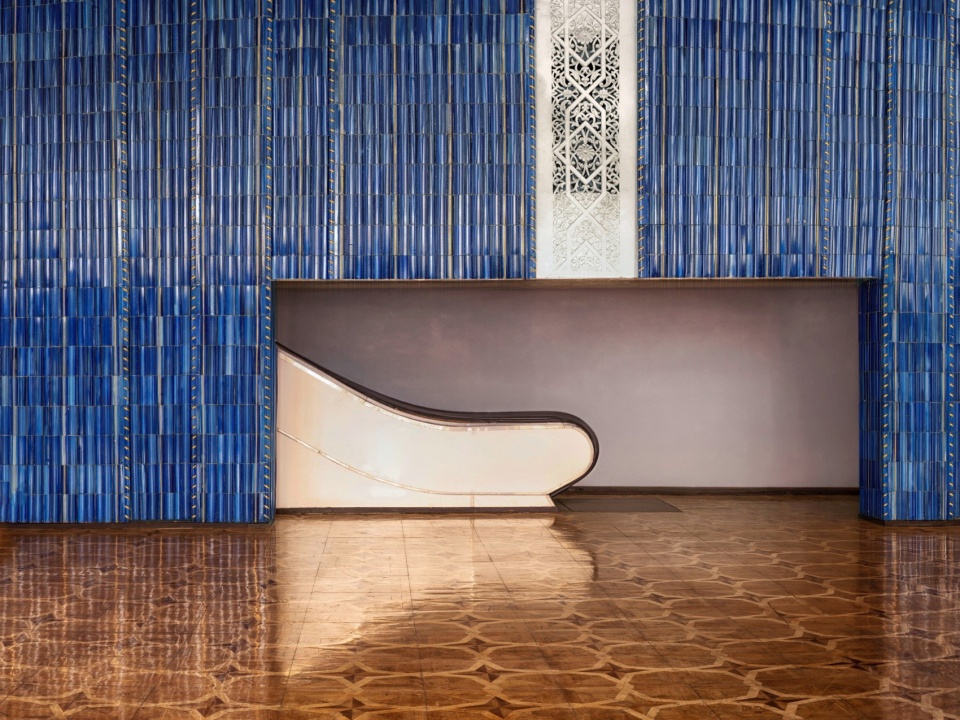
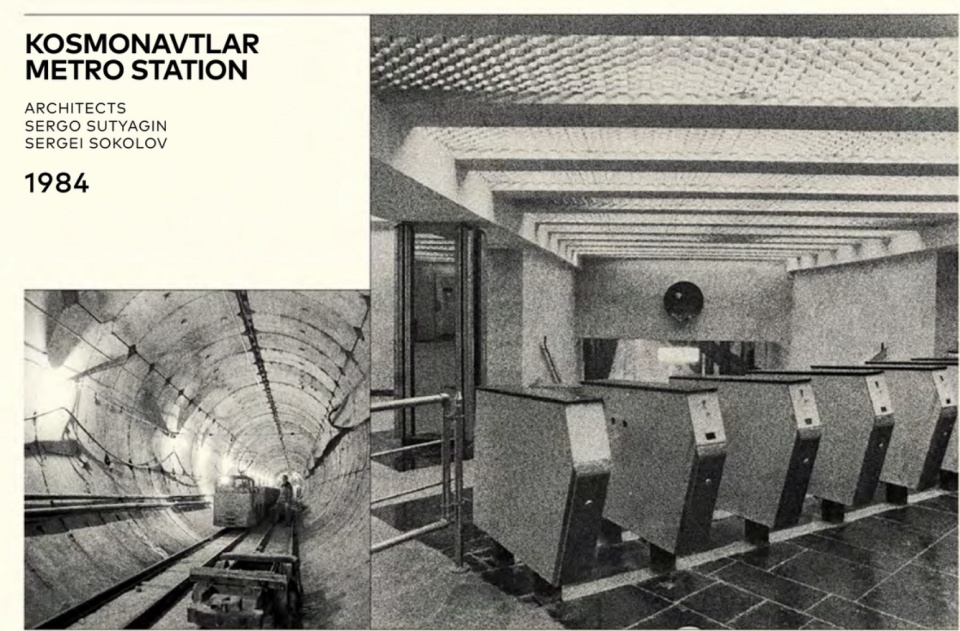
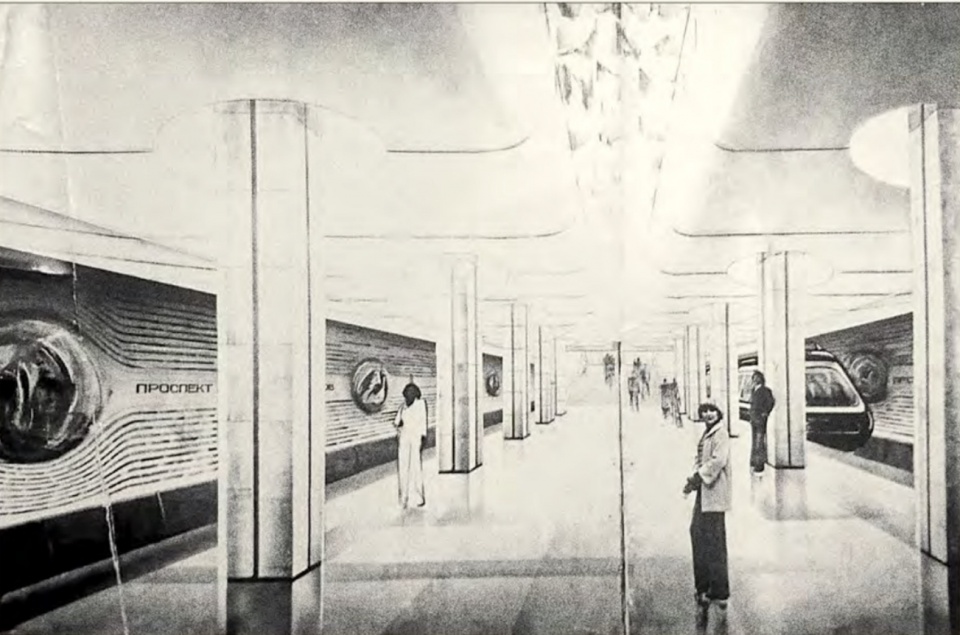
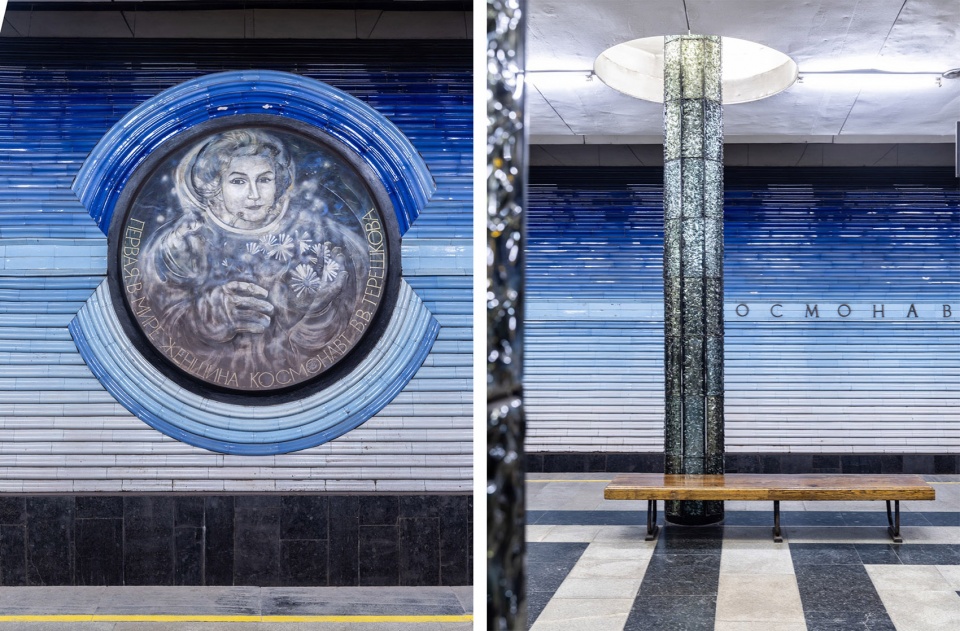
科斯莫纳夫特拉尔地铁站 | Kosmonavtlar Metro Station
Built 1982–84
建筑意义:一个完整的地下环境,其中渐变的蓝色陶瓷砖、玻璃覆层柱、光线和肖像圆章将交通基础设施转化为关于飞行、科学和集体愿景的叙事。
Architectural significance: A complete subterranean environment in which graded blue ceramic tiles, glass-clad columns, light and portrait medallions transform transport infrastructure into a narrative of flight, science and collective aspiration.
▼科斯莫纳夫特拉尔地铁站,档案照片,Kosmonavtlar Metro Station, Archive © ACDF
▼科斯莫纳夫特拉尔地铁站,Kosmonavtlar Metro Station © Karel Balas
More: ACDF。更多关于:ACDF on gooood

美丽