感谢 MVRDV 予gooood分享以下内容。更多关于他们:MVRDV on gooood 。
Appreciation towards MVRDV for providing the following description:
今日,首尔市长朴元淳宣布首尔空中花园 ‘首尔路7017’正式对公众开放,一个由983米的前高架桥改造而来的花园公共空间。废弃高架桥重生变为一条空中花园走廊,200多个当地品种的树木, 花草形成一条 “植物图书馆” 通道, 供行人和游客驻足游憩。“空中花园以生动的植物百科形式,向公众展示了韩国自然遗产的部分精华。” MVRDV联合创始人Winy Maas在开幕式发言中说道。
Today, Mayor of Seoul, Won-soon Park officially opens Seoul’s new public garden Skygarden, Seoullo 7017, a 983-metre botanical floating walkway, a transformed former city highway. Reborn as a linear park with over 200 local species of trees, shrubs and flowers are lined as a walkable plant library for residents and visitors to the city. “Skygarden offers a living dictionary of plants which are part of the natural heritage of South Korea”. Winy Maas, MVRDV co-founder, said in his introduction speech today.
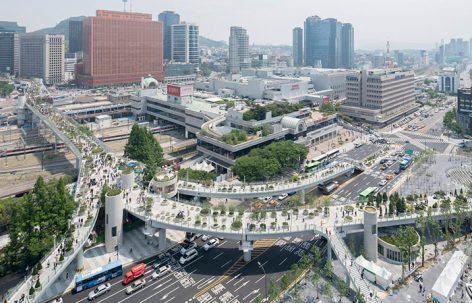
▼一个现实版的植物村落座落在了首尔市中心,A true plant village now inhabits Central Seoul ©Ossip van Duivenbode
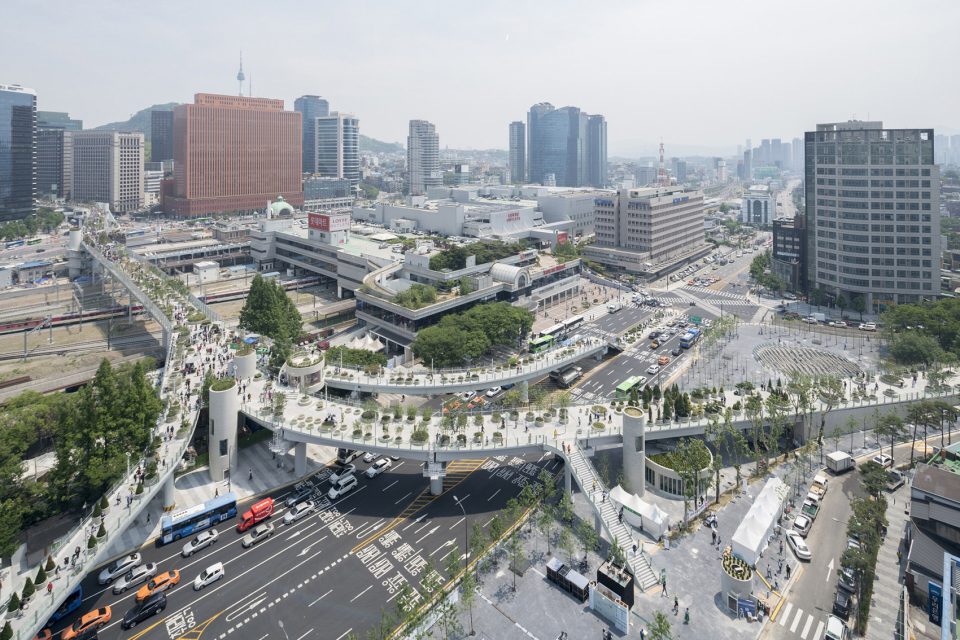
▼大厦中的空中花园,the skygarden among the skyscrapers ©Ossip van Duivenbode
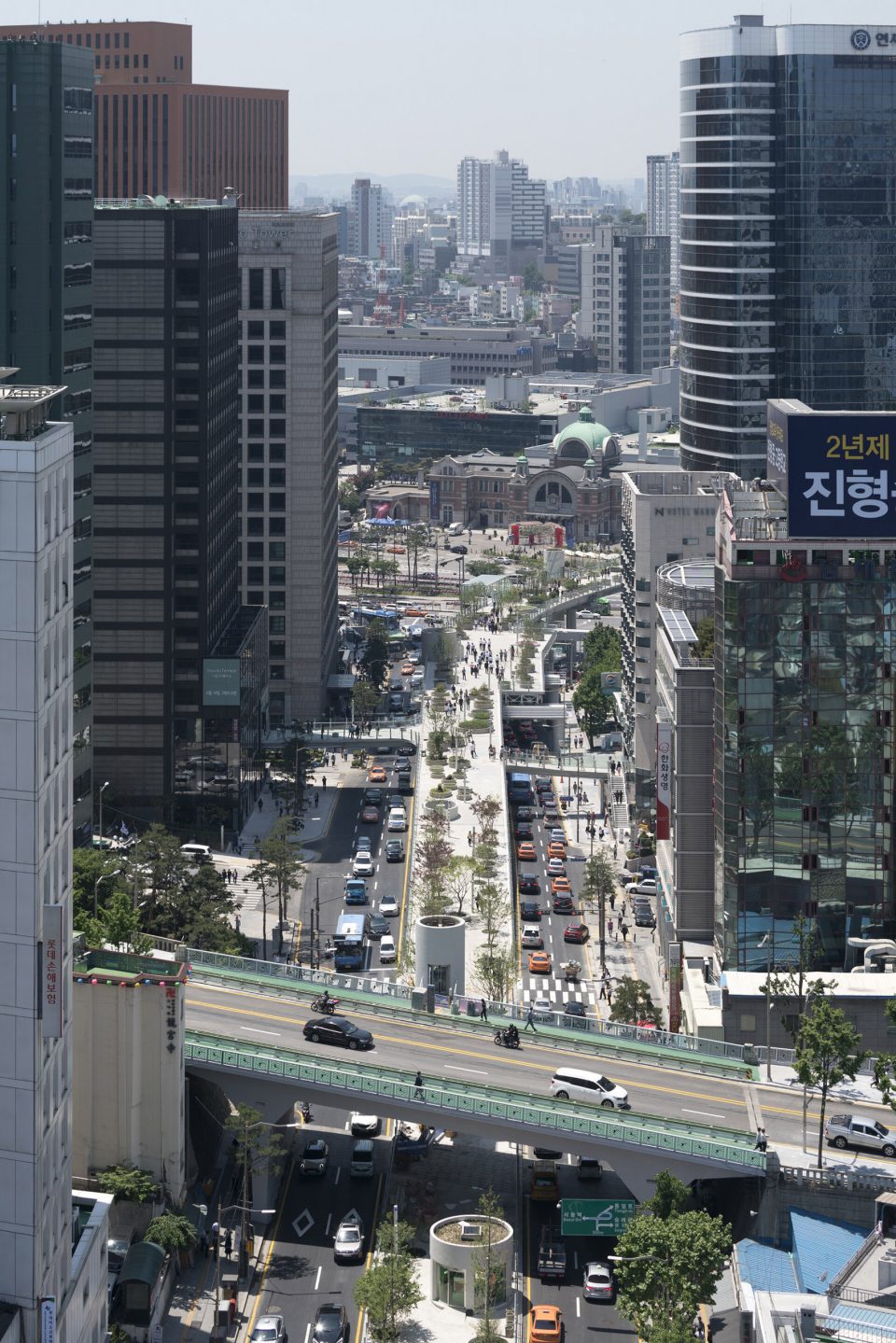
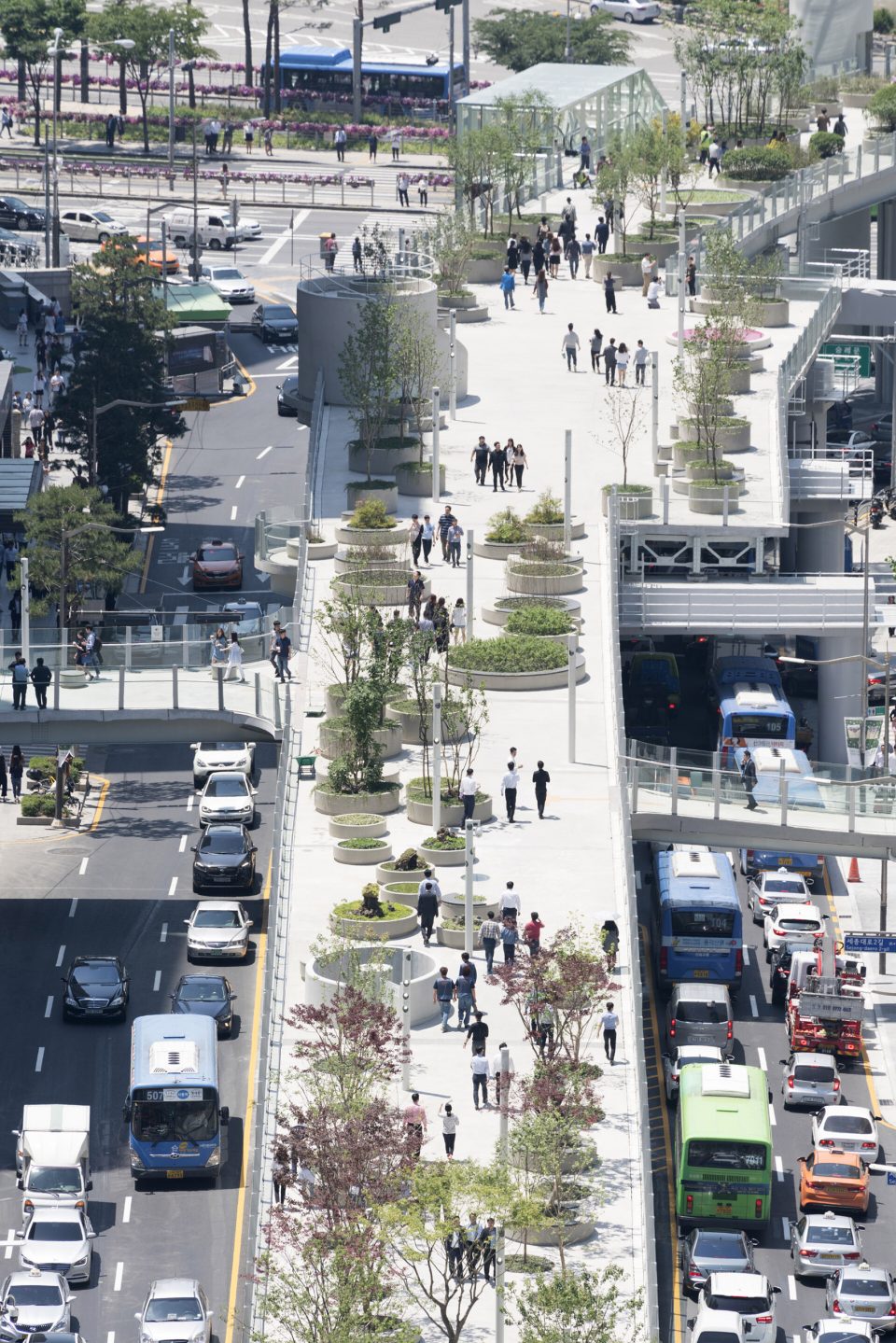
坐落于首尔市中心,前废弃高架桥被改造为一座生机勃勃的城市植物园,在市中心提供一个最多样化的韩国本土植物品类展示;改造后983米长的公共花园走廊聚集了至少50个不同科目的树,灌木,花草等,通过645个不同的盆景展示,收集了约228个主要品种及亚种。最终,整个花园将包括共24,000颗植物(树,灌木,花草等),其中许多在未来十年还将持续生长至更高的高度。
Located in the heart of Seoul, a true plant village has been realised on a former inner city highway in an ever-changing urban area accommodating the biggest variety of Korean plant species and transforming it into a public 983-metre long park gathering 50 families of plants including trees, shrubs and flowers displayed in 645 tree pots, collecting around 228 species and sub-species. In total, the park will include 24,000 plants (trees, shrubs and flowers) that are newly planted many of which will grow to their final heights in the next decade.
▼项目全貌,Overview of the skygarden ©Ossip van Duivenbode
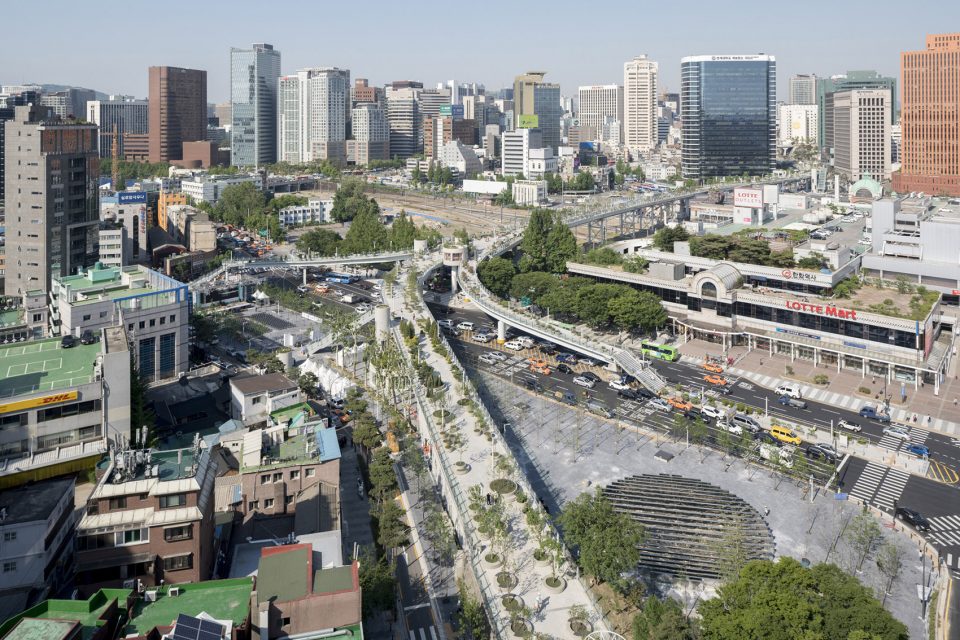
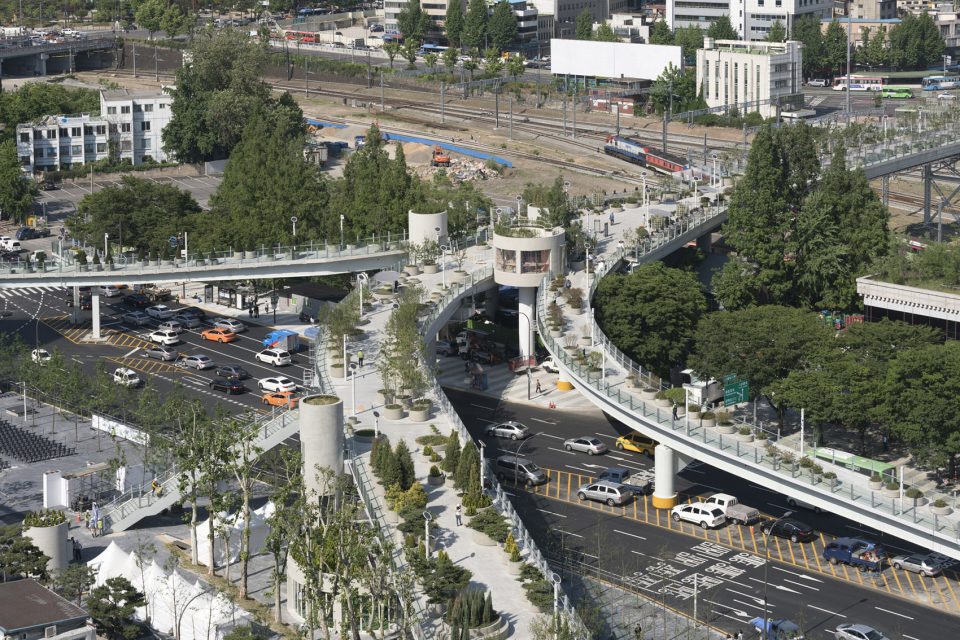
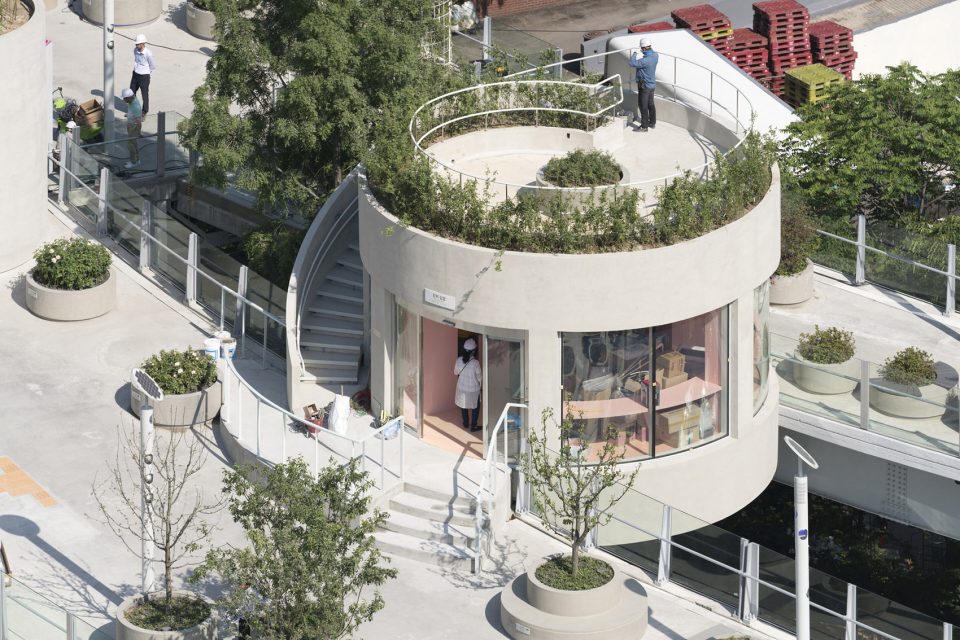
▼观景亭和休息区,the viewing pavilion and resting area ©Ossip van Duivenbode
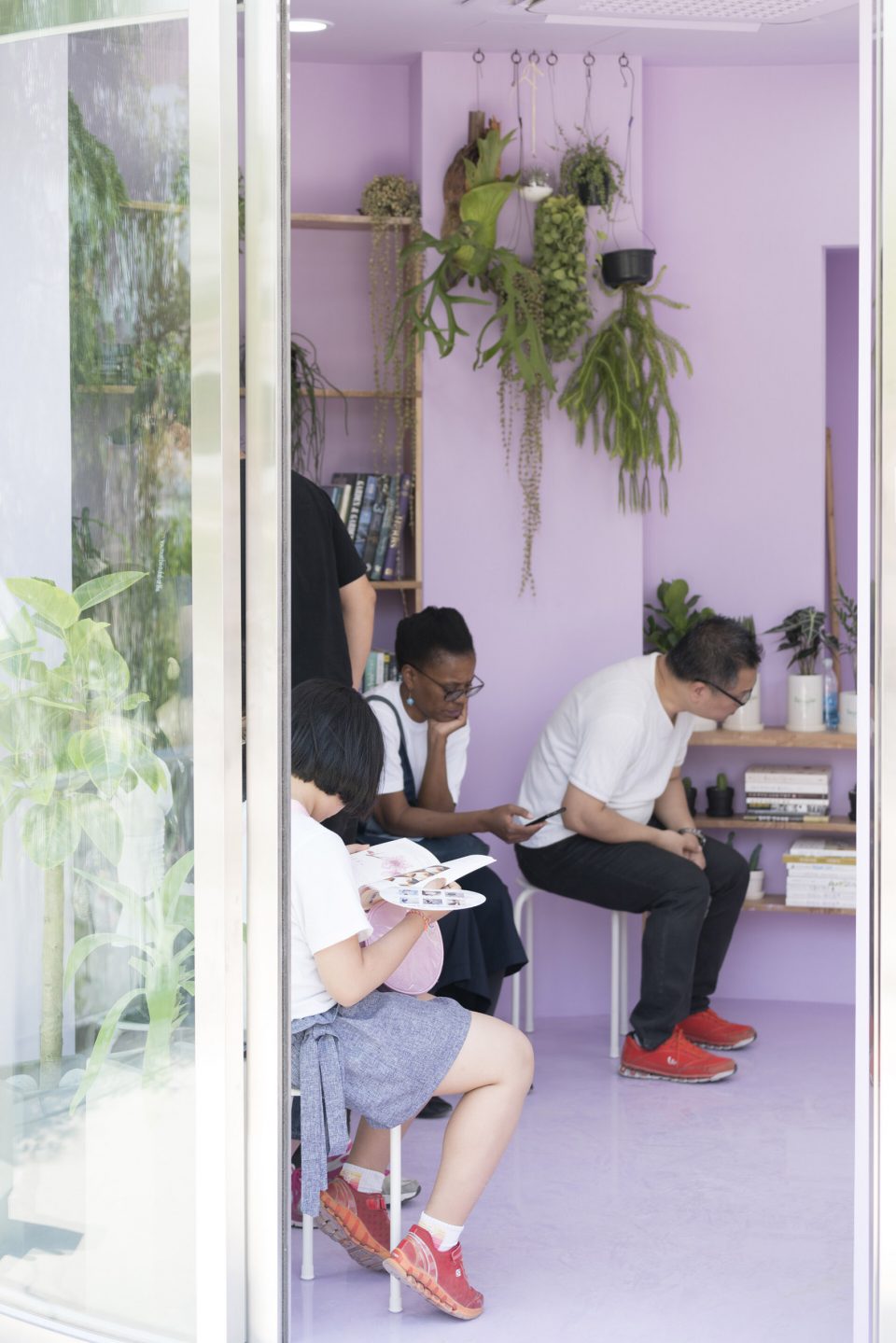
▼内部空间,the interior ©Ossip van Duivenbode
‘首尔路7017’:首尔空中花园的韩国官方命名,‘7017’源于前高架桥的建成年份1970,和它将作为空中花园的重生年份2017的结合。位于首尔中央火车站旁的前高架桥被改造为人行通道,将进一步推动城市的中心区变得更加绿色,友好,富有吸引力,也从更广阔的范围将城市绿地连接起来。
Seoullo, the Korean name for Skygarden translates to ‘towards Seoul’ and ‘Seoul Street’, while 7017 marks the overpass’ construction year of 1970, and its new function as a public walkway in 2017. The pedestrianised viaduct next to Seoul’s main station is the next step towards making the city and especially the central station district, greener, friendlier and more attractive, whilst connecting all patches of green in the wider area.
▼之前的高架桥被改造成了一个对外开放的韩国植物花园,The former overpass has been transformed into an elevated public garden of Korean flora ©Ossip van Duivenbode
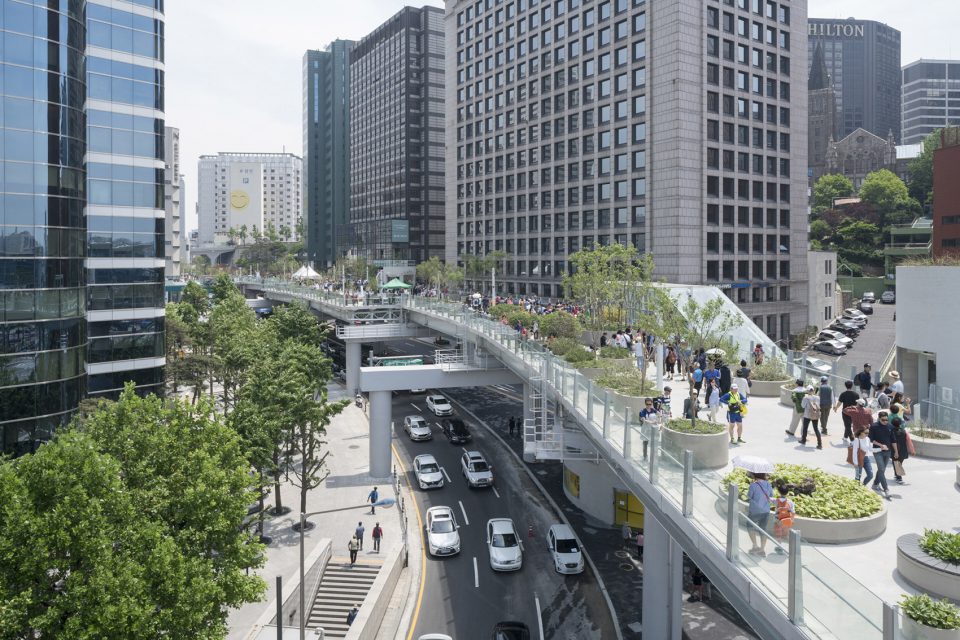
▼穿梭在城市中的公园,the skygarden meandering in the city ©Ossip van Duivenbode
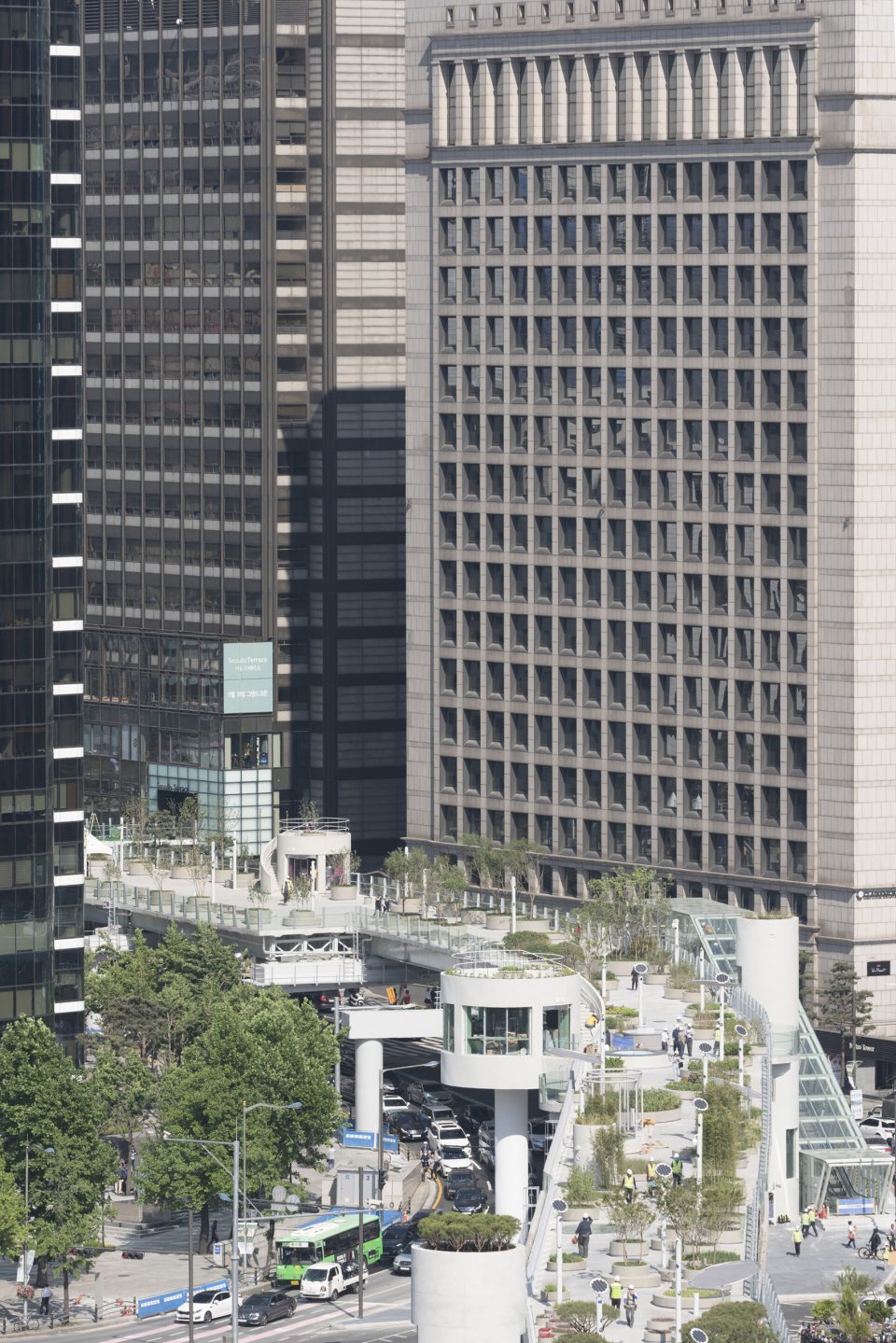
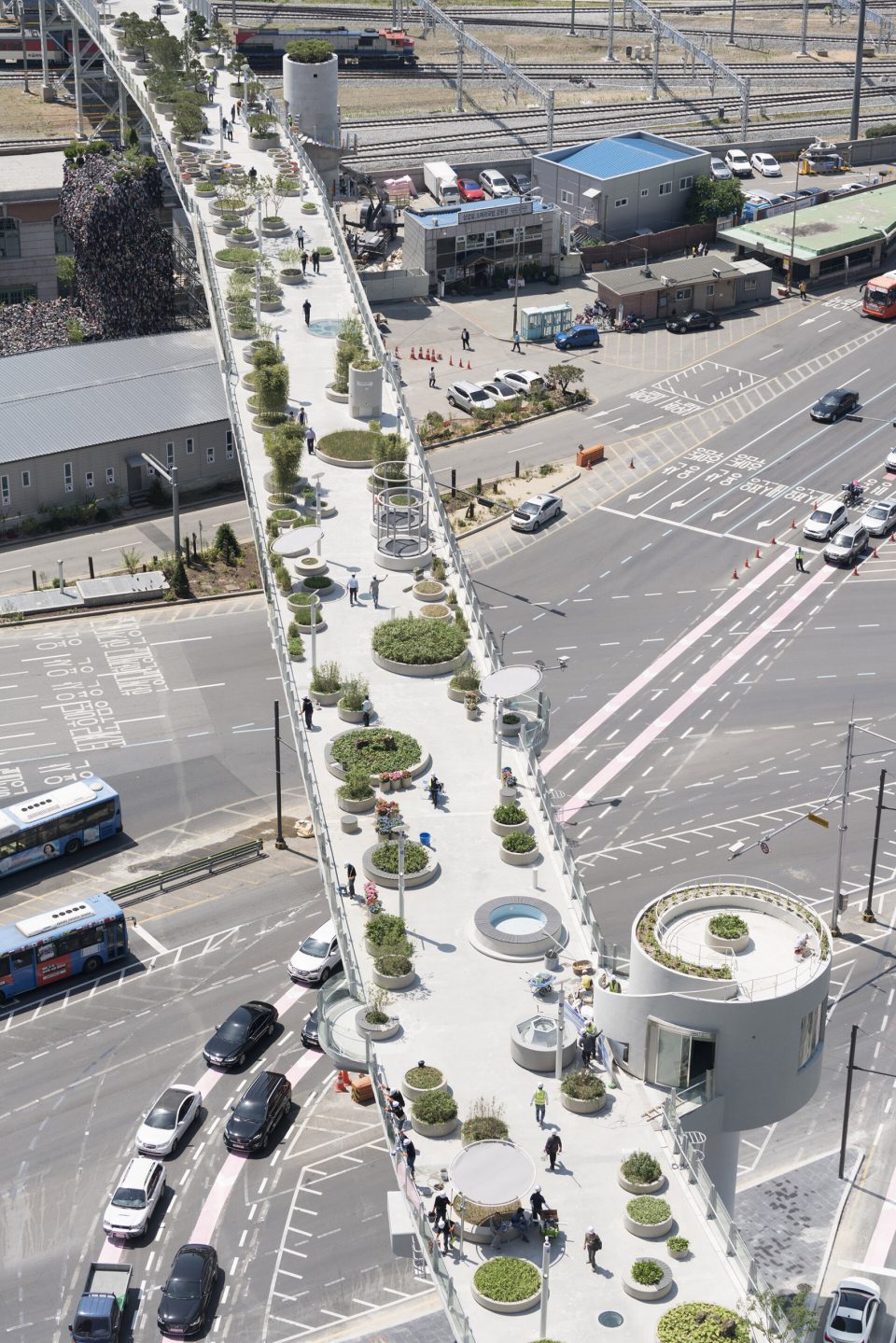
自2015年五月MVRDV赢得此项目竞赛后,最大的挑战是如何将废弃的高架桥转变成一座被16米高的钢筋结构架于空中的公共花园,同时引入品种繁复的韩国本土植物。如何将一座70年代的废弃高架桥转变为空中花园?如何借此改变首尔中心的大量流动人群的生活方式?为了回应此诉求,MVRDV的设计将这座老旧的公共设施改造为一座全新的绿色地标,期望未来作为催化剂推动城市一角的绿化。在市政府,当地NGO的协助下,景观设计和城市顾问团队决心将最多样化的植物群体引入复杂的城市环境中。新的人行桥和楼梯也将整个高架桥与周边的酒店,商店和花园链接起来。
Since the project was won by MVRDV in May 2015, the main challenge of the Skygarden has been to transform the existing overpass into a public garden, overlaying a matrix of Korean flora onto the 16m elevated steel and concrete structure. How to transform a 1970’s highway into a Skygarden and how to change the daily life of thousands of people who cross Seoul’s city centre every day? From the start, MVRDV engaged with this need to change the forgotten and existing infrastructure into a green symbol that will become a catalyst for a greener quarter for Seoul. Together with the municipality, local NGO’s, landscape teams and city advisers are committed to accommodating the biggest diversity of flora into a strictly urban condition. New bridges and stairs connect the viaduct with hotels, shops and gardens.
▼附近的大楼里的花园景观,view from the adjacent building ©Ossip van Duivenbode
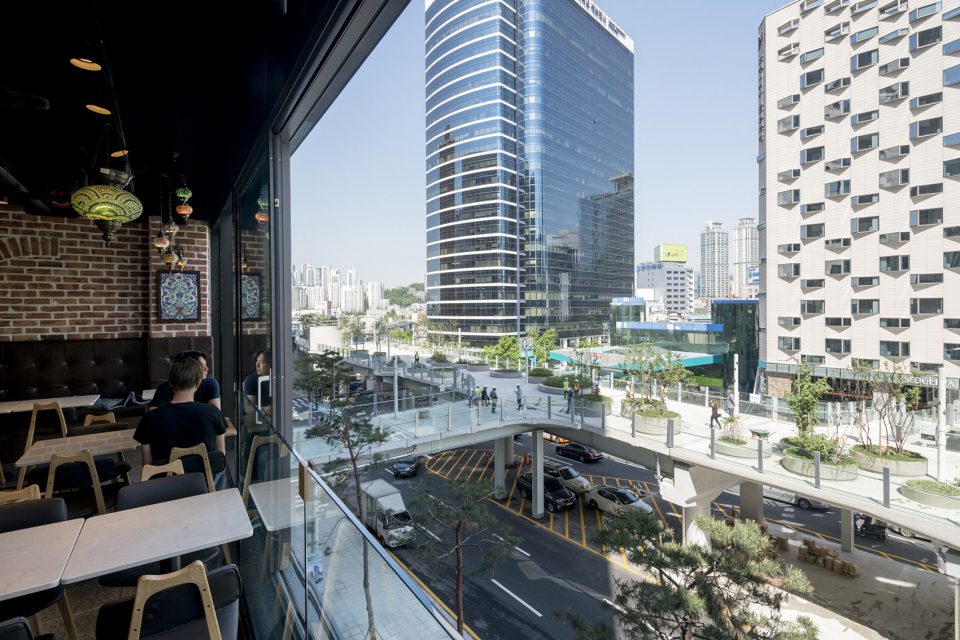
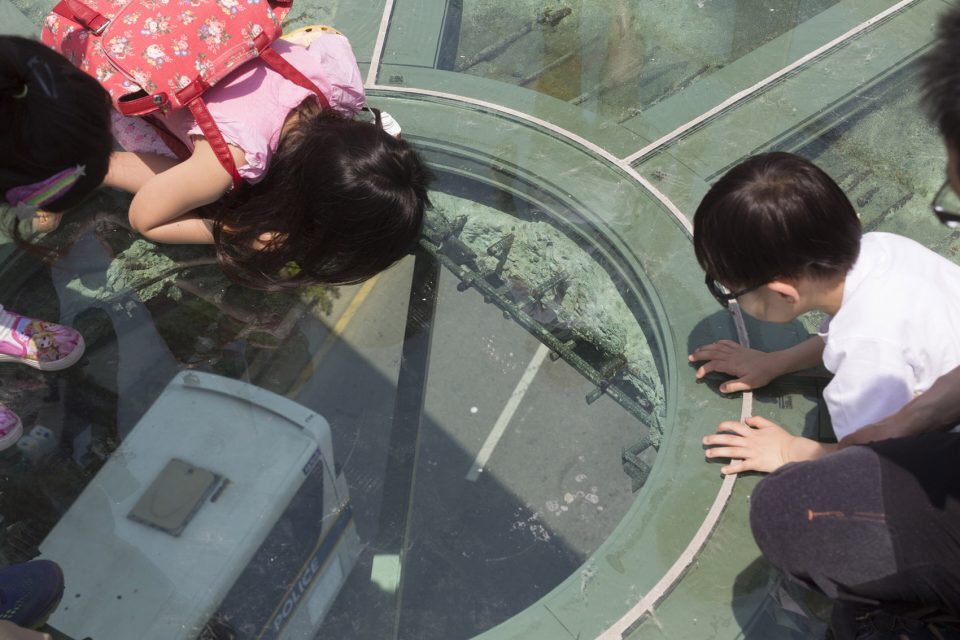
▼透过桥体的孔洞可以看到下层来往的车辆,the passing vehicles could be seen through the glazed opening on the bridge ©Ossip van Duivenbode
“我们的设计将韩国自然遗产的部分精华,以生动的植物百科形式置于城市中心。主要理念是将城市居民与自然紧密联系起来,同时提供一个观望首尔火车站和崇礼门的绝佳视野。空中花园既是一座教育性的植物园,也是孕育各类物种的城市苗圃,未来随着植物生长繁茂,未来部分植物迁居可使绿色逐渐延伸到城市其他角落。” MVRDV联合创始人 Winy Maas说,“所有植物被种植于不同大小和高度的盆栽,以不同科目来组织,通过韩文字母排序,形成别具一格的空间形态。”
“Our design offers a living dictionary of plants which are part of the natural heritage of South Korea and now, existing in the city centre. The idea here is to connect city dwellers with nature, while at the same time also offering the opportunity of experiencing these amazing views to the Historical Seoul Station and Namdaemun Gate. Skygarden is an educational arboretum, a nursery for future species and one that in the future will act as a garden which can extend to other parts of Seoul as the plants grow and are transferred to new homes”, says Winy Maas, founding partner of MVRDV. “They are planted in containers of different size and height and organised in groups of families. The families are ordered according to the Korean alphabet. This leads to surprising spatial compositions”.
▼项目近景,the close view ©Ossip van Duivenbode
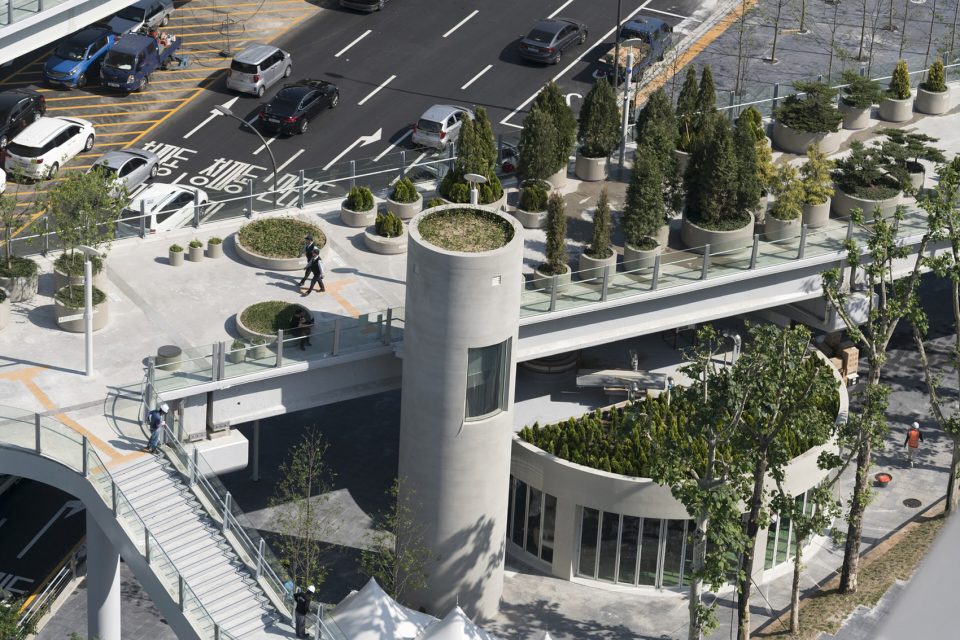
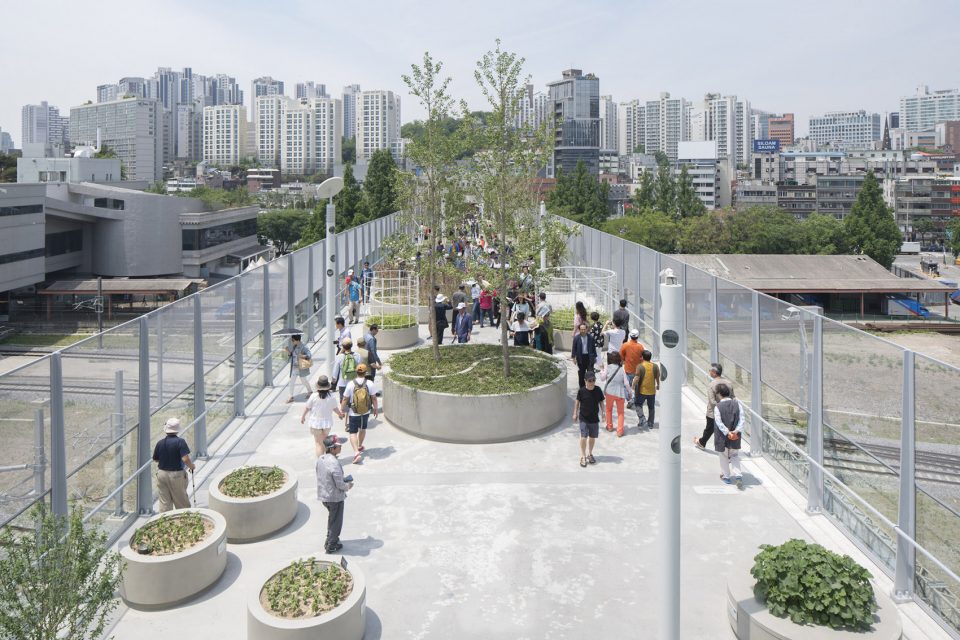
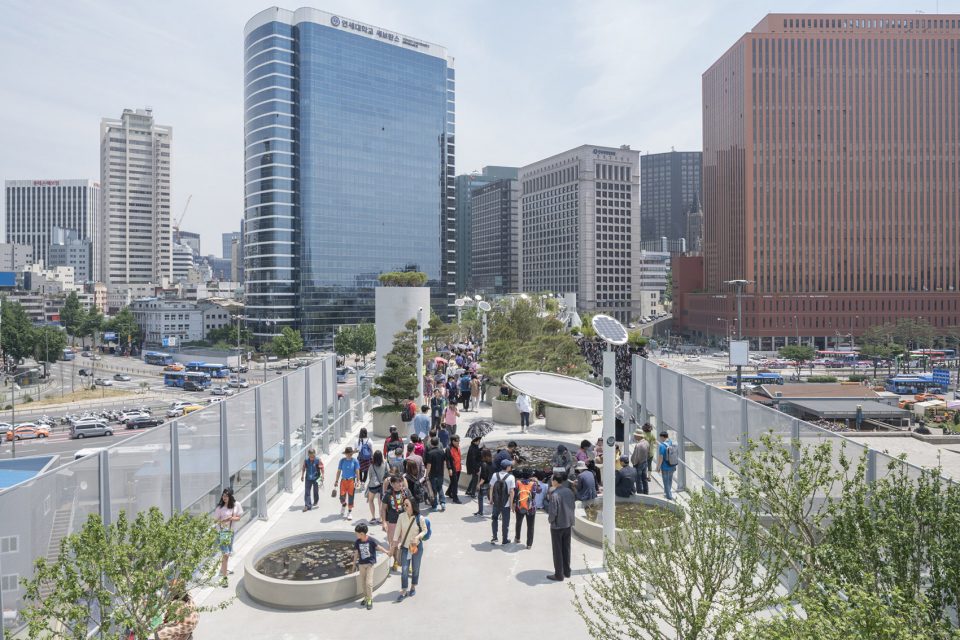
整条空中走廊的设计也可看做是一系列小型花园的集合,每一座小花园都有其独特的形态,香气,颜色等加以区分。花园景观会随着季节而变化:秋季是以枫叶的红渲染了主色,春季樱花和杜鹃开始盛放,冬季是常绿针叶树为主,而夏季则是灌木和果树枝繁叶茂的时期。“但是这里不仅仅只是一座植物‘图书馆’ ,也有一系列公共活动的空间。某些地方植物被抬高,下方有商店,画廊,茶室,剧院,信息中心,维护设施,餐厅等等不同功能,高架桥将发展为一座生机盎然的空中花园小镇。”
The linear park was designed as a collection of small gardens, each one with its very own composition, perfume, colour and identity. The landscape will change according to the seasons: the bright colours of leaves in autumn of the Aceraceae family (maples), the blossom of cherry trees and rhododendron in spring, the evergreen conifers trees in winter and shrubs and trees bearing fruit in summer. “But it is not only a ‘library’ of plants, a series of pots are bigger. Here the plants are lifted. Underneath there are shops, galleries, tea houses, a theatre, information centres, maintenance boots and restaurants, thus the viaduct is getting inhabited by a plant village”, continues Maas.
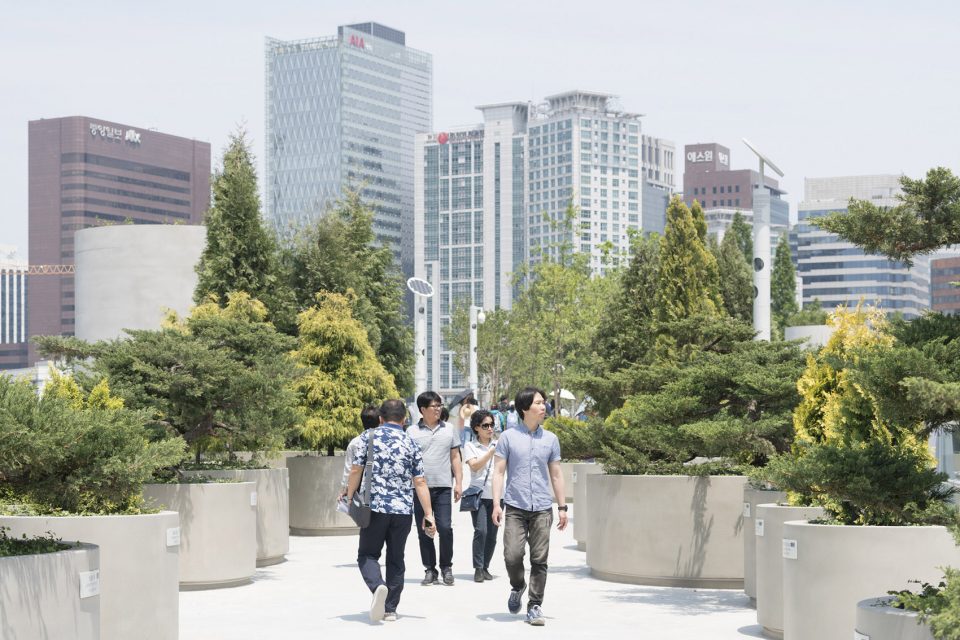
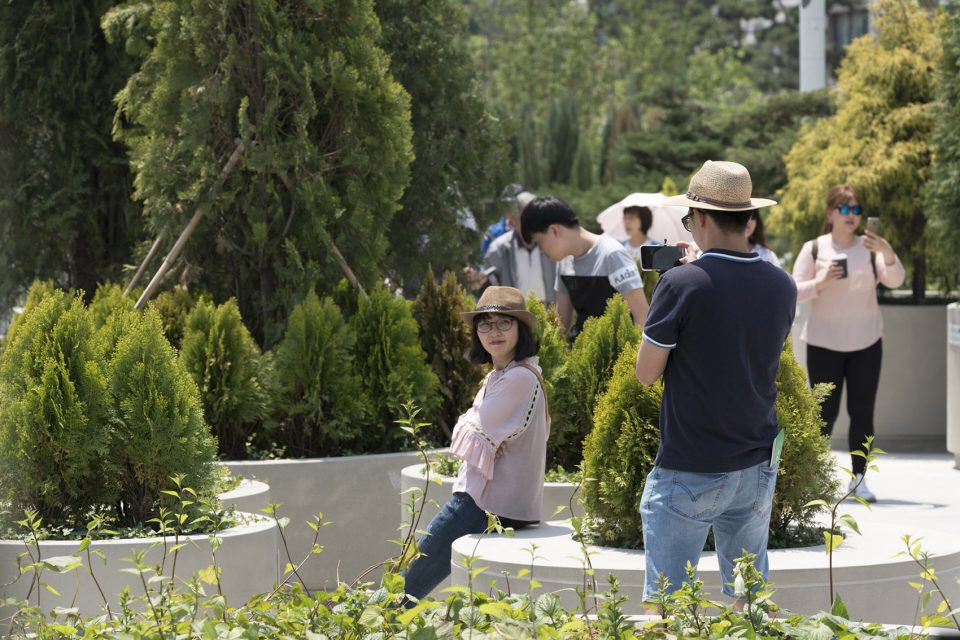
▼不同尺度大小的容器把不同的植物种类组织在了一起,同时能够供行人驻足休息,Containers of different sized pots organise plant families and serve as seating ©Ossip van Duivenbode
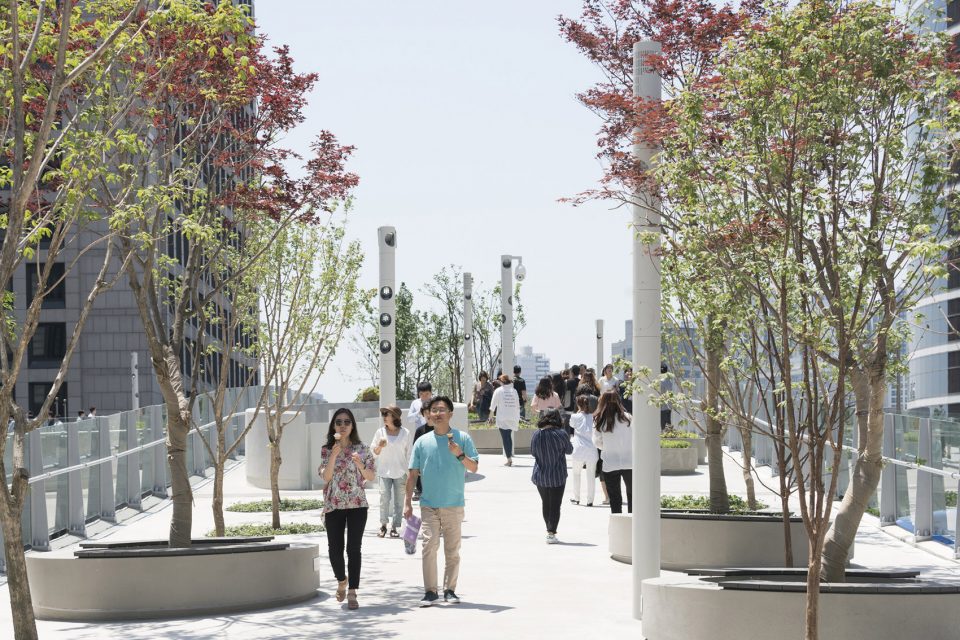
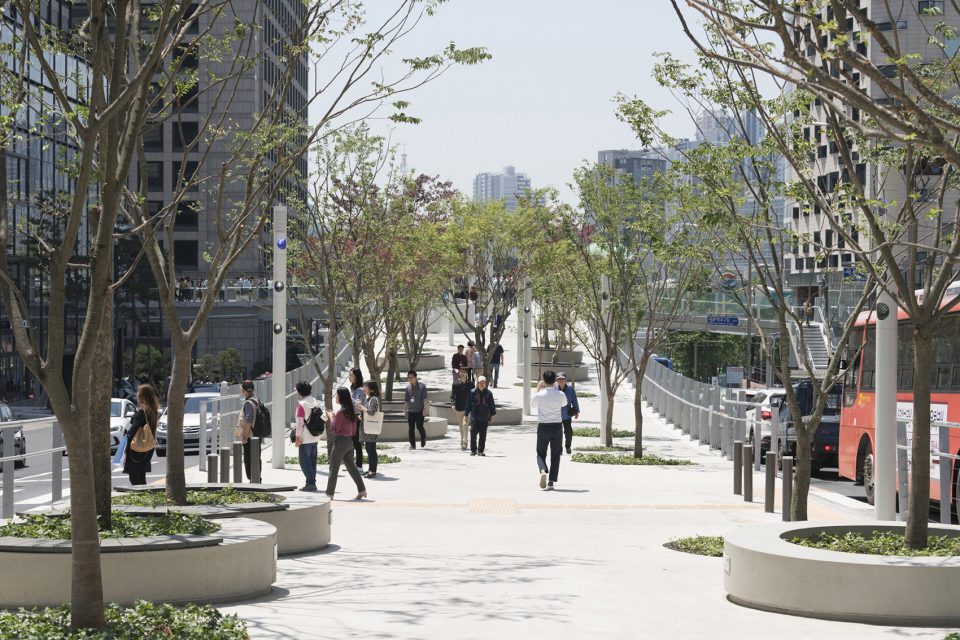
▼常年异色叶树种,the bright colours of leaves ©Ossip van Duivenbode
这些功能也将直接造福于未来使用者的体验性,通过在花园中创造活跃的的公共空间,从文化及商业的的层面与城市活动紧密结合。一小部分可移动盆栽还可灵活的将种子和植物未来转移到更大的盆摘。各种楼梯,电梯,人行桥,手扶梯等设施将空中花园与城市连接起来,由周边的城市肌理形成弹性关系。夜幕降临时,空中花园将被蓝色的灯光点亮,与周边的城市灯光形成对比,采用一种更亲近自然的灯光色。而有盛大节日或庆祝活动时,灯光的颜色也可以随之调整和改变。
These contribute to enhancing the experience of users, boosting the park with activities that engage the city on a cultural and commercial level. Small mobile pots are added for seeds and plants that can be used afterwards in the bigger pots. A living nursery. Multiple stairs, lifts, bridges and escalators connect the city to the new park, rebounding it to the adjacent urban fabric. At night, the Skygarden is illuminated in blue lights in contrast to the bright city lights as the colour is friendly to nature. During festivals and celebrations, different colours can also be changed and the park will be accessible 24/7.
▼空中花园七天二十小时对外开放,并且在夜晚有灯光照明系统,Skygarden can be accessed 24/7 and is illuminated at night ©Ossip van Duivenbode
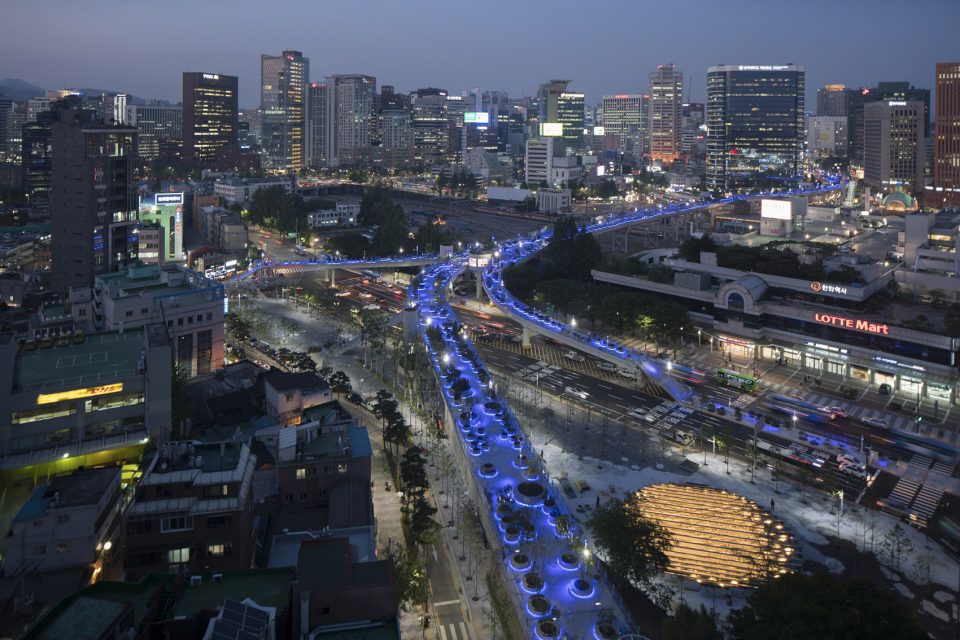
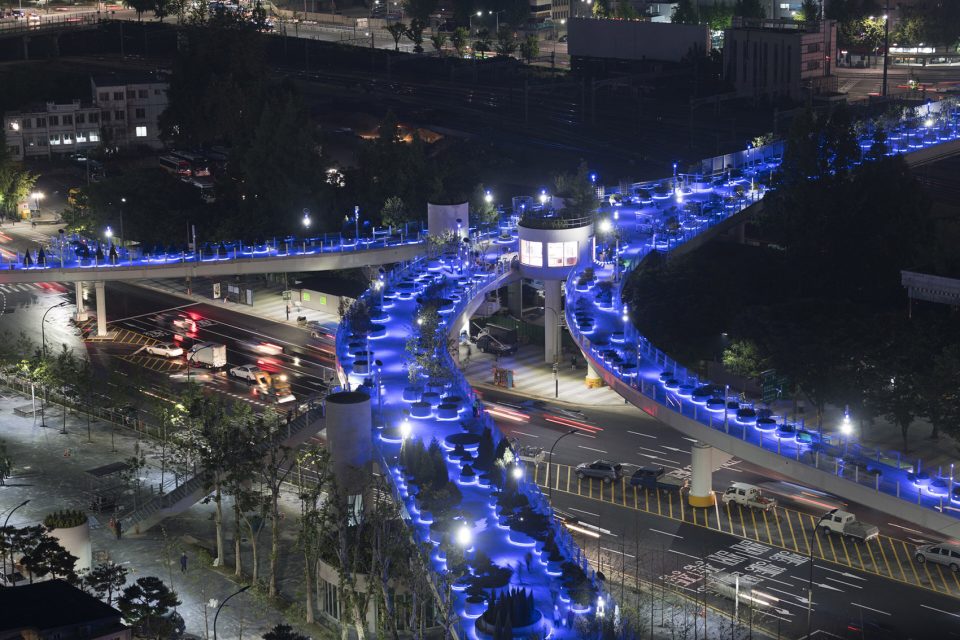
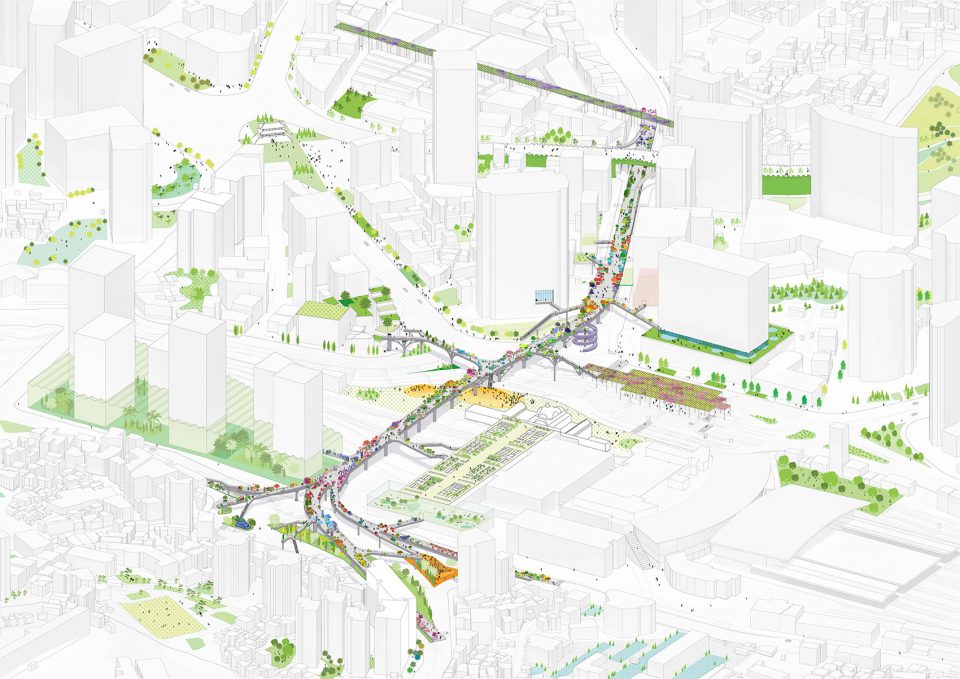
▼在未来,前高架桥会与周边的建筑一同发展,成为城市中的一抹自然景观,In the future, the overpass will evolve with new plants and new activators so as to become an ëurban nurseryí, rearing trees for the surrounding districts. ©MVRDV
▼植物的排列是根据韩国字母表的顺序,Skygardens作为城市中的植物图书馆清晰地展示了城市生活的多样性,Organised according to the Korean alphabet, the plant library makes legible the natural diversity of the city while making the Skygardens easy to navigate. ©MVRDV
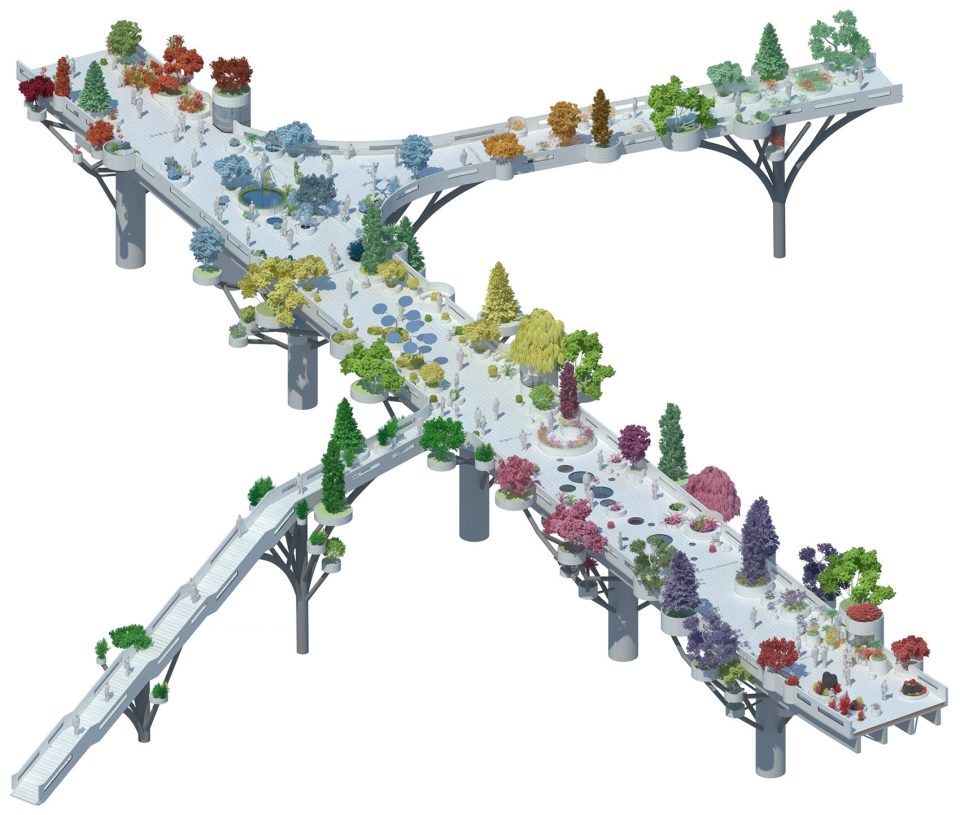
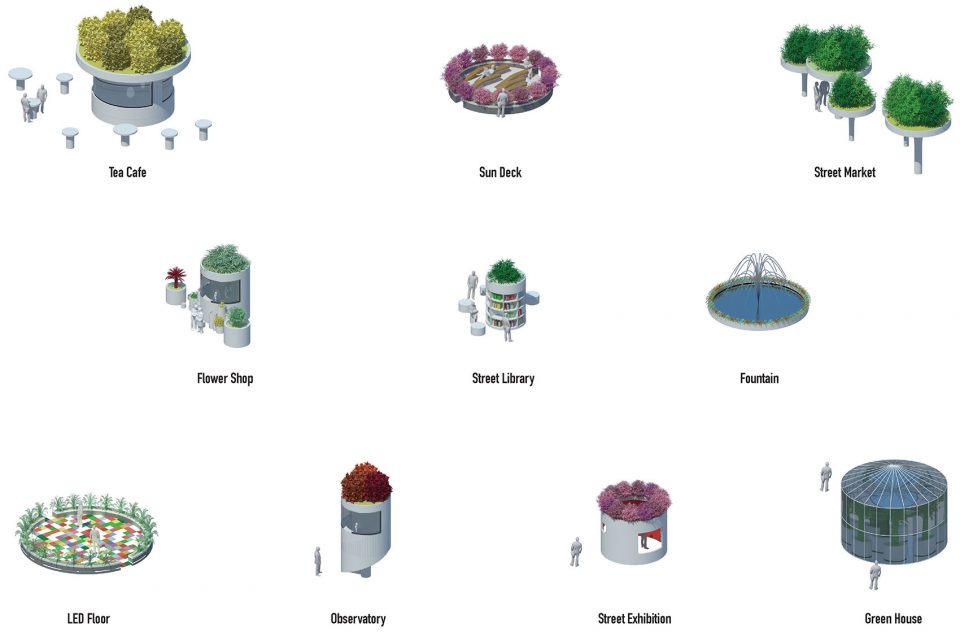
▼除了各种尺寸的圆形种植钵,一系列可定制的吸引子:如茶馆,花店,街头市场,图书馆和温室将将会激活Skygarden中的空间元素,In addition to the circular plant pots of varying sizes, a series of customizable activators such as tea cafés, flower shops, street markets, libraries and greenhouses will provide a catalogue of elements which will enliven the Skygarden. ©MVRDV
更多项目概念阶段图纸,请跳转至以下链接:首尔空中花园 / MVRDV.
For more renderings and drawings of the project in conceptual design period, please click here: Seoul Skygarden / MVRDV.
Location: Seoul, South Korea
Year: 2015+
Client: Seoul Metropolitan Government
Program: Transformation of 938-metre section of elevated highway (9,661 m2) into public space
Budget: Undisclosed
Competition: Winy Maas, Jacob van Rijs and Nathalie de Vries with Wenchian Shi, Kyosuk Lee, Kai Wang, Ángel Sánchez Navarro, Jaewoo Lee, Antonio Luca Coco, Matteo Artico and Jaime Domínguez Balgoma.
Design Development: Winy Maas, Jacob van Rijs and Nathalie de Vries with Wenchian Shi, Kyosuk Lee, Mafalda Rangel, Kai Wang, Daehee Suk, Daan Zandbergen, Dong Min Lee and Sen Yang.
Partners:
Landscape Architect: Ben Kuipers, Delft, Netherlands
Local Architect: DMP, Seoul, Korea
Structure: Saman Engineering, Seoul, Korea
Local Landscape Designer: KECC, Seoul, Korea
Sustainability: EAN, Seoul, Korea
Architectural Structure: Cross, Seoul, Korea
Industrial Designers: Studio Makkink & Bey, Amsterdam, Netherlands
MEP: Samsin, Seoul, Korea
Traffic Engineers: Song Hyun R&D, Seoul, Korea
Lighting Design: Viabizzuno, Milan, Italy and Nanam Ald, Seoul Korea
App Design: nhtv, Breda, Netherlands
Cost Engineers: Myong Gun, Seoul, Korea
Design Development:
Winy Maas, Jacob van Rijs and Nathalie de Vries with Wenchian Shi, Kyosuk Lee, Mafalda Rangel, Daehee Suk, Daan Zandbergen, Kai Wang, Sen Yang and Dong Min Lee
Landscape Design: Ben Kuipers landscape architect, MVRDV
Local Architect: DMP, Seoul, Korea
Structure: Saman Engineering, Seoul, Korea
Local Landscape Designer: KECC, Seoul, Korea
Lighting Design: Rogier van der Heide, MVRDV and Nanam Ald, Seoul Korea
Construction:
Team: Winy Maas, Jacob van Rijs and Nathalie de Vries with Wenchian Shi, Kyosuk Lee, Mafalda Rangel, Dong Min Lee
Landscape Design: Ben Kuipers Landscape architect
Images: Ossip van Duivenbode
More:MVRDV,更多关于他们:MVRDV on gooood

罗列并置一大堆树池,主流线不清晰。树池之间无效空间很多,既不好通行也让人不愿停留。////下方车流这么多,尾气大,上方如果是想做成让人愿意停留的空中花园,就应该对两侧的遮蔽做的更充分一些,让人停留坐下观看往高处视线的城市景观.//如果是让人快速通行的同时能观看绿色植物景观和城市风貌,那步行流行就应该更明确清晰一些.///看完成效果,就是只顾着玩平面形式,功能上首鼠两端,就算是名气大的设计事务所,这也不能说是个好设计。
花这么多钱做一个人行高架桥,上面又搞折磨多没法通行的绿化,棒子想传达一个啥子理念
好像高线公园,但是晚上的灯光太蓝了一点有点渗人,个人觉得暖黄光比较好
这个设计赢在连接了周边的商场以及衰败的老旧街区,像种子一样把活力和生机通过这架桥散播开来,随着时间的推移对这座城市会有更积极的影响,感兴趣可以去看方案原本的分析图,非常庞大,内容大于形式
感觉谷德这篇文章没有写在点子上,略掉了重点,有一些误导
实际看上去又热又挤,颜色也只剩绿和白
可以说很失望了
感觉北京回龙观和上地的自行车道可以考虑朝着这个改啊啊
夜晚好美 像海洋发光生物……
默默觉得这个好适合贵阳,希望有贵阳的相关人士看到,真的无力吐槽贵阳的市容市貌。
感觉还是纽约的高线公园更具美感。。。
为啥古德上这么多嘴炮大神
我也是很反感这一点
首尔的高线~有点晒~
夏天看这个,觉得自己要被烤熟
我觉得很好阿,现在车子把人往旁边挤,马路上有车人行道上还有车,人在没法呆在地上只能上天,虽然有了这个天桥人还是在天上,但至少不会被汽车挤到旁边去了
小气
请问这叫设计么?
我靠,交通会不会拥挤啊,盖大楼卖钱多实惠,一样打造生态概念
秩序感好差,感觉很乱
实际效果没概念图好
没传承历史元素 略显单调
层主沙雕
虚心请教下这个旧高架如何改造才能传承历史元素呢
要有历史基础才能传承吧….不是什么建筑都要去传承历史的,高架桥本身就是现代生活的产物,又四通八达贯通整个片区,将其改造成空中花园,将交通性质转变成供居民步行,缓解城市压力的氧吧我觉得很合适
太赞同了
酷酷酷
期待绿树成荫的效果
还是有点单调啊 走在上面也没有生态的气氛
感觉白白的没什么生气不是很喜欢
整个城市看着乱糟糟的
想到了厦门,BRT退役后,能不能也做个高线公园出来~~
BRT不是还要改造成地铁线路么…等ta退役了…我们估计都退休了吧