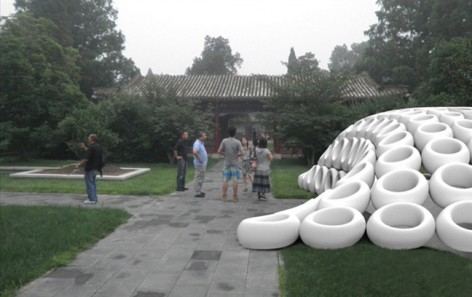
非常感谢感谢研讨会组织者之一 Daniel Gillen 将项目介绍和项目图片授权gooood发行。更多请至:Daniel Gillen on gooood
Appreciation towards Daniel Gillen for providing the following description:
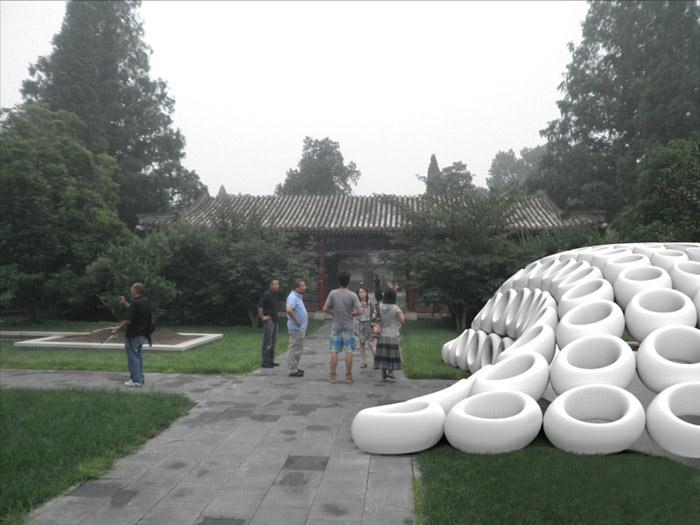
2011年清华大学非线性参数化研讨会共有200名左右的学生参加。Andrew Haas ,Daniel Gillen,徐丰向大
家授教了先进的参数化设计软件的重要应用部分和战略。长达九天的研讨会共分为三个部分:抽象体;展
馆;产品化。
展馆部分要求学生在一个四合院空间中进行设计,需要考虑到场地现状,同时通过设计了解软件,学习技
术。两题部分后,学生需要以人体为对象设计产品,修改与展馆相应的参数,制作出适应性成果,达到参数
化具有的规模应变和场地应变。
学生研究门,窗,柱,人的受,四肢。在展馆的版本上修改参数和程序,保留核心的基因,适应其它场所,
具有其它的形态和规模,创造出无限的产品版本。
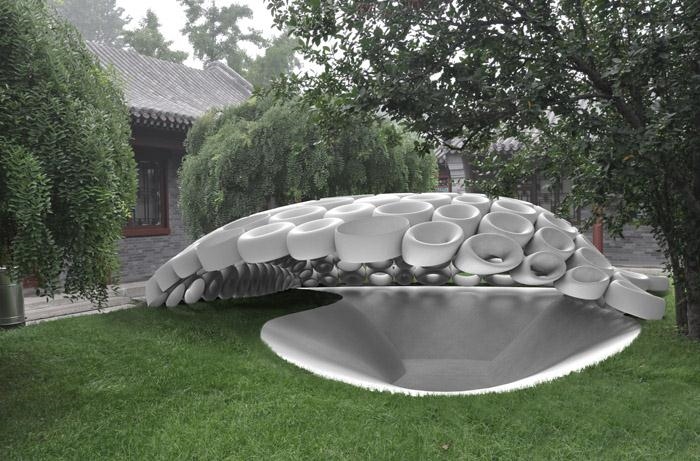
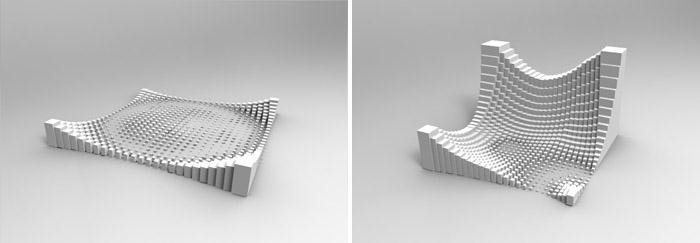
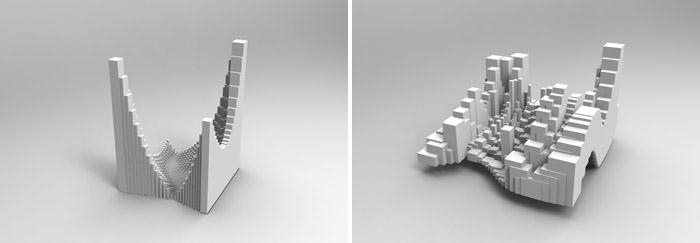
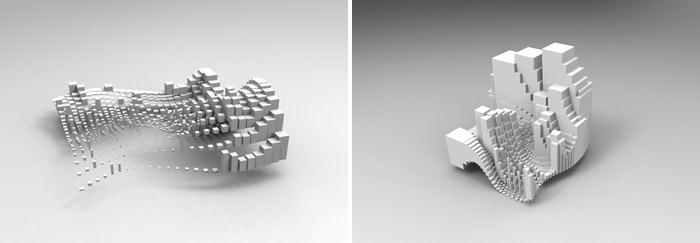
2011 was an unprecedented year for Tsinghua University’s Non-Linear Parametric Workshop with close to 200 students attending. Students of the Advanced Design Unit taught by Daniel Gillen, Xu Feng with assistance by Andrew Haas learned parametric software, thought processes and strategy with a specific focus on versioning.
The tutors’ sequenced information provided to students to encourage a scientific level of variable testing and analysis. The nine-day workshop was organized into three parts, beginning with abstract versioning, followed by a pavilion, and concluding with a product.
The design brief tasked students with designing a spatial intervention within the bounds of an existing courtyard house. Negotiation of existing site conditions and versioning application were primary considerations. The Pavilion was a way for students to apply techniques learned through software training in a site context while limiting programmatic requirements.
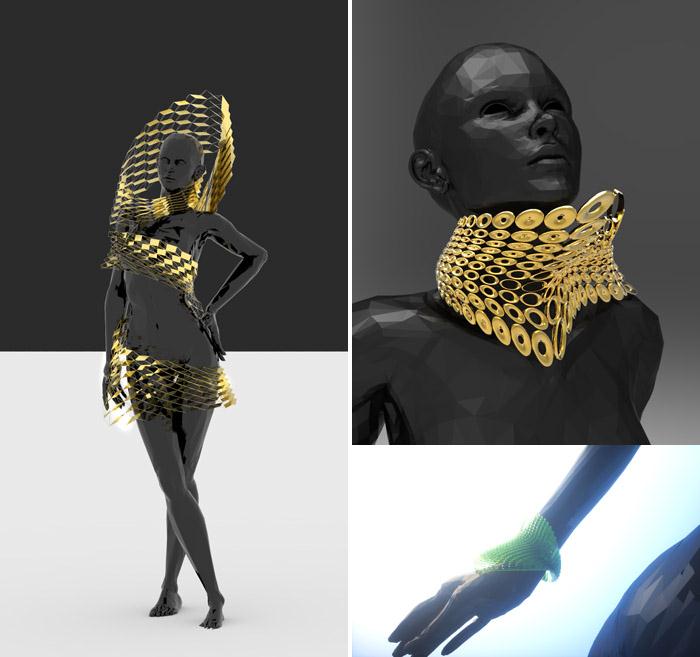
Upon completion of the ‘pavilion’, students were challenged to adapt their design to the human body, in the form of a product. The change of scale and site forced students to modify parameters associated with the pavilion, reinforcing the understanding of adaptability and versioning, inherent in parametric design.
In place of doors, windows, and columns, the human body’s hands, limbs, and surface provided students with a different tectonic landscape to investigate. Retaining the core genetics or genotypic traits of the pavilion design while modifying the program, site, morphology, and scale, created limitless versions of products.
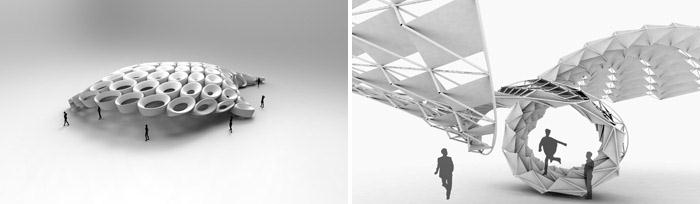

Student design team: 曾嘉伟 顾恒 王夏妮
MORE:
www.DGILLENdesign.com
http://www.x-w-g.com/
http://www.arch.tsinghua.edu.cn/eng/index.htm




parametric monkeys