非常感谢 WXCA Architects 予gooood分享以下内容。更多关于:WXCA Architects on gooood
Appreciation towards WXCA Architects for providing the following description:
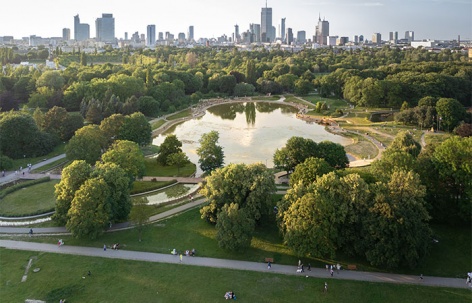
Pole Mokotowskie是华沙最大、最受欢迎的公园之一。公园本身也是一种独特的社会现象,因为其空间同时被设计师的活动和来自基层的社交过程所共同塑造。这个地点已被城市居民广泛接受作为非正式活动的场所。因此,它是根深蒂固的习俗、习惯和记忆的载体。面对这样的敏感生态系统,WXCA事务所提出了一种称作”针灸设计”的手法。
Pole Mokotowskie is one of the largest and undeniably the most popular park in Warsaw. The park itself is also a unique social phenomenon as its space has been shaped equally by the activities of its designers and a grassroots social process. This location has become widely accepted as the setting for the informal activities of the city’s residents. Thus, it is a carrier of deep-rooted practices, habits, and memories. Faced with such a sensitive ecosystem, WXCA architects proposed an approach that could be termed ‘design acupuncture’.
▼项目鸟瞰,aerial view of the project © WXCA-A.Borun, T.Wieteska
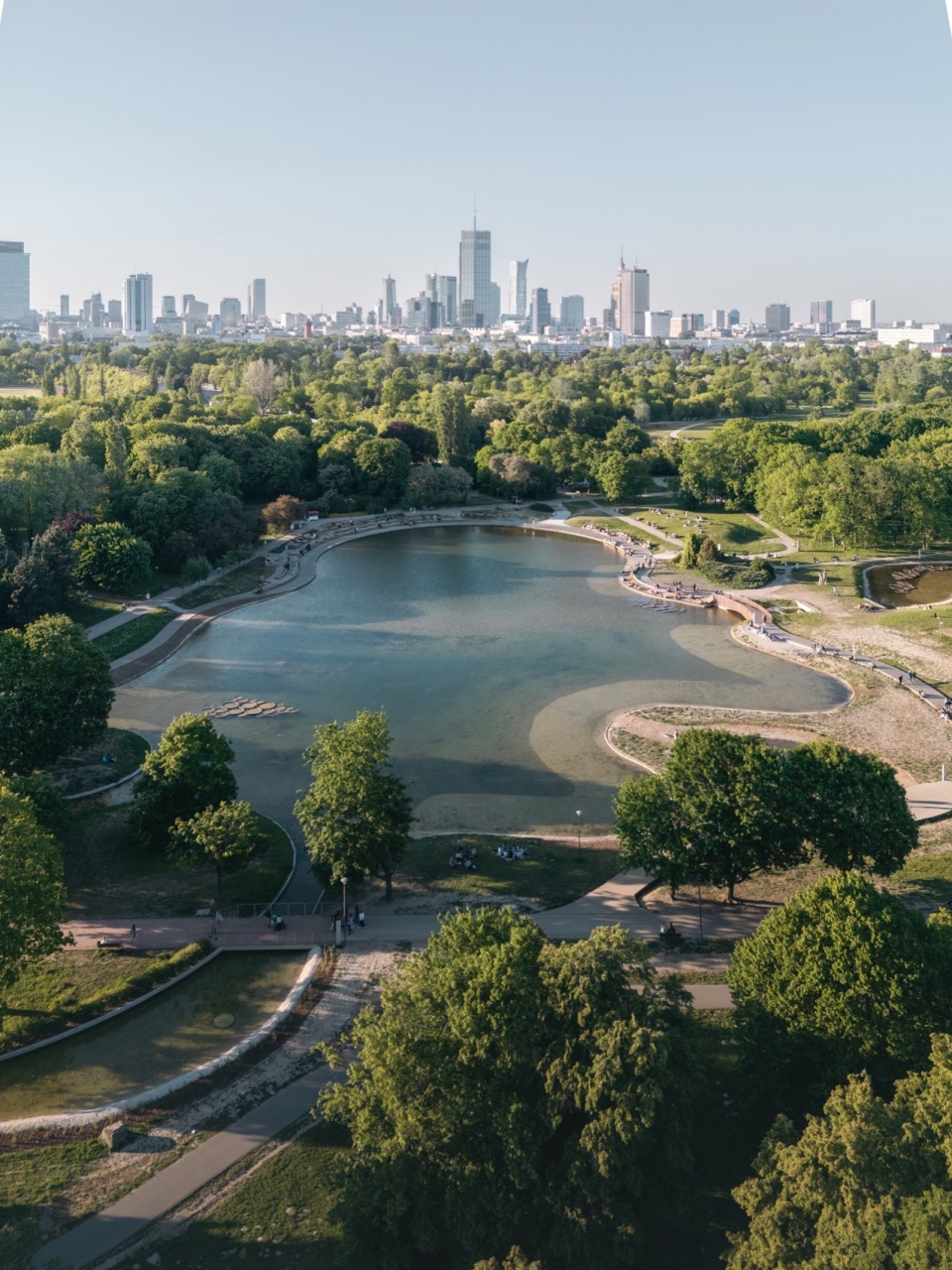
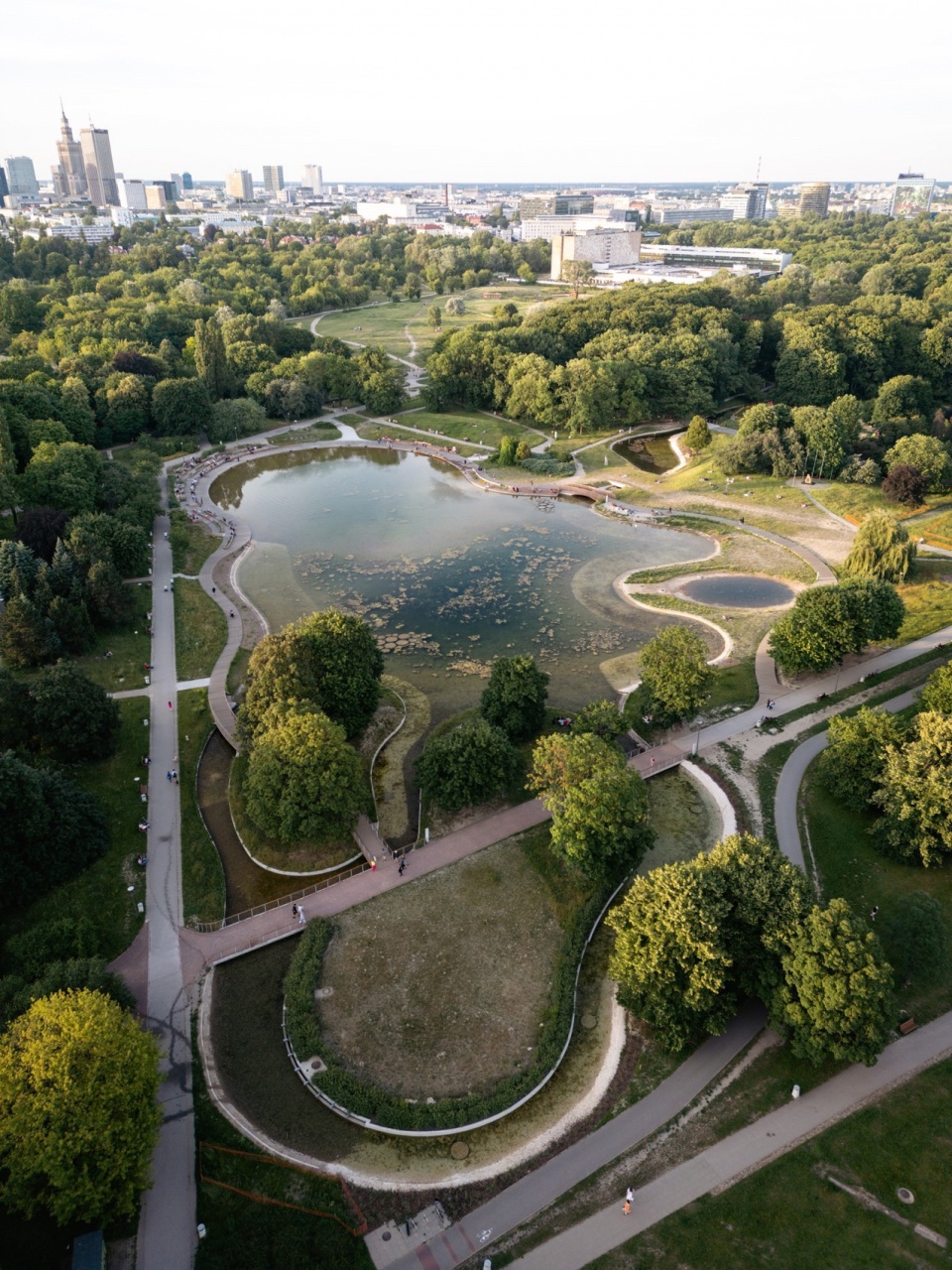
Pole Mokotowskie公园位于华沙市中心,是该市最大的公园之一。然而,这里发生改变的不仅是数量,更主要的是质量的变化。公园设计于上世纪七八十年代,多年来一直没有进行现代化改造。最近几个月,占地70多公顷的 Pole Mokotowskie 公园迎来了现代化改造,使其更加绿色环保。
Pole Mokotowskie Park is located in the central part of Warsaw and is one of the largest parks in the city. However, the change that has occurred in this place is not only quantitative but primarily qualitative. Designed in the 1970s and 80s, the park had not been modernized for years. In recent months, the over 70-hectare area of Pole Mokotowskie has undergone modernization, making it even greener.
▼全景鸟瞰,overall aerial view © WXCA-A.Borun, T.Wieteska
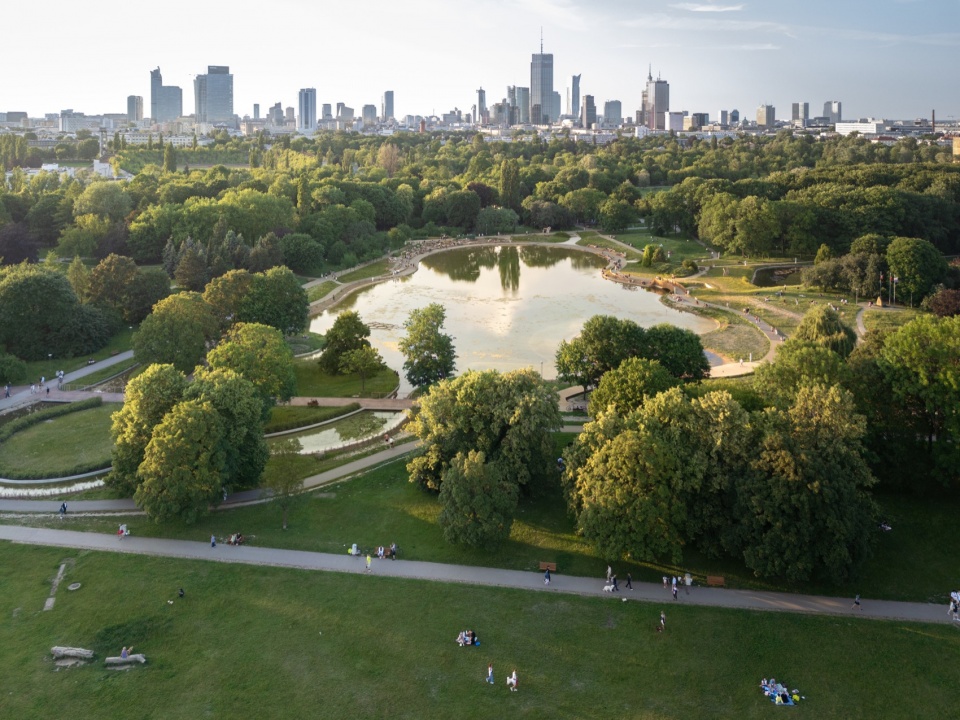
对于WXCA事务所来说,设计的出发点是将公园作为人类与自然共存的场所,一个不仅为人类所使用和光顾,也为动物和植物而考虑的场所。最大的变化和最复杂的技术挑战是水库的自然变化,它是公园最大的吸引点和一处深受欢迎的休憩地点。现有的水库结构建于上世纪70年代,内砌混凝土,每年都需注水。近年来,由于结构防水性能的缺失,水池的注水量降到了最低水平,只能让生活在其中的两栖动物勉强维持生存。WXC计划将其改造成一个全年蓄水的水库,通过水生植物过滤,对水进行机械、化学和生物净化,以保持水的质量和纯净。出于功能方面的考虑,主水库也进行了扩建和加深,其底部超过16000平方米的混凝土被砾石所取代,并铺设了隔热层。碾碎的混凝土被用来在新建的生物群落花园和湖岸区域修建土丘。在主水库中还添加了矿物过滤装置、芦苇和水生植物,以清洁水质并为水生动物提供栖息地。
For the WXCA architects, the starting point was a reflection on the park as a place of coexistence between human beings and nature, a place used and frequented not only by people but also by animals and plants. The biggest change and the most complex technological challenge was the naturalization of the water reservoir, which is the park’s biggest attraction and a popular recreation spot. The existing reservoir structure, built in the 1970s and lined with concrete, had to be refilled with water annually. In recent years, as the structure lost its watertightness, the reservoir was filled minimally to a level that allowed the amphibians living in it to survive. The WXCA project envisaged its conversion into an all-year-round pond where – thanks to naturalization based on hydrobotanical filters and aquatic plants cleaning the water mechanically, chemically, and biologically – the high quality and purity of the water will be maintained. For functional reasons, the main water reservoir was also enlarged and deepened, and over 16,000 m2 of concrete at its base was replaced with gravel and lined with insulation layers. The crushed concrete was used to build mounds in the newly created biocenotic garden and in the shoreline areas. The main reservoir was supplemented with mineral filters and reeds and water plants that clean the water and provide shelter for aquatic animals.
▼人类与自然共存的场所, a place of coexistence between human beings and nature © WXCA-A.Borun, T.Wieteska
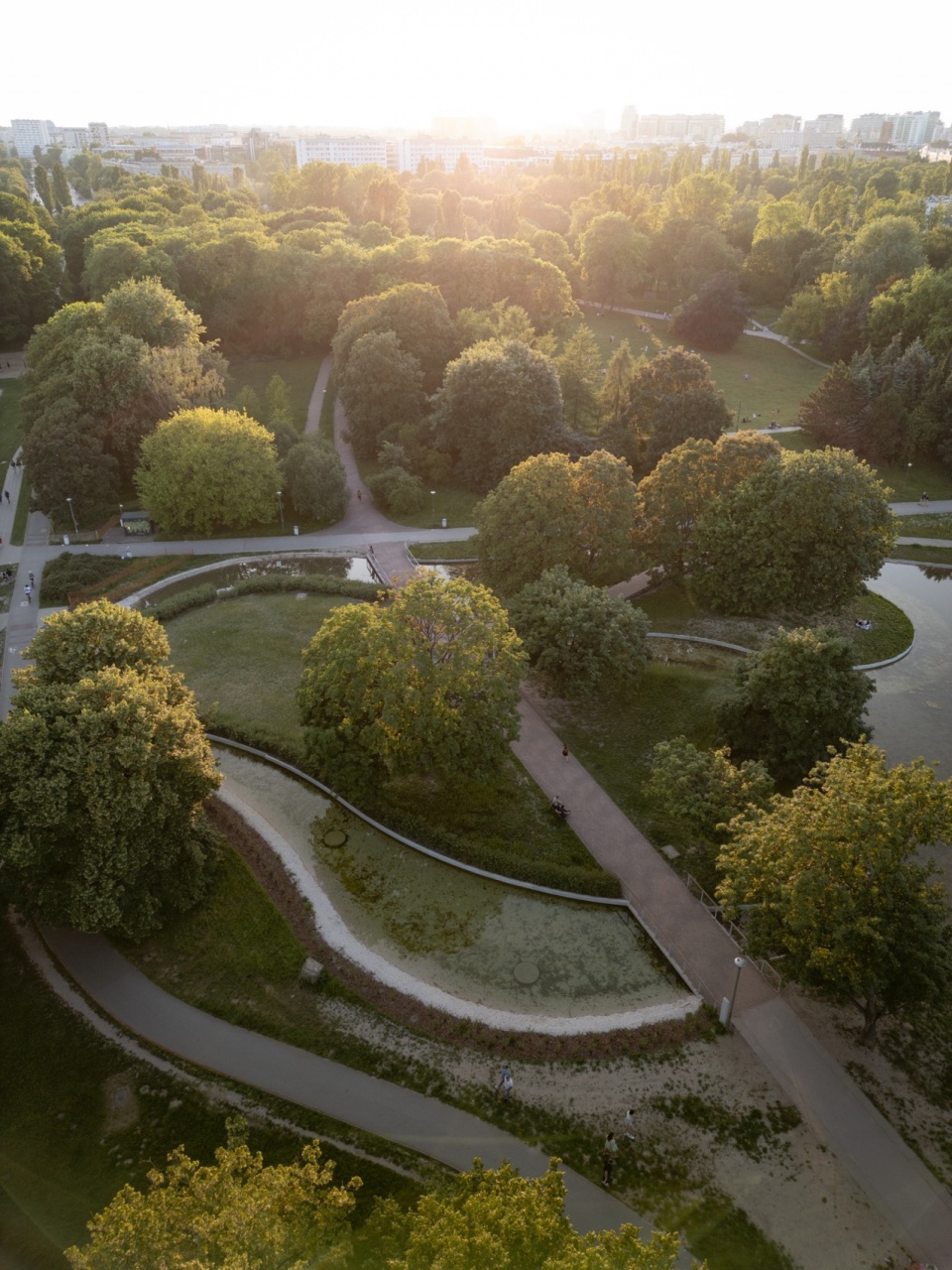
▼湖边休憩区, lakeshore recreation space © WXCA-A.Borun, T.Wieteska
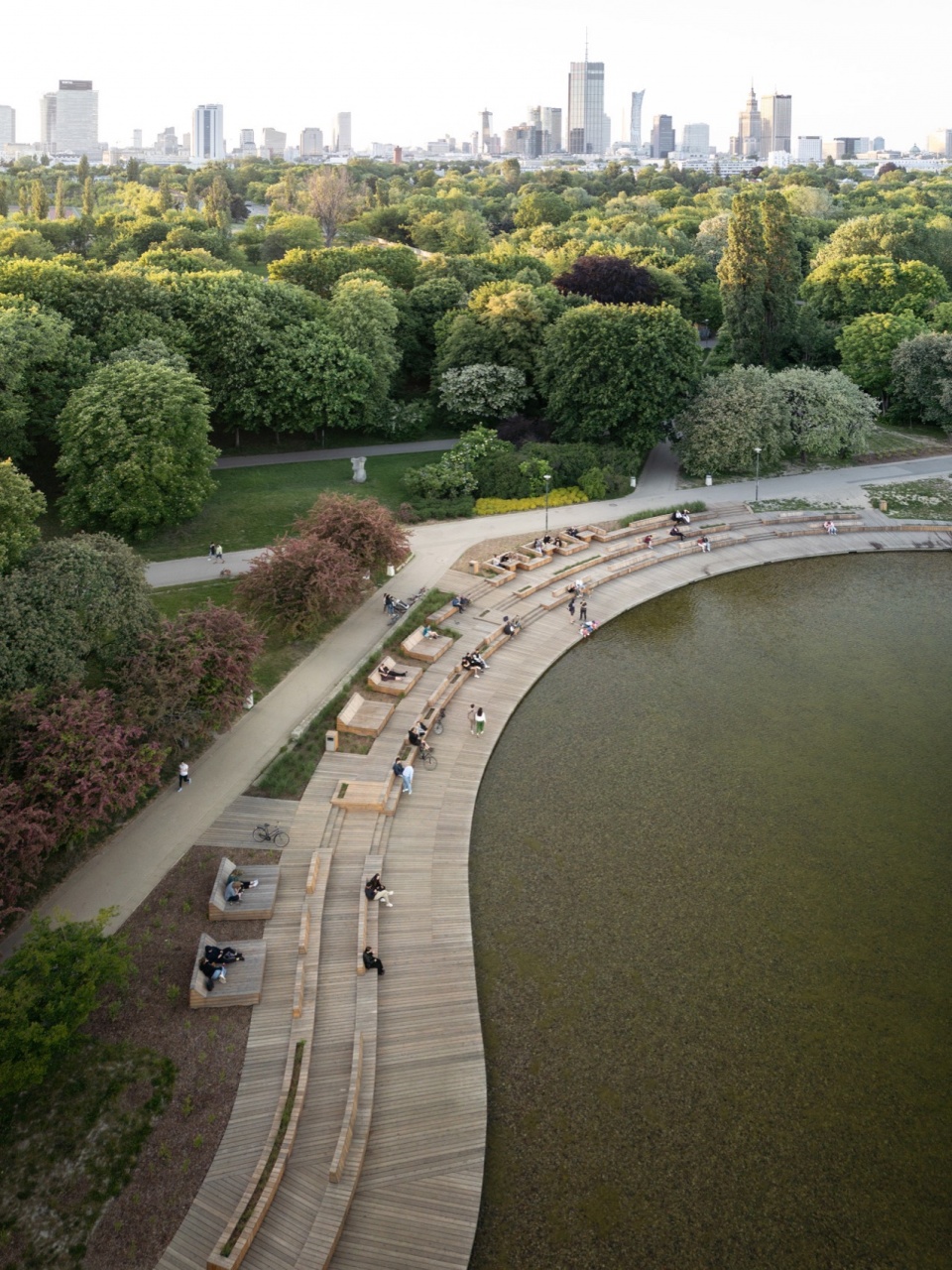
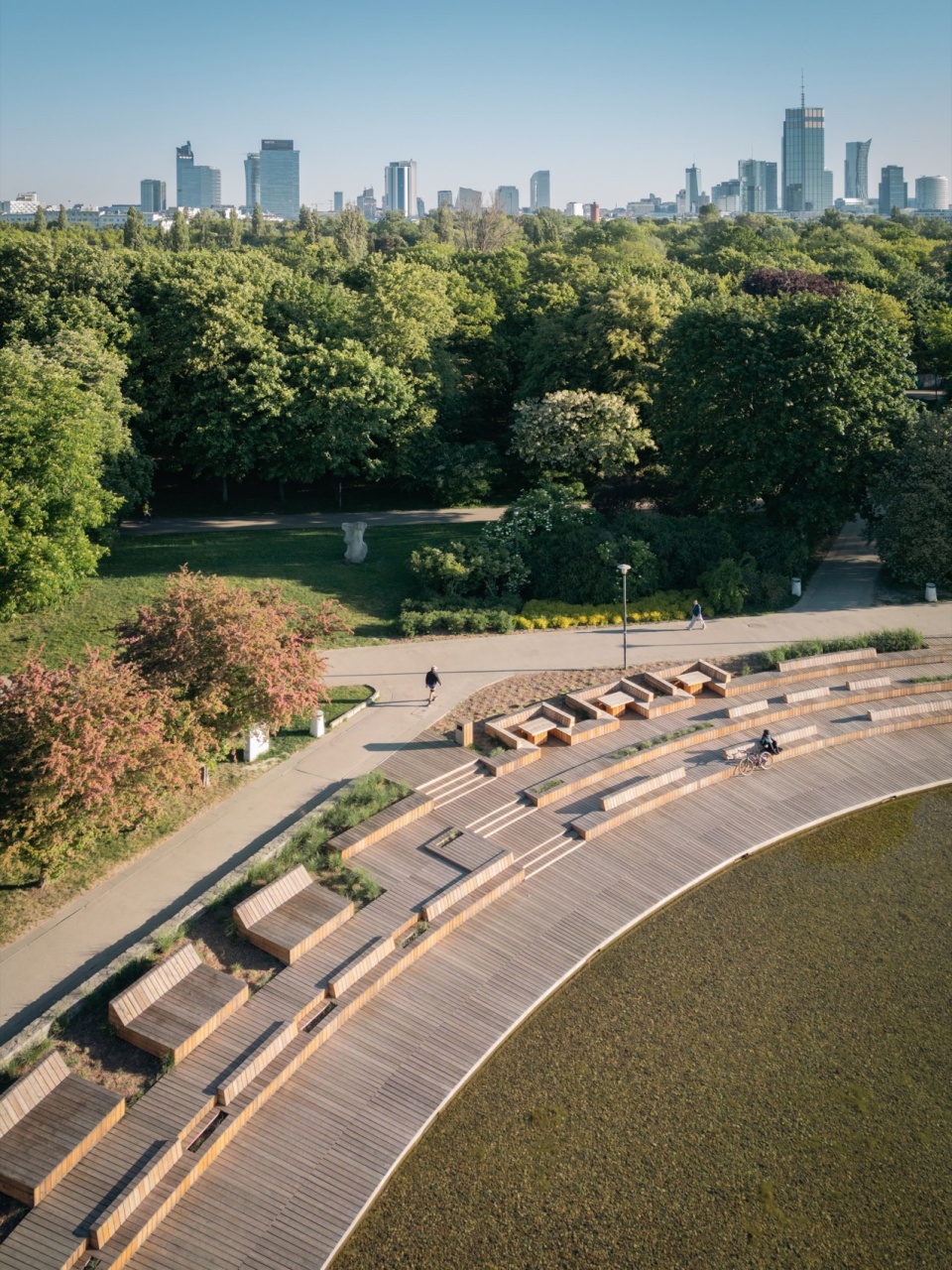
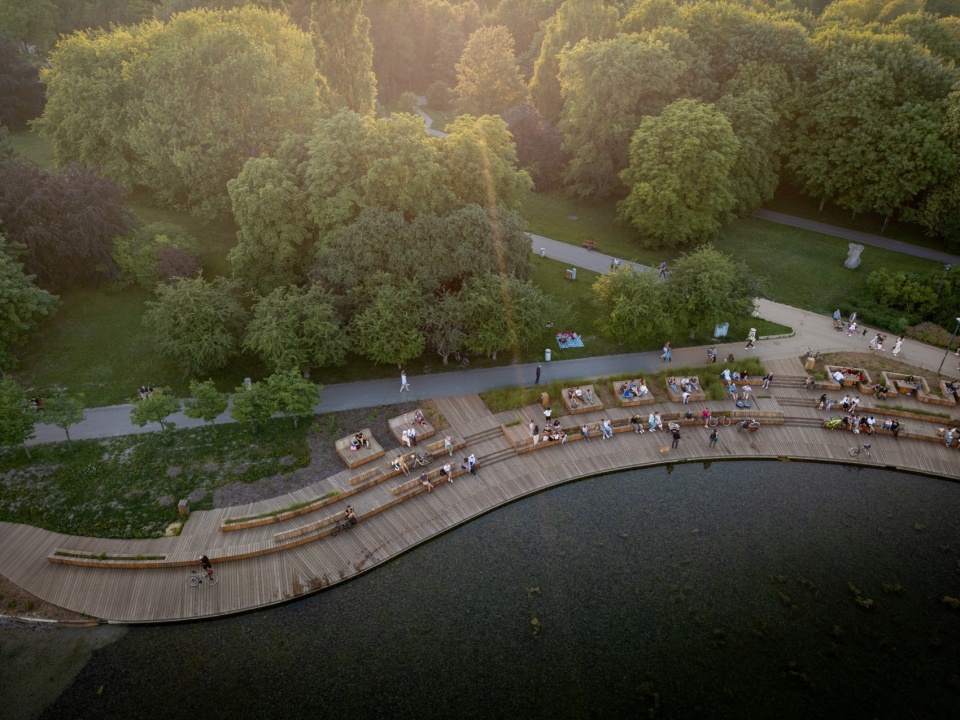
▼湖边木质平台, lakeshore wooden platform© WXCA-A.Borun, T.Wieteska
建筑师设计了一个新的自然化的水体系统,该系统通过支持自然清洁过程的技术实现额外清洁,对保护生态系统的稳定性产生积极影响。由泄洪道、溪流和主池塘组成的封闭系统将确保水流的持续流动。
The architects designed a new naturalized water system that will be additionally cleaned through technologies supporting natural cleaning processes, positively impacting the preservation of the stability of the ecosystem. A closed system consisting of a spillway, a stream, and the main pond will ensure that the water is in constant motion.
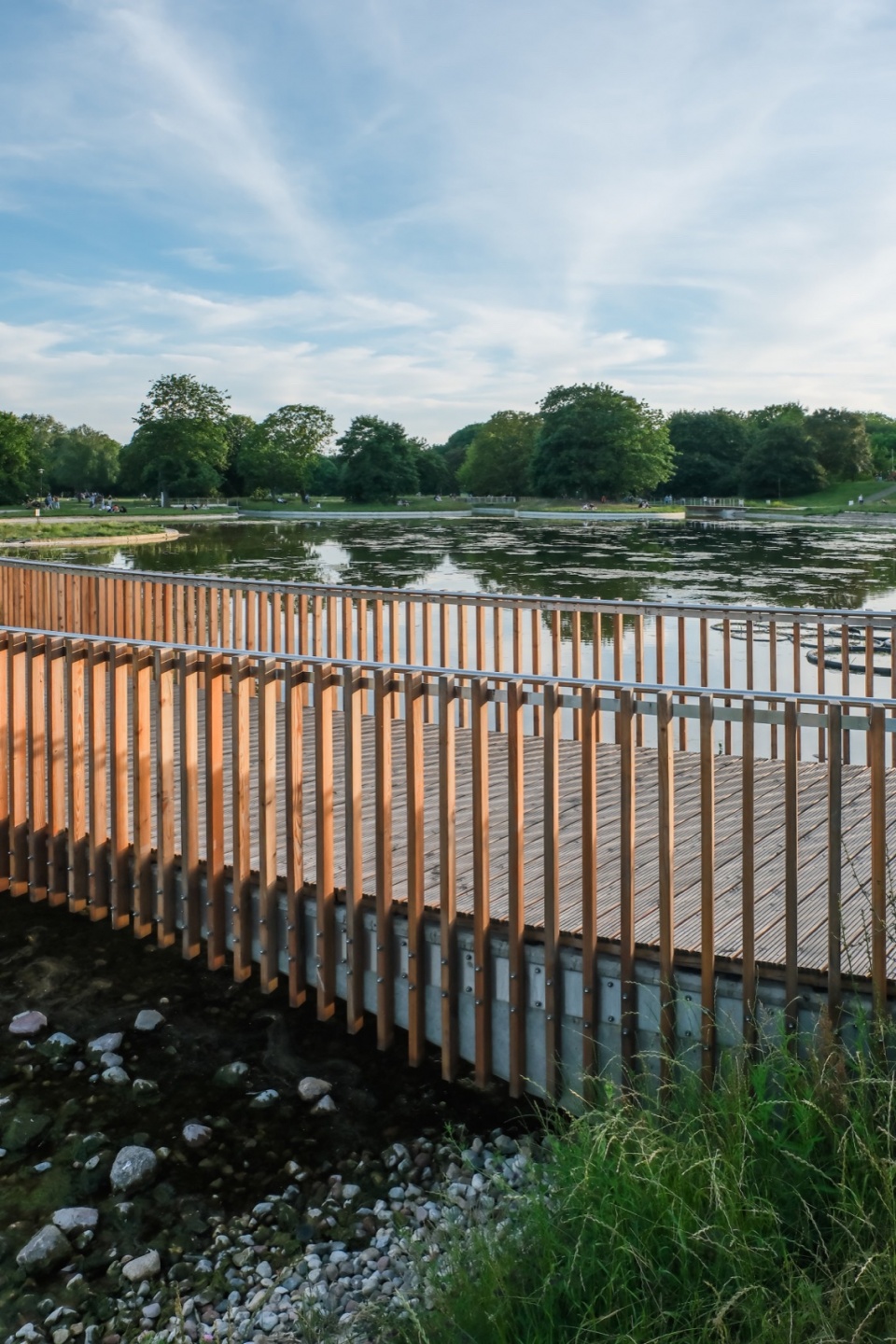
▼木质栈桥, wooden bridge © WXCA-A.Borun, T.Wieteska
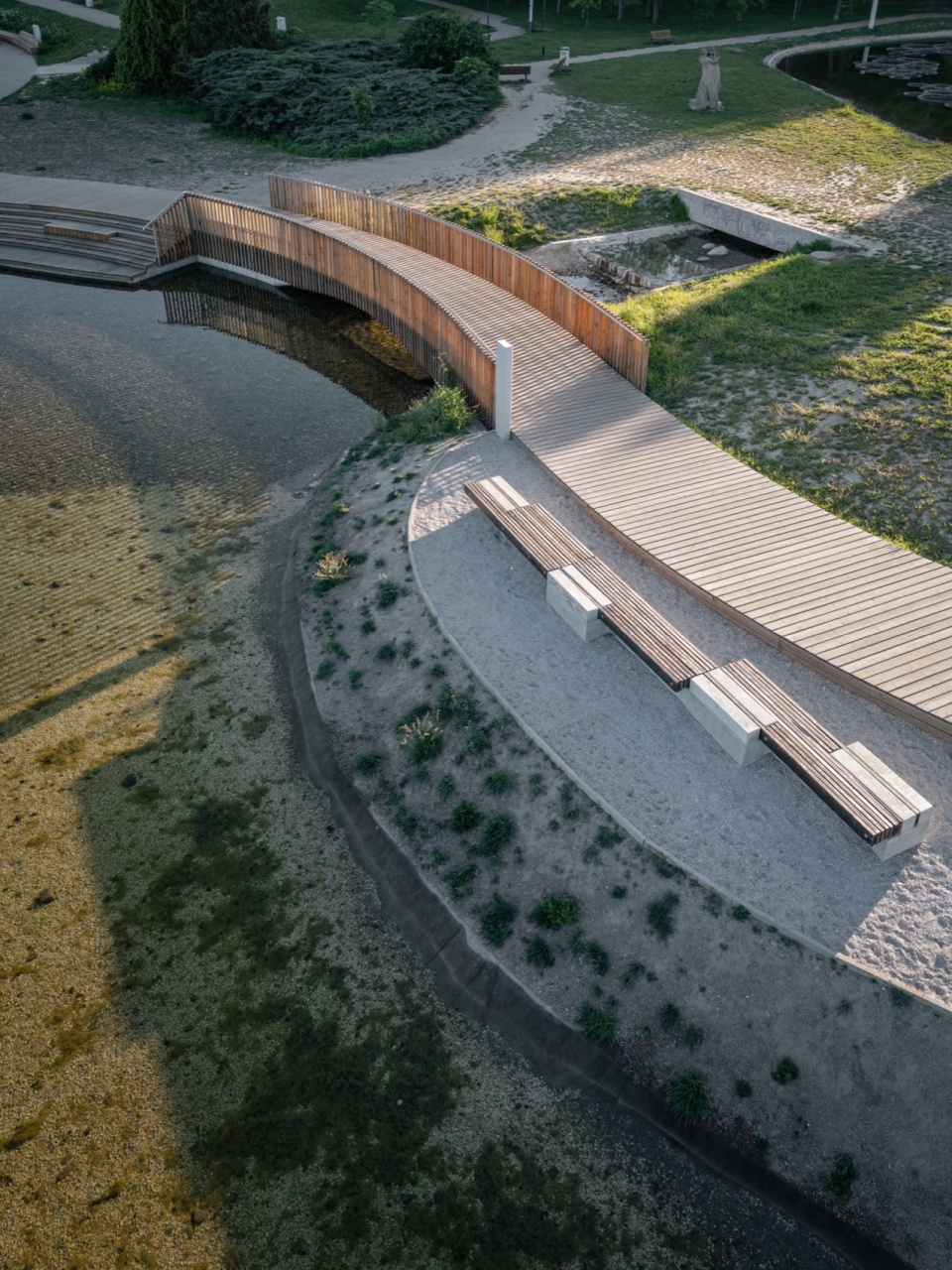
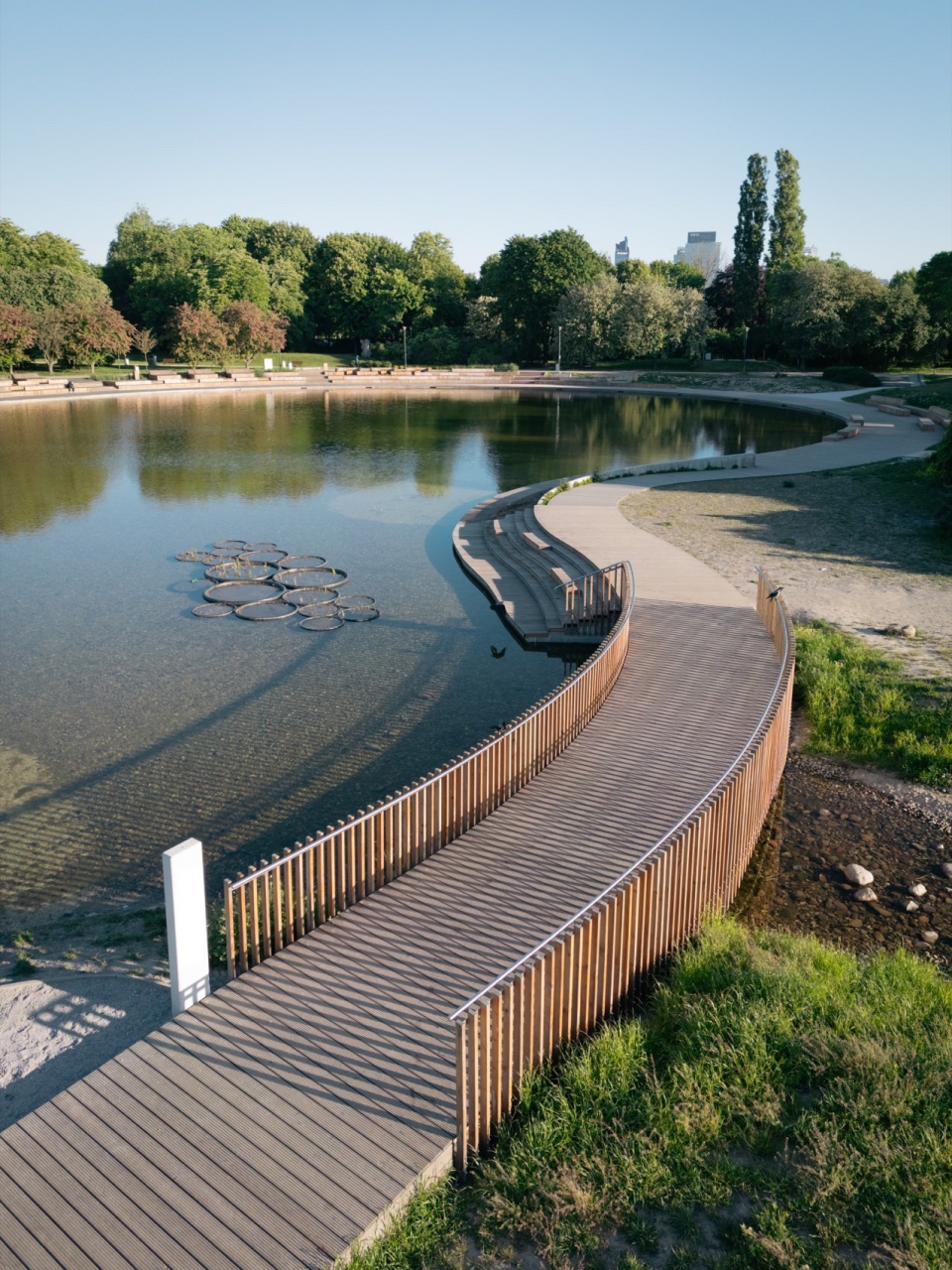
▼自然化的水体系统,naturalized water system © WXCA-A.Borun, T.Wieteska
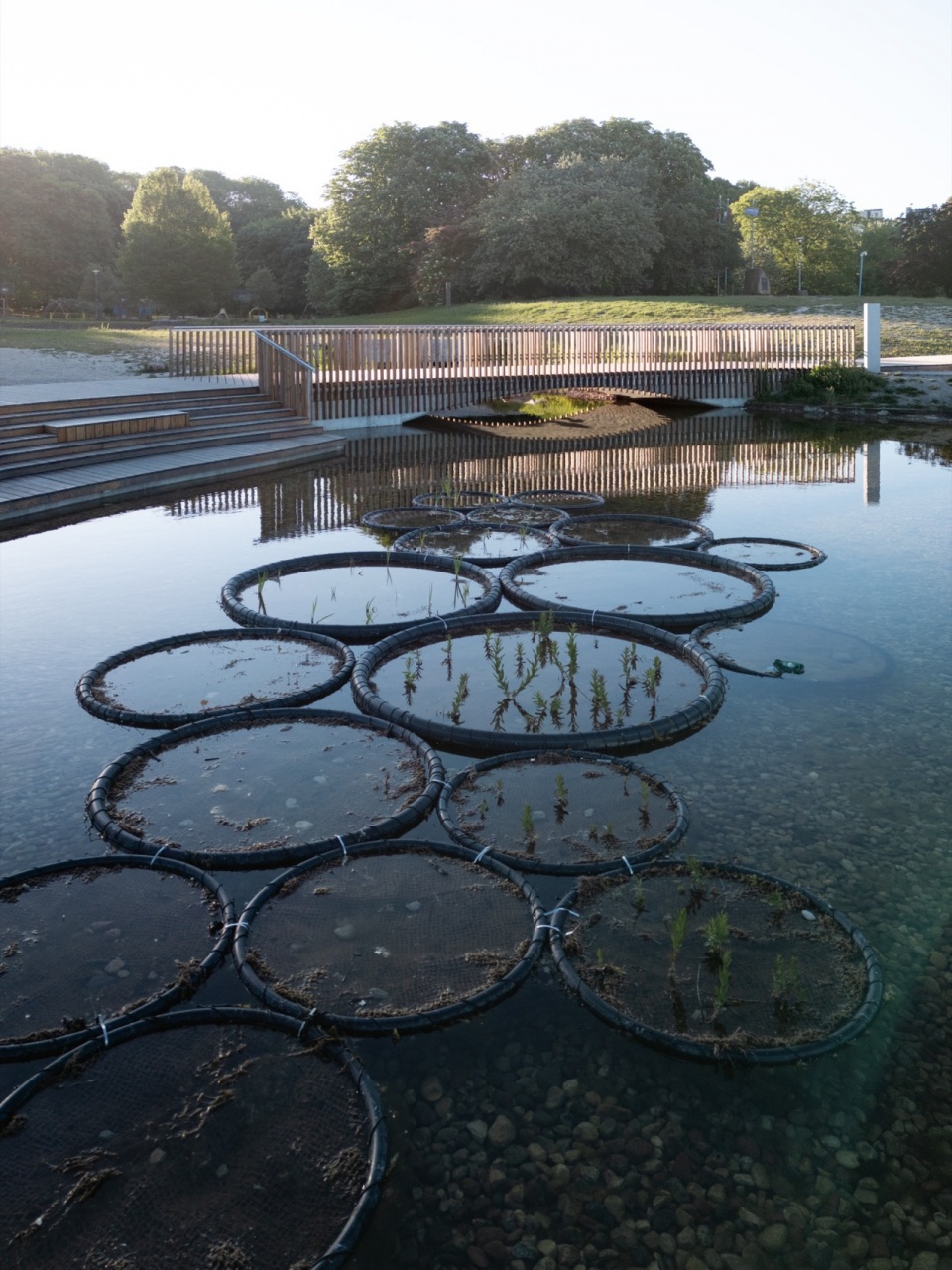
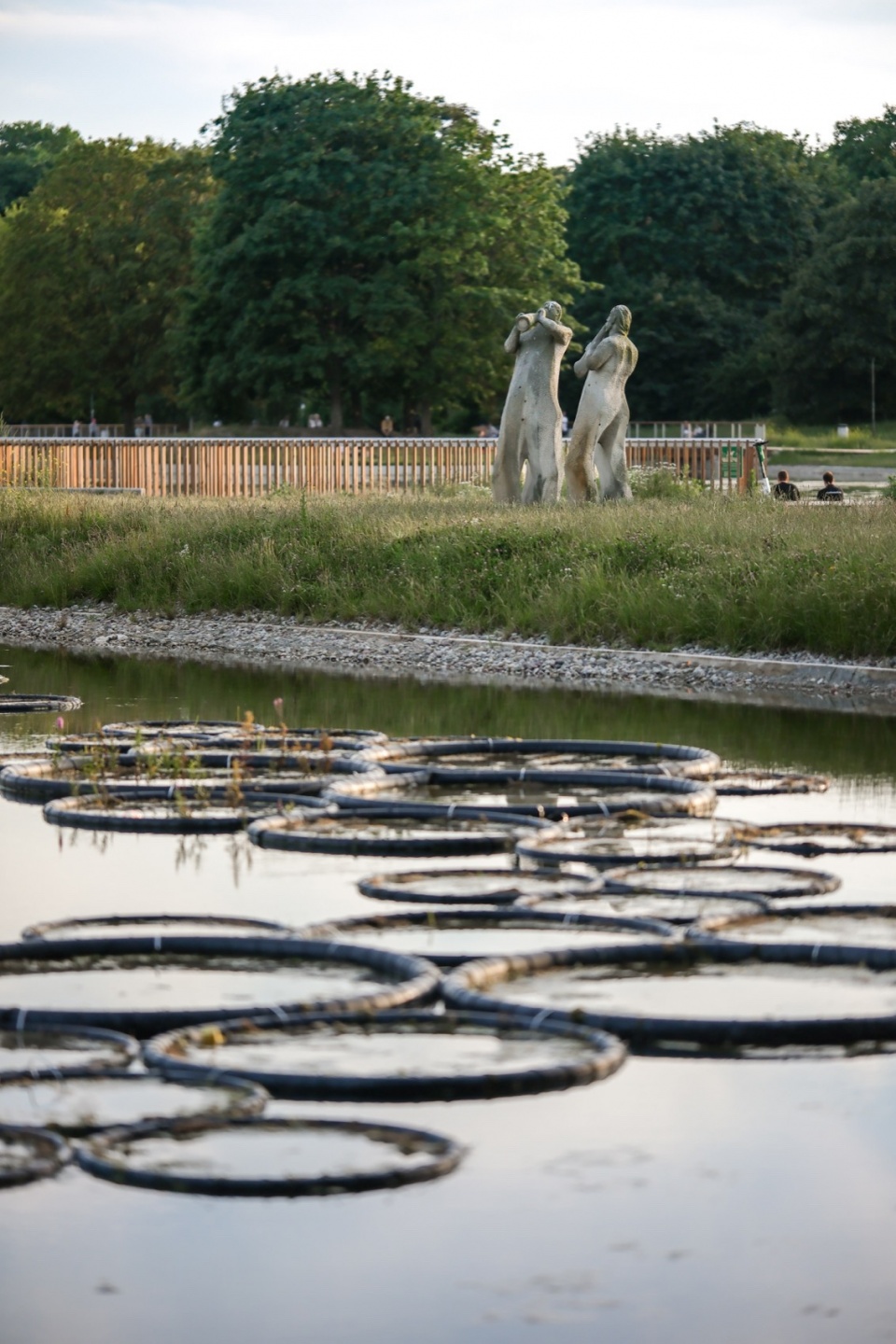
▼木质平台细部, wooden platform detail © WXCA-A.Borun, T.Wieteska
▼面向湖面的坐席区,audience area facing the lake © WXCA-A.Borun, T.Wieteska
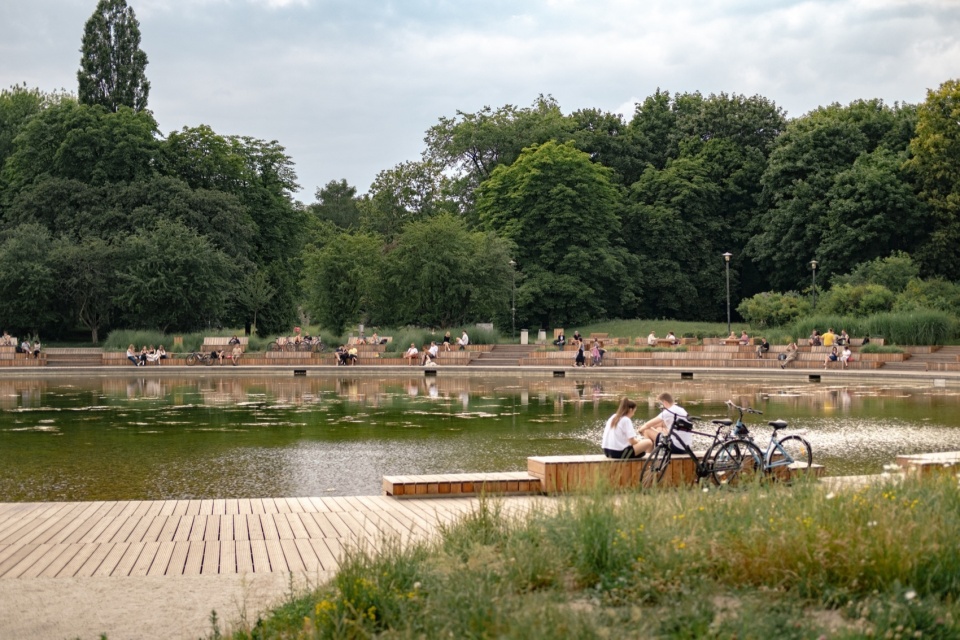
现代化改造还包括自然水系的周围区域。现有的道路网络得到了进一步升级,路面换成了透水材料。在主水库设计了新的城市家具,其形式为带露台的木质平台布局,搭配木桥和小型建筑,包括座位区、躺椅平台和野餐桌,供人们进行各种形式的休憩。水库北部被设计为休闲区,安装了三种不同高度的座椅,形成一个面向湖面的坐席区。在水库的南部划定了一个单独的再生区域——更自然、野性,专供动植物生长。
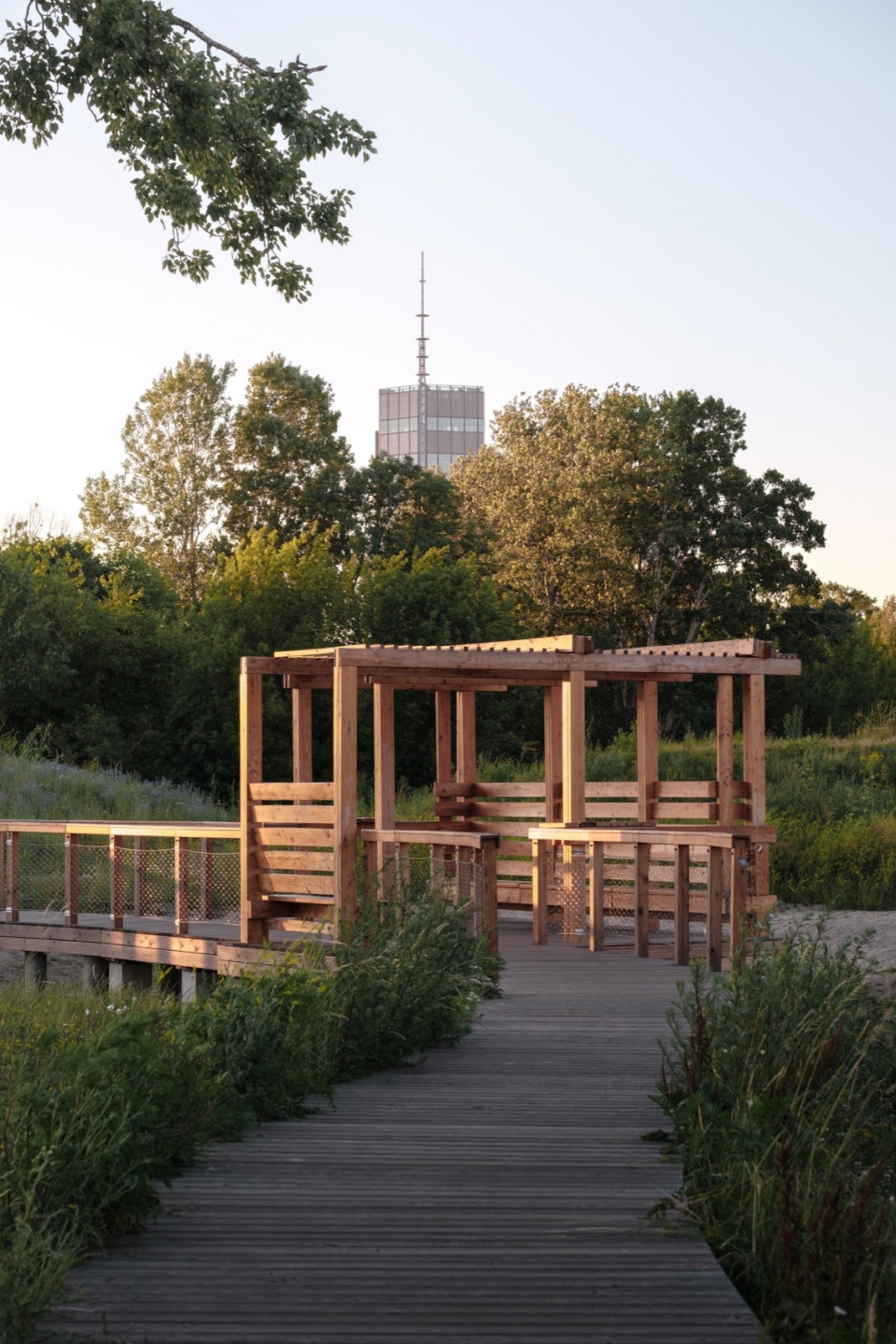
The modernization also included the area around the naturalized water system. The network of existing paths was developed further and their surface was replaced with permeable material. New urban furniture was designed over the main reservoir in the form of a wooden deck with a terrace layout complemented by wooden bridges and small architecture for various forms of rest and leisure, including seating areas, lounger platforms, and picnic tables. In the northern part of the reservoir, designed as a recreation zone, seats were installed at three different heights, forming an audience area facing the lake. A separate regeneration zone – more natural and wild and reserved for plants and animals – was designated in the southern part of the reservoir.
▼步道与凉亭, pathway and gazebos © WXCA-A.Borun, T.Wieteska
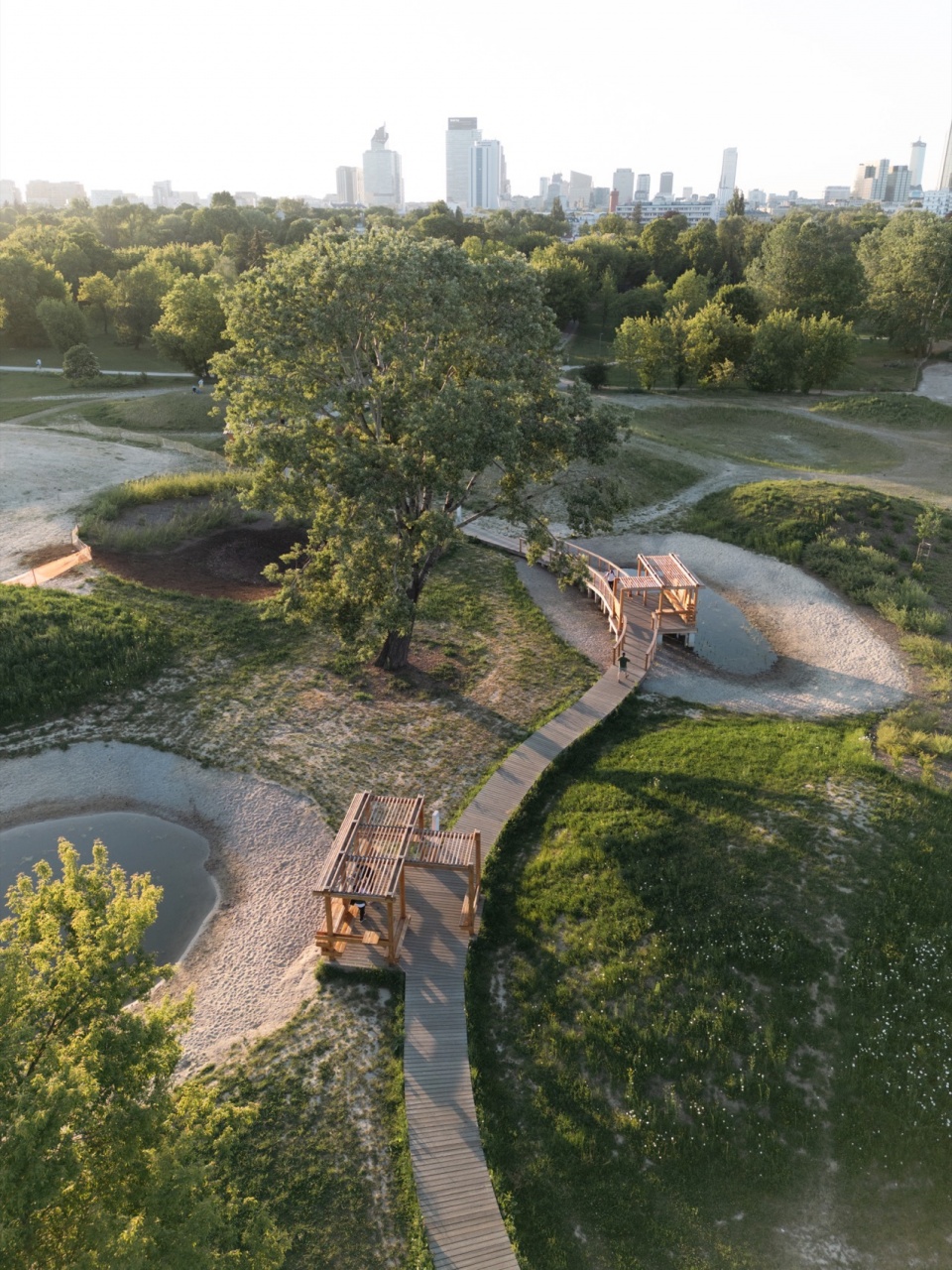
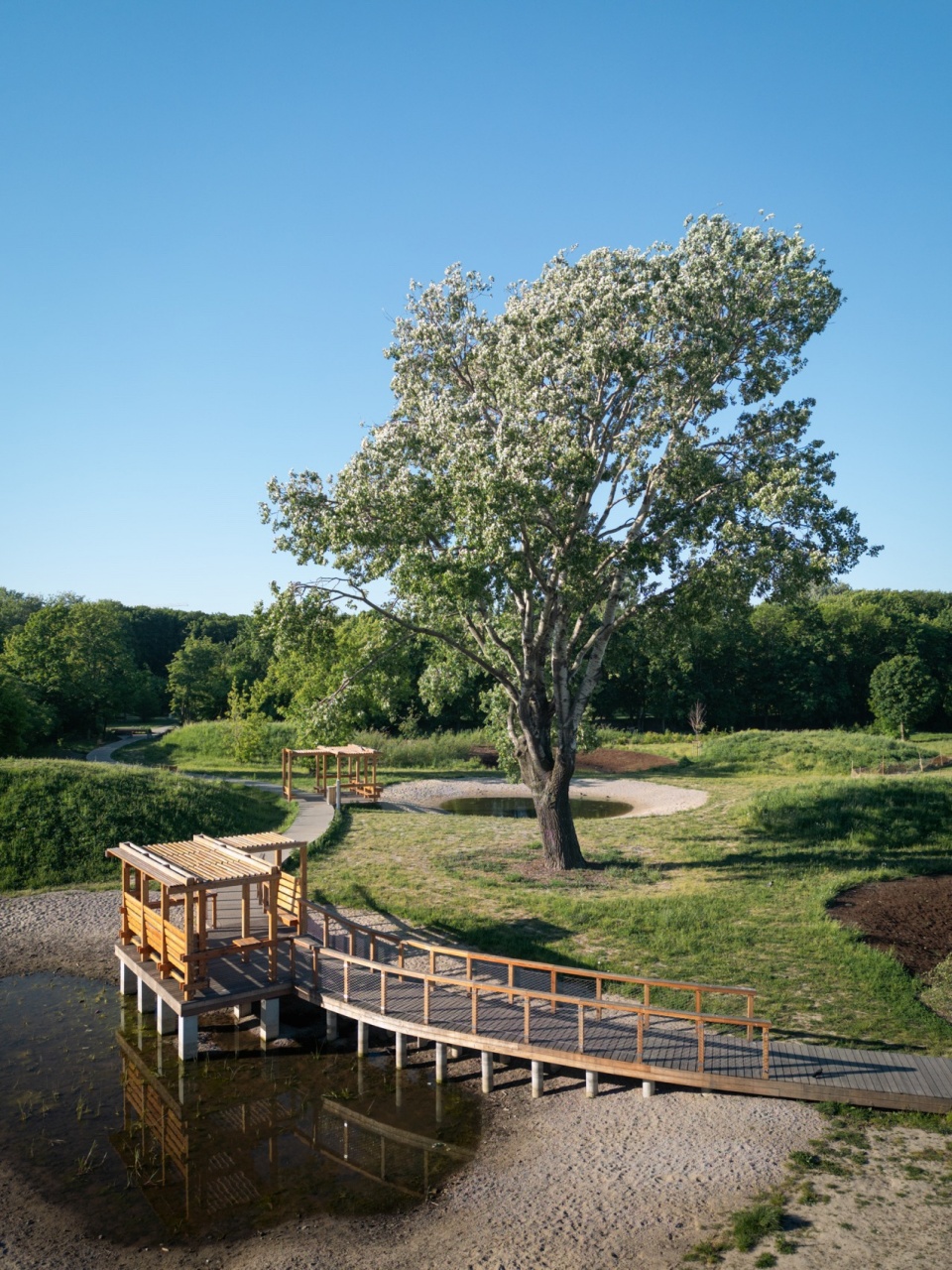
▼凉亭, gazebos © WXCA-A.Borun, T.Wieteska
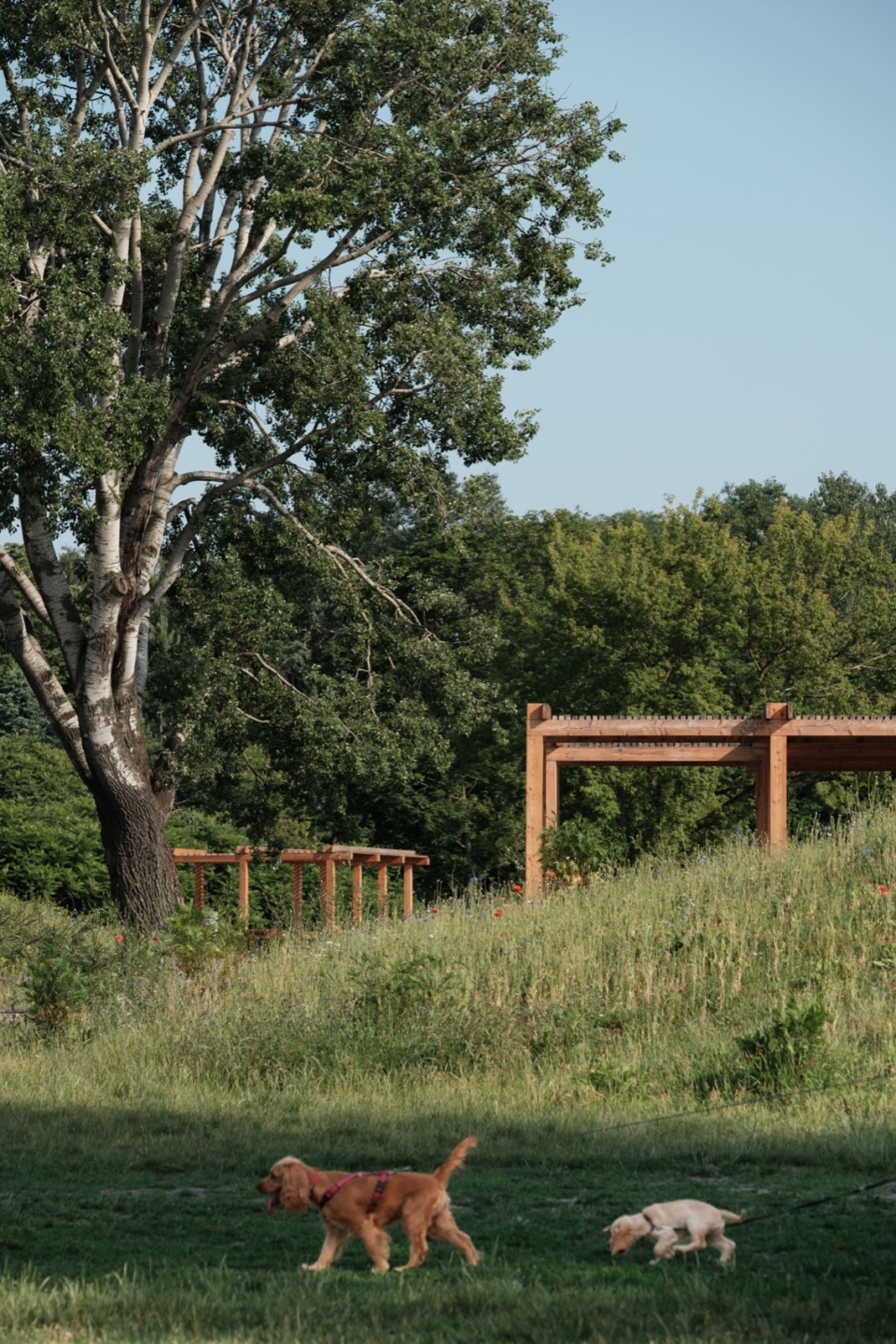
除了对现有的水库、相连溪流和泄洪道进行现代化改造外,项目的第一阶段还包括在特定区域修建为狗使用的池塘,以及在生物群落花园中修建自然密闭池塘。
In addition to the modernization of the existing reservoir, connected stream, and spillway, the first phase of the project included the creation of ponds in designated zones – for dogs, and naturally sealed ponds in the biocenotic garden.
▼池塘, ponds © WXCA-A.Borun, T.Wieteska
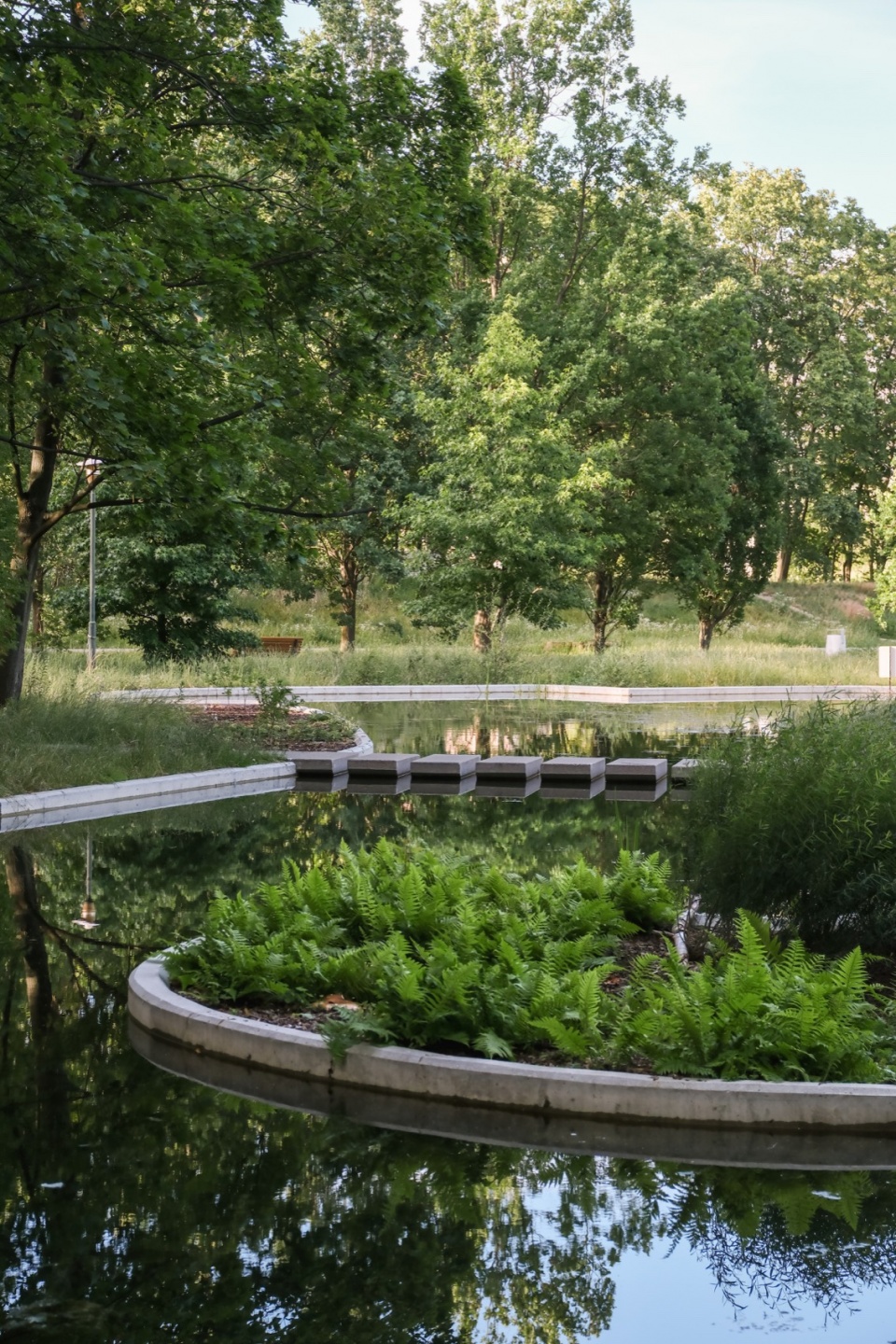
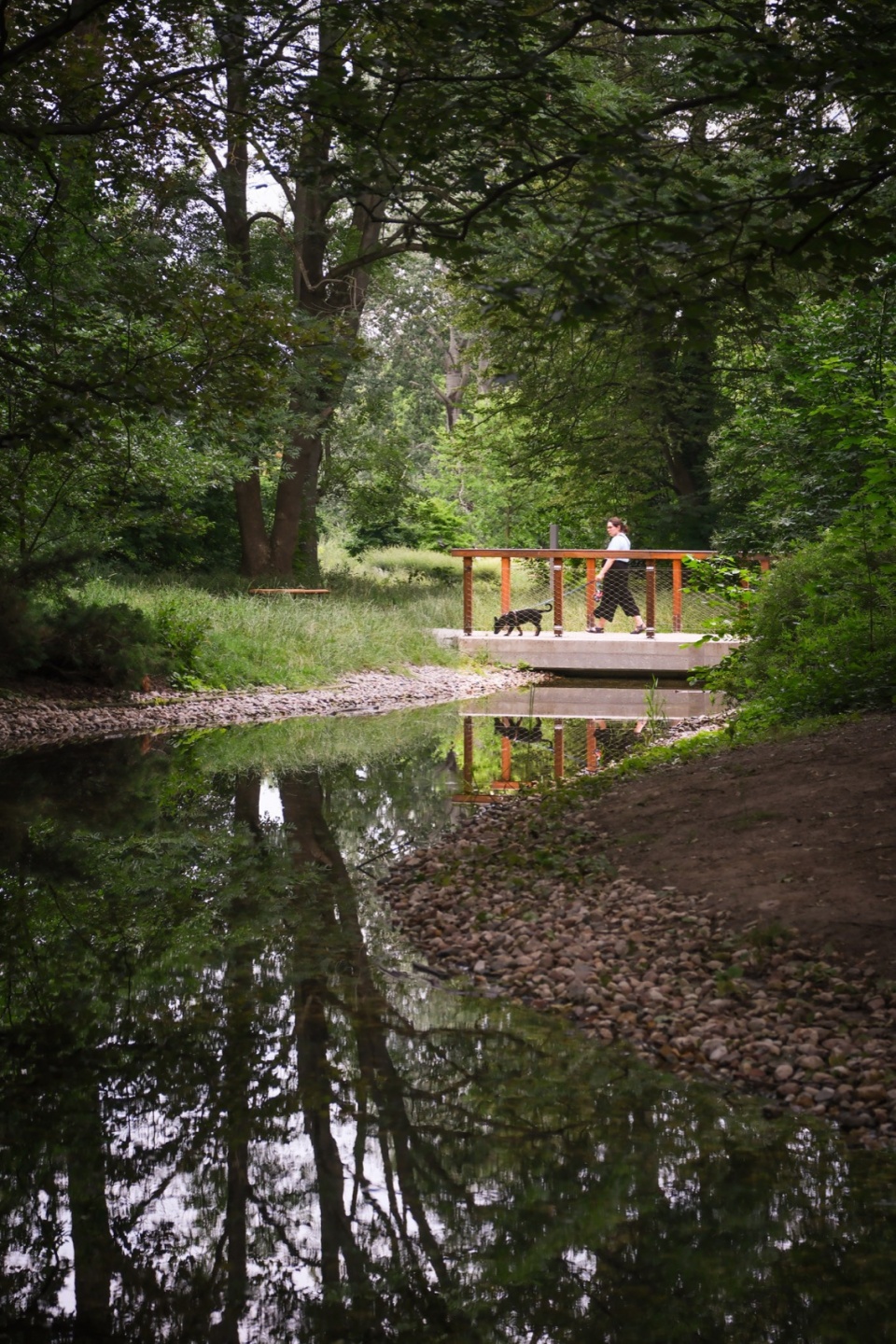
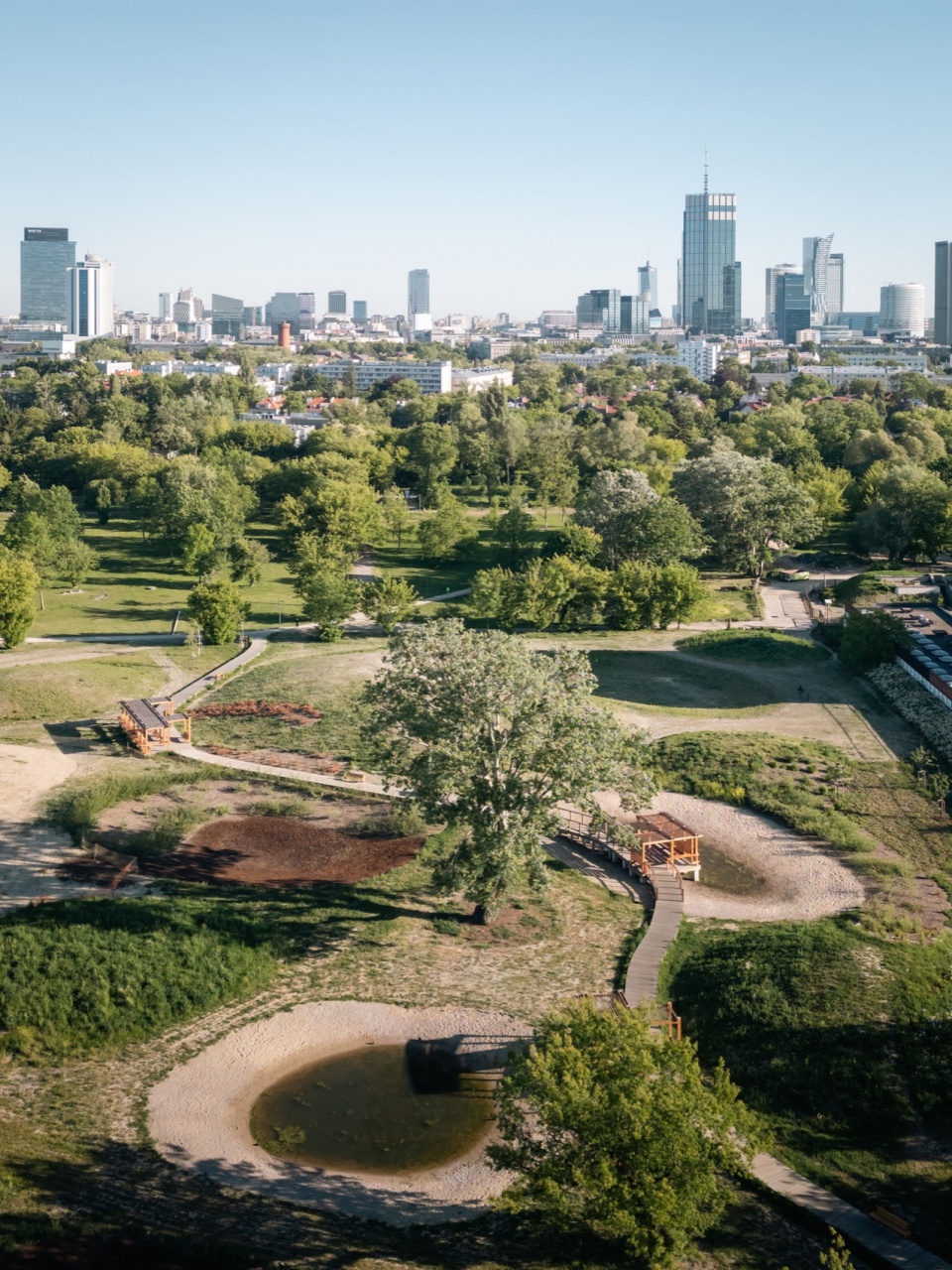
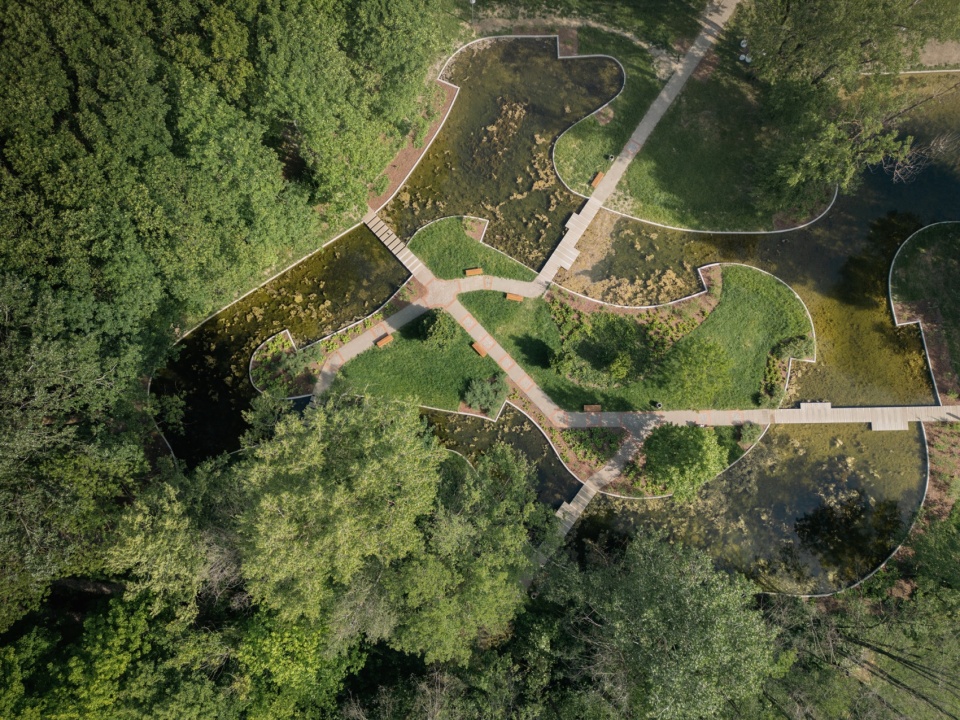
生物群落花园位于公园中部,这里曾是以前的市政清洁公司基地填出的土地。构筑的土丘和洼地可作为雨水花园,此外修建了一个木制平台,蜿蜒于绿地和凉亭之间。
The biocenotic garden was created in the central part of the park on land reclaimed from a former municipal cleaning company base. The formed mounds and depressions serve as rain gardens, and a wooden platform meandering among the greenery and gazebos was also constructed.
▼鸟瞰, aerial view © WXCA-A.Borun, T.Wieteska
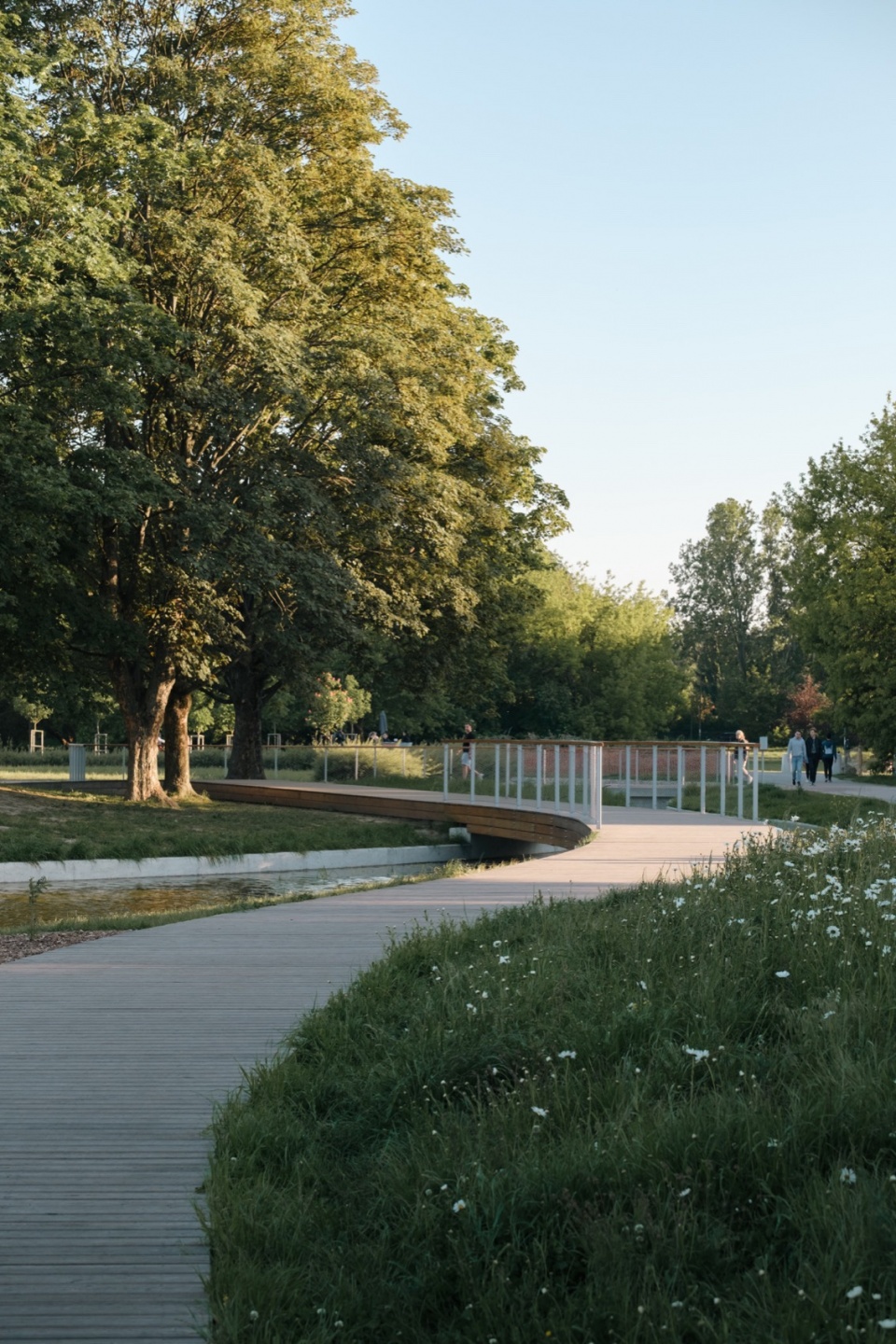
▼蜿蜒的人行道, wandering pedestrian © WXCA-A.Borun, T.Wieteska
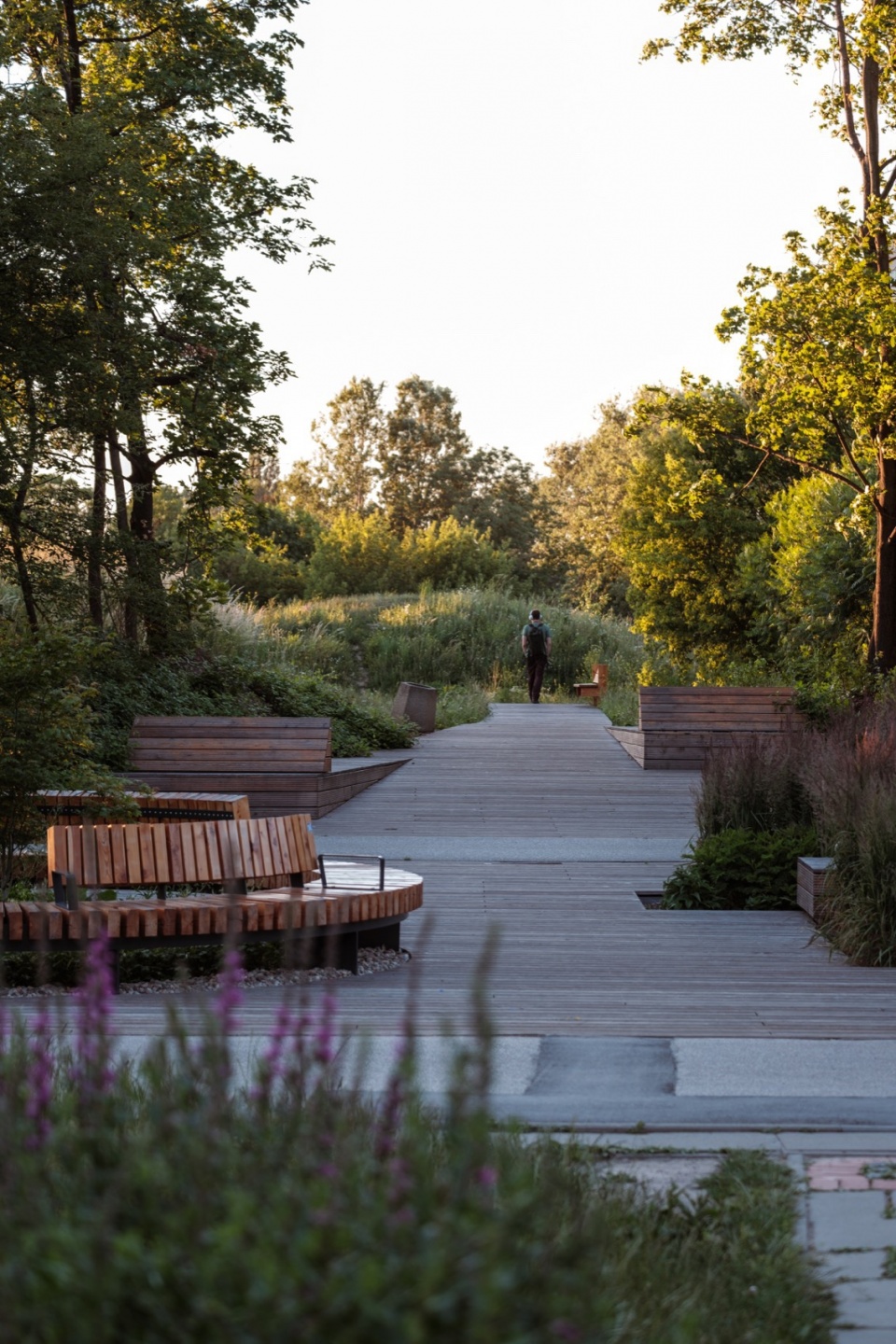
整个公园的生物群落景观设计按照植物群落排列,十分具有多样性:林间小道、花卉草地、果园、芦苇丛和有益昆虫的感应草丛。植物物种的选择基于本地物种的组合——根据植物群落类型的自然或半自然特征,安排不同的生物栖息地,包括种植乔木、灌木和低矮植被。
The designed biocenotic landscape of the entire park took the form of an arrangement of plant communities with a diverse profile: wooded nooks, flower meadows, orchards, reed beds, and sensory beds beneficial for insects. The selection of plant species was based on a combination of native species – arrangements of varied biotopes based on types of plant communities of a natural and semi-natural character, including plantings of trees, shrubs, and low vegetation.
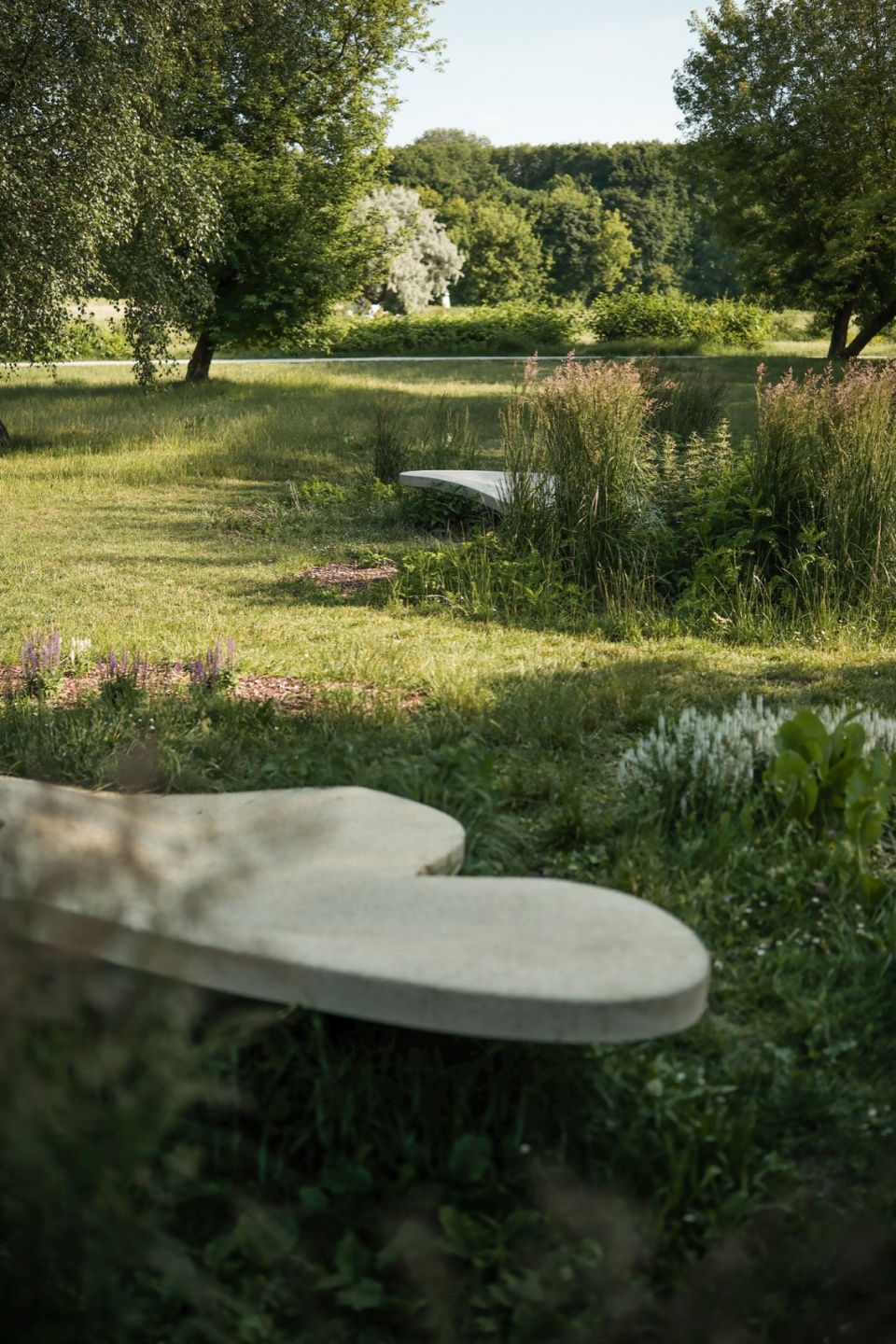
▼休憩座椅, rest seating © WXCA-A.Borun, T.Wieteska
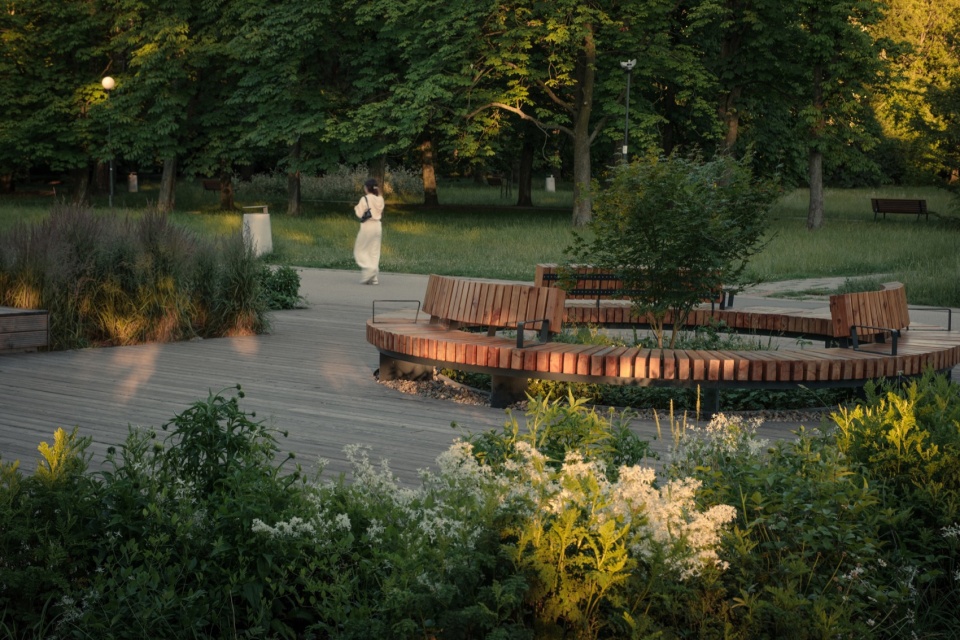
▼节点鸟瞰, spots © WXCA-A.Borun, T.Wieteska
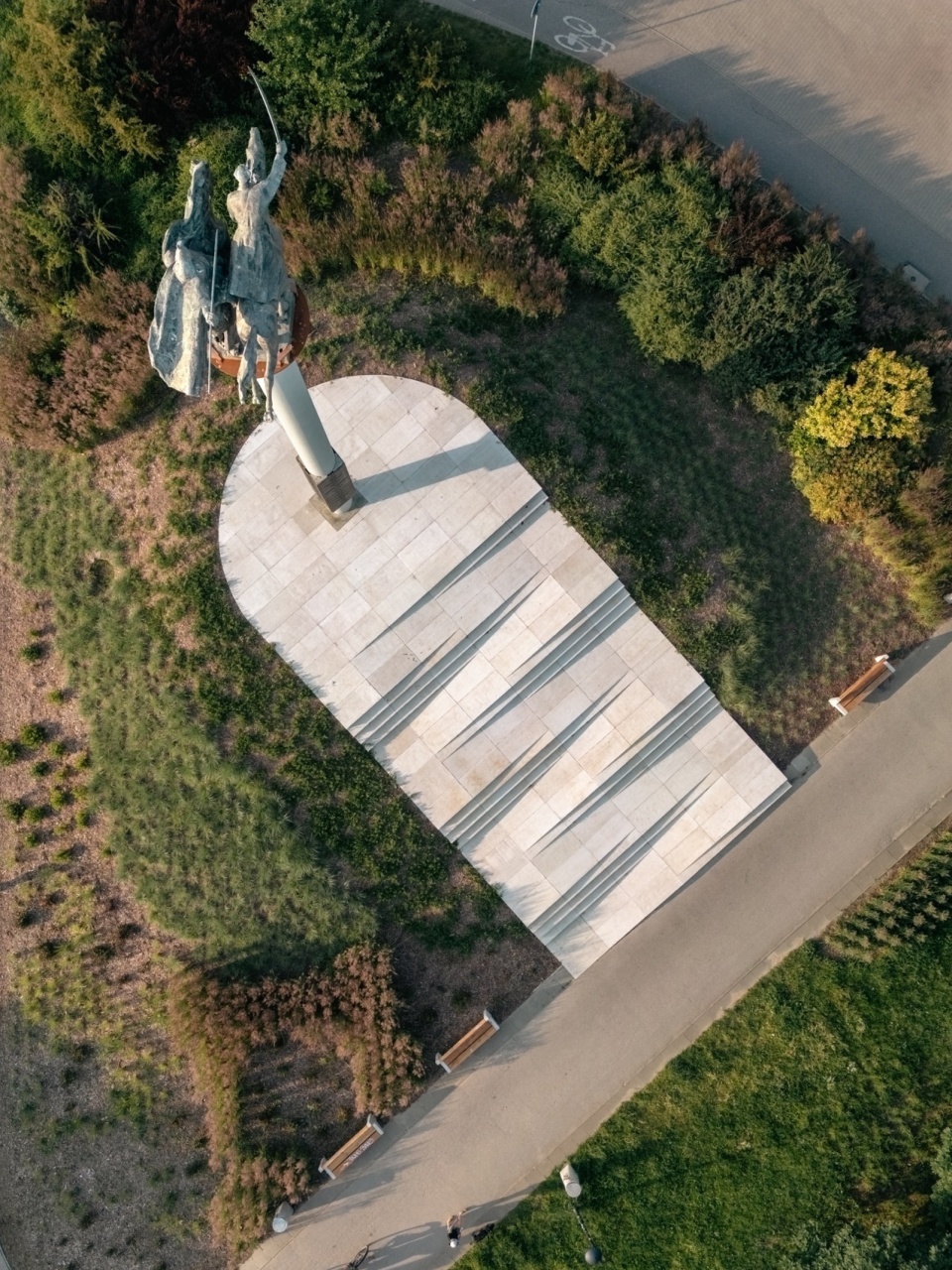
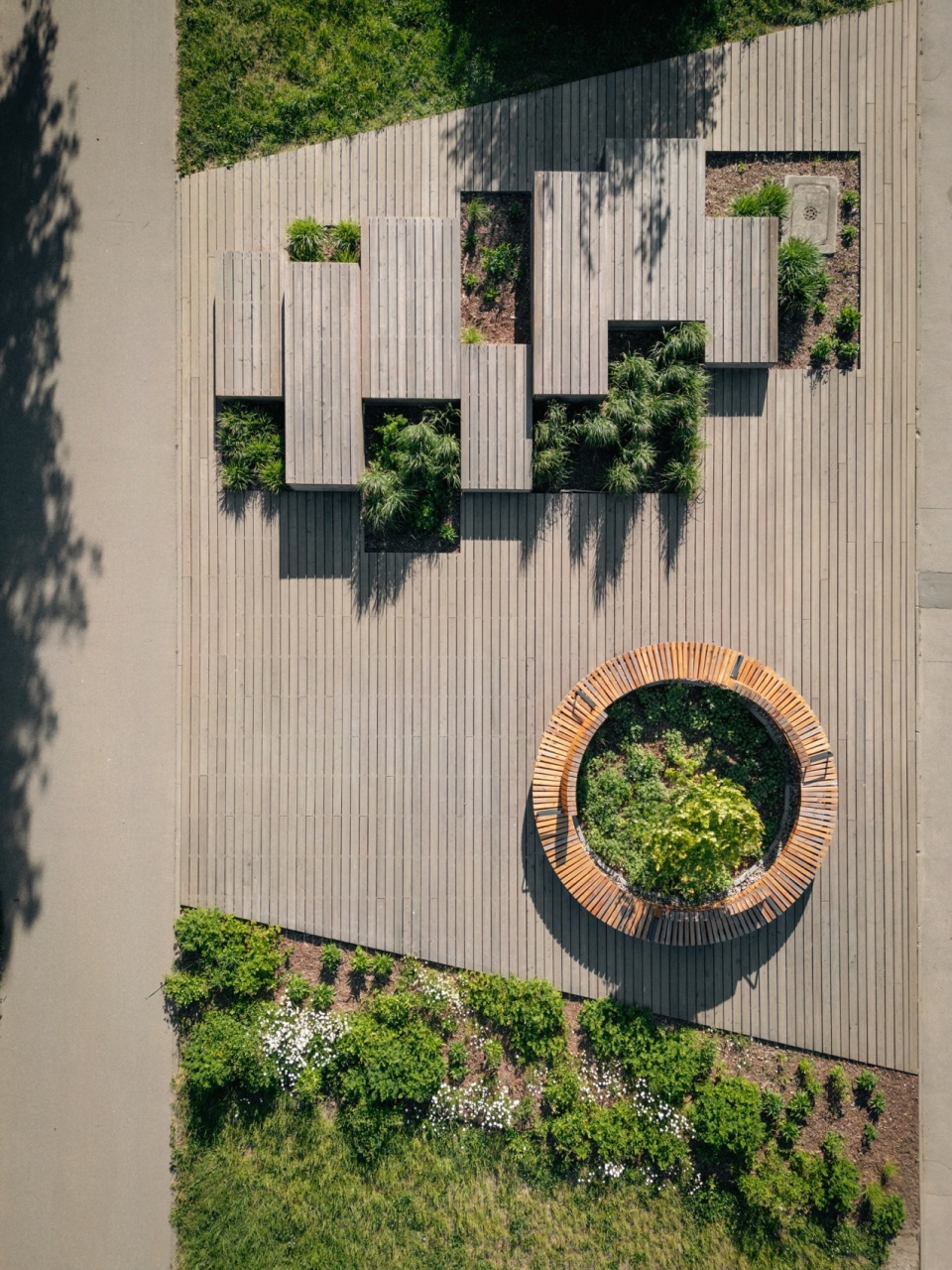
“我们注意到公园的空间结构具有网络特征,包含水系、步行道和社交功能网络。我们的目标是支持、保护这些现存的联系——有时有意不做任何干预,例如在野生自然区,我们的行动仅限于为各个区域之间的动物建立功能性连接。我们所处理的地方实际上是一个活的有机体。”建筑师Łukasz Szczepanowicz解释道。
‘We noticed that the park’s spatial structure has a network character comprising a water system, pedestrian paths, and social-functional networks. Our goal was to support these existing connections and safeguard them – sometimes by intentionally refraining from any intervention, as in the case of areas for wild nature, where our action was limited to establishing functional connections for animals between individual areas. The place we dealt with is, in fact, a living organism,’ explains architect Łukasz Szczepanowicz.
▼野生自然,wild nature © WXCA-A.Borun, T.Wieteska
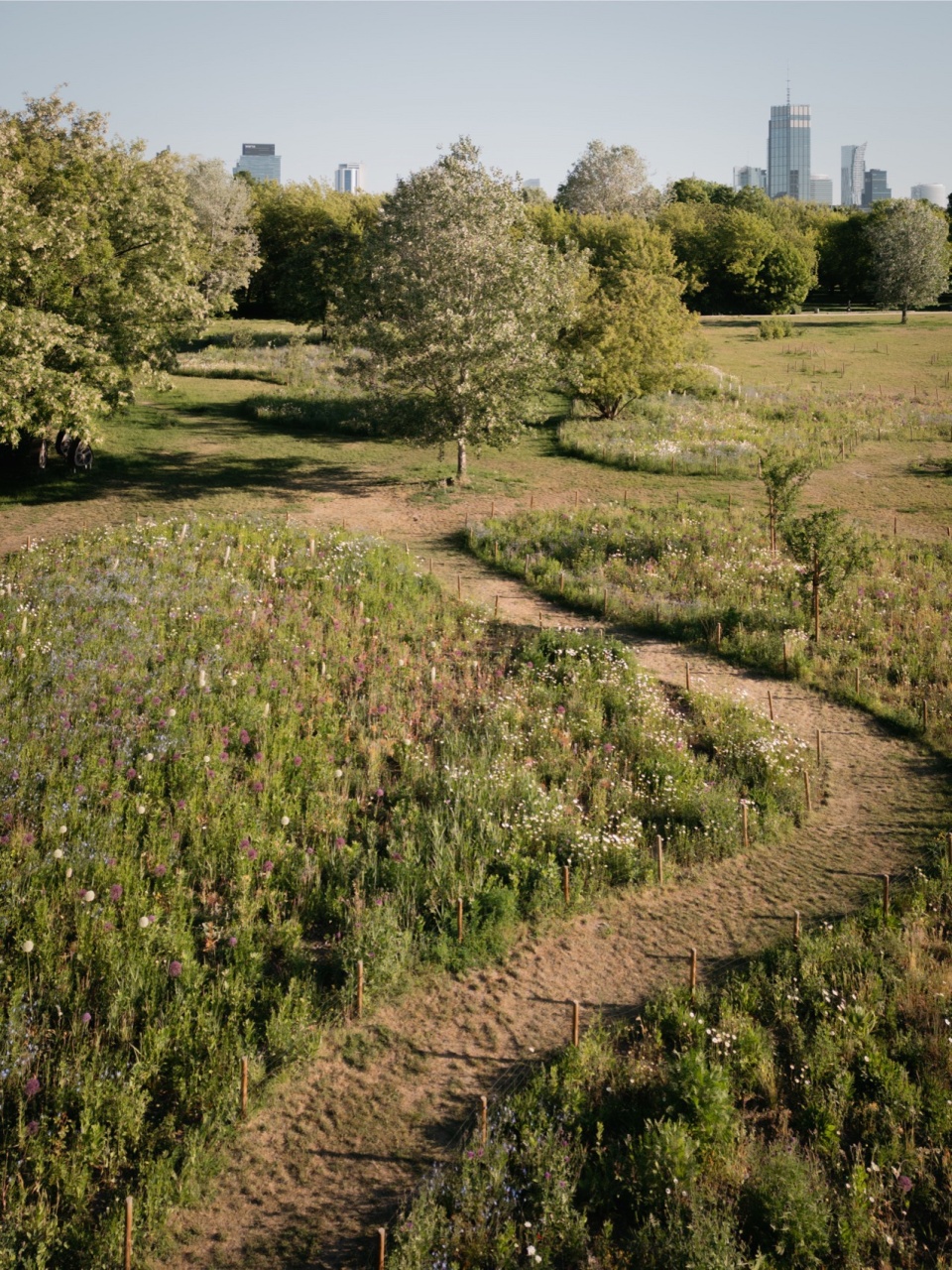
▼一瞥,a glimpse © WXCA-A.Borun, T.Wieteska
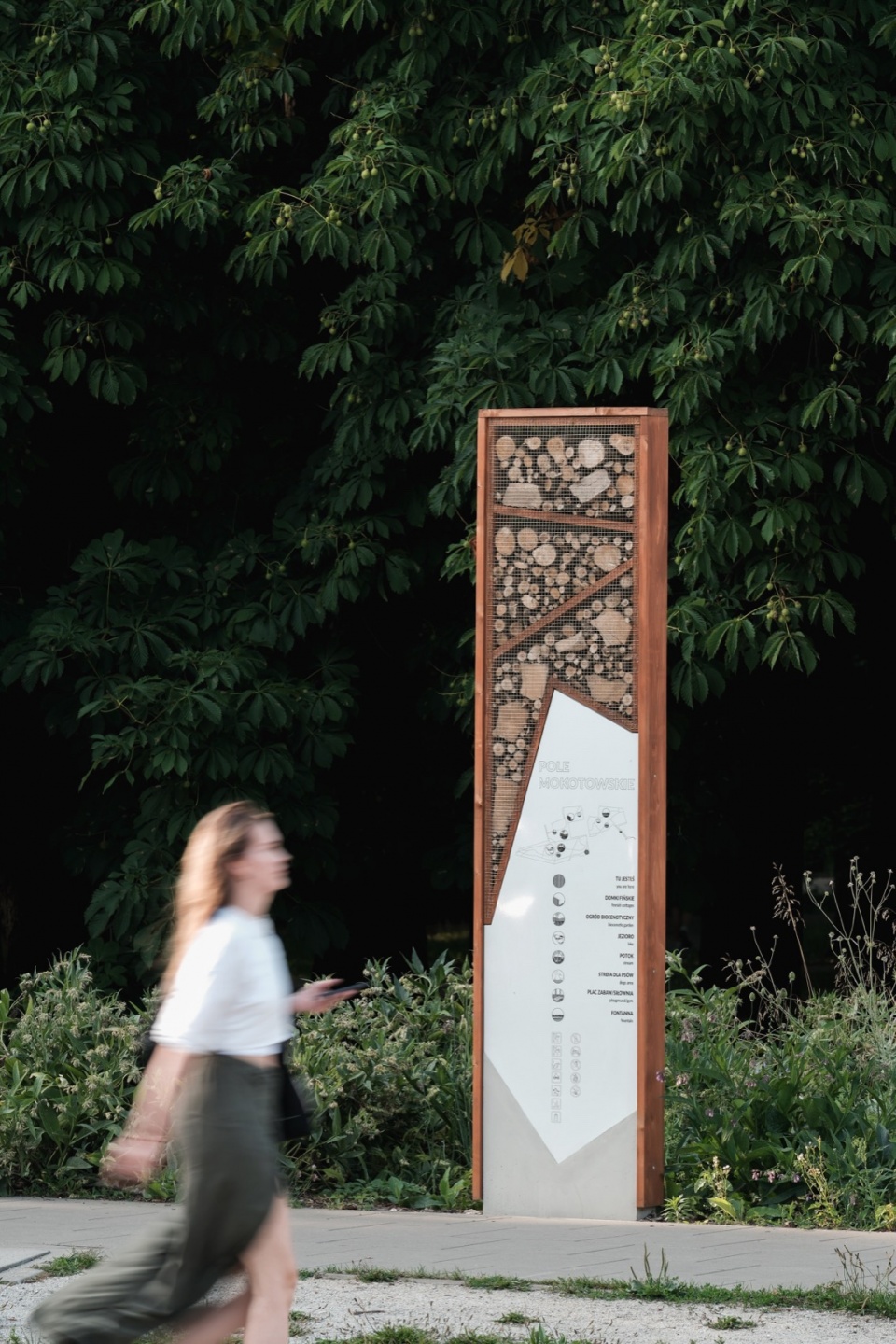
▼标识系统,sign system © WXCA-A.Borun, T.Wieteska
Name: Modernisation of Pole Mokotowskie Park
Location: Warsaw, Poland
Design competition: 2018
Modernization works: 2021-2023
Project area: 66,500 sqm (66,5 ha)
Client: City of Warsaw
Architect: WXCA
Project authors: Paweł Grodzicki, Szczepan Wroński, Marta Sękulska-Wrońska, Łukasz Szczepanowicz, Małgorzata Gilarska, Krzysztof Moskała, Paweł Wolanin, Magdalena Julianna Nowak, Agnieszka Radziszewska, Michał Poziemski, Anna Szymańska, Monika Lemańska
More: WXCA Architects。更多关于:WXCA Architects on gooood








给自然以时间
DK
像个小水坑