感谢 LeuWebb Projects 予gooood分享以下内容。更多关于: LeuWebb Projects on gooood
Appreciations towards LeuWebb Projects for providing the following description:
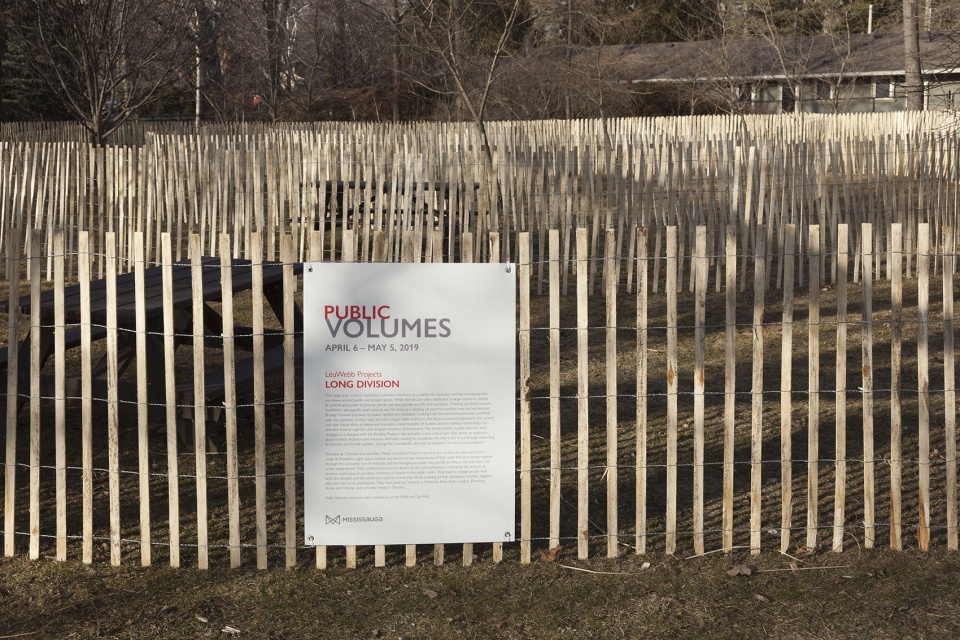
围墙屏障通常被视为象征控制和权力的构筑物,但它们也是提供安全和庇护结构。汲取自这种张力关系,LeuWebb Project专门为场地设计的艺术作品‘Long Division’以围墙作为出发点,思考如何占据、融入、统领安大略省密西沙加Bradley博物馆周边的这片场地。
While barriers are often implicated in larger concerns related to control and power structures, fences can also provide security and sanctuary. Drawing out these tensions, LeuWebb Project’s site-specific work ‘Long Division’ uses the fence as a starting off point to consider how the land around Mississauga, Ontario’s Bradley Museum has been occupied, settled and colonized.
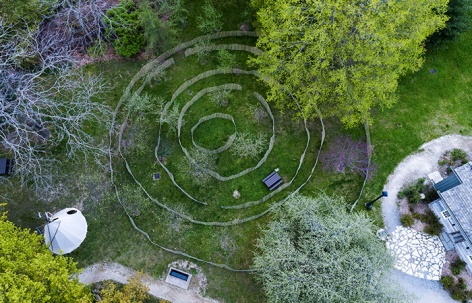
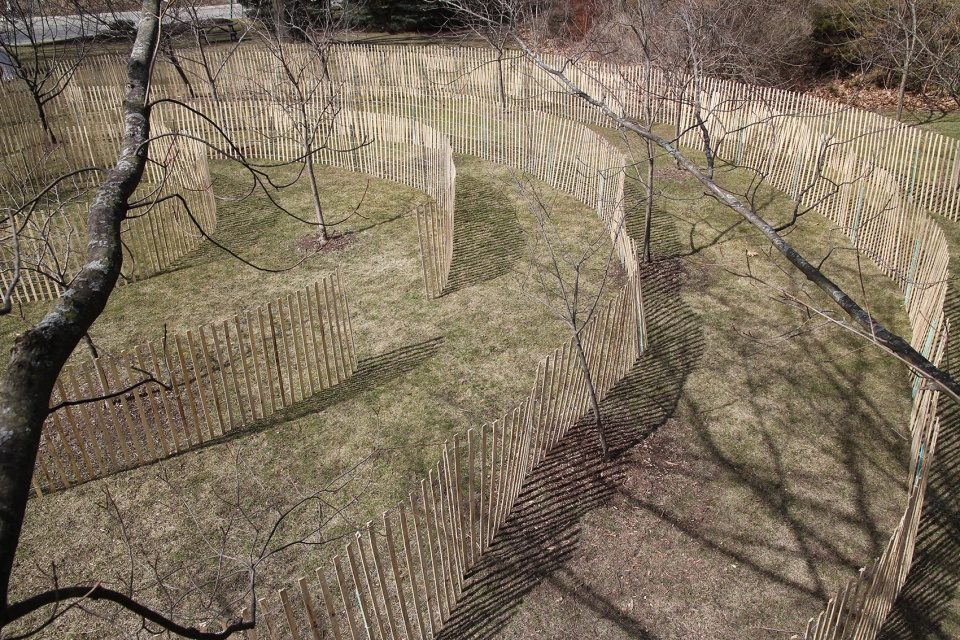
▼‘Long Division’装置鸟瞰,aerial view of ‘Long Division’ art work
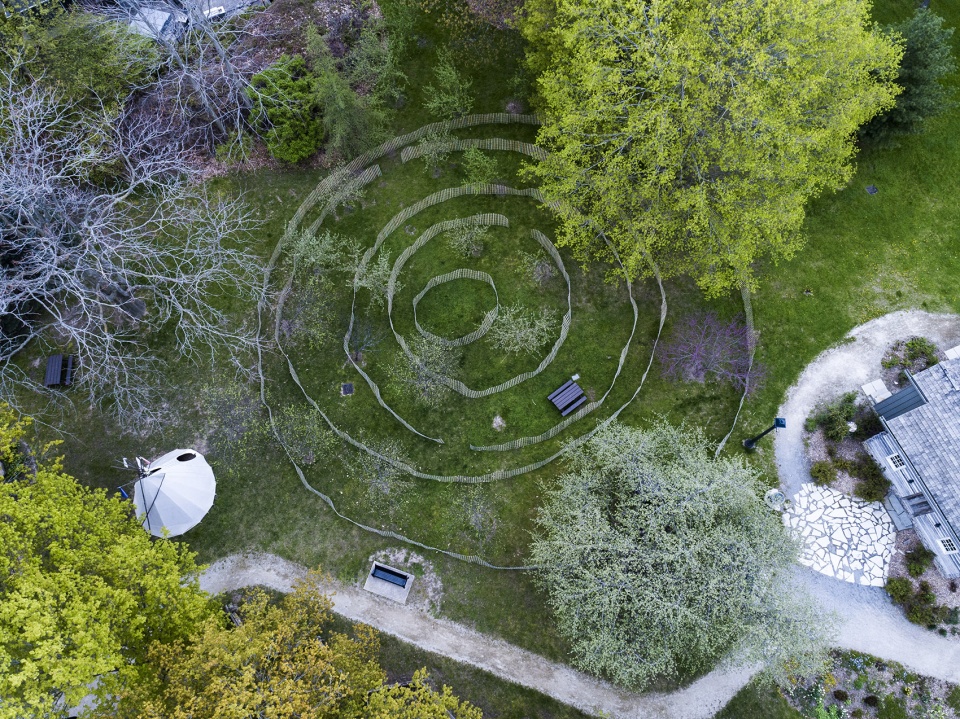
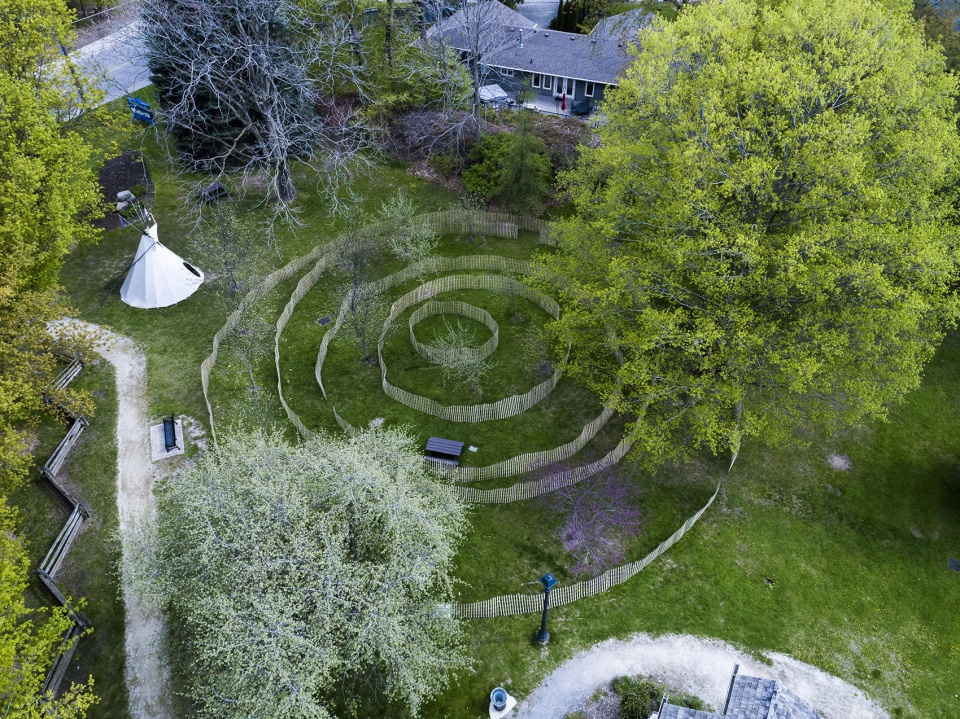
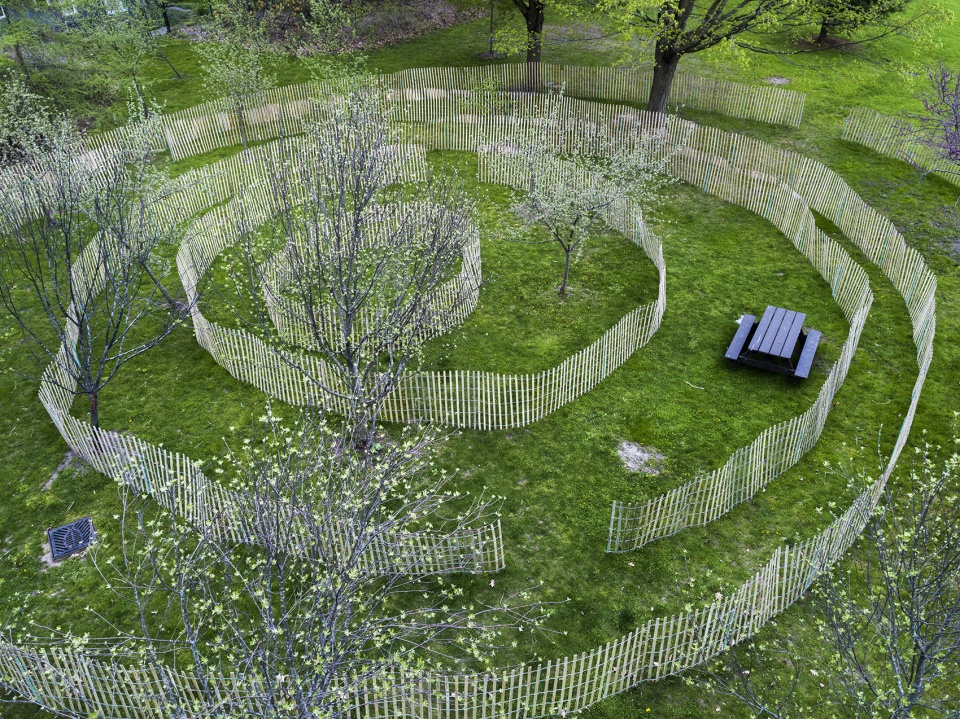
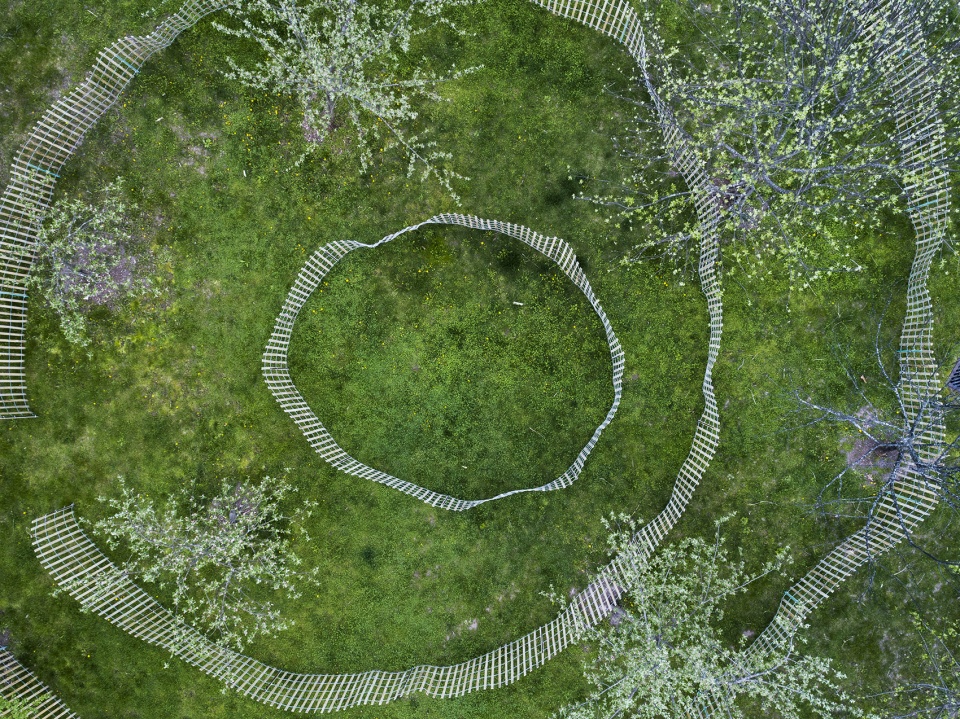
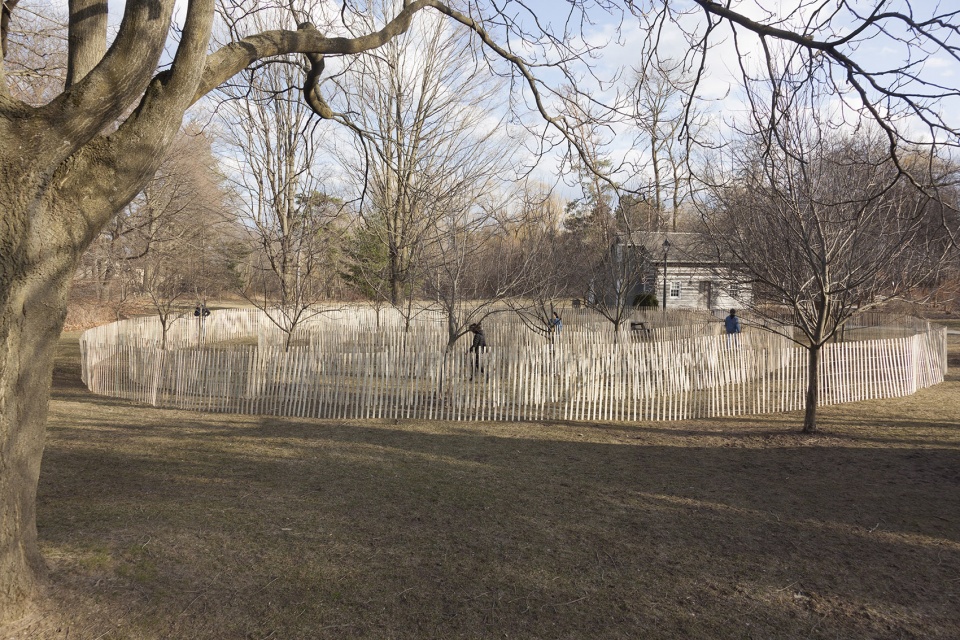
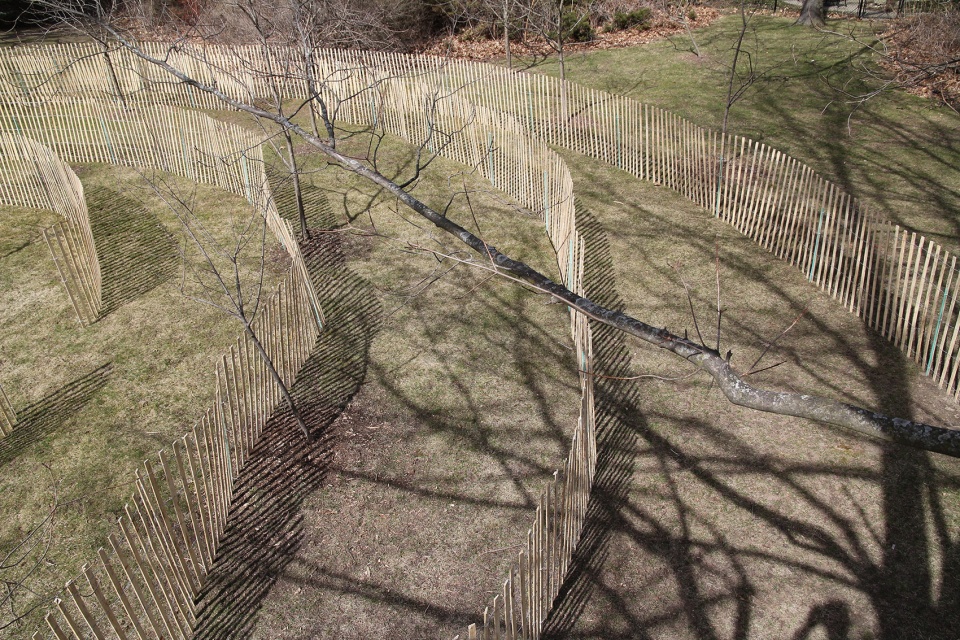
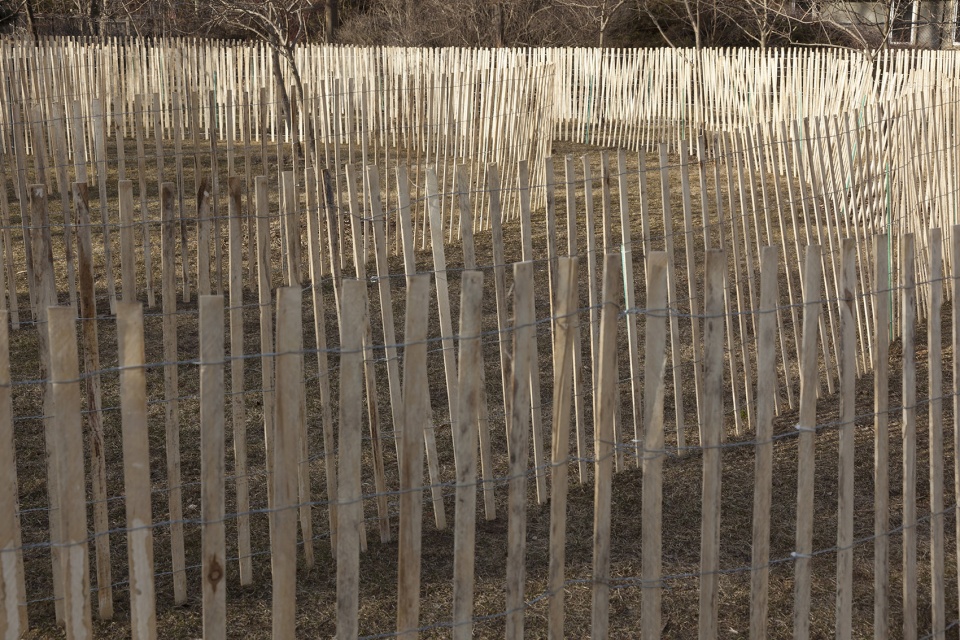
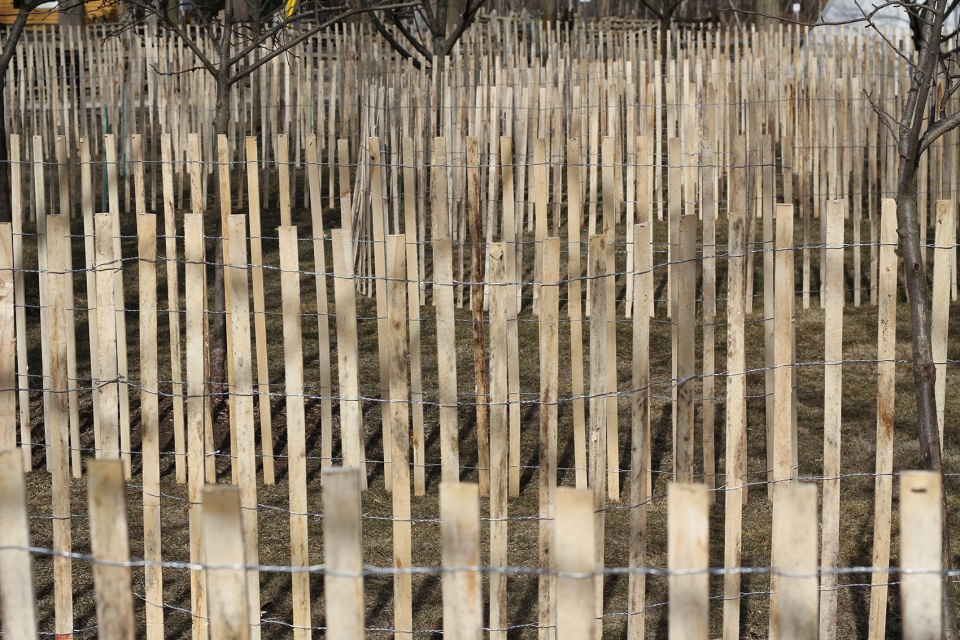
这件大地艺术作品呈现为非连通性开口的松散同心圆环,吸引参与者在围墙不同层次之间走动,最终将人们吸引到中央封闭圆环处。无论向前还是想后看,LeuWebb的‘Long Division’作品都呈现出对场地源起与处理的思考,同时将围墙概念引申为当前和近期国家与国界的象征,以及影射无法跨越的界限和对待移民、难民自由迁移不断变化的关系与态度。
The land art installation features a series of loosely concentric rings with discrete openings, inviting participants to move within the layers of fencing, ultimately drawing people to the impenetrable centre ring. Looking both forward and backwards, LeuWebb’s ‘Long Division’ calls into question the site’s origins and settlement while looking to the fence to expand outward to the current and near-future ideas of nation and boundary, the impermeability of borders and the shifting relationships and attitudes toward migrant’s and refugee’s freedom of movement.
▼松散的同心圆环结构,a series of loosely concentric rings
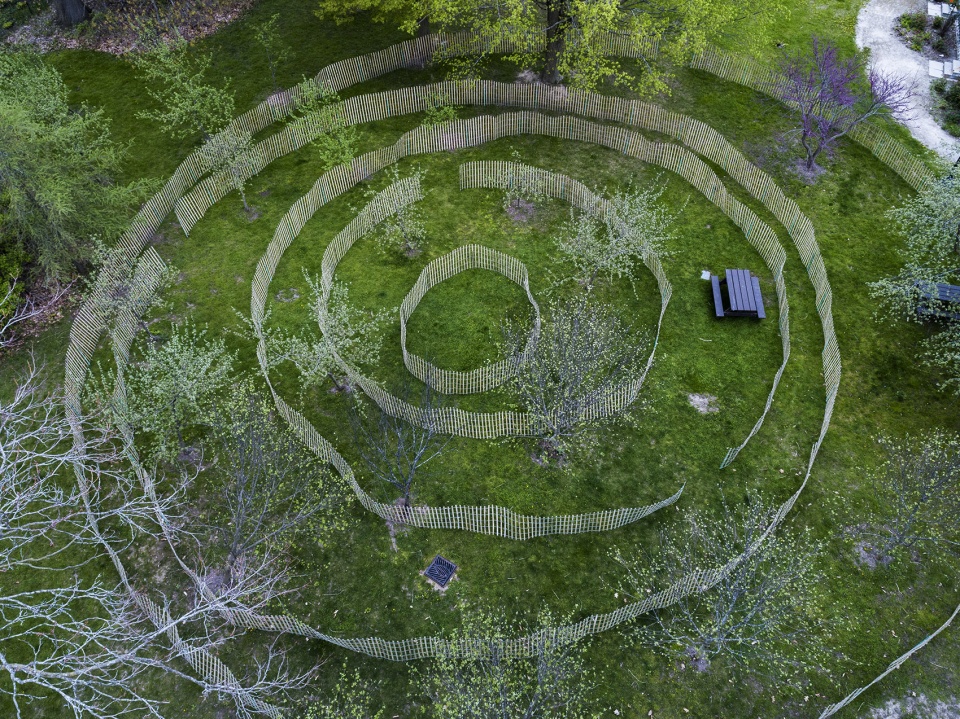
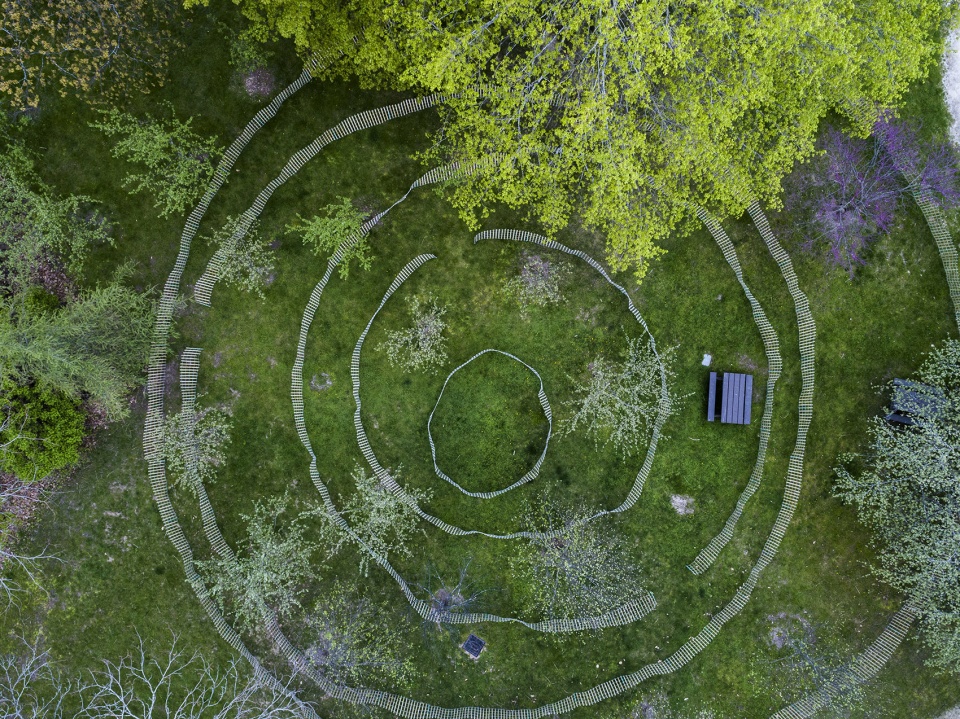
▼作品具有非连通性的开口,discrete openings
▼中央封闭圆环,the impenetrable centre ring
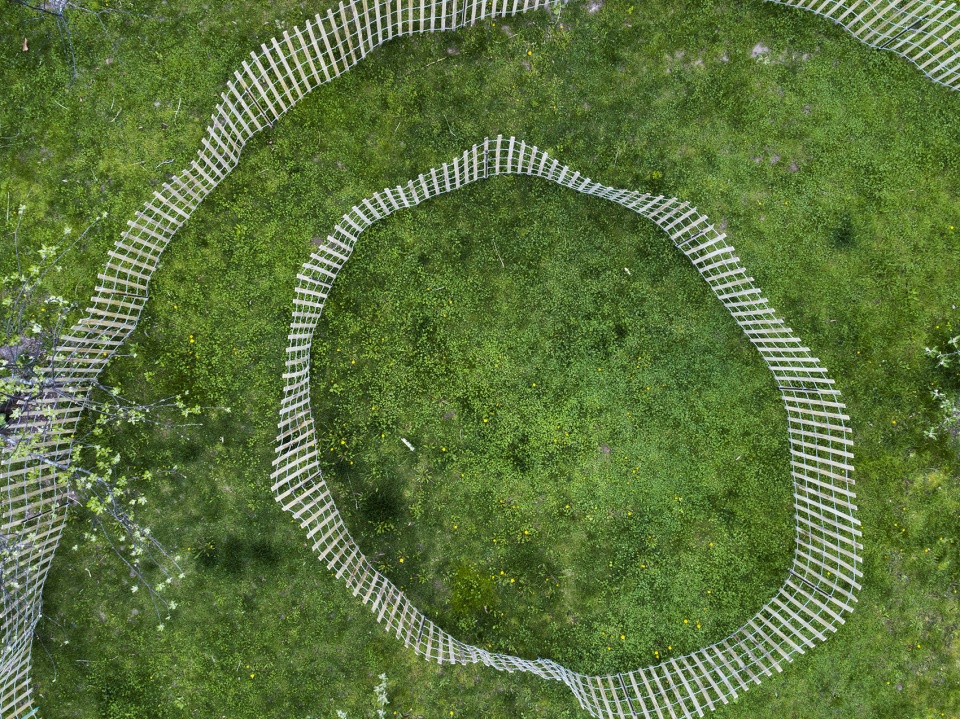
艺术家进一步解释道:“这件作品与Bradley博物馆场地形成对话,并为此增添了重要的新层面,开启了关于控制、排斥、包容问题的思考,通过颠覆围墙的功能及形式使其概念复杂化,挖掘互动参与结构操作的潜力。”
The artists further explain that this work “engages in a dialogue with the Bradley Museum site and adds a new critical layer that opens up questions about control, exclusion and inclusion, ultimately seeking to complicate the idea of fence through subverting its function and formal qualities, inviting the potential for play and participatory structural manipulations.”
▼到访者与装置互动,interaction between visitors and the work
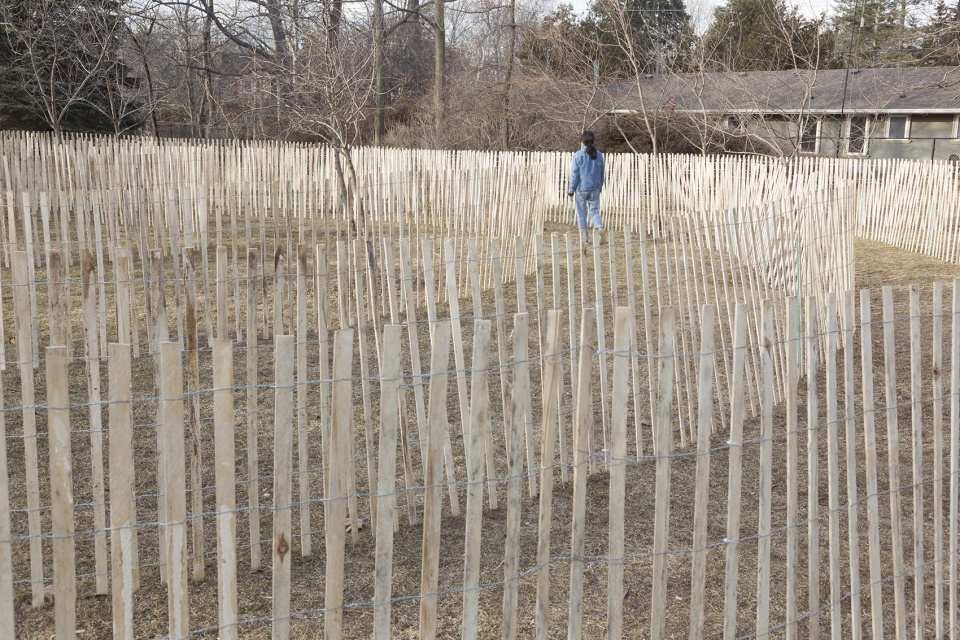
▼作品激发人们开启关于控制、排斥、包容问题的思考,the work opens up questions about control, exclusion and inclusion
项目是Noa Bronstein于2019年5月在加拿大安大略省密西沙加策展的‘Public Volumes’展览的受邀作品,其中也包括艺术家Joi T. Arcand, Germaine Koh, Morris Lum等等。
The work was commissioned for the ‘Public Volumes’ exhibition, May 2019, curated by Noa Bronstein, and including artists Joi T. Arcand, Germaine Koh, Morris Lum and others, in Mississauga, Ontario, Canada.
▼项目是‘Public Volumes’展览的受邀作品,the work was commissioned for the ‘Public Volumes’ exhibition
▼细节,details
Long Division: Borders, Boundaries and Barricades
LeuWebb Projects http://leuwebb.ca/
More: LeuWebb Projects。更多关于: LeuWebb Projects on gooood


解读方式不同吧
我觉得是选择了这个元素通过自己想法组合。只是最后的结果会像篱笆而已,又不是初衷……
这个要分地域文化吧,搁国内就是篱笆而已
感觉环里面搭配那几颗树很好看啊,不同季节给人的感受也不一样,春夏,有一种草长莺飞的秘密乐园的感觉,秋冬就是萧条的,疏远的感觉。
艺术装置不能用传统景观设计的眼光来看待,它传达的是一种情绪或者思维的表达
我觉得像小时候养鸭子的栅栏哎,也是这么一圈一圈的,晚上鸭子回来的时候在里面走路嘎嘎叫
实际上这个装置的主题很明确:控制、排斥、包容,我们再反过来看他的空间和材质,就大概能明白。
控制:循环的偏心圆实际上是有开口的,人们要走入到中心或者从中心出来都需要绕着边界走,这和去景区买票时设置的往复围挡非常类似,你的路线显然不会太自由
排斥:竹篱本身就形成了有形的围墙,而不直接直线联通的开口使得心理上也有隔离感
包容:走入这个装置,相同的材质和相似的空间,使得你无论在哪一个圆环内实际上都融入了同一个环境
存在的意义不大吧 艺术终究还是为人服务
艺术并不是为人服务,只是人们思想的产物而已,服务是次要的
不一定的,艺术不一定具有服务功能
我已经很努力了,还是不喜欢
微景观平添了很多小趣味
这个收费吗
抱歉,是我不懂艺术
看到有人强行YY加戏说了一堆对设计的理解。。。我只想说,我的第一反应真的是乡下我们养鸭子用的栅栏哎。。。。