感谢 Mateo Arquitectura 予gooood分享以下内容。更多关于他们:Mateo Arquitectura on gooood。
Appreciation towards Mateo Arquitectura for providing the following description:
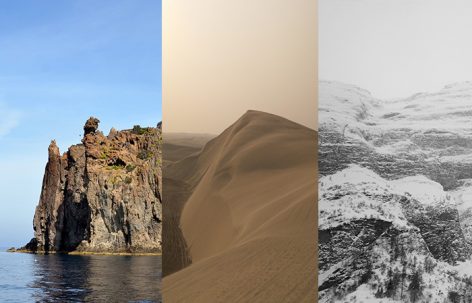
对于人类而言,有些遥远而神秘莫测的风景可能更适合于途经而非停留,它们的魅力往往涉及一种不可名状的威胁感(自浪漫主义时期起,构成了美学体验的基础)。
岛,是一个封闭的、被限定的场所,有着确定的可能性,是一个在水平方向上完全受限的区域。
相反,沙漠则是无限和不确定的。居住在这里意味着不断的移动;游牧是生存的必要前提。
山是关于垂直边界的体验;是伊卡洛斯终极的飞行方向。
从这里,我们找到了避难所的最初意义。建筑——有时作为我们生存所不可或缺的一种义体——会展露出其最初的状态。这就是零度建筑。
– Josep Lluís Mateo
The fascination awoken by far-off places, on the limits of human existence, places where it may be better to pass through than to stay, or where remaining always involves a vague sense of threat (a condition, since Romanticism, that underlies the aesthetic experience).
The island as a closed, finite place, with endemism as a possibility. The island as the place of the omnipresent horizontal limit.
The desert, conversely, has no limits: indefinite and infinite. It can only be inhabited through movement; nomadism is a necessary condition of survival.
The mountain as experience of the vertical limit; as an attempt to fly, the Icarus syndrome with its possible ending.
In these cases, the refuge finds its primal expression.
Architecture – that prosthesis sometimes necessary for survival – is presented in its initial condition. As degree zero.
– Josep Lluís Mateo
岛 | ISLAND
“幻想岛屿,不论喜悦还是恐惧,都意味着幻想逃离。分隔,脱身于陆地,独自迷失。又或者,它也意味着从头开始,重新创造。[…] 岛屿同样也是原点,彻底而绝对。” – Gilles Deleuze,《荒岛的成因》,2002年
“Dreaming of islands—whether with joy or in fear—is dreaming of pulling away, of being already separate, far from any continent, of being lost and alone, or it is dreaming of starting from scratch, beginning anew, recreating. […] the island is also the origin, radical and absolute.” – Gilles Deleuze “Causes and reasons of desert islands” in L’île déserte et autres textes, Ed. de Minuit 2002
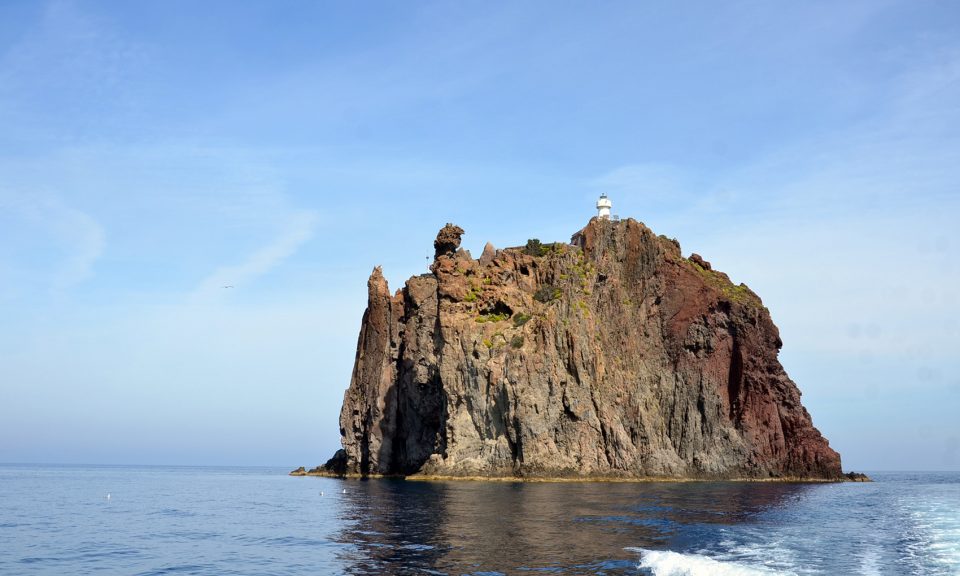
岛是有限的、封闭的场所,是受到约束的条件和存在,是统一的时空。小的空间有时通过重复来扩展,继而成为群岛——这也可以看作一种建筑性的隐喻。
岛通常关乎两个问题:第一是它首要的自然身份。延绵不断的海平线上排列着众多景观:山地、岩石、树木、植被……它们共同构成了一幅画面。
第二是人类持续至今的建造行为,它受限于各种可能性和不可能性:与环境的智慧共生;本地性和历史;现在还要加上旅游业和现代化带来的影响;以及世界主义和地方性之间的对抗。
Islands, finite, enclosed spaces: the limit as condition and presence, as unifying moment. Small worlds in some cases extended by repetition: the archipelago, at times an architectural metaphor.
Islands traditionally raise two issues: First, the priority of nature as an argument. On the continuous horizon of the sea, the figure unfolds with all the rhetoric of the landscape: mountains, rocks, trees, vegetation… these will be the materials that construct the image.
Second, human presence in the activity of construction, until recently limited by the possibilities (scarce) and the impossibilities (large). Examples of astuteness and symbiosis with the environment. Versions of the vernacular. In the past. Now we have to add the transformation brought about by tourism and modernity. Cosmopolitanism versus endemism.
沙漠 | DESERT
“在一个空无一物(否则它不能被称为‘沙漠’)的场景中,任何事物都将有存在和发生的可能。” – Reyner Banham,《美国的沙漠景观》
“In a landscape where nothing officially exists (otherwise it would not be “desert”) absolutely anything becomes thinkable and may consequently happen”. – Reyner Banham (“Scenes in America Deserta”)
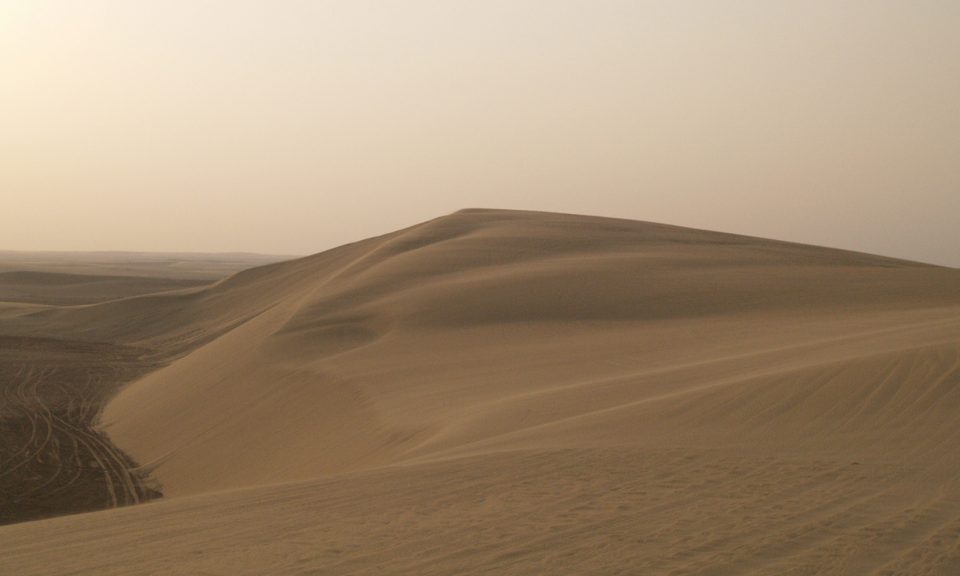
在沙漠和建筑间建立关联,首先需要假设出一个对象,一种零度的外观:一种无限的、极端的、流动的、难以理解的表象。其次还需要意识到,建筑意味着一种防护,它拥有着与自然抗衡的内在。
在最初的阶段,建筑仅仅是对可用资源的一种极端简单的利用:一根棍子和几块布(我们可以将其随身携带并穿越沙漠,而非长期停留),亦或是随处可见的石块或者一些黏土。
沙漠或许可以被看作是一种思维、场所和基本建筑的初始状态。
生存的工具。
Establishing links between the desert and architecture entails imagining an object facing its antagonist, a zero degree of the exterior: infinite, extreme, mobile and incomprehensible.
It also implies recalling that which architecture possesses of protection, of the interior, of opposition to nature.
Also that, in its early days, architecture compelled the radical use of available resources: a stick and a few strips of fabric (which we can take with us: one passes through the desert, one doesn’t stay), a few rocks we come across, some worked clay.
The desert seemed to be a good metaphor for starting to recognise ideas, places and essential architectures.
Instruments of survival.
山 | MOUNTAIN
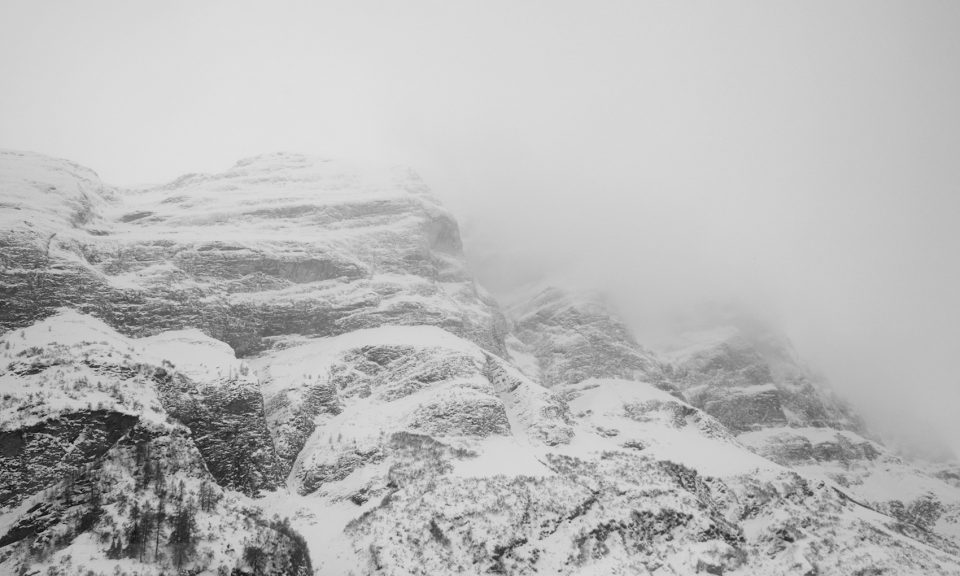
山是一种分离的、特殊的场所。冷漠而遥远。
它是清寂而荒凉的。山中的建筑总是要突出防护与隔离的特质,否则无法适应人类的活动。
在所有文化中,山——至少是一部分山——都涉及神圣的意味,都与神性有着直接的关联——这是山的神力(我脑海中浮现了蒙塞拉特山、廷达亚山、瓦伊那比丘等各种与建造仪式和圣所有关的地方)。
山是另一种形式的边界,是陆地与天空交汇的时刻。它从某种程度上与岛——陆地与海洋交汇的时刻——形成了对称的关系。即使身居远处,山中的建筑仍然顺应了历史与当下,以及世界主义与地方性之间的关联。
山意味着地形的不规则性,意味着倾斜,意味着我们必须为之引入平坦的表面。陆地不断上升的垂直性,以及修建平坦栖息地的需求,这二者之间存在着一种紧张的联系。
The mountain as a place apart, a special place. Distant.
As a bleak, inhospitable place, where architecture highlights protection and insulation, one of the themes that underlie our activity.
And then, in all cultures, mountains—some mountains—have sacred conditions, direct contact with divinity: the magic mountain. (I am thinking of Montserrat, Tindaya, Huayna Picchu, and many other places where architecture accompanies by constructing ritual, sacramental places).
The mountain as another situation of limits, as a final moment between earth and air, somehow symmetrical to the island, the interaction of earth and water. The architectures that we find so intensely here also draw on the relation between tradition and present, between endemism and cosmopolitanism.
The mountain as topographical irregularity, as inclination, where we, necessarily, have to introduce flatness, the horizontal surface. Tension between the ascending verticality of the earth and the need to build the horizontal—our habitat.
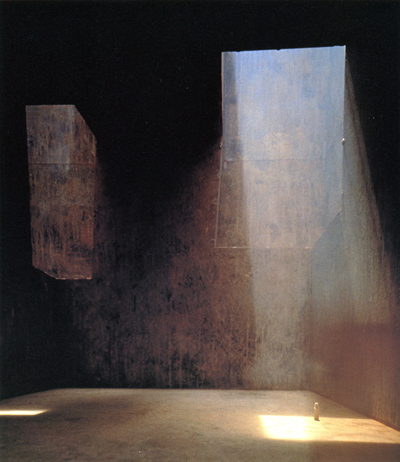
▼Eduardo Chillida在1985年为廷达亚山设计的建筑干预提案。廷达亚山在古代曾是关契斯人(原住岛民)的圣山,位于加纳利群岛的富埃特文图拉岛 | Proposal by Eduardo Chillida for the intervention in Tindaya, the ancient sacred mountain of the Guanches (primitive inhabitants) on the island of Fuerteventura, Canary Islands, 1985.
More:Mateo Arquitectura。更多关于他们:Mateo Arquitectura on gooood
我喜欢
美 文字美
美!