
来自郑星Xing Zheng(联系邮箱 Email :StarZ009@163.com)对gooood的分享。更多关于他:Xing Zheng on gooood.
Appreciations towards Xing Zheng( Email :StarZ009@163.com) for providing the following description:
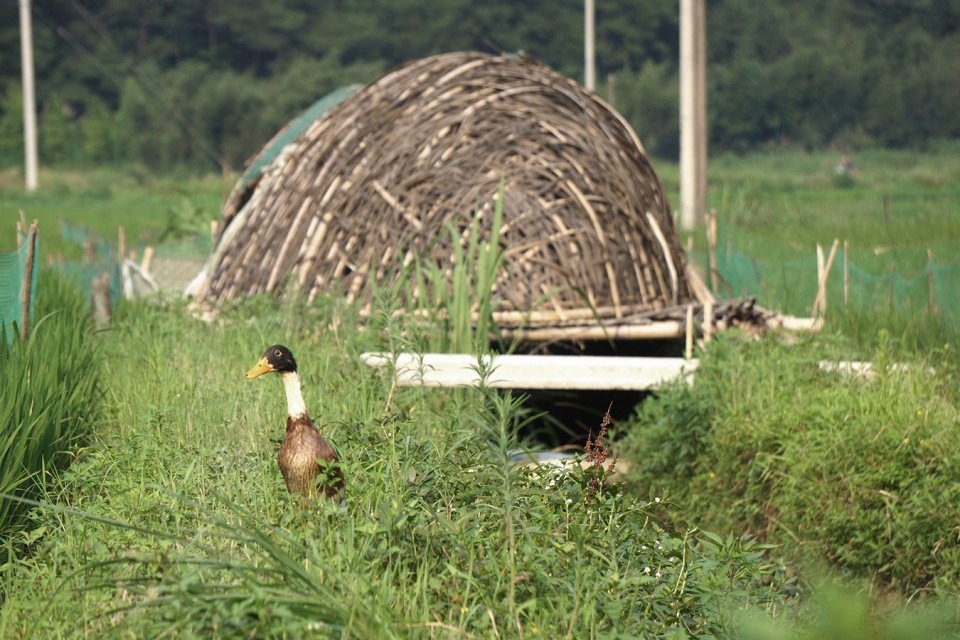
“茧寮”项目位于浙江省临安县太阳镇双庙村。由于 “稻鸭共养”农业模式的需要,我们在田间搭建了这座鸭寮。
“Cocoon” project is a duck stable in a village for the cultivation of Rice-duck Mutualisms, located in Linan,Zhejiang province.
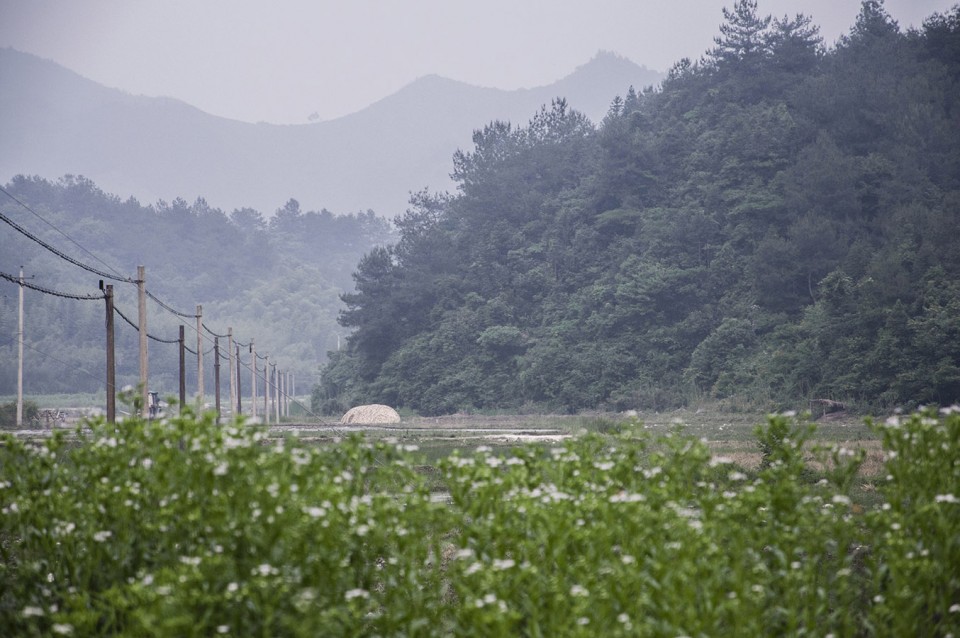
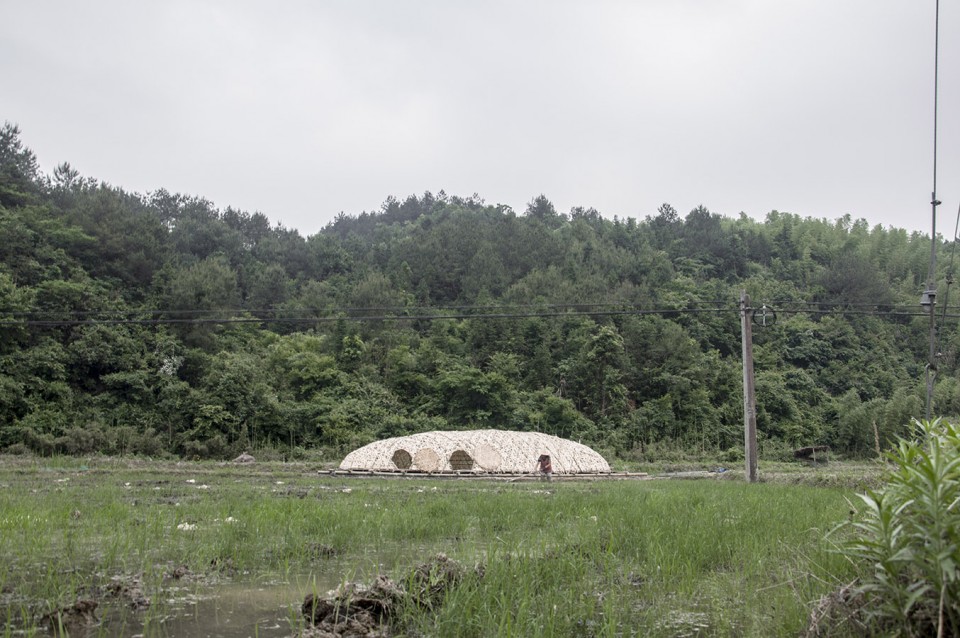
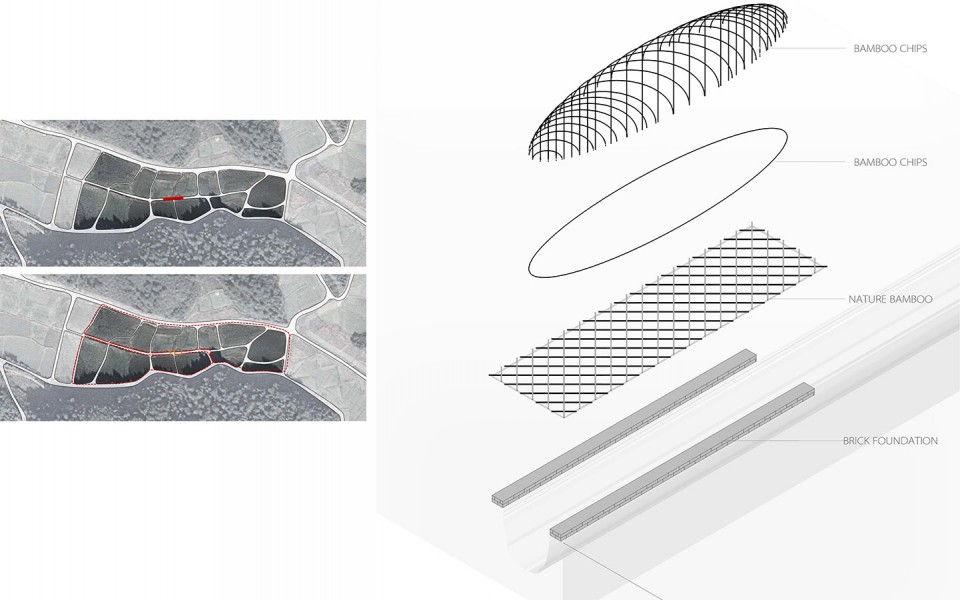
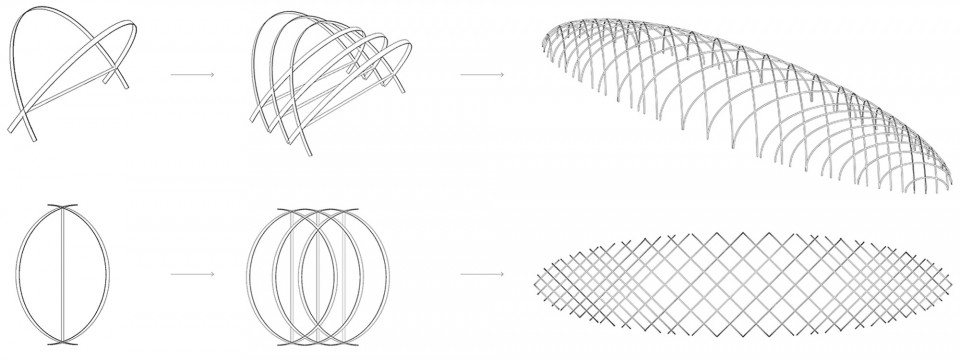
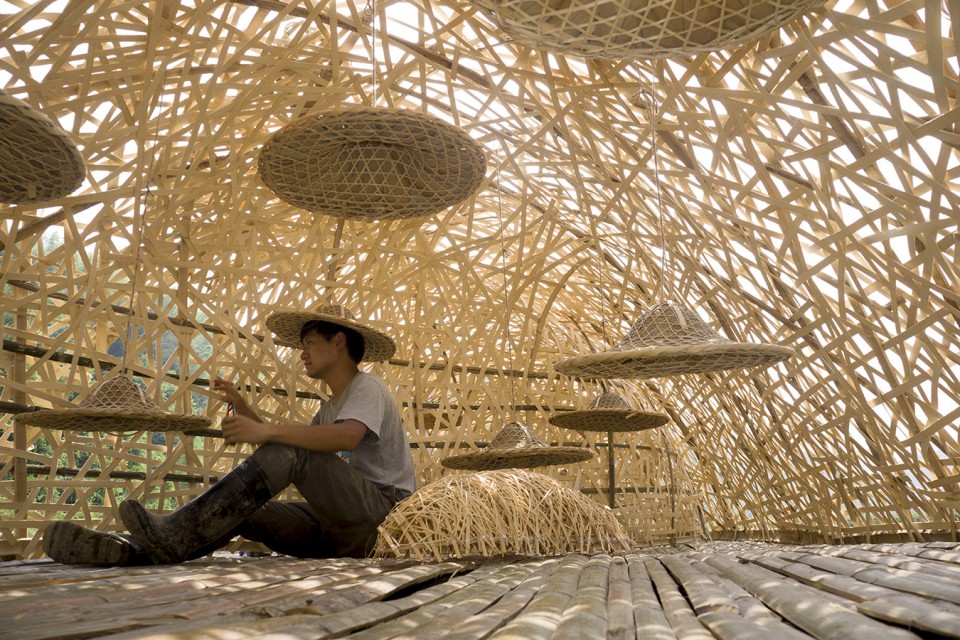
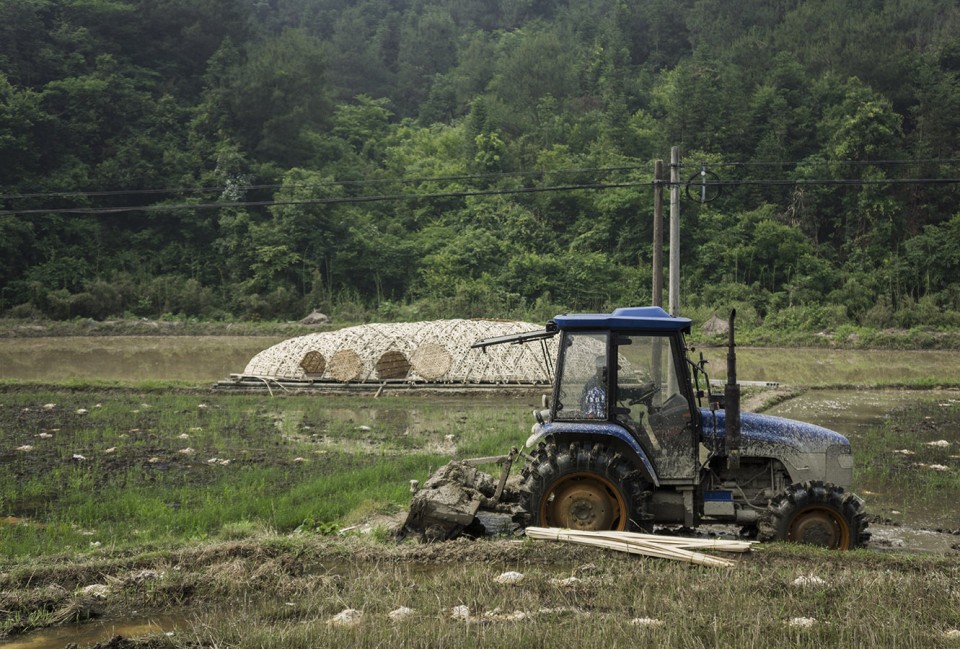
这座丘陵地区的村子,盛产竹材,是价廉物美的建筑材料。我们选择原竹作为主要的建造材料。原竹取之于自然,又能被自然降解,基本对应鸭寮两年的使用年限。建造用地定在两块水田之间的水沟上,这样既节省土地,又能兼顾水田两边的两个饲养区。抗弯是竹材最重要的特性之一,我们将原竹片弯曲成为一个竹拱,再将多个竹拱交叉并置成为“茧寮”的结构骨架,再在骨架之上编织竹篾作为围护,编织大致花费了三天。
We choose bamboo as the material since there is plenty in the region, making it cheap and easy to gather sufficient materials. Also, the duck stables’ service life span is two years. These unprocessed bamboos can be recycled in the natural circulation without causing any pollution. In order to save land, our “Cocoon” was decided to be located above a gutter way between two paddy fields so that the land can be economically used and the feeding areas at both fields can be taken care of. One of the most important material behaviors of bamboo is its bending resistance. We tried freshly cut bamboo chips in our 1:1 scale model, with two bamboos forming one curve, as the “bamboo arch” from one side to the other side. Several “bamboo arch” cross spread as reinforcements. Then, we weaved layers of bamboo skin on the surface as an envelope. After these reinforcements had been finished, three of us weaved the skin with non-professional skills and the spent three days on construction.
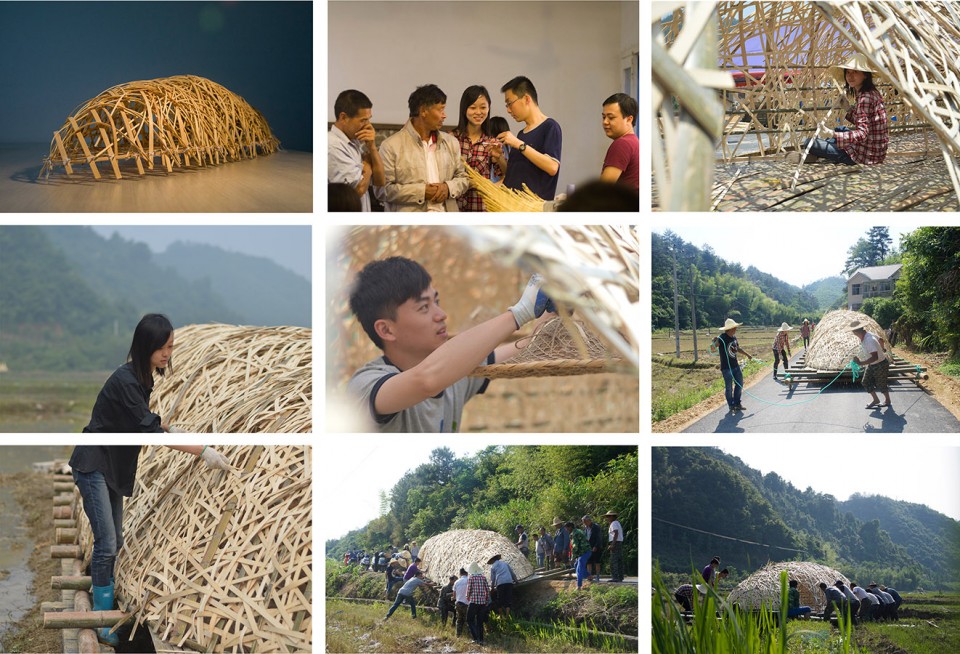
鸭寮并不需要绝对的防雨,但内部需要完成饲养分区,我们利用将竹片与竹篾编织在一起,分割着区域,隔而不断,让空间更加富有层次。
The duck stables do not need absolutely water-proof. However, duck have to be kept in different zone in the “Cocoon”. Bamboo skin and bamboo chips were weaved together created a soft and naturally varied form of division between each zone.
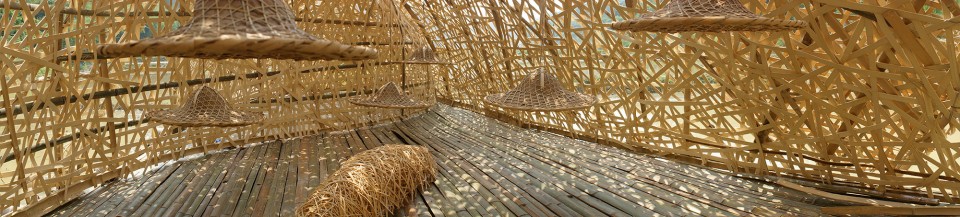
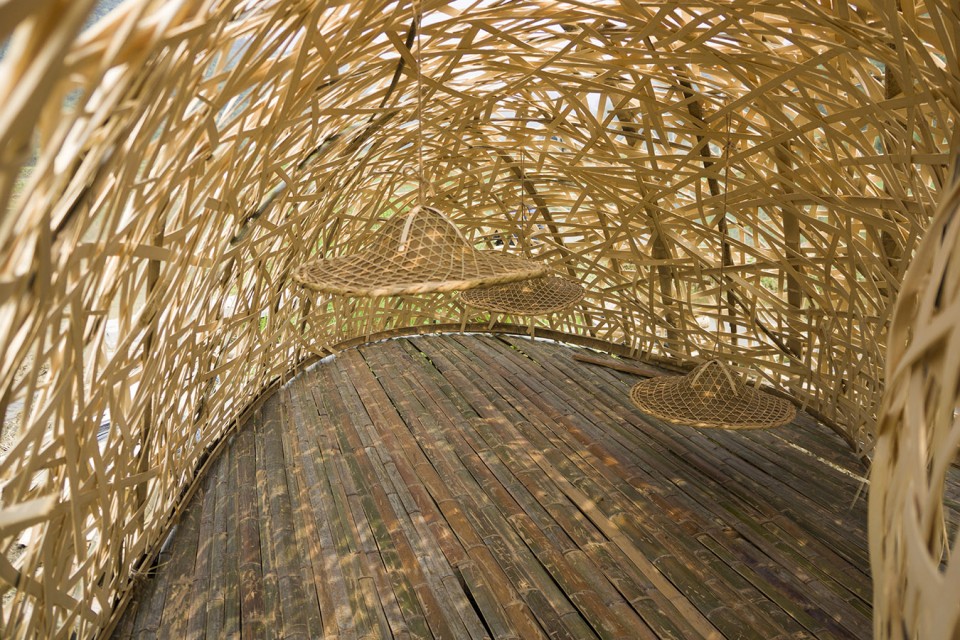
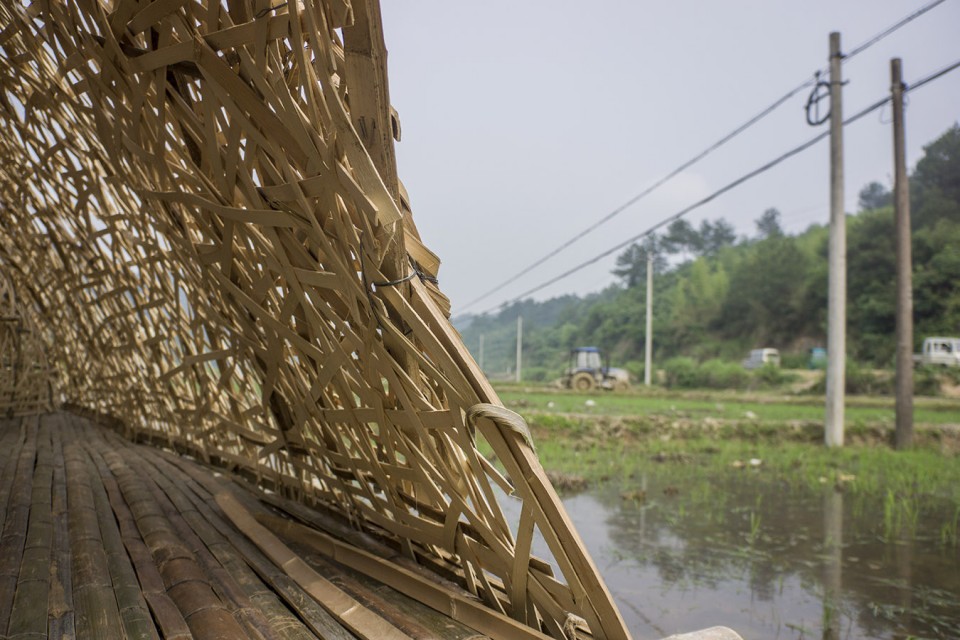
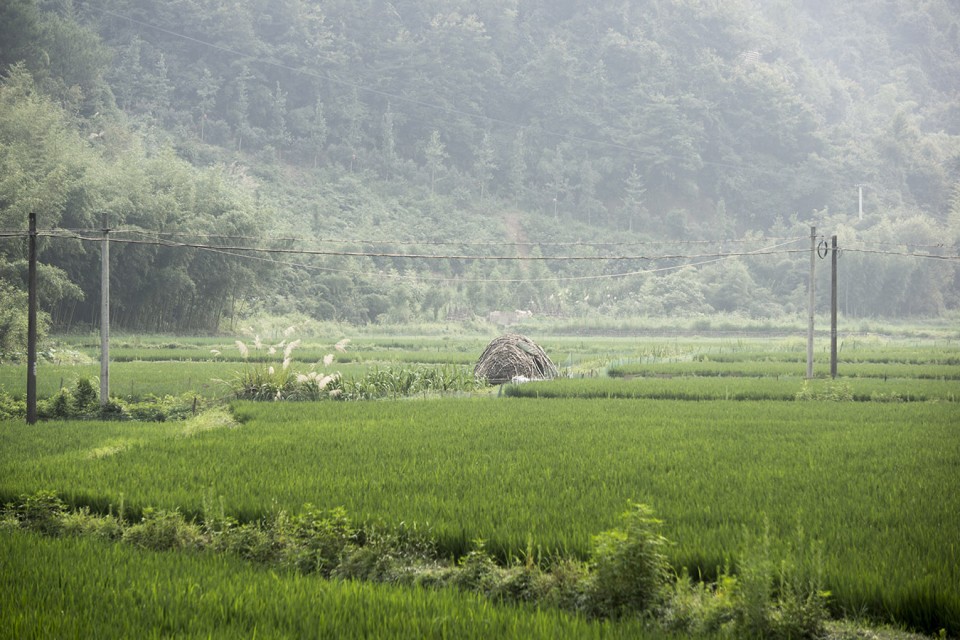
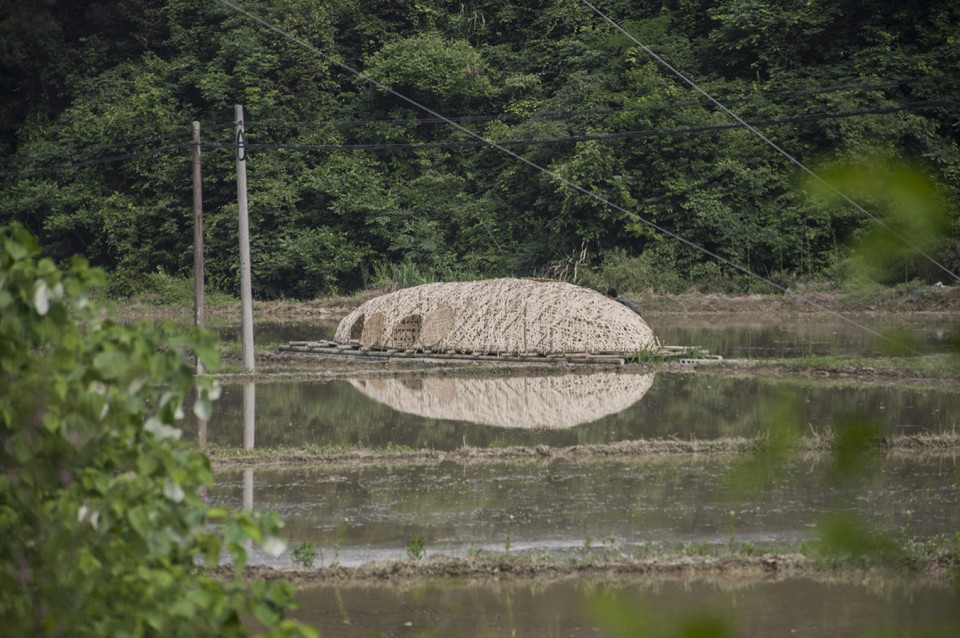
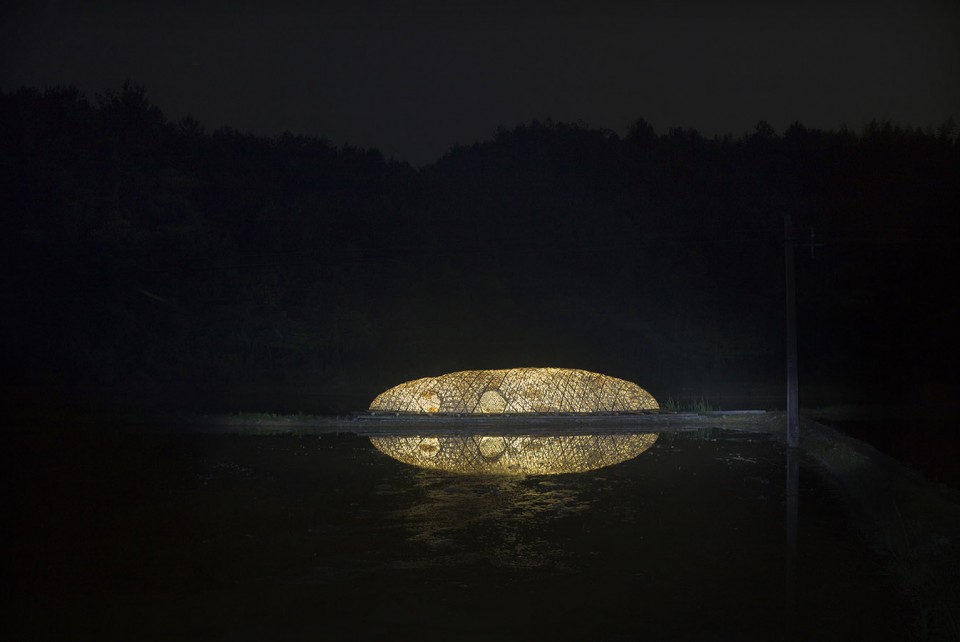
从外观上看,“茧寮”是一个有虚实变化的半椭球体,在光线下拥有美丽的阴影。当它与田中的倒影合二为一的时候,特别是夜晚灯火亮起时,就成为一个完整椭圆。随着时间的推移,原生竹篾的颜色逐渐变暗,“茧寮”的结构骨架更加明显。简洁的外形诠释了建筑与自然统一。原竹作为天然材料保证了“茧寮”的生态可持续性。
Viewed afar, the “Cocoon” is a semi-ellipsoid form with a variation of solids and voids, with beautiful shadow in the sun. United with the reflection on the paddy field, especially when lights are on at night, the “Cocoon” looks almost like a spheroid. As time goes on, the bamboo skins become darker, the strong verticality becomes more apparent. The simple form illustrates the congruent blending of architecture with nature. Moreover, the natural materials such as bamboo provide sustainable sensibilities.
Architect:School of Architecture,Southeast university
设计单位:东南大学建筑学院
Team: Xing Zheng,Wenzhou Zhong,Danhong Ma
设计团队:郑星、仲文洲、马丹红
Location: Linan, Zhejiang, China
地址:中国 浙江 临安
Project Year: 2015
时间:2015年
Photographs: Xing Zheng
摄影:郑星
2015年东南大学建筑学院研究生一年级实验设计课教学成果,授课教师:张彤教授、焦健讲师
Achievement of 2015 Experimental Design, a Post-graduate Teaching Studio taught by Prof ZHANG Tong and Lecture JIAO Jian, Architecture school,Southeast University
MORE: 郑星Xing Zheng(联系邮箱 Email :StarZ009@163.com) 更多关于他:Xing Zheng on gooood





哇 这里的鸭子太幸福了
挺好看。
赞
有点意思哈!
哇哇,郑同学太棒啦!~
谢谢! :) 这也是三个人共同的成果~
不能更羡慕
想法真的很不错,但可持续性不代表可持久使用性。问下装灯是为了利于管理吗?灯具的防水措施怎么做
谢谢! 鸭寮使用年限是1-2年,基本能适应吧。照片里的灯其实是临时的,用来装饰,灯本身是防水的。
太美了
最后一张很酷啊
效果不错,同学参与建造很赞!
赞
真正编织还是找些当地手工匠人来做比较好
好糙
跟之前谢英俊老师在深圳双年展做的茧很像
看着与自然融合的很棒。喜欢。