感谢 张唐景观 予gooood分享以下内容。更多关于他们,请至:Z+T Studio on gooood
Appreciation towards Z+T STUDIO for providing the following description:
长岭瓷石矿遗址属于世界文化遗产景德镇手工瓷业遗存的五个片区之一。位于瑶里(古称“窑里”)古镇。瑶里在宋元时期曾是当地重要的窑场,出产青白瓷、青瓷,随镇区瓷业生产中心的发展,明清时期转型为镇区供应优质瓷石(及釉果)原料的开采加工场所。遗产构成要素包括大午坑瓷石明矿遗址和小坞里溪谷瓷石开采加工遗址,遗产区面积973.4 公顷。
▼gooood自制2分钟介绍视频,Introduction video
The Changling Porcelain Stone Mining Site is one of the five areas comprising the World Cultural Heritage sites associated with Jingdezhen’s traditional porcelain industry. It is located in Yaoli(瑶里), an ancient town formerly known as “Yaoli” (窑里). During the Song and Yuan dynasties, Yaoli was an important local kiln center producing qingbai and celadon wares. As Jingdezhen’s porcelain production became increasingly concentrated in the town center, Yaoli transitioned during the Ming and Qing dynasties into a mining and processing area supplying high-quality porcelain stone and glaze stone. The heritage site comprises the Dawukeng Open-Pit Porcelain Stone Mining Site and the Xiaowuli Valley Porcelain Stone Mining and Processing Site, covering 973.4 hectares.
▼大午坑石梁矿洞,Shiliang mining tunnels in Dawukeng © 李明峰
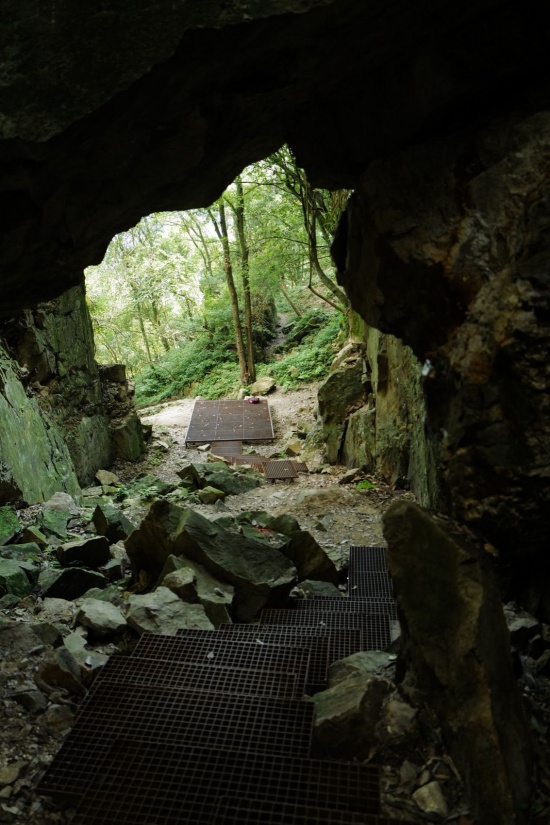
▼雨后的大午坑石梁矿洞,Shiliang mining tunnels after rain © 李明峰
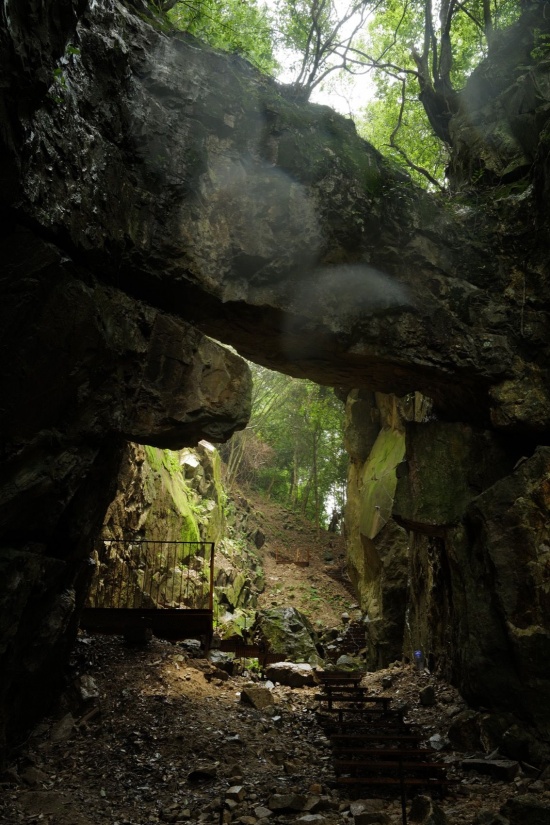
长岭瓷石矿遗址见证了瓷石和釉果大规模开采活动、大规模生产加工活动及对水力资源和矿石资源的充分利用,体现了低成本、规模化、标准化的原材料开发供应活动,由瓷石和釉果开采形成的大地景观与巨量尾矿堆积也反映了长岭瓷石矿遗址长期延续与深厚积累的瓷业历史层积过程。
▼视频,video © 张唐景观
The Changling Porcelain Stone Mining Site bears witness to large-scale extraction and processing of porcelain stone and glaze stone, as well as the extensive use of water power and mineral resources. It reflects a low-cost, large-scale, standardized system for developing and supplying raw materials. The landforms created by mining, together with the vast accumulations of mining waste, also reveal the long continuity and deep historical layers of the porcelain industry at Changling.
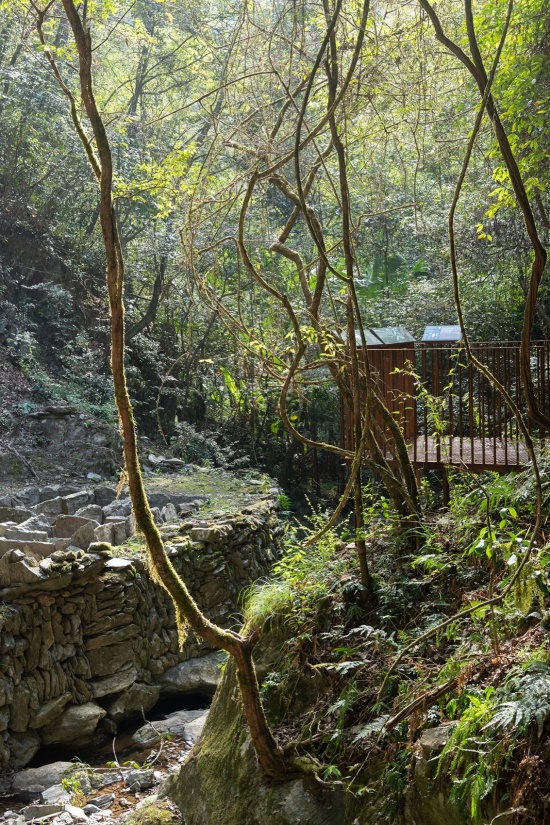
▼小坞里溪流栈道标识,Wayfinding along the Xiaowuli stream boardwalk © 朱侠
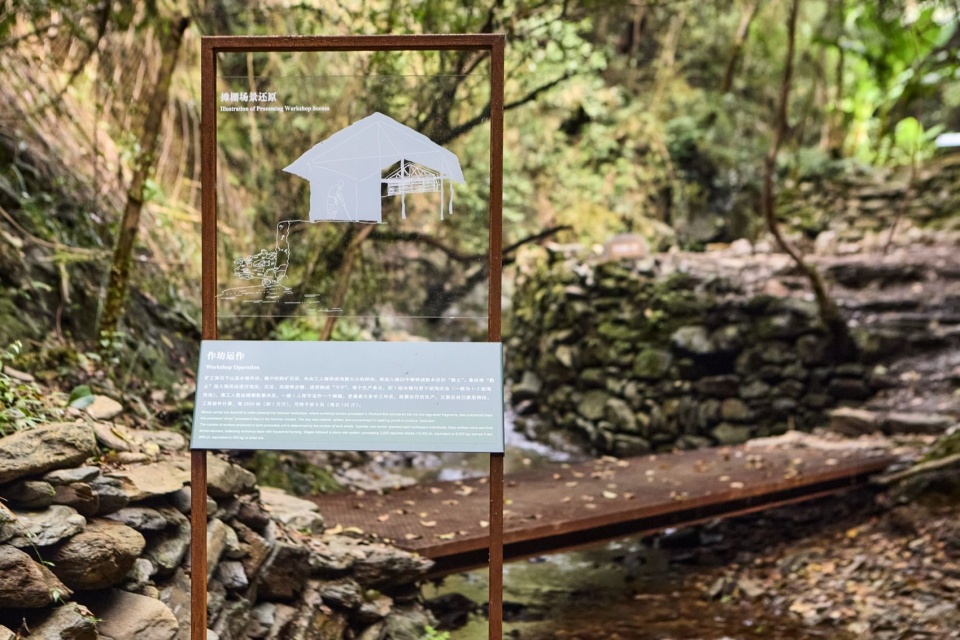
▼夕阳下的小坞里/矿洞中的路径与光线,Xiaowuli in the evening light /Path and light within the mining tunnel © 李明峰
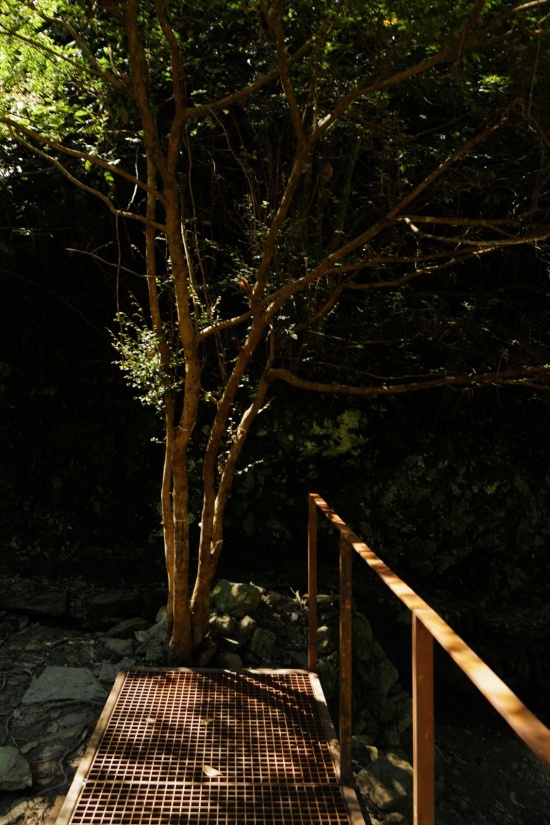
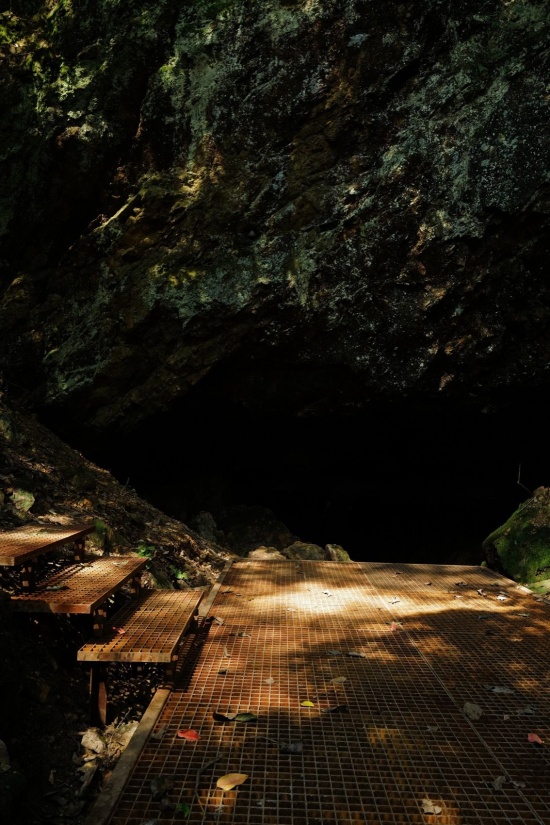
历史上,大午坑、小坞里的山沟里,最多有上千人在里面采石、水碓粉碎、淘洗练泥、制𣎴(dun)、装船外运,为瓷器制作的诸多工序提供原料。
Historically, as many as a thousand people worked in the mountain valleys of Dawukeng and Xiaowuli, quarrying stone, crushing it with water-powered trip hammers, washing and refining the clay, making *dun* (𣎴) blocks, and transporting them by boat. These activities supplied raw materials for the many stages of porcelain production.
▼遗产在江西省的位置与遗产区缓冲区地形图,Location in Jiangxi and topography of the heritage site and buffer zone © 景德镇手工瓷业遗存申遗文本编制团队
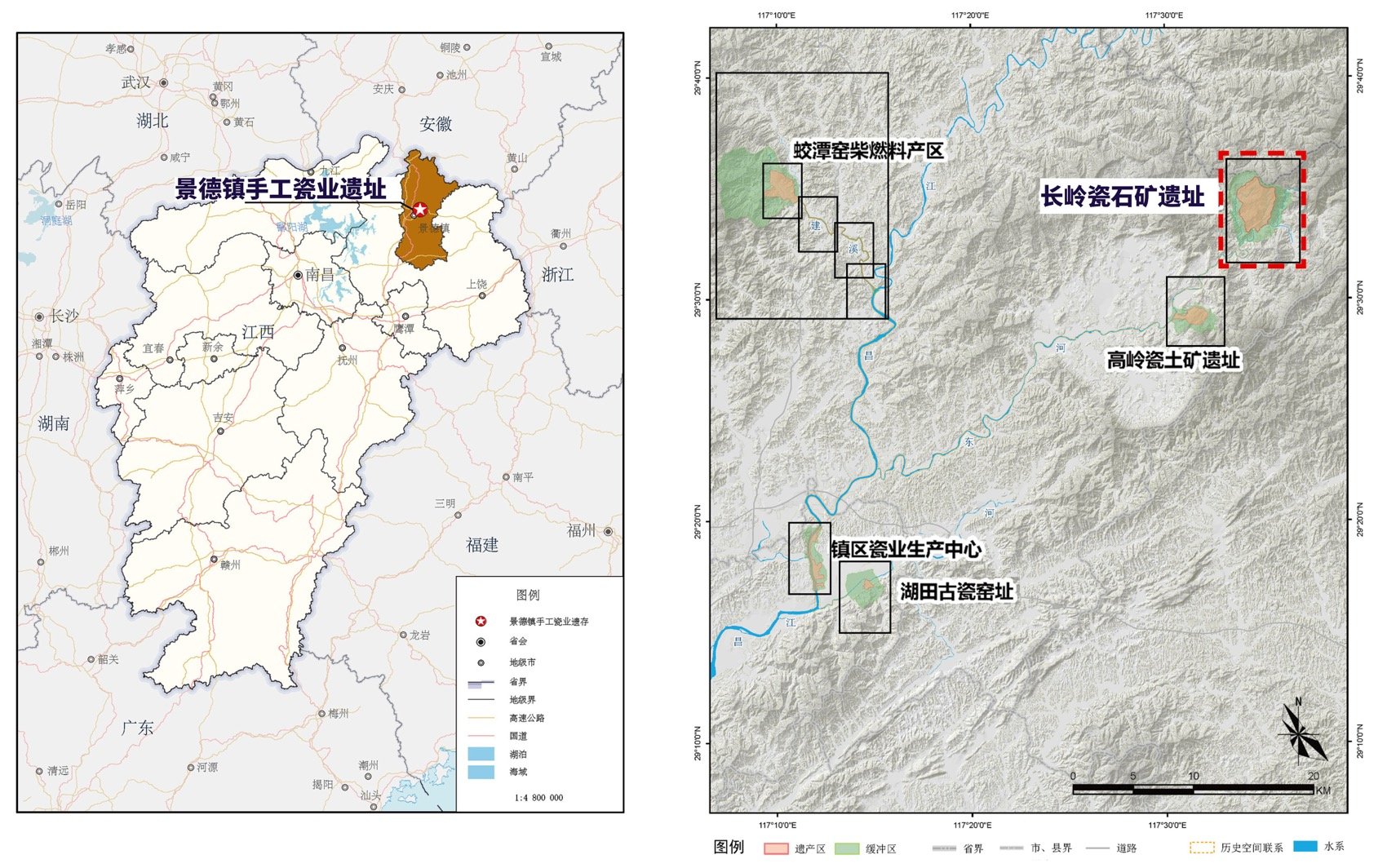
▼长岭瓷石矿遗址片区,
Changling Porcelain Stone Mining Site © 景德镇手工瓷业遗存申遗文本编制团队
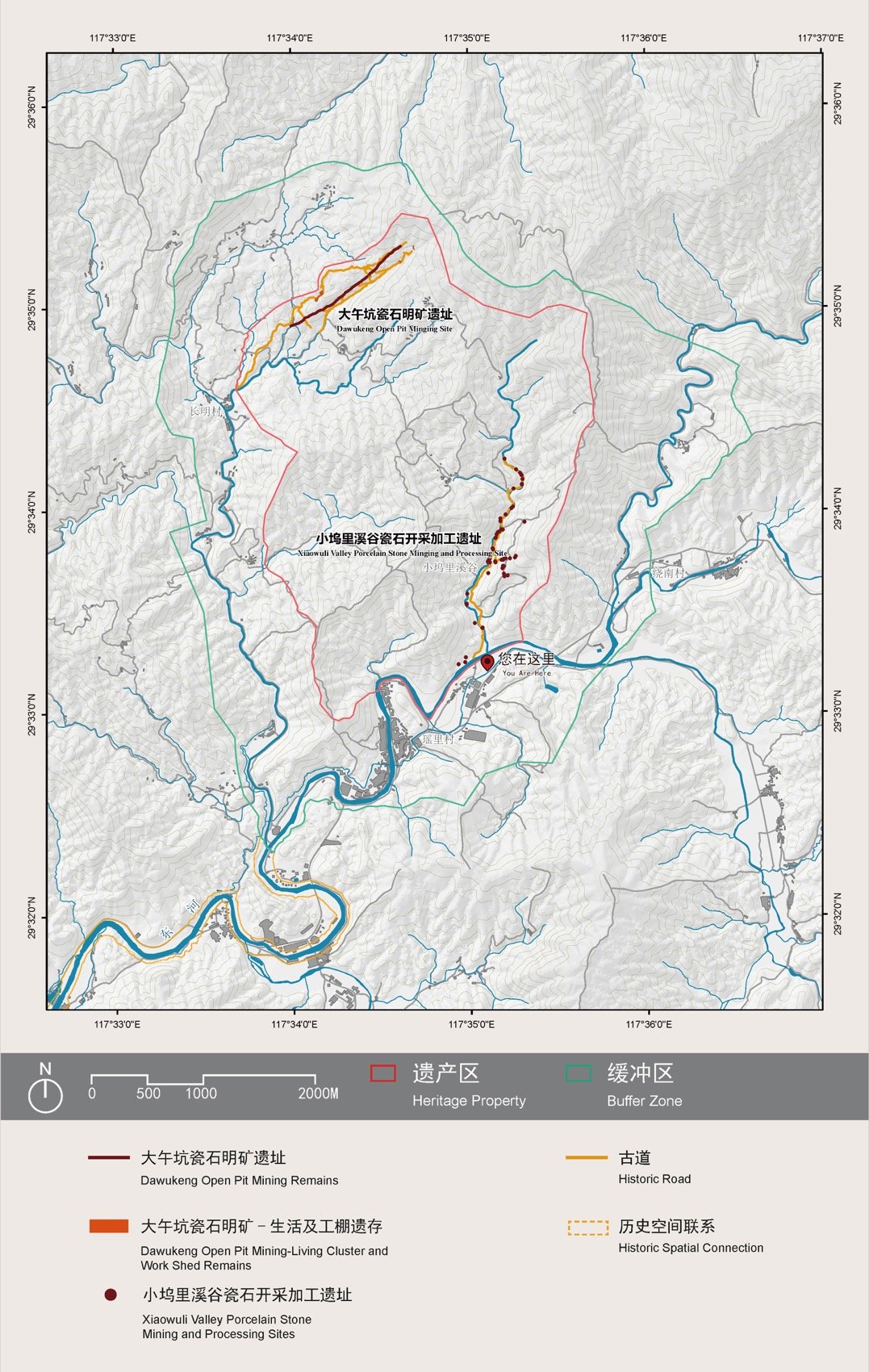
在此次申遗工作中,景观团队的工作范围除了两条山中的矿石加工(局部采矿)遗址,还包括两个以现有村落为基础的管理站和游客信息中心,一处位于小坞里遗址起点的户外教育、科普、互动场所。景观设计团队与遗产保护、地质勘察、考古、生态等多个技术团队合作,提出利用原路、修复生态破损、降低灾害风险、就地取材、轻介入等景观策略。
As part of the World Heritage nomination, the landscape team’s scope included not only the mineral-processing and limited mining remains in the two mountain valleys, but also two management stations and visitor information centers based in existing villages, as well as an outdoor education, interpretation, and interactive area at the entrance to the Xiaowuli site. Working with multidisciplinary teams specializing in heritage conservation, geological surveys, archaeology, and ecology, the landscape design team proposed strategies including reusing existing paths, restoring damaged ecosystems, reducing disaster risks, sourcing materials locally, and minimizing intervention.
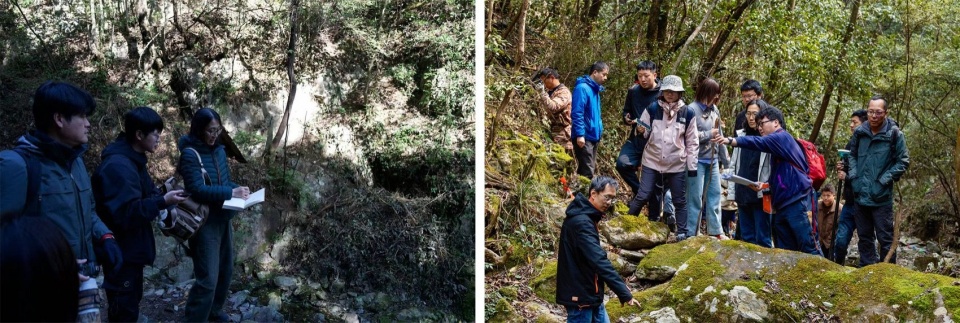
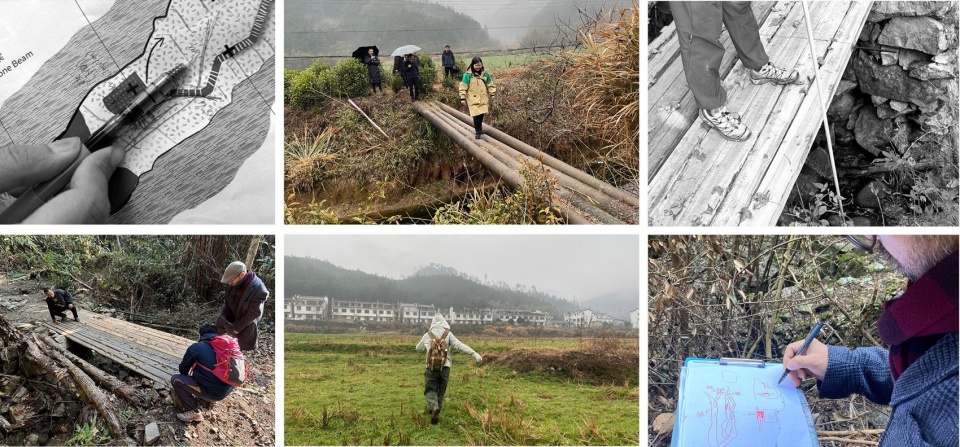
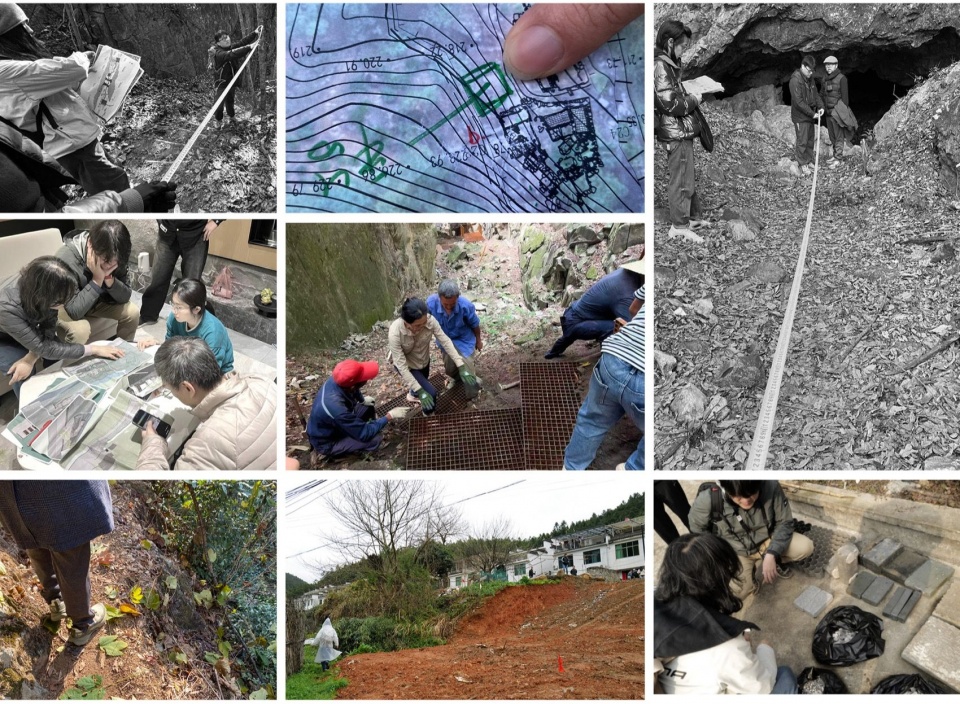
▼多专业团队现场勘测/现场踏勘,On-site survey by multidisciplinary teams /Field survey © 魏青
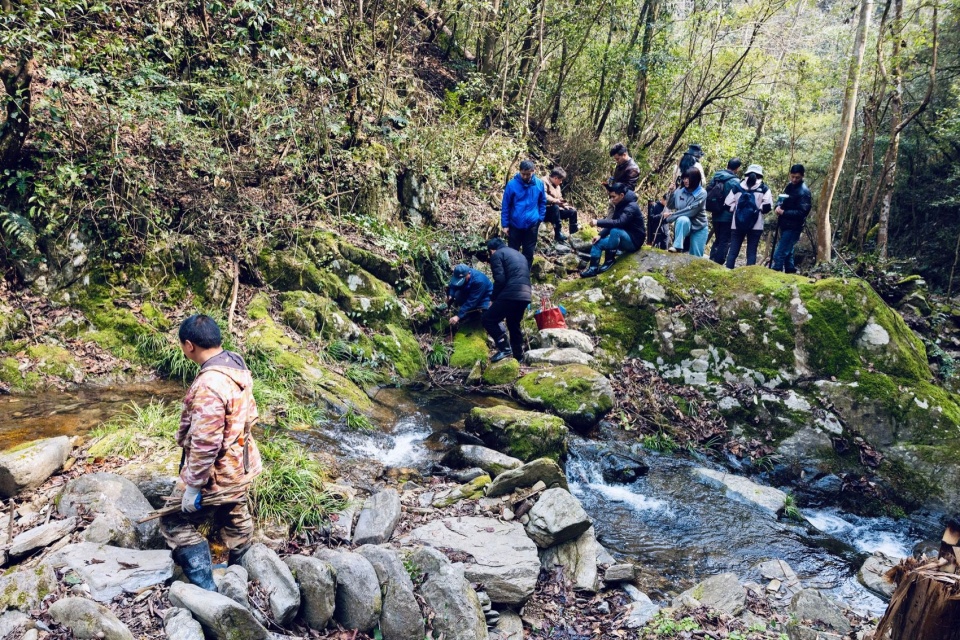
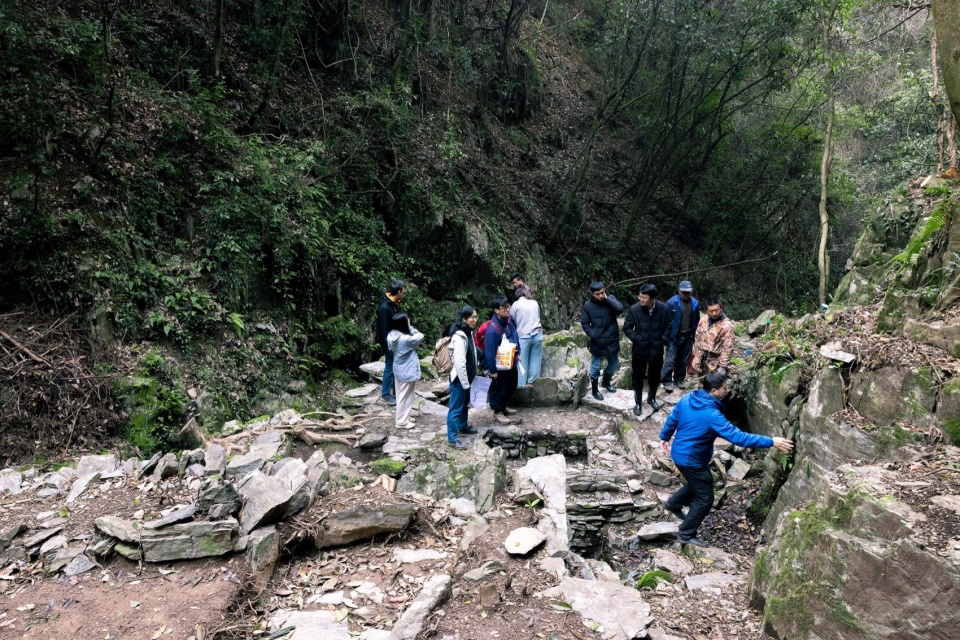
▼技术团队现场交流,On-site discussions between technical teams © 魏青
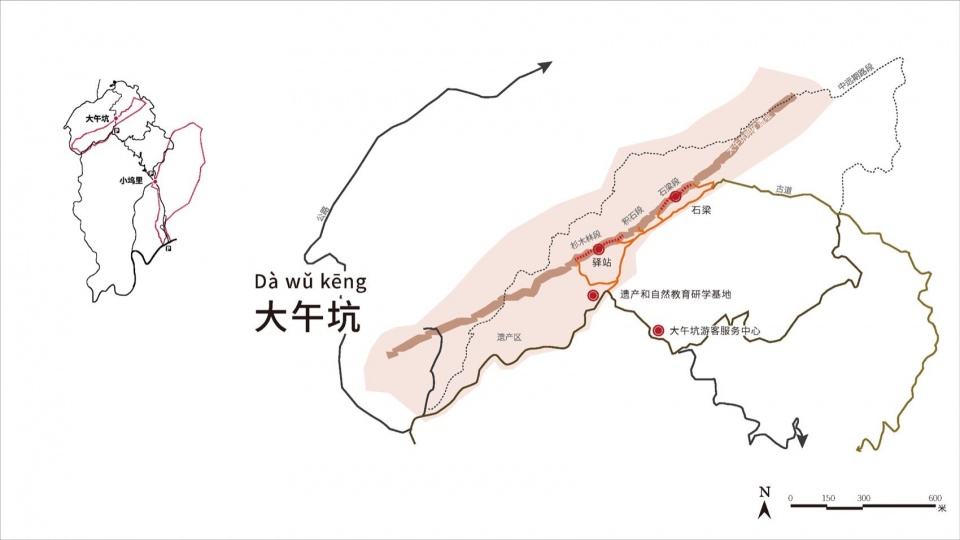
▼大午坑平面示意图,Dawukeng site diagram © 张唐景观
▼小坞里平面示意图,Xiaowuli site diagram © 张唐景观
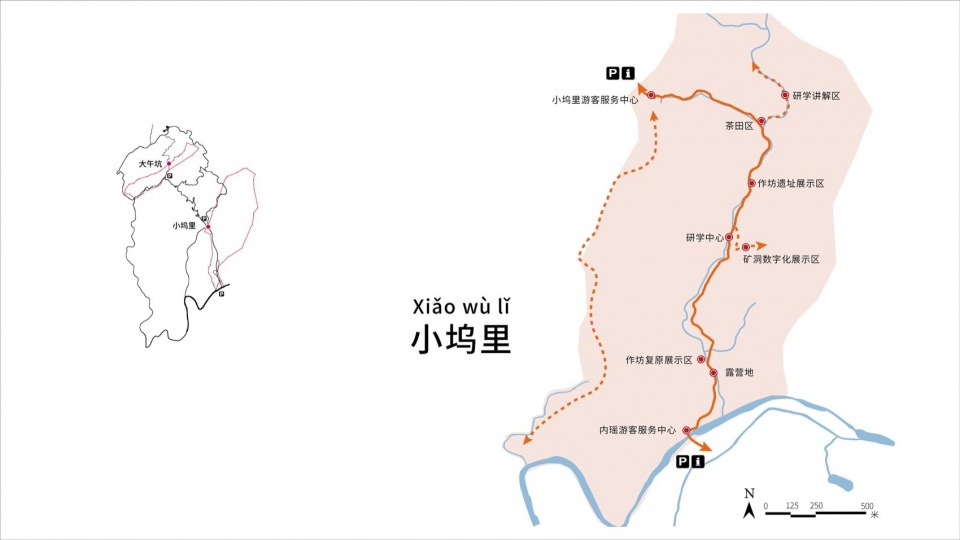
▼驻场记录:踏勘、复核与调整,Field records: surveys, reviews and adjustments © 张唐景观
▼现场测绘与施工调整,On-site surveying and construction adjustments © 张唐景观
1 线路与游览
1. Routes and Visits
1.1山路与台阶:
1.1 Mountain Trails and Steps
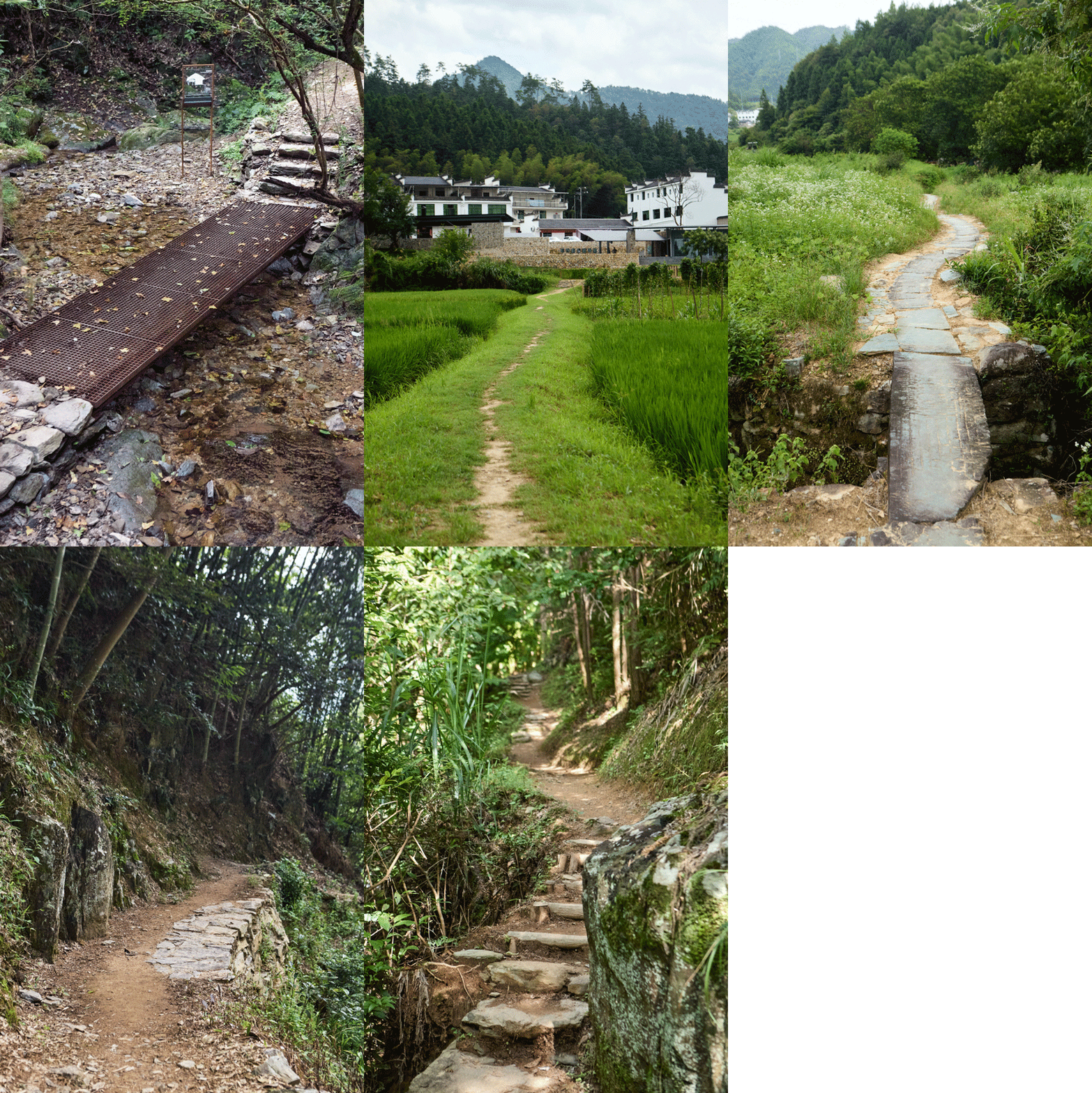
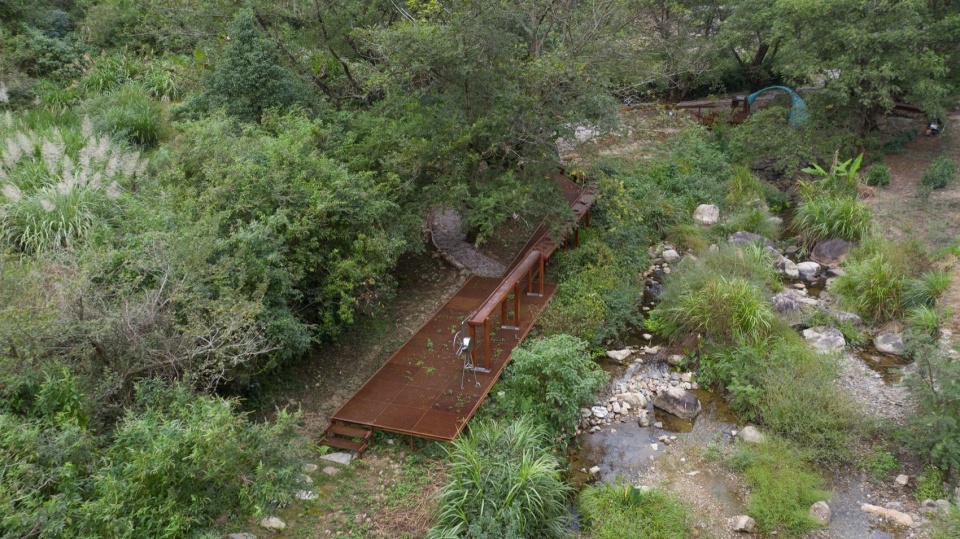
沿着采矿遗址修复的山路是一条景色宜人的徒步线(其中大午坑3.5公里,小坞里5.7公里),修复后成为科考、户外、研学等活动的主要路径。原有采矿的山路狭窄,局部塌方,陡峭的地方有滑坡。修复的原则是:一是不拓宽原有道路,在现有宽度上组织好山路的排水,防止塌方及滑坡;二是台阶采用松木桩挡土,或就地取材的石台阶;三是跨溪桥采用预制钢板,根据不同水位、水深设计高度。洪水期可淹没。
▼路径轻介入研究手绘草图,
Sketches studying minimal intervention along the paths © 张唐景观
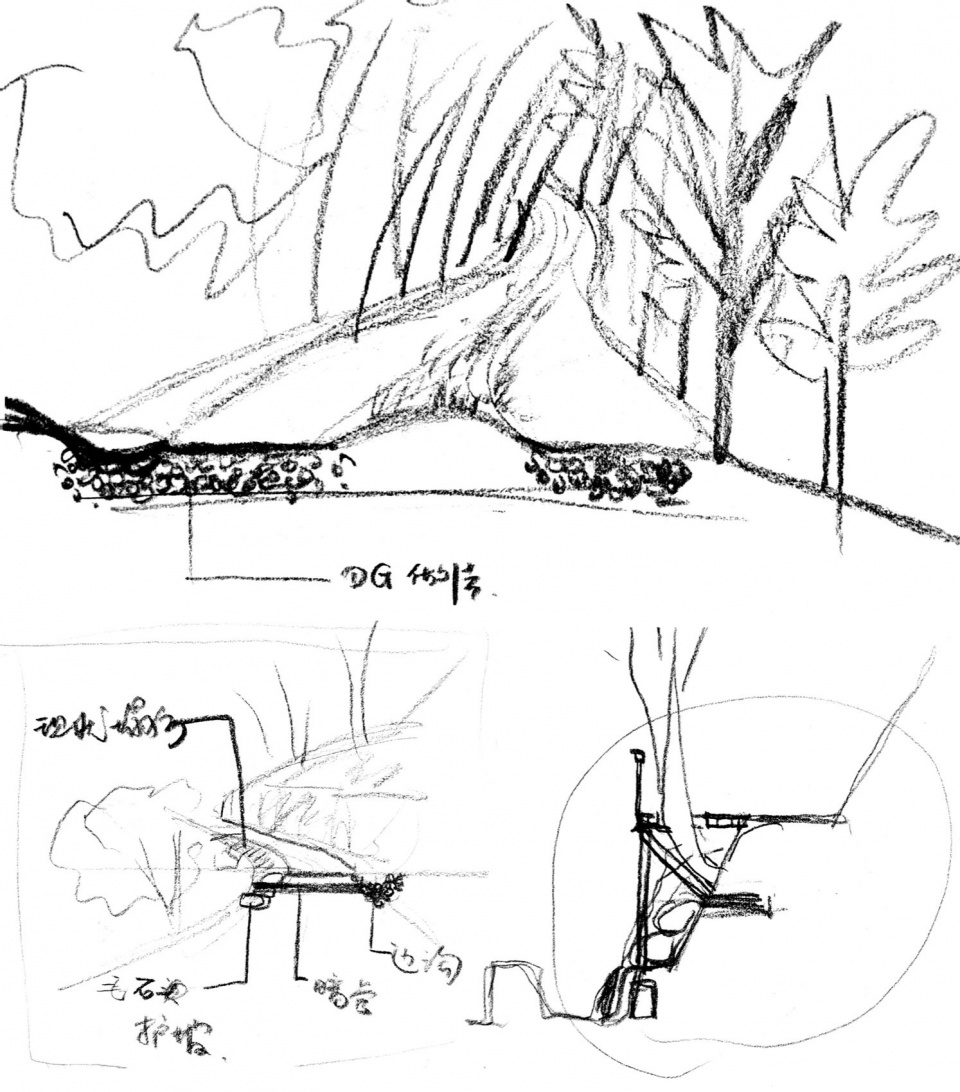
▼修复路径的设计策略,Design strategies for restoring paths © 张唐景观
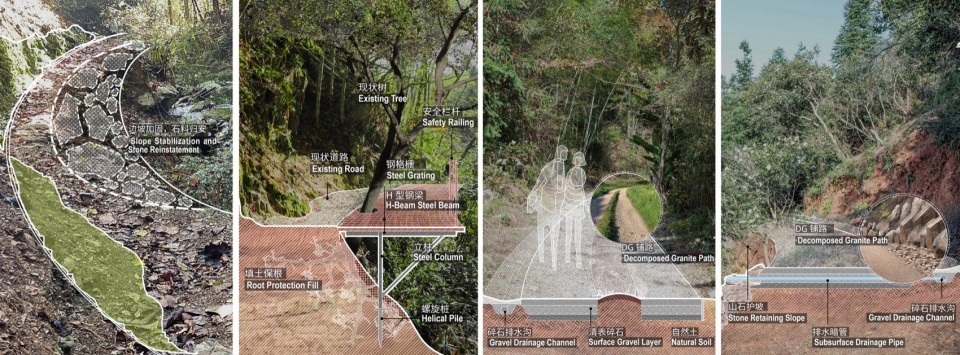
The restored mountain paths along the mining sites are also scenic hiking trails—3.5 km at Dawukeng and 5.7 km at Xiaowuli. After restoration, they became the main routes for scientific investigation, outdoor activities, and educational visits. The original mining paths were narrow, with partial collapses and landslide-prone steep sections. The restoration followed three principles: first, retain the existing path width and improve drainage within the existing topo to prevent collapses and landslides; second, use pine logs as supports or repair stone steps from locally sourced materials; and third, use prefabricated steel plates for stream-crossing bridges, setting their heights according to water levels and depth. The bridges allow to be submerged by floods.
▼夕阳下的小坞里,Xiaowuli in the evening light © 鲁冰
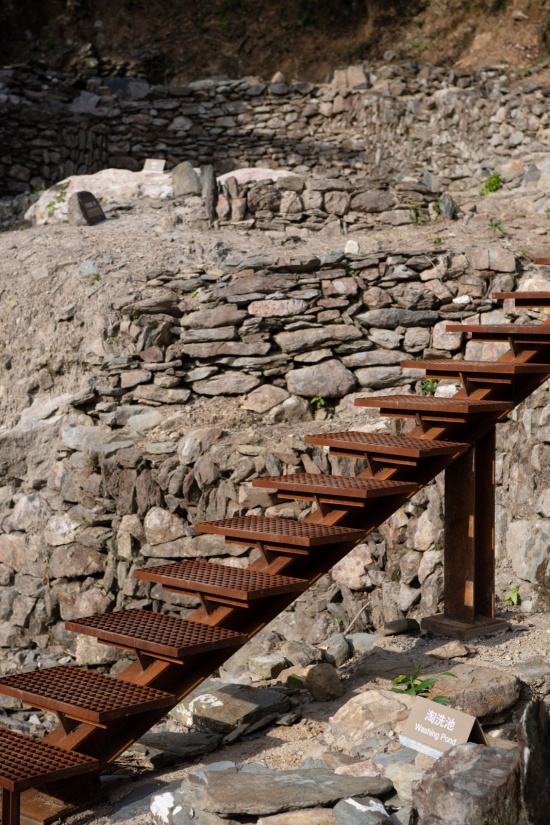
▼小坞里44号遗址台阶,Steps at the No. 44 remains in Xiaowuli © 鲁冰
▼修复后的实景,Restored scene ©朱侠
1.2遗址上的线路:
1.2 Routes through the Heritage Remains
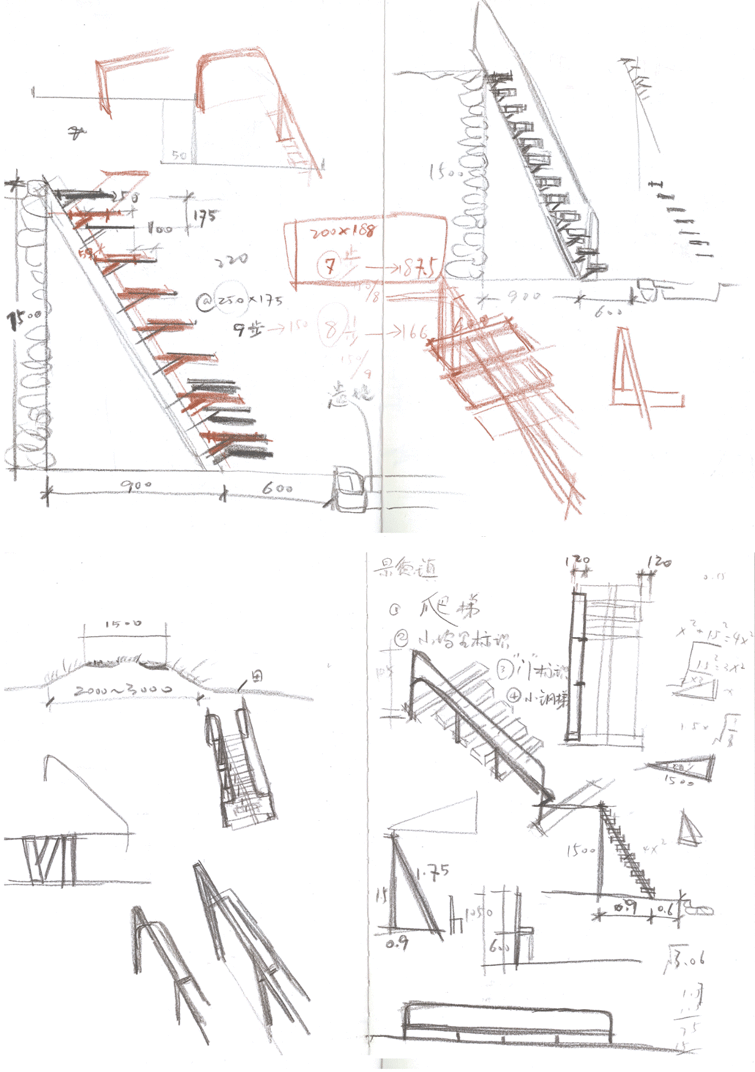
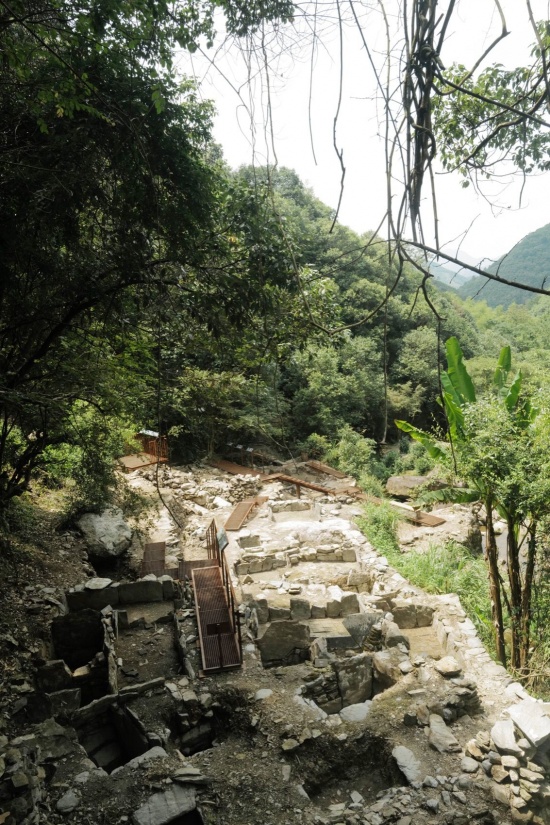
在小坞里44号淘洗池遗址,选取现存规模最大、工序保存最为完整的一组遗址进行展示。通过局部钢格栅栈道介入三层台地,使访客能够近距离观察精细的生产工序与水力组织,并结合观景平台提供沿途最佳的远观视角。对于不宜直接介入的遗址,设置观望平台进行俯瞰展示,可服务于有组织的研学考察,其余遗址则以原位修复和保护为主。
▼栈道台阶路线手绘设计图纸,Hand-drawn design drawing of the steps route on the boardwalk © 张唐景观
▼台阶路线模型设计推敲,Model design and refinement of the staircase route © 张唐景观
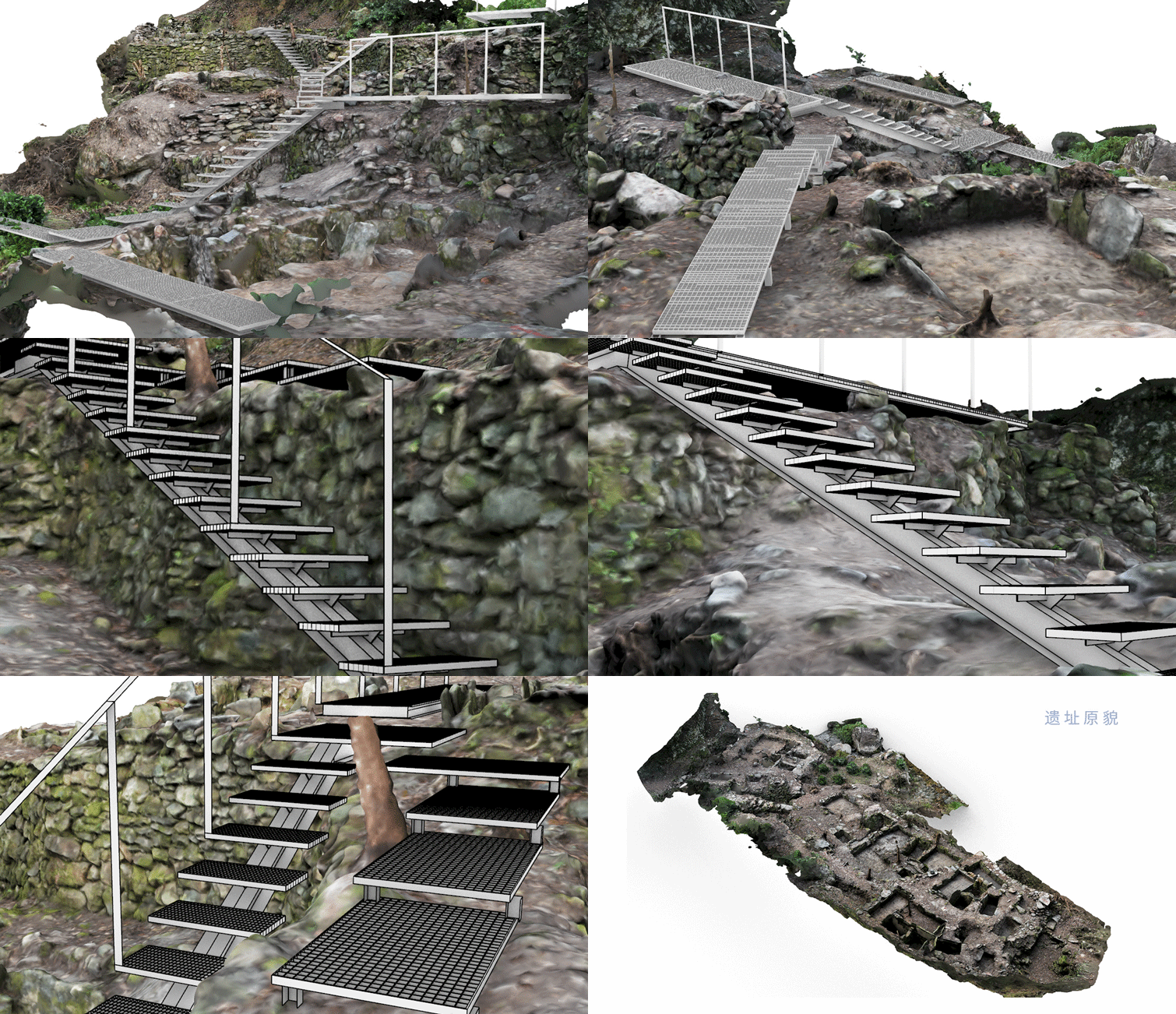
At the No. 44 washing-pool remains in Xiaowuli, the largest surviving remain and the most complete production processes, was selected for interpretation site. Steel-grating boardwalks were introduced in selected areas across the three terraces, allowing visitors to observe the whole production processes and water-management system closely. The platforms also provide the best viewing points for looking across the site. For remains that are delicate for close observe, we select proper viewing spots allow visitors to look down from above and support educational visits.
▼小坞里44号淘洗池遗址,No. 44 washing-pool remains in Xiaowuli © 李明峰
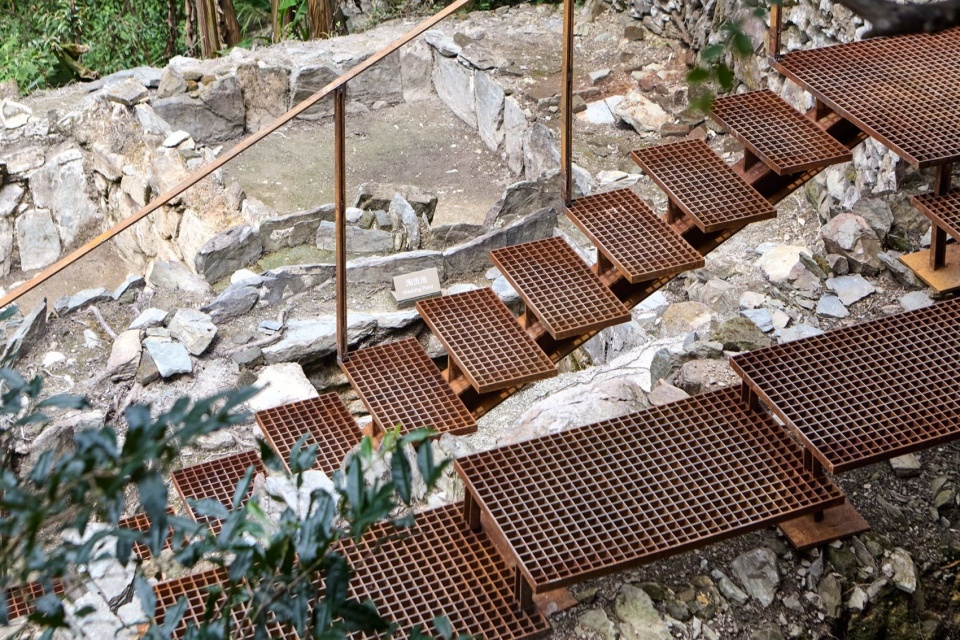
▼遗址中的钢格栅步道,Steel-grating boardwalk through the remains © 李明峰
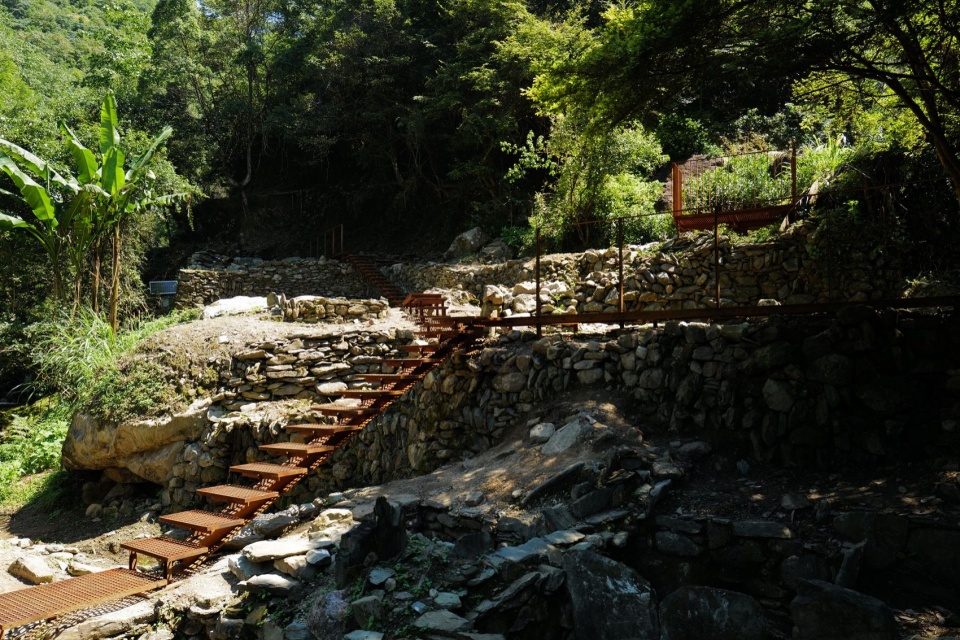
▼最小干预的路径台阶细节,Details of the minimally invasive steps © 朱侠
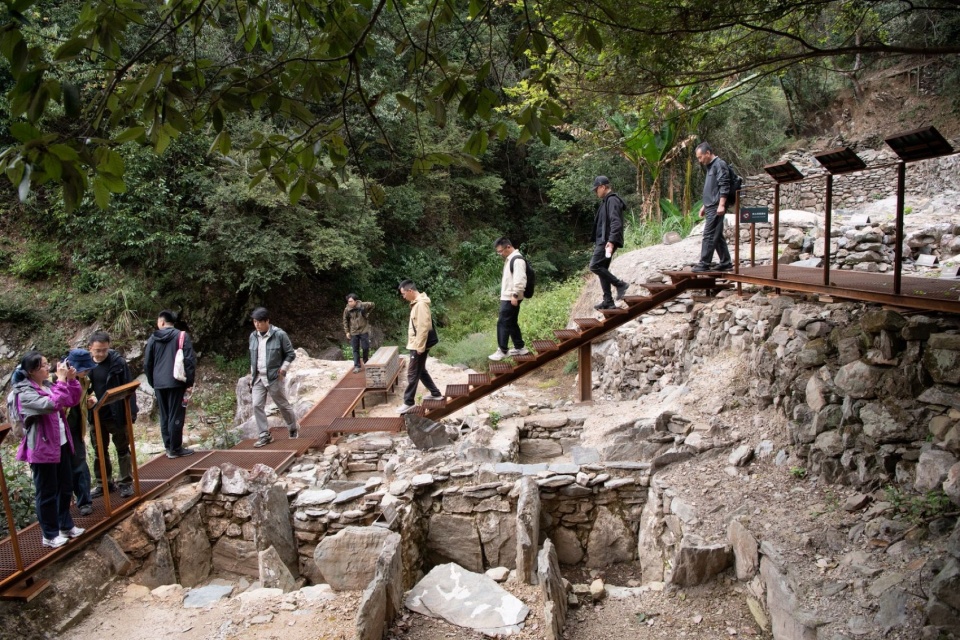
▼专家团队考察,Expert team visiting the site © 鲁冰
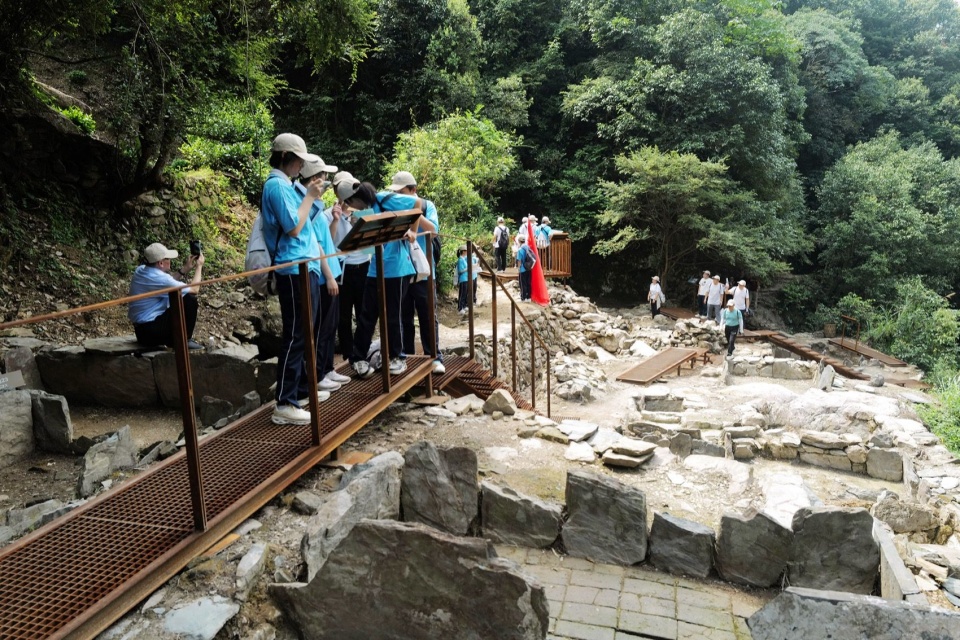
▼青少年参与遗产教育活动,Young people taking part in heritage education © 李明峰
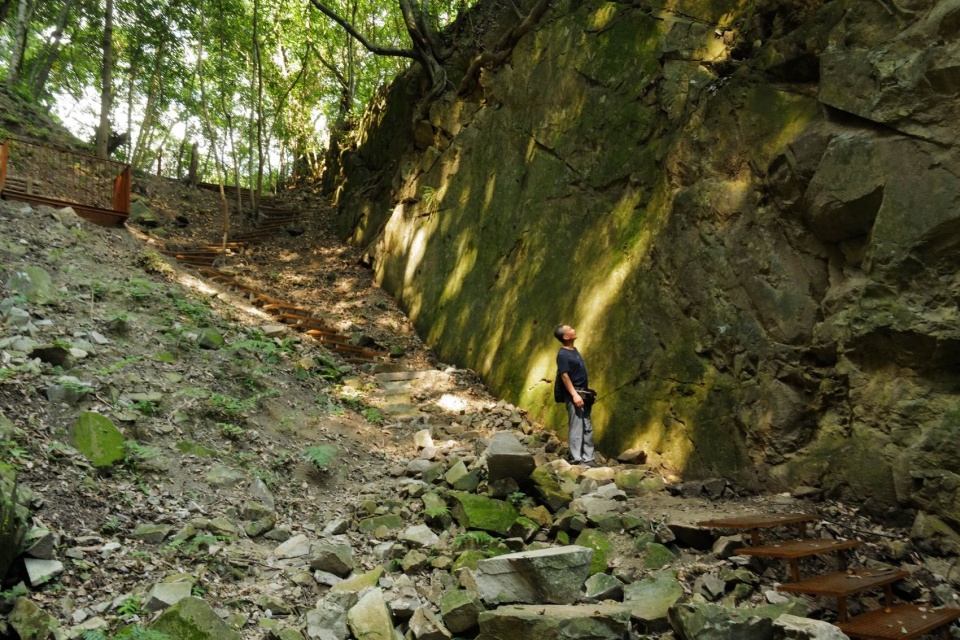
在大午坑的石梁矿洞中,由地质灾害专家评估坠石风险及位置,选择安全徒步线路,做崖壁保护;与当地匠人研究台阶的支撑方法,因地制宜设计攀登路线和休息平台;
▼大午坑石梁矿洞平面示意图,Site diagram of the Shiliang mining tunnels © 张唐景观
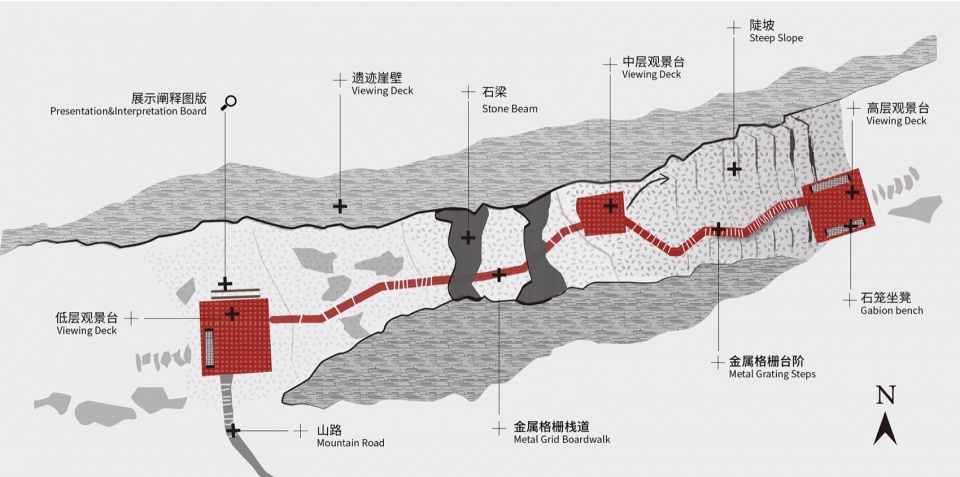
At the Shiliang mining tunnels in Dawukeng, together with geological hazard specialists, we selected a trail based on the rock collapse assessment and the safety cliff protection measures. The team also worked with local craftsman to develop support methods for the steps, designing climbing trails and rest platforms in response to the terrain.
▼避开现状树木的攀登路线,Climbing route avoiding existing trees © 鲁冰
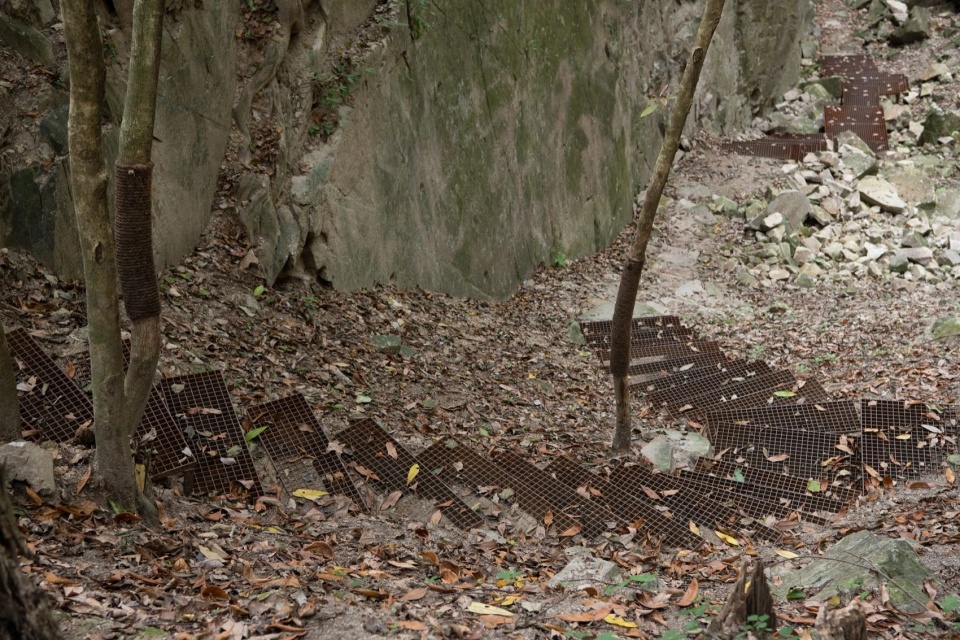
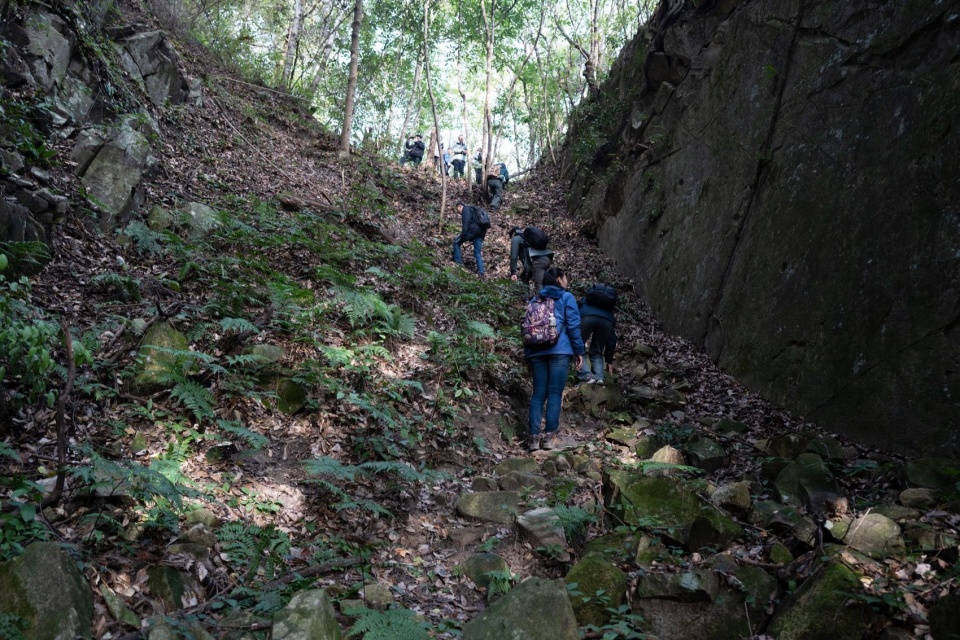
▼原始陡坡路线,Original steep route © 李明峰
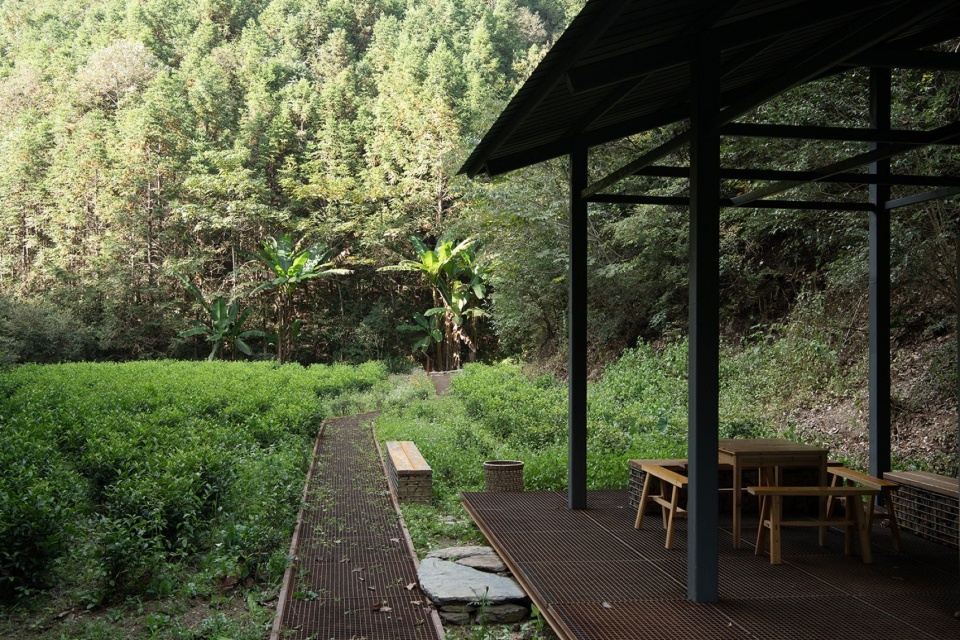
▼保留现状茶田的小坞里茶田区,Existing tea fields retained in Xiaowuli © 朱侠
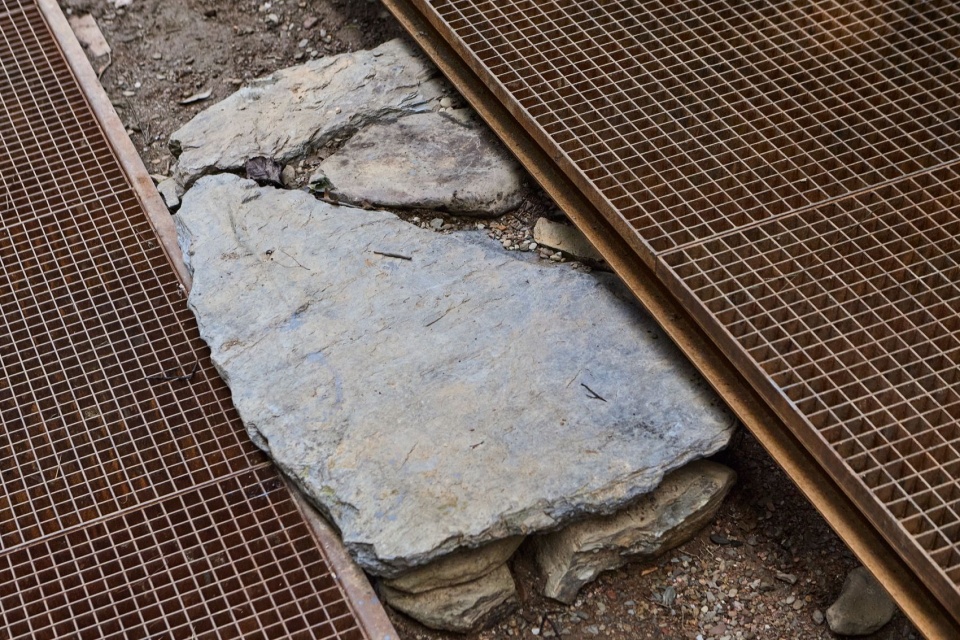
▼踏步石材细节,Stone step detail © 朱侠
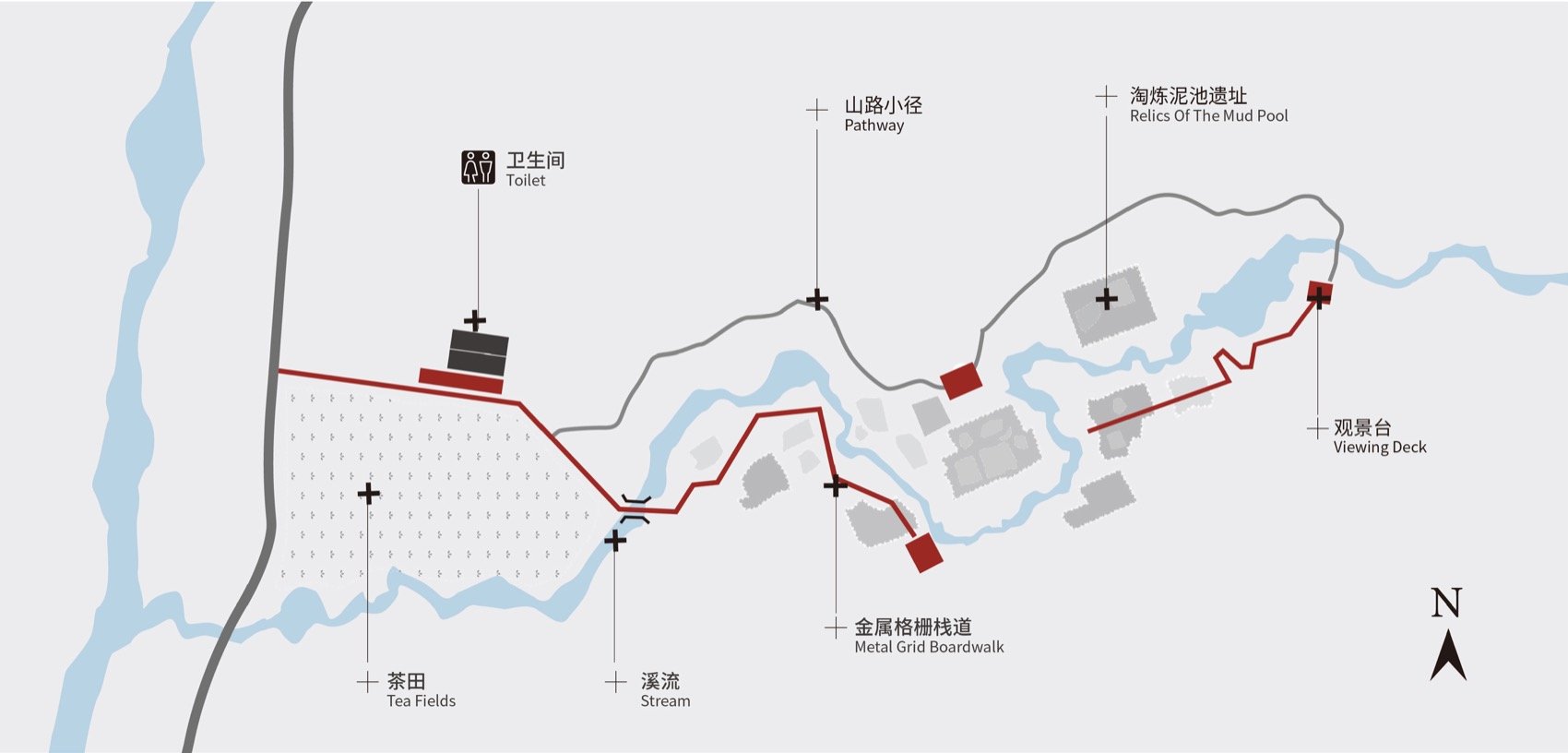
▼小坞里茶田区概念平面示意图,Conceptual site diagram of the Xiaowuli tea fields © 张唐景观
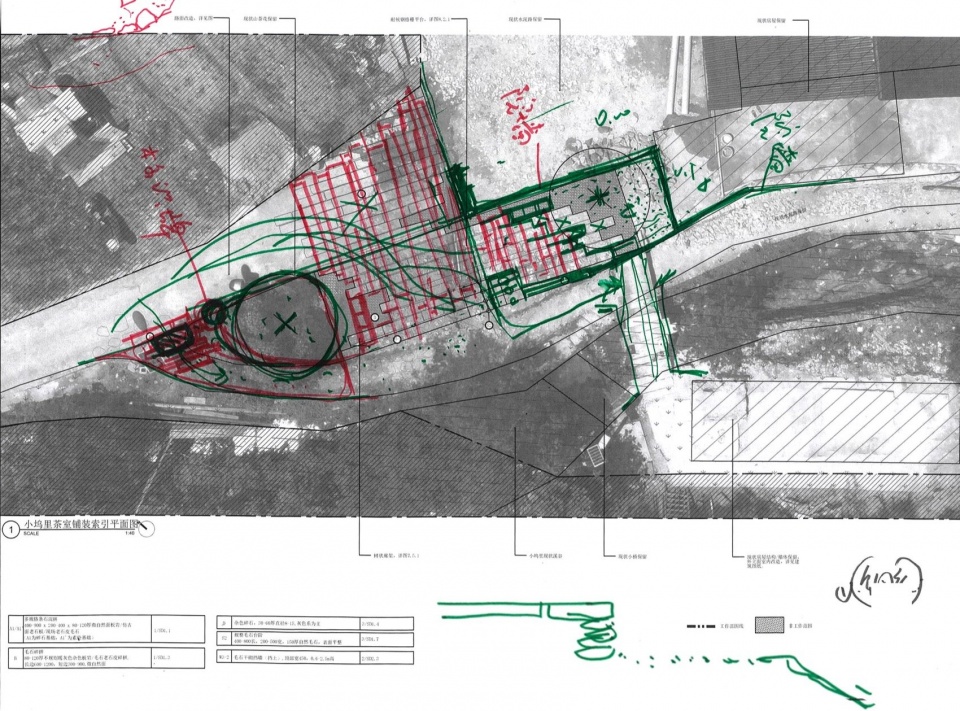
▼茶田区施工铺装图纸调整,Paving drawing adjustments for the tea-field area © 张唐景观
1.3 线路上的提示:
1.3 Wayfinding and Viewpoints along the Route
沿路设计框景、俯瞰等驻留空间,让遗址的局部以不同视角为徒步者呈现。
▼陡坡台阶设计研究,Design studies for steps on steep slopes © 张唐景观
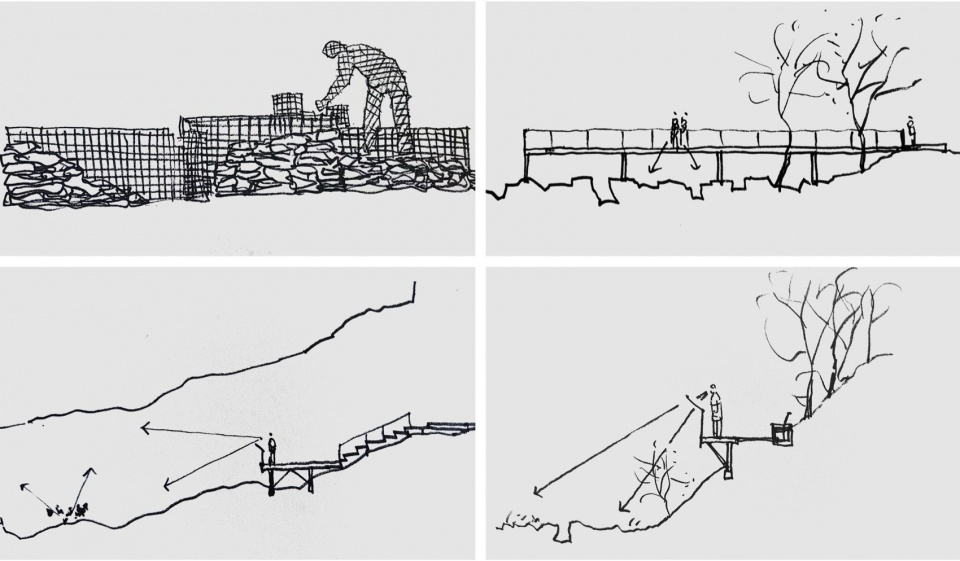
Framed views, overlooks, and places to pause were designed along the routes, allowing hikers to experience different parts of the heritage remains from a variety of perspectives.
▼沿路驻留空间与标识,Places to pause and wayfinding along the route © 鲁冰
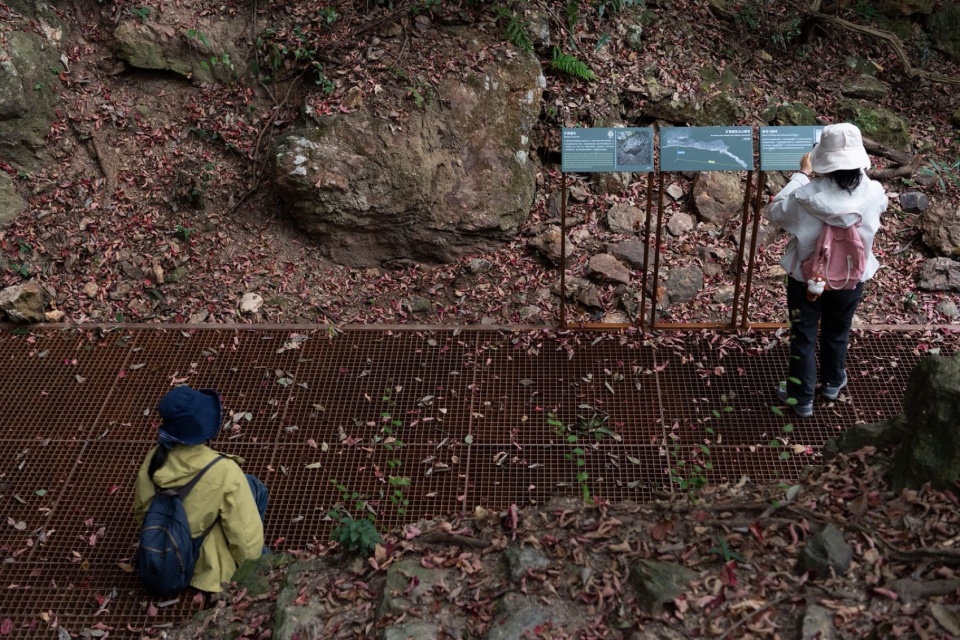
▼遗址标识与框景,Heritage signage and framed views © 朱侠
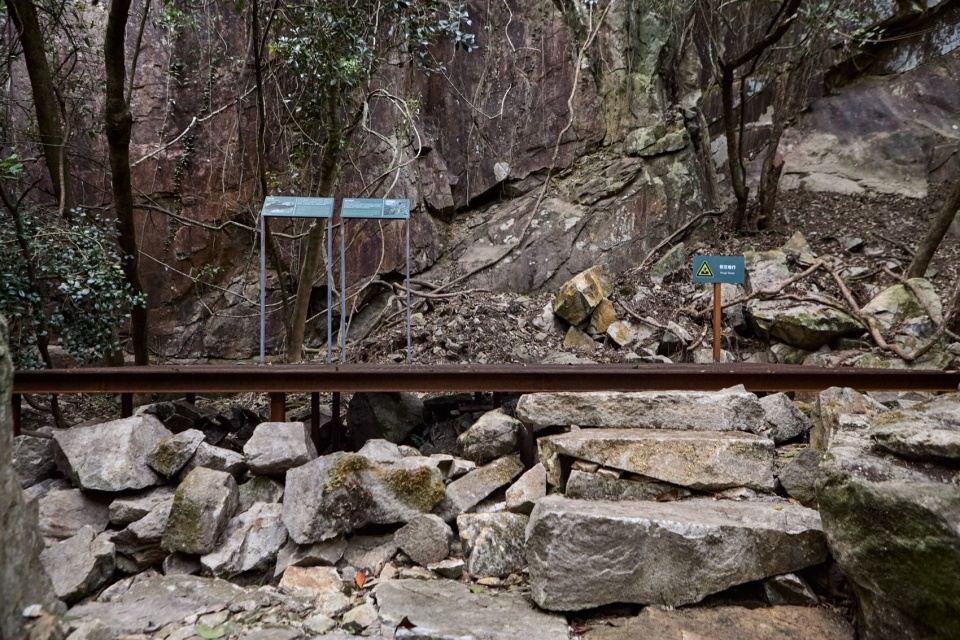
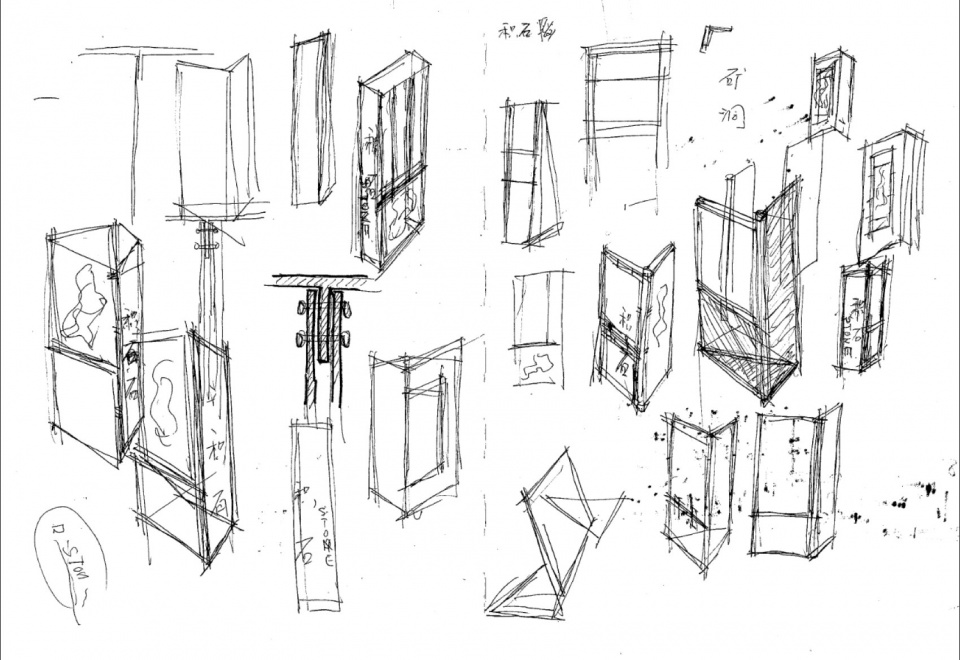
▼标识手绘设计图纸,Hand-drawn signage design drawings © 张唐景观
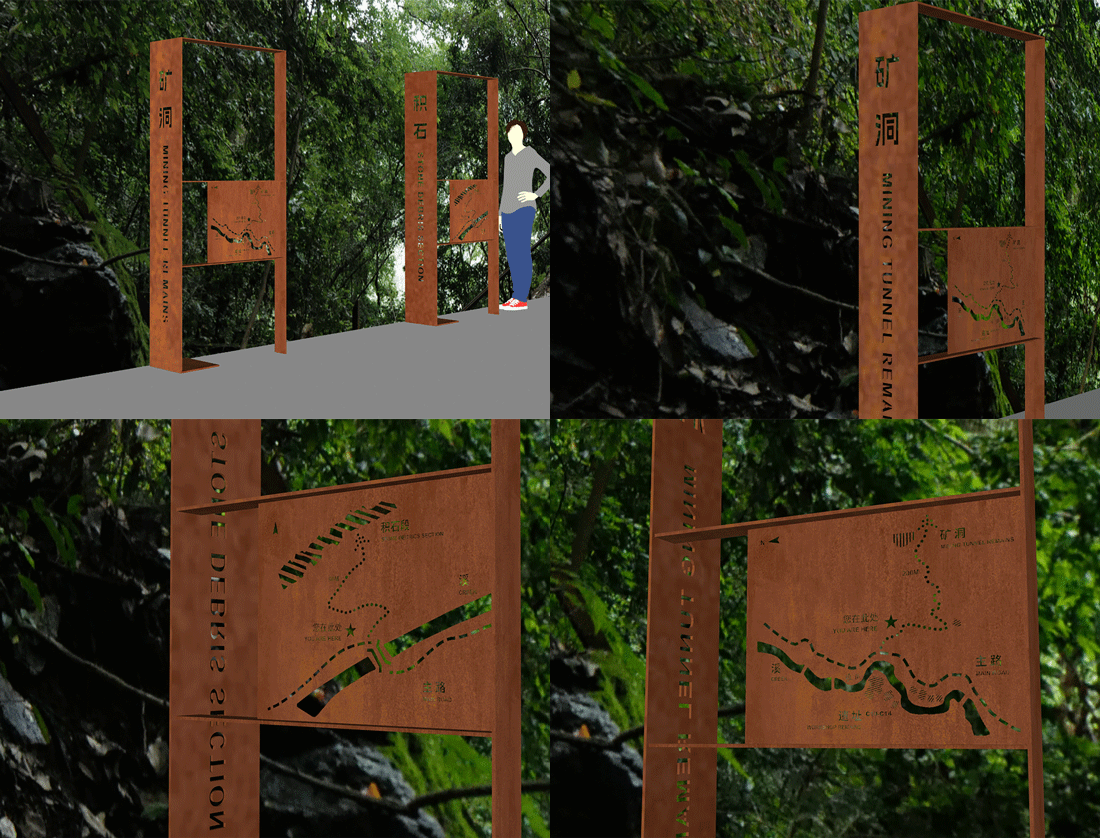
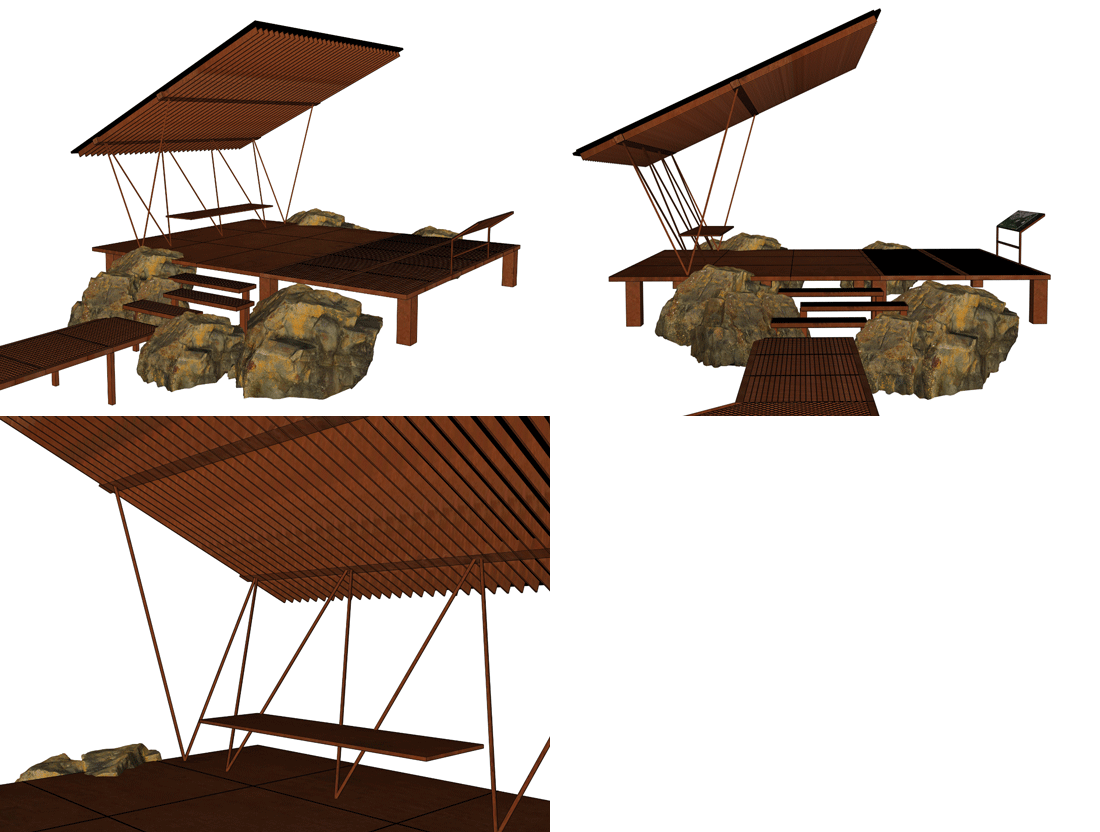
▼标识模型设计推敲/观景台模型设计推敲,Signage model design study/ Viewing platform model design study © 张唐景观
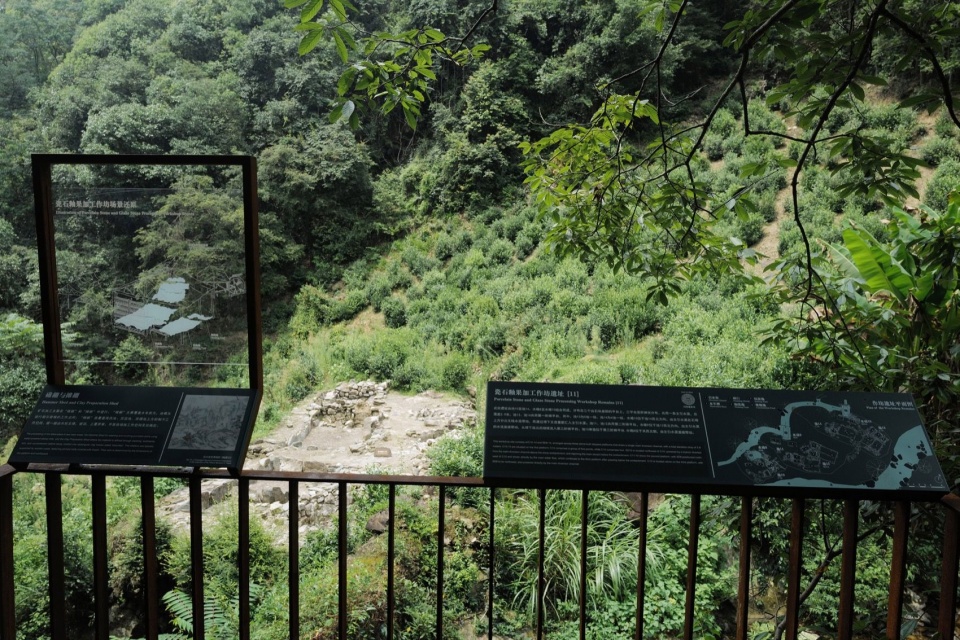
▼俯瞰遗址的标识平台,Interpretation platform overlooking the remains © 李明峰
2 展示与交流
2. Interpretation and Communication
2.1 大午坑入口矿石展示
2.1 Mineral Display at the Dawukeng Entrance
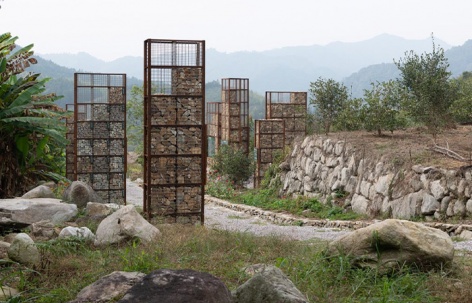
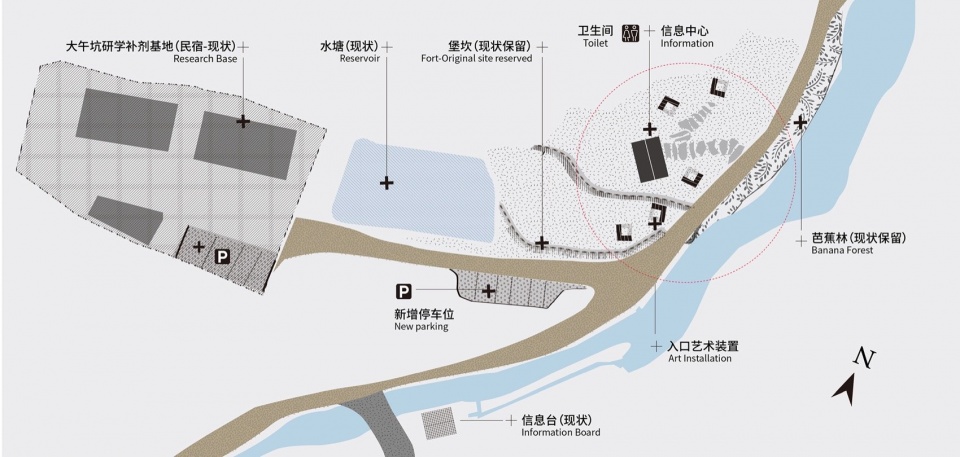
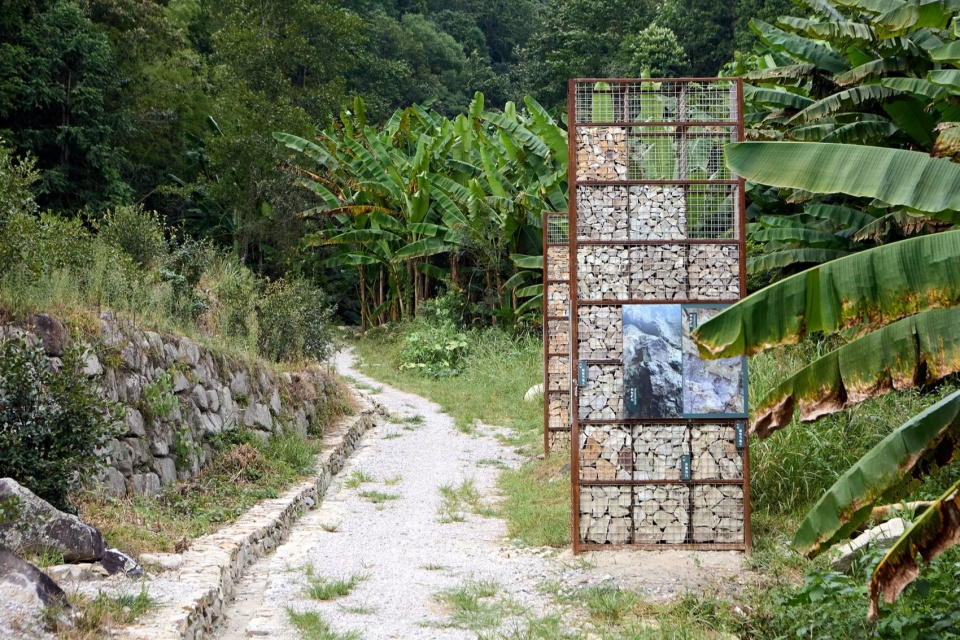
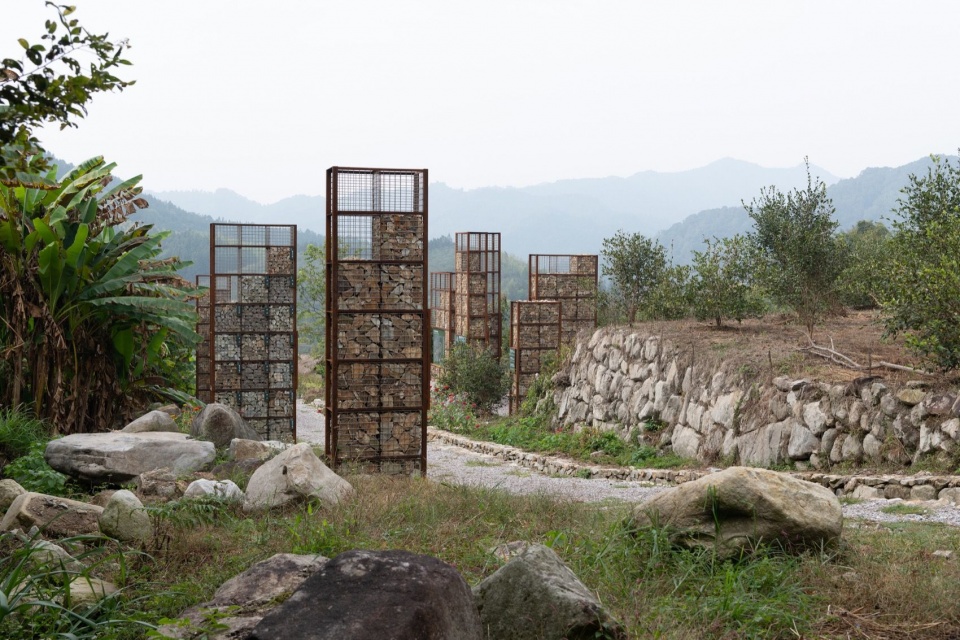
在大午坑遗址的入口处,有成片的芭蕉自由生长,夏季时高度冲天像一片厚厚的墙。这种芭蕉的根茎在粮食不足的年代曾经是当地人的主粮。使用以瓷石为主要填充材料的石笼柱呼应芭蕉,组织为展示空间,为游客讲解大午坑遗址信息。
▼大午坑游客中心概念平面示意图,Conceptual plan of the Dawukeng visitor center © 张唐景观
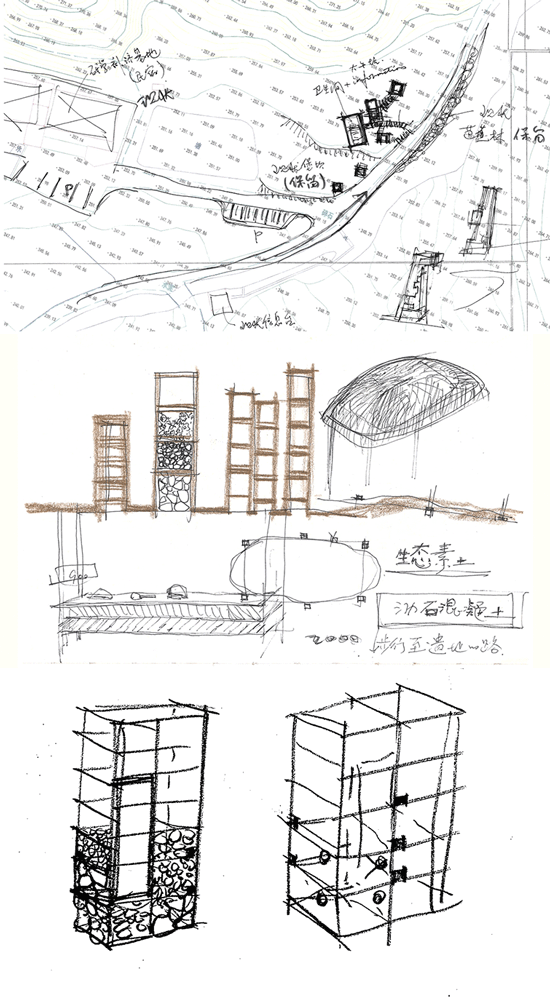
▼石笼手绘草图(左)、选取当地9种矿石通过石笼柱展示其不同的色彩、大小与肌理(右),Hand-drawn gabion sketch (left); nine local ores displayed through gabion columns to showcase their varied colors, sizes, and textures (right) © 张唐景观
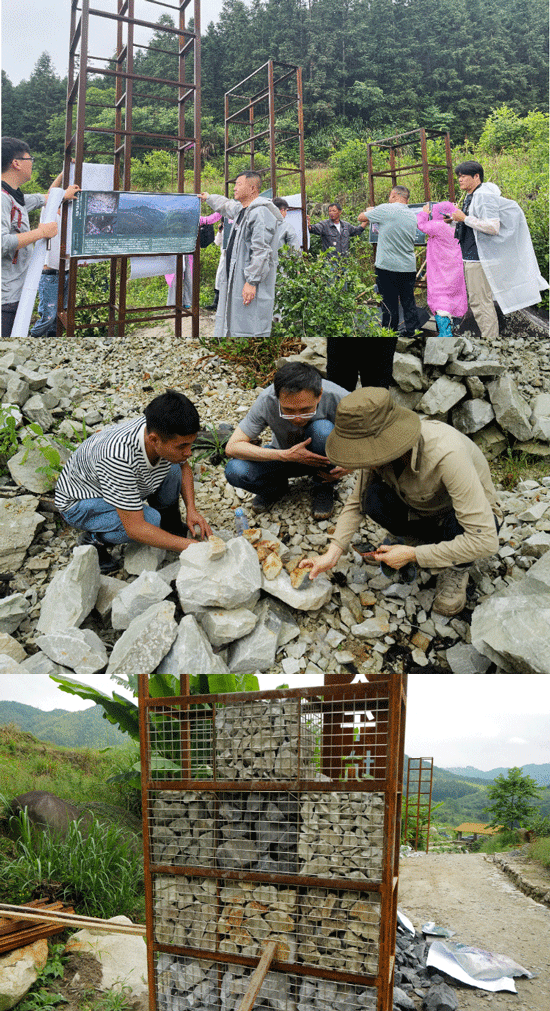
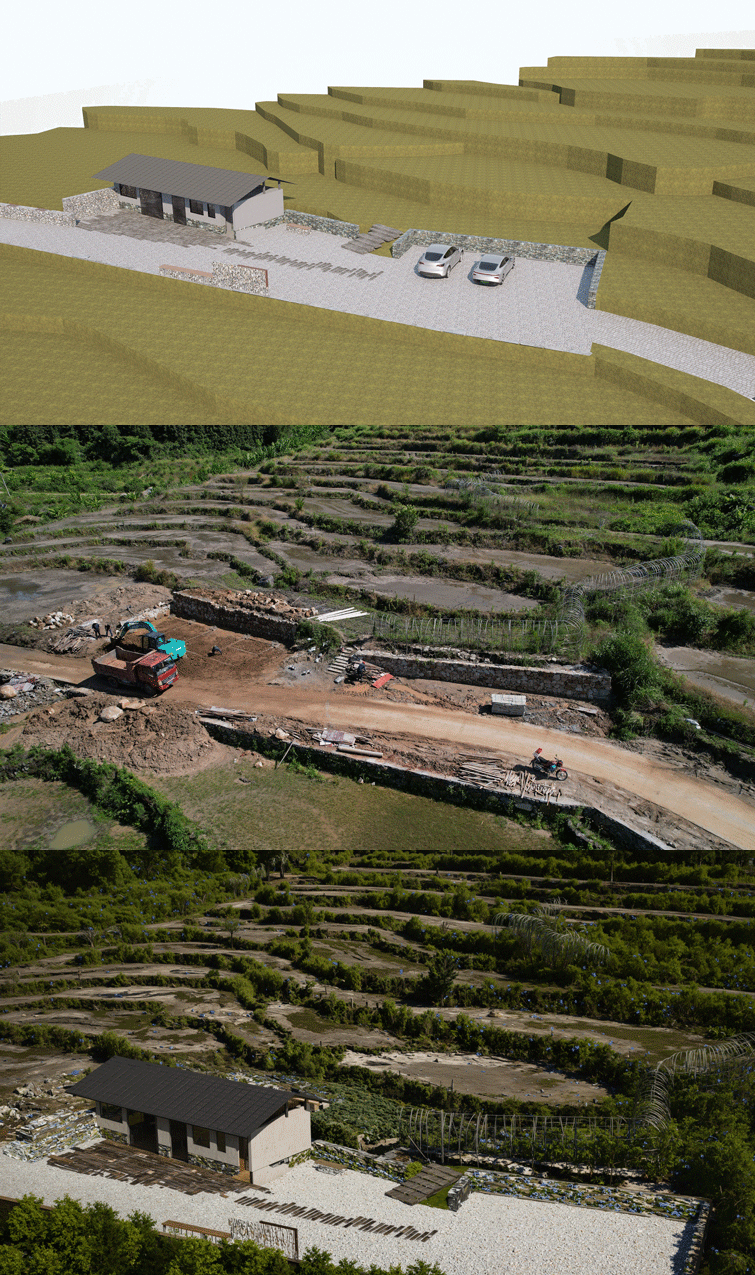
▼大午坑游客中心模型设计推敲,Dawukeng Visitor Center model design study © 张唐景观
At the entrance to the Dawukeng site, clusters of banana plants grow freely, rising high in summer as screen wall. In times of food scarcity, the plants’ rhizomes were once a food resource for the locals. We use a group of gabion columns filled with quarry stone to response the banana plants. Combined interpretation boards, the columns provide diverse visual Dawukeng quarry information to visitors.
▼用于地质解说的石笼立柱,Gabion columns for geological interpretation © 朱侠
▼芭蕉旁的矿石展示空间,Mineral display beside banana plants © 鲁冰
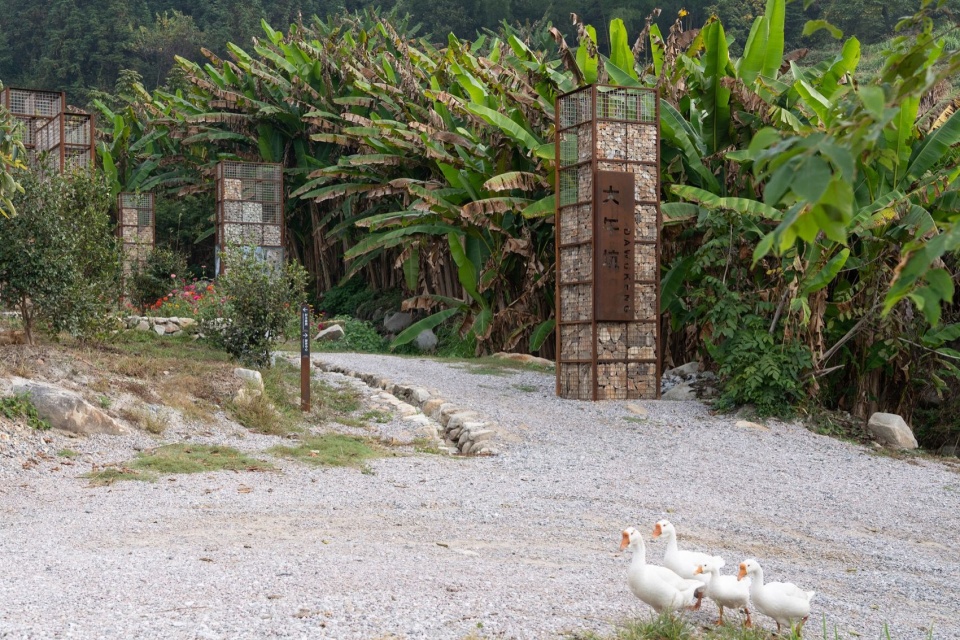
▼大午坑入口石笼立柱,Gabion columns at the Dawukeng entrance © 鲁冰
2.2石梁矿洞
2.2 Shiliang Mining Tunnels
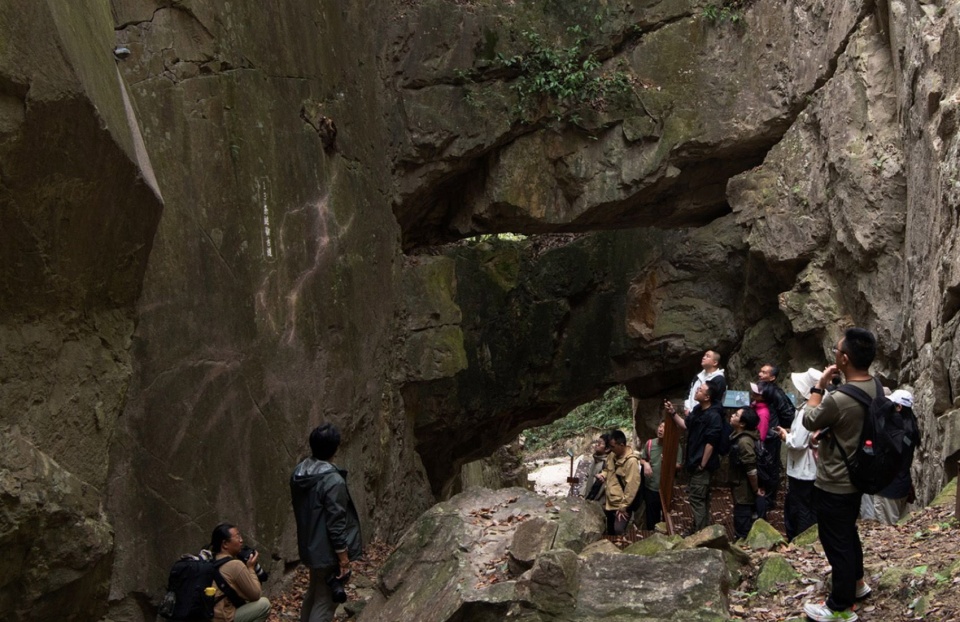
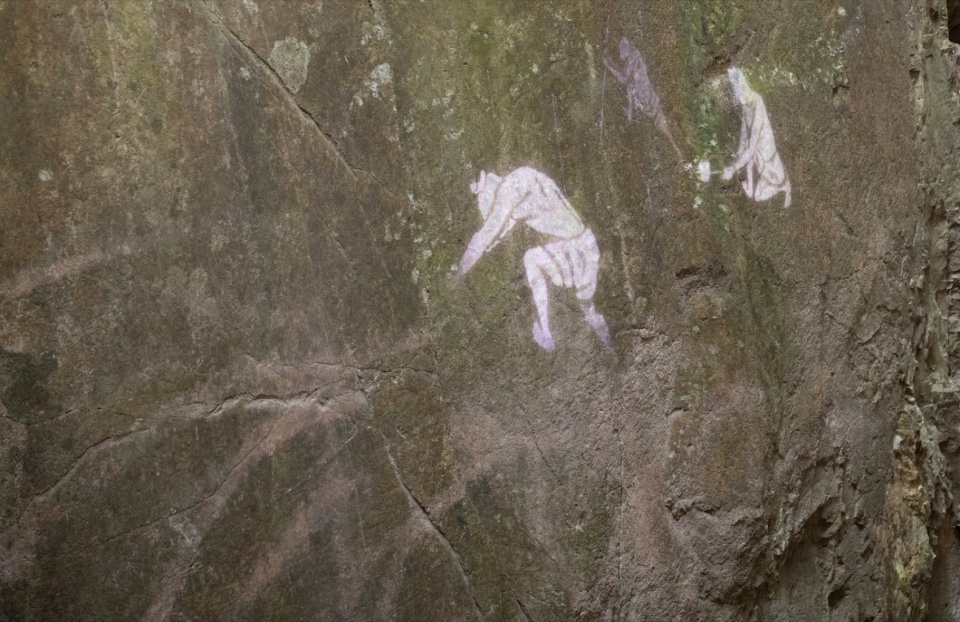
结合现代科技全息投影技术,选择完整崖壁进行遗址投影讲解,同时设计观影及投影设施平台
Holographic projection technology is used to present the history of the site on a flat cliff face. The rest platform also works for the projections and associated equipment.
▼石梁矿洞崖壁与平台,Cliff face and platform in the Shiliang mining tunnels © 李明峰
▼矿洞中的投影讲解/崖壁投影细节,Projection interpretation in the mining tunnels/Detail of the cliff-face projection © 鲁冰
2.3小坞里户外教育科普基地
2.3 Xiaowuli Outdoor Education and Research Base
从内瑶村庄的信息中心,穿过农田,跨过瑶河,沿路是旧时的老石板路。路边的灌溉渠水源来自小坞里山涧汇水,同时节节修成水坝,在各个遗址处为水碓粉碎所用。
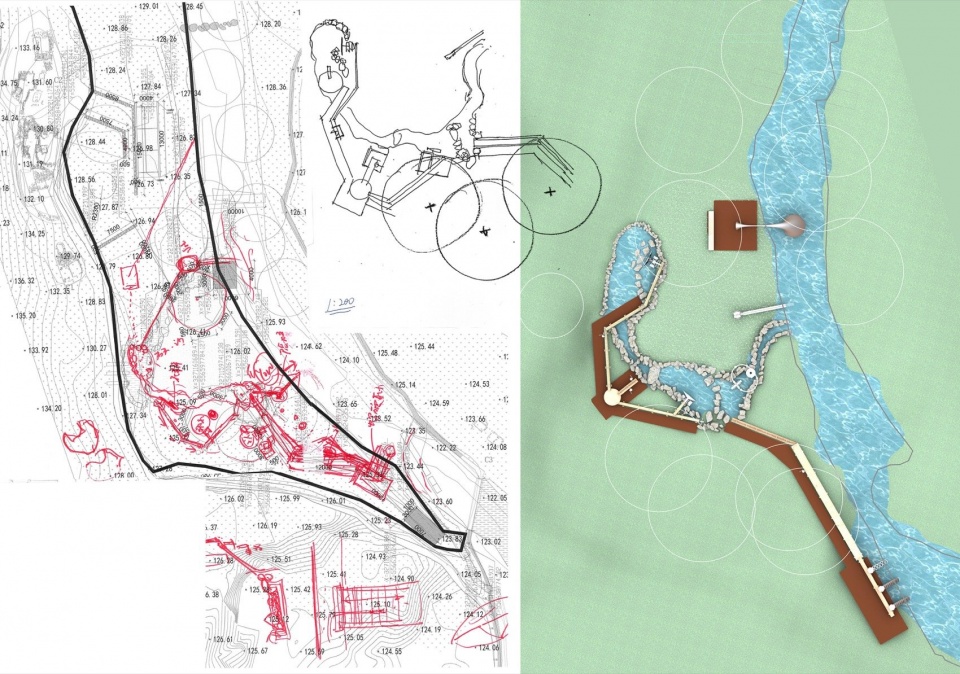
基地选址于靠近村落、对遗址整体影响较小的场地。山涧在此汇成溪流,两岸生长着高大的枫杨,林间偶见野生魔芋。在考察线路上山前的开阔地带,结合地形、溪流及集中分布的窑址与瓷石加工遗迹,设置互动性、参与性更强的展示阐释空间。沿溪布置水利原理互动装置,并结合一组淘洗池遗址,以丝网模拟复原传统工棚的尺度与功能结构,展示传统生产工艺,为研学考察和亲子活动提供融合自然与文化的户外教育及休憩体验。
▼内瑶游客中心模型设计推敲,Neiyao Visitor Center model design study © 张唐景观
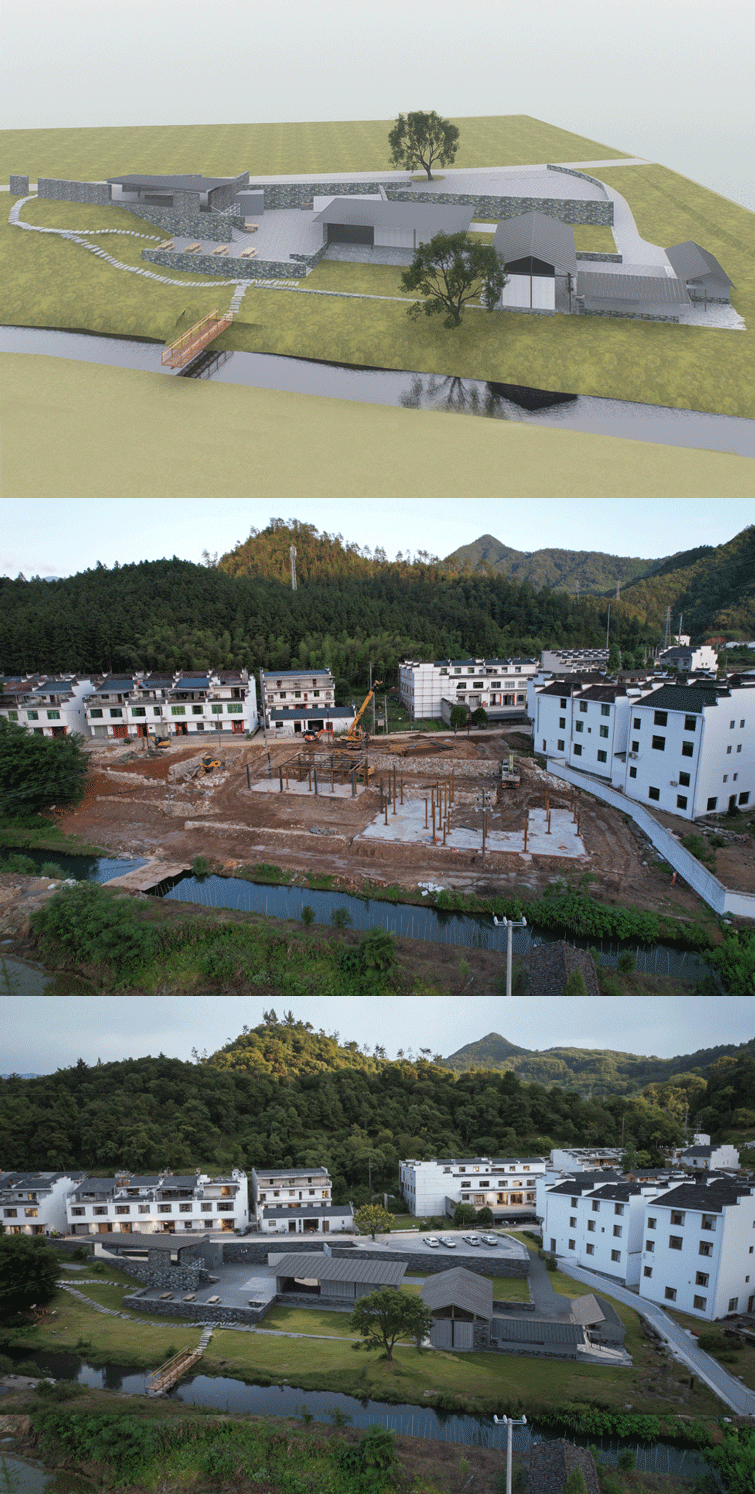
▼内瑶游客中心手绘草图,Hand-drawn studies of the Neiyao visitor center © 张唐景观
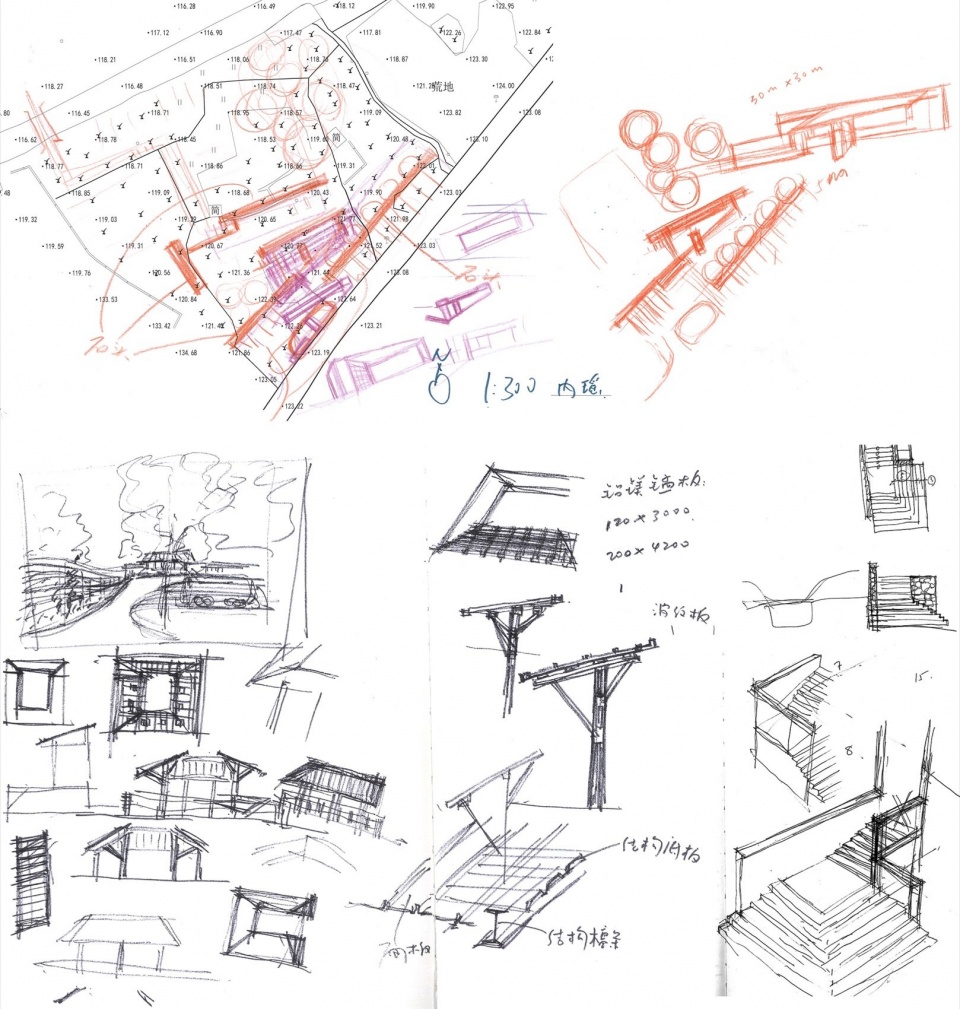
▼小坞里游客中心草图平面(左)、模型设计推敲(右),Xiaowuli Visitor Center sketch plan (left) and model design study (right) © 张唐景观
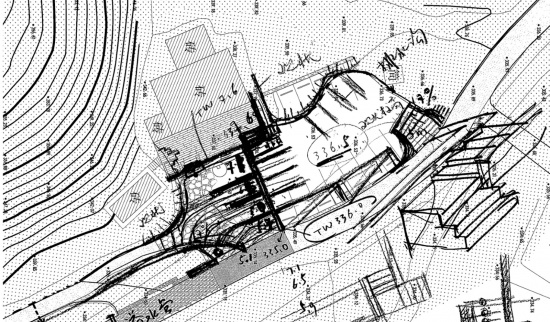
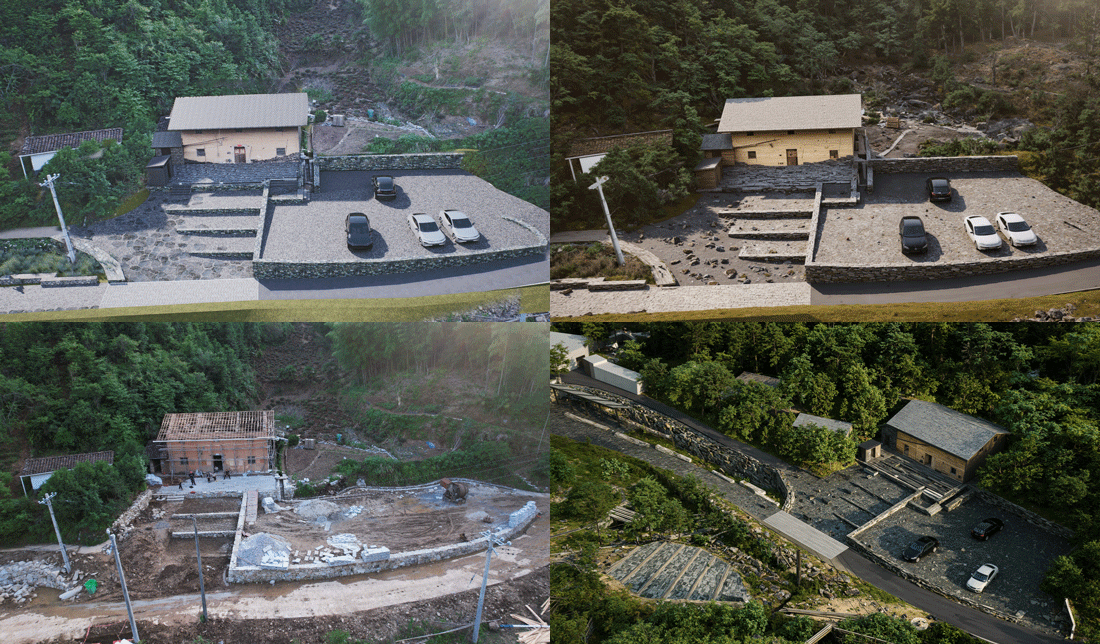
From the information center in Neiyao Village, a dirt path crosses a farmland and Yao River, and turns to an old stone-paved ancient road. The irrigation channels alongside the path draw water from runoff in the Xiaowuli mountain stream. A series of small dams once directed the water to power trip hammers at different processing sites.
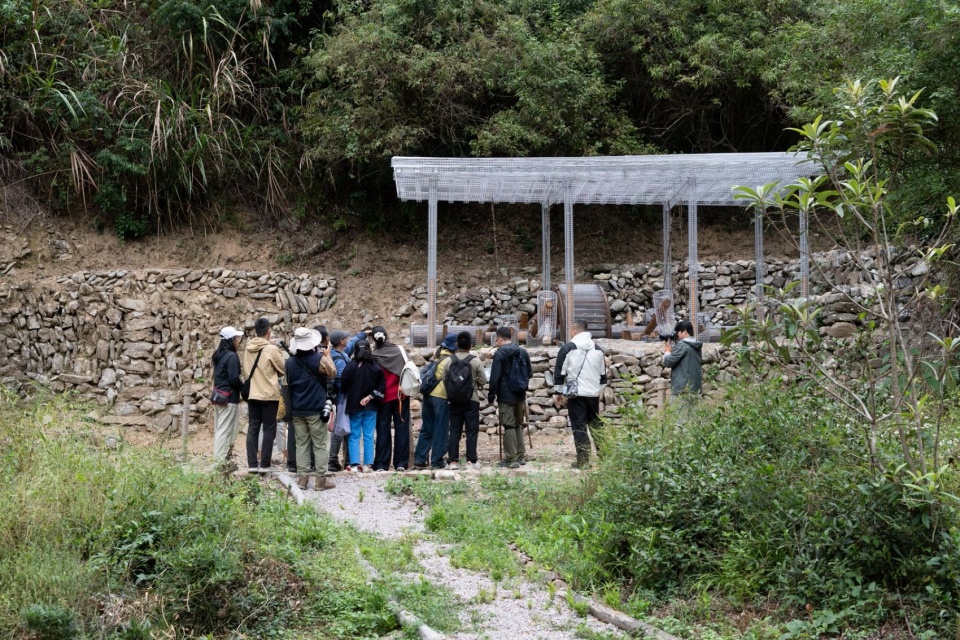
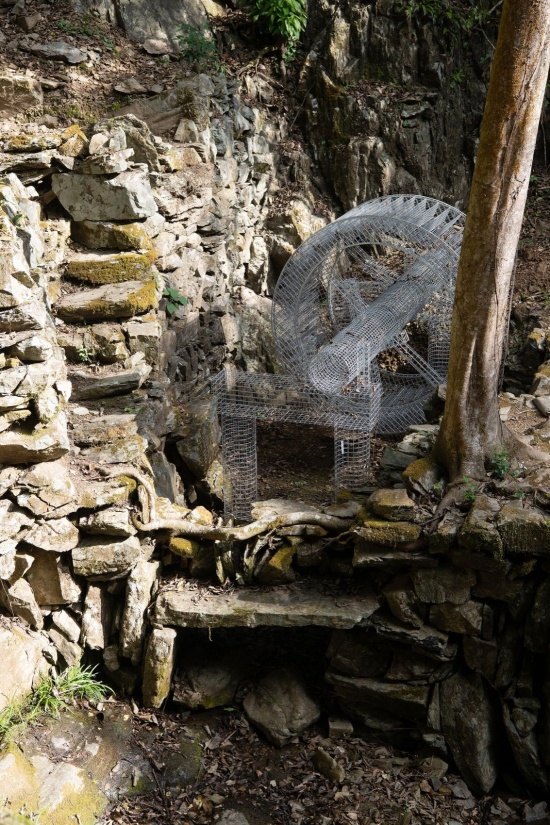
The site is located close to the village, with minimal impact on the overall heritage. Mountain runoff gathers into a stream, along whose banks tall Chinese wingnut trees grow and occasional wild konjac plants appear. Beginning before the hiking trail, the site combines the terrain, stream, and remains of kilns and porcelain-stone processing into a more interactive and participatory interpretive space. Interactive installations explaining water power are placed along the stream. Beside a group of washing-pool remains, wire mesh recreates the scale and functional structure of traditional work sheds, presenting historic production techniques. The area offers outdoor learning and recreation, combining natural and cultural experiences for exploration and education.
▼内瑶村庄游客中心,Neiyao Village visitor center © 鲁冰
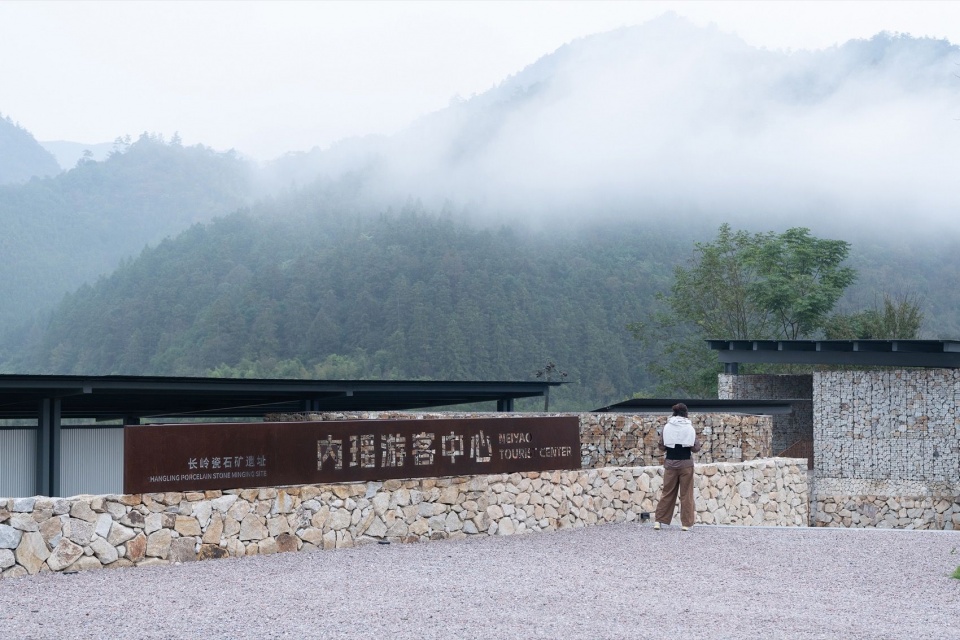
▼游客中心入口,Visitor center entrance © 鲁冰
▼遗址工棚与参观活动,Historic work shed interpretation and visitors © 鲁冰
▼遗址工棚的局部丝网雕塑复原,Partial reconstruction of a historic work shed in wire mesh © 鲁冰
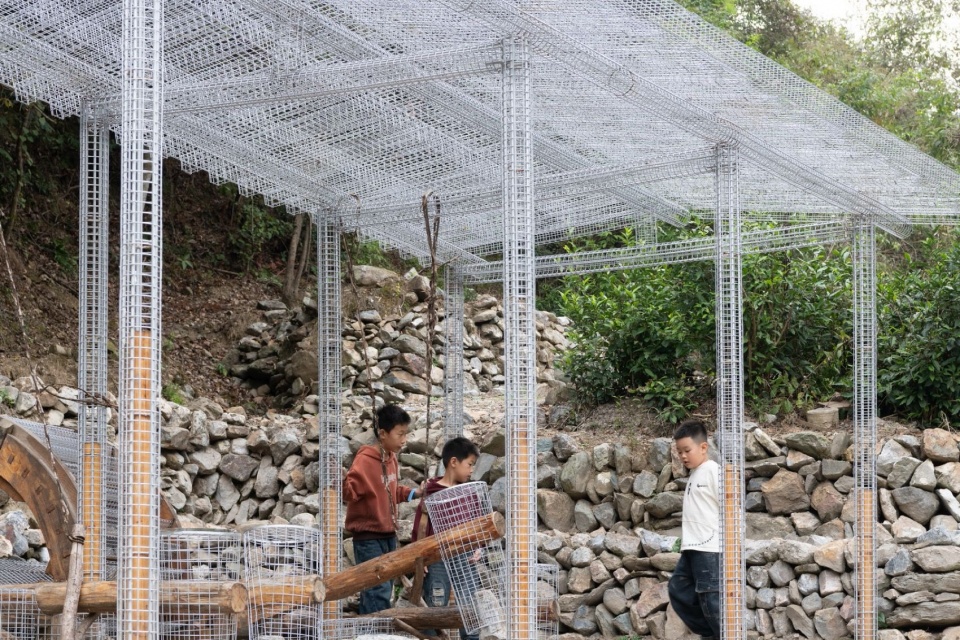
▼手工制作原理展示的户外教育场地,Outdoor education area demonstrating traditional production © 鲁冰
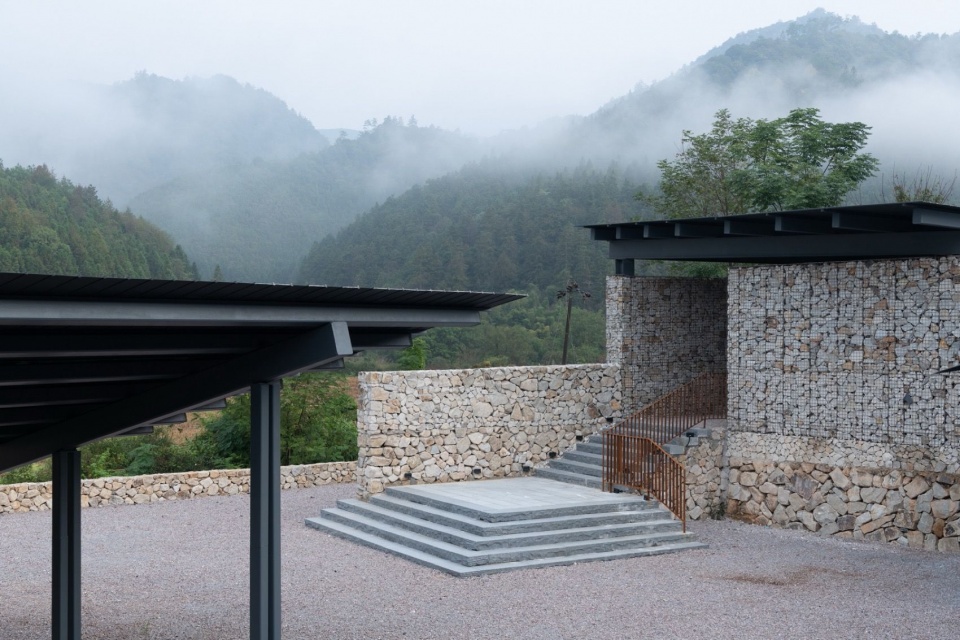
▼小坞里游客中心,Xiaowuli visitor center © 鲁冰
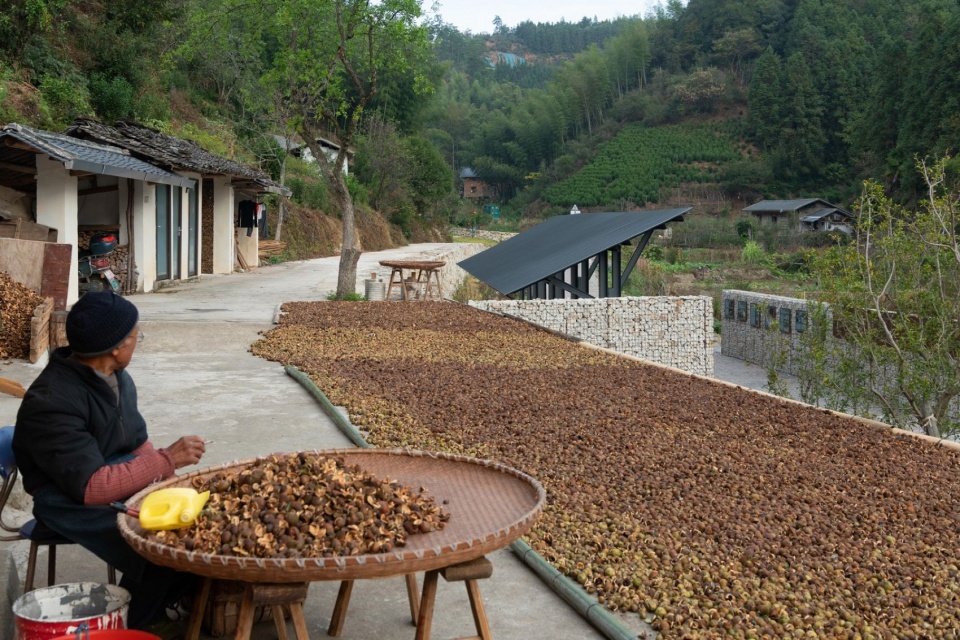
▼小坞里游客中心科普标识牌,Interpretation signs at the Xiaowuli visitor center © 李明峰
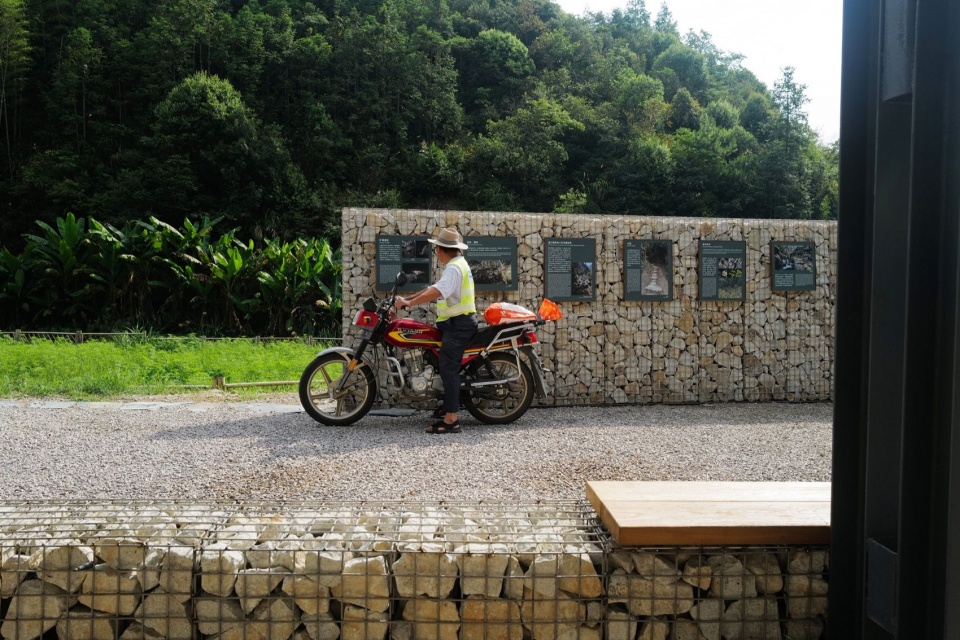
▼村庄建筑与公共界面,Village building and public frontage © 李明峰
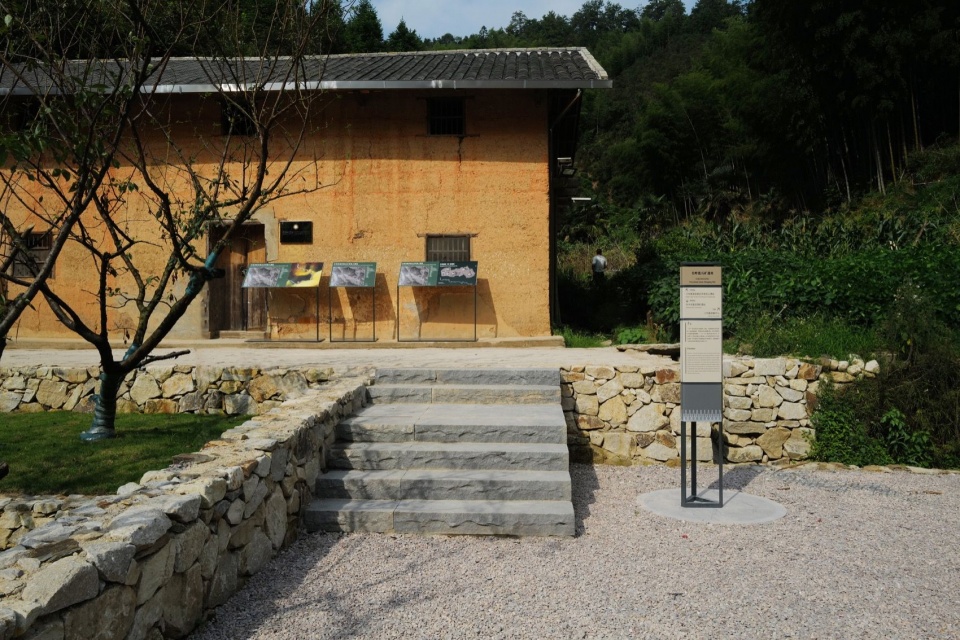
2.4 矿石材料展示棚架
2.4 Canopy for Displaying Mineral Materials
▼小坞里遗址起点的场地,The entrance area of the Xiaowuli site © 鲁冰
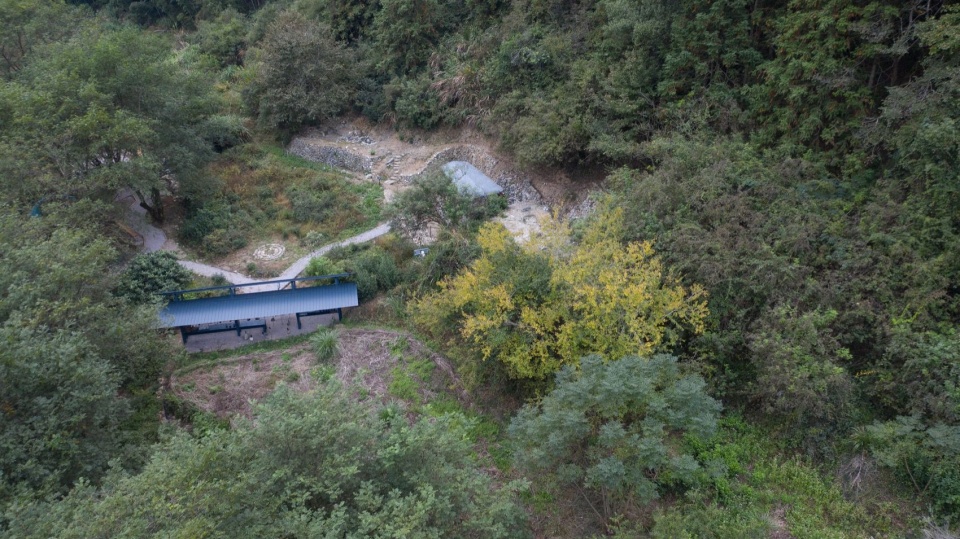
▼林间的材料展示棚架,Material display canopy among the trees © 鲁冰
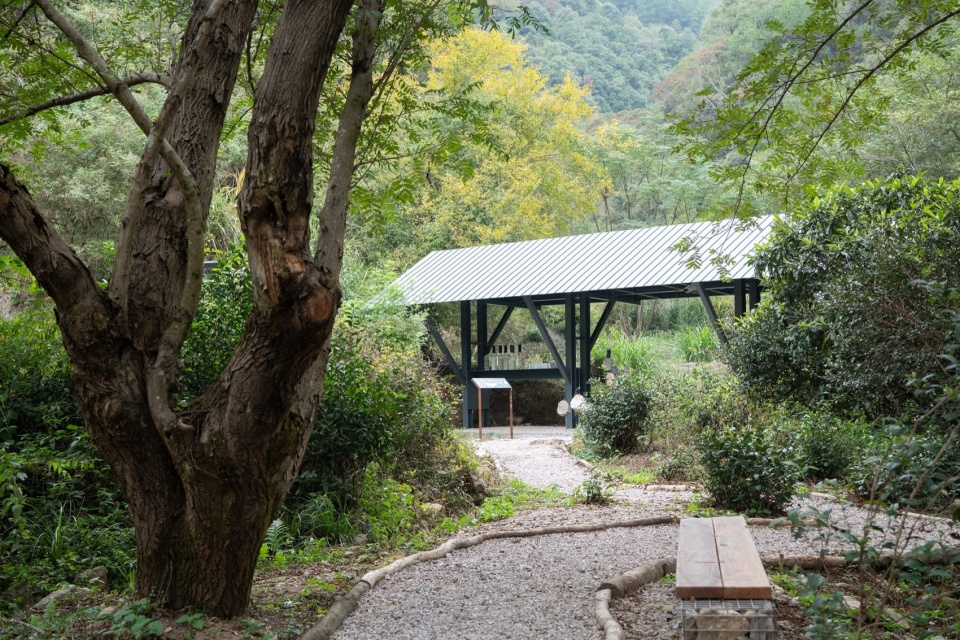
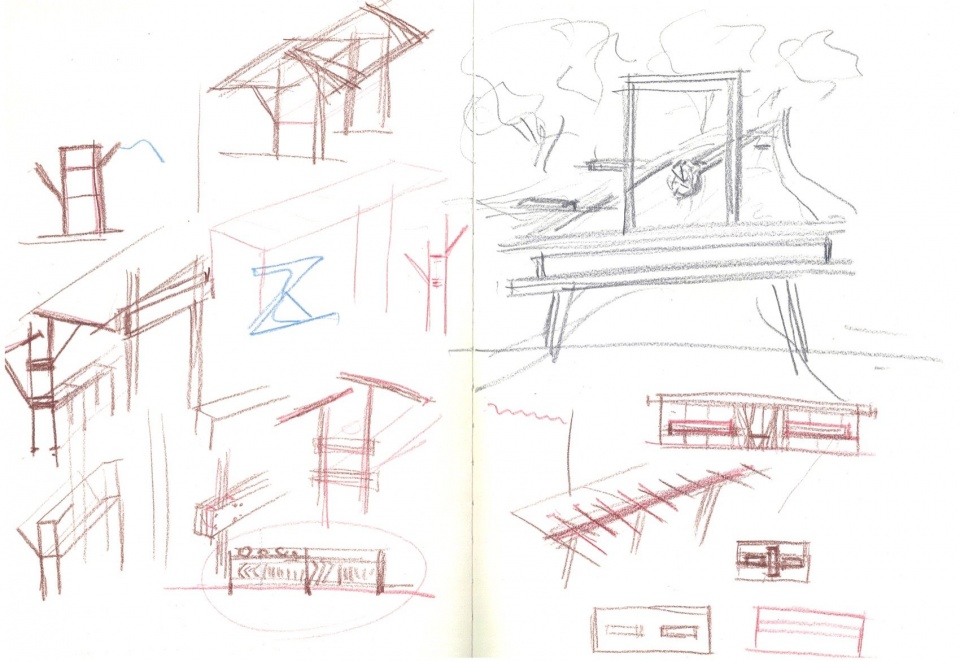
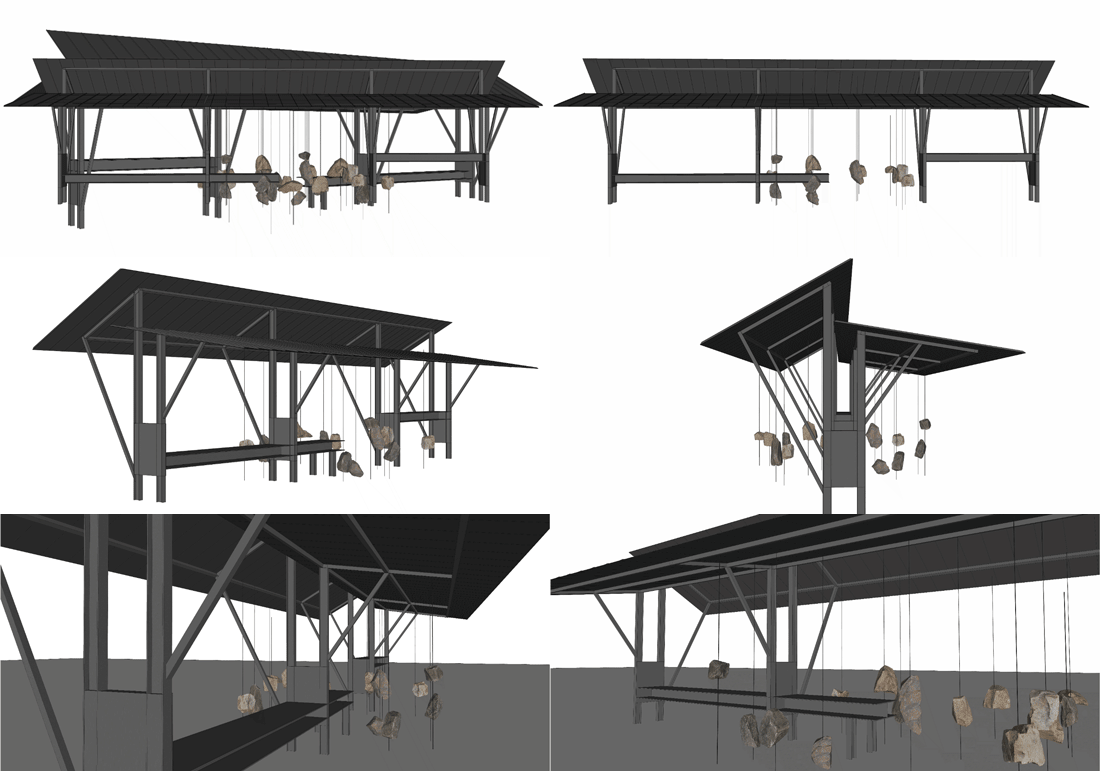
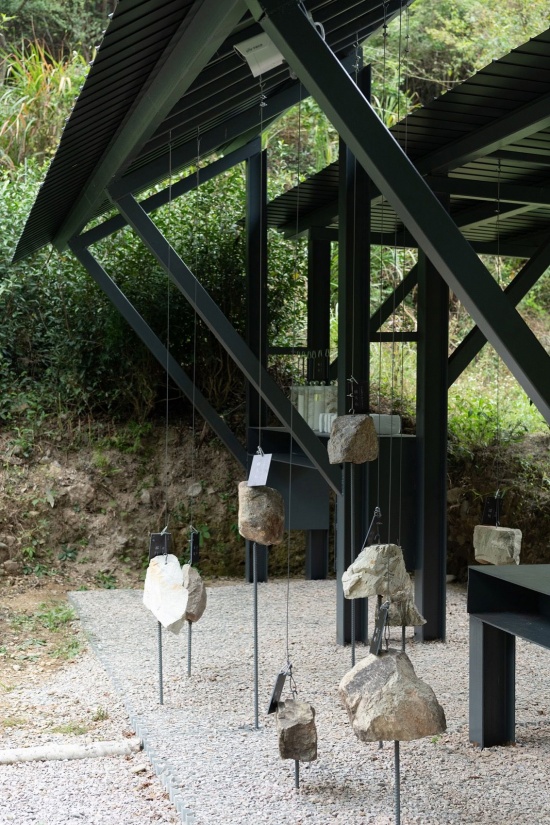
一个收集了完整工序的材料、工具的廊架,提供了深入了解原材料手工加工过程的繁复与不易。
A covered display structure brings together materials and tools representing the complete porcelain production sequence, helping visitors understand the complexity and difficulty of traditional manual raw-material processing.
▼展架手绘草图研究,Hand-drawn display structure studies © 张唐景观
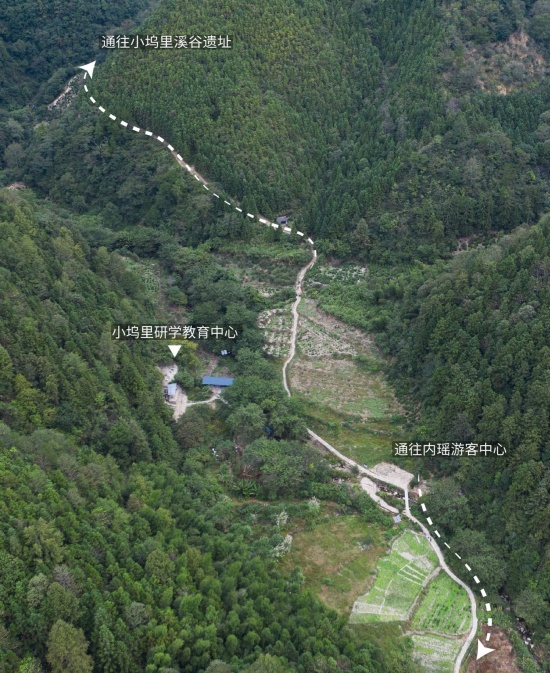
▼小坞里户外教育科普基地鸟瞰,
Aerial view of the Xiaowuli outdoor education base © 鲁冰
▼展示完整工序材料与工具的廊架,
Canopy displaying materials and tools from the production sequence © 鲁冰
3 演绎与互动
3. Demonstration and Interaction
3.1 瓷瓶听水声
3.1 Listening to Water through Porcelain Vessels
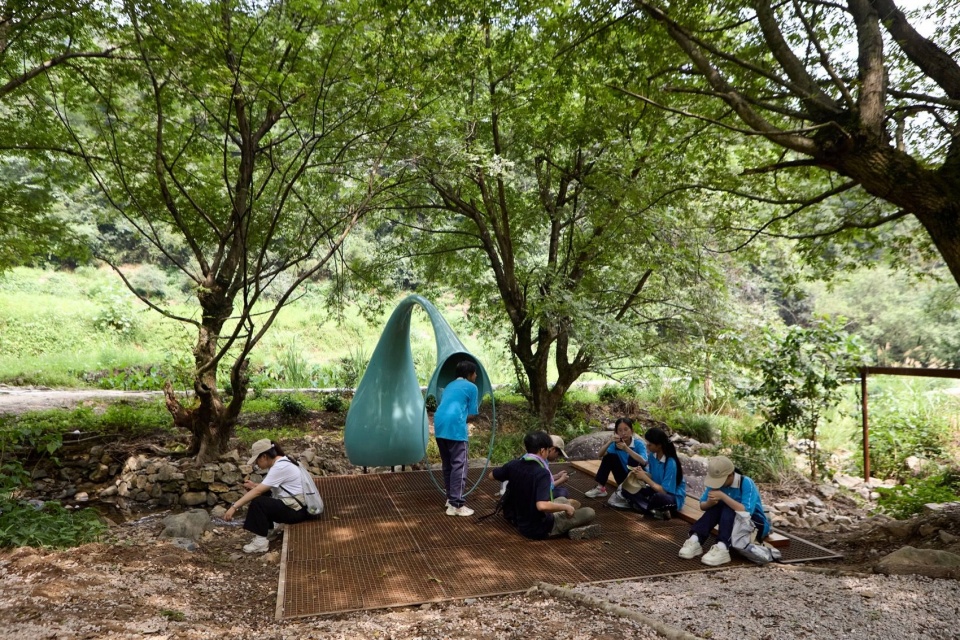
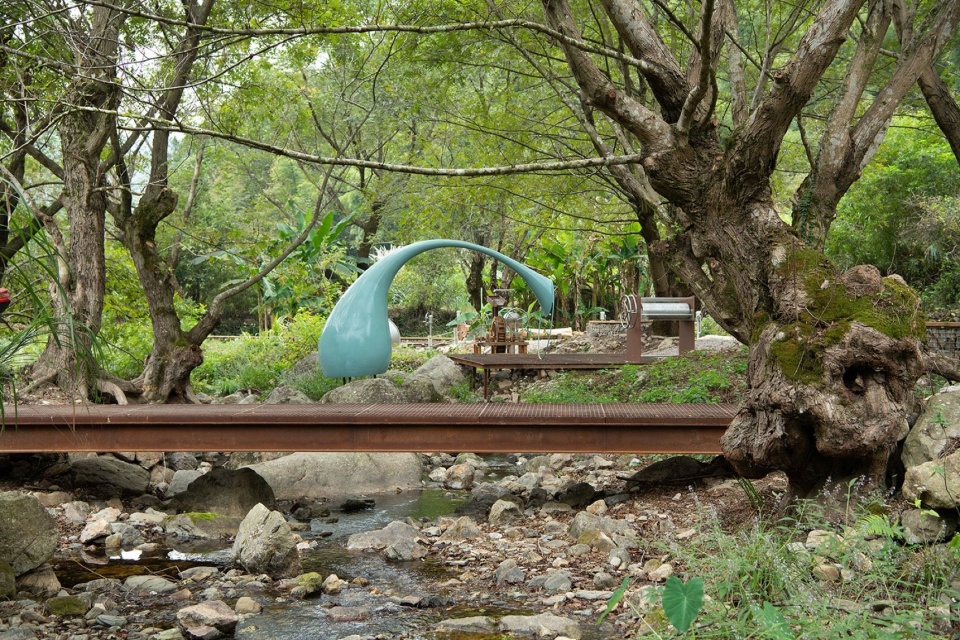
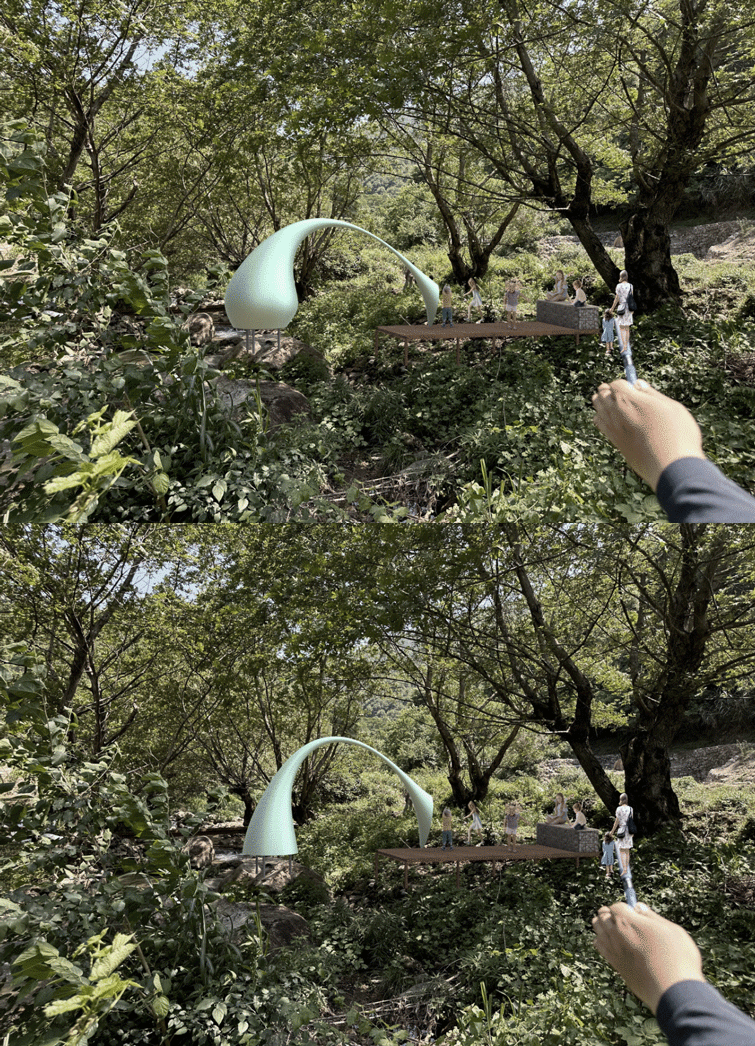
选择溪边水石块集中,跌水落差较大的位置,设计休息平台,上方搁置青色瓷瓶形态的听水声装置
A resting platform sits beside a stream with boulders descending from upstream, creating high water drops. Above it, a sound-listening installation shaped like a celadon-colored porcelain vessel lets visitors listen to the sound of water.
▼溪边的休息平台,Resting platform beside the stream © 鲁冰
▼瓷瓶形态的听水声装置,Porcelain-vessel-shaped listening installation © 朱侠
▼瓷瓶听声筒形状的设计推敲,Design development of the porcelain-shaped listening device © 鲁冰
3.2 取水、引水互动
3.2 Interactive Water-Drawing and Water-Diverting Devices
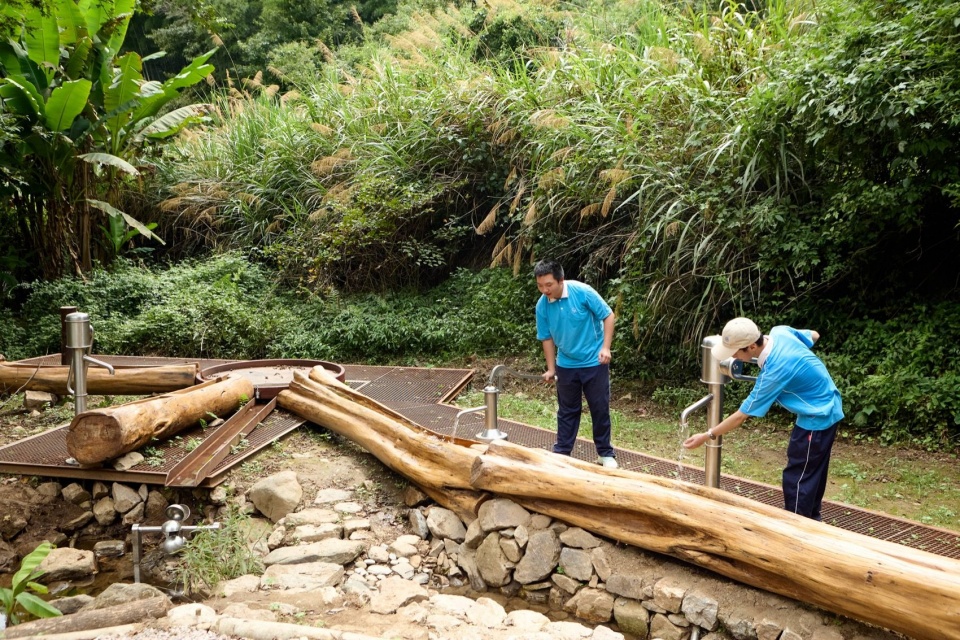
使用提水、风车、水渠等装置,通过互动的方式让参观者理解水的取用原理。整个装置围绕现状枫杨林展开,游戏的同时提供休息、纳凉的空间。
▼瓷瓶听水声区的草图平面,Sketch plan of the water-listening area © 张唐景观
Devices such as water-lifting mechanisms, waterwheels, and channels help visitors understand how water can be collected and diverted through hands-on interaction. The installation is arranged under the shade of existing Chinese wingnut grove, providing places to play,observe, rest, and cool off.
▼提水与引水互动装置,Interactive water-drawing and diverting devices © 朱侠
▼枫杨林下的互动与休息空间,Interactive and resting space beneath Chinese wingnut trees © 朱侠
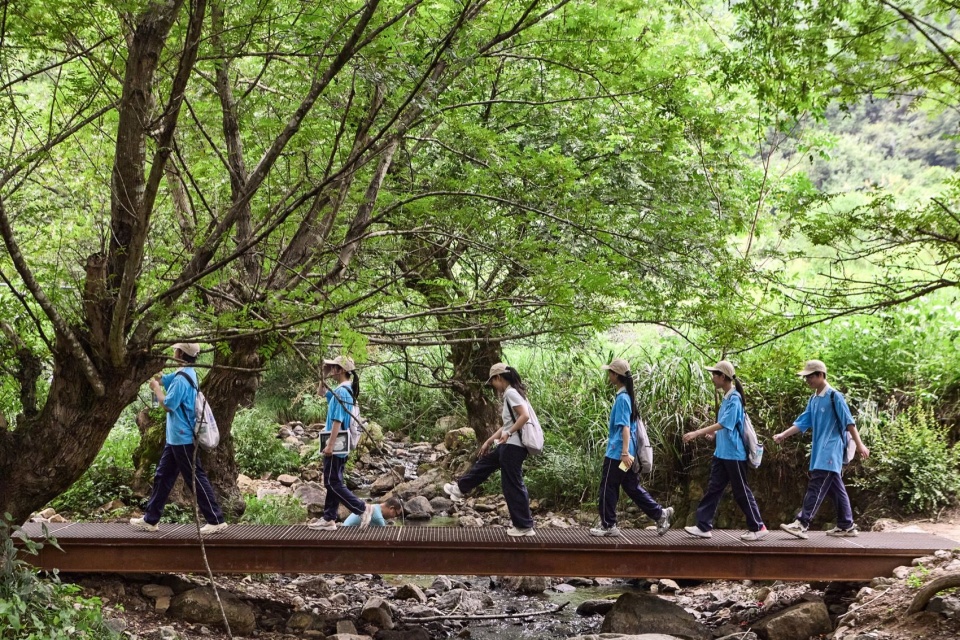
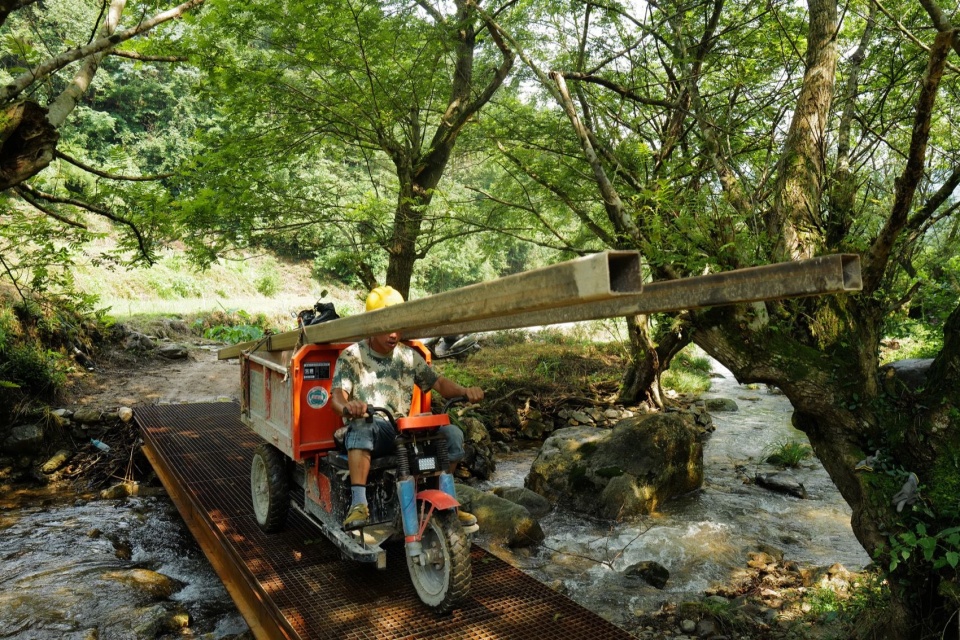
▼工人运送材料跨溪过桥,Worker transporting materials across the stream © 李明峰
3.3 八音盒的民间小调
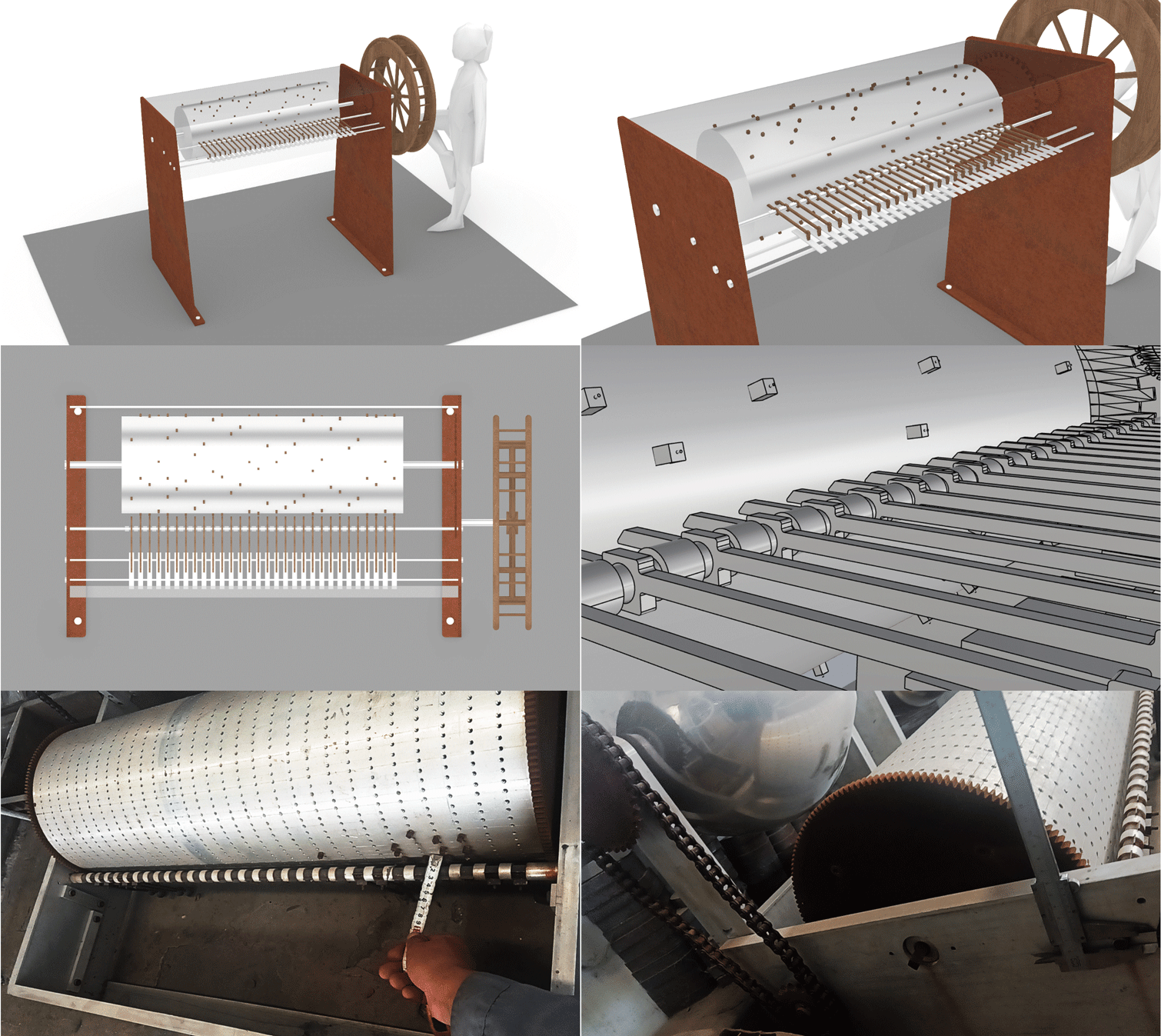
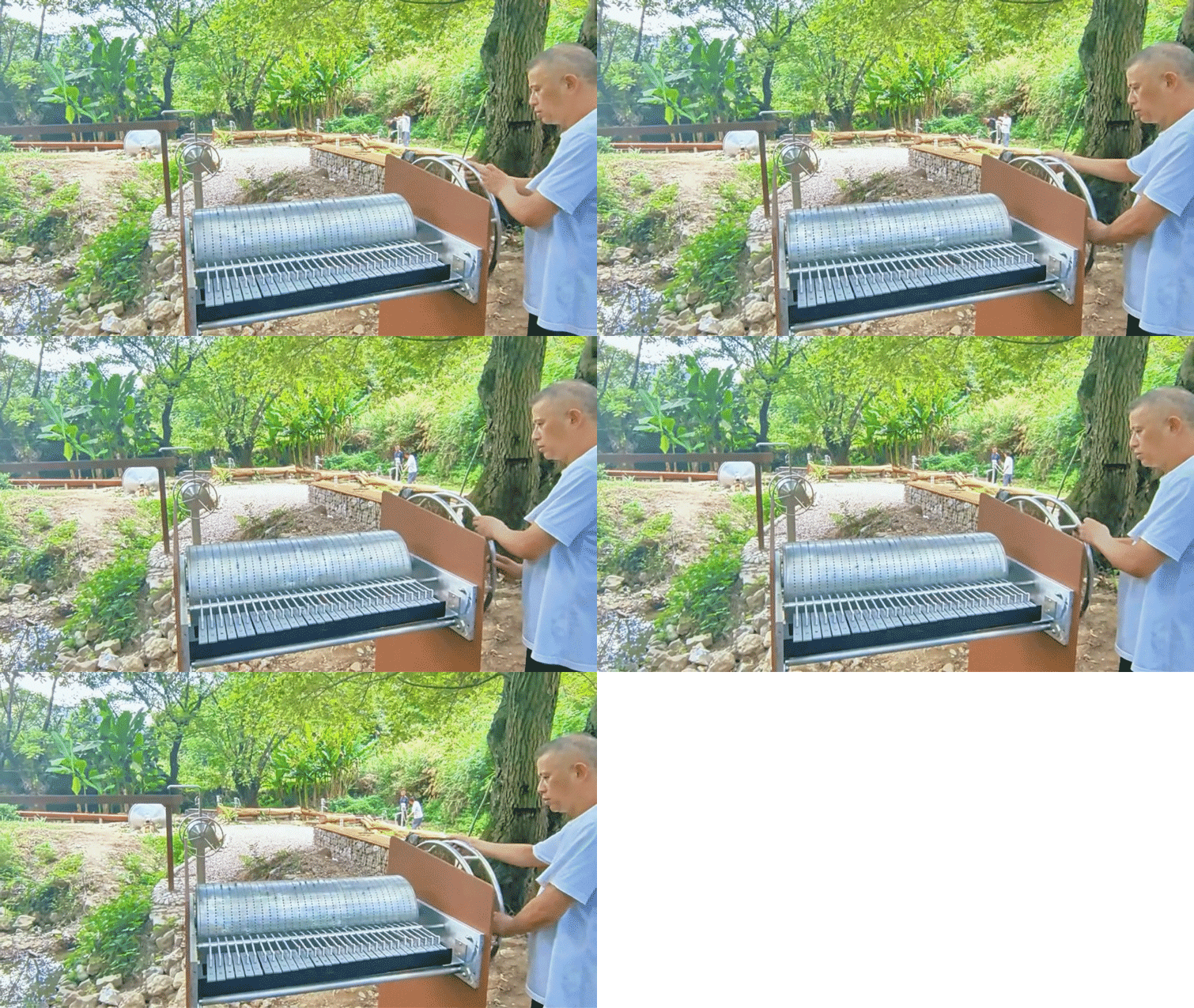
3.3 Local Folk Melodies in a Music Box
▼一个放大的八音盒可以播放瑶里当地的采茶小调,为研学提供了更为丰富的素材,An enlarged music box plays local tea-picking melodies from Yaoli, offering additional cultural materials for the visitors © 张唐景观
4,总结:
4. Conclusion
景德镇世界历史文化遗产中,两条山谷的矿坑、采石、制作、加工遗址的景观设计为该部分遗产的保存、研究、传播提供了范例及方法。在遗址的活化方面,与当地政府、民间组织、遗产保护组织共同确立遗产激活目标,将部分产业返与民用,对村民进行专业培训,作为遗产旅游的讲解员、巡山员,建立研学基地,使得文化遗址与现代生活紧密结合起来。
The landscape design for the mining, quarrying, making, and processing remains in the two valleys of Jingdezhen’s World Cultural Heritage site offers examples and methods for preserving, studying, and communicating of the heritage. To revitalize the site, the team worked with local government, community organizations, and heritage conservation bodies to establish shared goals. Some facilities and spaces were returned to community use; local residents received professional training to work as heritage-tour guides and mountain patrol staff; and an educational research base was established. The preserved heritage is not only memorized as history but also revitalized within contemporary life.
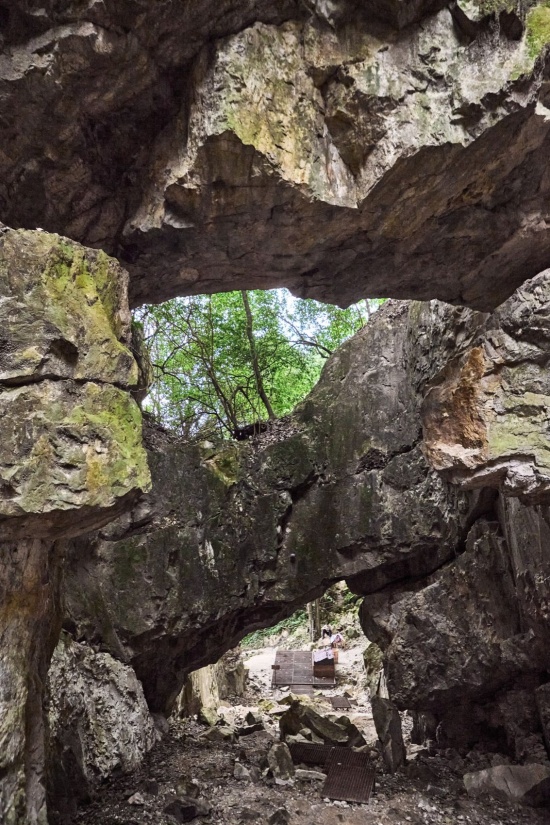
▼大午坑石梁矿洞,Shiliang mining tunnels in Dawukeng © 李明峰
注
Notes
1-长岭瓷石矿遗址位于瑶里古镇,瑶里古称“窑里”,宋元时期是重要的陶瓷烧造地,出产青白瓷、青瓷。明清以后,随着景德镇区瓷业集中化,瑶里逐渐转型为瓷石原材料供应地,因出产质地优良的瓷石而著称。当地形成了采石、水碓粉碎、淘洗练泥、制𣎴、装船外运的完整工序,为景德镇官窑和民窑瓷器提供原料支撑,见证了中国陶瓷产业由分散烧造向专业化分工演变的历史进程。
1-The Changling Porcelain Stone Mining Site is located in the ancient town of Yaoli, historically known as “Yaoli” (窑里). During the Song and Yuan dynasties, the town was an important ceramic production center known for qingbai and celadon wares. From the Ming and Qing dynasties onward, as porcelain production became more concentrated in Jingdezhen, Yaoli gradually became a supplier of porcelain-stone raw materials, renowned for the quality of its stone. A complete local process developed, including quarrying, crushing with water-powered trip hammers, washing and refining the clay, making *dun* blocks, and transporting them by boat. This process supplied raw materials to both imperial and private kilns in Jingdezhen and bears witness to the shift in China’s ceramic industry from dispersed production to specialized division of labor.
2-大午坑瓷石明矿遗址Dawukeng Open-Pit Porcelain Stone Mining Site
瓷石是一种坚硬或半坚硬的石质原料,主要矿物组成是石英、 绢云母、高岭石和极少量长石及碳酸盐,同一矿脉的瓷石一般有多种风化程度。接近地表的上层瓷石由于风化程度高,耐高温,被称为“高温瓷石”,是制作瓷坯的良好原料;下层瓷石高温易融化坍塌,因此被称为“低温瓷石”或“釉果”,用来配制釉料。景德镇南河与东河流域都蕴藏高品质瓷石,为景德镇发展手工瓷业提供了良好的原料基础。
2-Porcelain stone is a hard or semi-hard rock material composed mainly of quartz, sericite, and kaolinite, with small amounts of feldspar and carbonate minerals. Porcelain stone within the same vein can have varying degrees of weathering. The upper layers near the surface are more highly weathered and heat-resistant; known as “high-temperature porcelain stone,” they are suitable for making porcelain bodies. The lower layers melt and slump more readily at high temperatures and are therefore called “low-temperature porcelain stone” or *yuguo* (glaze stone), used in glaze preparation. The Nanhe and Donghe river basins around Jingdezhen both contain high-quality porcelain stone, providing a strong raw-material base for the development of Jingdezhen’s traditional porcelain industry.
3-“𣎴(dun)子”是由瓷石经水碓舂碎、淘洗、沉淀制成的泥块状原料,质地细腻紧实,推测按体积或重量计量,其可作制瓷坯中间原料或配制釉料。“𣎴子”这一瓷石初加工的方式,不仅便于人工挑运或通过古道运输,还可保障原料的均匀性和纯净度,便于在烧造环节更精确地进行原料配比,是景德镇手工瓷业在明清时期发展出的独特工艺。
3. “Dun” (𣎴) blocks are clay-like raw materials made by pounding porcelain stone with water-powered trip hammers, then washing and allowing it to settle. They are fine-textured and compact, and were likely measured by volume or weight. They could be used as an intermediate material for porcelain bodies or in glaze preparation. This distinctive method of primary porcelain-stone processing not only made the material easier to carry by hand or transport along ancient roads, but also ensured its uniformity and purity, enabling more precise proportioning during firing. It was a distinctive technique developed by Jingdezhen’s traditional porcelain industry during the Ming and Qing dynasties.
项目信息:
项目名称|景德镇长岭瓷石矿遗址展示设施与景观设计
甲方业主|景德镇市申报世界文化遗产浮梁县工作专班办公室
世界遗产提名团队|清源视野文化咨询有限公司、清源文化遗产保护发展中心有限公司
项目地点|中国·江西
竣工时间|2025年
景观设计|张唐景观
首席设计师|唐子颖、张东
设计团队|李明峰、张文莉、刘洪超、陈海天、姚瑜、何泽宇、郑宇璐、许钦、钟传艺
项目摄影|李明峰、鲁冰、朱侠、魏青
视频剪辑|姚瑜
特别感谢团队:
代建单位|浮梁垚山文化旅游开发有限公司
考古团队|景德镇市御窑博物院
标识设计|广州市美术有限公司
地质勘探与加固|江西省勘察设计院
AR展示系统|视辰信息科技(上海)有限公司
灯光设计|弗曦照明设计(FLSI)
投影艺术装置|ChronoNexus (Beijing) Tech & Culture Co., Ltd.、Beijing Zaoxing Hutong Technology Co., Ltd.
Project Information:
Project Name | Interpretation Facilities and Landscape Design for the Changling Porcelain Stone Mining Site, Jingdezhen
Client | Office of the Fuliang County Task Force for the Jingdezhen World Cultural Heritage Nomination
World Heritage Nomination Team|ConserVision Consulting,Cultural Heritage Conservation Center of Qingyuan Co.Ltd.-
Site | Jiangxi, China
Completion Year | 2025
Landscape Design | Z+T STUDIO
Chief Designers | Ziying Tang, Dong Zhang
Design Team | Mingfeng Li, Wenli Zhang, Hongchao Liu, Haitian Chen, Yu Yao, Zeyu He, Yulu Zheng, Qin Xu, Chuanyi Zhong
Photography | Mingfeng Li, Bing Lu, Xia Zhu, Qing Wei
Video Editing | Yao Yu
Special Thanks
Project Development Management | Fuliang Yaoshan Cultural Tourism Development Co., Ltd.
Archaeological Team | Jingdezhen Imperial Kiln Institute
Geological Survey & Structural Reinforcement | Jiangxi Provincial Survey and Design Institute-
Signage | Guangzhou Fine Arts Co., Ltd.
AR Exhibition System | VisionStar Information Technology (Shanghai) Co., Ltd.
Lighting Design | FLSI Lighting Design
Projection Art Installation | ChronoNexus (Beijing) Tech & Culture Co., Ltd. / Beijing Zaoxing Hutong Technology Co., Ltd.
More:张唐景观。更多关于他们:Z+T Studio on gooood








发表评论
你需要先 才能发表评论
社交登录