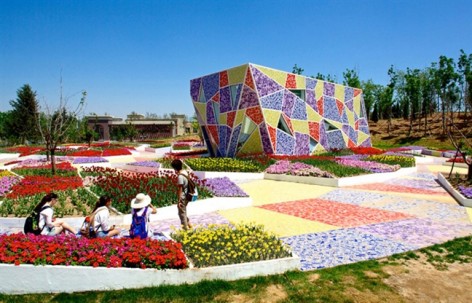
来自 Casanova + Hernandez Architects 对gooood的分享。更多关于他们:Casanova + Hernandez Architects on gooood
Appreciation towards Casanova + Hernandez Architects for providing the following description:
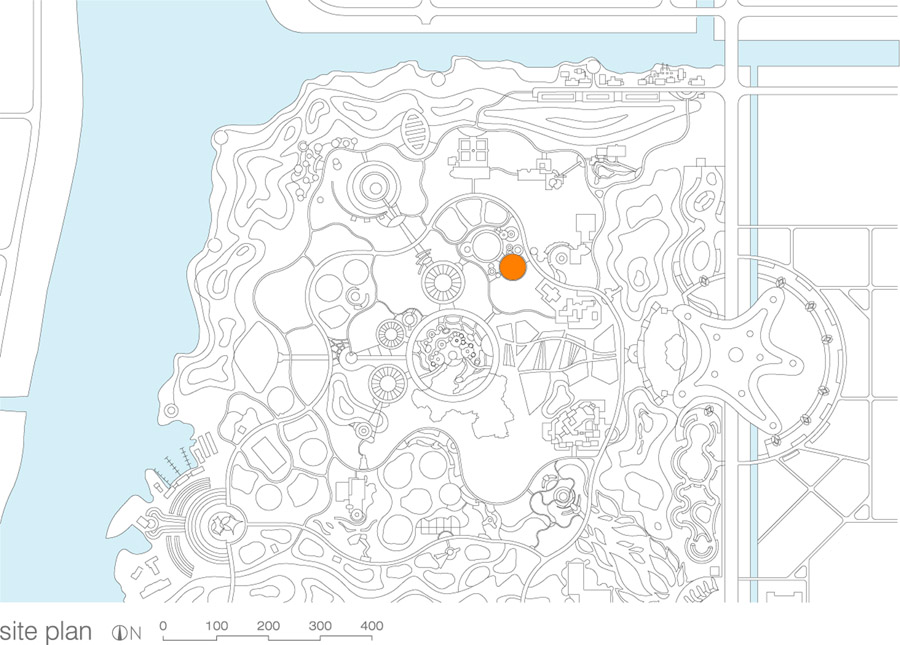
锦州市位于中国辽宁省西南部,距离北京不到500公里,是一座有着300万人口和1000多年建城史的历史名城,也是一座著名的军事、科技、商贸重镇和优秀的旅游城市。锦州市政府填海176公顷,其中第一阶段为了举办2013锦州世界园艺博览会而建立起一个大型的公共公园,这里未来也将是新城的中央公园。20个国际设计师被委托在这里设计各种设施。Casanova + Hernandez Architects被委托设计陶瓷博物馆与马赛克公园,这也是锦州世界园艺博览会企划中的一部分。
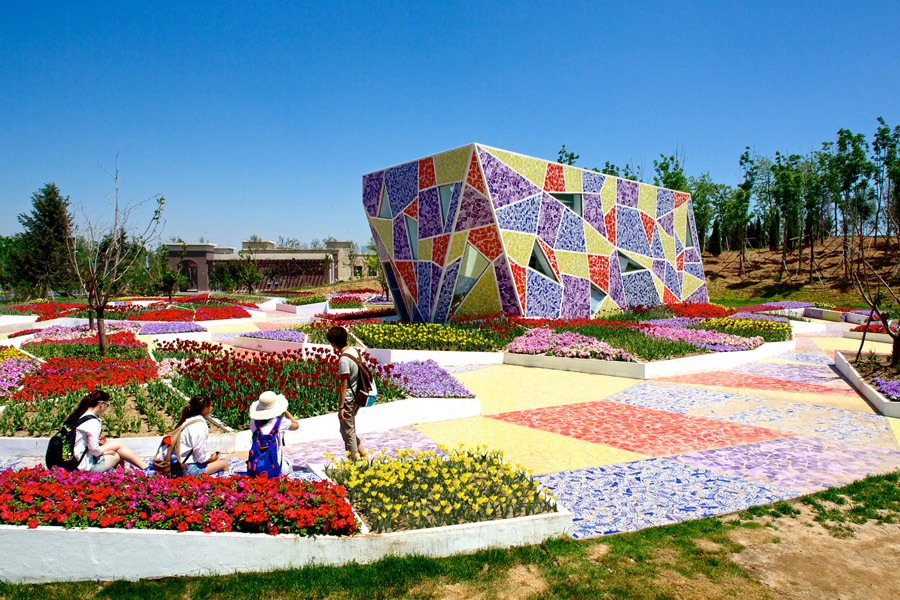
Mosaic Park as symbol of cultural hybridization
The urban extension of Jinzhou, a city of three million inhabitants located less than 500 kilometres north-east of Beijing, has been articulated by the creation of a new large public park of 176 Ha in an area reclaimed from the sea. During a first phase, the park hosts the 2013 Jinzhou World Landscape Art Exposition and once the Expo is closed, the area will become the central park of a new urban development.20 international designers have been commissioned to design 20 projects within a comparable circular perimeter in different locations of the park linking the program and the identity of the designs to the cultural background of the designers.
The design of the Expo is based on the paradox that globalization, although it has typically been associated with the destruction of local cultural identity, may also be able to generate some kind of identity. The Mosaic Park project goes beyond that and aims to create a link between citizens and the place, giving a wider meaning to the site.
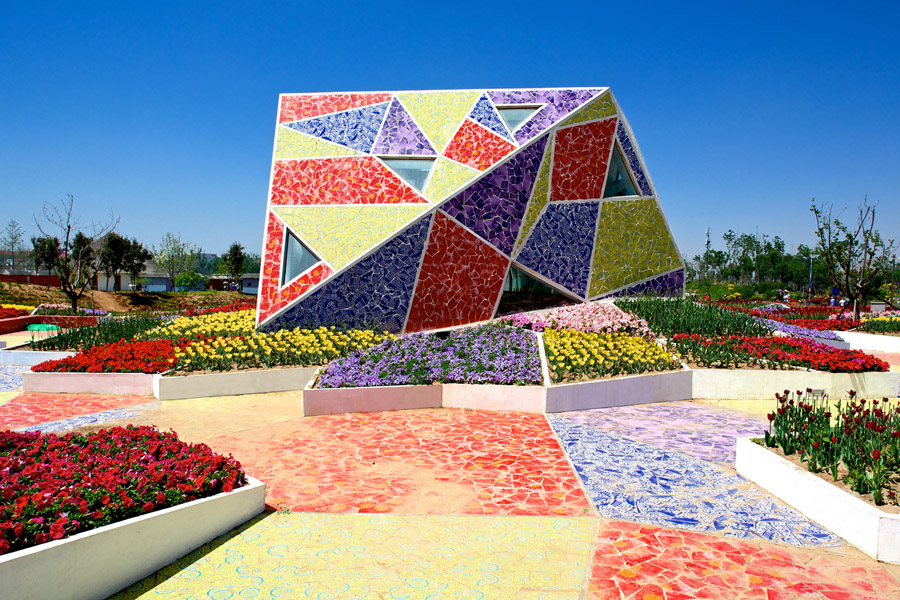
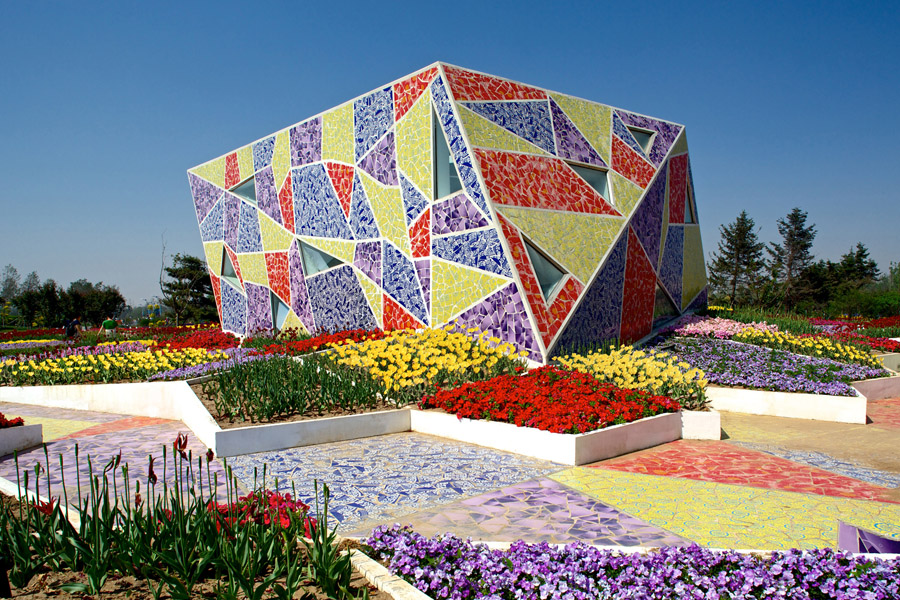
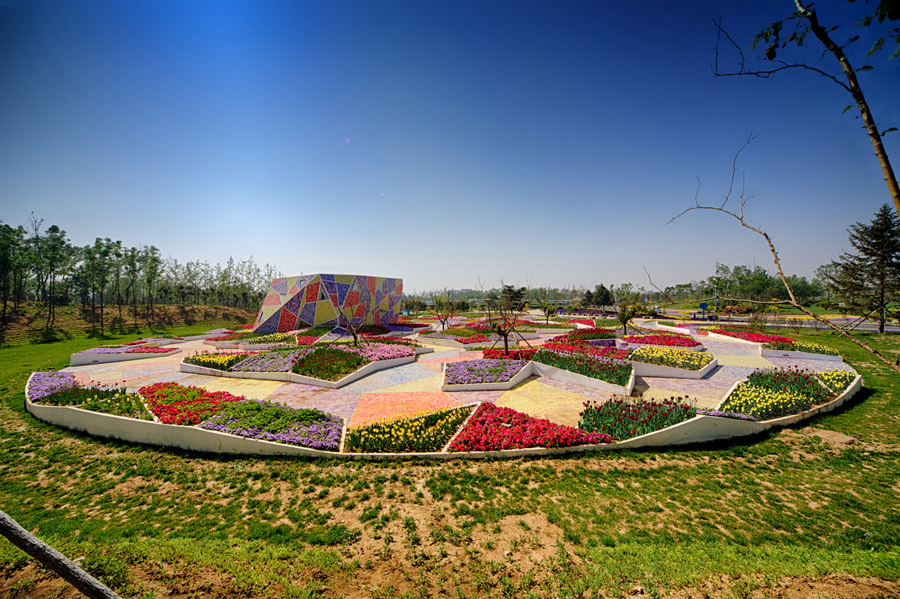
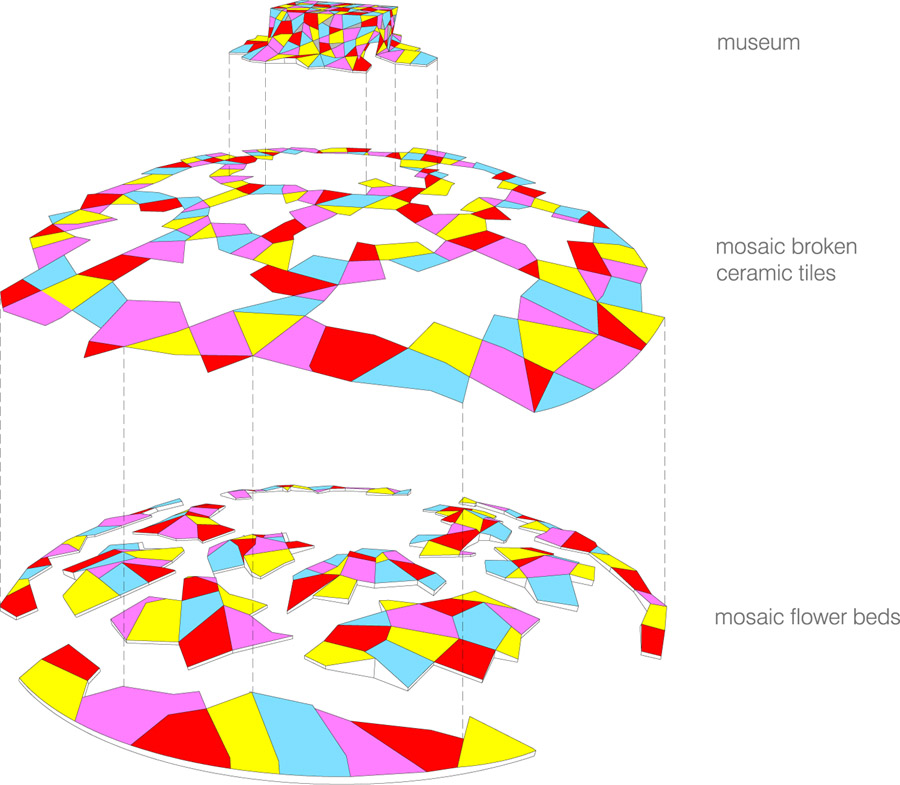
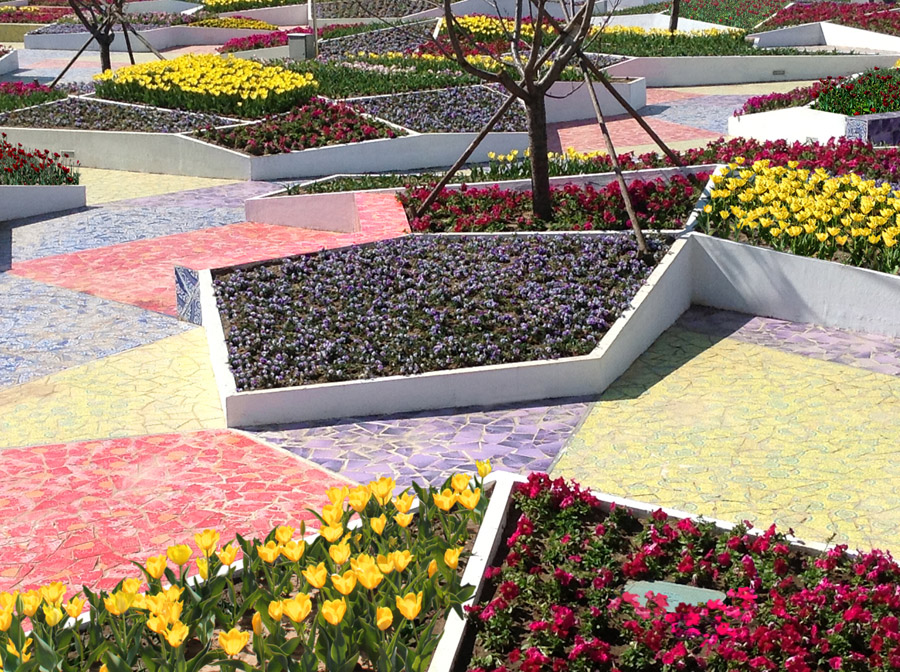
锦州过去曾一度是陶瓷生产地,不过在技术小时上百年后,这一历史现实也被人遗忘。项目的概念融合东西方的陶瓷裂纹艺术纹理,用当地不同色彩的陶瓷碎片拼成马赛克般的地面与墙面,这些不同的色块又共同与场地中的色块种植一共形成一个圆体。这个色彩缤纷的设计将硬质景观与软质景观融合,成为一个具有层次,让人惊讶的混合型艺术雕塑设计。
The project experiments with the concept of cultural hybridization, which is a phenomenon developed during many centuries of commercial and cultural exchange between West and East.
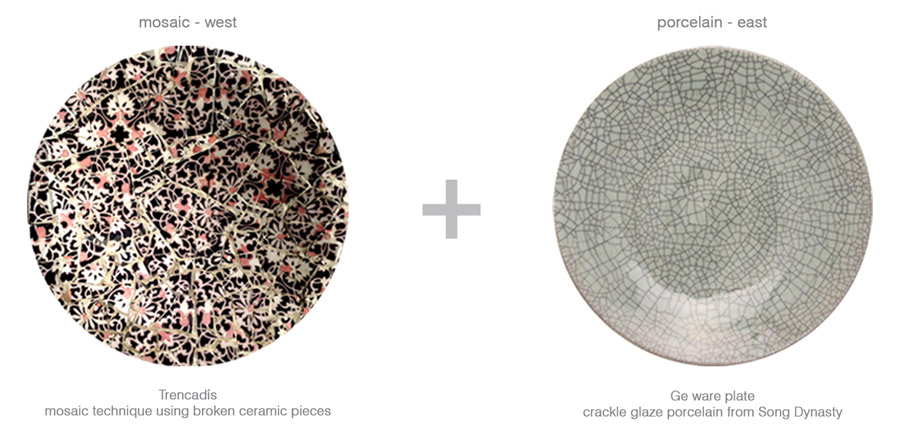
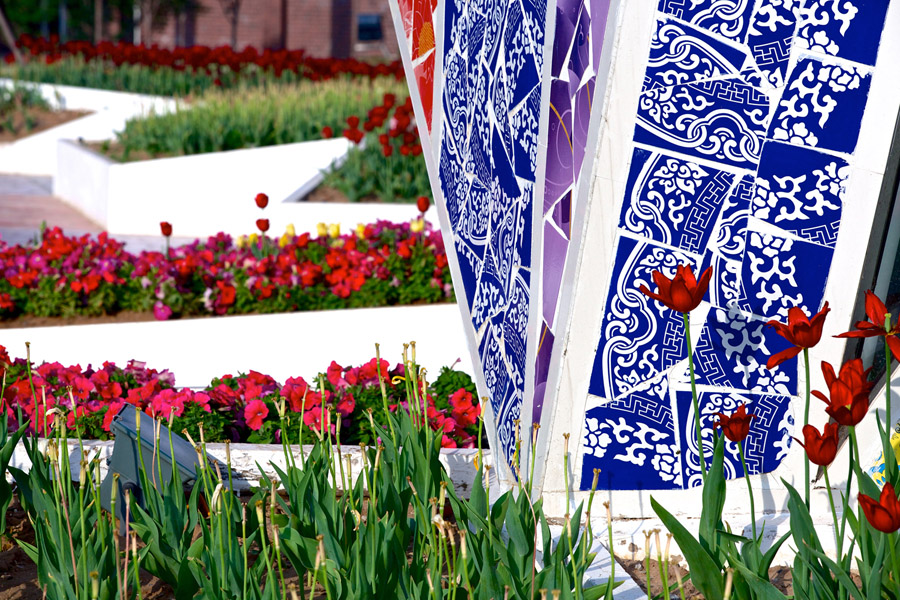
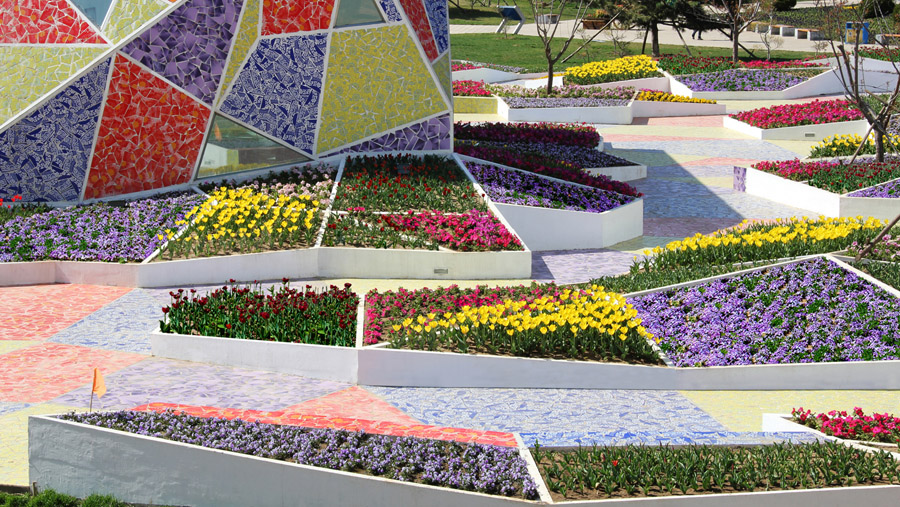
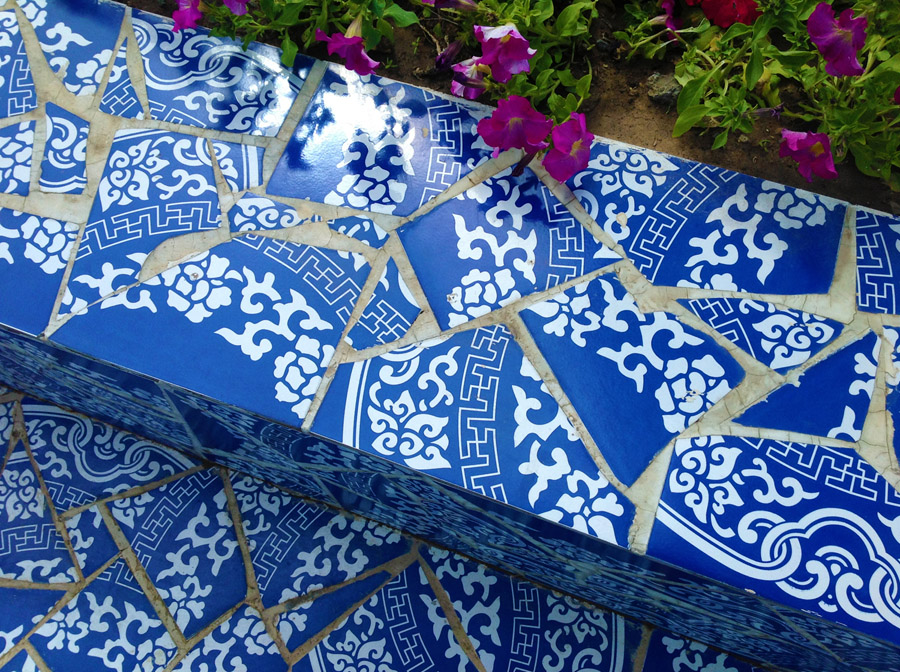
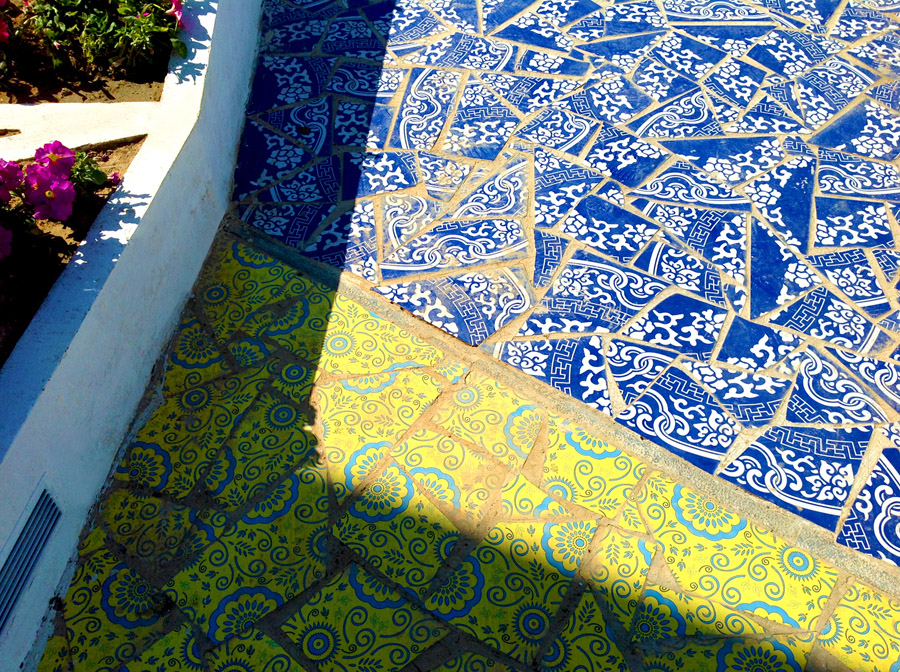
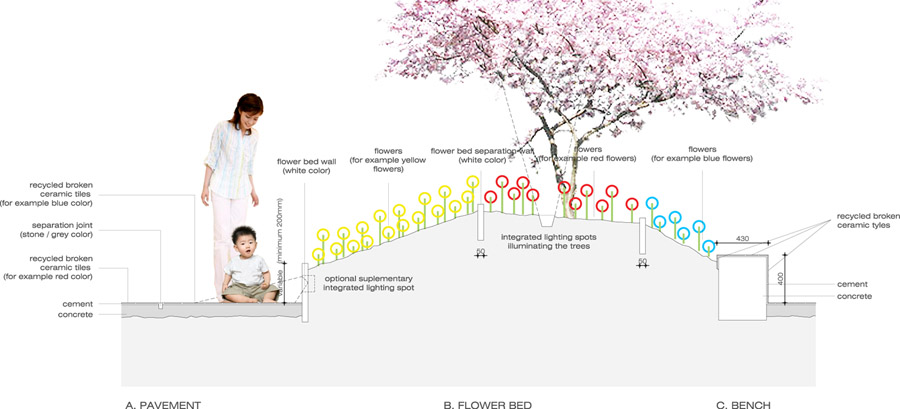
On the one hand, the use of broken local ceramic pieces of different colours for the materialization of the pavement and benches of the park and for the facades of the museum evokes the mosaic tradition that was widespread throughout Europe by the Roman Empire and that has evolved along history till the present day bringing technical solutions such as the trecandís technique used by the Catalan modernist architects.
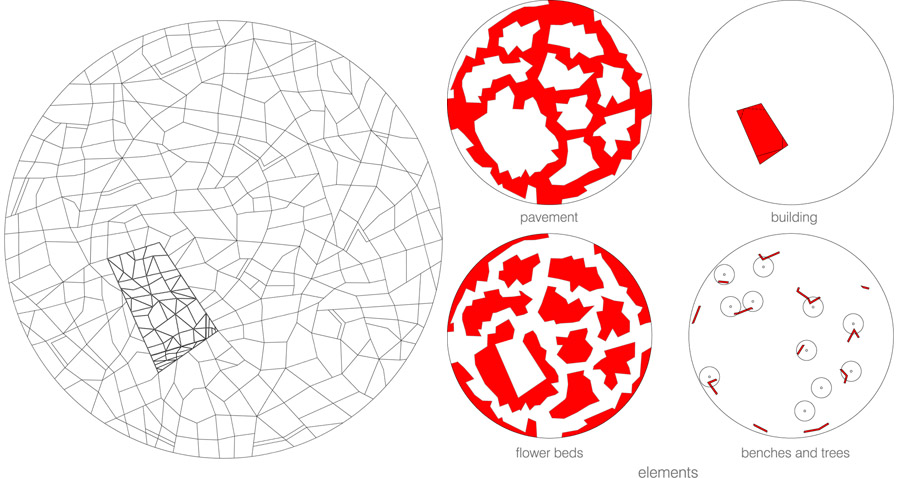
On the other hand, the geometry of the park is inspired by the crackled glaze of the Chinese porcelain developed from the 10th century during the Song Dynasty in the Ru Ware and Ge Ware ceramic pieces. The Mosaic park and the Ceramic Museum remind citizens that the Jinzhou region was once a production area of ceramic and porcelain, although this tradition was lost for centuries, being nowadays forgotten.
Hybrid landscape: mix of architecture and landscape
The project represents the paradigm of the contemporary urban park, which is neither a fragment of the natural landscape nor a landscaped piece of the city, but the mix of both of them. Mosaic Park presents a hybrid character that combines architecture with landscape, and nature with artifice.
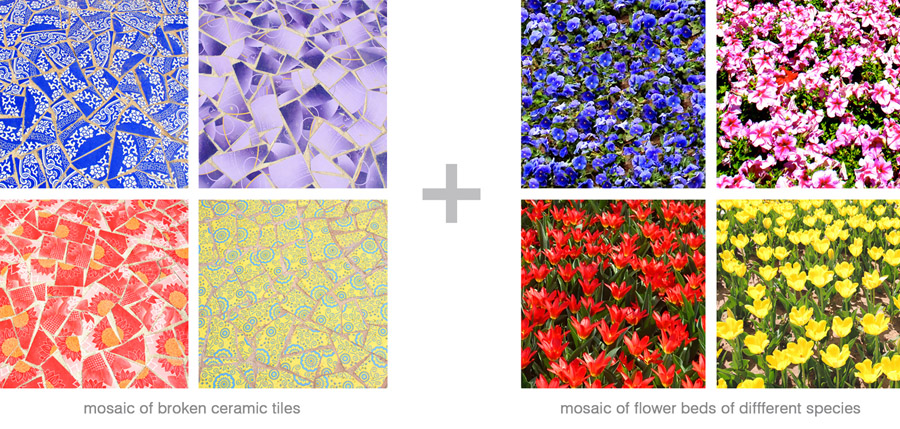
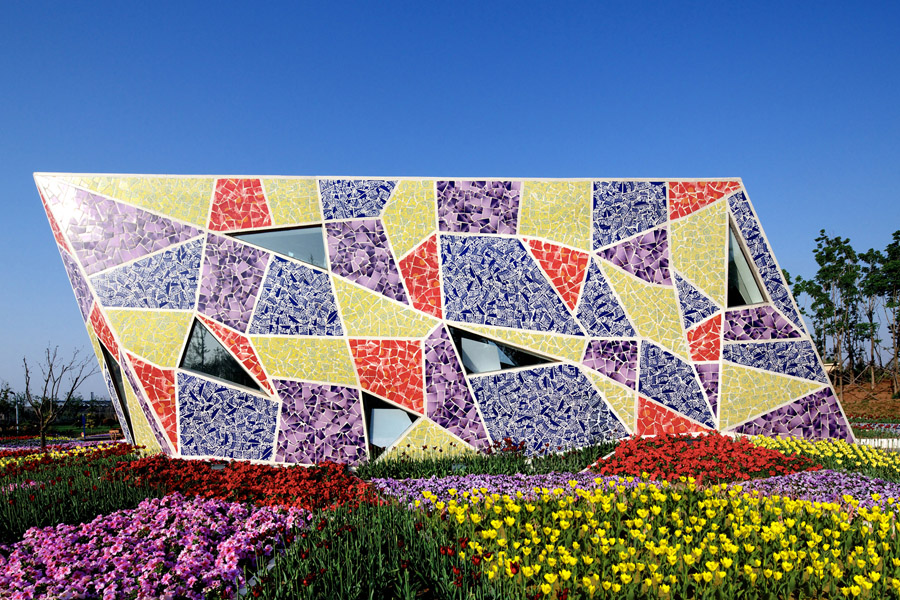
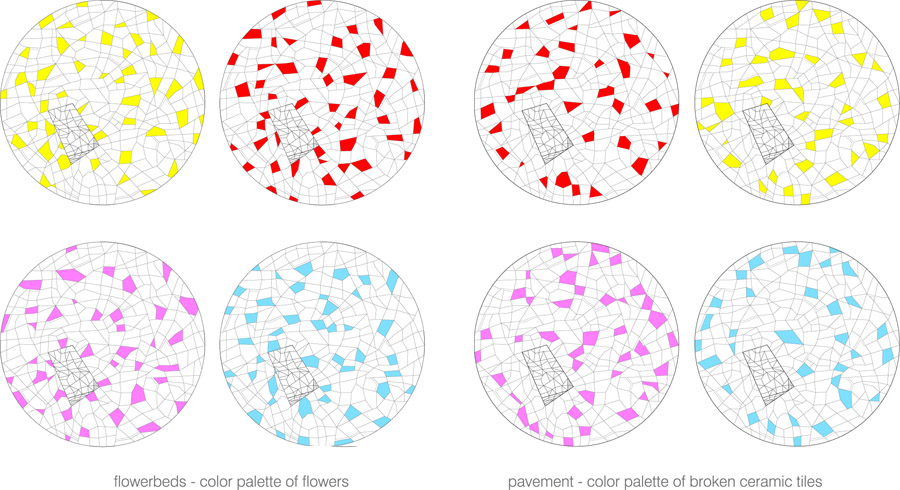
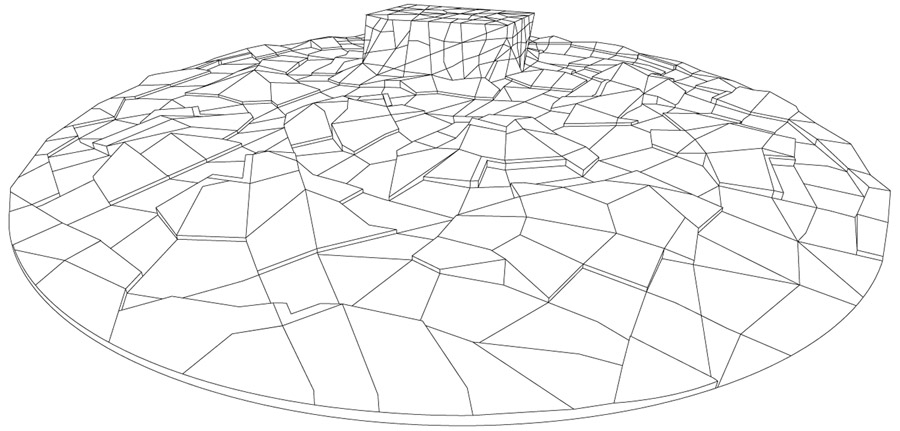
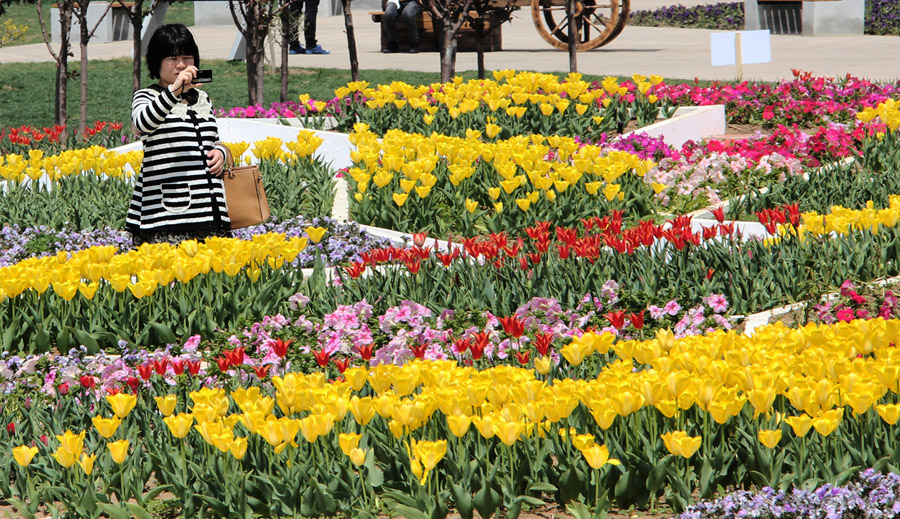
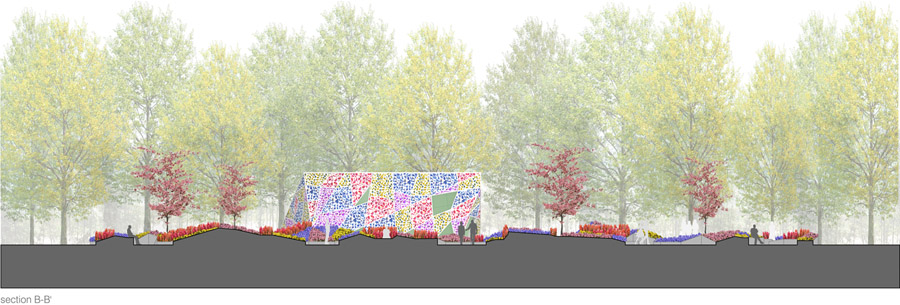
The irregular geometry of the park is spatially unfolded into a crackled three-dimensional topography, where landscape and architecture merge into a continuous surface formed by 884 irregular planes.Moreover, this geometry is embodied as a polychromatic mosaic formed by combining flowers of four different species and colours with mosaics created with broken pieces of local Chinese pottery. Flowers and ceramic blend into a colourful mosaic that brings nature and local crafts
together.
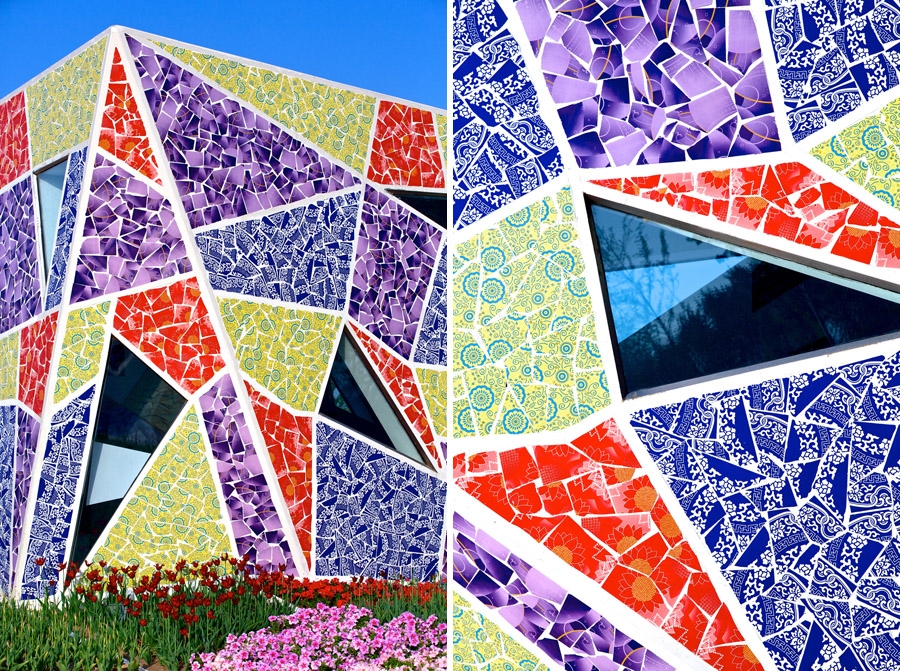
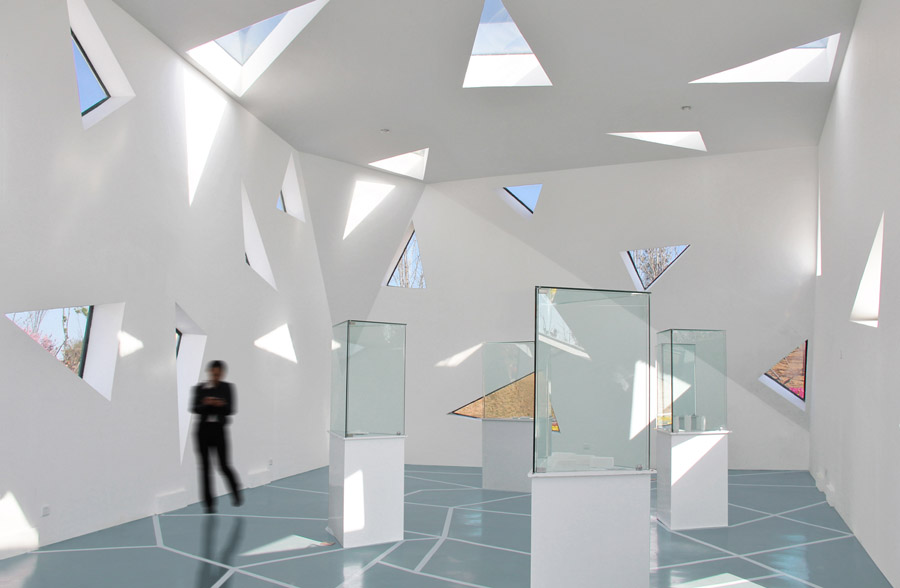
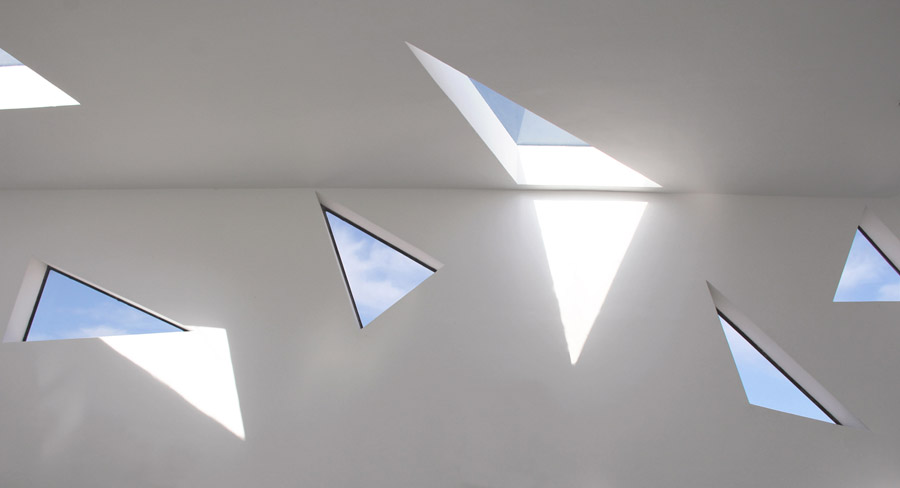
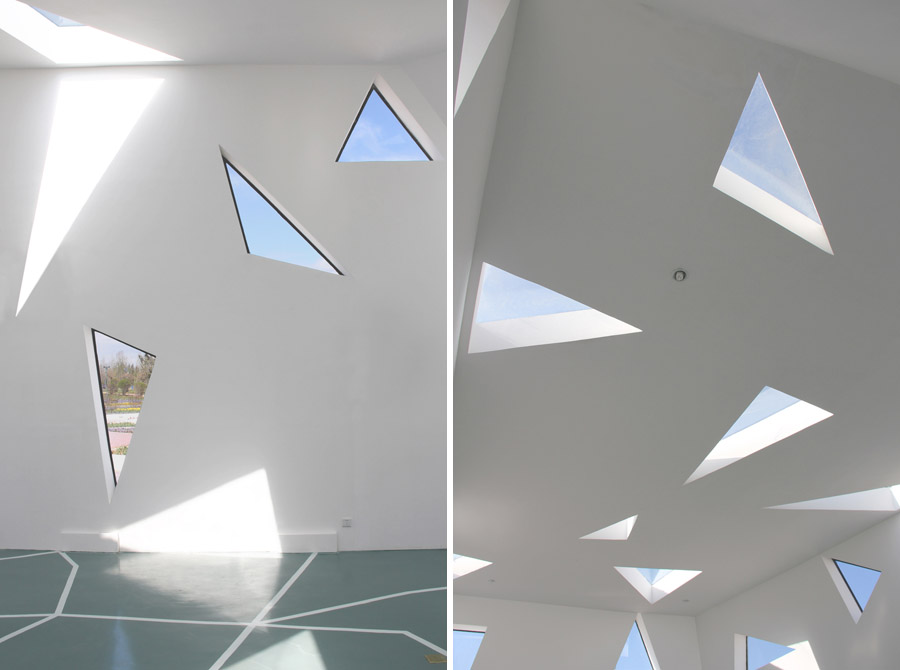
The building geometry of Ceramic Museum is conceived as an extension of the crackled geometry of the park, and it is materialized using the same ceramic tiles used for the pavement of the park, which are combined in the building facade with glazed openings also following irregular patterns.
The polychromatic mosaic formed by vegetal and ceramic surfaces provide geometric and visual unity to the project avoiding the usual separation between hardscape and softscape. Landscape and architecture, Mosaic Park and Ceramic Museum, merge into a single work, at the same time multifaceted and surprising, characterized by its hybrid character and strong plastic content.
具有多重感官刺激的场地提供了舒适的人尺度空间,还配备长椅等家具设施方便游客停留。在这个开放的平台作为社会催化剂,吸引人聚集并让人们了解到过往的传统与历史,销售传播当地的手工艺品,推动本地的创意产业和现代设计,成为一个不仅是公园还能更广范围影响当地经济与城市生活的场所。
Public life activator
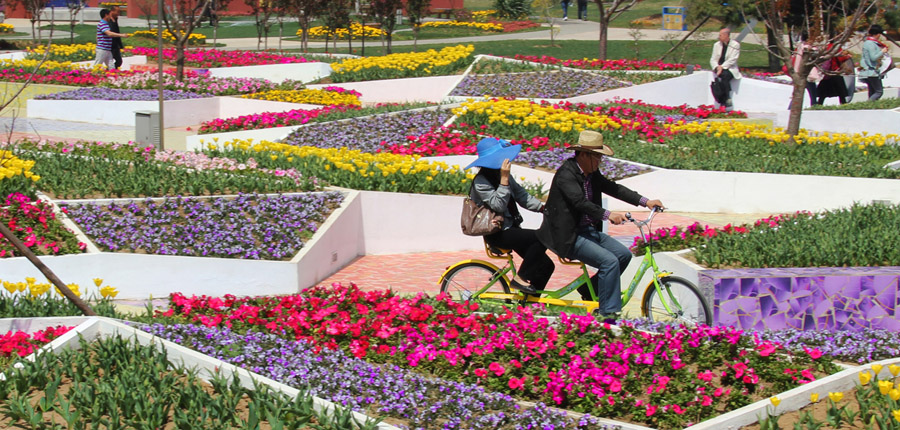
Park and museum work as activators of public life in two ways.On the one hand, Mosaic Park seeks to activate the use of the public space. The iconic nature of the project serves as an attraction that invites visitors to enjoy a multi-sensory experience. The different elements of the park have been dimensioned according to the human scale to provide comfortable spaces for walking, sitting and playing. The park has also been equipped with long benches to create informal places for spontaneous meetings among citizens.
On the other hand, the Ceramic Museum functions as an activator of the cultural and social life of Jinzhou, trying to arouse the visitor’s curiosity about the past of the place, transmitting a lost tradition, and finally creating with a program of exhibitions and public events a new meeting point for the citizens.
Social platform
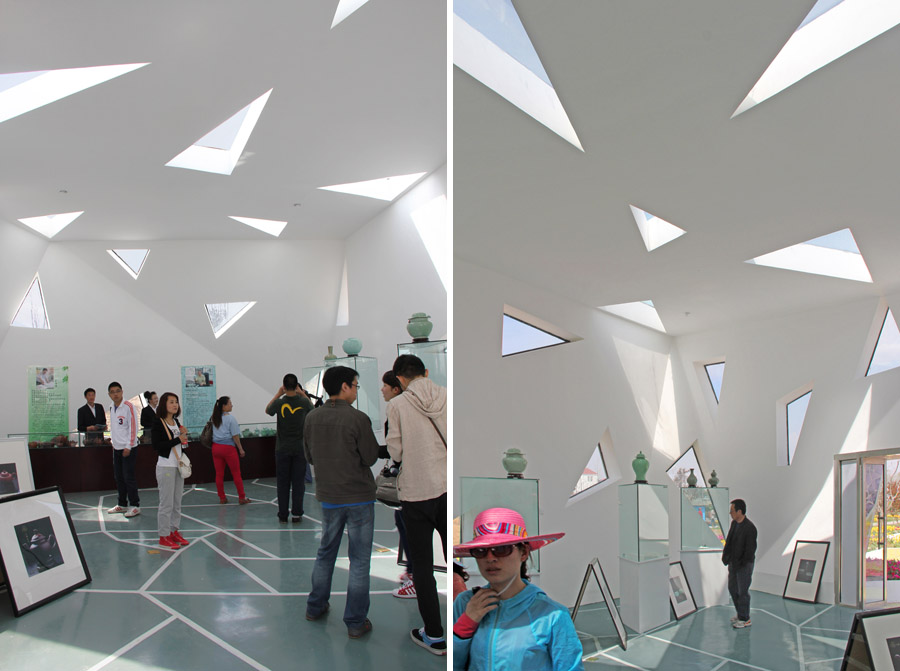
The Ceramic Museum is designed as an open structure, where the program evolves over time offering a new social platform to showcase the work of local artists, designers and artisans who work and experiment with the tradition of ceramic and porcelain.
It intends to arouse the interest of citizens about their traditions, but more importantly it seeks to promote local creative industry and contemporary design by building an emblematic and modern space for the exhibition, dissemination, and sale of local handicrafts.
Ultimately, the Ceramic Museum aims not only to energize the public use of the park, but also the local economy and the cultural life of the city, in order to achieve a wider social impact, beyond its primary leisure purpose.
博物馆内部
Project name: Ceramic Museum and Mosaic Park
Location: Jinzhou, China
Client: Municipality Jinzhou
Designer /architect: Casanova + Hernandez architects
Status of project: Realized
Starting date: October 2011
Completion: May 2013
Firm website: www.casanova-hernandez.com
Photo credit: Casanova + Hernandez architects
The Ceramic Museum and Mosaic Park is part of 2013 Jinzhou World Landscape Art Exposition and experiments with the concept of cultural
hybridization, which is a phenomenon developed during many centuries of commercial and cultural exchange between West and East.
Photo © Casanova+Hernandez architects, MCMILLAN, Ben McMillan
MORE: Casanova + Hernandez Architects,更多关于他们:Casanova + Hernandez Architects on gooood

idea真的很重要,陶瓷博物馆整体的概念以及设计手法简直令人惊叹。地面的颜色可以稍微加点中国灰,这样会降低亮度,对人的眼睛不会有那么大的伤害。可能博览会只是为了突出局部景点的fantastic,不太注重整个公园的风格,整个布局看起来有点杂乱无章。
天哪 丑死了
想法蛮好的,不过太花了啊~鲜花这么艳了,铺地是不是可以再灰点?区分下图底关系。
想法很大胆。。。但是全部都是这个形的重复使用,也没有层次,会不会太粗暴了??
混然的那杂乱,既失去了陶瓷的和谐,又失去了马塞克的美感。
我能说这个实景看上去很low么。。。。。。。表示看到了实物= =
刚刚点开看见的时候你会觉得有点老土不协调,但是用心看下来看设计师的设计理念和设计师所想传达的思想,真心觉得豁然开朗的感觉。设计师用当地传统的陶瓷元素结合现代几何图形冲刺了平常一般公园设计手法,大胆的想象力和创造思维给人焕然一新的感觉。又学到一种新型的景观设计手法,真心感谢这些个伟大的设计师给我们带来这么好的作品,希望未来我也能有这样优秀的作品。要学的东西很多,但是真心感谢能向这么好的设计学习,瞬间充满了力量。