感谢 李熠冬、朱紫元、伍钰、熊英 对gooood的分享 (联系邮箱:isabelebasi@163.com)。
Appreciation towards Li Yidong, Zhu Ziyuan, Wu Yu and Xiong Ying for providing the following description (contact:isabelebasi@163.com):
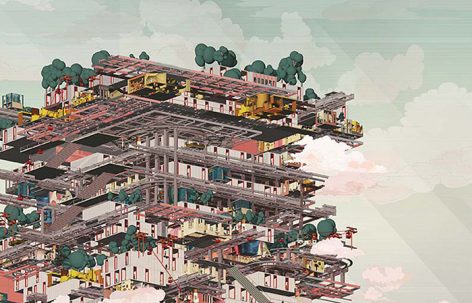
城中村是中国城市化进程中不可避免的讨论议题。从小在深圳这座快速发展的城市中长大,我们耳濡目染地见证了城中村在城市多元化的生态系统中的重要性。2017年深圳香港双城双年展以“城市共生“为主题,讨论在现代城市化进程中城中村与城市相辅相成的关系,也为我们研究城中村独特的城市和建筑环境提供了平台。在此次双年展的背景下,我们作为四位分别毕业于英国巴特莱特和美国pratt建筑系的学生,以对于城中村独特的建筑环境的理解为背景,提出了对于未来城市居住模式的畅想。
Urban villages are unavoidable topic in discussions of Chinese urbanization. Grown up in Shenzhen, a city where high speed urbanization takes place, we observed the importance of urban villages in the diverse system of cities. 2017 Bi-city Biennale of Urban/Architecture was themed as “Cities, Grow in Difference”, discussing relationship between city and urban villages in the process of urbanization. In light of this UABB, as graduates from the Bartlett and Pratt school of Architecture, we proposed a speculative vision of a new living typology in cities based on understandings of urban villages in Shenzhen.
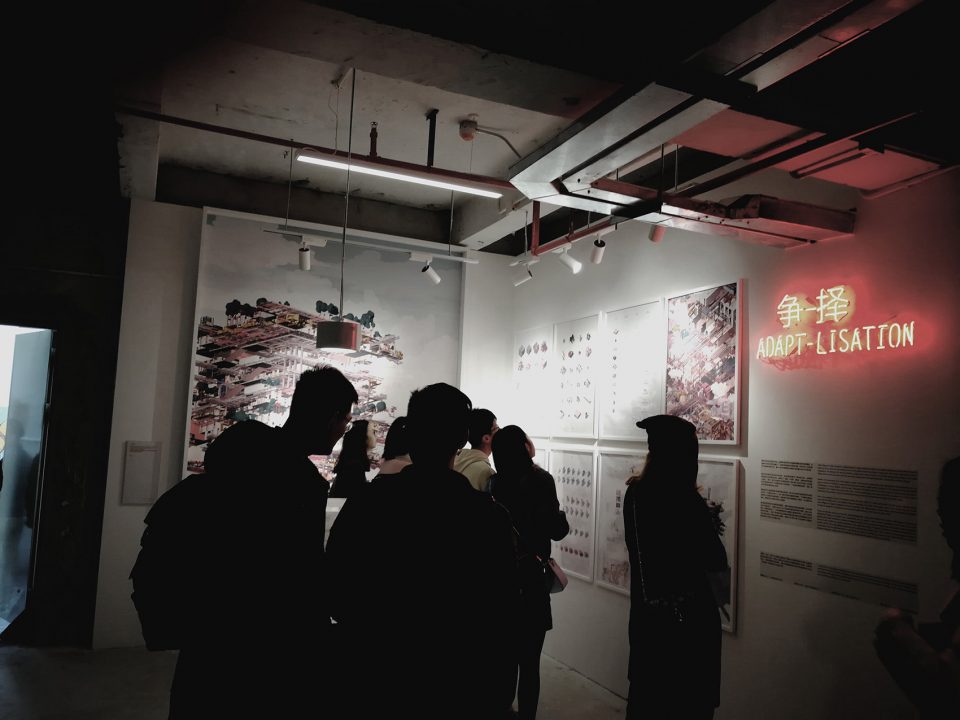
▼展览现场,the exhibition venue
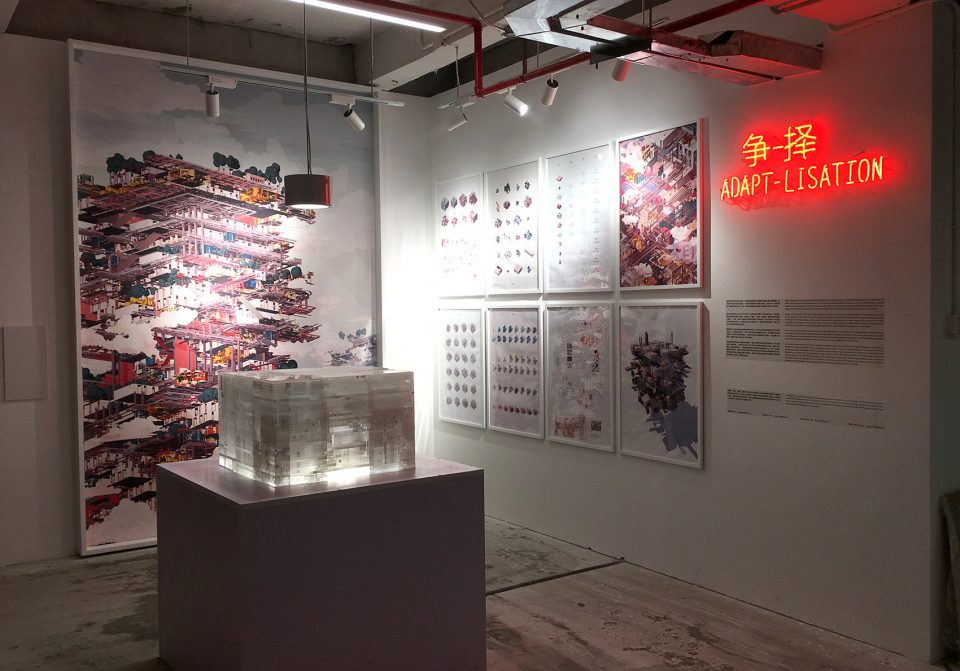
城中村模式:争择 | Urban village Development Model: Adapt-lization
“一争一择,而变化之事出矣。”——赫胥黎
城中村往往因为设施不齐全、治安难以保证等社会问题通常被视为城市发展的隐患,但是城中村的存在同时也解决了一些城市快速发展所导致的问题。其在市中心为居民提供了高密度的便宜住房,解决了城市发展初期交通网络不便和廉价住房不足等问题。
Urban villages are often regarded as hidden hazards of urban development due to incomplete infrastructure and insufficient law and order. But at the same time, the existence of such had solved numerous problems in many cities due to their intractable process of urbanization. For example, first-time city residents usually receive cheap housing from the high-density living complex of the urban village, which provides the newcomers with convenient transportation and allows them with a considerable amount of savings.
▼基于对深圳城中村现状的研究,展览提出了对于未来城市居住模式的畅想,the exhibition proposed a speculative vision of a new living typology in cities based on understandings of urban villages in Shenzhen
城中村的发展状态是无意识且自发的。这种发展状态赋予了居住者以自由,这种居住者对自我生活环境的定制化,重新定义了建筑:开发商、建筑师、建造者和使用者的人格合一。同时,城中村环境的空间局限性带来了居住者们之间在任何细小公共空间内对于使用权的争夺。不断激化的多方关系创造了一个隐形的搭建的逻辑,创造了城中村中多样的建筑契机与类型。
即便这些对于建筑类型的创造通常是无意识的,城中村作为便利与隐患同时存在的城市空间,不可避免的丰富了一个统一城市空间内的建筑形态类型。可以被视为是城市发展中不可或缺的有机组成部分。因此城中村的出现是偶然且必然的、无比稀缺与珍贵的、值得我们视为城市的资产而非隐患。
Besides, the development of an urban village is usually unconscious and spontaneous. Such peculiarity of its development not only grants occupants the freedom to customize their living environment but also redefines architecture: the integration of the personalities of developers, architects, builders, as well as users. Meanwhile, the spatial limitations of urban-village living bring about the tenants’ competition in the usage of any small public space. This ever-intensifying multi-party relationship has created an invisible logic of construction and produced a variety of developmental opportunities and architectural prototypes in the urban village.
Even if the prototypes are often unconsciously created, the urban village as a public space where convenience and potential dangers coexist will eventually enrich the available architectural typologies to a unified metropolitan sphere, which explains why we consider urban villages as an organic integration of urban development. Thus, the emergence of urban villages is both accidental and necessary. It should be viewed as a remarkably scarce and valuable asset of the city, rather than as a latent threat.
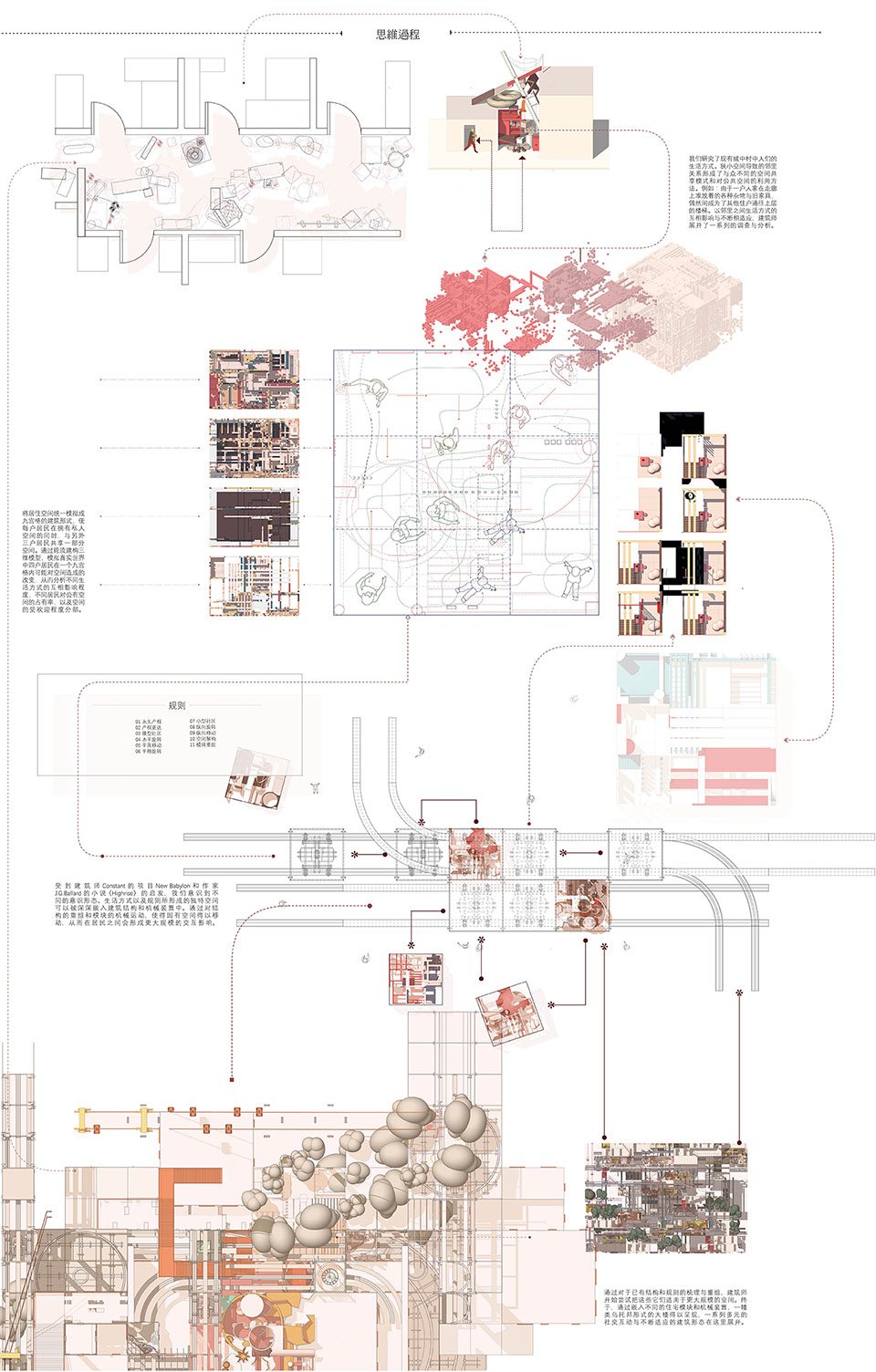
▼从城中村争择模式到规则和机制,learning from living status in Urban Villages
居住实验 | Living Emulations
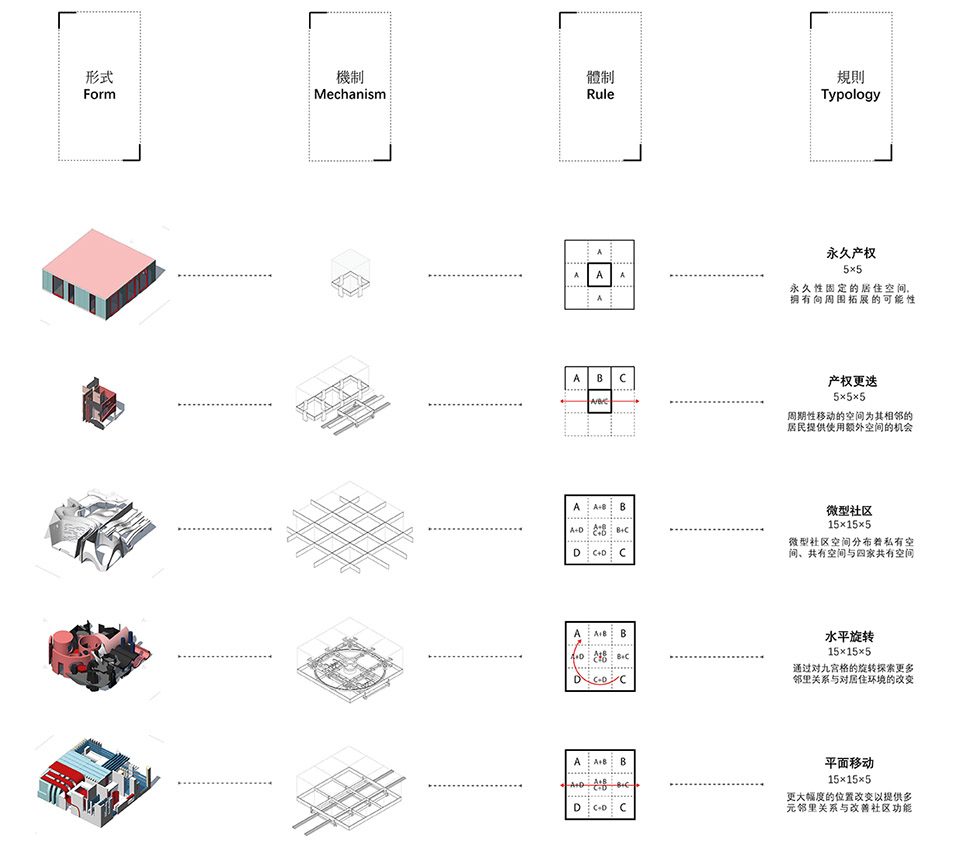
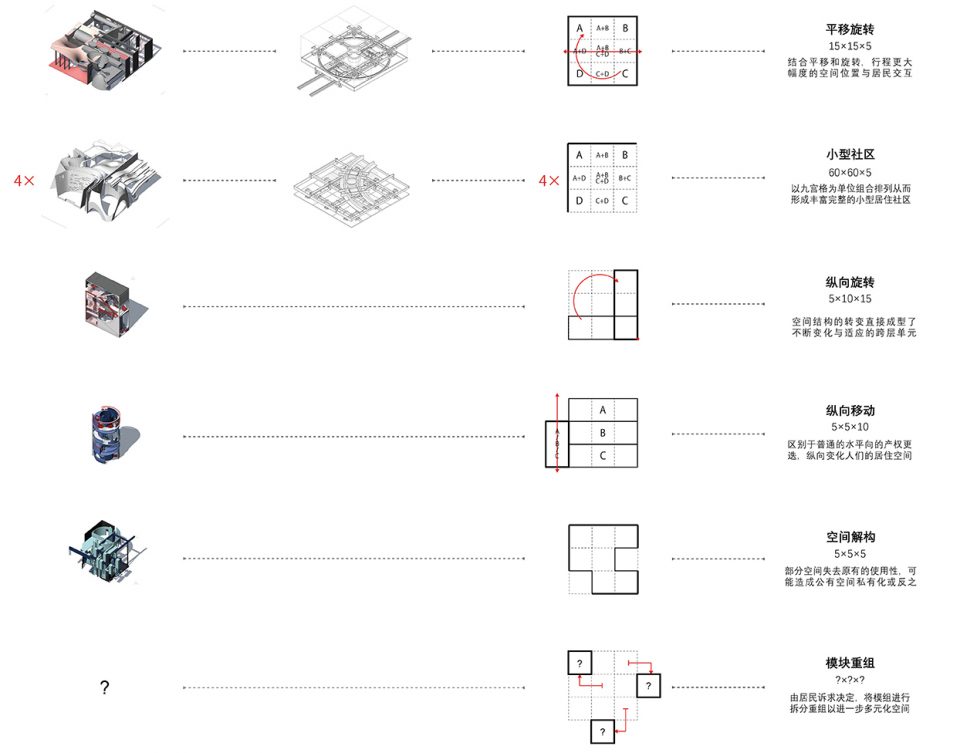
通过创建模拟城中村发展模式的小型实验,我们研究了争与择的发展模式和其发生所需要的规则。以大量在不同规则下进行的小实验为基础,我们总结出了创造城中村居住模式的规则和机制。
In a few emulations of Urban villages’ development status, we developed required rules and mechanism needed to re-create the Adaptable environment.
▼小规模实验例子,samples of the emulations
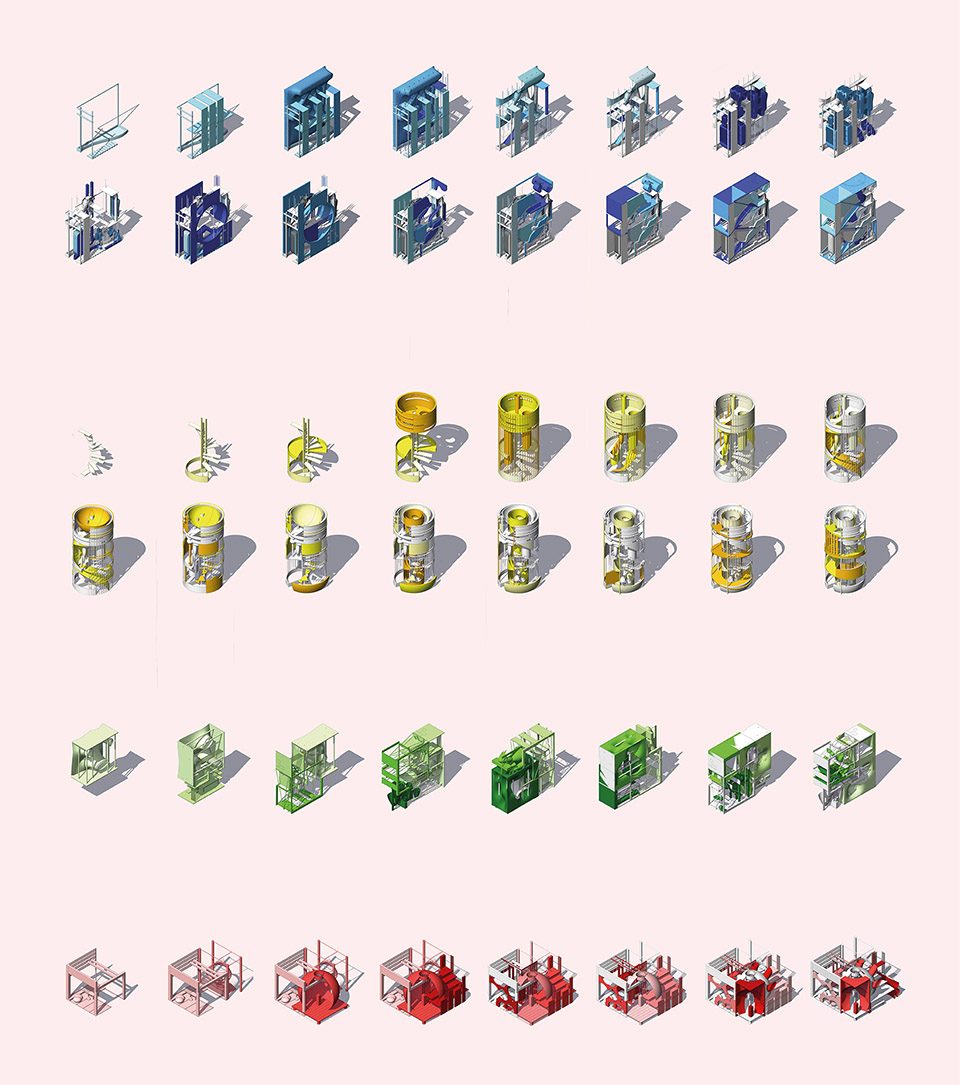
拟态 1: 讨论形体形态间相互影响的关系,和与大体环境的相互影响性。
拟态 2: 讨论形态在特殊边界下的互相影响和竞争关系。
拟态 3: 添加了特殊的旋转机制来研究运动与静止对建筑形态的影响。
拟态 4: 添加了空间与空间之间的限制,和所有权的界定。
Emulation 1: Disussing the inter-relationship of ownerships and intertwining form, and their relationship to the overall spacial quality.
Emulation 2:Studied the effect of special boundary in competitive modes.
Emulation 3:rotating mechanism is applied in order to study the effect of motion on architectural forms.
Emulation 4: A more precise rule is applied,discussing ownership of spaces and interference of different ownerships.
▼居住模型,living typology
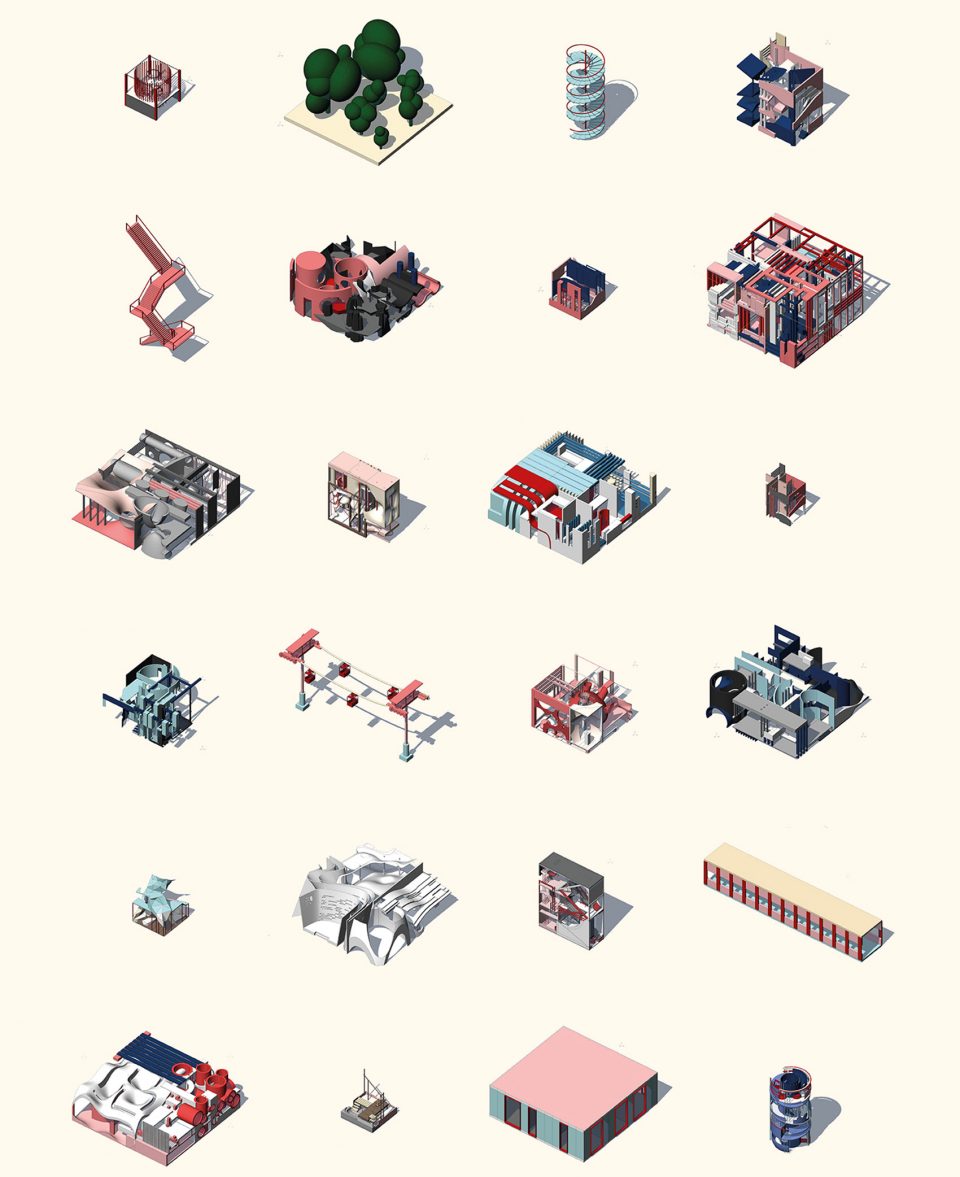
▼规则,机制与体制,Typology, Rule and Mechanism
空间的需求度 | Spatial desirability
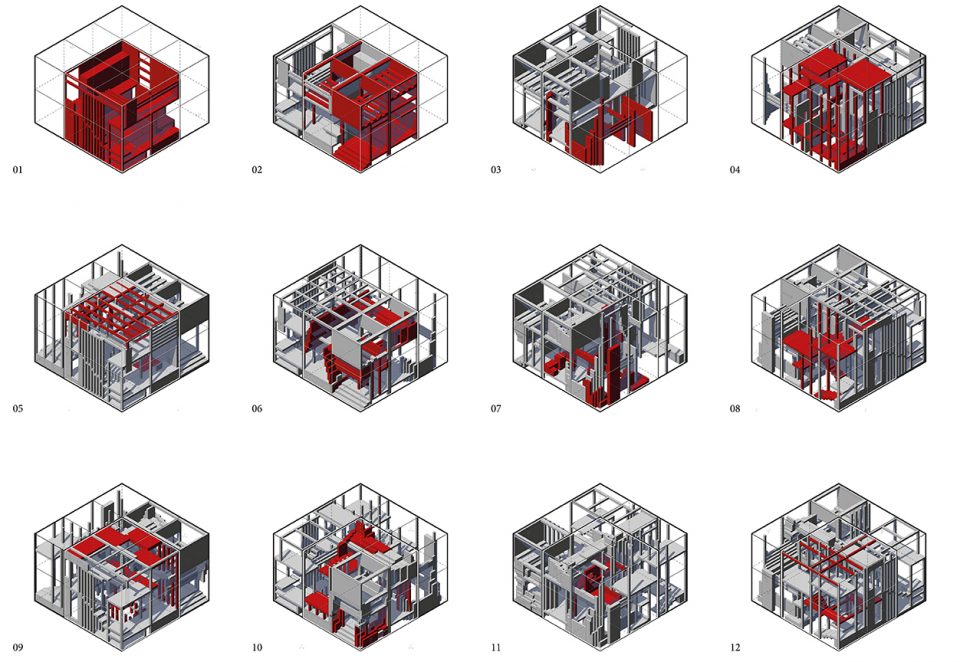
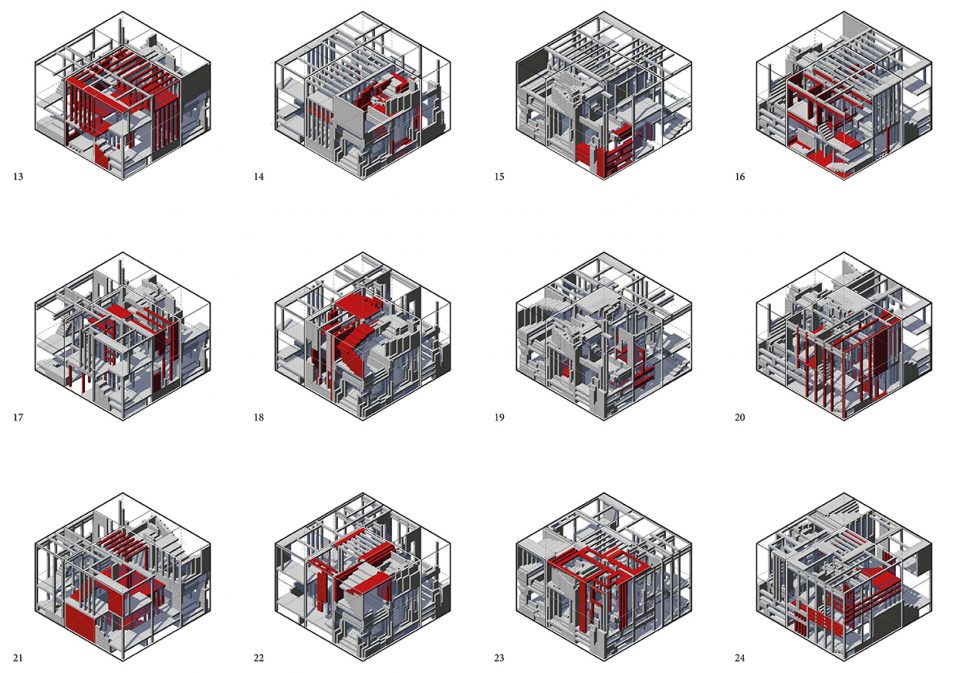
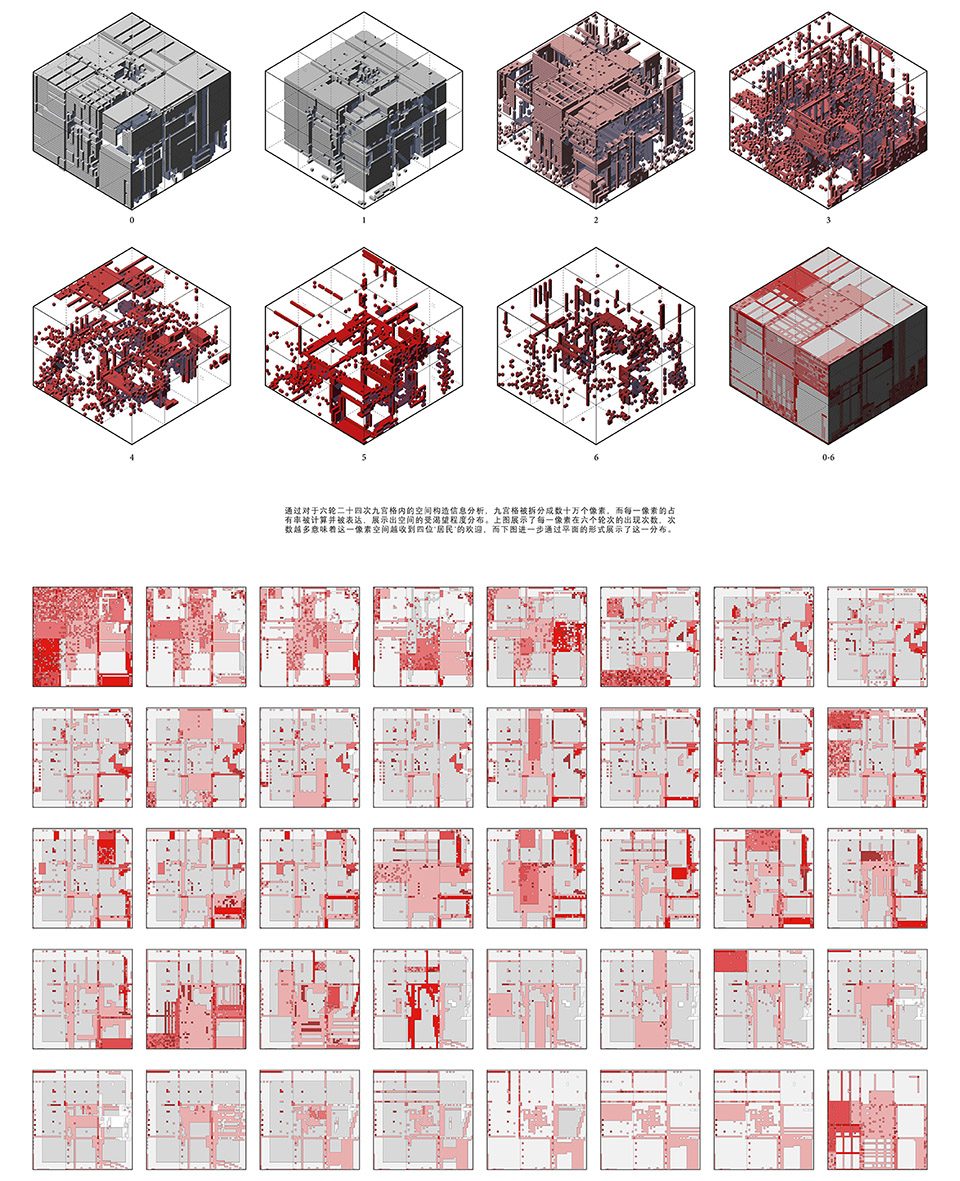
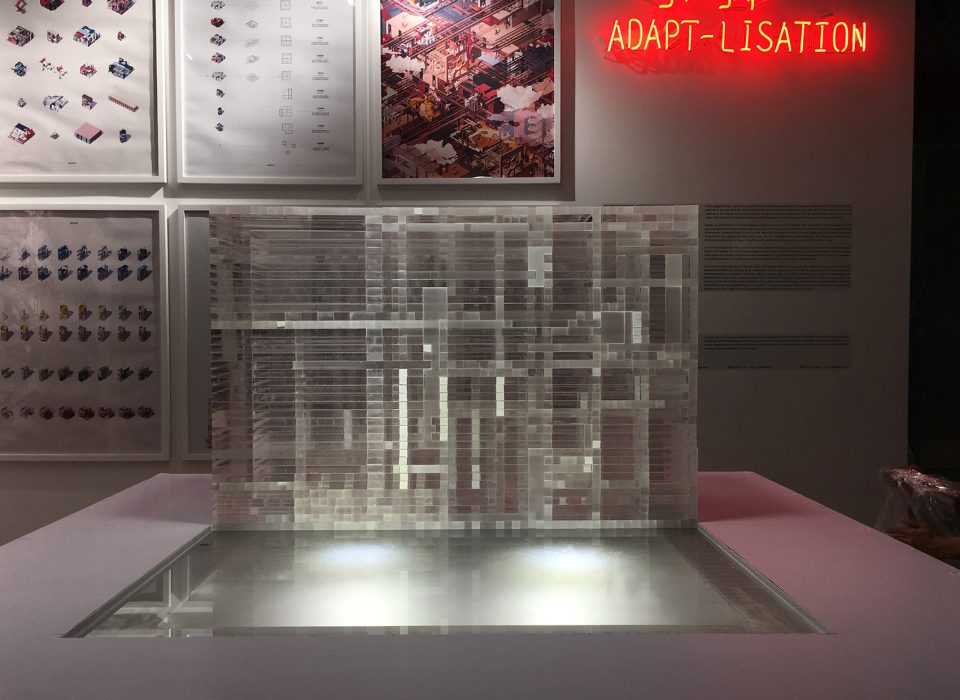
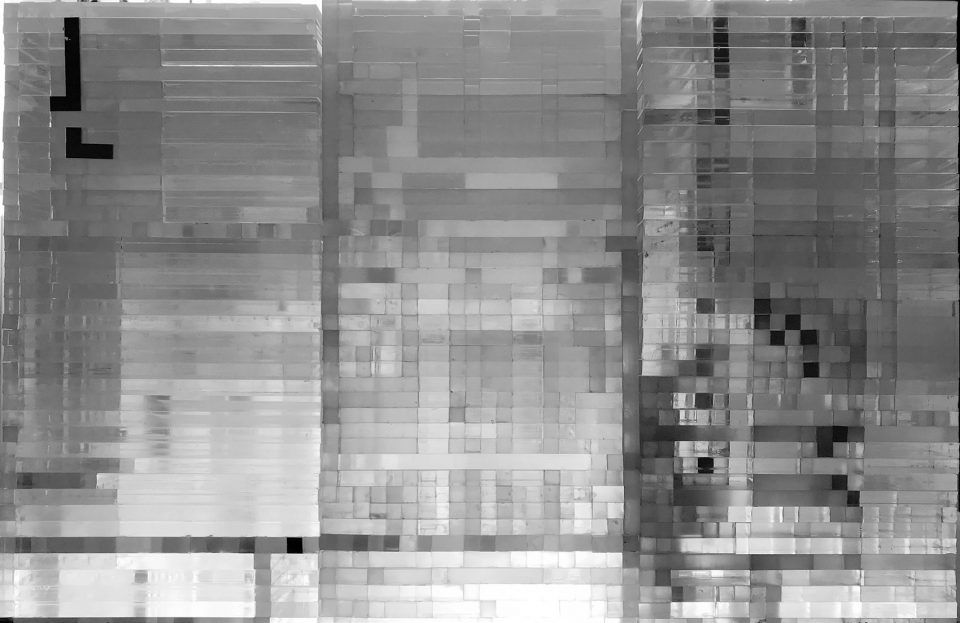
我们在前期的小规模试验中选择了其中最有代表性的一个,来进行更进一步的研究。此体块被分为14.4万个小像素,每一个像素在6轮居住者更迭中被占用的次数被计算了出来,并被总结、制作出来变为模型。不同被占有次数的像素被用不同透明度的体块表达出来,以此来研究在这个范围内,不同像素的需求度的区别。
We chose the most representative emulation from previous experiments for further study. It was divided into 144 thousand pixels and the frequency of each block being occupied in 6 rounds of inhabitancy variance was calculated. The result was made into a model, with different frequencies being show in difference of transparency. In this way, we hope to study variance of desirability in the limited area of space.
▼6轮居住占有权更迭,6 rounds of change in inhabitants
▼占有次数,inhabited frequency
▼模型照片 model pictures
新城市居住形态 | New urban living typology
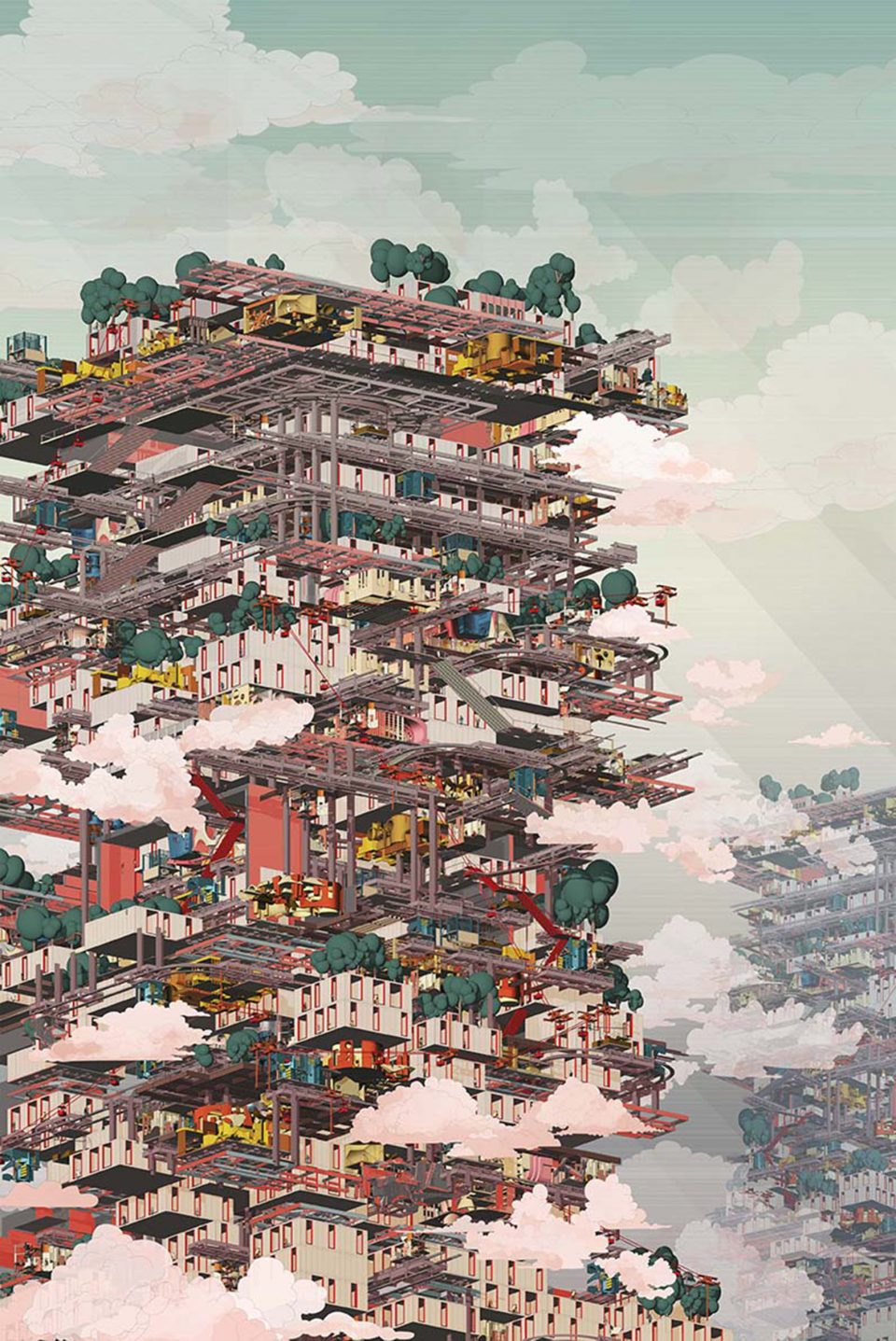
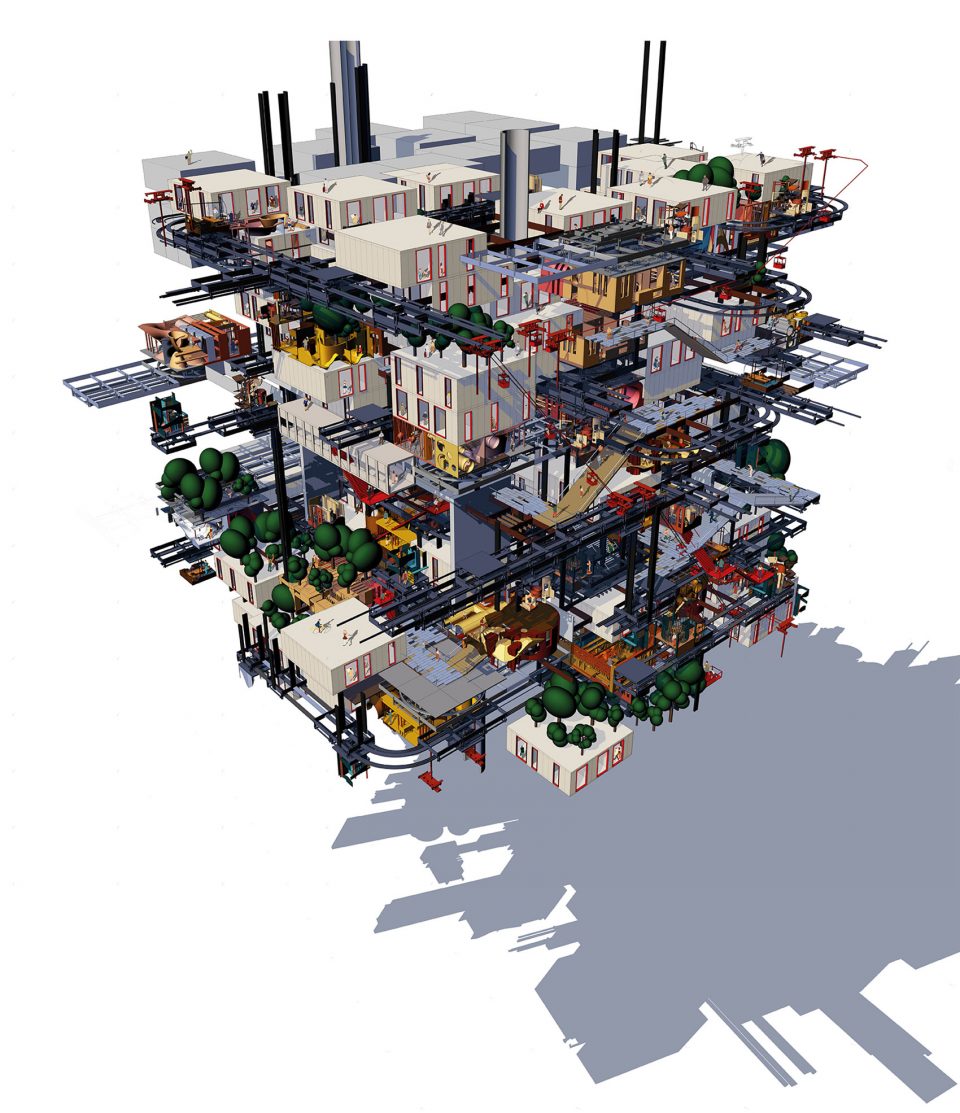
如何能合理利用城中村建筑的争择模式,填补未来城市缺失的类型多样性?以城中村为起点,建筑师构架起了一个拥有独特规则的大楼框架与建筑争择平台。在这个全新的居住形态框架下,服务于规则的机制与体制将会被更加有效率的运用到细细划分的空间中以最大程度上的避免加建中的弊端。建筑师以此研究在城中村争则模式中规则的相互影响与对居民生活的根本改变。
So how can we make rational use of the ever-adapting construction model of urban villages to fill the gap in the future city development? Taking this exhibition as an experimental site, we present a series of works discussing the core issues in the future development of urban architecture. Using urban village as a starting point, our group of architects has constructed a unique architectural framework with a platform for spatial competition. In this new frame of living, the original institution of mechanisms that serves to the precepts will join into a more efficient application to the already finely-divided space, which avoids the disadvantages of additional construction in the most significant extent. In this fashion, our group of architects has examined the mutual influence of competitive precepts in the urban-village model and predicted the fundamental changes in the life of its residents.
▼新城市居住形态构想,new urban living typology
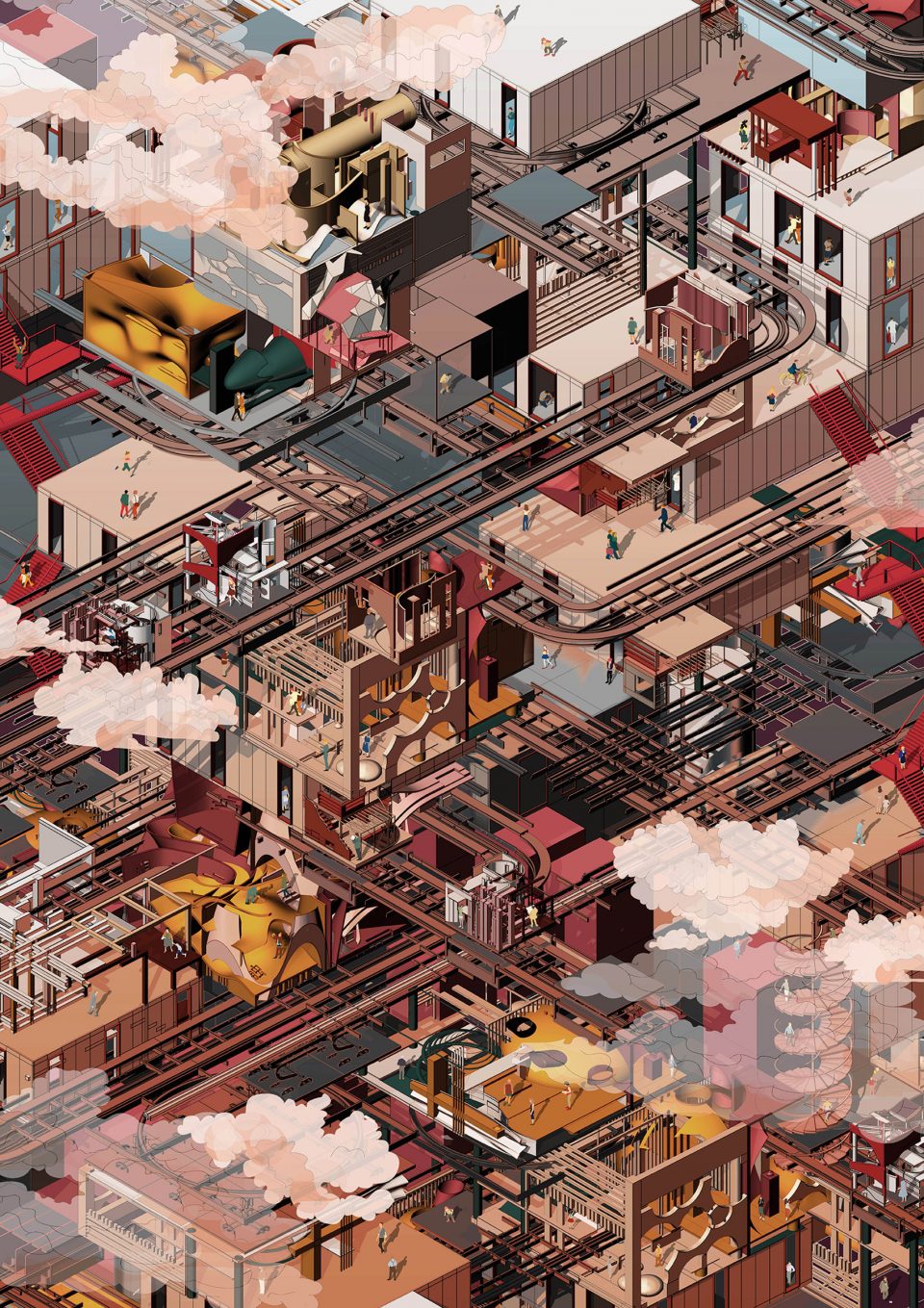
▼细部,detail
团队 | Team
李熠冬、伍钰、朱紫元与熊英,是分别来自于英国Bartlett建筑学院与美国Pratt建筑学院的本科建筑毕业生。我们认为建筑的方法来自于对类型学的研究与匹配。在这样的关系下,建筑将超越形式的束缚,直接与其需要满足的社会关系及周围环境产生对话,因而拥有了深刻的意义与无限的可能。
Li Yidong, Wu Yu, Zhu Ziyuan and Xiong Ying are recent graduates from Bartlett School of Architecture and Pratt School of Architecture. We think architectural design will directly interact with the social environment and therefore taking profound significance and infinite possibilities into its possession.
More:contact: isabelebasi@163.com



把农民束缚在农田上,把工人锁死在城中村。只想着自己为什么这么做而不想别人为什么不这么做。
图是很复杂,但是都讲不明白又有什么意义呢?花里胡哨看着是蛮好看,落不到实处就只能是空中楼阁。建筑毕竟最终是要盖出来的,即使是对未来的畅想,也要让人能看明白设计的逻辑和背后的原理,花拳绣腿可不中用啊。
要我就撕了它那张规则是永久产权的图。让他知道暴力是元规则,规则的规则,还跟我永久产权
我感觉很厉害,但是我看不懂。。。。。
求高清大图
不知道为什么看完感觉好杂乱无章……纯碎很复杂
方法有趣,却没有任何结果。或许应该更多去介绍自己的研究方法,而不是强调自己的宣言。
其实是很愤怒看到这种缺乏Process,主观臆断推测出应对未来方法而出设计结果的设计。我不知道你们的Critics是怎么评价这个方案的,普拉特怕是做艺术做惯了
能不能好好讲汉语
越是半调子英语,越是爱用零碎英语来装点自己,傻吊楼主
我猜他can‘t
Excuse me ? 开骂前看看自己素质行么
表达有问题
好奇每一个像素在6轮居住者更迭中被占用的次数是如何被计算的
没看懂,但是很酷。
似懂非懂……虽然很酷。
赞!!这种偏理论研究带点叙事性然后又在一种未来的setting里的项目,好像很多国外学校都能见到,但是感觉网上能搜到的太少了,感谢能分享这样一个项目
我讲下我的理解吧:像卧室、卫生间这样的居住必需空间处于相对固定的位置,而像餐厅、厨房这样的非必需空间可根据不同住户的需要而变换位置;由多个住户组成的社区单元以及社区单元间的共享空间,也可以作为一个整体在整个社区范围内移动,以塑造丰富多变的社区空间与邻里关系
我的理解是设计者并没有考虑太多应用层面的问题,感觉通篇在说自己的研究。从行为模式、空间特征到各个空间的使用频率。产权更迭算是其中一个小的亮点,应对的是城中村内部公共空间的互相争夺。更多的还是在探索一种模块化的新的聚合形式
建筑学真是一个可悲的专业
哎。活在梦里吗?
要鼓励·····虽然看不懂。
其实文字逻辑挺引人注目的,就是应该换个观众友好的视觉表达
我也觉得不友好。。。
很努力看,还是看不懂
看不懂
好棒的设计,好想学习这样的表现图,不知道是用什么软件做的呀。
suai吧应该