“这是一个创意十足的场地解决方案,巧妙结合了材料和植物,既能吸引游客,又有助于推动可持续发展。”
– 2024年评审委员会“This is a creative solution for the site that nicely integrates materials and plantings to engage guests and promote sustainability.”
– 2024 Awards Jury
来自 ASLA 对gooood的分享。
Wild Mile|SOM + Omni Workshop
项目陈述
Project Statement
作为最初与芝加哥北支工业走廊现代化计划相结合的框架愿景构思,芝加哥“郊野一英里”项目如今已成为全球城市河流复兴的宝贵典范。
Urban Rivers项目的首阶段包括模块化漂浮步道和本土植物床,它们提供了易于接近的延伸公共空间。在鹅岛以东,这些步道不仅为野生动物创造了栖息地,还为水岸区域注入了丰富的教育项目和浓厚的社区氛围。“郊野一英里”框架愿景的指导原则将为芝加哥河北支运河沿线及更广泛区域的17英亩漂浮生态公园的逐步实施提供结构性框架、工具支持和法规指引。
Initially conceived as a framework vision in conjunction with the modernization of the City of Chicago’s North Branch Industrial Corridor, the Wild Mile has proven a valuable model for revitalizing urban rivers throughout the world. Urban Rivers’ first phase of modular floating walkways and native plant beds are an accessible extension of public space. East of Goose Island, they provide wildlife habitat, educational programming, and a strong community atmosphere at the water’s edge. The guiding principles of the Wild Mile Framework Vision will provide the structure, tools, and regulatory direction for the incremental implementation of the 17-acre floating eco-park along the mile long North Branch Canal of the Chicago River and beyond.
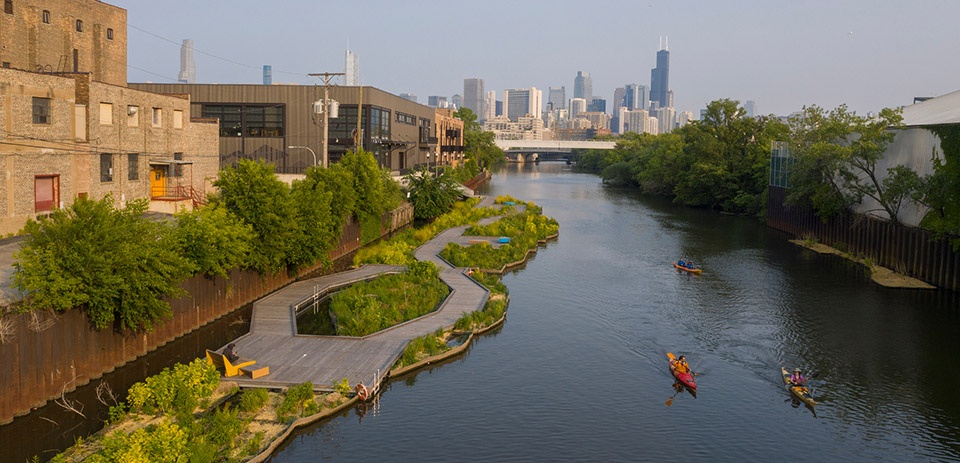
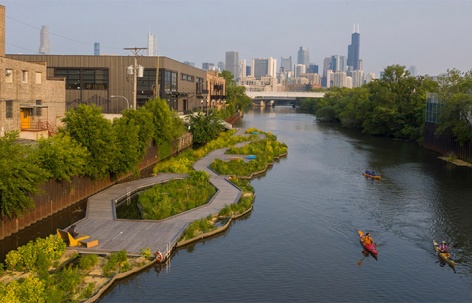
▲郊野一英里:将城市河流转变为漂浮生态公园,“郊野一英里”旨在将芝加哥河一英里长的河段修复为野生动物保护区、沉浸式自然体验地和活跃的实验室,Wild Mile: Transforming an Urban River into a Floating Eco-park: The Wild Mile seeks to rejuvenate a 1 mile stretch of the Chicago River into a wildlife sanctuary, immersive nature experience, and living laboratory © Scott Shigley
项目说明
Project Narrative
“郊野一英里”是一个占地17英亩的漂浮生态公园,旨在将芝加哥河北支的一段工业化河道转变为一个繁荣的野生动物走廊。
2016年,合作团队受命构建“郊野一英里”项目的框架愿景。该框架提出了一个由社区主导的城市生态复兴愿景,旨在加强社区的连通性、促进清洁水源的生成,并支持本土生态系统的复兴。新公园将以教育、艺术和休闲机会为基础,培育强大的社区氛围,同时为企业、地产所有者和旅游业带来经济效益。
该框架为城市滨水区设计提供了以可持续性为核心的标准,提出了创新的方式,将自然元素重新引入工业化水道,并加强社区与其本地环境的联系。团队与多个市政机构和政府部门密切合作,确保提出的愿景能够遵守城市水道的相关政策。框架中的设计要素和原则具有高度的可转移性,适用于其他城市水道的规划与实施。
北支运河的人工岸线采用了多种施工技术,包括钢板桩、木材、护岸石、混凝土以及自然化的侵蚀海岸线。这些结构条件大多导致了陆地与水域的隔离,但也为设计中引入出入口、锚固系统及栖息地创造了独特的挑战与机遇。
设计通过将水道岸线改造为绿色群岛缓冲区,帮助恢复河流的“自然”形态与生态过程,同时实现连续的公共通道。重新引入水边植物带和滩涂区不仅完善了生态系统的食物链,也增强了环境的健康,缓解了以往的人工干扰。“郊野一英里”项目的目标是将该地区转变为一个野生动物保护区,优先创建并扩展栖息地。更重要的是,该框架提供了一种具有韧性、以野生动物为主导的可持续解决方案,既能有效缓解雨水径流,又能过滤水质。
该项目的首个阶段已由谢德水族馆、芝加哥英国国际学校和国家地理学会的志愿者实施。模块化漂浮栖息地、皮划艇码头以及可持续松木步道像连贯的拼图块般蜿蜒,创造了更多样化的水岸条件。模块化设计使得各阶段能够在资金到位时逐步推进实施。
“郊野一英里”目前拥有超过10,000株本土植物,涵盖50种湿地物种,占地11,716平方英尺的漂浮栖息地。这些植物经过精心选择,主要考虑其对各类栖息地中野生动物的支持作用。植物将为水中和陆地上的动物提供全年食物、栖息地、繁殖区和庇护所。研究团队已经记录到,漂浮设施周围的本土鱼类物种及浮游动物数量,明显高于河流的其他区域。
自“郊野一英里”项目启动以来,吸引了众多社区活动、研究项目、志愿者和多样化的植物群落。该项目的概念已经在芝加哥河的另一区域——泡泡溪(Bubbly Creek)得到实施,成为国际城市水道设计的杰出范本。这些不断发展的漂浮生态公园不仅为芝加哥的城市居民提供了丰富的生态体验,还在水陆两界促进了健康、环境福祉与自然美景的改善。
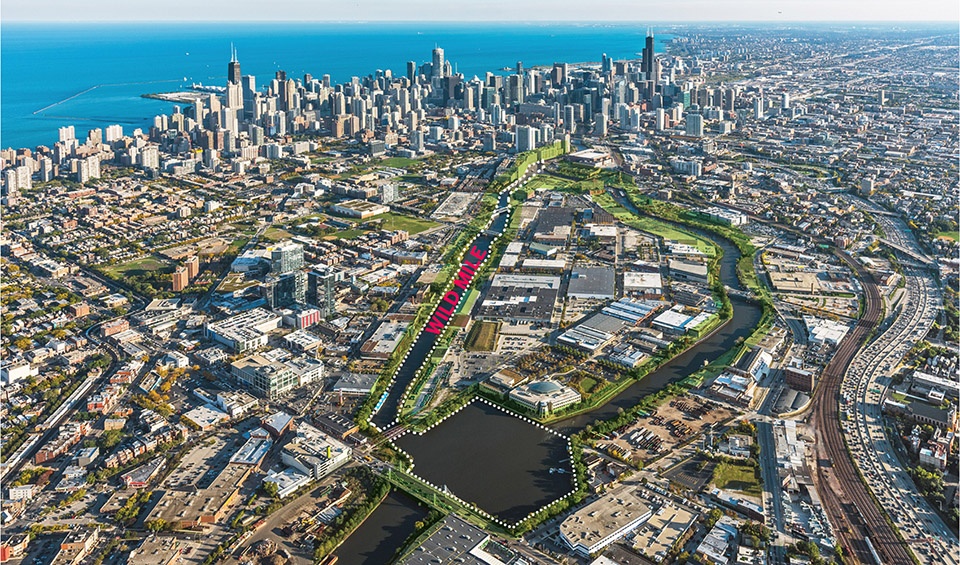
▲“郊野一英里”项目背景与现场图:项目位于芝加哥河北支运河,东临鹅岛,Wild Mile Context Aerial: Wild Mile is located on the North Branch Canal of the Chicago River, East of Goose Island © Curtis Waltz © Aerielscapes, Inc. Courtesy of SOM
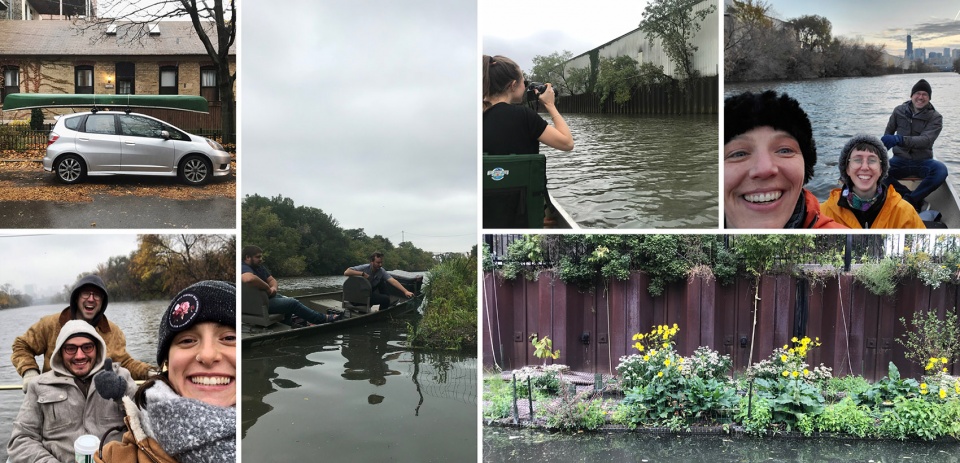
▲雪中的现场考察:由于现有的钢板桩河岸和陡峭的河岸边缘,项目地点的进入较为困难,项目清单的最佳评估方式是从水面进行,A snowy site visit to the North Branch Canal: Access to the project site was difficult due to the existing sheet pile river edge and drop-off. Project Inventory was best performed from the water © Omni Ecosystems, Urban Rivers
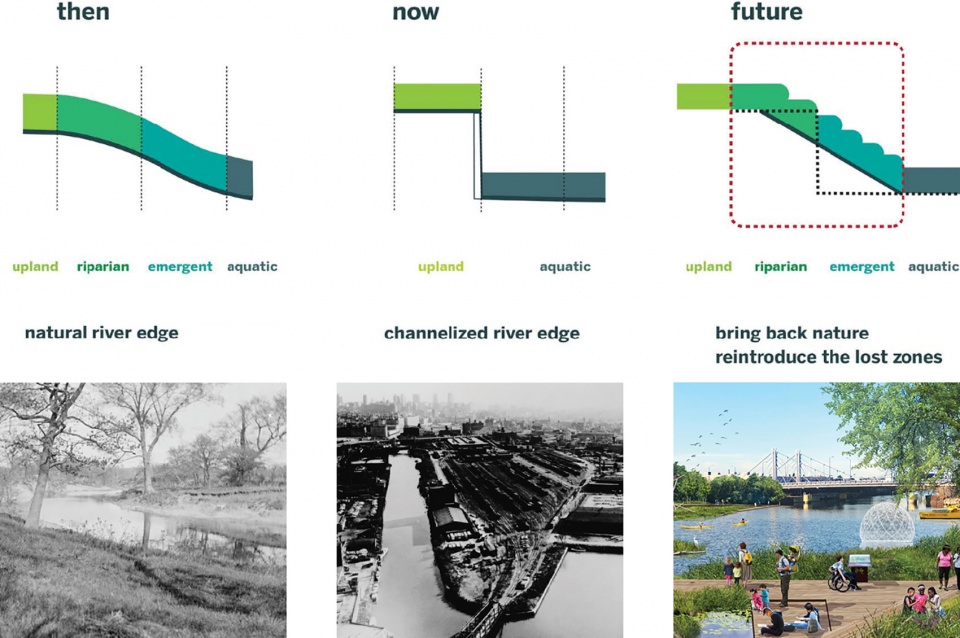
▲城市河流的工业化导致自然岸线消失:这一段工业化河岸大多已被渠道化,岸线由钢板桩、石灰岩、木材、护岸石、混凝土和自然侵蚀的岸线组成,Industrialization of urban rivers removes the natural shoreline: Largely channelized, the industrial river edge consists of sheet pile, limestone, timber, rip rap, concrete, and eroded naturalized conditions © SOM
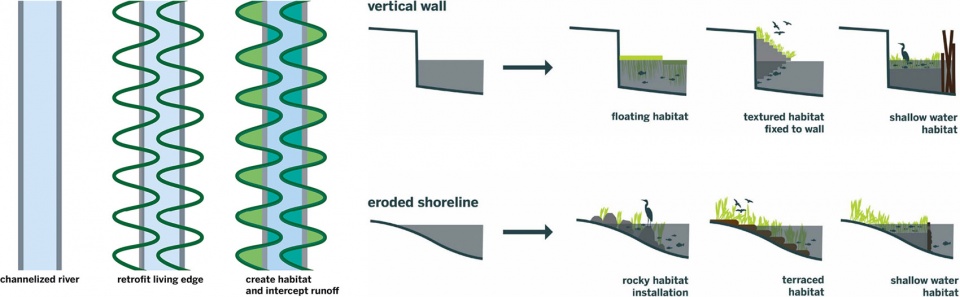
▲重建丧失的水边生态带:滨水区和滩涂区为野生动物提供宝贵的栖息地,过滤水质、减少侵蚀、并有效管理雨水径流,针对不同岸线条件的设计解决方案,Reintroduce the lost zones: Riparian and emergent zones create valuable habitat, filter water, reduce erosion, and manage stormwater. Design solutions for varied edge conditions © Omni Ecosystems, SOM
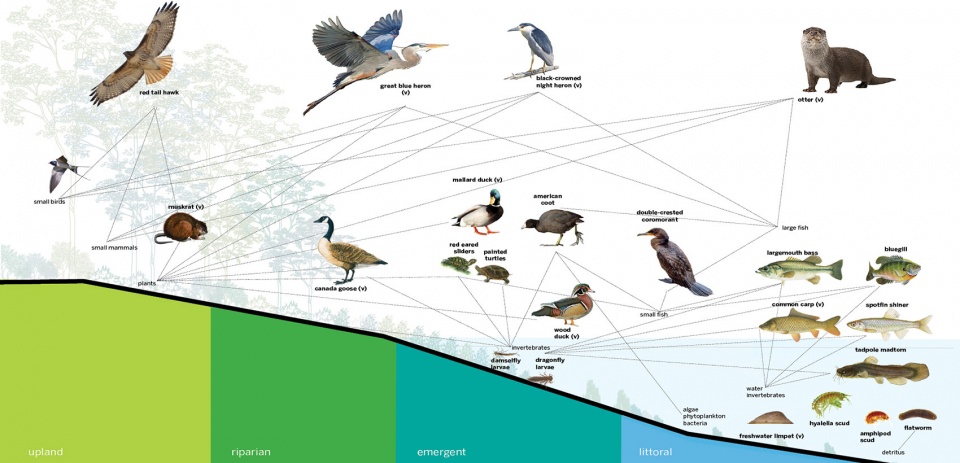
▲食物链的恢复:恢复的滨水区不仅填补了食物链中的空白,还为所有生物提供了食物,吸引了大型动物回到河流,Food chain restoration: Restored riparian zones also restore gaps in the food chain, providing food for all life and attracting charasmatic megafauna back to the river © Omni Ecosystems
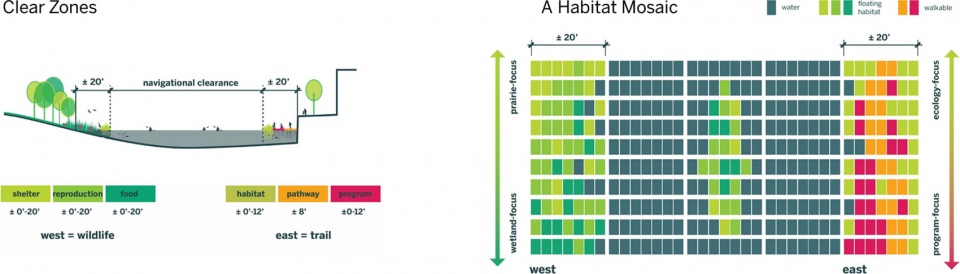
▲设计限制与模块化系统:考虑到美国陆军工程兵团对水道的可航要求,直线型模块设计依然能够创造动态且有机的岸线,Design restrictions and modular system: Army Corps of Engineers navigable waterway requirements. Rectilinear modules can still create a dynamic and organic edge © SOM
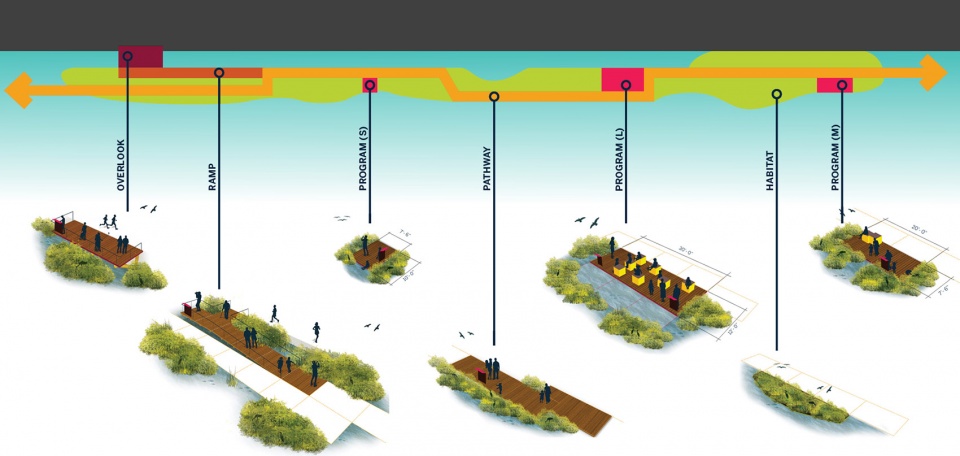
▲构建组件:构建组件使得“郊野一英里”具有可编辑性、可扩展性、可移除性、可修复性和可规模化的特性The kit-of-parts: The kit-of-parts makes the Wild Mile editable, expandable, removeable, repairable, and scalable © SOM
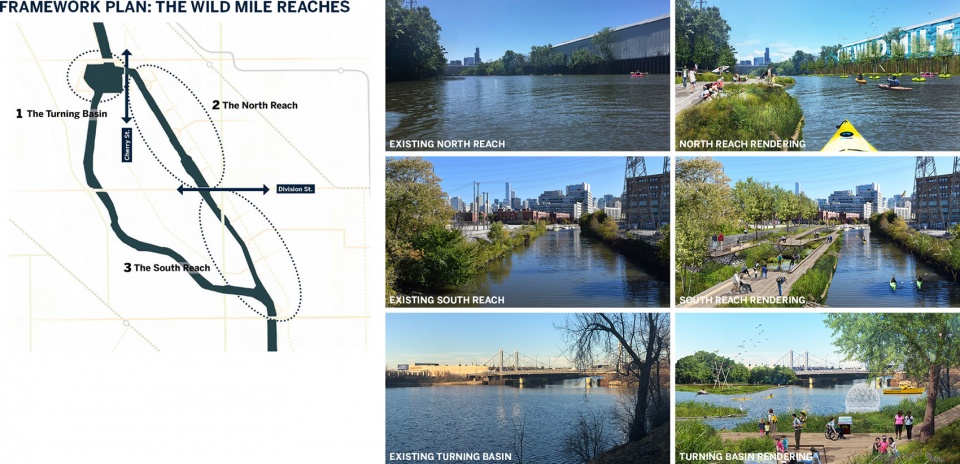
▲“郊野一英里”框架愿景的分阶段实施:三个地理区域分别扮演不同的功能和生态角色,并被细分为具有独特主题的区域,Wild Mile Framework Vision phases: The three geographical reaches have different programmatic and ecological roles. They are subdivided into character zones with unique themes © SOM
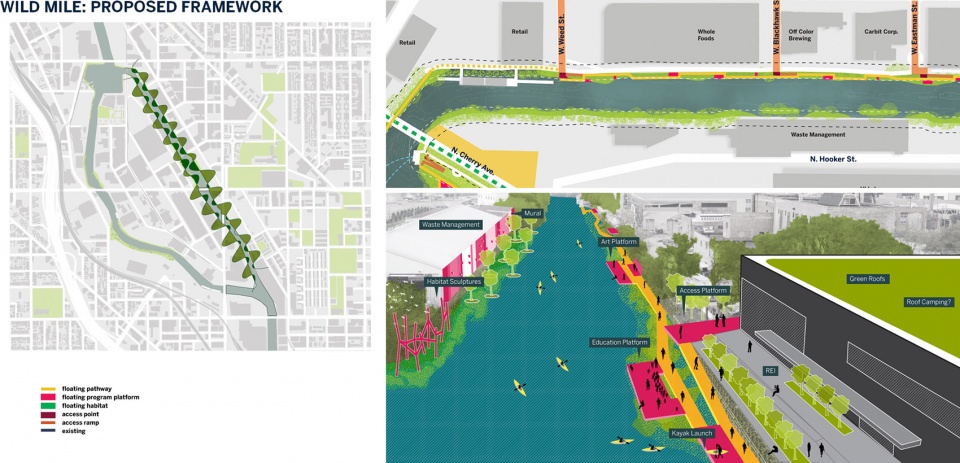
▲框架愿景建议:北区,北区的主要主题包括食物、聚会、艺术、户外学习和休闲,Proposed Framework: The North Reach: Food, gathering, art, outdoor learning, and recreation are the major themes of the North Reach © Omni Ecosystems, SOM
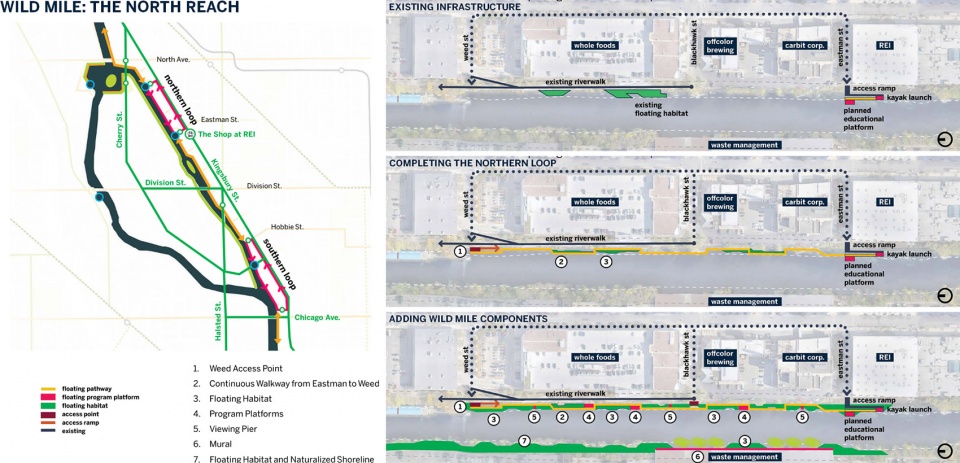
▲北区可行性研究:这一部分现有的河流基础设施和周围的商业环境使其成为第一阶段筹款和建设的重点区域,The North Reach: Feasibility: This section’s existing river infrastructure and surrounding businesses led it to be the focus for Phase 1 fundraising and construction © SOM
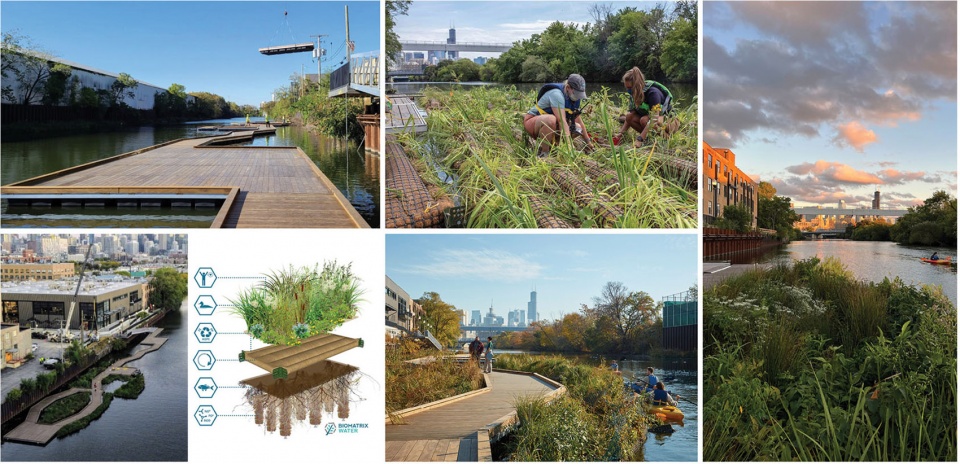
▲学习平台:志愿者河流巡护员与建筑专业人员和工程师合作,共同安装“郊野一英里”,第一阶段的建设资金为165万美元,来自OSIF基金The Learning Platform: Volunteer River Rangers collaborated with construction professionals and engineers to install the Wild Mile. $1.65m OSIF funds were used for Phase 1 © Urban Rivers, Biomatrix Water, Dave Burk, Omni Ecosystems
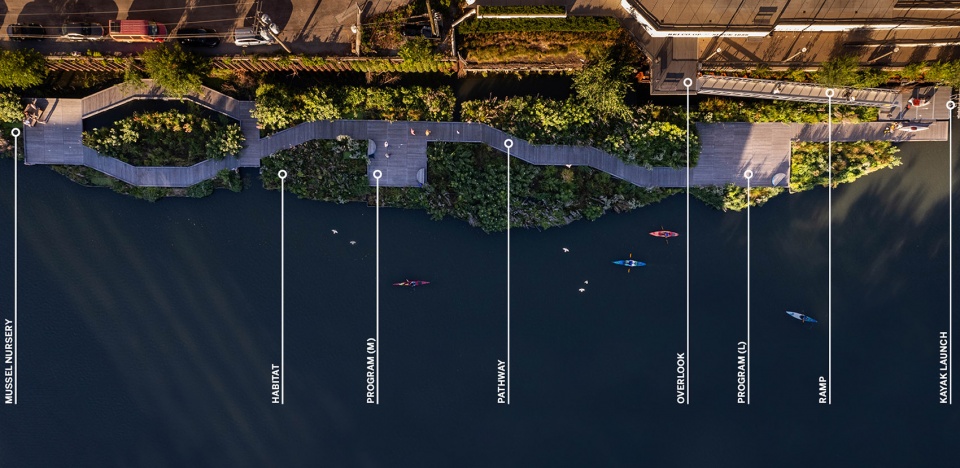
▲为社区提供的公园空间,不仅仅是设施的吸引力;真正的吸引力来自野生动植物:郊野一英里框架愿景中的许多元素在实现的项目中得以体现。为人类、动植物及水生物种提供的设施,A park space for the community where the attraction is not just amenities; the attraction is wildlife: Many of the elements from the Wild Mile Framework Vision appear in the realized project. Amenities for humans, critters, and aquatic species alike. © Scott Shigley
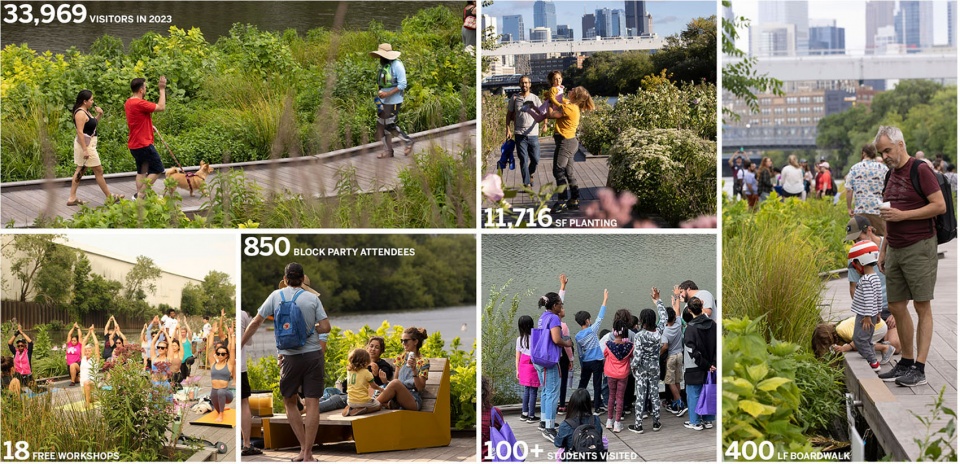
▲自然将社区凝聚在一起:社区对这一空间的反应充满热情与兴奋,适合所有年龄段的孩子以及各种层次的自然爱好者,Nature brings the community together: A dramatic and enthusiastic response to this space from the community. Favorable for kids of all ages and nature nerds of all levels of expertise © Scott Shigley, Urban Rivers, Sage Rossman at Urban Rivers
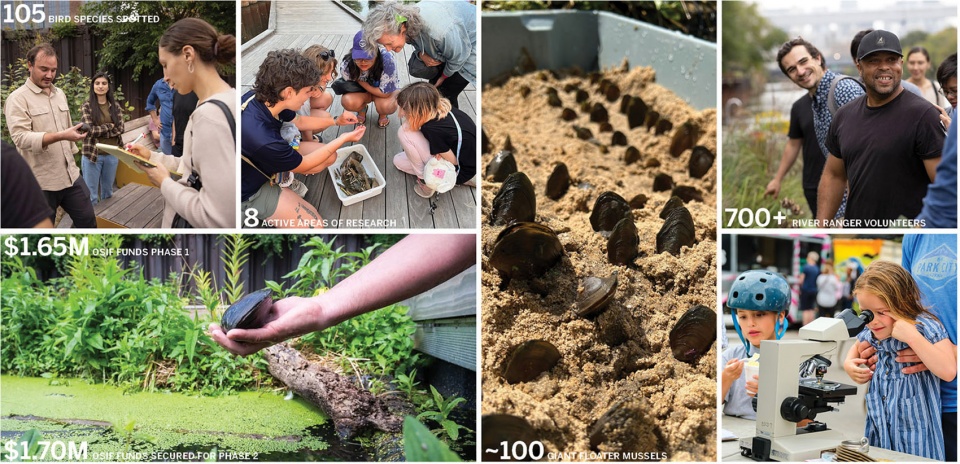
▲活跃的实验室:“郊野一英里”是100多只巨型浮动贻贝的栖息地,这些贻贝每年能过滤36.5万加仑的水,此外,还有8个活跃的研究区域,A living laboratory: Wild Mile is home to over 100 giant floater mussels, which can filter 365,000 gallons of water annually. There are 8 other active areas of research © Scott Shigley, Urban Rivers, Jerry Attere
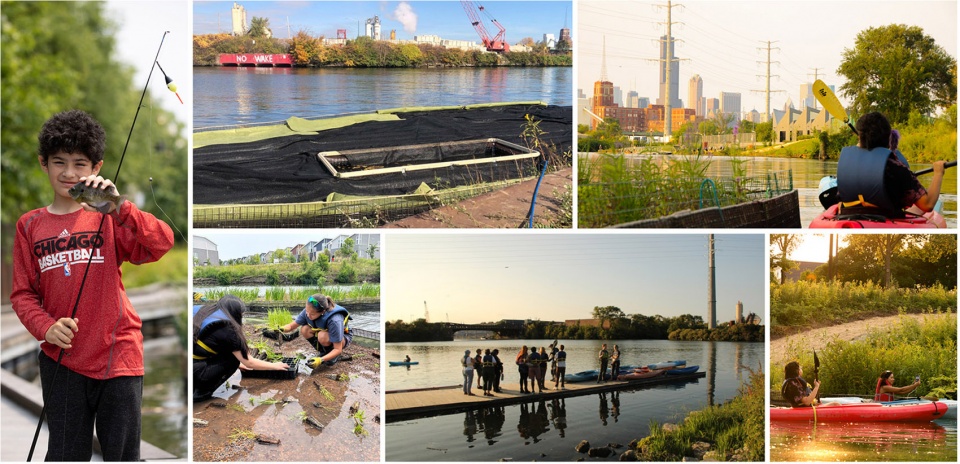
▲泡泡溪:这一创新概念已扩展至另一位置,正在那里测试新的漂浮栖息地,“郊野一英里”的设计可在任何地方实施,Bubbly Creek: The innovative concept has expanded to another location. New floating habitats are being tested there. Wild Mile can be implemented anywhere © Scott Shigley, Urban Rivers, Taylor Frontier, Patty Wetli at WTTW News, Sage Rossman at Urban Rivers
Project Narrative
Wild Mile is a 17-acre floating eco-park designed to transform an industrialized stretch of the north branch of the Chicago River into a thriving wildlife corridor.
In 2016, a team of collaborators were tasked with creating the Wild Mile Framework Vision. The framework advances a community-led vision of renewed urban ecology to help strengthen neighborhood connectivity, generate clean water, and support vibrant native ecosystems. The new park will foster a strong community based on education, art, and recreation opportunities while also providing an economic draw for businesses, property owners, and tourism.
The framework provides standards for urban waterfront design that put sustainability at the forefront and identifies innovative ways of reintroducing nature to industrial waterways while connecting the community with their local environment. The team skillfully navigated many municipalities and government agencies to ensure the proposed vision would adhere to waterway policies. The components and principles used to develop the framework are highly transferable to other urban waterways.
The North Branch Canal’s man-made edges use various construction techniques including sheet pile, timber, rip rap, concrete, and naturalized/eroded shoreline. Most of these structural conditions result in a division between the upland and aquatic zones. Each also poses unique challenges and possibilities for incorporating access points, anchoring systems, and habitat.
The design retrofits the waterway edges into green archipelago buffers that help re-establish the “natural” form and processes of the river while creating continuous public access. Reintroducing the riparian and emergent zones completes the ecosystem’s food web, strengthens environmental health, and alleviates previous human disturbances. The Wild Mile seeks to transform the area into a wildlife sanctuary, prioritizing the creation and expansion of habitat. Most importantly, the framework offers a resilient, wildlife-first, sustainable solution that provides stormwater mitigation and filters water.
The first of three planned phases has been implemented by volunteers from the Shedd Aquarium, British International School of Chicago, and National Geographic Society. Modular floating habitats, kayak docks, and sustainable pine boardwalks meander like connected puzzle pieces creating more diverse edge conditions. The modular design allows for gradual implementation of the phases as funding is secured.
Wild Mile has over 10,000 native plants representing 50 wetland species in 11,716 square feet of floating habitat. Native plants were chosen for their value to wildlife in the various habitats present. The plants will provide year-round food, nest sites, spawning areas, and shelter to animals in the water and on land. Research teams have catalogued more indigenous fish species and higher quantities of zooplankton near the floating installation than in other parts of the river.
The multitude of community events, research, volunteers, diverse plants, and charismatic megafauna that have gravitated to the Wild Mile since its inception is incredible. The concept has been implemented in another area of the Chicago River, Bubbly Creek, and is an exceptional model for urban waterway design internationally. These constantly evolving floating eco-parks provide ample improved community health, environmental wellness, and natural beauty to Chicago’s urban residents on land and in water.
Project Credits
Michael Skowlund, ASLA, Designer
Skidmore Owings & Merrill LLP, Urban Designer
Janelle Johnson, ASLA, Associate Director
Jessie King, Associate
Alison Hubert, Designer
Urban Rivers, Steward and Design Builder
Near North Unity Program, Community Engagement
O-H Community Partners, Community Outreach
Tetra Tech, Ecologist
More: ASLA ,SOM , Omni Workshop
初见成效
DK
挺舒服的水域