“该项目秉承着公平的原则,并以社区为中心进行了大量的规划工作。每个城市都应该有植树政策和植树计划 —— 这是绿色基础设施的基石,且具有明显的社会和环境效益。该项目不仅是一个很好的案例,同时也是一次重要的提醒。”
– 2023年评审委员会“This plan takes an equitable approach with a great community-centered planning effort. Every city should have a tree policy and a tree plan – a cornerstone of green infrastructure with clear social and environmental benefits. This project is a good example and an important reminder for doing so.”
– 2023 Awards Jury
来自 ASLA 对gooood的分享。
The New Orleans Reforestation Plan: Equity in the Urban Forest | Spackman Mossop Michaels
项目陈述
Project Statement
新奥尔良遭受着全国最严重的城市热岛效应。尽管这座城市给人的印象是高耸的“活橡树”,但该市72个社区中有一半以上的树冠覆盖率不到10%。新奥尔良再造林计划以公平为中心,成为了平衡整个城市树木健康和经济效益的驱动力。该试点项目为期5年,侧重于在5个社区种植树木,同时培养社区的植物意识与管理能力,并通过种植前的深入参与过程,使社区成为本项目的主人翁。根据本项目计划,到2040年,这座城市的所有社区,尤其是那些没有传统财富积累或政治权力聚集的社区,都能享受到树木带来的健康益处。
New Orleans endures the worst urban heat island effect in the country. Despite the popular image of a city with towering Live Oaks, over half of the 72 neighborhoods in the city have less than 10% tree canopy. The New Orleans Reforestation Plan centers equity as the driving force to balance the access to the health and economic benefits of trees throughout the city. A 5-year pilot project focuses on planting trees in 5 neighborhoods while building capacity and—through a deep engagement process prior to planting—community ownership of the project. By 2040, the plan envisions a city where all neighborhoods, especially those without traditional forms of wealth or political power, have access to the health benefits of trees.
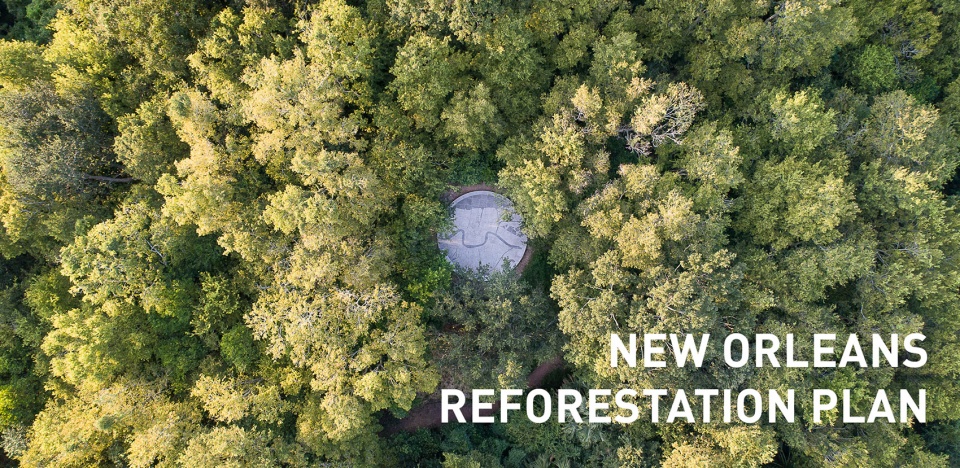
▲新奥尔良再造林计划:城市森林的公平性;本项目通过精心的策划,以合理的预算与高效的系统,为新奥尔良市重建一片所有人都能享受的城市森林指明了道路,The New Orleans Reforestation Plan: Equity in the Urban Forest: This plan charts a path for a carefully budgeted, systematic campaign to regrow an equitable urban forest in New Orleans © Spackman Mossop Michaels
项目说明
Project Narrative
新奥尔良以其树木而闻名。高大雄伟的活橡树,高耸的柏树和开花的木兰整齐地排列在街道上,为漫步的人们和出游的家庭提供了阴凉。然而,新奥尔良的树木正在消失,同时也没有任何新种植的树木来弥补这些空缺。卡特里娜飓风过后,这座城市失去了20多万棵树。曾为城市创造出阴凉的树冠至今仍然没有恢复。
新奥尔良的城市热岛效应与纽瓦克、纽约、休斯顿和旧金山齐名,是美国最严重的城市之一,城市的平均温度比周围的农村或未开发地区高出9华氏度,而城市的一些地区甚至高出16华氏度。虽然新奥尔良确实有一些社区拥有健康而茂密的树冠,但整个城市的树冠覆盖率只有18%,这个比例远远落后于全美平均水平。
新奥尔良再造林计划的重点是具有针对性地在社区最需要树木的地方进行种植,而不是像城市林业计划那样设定一个总体的树冠覆盖率目标。
美国历史存在着具有歧视性的住房规划潜规则,例如,划定用地划红线等,再加之其他社会经济因素的影响,这就意味着有色人种社区往往位于树木和公园较少的地区,因此面临着更高的城市平均温度。城市热岛效应的增强也增加了住宅和其他建筑物的能源成本负担,因此缺乏树冠,会对社区人们的健康和当地经济产生影响。
健康的城市森林可以减轻城市面临的挑战所带来的影响。从降低城市平均温度到抵御风暴,再到为更健康、更繁荣的社区作出贡献,树木为这座城市带来了许多好处,直接改善了新奥尔良人的生活。宣传树木的好处,同时仔细倾听人们的担忧,是公众能够持续参与本项目的根本,这项举措也将在规划阶段之后继续进行,并成为计划实施的核心部分。
新奥尔良居民在规划阶段深入参与,表达他们对社区重新造林的希望和担忧。在为期一年的参与中,城市机构、非营利组织和技术顾问不仅是参与者,也是核心利益相关者。在整个听取过程中,项目团队收集了所有利益相关者群体的意见,而公平就成为衡量计划成功的基本标准。
重建新奥尔良的城市森林需要保护城市中现有的树木,同时也需要大力种植新的植被,以便在未来多年里,取代每年因自然原因、风暴和发展而消失的树木。该计划成功的关键是:新奥尔良的重新造林计划势必将树木的好处带给最脆弱的社区,并为社区营造出更宜居的环境。
本项目的主要长期目标旨在到2040年恢复本市所有社区10%的树冠覆盖率。为此,一项为期5年的试点计划将在纽约市及利益相关者的合作下展开,旨在向社区展示树木价值的同时进行自身的能力建设,并在人们最需要的地方种植2.5万棵树。
恢复新奥尔良的林冠需要持续的、富有耐心的、顽强的努力,同时也需要强有力的供应链、公众参与、资金、物流和社区的支持。计划的核心目标旨在为新奥尔良人及其后代带来希望和乐观精神,让人们有信心与能力来应对不断升温的全球气候挑战。
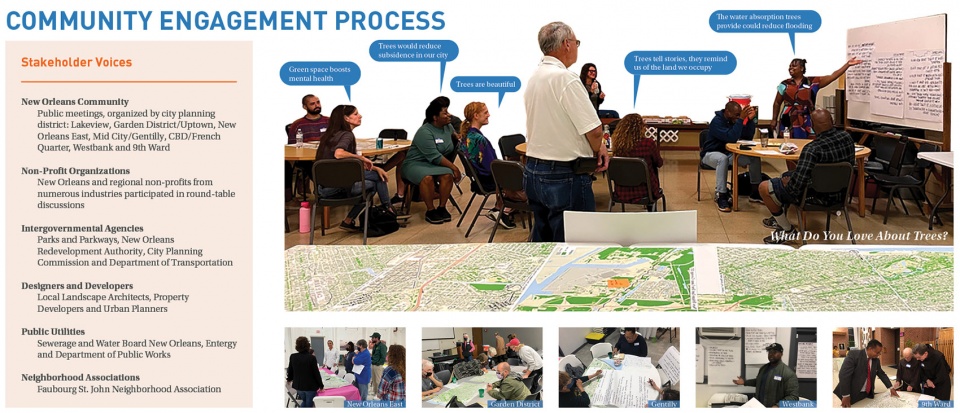
▲来自新奥尔良社区的声音:在一年多的时间里,设计团队组织社区公众与利益相关者参与了一系列会议与焦点小组会,围绕树木与城市森林展开讨论,Input from the New Orleans Community: Over one year, the public and various stakeholders participated in a series of meetings and focus groups to discuss trees and the City’s urban forest © Saving Our Urban Landscape (SOUL)
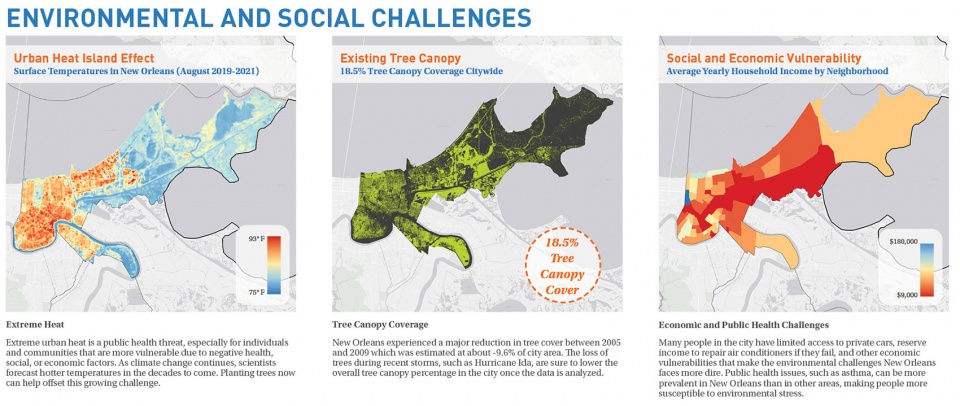
▲环境和社会背景分析:综合社会经济和环境数据,明确呼吁各个社区采取行动,并以“平等”作为此次计划行动的重点,Analyzing the Environmental and Social Context: Synthesizing socio-economic and environmental data created a clear call to action around the need to center equity as a focus for the Plan © Spackman Mossop Michaels
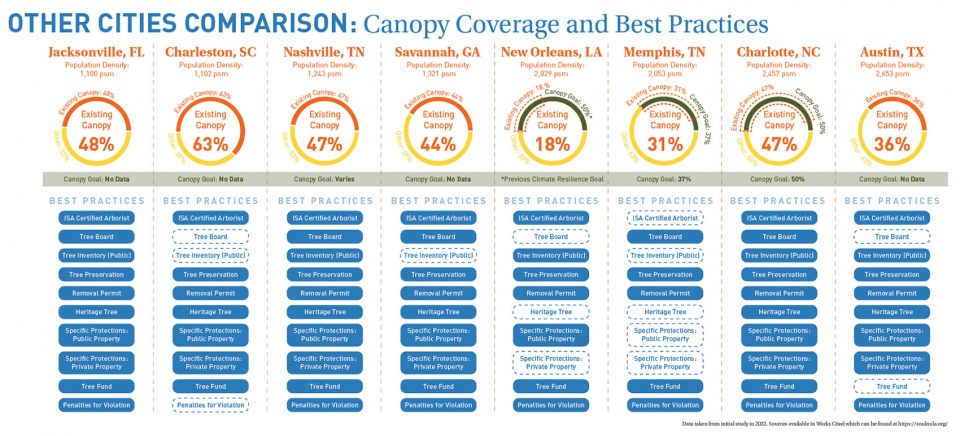
▲新奥尔良城市森林与其他城市的比较:新奥尔良在树冠覆盖率方面明显落后于其他城市,在保护和促进健康城市森林的政策方面则位于平均水平,The New Orleans Urban Forest Compared to Other Cities: New Orleans significantly trails other cities in canopy coverage and ranks as average for policies that protect and promote a healthy urban forest © Spackman Mossop Michaels
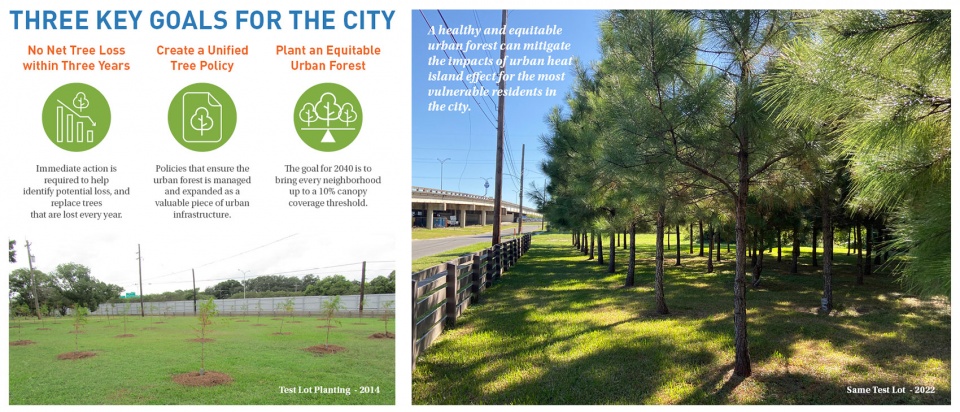
▲树立公平城市森林的全市目标::项目团队根据社区愿景,以及对新奥尔良面临的挑战进行了评估后,定制了三个相互依存的全市目标,Citywide Goals for Building an Equitable Urban Forest: Three interdependent citywide goals were established based on the community aspirations and an assessment of the challenges facing New Orleans © Spackman Mossop Michaels
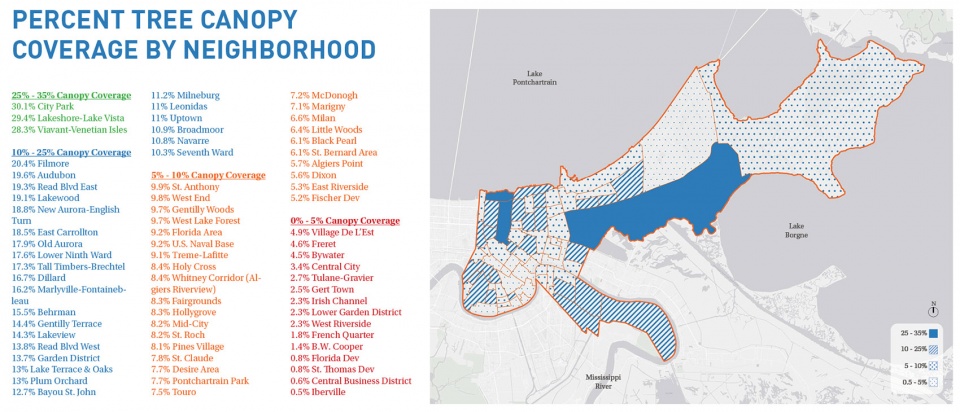
▲认识到新奥尔良树冠覆盖率的不平等:树木带来的益处没有平均地惠泽到城市各区域之中。冠层覆盖率低往往会导致该地区面临极端高温和较高的公共卫生负担的风险。Understanding Canopy Coverage Inequity in New Orleans: Benefits of trees are not equitably spread across the city. Low canopy coverage often correlates with extreme heat and a higher public health burden © Spackman Mossop Michaels
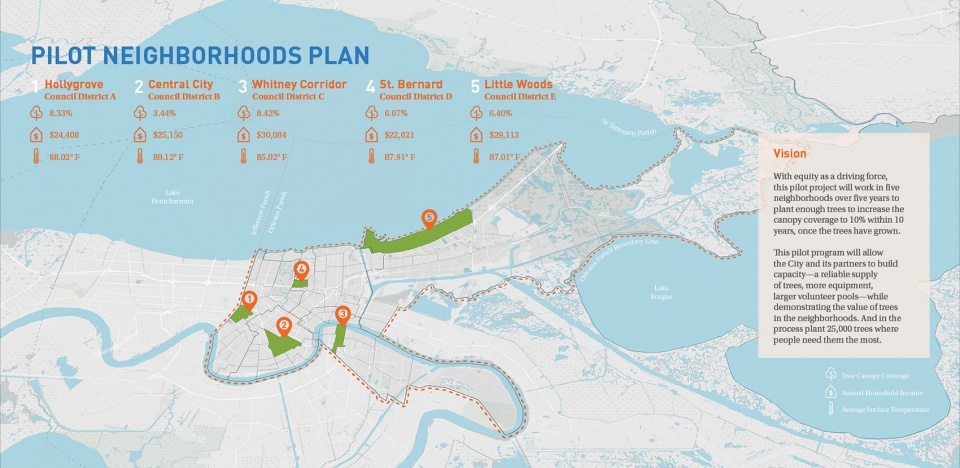
▲社区试点计划策略:一项为期5年的试点计划在全市五个社区进行,目的旨在恢复社区10%的树冠。这些社区是根据目前的树木短缺和环境需求而选择的,A Neighborhood Pilot Plan Strategy: A 5-year Pilot Plan restores 10% tree canopy in five neighborhoods across the city, chosen for their current tree deficit and environmental needs © Spackman Mossop Michaels
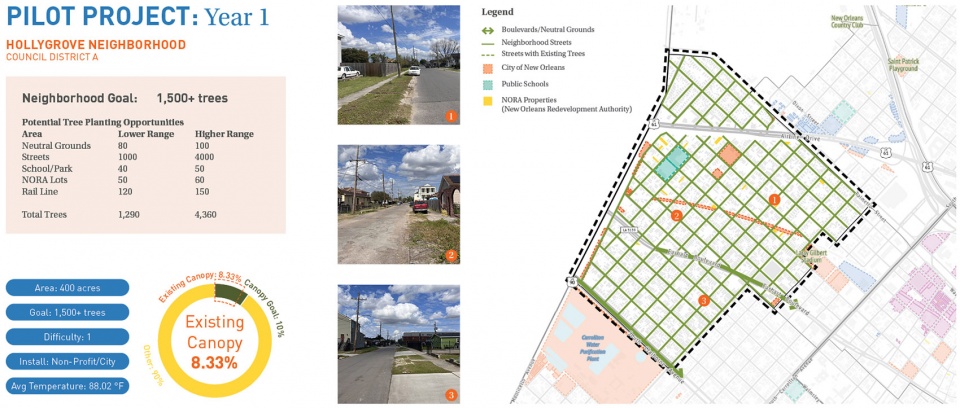
▲Hollygrove社区:Hollygrove社区被提议作为项目第一年的试点对象,由于该区域沿街有许多的可种植空间,因此种植难度也较低,Hollygrove Neighborhood: Hollygrove is proposed for Year 1 of the Pilot with a low level of planting difficulty due to numerous accessible planting spaces along the streets.© Spackman Mossop Michaels
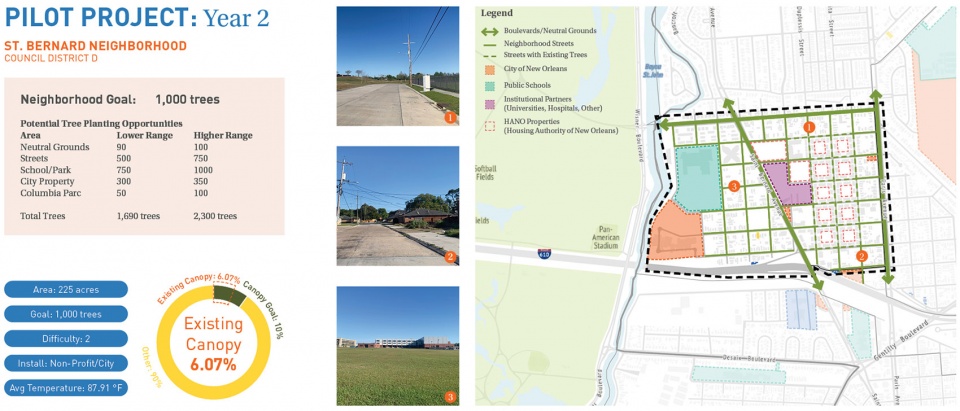
▲St. Bernard社区:St. Bernard社区为第二年的试点对象,为了实现这一目标,种植进程必须与社区机构和城市机构进行协调,St. Bernard Neighborhood; St. Bernard is proposed for Year 2 of the Pilot Plan. Coordination with neighborhood institutions and city agencies is necessary to meet the goal © Spackman Mossop Michaels
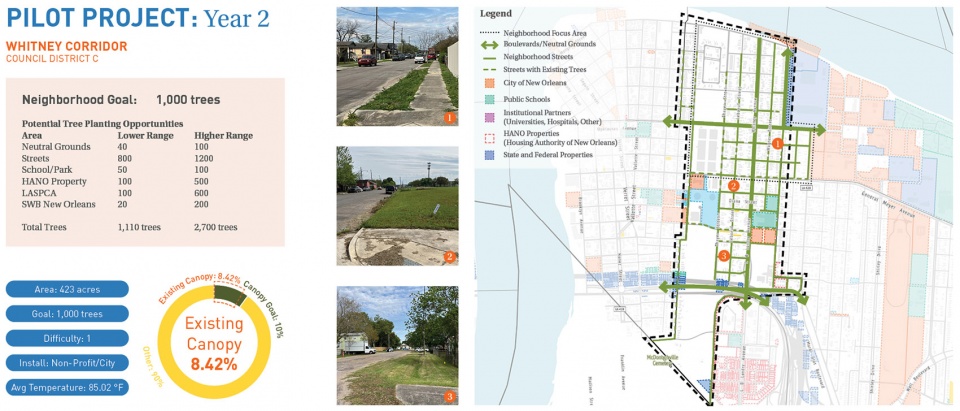
▲Whitney Corridor社区:Whitney Corridor社区也是第二年的试点对象,社区与土地持有机构建立了伙伴关系,并由机构提供种植空间,Whitney Corridor Neighborhood: Whitney Corridor is proposed for Year 2 of the Pilot. Opportunities include partnerships with land-holding agencies and accessible planting spaces.© Spackman Mossop Michaels
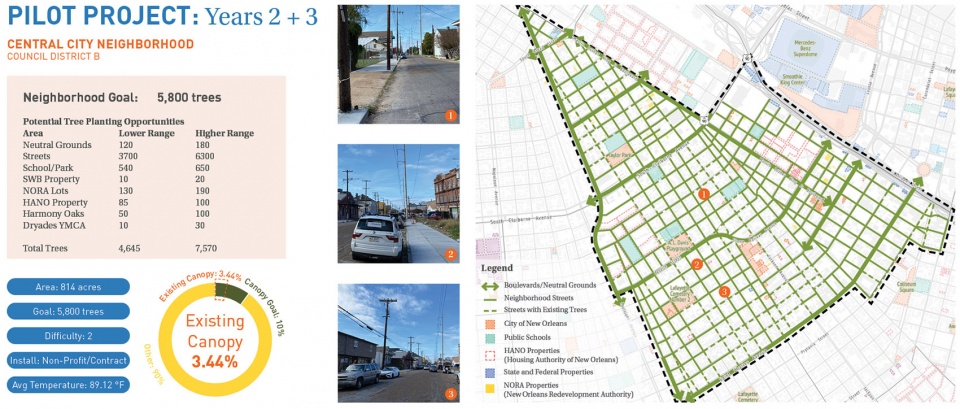
▲中心城市街区:中心城市地区将在2年内重新种植大量树木,这里的种植区域极富挑战性,并且也是试点计划社区中现有树冠覆盖率最低的地区,Central City Neighborhood: Central City will be replanted over 2 years. This challenging area to plant has the lowest existing canopy coverage of the Pilot Plan neighborhoods © Spackman Mossop Michaels
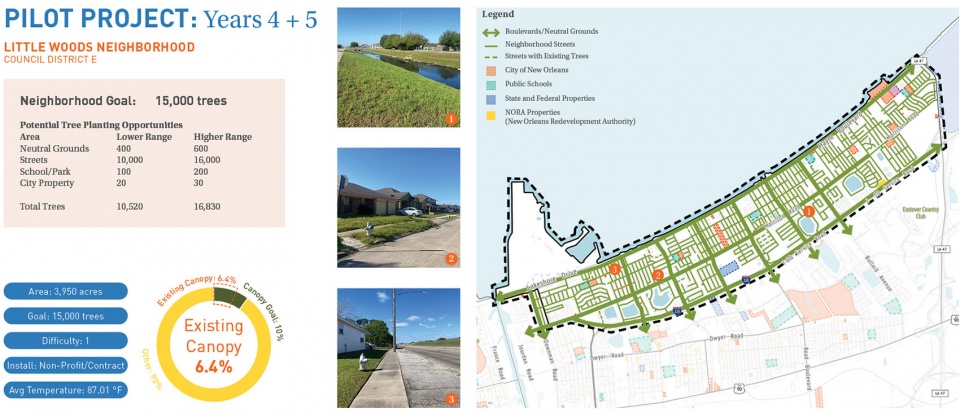
▲Little Woods社区:Little Woods社区将为第四年与第五年的试点对象,与总体可用种植面积相比,该社区的现存情况较为良好,Little Woods Neighborhood: Little Woods is proposed for Years 4 and 5 of the Pilot. The is a neighborhood with minimal conflicts compared to the overall available planting area © Spackman Mossop Michaels
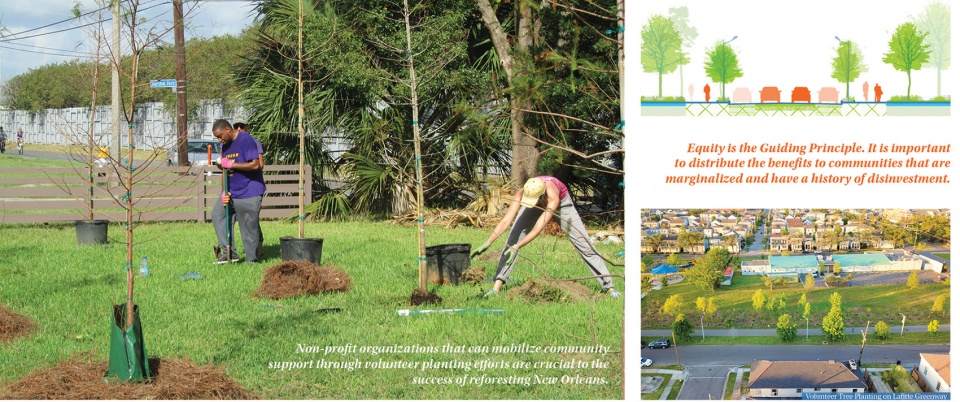
▲志愿者支持是本项目成功的关键组成部分:非营利组织和志愿者的集体努力将提高整个项目的成本效益,使城市在试点期间形成管理并保持城市树冠覆盖率的能力,Volunteer Support a Crucial Component of Success: Collective effort by non-profit organizations and volunteers will be a cost-effective measure allowing the city to build capacity during the Pilot © Adam Mejerson, Spackman Mossop Michaels
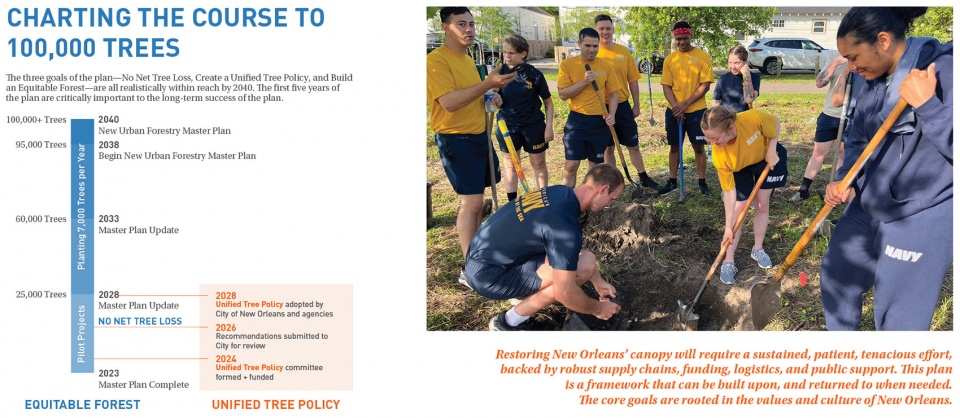
▲2040年实现全市植树目标:在全市目标的指导下,本项目将在2040年之前实现公平再造林计划,增强社区的可持续性和凝聚力,明确并巩固社区对于绿色空间的所用权,Reaching the Planting Goal by 2040: A path forward, guided by the citywide goals, can lead to equitable reforestation by 2040 with persistent and cohesive. effort and community ownership © Saving Our Urban Landscape (SOUL)
Project Narrative
New Orleans is known for its trees. Grand, majestic Live Oaks, towering Cypress, and flowering Magnolias line the streets and provide shade for people and homes. However, the trees in New Orleans are disappearing, and they are not being replaced at the rate of loss. Over 200,000 trees were lost in the city in the aftermath of Hurricane Katrina. The canopy still has not recovered.
New Orleans has the worst urban heat island effect in the United States—alongside Newark, New York City, Houston, and San Francisco—with an average temperature in the city that is about 9°F hotter than the surrounding rural or undeveloped land, while some areas of the city are upwards of 16°F hotter. While New Orleans does have neighborhoods with a healthy and robust tree canopy, the city as a whole is far behind the national average in percentage of tree canopy, at 18%.
Rather than set an overall canopy goal, which is a common approach to urban forestry plans, the New Orleans Reforestation Plan focuses on planting trees where communities need them the most.
Historical discriminatory housing practices like redlining, along with other socioeconomic factors, mean that communities of color are often in areas with fewer trees and parks and therefore are exposed to higher urban heat. Increasing urban heat island effect also escalates the burden of energy costs for cooling homes and buildings, so there are health and economic impacts to the lack of tree canopy in these neighborhoods.
A healthy urban forest can mitigate the impacts of the challenges facing the city. From cooler temperatures to protection from storms, to healthier and more prosperous communities, trees offer a number of benefits to the city that directly improve the lives of New Orleanians. Discussing the benefits of trees, while listening carefully to people’s concerns, is central to the ongoing engagement that will continue beyond the planning phase, and become a core part of implementation.
New Orleans residents were deeply engaged during the planning phase to voice their hopes and concerns about neighborhood reforestation. City agencies, non-profits, and technical advisors were also core stakeholders during the yearlong engagement. Throughout the listening process, and from all stakeholder groups, equity emerged as the foundational measure of success for the plan.
Rebuilding the urban forest in New Orleans will require protecting the existing trees in the city. It will also take a massive replanting effort—over many years—to replace the trees that are lost each year to natural causes, storms, and development. Most critical to the success of the plan, the reforestation of New Orleans must bring the benefits of trees to the neighborhoods that are the most vulnerable and help make the neighborhoods more livable.
The primary long-term goal of the plan is to restore 10% canopy coverage to all neighborhoods in our city by 2040. In preparation for this, a 5-year pilot program will allow the City and its partners to build capacity while demonstrating the value of trees to the community—and plant 25,000 trees where people need them the most.
Restoring New Orleans’ canopy will require a sustained, patient, tenacious effort, backed by robust supply chains, public support, funding, logistics, and community ownership. At its heart, this plan is an effort of hope and optimism for the future generations of New Orleanians, and their ability to thrive on a hotter planet.







发表评论
你需要先 才能发表评论
社交登录