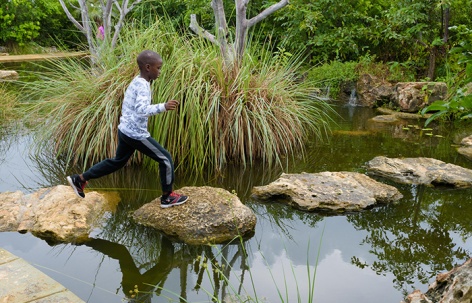
“世界上面临最大风险的生态系统往往位于海拔较低的地带,例如巴哈马群岛,其伊柳塞拉岛上建造了一个30英亩的自然保护区,旨在为岛上的本地物种提供生长环境,并鼓励人们以更深刻的眼光欣赏这些物种。该项目将一处非法垃圾场转变为连接游客中心和古老沙丘的游览路径,并将农业蓄水池重新利用为淡水湿地展示花园,使支持该保护区的基金会得以履行其在教育方面的使命。”
– 2021年评审委员会“Among the most at-risk ecosystems in the world are low-lying places such as the archipelago of the Bahamas, whose Eleuthera Island is home a 30-acre nature preserve intended to nurture both the island’s native species and a deeper appreciation for them. The site transforms an illegal dump into a procession from visitor center to ancient dune, repurposing an agricultural cistern as a freshwater wetland demonstration garden, allowing the foundation that supports the preserve to fulfill its educational mission.”
– 2021 Awards Jury
来自 ASLA 对gooood的分享。
The Leon Levy Native Plant Preserve: A Showcase of Eleuthera’s History, Native Plants, and their Medicinal Uses | Raymond Jungles, Inc.
项目陈述
Project Statement
Leon Levy原生植物保护区实现了岛上长期居民Leon Levy和Shelby White二人的愿景,寄托了他们对伊柳塞岛的自然环境和生活方式的热爱。这一占地30英亩的保护区作为岛上的第一个国家公园,是由巴哈马国家信托基金和Leon Levy基金会共同创建,其重点是促进教育、跨学科保护、存续以及研究,使未来几代巴哈马人能够了解和欣赏他们丰富的传统植物遗产。
该项目与Leon Levy基金会的“保护自然与花园”计划并行,后者为六处不同的遗产场地提供资金支持。孩子们可以与巴哈马本地的海龟互动,并通过浮动的石板路穿过原来的农业蓄水池——如今这里已成为一片淡水湿地花园。得益于高地雨水的长期侵蚀,农业展览花园的土壤变得十分肥沃——这里也将是游客进入保护区的必由之路。
该设计为保护区的游客体验奠定了基础,将生长着成熟红树林的盐水沼泽、次生沙丘以及原生的灌木丛连接起来并将其作为突出的生态系统。
The Leon Levy Native Plant Preserve is the fulfillment of the vision of longtime residents Leon Levy and Shelby White, who loved the natural environment and way of life on Eleuthera. The 30-acre preserve, recognized as the island’s first national park, was jointly created by the Bahamas National Trust and the Leon Levy Foundation. It is focused on promoting education, interdisciplinary conservation, preservation, and research, for future generations of Bahamians to understand and appreciate their rich ethnobotanical heritage.
The project aligns with one of the six areas of the Leon Levy Foundation’s philanthropic legacy: Preservation of Nature and Gardens. Children interact with native Bahamian turtles and leap across floating flagstone paths in the pre-existent agricultural cistern, turned freshwater wetlands garden. Visitors pass through an agricultural exhibition garden, located on the site’s most fertile soils, made rich from eons of rainwater erosion from higher ground.
The design laid the foundation for the visitor experience, utilizing existing saltwater marsh with a mature stand of red mangroves, secondary dune, and the native coppice, as highlighted ecosystems.
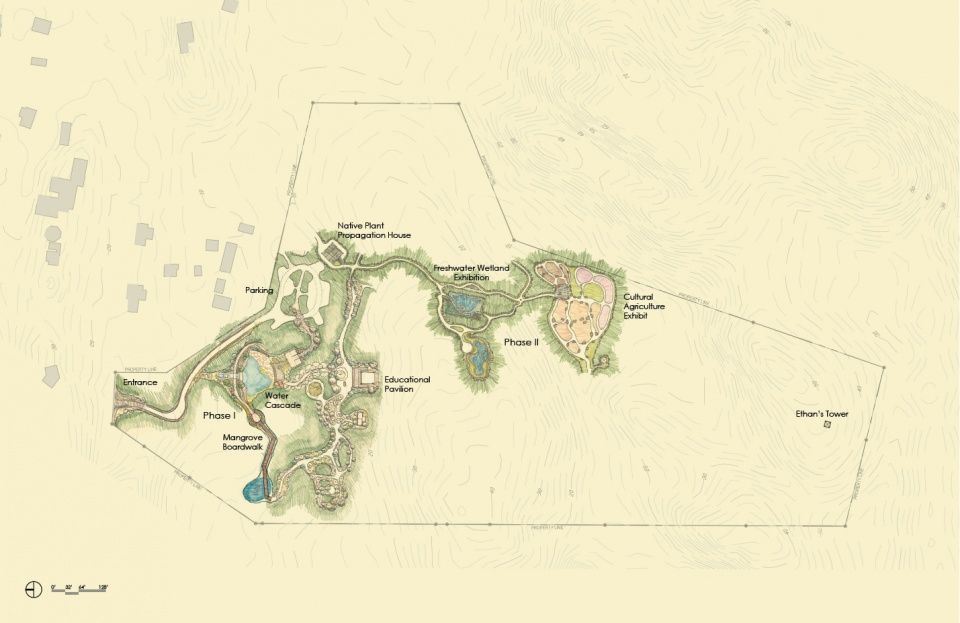
▲Leon Levy原生植物保护区场地平面图。Leon Levy原生植物保护区是一个专注于传统药材的研究中心,同时也是原生植物的繁育设施,以及专注于本地植被对巴哈马生物多样性的重要性的教育中心。The Leon Levy Native Plant Preserve Site Plan. The Leon Levy Native Plant Preserve is a designated research center for traditional bush medicine, a facility for the propagation of indigenous plants, and an educational center focusing on the importance of native vegetation to the biodiversity of the Bahamas. © Raymond Jungles, Inc.
项目说明
PROJECT NARRATIVE
Leon Levy原生植物保护区是在一种注重合作且充满热情的文化中被构思出来。它实现了岛上长期居民Leon Levy和Shelby White夫妇的愿景,寄托了他们对伊柳塞岛的自然环境和生活方式的热爱。在Leon Levy于2003年去世之后,Shelby White希望讲述其丈夫对该岛做出的贡献,从而为所有伊柳塞拉岛的居民开拓一个更美好的未来。Levy先生终其一生热爱这座岛屿,并一直关心着岛上原生植物的药用价值以及它们所面临的迅速减少的问题。
这片占地30英亩的保护区是由巴哈马国家信托基金和Leon Levy基金会共同创建。巴哈马国家信托基金是一个以科学为基础的组织,致力于有效管理国家公园,维持并保护巴哈马的自然资源。Leon Levy基金会是基于Leon Levy的资产而创建的私人非营利性基金会。两个组织如今合作创立了伊柳塞岛的第一个国家公园、一座致力于研究本地传统药材的医学中心、一个用于培育和繁殖本地植物和树种的设施,以及一座专注于本地植被对巴哈马生物多样性的重要性的教育中心。
该项目的设计重点是提高人们对巴哈马植物多样性和传统药材的认知,这也与Leon Levy基金会提出的“保护自然与花园”计划并行,后者为六处不同的遗产场地提供资金支持。基金会的创始人希望通过保护区的植物和动物多样性激励下一代人维护本地物种和栖息地,并解决多年以来由于砍伐森林、进口入侵物种以及实施单一农业所造成的严重后果。
场地主要由高地上多岩石且干燥的森林(被称为小灌木林)以及低处开垦过的植被退化区组成。这里的原生生态遭受了来自外来入侵树种和非法垃圾场带来的恶劣影响。在项目的第一阶段,景观设计团队策划了保护区主要设施结构的设计和选址,包括游客中心、教育馆、后台运营中心和洗手间设施,以及所有服务于车辆和行人的通道和配套的停车区域。小灌木林得到了广泛的恢复,新建造的花园由生态系统驱动,其中包括一个专门用于展示传统药材的花园。第一阶段还未整个保护区的游客体验奠定了基础,将生长着成熟红树林的盐水沼泽、次生沙丘以及原生的灌木丛连接起来并将其作为突出的生态系统。
由当地石匠建造的石灰石界墙和高架凉棚让到达体验变得更加丰富。游客们穿过古老的沙丘来到低地和停车区域,此处的植被就像是从场地中既有的灌木林直接迁移而来。通往游客中心的路途给人一种神秘的感觉,人们需要从看上去几乎是原生的灌木丛中穿行而过。游客中心的结构也是由景观设计团队构思的,它是通往保护区花园的门户。位于游客中心附近的垃圾场经过了清理和挖掘,使古老的礁冠纹理暴露于表面。现有的椰子树也是从废弃的庭院垃圾中生长出来,它们曾经作为沉默的旁观者见证了场地的历史,如今则在新生的保护区里重新找回了发言权。
当人们穿过游客中心并在花园间游走时,将体验到一处从古老沙丘流淌下来的循环水瀑布,后者让整个空间都随之变得生动起来。瀑布一路跌落至地下水位之下,汇入因挖掘垃圾场而形成的潟湖之中。在潟湖形成不久之后,就有鸟类和蜻蜓愉快地在这里栖息。
绕过潟湖,穿过水道后,人们将踏上从红树林间一路延伸向下的木栈道,最后来到一系列与传统医药相关的展览。教育馆位于自然小径的出发点,是一个灵活的结构,为户外教学、婚礼和其他团体活动提供了庇护所。如果人们想要回到游客中心,则可以沿着教育馆旁边的草地小路返回,期间还会经过其他一系列展览。所有的小路系统都通向游客中心和一座引人注目的观景塔,该塔由巴哈马国家信托基金植物学家团队设立,从这里可以俯瞰到巴哈马本地灌木丛的壮观美景。
第二阶段的目标是彰显巴哈马的其他生态系统,为保护区的游客提供更多的学习机会。新建建筑主要包括由景观团队设计的本地植物繁殖中心、基于原农业蓄水池修建的淡水湿地,以及一个历史农业展览花园。其中,花园位于该地最肥沃的土壤上,是得益于高地的雨水侵蚀而形成。第二阶段还包括对地下石灰岩的谨慎开采。这些石灰岩在雨水的侵蚀下逐渐氧化,将原本隐藏着的场地地质展示在游客的眼前。
到第二阶段结束时,保护区土地的百分之二十已恢复为原生植被,并被改造为无障碍的花园。新保护区同时成为了人类、动物和昆虫的家园。该项目的景观设计师之所以被选为负责人,是因为他对美国农业部
恢复为原生植被,并转化为无障碍花园。它已成为人类、动物和昆虫的避难所。景观设计师被选中主导这个项目,是因为他对美国农业部11B区的植物和生态有着广泛的了解,这里与南佛罗里达11A区以及佛罗里达礁岛群11B区的生态环境十分相似。设计师与保护区的植物学家以及巴哈马国家信托基金的工作人员广泛合作,最终完善了该地的种植计划。
保护区现有至少171种原生植物,和包括安替列群岛红腹灰雀在内的34种鸟类。在最近增加的2000多株本地树木、灌木和草本植物中,包含超过100种药用植物和25种以上的经济植物。
该保护区受到了公众的普遍支持,开创新纪录的游客数量本身也在加深人们对这片本地绿洲的认知和保护意识。景观设计师认为该项目包含着长远的实践价值,它涉及到与包括当地社区在内的多方公共和私人利益相关者的合作,将为各种挑战寻找到最佳的解决方案。此外,Trip Advisor网站评选的“在伊柳塞拉岛必做的29件事”中,Leon Levy保护区获得了第一的排名。
景观团队目前正在开展项目的第三阶段:额外增加的5英亩土地,将包含扩建的游客中心、供学生、科研人员和教师使用的住宿设施、维护和办公设施、活动场馆、活动草坪、水景花园以及丰富的新路径系统。
2019年4月, Leon Levy原生植物保护区成为巴哈马群岛首个获得BGCI认证的植物园机构。由国际植物园保护组织颁发的这一级别的认证认可了其在植物保护方面的成就。
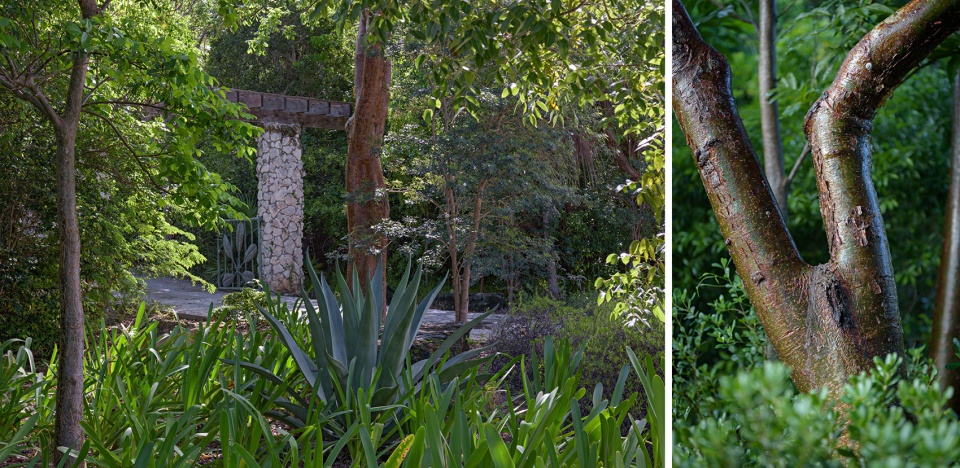
▲Leon Levy原生植物保护区入口。场地的原生生态收到了外来入侵树种和非法垃圾场带来的不良影响。恢复工作包括将现存的盐水沼泽、次生沙丘和本地灌木林作为重点的生态系统。The Leon Levy Native Plant Preserve Entrance. The site’s native ecology was impacted by flourishing invasive, exotic trees and rubbish from an illegal, on-site dump. Restoration efforts included utilizing existing saltwater marsh with a mature stand of red mangroves, secondary dune, and native coppice, as highlighted ecosystems. © Stephen Dunn Photography
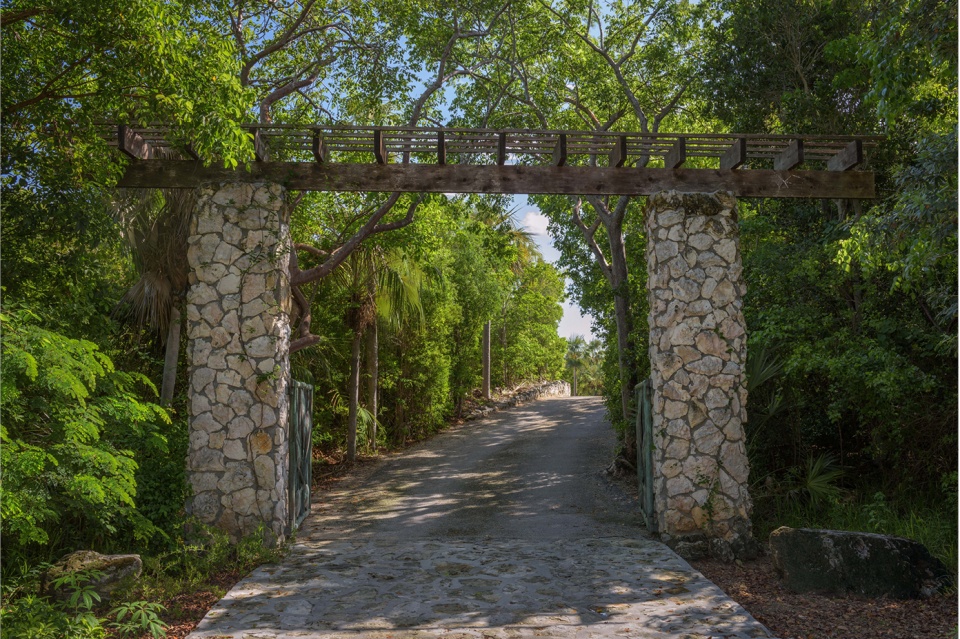
▲Leon Levy原生植物保护区的到达路径。照片中是由当地石匠建造的高架凉棚和石灰石界墙。游客们穿过古老的沙丘来到低地和停车区域,此处的植被就像是从场地中既有的灌木林直接迁移而来。The Leon Levy Native Plant Preserve Arrival Sequence. Detail of an overhead pergola and limestone border walls built by local masons. Visitors pass over an ancient dune, down to the lowlands to a parking area, planted to feel like it was etched out of an existing coppice. © Stephen Dunn Photography
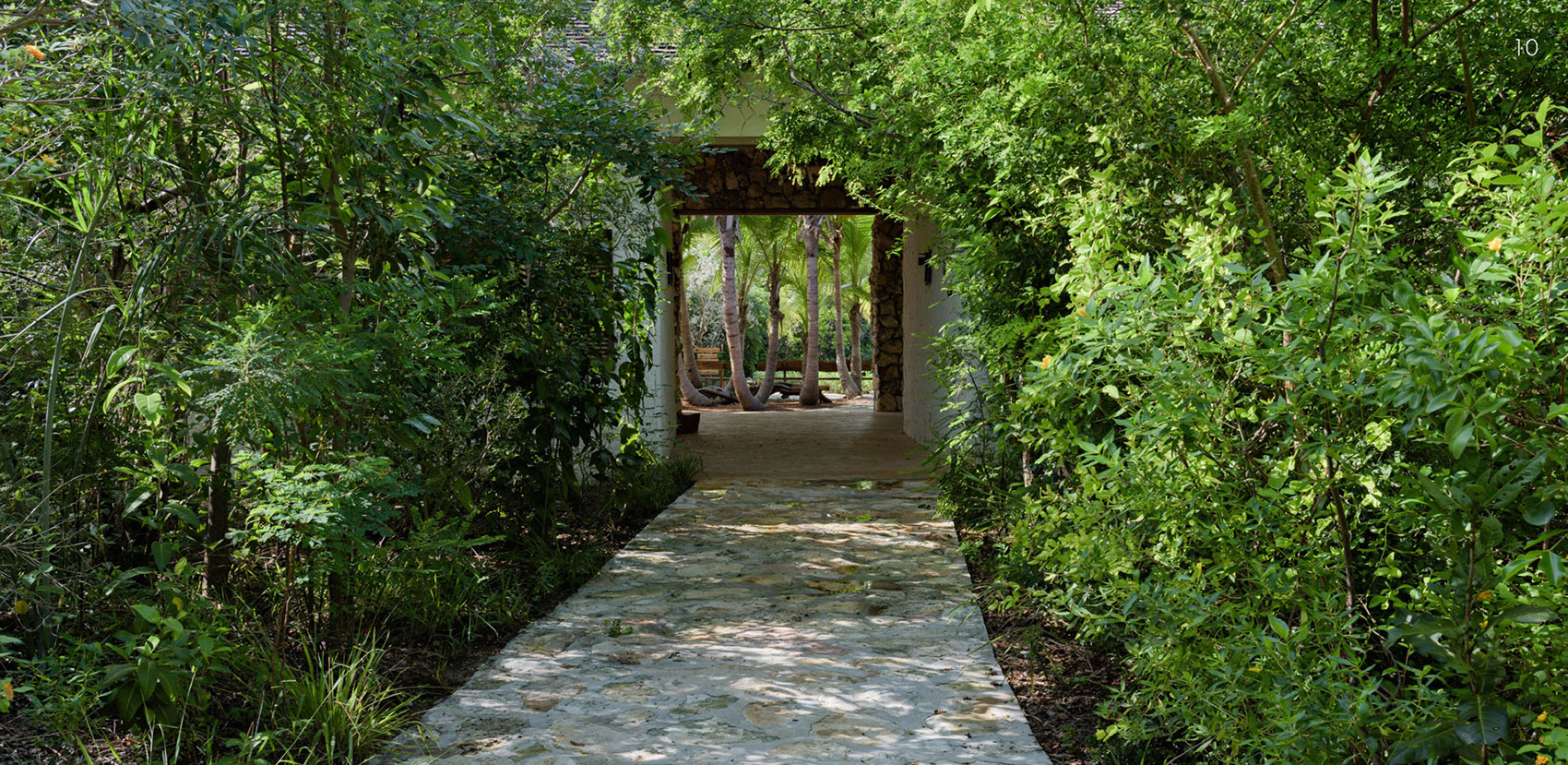
▲Leon Levy原生植物保护区花园大门。到达被矮树丛包围的落客区后,游客们将通过这道大门看见进入新花园的路径。这座由景观设计师构思的结构给人一种谦逊低调的感觉:花园和自然环境才是最重要的部分。The Leon Levy Native Plant Preserve Garden Portal. After parking or being dropped off in a restored coppice, visitors see a window into the new gardens through a portal. The building, conceived by the landscape architect, is subjugated. Garden and nature are paramount. © Stephen Dunn Photography
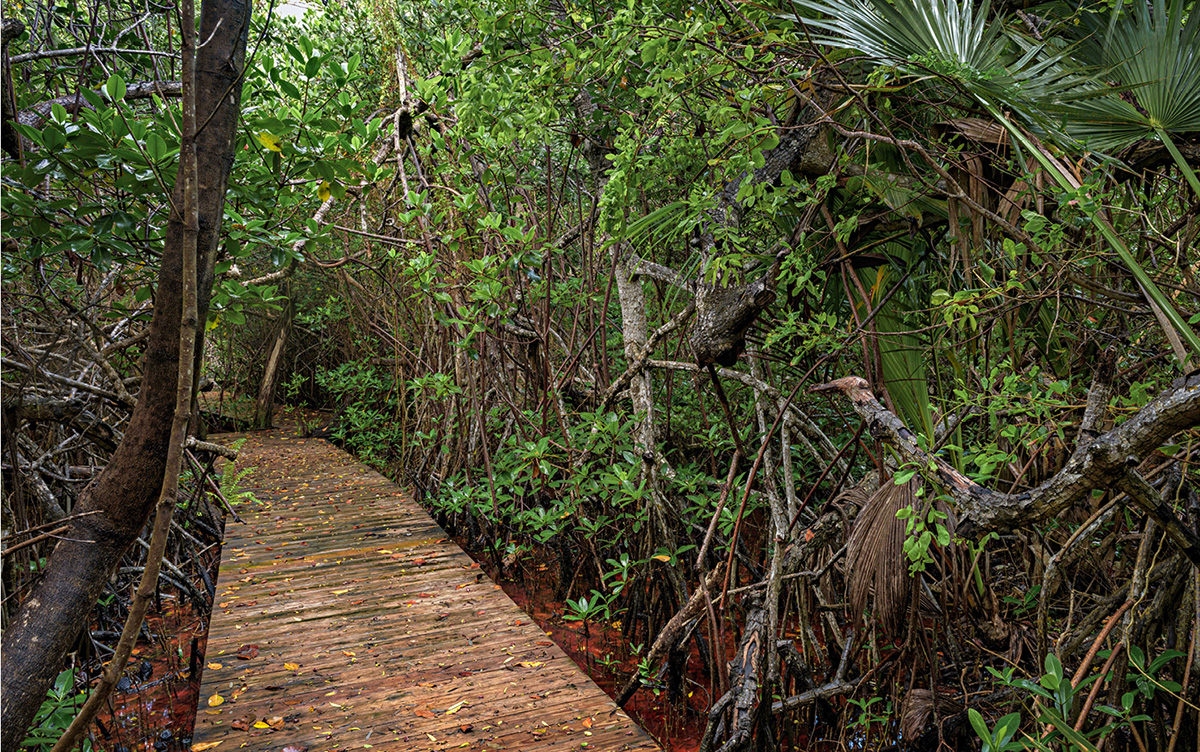
▲Leon Levy原生植物保护区红树林木栈道。木栈道的景观设计旨在最大限度地使游客体验到红树林本身的魅力。The Leon Levy Native Plant Preserve Mangrove Boardwalk. View of the mangrove boardwalk laid out to maximize the red mangrove experience. © Stephen Dunn Photography
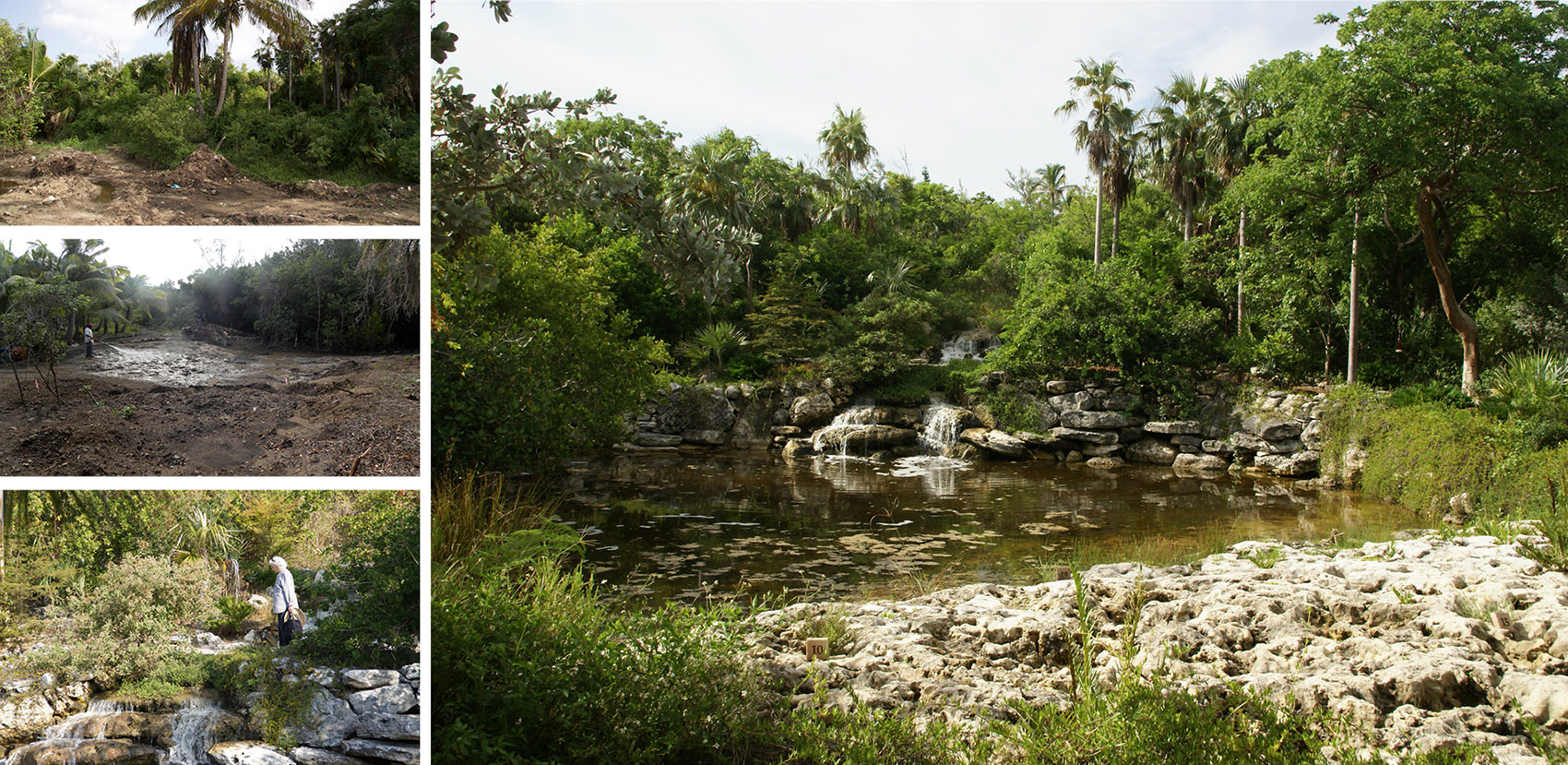
▲Leon Levy原生植物保护区的潟湖和瀑布。垃圾场的清理和挖掘使古老的礁冠纹理暴露于表面。为了活跃游客体验并为红树林潟湖增加氧气,景观团队利用巴哈马天然石灰石创建了一道人工瀑布。The Leon Levy Native Plant Preserve Lagoon and Waterfall. The excavation of the illegal dump revealed the eroded layer of prehistoric reef. To animate the visitor’s experience and to aid in the aeration of the mangrove lagoon, a man-made waterfall was created using natural Bahamian limestone. © Stephen Dunn Photography
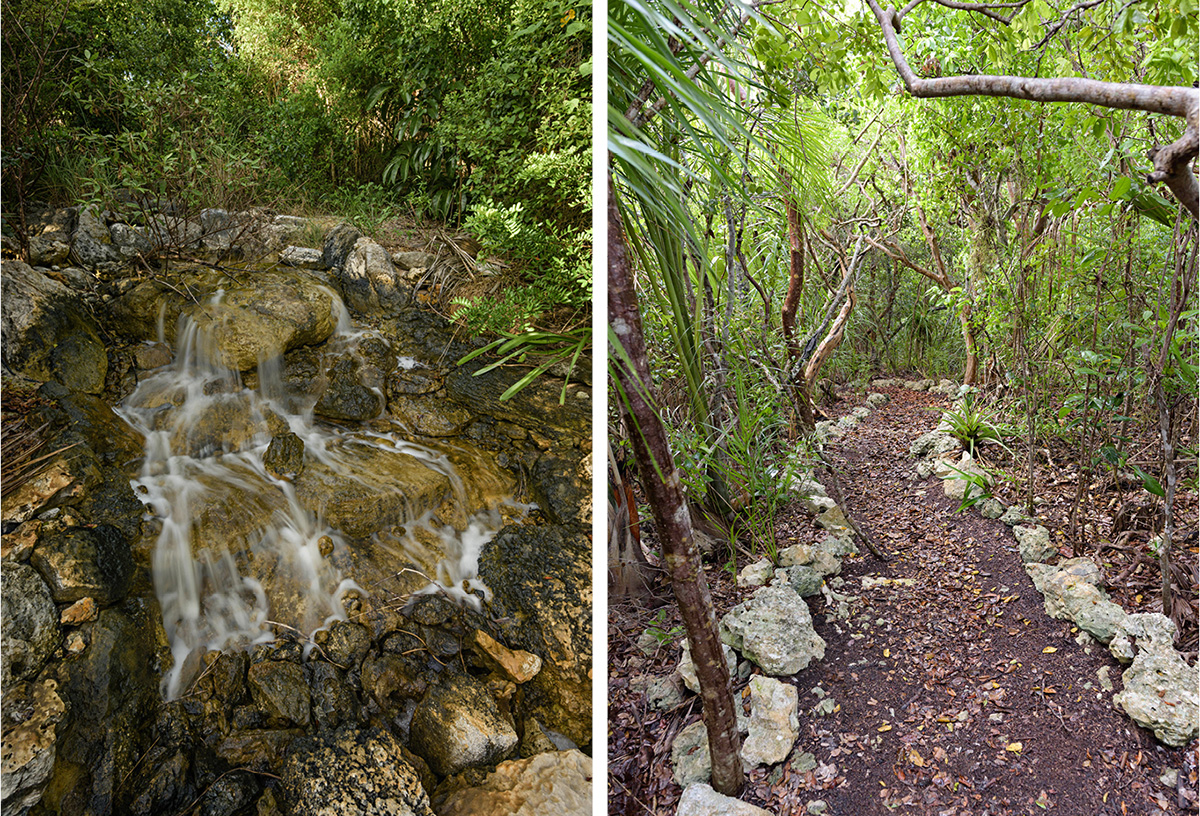
▲Leon Levy原生植物保护区小径细节。保护区的步道系统展示了在有人定居岛屿之前,主宰巴哈马群岛的森林景观。原生的灌木林遍布在岛屿的每个角落。The Leon Levy Native Plant Preserve Trail Details. Detail of the Preserve’s trail system that gives a glimpse into what the forests that dominated the Bahamas were like before people settled on these islands. The native coppice abounds. © Stephen Dunn Photography
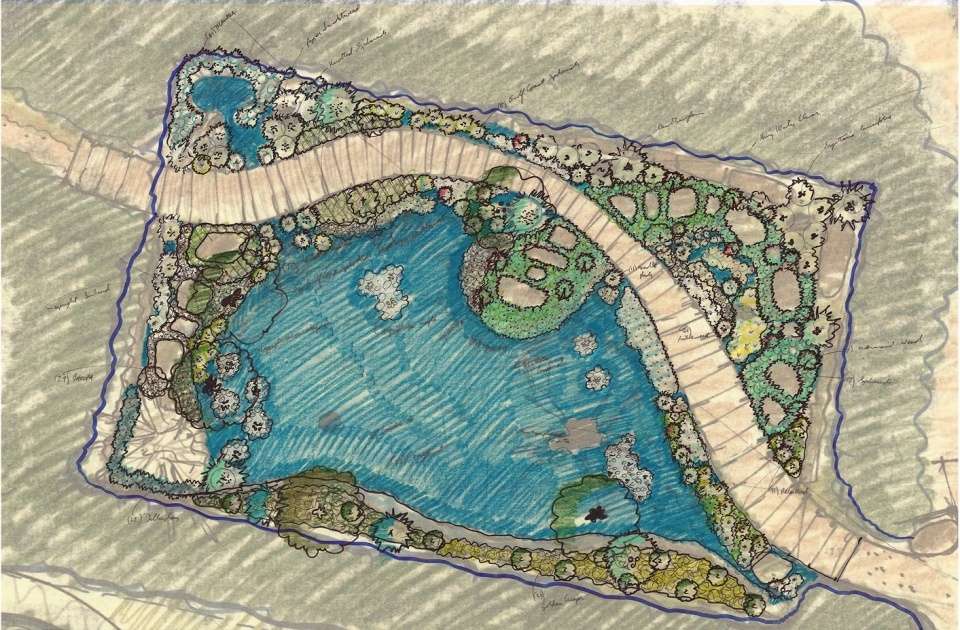
▲Leon Levy原生植物保护区淡水湿地展区。景观设计师的手绘平面图展示了将既有农业蓄水池重新利用为淡水湿地的方案。The Leon Levy Native Plant Preserve Freshwater Wetland Exhibition. The landscape architect’s hand-drawn schematic design plan repurposes a pre-existent agricultural cistern into a freshwater wetland exhibition. © Raymond Jungles, Inc.
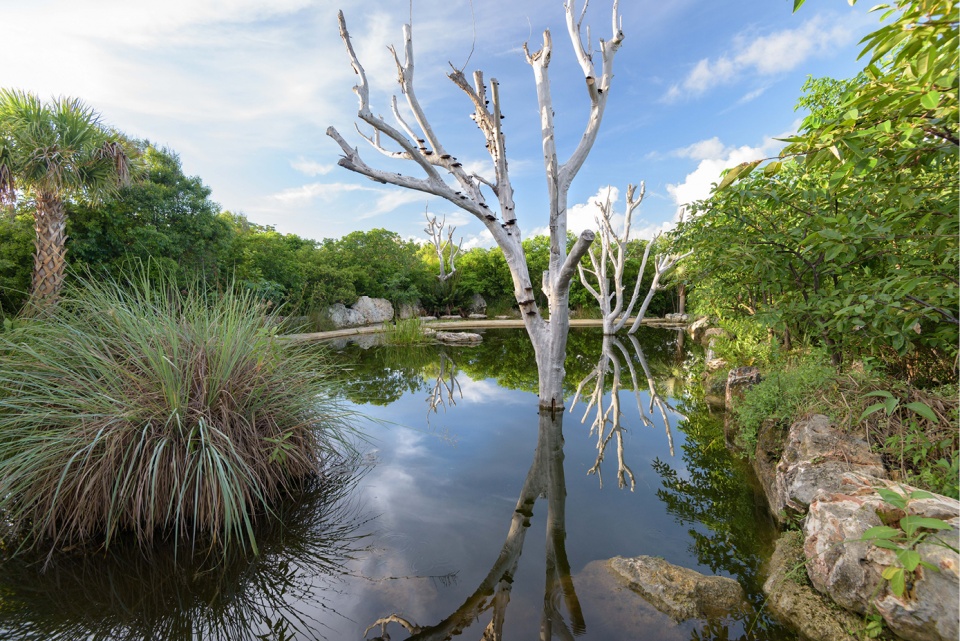
▲Leon Levy原生植物保护区淡水湿地展区。保护区的葱郁环境展示了巴哈马原生植物和特色植物。景观设计师被选中主导这个项目,是因为他对美国农业部11B区的植物和生态有着广泛的了解。The Leon Levy Native Plant Preserve Freshwater Wetland Exhibition. The Preserve is a lush showcase of native and endemic Bahamian plants. The landscape architect was selected due to his extensive knowledge of USDA zone 11B plants and ecologies. © Stephen Dunn Photography
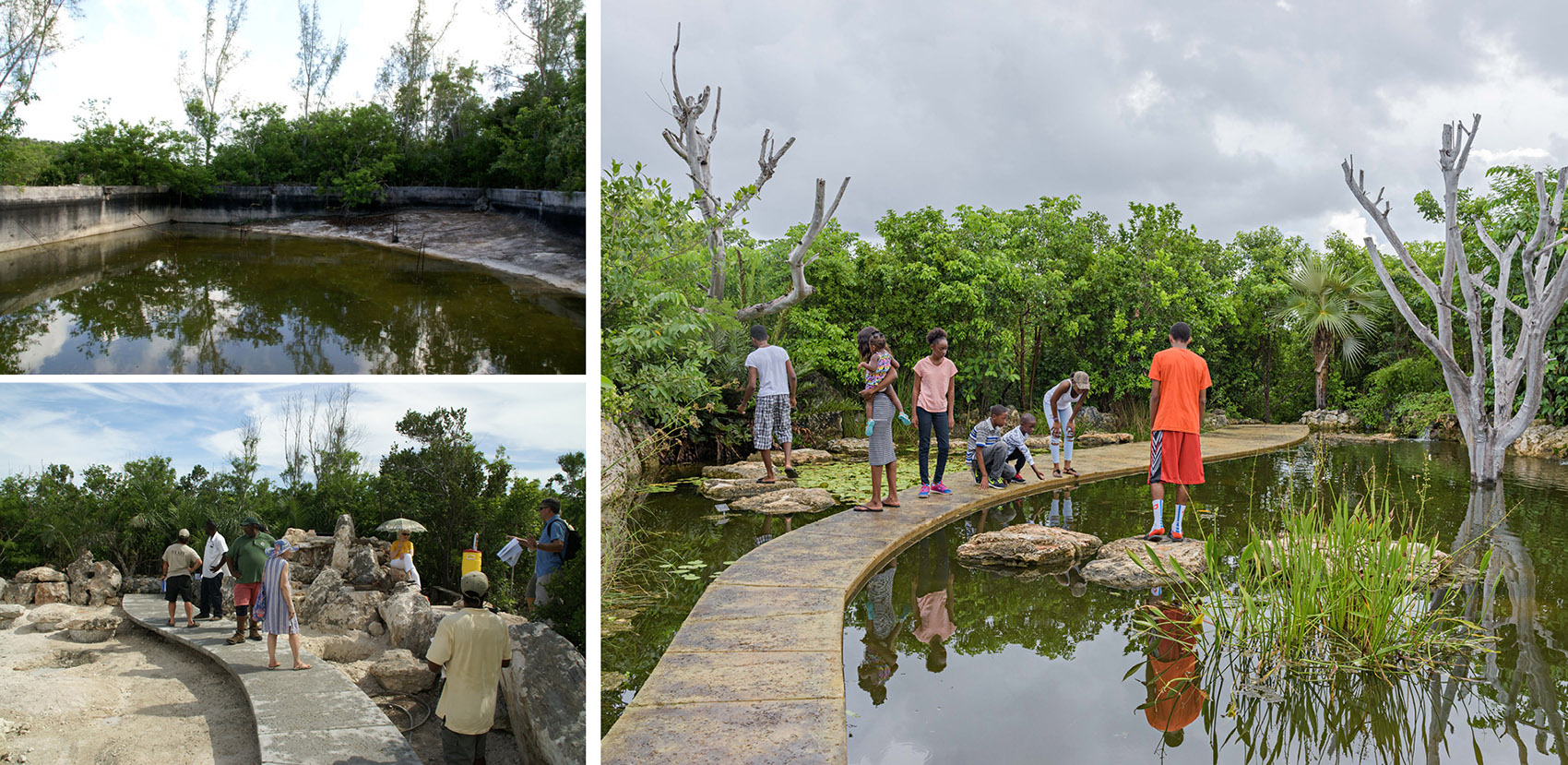
▲Leon Levy原生植物保护区淡水湿地展区建造前、建造中和完工后的照片对比。对儿童、尤其是对巴哈马本地儿童的教学和宣传活动是保护区使命宣言中的六个主要内容之一。The Leon Levy Native Plant Preserve Freshwater Wetland Exhibition. Before, during, and completed images of the freshwater wetland exhibition. Educational outreach, particularly for Bahamian children, is one of the six elements of the Leon Levy Native Plant Preserve’s mission statement. © Stephen Dunn Photography
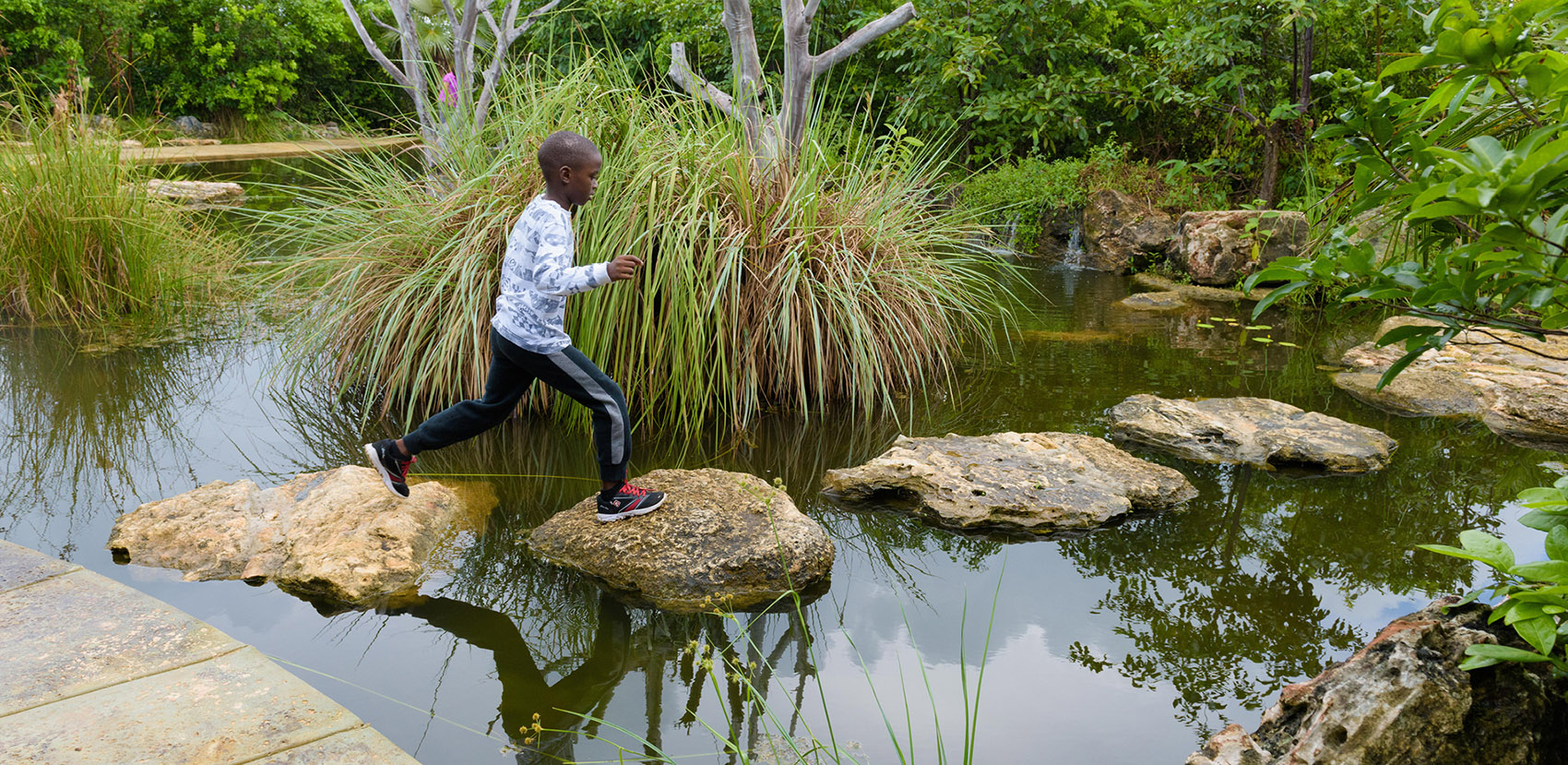
▲Leon Levy原生植物保护区淡水湿地展区。这处独特的场地旨在为幼儿园至12年级的学生提供教学资源,鼓励其探索野生动物,并参与一系列有助于加强环境意识和培养对周围自然世界的责任意识的活动。The Leon Levy Native Plant Preserve Freshwater Wetland Exhibition. This is a special place designed to be an educational resource for kindergarten to 12th grade students to explore wildlife and engage in activities that encourage environmental awareness and individual stewardship for the natural world around them. © Stephen Dunn Photography
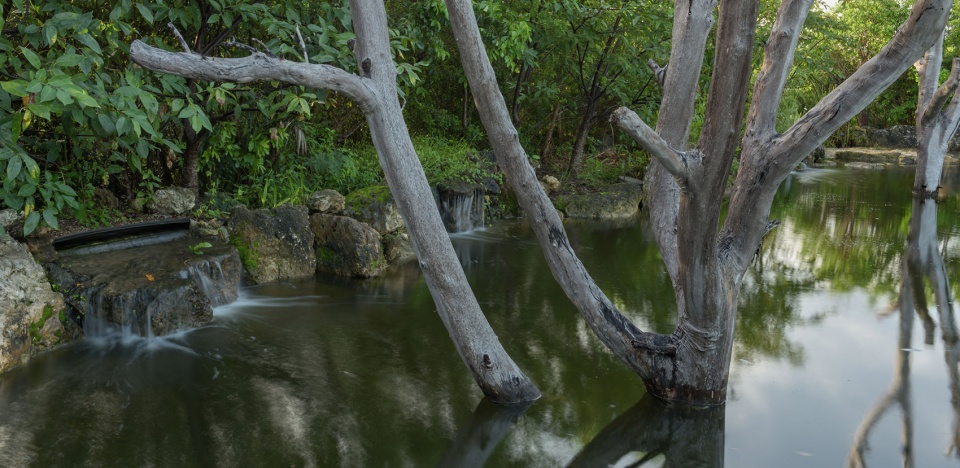
▲Leon Levy原生植物保护区淡水湿地展区中的鸟巢回收自入侵场地的澳大利亚松树。保护区为大量留鸟和候鸟提供了全年的觅食和筑巢环境。到目前为止,被记录的物种已有78个。The Leon Levy Native Plant Preserve Freshwater Wetland Exhibition. The bird perches were recycled from invasive Australian pine trees on-site. The Preserve provides important foraging and nesting areas for a number of resident and migratory bird species throughout the year. To date 78 species have been recorded at the site. © Stephen Dunn Photography
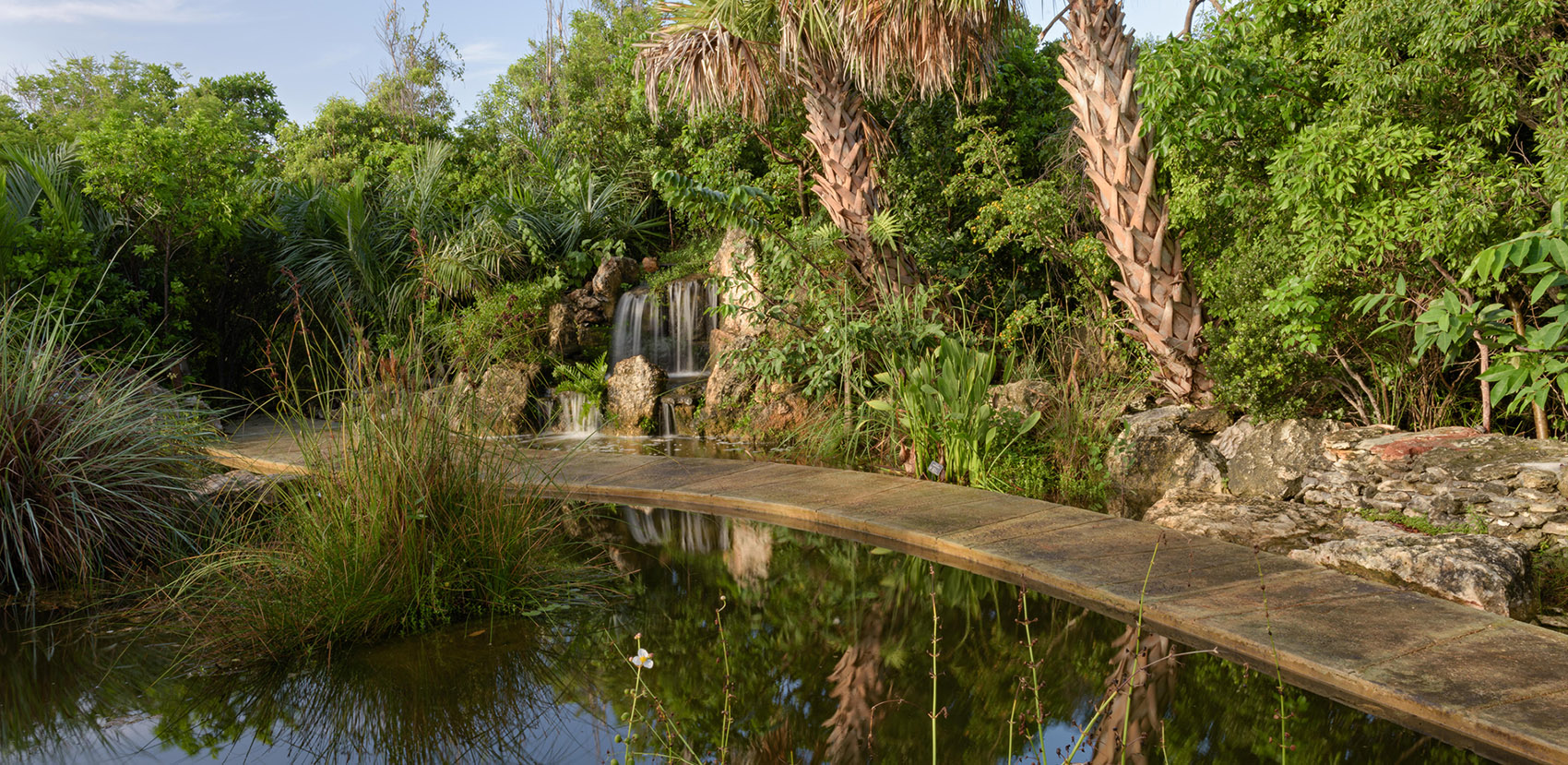
▲Leon Levy原生植物保护区淡水湿地展区细节。不同深度的水位当地众多植物和动物提供了栖息地,其中包括巴哈马本地的淡水龟,它们非常喜欢在水边觅食。The Leon Levy Native Plant Preserve Freshwater Wetland Exhibition. Detail view of the freshwater wetland exhibition. Varying depths of water provide habitat for a multitude of local flora and fauna including native Bahamian freshwater turtles who enjoy coming to the water’s edge to be fed. © Stephen Dunn Photography

▲Leon Levy原生植物保护区原生植物繁育室。这座独特的繁育室由景观设计师用雪松木打造,是保护区种植新植物的场所。来自学校的孩子们可以在这里学习培育技术,并为他们自己的花园找到原生植物的库存。The Leon Levy Native Plant Preserve Native Plant Propagation House. This one-of a-kind cedar native plant propagation house, designed by the landscape architect, is where the Preserve grows new plants to replenish its stocks. School children learn propagation techniques and find stocks of native plants for their own gardens. © Stephen Dunn Photography
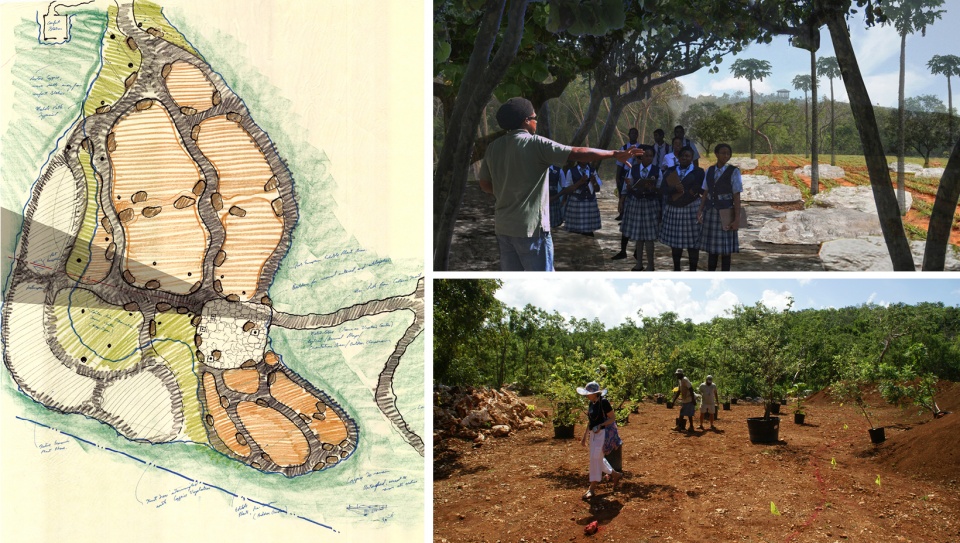
▲Leon Levy原生植物保护区文化农业展区。概念规划、效果图和现场照片。该展区讲述了巴哈马人种植农作物的历史。The Leon Levy Native Plant Preserve Cultural Agriculture Exhibit. The landscape architect’s concept plan, a rendered view, and an image capturing the site implementation. This part of the Preserve tells the story about the plants that fed the people of The Bahamas. © Raymond Jungles, Inc.
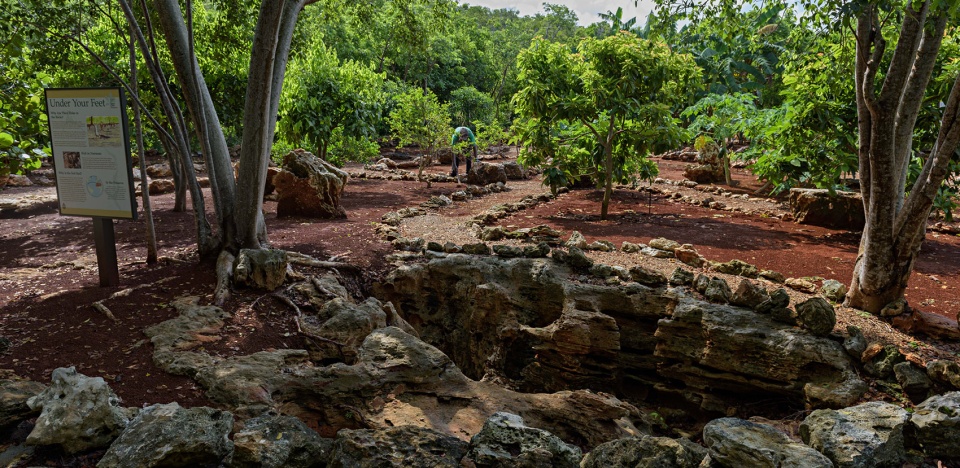
▲Leon Levy原生植物保护区文化农业展区。农作物生长在裸露于地表的石灰岩地层附近。自然风将红土从非洲的撒哈拉沙漠带到巴哈马群岛,在遇上大型沙尘暴时,这些红土被卷入高空,随后在飓风期间沉积下来。The Leon Levy Native Plant Preserve Cultural Agriculture Exhibit. Crops are grown near exposed below grade limestone formations. The red dirt is naturally blown to The Bahamas from the African Sahara Dessert, swept up high in the clouds during major dust storms and then deposited during hurricanes. © Stephen Dunn Photography
Project Narrative
The Leon Levy Native Plant Preserve was conceived in a culture of cooperation, collaboration, and enthusiasm. The Preserve is the fulfillment of the vision of longtime residents Leon Levy and Shelby White, who loved the natural environment and way of life on Eleuthera. After Leon Levy’s passing in 2003, Shelby White wanted to celebrate her husband’s devotion to the island while contributing to a better future for all Eleutherans. Mr. Levy loved the island and was concerned that the knowledge and use of the medicinal value of the island’s native plants were rapidly diminishing.
This 30-acre preserve was jointly created by the Bahamas National Trust and the Leon Levy Foundation. The Bahamas National Trust is a science-based organization dedicated to effectively managing national parks to conserve and protect Bahamian natural resources. The Leon Levy Foundation is a private, not-for-profit foundation created from Leon Levy’s estate. These two organizations have now formed the first National Park on Eleuthera, a designated research center for traditional bush medicine, a facility for the propagation of indigenous plants and trees, and an educational center focusing on the importance of native vegetation to the biodiversity of the Bahamas.
The project’s primary focus was to raise awareness of Bahamian plant diversity and bush medicine, aligning with one of the six broad areas for the Leon Levy Foundation’s philanthropic legacy: Preservation of Nature and Gardens. The founders hope that the diversity of the Preserve’s plant and animal life will inspire subsequent generations to preserve native species and habitat and address the pernicious effects of years of deforestation, invasive species importation, and monoculture agricultural practices.
The site is comprised mostly of elevated, rocky, dry forest, called coppice, and lower degraded areas that had been cultivated. The native ecology was being impacted by flourishing invasive, exotic trees and rubbish from an illegal, on-site dump.
Throughout Phase I, the landscape architect orchestrated the Preserve’s design and siting of main facility structures including a visitor center, educational pavilion, back of house operations center, and restrooms. The landscape architect also designed all vehicular and pedestrian circulation and associated parking. There were extensive coppice restoration and the creation of ecosystem-driven gardens including bush medicine exhibition gardens. Phase I also laid the foundation for the visitor experience throughout the preserve, utilizing existing saltwater marsh with a mature stand of red mangroves, secondary dune, and the native coppice, as highlighted ecosystems.
The arrival experience is richly defined by limestone border walls, built by local masons, and an overhead pergola. Visitors pass over an ancient dune, down to the lowlands to a parking area, planted to feel like it was etched out of an existing coppice. The procession to the visitor center is mysterious, as one must wind through a seemingly pre-existent coppice. The visitor center structure was conceived by the landscape architect to be a portal to the preserve gardens. This visitor’s center was located in the vicinity of the illegal dump. The dump was excavated to remove all of the rubbish, revealing the textured surface of an ancient reef cap. The existing coconut palms, which had sprouted from dumped yard waste, were silent witnesses of the past, but now have a voice in the Preserve’s regeneration.
As one passes through the visitor’s center building, from garden to garden, the space is enlivened by a cascade of recirculating water down the face of the ancient dune. The water cascade splashes into a lagoon created through the excavation of the dump, below the water table. Soon after its creation, the lagoon was happily inhabited by birds and dragonflies.
After circumnavigating the lagoon and crossing the watercourse, the path descends to a boardwalk that passes through a red mangrove stand. Across the boardwalks are a series of bush medicine exhibitions. The Education Pavilion, the departure point for nature trails, is a flexible structure that provides shelter for outdoor classroom lessons, weddings, and other group gatherings. More bush medicine exhibitions occur along open space trails past the education pavilion if one prefers to return to the visitor center. All trail systems lead to the visitor center as well as a dramatic viewing tower sited by the Bahamas National Trust’s botanist. Great vistas from the viewing tower across the immense Bahamian coppice are celebrated.
Phase II aspired to feature other Bahamian ecosystems and make additional educational opportunities available to the Preserve’s visitors. Major new additions included a native plant propagation center, designed by the landscape architect, a freshwater wetland created from a pre-existent agricultural cistern, and a historical agricultural exhibition garden located on the site’s most fertile soils, made rich from eons of rainwater erosion from higher ground. Phase II also incorporated the careful excavation of underground formations of limestone oxidized through rainwater erosion, exposing hidden site geology to visitors.
By the end of Phase II, twenty percent of the Preserve had been restored to native vegetation and converted into accessible gardens. It has become a sanctuary for humans, animals, and insects. The landscape architect was selected for this project due to his extensive knowledge of USDA zone 11B plants and ecologies, being very similar to South Florida’s Zone 11A, and the Florida Keys Zone 11B. He worked extensively with the Preserve’s botanist and Bahamas National Trust staff in refining the site’s planting plans.
The Preserve now features over 171 species of indigenous plants and more than 34 species of birds, including the Antillean Bullfinch. Over 100 varieties of medicinal plants and more than 25 different economic plants are among the 2,000 native trees, shrubs and herbs recently added to the site.
The public has embraced the Preserve, and record numbers of visitors are propagating awareness of this native oasis. The landscape architect found the project rewarding, collaborating with a variety of public and private stakeholders, including the local community, to unearth the best solutions to the project’s challenges. In fact, the Preserve is the #1 rated activity on Trip Advisor’s “39 Things to do in Eleuthera.”
The landscape architect is now designing Phase III, an additional 5-acres of land, which will include an expanded visitor center, sleeping facilities for students and scientists, faculty lodging, maintenance and administrative facilities, an event pavilion, an event lawn a water garden, and many new trail systems.
In April 2019, the Leon Levy Native Plant Preserve became the first institution in The Bahamas to be designated a BGCI accredited botanic garden. Issued by Botanic Gardens Conservation International, this tier of accreditation recognizes institutions for their achievements in plant conservation.
More:ASLA; Raymond Jungles, Inc.




好喜欢黑人的这种感觉
确实需要花精力花时间
对自然的干预逻辑正确了。随性之前是严谨的分析
景观感受是干预的吗?麻烦你去看下景观类的书行吗?别给这“对自然的干预逻辑正确了。随性之前是严谨的分析”这样的装逼评论
跟国内的景观园子完全不同,感觉这个园子对于荒野景观或者说原生景观的运用才是正确的,前面一个谈荒野景观却在地上摆盘的项目注意了
环境不错