非常感谢 Turf Design Studio & Environmental Partnership 将以下内容授权gooood发行。更多请至:Turf Design Studio & Environmental Partnership on gooood
Appreciation towards Turf Design Studio & Environmental Partnership for providing the following description:
悉尼公园的基地曾经是工业用地和垃圾填埋场,在过去二十年间,人们经过了许多努力,终于将其转变成了占地44公顷的公园,对促进悉尼东南部的社区发展有着极为重要的价值。
Much has been achieved over the past two decades in transforming the Sydney Park site from its industrial and landfill legacy, into 44 hectares of parkland and a vital asset for the growing communities of Sydney’s south east.
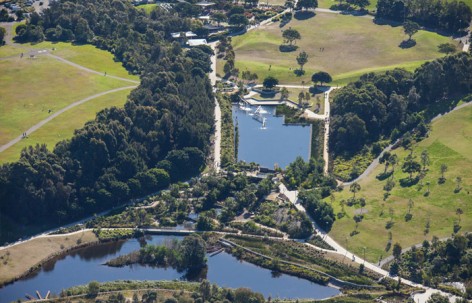
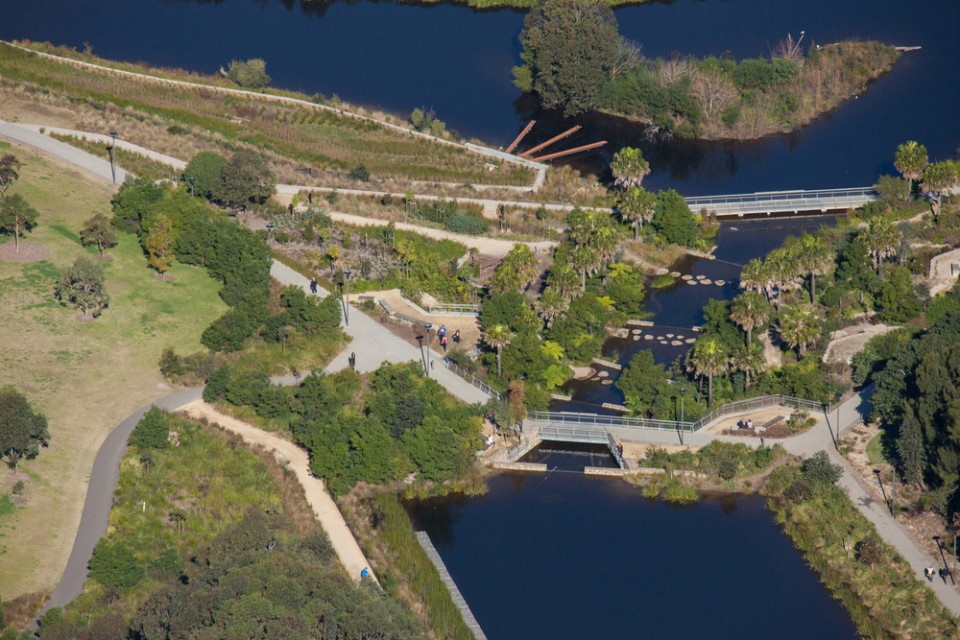
▼公园全景,overall view of the park
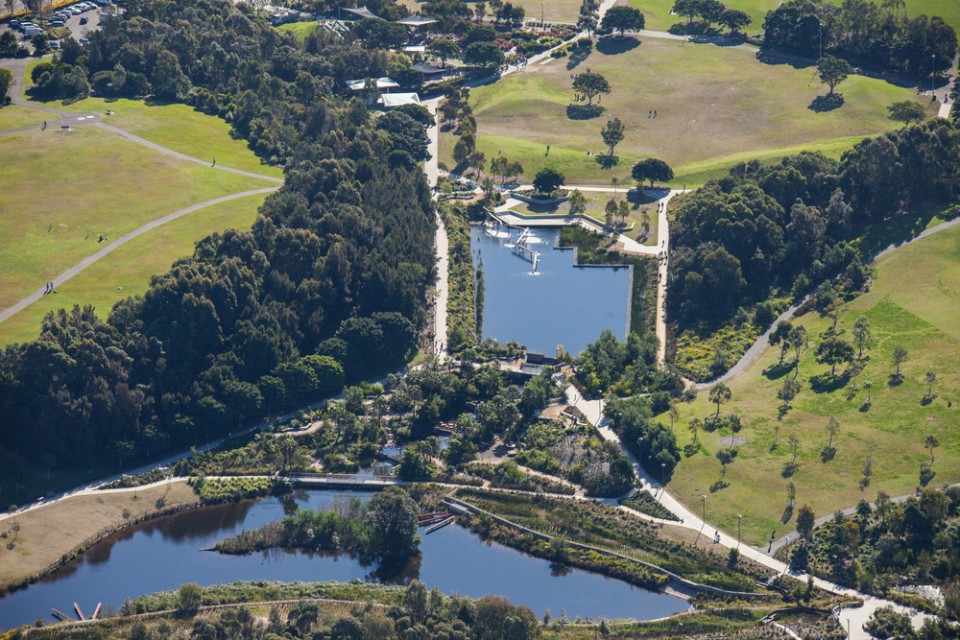
项目是2012-2030年悉尼城分散水资源总体规划的一部分,旨在2030年前减少10%的城市饮用水需求。这是城市有史以来最大规模的水回收项目,澳大利亚政府也参与其中。设计师借这千载难逢的基础设施建造项目创造了一个充满活力的休闲娱乐圣地,为公园带去了新生。
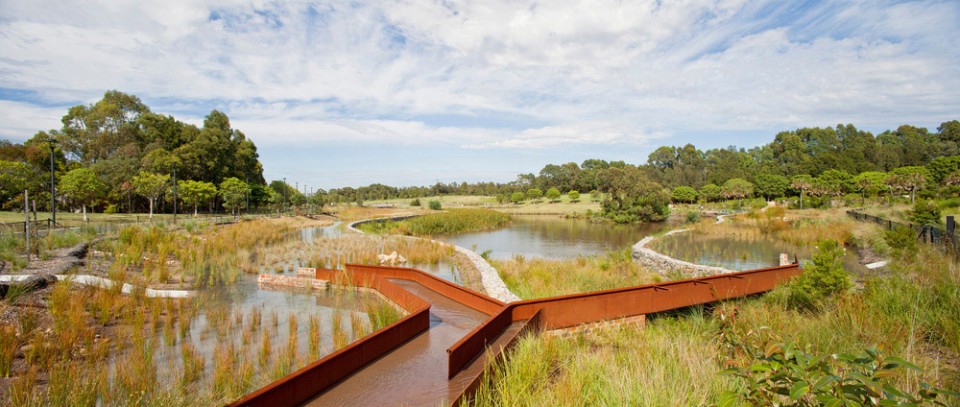
▼园内水景丰富,植物茂盛,生机勃勃,vibrant environment with lush plants and water landscape
悉尼市委托由Turf设计事务所的景观建筑师带领的设计团队对该项目进行设计建造。Turf设计事务所长于在设计中将设计、艺术、科学和生态结合在一起进行多学科合作,其团队中包括水资源专家Alluvium、艺术家Turpin + Crawford Studio、生态专家Dragonfly Environmental、工程师Partridge和城市自己的景观建筑师,他们聚集在一起展开“圆桌会议”,共同探讨设计方案。经过研究,团队认为如果要实现综合完善的环境设计,必须要充分挖掘项目和基地中的各种可能。
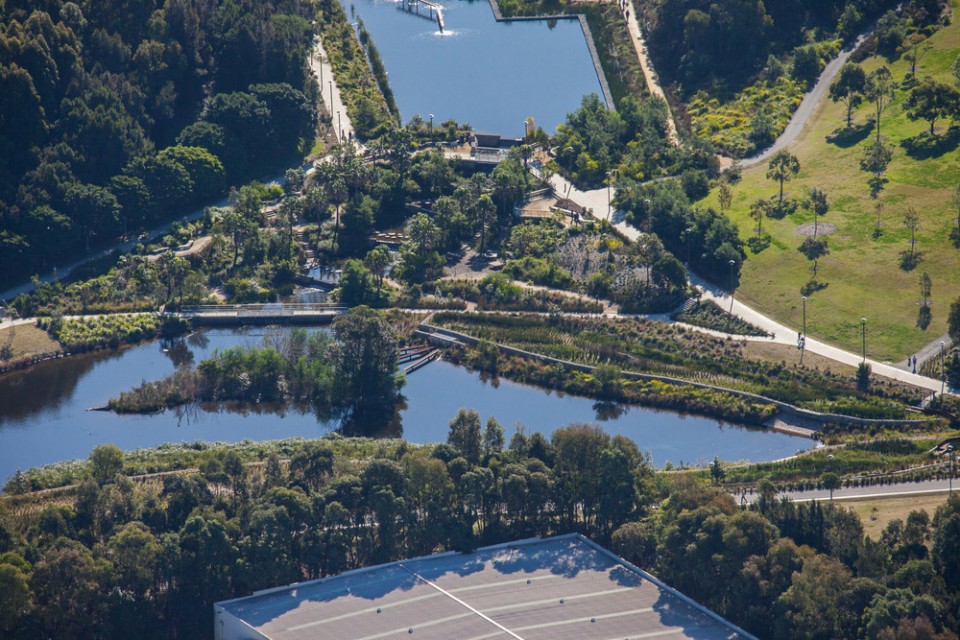
▼水处理、生态和工程相结合的公园,a park combined water management, ecology and engineer
项目中有三个关键点。一是水资源管理,要对城市废水进行高效回收,提升水质并且减少饮用水消耗。二是要创造适合人活动的场所,让每个来到公园的人都可以享受其中。为此,公园需要有舒适的环境,为人们提供生活、学习或单纯逗留的场所。若要创造舒适健康的公园环境,还要在景观和栖息地等方面进行改造,加强景观和休闲项目的建设,使公园的价值得到提升。第三则是要通过艺术性的表现手法向公众展示公园改造的故事,让他们对水资源治理有更为深刻的认识。
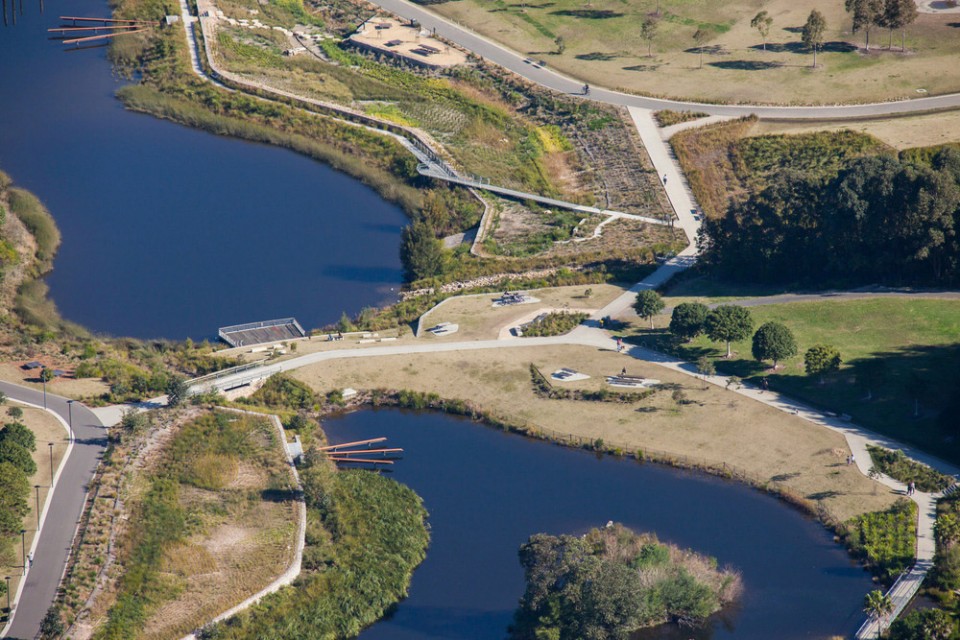
▼暴氧设施和公园景观相结合,water re-use facilities merged with the landscape
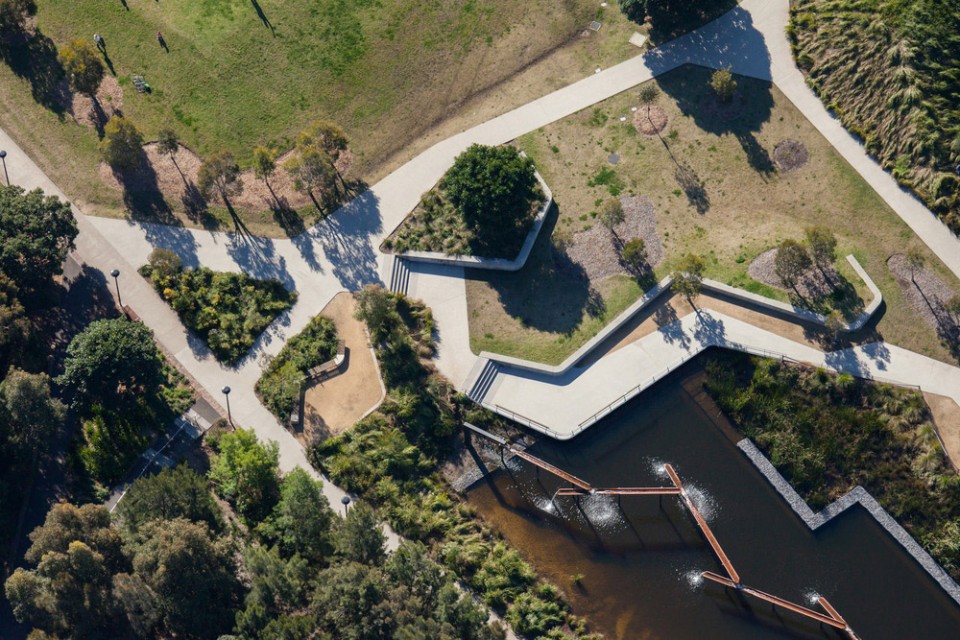
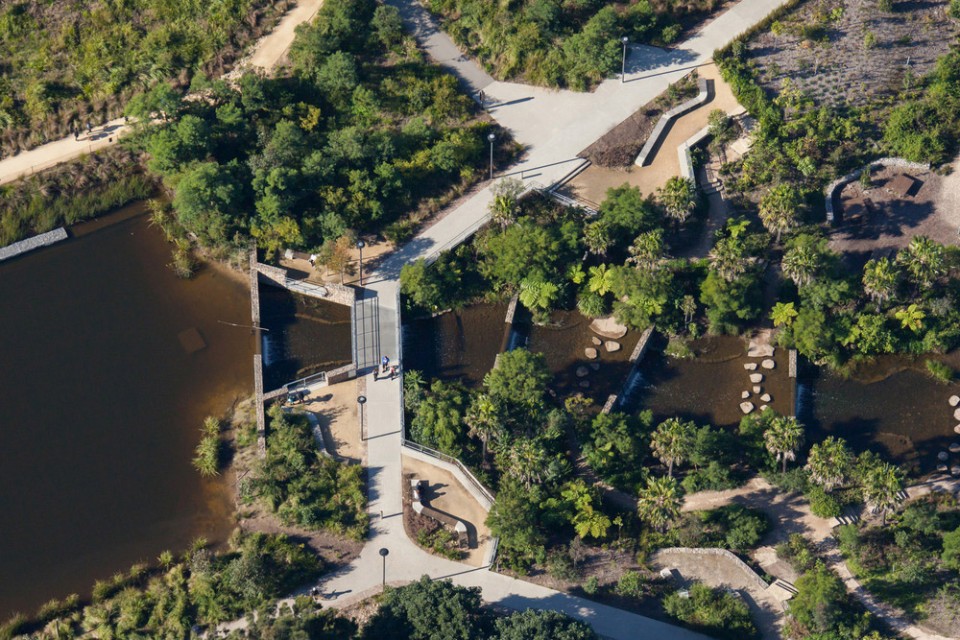
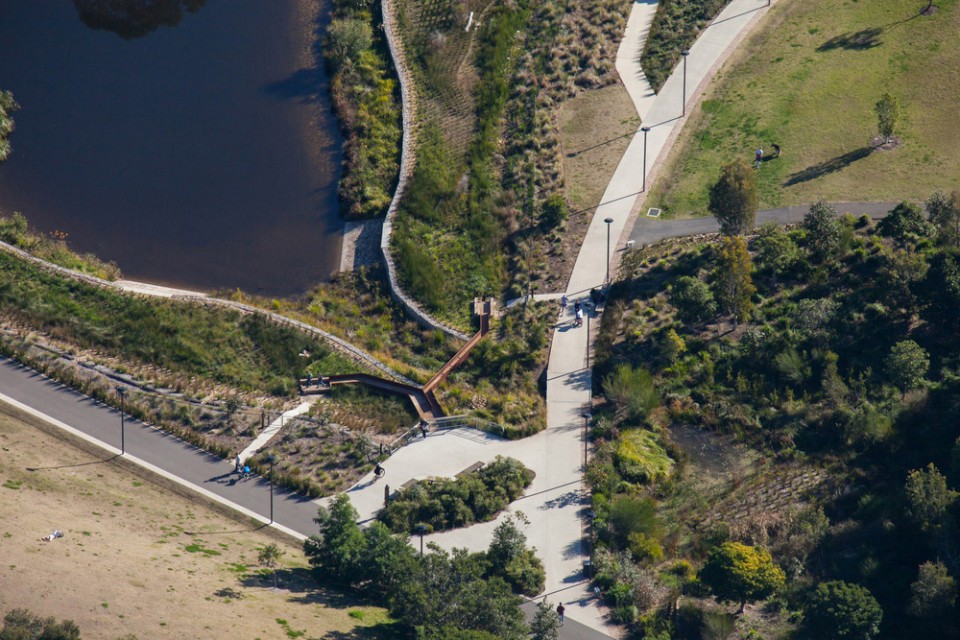
▼滨水湿地,wetland
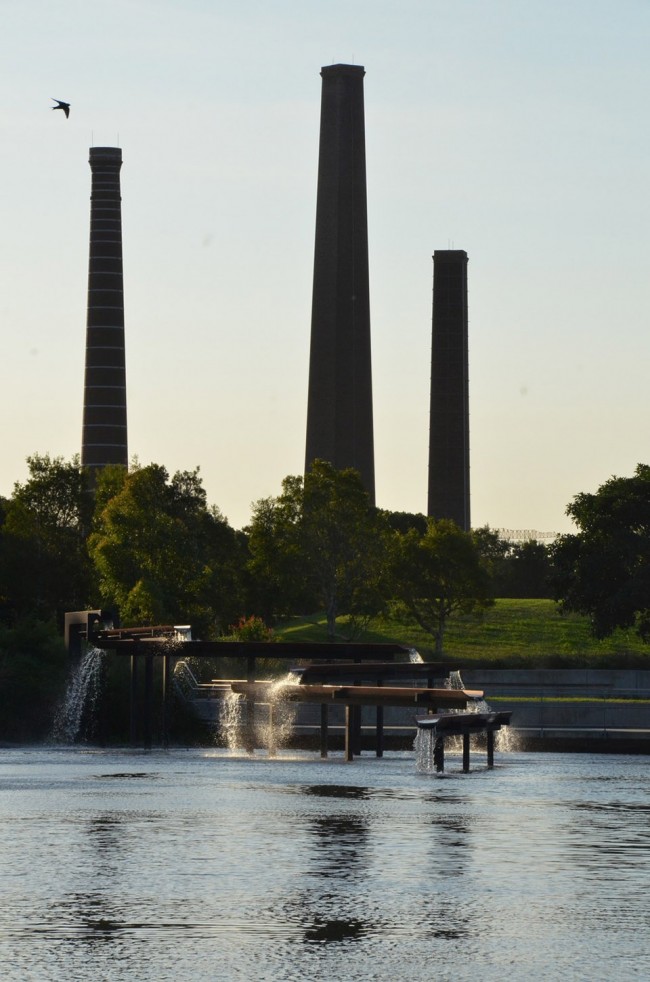
▼暴氧设施,facility to increase the oxygen content in the water
“这是一项庞大的生态工程,通过加强自然以让环境获利,其价值将远超人们现在的想象。重要的是,项目将城市内的自然、文化、社区以及基建整合在了一起,让人与自然之间的纽带变得更加强大。”
Ricky Ricrdo,“Waste Not, Want Not”,澳大利亚景观建筑,2016年5月
“This is a vast working ecology, augmenting and celebrating the processes of nature to deliver environmental benefits that stretch far beyond what is immediately visible. Importantly, this project manages to strengthen the connection between people and nature by bringing nature, culture, community and infrastructure together in the city.”
Ricky Ricardo, ‘Waste Not, Want Not’, Landscape Architecture Australia, May 2016
▼在水景中玩耍的同时学习水处理的过程,娱乐与学习相结合,learn the water re-use process while living and playing in the water landscape
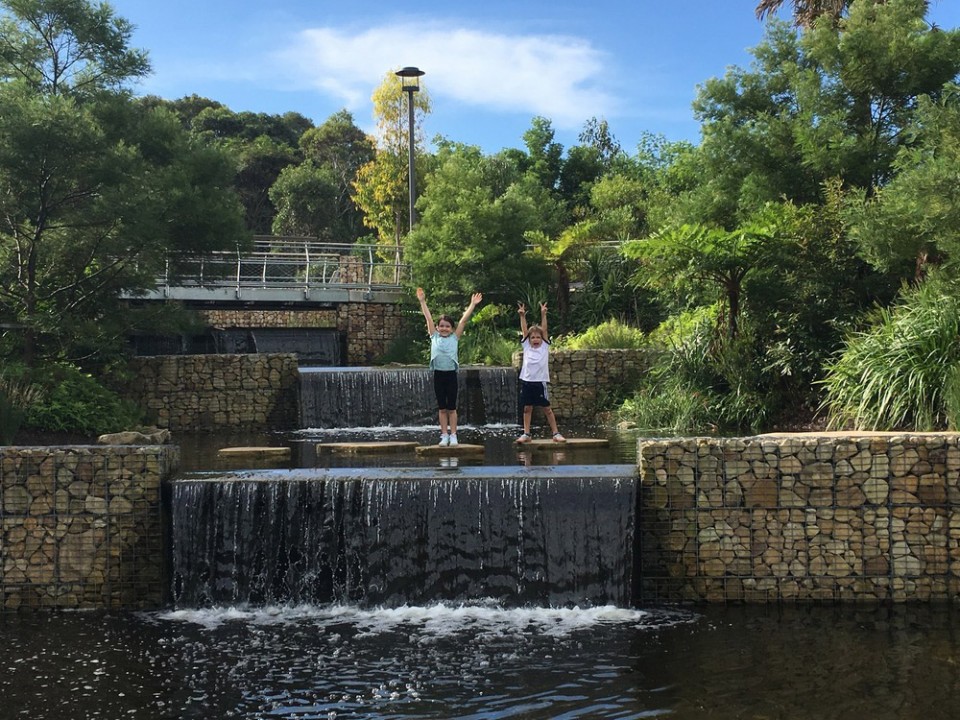
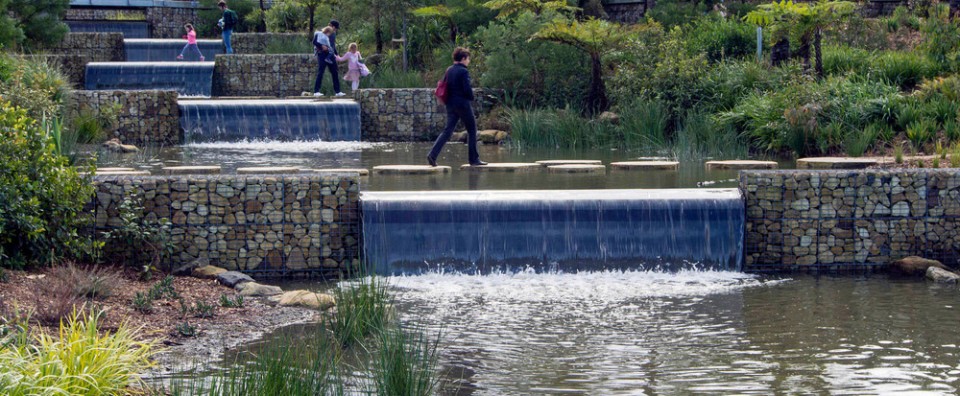
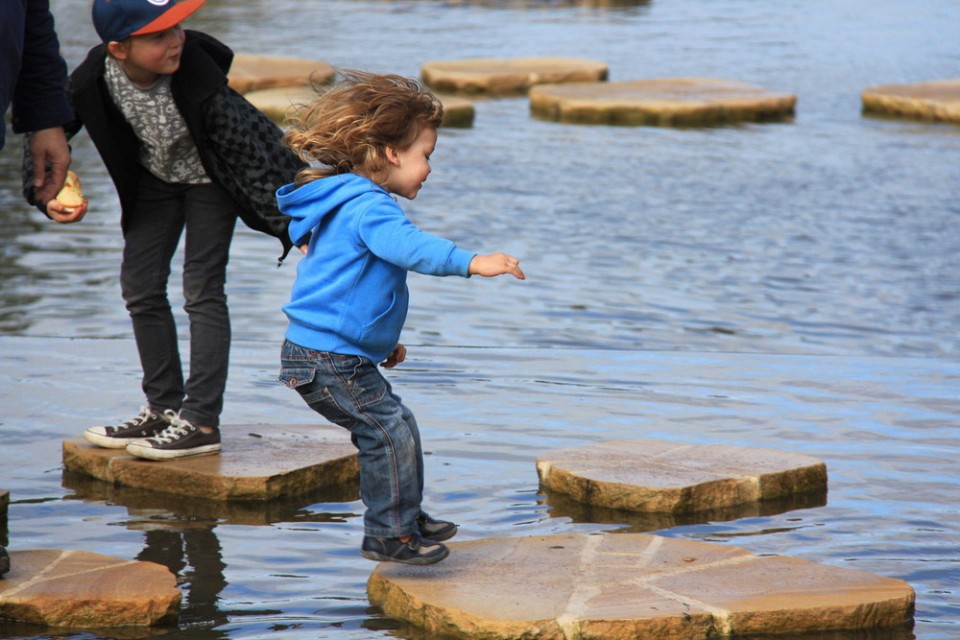
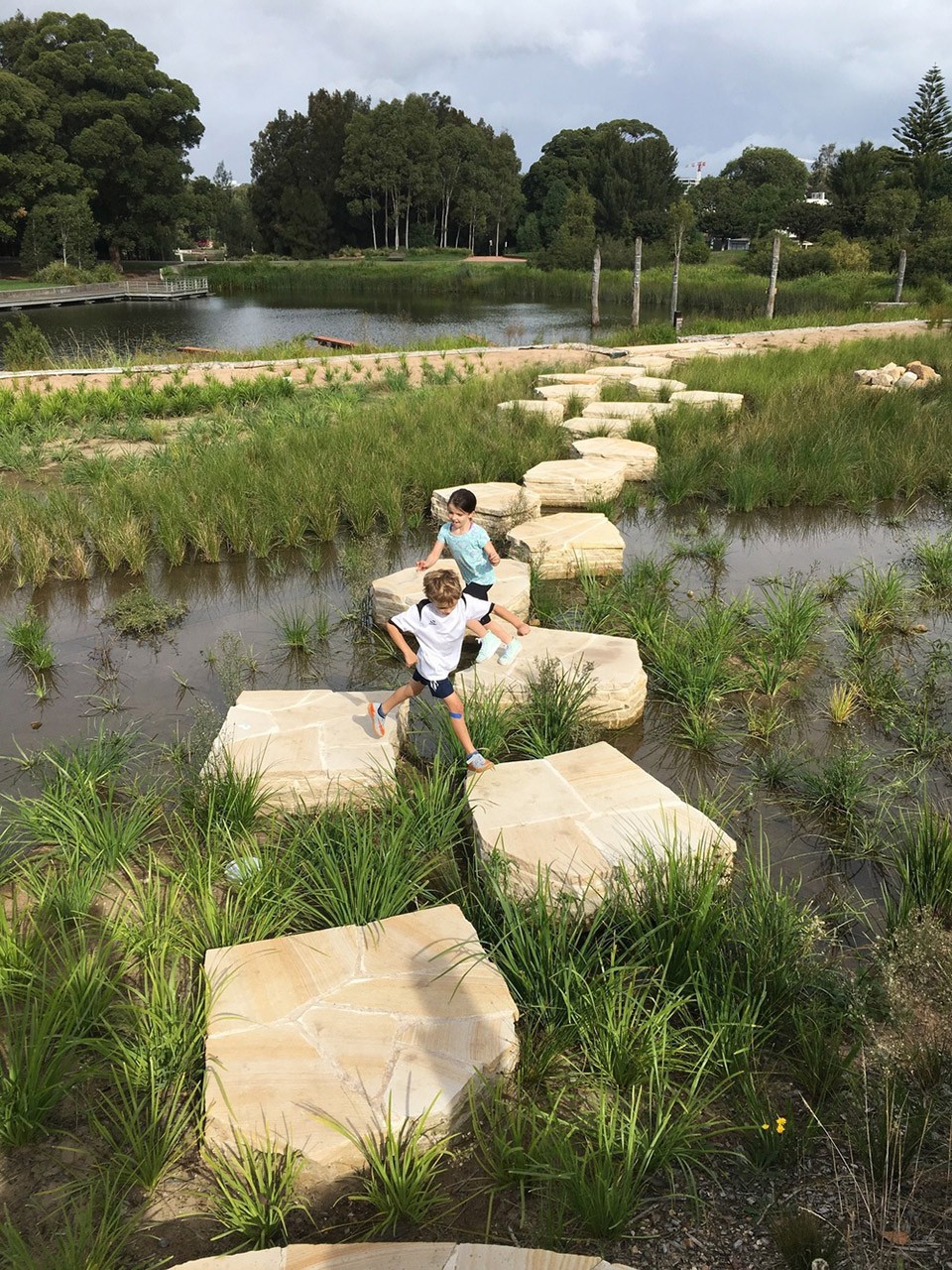
经过一段时间的逐步建造,项目中的水资源再利用系统如今已经和公园设施融为一体,全面投入了运用。生态贮渗湿地每年将收集和净化相当于340个奥运标准泳池水量的水,人们可以看到水在其中流动涨落,了解水处理的过程。通过创造新栖息地和保护强化原有的公园环境,园内的动植物种类日渐丰富起来。从根本来说,项目向社区中的人们展示了城市水资源管理的重要性,城市与自然相互依存,缺一不可。
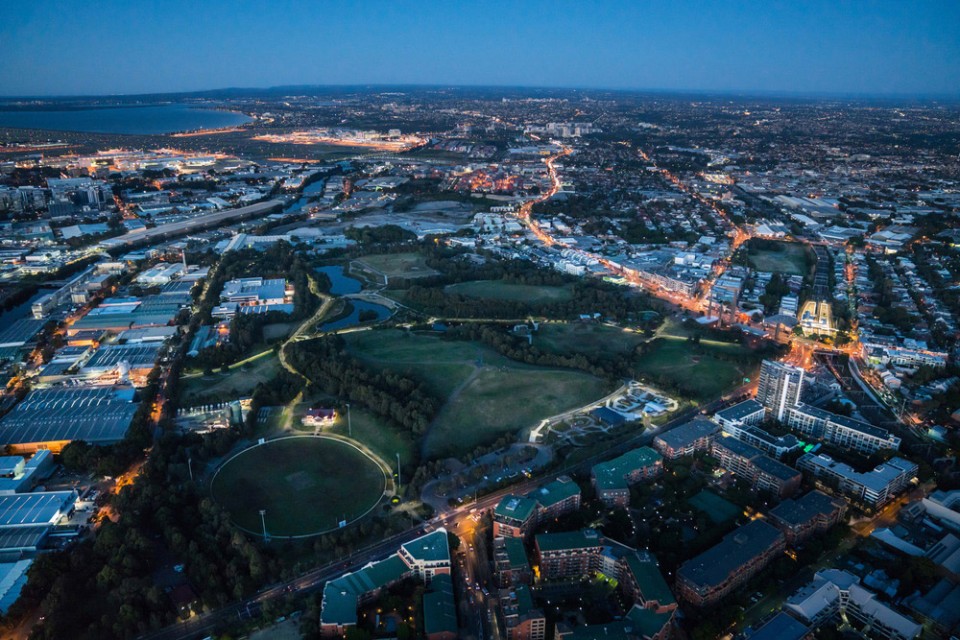
▼夜景,night view
The project is part of City of Sydney’s Decentralized Water Master Plan (2012-2030), specifically focused on reducing the City’s potable water demand by 10% before 2030. It is the City’s largest water harvesting project to date, built in partnership with the Australian Government and seizing a once in a lifetime opportunity to use what was essentially an infrastructure project to breathe new life into the park – as a vibrant recreation and environmental asset for Sydney.
City of Sydney engaged a design team led by landscape architects Turf Design Studio & Environmental Partnership who orchestrated a multi-disciplinary collaboration weaving together design, art, science and ecology. The resulting ‘roundtable’ facilitated a shared design dialogue between water experts Alluvium, artists Turpin + Crawford Studio, ecologists Dragonfly Environmental, engineers Partridge and the City’s own Landscape Architects. The team and client recognized that a fully integrated and collaborative design environment was required to fully realize the opportunities presented by the project and the site.
The project had three key objectives
Water Management: Effectively harvesting urban waste water, improving water quality and reducing potable water consumption.
Place for People: A park that enriches all who use it, be robust and authentic and provide a place for living, learning and just ‘being’.
Landscape and Habitat: Enhance the landscape setting, recreational opportunities, environmental amenity and habitat value.
Interpretation: Uncover and express the park’s water story through design and artful influences.
After an intensive period of ‘easing in’, the water re-use project is now fully operational and intrinsically merged in its park setting. The bio-retention wetlands not only captures and cleans the measure of 340 Olympic-sized swimming pools worth per annum, but it tells a water story through its visible ebbs and flows. The park’s fauna and flora is thriving, with new habitats created and existing ones protected and enhanced throughout the park. Fundamentally, the project is educating the community about the importance of urban water management and the interdependent nature of our urban and natural environments.
More: Turf Design Studio & Environmental Partnership,更多请至:Turf Design Studio & Environmental Partnership on gooood

悉尼公园
我们这边有一个项目,市中心河道治理,本来做了好几个亲水的小涌泉什么的,呵呵结果甲方说水质必须的自来水才能接触,让我们做绿篱围起来,呵呵了。
本文中并没有谈到“生态贮渗湿地”到底是什么,也并没有对水质改善有定量的描述,很难看出是否比国内类似项目先进。无论是所谓的生态设计,还是水资源再利用项目,不能水质净化目标就都是空谈。
的确是这样,并且个人认为应该在建成后追踪达成情况
这可以理解为海绵城市啊,这个项目的亲水性做的挺好
感觉在中国这种政策压力下,设计师也不应该被束缚在所谓的海绵城市的条条框框里,纵观境外优秀项目,“海绵”的成分被设计得更灵活高效
在中国,设计师尤其是景观设计师是没有什么话语权的,其实很多有理想的设计师也想按照自己想法做,但是决策层很多是不懂设计的,也不太尊重设计的,这是一个很实在又很无奈的问题,设计师目前的问题不仅是如何做到更好,更应该通过一些手法或者观点改变决策层的观点,不然要想改变中国设计行业“不敢做”的问题很困难。
请问一下,这个公园的池塘里面有小龙虾吗?
哈哈哈哈哈哈哈
哈哈哈,无聊····