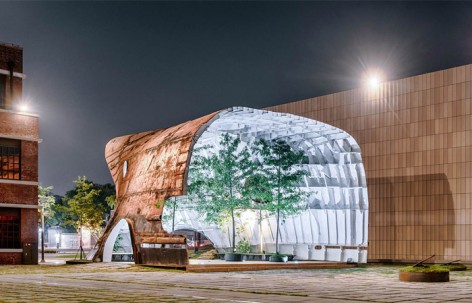
来自 Shinslab Architecture 对gooood的分享。更多请至:Shinslab on gooood
Appreciation towards Shinslab Architecture for providing the following description:
Temp’L 的设计源于老旧轮船的一部分回收钢铁,不仅展现了结构美学,同时它的回收概念也超越了其他采用回收材料的过程。用这件来自历史尚不久远的物件激发着人们在现今这一时代对于美的定义。
They are important factors for the contemporary practice of architecture which has to consider both the environment and the cost of building. Temp’L is designed from recycled steel parts from an old ship. It shows not only a beauty of structure, but it has also a recycling purpose, ahead of any process of reusing materials. It provokes thought about beauty in our time, coming from a recent past.
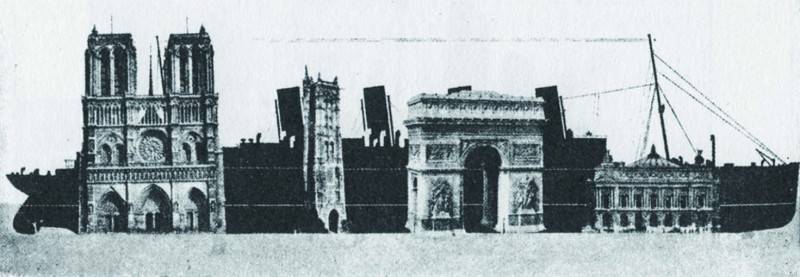
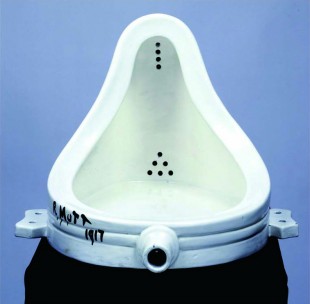
在“青年建筑师项目”中,设计团队首先在考虑如何让自己的想法引起当代艺术的共鸣。建筑师勒·柯布西耶曾将一艘庞大货船比作巴黎的几处纪念碑,并观察到属于他所处新纪元的美。艺术家马塞尔·杜尚则通过去除实用而大规模生产的物品原本的功能和位置,将它们称为“现成品”,进一步地质问它们在艺术中的意义,赋予它们新的价值。因为所有伟大的文化遗迹都可能丧失其原本的功能;同样地,一种材料也可能随着时间逝去它最初的价值。当文化遗产被分解的命运这样的事实呈现在眼前,更让人们思考究竟应该为未来的一代着想什么。
A first approach for us in responding to the “Young Architects Program” was to consider that our thoughts will find an echo in Contemporary Art. The architect Le Corbusier compared a big cargo ship to several monuments in Paris and observed the beauty that was thus created by the epoch in which he lived. The artist Marcel Duchamp gave a new meaning and value to utilitarian mass-produced objects, by removing their initial function and position, calling them Readymades and questioning the idea of an object in art. Any great cultural vestiges can lose their function. In the same way, a material can also lose its original value over time. The fact that the destiny of cultural relics is to be dismantled, should make us reflect upon what we need to consider for future generations.
▽ 勒·柯布西耶的拼贴以及杜尚的“泉”,Le Corbusier’s collage & Duchamp’s Fountain
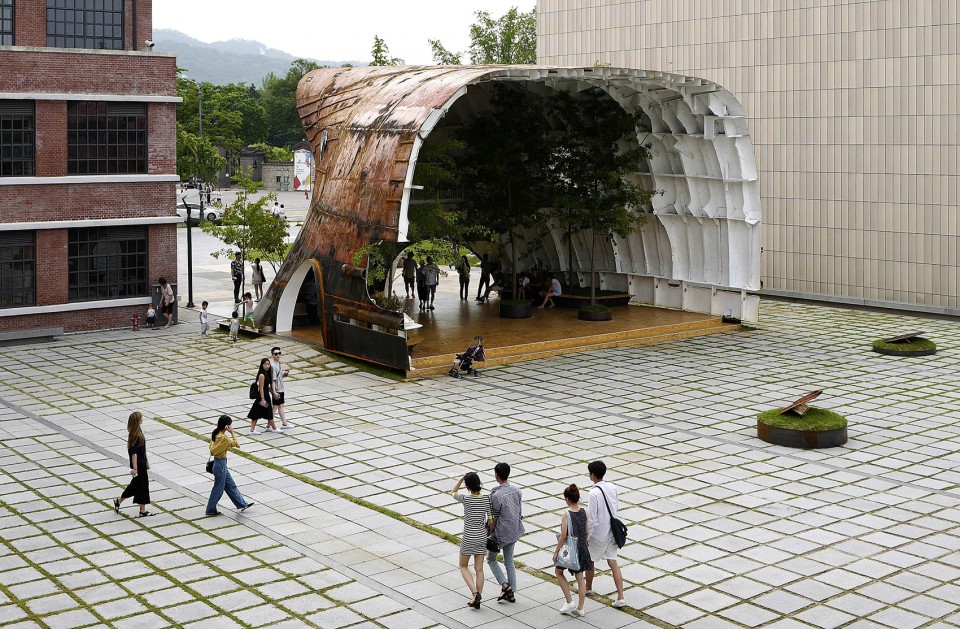
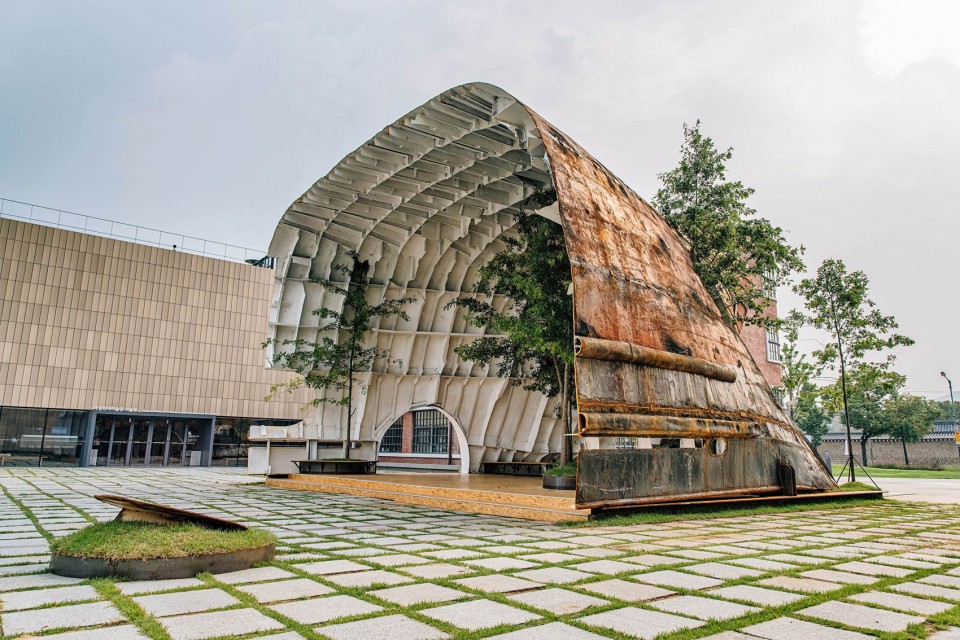
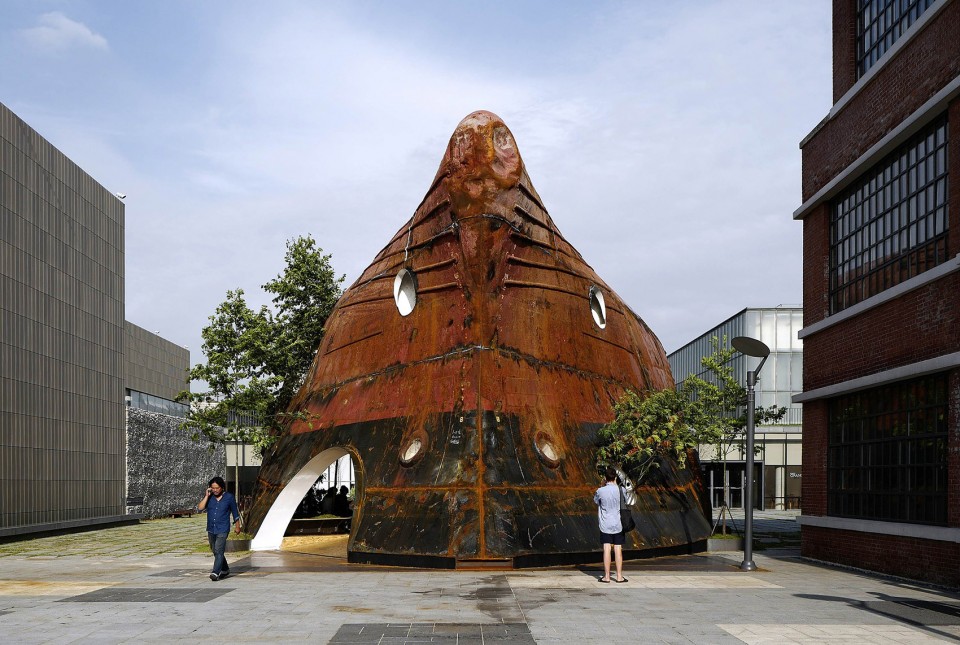
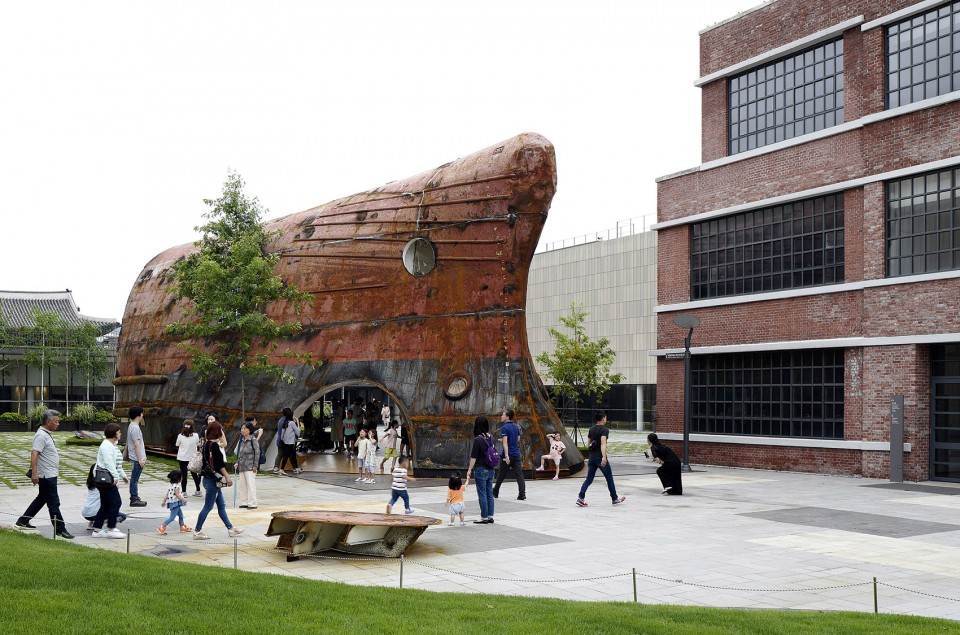
这一颠倒的大型金属结构坐落在博物馆入口处的中庭,邀请好奇的人们进入其中。面冲博物馆主入口打开的正面,表面轮船前身的曲线引导着人们进入博物馆。
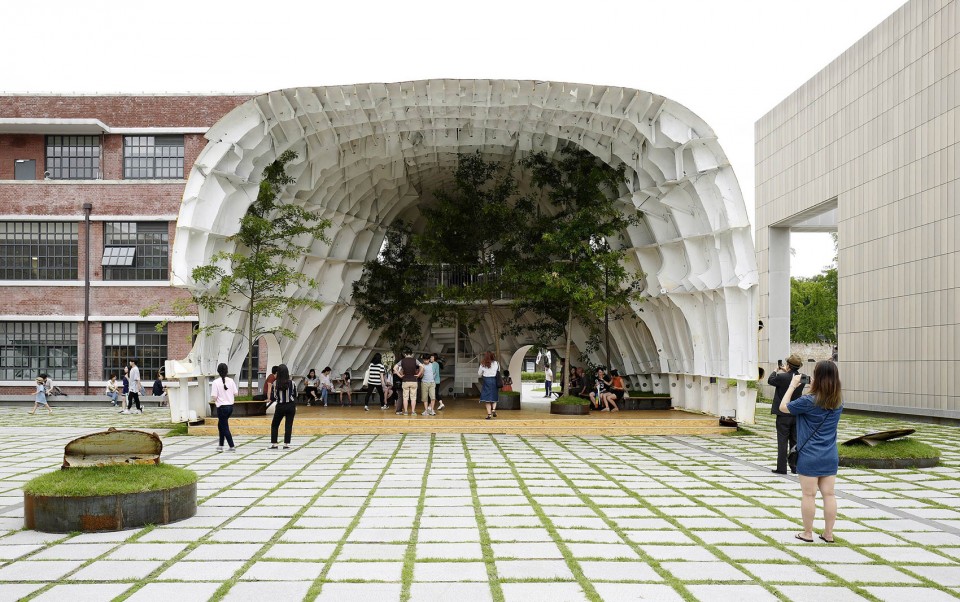
This upside down massive metal structure situated at the entrance of the museum’s courtyard, encourages curiosity and becomes an invitation to visit the project. The front surface curve of the ship may lead people to the museum, as it opens towards its main entrance.
▽ 坐落在博物馆中庭的巨大金属结构,the massive metal structure situated at the entrance of the museum’s courtyard
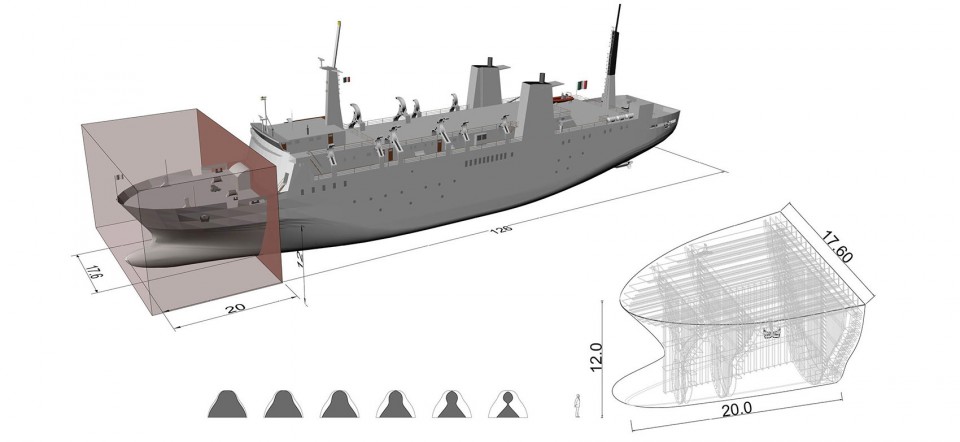
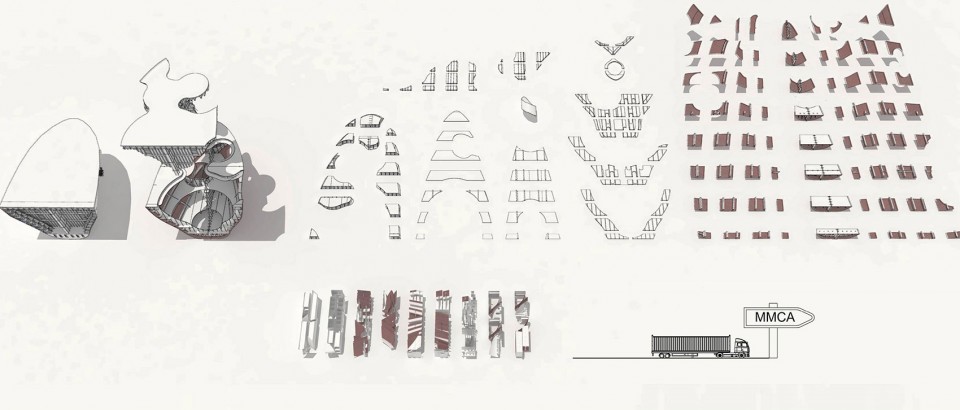
建筑结构的剖面来源于切断整艘旧船的想法。在锯开的过程中展现出强有力的剖面也同时解放出轮船体量内的空间。
The architectural section of the project is drawn through the process of cutting up the old ship. The section-cut has the necessary force for the sawing action, while opening and thus freeing the space contained in the volume of the ship.
▽ 截断整艘旧船的概念,the concept of cutting up the old ship
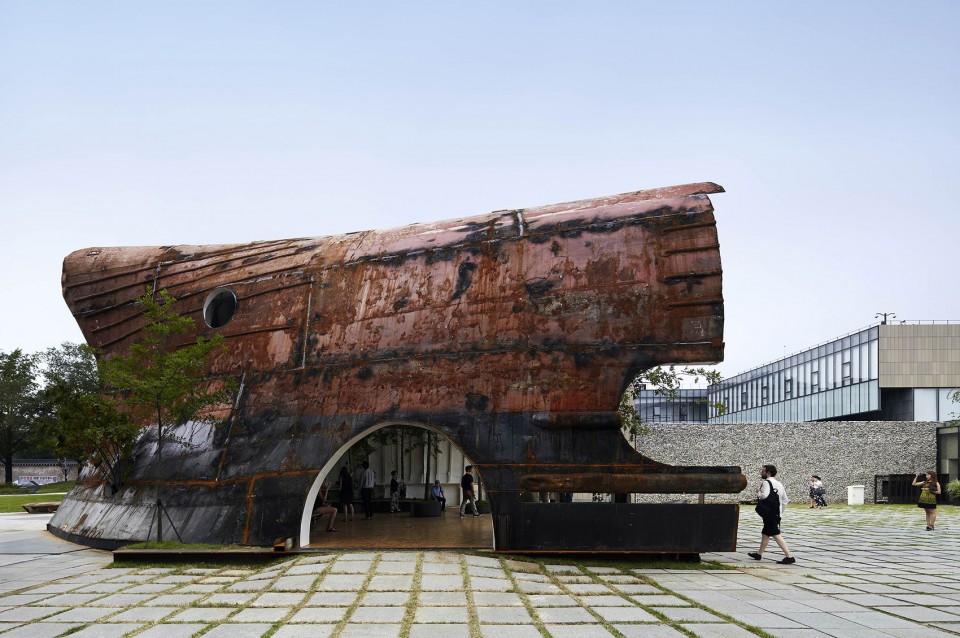
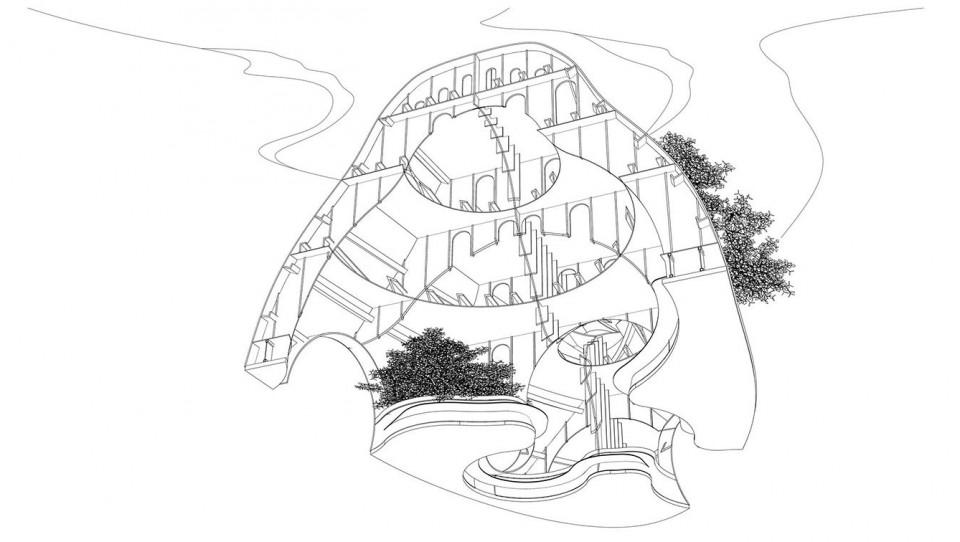
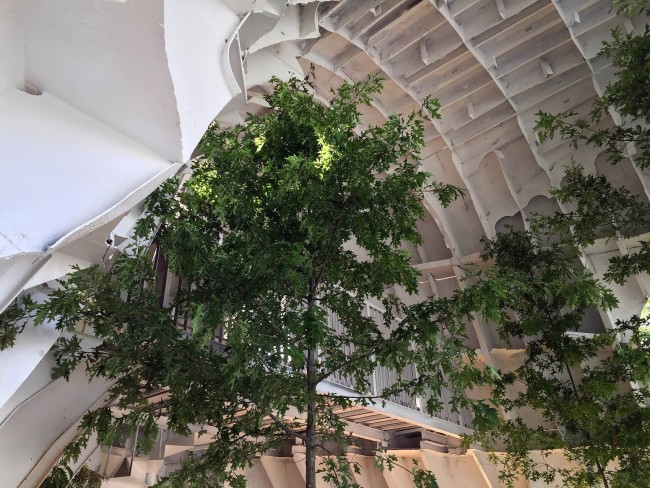
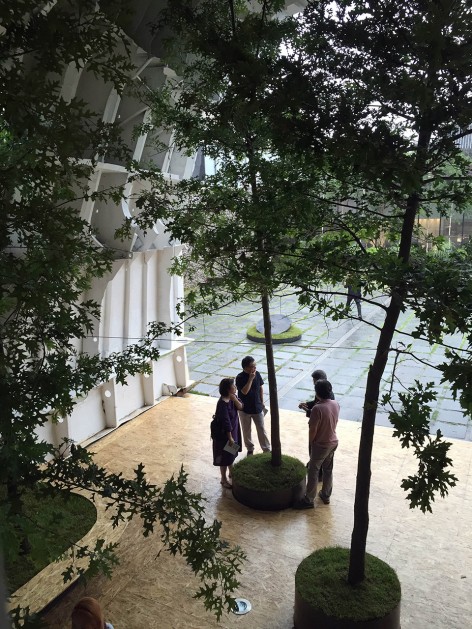
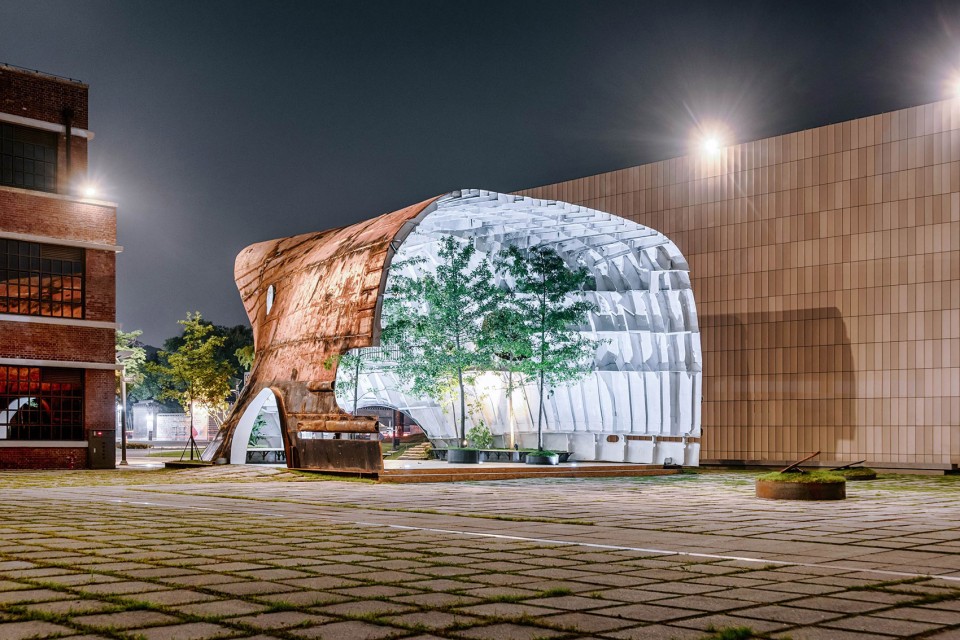
粗糙而生锈的表面透露出它的轮船前身,工业化的这一面吸引着人们。另一方面,内部则是一个有着大体量的开放空间,人们可以在郁郁葱葱的绿植之间找到一处小憩。结构被尽可能的掏空,只保留下可以保持外形的最小支撑结构。
It welcomes the visitor by showing its industrial face, made of a rusty and rough surface that is showing the origin of the material, the ship. On the other hand, the inside space is designed as an open area connected to a larger volume, where we find a resting place surrounded by vegetation. The ship is hollowed out by connected spheres that set up a minimum structural reinforcement in order to maintain its shape.
▽ 粗糙而生锈的表面透露出它的轮船前身,a rusty and rough surface that is showing the origin of the material
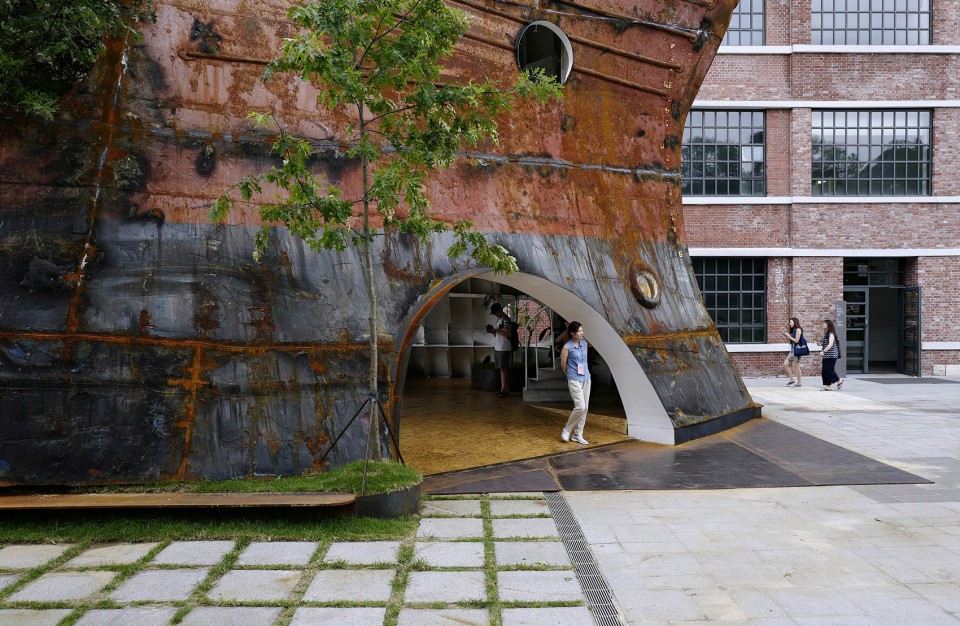
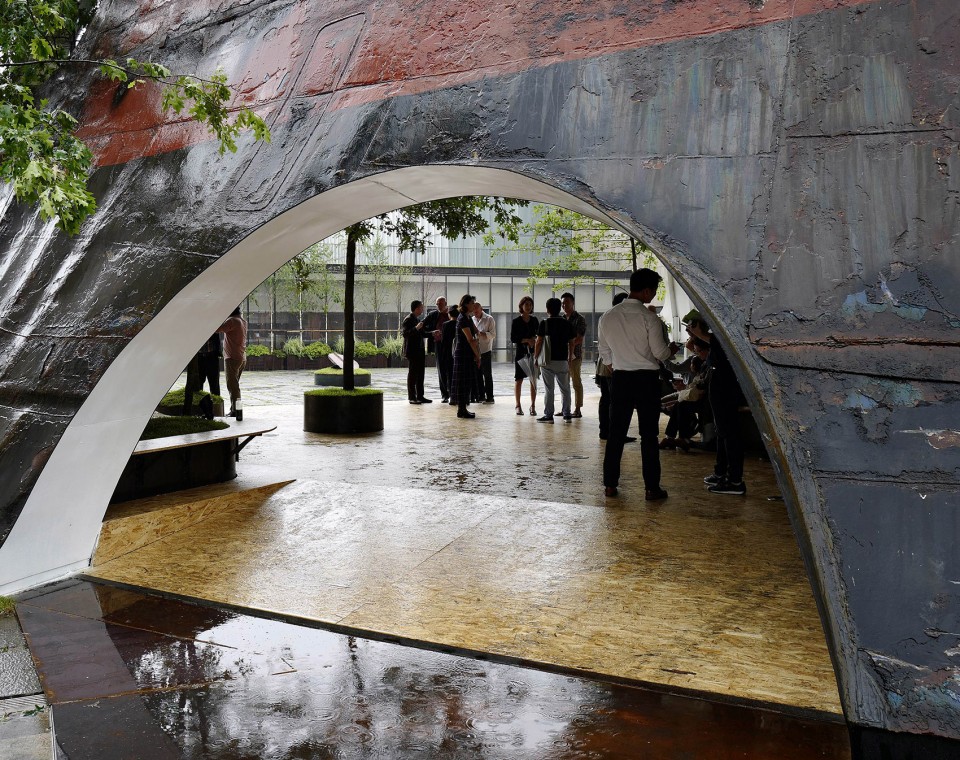
▽ 充满绿植的大体量的开放空间,an open area connected to a larger volume with lush vegetation
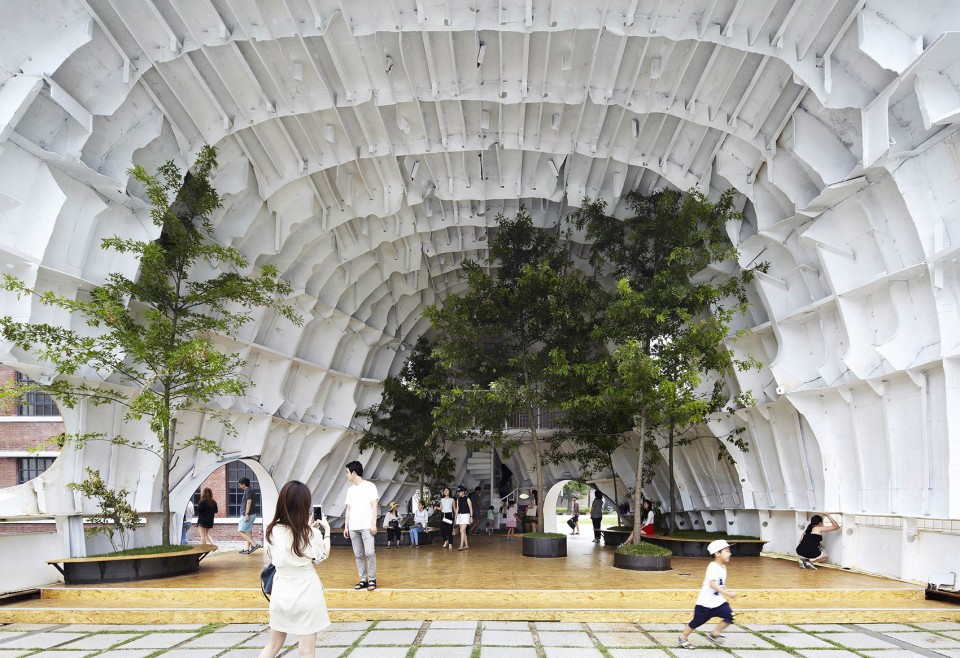
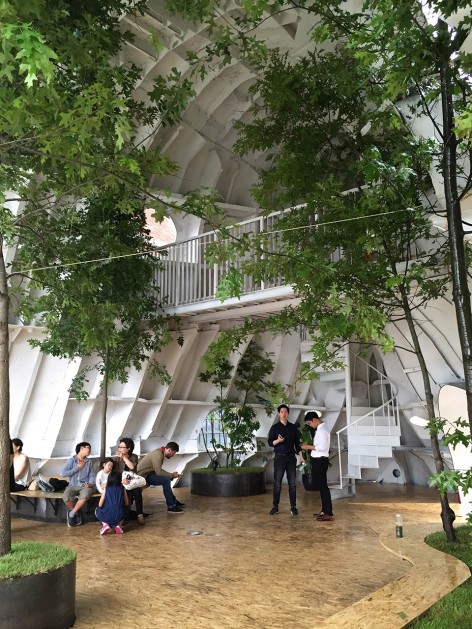
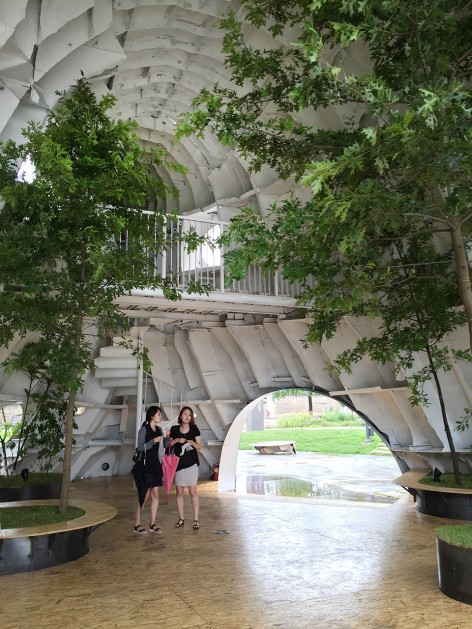
▽ 结构被尽可能的掏空,保留下可以保持外形的最小支撑结构,the ship is hollowed out by connected spheres that set up a minimum structural reinforcement in order to maintain its shape
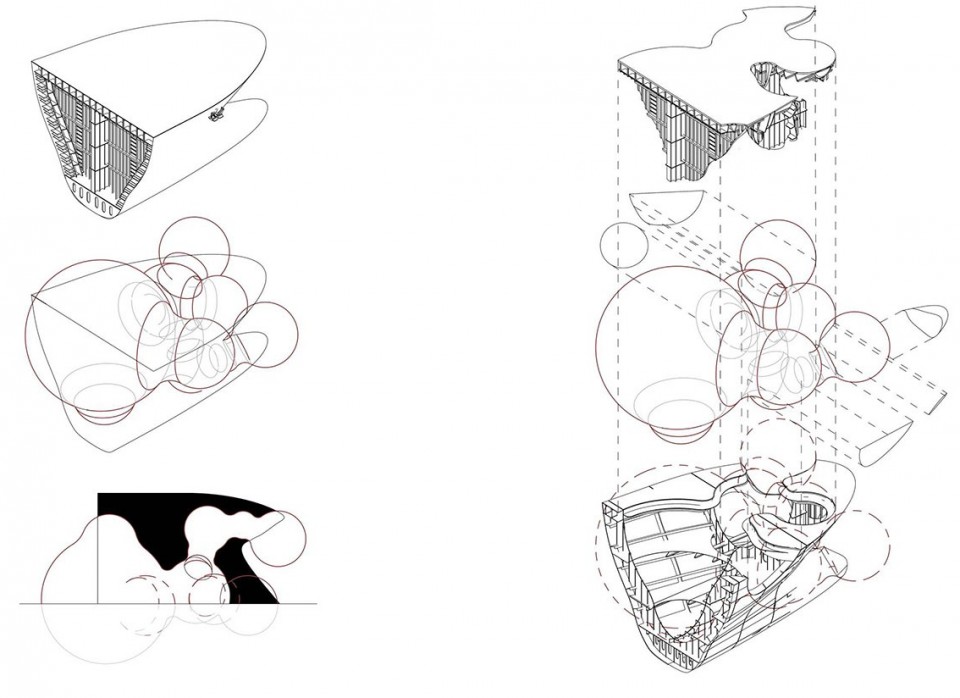
▽ 轴测图,axonometric drawing
Temp’L几乎有着和周围建筑一样的尺度:因此它不仅仅是作为一件物品伫立在一栋带有韩国传统建筑风格的纪念性建筑一侧。设计团队通过Temp’L不仅希望发展出一种采用回收材料的新的建筑建造方式,还希望可以展现出富有情感的新时代美学。
The Temp’L has almost the same scale as the buildings surrounding it: as such, it is not just a simple object. It is introduced alongside the monumental buildings of the Office of the Royal Genealogy Hanok that are built in the Korean traditional style of architecture. Through this Temp’L (temporary temple), we hope not only to develop a new method of construction in architecture by recycling materials, but for those who will see to create emotion.
▽ 与周围建筑相匹配的尺度,almost the same scale as the buildings surrounding it
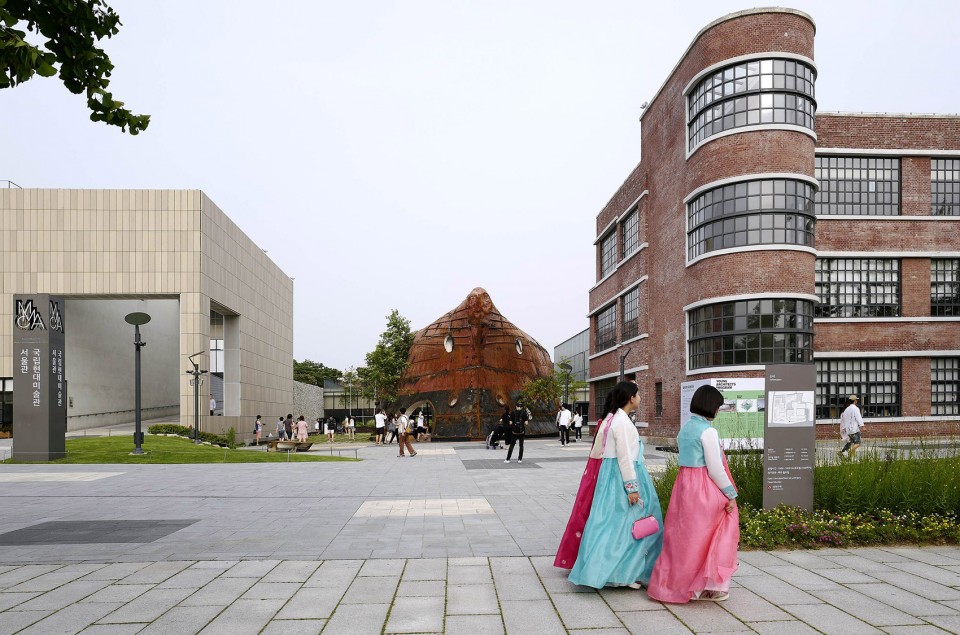
▽ 伫立在一栋带有韩国传统建筑风格的纪念性建筑一侧,it is introduced alongside the monumental buildings that are built in the Korean traditional style of architecture
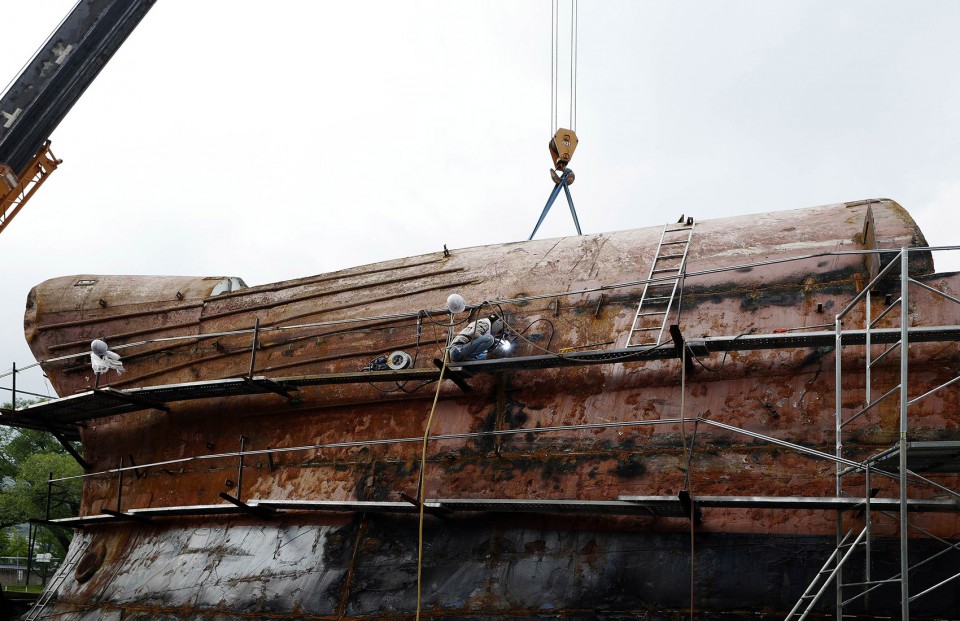
▽ 施工阶段,under construction
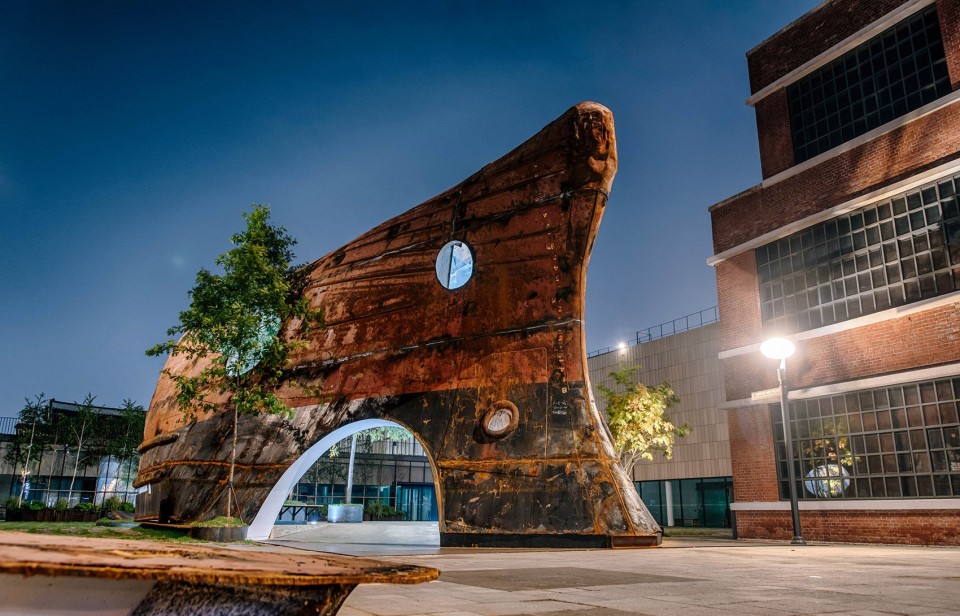
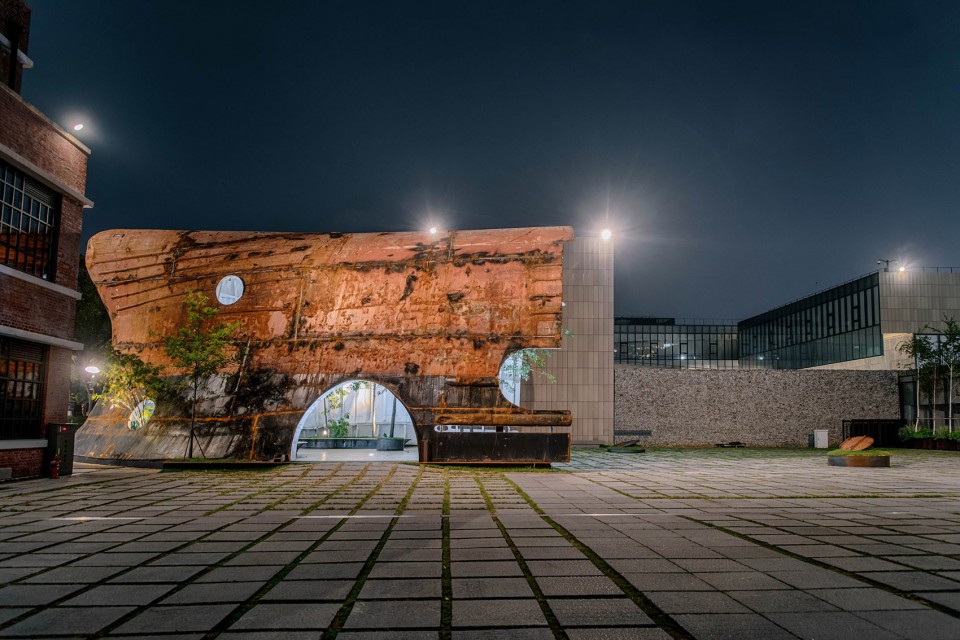
▽ 夜景,nightview
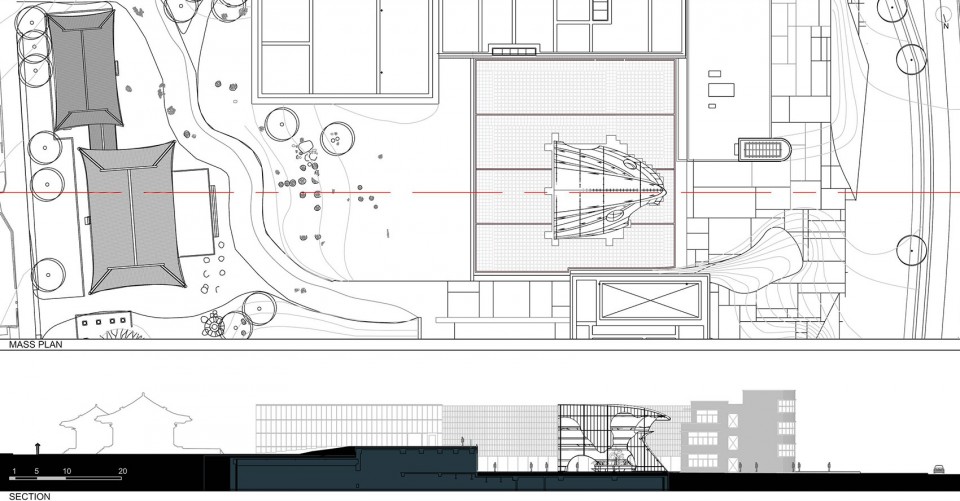
▽ 总平面及总剖面,site plan & site section
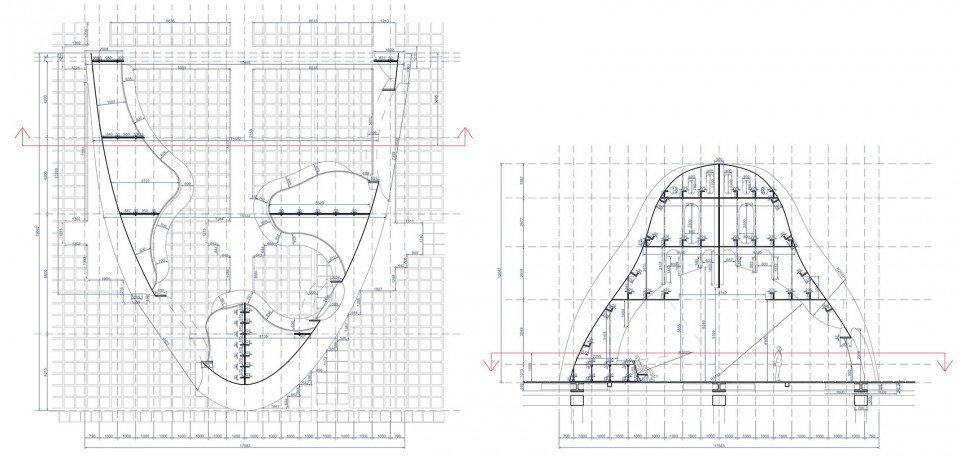
▽ 模型平面及剖面,model plan & section
▽ 平面及剖面,plans & sections
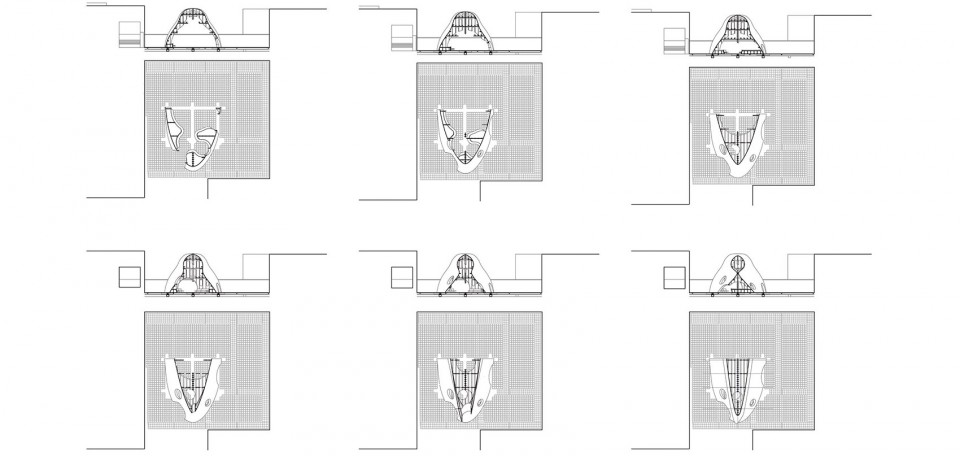
Drawings: Shinslab Architecture
English Text: Shinslab Architecture
Chinese Text: gooood
更多请至:Shinslab on gooood
这树居然能活
有人知道这些树的种类吗?
得益于利用的这一部分外形还算过得去····
我来说一下我今天去了的收获。这个船的一部分在这个美术馆的主入口庭院处,它本身也是作为美术馆的一件展品出现的。我觉得这个作品很不错。其一它的奇特的造型确实非常吸引眼球,美术馆挨着三清路(삼청로)对面就是景福宫的一个入口,从景福宫的这一个入口一出来,最抓视线的就是这个船。所以我看见还蛮多穿着韩服的人到这边美术馆观展也并不奇怪(有些从景福宫出来的游客会穿韩服)。其二,这是一个非常舒适的入口。我们都知道韩国的夏天天气非常闷热,大家可以类比一下南京。这样的一个倒船形成的入口之凉爽,简直是天堂。有几拨韩国人专门站在这个“风口”大赞爽快。
船内侧涂上白色的原因,依照作者的说法是为了跟粗糙的外表皮形成对比,突出室内的清爽之感。
对于那个种在里面的树,我也确实觉得那树太委屈了。但我并不反对树的存在,我觉得换成是体型较小的树可能给人感觉就更清爽了。但咱也别怪人家设计者,人家还是给挨着船体的几棵树在船身上开了几个圆洞,让树能长出来(虽然那洞不够大还是挺憋屈)。
至于大家说的盆栽树,我看到的感觉貌似不是,大家有看到这个船体是需要走两步台阶才能上去的吧,设计者应该是在地板下面溜出了足够的空间给树吧(这点我没有求证)。而且这只是一个展品,还会被顶替的。我看展的时候看到了去年这个庭院的设计的视频资料,本人更喜欢去年的,有兴趣大家可以找下看看网上有没有资源,名字叫做“지붕”是屋顶的意思,他是一个特别诗意的作品。
还有这个船放在这里的主题并不是要展示工业遗址的文化,而是强调材料再生之美感,告知人们“再生”的审美价值。而且这个船内的船体结构已经是被尽可能掏空了的,只留下最小部分可以支撑外壳的结构,最大程度的留空间给人们,还有一个小小的二层哦~。
总之蛮不错的,我特意冲着它去看了展,这一趟没有白去。
这么赞
真想把凸出的那个角切掉
如果把内部地面也改成白色会不会更棒?
很喜欢的空间
为什么内部要种树啊?画蛇添足~
不种没人情味
是的,即使种树,树种的选择也很重要,这个设计这一点不好
是的,对于这种把树囚禁的做法不敢苟同。
这个项目重点难道不是体现工业遗址的文化魅力吗?最出彩的船体结构都挡住了,展示什么?
关键这树还不是种的,只是大的盆栽
外部才工业体现,内部没有绿植太过于冷,要营造一处小憩的空间, 不觉得船仓的工业空间内有绿化才是点睛嘛。
应该不是盆栽,我觉得是特殊设计的种植池,不然下部的土球和根系带不上,铺装下部应该有处理
他们在想什么呢?只能问问设计师的想法了= =
就是说跟一般的屋顶绿化一样假的种植
效果是一样的啊,跟那些所谓的“屋顶绿化”都是一回事
看大家都这样积极评论,明天我去实地看一眼。在首尔的朋友可以的话一同过去看看。
我只是在说这树不是盆栽,你所指的“屋顶绿化”是?
很棒的空间体验,很好的废弃利用
再设计