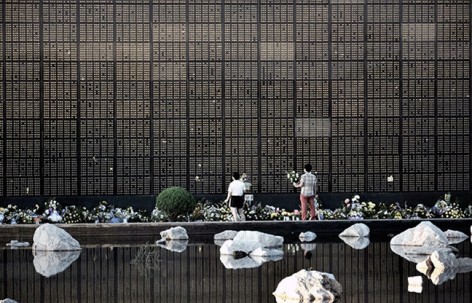
唐山地震遗址纪念公园的团队NAN给gooood分享了这个唐山市乃至全国最为重要的灾难主题纪念性人文景观之一的纪念公园项目。更多请至:NAN on gooood
来自建筑师:国际竞赛一等奖方案
2007年,在“中国建筑学会”主办的“唐山地震遗址纪念公园”国际竞赛中,袁野、李久太、南旭组成的设计团队所提交的方案——“纪念之路”在来自17个国家的276套方案中脱颖而出,荣获一等奖,并被唐山市政府选定为实施方案。该公园于2008年9月建成,现已成为唐山市乃至全国最为重要的灾难主题纪念性人文景观之一。
form the architect : The First Prize of International Design Competition
In 2007, in the International Design Competition for Tangshan Earthquake Memorial Park hosted by Architectural Society of China, “Memorial Road”, a proposal submitted by a design team composed of Ye Yuan, Jiutai Li and Xu Nan stood out from 276 proposals from 17 countries, won the first prize, and was selected as the implementation plan by Tangshan Municipal People’s Government. The park was built up in September, 2008 and has already become one of the most important disaster-themed memorial landscapes in Tangshan and all over china.
竞赛评审专家评语
• 方案对整个地段处理的比较完整,从规划尺度来说比较有震撼力,并考虑了基地与整个大南湖地区之间的联系,与现有铁路现行尺度平衡。
• 在纵轴的基础上,又增加一个横轴,在手法上更现代一些,更前卫一些。纪念墙的设计体现出多而丰富的可能性,周边展览的空间扩展的可能性大。
• 遗址和作为静默哀悼的树林之间的对位关系,水池和树木之间以纪念墙和纪念甬道为轴线,两侧一动一静的关系处理得很好,力量感很强。
• 水面的设计独到,从喧嚣的道路通过水面可以使人的情绪得到平稳过渡;通过水面可以给人一种渴望而不可及的感觉,表达逝者与现实人之间的距离。
• 树林的设计,用树表达生命和一种纪念意义,由此可让人联想到“树葬”和“纪念林地”。
• 运用一片巨大的水面表现出与天空的关系,具有很强的反射面;中间强烈的人造空间表现出人的能力,体现出一个很自然的主题,表现出大地、人和自然之间的关系。
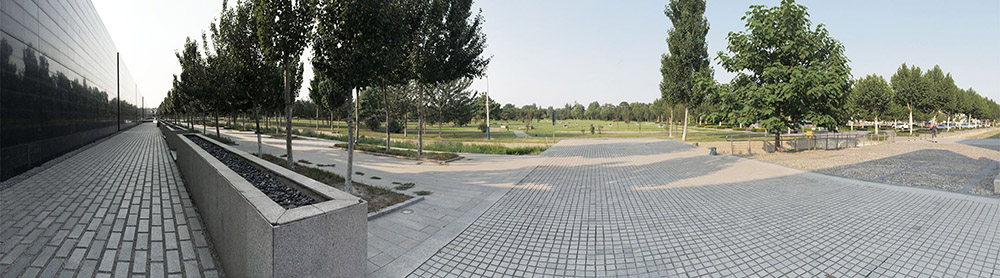
设计宗旨
唐山地震遗址公园的设计充分体现出“对自然的敬畏、对生命的关爱、对科学的探索、对历史的追忆”这一宗旨。通过极为简洁的设计手法,营造出具有强烈纪念性的空间环境,忠实记录这场灾难和逝去的24万生命,告慰死难者,供后人以凭吊与反思,也给生者以生活的勇气和希望。纪念过去,面向未来。
规划理念
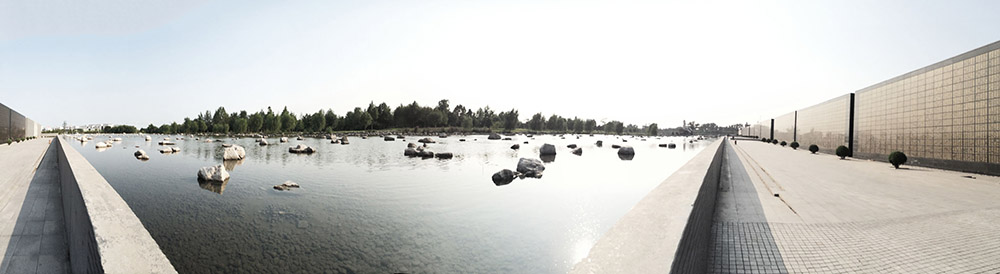
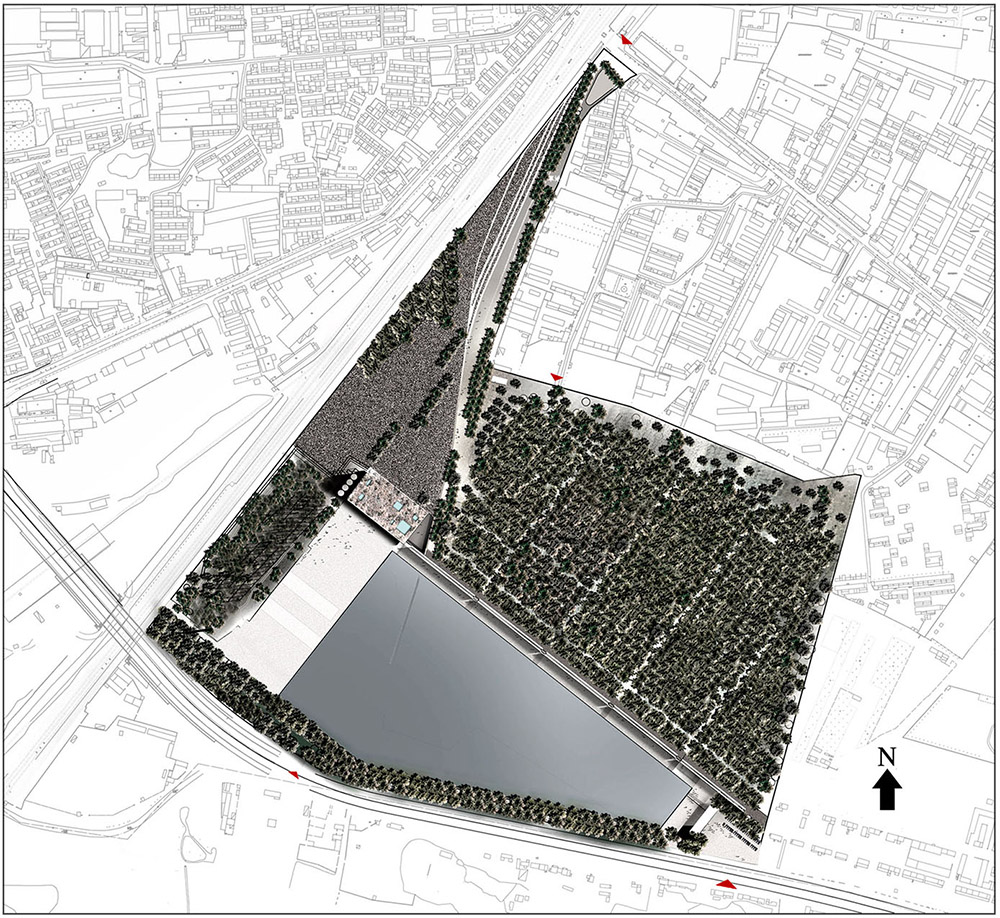
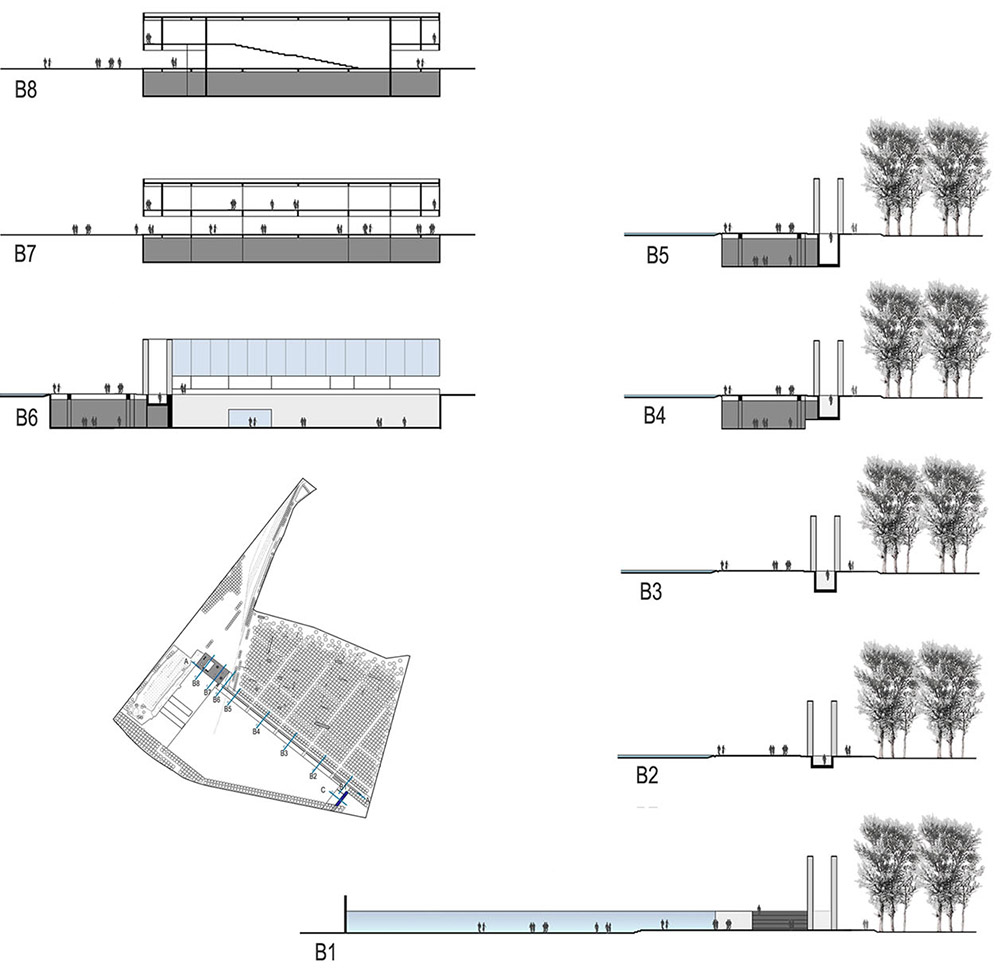
该设计最大限度挖掘了基地的潜在优势,通过一条贯穿基地南北最大纵深并通向地震遗址的“纪念之路”和总长近400米的纪念墙把水体和树林分开。这条新的轴线与基地原有的另一个线性要素——被地震力破坏扭曲的废弃铁轨,分别贯穿基地南北和东西两个方向,从而把整个基地分为四个部分:遗址广场区,水区,林区,碎石区。两条轴线的交点正处于遗址广场的边缘,地震纪念馆和地震科普馆恰到好处地设置于该核心位置,成为纪念之路的终点和遗址广场的起点。
Design Philosophy
The design of Tangshan Earthquake Memorial Park fully reflects the philosophy of “the awe of the nature, the love of life, the exploration of science, and the memory of history”. By means of very simple design techniques, the design creates a very memorable space environment and faithfully records the disaster and 240,000 lives lost in the disaster, so as to reward the soul of victims, leave something for descendants to visit, and bring courage and hope towards life to survivors. In short, commemorate the past and face the future.
Planning Idea
The design exploits the potential advantages of the area to the greatest extent and separates water bodies from woods by means of the “ Memorial Road” running through the area from south to north and leading to earthquake ruins as well as a memorial wall with a full length of nearly 400m. This new axis and another linear element on the area, i.e. an abandoned rail becoming distorted due to the earthquake, respectively run through the area from south to north and from east to west and divide the area into four parts, i.e. ruins square area, water area, forest area and rubble area. The intersection of the two axes is on the border of the ruins square, the earthquake memorial hall and the earthquake science museum are appropriately located in this core of the intersection, and the intersection becomes the ending point of the “Memorial Road” and the starting point of the ruins square.
纪念墙
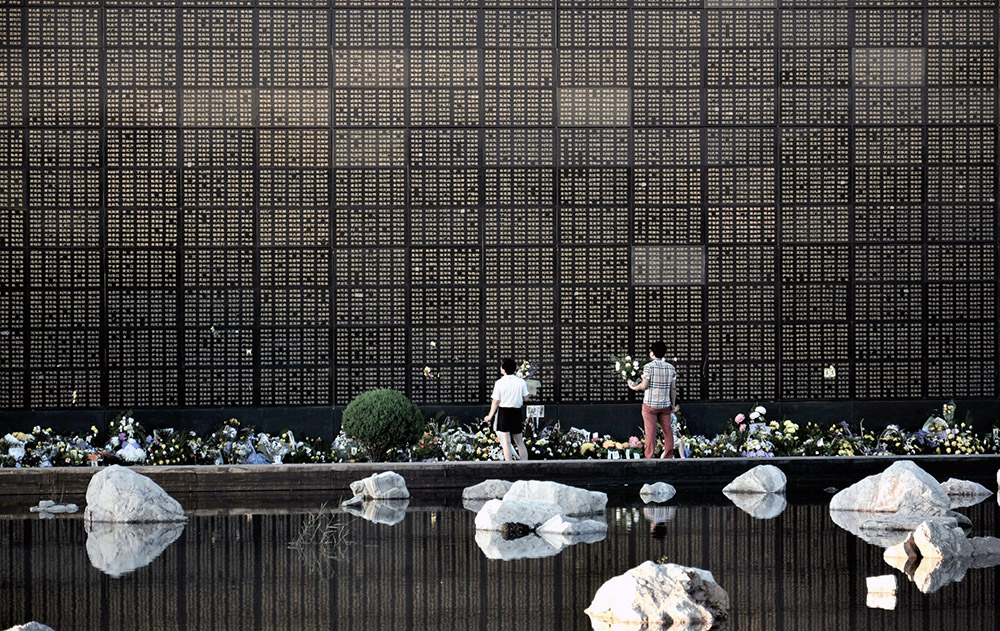
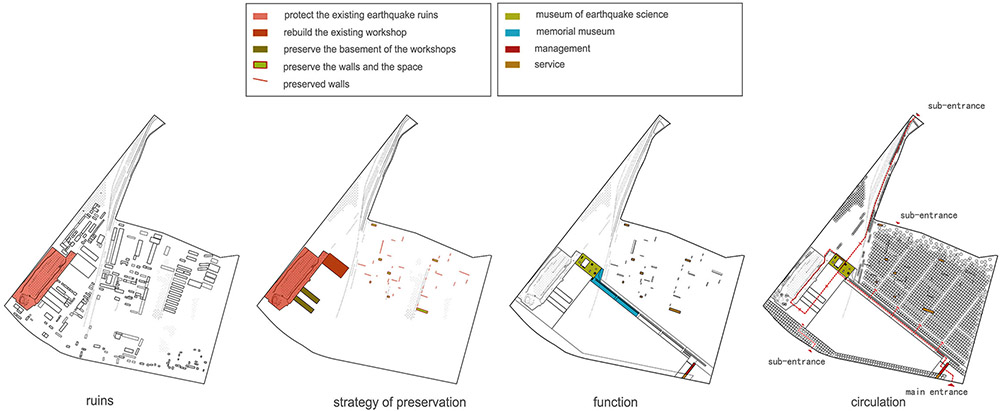
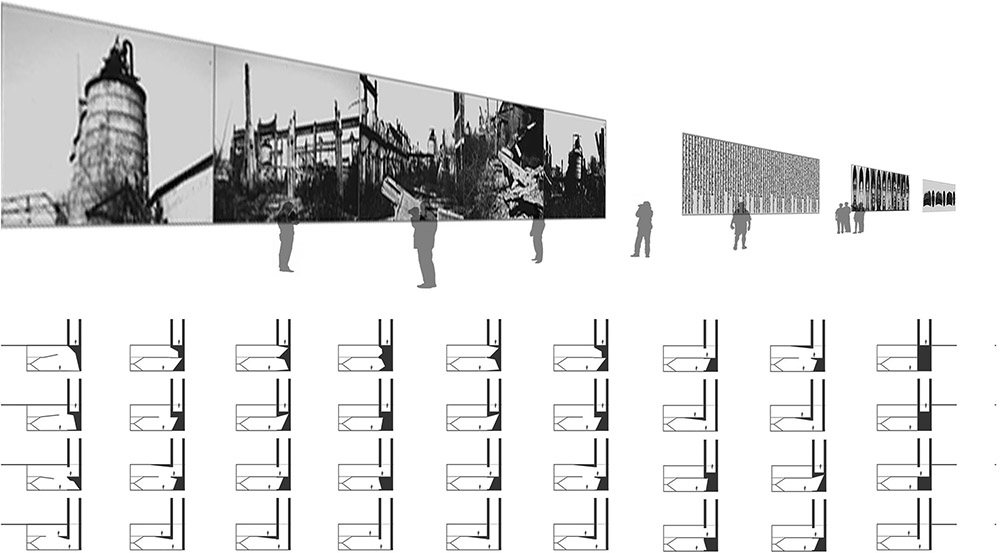
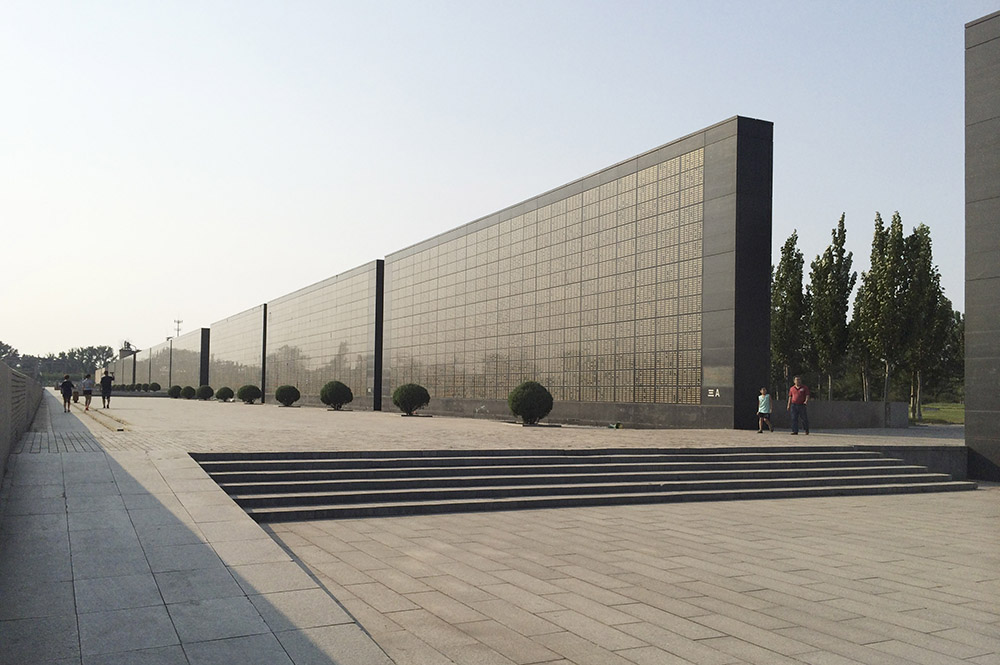
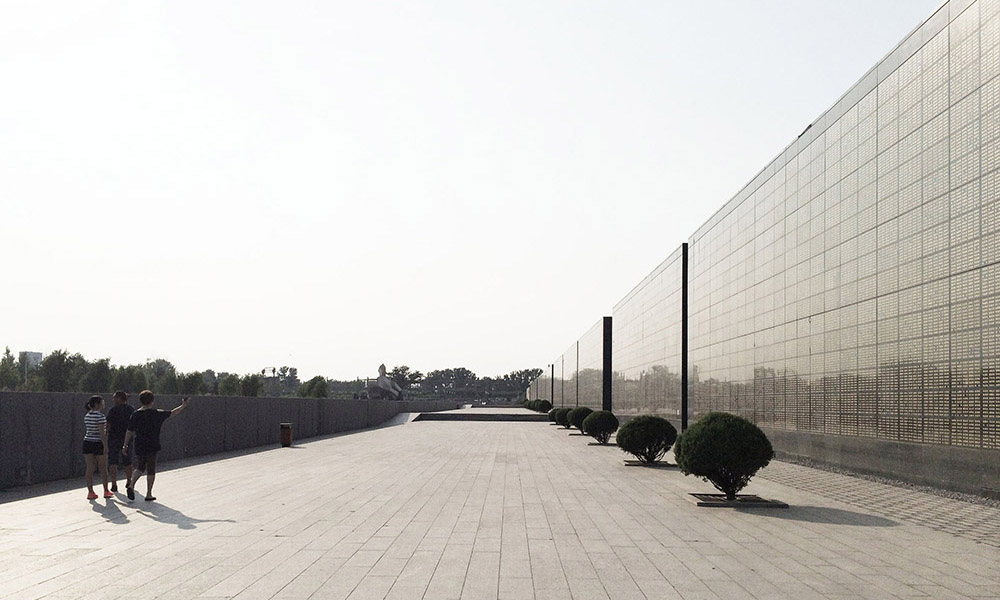
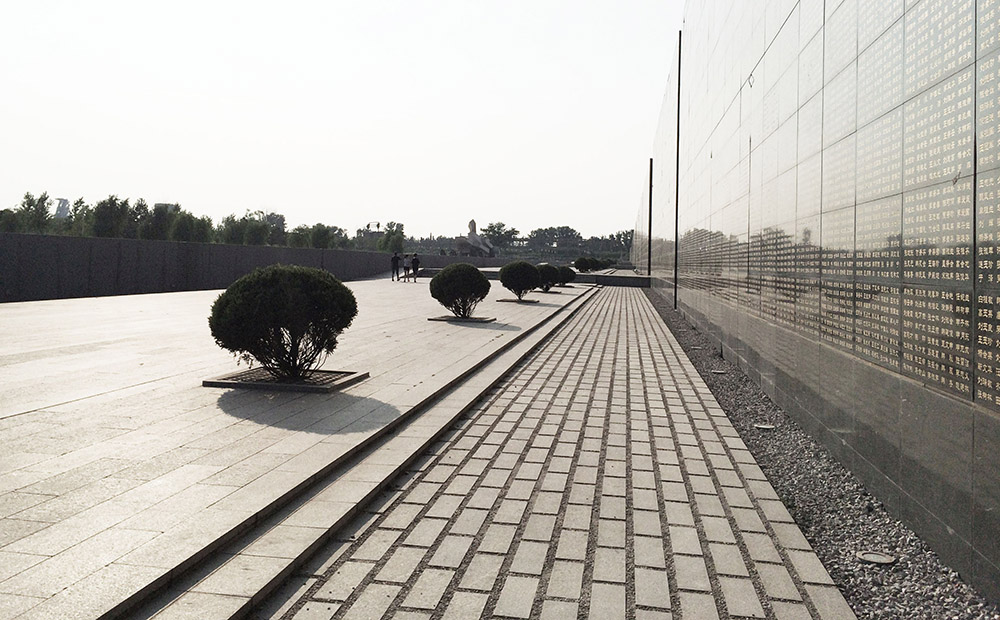
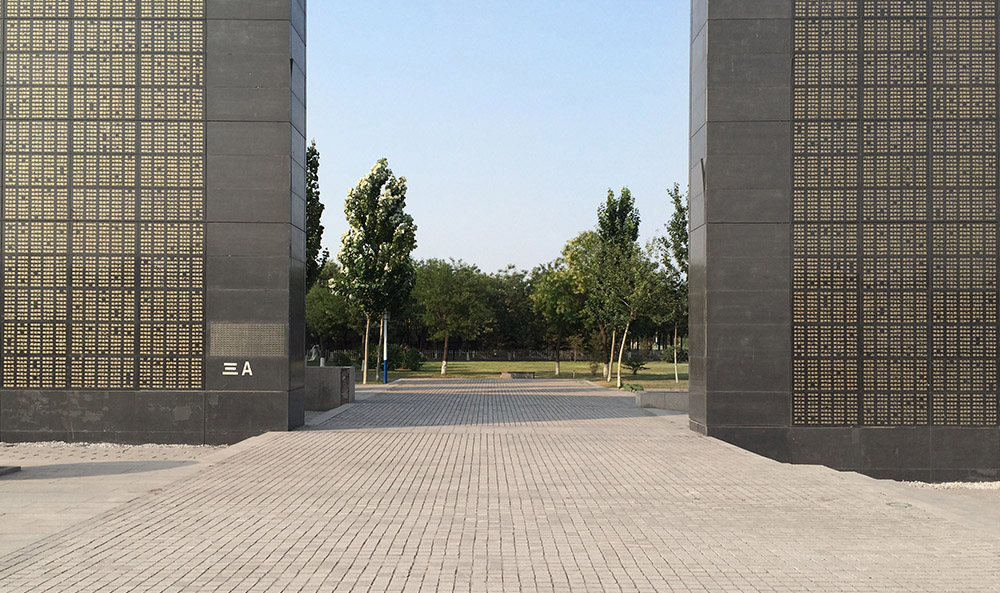
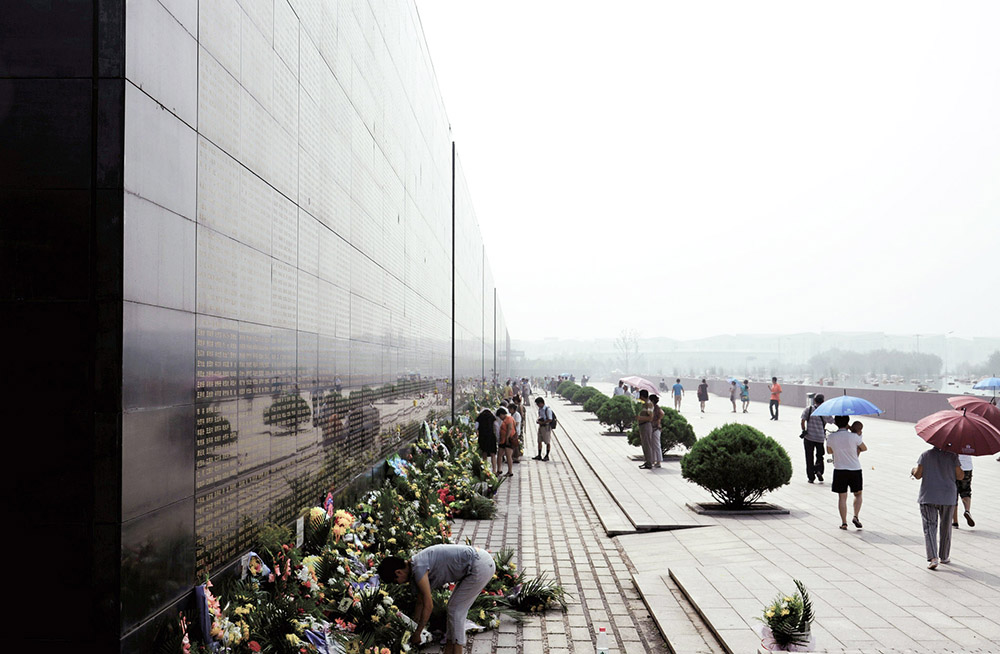
作为世界上最大的地震死难者的墓碑,24万死难者名字以一种“匀质化”的方式刻在抛光的黑色花岗岩墙面上;纪念墙既是“纪念之路”的引导,也是精神的凝聚体。刻满名字的黑色花岗岩墙体“切割”了整个基地,强化了基地纵深方向的特征,恰当地定义了主入口的位置,并给公园的纪念活动以明确的方向感,同时最大限度保持了基地的原始结构特征和完整性。纪念墙具有统御整个公园空间的巨大尺度,并以7.28米的平均高度象征地震纪念日7月28日。高度抛光的黑色花岗岩墙体将天空、大地、周围景物以及参观瞻仰的人影反射于其中,与24万死难者的金色名字融为一体,给人以强烈的震撼。
纪念之路
这是一个具有起承转合的完整空间序列。
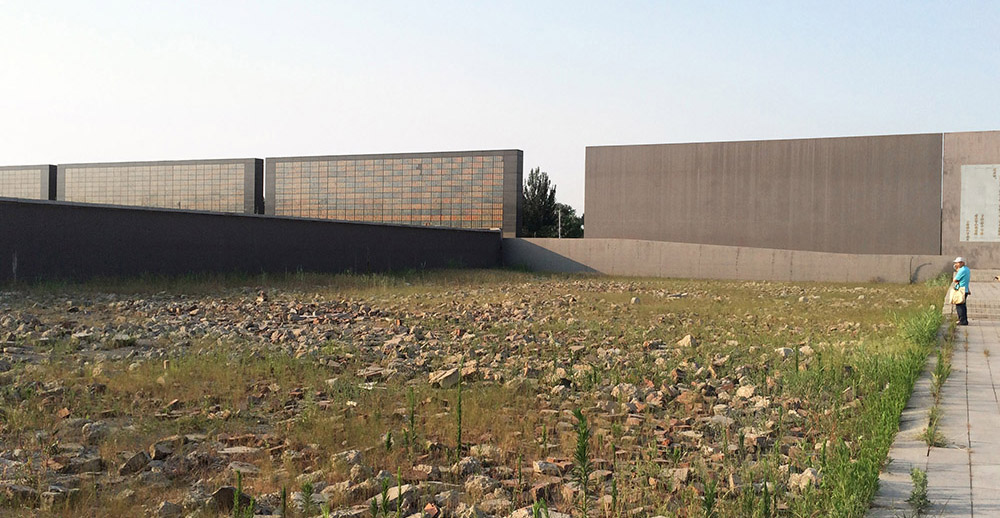
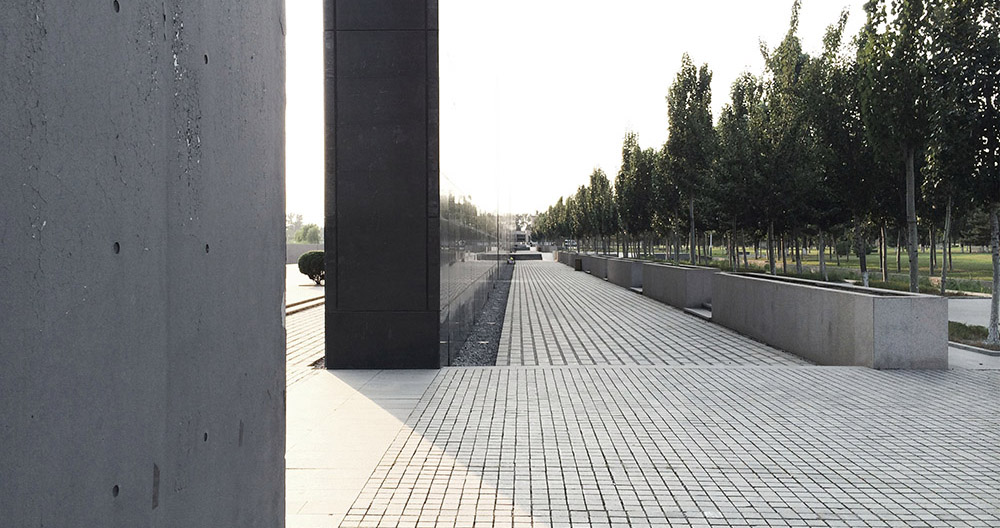
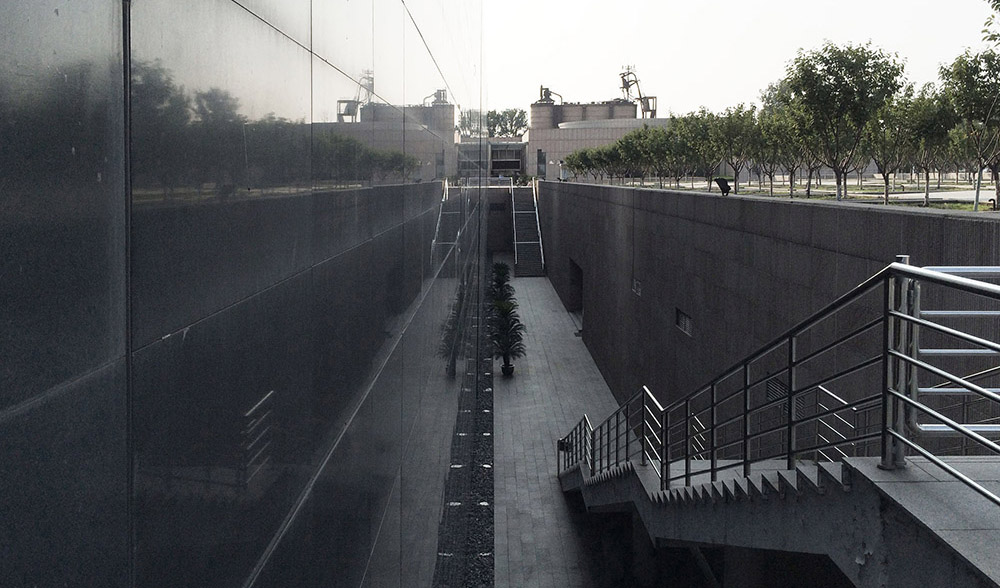
公园的入口是一个缓步下沉的广场,当人向下走的时候,情绪会变得低沉而平静,这预示着一段不寻常的纪念之路的开始。下沉广场角落有意种植一棵银杏树,在空旷的广场上颇具意味,也暗示了对纪念路尽端水面上那棵泡桐树的关联。转过刻有“唐山地震遗址公园”的矮墙,出现一个废墟广场,碎石瓦砾如同是地震现场的片段,以直接但抽象化的手法呈现出地震的主题。再转过去,是一堵刻有纪念铭文青铜板的黑灰色混凝土墙,大面的空白清除了人情感中的杂质,并将注意力开始转向北侧的纪念墙。顺着巨大的纪念墙,在这漫长的纪念路上逐级而上,西侧的开阔水面会渐渐浮现于眼前(入口处由于下沉的处理,人的视线在水面标高以下,当人沿着纪念路逐级而上,视线随之升高,水面则慢慢显现);另一侧的树林会通过墙体之间的狭缝反复出现,压迫感随着空间的逐渐开阔开始慢慢释放,直至遗址广场,达到高潮。
Memorial Wall
The memorial wall is the world’s biggest tombstone for earthquake victims. The names of 240,000 victims are carved onto a polished black granite wall surface in a homogenized way. The memorial wall is not only a guide to the “Memorial Road”, but also the condensate of spirit. The black granite wall carved with names all over “cuts” the whole area, enhances the characteristics of the area from south to north, appropriately defines the position of the main entrance, endows the park’s commemorative activities with a clear direction, and maintains the primary structure and completeness of the area to the greatest extent. The memorial wall has huge dimensions enough to govern the whole park space and symbolizes the anniversary of the earthquake, i.e. July 28, with the average height of 7.28m. The highly polished black granite wall reflects the sky, the earth, surrounding sceneries, and visitors, which are integrated with the golden names of 240,000 victims, so that it gives people a shaky feeling.
Memorial Road
This is a complete spatial series with transforms.
The entrance of the park is a sunken square. When people go downward, they will feel low-spirited and calm, which heralds the beginning of an unusual memorial road. In the corner of the sunken square, there is an intentionally planted gingko tree, which seems very special on the empty square and hints the correlation with the Foxglove tree on the water at the end of the “Memorial Road”. Go round the parapet carved with “ Tangshan Earthquake Ruins Memorial Park”, people will see a relic square, where the rubble are like the fragments of the earthquake site and present the theme of the park in a direct and abstract way. Walking further along, people will see a dark grey concrete wall covered by a bronze plate which is carved with commemorative inspirations. A large blank removes impurities in people’s feeling and makes people shift their attention to the memorial wall on the north side. Along this huge memorial wall, go upward on the long memorial road step by step, the open water on the west side will gradually emerge before people (since the entrance is sunken square, people’s eye level is below the water level; when people go upward on the memorial road step by step, the eye level will rise and the water will gradually emerge). The forest on the other side will appear repeatedly through narrow slits between walls. The sense of pressure will gradually release as the space becomes open, and the sense will reach a climax when people arrive at the ruins square.
有意味的景观
纪念路和纪念墙的尽端是遗址纪念广场,展现出地震遗址的全貌。地下地震纪念馆和科普馆建在广场的西侧。有一段地震时被震弯的铁轨铺在水面上,向西延伸并渐渐消失在水中,参观者可以顺着它走到水面中央。留在水面上的两棵树,在视觉上将铁轨的两端联系起来,并与入口下沉广场孤植的银杏树形成时空的对照。当由纪念路转向广场并回望,形成一个以纪念墙为边界的广阔场景,而背景就是地震遗址。这一切让人在直接感受地震破坏力的同时,会对生命和自然的关系产生反思。
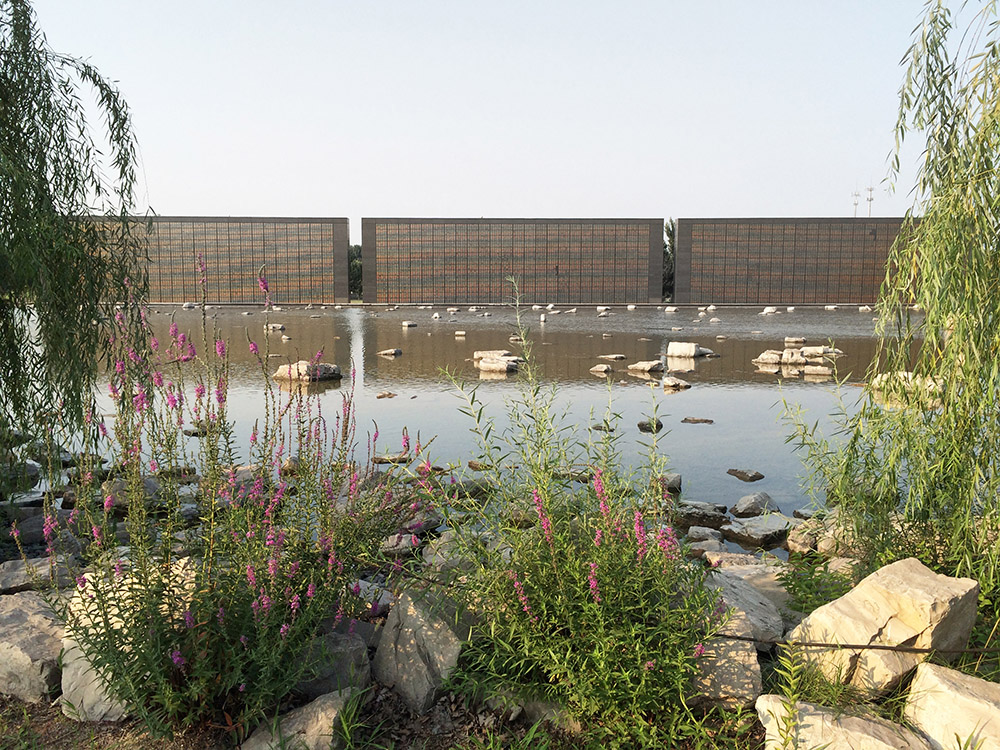
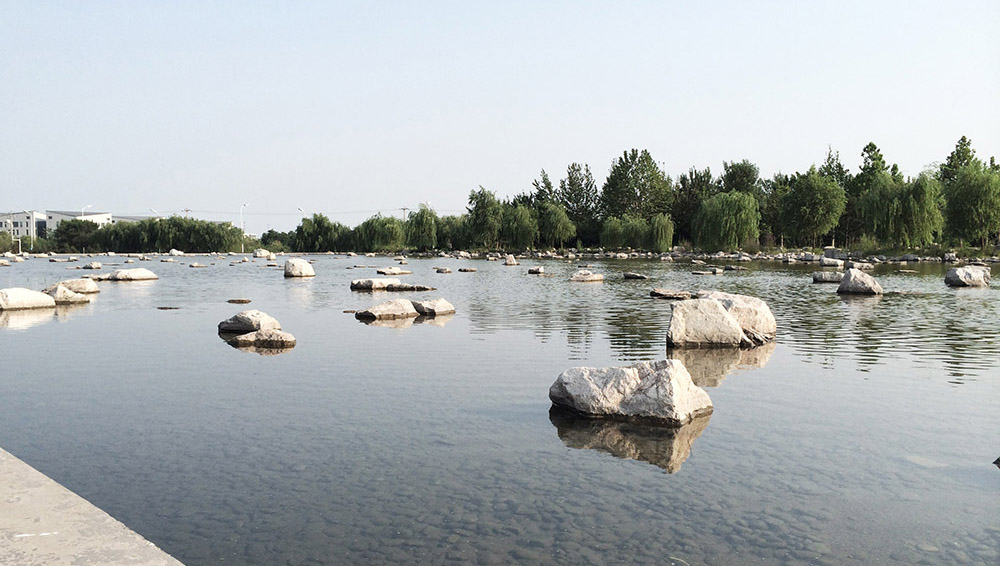
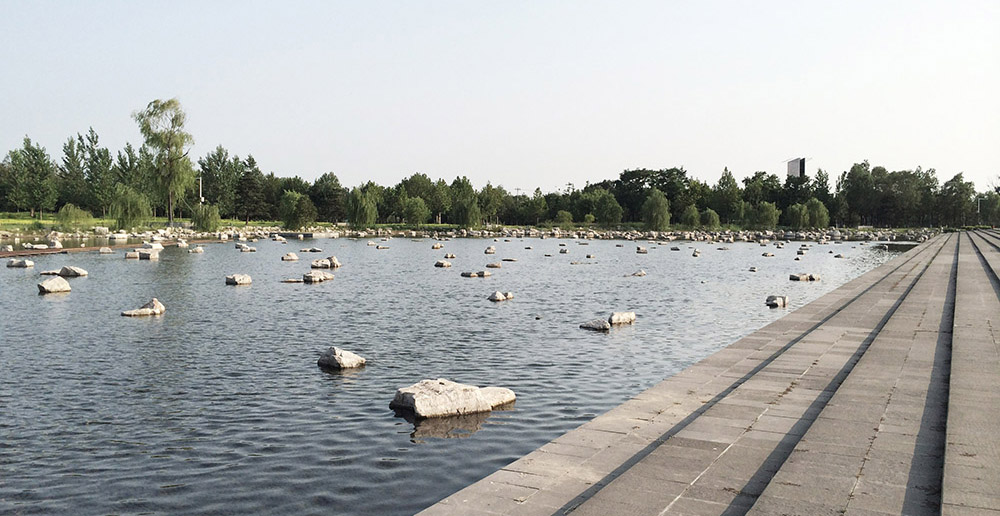
纪念墙西侧巨大的水面表现出与天空的关系,具有很强的反射面,与天空及中间的人造空间形成一个强烈的主题,即大地、人和自然之间的关系;水面的设计可以给人一种可望而不可及的感觉,表达出逝者与生者之间的距离。水下铺满的黑色卵石使得浅浅的水池产生深不可测的效果,而水面上散落的石头则令人想到个体生命处于生死之间的命运,并与纪念墙上的逝者名字形成对照。
“树”的设计在表达纪念性上起到“点睛”的作用。纪念墙后面的两排高大整齐的杨树如同对生命的护卫,而整片的树林则有“树葬”和生生不息之意;水边保留的粗壮有力的泡桐树如同生命的图腾,象征生命之强大,而铁轨尽端的孤树则有“此案彼岸”的意味。地下纪念馆屋顶上的树阵更富象征意义,寓意了生命的顽强和面向未来的无限希望。
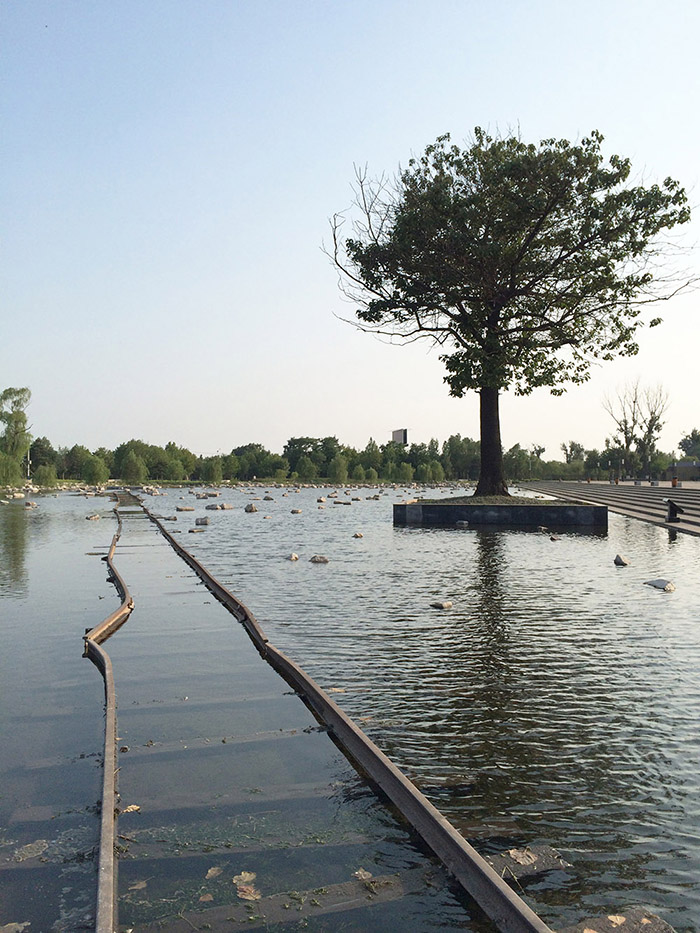
Meaningful Landscapes
At the end of the memorial road and the memorial wall, there is the ruins square, which shows the general view of earthquake ruins. The underground earthquake memorial hall and science museum are built on the west side of the square. A rail distorted in the earthquake is laid on the water, extends to the west, and gradually disappears in the water. The visitor can go along the rail and arrive at the center of the water. The two trees left on the water visually connect the ends of the rail and spatially contrast with the gingko tree planted on the sunken square at the entrance. When the visitor goes to the square from the memorial road and looks back, he will see a vast scene with the memorial wall as the border and the earthquake ruins as the background. All these make people rethink about the relation between life and the nature when directly feeling the destructive power of the earthquake.
The vast expanse of water on the west side of the Memorial Wall has a strong reflection surface, demonstrating its relation with the sky. The water expanse, the sky and the artificial space in the middle form a strong theme, namely, the relationship of the earth, the human being and nature. The design of the water surface impresses people with a visible, however, untouchable feeling, showing the distance between the living and the dead. The black pebbles spread under the water help to create an effect of unpredictable depth of the actually shallow water. Meanwhile, the scattered stones on the surface remind people of individual life struggling between survival and death, responding to the names of the departed on the Memorial Wall.
The design of the trees plays an essential role in expressing the commemorative meaning. The two rows of tall and orderly poplars behind the Memorial Wall are safeguards of life, while the woods on the whole indicate the meaning of tree burial and the circle of life. The thick and strong paulownias reserved on the waterside are just like life totem, symbolizing the mightiness of life. Meanwhile, the lonely tree at the end of the rail indicates the other world. The trees arrays on the roof of underground memorial have even richer symbolic meanings, showing the tenacity of life and the infinite hope for the future.
遗址的保护
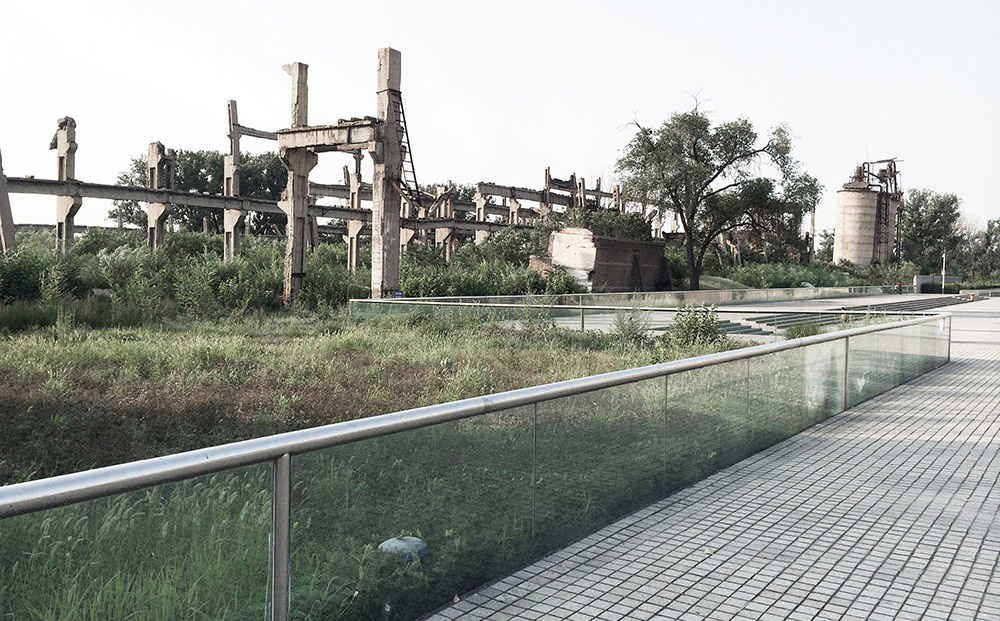
对于国家级重点文物——原机车车辆厂地震遗址,我们采取“不动”的策略,使得遗址原封不动的保留下来,最大限度保留震前建筑及景观,保护遗址,使真实的历史呈现;除了尽可能完整保留地震前留下的遗迹,我们认为还应该有选择地保留地震后建设的痕迹,包括植物景观、建筑、设施和道路。于是基地上原有肌理被保留了下来,并在此基础上将新的景观元素“种”在旧的基址上。“新与旧”在这里呈现出各自鲜明的特征,和谐共存,融为一体。
Preservation of the Heritage
To the national key cultural relics—the former Tangshan Locomotive and Rolling Stock Works’ earthquake relics, we adopted the strategy of no moving so that the relics could be kept intact, and that the buildings and landscapes before the earthquake could be preserved to the highest limit. In this way, the relics could be preserved and the real history could be presented to the world. Apart from preserving the relics left before the earthquake as intact as possible, we believe that we should selectively keep the traces of rebuilding after the earthquake, including plants landscape, architecture, facilities and roads. Therefore, the original texture on the area is preserved, and new landscape elements were planted on the old area. Here, the old and the new present their distinctive characteristics and exist in harmony.
长远价值的空间环境
唐山地震遗址公园自2008年建成以来,每年的728地震纪念日、清明、春节等重要节日,无数唐山市民来此祭奠逝去的亲人,这里已成为唐山市最重要的地震纪念场所和唐山人的精神寄托之所。习近平、李克强、温家宝等多位党和国家领导人及大量国内外知名人士先后来此参观视察。2010年,电影《唐山大地震》在地震遗址公园取景,并将公园核心景观作为电影的结尾镜头场景,其意味深长的画面给国人留下深刻印象。2011年6月,公园被列入“全国红色旅游经典景区”名录。2011年7月,公园被中国地震局授予“国家防震减灾科普教育示范基地”称号。
唐山地震遗址公园以其极为简洁的规划结构,纯粹、强烈的视觉空间效果,巧妙而意味深长的景观设计,低调、克制、让位于遗址和纪念性景观的建筑处理,贡献了一处极具艺术性、人文精神和长远社会价值的纪念性空间环境,也实现了建筑师“用建筑设计服务社会”的终极理想。
Space Environment with Long-term Value
Since the completion of Tangshan Earthquake Relics Park in 2008, numerous residents of Tangshan have come to commemorate their late relatives on almost all the important festivals, such as the Earthquake Memorial Dayon July 28th, the Tomb-Sweeping Day (Qingming) and Spring Festival. This park has become the most important earthquake memorial place in Tangshan and the spiritual sustenance for people in Tangshan. Many party and national leaders including Xi Jinping, Li Keqiang and Wen Jiabao, and a large number of domestic and international well-known people have come and paid a visit to this park. In 2010, the movie “Aftershock” was shot in the park, with its core landscape being the ending scene, which has left deep impression on Chinese people with its meaningful scene. In June 2011, the park was listed as a classical tourist attraction of national red tourism. And in July 2011, it was awarded with the title of demonstration base for science popularization education of national earthquake prevention and disaster reduction.
With its extremely simple planning design, pure and strong visual spatial effect, delicate and meaningful landscape design, low-key and refrained architecture processing of relics and memorial landscape, Tangshan Earthquake Relics Park provides a memorial space environment with artistry, humanism and long-term social value, and realize architect’s ultimate ideal of serving the society with architecture design.

竞赛情况|国际竞赛第一名
设计团队:袁野,李久太,南旭
项目规模:40公顷
设计时间:2007-2008年
建设时间:2008-2009年
项目地点:河北省唐山市
照片拍摄:南旭
视频地址:http://v.youku.com/v_show/id_XODAyODk2NjQ0.html
The First Prize of International Design Competition
Design Team: Ye Yuan (http://www.a6-studio.com), Jiutai Li, Xu Nan (http://www.nan-xu.com/)
Design Year: 2007-2008
Construction Year: 2008-2009
Area: 40 hectare
Address: Tangshan, China
Photo Credits: Xu Nan (http://www.nan-xu.com/)
Video Link: http://v.youku.com/v_show/id_XODAyODk2NjQ0.html
MORE: NAN,更多请至:NAN on gooood



谢谢分享,故事丰富,叙事充分,景观处理非常独到。不知道有没有地方烧纸钱,满足祭奠仪式的需要。
好
后来我专门跑去唐山站在墙的前面,微风从水面轻轻地拂过,吹到了我的脸上,连线的眼泪自己就掉下来,忽然像起来我的爷爷已经去世了很久了,有的时候已经很努力也想不起逝去的人的面容,也许他并没有远去,,只是去了墙的后面,生与死的距离,,也不过是一墙之隔,这个设计给了我怀念的力量,,对我来说,,就足够了
这个项目其实建成很久了。。刚出来的时候就引起了很大的争议,,央视在地震周年纪念日的时候还专门开设了专题节目讨论这个设计,,最初建成的时候很多当地人和行业内人都反对,,主要反对意见集中在大面积的墙,水面,,和数量众多的遇难者的,名字是否合适上。。我当时还是建筑学的学生,,我一看到这个设计首先就是很喜欢这样的手法,,简单的设计方法里蕴含了丰富的难以用语言表达的内涵,,,后来在纪录片的结尾,设计师本人说我站在这几堵墙前面,,仿佛体验到生者与死者的距离,,墙就是界限,再强墙的另一边似乎就是远去亲人们的魂魄们,我们把他们的名字留下来,不要忘记了他们……
这项目本身就不是特地为了故人亲属祭拜而做,自己想想逝去的亲人会立碑给所有人看吗?功能、开放性和私密性都没搞清就开始批评是不是有一点过了?希望那么多评论不是看到第一个提到这点的评论后的“顺理成章”。
没有去过,但是感觉对于纪念性公园来说,刻名字的纪念墙感觉并不是很合理,并没有仔细考虑到纪念者的参与性,而且纪念墙的尺度真心不合理吧!本人觉得纪念墙的入口处的情感铺垫真的很棒!废弃铁轨的延伸至水面直至消失不见,给人无限的联想,不仅是悲伤,更有未来如何好好代替逝去的人儿好好坚强的活下去。
其实很多墙上的名字是地震时候没有挖出来尸骨无存的,包括我外公和舅舅。 作为经历过地震并幸存的家属来说 ,感谢有这样一个哭墙可以让活着的人来凭吊和倾诉, 建筑空间的形式好坏至少在我家人眼里并不重要,名字刻在那里没有被这个城市遗忘就够了。
殊途同归,看到如此多的名字已经起到了纪念作用,很直接,很犀利。
个人认为,这些名字不只是面向亲人家属,用于个人悼念的。24万名死者,单单是从1数到240000,都要很长时间,单是用圆珠笔在纸上点24000个点儿,要多少张图纸才能盛下来?用这个纪念墙刻录死者的名字,一方面是对每名逝者的怀念,一方面可以更真切的感受到那次地震的惨痛。
我是唐山人,上午刚刚去的纪念公园。而且很不巧,也是建筑设计行业的一个小学生。
我想说的是,这个作品好不好,别仅仅凭着看了几张设计图和几张照片就仿佛自己掌握了全部信息,然后对其进行各种挑刺。如果有机会,最好到唐山来看看,作品已经建成好几年了,东西就摆在那,到现场细细品味一下吧。
秦皇岛人,因为父亲工作关系,在唐山住过几年,同样也去过这个纪念公园。
在搜索广场的时候恰好看到这个帖子,就点进来看看。
在往下拉还没看到评论的时候,我心中就隐约预见到了评论的样子,哈,果真如此。
在谷德看项目的时候也会习惯看一下评论,看过很多国外的帖子,也看过国内的帖子,这种情况实属正常,国外项目多跪舔,国内项目多讽刺。
我想,什么时候国人不再一味的觉得国外的月亮比国内的圆的时候,才是中国真正强大的时候。
望君工作顺利。
不巧五月份刚刚去过这里,整体感觉很肃穆,尤其是水中的铁轨的设计,感觉像通向了未来。纪念碑虽然高大但是足够清晰,看着众多人的名字和水中的地震纪念雕塑整体感觉真的会为过去发生的一切感伤,当时还有看到为死去的亲人送的花束,虽然看到大家众多恶评,但是我想说一句,去过的人真的觉得设计的很好。
不错的景观规划和设计。但个人觉得用金色字刻死者的名字是否有点不合适。金色本身有热闹喧哗繁华的感觉,这与“安息”是相反的
空间好好单一
看最后那张照片上撑伞的,为什么不种点大树留点树荫呢?
我就觉得那纪念墙不应该使用反光的大理石和金色的刻字,要使用深黑色的石头。
我们公司原来的方案也不错
怎么缺少美感,那种让人缅怀的气氛并不是很到位,尺度出现了很大的问题。
纪念碑的细节呢,细节呢!!!!
上面几排名字根本就看不清吧。。。。如果单纯从设计来说 这个名字墙还是有那种意思的 但是景观设计是一种实用美学啊
纪念墙显得很突兀而且连续性不好 纪念墙设计的很高像是让人们去瞻仰抗战英雄一样 这种感受不大对吧 当幸存者来悼念自己的亲人时 人的生理反应应该是腿软低下头 心情沉重 而不是昂起头瞻仰吧 反观林璎设计的越战纪念碑、公民权利纪念碑 有无数人抚摩纪念碑流下泪水 国内的南京大屠杀纪念墙也没用设计成如此尺度 设计的不够合理、巧妙、也看不到细节的考究 看到有人说到金色字的问题 好像真没有用金色的 大都是黑白的 如越战纪念碑 韩战纪念碑 南京大屠杀 991纪念碑 真心没有金色
墙的高度与地震日期相关是从1986年唐山抗震纪念碑的设计延续过来的,这一点没有问题,况且越战本就不是一件值得瞻仰的事情,这才是林璎的处理被人夸耀的地方,请不要混淆。此外,地震留给了唐山独特的街头祭祀文化,那才是人们去低头祭奠遇难亲人的时候,在这个作为城市群体记忆的场所,大家更希望每一个名字都不被忽略。如果你真的了解我们城市的历史,你应该知道这本就应该是一件巨大的悲剧,天灾对城市的毁灭和城市对天灾的抗争同样具有地理尺度上的宏大,黑色高墙的巨大尺度带给人的压抑也正是这场地震带给我们的,这里并不需要考究和巧妙。
纪念碑前的植物种植真是有中国特色啊
墙的设计太缺乏想象力了,冰冷呆板
不是缺乏想象力,是设计师认为就应该这样设计,而且纪念碑还要怎样的天马行空呢?符合场地氛围就好了。
触摸不到亲人的名字,这样的纪念碑还有什么意义呢
看你是以人视角和恒定时间去看,还是以世界视角和流动的时间去看待问题了。千百年后谁还会去挂念1米高的石碑呢?你还会记得500年前的亲人吗?所以我觉得这个设计是以大视角去看待问题的。
。
纪念感没纪念感,场所感没场所感
业主和从业者都应多多提高对类似简单粗暴设计的警惕性
做了一大堆分析说明,完全没有抓到重点。。。居然还拿第一名。。。下面的评论说得很中肯。触不到的亲人名字的石碑有什么用?设计者用上帝角度去做这个设计?而且真的很呆板。。。说得简单带你就是立了几快石板
唐山大地震丧生的人太多了,如果让每个名字都在人手摸得到的地方,那么会形成更大的阵列,那不是更呆板了,在这样肃穆的地方很多与参观的人不需要感到自己的渺小吗,不需要感受的人名墙给自己带来的震撼吗,唐山大地震许多丧生者是全家牺牲, 哪来的什么亲人,这不是户外壁葬区,这种纪念意义本身就是英雄式的
毕竟中国式施工
怎么看
纪念碑尺度及颜色欠妥,感觉有种向76年的时代进行。。。。