非常感谢 penda 予gooood分享以下内容。更多关于:penda on gooood。
Appreciations towards penda for providing the following description:
“节节攀升”生态未来建筑研究
在当前不计后果的城市规划、环境污染和经济危机的大环境下,建筑领域更迫切和有责任去重新思考设计进程和可持续材料的应用。在北京设计周期间,槃达建筑想要实验一栋生态的模块建筑单元结构。
在亚洲及中国南部以竹子为建筑形式有着悠久的历史。竹子起源于非洲、亚洲、澳大利亚、北美洲和南美洲。全球最大的竹子生产地是中国、印度、越南,中国持有世界竹子产量的79%。浙江安吉县是中国最大的竹子生产地,商业竹杆的年产量为一千两百万。目前世界竹子市场价值70亿美元/每年(2010), 预期2017年增值到170亿美元。
相对于其它树种需要30-60年时间才能成熟和开采,竹子4-6年就长成40米高且达到成熟和可利用。相比较而言,竹子在吸收同等二氧化碳时能释放多余其它树种35%的氧气。当竹杆被开采时,其根系体系任然存活并能自我生长。因此竹子能避免水土流失,甚至适用于商业化种植林。加之竹子不需要重新种植。开采后能从自身的根系体系重新生长。传统上竹子主要用于建筑物和脚手架材料,食物,药材及日常用品生产。现今延展到用于纸张,服装和其它用途。
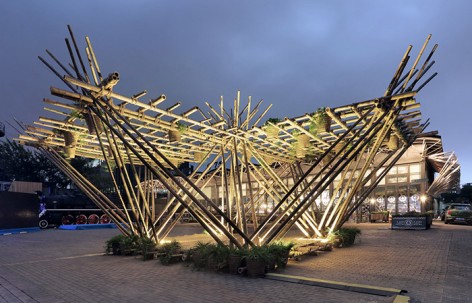
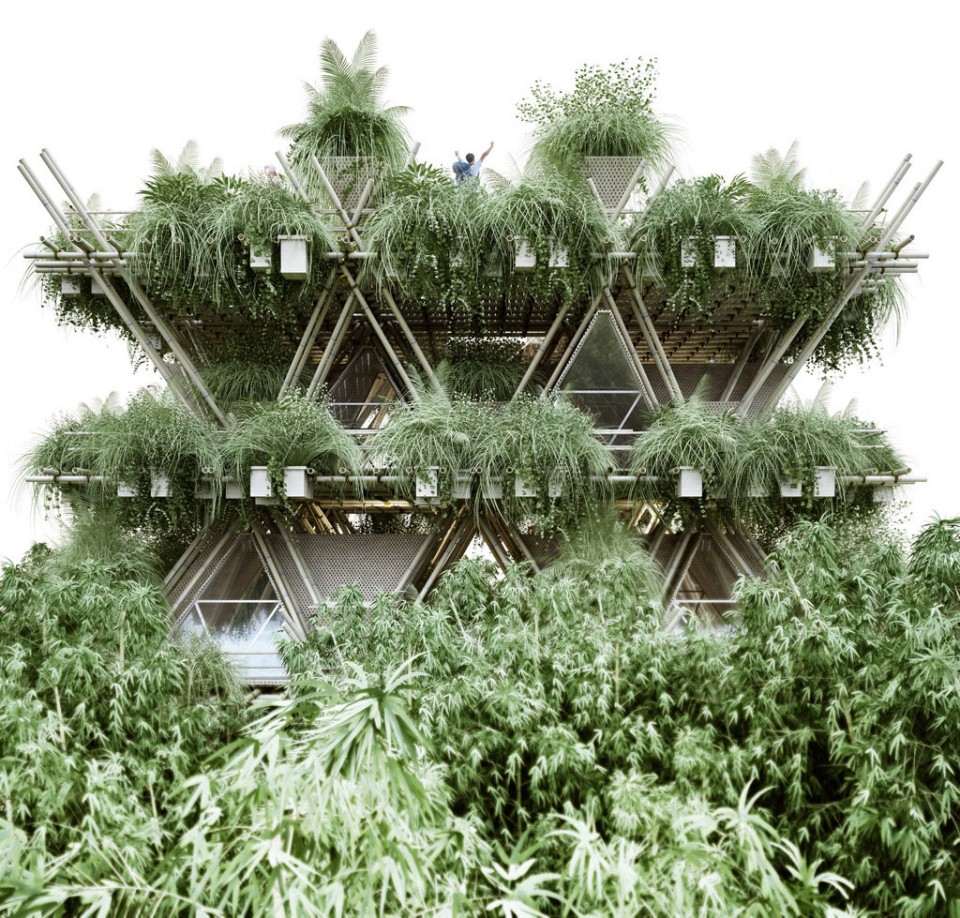
Over the last year our studio developed a structural system, which is entirely made out of Bamboo and ropes. The outcome was a Pavilion for the Beijing Design Week at 751, a creative hub in Beijing. This Pavilion can be seen as a first step of many to follow, as the structural system is fully modular, ecological and easy to expand in every direction.
We chose Bamboo as a main construction material, as it has long traditional roots in China and is a fantastic building material, which currently leads a underrated existence in the architectural process of construction.
Some Bamboo facts:
• Bamboo matures within 4-6 years, can reach 40 meters height and can grow up to 1.4 meters a day.
• Bamboo produces up to 35% more oxygen than any other comparable stand of trees, while absorbing and equal amount of carbon dioxide. Furthermore it has the ability to purify the air around the shoot.
• After harvesting Bamboo, it does not need to be replanted, as the root system stays alive and can regrow by itself.
• Bamboo is 2-3 times stronger than a steal beam of similar weight, which makes it an excellent construction material.
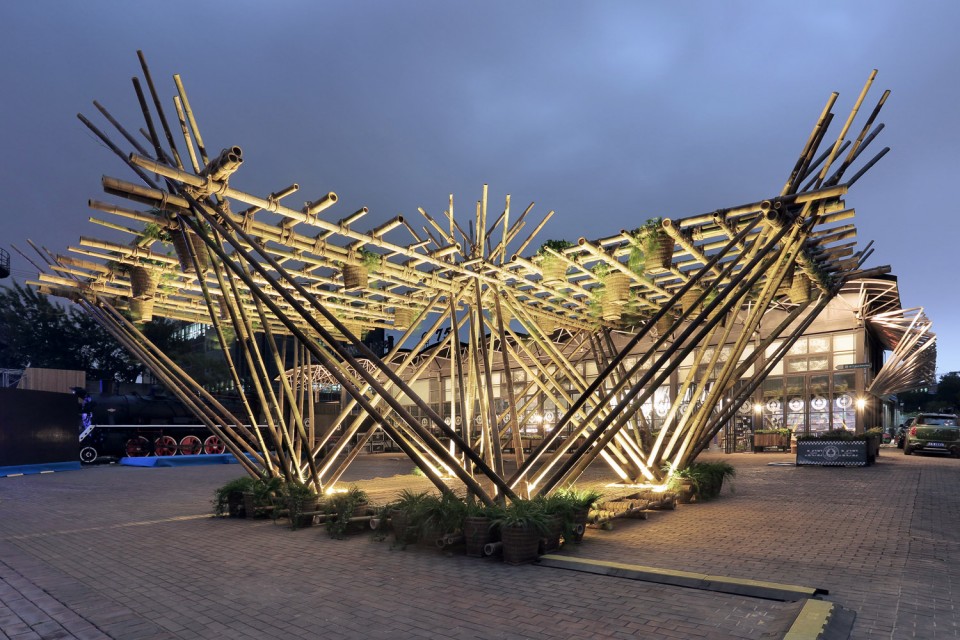
槃达建筑在过去的一年里,针对竹子结构研发了一套空间结构体系。通过竹子与智能的施工方式相结合,使其具有更广的社会应用价值。槃达的设计通过巧妙和创新的利用竹子来创建一个模块建筑结构,根据建筑尺度与荷载的不同,竹子的结构单元可以增加或者减少。从而使之可以根据功能和场地的不同进行多方向延展,从而具有更广泛的适应性。
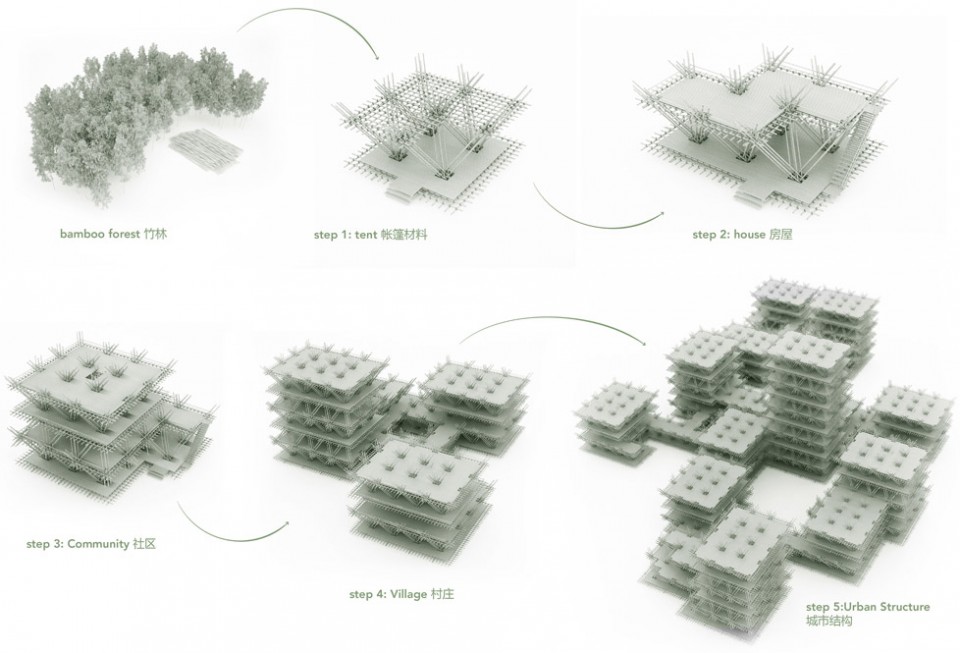
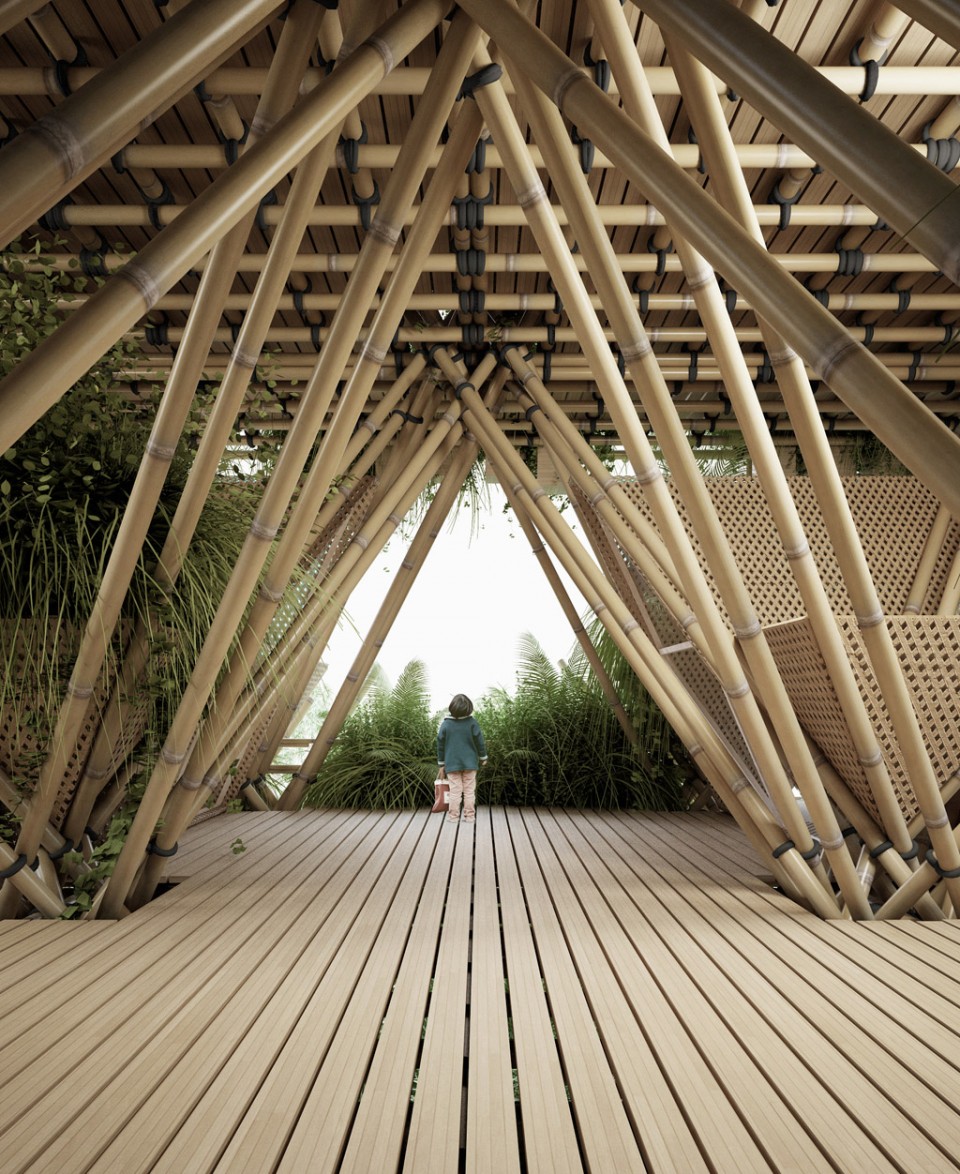
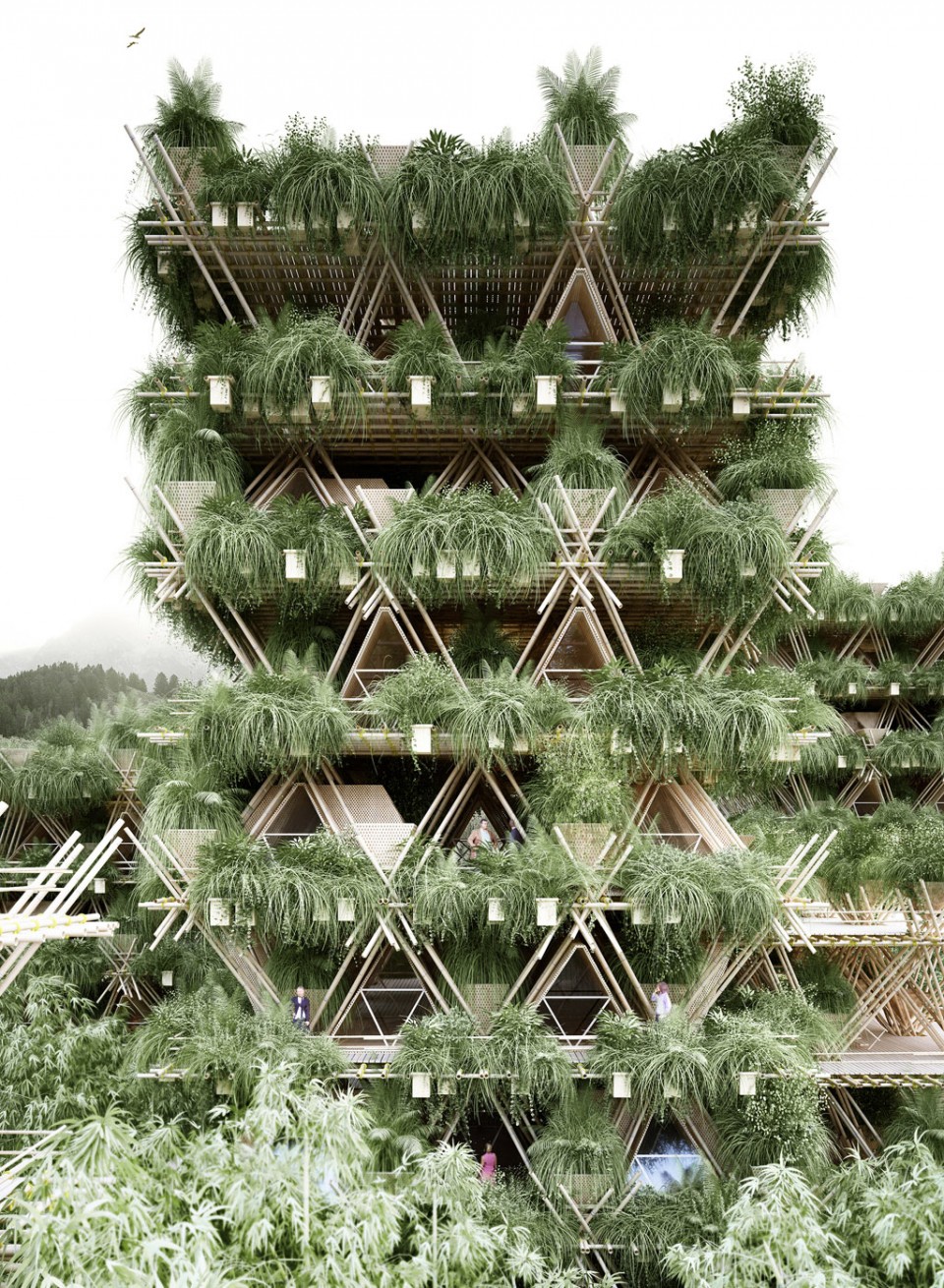
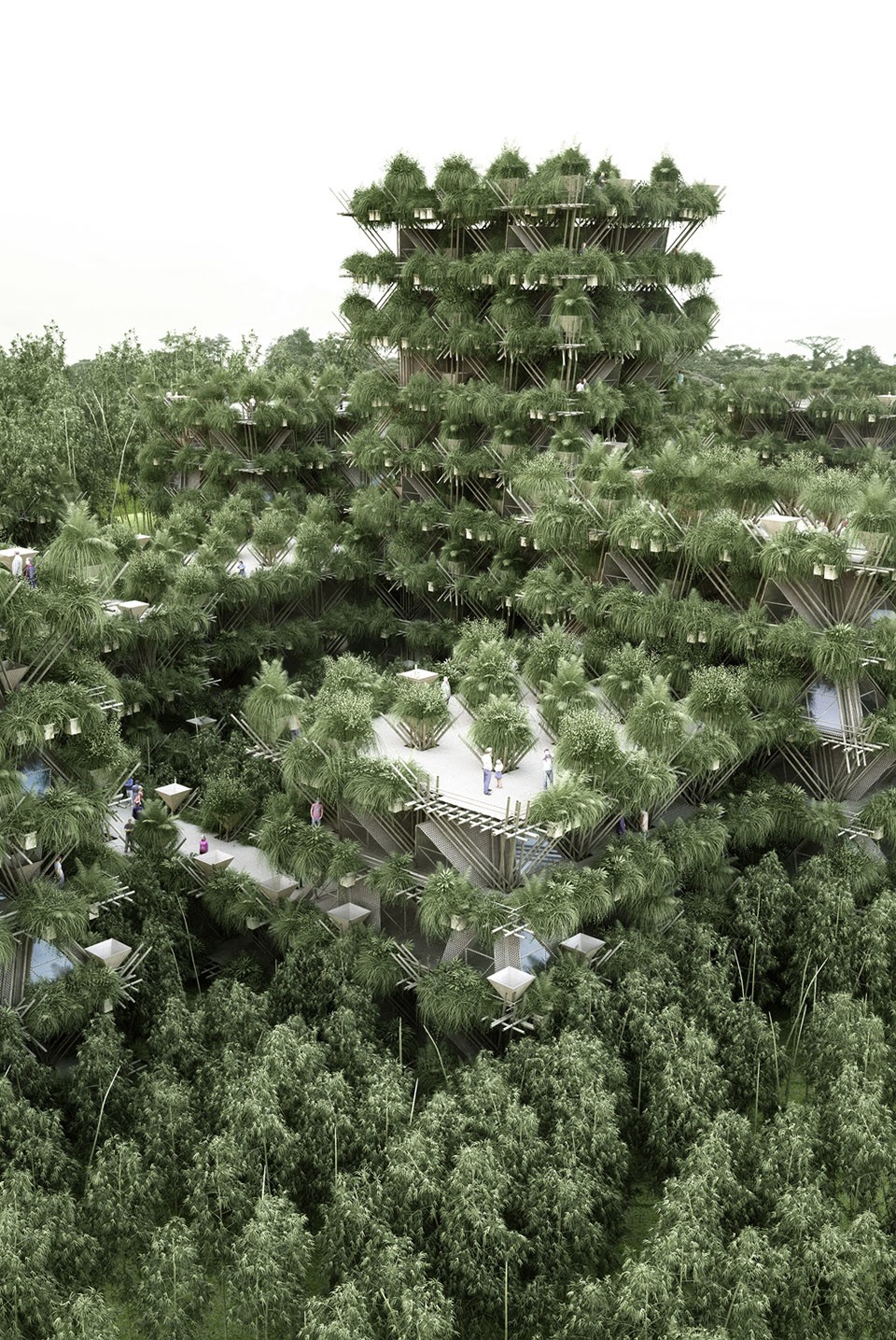
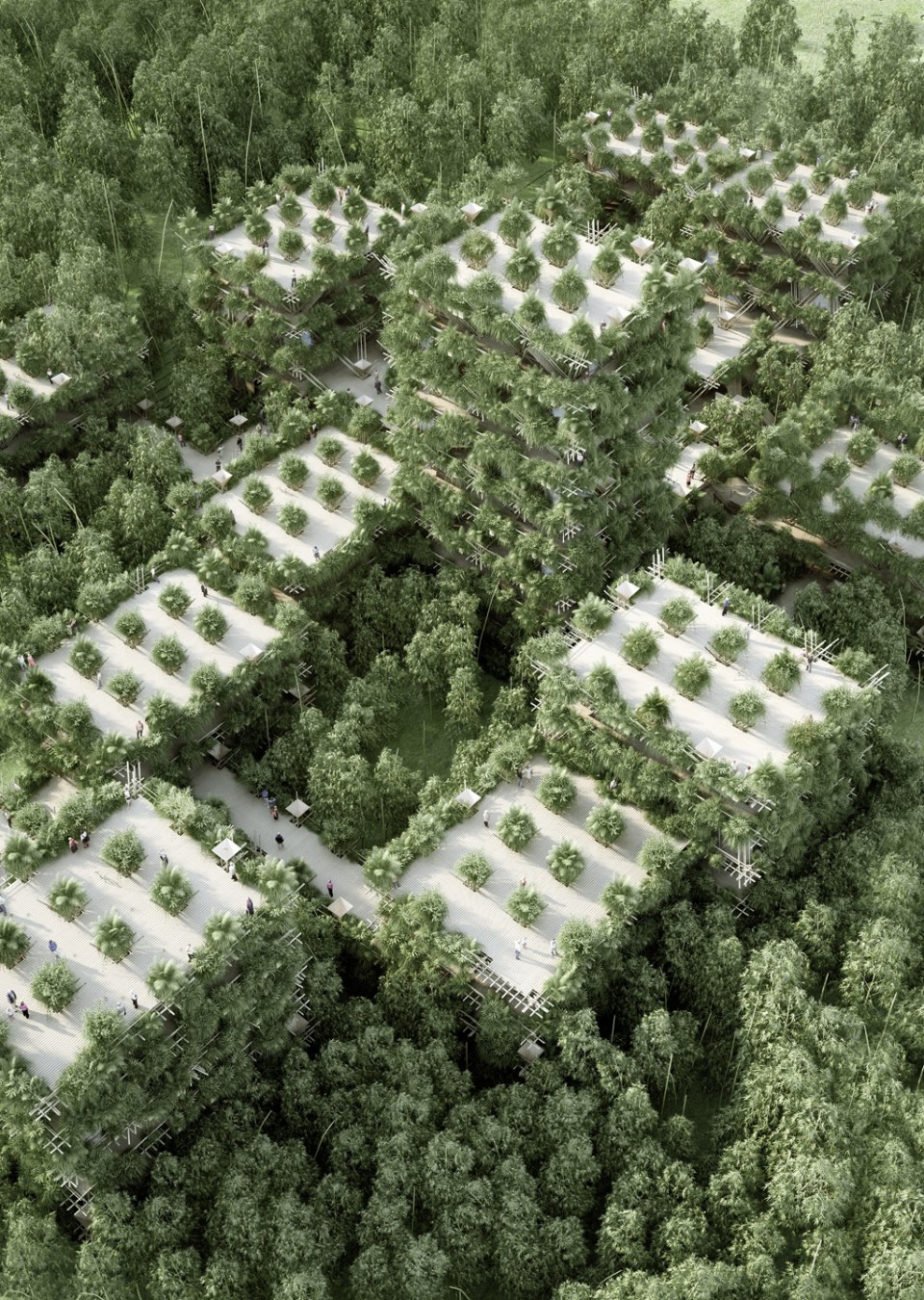
结构体系采用生长式结构,可以动态适应实际需求的改变,最初构架组合成简单的房屋单体,能容纳两人世界。其包含了室外空间,满室的植物为空间提供了庇荫处及食品生产。每一根从竹林开采出的竹子,将种植两株新苗补充。由此保证了构架的来源及环境的保护。当居住者增加,构架将扩展来容纳更多的人数。竹子通过相邻的凹槽连接,直接融入进构架,不需要更多的运输或材料加工。社区空间和食品生产区域也相应的扩大,使构架成为一个自给自足的生态地,形成一个社区。随着人数的增长构架也在不断的扩展,然而不同的构架来适应多样的居住者。周边重新生长的竹子直接与构架融为一体。同时也被利用为社区生产服装和食物,进一步增强社区的自给自足和可持续性。从而形成一个完整的村落。当村落扩大成城市结构,构架的原理被利用来创建进一步持续的结构如公共设施, 为造访者修建酒店, 甚至桥梁和漂浮构架等。
“一栋真正的生态建筑应该是对环境不会带来任何伤害和破坏的,同时建筑与环境能够和谐共生成一个有机的整体。”我们希望创造一个经济、工业和社会三者高效统一并且真正实现零浪费的新型建造生态链条。这是一场从“源点回归源点”的生态运动,是针对我们今天的城市的一次宣言和挑战。
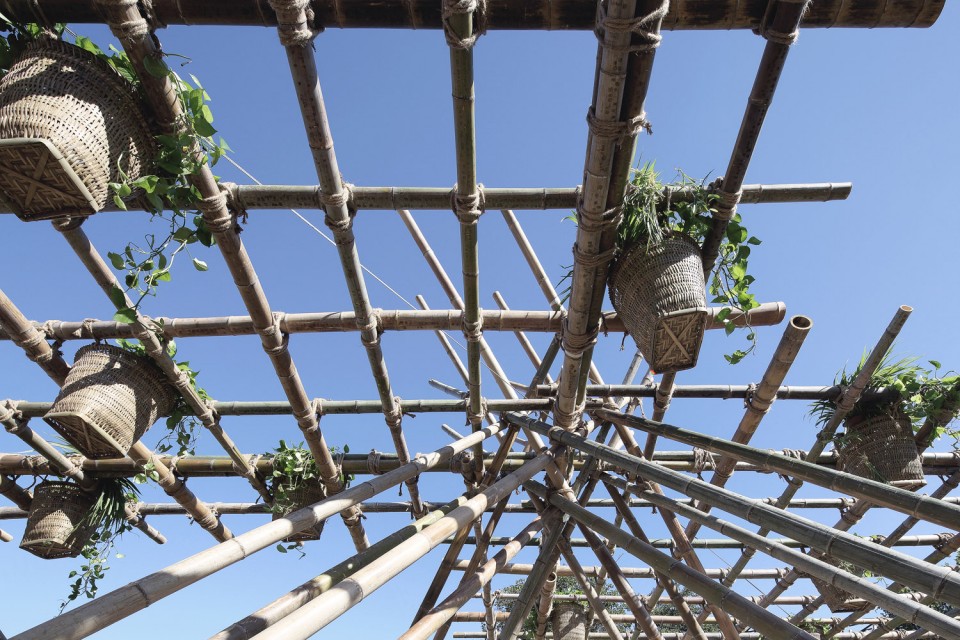
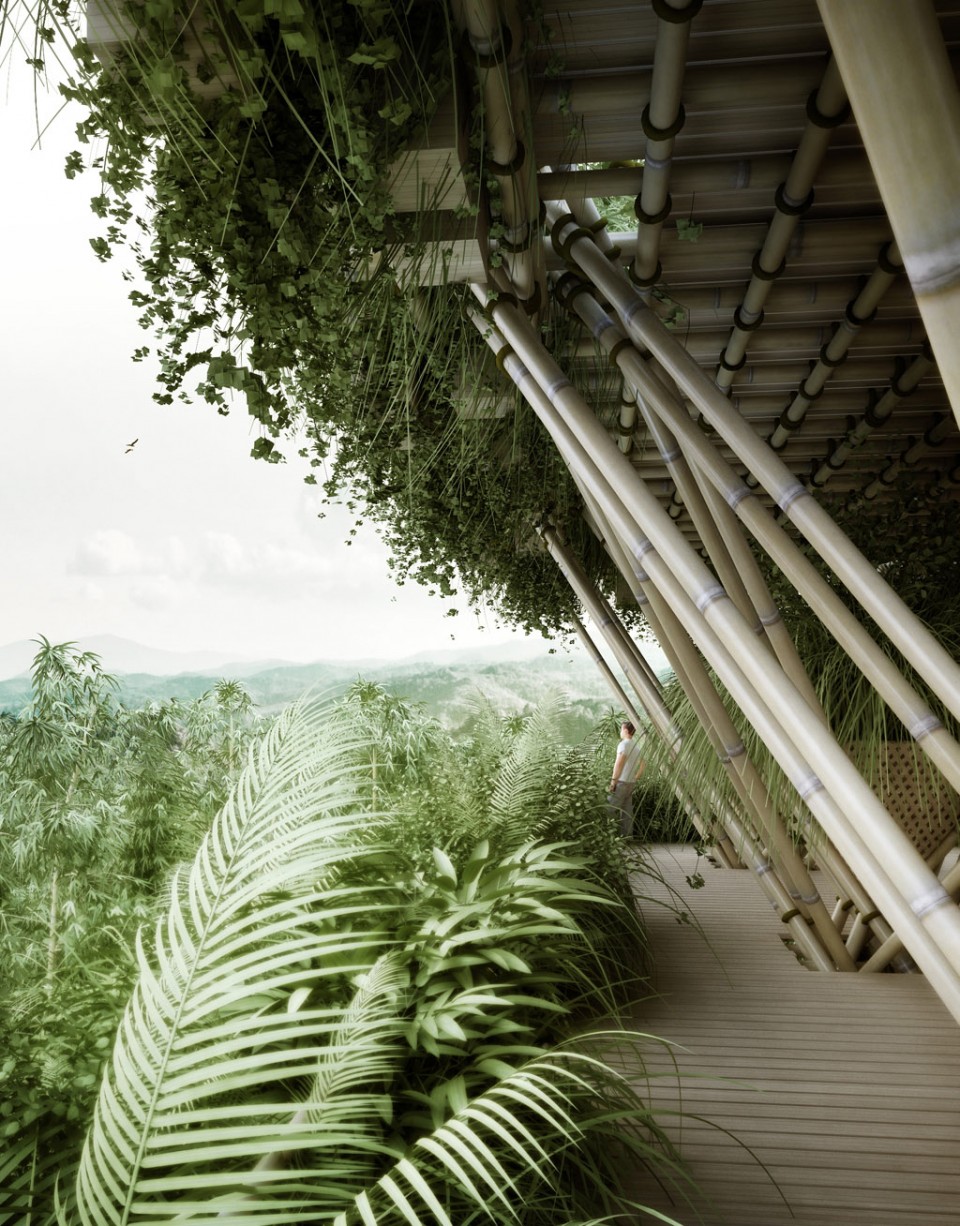
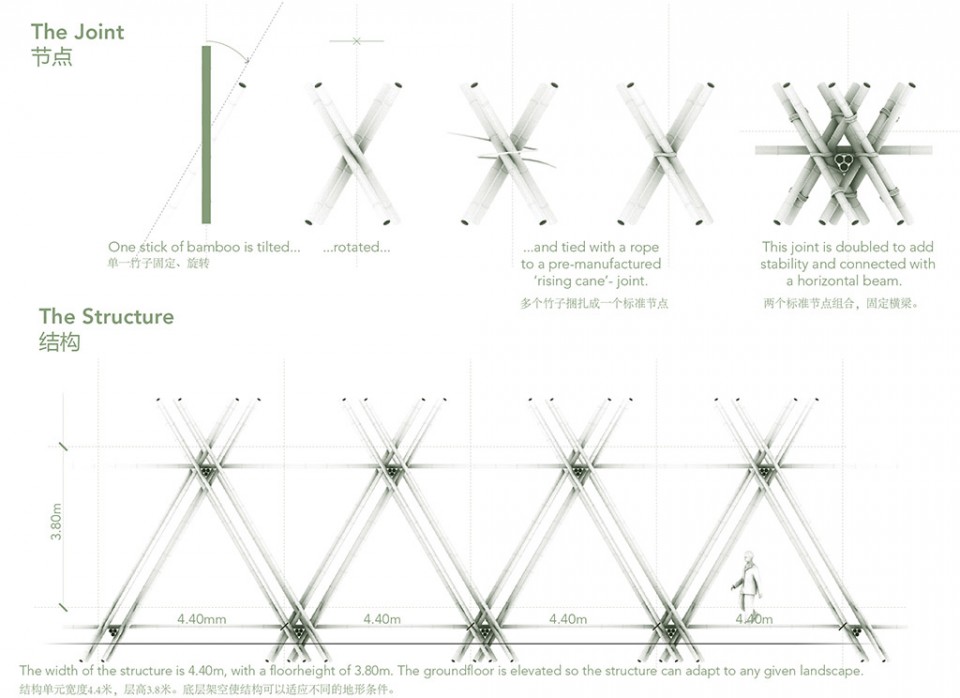
For our Pavilion for the Beijing Design Week, no nails or screws were is used for the structure and all materials are 100% recyclable. Furthermore the Bamboo does not get drilled in the process. All joints are tied with ropes, which leaves the Bamboo canes unharmed so they can be reused after the installation. We see our project strongly connected to the ‘Cradle to Cradle’ movement, which proposes a holistic economic, industrial and social framework that seeks to create systems which are not only self-sufficient, but also essentially waste-free.
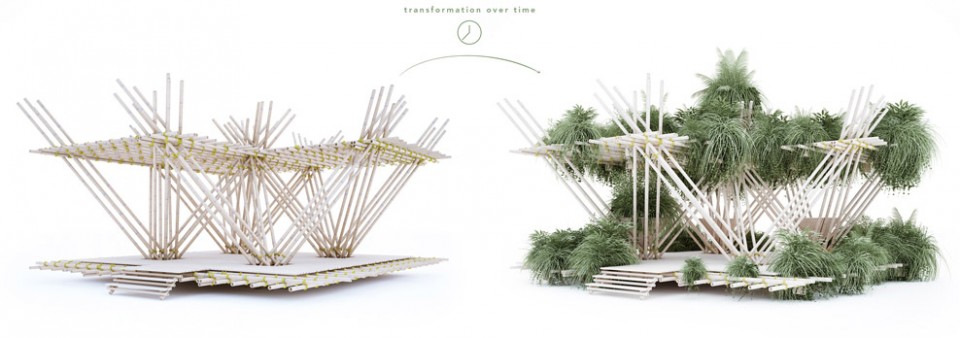
During the Beijing Design Week, visitors will seed plants into some baskets, which get connected to the pavilion. The plants will use the structure to grow along and after some time, nature will be the main design-element and architecture comes second.
Last but not least, the Pavilion for the Beijing Design Week was constructed with a ‘do it yourself’ approach by our incredible team of pendas, in order to gain a better insight of the structural behaviour to design larger developments using the same principles.
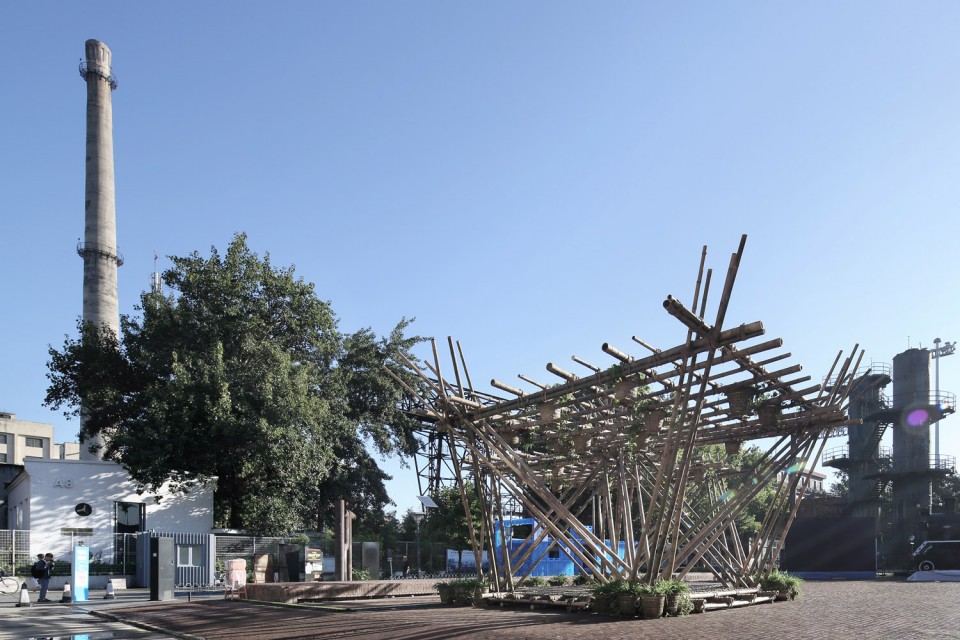
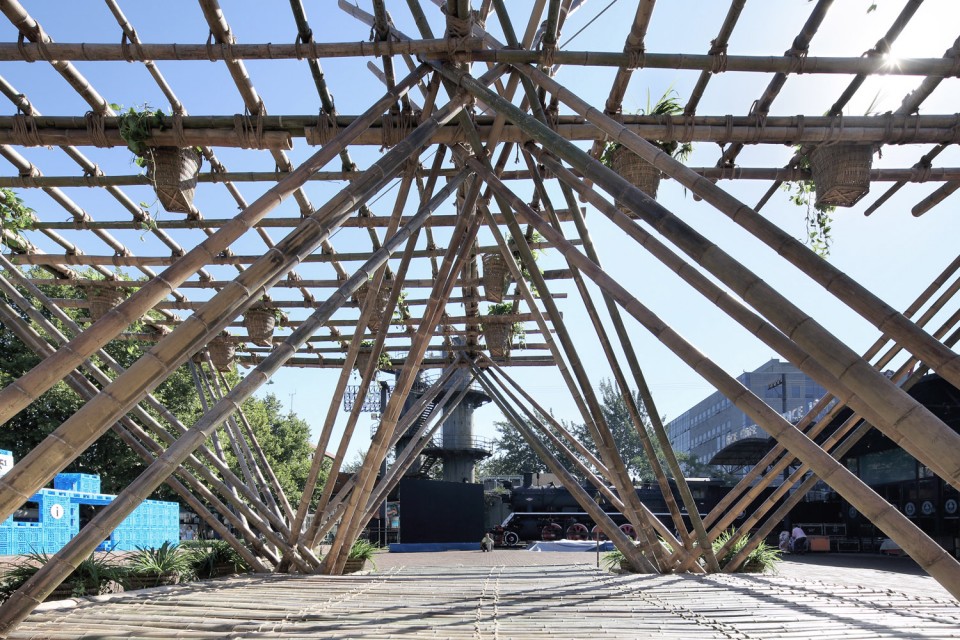
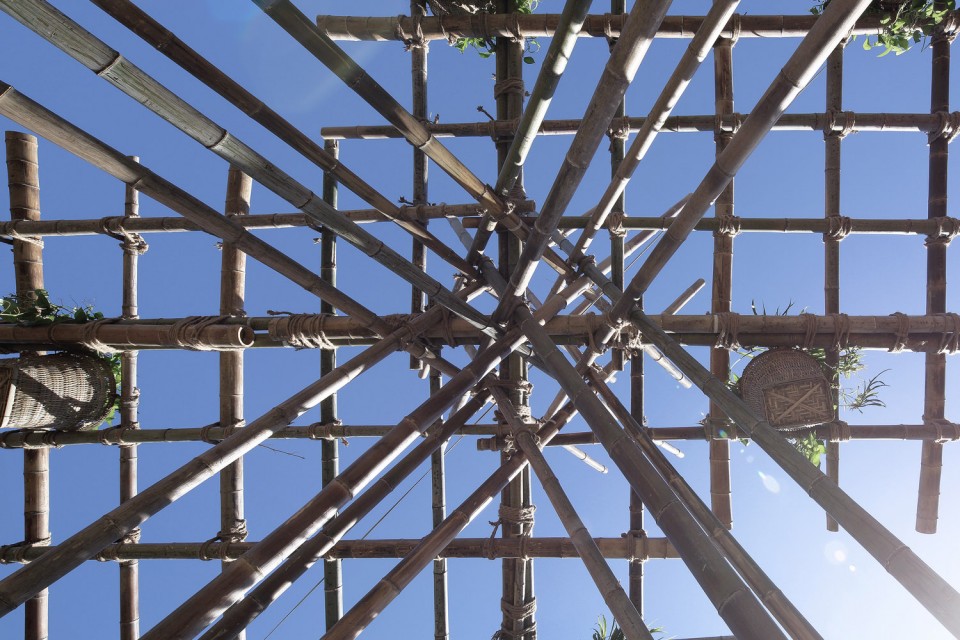
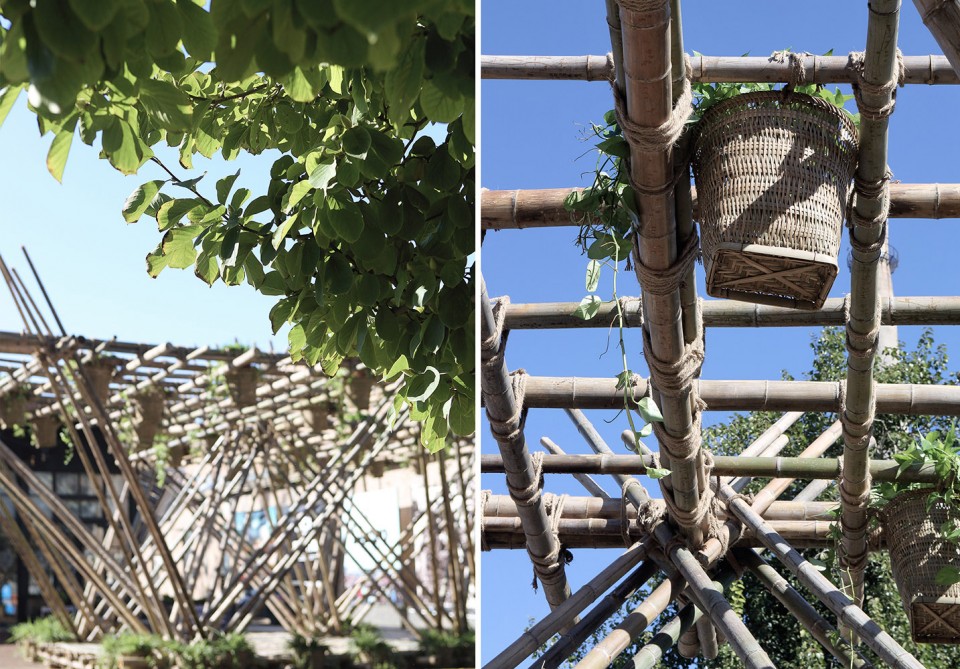
Vision for Rising Canes in the next 10 years:
We believe that in present times a sustainable way of construction is more valuable than ever. The current state of irresponsible city planning, air-pollution and economic crisis asks the architecture profession to rethink the process of building. The use of natural materials like Bamboo and connecting it in a smart, modular system, gives the structure the freedom to grow in every direction. By adding and connecting new bamboo canes, the structure grows and becomes a stronger system that is able to take on more loads to the building.
To ensure a steady building material supply, a neighbouring bamboo grove gets planted. For each culm of bamboo taken as a construction material, 2 new trees needs to get planted to the forest instead. This approach secures the demands of building elements in the long run and creates a beautiful bamboo forest surrounding the development.
Starting with a small structure for the Beijing Design Week, the individual elements get delivered to another site in order to expand its size. Located in Anji County, the largest export region for Bamboo in the world, the system can grow to a habitat for 20 families within the first 9 months. As the number of inhabitants keeps growing, the structure gets extended to accommodate multiple communal spaces, bridges and even floating structures. By 2023 the bamboo development is extended to an urban configuration, which inhabits a population of 20.000 people and a surrounding
bamboo grove of 250 acres.
With this patient and natural expansion, the project describes a true ecological approach of growth, which leaves no harm on the surrounding environment nor on the building material itself and is therefore a counter-movement to a conventional way of the present construction process.
PROJECTNAME
项目名称 PENDA_“节节攀升”生态未来建筑畅想
PROJECTTYPE
项目类型 建筑设计、研究
PROJECTLOCATION
项目位置 北京751火车头广场
PROJECTYEAR
设计时间 2014 – 2015
PROJECTSIZE
项目规模 50m2
PROJECTTEAM
设计团队 Chris Precht、孙大勇、Veit Burgbacher、白雪、Frank Lee、李朋冲、龙辉元
PHOTOCREDITS
摄影 夏至 肃画
PROJECTNAME Rising Canes for Beijing Design Week
PROJECTTYPE Residential, Hotel
PROJECTLOCATION Beijing 751 / Anji County
PROJECTYEAR 2015 – ongoing
PROJECTSIZE Varies
PROJECTTEAM Chris Precht, Dayong Sun, Kerry Xie, Veit Burgbacher, Bai Xue, Quan He, Li
Pengchong, Frank Li, Snow Sun, Anna Andronova
CREDITS penda architecture & design
www.home-of-penda.com
PHOTO CREDITS Xia Zhi, Hua Su
More: penda ,更多关于:penda on gooood




其实我感觉国内外的设计差别在于对自然,物的抽丝拨茧。原始不是对物照搬,提炼才是对物的尊重。
在penda拿这个参加AIM帐篷酒店竞赛的时候就关注了这个方案,一直质疑其结构问题,一层支撑没问题,叠这么高的话对于节点应该有很细且可靠的设计才可能实现。。。。
作为整体的结构,如果一根竹子有问题的话以后怎么维修呢
电脑模型得用grasshopper做了吧
第一反应就是虫子特别多,,,
因吹丝听