感谢 Stefano Ferrando|Studio Vetroblu 予gooood分享以下内容 。更多关于:Stefano Ferrando|Studio Vetroblu on gooood
Appreciation towards Stefano Ferrando|Studio Vetroblu for providing the following description:
隆加罗内纪念公墓坐落于Muda Maè,位于瓦依昂灾难后重建的城镇上方。项目由Gianni Avon、Francesco Tentori与Marco Zanuso设计,并由Jane Wernick Associates负责结构设计,于1966年至1972年间构思完成,是对一处承载着丧失、重建与集体记忆之地所作出的克制建筑回应。
The Monumental Cemetery of Longarone stands in Muda Maè, above the town rebuilt after the Vajont disaster. Designed by Gianni Avon, Francesco Tentori and Marco Zanuso, with Jane Wernick Associates for the structural design, the project was conceived between 1966 and 1972 as a restrained architectural response to a place marked by loss, reconstruction and collective memory.
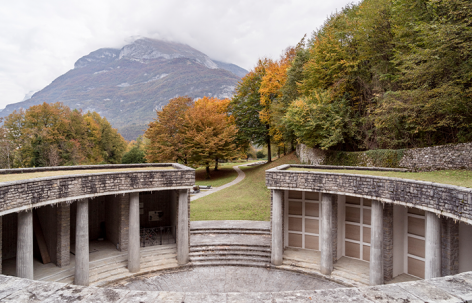
▼山坡中的公墓,Cemetery within the slope © Stefano Ferrando | Vetroblu
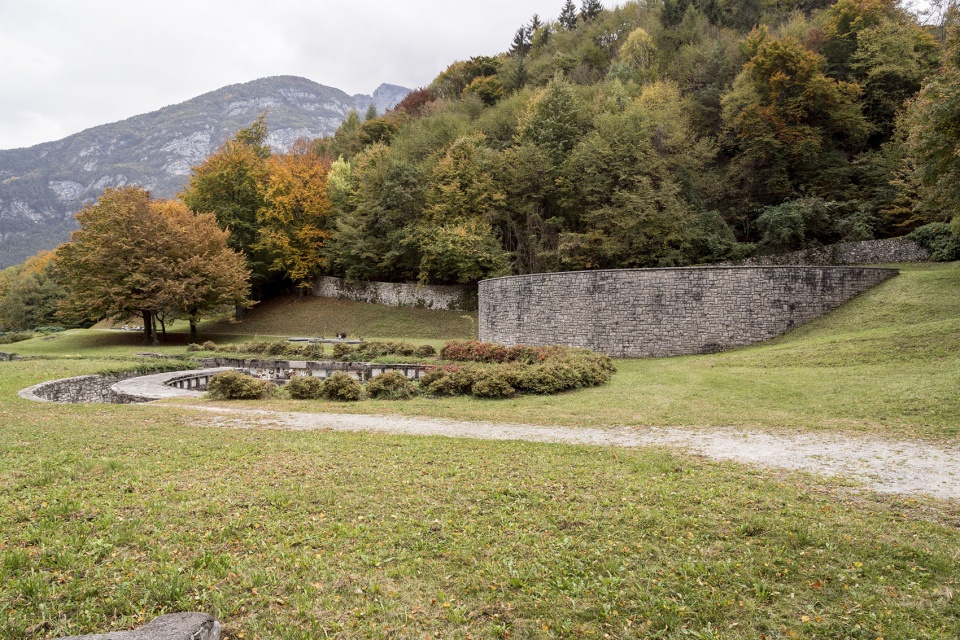
▼公墓与远山,Cemetery and distant mountain © Stefano Ferrando | Vetroblu
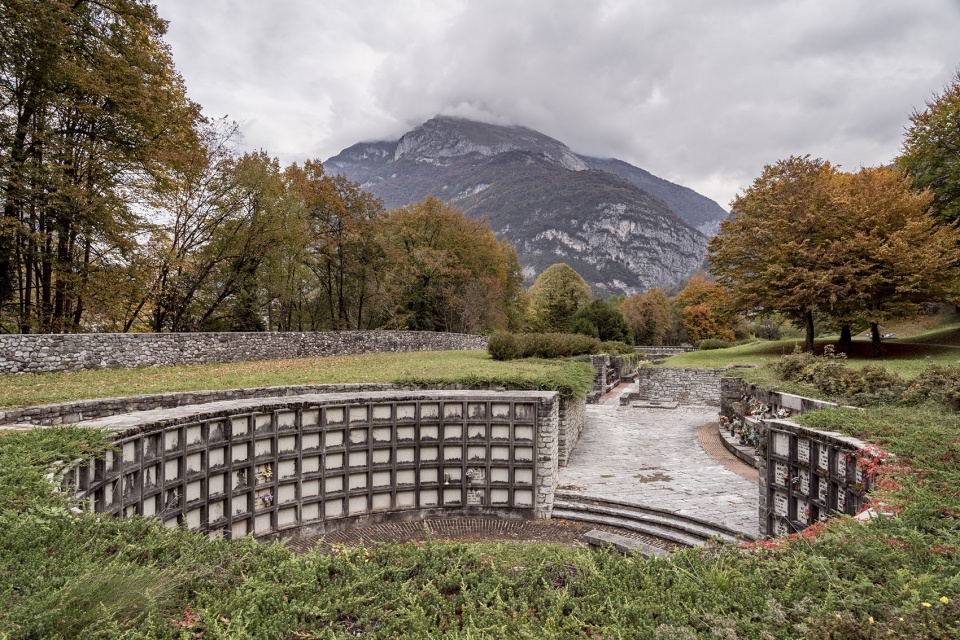
▼石墙与山地,Stone walls and mountain terrain © Stefano Ferrando | Vetroblu
1963年10月9日夜晚,位于意大利东北部、威尼托与弗留利-威尼斯朱利亚交界处瓦依昂地区的托克山发生大规模山体滑坡,巨量岩土崩落并坠入瓦依昂大坝的人工水库之中。冲击引发的巨大水浪越过大坝,席卷皮亚韦河谷,摧毁了隆加罗内及周边多个聚落。近两千人在灾难中丧生。大坝本身却依然屹立,使这场灾难成为20世纪意大利工程雄心、地质脆弱性与人类责任之间冲突中最悲剧、也最复杂的例证之一。
On the night of 9 October 1963, a vast landslide detached from Monte Toc, in the Vajont area on the border between Veneto and Friuli Venezia Giulia, in north-eastern Italy, and collapsed into the artificial reservoir of the Vajont Dam. The impact generated an enormous wave that overtopped the dam and swept through the Piave Valley, destroying Longarone and other nearby settlements. Almost two thousand people lost their lives. The dam itself remained standing, making the disaster one of the most tragic and complex examples of the conflict between engineering ambition, geological fragility and human responsibility in twentieth-century Italy.
▼山林中的石构,Stone structure within woodland © Stefano Ferrando | Vetroblu
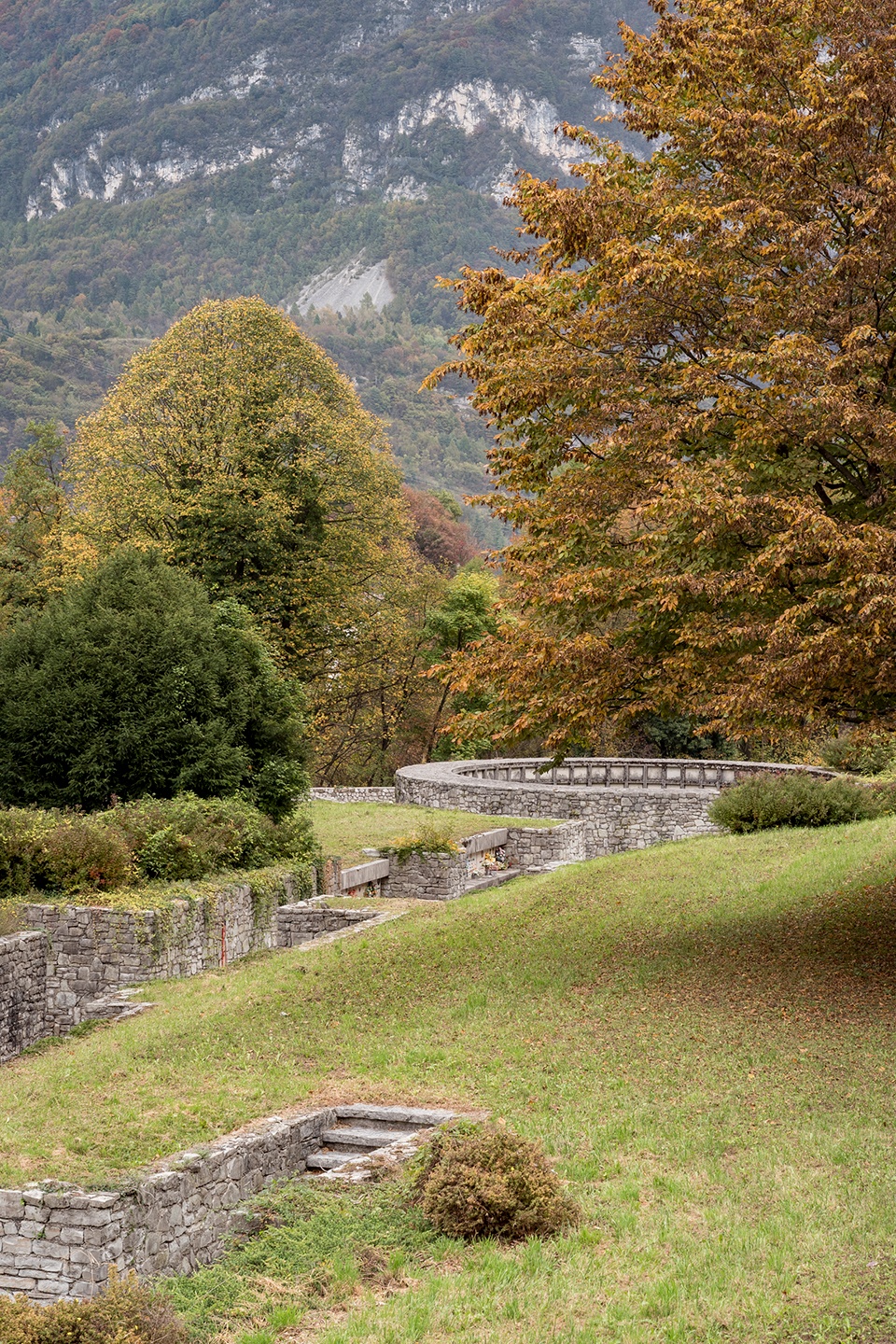
▼山体与墓园,Mountain and cemetery © Stefano Ferrando | Vetroblu
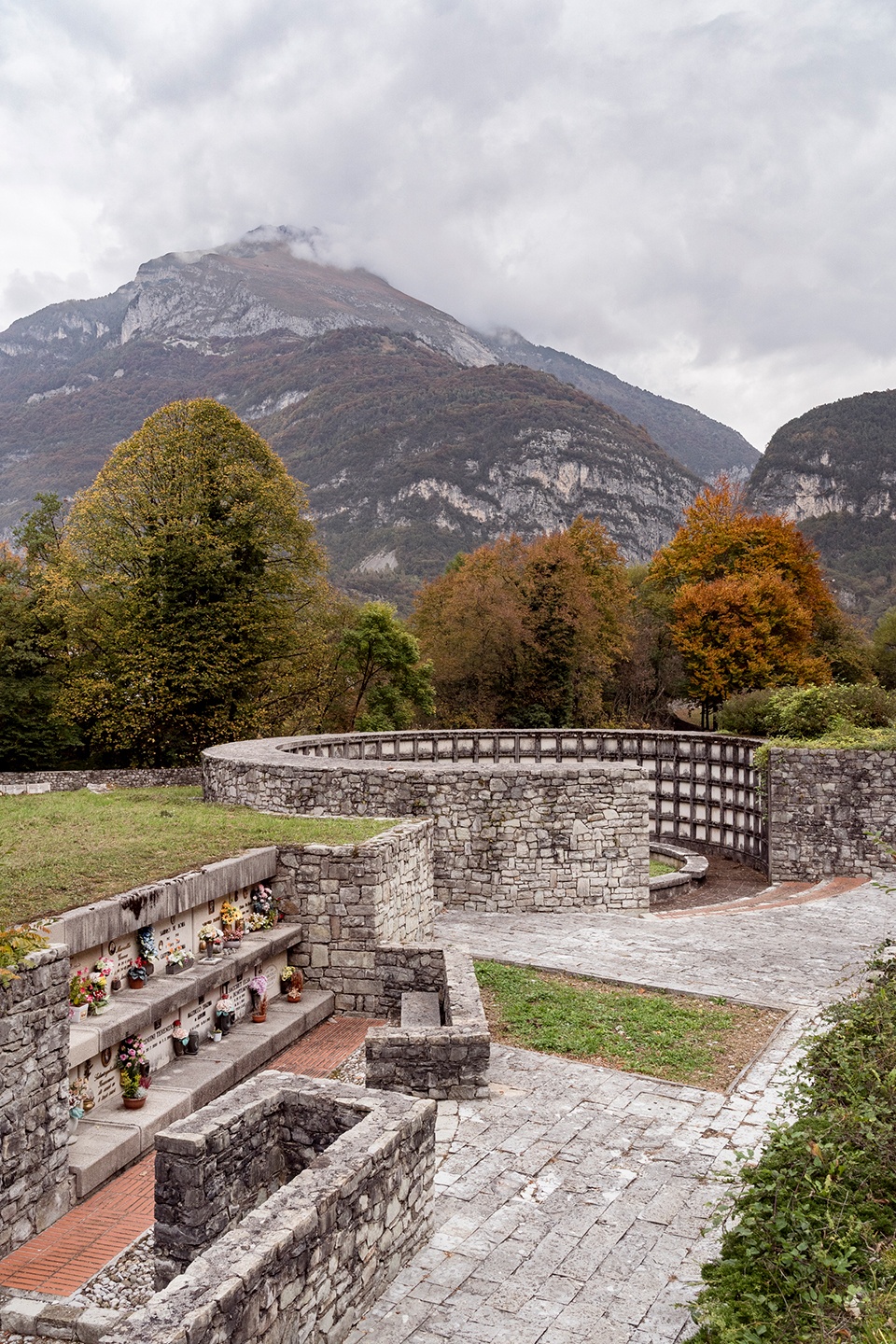
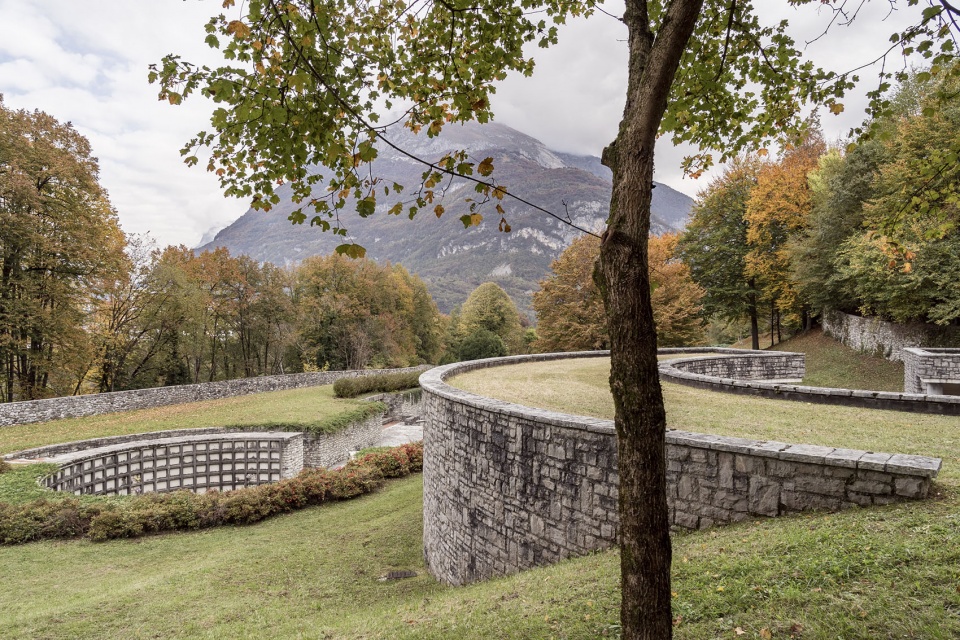
公墓并未以一座孤立纪念碑的姿态出现,而是被吸纳进山坡之中。它的建筑由挖掘出的空间、挡土墙、路径、门槛与空隙组成,顺应地形展开,并与周围群山建立起一种克制而有分寸的对话。石材与混凝土并不只是界定边界:它们承托土地,框取天空,并引导身体穿行于一系列压缩与开敞交替的空间之中。
Rather than presenting itself as an isolated monument, the cemetery is absorbed into the slope. Its architecture is made of excavated spaces, retaining walls, paths, thresholds and voids that follow the terrain and establish a measured dialogue with the surrounding mountains. Stone and concrete do not simply define boundaries: they hold the ground, frame the sky, and guide the body through a sequence of compressed and open spaces.
▼路径与纪念景观,Path and memorial landscape © Stefano Ferrando | Vetroblu
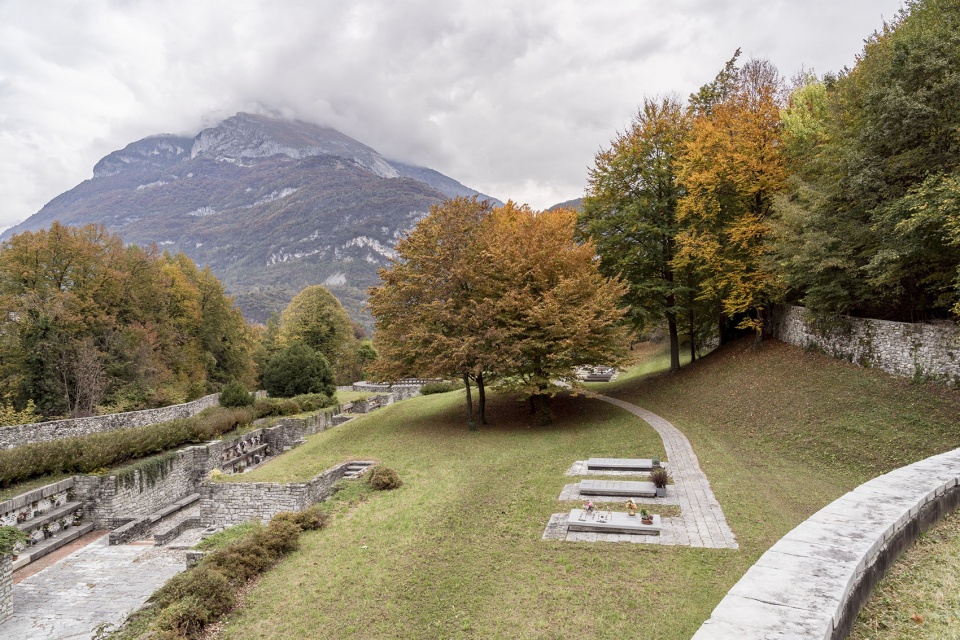
▼树下通行路径,Path beneath trees © Stefano Ferrando | Vetroblu
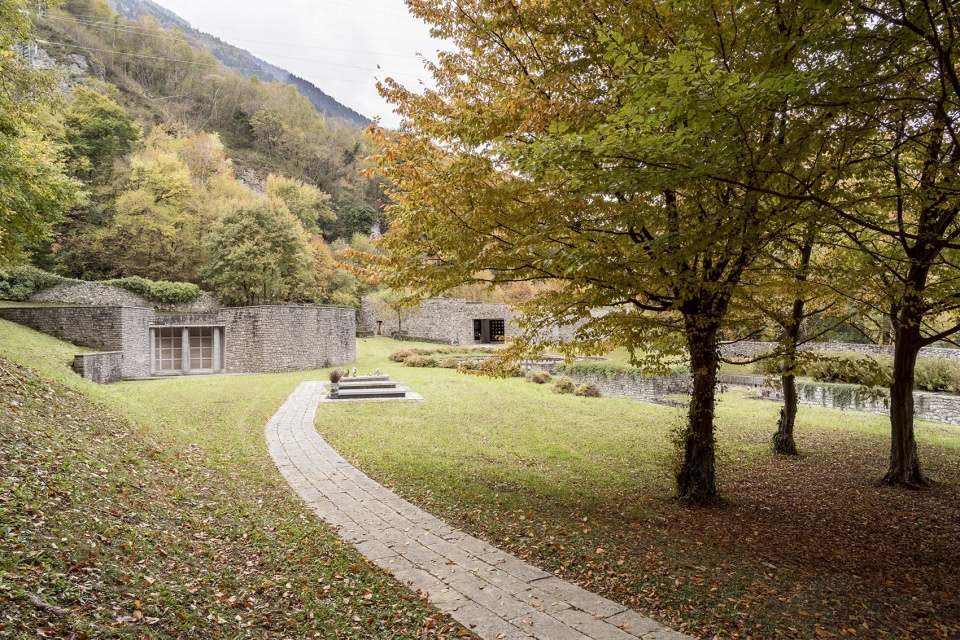
▼林间石径,Stone path through trees © Stefano Ferrando | Vetroblu
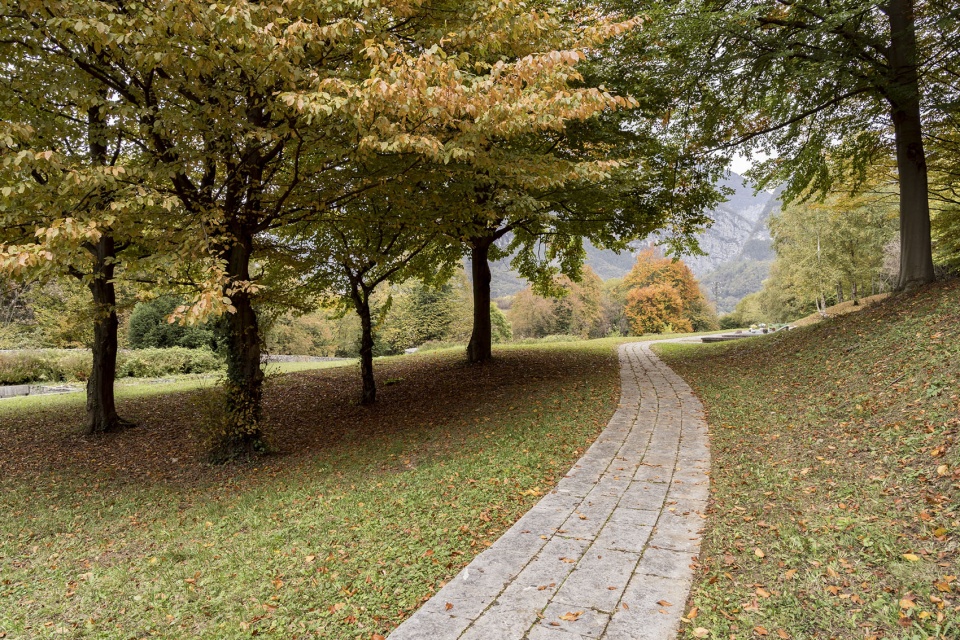
▼林地边缘,Edge of the woodland © Stefano Ferrando | Vetroblu
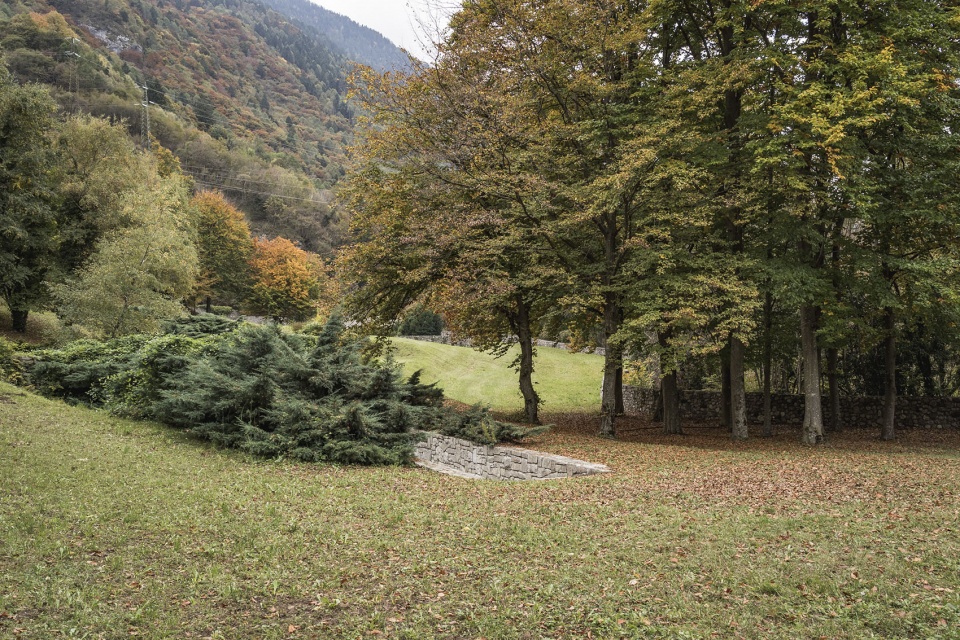
这组摄影随笔将公墓视为一处由通行与沉思构成的建成景观。影像并不试图以纯粹纪实的方式解释项目,而是跟随建筑被体验时所呈现出的静默秩序:墙体的重量、台阶的节奏、围合与地平线之间的张力,以及建造与土地之间的接触。
This photo essay approaches the cemetery as a built landscape of passage and contemplation. The images do not aim to explain the project through a purely documentary reading, but to follow the silent order through which the architecture is experienced: the weight of walls, the rhythm of steps, the tension between enclosure and horizon, the contact between construction and earth.
▼弧形庭院与山景,Curved courtyard and mountain view © Stefano Ferrando | Vetroblu
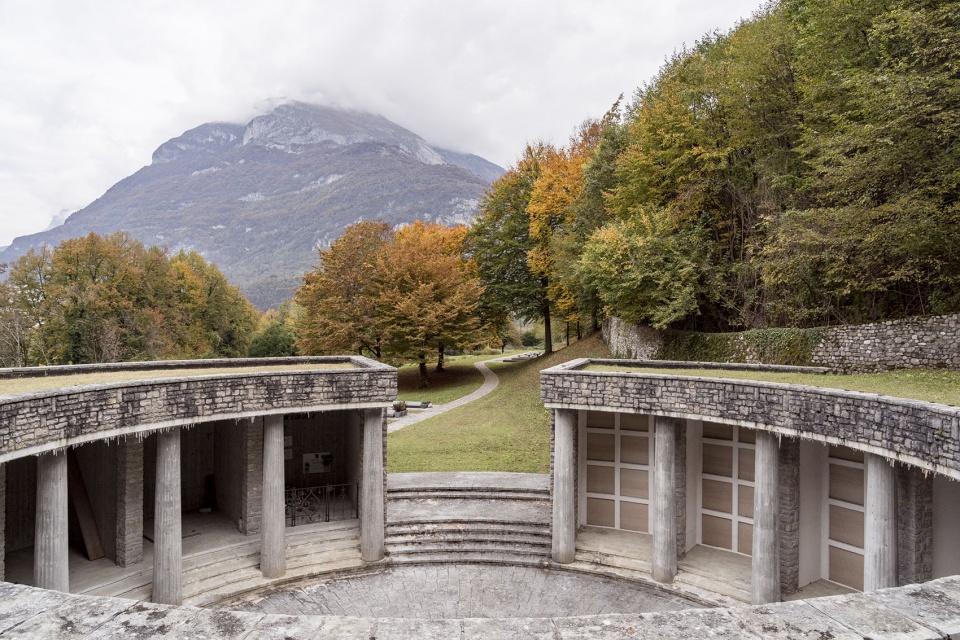
▼圆形庭院空间,Circular courtyard space © Stefano Ferrando | Vetroblu
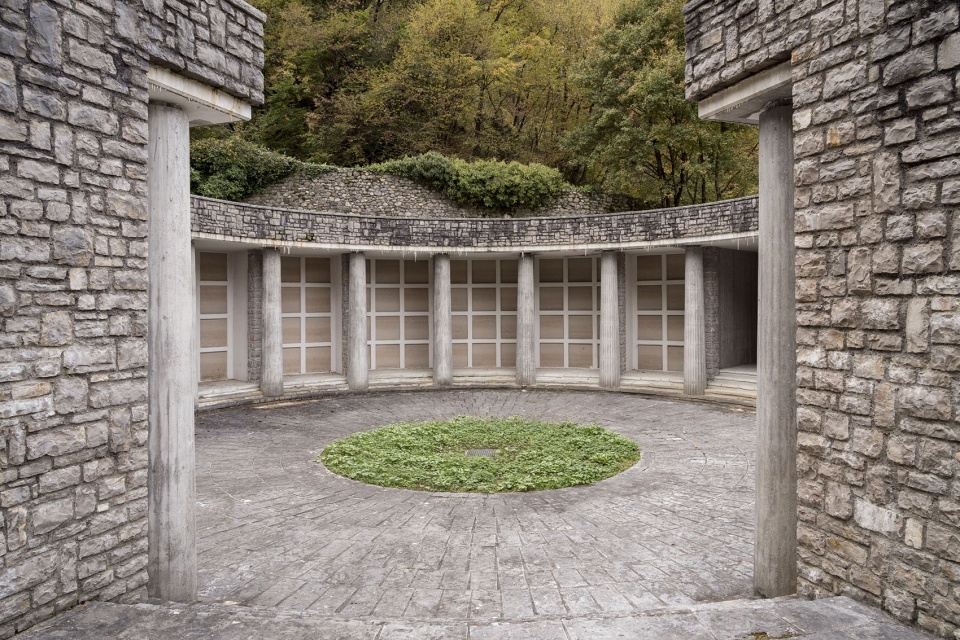
▼石阶与林地,Stone steps and woodland © Stefano Ferrando | Vetroblu
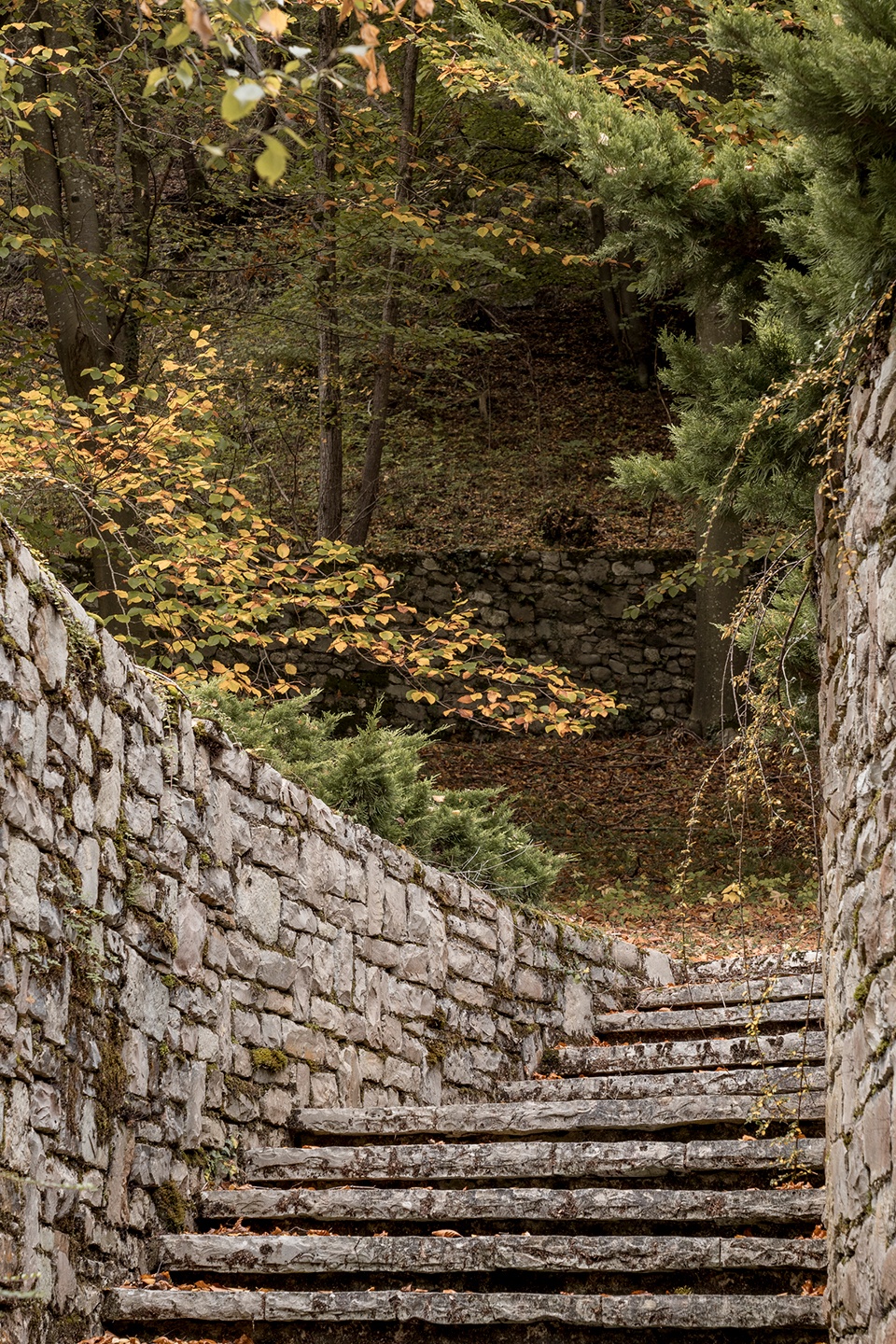
▼层叠石墙,Layered stone walls © Stefano Ferrando | Vetroblu
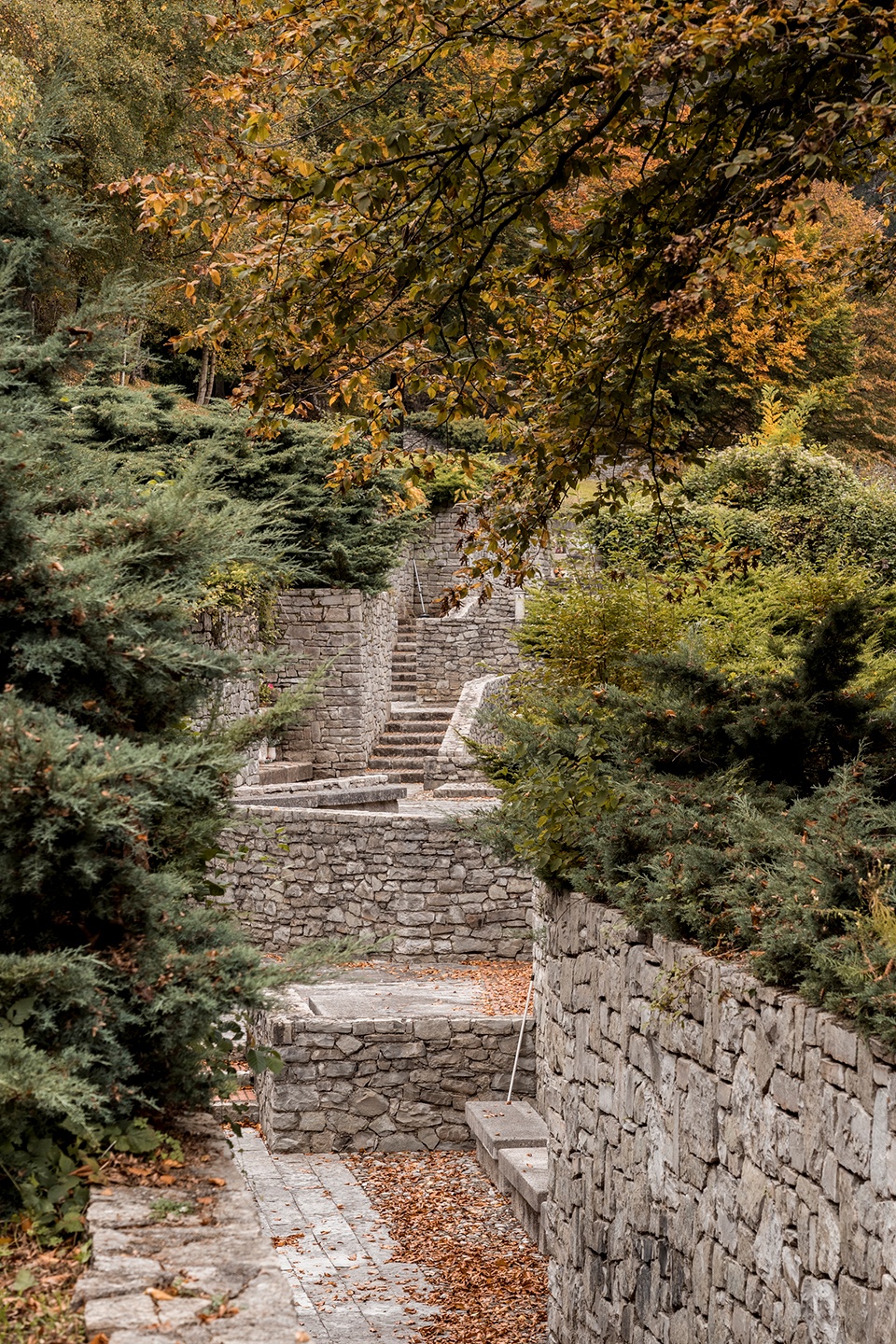
在隆加罗内,记忆并非通过过度表达或修辞性的纪念碑性来呈现。它被交托给尺度、重力与空间序列。公墓成为一处场所,在这里,建筑吸收了场地的历史创伤,并将其转化为一种精确而具身体性的物理状态。访客穿行于阴影、门槛与矿物质表面之间,遭遇一种安静却深深嵌入身体经验的纪念形式。Stefano Ferrando的摄影聚焦于这种悬置的特质。他观察这座公墓,不仅将其视为一件建筑作品,也将其视作一片地形:在这里,形式、沉默与景观变得不可分割。通过光线、距离与材料的在场,这一系列作品揭示出一种建筑——它并不将自身强加于记忆之上,而是给予记忆一个安放之所。
In Longarone, memory is not represented through excess or rhetorical monumentality. It is entrusted to measure, gravity and spatial sequence. The cemetery becomes a place where architecture absorbs the historical trauma of the site and transforms it into a precise, physical condition. Visitors move through shadows, thresholds and mineral surfaces, encountering a form of remembrance that is quiet but deeply embodied. Stefano Ferrando’s photographs focus on this suspended quality. They observe the cemetery not only as an architectural work, but as a terrain where form, silence and landscape become inseparable. Through light, distance and material presence, the series reveals an architecture that does not impose itself on memory, but gives it a place to settle.
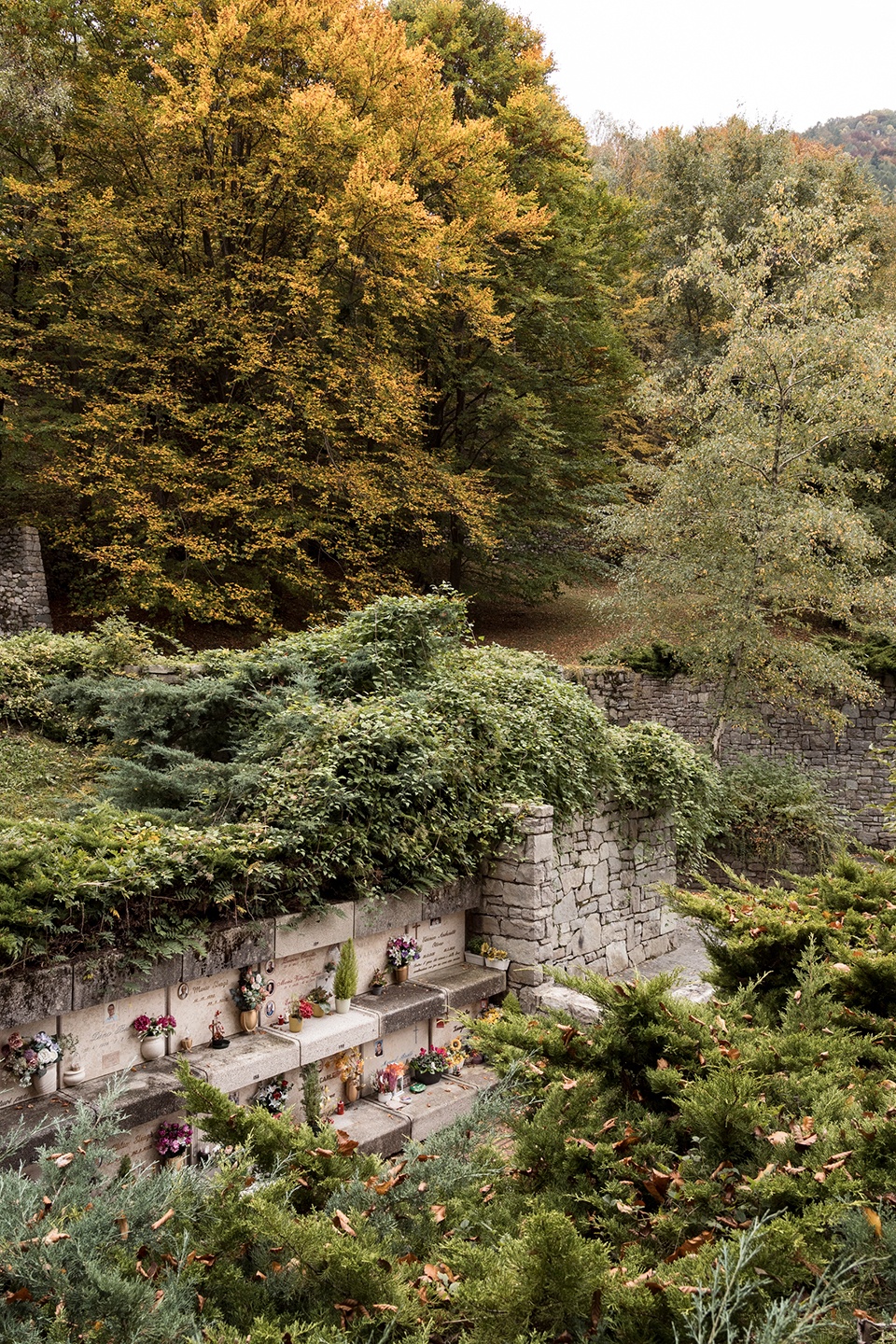
▼墓碑与植被,Graves and vegetation © Stefano Ferrando | Vetroblu
Text and images: Stefano Ferrando | Vetroblu
web: www.vetroblu.com
Instagram: @studio_vetroblu
More:Stefano Ferrando|Studio Vetroblu 。更多关于:Stefano Ferrando|Studio Vetroblu on gooood







美而庄严
DK
不让评论了
读者朋友,评论系统已经修复。如评论触发敏感词将被系统自动移入回收站,请文明评论。