非常感谢 Cíclica 将以下内容授权gooood发行。更多请至:Cíclica on gooood,CAVAA on gooood
Appreciation towards Cíclica for providing the following description:
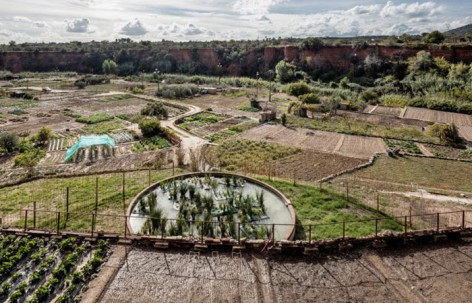
占地3.7公顷的Hortes de Baix是毗邻巴塞罗那的温泉古镇 Caldes de Montbui 旁一块历史悠久的农业耕作区。然而随着20世纪城市的发展,这片久负盛名的田园景观正经历着来自环境与社会结构调整的双重压力,灌溉系统的水源污染、游览途径的缺失以及农业人口的瓦解与消失让Hortes de Baix走向似乎难以避免的衰落。
Hortes de Baix is a heritage irrigation space of 3.7Ha annexed to the historical center of Caldes de Montbui, a thermal city founded by romans near Barcelona. This space has suffered the gradual environmental and social degradation of its landscape. This characteristic process of the peripheral landscapes of the twentieth century is here mainly caused by the water pollution of the stream that supplies the irrigation system, the poor accessibility to the space and the breakdown of the irrigation community.
▽ Hortes de Baix
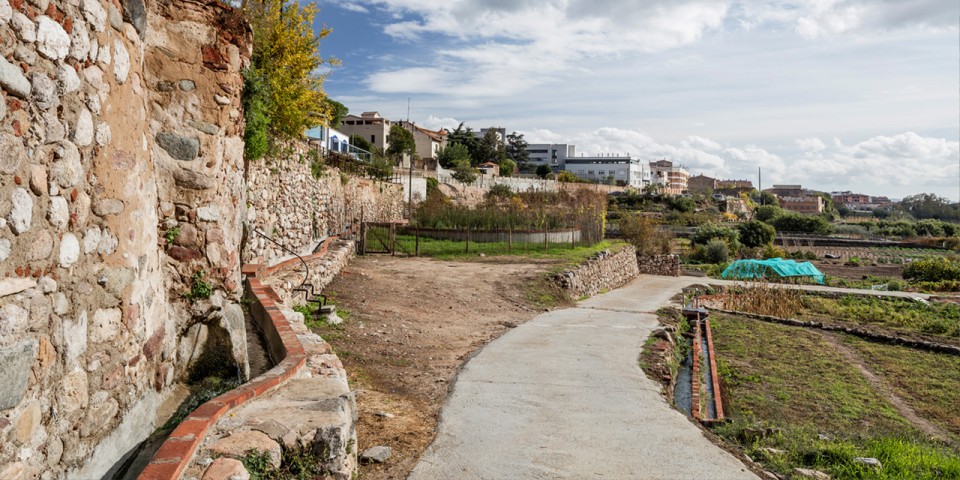
作为整个灌溉系统的核心要素,一条以石头砌成、高达3米的灌溉渠连接着城市与延绵的农田,将从温泉中溢出的泉水和落在城区的雨水引向田野。然而,城市的发展让这条曾经无比重要的灌溉渠被一点点掩埋,消失在人们的视野之中,逐渐沦为了充斥着污水与废物的沟渠。这不但为受其灌溉生长的农产品埋下了潜在的健康危害,弥漫的臭味和漂浮的污物也让人们唯恐避之不及。幸而这种情况唤起了公众的重视,对清洁的水源将作为民众共享的资源,重新回到小镇居民的生活之中。
These vegetable gardens were historically watered with the surplus of thermal washing places and the stream rainwater that poured into the main irrigation canal. This canal, formed by stone walls almost 3m high, is the main element of the irrigation system. But with urban growth the stream was covered and poured much of the sewage from the urban center. The canal has become an open sewer. This has caused health risk for the horticultural production as well as for its public accessibility (extreme bad odors and visual effect). The limited availability of clean water triggered the claim for water as a public good asset, as a heritage to reintegrate into the citizen imaginary.
▽ 城市与农田,city and the vegetable gardens
▽ 水渠,channel
在代表当地民众发声的城镇公共空间自治委员会的推动下,市议会委托Cíclica与CAVAA为小镇重建水系统,清洁灌溉水源,引流废水,并让其成为城市的一个重要部分。Cíclica与CAVAA的方案提出了三个举措:开放私人性质的都市农业鼓励食品上的自给自足,并以此为介质创造全新的公共生活空间;整个设计过程将与农业社团和利益相关者保持紧密的联系,让他们真正参与到设计中;推广传统水资源管理作为物质与文化遗产的宝贵意义,让居民认识到其重要性。通过与农业社团的合作,设计团队发现了私人温泉spa中水资源管理的漏洞,决定将其多余的水量与温泉浴场的多余水量一并引入至水系统中用作灌溉水源。历时两年的参与式行动研究计划为农业团体树立了足够的信心,在保证现有灌溉系统与管理机制完整性的情况下,同意了设计团队的部分干预措施。整个项目耗资93,881欧元,同时也包括了一个城镇就业计划。而后期的维护将交由农业团体管理。
The project was born within the municipal Public Space Board, which gives voice to local initiatives to improve it. The City Council commissioned the assignment to solve the need of more clean water for irrigation, to channel the wastewater open flow and to facilitate accessibility from the city center. We proposed: to recover the private horticultural landscape as a new public space that encourages food self-sufficiency; to co-design the process with the irrigation community and stakeholders; and to recognize the key value of traditional water management as a tangible and intangible heritage.
With the 70 gardeners community, we detected an inadequate management of the water surplus from private thermal spas poured into the stream; so we proposed to reuse it for irrigation as well as the surplus water from thermal washing places. Through two years of participatory action research process, the irrigating community was recovered and empowered to agree on some bounded interventions without altering the existing irrigation system or its social management. The project was executed with 93,881€ and a Municipal Employment Plan. The maintenance is taken over by the irrigation community.
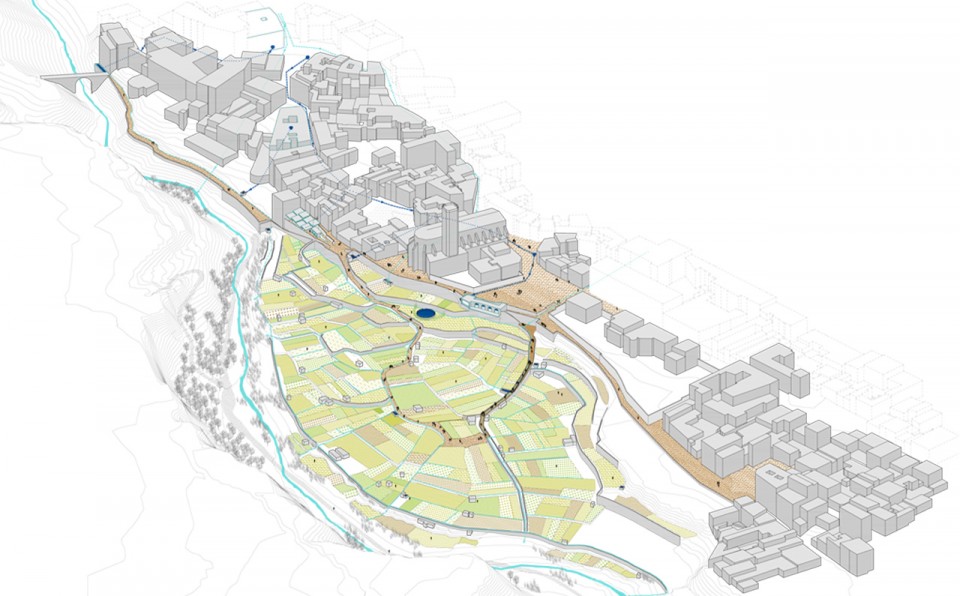
▽ 分析图,analysis
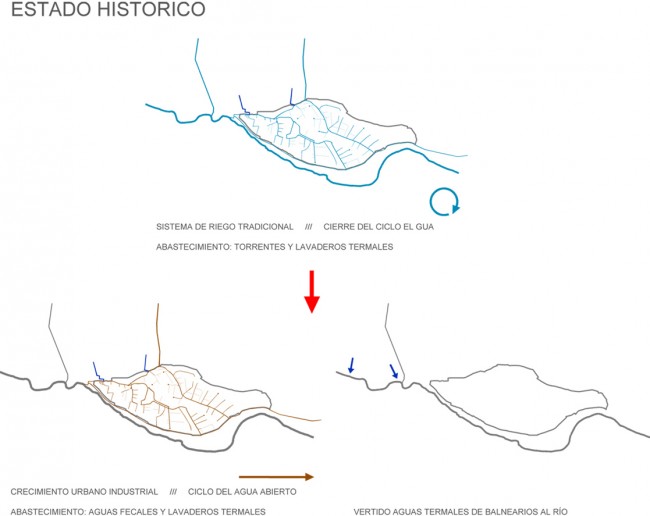
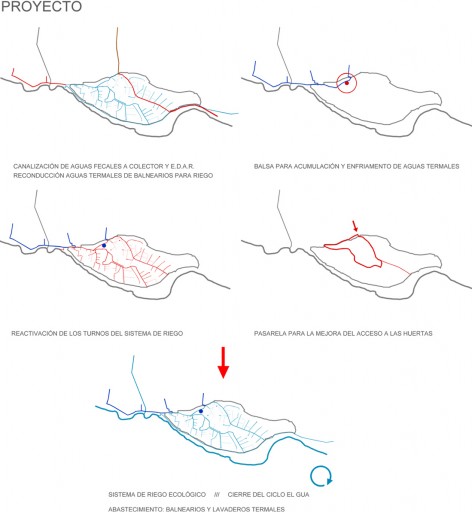
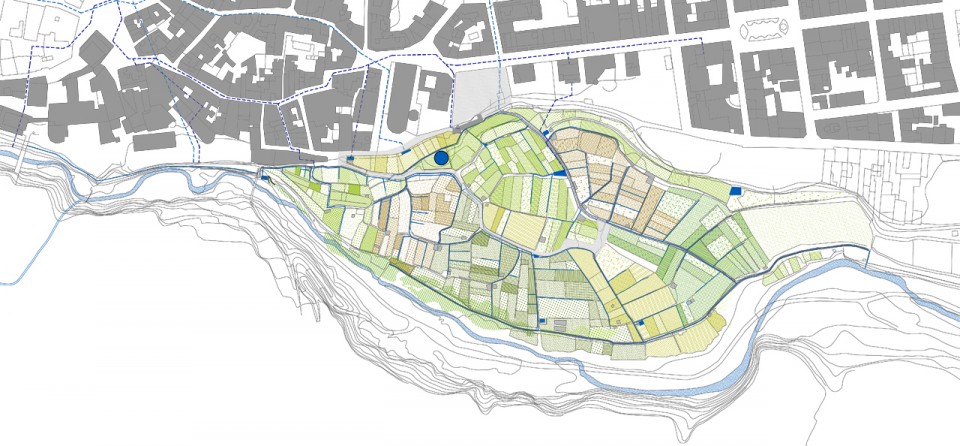
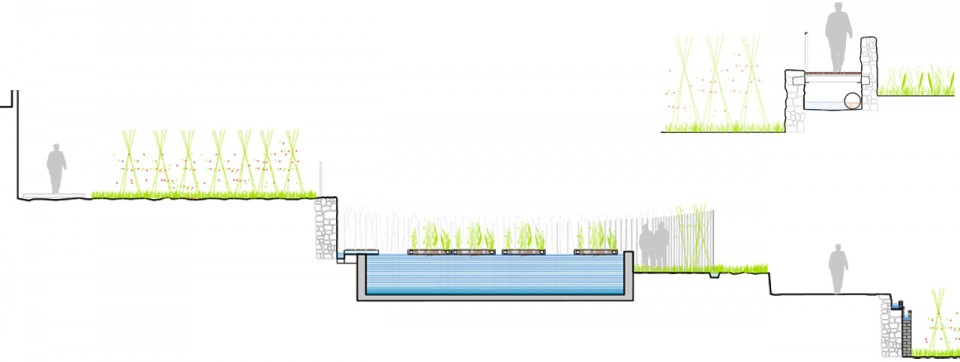
设计团队在兼顾灌溉系统的可持续性管理的同时,打造了一条步行系统以增强农田区域的可达性。来自温泉spa的水源将汇集在新建的大池子中冷却,用以灌溉果园。池子与现存的灌溉系统相连接,利用重力将水源输送到各个角落,而无需引入任何机械设备。生活污水被导流至下水系统,一条全新的小径顺着重获新生的主灌溉渠延伸,将城市与农田连接到一起。位于石墙之内的小路让灌溉系统古朴的外观得以完整地保留下来。
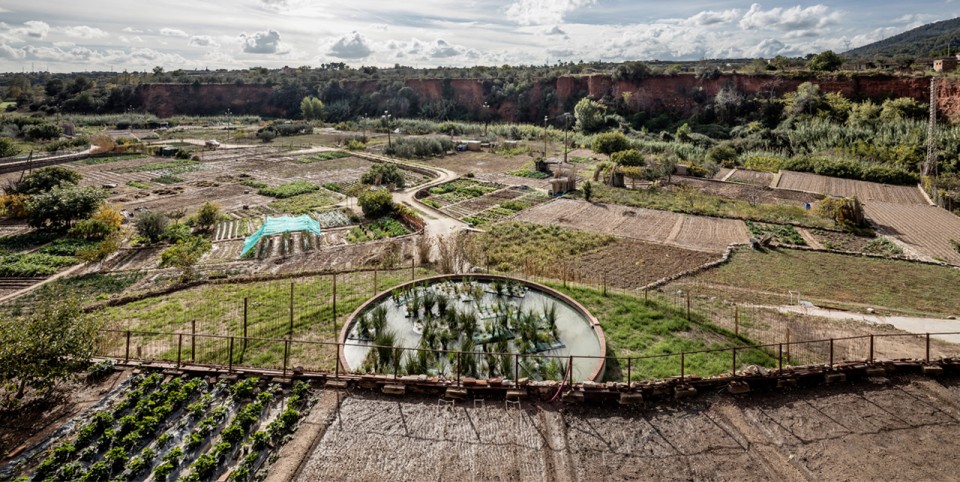
This project has been developed through two phases: the sustainable management of the irrigation system and the walkway to improve accessibility. As part of the community process, the surplus water from thermal spas was recovered to irrigate orchards ensuring water supply. For that, a new public pool is built there to accumulate and cool thermal water. From there, we keep and recycle the existing irrigation system to deliver flooding turns by gravity operation, avoiding introducing any new mechanized device. Wastewater is channeled to the sewage collector allowing to recover the existing main canal with a new walkway to improve access to the area. This is supported inside the stone walls to not alter the canal traces appearance.
▽ 泉水冷却池,thermal pool
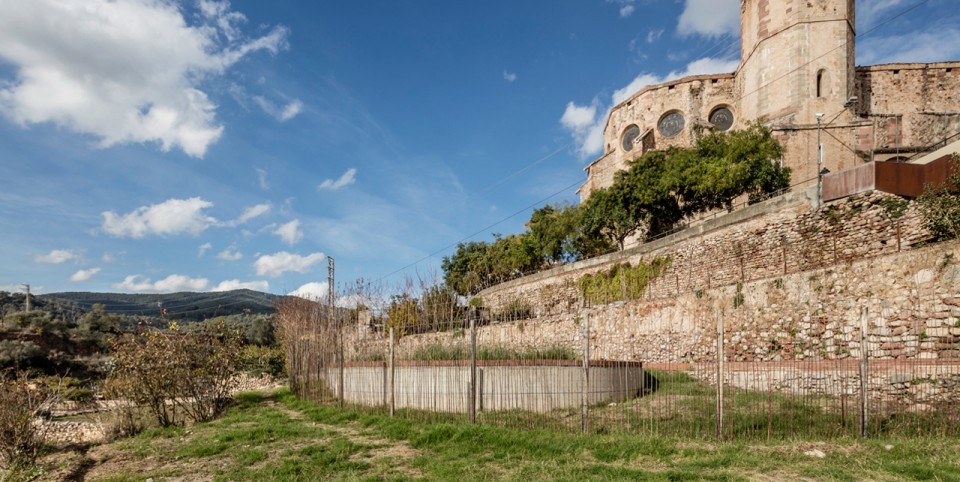
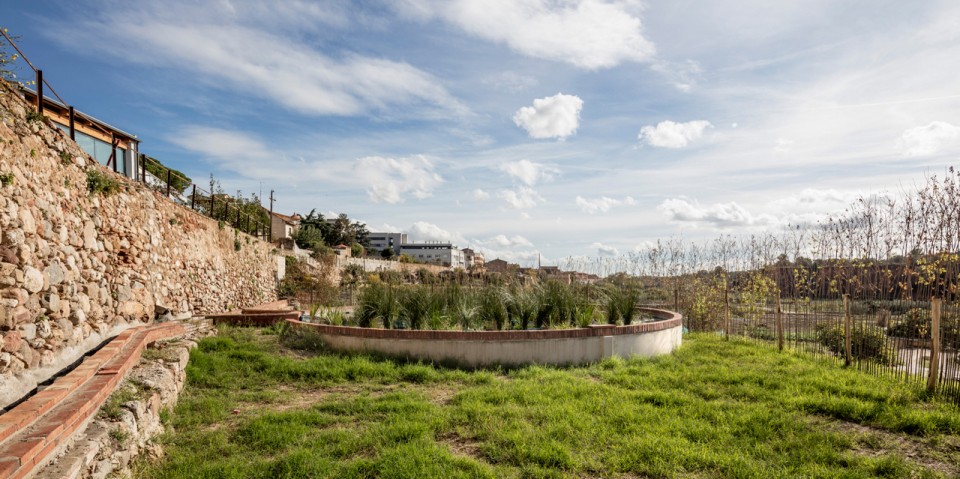
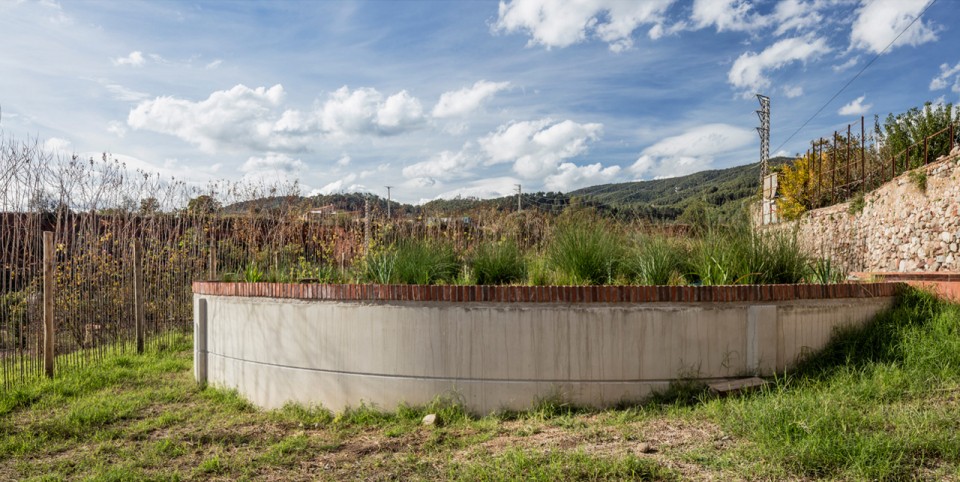
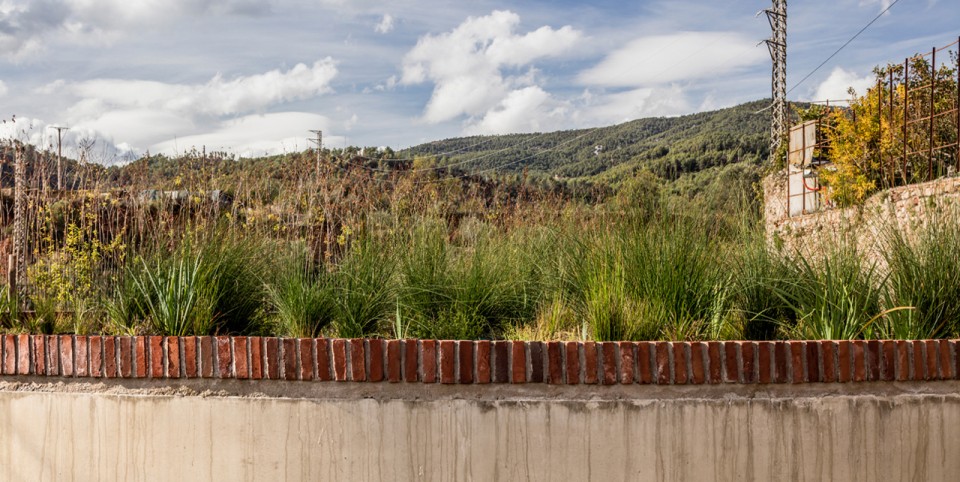
花岗岩石、手工砖块、手动水闸门、金属网栏杆,这一切都园艺文化中质朴的自建特质愈发的凸显。而柳木作为温泉文化的传承,被栽植到了这片场地之中。而水池中的漂浮花园以植物处理的形式,在起伏的波澜中吸收着泉水中残留的有机物质。
The presence of elements from horticultural self-construction identity is enhanced: granite stones, ceramic handmade bricks, manual floodgates, wire meshes and fences. We reintroduce live willow, formerly used to make willow baskets heated by thermal water. Finally, an innovative pilot system is developed: phytotreatment with macrophytes planted on floating gardens, to absorb residual organic material without altering the pool’s oscillation condition.
▽ 小径,the walkway
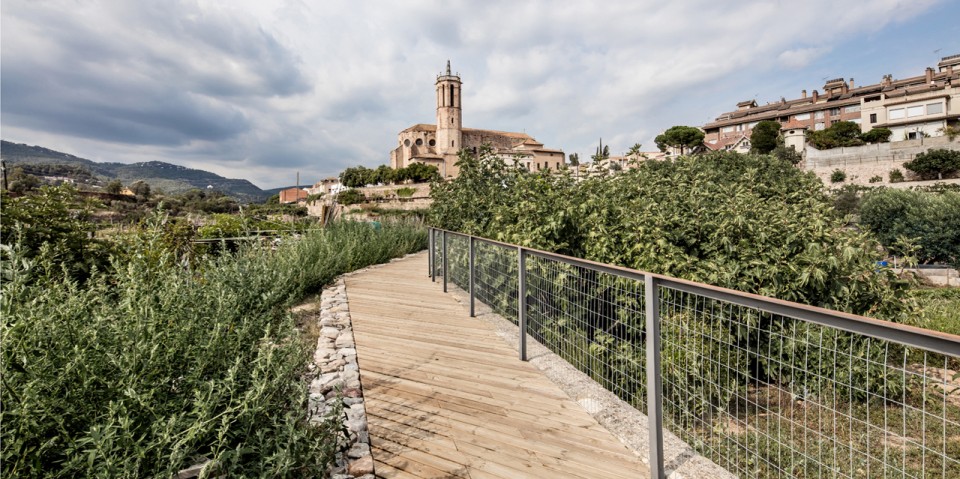
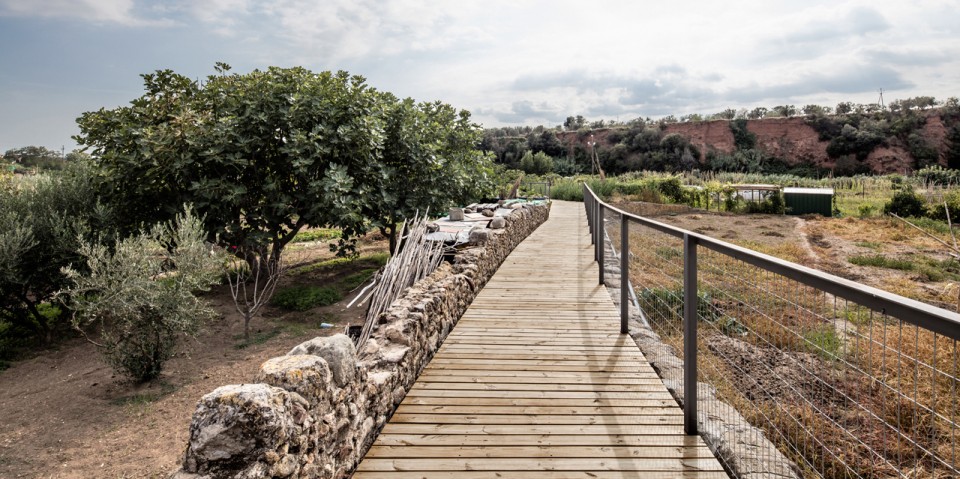
景观设计团队从政治,生产力与公众性三方面去最终评价本项目的价值。从政治方面,政府实现了他们对此地保护和维护的诺言,并在长期和密集型的合作过程中组建了园艺协会。委员会的成立保证了这片灌溉渠的自我管理与维护,内部规则的制定,与市议会的交流合作,这片历史区域长期的可见性以及当地知识文化在不同代际间的传承。从生产力方面,清洁的水源让有机生产得以实现,同时也提升了灌溉的效率。在未来,农产品的销售也将成为本地旅游经济中的支柱。从公众性来看,一个个果蔬园成为了开放性的公共活动空间,提升了这片农业空间的辨识度,内涵与教育性。
We evaluate the project at three levels. Political: The Government has committed itself to dignify this place and to the long and intense participation process that culminates with the creation of a gardeners association hitherto nonexistent. A board with commissions is created to ensure self-management on the irrigated space, the establishment of internal rules, the communication with the city council, the visibility of its historical heritage and the necessary intergenerational transfer of local knowledge. Productive: obtaining clean water allows the practice of organic farming and increases irrigation turns. In the long term visitors would be expected to consume the cultivated products. Civic: the vegetable gardens become an open public space, promoting recognition, inclusion and education of the agrarian space.
▽ 质朴的材料选择,horticultural self-construction identity of the materials
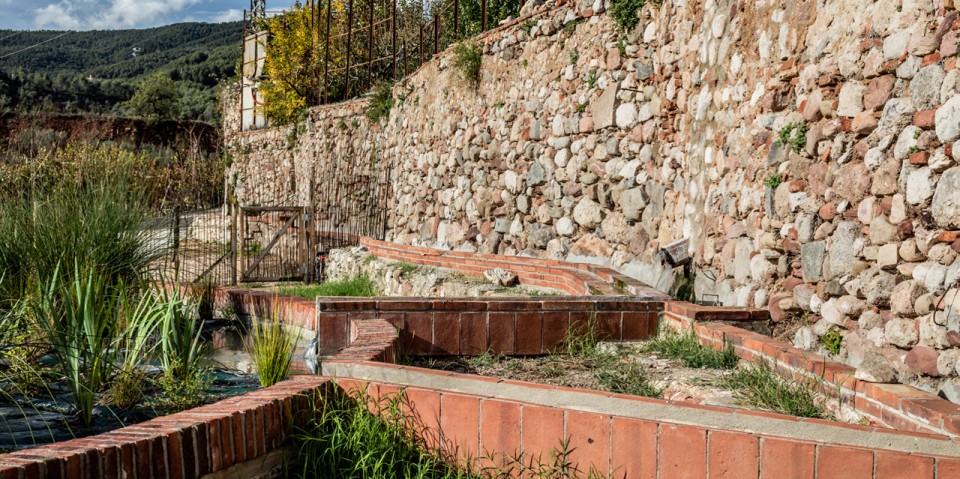
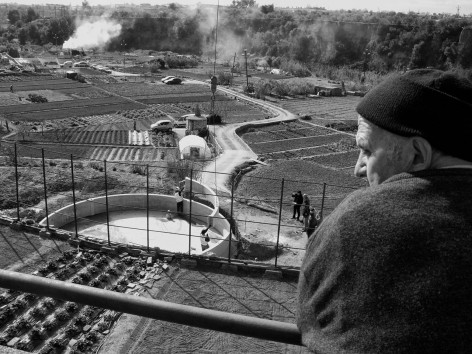
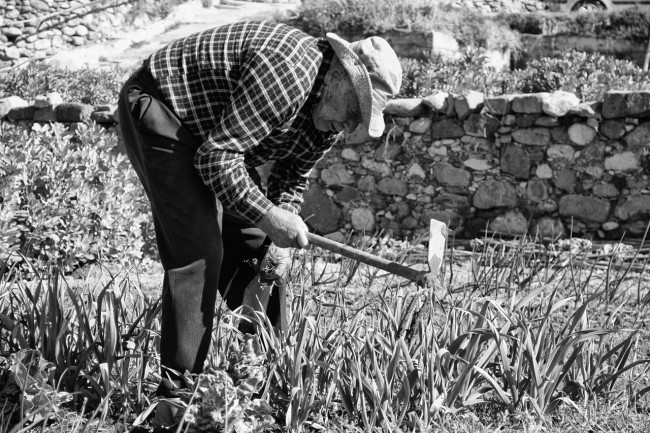
全新的社团合作模式与生态策略也要求建筑团队作为调节者和观察者,从不同的领域引入创新性的概念并与各式各样的合作者协同合作,帮助设计团队在项目的技术领域交流、沟通并做出决策。
The new community and ecological approach also challenged the architecture team to assume the role of mediators and observers, adopting innovative conceptual references from complementary discipline fields and integrating external collaborators. This has allowed us to develop new tools of decision-making and communication of the technical aspects of the project.
▽ 当地农业社团的参与,collaboration with the irrigation community
▽ 平面图,plan
▽ 剖面,section
Author: Cíclica [space, community & ecology] (Marta Serra, Elena Albareda) and CAVAA (Jordi Calbetó)
Developer: Caldes de Montbui town Hall.
Project team: Junta de l’Associació d’Hortolans de les Hortes de Baix de Caldes de Montbui, Aleix Rifà – hydraulic engineer.
Area: 3,7Ha
Assistance: Public Space Advisory Board (Caldes de Montbui City Council) and Public Occupancy Plan.
Budget: 93.881,58€ total.
start/end: May 2013, September 2015.
Photography: Adrià Goula (arquitecture) & Jose Tostoneone (participatory process).
Drawings: Cíclica
English Text: Cíclica
Chinese Text: gooood
MORE: Cíclica,更多请至:Cíclica on gooood,CAVAA on gooood






和中国农村很像
介绍的不是很清楚的感觉,分析图木有翻译
喜欢,与环境融合得很好