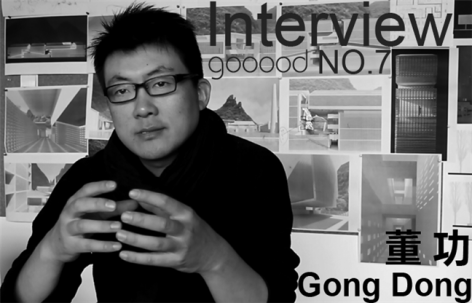
gooood团队采访世界各地的有趣建筑师,欢迎您的推荐和建议。
第7期为您奉上的是直向建筑主持建筑师 董功 ,更多关于: Vector Architects on gooood.
采访人: 向玲 (特别鸣谢:李硕对采访问题的部分贡献)
▼视频(VIDEO)点击此处进行观看
Interview
gooood x Dong Gong 董功
1.
董老师回国前在美国待了七年,现在已经回国七年,这两个七年您觉得自己有什么转变?为什么?
You had been in the USA for seven years before coming back to China, and then worked in China for another seven years. What do you think you have changed betweeen those Two Seven years?
董:我觉得大的方向还都是在建筑这条路上,因为从我个人从很早的理想也就是在建筑这件事上做一点自己想做的事。如果说这两个阶段最大的核心的一个区别,本质上,头七年大概是积累的阶段,后七年是摸索和自己实践和创业的阶段。这还是相当不同的,这个因为,怎么说呢,中国现在的整个的发展速度非常快,所以普遍遇到的一个问题就是怎么把握,每一个建筑师怎么把握自己前进的节奏的问题。所以我还是觉得,从我自己的体会来讲,建筑这个行业不是一个着急的事儿。这如果反映到一个建筑师前进的道路上,还是稳扎稳打比较好。所以我自己的体会是这样的。所以前面有相当长的一个积累的时间。
Dong: I think my goal in general has been always architectural design, since my early years and never been changed. The key difference between the 2 stages is that, the first seven years is the stage of experience accumulation; the second one is the stage of startup and practice. Under the current circumstance of China, the challenge for an architect is how to control the pace, you know,China is progressing very fast. I feel that for an architect, you should not be in a hurry; to act slowly but firmly, with more time for accumulation, would be better.
2.
看到您的作品中有不少售楼处,完成度极高,材料和建造令人耳目一新,但在其临时作用——销售——结束后就被拆除,而留下的永久建筑却是类似“新古典”的住宅,这种“临时”与“永久”,“现代”与“古典”的问题您怎么看?
In your works, there are quite a few sales offices, which are quite fresh in material and construction, and highly accomplished, but as a sales office, they are doomed to be ephemeral, and going to be demolished eventually; what remain at last are homely “Neoclassicism” buildings. How do you think about this condition that seems absurd?
董:这“新古典”住宅不是我们做的,我们只是负责那个你说的要被拆的那部分。
如果你从一件事的角度来讲我觉得也挺无奈的,因为在中国,好像这个现象只有在中国非常突出,售楼处这个现象。
在美国我也看到过,比如说当时在这个Richard Meier这个事务所,在Hudson River边上有两栋住宅,好像叫Cherry Street,有两栋玻璃的住宅,它旁边就有一个售楼处,是根据一个原来的旧的厂房,只是改造了内部,而且非常简单。
中国可能文化里有这个,商业里面有这种,噱头的观念比较重,就是你要把这个事情宣传成,包装成一个状态,这样好像销售才有可能实现一个目标。
我觉得在中国这是一个,对于建筑师来讲,还是挺无奈的一个现象。其实前两天我在营口跟刘东洋老师看我们最近完成的鲅鱼圈那个项目,它也问到了类似同样的问题。但是你会有意思地发现在中国很多这种独立的建筑事务师,尤其这种小型的事务所,一开始都跟这个有点关系。我注意到,你比如说,很多人吧,就不说人名了,跟这个都有关系。
从原因来讲其实也不难理解,因为只有在这种体量的项目上,可能甲方能把能量,我说的能量指的比如说,一个是在财务上的能量,然后他的关注度,包括他对施工的控制,都集中在这么一个尺度有限的事上。因为在中国普遍的这个行业环境,当他做更大的事的时候他可能就没有那个能量,他的标准也好,还是他工业的水准也好,就更难一些。
但是反正从我们自己的角度来讲,在设计这件事上,我倒没把这件事看成一个,怎么说呢,换句话说就是对待每一个售楼处我们还是把它当成一个认认真真的一个项目来做,而不会因为它是临时的就把它考虑成是一个粗制滥造的东西。而且,我们有的设计里也对它的临时性里积极的一方面也有一些挖掘,比如说一开始那个广安门的项目,那个不是你还参与了,当时整个那个项目也是围绕着临时性这件事,怎么去用更积极的态度去面对它,是一个挺复杂的事儿,我觉得,但是,如果你让我现在,直向现在经历五年了,如果让我再选择项目,可能售楼处并不是我最感兴趣的项目。就是因为这里面各种原因,各种层面的复杂。
Dong: The Neoclassicism buildings were not made by us, what we had done is the part doomed to be demolished.
I feel rather helpless on that, and I think only in China you can see that, the sales office is often much more interesting than the long-lasting buildings.
I have been to a sales office too in US. There are two glass residential towers alongside the Hudson River designed by Richard Meier, and the sales office is just a very simple space renovated from an old factory building.
Perhaps within the Chinese commercial culture, the publicity stunt is so crucial for a successful sales achievement.I think this kind of condition is a delimma for Chinese architects.I discussed it with Teacher Liu Dongyang a few days ago, when he visited my project in Bayuquan Yingkou. I think many independent architectural firms in China, especially the small ones, are related to such a building type.
It’s not difficult to understand the case. Only a building within such kind of small scale like the sales office, the clients are willing and capable of focusing their energy to make it perfect. The “energy” refers to the financial investment, the ability of controlling the quality, etc. If the building scale gets bigger, the client might become less proficient.
From my own perspective, how to say, there are not much difference of designing a “short-life” building or a “long-life” one, in term of how serious I treat the design. I do as much as I can for each project. ‘Temporality” dose not necessarily equal to low-quality-construction. The nature of temporality even could be positive as a lead of the inspiration, such as the Guanganmen project we designed in Beijing. But for now, after five years of the inception of Vector Architects, I would not be very interested by a sales office project for many complicated overlapping reasons.

3.
看到您作品中有着极强的材料与构造的逻辑关系,但对于受众人群,也许根本不会试图理解建筑师这些工作价值,对于这点您怎么看?是否会响您对工作价值的坚持?
I think there are always strong logical relationships in the materials and construction details of the buildings you have designed, but perhaps for the audience crowd, what you try to achieve is rather irrelevant. How do you think about that?
董:我不同意这个观点。我觉得一个好的东西,从专业的层面讲,和从一个受众的层面讲肯定是有关系的,我们追求的东西也不是仅仅为了一个小圈子里面的标准去做的。我觉得这句话一个比较正常,或者一个更正确的表达应该是这样的,就是我们做了这么多关于细节、构造和材料上的努力,一个普通人进到我们的房子的时候,他可能,他一定会有感觉,他一定会有这个东西跟他平常经历的东西不一样的感觉,我相信这一点。但是他可能说不出来为什么,他可能不会说道,是因为这个,比如说交代得很清楚,或者说控制得逻辑很清楚,他可能想不到这一点。所以从这个意义上讲,我觉得建筑作为一个人体验的场所,无论是形态和空间,它跟人的体验都有关系,最后它一定会落实到这些细部的问题,而且在我看来,这些细部的重要性绝对不比一个概念的重要性弱,因为它就是事物不同的组成方面,它没有说主次的关系,而只是说在建筑这里面有几件事,这就是其中的一件事。
Dong: I do not agree. I don’t think what I want to achieve is just for the professional standard, and would be irrelevant to the general audience crowd. I would rather believe that, we made many efforts on the materials and details, and when a regular prople walks in, he (she) would feel something different, although he (she) could not explain why. I believe that as a space for human experience, the details could always make difference. The importance of details is no less than concept. They are just 2 different aspects of one thing. You can’t simply say which one is more important than the other.
4.
直向新进完成的一个万科地产售楼中心,其建筑内部专门为公众提供了一条活动流线,且与销售无关,我们可以理解为您利用企业资本做了一件公益的事情。这个过程是否遇到了阻力?如何克服的?
Recently, Vector Architects designed a sales office for Vanke Group, in which there is a particular passage for public crowd, with no direct linkage to sales, could we understand that you take advantage of the business capital to undertake public welfare? And have you faced any difficulty in that process?
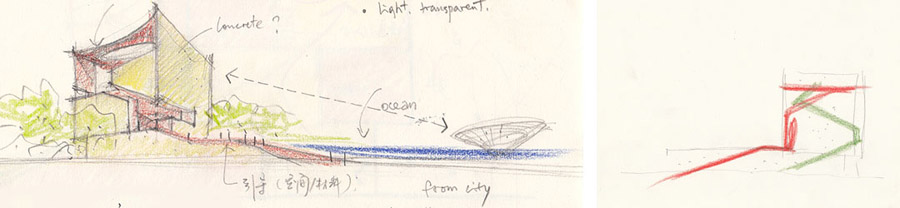
董:其实这个理解是有误差的。首先我觉得好的商业跟公众就不矛盾,尤其是遇到,如果是一个有一些,怎么说呢,一些好的商人,我觉得这件事在中国好像慢慢变成了一件对立的事,商业跟公共的利益,但实际上很多时候商业本身就代表着公众,因为他是一个非常有社会性的行为。
但是这个项目还有它特殊的东西,就是,因为本身这个地段就处在一个完全的城市公园里,所以其实业主从一开始也是在思考,他们在这 做这么一个品牌中心,怎么从建筑的处理上能跟公众产生更多的积极的关系。其实一开始没有说服的工作,大家的目标是一样的。政府也希望万科在这边盖这个房子具备这个功能,因为你从一个很功利的角度来讲,政府不希望老百姓指着鼻子说,比如说怀疑你为什么让一个开发商在这么城市核心的广场旁边盖一个房子。所以政府也有这个潜意识,他也希望这个房子表达对公众的一个友好。当然他可能脑子里想的是另外一件事,最后他看到我们的东西,他觉得,能这么解决。万科一开始也在想这个事,当然这跟我个人对设计的理解,包括对建筑和城市之间关系的理解也都契合,这其实是为什么我做这个项目的原因。一开始他们在跟我介绍这个项目的想法的时候说到了这一点,就是这个项目怎么处理私有和公共之间的一个关系的问题。
Dong: I don’t think that kind of understanding is accurate. Good business is not always on the opposite side of public welfare. Business should be part of the social advantage. It’s a pity that it is so hard to be realized in China.
But this project has its own particularity. The Vanke sales office is located in a public park. Therefore, it is important for the building to establish a kind of good relationships with the citizens nearby. The government agree with the idea as well, since they have to be cautious of permitting a developer’s building being built at such a public spot. So Vanke Group, the government, and I have the same notion about the “public passage” at the first place. Actually it was the reason why I was interested of being part of this project. It is a challenge of dealing with the relationship between the public and private, as I always addressed in when designing a building in the urban context.
5.
直向在成立短短几年的时间里完成了很多设计,而且每个房子都保持了极高的完成度,这在同等规模的国内事务所里是难得一见的。Vector Architects的团队如此年轻,您是如何保证每个项目都按一定的标准完成?这期间是否遇到过不可逾越的困难?
Vector Architects has done many designs in a few years, and each of them is highly accomplished, it’s rarely seen in the architecture firms of same scale. How do you manage to finish all these projects in such a standard with a so young team? Have you meet with any insurmountable difficulty?
董:这事儿其实没那么复杂。就这么说吧,就是一个单位,比如说他是二十个人也好,三十个人也好,你可以把它看成是一个能量的集体,然后这个集体在特定的时间段里能往前走多远取决于这个集体能量本身,他到底有多大能量。
其实说白了就是这么大回事儿,就是如果你综合来说这个事。所以我觉得直向在这几年的时间里面做了这么多事,肯定跟团队大家的积极的投入是有关系的,但是这从侧面也带来一个问题,就是比如说工作压力,节奏,这些事。现在直向也在一个转变的阶段,我们也希望能从一个原始积累的公司的气氛过渡到一个更可持续的这么一个有节奏的、更稳定的一个状态。
困难天天都有。其实我是这么看这个事,大家总是把直向跟完成度放在一起,这事儿我也觉得本身里面也有一些误区。这个误区的产生的原因就是因为中国的这个行业的平均水平。其实我们做的,如果你把我们做的事儿跟真正意义上的这种对于所谓完成度的追求,我指的是在一个世界范围内,我们其实就是一个正常的,甚至都到不了正常的状态,只不过中国这个行业有一个平均水平在那儿摆着。我们在完成度这件事上并不是我们认为建筑中最核心的问题,我们之所以做到这个阶段也是我们觉得这就是我们应该做的。我们觉得这件事是建筑的一部分,我们去花精力做了,可能其他很多设计师顾及不到这一点,或者他们认为即使设计师花精力做,由于别的原因——施工队,业主——也达不到那个状态。我们只不过在这件事上花了更多的时间,但是从一个对整个建筑的理解来讲,我们还是把它放到了一个恰如其分的位置,并不是说把它会放到一个很主体的位置。所以现在我经常在回答这个问题,就是你们是怎么控制完成度的。
Dong: It’s not so sophisticated as you think. A team is an accumulation of energy. How far the team could march forward within a certain period of time, will depend on the amount of energy that the team could hold.
We have done so many things in so few years. It is definitely related to the active engagement of the team. But on the other side of the picture, the problems of its own also rise, such as overloaded working pressure. I think we are at the stage of transition, from rapid-rising to sustainable-developing.
People always mention the fine finish quality when they talk about our design work. I don’t think that is the core of our design. We just did what the qualified architecture firms should do during the execution procedure. If you see something different, that’s because the average line in China is too low. We think we should achieve our standard, and we fight for it, while some other architects in China would not notice, or desperately believe that even they want to do, the workers and client would be too unprofessional to cooperate with them, so they might just give up. We just spend more time and energy on this issue.
6.
我发现直向建筑最近的项目,例如阳朔项目,采摘亭项目,大多处于风景优美的地方。现在中国受众最广的项目,比如一线城市中的住宅区或城市综合体,主要公建大多被设计院和国外事务所完成,对这种现象您怎么看?是否觉得中国部分的建筑师应该担当更多一些?
I had noticed that most of your projects, such as Yangshuo project, harvest pavilion project, are located in remote area with nice scenery. But the projects with the vastest audience, such as residential compound in first-tier cities, major public buildings, are mostly done by big designing institutes or foreign architecture firms, how do you think about that? Do you think some of the Chinese architects should be more responsible?
董:这个不是建筑师的问题,这是一个这个行业的环境的问题。其实我对这事儿也挺有意见,因为我觉得你从一个设计的能力和对这个设计的,怎么说呢,这个责任,从各方面去衡量,我肯定相信这些事务所能做得很好,如果我们遇到那种机会的话。
比如说在一线城市重要地段设计一个什么东西,但是这种机会在目前的这个行业的分配里很少能到我们这儿来,这有很多原因。比如说一般来说那种机会都是政府项目,政府项目是有它选择设计单位的依据的,而这个依据又跟体制是有关系的,比如说资质,比如说你在体制内部的名气和声望,这个对于(独立)事务所来说太难了。
我遇到很多那种,别说一线城市,就是二线城市三线城市的政府,他们都对(独立)事务所是什么东西他们都不了解。他们认为在中国这就是二流或者三流的,边缘的这种设计单位。当然这种情况我觉得也在好转,因为随着这个力量越来越大。
然后就是住宅项目,住宅项目我们的确有这种保持距离的心态,是因为如果你把住宅项目理解成是人居住空间的设计的话,但在中国的住宅,地产开发的住宅项目过多地偏向商品,所以它跟真正的人的生活之间的你需要关注的东西不一定是吻合的。从地产商的角度来讲,他认为他也没什么错误,因为这是他这个行业目前所处的一个阶段,可是从建筑师来讲的苦恼就是如果地产商关注的这个所谓住宅这个类型更多的是从商品销售的这个角度出发,那在你设计的时候如果你的对建筑的理解是从人的真的实实在在的生活的角度出发,它们之间肯定是有矛盾的,而这个矛盾建筑师又是处在一个弱势——在一个项目的合作里建筑师是乙方,是出于弱势地位的——所以我们说的话也不算。我们也遇到过,也有过这种经历的,但是很快我们就发现,可能不是一个适合我们去投入精力的一个领域,就是这种所谓快速的大规模的住宅建造,在目前的中国。所以我们的选择是保持距离。
Dong: I don’t think it’s the problem of architects. It’s problem of environment of this profession, and I dislike it. I think the private design firms could do better if they get such opportunities, because they have better design capability and more responsive in general.
Projects like what you have mentioned are difficult to distribute to design firms like us. There are many reasons for that, for example, the major governmental projects are often assigned to “players within the system”, and the independent design firms would be excluded.
I have undergone repeatedly that the governments of the second or third-tier cities, let alone the first-tier cities, don’t know what an “independent design firm” was; “some under-rated, marginal units “, they would think perhaps. But I think along with the rising power of us, this situation is changing.
As for the residential projects, we always keep distance to them. It is because most of the residential projects are all merely commercial goods for selling in china. We want to make residential building a space for life experience, but we gradually find out the decision maker are not in the same line. So we’d rather keep ourselves away from it.
7.
在最近的项目当中您从自然中寻求灵感,提到了“空”、“远”、“轻”、“透”这种具有禅宗意味的词,这种理念是如何出现的,您是怎么看待它们以及它们之间的联系的?
In recent projects, you get inspiration from the nature, and bring up the concepts of “emptiness”, “distance”, “lightness”, “transparency”, which remind me the ideas of Zen. Where all these concepts come from, and how do you define them and their connections?
董:我觉得这可能跟人有关系。就是最后还是你做的房子的一个取向,或者你感兴趣的东西,最后还是你这个人对什么感兴趣,或者说你从你的生活中看到了什么东西,或者你觉得你在你的生活中需要或者欣赏什么东西。这可能也有另外一个原因,就是我们现在有更多的项目是在风景的环境里,所以(会侧重)对于建筑和风景,如果风景代表自然的话,它们之间的一种关系的一种理解吧。
有一点我是一直这么认为的,建筑师也好还是建筑也好,一定要对中国人说的是“天”,西方说的是“自然”,一定要有一种尊重,甚至是敬畏的一种态度。所以我觉得这种东西表达在建筑里面就是你的建筑,当你面对任何一块场地的时候,你真的要去用心地理解这个场地,因为即使再枯燥的一个场地,它里面也蕴含着很多很生动的,可以和建筑发生关系的那种东西在。
我觉得这点现在越来越吸引我,包括我过两天准备在一个大学里有一个讲座,也是专门讲场地和场所之间的一个关系。如果你把建筑看作是一种媒介,或者说是一种潜在的一种力量,一种存在的话,它的介入应该能够把一个场地,一个原始的场地,转化成一个场所,而这个转化的动因,或者说它的意义其实就是人的体验。
因为当人去体验一块场地的时候,他跟场所就开始有关系了,否则的话那块场地只是一个物理的场地。所以我觉得这一点也是直向目前在一些项目——包括你现在看到的阳朔,咖啡厅,杨树林里的咖啡厅,包括我们在昆山做的那几个项目——越来越关注的一个事。
就是建筑能不能去通过建筑的这种巧妙的智慧的介入,能够把场地里面很多潜在的能量释放出来,把它变成人能够体验到的一个东西。所以你刚才说到那里面的几个关键词,比如“空”、“远”、“轻”、“透”,当然这里面也不意味着我们每个项目都要机械地去沿着这个东西,变成一个教条的形式化的东西,但是这几个词从某种意向上也都反映了我对于空间和风景之间的关系的一种直觉性的理解。
比如说到“空”,“空”和“远”是有关系的,我觉得。因为一个建筑在一片特定的环境里面,比如说一个开阔的风景,在我自己的理解里面,它的最高的一个价值就是应该建立人和风景之间一种更积极的联系。
就是可能没有这个房子的时候人能体会到这片风景,但是因为有了这个房子,他会体会到一个场所和风景的关系,那是一种被转化的关系,不是那个原始的那种物理意义上的关系。
而我又觉得只有“空”,或者是你说“空间”中的这个“空”也好,还是一种意念上的这种心理层面的“空”,只有做到这一点才能够让远处的风景和这个具体的空间发生关系。
就是这种最单纯的这种空的状态,也许是为了吸纳,更生动地吸纳风景对于建筑这种影响。“轻”、“透”,这种也是,当一个建筑用什么样的方式介入,在一片很自然的状态里面,是一种“轻”的状态还是一种“沉”的状态。但是其实这两个我觉得到不一定要有绝对意义上,尤其是在形式上的一种教条,但是在目前的几个项目里面,“轻透”也是我们的偏向,也是一个偏好吧。也是希望建筑能更轻地,以某种方式和周围的土地,和周围的天空,风景发生关系。这都代表在这个思路上的一些思考,在这个方向上的一些思考。
Dong: I think the concepts are related to personality, inclinations and interests. Another reason is most of our recent projects is located in natural landscape, so I have more chance of thinking of the relationship between the nature and the building.
Furthermore, I always believe that an architect should has a reverence, or even awe, to what is called “Tian” in Chinese, or “nature” in western culture. That means when you are on a site, you should understand site with your heart. Because no matter how lackluster a site seems to be, it always posses something energetic and meaningful for architecture.
The relationship of place and site becomes more and more appealing to me. It became the topic of my lecture in a university. If you look upon building as a kind of media, or a potential power, a kind of being, its involvement to site could make it into a place, something people could feel and experience.
Once a person begins to experience a site, he (she) would build up some kind of relationship with the site, otherwise it would be only a physical existence. How to build that kind of relationship is the major issue that I pay more and more attention in the project in Yangshuo hotel, Cafe In The Orchard , and projects in Kunshan.
The key is how to release the potential power of the site by the ingenious involvement of building, make it something could be experienced by people, that’s just the meaning of the key words you mentioned before, such as “emptiness”, “distance”, “lightness”, “transparency”. These words represent some intuitive understandings on the relationship between space and landscape of mine, but that doesn’t mean we would use them dogmatically in each project.
For example, there is a kind of relationship between “emptiness” and “distance”. A building in a certain environment, per say, a broad landscape, should achieve its ultimate value– to make a more active relationship between landscape and people.
That means if there is not the building, a person might be able to experience the landscape, but with the existence of that building, he (she) could experience the relationship of a place and the landscape, a relationship of sublimation, not the raw physical relationship.
Only “emptiness”, the void in space, or a kind of relax psychologically, could build a kind of relationship between the faraway landscape and a certain space.
The end of the most pure state of emptiness, may be is to absorb, absorb the influence that the landscape could make on the building, and the same for “lightness” and “transparency”. Within our recent projects, we have a tendency to make a building interpose the nature with a gesture of lightness, to build relationships with the surrounding earth, sky and landscape.
8.
刚才您讲的有一点就是代表直向未来的走向,我发现直向建筑过去和目前正在进行的项目,无论身处城市还是自然,都很少使用到曲线和自然形体,起码在我看来,其他一些建筑师的作品虽然是直线的,但是可以忘记直线的存在,而直向的作品,直线本身就是一个让人感受强烈的存在。而且在材料的使用上经常出现粗加工的材料,比如说质感直接的混凝土,肌理痕迹明晰的锈蚀钢板,色彩上就是跳跃的橙色也经常出现,就是直线啊,粗加工啊这些常见的元素您是如何定义的?它们是否属于您的个人偏好?或者说是风格?它们是否重要?在未来的发展转变中会消失么?
I realized that in the projects of Vector Architects, either previous or current, city or countryside, you rarely use curve and organic shape. At least for me, though in some other architect’s works there are straight lines, but you could not notice them; but in Vector Architect’s works, straight lines jump out as an un-ignorable existence. And you often use rough materials, for example, exposed concrete, rusty iron with strong textures. And even the color you like the most is the dramatic ones, such as bright orange. How do you define all these elements? Are they your personal inclination, or style? Would they be kept being important, or turned fading in the future?
董:我觉得设计大概是这么回事,首先一个设计师你要有方向,你要有态度,对一些事情你要有立场,这大概是一个比较形而上的一个东西。比如说你理念的来源,你对文化的看法,这些东西慢慢会当一个具体的项目出现的时候,这些东西都会慢慢转化成具体的设计,语言方面的这种思考,我指的语言是设计语言。
我觉得你刚才说到的这些因素,包括你比如说它的建筑的姿态,直线的还是柔和的曲线的,然后对于材料的这种质感和所谓这种重量感的(选择),这大概跟语言有关系,那语言实际上是属于个人的,我觉得。
也就是说我并不认为在一块场地上,同样,所有的条件都一样的情况下,只有一个唯一的答案,我从来不相信这一点。就是从设计和周围这些因素的关系上,一百个建筑师,你在国际上选一百个好的建筑师,他来了可以做出一百种应对的方式,而且其中可能这一百种都是好的。所以我觉得设计里面有一些是纯个人化的东西,是没法用理性,完全用理性来解释的东西。
但是呢,我又却觉得这些东西恰恰是设计里面,到最后的最后,就是我们,无论是从一个项目也好还是从一个建筑师的成长的状态也好,这是我自己的一个感悟,就是,逻辑、理性这些东西都是很重要的前提、铺垫,甚至是这个,你的设计道路上需要去理清楚的很多东西,这都很重要,(是)前提。
但是最后,这个建筑和人,和这个受众的这种最紧密的那种关系,实际上并不是逻辑和理性能够表达出来的,就还是有很多需要心和心之间的交流,就是设计师用内心的一种情怀,然后你感染到使用这个房子的人,而那些东西好多都是有感性的层面在的。
所以说你说一个房子里面,为什么你在这个房子里面的这个面你非要用钢,你不用石头,好多时候是没法用理性来解决的。当然,我觉得理性能让一个设计师变得越来越敏锐,或者说他,因为设计师,我们这说到另外一个问题,设计和艺术的区别,就是设计你还需要关注到很多客观的存在,你需要对原因很感兴趣,就是你为什么要这么做,对吧?艺术你可以不解释这个,但是设计必须,因为你,这是设计本身的一个出发点所涵盖的一种特性,他必须要关注原因。但是,我不同意就是这些原因直接转化成直接推导出的结果,往往不是一个好的设计,好的设计是你关注原因,在过程中你思考,然后最后要有一个转化的过程,这个转化实际上就是一个个人感性的介入,然后能把它所有这个物理层面的原因全部融化,然后又铸成一个新的东西。你也许到最后这个新的东西和最开始这个起点之间你没有直线,也许就是一个模糊的状态,但是它们之间是有内在的一种思考的关联的。
Dong: I think a designer should have an direction, an attitude, a stand point, that’s something metaphysical, for example, the source of your idea, your view on culture. When a project comes to your hand, these things could be materialized into the language of design.
The elements you mentioned, such as the straight lines, the choice of texture, maybe related to the language of design, which is really personal.
I don’t think my way is the only right one, never was it. In a certain project, in a given site, if you choose 100 good architects all around the world to submit their works, you would get 100 different answers, and in great possibility that all the answers are right. What I had done is rather personal. I don’t think there was anything absolutely rational.
That doesn’t mean logic, reasoning is not important, you must make many things clear in the first stage, it’s the foundation of design.
But at last, the close relationship between building and people could not be expressed by merely logic and reasoning. It also relies on the designers’ affection of emotion, from their heart.
So more often than not, why a building is built by iron rather than stone could not be explained only by reasoning. Of course, I must point out that design is not the same as art. In art, you could do without explaining why, but in design, you must know the reason why you do in that way.
But furthermore, I still think that a good design comes out from a designer is not the direct result of reasoning. A good design is a process of morphing: you melt all these physical reasons with personal feeling and wisdom, and then cast them into a new thing. Maybe you could not find straight lines connecting the beginning and the end of a design, but you can see some more sophisticated connections under the surface.
9.
未来发展会转变吗?因为之前您刚刚回国的时候还没有提到“轻”、“透”,但是在这七年的实践当中,您提到了这种转变,我也察觉到了这种转变??
You mention the concept “lightness” and “transparency” after you come back to China. Will you go further and make something different in the
future?
董:但是实际上我们现在又对“重”开始感兴趣了。你比如说这个咖啡厅,你看你眼前的这个模型,它实际上是在重和轻之间的一种关系,一个漂浮和一个,就是贴在地面上的重的体量和一个漂浮的轻的体量。包括我们现在阳朔这个项目,也是一种对那种重的(体现)。
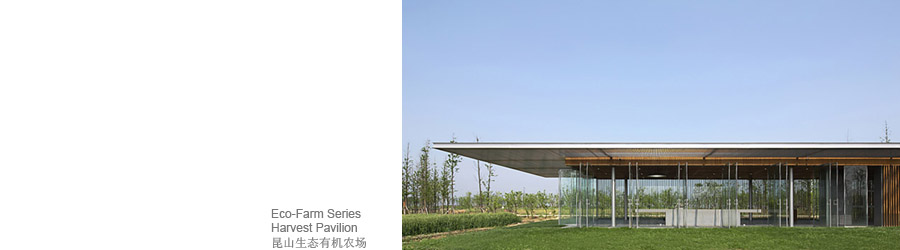
这个我觉得一个是因地制宜,就是每个项目都不一样,你在这个项目里面所面对的这个周围的环境,物理环境和这个文化背景不一样,自然而然可能会对你的这种具体的选择产生关系。你比如说在昆山那个项目,为什么那么轻,实际上那个跟我对江南文化的那种潜意识里面的一种理解是有关系的,就是一种灵动的状态,就是建筑和空间,和这个周围的环境之间是一种若即若离,然后灵动的一种状态。
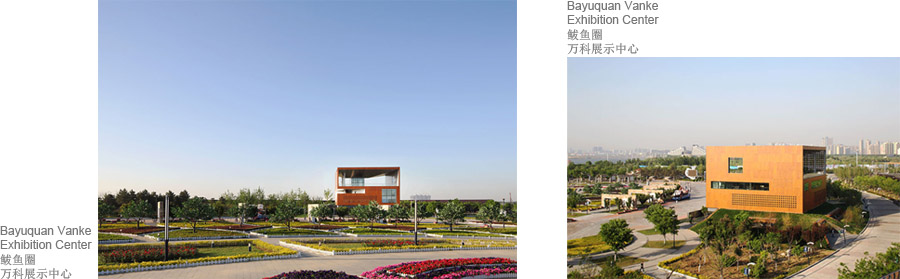
虽然他落实到一个建筑语言的倾向上它就是很轻,很透的一种状态,但是在北方,你比如说我们最近设计的那个鲅鱼圈那个房子,其实那个挺“重”的:下面是一个土坡,上面是一个木头盒子,你只有走到那个空间里面,那些金属(才)会给你一种“轻”的一种感受,但是在外面看这个房子其实挺结实的。
我觉得这跟每个建筑所处的条件都有关系。直向毕竟才五年,我们做的房子真正盖出来的也不就六七个,所以从这个角度来讲很难总结,我觉得,既然没法总结也就很难预测将来是什么变化。因为我倒没觉得我们现在已经形成了一个像迈耶或者像妹岛那种非常既定的个人标签式的那种语言,还没有,我也不相信,这可能跟对设计的理解有关系,因为我觉得你面对每一个不同的场地,然后在这个场地周围生活的人,然后他的文化,这种烘托下,我很难理解为什么每个房子都是一样的,比如说像那些标签式的建筑师。
Dong: Indeed, I am beginning to be interested by the concept “heaviness”. Such as the model of the Cafe in front of you, you can see a part that crouching on the ground, it’s heave, and another part is floating, it’s light. You can see the relationship of lightness and heaviness. And in our project in Yangshou, you can see the expression of “heaviness”.
I think a designer should suit his (her) measures to conditions, you should chose your answers according to the environment and local culture.
For example, in the Kunshan Project, I think in the culture of south of the Yangtze River, the relationship between the buildings and the surroundings is something between attachment and detachment, something vibrant and ethereal, so I choose the theme of lightness.
But in the north, such as the Bayuquan Vanke Brand Centre project, is something heavy: a big wooden box on the top of an earth slop, only if you step into that space, the metal surface could give you a feeling of lightness.
Vector Architects is only five years old, with only six or seven accomplished building, so I don’t think our style has been fixed, so to ask “how would we change” is a rather irrelevant question. I don’t believe we had brand-like language like famous architects, like Richard Meier or Sejima, and I don’t think I should become someone like them. I don’t agree with some designers of adding the “label” of him (her) on every project, since each project has very unique background and context.
10.
什么是您下一步想坚持的?
Then, is there something you would insist along the way?
董:我觉得现在直向里面,慢慢这五年开始沉淀出就是我们做事的一些方法,然后和做事情的一些这个,态度吧。这些东西我觉得都是比较宝贵的。你比如说在这种环境里,你怎么能够让自己还能够保持一个认真做事的状态,而不是一个就是天马行空,飘在一个半空中的状态。就是怎么还是脚能够真正地踩在事儿上,不是踩在一个虚幻的那个气氛里面。
这个我觉得是,如果从一个公司来讲,这个是我们希望能够,就是也许五年后、十年后仍然能够保持的一个状态,就是对建筑还是一个兢兢业业,然后每一个设计都非常认真对待。我觉得设计这个事儿,很多具体的东西它会变,就是你随着我对这个设计的、建筑的慢慢的积累和理解的不同,他肯定会发生一些变化,所以我觉得这个东西,一些具体的东西,我觉得应该是顺其自然,就是随着你的每个人的理解慢慢,你可以称之为,就是在这条路上你应该会越走越远嘛,所以你也会随之发生变化。但是我觉得态度是可以坚持的,就是做事儿的一个目的,从一开始创立直向的一个初衷,我们也是希望好好地做房子,而不是利用这个平台去,去实现或者说过分地强调,去实现一些别的东西。这点可能是我们很清楚的一件事儿。
Dong: I think Vector Architects has gotten a certain way of doing things, it’s a kind of attitude, earnest and down-to-earth rather than ungoverned and floating-in-sky.
I hope as a company, Vector Architects could keep in that state, even after five or ten years, be earnest and down-to-earth in each project. I think I would change by time, change according to different conditions, when you go further and further, you will definitely change, it’s good to change naturally. But the attitude is what I would keep. In Vector Architects, the fundamental goal from the beginning is to design good buildings, rather than do something irrelevant to the building itself or achieve some wild ambition, it would always be true to me.
后记
By Xiangling 向玲
多年前,曾有幸跟着董老师(董功)做了项目,回想起来,那个时期是我迄今为止建筑师工作历程中最为辛苦但也是收获最多的时期。
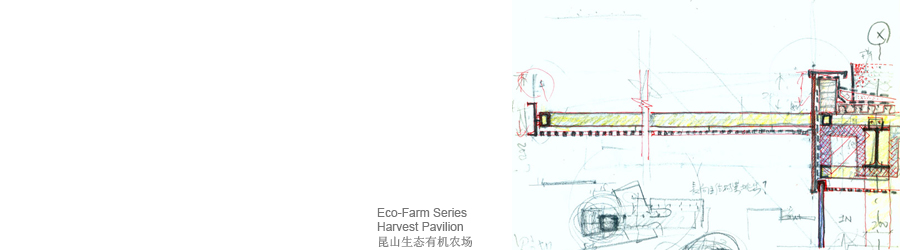
非常幸运的在短短几个月之内,经历了一个完整小项目的前期,概念,扩出,施工图,现场等各个阶段。董老师对项目的控制力,我个人在后来的建筑师工作经历中没有遇到比他更强的建筑师。通常董老师在最初构思的时候就会考虑到节点做法,甚至把细部草图画了出来。预防了在后期因为思考不周,而被施工图设计师改得面目全非,或者材料商和建造商无法完成设计效果的情况。董老师是一位能力综合,控制力很强的建筑师。这样全面发展的建筑师在中国尤为可贵。不少建筑师会抱怨中国的施工技术做不出来自己的东西,还有不少建筑师压根也不在意建成后的效果,这两种极端都让人觉得遗憾。
记得某天和前同事李硕聊天,他提到自己想念董老师的严格作风,后来没有遇到这般的人,缺点劲儿。
“建筑不是有机会就能做好。这是跟人的觉悟程度,做事的要求,控制能力和美学判断都有很大关系的。”这句话说得相当有道理。
几年后再见到董老师,他的公司规模在精心的控制下稳步发展。在建筑行业上,几乎所有人都说中国机会很多,可是这些机会也伴随着魔幻奇葩色彩
的困难和风险。
期待董老师未来走得更远,更发展,以及更多的实践作品。
More: 直向建筑, 更多关于他们:Vector Architects on gooood 直向建筑招聘信息
他也纳闷为什么迈耶和妹岛在哪里做的建筑都一样呀哈哈哈哈
不清楚谷德的受众主要是普通民众还是专业建筑从业者,访谈中提出问题的能力似乎有待提高。也许是想面对对建筑有兴趣的民众从而增加传播力度,因此提问给人一种明知故问的感觉。但总体还是很喜欢谷德的质量以及友好的阅读体验。
为什么好的建筑都留不下来!
.
严格一定是要用在最关键的地方,即原则性,法规性的地方,只顾精益求精而忘了一些原则是非常可怕的。控制别人的时候不要忘了控制自己的脾气,不要忘了简朴,随意也是一种美,就像很普通的小区在当时居民自主的四旁绿化下也能变的宜人。建筑师的确是属于上层建筑的,但如果只顾光亮挺薄,不顾小花小草和个人的情感和隐私,只能为自己造点纪念碑而已。这就是为什么巴拉干自宅永远比范思沃斯住宅更感人的原因。
确实很厉害
专业就是专业,语言与手势丰富:"逻辑与理性是建筑的前提,并且结合感性与用心"“恰如其分”“若近若离”……。
为什么没有中文版的实录?建筑师是老外?有点绕圈子吧!
很喜欢他的语言理解