来自 中国电建集团华东勘测设计研究院有限公司 对gooood的分享。更多请至:HUADONG ENGINEERING CORPORATION LIMITED on gooood
Appreciation towards HUADONG ENGINEERING CORPORATION LIMITED for providing the following description:
项目概述
Project Introduction
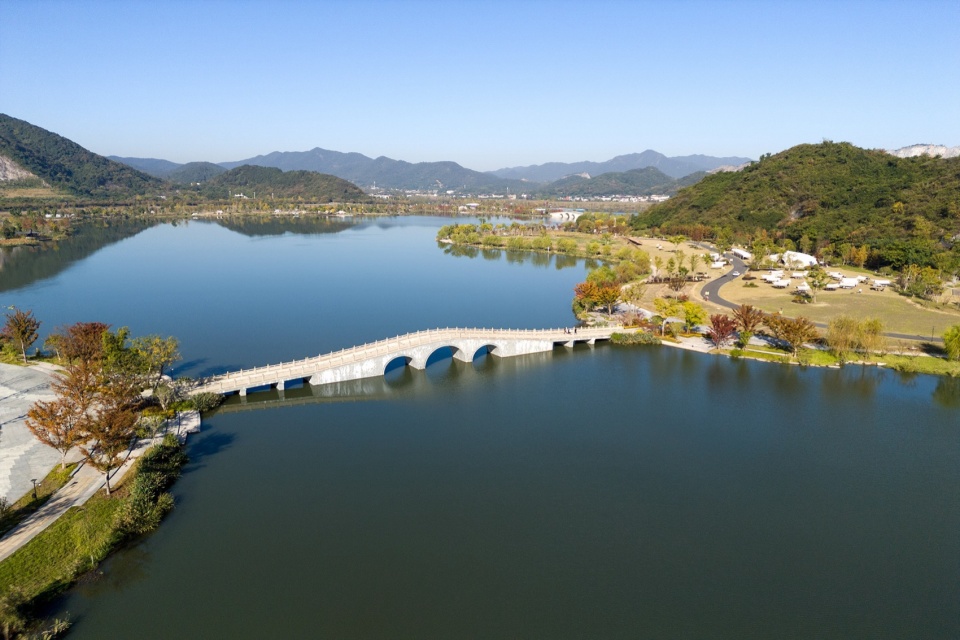
铜鉴湖位于杭州西湖区双浦镇,地处钱塘江、富春江、浦阳江三江交汇之地。历史上的铜鉴湖被称为西湖的姐妹湖,是杭州南部重要渡口,承担着之江片区的防洪排涝调蓄,同时也是南宋文化的重要空间载体。由于钱塘江泥沙淤塞、围湖造田,铜鉴湖原水域逐渐萎缩消失,造成之江片区“旱季缺水、雨季内涝”等问题,同时生态环境脆弱,生境单一。
▼项目视频,Project video
Tongjian Lake, located in Shuangpu Town of Hangzhou, is historically the sister lake to the famous West Lake. Positioned at the convergence of the Qiantang, Fuchun, and Puyang Rivers, it was a key ferry point in southern Hangzhou and a significant cultural hub during the Southern Song Dynasty. Over time, sediment from the Qiantang River and land reclamation projects caused the lake’s waters to recede. This led to local water shortages, flooding problems, and a fragile ecosystem.
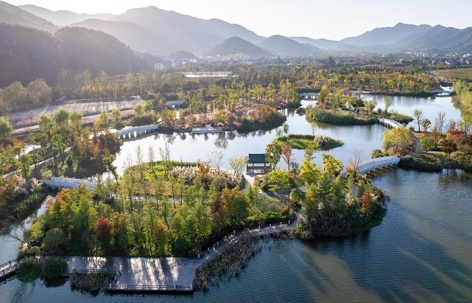
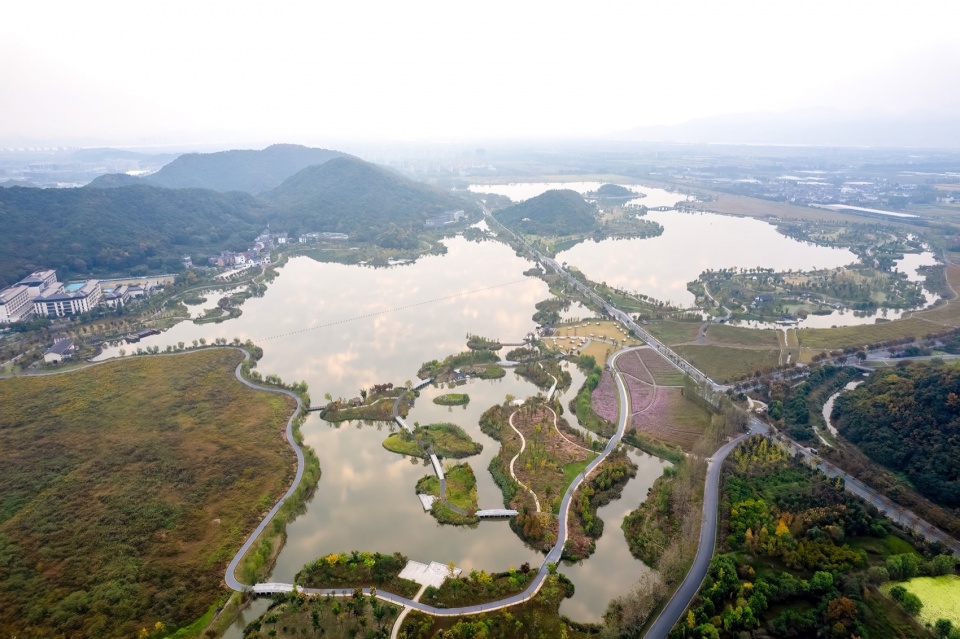
▼总体鸟瞰,overall aerial view © 梅可嘉
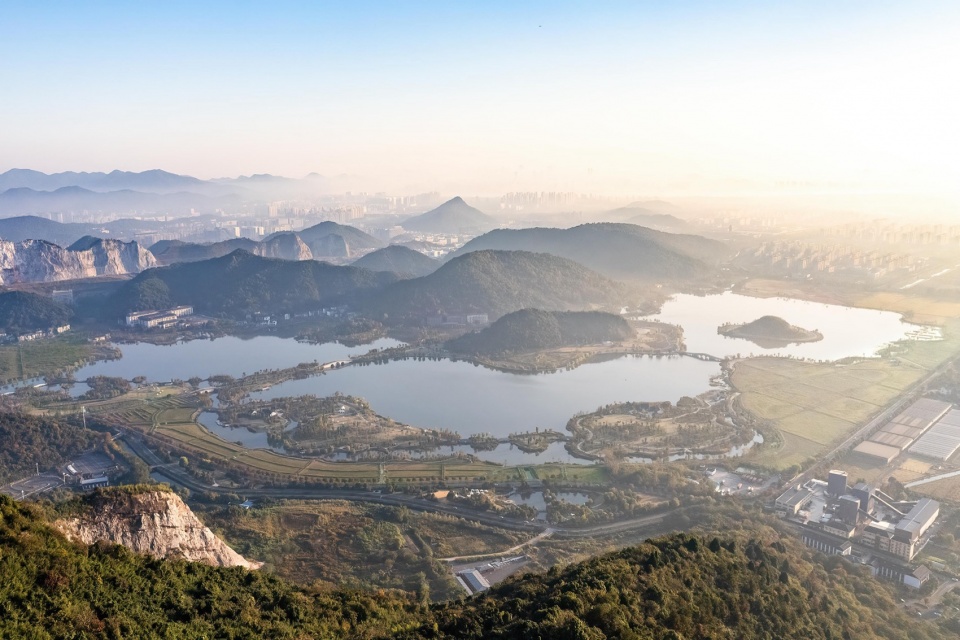
设计团队基于防洪排涝调蓄水利工程要求,运用景观设计手段协调解决水利、生态、文化、公共利益等多方面挑战。在尊重历史脉络、文化遗存和生态基底的基础上,重现了铜鉴湖的生态山水格局。作为由景观设计师主导的城市水利枢纽工程,本项目促进了片区平原河网的水体流动,将水质从劣五类提升到Ⅲ类标准,区域雨洪利用效率提高,防洪排涝达到20年一遇的标准。区域生态环境改善明显,湖区生物多样性提高,珍稀物种频频出现。修复后的铜鉴湖也因此成为备受欢迎的生态郊野公园、文化自然教育基地和公共活动聚会空间;辅助了区域产业结构转变升级,激发了区域发展和经济振兴。
The design team used landscape techniques to address flood control, ecology, culture, and public needs, revitalizing Tongjian Lake’s historic and scenic landscape. Led by landscape designers, the urban water hub project improved water circulation and raised water quality from Class V to Class III standards. It also met the 20-year return period standard for flood control.
The region’s ecological environment has improved significantly. Biodiversity has increased, and rare species are now appearing. Tongjian Lake, once restored, has become a beloved ecological park, cultural and natural education center, and community gathering space. This rejuvenation has also supported the area’s industrial growth and sparked regional development and economic revitalization.
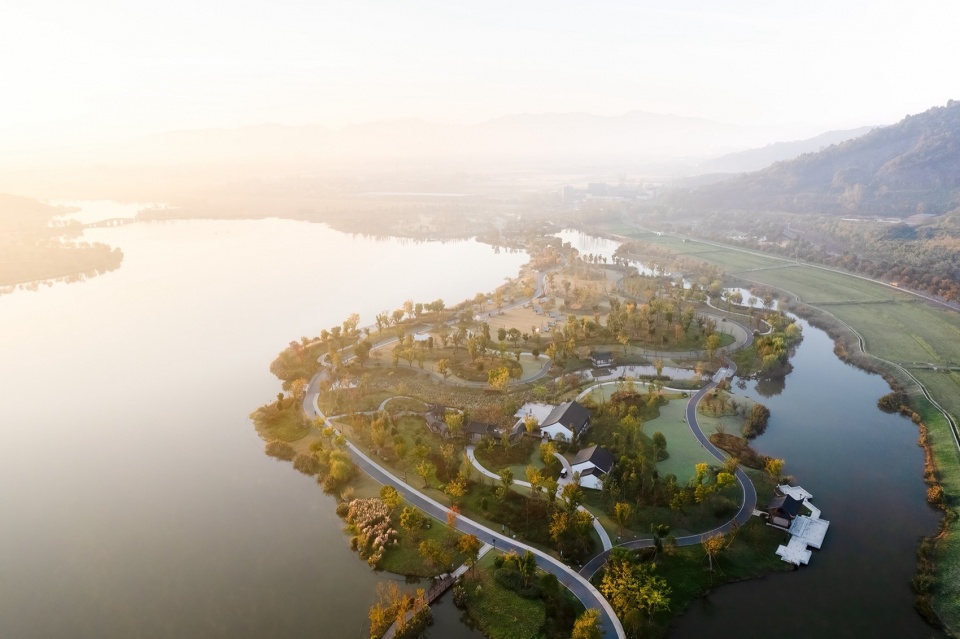
▼湖景鸟瞰,lake aerial view © 梅可嘉
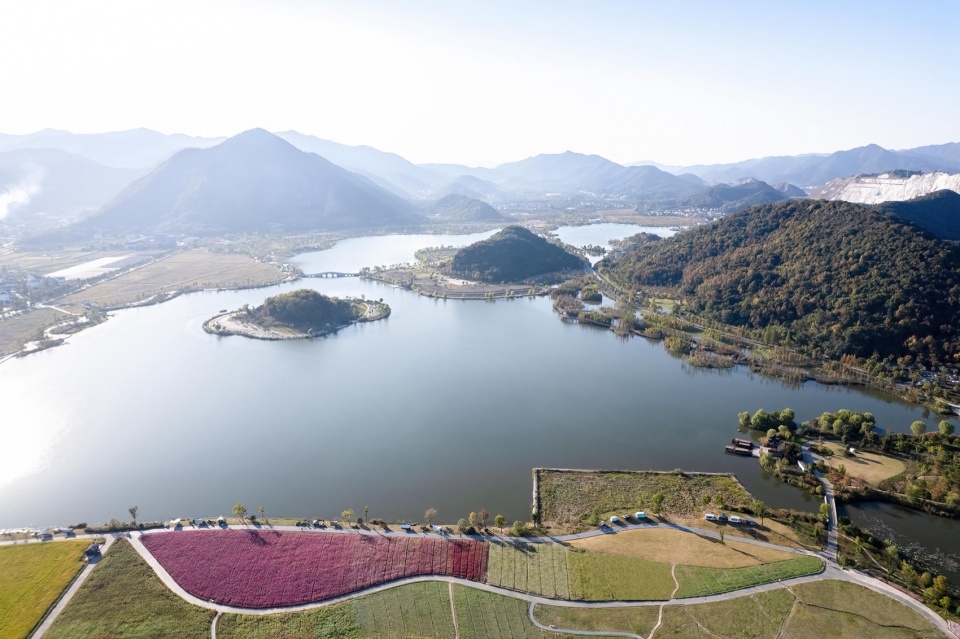
场地现状与难点
Site Analysis & Challenges
由于钱塘江泥沙淤塞和围湖造田等原因,铜鉴湖湖面逐渐被工业厂房、水塘、农田、和村庄侵占;部分水域萎缩成为荒废的水田、垂钓场、莼菜、菱角养殖塘等生产性水域。原本约2平方千米的湖面萎缩至不足0.2平方千米。随着城市的快速发展,铜鉴湖所在区域的防洪排涝能力严重滞后,多次出现内涝,积水深度达到1米以上。同时,铜鉴湖场地基底较差,场地生态环境脆弱、生境单一;植被种类以香樟、樱花生产苗圃和芦苇、荻花等次生草本植被为主。伴随着湖面萎缩,众多历史人文遗迹也随之被破坏、消失,周边村庄风貌衰败、经济下行。如何在防洪调蓄基础上,兼顾水环境改善、生态修复、景观提升和区域文化经济振兴,成为本项目的难点。
▼现状问题,existed challenges © 中国电建集团华东勘测设计研究院
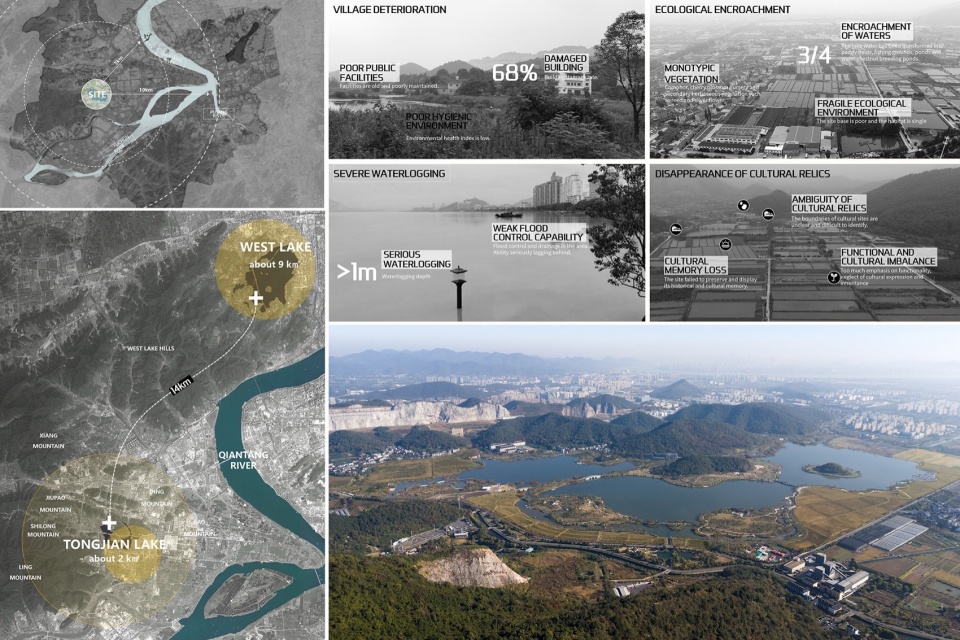
Sediment buildup from the Qiantang River and land reclamation caused problems for Tongjian Lake. It was encroached upon by factories, ponds, farmlands, and villages. Some areas turned into abandoned paddies and ponds for chia and water chestnut cultivation. The original 2-square-kilometer lake shrank to less than 0.2 square kilometers.
With rapid urban development, the lake’s flood control capabilities lagged, leading to frequent flooding with water depths exceeding 1 meter. The lake’s foundation was poor, its ecological environment fragile, and habitats limited, dominated by camphor trees, cherry blossom nurseries, and secondary herbaceous plants. As the lake receded, historical and cultural relics were destroyed or disappeared, and nearby villages suffered economic decline.
The project’s challenge was to improve flood control while enhancing water quality, ecology, landscape, and regional cultural-economic revitalization.
▼湖景鸟瞰,lake aerial view © 梅可嘉
设计策略
Design Strategy
在满足500万立方总库容和320万立方调蓄库容的水利规划要求下,设计团队综合历史湖面形态、场地空间格局、景观资源、交通体系等因素恢复历史上2平方公里铜鉴湖面积,合理布局85.97万平方米深水区,73.22万平方米浅水区,和40.81万平方米的岛屿,确定岸线雏形和水位深浅,确定常水位6.5m,湖底标高2.5m,浅水区底标高5.5m。依托Rhino进行Grasshopper软件运算,得出分形维数、岸线发育系数、水体空间包容面积等,重塑铜鉴湖28.3km的生态亲水岸线。设置自由仿生的岛屿形态围合出大小湖面、溪流和湿地群岛,营造不同的亲湖感受。
▼分析图,analysi drawing © 中国电建集团华东勘测设计研究院
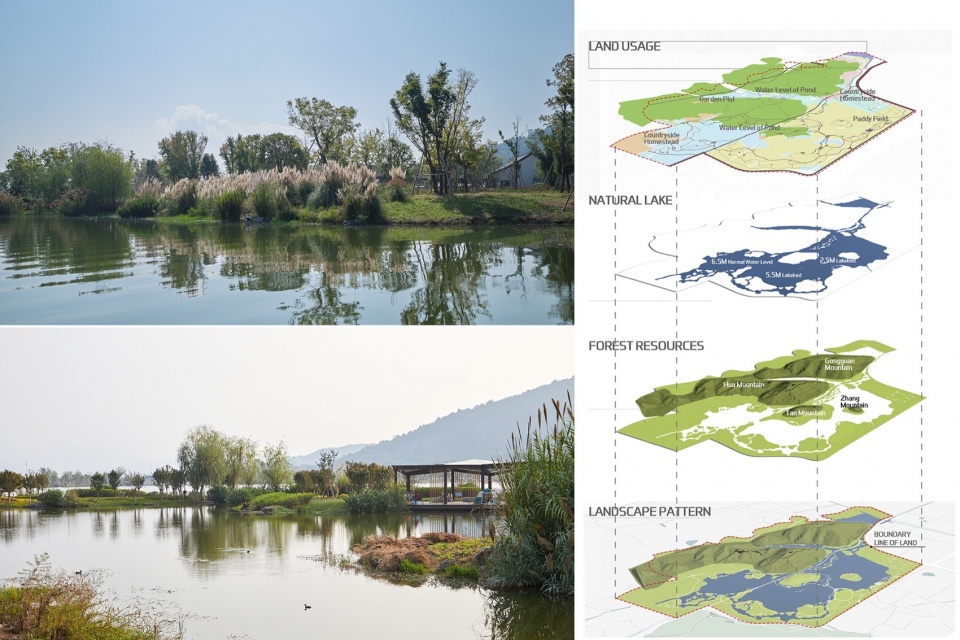
To meet the water planning requirements of 5 million cubic meters total storage and 3.2 million cubic meters regulated storage, the design team integrated factors like historical lake morphology, site spatial pattern, landscape resources, and transportation systems.
They aimed to restore the historical 2 square kilometer surface area of Tongjian Lake, strategically laying out 859,700 square meters of deep water areas, 732,200 square meters of shallow water areas, and 408,100 square meters of islands. They established the shoreline’s initial form and water depth, setting the regular water level at 6.5m, lakebed elevation at 2.5m, and shallow water area base at 5.5m. Leveraging the Grasshopper software in Rhino, they calculated the fractal dimension, shoreline development coefficient, and water body spatial containment area, reconstructing Tongjian Lake’s 28.3 km ecological waterfront.
The design team designed biomimetic island shapes, encapsulating varying lake surfaces, streams, and wetland archipelagos, fostering diverse lakeside experiences.
▼景观与建筑,landscpae and buildings © 梅可嘉
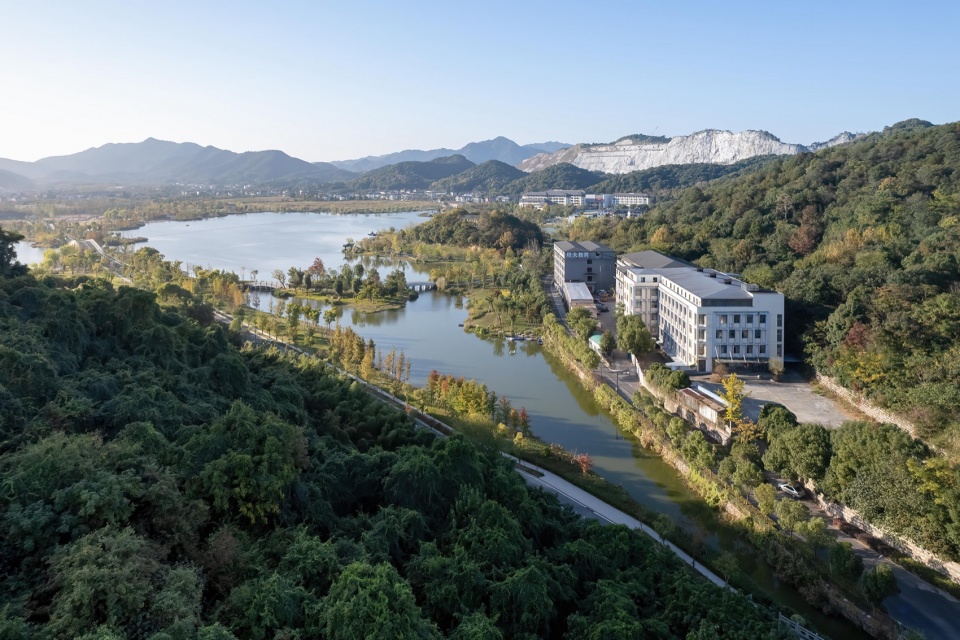
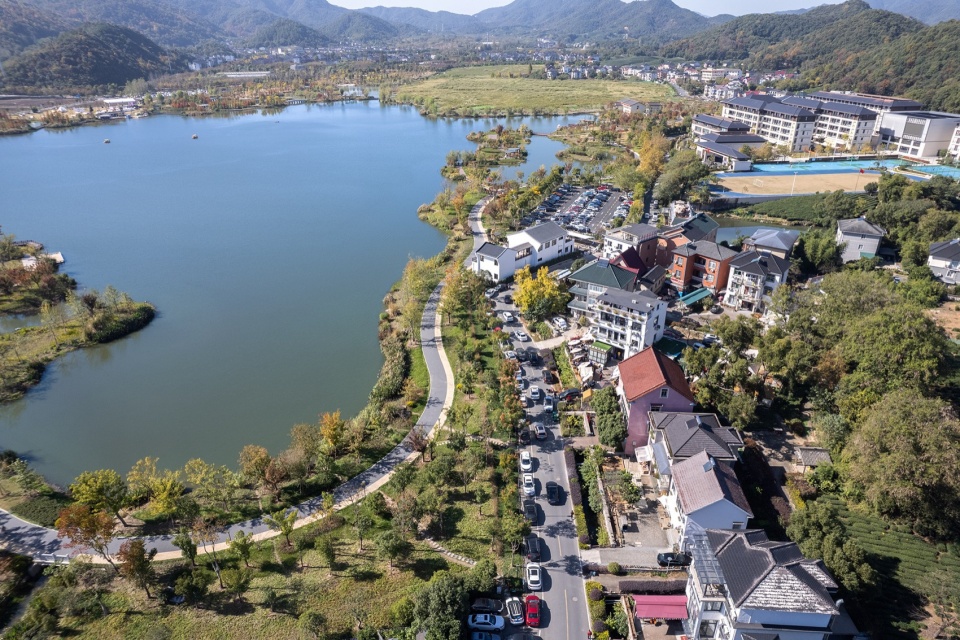
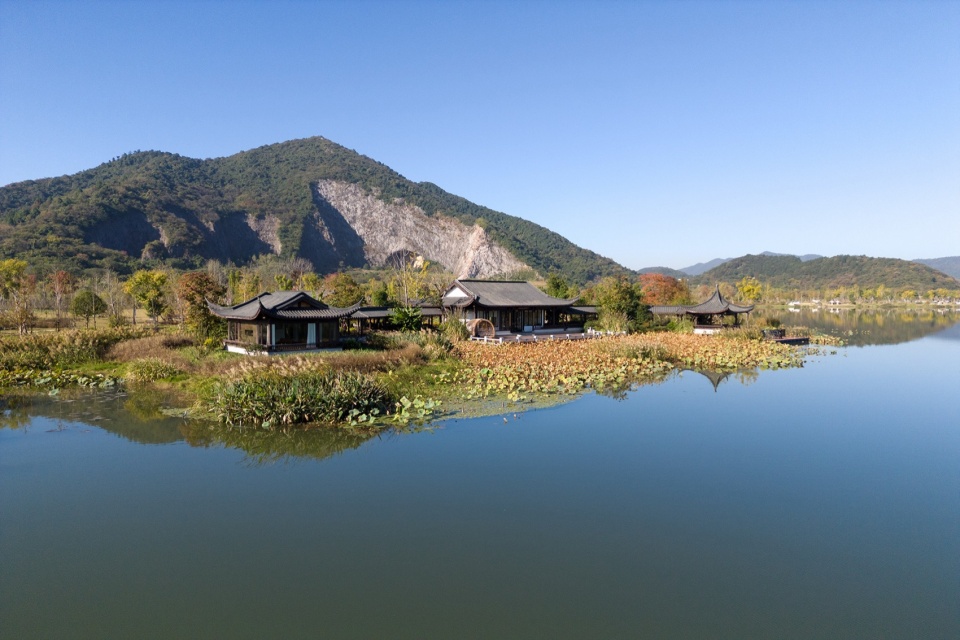
设计团队以场地的湖、山、田、茶、草为生态基底,重塑蓝绿基底、修复生境。结合湿地、岛屿、驳岸、缓坡等地形营造生境群落,构建物种多样性。通过文化遗产评估方法来识别和梳理现存遗址,确定保护区域;将历史记忆融入古湖埠码头等景观节点,以最大限度地利用自然,并展示该地的历史。在设计过程中,植入产业开发,融入了徒步、游船、登山、露营、人文科普等多重体验游线,以生态水利带动周边区域经济发展。
The design team drew upon the site’s natural elements – lakes, mountains, fields, tea, and grass – to rebuild the blue-green infrastructure and restore habitats. By integrating wetlands, islands, revetments, and gentle slopes, they fostered diverse ecological communities, enhancing species biodiversity.
They also employed cultural heritage assessment methods to identify and organize existing relics, creating conservation areas. These historical memories were embedded into landscape focal points like the ancient lake port, which highlighted the site’s history.
Throughout the design process, they incorporated industry development, weaving in experiences like hiking, boating, mountain climbing, camping, and cultural education, leveraging ecological water management to drive regional economic growth.
▼景观步道,landscpae walkways © 梅可嘉
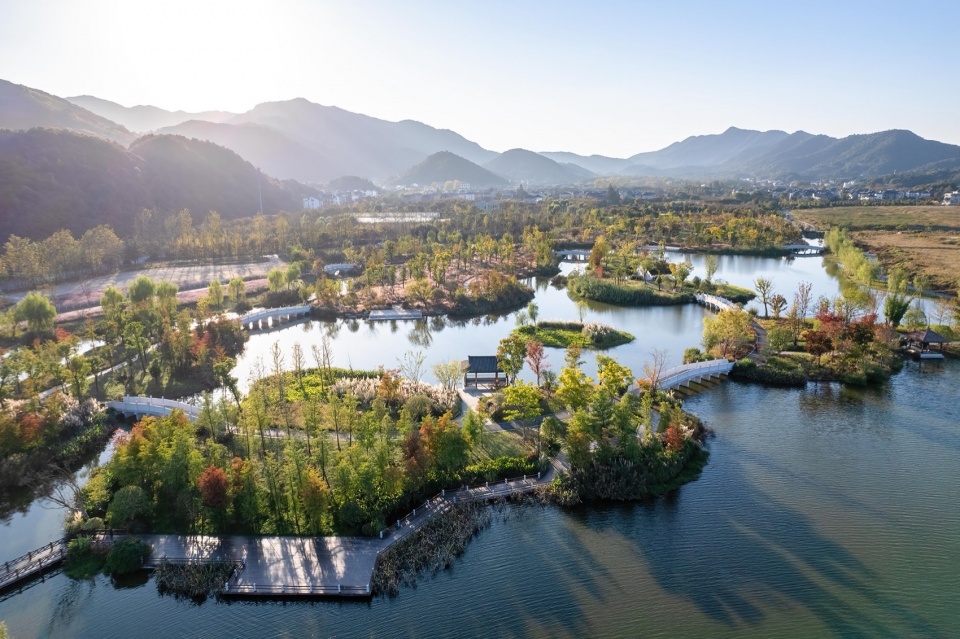
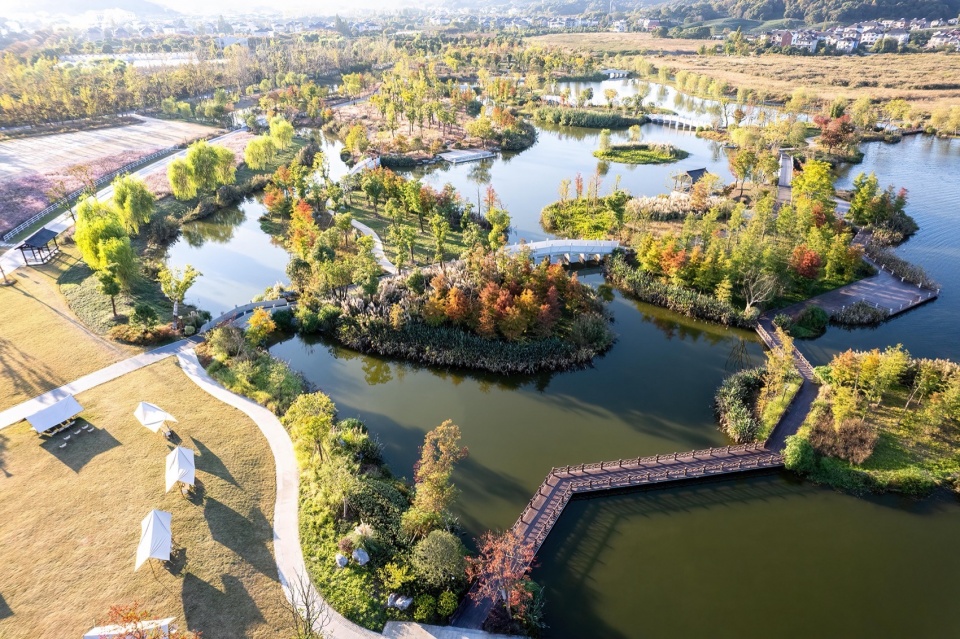
空间节点设计
Spatial Nodes Design
01 重塑功能|Redefining Function
本项目通过开挖铜鉴湖、新建1.86km的引排水隧洞等措施,增加了320万m3调蓄库容,完善了区域整体防洪排涝和调蓄能力,将区域的排涝标准从10年一遇提升到20年一遇最大24小时排出不受淹。针对山水和隧洞口易浑浊影响水质,北面湖水通过布置岛屿和水下地形引流至沿山北渠,减少对南面湖区的扰动;湖区西北侧布置5.2万平方米湿地,缓冲、净化沿山北渠汇入的山水。利用MIKE21软件,计算湖区水动力数据,在不易流动的区域设置潜水射流曝气设施和FBR生物循环床,增加狐尾藻、黑藻等沉水植物净化水质。
▼功能分析图,function analysis © 中国电建集团华东勘测设计研究院
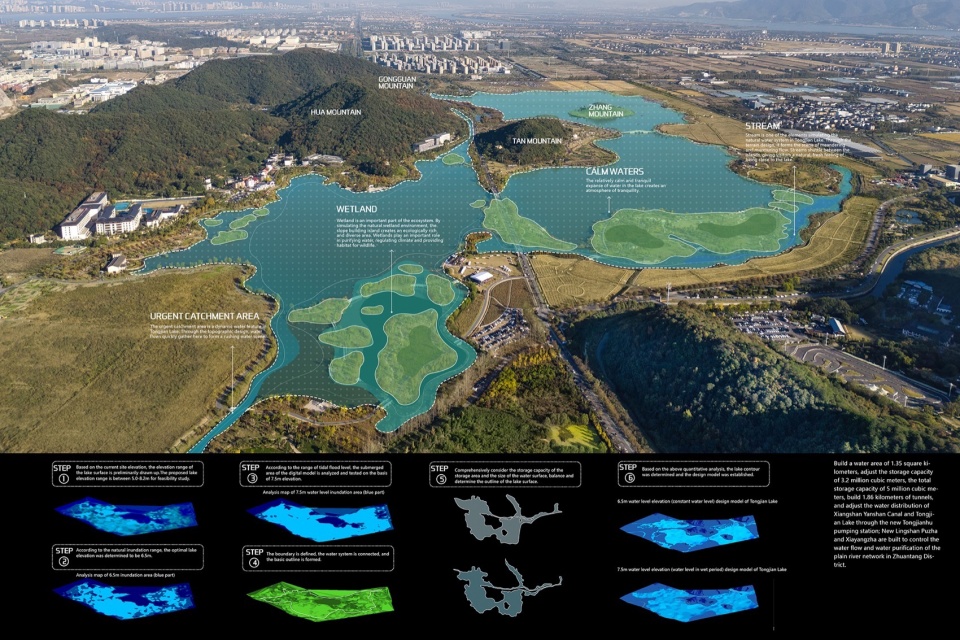
Through excavating Tongjian Lake and a new 1.86 km drainage tunnel, the project boosted the storage capacity by 3.2 million m3, enhancing the region’s flood control from a 10-year to a 20-year recurrence.
To address potential water quality issues from mountain waters and tunnel entrances, water from the northern part of the lake is directed towards the mountain’s northern canal. This is achieved by placing islands and underwater terrain strategically, minimizing disturbance to the southern part of the lake.
A wetland area of 52,000 square meters has been set up on the northwest side of the lake to buffer and purify the mountain waters that flow into the northern canal. Using the MIKE21 software, the water dynamics of the lake area were calculated.
In areas with limited water movement, submerged jet aeration equipment and FBR (Fluidized Bed Reactor) bio-circulation beds were installed. Additionally, submersed plants like Myriophyllum verticillatum and black Hydrilla verticillata were introduced to further purify the water quality.
▼景观节点,landscape nod © 梅可嘉
02 修复生态|Restoring Vital Ecology
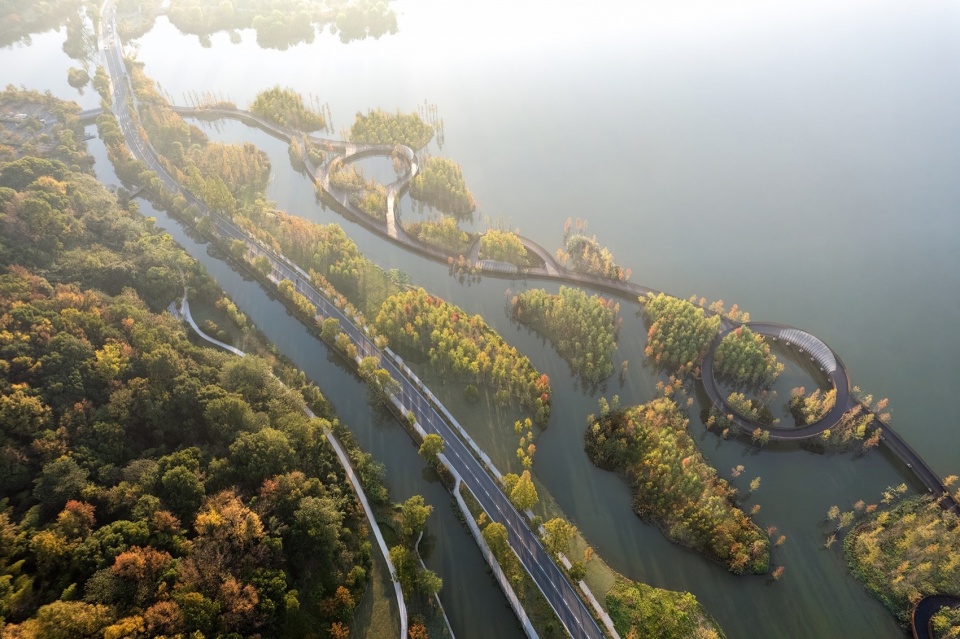
设计团队根据调蓄库容,结合湖区内的湿地、岛屿、驳岸、缓坡等场地条件,依次种植水生、湿生、以及耐淹灌木地被、开花亚乔木、色叶大乔木等耐水湿植物;满足5.5-7.5m不同水位要求,为不同食性和活动特点的鸟类、鱼类提供活动空间,保证栖息和繁衍。驳岸设计以草坡入水、卵石滩、松木桩等可渗透驳岸为主,保证水陆界面生物多样性和能量交换。
Based on the regulated storage capacity and considering conditions within the lake area such as wetlands, islands, revetments, and gentle slopes, the design team sequentially planted aquatic, wet-tolerant, and flood-tolerant plant species. These plantings meet the requirements of different water levels, ranging from 5.5-7.5 meters, and provide spaces that cater to birds and fish with varied dietary and behavioral needs, ensuring suitable habitats and reproduction.
The revetment design primarily incorporates permeable features, such as grassy banks leading into the water, pebble beaches, and pine pilings. This design promotes biodiversity at the water-land interface and facilitates energy exchange.
▼水陆界面,water-land interface © 梅可嘉
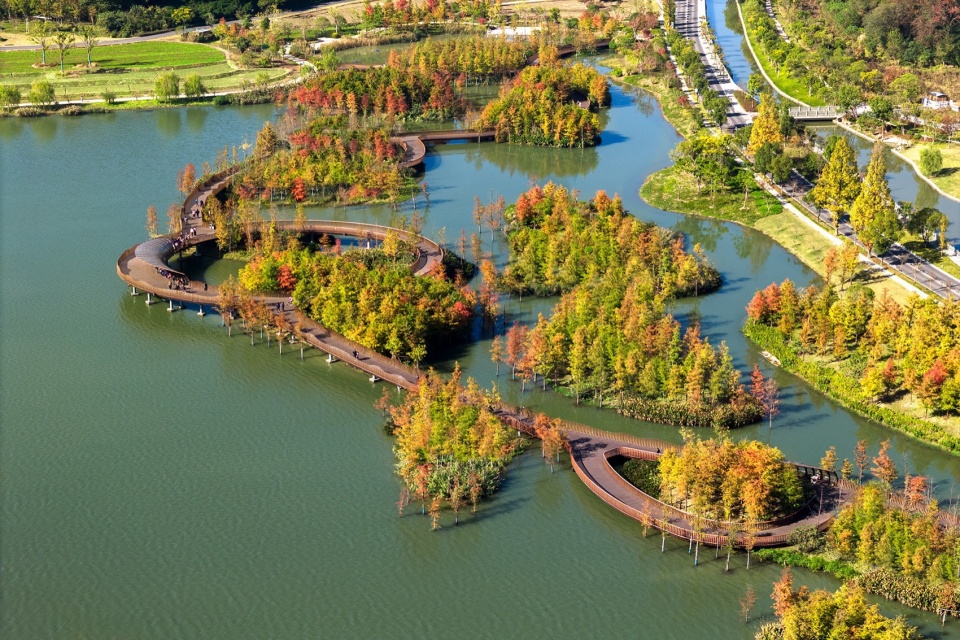
湖区建成后生境单一的香樟林、水杉林变成层次丰富的梭鱼草+菖蒲+水杉、千屈菜+金丝桃+无患子、细叶芒+樱花+香樟等层次丰富的植物生境。生物多样性调查与评估中发现浙江五大天姿之鸟——水雉、苇鹀、红颈苇鹀等珍稀鸟类,以及镇海树蛙、斑嘴鸭、尖吻蝮等珍稀动物。
After the lake’s completion, formerly homogeneous forests of camphor and metasequoia trees have transformed into diverse plant habitats, such as Pontederia cordata + Acorus calamus + Metasequoia glyptostroboides, Lythrum salicaria + Hypericum monogynum + Sapindus saponaria, and Miscanthus sinensis + Prunus serrulate + Cinnamomum camphora mixes.
Biodiversity surveys have identified some of Zhejiang’s most charismatic birds like the Hydrophasianus chirurgus, Emberiza pallasi, and Emberiza yessoensis, as well as rare animals such as the Rana zhenhaiensis, Anas zonorhyncha, and Deinagkistrodon acutus.
▼生物多样性,Biodiversity © 梅可嘉
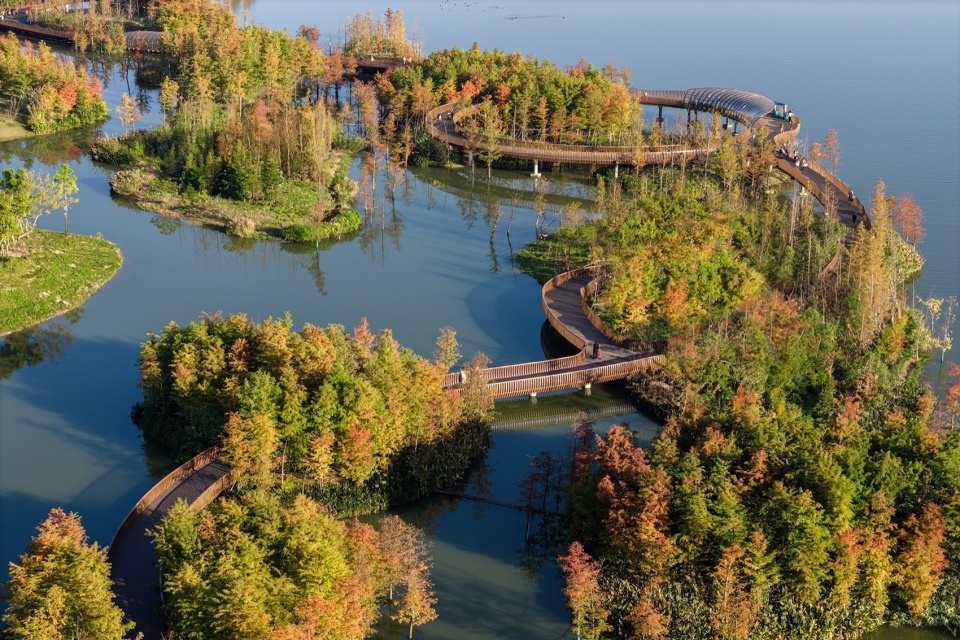
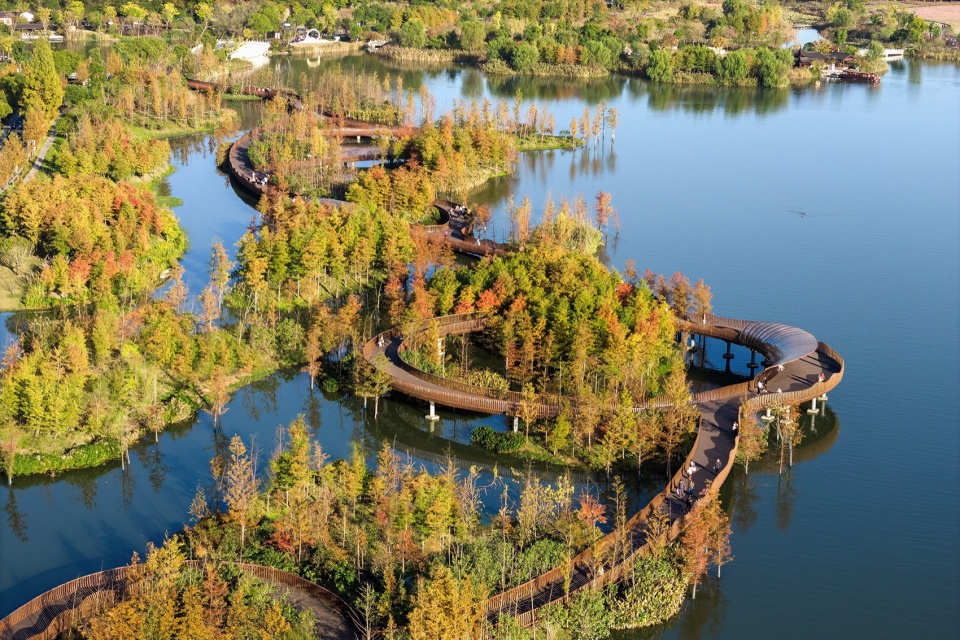
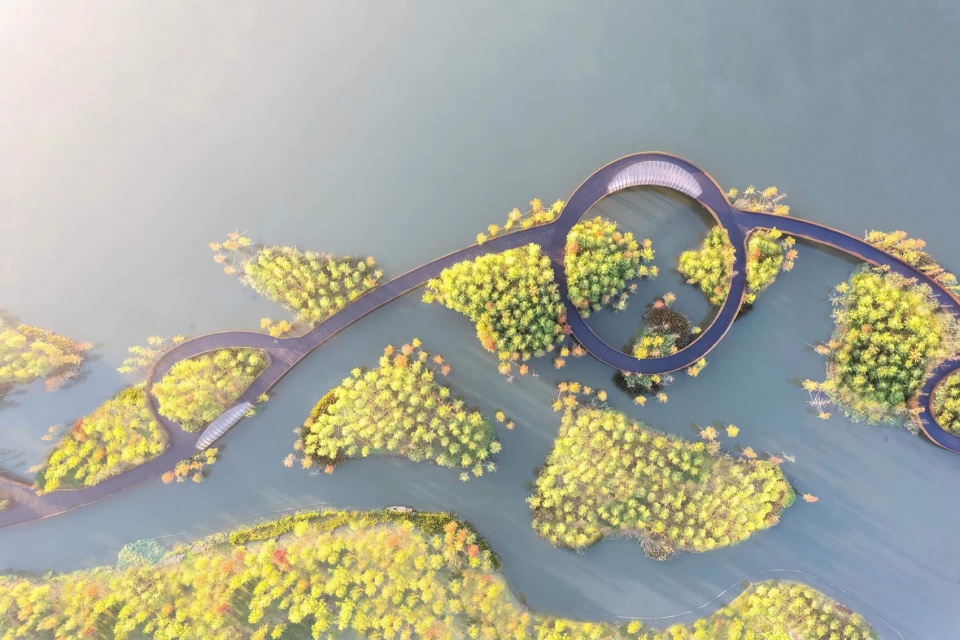
▼栈道俯瞰,top view of the walkways © 梅可嘉
03 超越期待|Surpassing All Expectations
铜鉴湖生态水利工程辅助了区域的产业结构转变升级,激发了区域振兴新动力。2022年环湖五个村新增民宿67家,餐饮25家,落户文创企业12家;改变了周边村庄原本衰败的面貌。铜鉴湖公园成为了深受远近居民喜爱的生态郊野公园、杭州旅游新目的地。周末及节假日平均客流量达到1万人次/天, 自行车等慢行交通设施每天使用人次可达2000次以上。项目保护及恢复了良渚时期的漳山、宋代朱熹石刻等多处文化自然遗址;打造了九曲红梅茶文化展示馆、莼菜采摘田等传统文化体验场所;使其成为了中小学生的文化自然科普教育基地。每年有30余场各类科普活动、“湖山入新眼,悦读铜鉴湖”诗文朗诵、摄影大赛、生活艺术节等在铜鉴湖公园举行,有近1万余名学生参加。
The Tongjian Lake ecological water conservancy project has transformed the regional industrial structure and brought new life to the area. In 2022, five villages around the lake added 67 new guesthouses, 25 restaurants, and 12 cultural and creative enterprises. This has revitalized the previously declining appearance of the surrounding villages.
Tongjian Lake Park has become a beloved ecological suburban park and a new destination in Hangzhou. During weekends and holidays, the average visitor flow reaches 10,000 people/day, and recreational transportation facilities like bicycles see daily usage of over 2,000 times.
The project has preserved and restored cultural and natural heritage sites from the Liangzhu period. It has also established traditional cultural experience venues like the “Meandering Red Plum” tea culture exhibition, making it an educational space for students. Each year, Tongjian Lake Park hosts over 30 science activities, with participation from nearly 10,000 students.
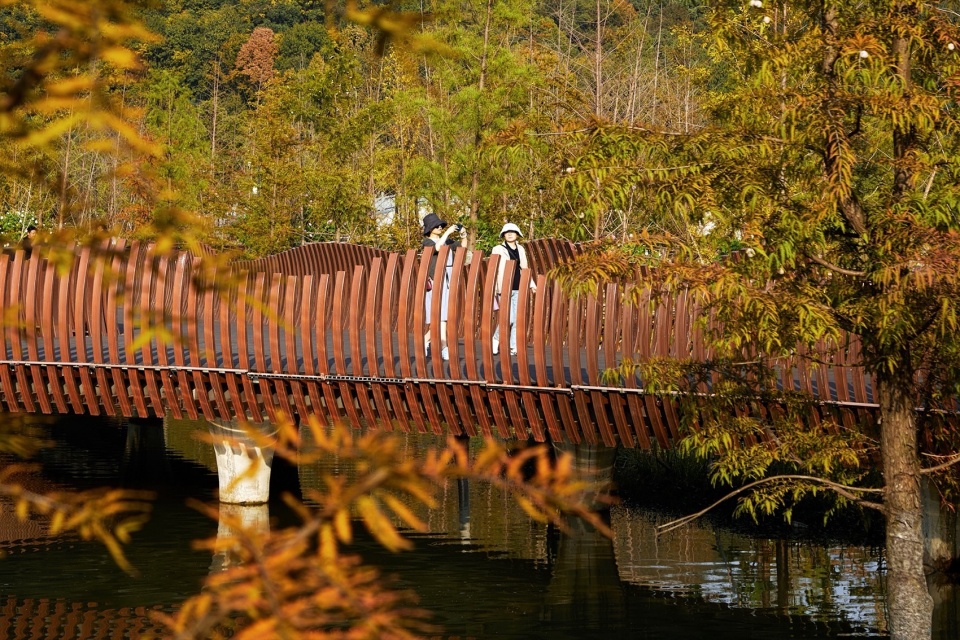
▼游客,visitors © 梅可嘉
社会意义
Social Significance
铜鉴湖生态水利工程,重新链接了城市、自然和人。本项目完善湖泊防洪排涝功能,将该地区的排涝标准提升至20年一遇;区域水质及湖泊中心水域水质从原来的劣五类提升到Ⅲ类标准。湖区陆生和水生植物群落构建完善,生态环境得到明显改善,生物多样性指数显著上升;在最新调查中发现新增鸟类10种,包括国家二级保护物种水雉、白骨顶鸡等。
本项目促进了区域可持续发展;直接带动民间投资2.5亿元,就业800余人;间接带动300名本土人才回归,签订投资协议50亿元。同时,多项大型徒步、马拉松、文化演艺活动在铜鉴湖公园举办;周边居民自发组跑团,在公园进行百余次跑步、徒步活动。
The ecological water management project of Tongjian Lake has reconnected the city, nature, and its inhabitants. This initiative enhances the flood control function of the lake, raising the flood prevention standard of its region to a 20-year return period.
The water quality in the region and the central lake area has been significantly improved. The establishment of terrestrial and aquatic plant communities in the lake area is refined, significantly improving the ecological environment and substantially raising the biodiversity index. The latest survey revealed the addition of 10 bird species, including nationally protected species such as Hydrophasianus chirurgus and Fulica atra.
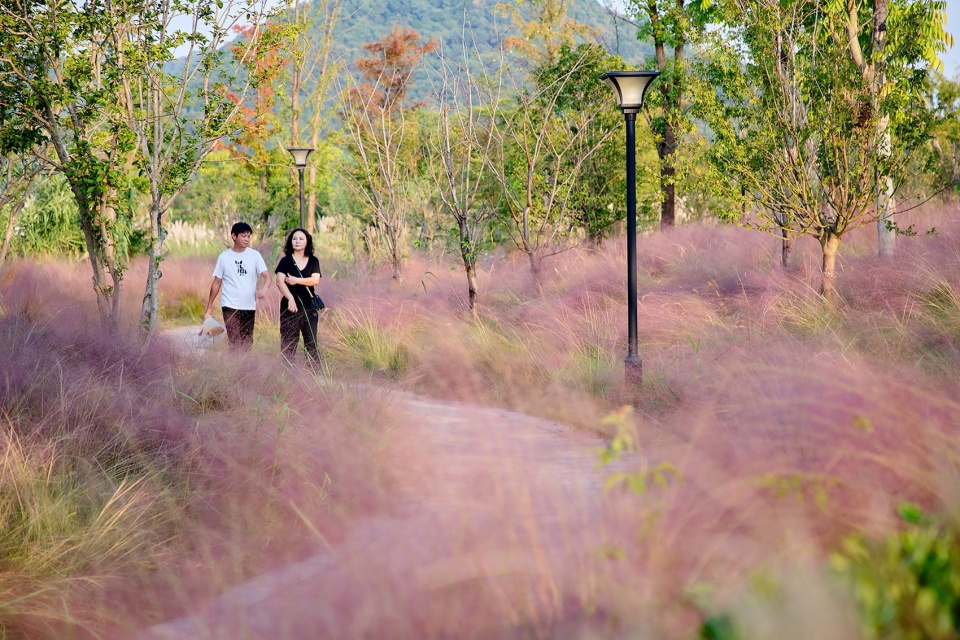
The project has spurred sustainable development in the region. It mobilized 250 million yuan in private investments and provided jobs for over 800 people. Additionally, it attracted 300 local talents to return to their hometown and secured investment agreements totaling 5 billion yuan. Furthermore, Tongjian Lake Park has hosted numerous large-scale events like walking tours, marathons, and cultural performances. Local residents have formed running clubs, and the park has organized over a hundred running and walking activities.
▼丰富的活动,numerous activities © 梅可嘉
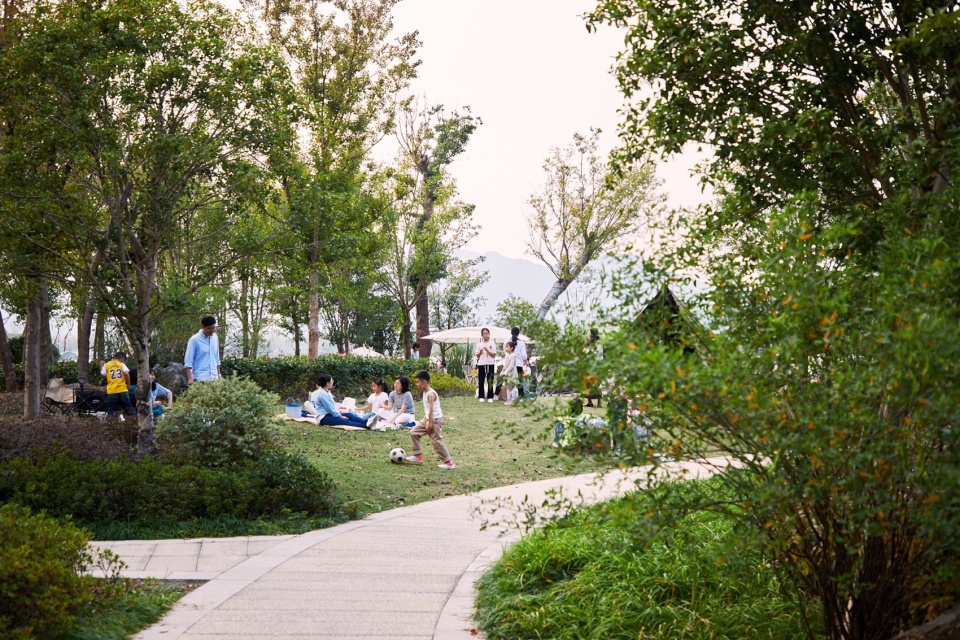
从消失的铜鉴湖到“名湖再现”,到“亲近自然、体验文化和露营、聚会活动的向往地”,铜鉴湖生态水利工程,提供了景观设计平衡水利、生态、经济、教育文化和公共利益的典范与样本。
Tongjian Lake was once vanished, but it has now re-emerged as a renowned lake. It has become a sought-after destination for various activities like embracing nature, experiencing culture, camping, and gathering. The Ecological Water Conservancy Project at Tongjian Lake exemplifies landscape design, demonstrating a harmonious balance in hydrology, ecology, economy, culture, and public interest.
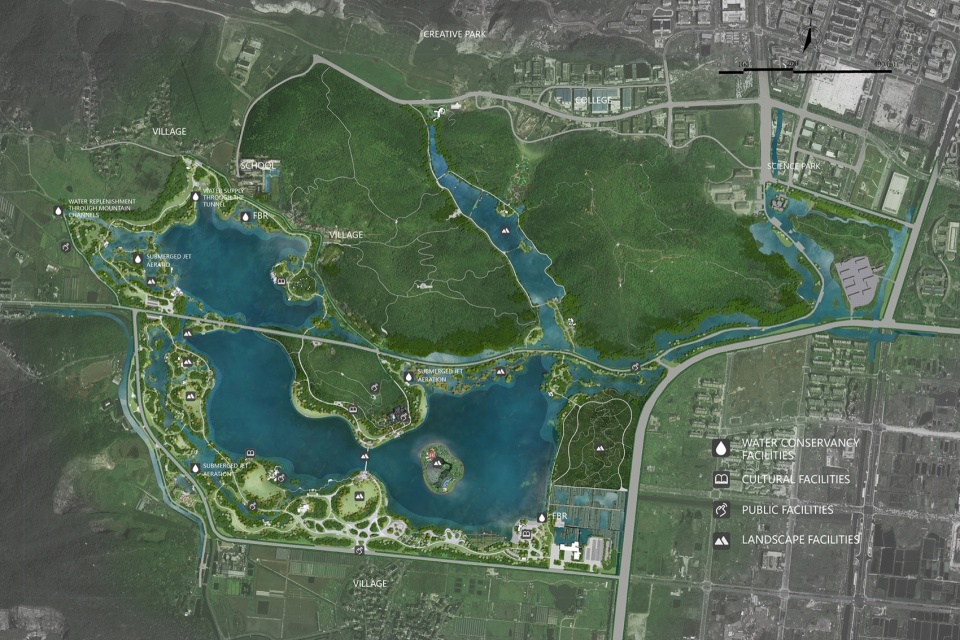
▼总平面图,site plan © 中国电建集团华东勘测设计研究院
项目名称:重新链接城市、自然和人:铜鉴湖公园生态修复
项目类型:景观
设计方:中国电建集团华东勘测设计研究院
公司网站:www.hdec.com
联系邮箱:TJHBJYX@126.com
项目设计:2019年7月-2021年7月
完成年份:2019年12月-2022年6月
设计团队:傅睿(设计主创) 俞芸 张涛 陈锋 王斌斌 叶晓敏 邹豪 黄俊超 胡明 厉莎 林颖 丁奕欣 郭保良 游书航 周子路
项目地址:中国浙江省杭州市西湖区双浦镇
建筑面积:650000㎡
摄影版权:梅可嘉
合作方:景观施工单位:杭州西兴园林工程有限公司
客户:杭州之江城市建设投资集团有限公司
材料:石材、木材、生态、绿植
Project name: Reconnecting City, Nature and People: Ecological Restoration of Tongjian Lake Park
Project type: Landscape Design
Design: Power China Huadong Engineering Corporation Limited
Website: www.hdec.com
Contact e-mail: TJHBJYX@126.com
Design year: July 2019-July 2021
Completion Year: December 2019 – June 2022
Leader designer & Team: Lead Designer: Rui Fu & Team Member: YunYu, Tao Zhang, Feng Chen,Binbin Wang, Xiaomin Ye, Hao Zou, Junchao Huang, Ming Hu, Sha Li, Ying Lin, Yixin Ding, Baoliang Guo, Shuhang You, Zilu Zhou
Project location: Shuangpu Town, Xihu District, Hangzhou, Zhejiang Province, China
Gross built area: 650000㎡
Photo credit: Kejia Mei
Partner: Construction Team: Hangzhou Xixing Garden Engineering Co., LTD
Clients: Hangzhou Zhijiang City Construction Investment Group Co., LTD
Materials: Stone, Wood, Ecology, Plants
More: 中国电建集团华东勘测设计研究院有限公司。更多请至:HUADONG ENGINEERING CORPORATION LIMITED on gooood





真美
DK
原本已经退出去了,还是没忍住进来吐槽下。铜鉴湖公园的投标,可能大部分杭州设计院都有参与过。我作为在杭州的从业人员一直想去探讨我们的设计理念和原则是否真的贯彻落实了。天天说还湖于民,还河于民,真的于民,就应该充分考虑外部条件以及公园各区块与外部用地性质的衔接。从评论区以及我亲身去铜鉴湖的经历来看,明显是没衔接好的,依然像是十几年前的设计思路——红线内归我管,红线外我不管。这样的设计是很落后的,甚至在我看来不能称之为设计。
设计不是博眼球,不是大栈道大花海,拍几张照片报个奖就完事了。我亲身经历至少这个大栈道走下来过于长了,与周边其它区域没有串联,走到一半就丧失了趣味性。这就是没有意义的栈道,为了平面图好看的栈道。等终于走完栈道了,已经基本没体力和心情去逛其他的片区了。
原本已经退出去了,还是没忍住又进来评论一下。作为一个住在铜鉴湖附近、又待在景观设计这个行业内的人,真的是忍不住不吐槽,设计单位在某些内容上抄杨公堤、抄北山路都没什么好说的,但是设计服务于人、抄的时候总得根据项目实际情况考虑一下吧。铜鉴湖西侧聚集了很多村落、而铜鉴湖东侧又是云栖小镇,因为近很多村里人都是在云栖小镇上班的、也有较多是骑电瓶车的,铜鉴湖的设计团队把连接这两处的道路改成了双车道、且没有非机动车道,作为单向车道使用的话,村落里的人去云栖小镇就得绕整个铜鉴湖一个大圈;作为双向车道使用,电瓶车和机动车混行,道路宽度局促且危险,一般都不敢并行和超越,体验感真的极差(现在这条道路工作日及节假日6点之后是双向单车道、节假日是自东向西的单车道)。而这条道路在铜鉴湖建造之前,我记得是足够宽的,多个非机动车道绰绰有余吧……
我平时出门、上下班其实不怎么经过这条路,只是偶尔或者心血来潮会开这条路,碰上有电瓶车,真的是超车觉得很危险、跟在后面车速又太慢;有时候去铜鉴湖骑行,必须有一段骑这条路,有车经过也是离的很近或者那车只能跟在后面,体验感及其的差,更别说经常要走这条路的人们了…. ….
走风浙线路过几次,确实不错
这里去过两次,超级大的一个公园,整体修复的很好,上次在那边漫步园子里放的是李健老师的风吹麦浪,感觉很美好,美中不足的是花海面积超大,但没有遮阴的地方,太热,休憩的地方也少因为太大了走的很累,还有就是水上廊桥中间应该设一个出口,太长了点
方案不是你们做的吧
去年十月份去过,风景真的挺好的
截选的方案文本内容全是英文,外包给国外设计团队了?
应该是报奖的文本放上来了吧 这个拿了IFLA啥的
哈哈