感谢 土人设计 对gooood的分享。更多关于他们:Turenscape on gooood
Appreciation towards Turenscape for providing the following description:
项目简介
Project Statement
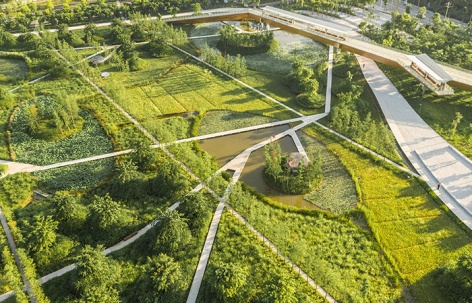
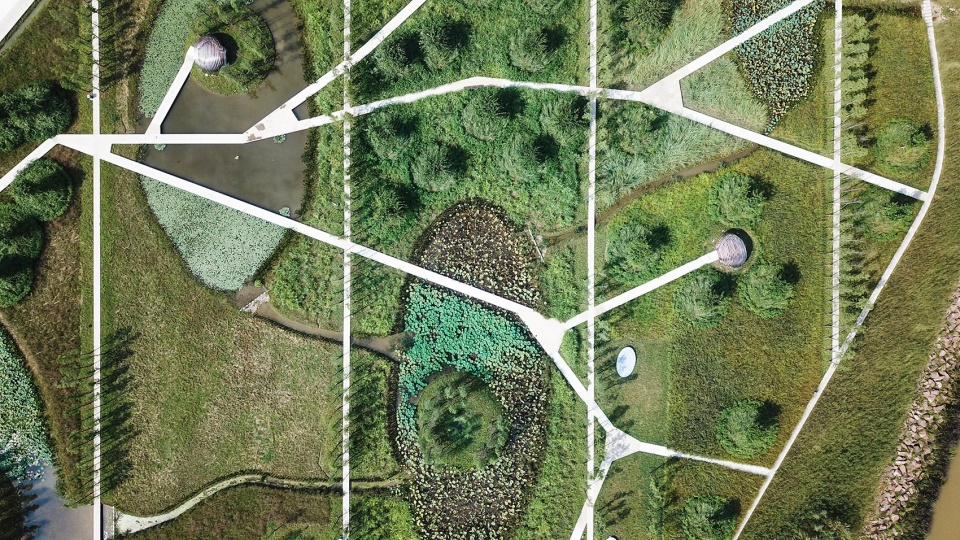
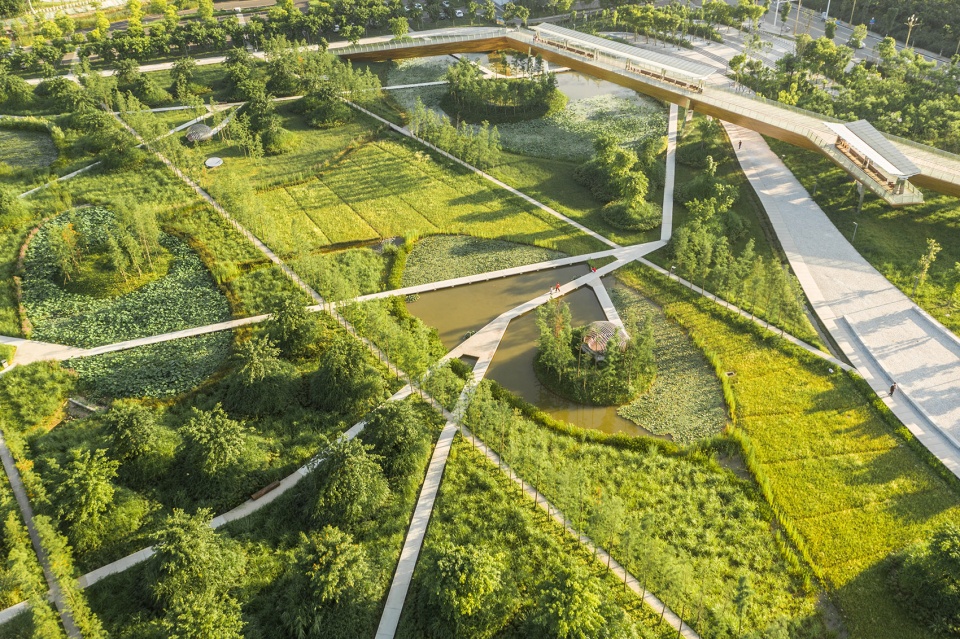
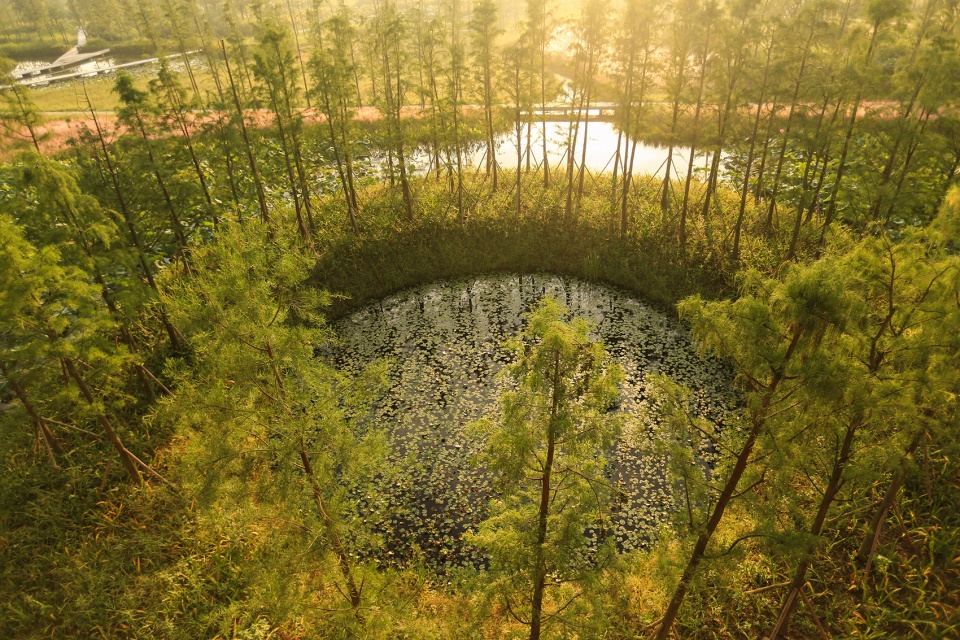
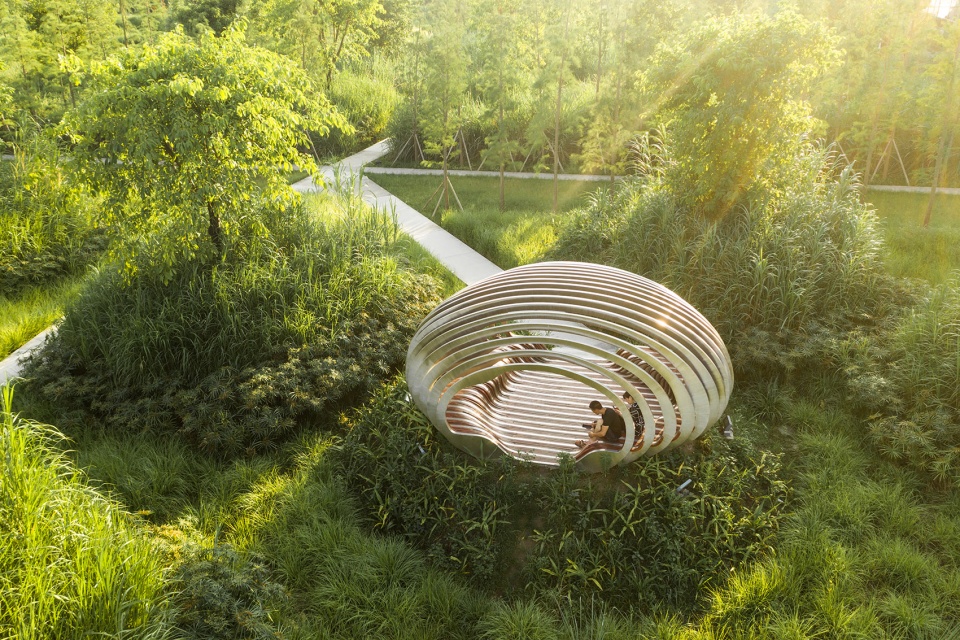
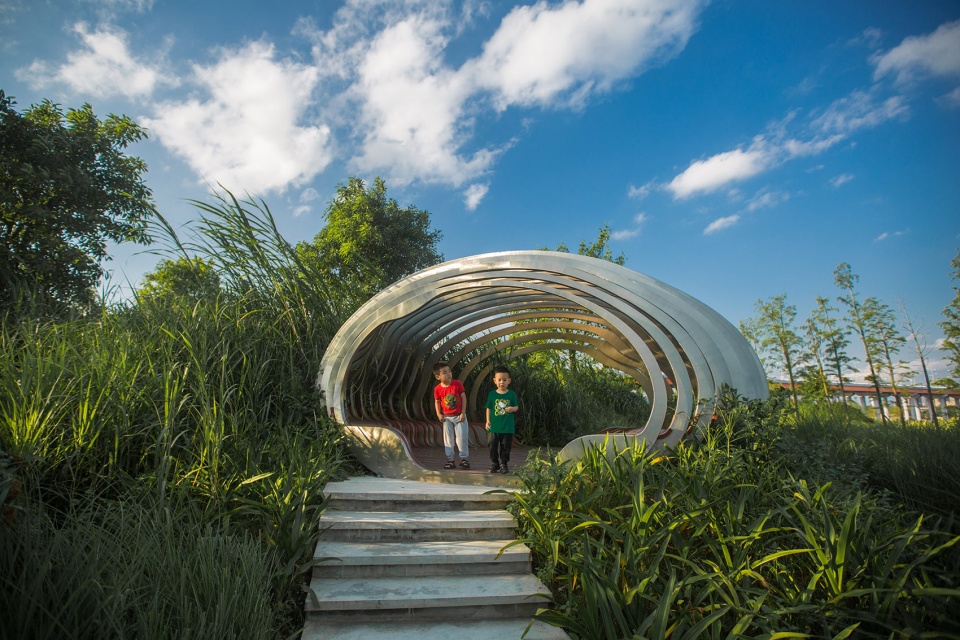
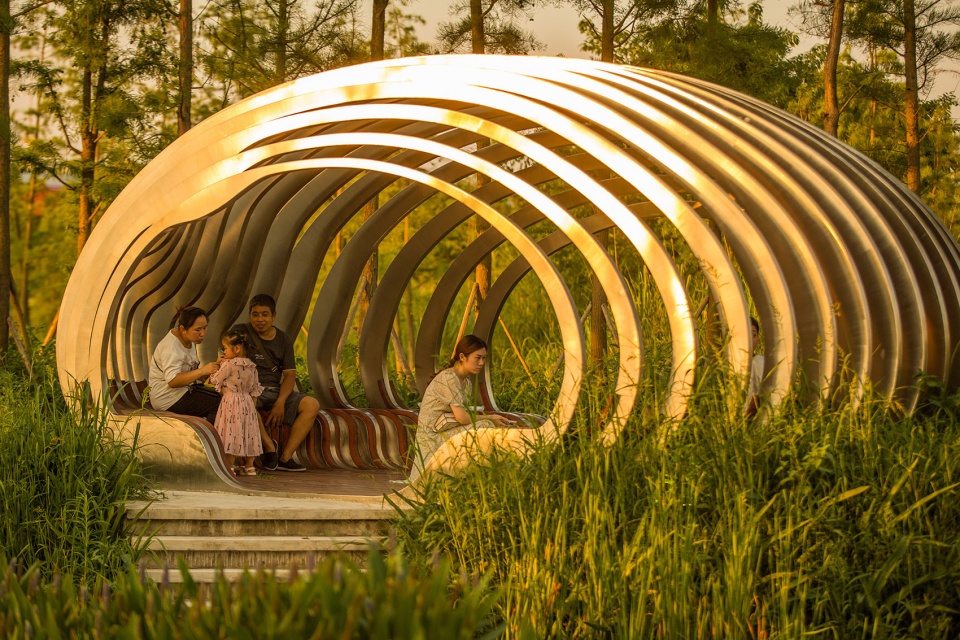
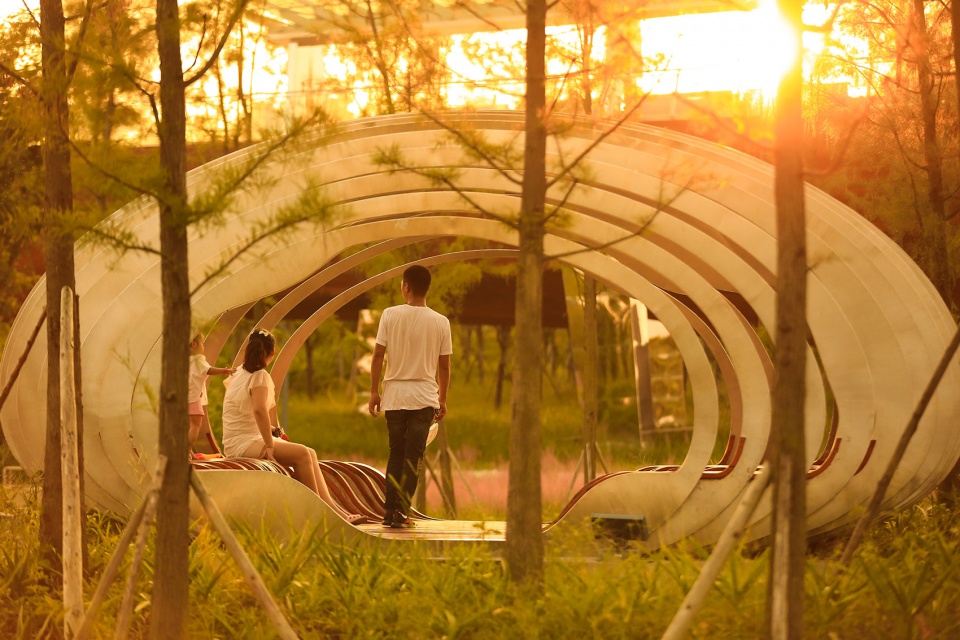
在一个99公顷的人工湿之上,用一种类似荷花叶脉的肌理,控制全局,水泡湿地重复出现,配置各种乡土植被,而形成旷野本底。而一颗颗金属材料构筑的露珠状装置,使这个湿地“大中见小,”吸引人驻足流连。
On a 99-hectare constructed wetland, a texture similar to lotus leaf vein is used to control the overall situation. Numerous ponds and various native vegetation community are configured to form the matrix of the wilderness. The dewdrop devices made of metal materials make the wetland ” From great matters see something delicacy” attractive.
▼湿地公园顶视图,top view of the wetland park ©Kongjian Yu, Turenscape
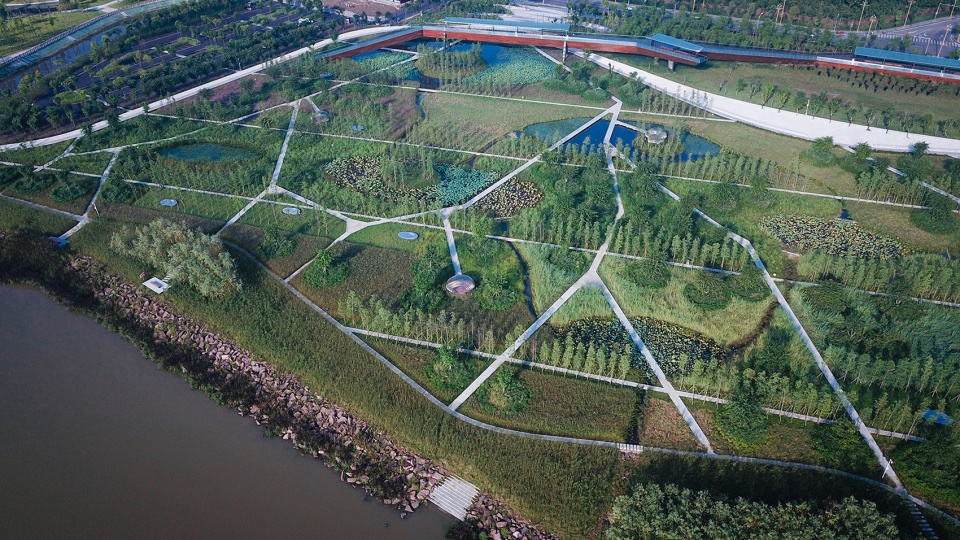
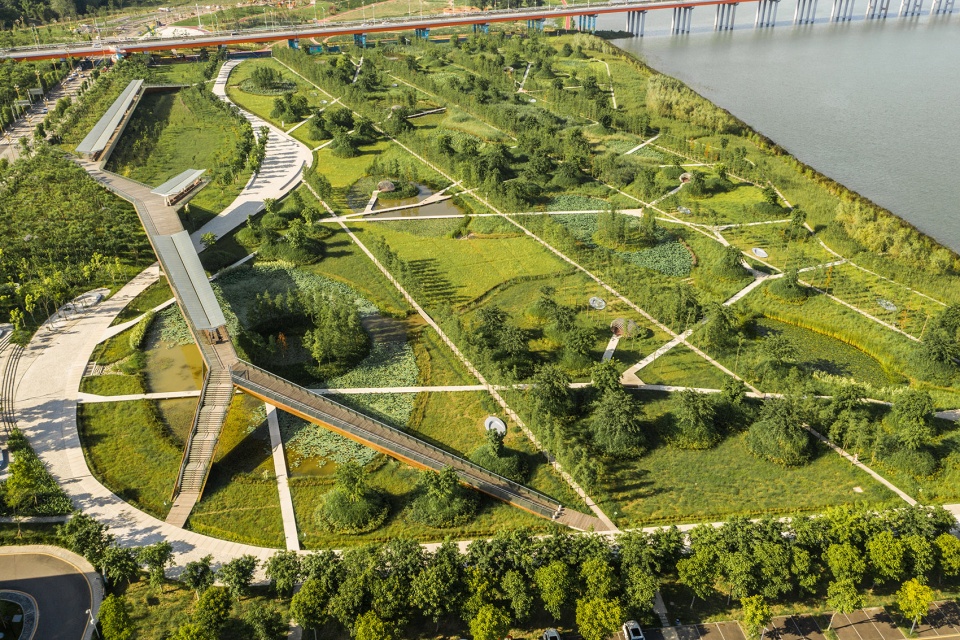
潼南大佛寺湿地公园位于涪江流经重庆潼南区中心区域两岸,南侧紧邻大佛寺四级风景区,地处潼南城市形象展示的核心区域,是高密度城市中难得的滨河滩涂绿洲。设计师以打造“与洪水相适应的滨江滩地——涪江湿地的回归”为设计目标,尽可能保留河道的滩涂湿地环境,压缩城市阳台的边界,架设步行廊道,增加市民的湿地体验空间。项目以“江舟花堤悠悠走,三千须弥漫漫寻”为愿景,挖掘潼南两个非常重要的文化元素:一个是历史悠久的航运文化,一个是以大佛寺为基础的的佛教文化。从而打造具有本土文化性格的城市滨河湿地景观公园。
Tongnan Dafosi Wetland Park is located on the both sides of Fujiang River flowing through the central area of Chongqing Tongnan District. The south side is next to the national AAAA tourist spots Dafosi. It is located in the core area as image display for Tongnan city and is a rare riverside beach oasis in high density city. Designers aim to create “riverside beach suitable for flood ——Fujiang wetland reappearance “, keep the tidal flat wetland environment of river channel as far as possible, compress the boundary of urban balcony, set up pedestrian corridor, and increase the wetland experience space for citizens. The project takes ” leisurely walking along Jiangzhou flower embankment, gradually looking for three thousand Sumeru ” as the vision, excavates Tongnan two important cultural elements: one is the shipping culture with a long history, the other is the Buddhist culture based on the Great Buddha Temple (Dafosi), in order to create a city riverside wetland park with local cultural characters.
▼湿地公园鸟瞰,aerial view of the wetland park ©Kongjian Yu, Turenscape
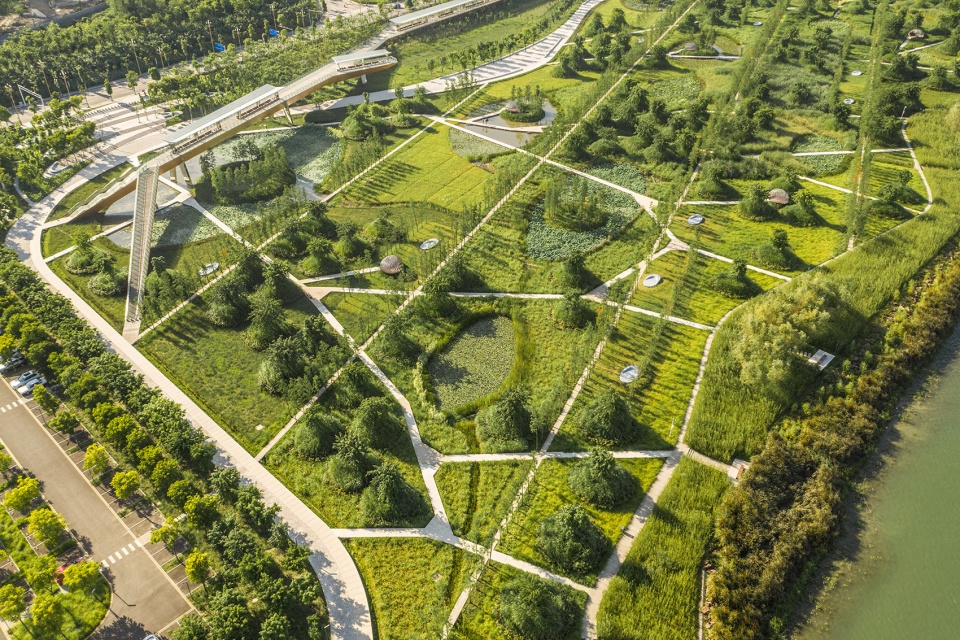
目标与挑战
Objective and challenge
作为城市中心区域的主要滨水空间,同时也是潼南的城市名片,设计面临重大的挑战:如何打造独具地方特色又能满足城市活动功能的城市滨水景观。场地主要是涪江冲击出来的滩涂,多为砂卵砾石,渗水严重,场地外围是已修筑的20年一遇的防洪提,设计师面临的问题是:如何构建与洪水相适应的景观?如何保护作为城市稀缺资源的中心区域湿地?同时作为城市未来发展的核心,如何通过场地景观设计来激活城市活力?
As the main waterfront space in the central area of the city, it is also the “name card” of Tongnan. The design faces great challenges: how to create the urban waterfront landscape with unique local characteristics and satisfy the function of urban activities. The site is mainly the shallows impacted by Fujiang River, mostly constructing of sand and gravel with serious percolation. The periphery of the site has been built for 20-year flood control. The problems designer faced include: how to build a landscape suitable for the flood? How to protect the wetland as the central area of urban precious resource? At the same time, as the core area of the city future development, how to activate the vitality of the city through the site landscape architecture design?
▼城市中的滨水空间,waterfront space in the city ©Kongjian Yu, Turenscape
设计策略
Design strategy
打造与洪水相适应的滨江滩地——涪江湿地的回归。设计主要通过以下四个方面来实现:
(1) 与洪水为友的弹性设计:大部分场地处于5年一遇的洪水线以下,洪水来临易被淹没,所以在设计区域内,设计师利用最小干预措施,尽可能保持地理风貌,在此基础上设置人行步道系统,增加湿地的体验效果。同时,将主要活动空间及设施布置在不易淹没区域降低了维护成本的同时,也不影响场地的市民参与性。
(2) 恢复滩涂的动植物生境:构建生态护坡,在江心岛恢复原来的枫杨和草丛植被,并且增加树岛,为鸟类提供栖息地。
(3) 打造活力的城市客厅:根据用地适应性及项目定位,划分不同功能区域——运动休闲区、城市阳台区、大佛寺湿地区等,设有涪江浴场、运动客厅、城市阳台、花梯漫步、江舟湿地、莲花净土、密境修行等多种活动空间,为市民游玩提供丰富的活动体验。
4) 地方文化的深度挖掘:梳理当地的文化,提取与场地最相宜的两个文化,即大佛寺板块的佛教文化,和金福岛对应的航运文化,通过场地及场地构筑的设计立体的展示地方特色、精神。
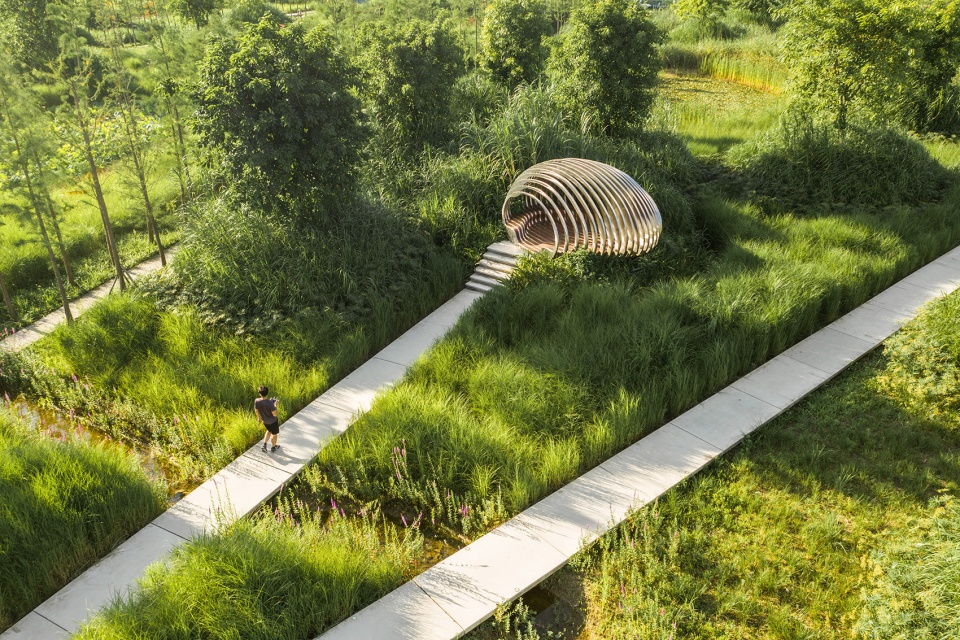
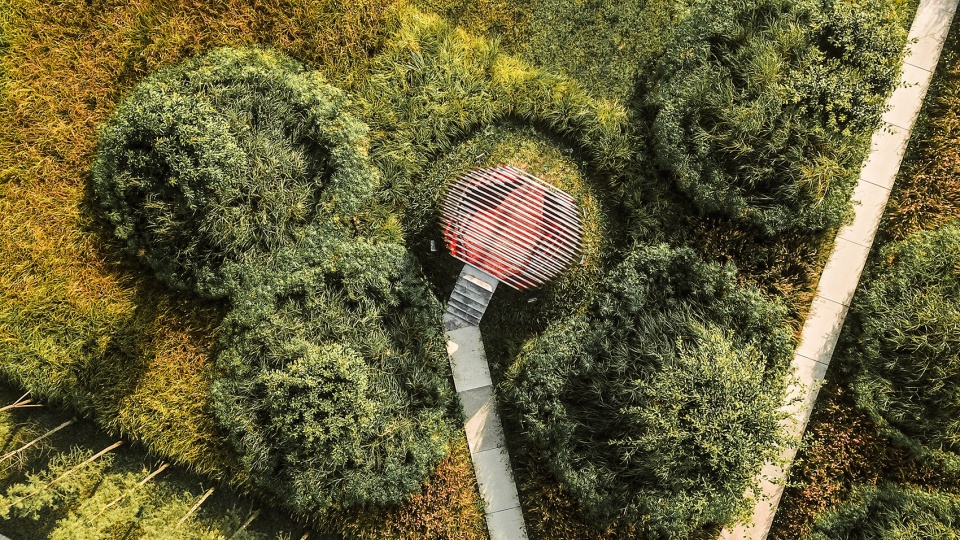
▼连接装置的步道,减少对自然的干预,paths connecting to the installations, reducing ©Kongjian Yu, Turenscape
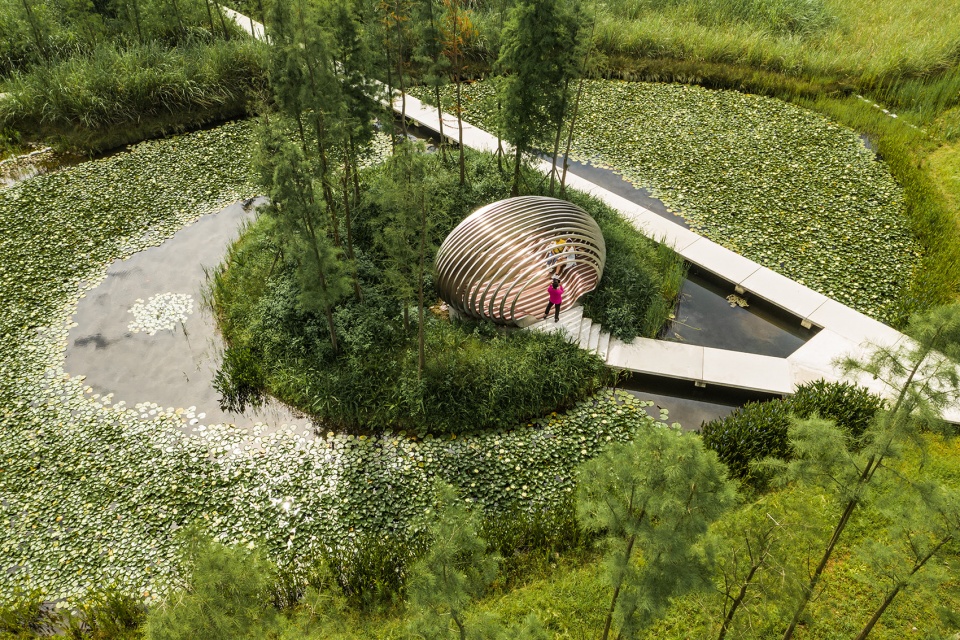
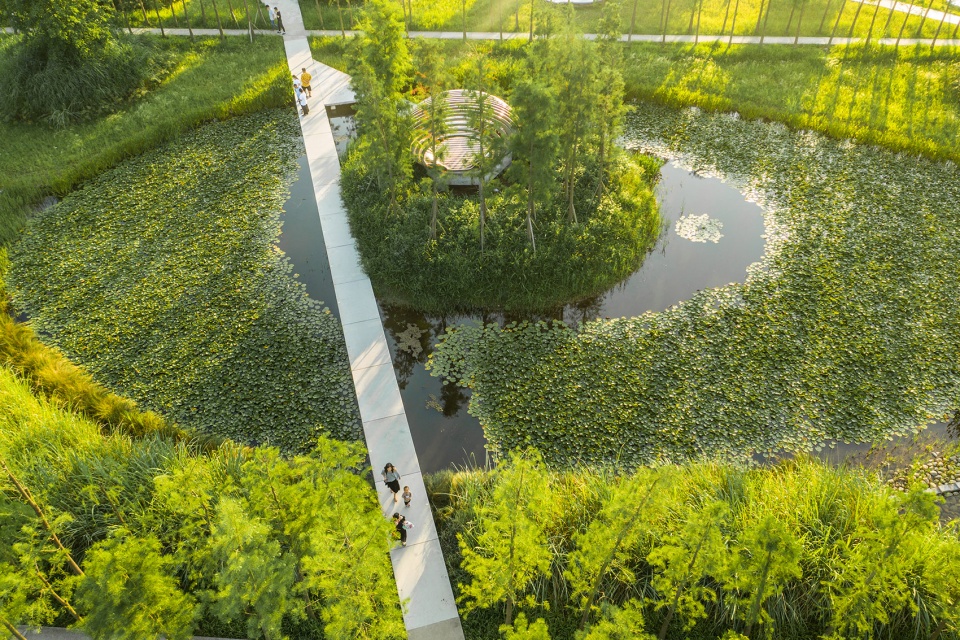
▼保留滩涂生态系统,restoring the animal and plant habitats in the beach ©Kongjian Yu, Turenscape
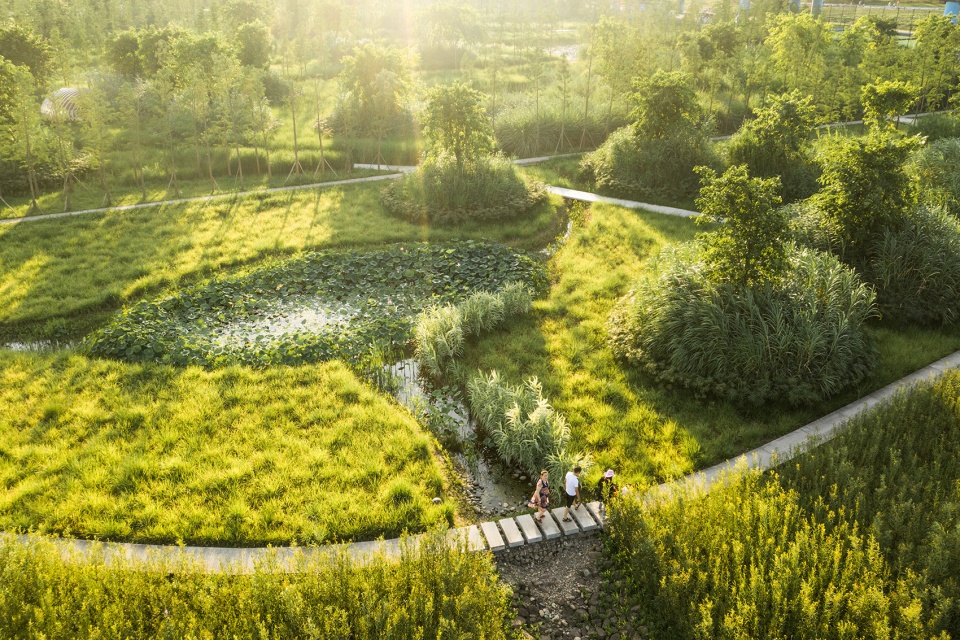
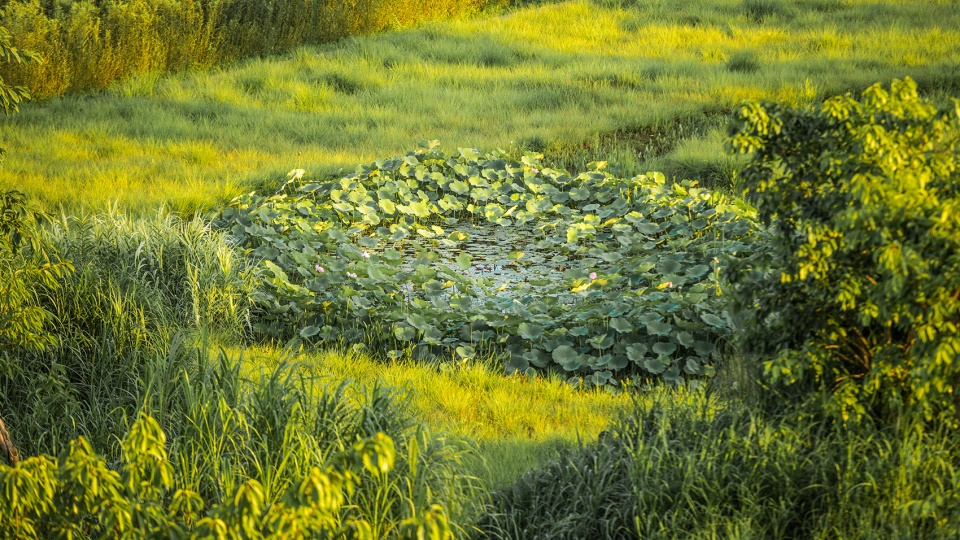
▼人们可以在步道中体验自然,enjoy the nature on the paths ©Kongjian Yu, Turenscape
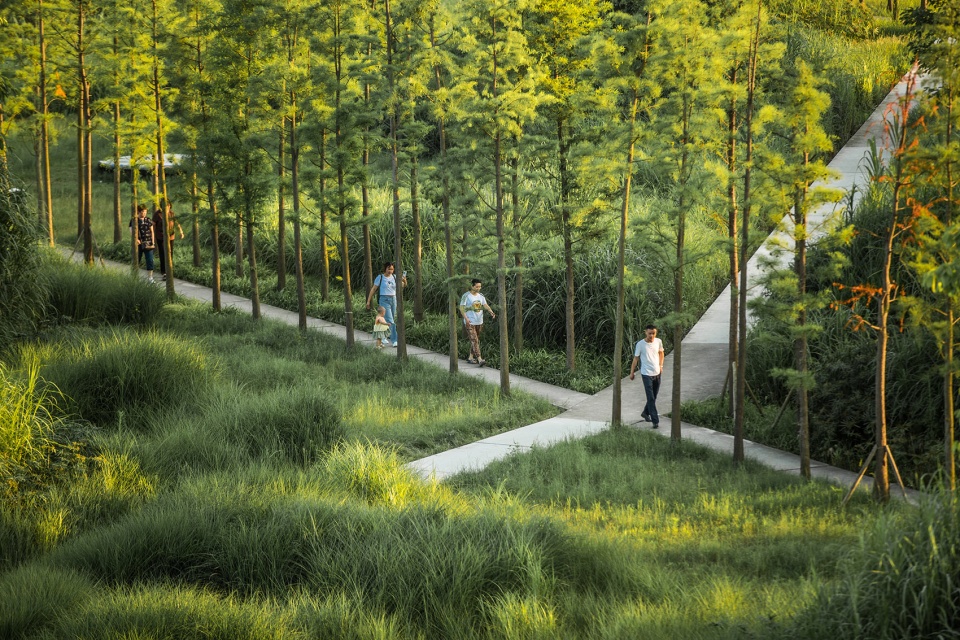
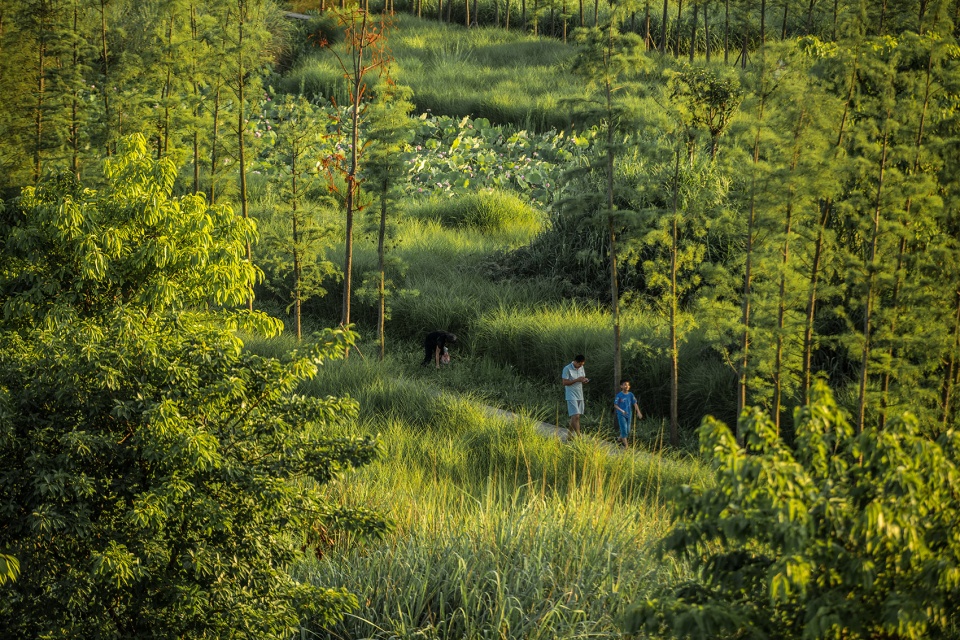
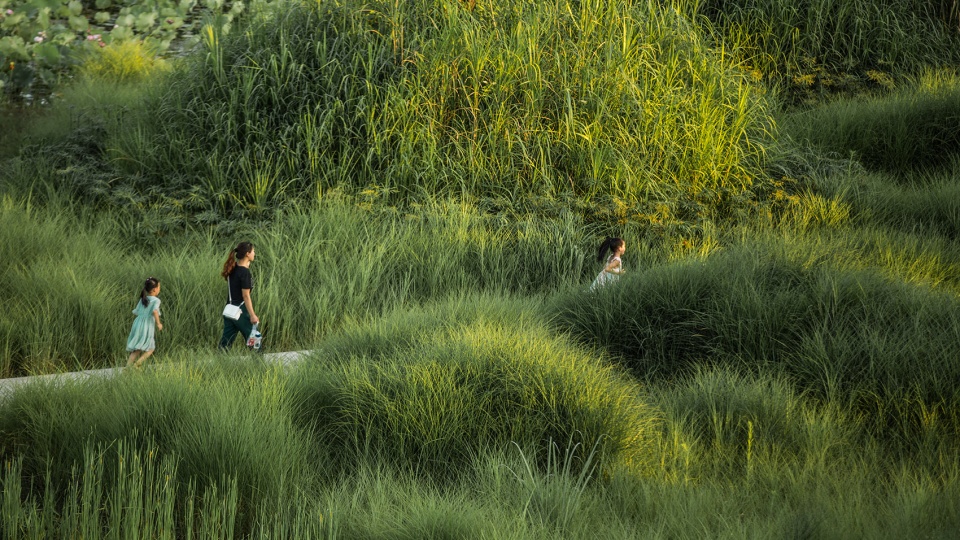
Build the riverside beach suitable for flood —— the regression of Fujiang wetland. Design mainly through the following four aspects:
(1) Flexible design for flood friendly: most sites are located under the five-year flood line, and easily submerged by flooding. Therefore, in the design area, designers use minimum intervention measures to maintain geographical features as far as possible. On this basis, pedestrian walkway system is set up to increase the experience of wetland. At the same time, the arrangement of the main activity space and facilities in the non-submerged area reduces the maintenance cost and does not affect the public participation of the site.
(2) Restoration of animal and plant habitats in the beach: construction of ecological slope protection, restoration of the original maple poplar and grass vegetation in river center islands, and addition of tree islands to provide habitat for birds.
(3) Building a vibrant urban living room: according to the land use adaptability and project positioning, classifying different functional areas —— sports and rest area, urban balcony area, Dafo Temple wetland area and other activity areas to provide a rich experience for the public, such as Fujiang bathhouse, sports living room, city balcony, flower stroll ladder, Jiangzhou wetland, lotus pure land, secret environmental practice, etc.|
(4) Deep excavation of local culture: combing the local culture, extracting the two most suitable cultures, namely the Buddhist culture of the Great Buddha Temple plate and the shipping culture corresponding to Jinfu Island, and displaying the local characteristics and humanism through the site design.
▼城市阳台,urban balcony ©Kongjian Yu, Turenscape
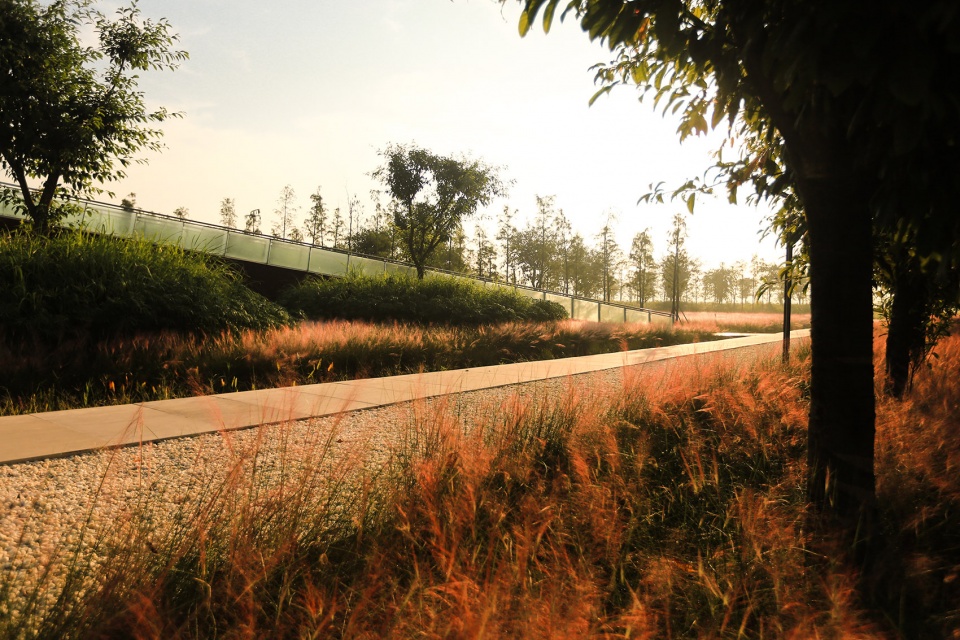
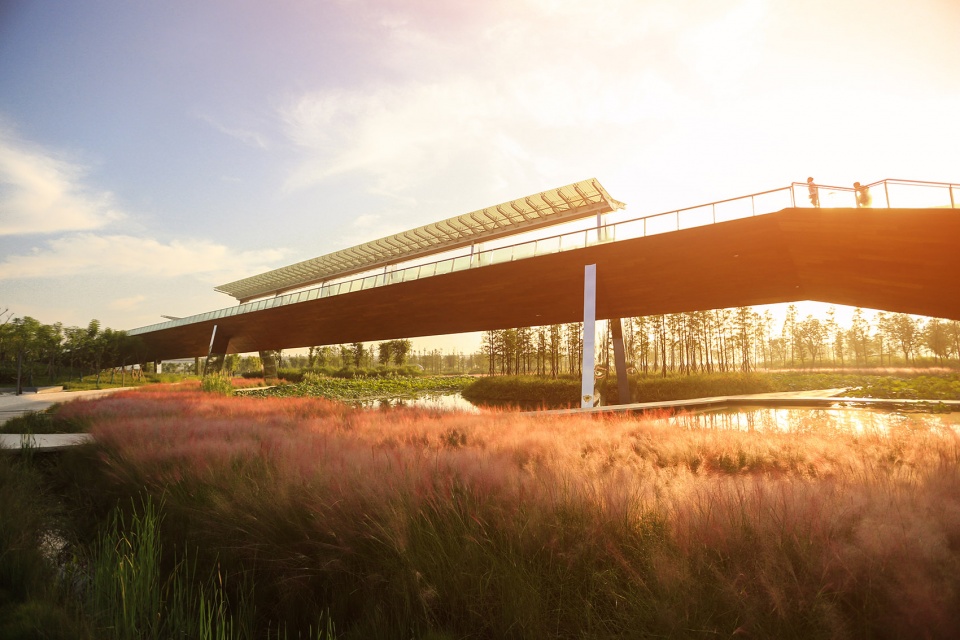
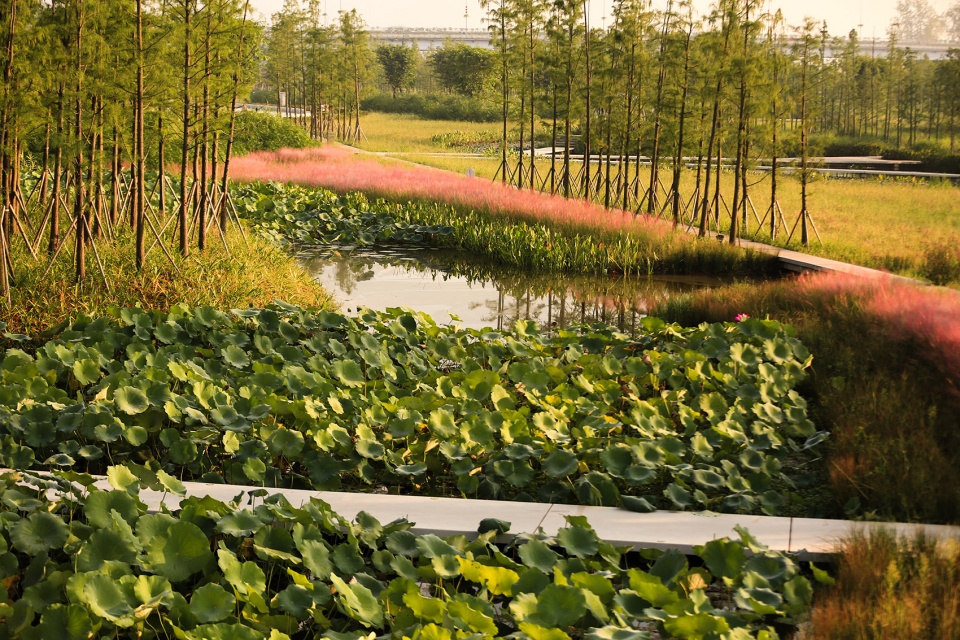
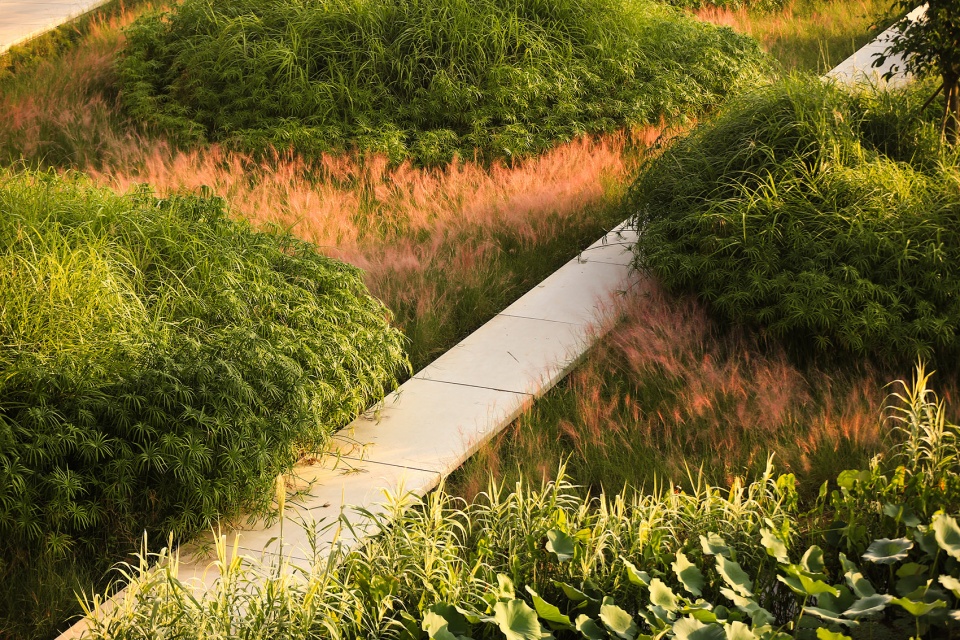
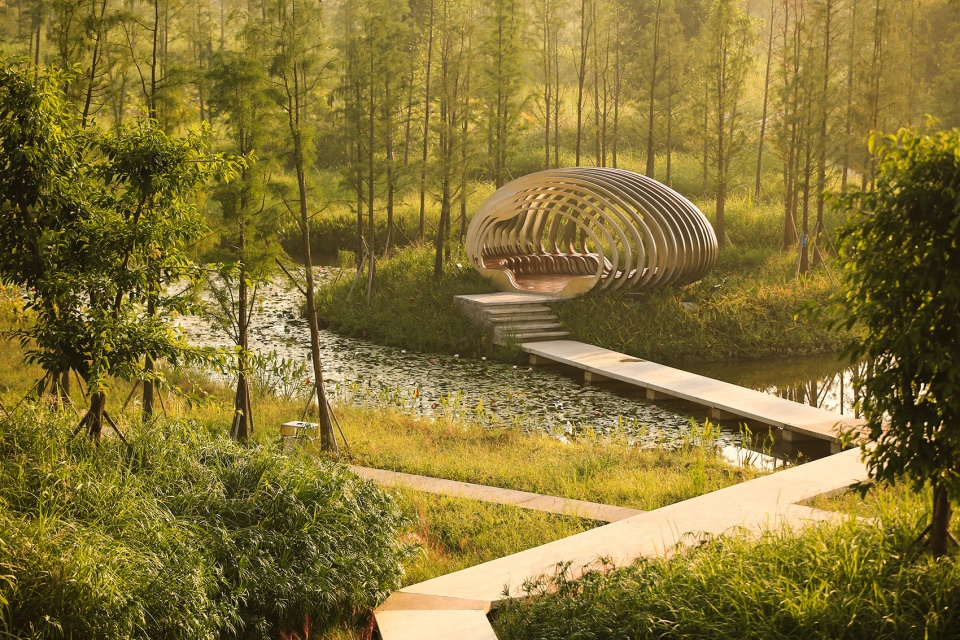
▼丰富的植被,rich vegetation ©Kongjian Yu, Turenscape
结论
Conclusion
公园建成后,提升了整体城市的形象,并且成为潼南的城市新名片。设计师以保护湿地,重新激发湿地的生态功能为原则,以与“洪水为友”的设计理念,挖掘地域文化特色,增加场地活力,为潼南未来的城市风貌提供了样本。
After the park completed, it promotes the image of the city and becomes the new “name card” of Tongnan. The designers develop the principles with protecting the wetland and reactivating the wetland ecological function. The design idea of “flood as friend ” excavates the regional cultural characteristics, increases the site vitality and provides a sample for the future urban features of Tongnan.
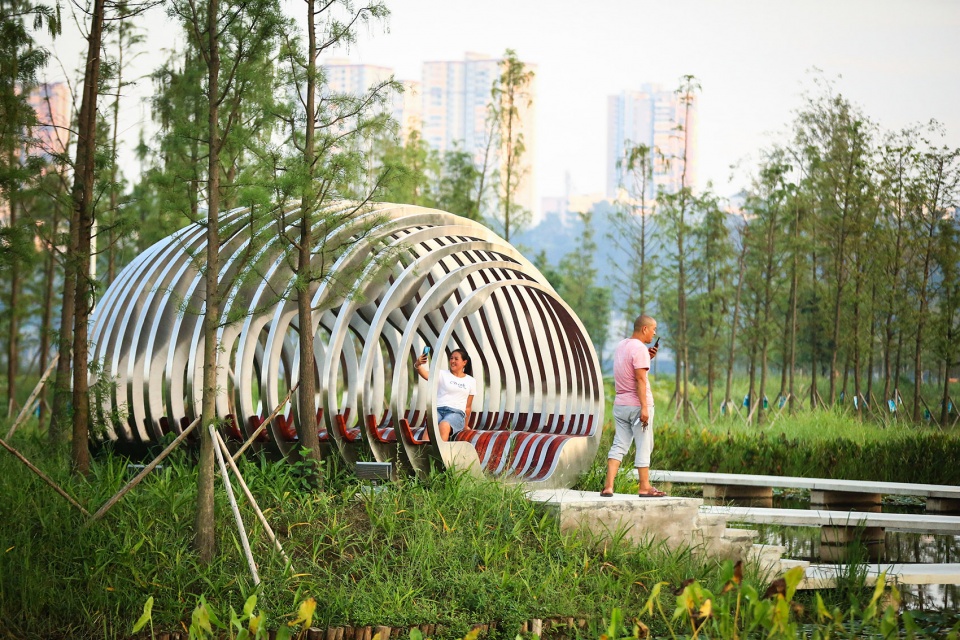
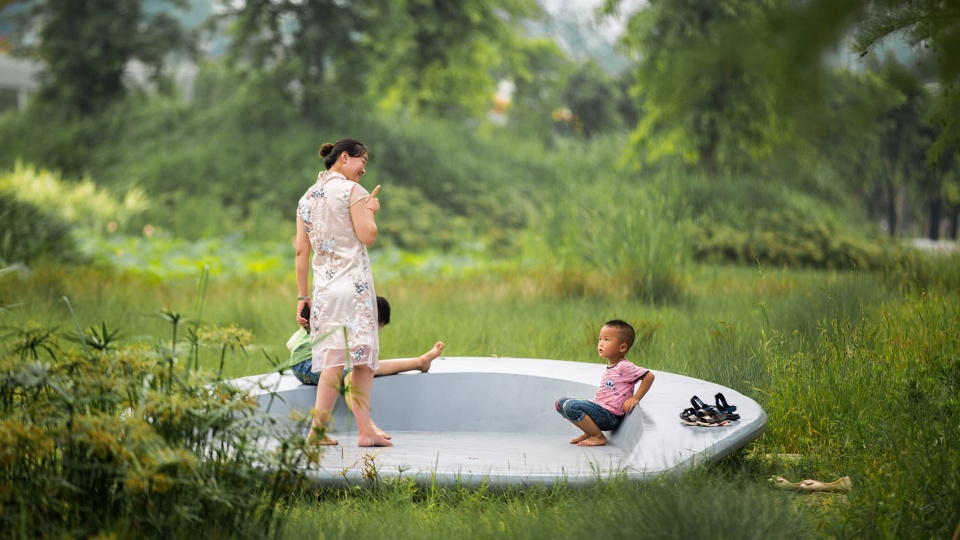
▼人们在露珠装置中的活动,people’s activities in the installtaion ©Kongjian Yu, Turenscape
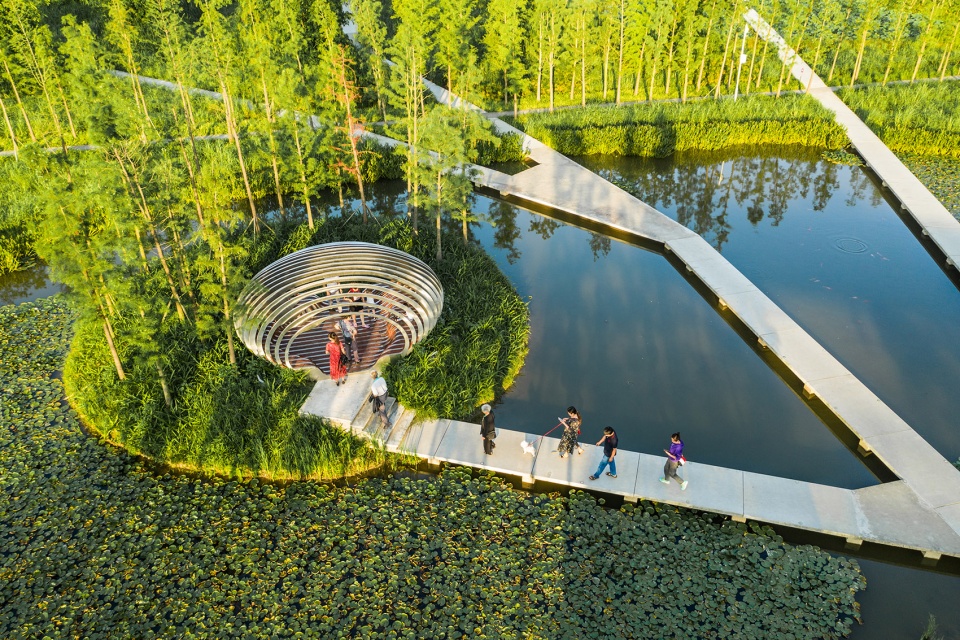
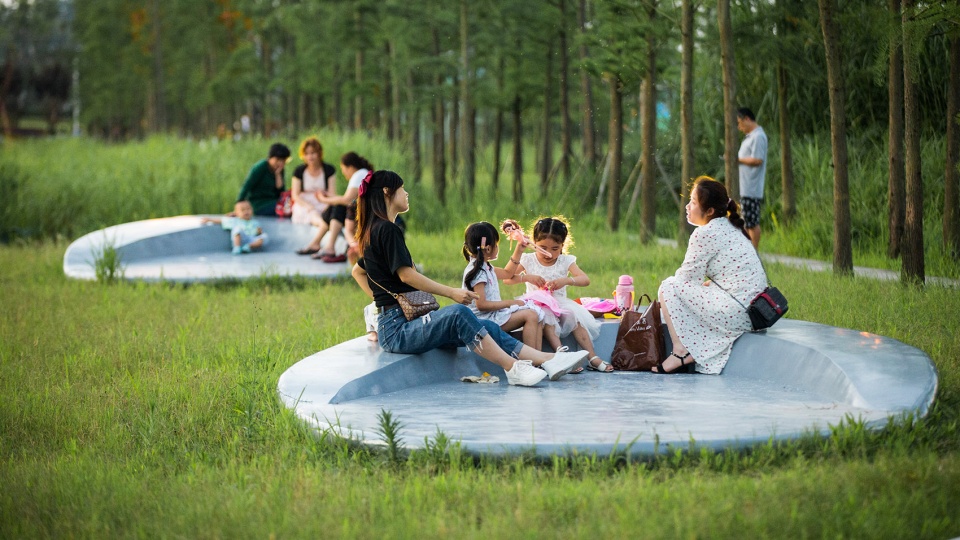
▼草坪上的休息区,rest area on the grass ©Kongjian Yu, Turenscape
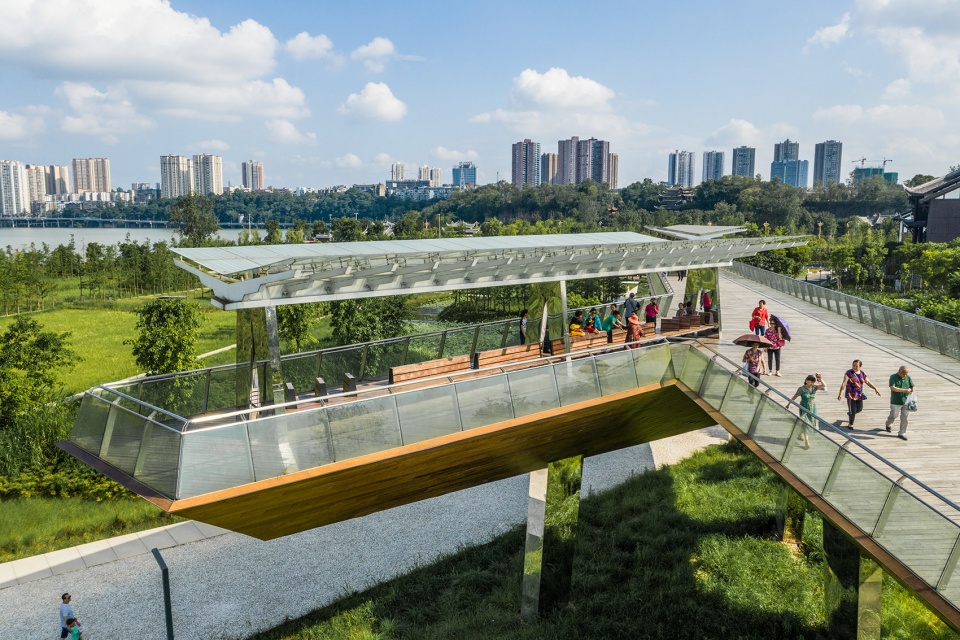
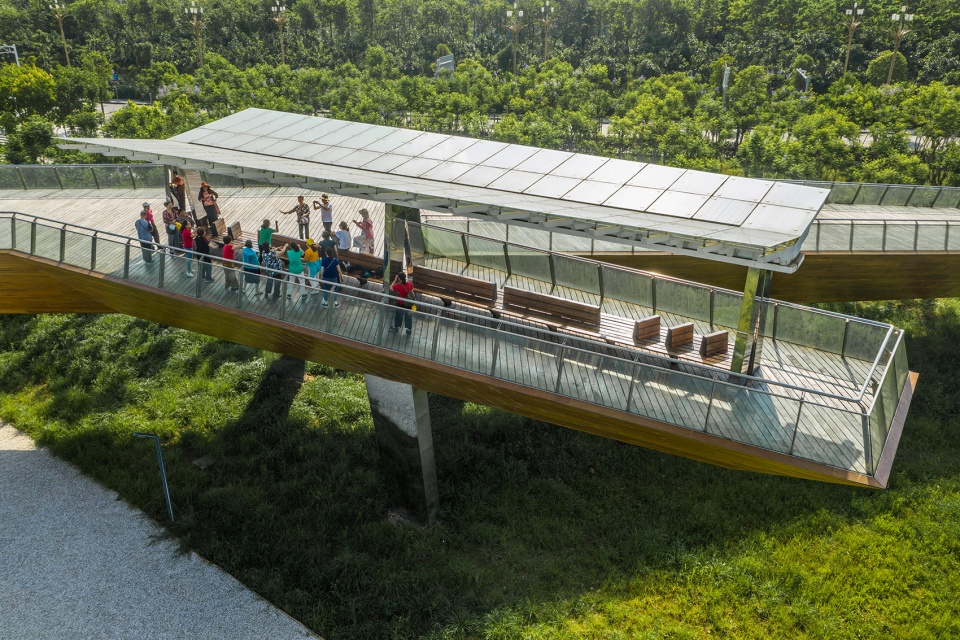
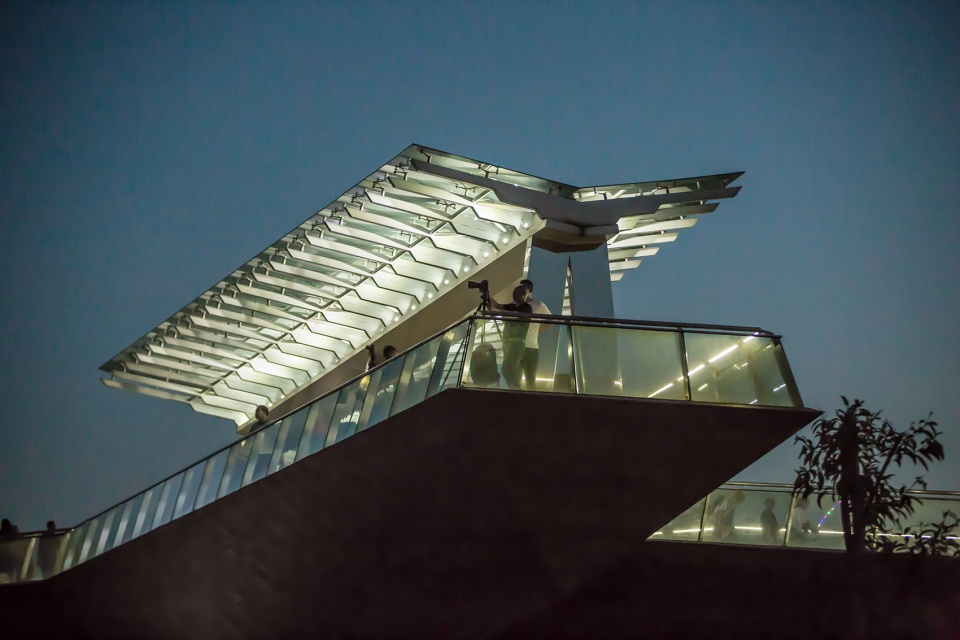
▼城市阳台,欣赏湿地景观,urban balcony providing view of the wetland ©Kongjian Yu, Turenscape
项目地点:中国 重庆市潼南区
项目类别:景观
项目规模:99ha
设计时间:2017.07
建成时间:2019.5
设计师:土人设计Turenscape
委托方:重庆市潼南区规划局
Location: Tongnan District, Chongqing, China
Project category: Landscape
Project size: 99 ha
Design: 2017.07
Completion :2019.5
Designer: Turenscape
Client: Chongqing Tongnan District Planning Bureau
More: 土人设计。更多关于他们:Turenscape on gooood


被环境包围的感觉
到此一游
怎么体现的航运和佛教文化呀,有谁能解答一下吗?
荷花啊·
过度使用心智和理性而忽视空间人性和感受的东西,这种景观的产生有时候仅仅是因为盲目崇拜名气 成就不了经典
有意思 土人的风格
没说怎么提现佛教和航运的呀
好奇人的视角去体验是什么感觉,照片多为鸟瞰,感觉以人的视角走在里面可能缺少视觉和体验的层次
赞同
很难不赞同,过度追求平面的线条就会忽视人的体验。
好奇怪
https://kuaibao.qq.com/s/20200918A0HHE000?refer=spider_push
说好的与洪水为友的弹性设计呢?洪水一退就这?
你发的图从人工设施保留程度来看,恰恰证明和你说的相反,就是sasaki,swa洪水过去也是你口里的就这。从古到今,几千年来洪泛区水适应性景观都是如此,洪水褪去,人工设施依然保留下来,土壤更加肥沃,新一轮的植物周而复始。但凡多读点书,不会就在这个层面上。
景观设计其实很多只是一种概念,落地还有很多路要走,技术啊之类。
!!难过!这是20年一遇的洪水还是百年一遇的极端气候?
重庆两江四岸太难了
唉,雨洪管理的生态设计想的不错,但其实都挺难实现的吧
其实单是雨洪管理会简单很多,重庆是高大几十米的消落带
别云,去现场看看吧。才一年多,植物已经衰败的不成样子了。水体也污染严重。
既是湿地公园,然而对人工管护要求还高,自净能力还是差。说明失败了。
湿地公园里的水不是劣V还会需要需要湿地公园么?人工湿地自净能力强无敌还会有易污染毛恢复的说法么?
难恢复
这种大构图的设计空间实际体验都很单调。
很接地气的景观,不做无用的细节,不做无用的功能。简单的线条,这是设计语言。用植物营造空间和观赏效果,没有大面积的硬质,这是湿地的设计手法。从这个方案看出了地景学科一种复古的设计语言,纯粹,有效。
植物做得不错,搭配很纯粹,空间感营造得很好。
道路选择困难症
直线设计的挺好,总有一些喜欢乱用曲线的设计师,本来这么大的场地,人从一个点到另一个点想走快点,设计师非要弄个大曲线,人天生喜欢走捷径,很多景观根本不会按照设计师设计的路径走,草坪都是被人走出来的痕迹。
这是公园,不是街道,人来公园就是打发时间的,公园不是以交通为导向,而是以景观体验为导向
有点敷衍的感觉
直线交通系统跟场地景观的弧形要素结合感觉不是很好,例如直接穿过椭圆的灌木丛,像是分成两部分做了拼起来的;节点细节处理蛮好的。
以下皆是猜测:直线树状构图能很简单的给出构成或者是设计意向,比如生机勃勃的大树之类的说法,能方便甲方宣传和理解平面图;如果顺应场地和景观,顺应生态、景观、文脉的设计却没有噱头的设计,甲方认可程度上可能会更难。当然能顺应生态、景观、文脉的设计还能有完美契合主题的设计,无疑不是哪些顶尖的设计。
直线空间不喜欢,节点空间喜欢
虽然平面看起来很普通,但是细节质量还挺好的
这自然的绿色很治愈
像极了学生时代的构成设计(PS.再过几年政府也不会那么好忽悠了,手动狗头)
兄台怕是没学过构成吧,别说手动狗头,脑洞也不如
个人还是很喜欢土人的设计的
这个怎么喷?
这个人也是好笑,你看得懂吗就想喷别人?
直线空间,重复场景过多,导致拍人视哪哪都差不多,所以都是鸟瞰
对游客活动需求没有充分研究挖掘
可是睡神特别喜欢,怎么办?
睡神是住在谷德吗,
经常看到他的评论
哈哈哈哈
哈哈哈哈哈哈哈哈
连续三篇文章评论,每篇间隔2-3分钟,不知道他看点啥,去他主页看下评论间隔就知道了
最近两个文章的评论间隔36秒,神速