非常感谢 João Morgado(摄影师)予gooood分享以下内容 。更多关于他们: Paulo Merlini on gooood
Appreciation towards João Morgado(摄影师)for providing the following description:
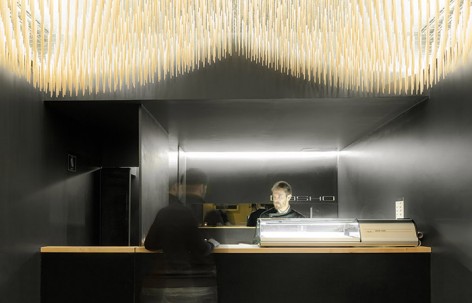
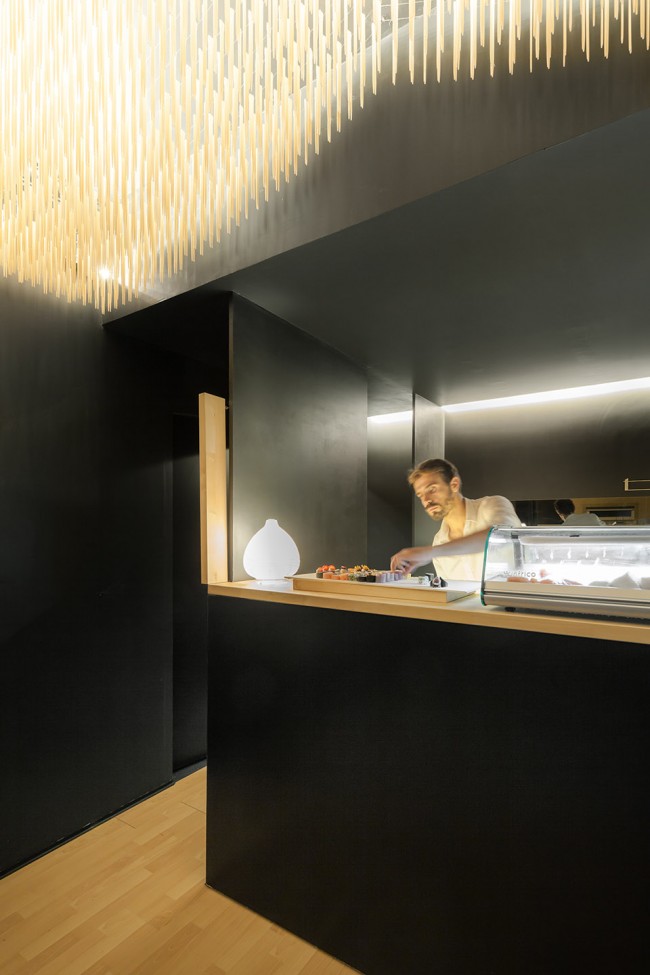
这座占地仅25平方米小小的商店位于葡萄牙小城Gondomar市内最繁华的街道之上。建筑师希望通过空间组织,将从鱼到食物这一堪比艺术的转化过程呈现在人们眼前。如外露阳台般开放的厨房空间位于主入口的对侧,让寿司师傅成为了空间的主角,吸引着客人的注意力。而这种毫无间隙的主 – 客关系也有助于消除客人的戒心,让这座仍对寿司略带陌生的小城人们真正接纳这种食物。
The space is characterized by his small dimension, only 25 sq/m and a unique facade turned into one of the busiest streets in town.
In the spatial organization approach our main concern was to valorize the art of preparation and the transformation of the fish. In order to achieve that, we draw an exposed balcony to the eyes of the consumer. By putting it on the opposite side of the main entrance we´ve made the sushiman the space protagonist, and we´ve granted a quite frank cook/costumer relation, granting the needed confidence to a public that still sees sushi as a strange dish.
▼ 小小的店内空间,a small eating space
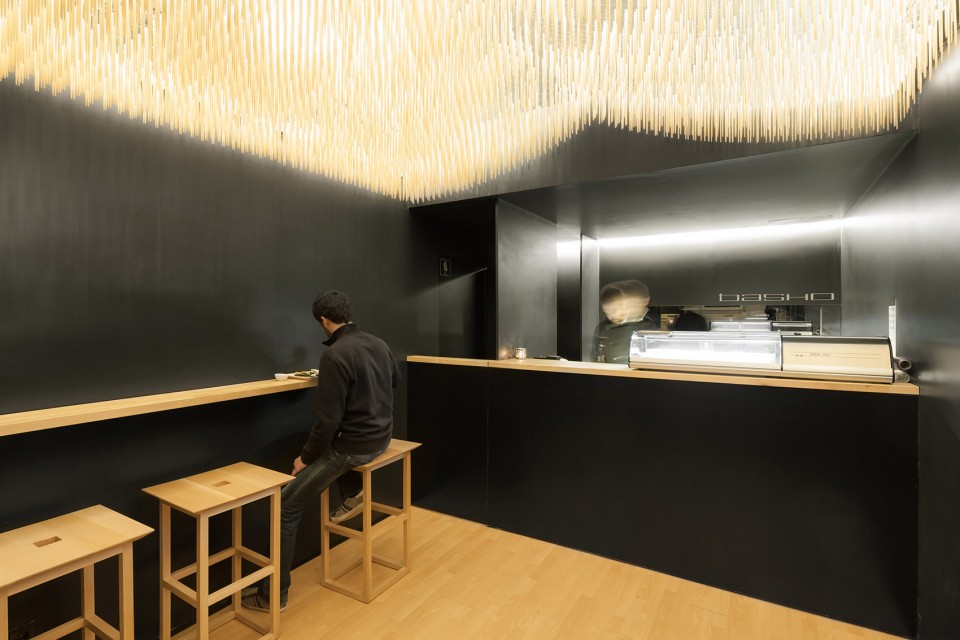
▼ 从店内看向街道,view from the interior to the street
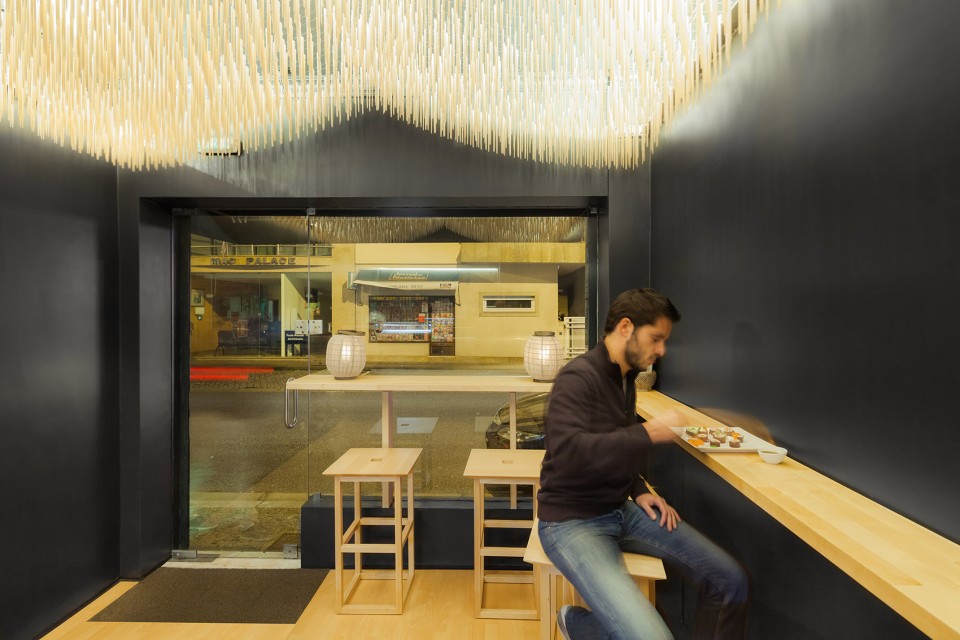
▼ 寿司师傅成为了空间的主角,sushiman as the space protagonist
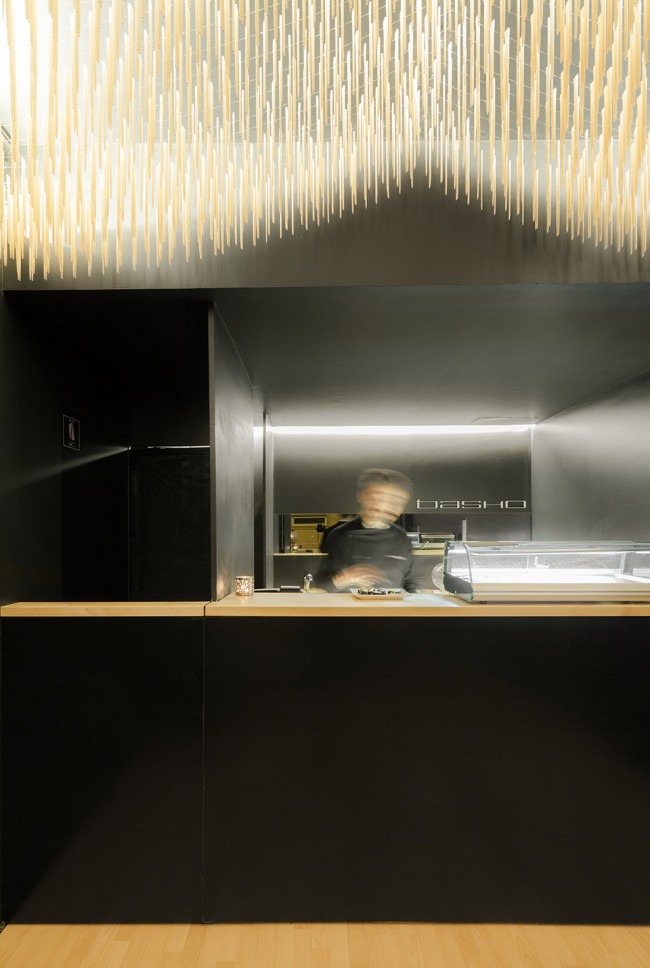
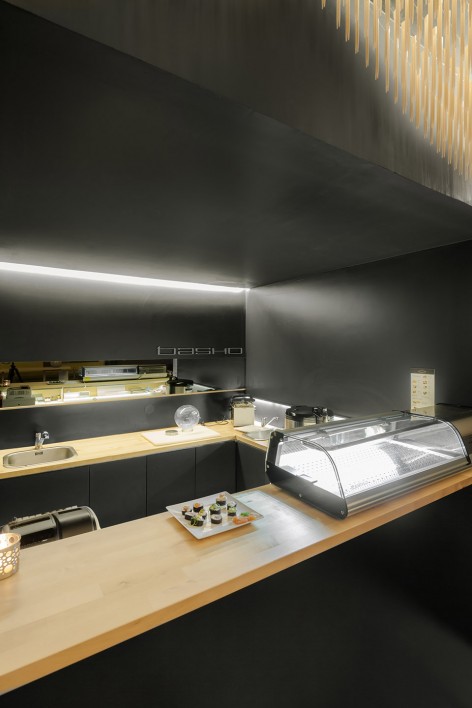
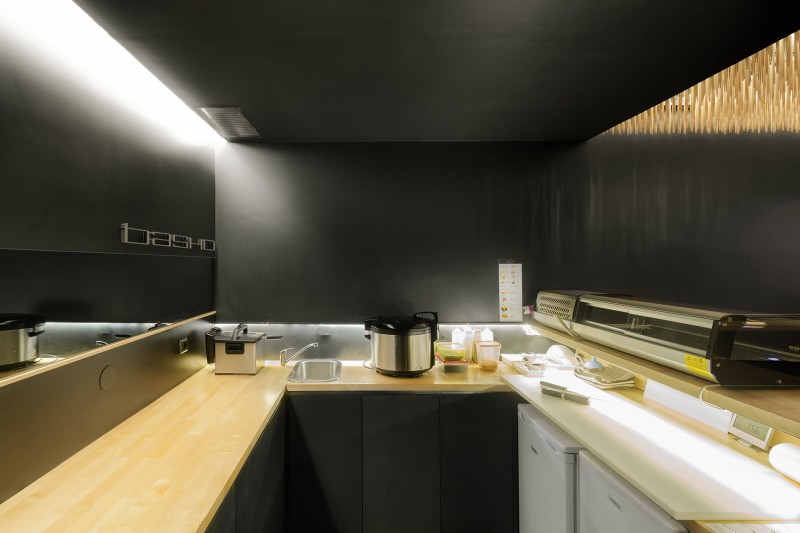
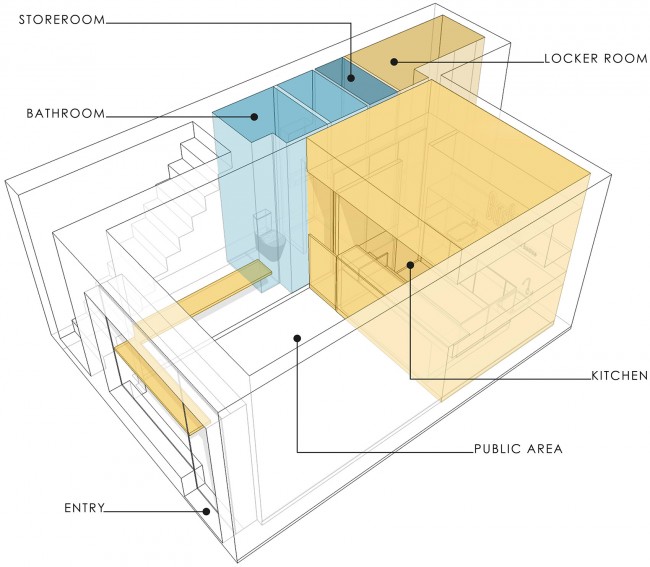
其余辅助空间则位于厨房的旁边。一扇木门将这些空间隐藏了起来,最大程度地保持了备餐空间的完整性,也为空间本身和食物的准备过程蒙上了一层神秘的面纱。
All the other needed areas for food preparation are located in a small niche near the balcony, and hidden beyond a wooden slated door that shows only the silhouette of the other involved intervenient in the sushi preparation, assigning a certain mystic to the space itself and into the all preparation ritual.
▼ 木门后隐藏着辅助空间,the needed areas are hidden beyond a wooden door
▼ 厨房备餐空间,space for food preparation
而剩余的所有空间则属于客人。尽管仅剩9平米的空间,建筑师仍然希望能够赋予其强烈的特质,并运用抽象的符号,引导人们一窥日本传统文化。
文化符号往往经历了时间的磨砺,深植于文化之中甚至成为其独特的象征,如同说起法棍,我们的脑海中便会条件反射般地浮现法国城市的模样。这种现象源于人类大脑的概念联想机制,将抽象的概念与具象的个人体验联系起来。而由于我们所身处的社会文化背景是由前人记录和传递下来的,这种“个人”的体验实则有着高度统一性。一个国家的道德、伦理、文化和传统则是在这其中一点点地树立和确定的。这其中的一部分慢慢成为了当地人们的共识,甚至是他们文化中象征性的符号。
正如法棍之于法国,我们也需要找到能够代表日本传统文化的一个符号。而他们所寻找的答案正是寿司料理中最基础的元素 – 筷子。
The rest is public area. Even confined to a 9 sq/m area the intention was to create a space with a strong character and one that could direct the mind of the observer into the Nipponese culture, and to do it we knew we had to resort to the symbolic power of icons.
Symbols are ideas that, due to their influence, prevailed in time and rooted into a certain culture becoming a part his own identity. For example, if we think in a baguette and an accordion our brain will make an immediate association to France and its cities. This phenomenon happens because the brain organizes thought throw a concept association mechanism. It organizes information in “small bags” (concepts) “glued” by our own personal experience. It´s a personal process but not a intrasmissible one, considering the fact that we all live in a sociocultural context ruled by the ideas and beliefs defended and widespread by others before us. Morality, ethics, culture and traditions of a certain country are the result of the accumulation of those same ideas. Some, by their relevance, persist in time and become a part of the collective thought, and sometimes so viscerally that they become symbols of their own culture.
In the above example the symbols that makes us think in France are, the baguette and the accordion. In this case we had to find a Nipponese cultural symbol that was so easily recognizable to the viewer as the baguette is to France. We realized that in the very basis of the sushi cuisine we could find such a symbol. What better icon of the oriental gastronomy than chopsticks?
▼ 以筷子营造的象征性空间,chopsticks as the symbol of Nippiness culture
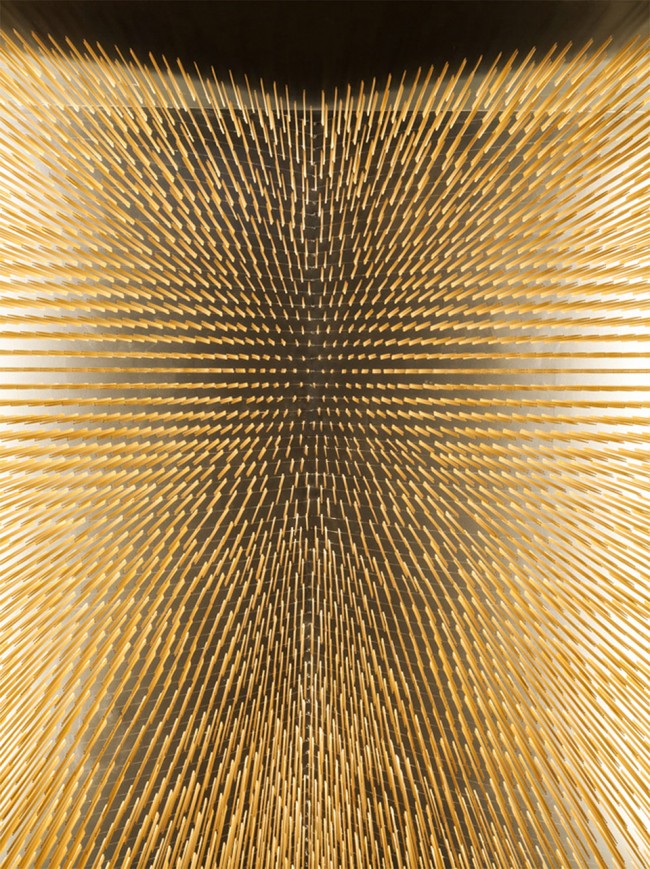
建筑师将8400根筷子悬挂于天花之下,勾勒出另一个极具象征意味的符号 – 日本庙宇的造型。而鉴于当下的消费者对于新鲜事物的强烈好奇心,他们引入了一个简易的缆索支撑系统,将这个用筷子编成的网转化为一个三维的像素空间,随着附着支架的不同变换着模样。
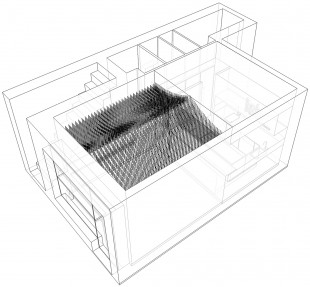
Throw a nine sq/m area we´ve spread 8.400 chopsticks in an uniform way, recreating a Japanese temple silhouette, another strong Nipponese icon. However, knowing that today consumer his avid for new things, we wanted to give space a mutable character, so throw a very simple cable support system we transformed the little chopsticks net into a tridimensional pixelated “screen”. Throw a net of various brackets integrated in the ceiling slab it´s possible to change the chopstick ceiling form and transform space completely.
▼ 如日本庙宇般的造型,the chopsticks recreate a Japanese temple silhouette
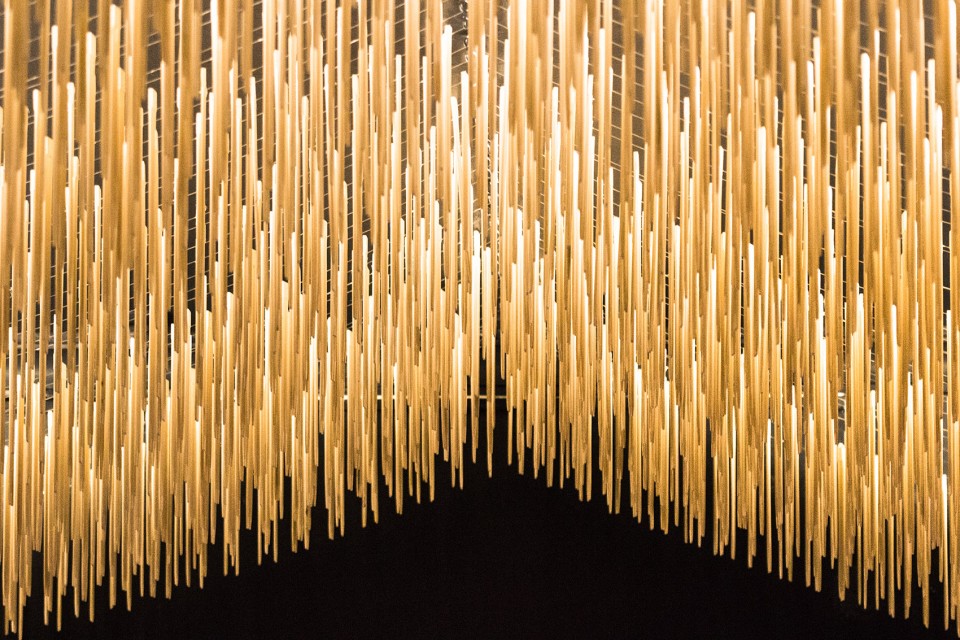
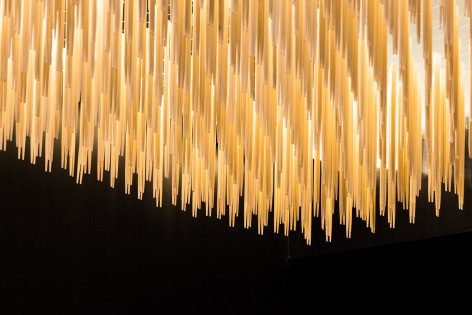
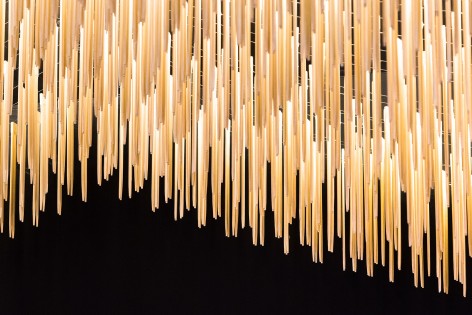
▼ 多样化的空间造型, spacial mutability scheme
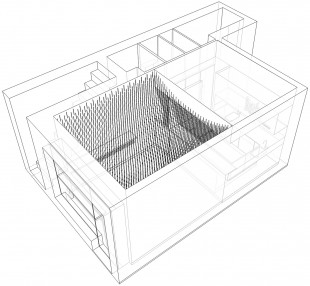
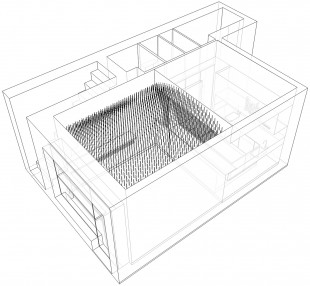
传统日本美学将影子视为建筑空间和谐与平衡不可或缺的一部分,而建筑师受到其影响,将墙体涂成了能够完全吸收光线的黑色,让筷子塑造的屋顶毫无疑问地成为了空间的主角。
The color pallet choice was made in respect of the traditional Japanese aesthetics, in which shadow meets a primordial role in the architectural harmony balance. So, we´ve painted the walls black to get the ideal luminance absorption, reinforcing the ceiling aesthetic potential.
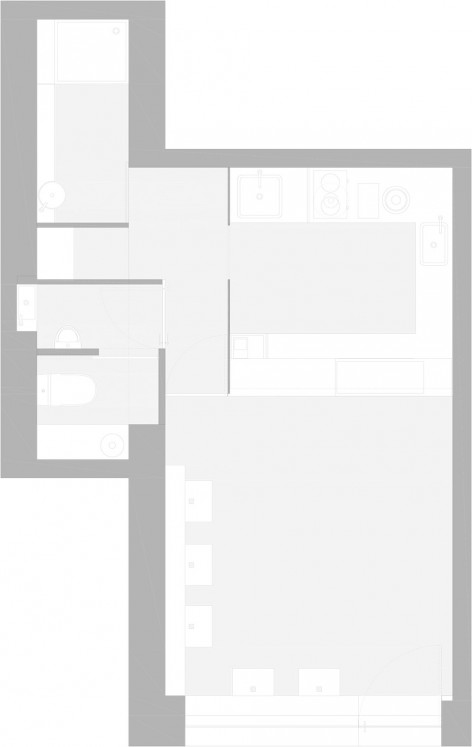
▼平面图,plan
▼ 轴测图,axonometric drawing
Client: Basho Sushi House
Area: 24 m2
Location: Gondomar, Porto, Portugal
Architect: Paulo Merlini
Architect: André Santos Silva
Year: 2014
Photography: João Morgado
MORE: João Morgado ,更多关于他们: Paulo Merlini on gooood
啧啧,葡萄牙朋友居然认为筷子是日本符号,这是一个很严重,很值得大家思考的事情啊!!!
这很正常 世界公认的东方建筑代表确实是日本
说筷子是日本的传统符号我就“呵呵”了。。
有谁能说下这个筷子是怎么固定的么 谢谢了
钢丝把筷子穿起来,吊杆定位把钢丝套起来。
谢谢了
第一段称述毫无意义,寿司师傅的操作台面根本看不见,我不知道他是怎么成为空间的主角的。呵呵
嗯,这吃饭的小桌板,面壁静坐的感觉,找机会去体验下