非常感谢 Chat Architects(邮箱:chat.architects@gmail.com)将中英文文字介绍及项目图片授权给gooood发行。更多请至:Chat Architects on gooood
Appreciation towards Chat Architects(mail:chat.architects@gmail.com) for providing the following description:
Chat Architects最近完成了他们在海边的新项目——Angsila牡蛎脚手架亭,坐落于泰国春武里府的传统渔村Angsila的海边。
Chat Architects unveils its new project, the Angsila Oyster Scaffolding Pavilion, located off the coast of the historic Angsila fishing village in Chonburi Province, Thailand.
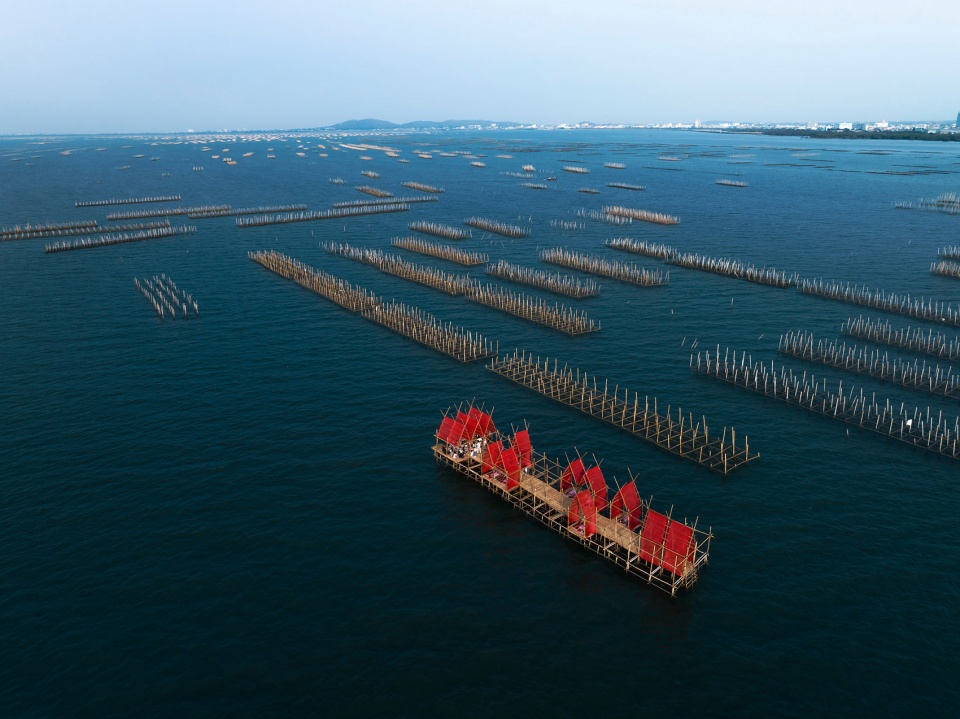
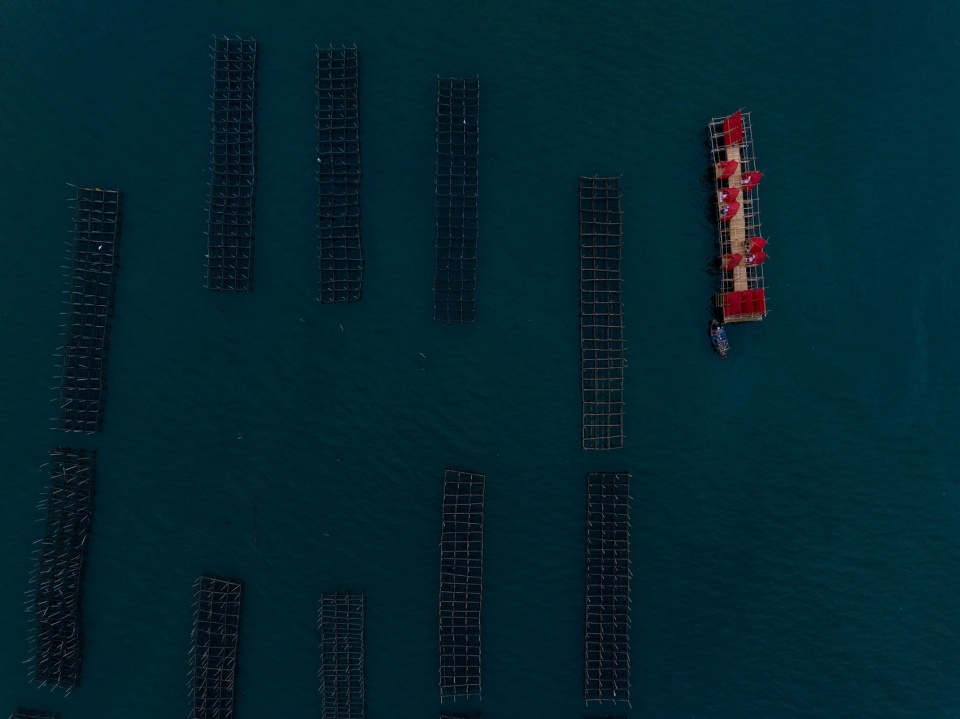
▼鸟瞰,Bird view ©W Workspace
Angsila曾经是一座繁荣的小规模渔村,但在过去数十年中,由于各种因素的影响,Angsila的村民们艰难的维系当地的渔业发展。从生态环境层面,附近城镇和工厂未经处理的废水都排到了河流和运河里,直接流入Angsila港。进而导致水质污染和水生物数量的下降,传统渔业也因利润不断下降而遭到淘汰。不仅如此,年轻一代也开始在曼谷周边的工厂,办公和零售行业寻找更高薪的工作。因此,Angsila牡蛎脚手架亭项目希望能够通过创造一个关于牡蛎的生态旅游设施来重振当地的渔业。
Once a thriving small-scale fishing town, the Angsila community has struggled in past decades to sustain the way of life of its fisheries due to a variety of factors. On an ecological scale, unfiltered waste from nearby factories and new suburbs is released into the rivers and canals, feeding directly into Angsila Bay. The resulting diminished water quality and decreased aquatic life and profitability in seafood cultivation has led to the abandonment of traditional fisheries. In particular, the younger generation has left their hometown to seek more profitable jobs in factories, offices, or retail businesses in nearby Bangkok. As a result, the Angsila Oyster Scaffolding Pavilion Project aims to re-vitalize Angsila’s struggling fishing/seafood industry through the creation of a new oyster eco-tourism infrastructure prototype.
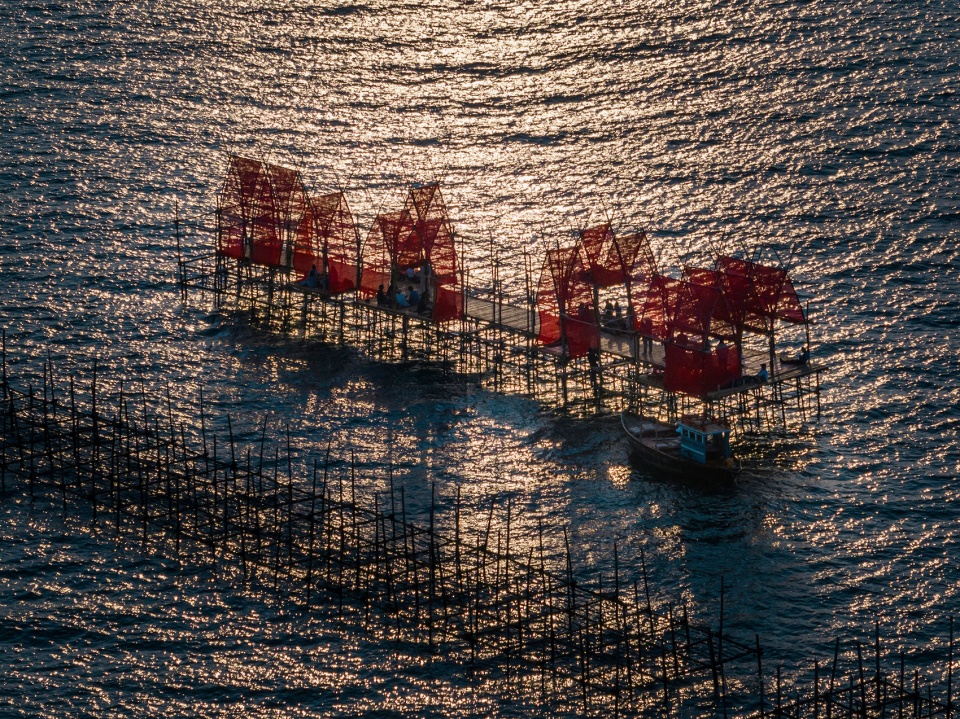
▼脚手架亭鸟瞰,Bird view of the scaffolding pavilion ©W Workspace
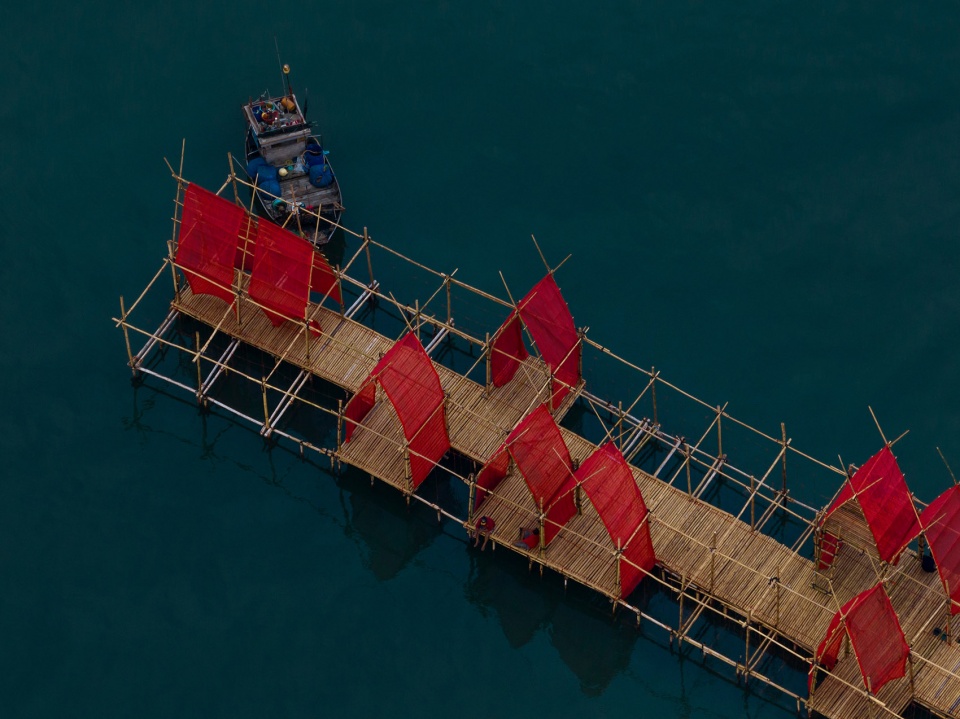
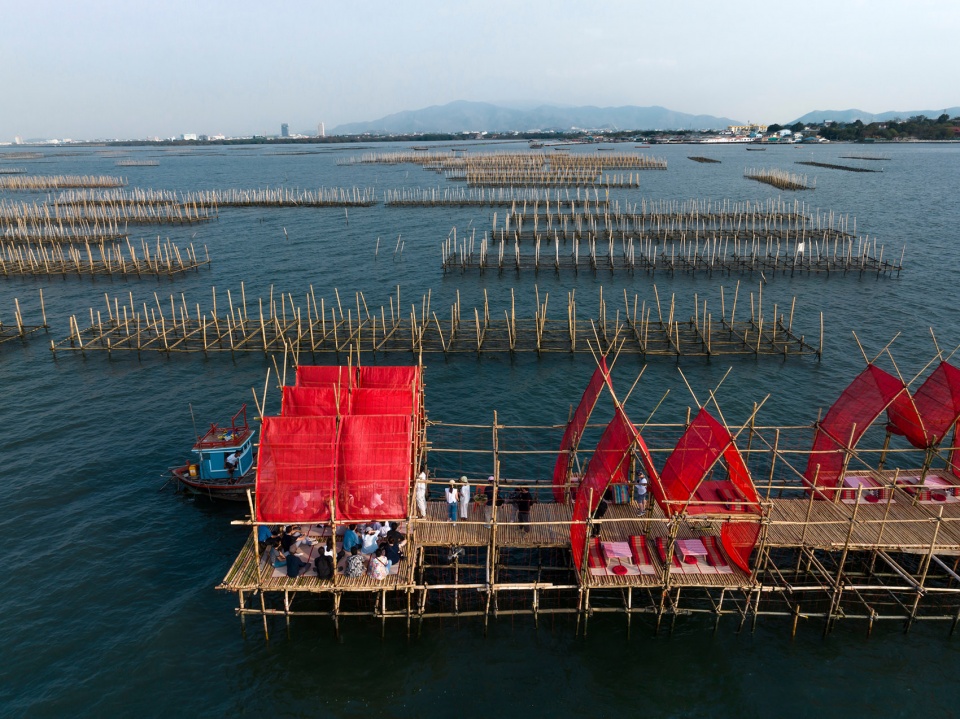
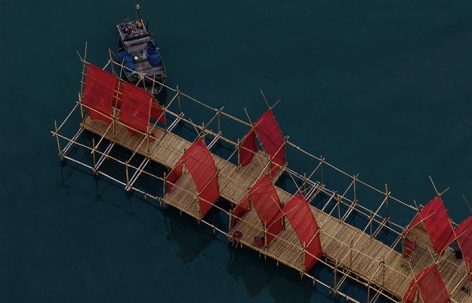
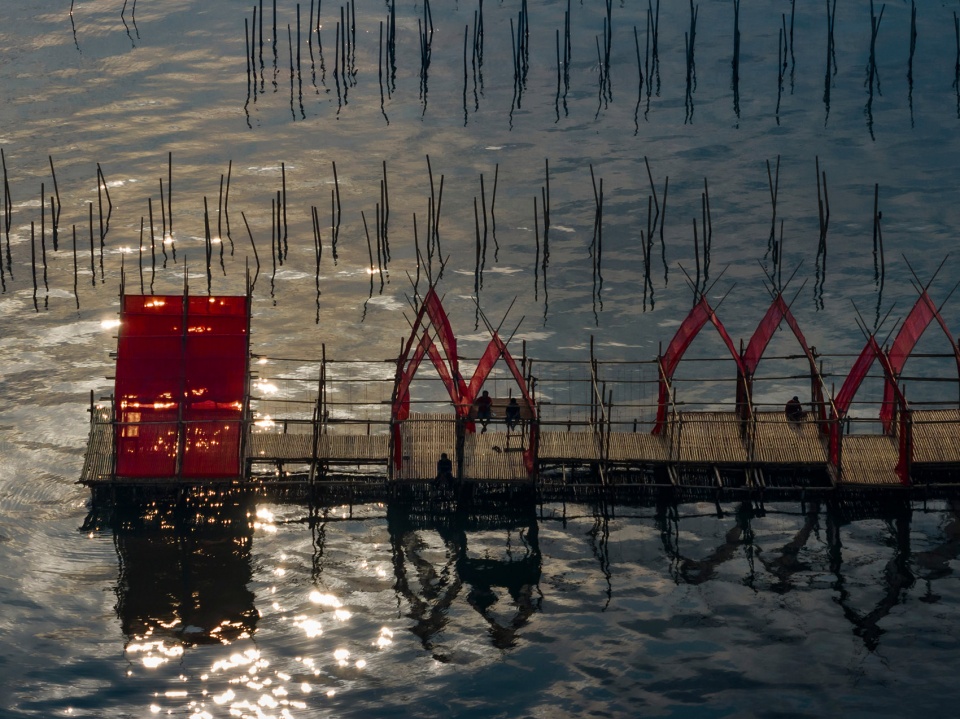
▼凉亭近景,closer view of the scaffolding pavilion ©W Workspace
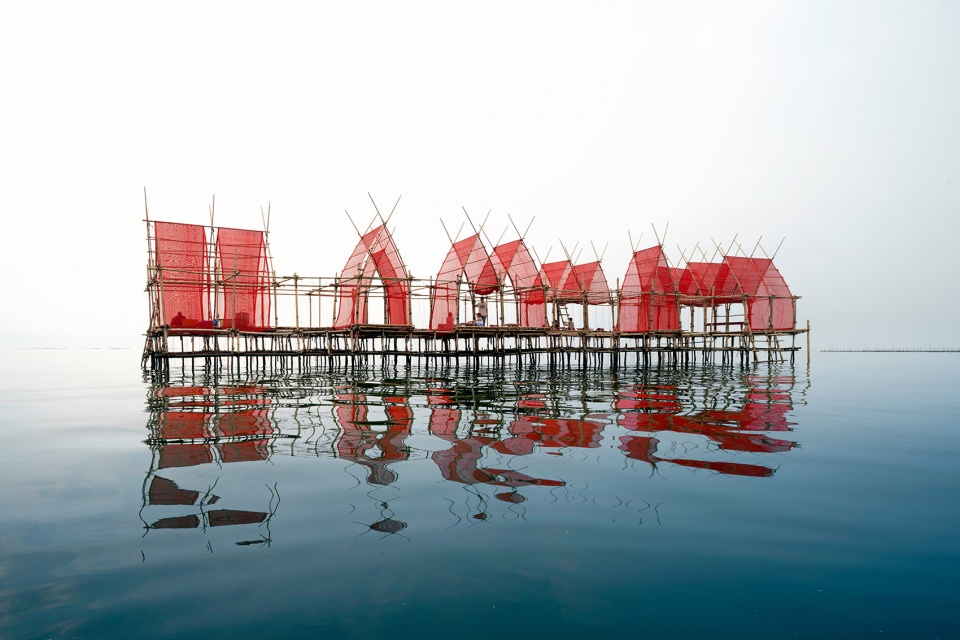
▼凉亭近景,closer view of the scaffolding pavilion ©W Workspace
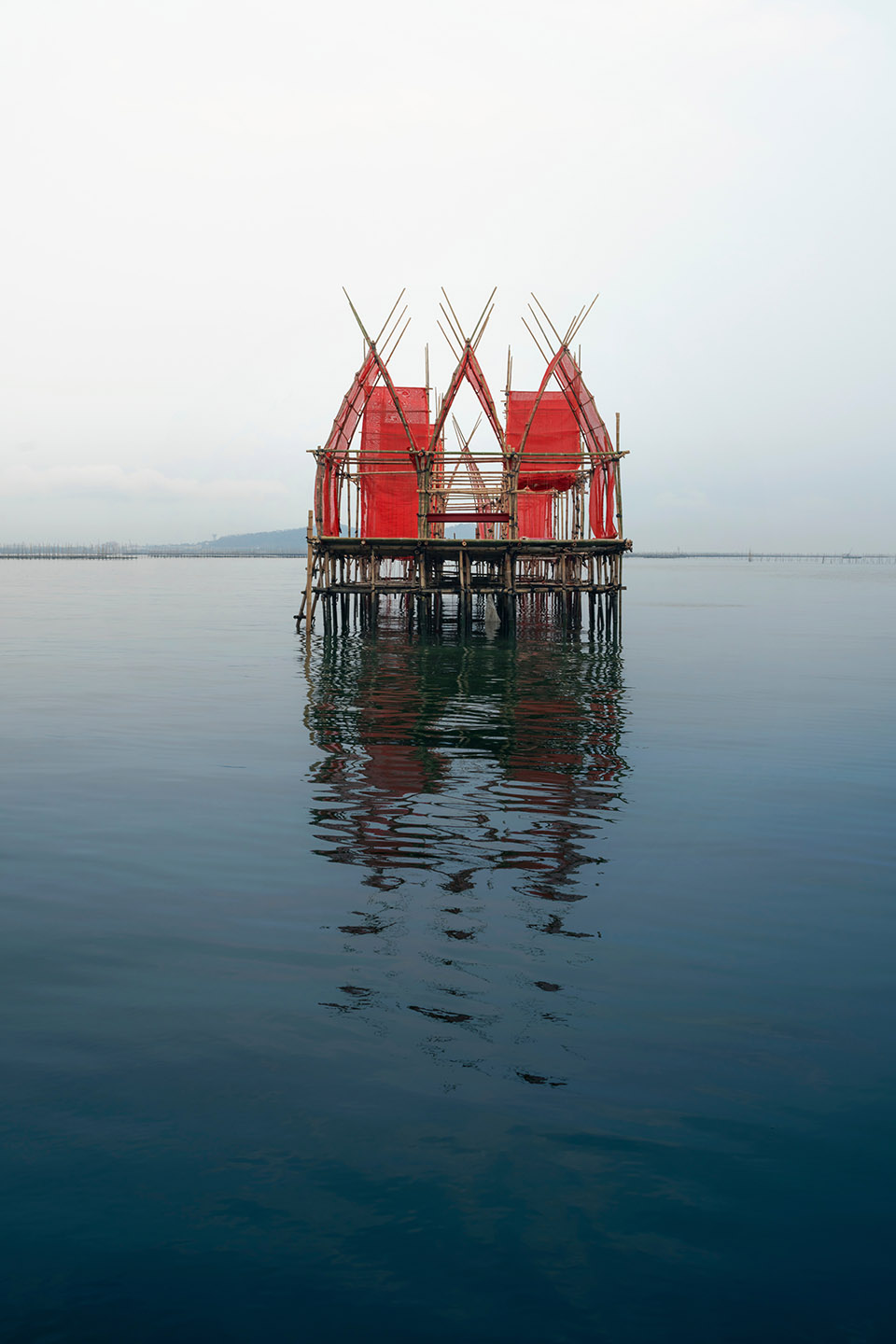
凉亭的设计灵感来源于“模仿”传统牡蛎养殖所使用的竹制脚手架。当使用时,当地的渔民们将一小群游客们从Angsila带到凉亭上,在这里游客们可以从下面的海水中捡到可以直接生食的牡蛎…..在令人惊叹的海岸边享受从海洋到餐桌的独特用餐体验。
The pavilion design draws on and “bastardizes” the widely deployed bamboo scaffolding traditionally used for oyster cultivation. When in use, local fishermen bring small groups of visitors from Angsila to the pavilion, where they can handpick oysters pulled from the ocean below, which are then prepared fresh to eat …a sea-to-table dining experience in a remarkable coastal setting.
▼在凉亭上享用牡蛎,enjoying lobster on the pavilion ©W Workspace
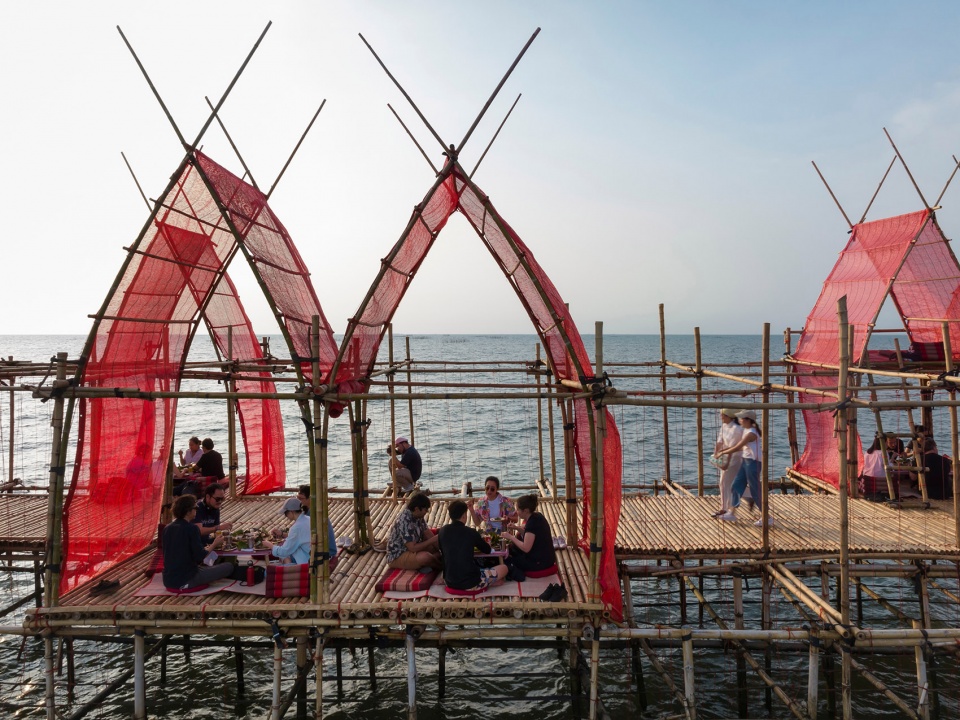
▼在凉亭上享用牡蛎,enjoying lobster on the pavilion ©W Workspace
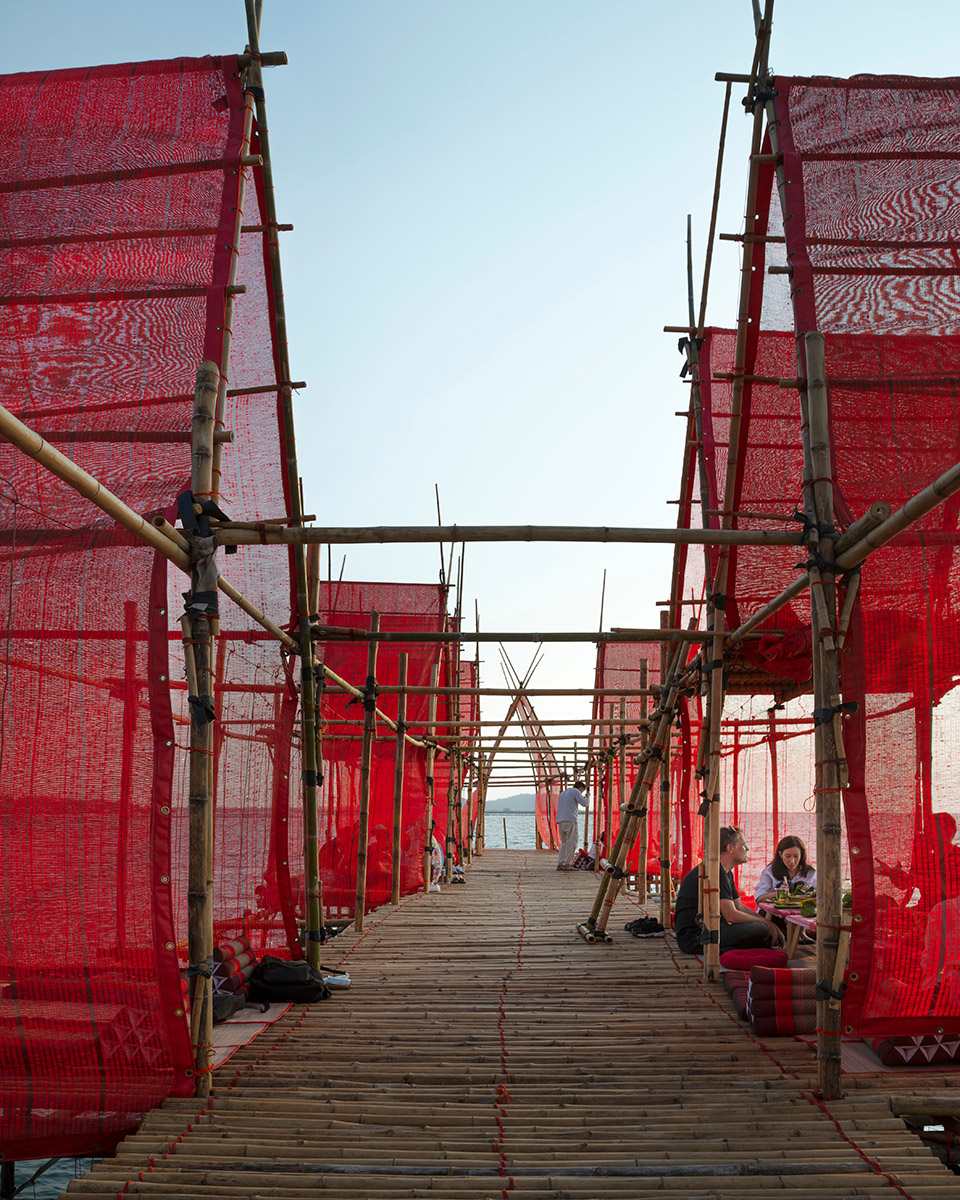
这种全新的牡蛎品尝体验让Angsila的渔民们有机会用一种新鲜互动的方式将他们的故事和牡蛎的养殖转述给游客们。直接在凉亭内呈上贝类食物也可以保证海鲜的新鲜度,也提供给Angsila渔民为保护Angsila湾海岸生态发声的机会。
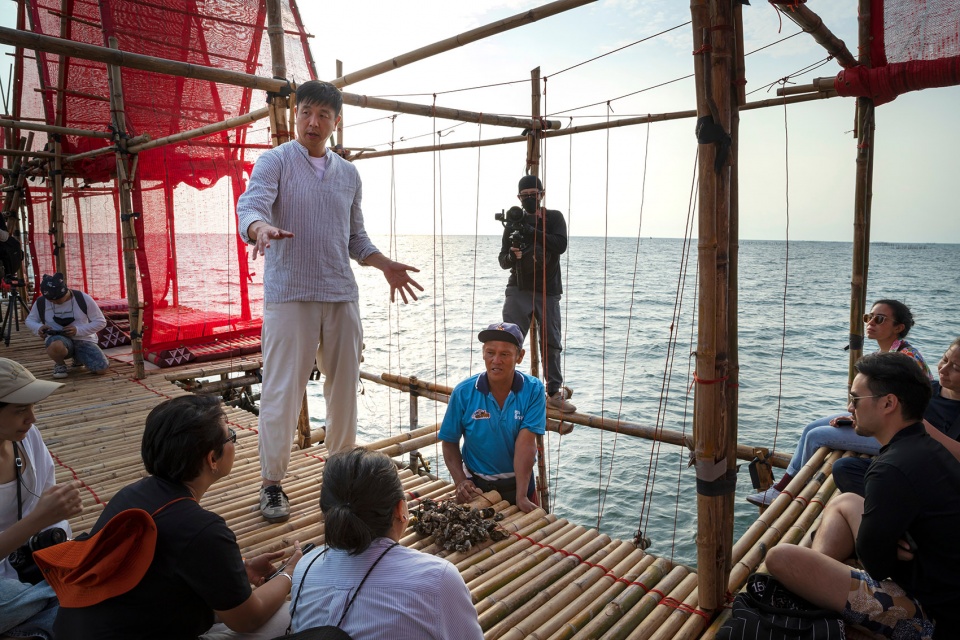
This new oyster-tasting experience allows the Angsila fisherman to relay their fishing history and oyster cultivation heritage directly to visitors in a new and interactive way. Serving shellfish cultivated right on the scaffolding also ensures seafood freshness for tourists, while providing the Angsila Fishermen with an opportunity to campaign for the protection of Angsila Bay’s sensitive coastal ecology.
▼向游客们转述当地历史与牡蛎养殖, relay their fishing history and oyster cultivation heritage to visitors©W Workspace、
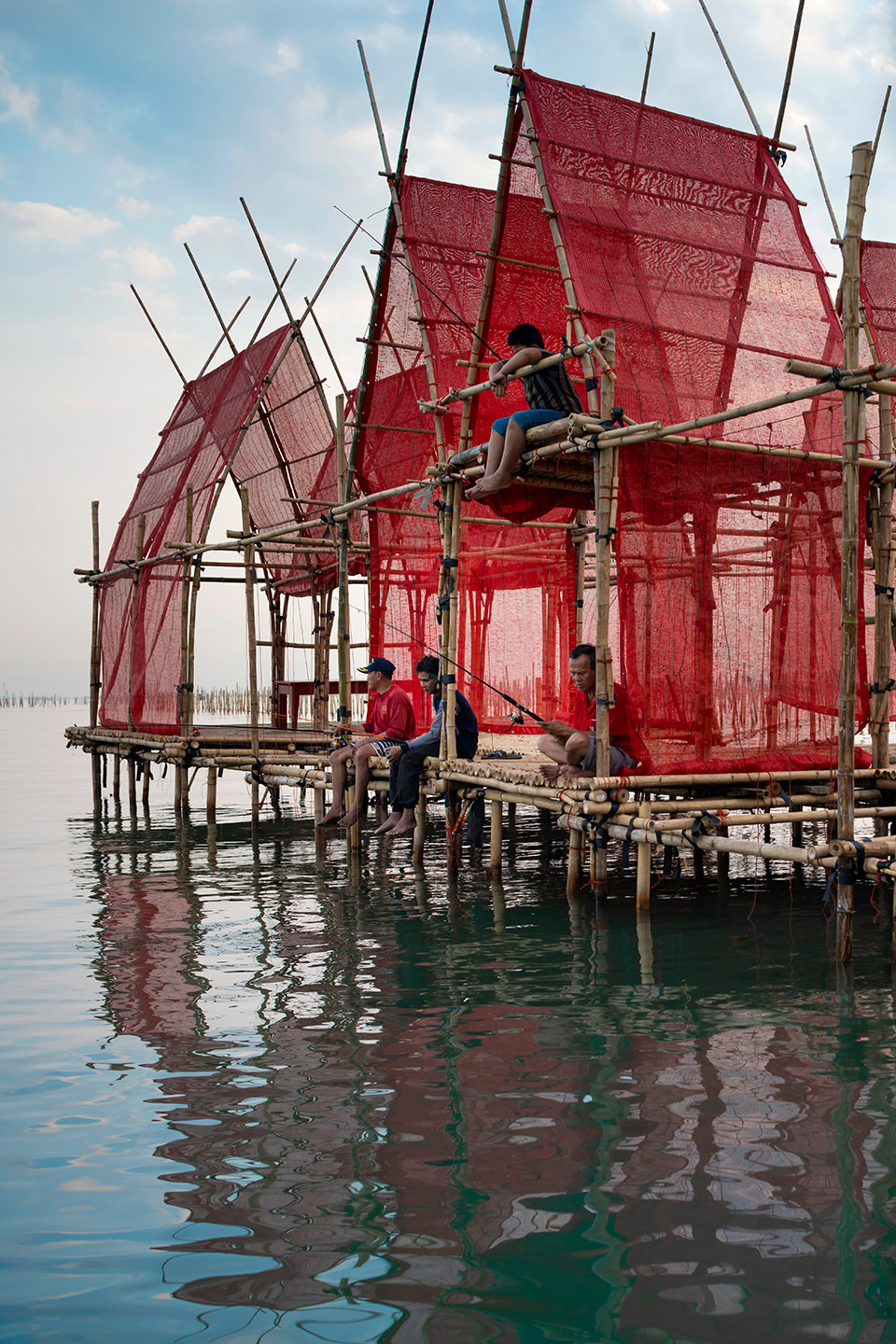
不仅仅是一处为游客们品尝牡蛎的凉亭,包裹着织物的平台还成为了当地渔民的一处海钓码头,他们和家人们带着鱼竿、鱼饵和鱼钩来到平台上,以便捕捉各种当地鱼类,这些鱼类自然被吸引到清洁的、贝类过滤的水域,周围是下面水域的牡蛎和贻贝束。
When not utilized as a tasting pavilion for eco/tourists, the covered platforms become recreational fishing piers for local fishermen, who bring their families to the platform with fishing poles, bait, and hooks in order to catch a variety of local fish naturally drawn to the clean, shellfish-filtered waters surrounding the oyster and mussel bundles in the waters below.
▼在凉亭上海钓,fishing on the pavilion ©W Workspace
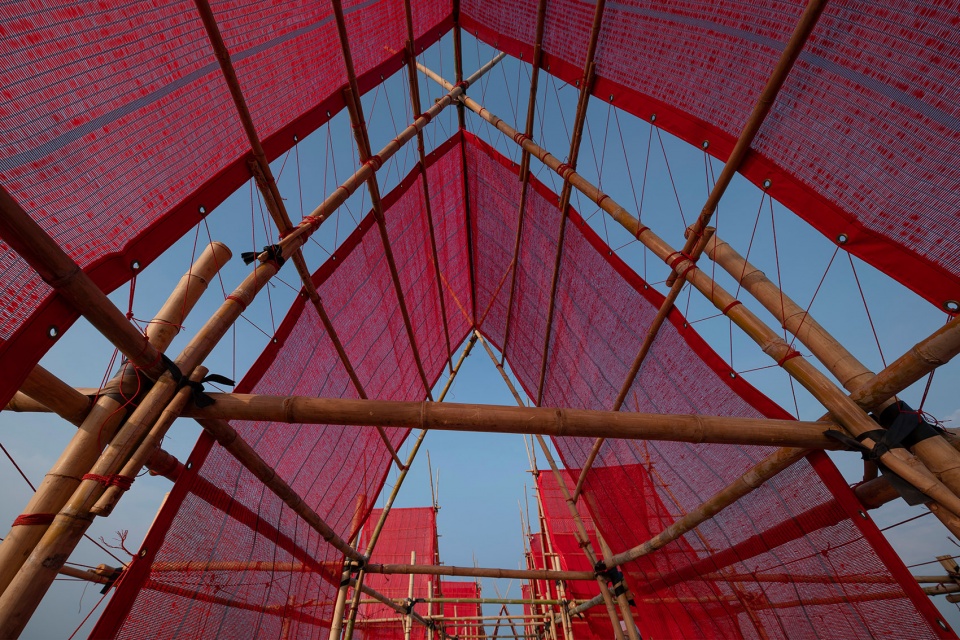
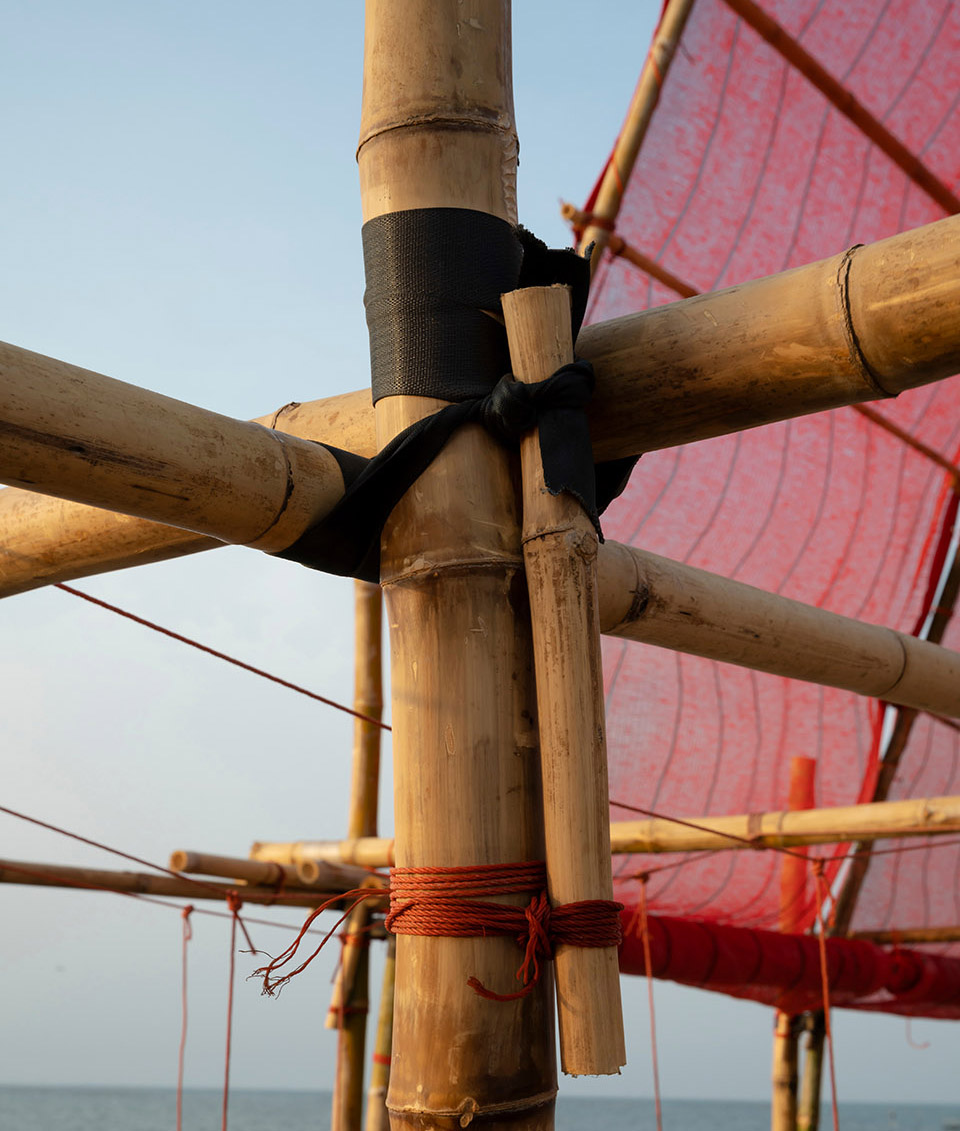
凉亭的设计灵感来源于日常的,持续性和可负担的材料,劳动力和建造技艺。和养殖牡蛎的脚手架一样,新的脚手架亭也完全由Angsila的渔民建造,综合采用了当地的浅海竹子建造工艺,并不需要使用任何电力工具。渔民们用“弹簧高跷”的方式人工将竹条搬运到海面上。从当地汽车厂以折扣价购买的报废汽车安全带,因变色而被用来将所有的竹条绑在一起。红色的滤光农业篷布通常用于附近的托儿所,它与淡绿色的海湾水域相呼应,在海风吹拂下为游客遮挡阳光。
The pavilion design innovates from existing every day, sustainable, inexpensive materials, labor, and construction techniques. Like traditional oyster scaffoldings, the new scaffolding is built entirely by Angsila fishermen, utilizing local shallow-ocean bamboo construction techniques that require no power tools. The fishermen manually drive each bamboo column into the ocean floor, “pogo-stick” style. Rejected car seatbelts, acquired at a discount due to discoloration from local auto plants, are used to tie all of the bamboo members together. A graphic red (complimenting the greenish bay waters), light-filtering agricultural tarp, commonly used in nearby nurseries, shades visitors from the ocean sun, yet allows for the passage of ocean breezes.
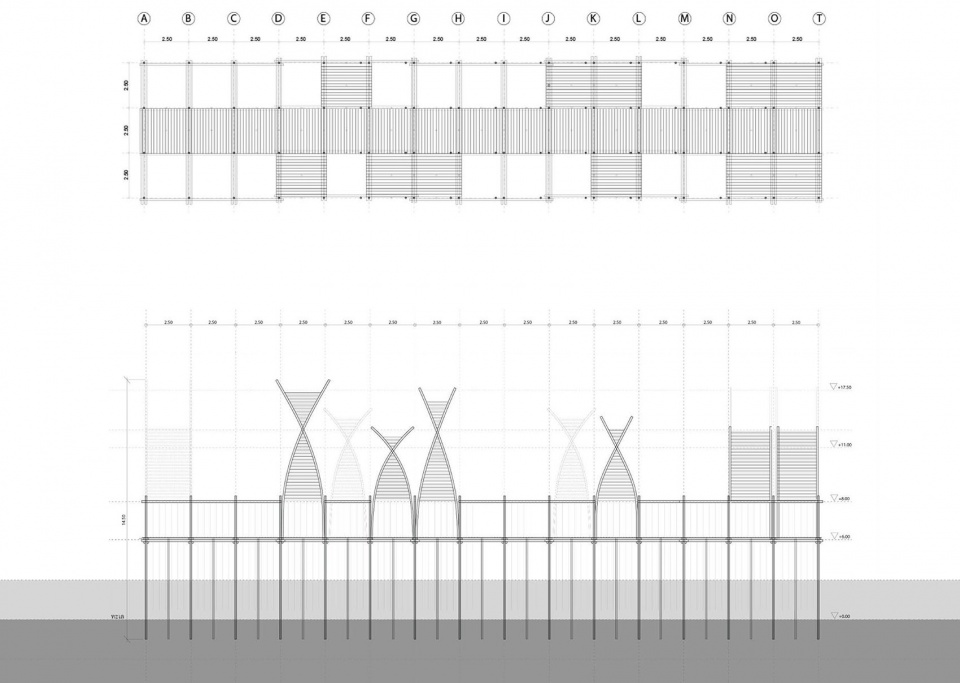
▼平台结构,platform structure©W Workspace

▼傍晚时分,at dusk ©W Workspace







除了红色,其他都挺喜欢
DK
值得多看
这项目国外都发布了好久了
cool~恰到好处