非常感谢Diana Scherer将项目介绍和项目图片授权gooood发行。更多请至:Diana Scherer on gooood
Appreciation towards Diana Scherer for providing the following description:
Diana Scherer避免任何戏剧化的表达,力求客观的摄影风格。同时她对自己的创作倾注了极大的情感,隐藏在作品背后的柔情与爱意通过图像真切的传达给了观众。
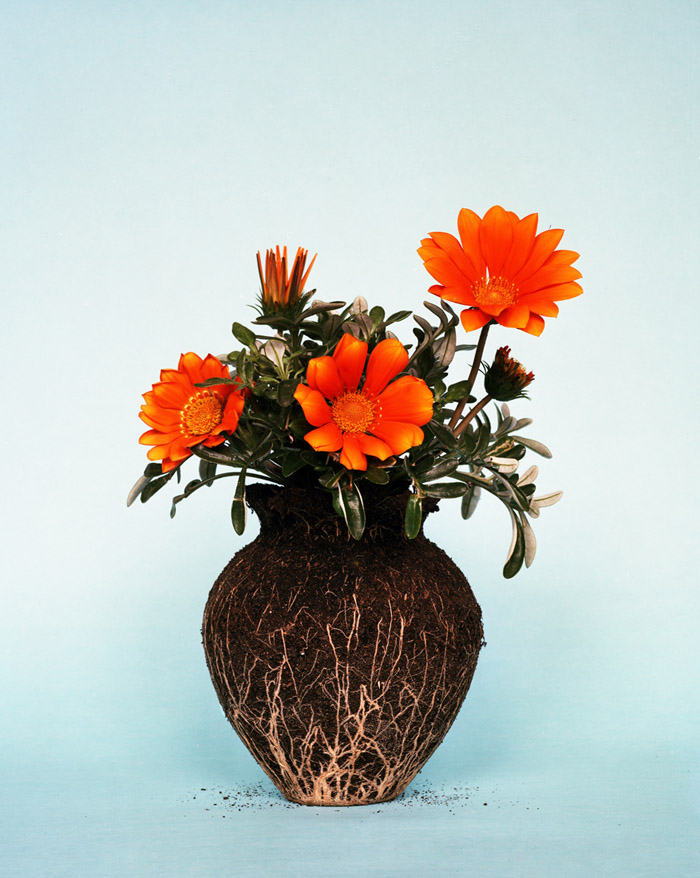
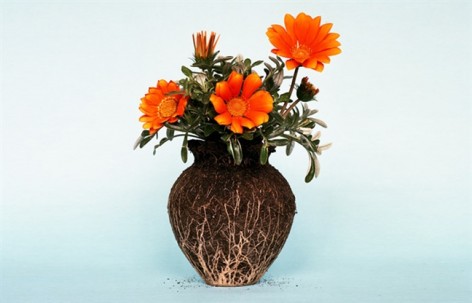
自两年前艺术家Diana Scherer在自己浴缸中种植物起,Diana Scherer便开始了创作植物艺术品的生涯。
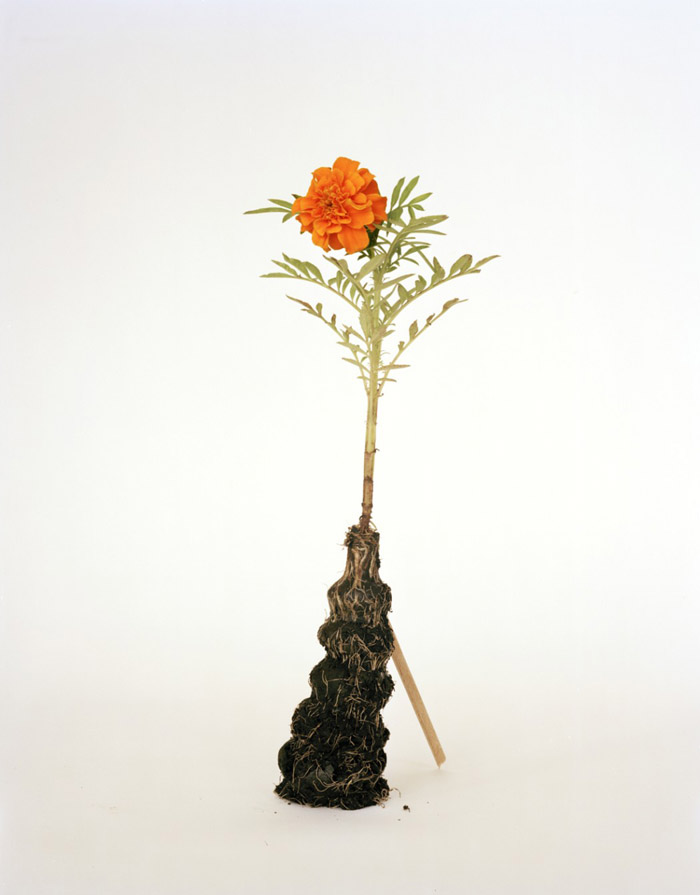
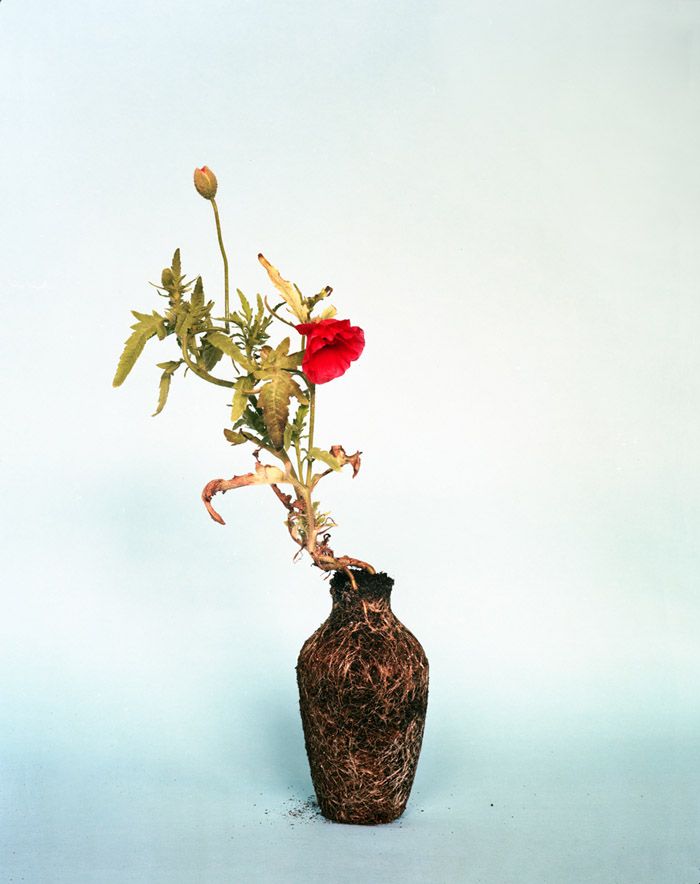
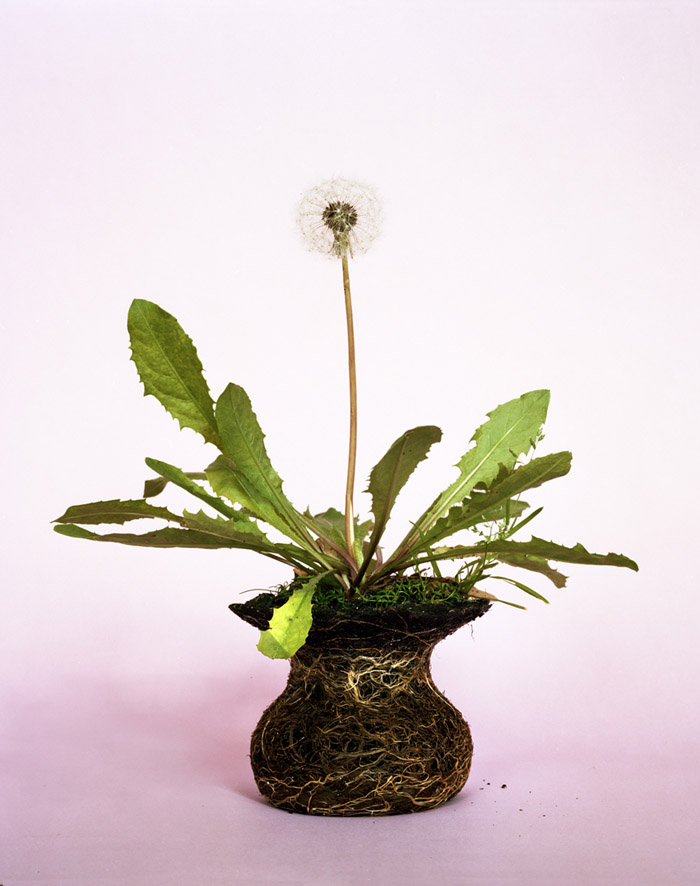
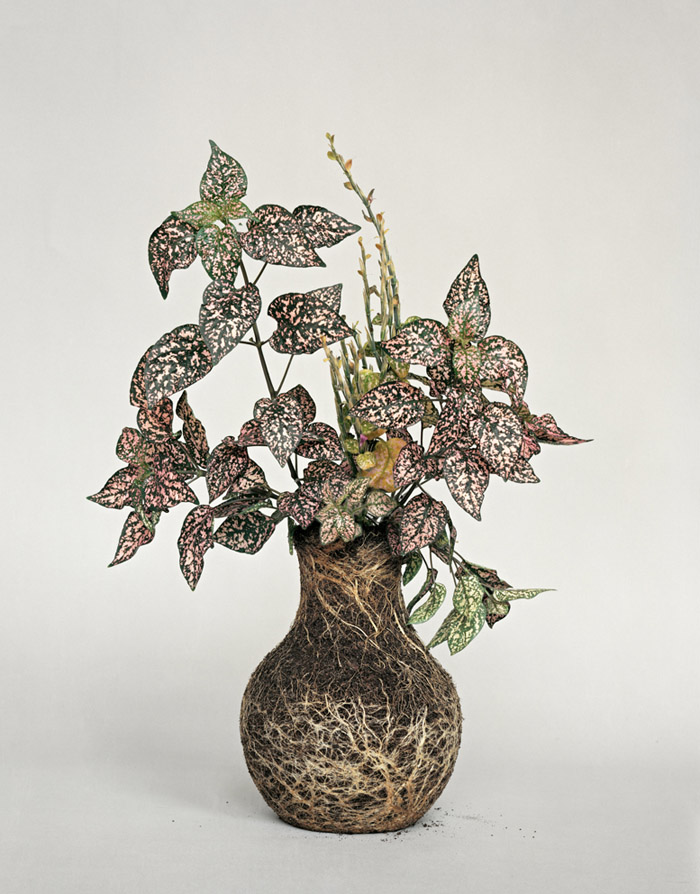
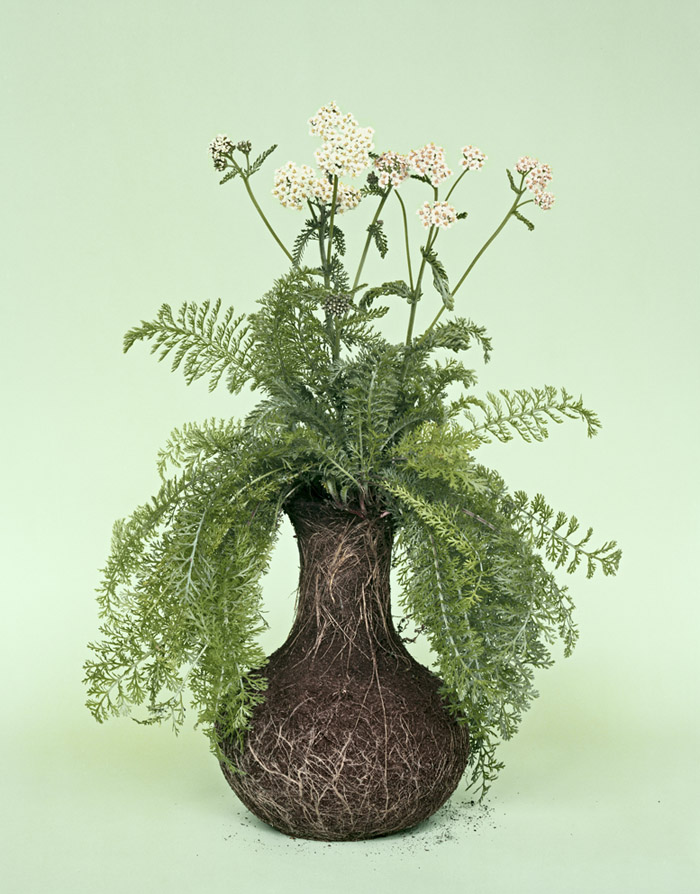
把花卉的种子(并非鲜切花或已经成长好的花)放进花瓶中的土壤培育6个月,之后去掉花瓶,根与土壤已经顽密的形成一个整体,花瓶的形状被得以保存。Diana Scherer再将这些美丽的效果拍摄下来。这样的结果需要经过多次的实验,精心的配置和密切的观察,一定要赶在花卉死亡前的生长期顶峰期进行创作。
艺术家一直痴迷花卉,花儿在她以前的作品中也有体现,与此同时,艺术家还收藏与花儿相关的很多物品:有花卉图案的卫生纸,有花卉图案的瓷器,植物百科全书等等。现在Diana Scherer的作品中,花儿已从配角变成了主角。一次翻阅17世纪植物百科全书时,Diana Scherer发现关于植物的插图都是浪漫的,没有直接暴露的朴实形象,那些植物仅仅是完美的标本,没有生命的感染力和生长消亡的过程感,而且没有蒲公英这样的普通植物。于是Diana Scherer开始了将植物一视同仁的创作,并表现出它们生命的魅力。
I
Two springs ago, Diana Scherer tipped a tub of soil out on her balcony and sowed wildflowers. Months later she photographed the resulting bunch of flowers as a classic still life. More than just recording a composition or arrangement, her photos document an extended sculptural and botanical investigation.
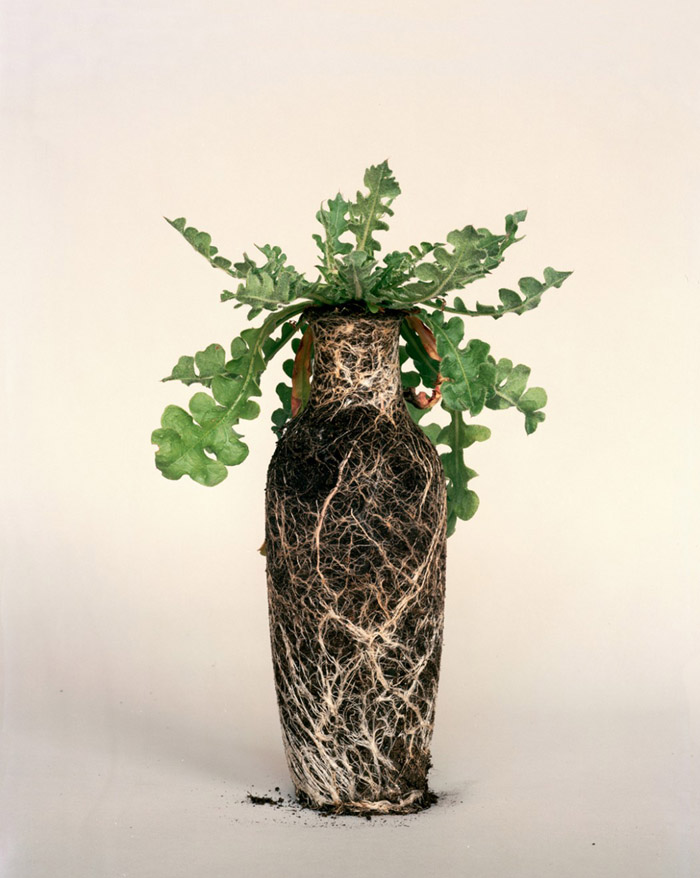
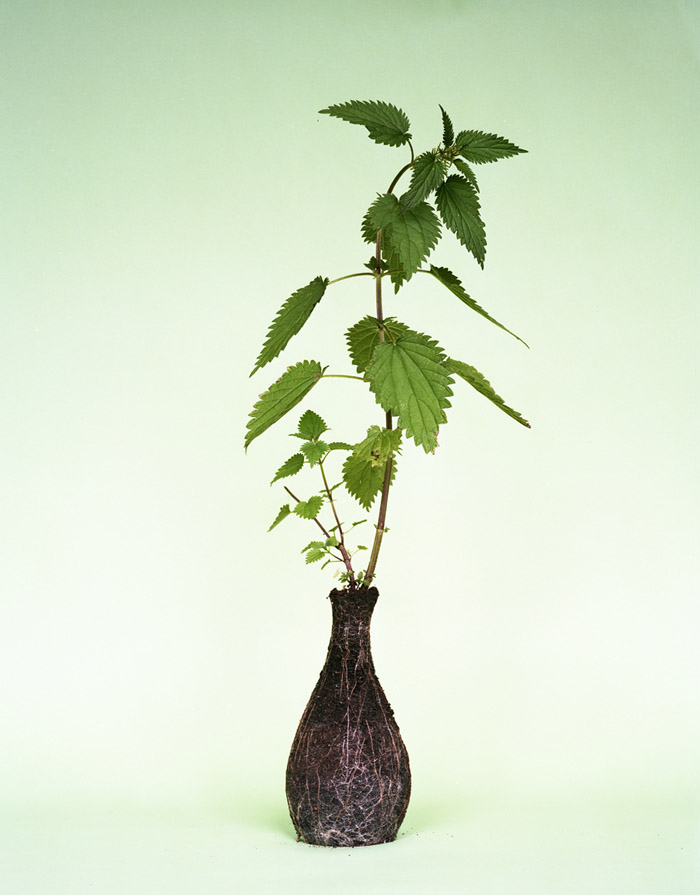
Process is key in Scherer’s work. With Nurture Studies, the artist presents an archive of flowers she has grown from seed over a six-month period. Rather than letting the flowers grow in open soil, she has forced each plant to develop within the confines of a vase. Only at the end of the process does she remove the plant’s corset, exposing roots that retain their shape as an evocation of the now absent vase.
There is an inherent contradiction in Scherer’s working method. Although she is dedicated to the project and keeps a close eye on whether the roots are developing as desired – checking them carefully and with the utmost precision – her ability to manipulate the plants’ growth is limited. She has to accept the impossibility of total control. This contrast between almost obsessive monitoring and an inability to fundamentally influence events becomes an intense, almost ritual presence in her work.
Scherer’s photos are carefully rationed, showing a single moment as the culmination of a long process of growth. She documents the flowers at their peak, just before they begin to shrivel as the plants start to die.
II
Scherer has always been fascinated by flowers. Although not always prominent in the foreground, they have often played a role in her work. Examples are a dead deer lying on a bed of flowers (Still, 2008) or women in floral dresses hanging from the branches of trees (Frauen, 2004). It is only in her most recent series that she has concentrated on the flower as such, transforming her fascination into an obsession. As a fanatical collector, she has amassed an arsenal of material related to the object of her desire: old garden encyclopaedias, botanical guides, porcelain cups with floral motives and pieces of toilet paper embossed with floral designs. This compulsive collecting lays the groundwork for the images she ultimately records with her camera.
The photos Scherer has produced for Nurture Studies recall the illustrations in seventeenth-century botanical encyclopaedias, which presented flowers roots and all. Her work also has strong similarities with 1970s plant books, in which indoor plants were often arranged on a pedestal and set off with fabrics that added a romantic touch to the whole. Although clearly referring to these predecessors, Scherer has no difficulty avoiding the perceived cosiness of the “pot plant” genre. Her images are bare, unadorned. The careful observer will notice that most of the plants are anything but perfect specimens. Brown edges and broken stems show that mortality is already making its presence felt. The pink aster’s leaves are already dying off and other plants, dandelion and cow parsley for instance, wouldn’t be deemed worthy of a second glance on the side of the road. Scherer treats them all as equals.
III
The floral portraits form a pendant to earlier photo series in which Scherer opted for much rawer imagery, things like young girls lying on the ground with their backs to the camera, collapsed like rag dolls, so that viewers almost automatically think of them as victims (Mädchen, 2002-2007). In Nurture Studies this confrontational imagery has made way for subtlety. Although the flowers, with their exposed roots, look just as fragile as the girls, Scherer avoids any semblance of drama, mainly by the objectivity of her photographic style, arranging the plants upright in the frame and photographing them with a technical camera. This approach is consistent with the orderly way collectors catalogue their objects.
Behind this objective methodology, there is a great deal of emotion at work. More than anything else, Scherer’s process of collecting, nurturing and documenting is a display of tenderness, ritualistic love that remains hidden to the viewer, but still infuses the vulnerable final images with its almost tangible presence.
Floor Tinga
Translation: David Colmer
MORE: Diana Scherer,更多请至:Diana Scherer on gooood









[爱心]
[惊讶]
从内而外的美!!