“《健康地形》揭示了健康与环境问题的多层联系,进而搭建起了景观建筑、自然环境和医学专业之间的桥梁。”
– 2024年ASLA评审委员会评语“The Topography of Wellness uncovers the strata of health and environmental issues that bridge landscape architecture, the natural environment, and the medical profession.”
– 2024 Awards Jury
来自 ASLA 对gooood的分享。
The Topography of Wellness|Sara Jensen Carr, ASLA
项目陈述
Project Statement
《健康地形:健康与疾病如何塑造美国景观》通过时间轴的方式,探讨了六次历史性流行病如何与城市景观相互影响。书中揭示了随着时间推移,人们对设计力量、疾病病理学及环境流行病学的视角变化。从霍乱与肺结核的传染病,到现代复杂慢性病,每场疾病以及其应对策略——如城市隔离、根除和“针灸式”干预——都在当今的环境中留下了印记。本书呼吁将健康与公平重新定位为景观建筑未来发展的核心原则。
The Topography of Wellness: How Health and Disease Shaped the American Landscape is a chronological narrative of how six historical epidemics had a reciprocal relationship with urban landscapes, reflecting changing views of the power of design, pathologies of disease, and the epidemiology of the environment. From the contagions of cholera and tuberculosis to the more complicated pathways of contemporary chronic illnesses, each disease narrated here, alongside their associated combat strategies of urban quarantine, eradication, and acupuncture has left its mark on the present-day environment. The consideration of this history ends with a call to reframe and reclaim health and equity as central tenets of our profession for the future.
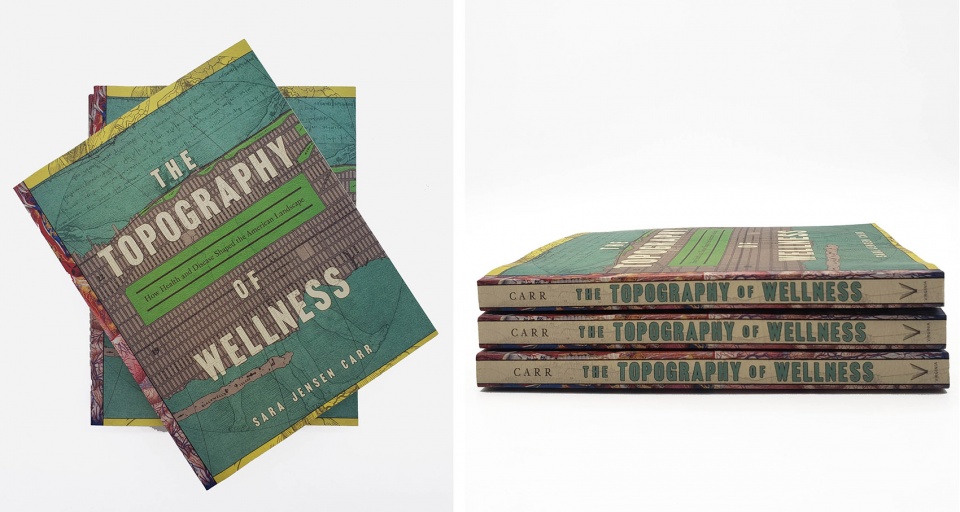
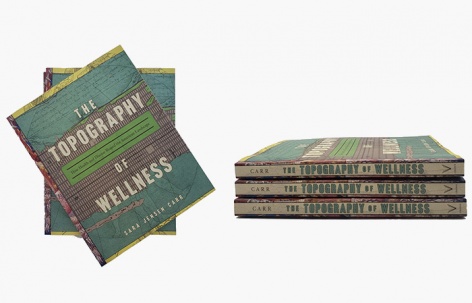
▲封面设计:封面设计结合了解剖学绘图与纽约市健康部门绘制的地图,体现了两者的交织关系,Cover Design: The cover image evokes both anatomical drawings and a map of New York City drawn by the Health Department, depicting their intertwined relationship © Cover Design by Derek Thornton/Notch Design; photo by Sara Carr
项目说明
Project Narrative
尽管公共卫生历史和美国景观的历史已有详尽研究,但鲜有著作同时探讨它们的交汇、分歧与平行关系。《健康地形》系统性地分析了美国关于健康的理念如何塑造了景观建筑的实践,以及城市如何利用建成环境应对流行病。书中以工业革命时期的卫生运动为起点,论述了公共卫生实践与景观设计在进步时代的紧密结合,这一时代的代表人物——景观建筑之父弗雷德里克·劳·奥姆斯特德(Frederick Law Olmsted),在其作品与著作中深刻融合了公共卫生理念。
书中的章节延续这一线索,深入探讨住房景观、城市更新、新城市主义,以及当代神经科学与景观的研究。通过讲述霍乱、呼吸道疾病、癌症、肥胖及气候危机带来的健康威胁,书中指出,“健康”不仅被用来推动城市改善与福祉,还曾被作为排斥工具、道德评判依据及推动绅士化的手段。该书以时间顺序详实记录了美国主要流行病与设计历史的变迁,并配有大量插图。
尽管本书于2021年底出版,其初稿早在2020年2月、COVID-19疫情席卷美国前便已完成。结论部分加入了对疫情的反思,并强调COVID作为空气传播疾病所带来的挑战。书中主张将公共卫生重新融入景观建筑,将其视为一种环境伦理,而不仅仅是不平等的城市便利设施。
由于出版时机的特殊性,该书迅速引起广泛关注,并跨越学科界限获得认可。自出版以来,我已在多所大学举办超过30场讲座,不仅面向设计与规划学院,也包括医学院、博物馆、ASLA和AIA地方分会、历史保护学会及非营利组织。本书被《纽约客》(The New Yorker)、美国国家公共广播电台(NPR)、《纽约时报》(The New York Times)、《新共和》(The New Republic)、Bloomberg CityLab、BBC、《景观建筑杂志》(Landscape Architecture Magazine)和CNN等媒体提及和评论。
此外,该书已被麻省理工学院(MIT)、布朗大学、康奈尔大学、雪城大学和芝加哥大学等高校的城市规划、建筑和景观建筑课程列为教材,并荣获JB Jackson图书奖和波士顿景观建筑师协会特别评审奖。截至目前,书籍销量超过1200册,已进入第三次印刷,这对学术书籍来说是一个重要成就。
《健康地形》不仅向学术界和专业人士,还向对城市历史感兴趣的普通读者传递了景观建筑的重要性。在我们迈入需要同时应对流行病与气候危机的时代,这本书希望成为设计健康且公平未来的重要参考,为景观建筑的发展注入新的思考和可能性。
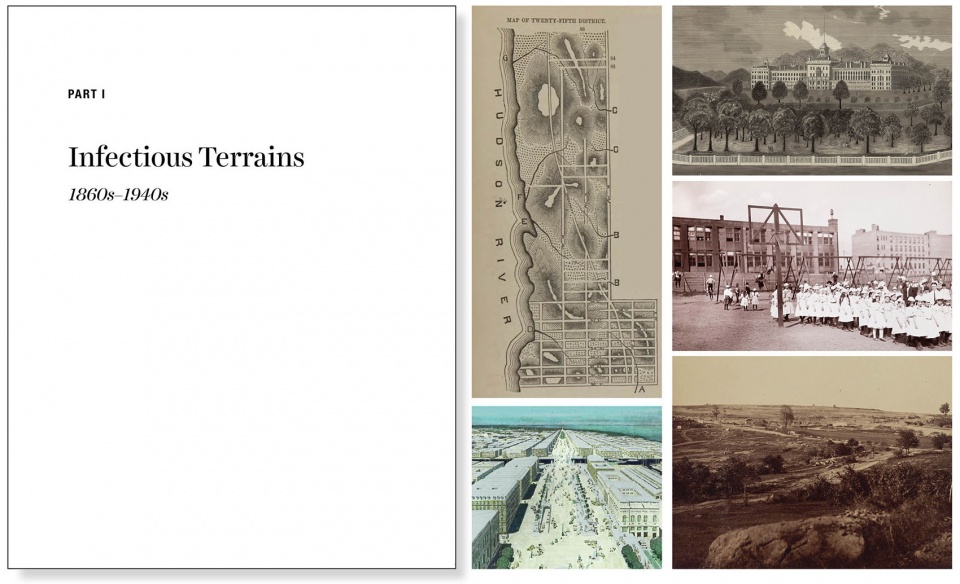
▲第一部分:《感染性地形》及相关插图 – 《感染性地形》探讨了霍乱、呼吸道疾病和儿童死亡率等流行病如何通过景观设计加以应对,Part I, “Infectious Terrains,” and associated illustrations: “Infectious Terrains,”discusses how emerging epidemics including cholera, respiratory illness, and child mortality were addressed through landscape © Sara Carr/University of the Virginia Press (left); images via the 1876 Sanitary Survey of New York City; E. W. Farmer courtesy of the Library of Congress; Jacob Riis courtesy of the Museum of the City of New York; the Plan of Chicago via the Ryerson and Burnham Archives; and the Frederick Law Olmsted National Historic Site
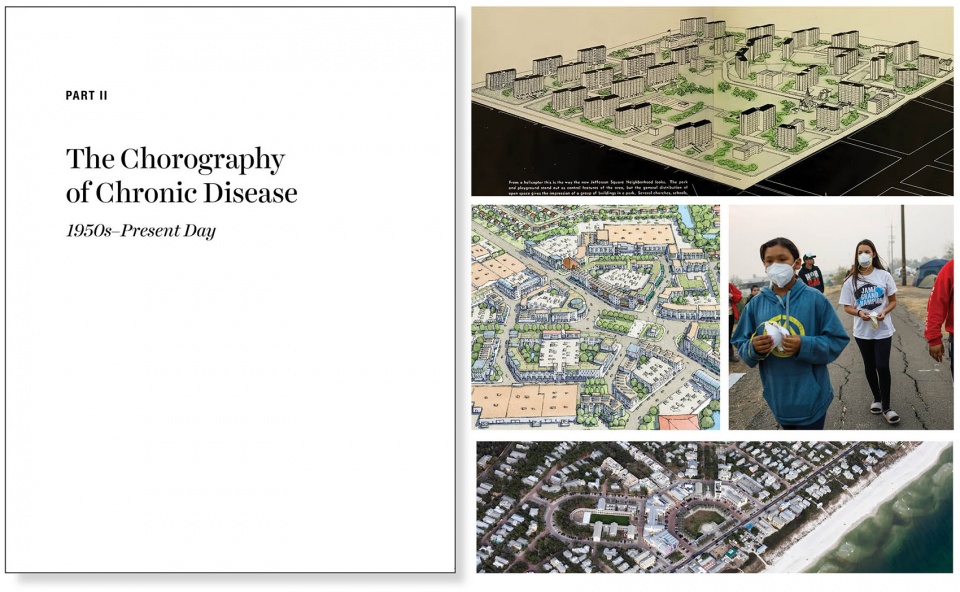
▲第二部分:《慢性病地形图》及相关插图 -《慢性病地形图》深入探讨了景观与慢性疾病之间的复杂关系及未来方向,Part II, “The Chorography of Chronic Disease” and associated illustrations: “The Chorography of Chronic Disease,” tackles the more complicated relationship of landscape to chronic illness and directions for the future © Sara Carr/University of the Virginia Press (left); images via San Francisco Public Library, DPZ CoDESIGN, Alex Maclean, and Gabrielle Lurie (San Francisco Chronicle/Polaris)
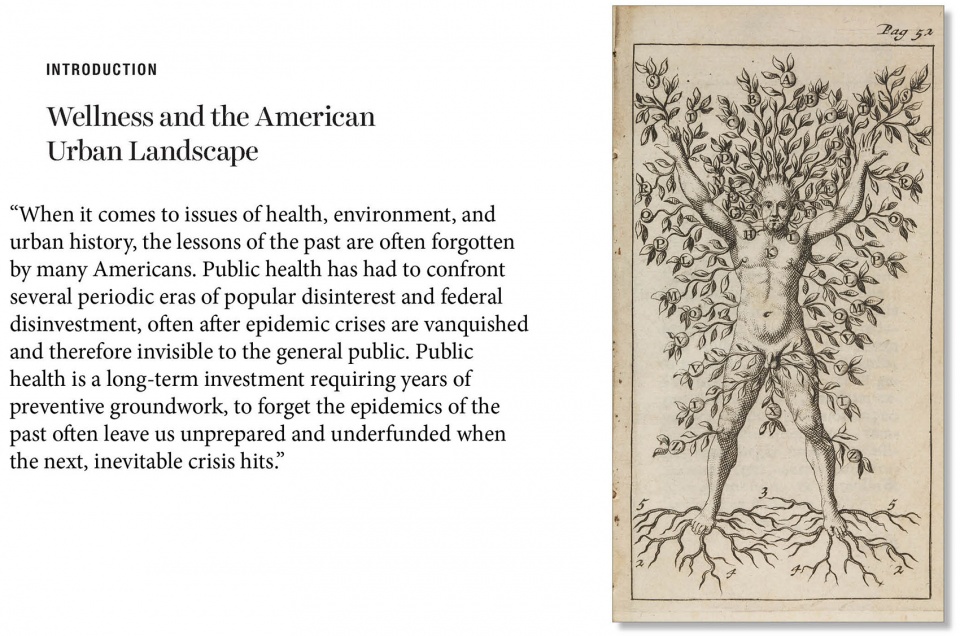
▲导论:《健康与美国城市景观》 – 导论探讨了景观与公共卫生的框架,以及两者交叉历史的重要性,Introduction: Wellness and the American Urban Landscape: The introduction discusses frameworks of landscape and public health as well as the need for an intersectional history of both © Text by Sara Carr, image John Case’s Compendium Anatomicum (1695), courtesy of the Wellcome Trust
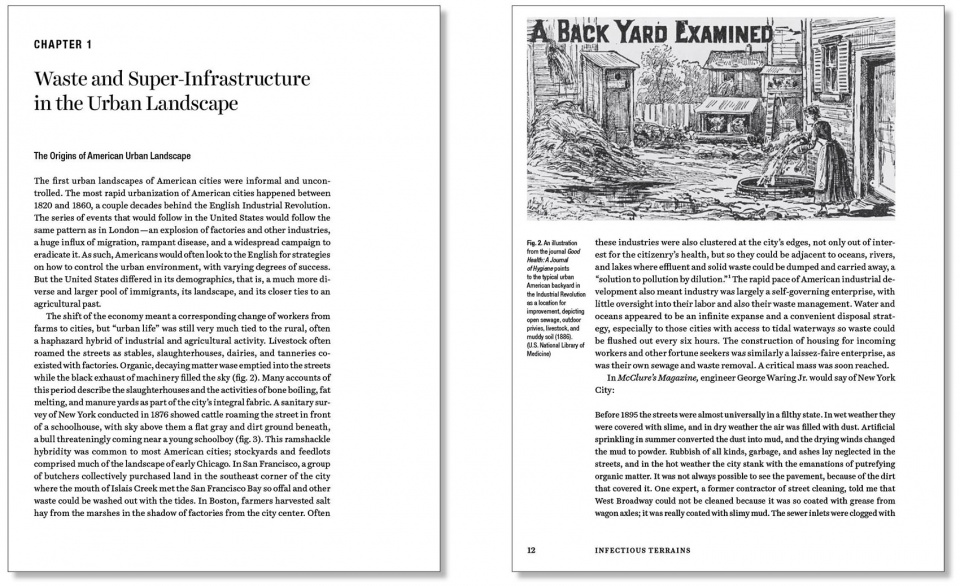
▲第一章选段与布局:《城市景观中的废物与超级基础设施》 – 第一章揭示了新兴城市的恶劣条件,以及卫生景观如何直接应对紧迫的健康需求,Excerpt and layout from Chapter 1: Waste and Super-Infrastructure in the Urban Landscape: The first chapter of the book delineates the poor condition of emerging cities and how sanitation landscapes directly addressed urgent health needs © Text by Sara Carr, image from Good Health: A Journal of Hygiene (1886), courtesy of the United States National Library of Medicine
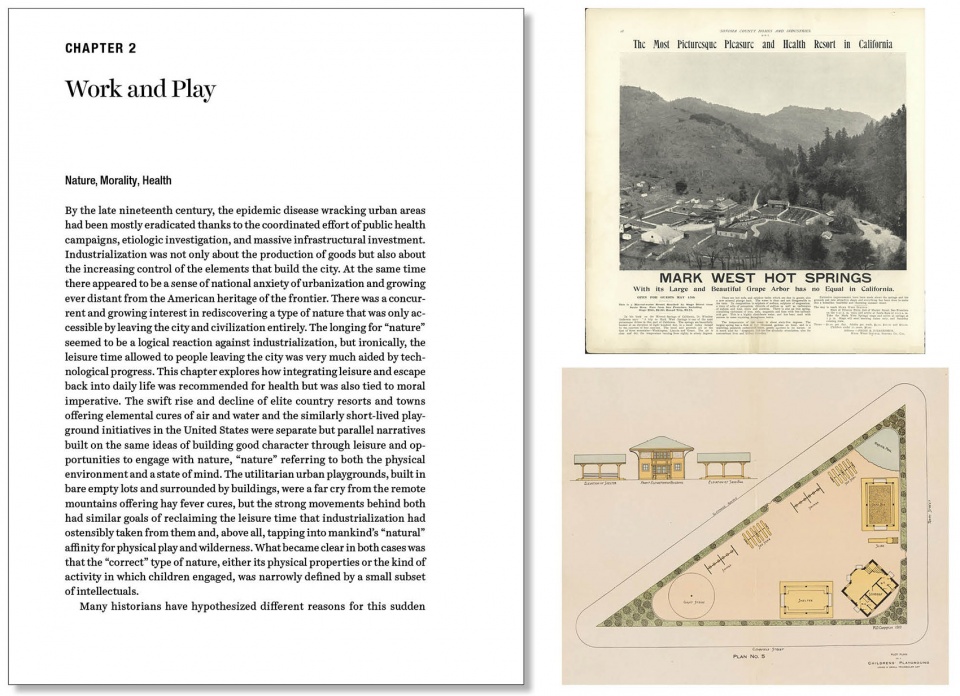
▲第二章选段:《工作与娱乐》及相关插图 – 19世纪末,富裕阶层的“新鲜空气”度假村与城市儿童游乐场的兴起成为儿童保护运动的一部分,Excerpt from Chapter 2: Work and Play and images. The turn of the century saw a rise in both recreational “fresh air” resorts for the elite and urban playgrounds as part of the child saving movement © Text by Sara Carr; images via Sonoma County Library and Playgrounds for Philadelphia (1910)
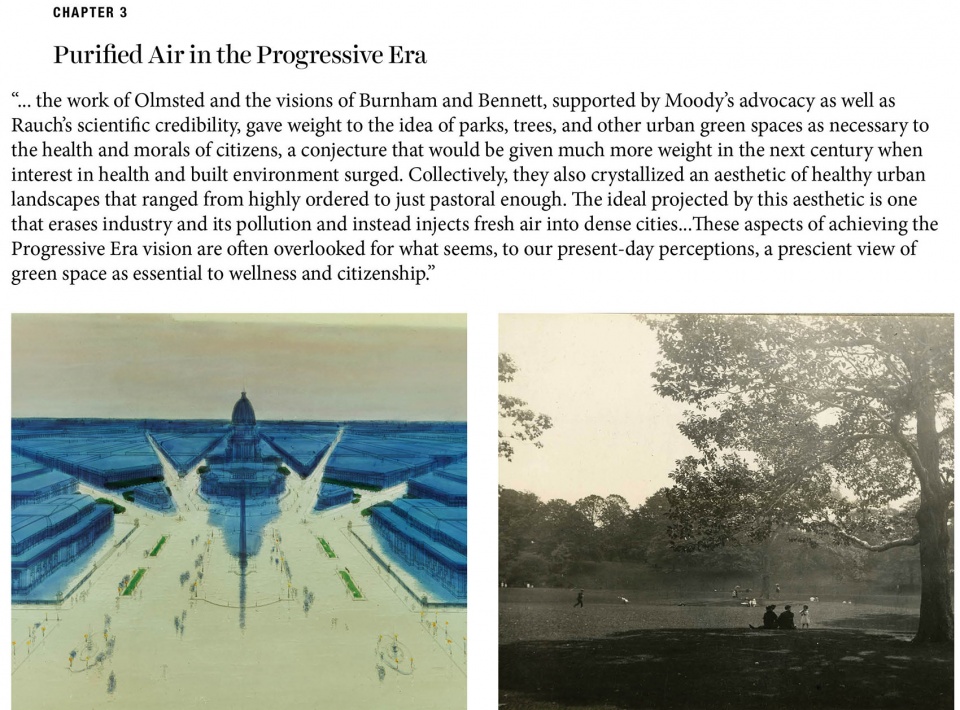
▲第三章选段:《进步主义与净化空气》及相关插图 – 进步时代是公共卫生运动的巅峰,反映在Daniel Burnham与Frederick Law Olmsted的设计与城市宣传中,Excerpt from Chapter 3: Progressivism and Purified Air and images: The Progressive Era was an apex for the public health movement, seen in the designs and urban campaigns of Daniel Burnham and Frederick Law Olmsted © Text by Sara Carr, images from the Plan of Chicago via the Ryerson and Burnham Archives and the Frederick Law Olmsted National Historic Site
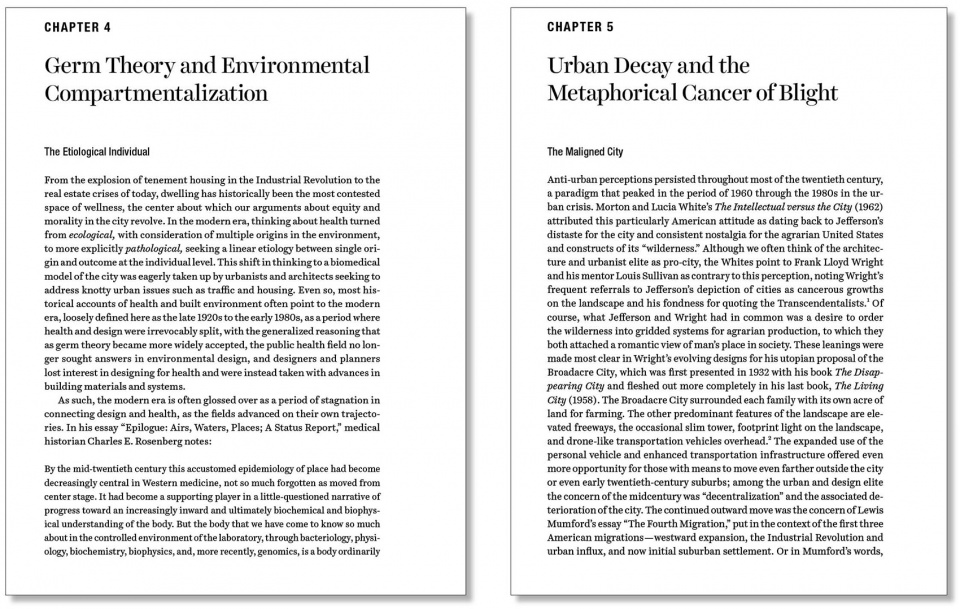
▲第四章与第五章选段:《细菌理论与环境分隔》和《城市衰败与“比喻中的癌症”》 – 第四章与第五章探讨了细菌理论、疫苗的普及及癌症兴起如何影响公共住房和城市更新的景观设计理念,Excerpts from Chapter 4: Germ Theory and Environmental Compartmentalization and Chapter 5: Urban Decay and the Metaphorical Cancer of Blight: Chapters 4 and 5 discuss how germ theory, vaccines, and the emergence of cancer shaped thinking around landscapes of public housing and urban renewal © Text by Sara Carr
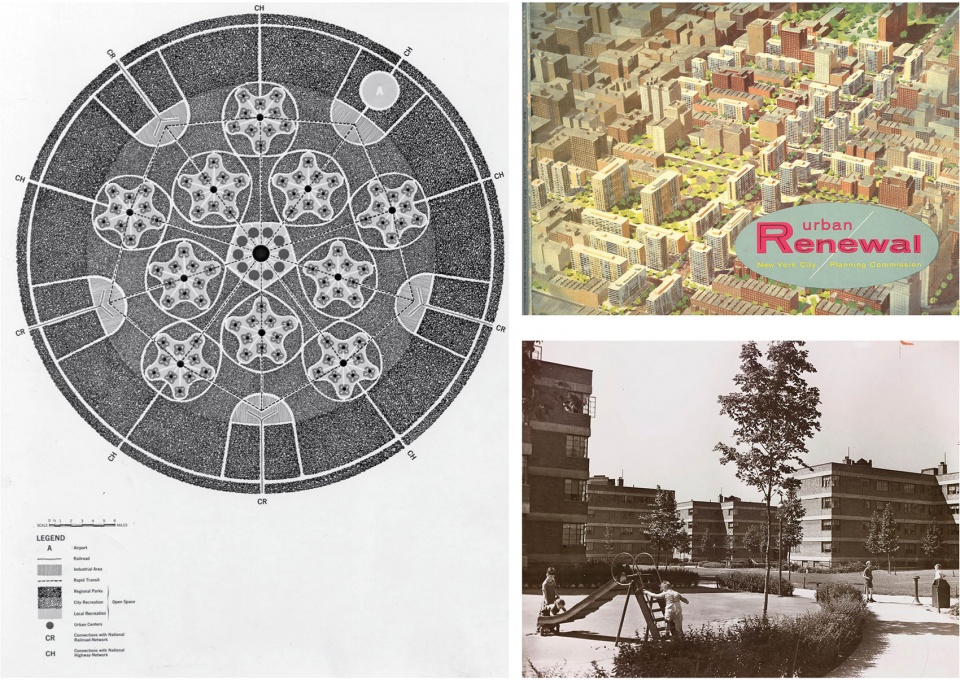
▲第四章与第五章相关插图 – 20世纪中期,城市景观的许多设计以医学隐喻为指导,然而对有色人种社区造成了不利影响,Images from Chapters 4 and 5: Midcentury urban landscapes often relied on medical metaphors to address urban ills to detrimental effect, especially for urban communities of color © Images from The Heart of Our Cities: The Urban Crisis; Diagnosis and Cure (1964), courtesy of the Victor Gruen Papers at the University of Wyoming Archives, New York City Planning Commission Archives, and New York City Municipal Archives
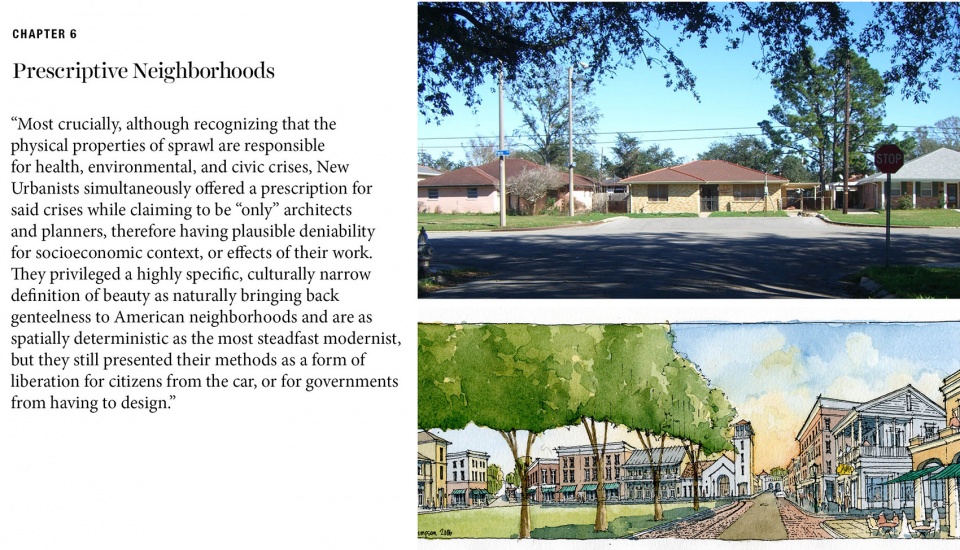
▲第六章选段:《处方化社区》及相关插图 – 肥胖及相关慢性疾病引发了对步行友好型社区和新城市主义的关注,但其应用和结果仍具争议性,Excerpts from Chapter 6: Prescriptive Neighborhoods, and associated illustrations. Obesity and associated chronic illnesses led to an interest in walkability and New Urbanism, but its utilization and results have proven controversial © Text by Sara Carr, photo of Gentilly, New Orleans by Sara Carr, image courtesy DPZ CoDESIGN
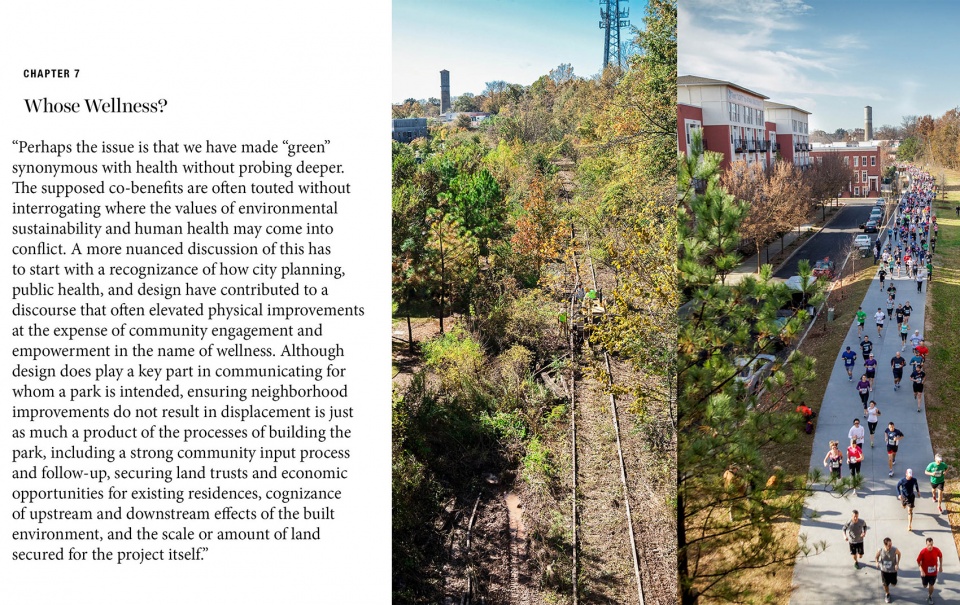
▲第七章选段与插图:《谁的健康?》 – 以健康为目标的当代城市绿化项目复杂多样,与绅士化的关系引发了伦理争议。这类干预的边界在哪里?Excerpt and illustration from Chapter 7: Whose Wellness? Contemporary urban greening with health in mind is complex, namely due to its correlation to gentrification. What are the ethics of intervention? © Text by Sara Carr, photo of the Atlanta BeltLine by Christopher Martin
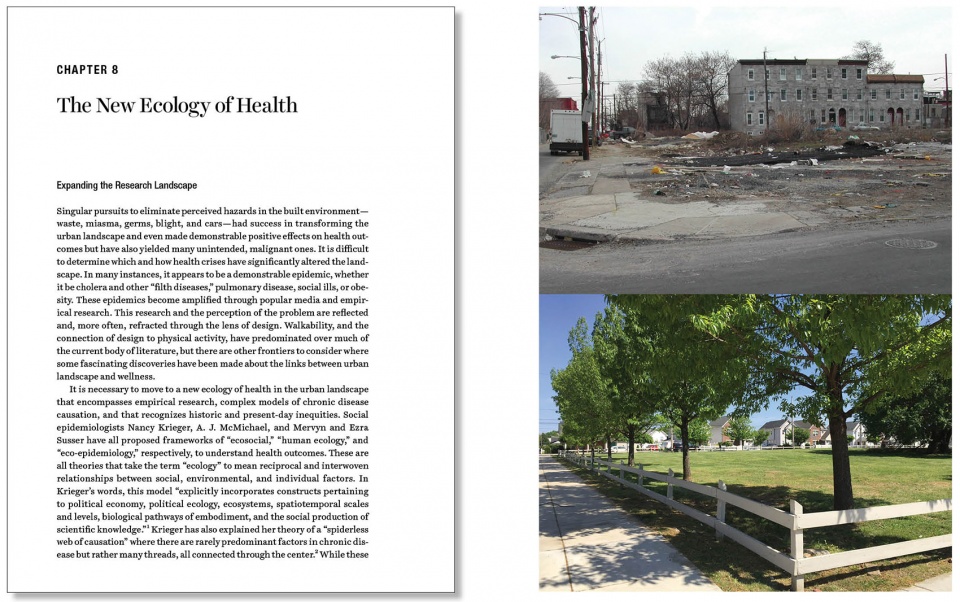
▲第八章选段:《健康的新生态学》 – 最新研究揭示了景观与多种健康结果之间的密切联系,并探讨了这些研究在景观建筑领域的实际应用,Excerpts from Chapter 8: The New Ecology of Health. Current research shows a strong link between landscapes and a number of health outcomes. What does it say and how has it been used in the field? © Text by Sara Carr, photo courtesy of the Pennsylvania Horticultural Society
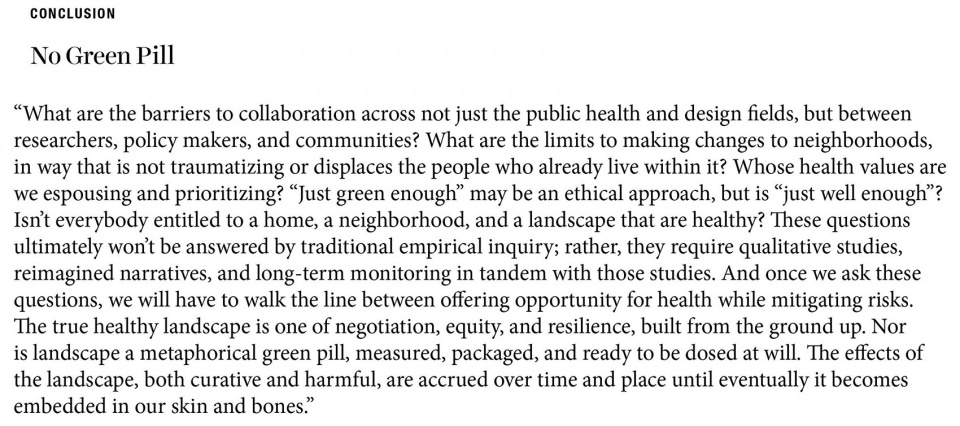
▲结论:《没有绿色药丸》 – 结论将公平、健康与景观的历史模式联系到当代流行病的现实,并探讨其对景观实践的启示,Conclusion: No Green Pill: The conclusion connects the recurring patterns of equity, health, and landscape to present-day pandemics and its implications for practice © Text by Sara Carr
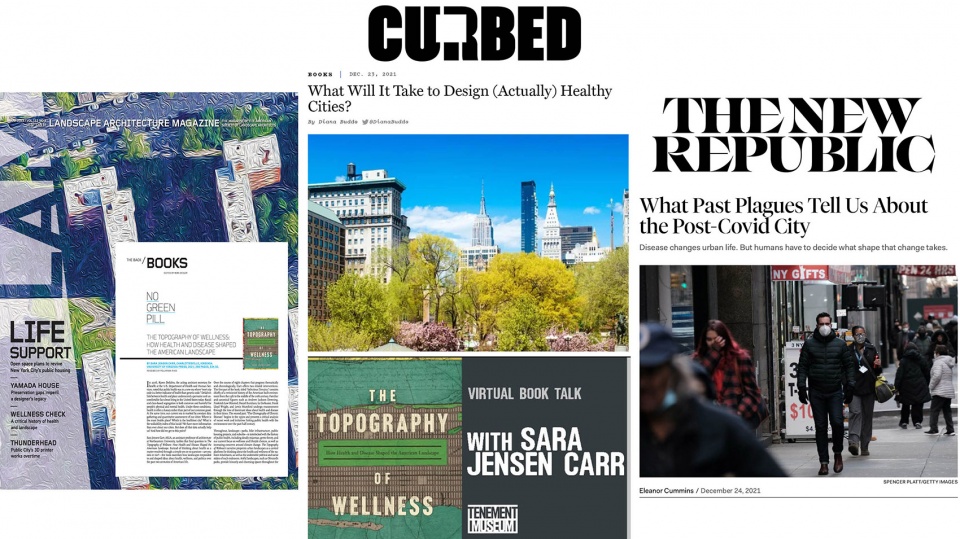
▲媒体报道与公共演讲样本 -《健康地形》在主流媒体与公共演讲中广泛传播了城市景观对健康的重要性,Sampling of press coverage, reviews, and public talks: Coverage of The Topography of Wellness in the popular press and public talks convey the importance of urban landscapes for health. © Landscape Architecture Magazine, Curbed (New York Magazine), The New Republic, The Tenement Museum
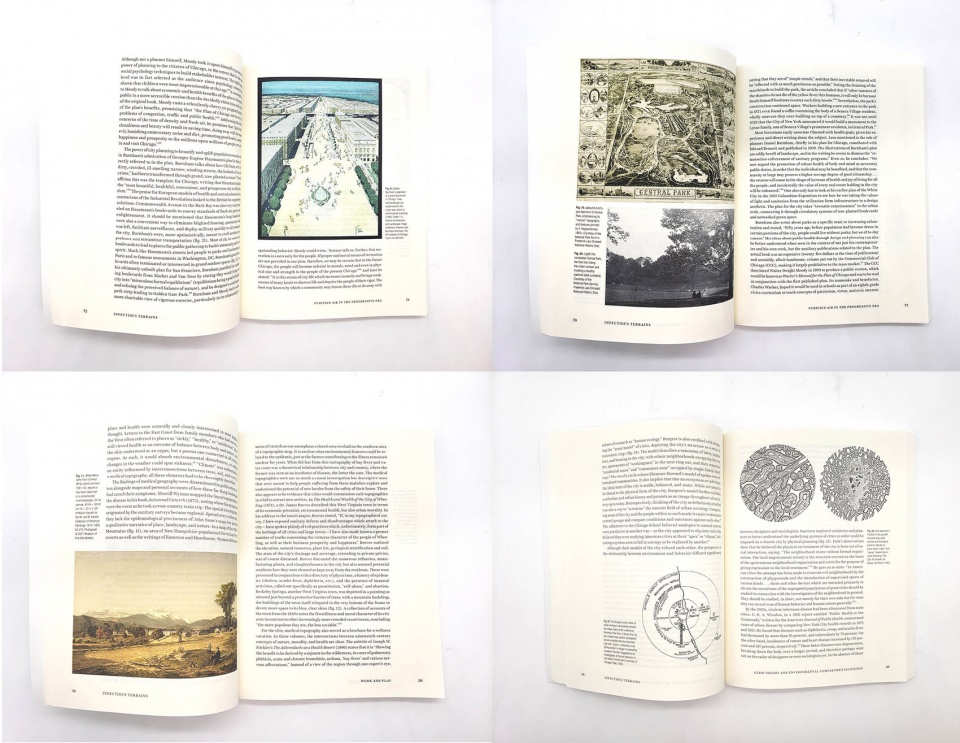
▲书籍版面展示 – 书中的丰富插图将城市景观设计与叙述紧密结合,增强了视觉和内容表达的连贯性,Book Spreads: Extensively illustrated spreads connect the design and representation of urban landscapes to the narrative © Sara Carr, University of Virginia Press (Layout, Publication)
Project Narrative
There have been many thorough accounts of both public health history and histories of the American landscape, but they have yet to be combined in a narrative that shows their intersections, divergences, and parallels.The Topography of Wellness examines how changing American ideals about wellness and its associated implications have influenced the practice of landscape architecture, as well as how cities have turned to the built environment to address epidemics. Beginning with the sanitation movements of the Industrial Revolution, the book discusses how public health practice and landscape design became even more closely entwined during the Progressive Era, led by Frederick Law Olmsted, the father of landscape architecture who embedded his own extensive history of public health practice in his work and writing. Subsequent chapters take the reader through the landscapes of housing, urban renewal, and New Urbanism, as well as contemporary research on neuroscience and landscape. Through narratives of cholera, respiratory illness, cancer, obesity, and the health threats presented by the climate crisis, it also describes how “wellness” has not only been used successfully as a means for good intentions and urban improvements but also as a tool of exclusion, moral judgment, and gentrification. The book is a chronological, extensively illustrated accounting of major American epidemics and design history. Although published in late 2021, the initial manuscript of this book, the culmination of seven years of research and writing, was actually completed in February 2020 just before the COVID-19 pandemic struck the United States. Thoughts about the pandemic were added to the conclusion, but with recognition of COVID as an airborne disease, and as we see widening health disparities and limits of individual action, the book stands as an argument for the re-integration of public health into the profession of landscape architecture as an environmental ethic rather than an inequitable amenity.
Due to the unexpected timeliness of its publication, I’ve been fortunate that the book has reached a wide audience, with a great deal of crossover appeal. Since the book’s publication I have given over 30 talks regarding this research and the book to several universities, not only to schools of design and planning but also medical schools, museums, local ASLA and AIA chapters, historic preservation societies, and nonprofit organizations. The book has received mentions and reviews in media outlets such as The New Yorker, National Public Radio, The New York Times, The New Republic, Bloomberg CityLab, the BBC, Landscape Architecture Magazine, and CNN. The book has been adopted in syllabi in urban planning, architecture, and landscape architecture courses at MIT, Brown University, Cornell, Syracuse, and University of Chicago, among others, and received the JB Jackson Book Prize and a Special Jury Prize from the Boston Society of Landscape Architects. To date, it has sold over 1,200 copies and is already almost in its third printing, a huge accomplishment for an ostensibly academic book. The Topography of Wellness communicates the importance of landscape architecture to a wide audience, from academic to professional to those with a casual interest in urban history. As we enter the age where we must grapple with both pandemics and the climate crisis, the hope is that it becomes a touchpoint for how we can design with intent for a healthier and more equitable future.
Project Credits
Boyd Zenner and Mark Mones, Editors, University of Virginia Press
Derek Thornton, Cover Designer, Notch Design
Jane Curran, Copy Editor
Ina Gravitz, Indexer
More: ASLA;Sara Jensen Carr, ASLA









挺艺术化
DK