“该项目旨在减轻灾害影响,为福特派克部族在灾害期间提供避难所和支持,并为居民在严重灾害后提供恢复空间,以及获取援助和信息的场所。”
– 2024年ASLA评审委员会评语“This project aims to mitigate hazard impacts, provide shelter and support for the Fort Peck Tribes during a disaster, and provide a place for residents to recover and access aid andinformation after a severe hazard.”
– 2024 Awards Jury
来自 ASLA 对gooood的分享。
A Cultural Approach: The Fort Peck Tribes Hazard Mitigation Plan|Spackman Mossop Michaels
项目陈述
Project Statement
福特派克部族灾害缓解规划(HMP)由福特派克阿西尼博因族和苏族部落、美国环保署(EPA)及联邦紧急事务管理署(FEMA)共同制定,采用了一种深具文化响应性的策略,强调与土地的紧密连接。不同于传统方法,本项目由景观建筑师主导,创新性地融合技术与设计专业知识以及文化洞察,打造出既体现社区独特身份又满足其实用需求的HMP。该规划的核心在于认识并强化文化资产在提升社区韧性中的作用,例如部族与水源及自然景观的神圣联系、具有文化意义的药用植物,乃至他们的野牛群,共同构建更具抵御能力的未来。
In collaboration with the Fort Peck Assiniboine and Sioux Tribes, EPA, and FEMA, the Fort Peck Tribes Hazard Mitigation Plan (HMP) adopts a culturally responsive approach to hazard mitigation planning that features connection to place. In a departure from the norm, landscape architects took the lead on this project, pioneering a unique approach that weaves together technical and design expertise with cultural insights, creating an HMP that reflects both the community’s unique identity and its practical needs. Central to the mitigation measures is the recognition cultural assets play in the resilience of the community, such as their sacred connections to water and landscape, culturally significant medicinal plants, and even their bison herd.
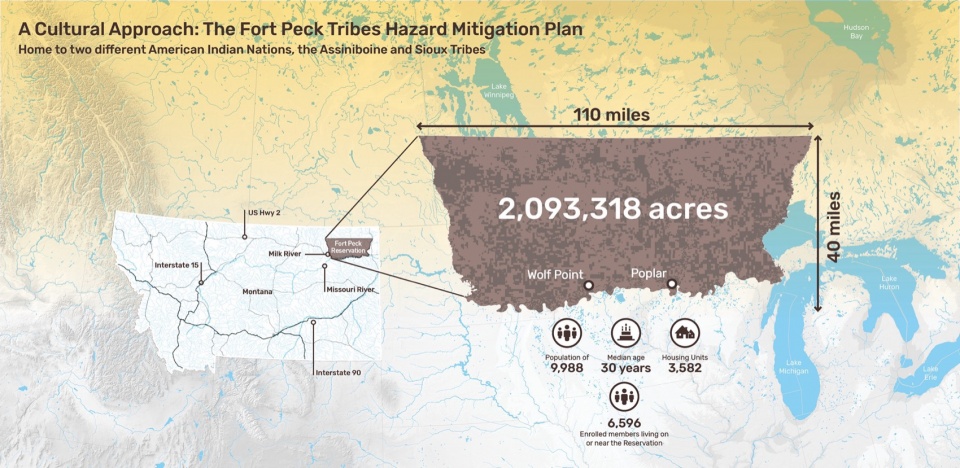
▲福特派克部族灾害缓解规划的文化方法:福特派克部族的HMP采用与地方紧密联系的文化响应式方法,A Cultural Approach to Hazard Mitigation Planning with the Fort Peck Tribes: The Fort Peck Tribes HMP adopts a culturally responsive approach that features connection to place © Spackman Mossop Michaels
项目说明
Project Narrative
本项目展现了一种独特且开创性的灾害缓解规划(HMP)方法,证明了如何通过设计与文化价值观的融合,强化通常以技术为主导的灾害缓解策略。HMP的核心目标在于识别社区面临的自然灾害风险与脆弱性,并制定短期及长期策略,以及具体的缓解措施,以提升社区抵御灾害的能力。作为社区的关键文件,HMP也是寻求联邦紧急事务管理署(FEMA)灾害缓解与恢复资金支持的必要条件。
本次试点规划研究由福特派克阿西尼博因族和苏族部落、美国环保署(EPA)及FEMA合作开展,旨在更新部族每五年必须修订的HMP。不同于传统做法,本次规划由景观建筑师主导,致力于在标准技术分析的基础上,融入社区的传统知识、文化价值及其与自然环境的深厚联系,构建更加全面的HMP方法。
在规划团队与联邦合作伙伴的共同努力下,福特派克部族经过一年的深入研究,重新审视社区面临的灾害,识别需重点保护的资产——包括文化与技术层面——并制定相应的缓解策略,以降低灾害对社区的影响。规划团队基于最新的区域气候预测,为社区提供了评估未来气候挑战的框架,帮助其确定灾害缓解的优先事项。
社区参与过程深入探讨了文化资产与传统知识在社区中的作用,尤其是社区对自然灾害的独特理解。规划承认了部族传统观念中灾害既具破坏性又承载生命力的双重属性,并据此评估拟定的缓解措施。例如,尽管洪水可能损害财产,但它们也是部族神圣的胡杨林赖以生存的生命之源。此外,规划还将部族的野牛群视为一种关键的韧性资产,是其粮食自主能力的重要组成部分。
规划团队利用全球气候模型绘制了2015年至2100年的未来气候预测,并在HMP中进行能力评估,梳理福特派克部族社区现有的治理框架、人员及资源,以支持HMP目标的顺利实施及韧性项目的推进。HMP的制定也特别考虑了如何与现有项目和计划相衔接,确保其缓解策略和目标能够帮助部族争取资金支持,并推动项目的落实,以实现更广泛的社区影响。
这些项目的目标不仅在于降低灾害影响、在灾害发生时为福特派克部族提供庇护和支持,并在严重灾害后为居民提供恢复空间、援助和信息获取渠道,同时也被设计为长期促进经济、环境与文化效益的一部分,例如通过生态旅游开发创造额外价值。本项目充分展示了在HMP中融入社会与文化策略的价值,并凸显了景观建筑师在与社区合作制定兼具整体性与响应性的韧性规划方面的独特优势。
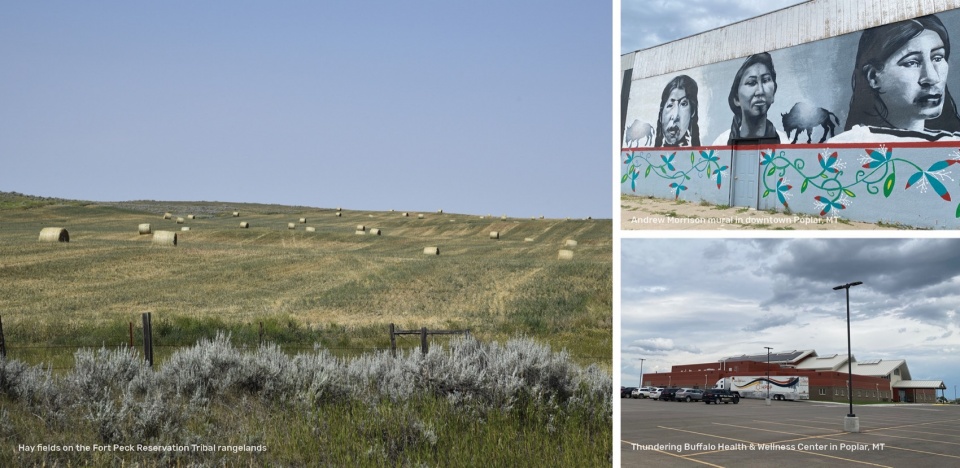
▲识别和评估保留地的关键资产和资源:福特派克保留地拥有多种景观类型和多个市镇,Identifying and Assessing Critical Assets and Resources on the Reservation: The Fort Peck Reservation has a variety of landscape typologies and several municipalities © Spackman Mossop Michaels
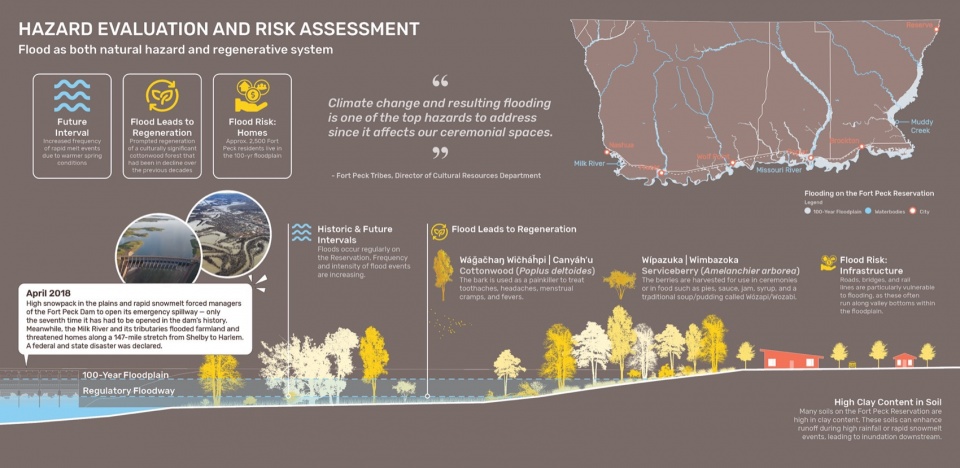
▲洪水风险分析:社区将洪水视为既具再生力又具有潜在危害的力量,Analysis of Flood Risk: Flooding is understood by the community as both a regenerative force and a potential hazard © Spackman Mossop Michaels
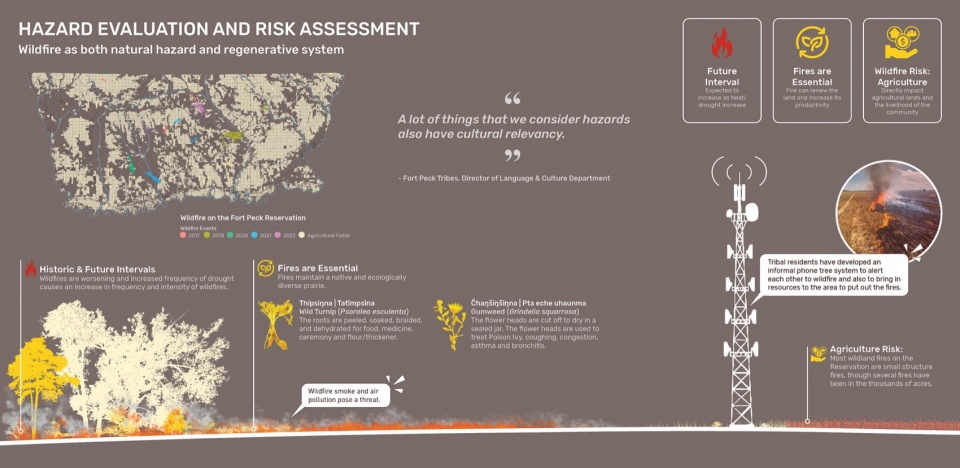
▲野生火灾风险分析:野火在保持景观生态多样性方面发挥作用,但也威胁到住宅和农业,Analysis of Wildland Fire Risk: Wildfires maintain ecological diversity in the landscape, but also threaten homes and agriculture © Spackman Mossop Michaels
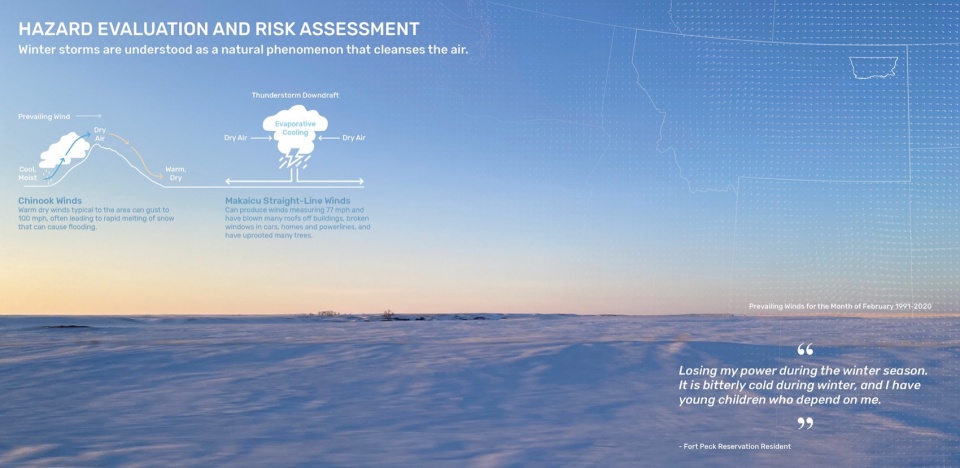
▲严冬风暴风险分析:冬季风暴是社区的高优先级灾害,并且在文化上被视为净化空气的力量,Analysis of Severe Winter Storm Risk: Winter storms are a high priority hazard for the community and also culturally understood to clean the air © Spackman Mossop Michaels; Montana Climate Office
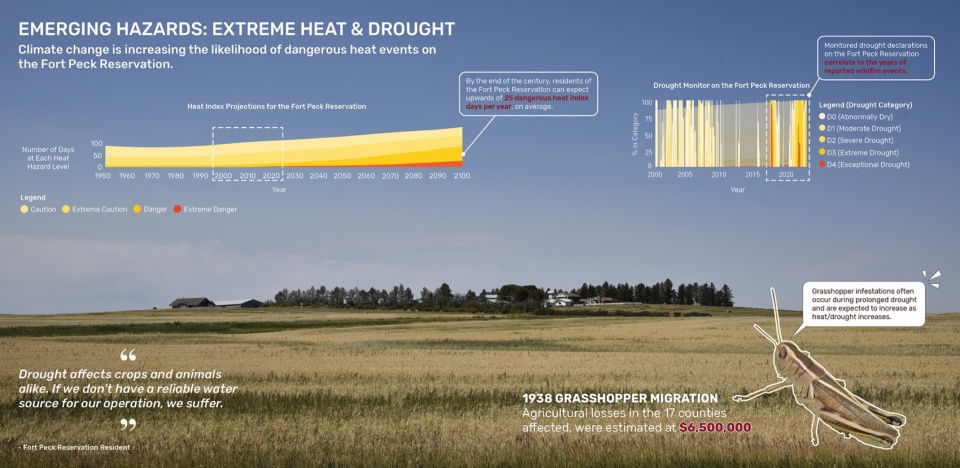
▲新兴威胁分析:保留地上的许多灾害,包括高温和干旱,被认为会增加野火和害虫侵扰的风险,Analysis of Emerging Threats: Many hazards on the Reservation, including heat and drought, are understood to increase the risk of wildfire and pest infestations © Spackman Mossop Michaels
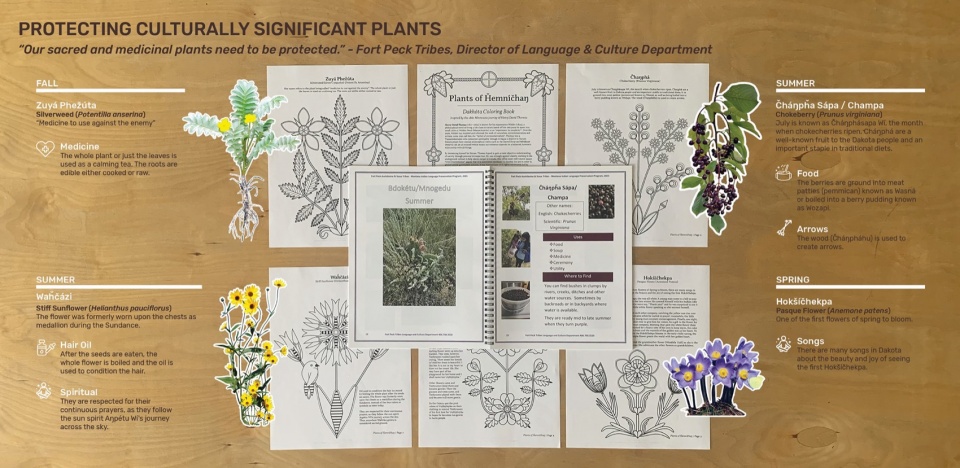
▲药用植物是重要资产:在规划过程中,文化上具有重要意义的植物多次被提及,作为需要保护的资产,Medicinal Plants are Essential Assets: During the planning process culturally significant plants came up repeatedly as an asset in need of protection © Spackman Mossop Michaels
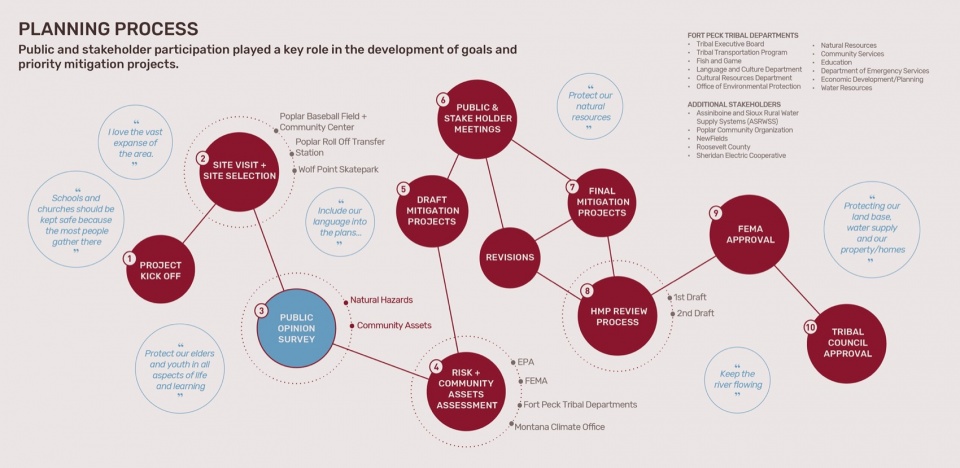
▲文化价值能够加强通常以技术为主的灾害缓解规划方法:社区的反馈提供了对部族独特资产和实际需求的深入了解。HMP经过严格的审查和批准过程,Cultural Values can Strengthen a Typically Technocratic Approach to Hazard Mitigation Planning: Community input provided insight into the Tribes’ unique assets and practical needs. The HMP passed a rigorous review and approval process © Spackman Mossop Michaels
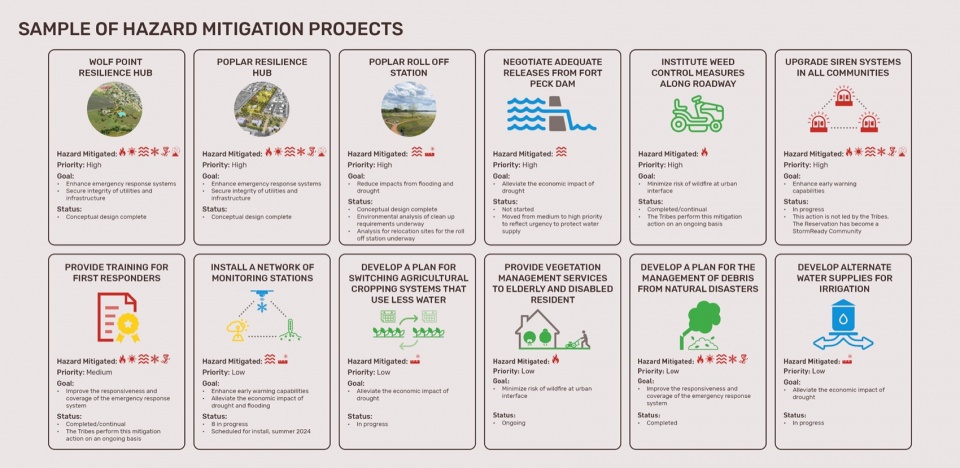
▲建立在现有能力基础上的韧性缓解战略:新的和现有的灾害缓解项目框架利用部族当前的资源,支持成功实施,A Resilient Mitigation Strategy Building Upon Existing Capacity: A framework of new and existing hazard mitigation projects leverages the Tribes’ current resources to support successful implementation © Spackman Mossop Michaels
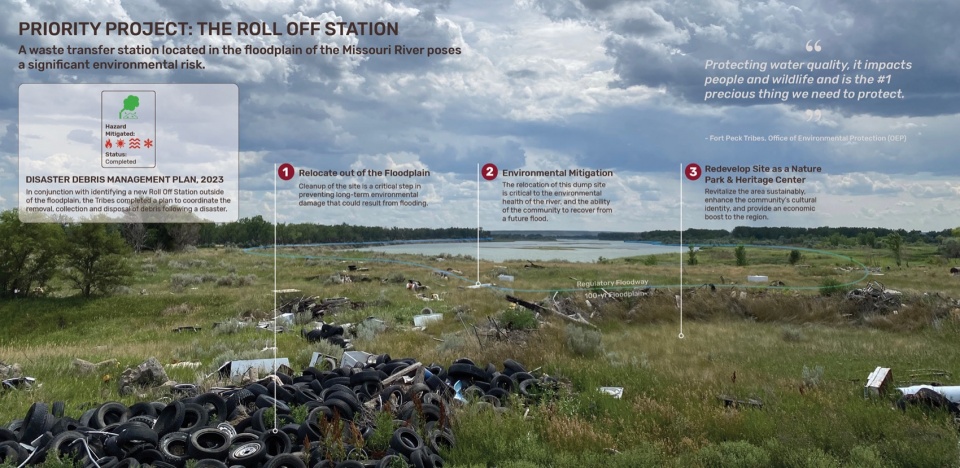
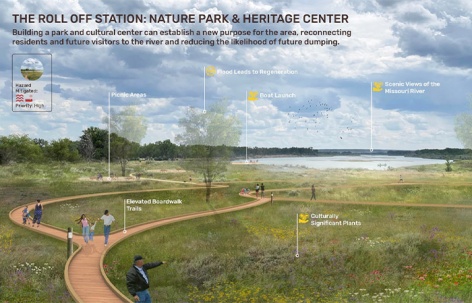
▲为多重效益规划:Roll Off Station项目融合了现有规划目标,如环境清理工作和经济优先事项,如生态旅游,Planning for Multiple Benefits: The Roll Off Station project blends existing planning goals such as environmental cleanup efforts and economic priorities such as ecotourism © Spackman Mossop Michaels
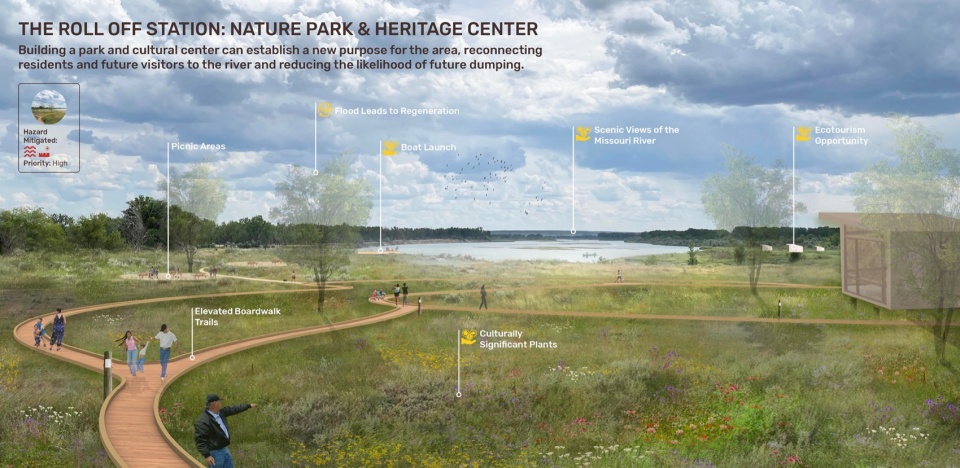
▲打破常规实践,HMP中包括全面的设计建议:除了缓解洪水和潜在污染外,新的步道系统还为社区的一个资产——河流——提供了通道,Breaking from Standard Practice, Comprehensive Design Recommendations are Included in the HMP: In addition to mitigating flooding and potential contamination, the new trail system opens access to the river, one of the community’s assets © Spackman Mossop Michaels
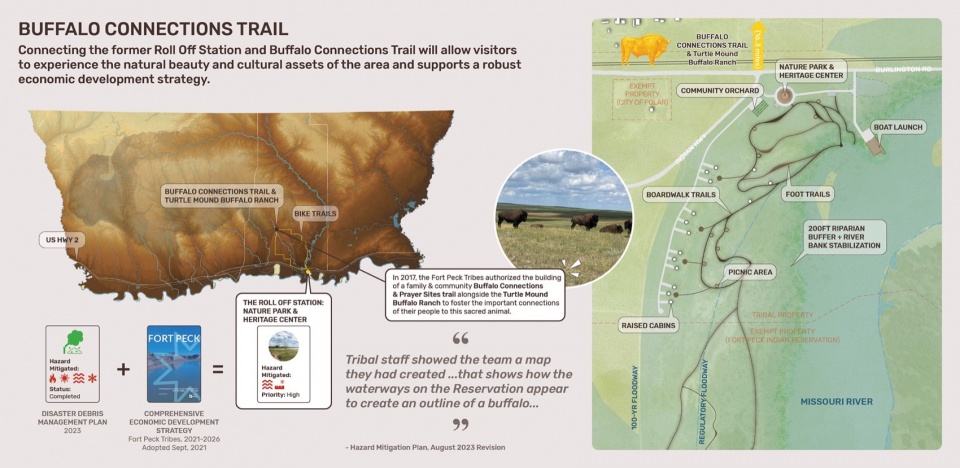
▲在现有工作基础上拓展:HMP的一个关键组成部分是将灾害缓解与其他规划工作结合,如2021年综合经济发展战略。Building on Existing Efforts: A key component of the HMP tying hazard mitigation to other planning efforts such as their 2021 Comprehensive Economic Development Strategy © Spackman Mossop Michaels
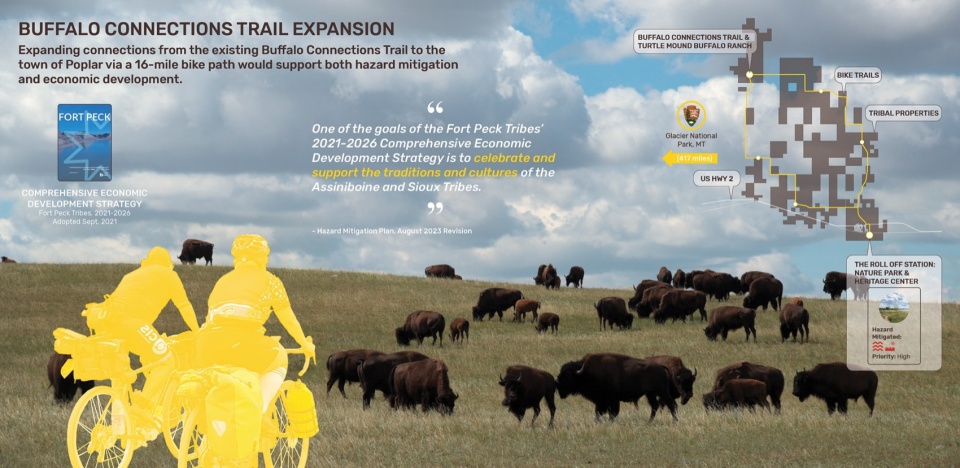
▲扩大野牛连接步道以增强部族韧性:社区中的另一个持续努力是建设野牛连接步道。HMP将前Roll Off Station与该步道系统连接起来,Expanding the Buffalo Connections Trail to Strengthen Tribal Resilience: Another ongoing effort in the community is building the Buffalo Connections Trail. The HMP links the former Roll Off Station with this trail system © Spackman Mossop Michaels
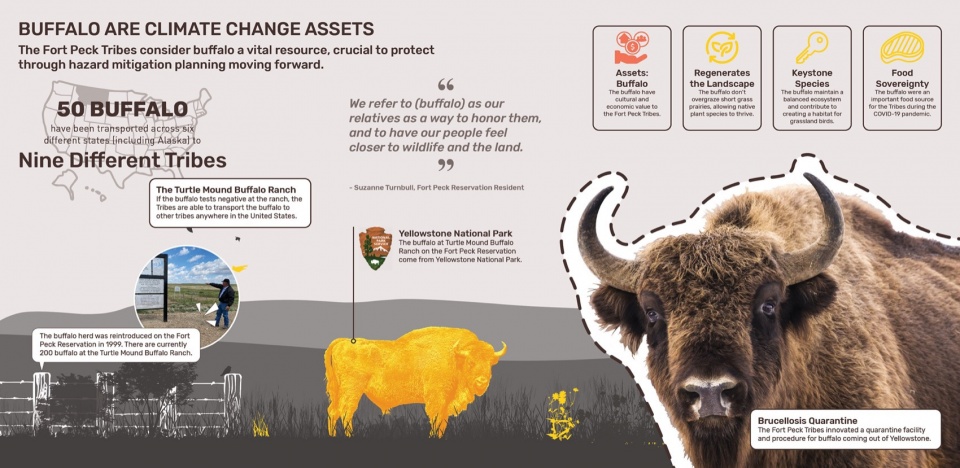
▲通过HMP提升其他社区资产:部族的野牛群是增强部族整体韧性的另一个宝贵资产,Elevating Other Community Assets Through the HMP: The Tribal buffalo herd is another valuable asset to the Tribes’ overall resilience © Spackman Mossop Michaels
Project Narrative
This project highlights a unique and pioneering approach to Hazard Mitigation Plans (HMPs), demonstrating how design and cultural values can substantially strengthen a typically technocratic approach to hazard mitigation. The purpose of a Hazard Mitigation Plan (HMP) is to identify risks and vulnerabilities associated with natural hazards and to develop both short-term and long-term strategies, as well as mitigation projects, that make a community more resilient to hazards. Hazard Mitigation Plans are essential documents for a community and are required by FEMA for communities seeking disaster mitigation and recovery funding.
In partnership with the Fort Peck Assiniboine and Sioux Tribes, EPA, and FEMA, this pilot planning study updates the Tribes’ previous HMP, which is required every five years. Breaking from standard practice, landscape architects were selected to lead this HMP, and were tasked with developing a process that integrated the community’s traditional knowledge, cultural values, and intimate connection to the landscape—along with the standard technical analysis—into a more holistic approach to an HMP.
Working with the planning team and federal partners, the Fort Peck Tribes spent a year re-examining the hazards in their community, identifying the assets they wanted to protect—both cultural and technical—and developing plans and strategies to mitigate the impact of hazards to the community. Using the latest climate projections for the region, the planning team provided a framework for the community to evaluate the future climate challenges as they developed their priorities for hazard mitigation.
The community engagement process explored the role of cultural assets and traditional knowledge within the community, and significantly, explored the community’s understanding of natural hazards themselves. Their traditional understanding of hazards as both a destructive and life-affirming force was acknowledged in the plan and used to evaluate proposed mitigation efforts. The plan acknowledged that while floods are destructive to property, they are also life-giving to the Tribes’ sacred cottonwood groves, as an example; and recognized the bison herd as a resilience asset and a key part of the Tribes’ food sovereignty capacity.
The planning team mapped out future climate projections derived from global climate models for the period from 2015 to 2100. A capabilities assessment was included in the HMP that identifies existing frameworks, personnel and resources within the Fort Peck Tribal community that will support the successful implementation of the HMP goals and resilience projects. The HMP was intentionally developed to support ongoing efforts and programs with mitigation strategies and goals that will strengthen the Tribes’ efforts to procure funding and catalyze project implementation and impact for the community.
These projects aim to mitigate hazard impacts, provide shelter and support for the Fort Peck Tribes during a disaster, and provide a place for residents to recover and access aid and information after a severe hazard event. They are also designed to have a positive economic, environmental, and cultural impact year-round by doubling as ecotourism opportunities. This project demonstrates the power of including social and cultural strategies in Hazard Mitigation Plans and how landscape architects are uniquely positioned to work with communities to create resilience plans that are holistic and responsive.
Project Credits
Fort Peck Assiniboine and Sioux Tribes, Client
Environmental Protection Agency, Partner
FEMA, Partner
Fort Peck Assiniboine and Sioux Tribal Executive Board, Core Planning Team
Fort Peck Tribes Department of Emergency Services, Core Planning Team
Fort Peck Tribes Office of Environmental Protection, Core Planning Team
Fort Peck Tribes Language and Culture Department, Core Planning Team
Fort Peck Tribes Fish & Game Department, Core Planning Team
Fort Peck Tribes Community Services, Core Planning Team
Fort Peck Tribes Water Resources, Core Planning Team
Fort Peck Tribes Tribal Transportation Program, Core Planning Team
Fort Peck Tribes Cultural Resources Department, Core Planning Team
Wes Michaels, ASLA, Principal, SMM
Emily Bullock, ASLA, Principal, SMM
Joie Chan, Associate, SMM
Kathryn Dunn, Designer, SMM
Pilar Zuluaga, Designer, SMM
Tracey Armitage, Designer, SMM
Kyle Bocinsky, Director, Montana Climate Office at University of Montana





一个完整的并正在被执行的规划,为了保护当地印第安族群,应对各种自然风险做的规划:
1.洪水风险
2.野火风险
3.寒冬风险
4.新兴威胁,包括高温、干旱,和随之而来的火灾、虫灾等
HMP为以上风险做了很多细分的可执行的应对措施,比如增加了各类的预警机制,响应及应急措施,增加上游水供应,改变种植以用来节水,还有各种日常养护管理的措施,都一一制定了计划并完成或正在执行。
并且他们对未来风险的应对及运营和盈利也做了一定的努力,感觉非常的棒棒哒,
我粗算了一下,真正的地广人稀,合每人占地85公顷,应该不会穷吧
分析图不错