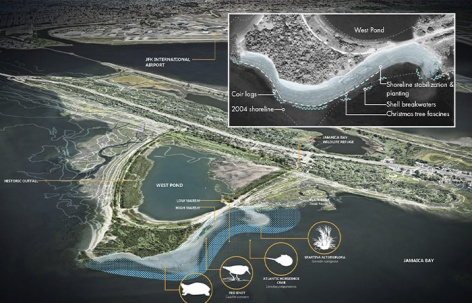
“在由海洋工程师、生态学家和社区倡导者组成的团队的帮助下,设计师们规划了一条长达2400英尺的活力海岸线,创造了超过9英亩的新栖息地,并恢复了14英亩的土地生态。项目实施的策略包括:以牡蛎壳筑成防波堤结构,以回收的圣诞树巩固河床,以及将筛选后的建筑施工材料作为海岸线和栖息地的地基。评审团评论道:‘低调的设计没有扰乱海岸美丽的开放空间,反而促进了土壤的修复与再生。’”
– 2022年评审委员会
“With a team of marine engineers, ecologists, and community advocates, the designers planned a 2,400-foot living shoreline, creating over 9 acres of new habitat and restoring14 acres. Implementation strategies included oyster shell breakwater structures, recycled Christmas trees for fascines, and construction fill screened into clean sediment for the shoreline and habitats. The jury remarked on the “purposefully understated design that didn’t clutter the beautiful open spaces and allowed for healing and regeneration of soils.”
– 2022 Awards Jury
来自 ASLA 对gooood的分享。
2022 ASLA GENERAL DESIGN AWARD OF HONOR: West Pond: Living Shoreline|Dirtworks Landscape Architecture P.C
项目陈述
PROJECT STATEMENT
在过去的一个世纪里,纽约市失去了超过90%的淡水湿地。牙买加湾是纽约现存最重要的湿地之一,也是盖特威国家公园的一部分。西塘(West Pond)是牙买加湾生态系统中重要的淡水泻湖,具有非凡的文化和生态价值。西塘面临着与牙买加湾相同的严峻挑战:河床沉积物的匮乏,海平面上升的速度超过了沼泽的增长,营养负荷损害植被,以及日益严重的风暴侵袭。
1953年,纽约市公园(NYC Parks)组织建造了西塘,以改善栖息地的多样性,它不仅成为了受人喜爱的社区资产,也是大西洋迁徙路线上候鸟的重要淡水来源。超级风暴桑迪过后,单薄的河床屏障被冲破,池塘的淡水与海湾的盐水混合在了一起。为了应对这些问题,项目团队考虑了不断变化的河口生态系统与国家公园管理局的规划,以及不同景观节点可达性之间复杂的相互作用,旨在利用牙买加湾的动态自然系统来重建、保护和维持西塘的关键沼泽栖息地。
New York City has lost over 90% of its freshwater wetlands in the past century. One of the most important remaining wetland areas is Jamaica Bay, part of Gateway National Park. West Pond, a critical freshwater lagoon within the larger Jamaica Bay ecosystem, is a resource of extraordinary cultural and ecological value. West Pond shares the broader challenges of Jamaica Bay: sediment starvation, marsh accretion outpaced by sea level rise, vegetation compromised by nutrient loading, and increasing storm severity.
Constructed in 1953 by NYC Parks to improve habitat diversity, West Pond became a beloved community asset and vital freshwater source for migratory birds along the Atlantic Flyway. In the aftermath of Superstorm Sandy a narrow barrier was breached, mixing the pond’s fresh water with the bay’s saltwater. In response, our West Pond Living Shoreline project considered the complex interplay of a shifting estuarine ecosystem alongside the National Park Service’s programmatic and accessibility goals. It leverages Jamaica Bay’s dynamic natural systems to reestablish, protect and sustain West Pond’s critical marsh habitat.
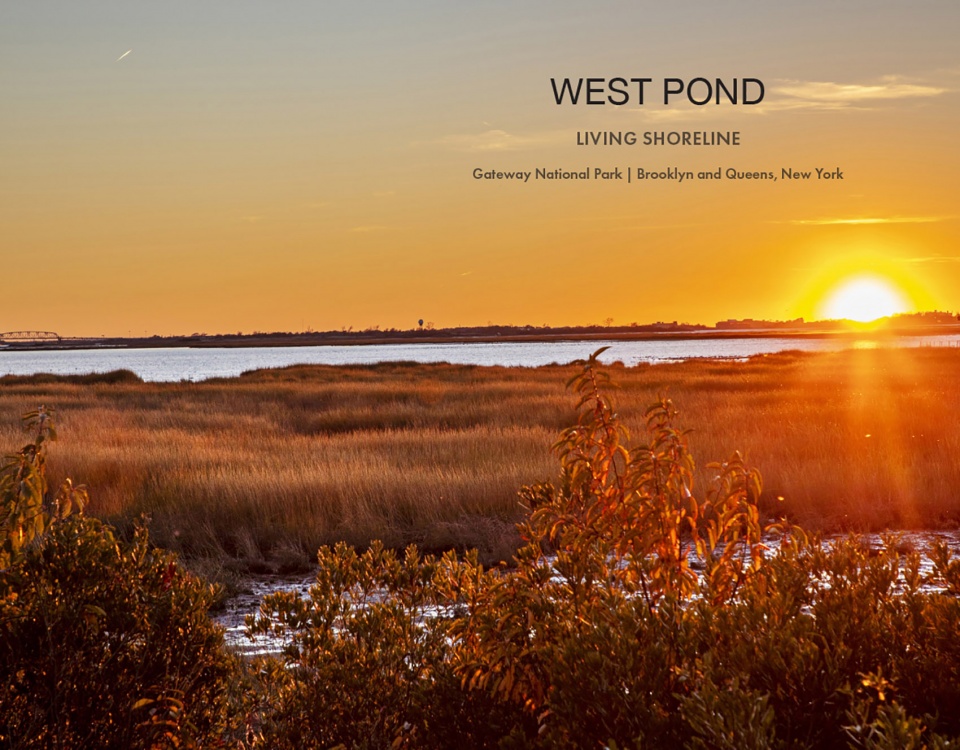
▲西塘:活力海岸线,West Pond: Living Shoreline © Jean Schwarzwalder/DEP
项目说明
PROJECT NARRATIVE
2012年,超级风暴桑迪席卷了西塘,对这处重要的45英亩淡水湿地,以及大西洋飞行路线上70%候鸟的栖息地造成了损害。这座大池塘是牙买加湾湿地河口的重要组成部分,同时也是盖特威国家公园的主要组成部分。它不仅有着无价的自然资源,且距离曼哈顿最密集的地区只有12英里。
据估计,“桑迪”带来的巨大风暴潮高达10英尺,巨浪穿过分隔淡水湿地和咸水湾水域的狭窄小道,并将屏障完全冲走。这导致淡水的西塘充满了盐分,几十年前沿着河岸种植的枫树和白桦树几乎瞬间死亡。迁徙的动物失去了重要的水源,不得不在迁徙途中寻找替代的淡水来源。栖息地被破坏,周边社区也痛失了这片他们热爱的土地。
“西塘:活力海岸线”项目利用牙买加湾现有的自然系统来保护和再生池塘的海湾边缘,为受威胁物种和候鸟重新提供了重要栖息地,为盖特威国家公园的动物保护计划作出了贡献。Dirtworks Landscape Architecture P.C事务所带领一支由海洋工程师、生态学家和社区倡导者组成的团队,在短短18个月内完成了这一倡议的设计和实施。
在本项目中,专业设计团队规划了一条长达2400英尺的活力海岸线,创造了超过9英亩的新栖息地,并恢复了14英亩的受损地区生态。一系列策略沿着先前被破坏的水坝边缘进行实施,包括:重塑防波堤结构,为河床增添额外的沉积物,种植沼泽植物,并增强水土保持。这一系列举措均旨在联合起来减弱波浪作用,改善水质,让泥滩和盐沼重新出现在西塘中。该生态框架恢复了池塘边缘的弹性,满足了当下的迫切需要,同时使这个脆弱的生态系统能够适应气候变化带来的挑战。
团队研究了各种可能的方法,包括利用自然形成的带肋贻贝群落以及牡蛎礁筑造堤坝。由于国家公园管理局禁止水产养殖,团队认为牡蛎壳防波堤结构将是这里最有效的解决方案。为了应对疫情期间的供应链中断,整个团队需要密切合作,保持高度的灵活性与创造性。由于堤坝中所需的椰子纤维大部分来自斯里兰卡,而全球航运与生产放缓迫使设计团队考虑采用其他替代材料。因此,团队选择与Billion Oyster Project合作,从纽约市的餐馆采购回收牡蛎壳,将它们在阳光下曝晒12个月,然后用当地的粗麻袋包装,最后将这些麻袋堆叠成金字塔结构,每12英尺以椰子纤维打包固定,在高盐条件下,粗麻袋更易分解,这就得到创新的“防波堤”原型。这些防波堤结构与回收的圣诞树束一起,减弱了水流的波浪作用,积聚了新的沉积物,进而保护了新建的海岸线。
秉承着弹性和可持续性的指导原则,设计团队努力寻找当地可用的沉积物。高达70,000立方码的来自JFK国际机场TWA酒店建设过程中的建筑废料被回收起来,并从中筛选出55000立方码的干净沉积物,这些回收材料帮助团队建造了超过9英亩的新栖息地和2400英尺的海岸线。在研究池塘废弃的排水口时,研究小组决定重新开放该结构,在特定的季节里,池塘水位将降低,暴露出更多土地来容纳候鸟。通过闭路电视录像,设计团队发现通过更换部分玻璃化粘土管,安装新的闸门和鸭嘴阀结构,排水口将足以满足这一目的。
为了在建设过程中保护现有的栖息地和种群,本项目为680只育龄雌龟设置了淤泥袜状屏障,施工人员也接受了检查水龟的训练。水龟们可能会在施工设备下的阴凉处午睡,或者在现场会议时从水里跳出来,又或者从浑浊的帷幕里观察人类的施工活动。
对包括红结蟹和马蹄蟹在内的受保护物种进行日常监测对该项目至关重要。当地的苗圃提前一年就开始为项目中的24万棵本地植物种植进行育苗。盐沼和潮间带种植的植物,在高沼泽和淡水池塘之间创造出了一条富有弹性的过渡带。牙买加湾洛克威公园保护协会和国家公园的目标旨在监测项目的长期健康状况,并与牙买加湾科学和弹性研究所签订了为期两年的合同。数据驱动的研究将支持并为活力海岸线的设计提供信息,同时还将跟踪邻近的海洋森林、灌木丛、泥滩和湖泊淡水草本湿地的健康状况。
在整个项目中,除了积极的社区参与外,团队还与当地环境倡导团体和非营利组织保持了密切合作,包括:牙买加湾-洛克威公园保护协会、牙买加湾生态观察组织、美国沿岸协会,以及Billion Oyster Project十亿牡蛎项目。数百名志愿者参与到了项目的施工过程中,他们与团队一起种植了互花米草,安装了充满活力的鹅围栏标记,并帮助清理小径。附近的洛克威社区为项目防腐蚀小组捐赠了圣诞树,而Governors岛上的志愿者则负责把回收的牡蛎壳装进搭建防波堤的麻袋中。
保护和维护西塘对恢复盖特威国家公园生态系统的弹性至关重要,同时社区管理与运维也是其中必不可少的一环。这项以社区为基础,并在多学科合作下完成的壮举,可谓是对当下不断变化的气候最有效的回应。
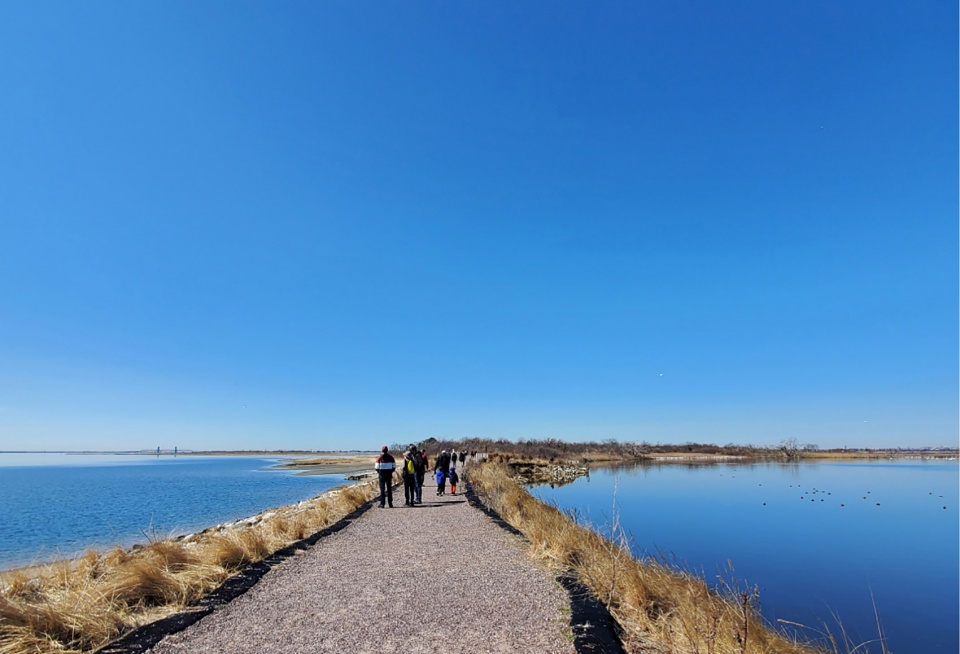
▲分隔牙买加湾和西塘的屏障:多年的海岸线侵蚀使西塘易受气候变化的影响。超级风暴桑迪过后,分隔淡水池塘和咸水湾的屏障被冲破。咸水与淡水的混合对70%的大西洋候鸟赖以生存的淡水资源造成了破坏,Barrier Separating Jamaica Bay from West Pond: Years of shoreline erosion made West Pond vulnerable to climate change. In the aftermath of Superstorm Sandy, the barrier separating the freshwater pond from the saltwater bay was breached. The mixing of saltwater with freshwater was destructive to the freshwater source for 70% of The Atlantic Flyway’s migratory birds © Alex Zablocki
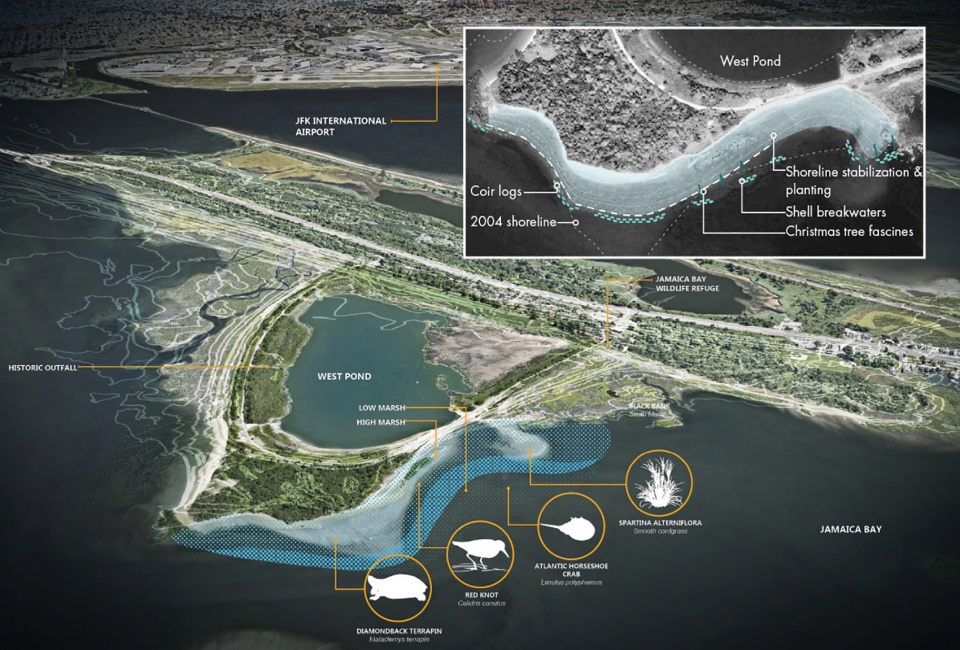
▲场地平面图:作为富有生命力的海岸线,修复工程利用天然防波堤来保护西塘的淡水资源。该设计利用本地植物增强了场地的生态弹性,限制了海岸线的侵蚀,创造了候鸟急需的栖息地,同时保护了牙买加湾的濒危物种,Site Plan: As a living shoreline, the restoration project uses natural breakwater features to protect the freshwater West Pond. By limiting erosion along the shoreline, the design enhances the site with native plants, creating much needed habitat while protecting vulnerable species in Jamaica Bay © Dirtworks Landscape Architecture
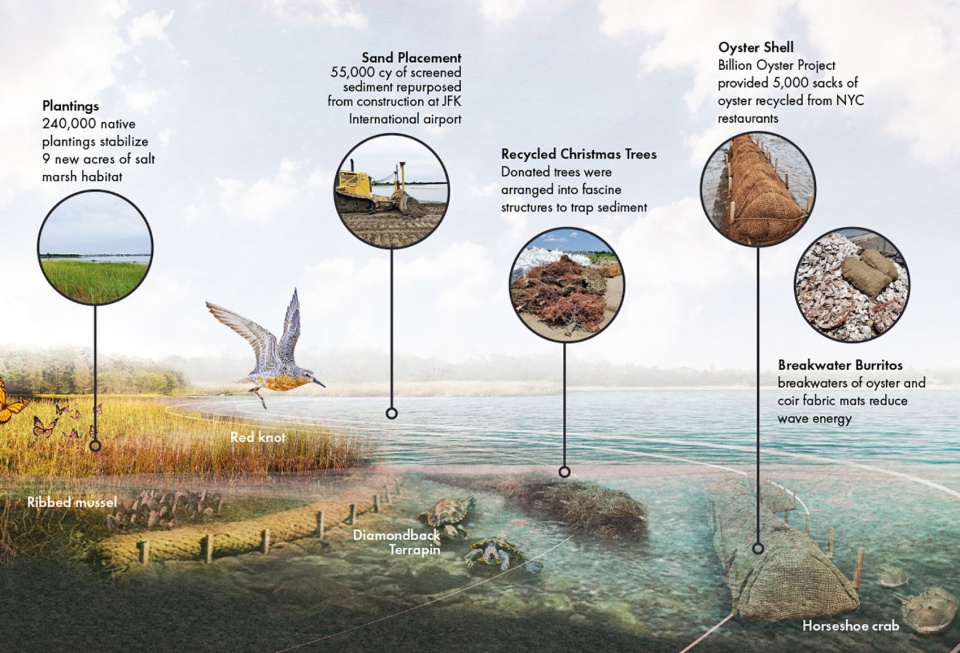
▲修复工作包括建造防波堤、利用回收的圣诞树作为河床、清洁土壤,以及种植新植物。在建设过程中,项目团队保护了现有的栖息地和种群,为680只育龄雌龟设置了淤泥袜状屏障。施工人员接受过检查水龟的训练,因为水龟们可能会在施工设备下的阴凉处午睡。此外,研究人员还会每天监测受保护物种,包括红结蟹和马蹄蟹等,The restoration efforts included breakwater structures, recycled Christmas trees for fascines, clean soil and new plantings. Existing habitat and populations needed protection during construction.Silt sock barriers were installed for 680 breeding terrapin females. Construction crews were trained to check for terrapins who might find mid-day shade under construction equipment. Monitoring for protected species, including Red Knots and Horseshoe Crabs, was conducted daily © Dirtworks Landscape Architecture
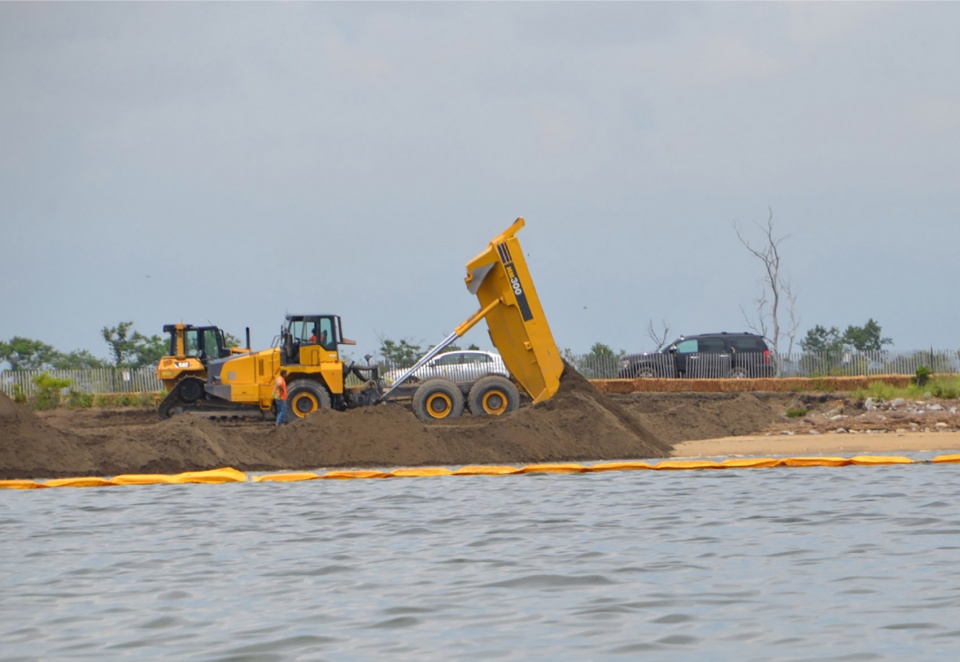
▲材料的回收再利用:设计团队在肯尼迪国际机场(JFK International Airport)环球航空酒店(TWA Hotel)的施工过程中,回收并筛选出55,000立方码的清洁土壤,用于建设海岸线,Repurposed Sediment: Repurposed fill from the construction of the TWA Hotel, at JFK International Airport, was screened into 55,000 cubic yards of clean soil to build out the shoreline © Dan Mundy Jr.
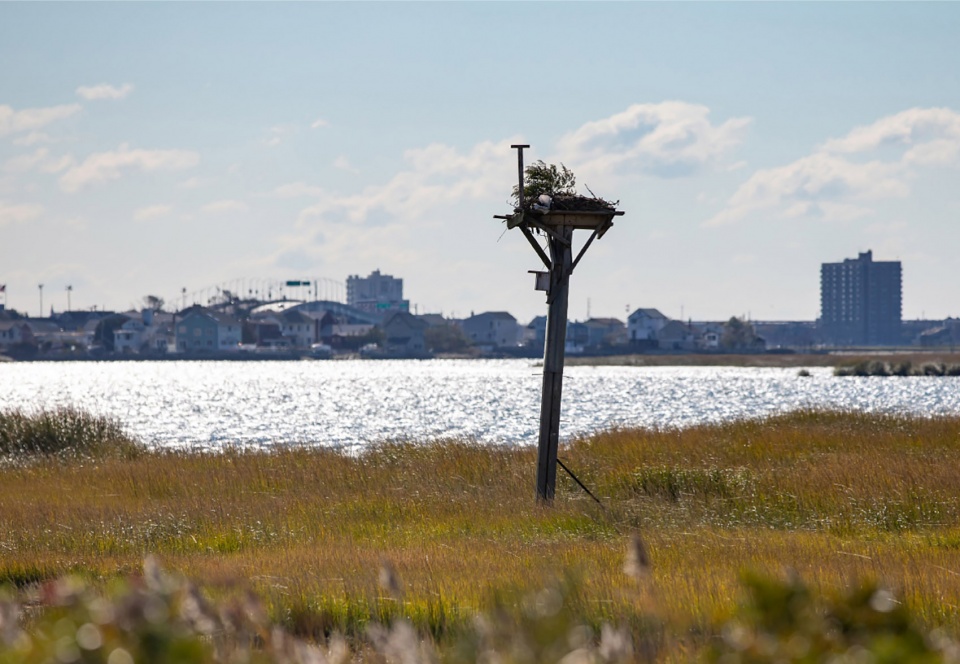
▲历史排水口:在更换了部分废弃排水口的玻璃化粘土管道后,设施状况良好并重新启用,可用于在迁徙季节降低池塘水位,以支持国家公园管理局在保护野生动物和其栖息地方面的行动,Historic Outfall: After replacing portions of a decommissioned outfall’s vitrified clay pipe, it was determined to be in good condition and could be used to draw down pond water-levels during migration season, allowing the National Park Service to support wildlife and habitat © Justin Weiner
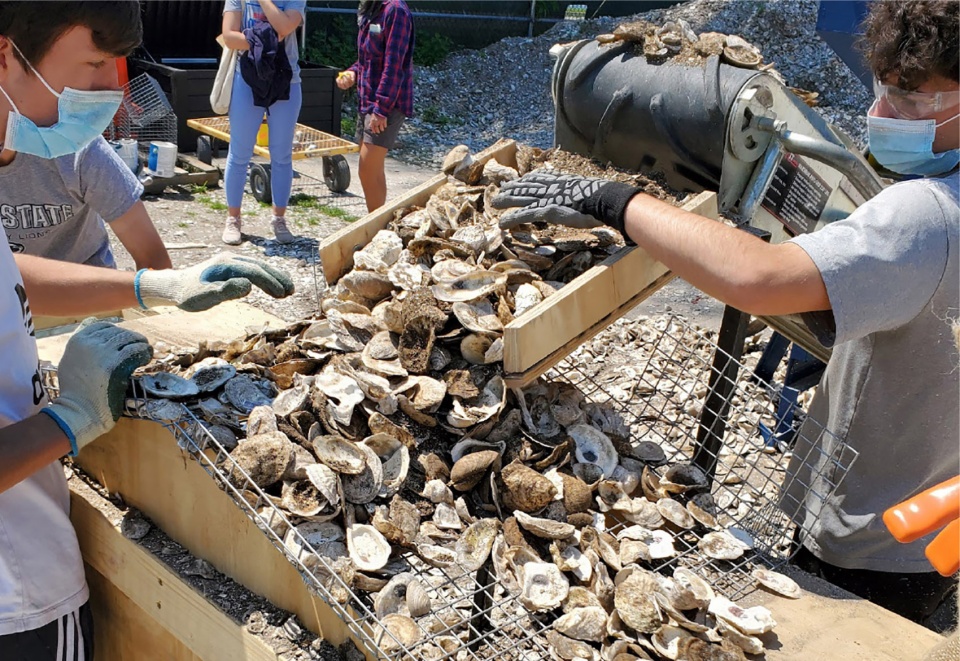
▲Billion Oyster Project十亿牡蛎项目:志愿者利用牡蛎壳填充麻袋。非营利组织Billion Oyster Project十亿牡蛎项目从纽约的餐馆回收了牡蛎壳,用于筑造防波堤结构。在Governors岛,志愿者将牡蛎壳装入了5200个可生物降解的椰子纤维麻袋中,Billion Oyster Project: Volunteers Filling Oyster Shell Bags. The nonprofit group Billion Oyster Project collected recycled shells from NYC restaurants for the breakwater structures. Volunteers loaded 5,200 biodegradable coir fiber bags with oyster shells on Governors Island © Alex Zablocki
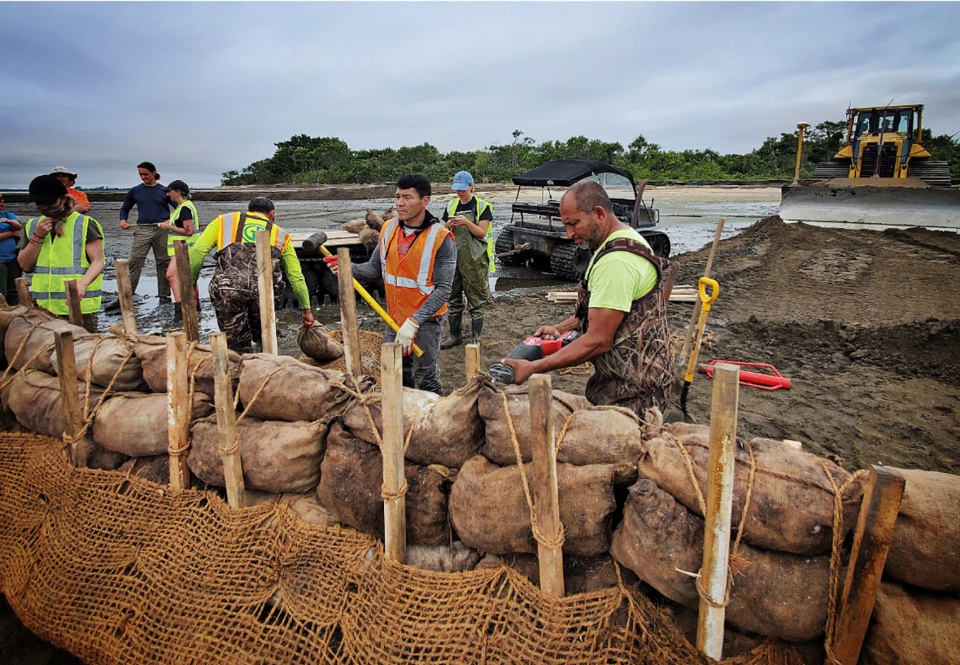
▲防波堤结构:由于国际上椰子纤维的短缺,景观设计师开发了一种创新“防波堤”结构,将牡蛎壳包裹在粗麻布中,并堆叠成金字塔状,然后用椰子纤维包裹这些12英尺长的结构单元,Breakwater Structures: Due to an international shortage of coconut fiber, the landscape architect developed a ‘breakwater burrito’ by packing the oyster shells in burlap, stacking them in a pyramidal structure, and then wrapping the entire 12 ft long structure with coir fabric © Alex Zablocki
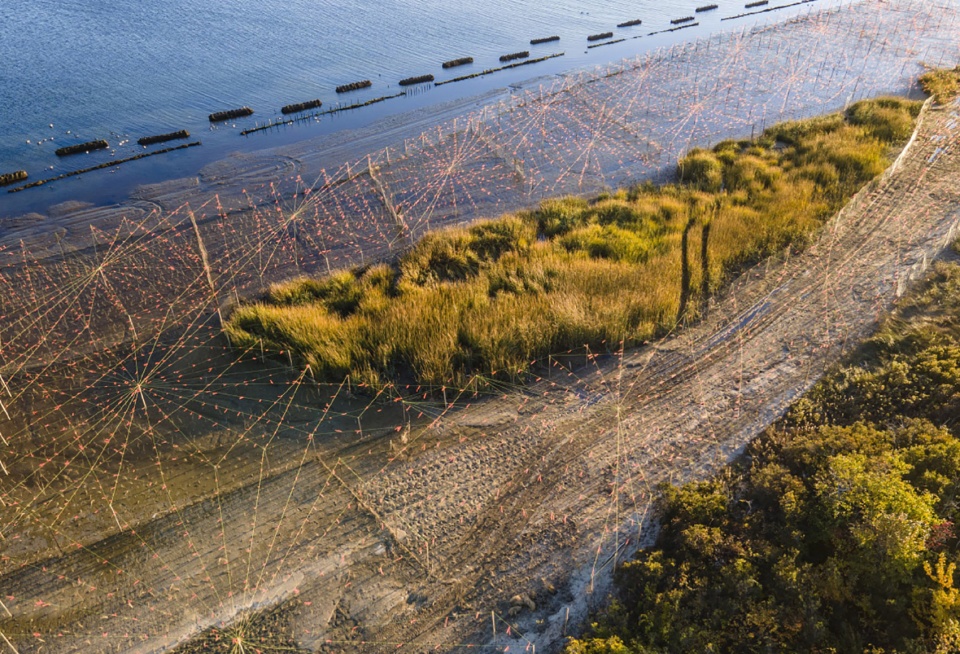
▲生机勃勃的海岸线:防波堤结构减弱了波浪的作用,允许沉积物在新建的海岸线上积聚,进而将淡水池与盐沼分离开来,同时保护海岸线免受侵蚀。椰子木和花束保护了现有的米草小丘不受半日潮的影响。彩色丝带形成专属围栏,保护了新种植的植物,Living Shoreline: The breakwater structures attenuate wave action, allowing sediment to accrete in the newly constructed shoreline. This enables the salt marsh plugs to establish while protecting the shoreline from erosion. Coir logs and fascines protect existing spartina hummocks from semidiurnal tidal patterns. Colorful ribbons form the exclusionary fencing to protect new plantings © Jean Schwarzwalder/DEP
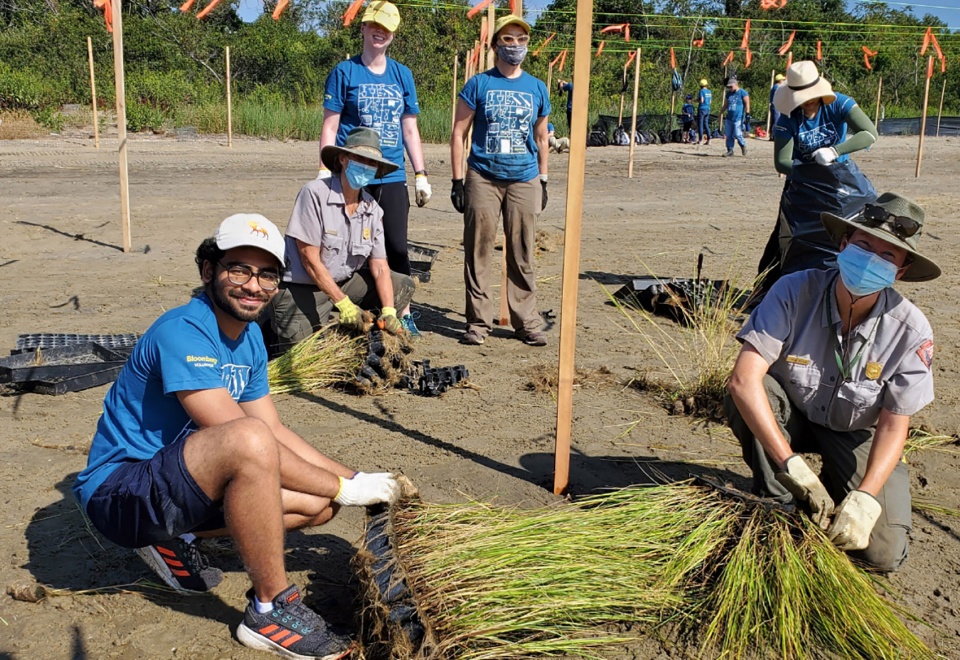
▲志愿种植:项目团队动员社区和志愿者,组织植树日和安装鹅围栏标记。隔离围栏防止了水禽破坏植物,而栅栏底部六英寸高的挡板也不会影响马蹄蟹和水龟的活动与生存,Volunteer Plantings: We engaged the community and volunteers: organizing planting days and installing goose fencing markers. Exclusionary fencing was installed to keep destructive waterfowl from damaging plantings. Protections included six-inch flaps at the fence base allowing for horseshoe crab and terrapin movement © Alex Zablocki
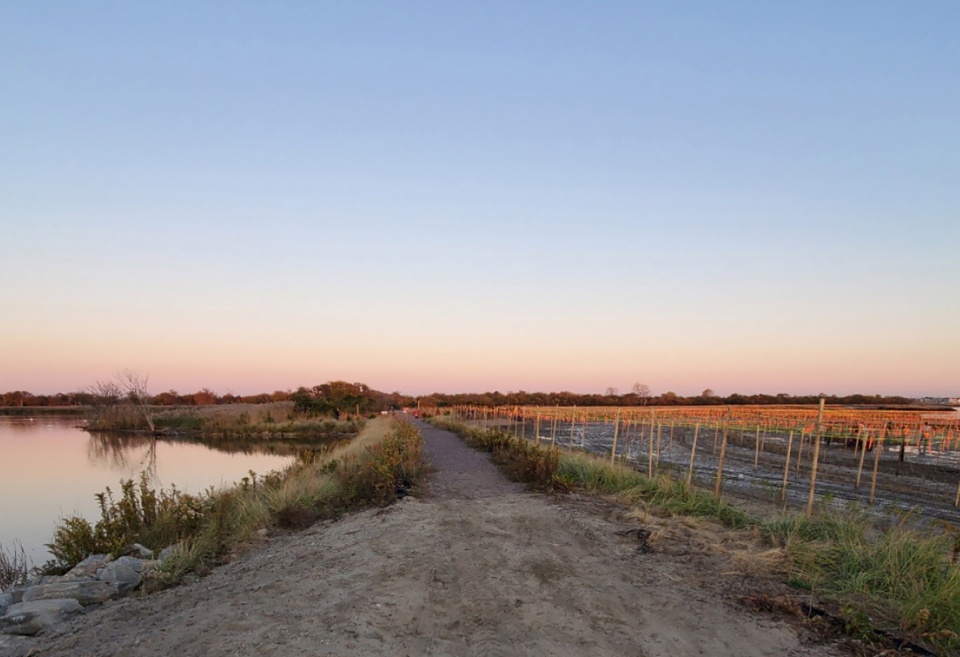
▲监测海岸线的长期可持续性和海岸健康。牙买加湾科学与恢复研究所开始了为期两年的监测过程。这些数据以及长期保护措施将帮助团队评估整个海岸线未来的弹性工作,从而对海岸保护措施做出有据可依的评判与决策,Living Shoreline Monitoring for long term sustainability and coastal health. The Science &Resilience Institute at Jamaica Bay began a two year monitoring process. This data, along with long term protection measures, will help the team evaluate future resiliency efforts across the shorelineto make evidence-based decisions about coastal protection measures © Alex Zablocki
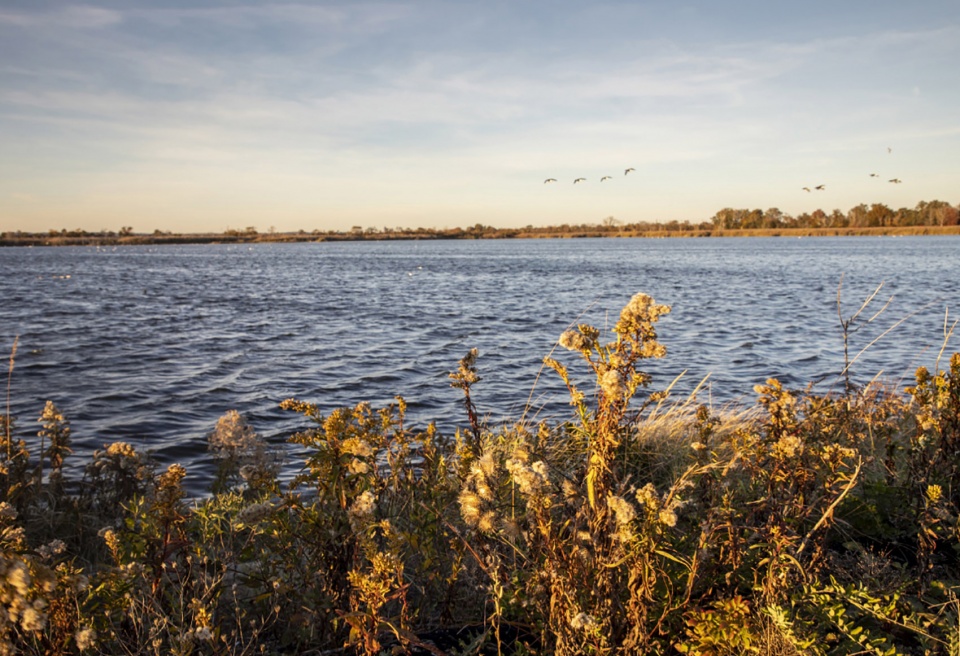
▲受保护的西塘:牙买加湾泻湖的特点之一,就是沿海生态系统被密集的城市基础设施和沿海生态系统所渗透,进而形成了丰富的地质形态,包括:海滩、沙丘、盐沼、高地和淡水池塘。设计采用了创新和弹性战略来应对气候变化,最大程度上修复了海岸线的生态系统,West Pond: Protected. The Jamaica Bay lagoon is characterized by coastal ecosystems penetrated by a dense matrix of urban infrastructure and coastal ecologies including: beaches, dunes, saltmarshes, upland fields, and freshwater ponds. Our restored shoreline incorporates innovative and resilient strategies to combat climate-change © Jean Schwarzwalder/DEP
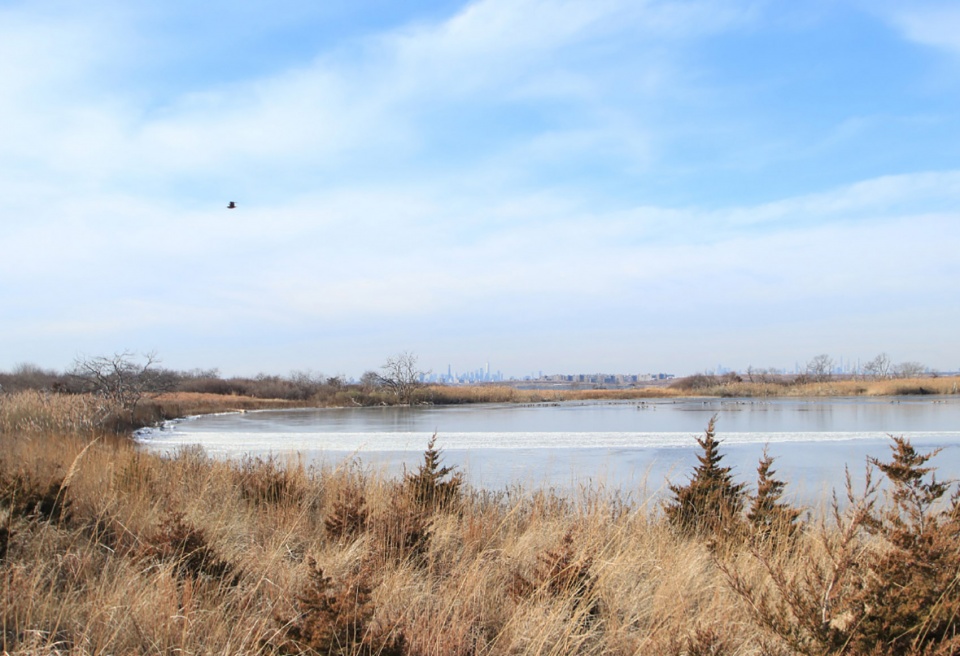
▲活力海岸线:该项目成功地创造了9英亩的潮汐湿地,并恢复了超过14英亩的栖息地生态。超过24万的新植物创造了高地、高沼泽、低咸水沼泽和潮间带。本地植物将有助于稳定海岸线,同时为以本地植物为主的生态栖息地做出了补充,Living Shoreline: The project successfully created 9 new acres of tidal wetland and restored over 14 acres of habitat. Over 240,000 new plantings created an upland high marsh, low saltwater marsh and an intertidal zone. The native plantings will help stabilize the shoreline while supplementing habitat for native species © Mark Tepper
In 2012, Superstorm Sandy tore through West Pond, a vital 45-acre freshwater wetland servicing 70% of migratory birds along the Atlantic Flyway. This large pond is a key component of the larger Jamaica Bay wetland estuary, a major part of Gateway National Park. This priceless natural resource is located only 12 miles from the densest areas of Manhattan.
Sandy’s massive storm surge, estimated at 10 feet high, pushed across the narrow path separating the freshwater wetland from the salty bay waters, washing it away completely. The freshwater West Pond filled with salt. Maple and birch trees planted decades ago along its banks were killed almost instantly. Migratory animals lost a vital water source and had to scramble to find alternative sources of fresh water along their route. Habitats were destroyed and the community who loves the area was devastated.
The West Pond Living Shoreline project leverages the existing natural systems of Jamaica Bay to protect and regenerate the pond’s bayside edge while supporting Gateway National Park’s ongoing efforts to protect critical habitats of threatened species and migratory birds. Leading a team of marine engineers, ecologists, and community advocates, we oversaw design and construction of this initiative in only 18 months.
Our dedicated design team planned a 2,400-foot living shoreline, creating over 9 acres of new habitat and restoring 14 acres. Along the formerly breached dam edge, a constellation of strategies – breakwater structures, additional sediment, marsh plantings and erosion control – coalesce to attenuate wave action, improve water quality, and support the reemergence of mudflats and saltmarsh. This living framework supports the immediate need to restore the pond edge while adapting this vulnerable ecosystem to the challenges of climate change.
Our team studied a variety of possible approaches, including naturally occurring rib mussel communities and spat-on-shell oyster reef construction. Due to the National Park Services’ mandate against aquaculture, we determined that an oyster shell breakwater structure would be the most effective solution here.
Nimble responses to supply chain and pandemic-related disruptions required close collaboration, flexibility, and creativity. It all came down to coconut fiber. With most coconut fiber coming from Sri Lanka, a global slowdown in shipping/production forced us to consider alternative materials. Partnering with the Billion Oyster Project, we sourced recycled oyster shells from New York City restaurants, cured them in the sun for 12 months, and then packed them in locally sourced burlap bags. Due to the fact that burlap breaks down faster in high salt conditions, we developed an innovative ‘breakwater burrito’ by packing the burlap bags, stacking them in a pyramidal structure, and then wrapping the entire 12-ft-long assembly with coir fabric. These breakwater structures, together with recycled Christmas tree fascines, attenuate wave action, accrete sediment, and protect the newly constructed shoreline.
With resiliency and sustainability guiding the design response, we worked to source locally available sediment. Through a Beneficial Use Designation, 70,000-cubic yards of fill was repurposed from construction of the TWA Hotel at JFK International Airport. Screening this into 55,000-cubic yards of clean sediment, we established over 9-acres of new habitat and 2,400 linear feet of shoreline.
In studying the pond’s decommissioned outfall, the team determined we could reopen the structure to allow for seasonal drawdowns to accommodate migratory birds. Through CCTV footage, we discovered that by replacing portions of the vitrified clay pipe, installing a new sluice gate and duck bill valve structures, the outfall would be more than sufficient for this purpose.
Existing habitat and populations needed protection during construction. Silt sock barriers were installed for 680 breeding terrapin females. Construction crews were trained to check for terrapins who might be taking a midday nap in the shade under construction equipment. Site meetings included terrapins popping out of the water to watch construction from inside the turbidity curtain.
Daily monitoring for protected species, including Red Knots and Horseshoe Crabs, was essential to the project. Local nurseries begin growing the needed plugs for our 240,000 native plantings a year in advance. Plantings were installed in salt marsh and intertidal zones, creating a resilient ecotone between the high marsh and freshwater pond. Our client’s goals included monitoring the long-term health of the project, with a two year contract with the Jamaica Bay Science and Resilience Institute. Data-driven research will sustain and inform this living shoreline design while also tracking the health of the neighboring maritime forest, shrubland, mudflat, and lacustrine freshwater herbaceous wetlands.
Throughout the entire project, community engagement efforts included close collaboration with local environmental advocacy groups and nonprofits, including Jamaica Bay-Rockaway Parks Conservancy, Jamaica Bay Ecowatchers, The American Littoral Society, and Billion Oyster Project. Together, we brought in hundreds of volunteers over several phases of the construction. They planted Spartina alterniflora plugs, installed vibrant goose fencing markers, and helped clean up trails. The nearby Rockaway community donated Christmas trees for our erosion-control fascines, while volunteers on Governors Island packed recycled oyster shells into breakwater bags.
Protecting and sustaining West Pond is critical to the resiliency of the larger Gateway National Park ecosystem. Equally critical is protecting and sustaining the idea of community stewardship. This multi-discipline, community-based initiative establishes an effective and vital response to our changing climate.




生态真好
DK
看效果了