“千禧公园毋庸置疑地改变了芝加哥的形象面貌。它是一个无障碍的公共场地,为民主化的城市领域带来丰富多样的空间。作为由旧铁路站场改造而来的城市文化中心,千禧公园每年的访客达到2000万人,成为芝加哥旅游业和商业消费(25亿美元)的巨大驱动力。同时,千禧公园拥有非常广泛的受众,能够同时吸引居民、游客以及城市里的上班族。公园每年约举办200项免费的公共活动,鼓励所有人参与其中。以Beaux-Arts风格的布局为基础,公园被细分为由多个小空间构成的网络,带来具有实验性且随季节变化的丰富体验。从整体上看,千禧公园是一个宝贵的社交和公共场地,它为其他城市寻找催化剂的愿景提供了行动范例。”
– 2020年评审委员会“There can be no denying that Millennium Park has changed both the literal and figurative landscape of Chicago, as an accessible, public park with a wide diversity of spaces within a democratized urban realm. Transforming a rail yard into the city’s cultural center has yielded 20 million annual visitors to the park, which has become a driver of $2.5 billion in tourism and business in Chicago. Yet Millennium Park reaches a broad demographic, appealing to urban workers, city residents, and tourists alike, with some 200 free public programs per year that encourage enjoyment by all. Espousing the broad gestures of a Beaux-Arts layout, the park subdivides into a network of smaller rooms that offer their own experiential qualities and change through the seasons; taken as a whole, Millennium Park becomes a valuable social and public venue that serves as an exemplar for other cities seeking an urban catalyst.”
– 2020 Awards Jury
来自 ASLA 对gooood的分享。
Millennium Park | Millennium Park Foundation
项目概述
PROJECT STATEMENT
在过去的100年间,几乎没有哪个公共空间像千禧公园一样影响着我们对以下问题的认知:艺术、景观和建筑能够以何种方式改变城市经济的发展、多个专业领域之间的协作理念以及人们的日常生活?千禧公园最初曾是芝加哥中央商务区的一个废弃的铁路站场,得益于全国历时最长且成果最为丰富的公私合作关系,如今的公园已经发展为整个城市的文化中心。千禧公园的年访客量超过2000万人次,且每年举办超过200项公共文化活动,嘉宾包括来自芝加哥乃至全球最优秀的一众音乐家、艺术家、建筑师、表演者和设计师。千禧公园的宗旨一直是打造免费、公共、公平且具有代表性的文化空间,这样的驱动理念和公园本身的设计和运营为无数其他城市和国家在公园方面的研究带来了灵感,并为其改善自己的城市空间、发展自己的旅游经济以及为自己的市民创造文化中心提供了范例。
Few public space projects in the past 100 years have had a stronger impact on our ideas of how art, landscape architecture, and architecture can stimulate change in a City’s economy, change perceptions of collaboration throughout multiple professional fields, and change people’s lives than Millennium Park. The Park began life as a disused railyard in the central business district of Chicago and, thanks to one of the longest and most productive public-private partnerships in the country, has evolved as the cultural heart of the City. The Park welcomes over 20,000,000 annual visitors to its over 200 year-round free public cultural events featuring some of Chicago’s, and the world’s, best musicians, artists, architects, performers, and designers. The driving philosophy of Millennium Park has always been of a free, public, and equitably representative cultural space. This concept, and the Park’s design and operation, have inspired countless other cities and countries to study the Park for ideas about developing their own urban spaces, growing their own tourism economies, and creating a cultural heart for their own citizens.

▲千禧公园平面图和寻路图,用于帮助游客摸清公园24.5英亩的场地。Millennium Park Site Plan: Millennium Park site plan and wayfinding map, as used throughout the space to assist visitors in navigation of the Park’s 24.5 acres. ©Millennium Park Foundation
项目说明
PROJECT NARRATIVE
千禧公园的构思、设计和建造旨在创造一个自由的、在艺术、建筑和设计方面均具备最高标准的城市、公共和文化空间。坚定的信念和严格的执行方法清晰地展现在一系列全球知名的景点和元素中,包括Anish Kapoor的“云门”、Jaume Plensa的皇冠喷泉、Frank Gehry的普利兹克露天音乐厅和BP桥、以及Gustafson Guthrie Nichol和Piet Oudolf的卢瑞花园等。所有这些艺术、建筑和设计杰作均是在芝加哥文化事务和特别活动部门(DCASE)与千禧公园基金会(MPF)的强强联合下得以完成。双方建立的全美国最强大的公私合作关系是这一切——包括公园本身——得以存在的前提。
最初,人们对于还未成为千禧公园的场地有着诸多富有创意的想法,不过要真正实施和建造这样一个庞大且复杂的空间,无疑是一场全然不同的挑战。第一个挑战在于“怎么做”:通过抬升场地的高度,一个六层的地下停车场得以建造在公园底部,在今天可为公园乃至整个Loop区的游客提供1200个车位。芝加哥市政府拨款2.6亿美元(2004年价格)用于该停车场的建设;千禧公园基金会向芝加哥市民及企业筹集了额外的2.5亿美元(2004年价格)用于加强公园的建设。正是从这些募集到的资金当中,孕育了以公园的策划、管理和运营为核心的公私合作关系。
在Skidmore, Owens & Merrill向芝加哥政府和千禧公园基金会创始人John H. Bryan先生展示其受Beaux-Arts风格影响的整体规划方案后,千禧公园的设计方向被引至一个新的方向。公园的设计需要具有前瞻性和开创性,类似于1871年芝加哥大火后Daniel Burnham提出的打造自由开放的芝加哥湖岸地带的概念。在经过参与公园开发及设计早期阶段的各个机构和组织之间的对话和协商后,最终决定采用混合式的设计方案。该方案将为公园打造一个具有古典Beaux-Arts风格的基础布局——利用宏伟宽阔的人行道和林荫小径,在公园内创造多样的空间或“房间”,并在其中布置独特的艺术和文化体验,形成一系列具有丰富层次的现代主义艺术和建筑,作为千禧公园充满艺术气息的核心元素。设计的目标是依靠古典的基础布局,将这些“房间”组成一个具有凝聚力的单元,同时让每个“房间”作为独立且独特的艺术、建筑和表演空间而存在。
在决定采用混合式设计方案的同时,千禧公园基金会还负责了公园设计的整体策划,包括艺术和建筑元素的创作。为了在完成设计整合与监督的同时与芝加哥市政府建立沟通及合作,Edward Uhlir先生被选为公园项目的总建筑师。他将存在于纸面上以及艺术家和建筑师脑海中的想法转变成了一系列由混凝土和不锈钢砌筑构筑的真实世界。在完成设计任务的同时,Edward还担任了所有设计和工程的前线负责人,使公园得以在繁忙的中心商业区、两条活跃的火车线路上方以及六层高的停车场顶部被成功地建造出来。
在16年后的2020年,大多数芝加哥人,以及全世界的景观设计师和城市规划专家,都亲眼见证并认可了千禧公园的巨大影响力——它引发了从芝加哥Loop区蔓延至全市77个社区的城市更新热潮。除此之外,千禧公园还在全年开展免费的公共文化活动,为公私合作在促进公共空间营造上的的作用、以及公共空间在驱动城市经济和文化上的作用树立了新的标准。
关于千禧公园设计影响力的论述足以写成大量的书籍。它的创造和建设为公共空间的设计制定了新的轨道——一种将宏伟、壮观、纪念性和前瞻性同时作为目标的轨道。同时,凭借艺术家、景观设计师、建筑师、工程师、制造商、私人部门和市政府之间的通力合作,千禧公园还为公共空间的创造、策划和长期管理赋予了新的内涵。
除了对设计和规划领域的影响之外,千禧公园所做出的最大贡献在于它证明了公共文化空间在改变旅游业、文化和城建经济方面的力量。如若没有千禧公园的建设和规划为城市更新带来的种种灵感,以及它所引发的旅游业和开发资金的涌入,如今的芝加哥Loop区也便不会存在。
超过2000万的年访问人次使千禧公园成为芝加哥最受欢迎的旅游景点,同时跻身于全美国游客人数最多的公共场所。在公园开放之前,芝加哥的年均游客数量稳定在3800万人。继2004年公园开放之后,这一数字开始稳速增长,到2019年时已达到5800万人,在15年内实现了58%的惊人增长。虽然旅游人数的增长并不完全与公园挂钩,但千禧公园对芝加哥旅游经济的迅速增长无疑做出了巨大的贡献。
千禧公园所产生的另一个重要影响直接来自于这每年的2000多万名游客。在体验免费、开放且无障碍的公共艺术、建筑、节庆、音乐会和其他众多文化项目的过程中,公园的每一位游客都将为当地的销售税和酒店税做出贡献,从而为Loop区带来大量收益。据目前情况估计,公园每年将为芝加哥市创造超过2亿美元的直接税收。若将视野扩大至Loop区的整体艺术和文化经济产业——公园在其中扮演着引领者和贡献者的角色——那么芝加哥市民和游客每年的直接消费量将超过25亿美元。
在振兴芝加哥旅游业之余,千禧公园还极大地改变了业主、租户和开发商对于芝加哥Loop区的看法。自公园开放以来,住宅和商业房产的私人投资量显著增加:2004-2014年间投资额约达100亿美元。在公园开始运营的前十年间,住宅和商业房产的租出率分别从25%和30%上升至85%和92%。即便是在2007-2008年的经济低迷时期,公园内部及周边的住宅和商业房产价值依然保持了稳定,未发生明显的下降。2020年,在建园16周年之际,千禧公园依然展示着其在振兴和维持经济发展方面所发挥的重要力量。
从最初的设想到今天成为芝加哥充满活力的文化中心,千禧公园彻底改变了规划专家、市政部门和公众对于公共文化空间在设计、利用、观看和使用方面的认知。千禧公园在过去的影响力是显著且公认的;在未来,它将毫无疑问地继续扮演好其作为设计标杆、文化推动力、经济引擎以及全世界最受欢迎的公共文化空间之一的多重角色。
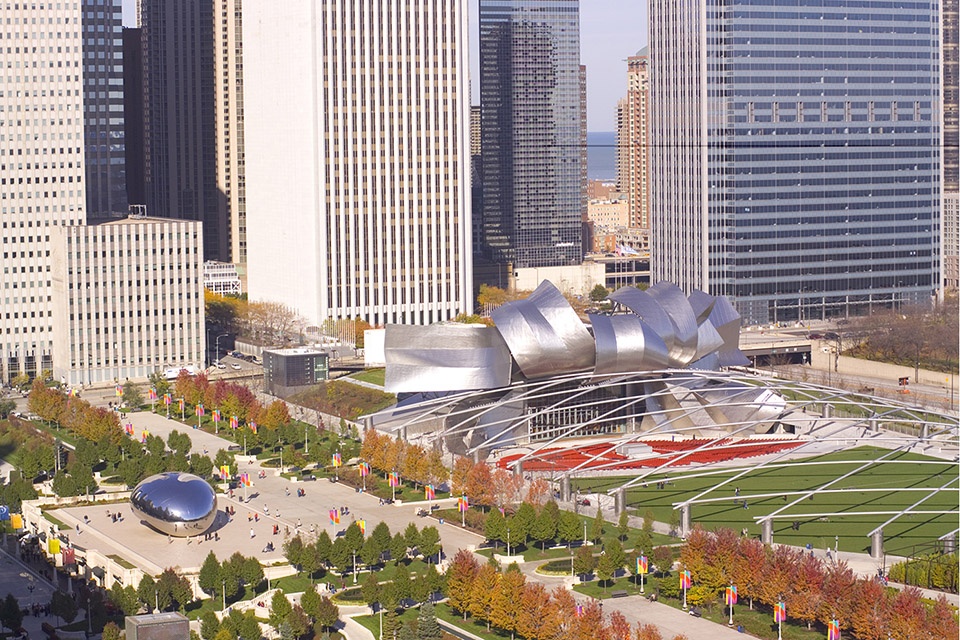
▲千禧公园的“云门”、普利兹克露天音乐厅和大草坪:在秋天,鲜艳的弗里曼枫树将公园分割成多个空间,Anish Kapoor的“云门”和Frank Gehry的普利兹克露天音乐厅就位于其中。Millennium Park’s Cloud Gate, Jay Pritzker Pavilion, and Great Lawn: Fall in Millennium Park is heralded by the bright red Freeman maple trees separating “rooms” featuring Anish Kapoor’s “Cloud Gate” and Frank Gehry’s Jay Pritzker Pavilion. ©Millennium Park Foundation
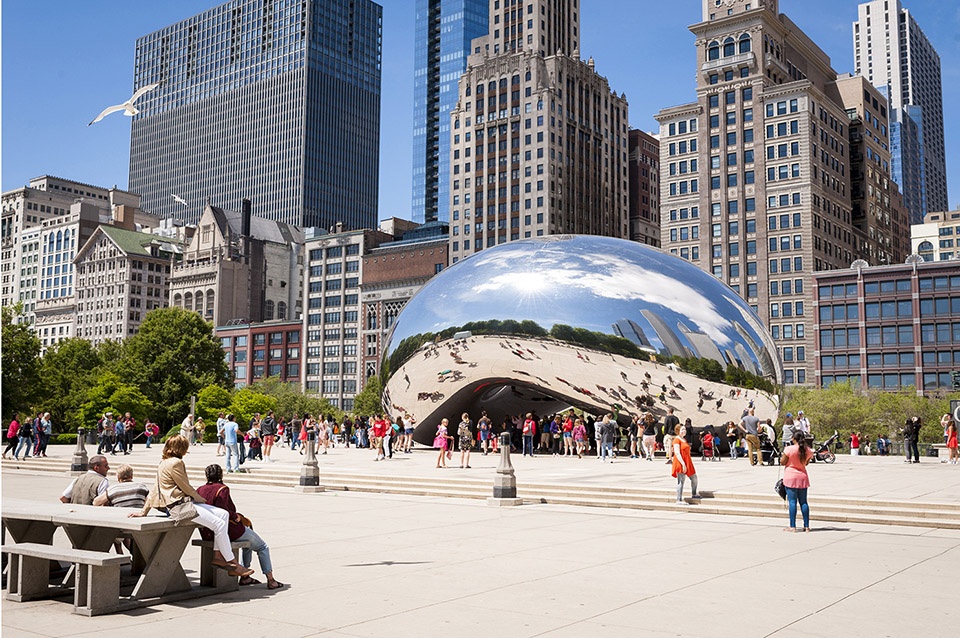
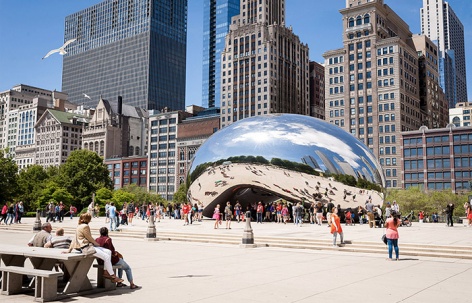
▲Anish Kapoor设计的“云门”,即人们所熟知的“大豌豆”,通常被认为是千禧公园的艺术中心,在一年四季里持续地吸引着人们的目光。“Cloud Gate” by Anish Kapoor: Often considered the artistic heart of Millennium Park, Anish Kapoor’s sculpture “Cloud Gate” (Better known as ‘The Bean’) draws onlookers year round. ©P. Pyszka & City of Chicago
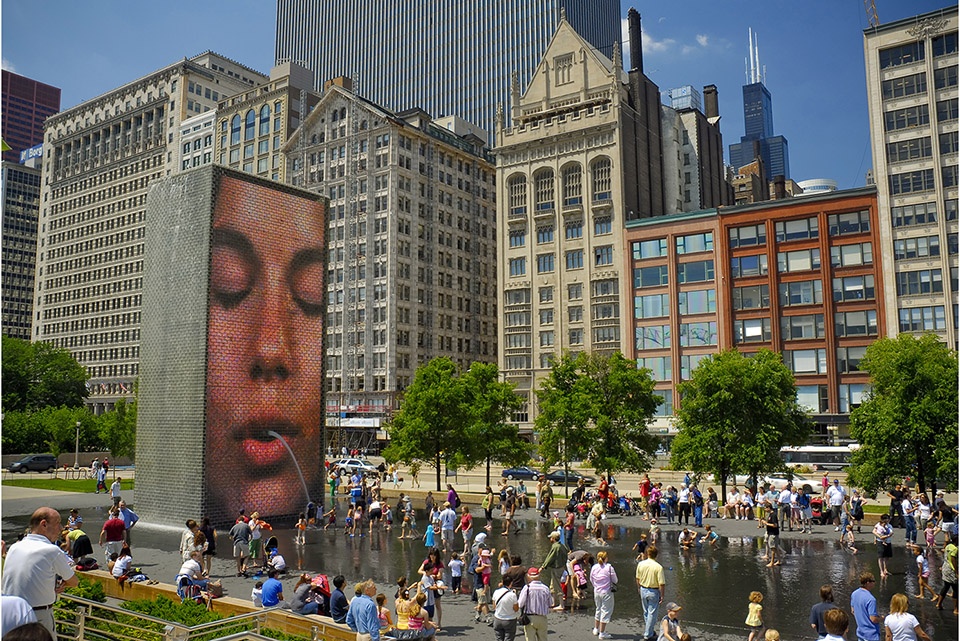
▲Jaume Plensa设计的皇冠喷泉在最初被设想为一个安静的沉思空间。在今天,这座世界闻名的雕塑作品不仅吸引了大批的艺术爱好者,亦成为了孩子们玩耍的目的地。Crown Fountain by Jaume Plensa: It is difficult to believe, but Crown Fountain was originally envisioned as a space of quiet contemplation. Today this world-renowned sculpture by Jaume Plensa is a draw for both art lovers and children looking to play. ©P. Pyszka & City of Chicago
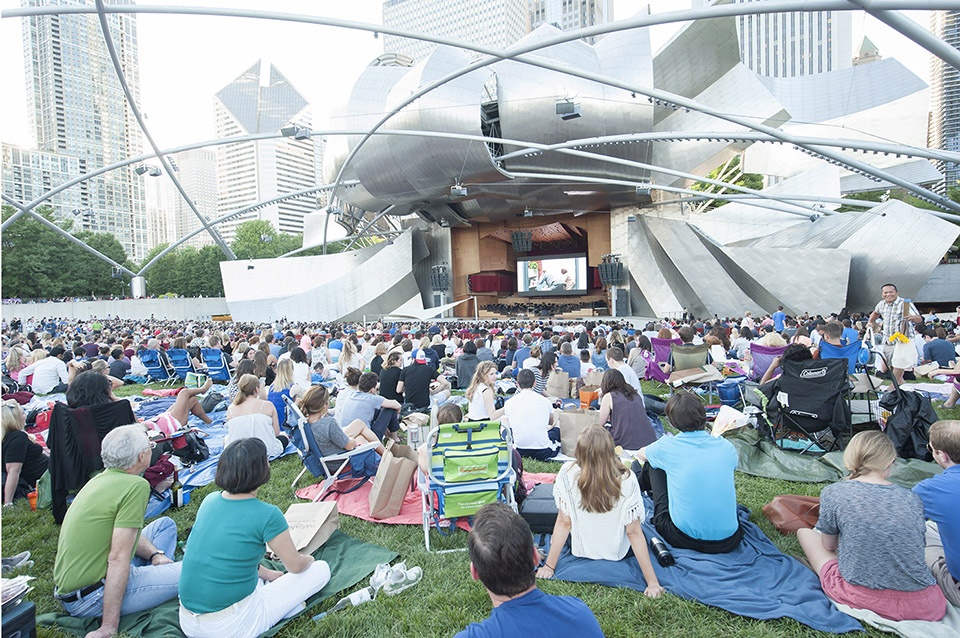
▲Frank Gehry设计的普利兹克露天音乐厅和大草坪每年接待超过150万名游客,人们可以在这里享受免费的音乐会、电影、节日和表演。Frank Gehry’s Jay Pritzker Pavilion and Great Lawn: The Jay Pritzker Pavilion and its Great Lawn welcome over 1.5 million annual visitors for free concerts, films, festivals, and performances. ©W. Mitchell III & Millennium Park Foundation
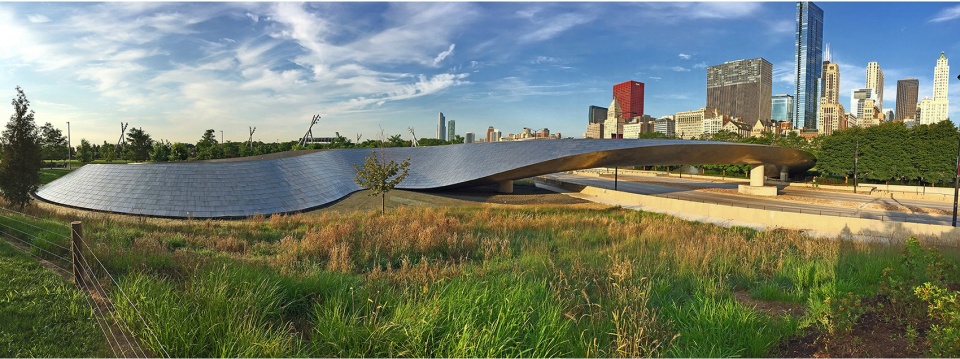
▲Frank Gehry设计的BP桥将千禧公园与附近的Maggie Daley公园相连接。它既是一条横跨繁忙街道的人行步道,又是一种充满美感的艺术形式。BP Bridge by Frank Gehry: Connecting Millennium Park with neighboring Maggie Daley Park, Frank Gehry’s BP Bridge is both a functional pedestrian walkway over a busy city street and a beautiful artistic form. ©Millennium Park Foundation
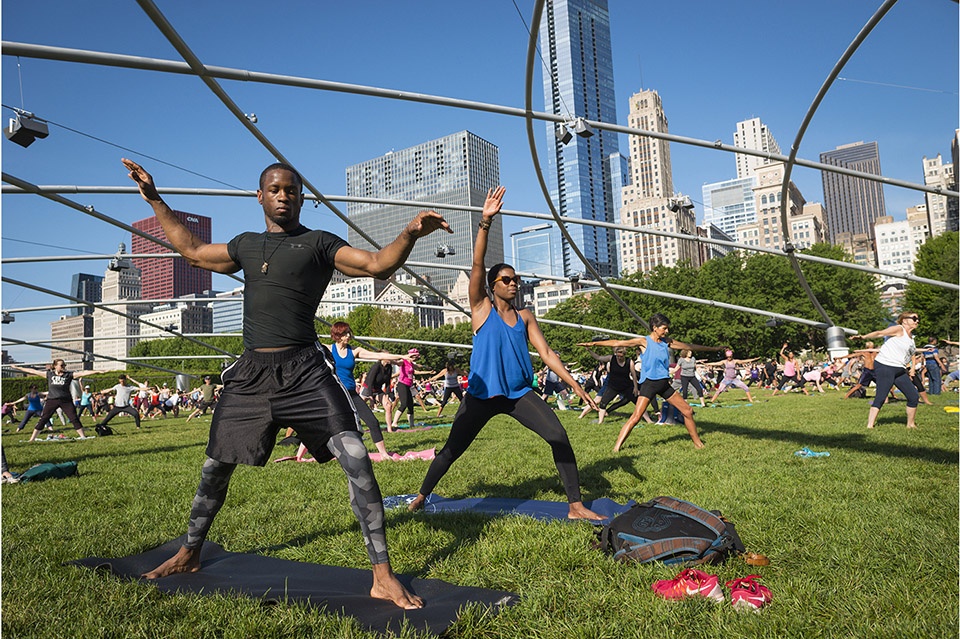
▲大草坪上的夏季健身系列活动:以音乐会和电影闻名的普利兹克露天音乐厅,在夏日的早晨也会吸引大量观众前来参加免费的瑜伽课和健身课。Summer Fitness Series on the Jay Pritzker Pavilion’s Great Lawn: Known for its free concerts and films, the Jay Pritzker Pavilion also draws an audience each morning during the summer months for free yoga and fitness classes. ©P. Pyszka & City of Chicago
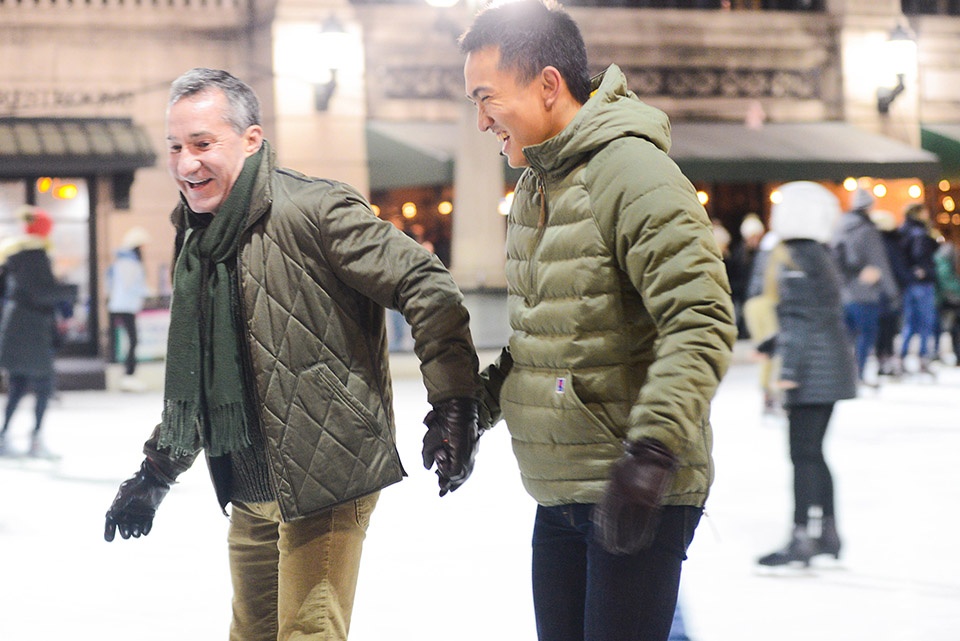
▲千禧公园的McCormick Tribune溜冰场位于密歇根大道旁、“云门”的正下方,每年冬天大约接待超过15万名滑冰的游客。在夏季,这里会变成一个户外餐厅。McCormick Tribune Ice Rink at Millennium Park: The McCormick Tribune Ice Rink is situated along Michigan Avenue, directly beneath “Cloud Gate”, and welcomes over 150,000 annual ice skaters each winter. This space becomes an outdoor restaurant each summer. ©Georgia Hampton & Millennium Park Foundation
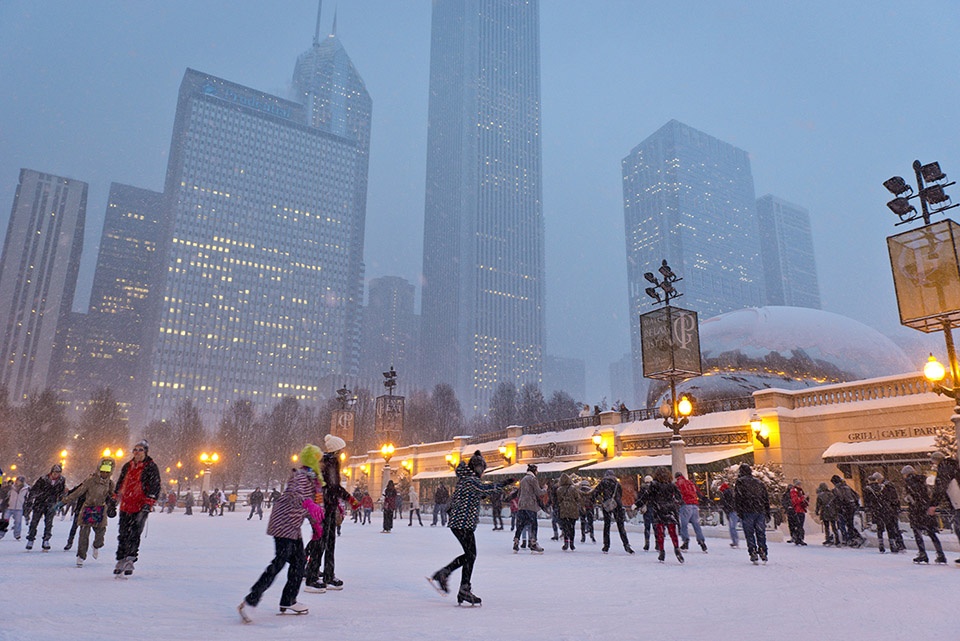
▲在McCormick Tribune冰场滑冰的人们:在寒冷的月份里,千禧公园将变成芝加哥的冬季乐园。除了滑冰场之外,公园还举办艺术市场、“云门”欢唱活动和其他各类家庭节日活动。所有的项目都不收取任何费用。Ice Skating at the McCormick Tribune Ice Rink in Millennium Park: Cold-weather months transform Millennium Park into Chicago’s winter wonderland with features such as ice skating, winter arts market, caroling at “Cloud Gate”, and other family holiday traditions. All such programs are free. ©P. Pyszka & City of Chicago
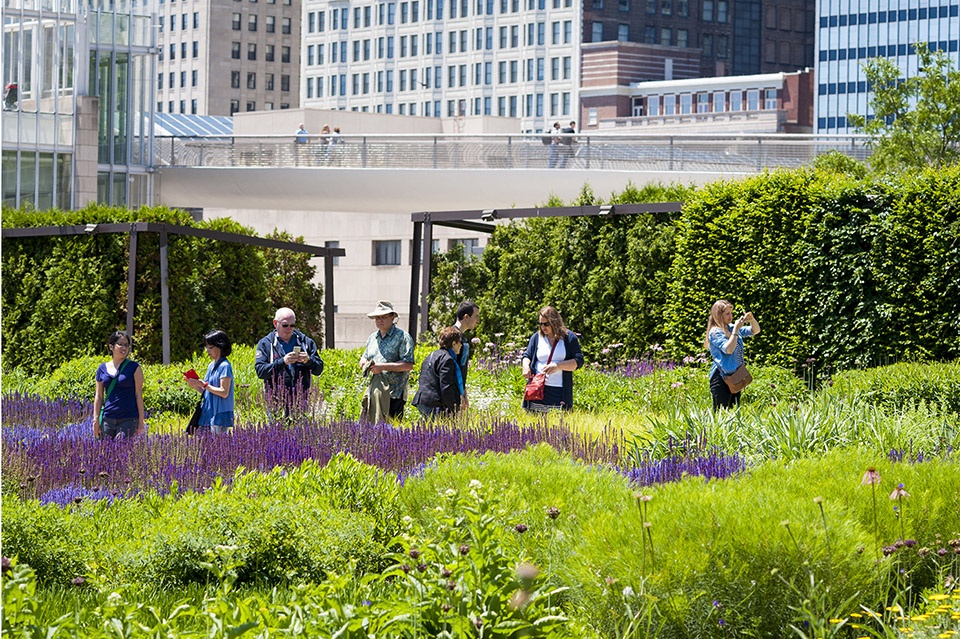
▲游览千禧公园的Lurie花园:由Gustafson Guthrie Nichol (GGN)和Piet Oudolf共同设计的Lurie公共花园为城市增添了一道自然的风景。Touring Lurie Garden in Millennium Park: Designed by Gustafson Guthrie Nichol (GGN) and Piet Oudolf, Lurie Garden is Millennium Park’s public garden that brings a touch of nature to the urban landscape. ©P. Pyszka & City of Chicago
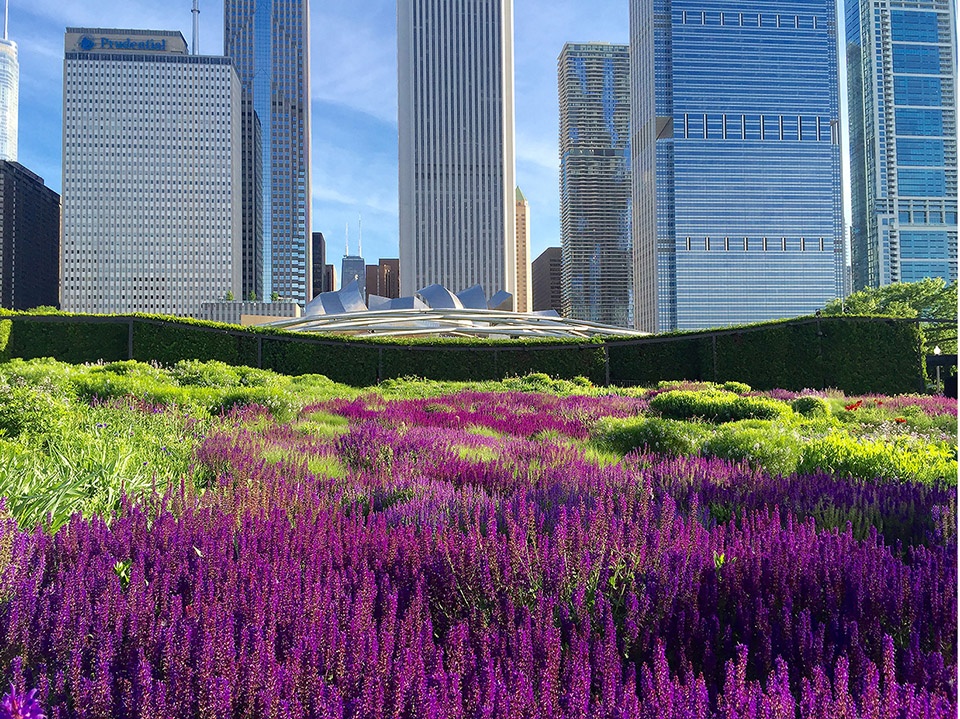
▲从Lurie花园的鼠尾草花海望向远处的普利兹克露天音乐厅。Lurie花园被构想为繁忙都市中 的花园绿洲,同时与千禧公园中的其他艺术品和建筑保持了和谐的关系。Lurie Garden’s Salvia River with Jay Prtizker Pavilion in background: Lurie Garden was designed to be a garden oasis among a busy city, while remaining integrated with the rest of Millennium Park’s art and architecture. ©Millennium Park Foundation
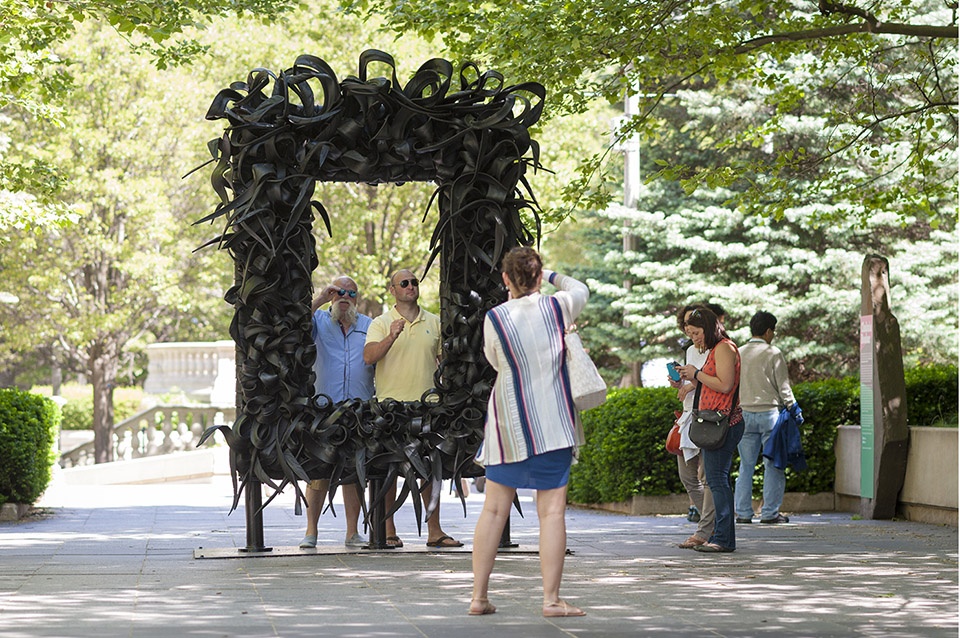
▲波音画廊是千禧公园中的露天公共艺术空间,用于举办世界知名艺术家的临时展览。2017-2018年,Chakia Booker用不锈钢和回收轮胎创作的雕塑作品在此展出。Boeing Galleries at Millennium Park: Millennium Park’s Boeing Galleries are outdoor public art spaces that host temporary exhibitions by world-renowned artists. Chakia Booker’s staineless steel and recycled rubber tire sculptures were featured in the Galleries during 2017-2018. ©P. Pyszka & City of Chicago
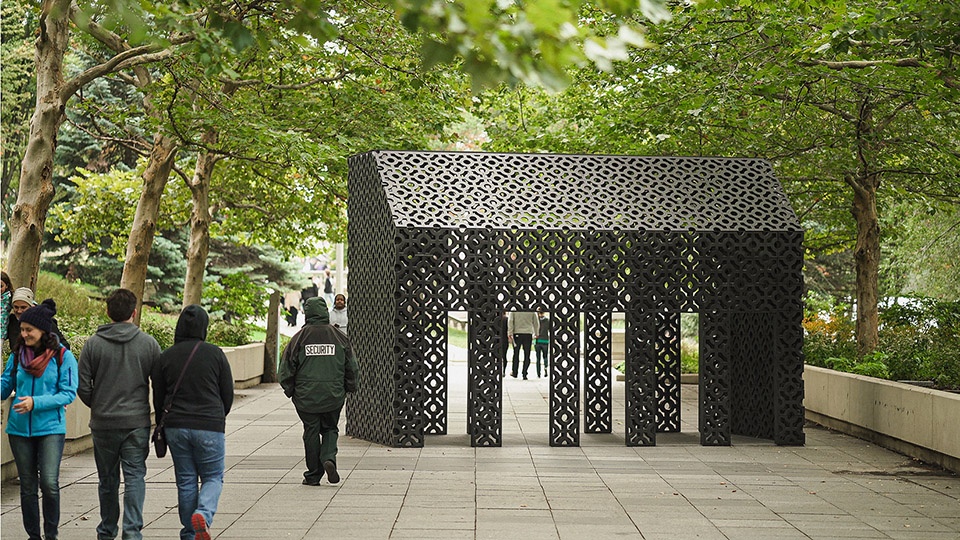
▲芝加哥艺术家Edra Soto为波音画廊2019-2022年的展览创作了名为“屏风屋”的艺术作品。波多黎各人的血统和背景是其作品的灵感来源。Boeing Galleries at Millennium Park: Chicago-based artist, Edra Soto, was commissioned to create “Screenhouse,” an original artwork for the 2019-2022 Boeing Gallery exhibition series. Her work draws architectural inspiration from her Puerto Rican heritage. ©B|E|Co & Millennium Park Foundation
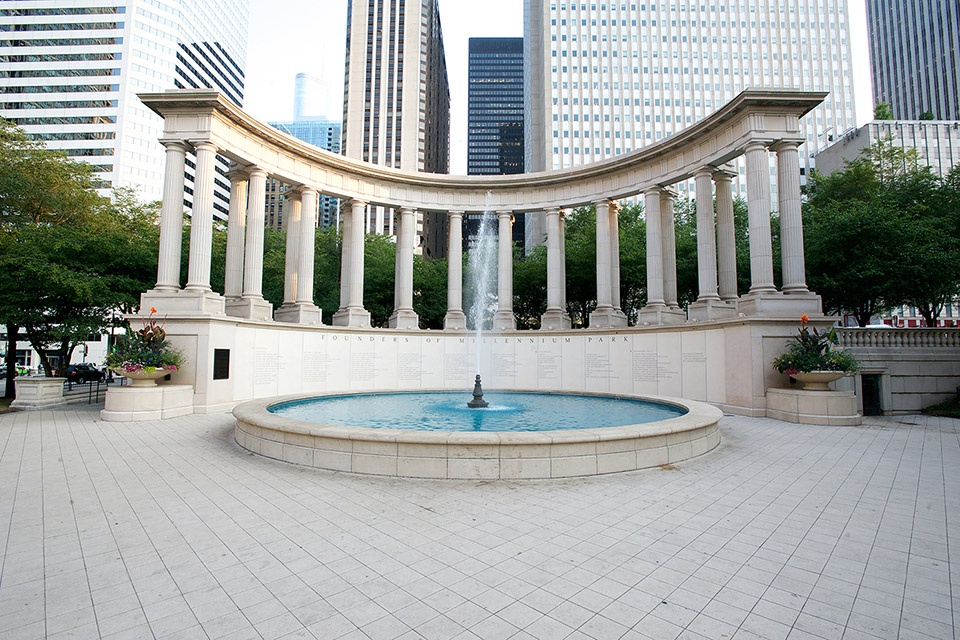
▲位于Wrigley广场的千禧纪念碑致敬了公园的新古典主义布局,并表彰了为建造千禧公园捐款的所有124名个人、公司和基金会。Millennium Monument in Millennium Park’s Wrigley Square: Paying homage to the neo-classical layout of the base park, the Millennium Monument serves as the one primary location where all 124 individuals, corporation, and foundations who donated to the construction of Millennium Park are recognized. ©Millennium Park Foundation
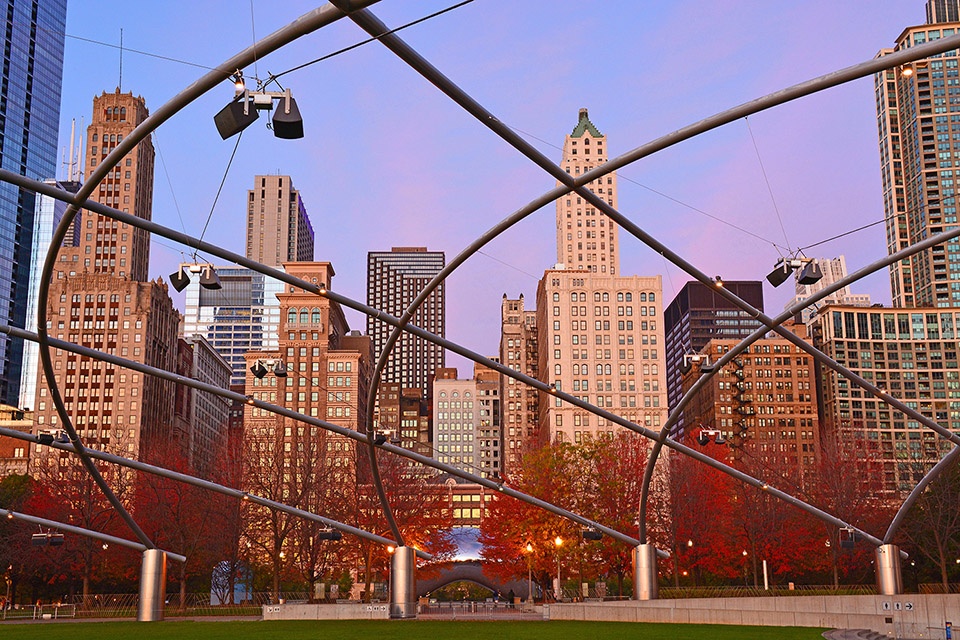
▲从大草坪望向“云门”:千禧公园的盛名源于其将艺术、自然和城市天际线融为一体的独特景致。“Cloud Gate” as viewed across the Jay Pritzker Pavilion Great Lawn: Millennium Park is known for its dramatic vistas juxtaposing art, nature, and the city skyline. ©Millennium Park Foundation
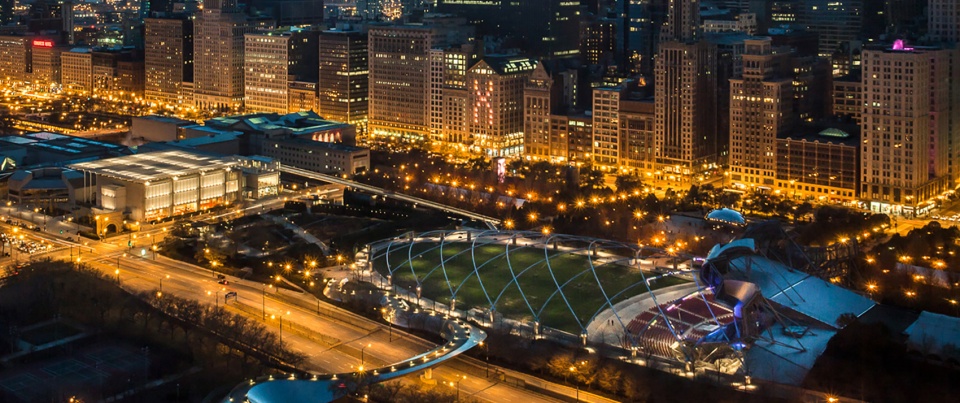
▲千禧公园和芝加哥艺术学院:公园位于芝加哥自由开放的湖滨区域的制高点。Millennium Park and The Art Institute of Chicago: Millennium Park is the capstone in Chicago’s grand vision for the city’s free and open lakefront. ©Chris Smith & Millennium Park Foundation
PROJECT NARRATIVE
Millennium Park was conceived, designed, and constructed on the idea of creating a free urban, public, and cultural space of uncompromisingly high standards in art, architecture, and design. The execution of this uncompromising approach is clear when examining the Park’s most famous elements: Anish Kapoor’s Cloud Gate, Jaume Plensa’s Crown Fountain, Frank Gehry’s Jay Pritzker Pavilion and BP Bridge, and Gustafson Guthrie Nichol (GGN) and Piet Oudolf’s Lurie Garden. None of these artistic, architectural, and design works—let alone the Park itself, as it is known and loved today—would exist if not for one of the country’s strongest public-private partnerships between City of Chicago Department of Cultural Affairs and Special Events (DCASE) and the Millennium Park Foundation (MPF).
In the beginning, there were many exceptionally creative ideas for what would eventually become Millennium Park, but the execution and construction of a space this monumental and complex proved to be an entirely different challenge onto itself. The first challenge of “How?” was solved by raising the site for the Park with a six-story below-grade parking garage, which today allows for 1,200 parking stalls for visitors to the Park and throughout the Loop district. The City of Chicago committed $260,000,000 (in 2004-era dollars) to the construction of this parking garage on top of which the park would rest. MPF raised an additional $250,000,000 (in 2004-era dollars) from private Chicago citizens and corporations for the enhancement of the base park. From these funds raised, the public-private partnership that is at the core of the Park’s curation, stewardship, and operation was borne.
Following presentation of a Beaux-Arts inspired master plan of the soon-to-be Millennium Park by Skidmore, Owens & Merrill to the City of Chicago and founder of MPF, Mr. John H. Bryan, the decision was made to take the Park’s design in a novel direction. The Park’s design needed to be forward-looking, similar to the groundbreaking nature of Daniel Burnham’s progressive concept of a free and open Chicago lakefront following The Great Chicago Fire of 1871. Through conversation and negotiation among those agencies and organizations involved in this very early stage of the Park’s development and design, a hybrid design was selected as the best path forward. This hybrid design would establish a base park layout that was classical Beaux-Arts in style—using grand, wide walkways and allees of trees to create multiple spaces or “rooms” within the Park in which unique artistic and cultural experiences can occur. Within this classical base park would be layers of modernist art and architecture as the artistic core elements of the Park. The intention was to rely on the classical base layout as the design element that solidified these “rooms” as a cohesive unit, while the individual “rooms” would exist as separate and unique art, architecture, and performance spaces.
Simultaneous to the decision on a hybrid design, MPF took on the role of curating the overall design of the Park, including the creation of its art and architecture elements. To accomplish the tasks of design integration and oversight, as well as communication and collaboration with the City of Chicago, Mr. Edward (Ed) Uhlir was selected as the Park’s master architect. Ed took the design of the Park from ideas on paper and in the minds of artists and architects, to true concrete and stainless-steel reality. He accomplished this while also serving as point-person on all design and engineering challenges of building a park atop the roof of a six-story parking garage, two active commuter train lines, in the downtown business core of a busy urban city.
Move forward 16 years to 2020, most Chicagoans, as well as landscape architects and urban planning professionals worldwide, would agree that Millennium Park sparked a firestorm of urban renewal that started in Chicago’s Loop district and has rippled across all of the City’s 77 neighborhoods. Furthermore, the Park—with its year-round, free, public cultural programming—established a new standard for both the role of private-public partnerships in creating public space and for the role of public space as economic and cultural engines for cities.
Voluminous books could be penned about the design impact of Millennium Park. Creation and construction of the Park set public space design on a new trajectory—one aimed at spectacular, grand, monumental, and forward-looking designs. The Park also established a new narrative around the integrated role of artists, landscape architects, architects, engineers, fabricators, the private sector, and city governments in the creation, curation, and ongoing stewardship of public spaces.
Beyond its impact within the design and planning fields, the most significant contribution made by Millennium Park is in demonstrating the power of public cultural space to transform tourism, cultural, and urban development economies. Today’s Loop district in Chicago would, simply, not exist without the restorative inspiration provided by—as well as the influx of tourism and development monies—the construction and programming of the Park.
The Park’s 20,000,000+ annual visitors have elevated Millennium Park as Chicago’s most popular tourist attraction and places the Park among the most visited public sites in the entire United States. Prior to the opening of the Park, Chicago welcomed a steady average of 38,000,000 tourists each year. Following the 2004 opening of the Park, Chicago’s annual tourism figures began a steady increase to the 2019 figure of 58,000,000—a staggering 58% increase in 15 years. While not all this increase in tourism can be tied to the Park, the significant contribution of the Park to the rapid growth of the tourism economy in Chicago is clear.
Another significant impact of Millennium Park results directly from those 20,000,000+ annual visitors who come to enjoy the free, open, and accessible public art and architecture, festivals and concerts, and multitude of other cultural programming. Each tourist visiting the Park brings significant tax revenue to the city’s Loop district in the form of local sales taxes and hotel-motel taxes. Current estimates indicate direct tax revenue contributions to the City of Chicago resulting from the Park at over $200,000,000 annually. When broadening this perspective to consider the full arts and culture economy of the Loop district—of which the Park started and is a significant contributor—direct spending by Chicagoans and tourists is over $2,500,000,000 annual.
Beyond invigorating Chicago’s tourism economy, Millennium Park dramatically shifted the opinion of homeowners, renters, and developers when looking at Chicago’s Loop district. Private investment in residential and commercial development following the opening of the Park significantly increased, with an estimated $10,000,000,000 invested between 2004-2014. Residential and commercial occupancy rates increased from 25% and 30%, respectively, to 85% and 92%, respectively, in the first decade of Park operations. Even during the 2007-2008 economic downtown, residential and commercial property values in and around the Park remained stable with no significant decrease during those years. The power of the Park to invigorate and sustain significant economic development is well-demonstrated and continues as the Park celebrates its 16th anniversary in 2020.
In original concept to today’s active cultural heart of Chicago, Millennium Park has revolutionized how planning professionals, municipalities, and the public design, leverage, view, and use public cultural spaces. The Park’s past impacts are well-recognized and known, and there is no doubt that the Park will continue to serve as an icon of design, a cultural powerhouse, an economic engine, and one of the most loved public cultural spaces in the world.


景观由一个一个能活动和互动的节点焦点组成
公共艺术发光发热啊 国内公共艺术什么时候才能迸发一点力量 这样公园繁景爱了
真棒啊
安尼施卡普尔的云门
源代码 就是在这拍的吧
对的,公园地下是千禧车站,也就是片中双层电铁列车的始发站。
不仅是公园,更是文化中心、艺术场所、活动聚集地。除去自然环境,更多的是经济效益与社会影响。
而且是个隐藏的重要交通枢纽……
克拉玛依有个公园山寨了那个反射球体,就是做工太粗糙了
不说了,一定要去打一次卡
请教一下各位露天音乐厅和廊桥是用的什么金属材质呀
钢结构啊
成都的露天剧场也不错