非常感谢 LanD Studio (联系方式:landstudio_media@163.com) 予gooood分享以下内容。更多关于他们,请至:LanD Studio on gooood
Appreciations towards LanD Studio (联系方式:landstudio_media@163.com) for providing the following description:
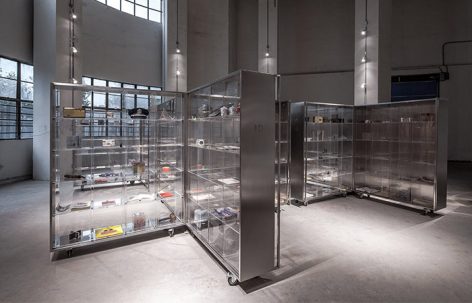
从2014年以来,LanD Studio发起了南京长江大桥记忆计划,对南京长江大桥这一历史地标和围绕着大桥的丰富记忆进行了收集、整理和研究。2017年,我们接受铁路部门委托对南京长江大桥南桥头堡进行设计,将其改造为一个当代的博物馆。同一时间,南京长江大桥记忆计划受邀参加2017上海城市空间艺术季(SUSAS)并在其一号筒仓内展出。如何设计一种真正呈现并重连记忆的形式?如何用一个形式将桥头堡和筒仓这两个环境迥异的展场连接起来?“大桥云记忆”装置是对此的回应。
In 2014, LanD Studio initiated the Memory Project of the Nanjing Yangtze River Bridge, and started the collection, archiving and research of the abundant memories around the historical landmark of the Nanjing Yangtze River Bridge (henceforth the Bridge), a national symbol of China the 1960s and 1970s. In 2017, we were commissioned by the railway bureau to renovate the bridge towers (an iconic architectural monument) into a contemporary museum. At the same time, the Memory Project of the Nanjing Yangtze River Bridge was invited to participate in the Shanghai Urban Space Art Season (SUSAS) 2017. How to design a form that presents, communicates and reconnects real memories? How to design a form that connects an exhibition room within the bridge towers with the gigantic space inside the silo? The ‘wiki-memory’ installation responds to the above questions.
▼“大桥云记忆”装置,wiki-memory installation
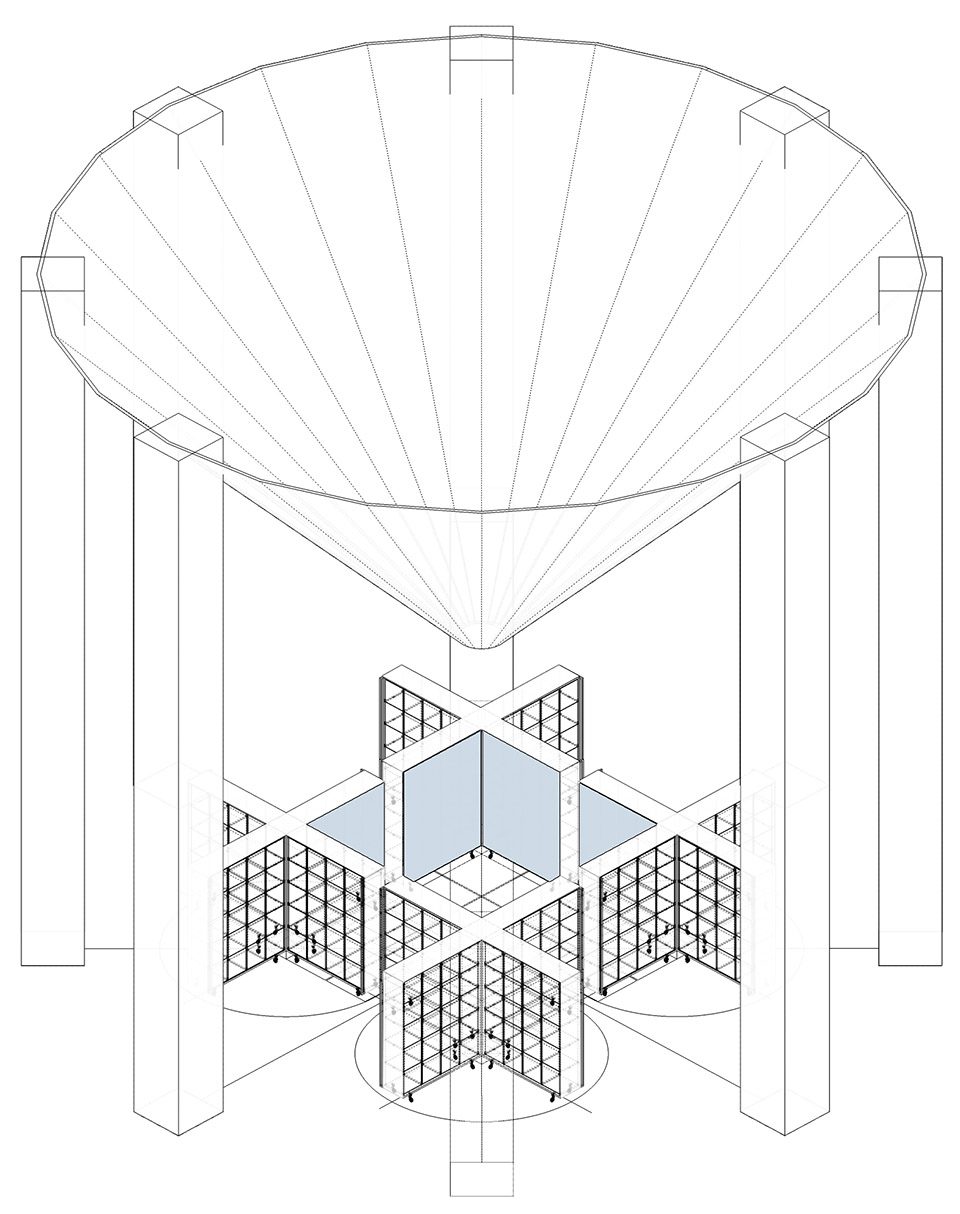
▼装置轴测,axonometric view of the installation
如何避免用象征性的建筑语言去自上而下地讲述记忆,而是凸显记忆的个体性和多样性?
How to avoid using symbolic architectural language to articulate memories in a top-down manner, but rather bring forth individuality and diversity of memories?
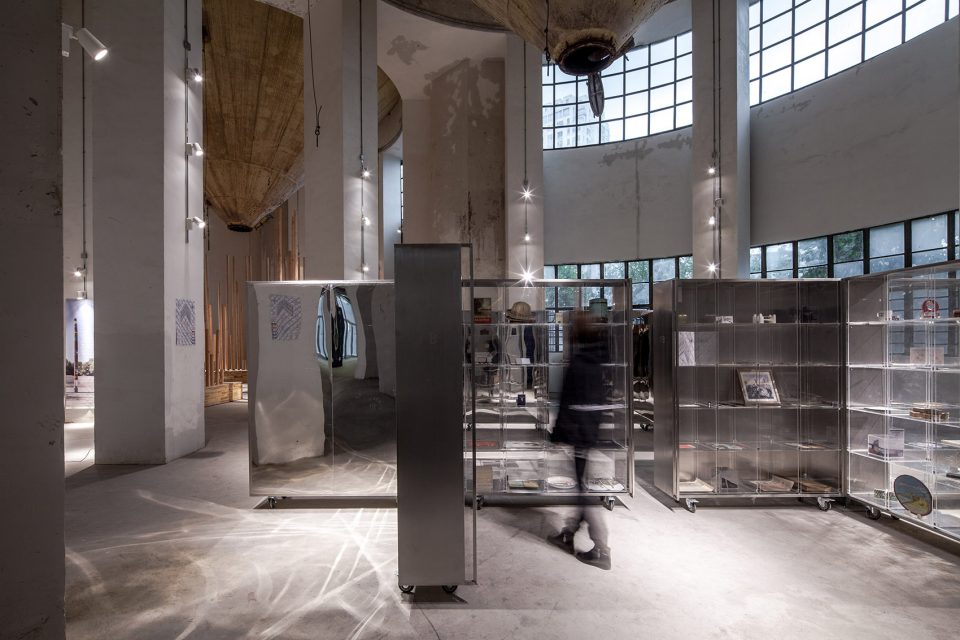
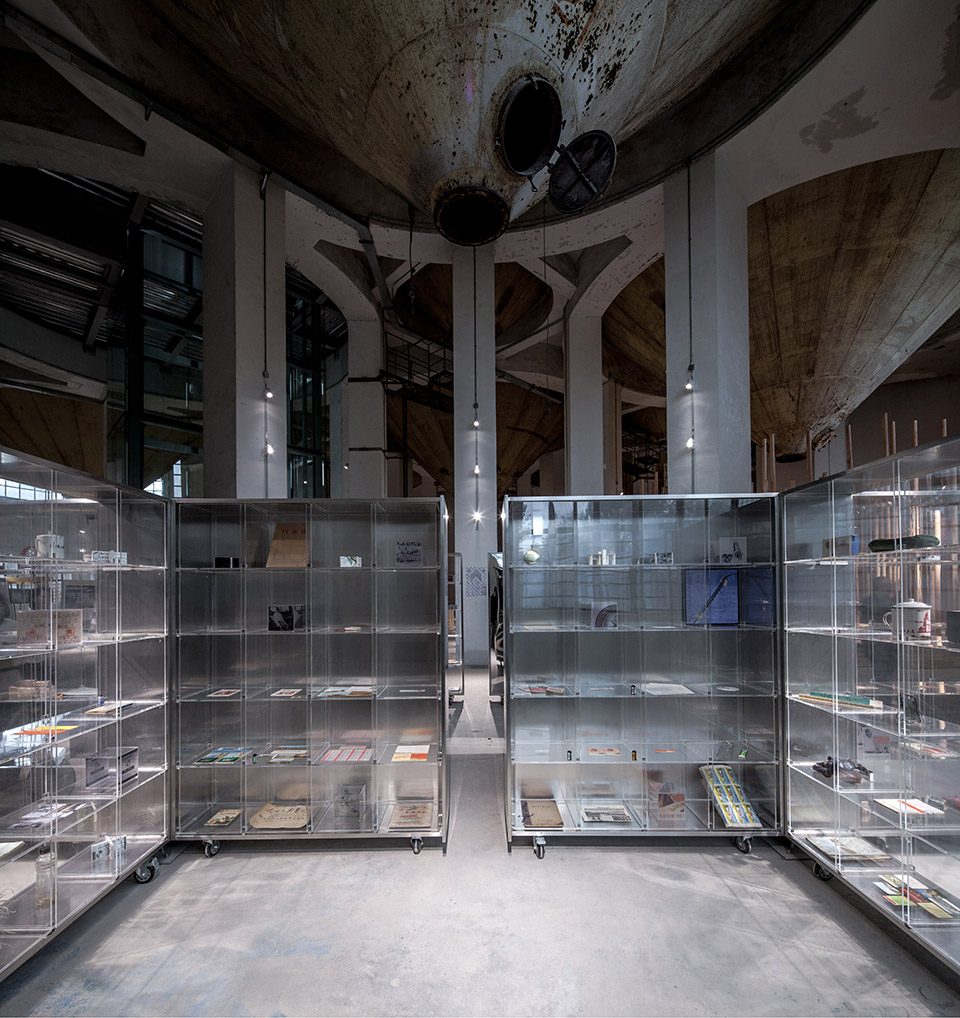
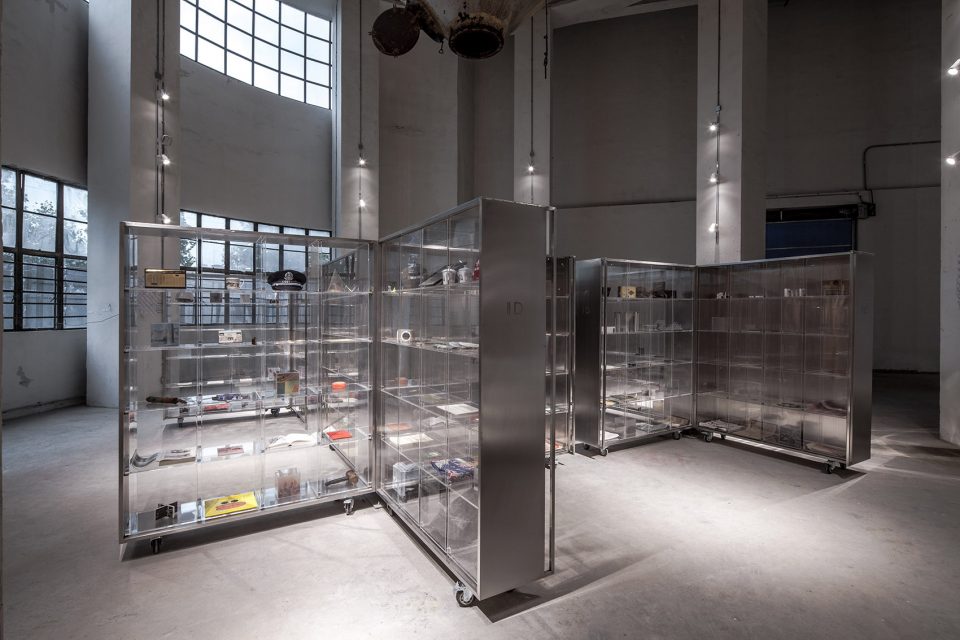
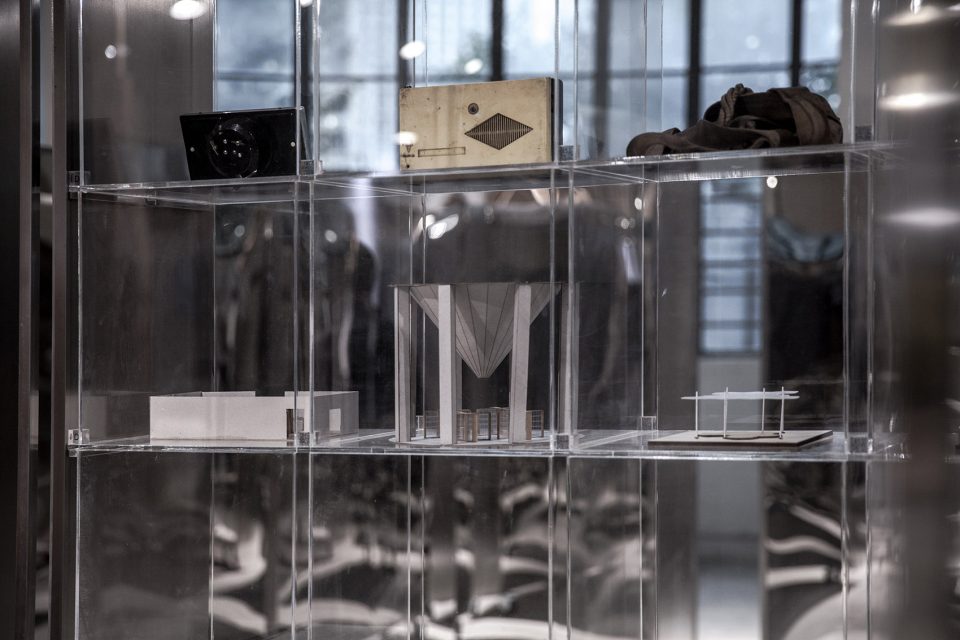
装置提供了320个互相分离的记忆盒子,每个盒子里都放了一件“记忆之物”。它们既有来自大桥设计和建设年代的,也有当代人对大桥的回忆和再创作。这些“记忆之物”的内容是多样的,既有实物和图片,也有影像和虚拟现实。因此“记忆之物”应当被理解为一个用于触发记忆的触媒,它们将丰富记忆与现场体验连接起来。而装置则是一种记忆的元形式(meta-form),它为人对记忆的参与提供平台或机制。装置的视觉形式变得次要,它应尽量不可见以减少对参观者对内容体验的干扰。这种“去形式化”使得设计的重点放在人对记忆的参与方式和记忆物之间的相互关联。“形式”这个概念也需要被重新理解,它是体验者在参与过程中逐渐在心里呈现出的心像。
This installation provides 320 separate transparent cubes, each containing an ‘object of memory’. These objects may be either from the period of design and construction of the bridge, or contemporary recollection and re-creation of it. These objects vary in form: they include artefacts and pictures, but also videos and VR. Therefore the ‘objects of memory’ should be understood as agents to trigger memories, which connect the abundant memories with the actual on-site experience of the installation. The installation itself becomes a meta-form of memory and provides a platform/mechanism for visitor’s participation in the memories. The expressive form of the installation is no longer prioritized. The installation should be as invisible as possible to avoid potential distraction to the visitor’s experience of the contents (not form). This attitude of ‘de-formalization’ shifts the focus of design to people’s ways of engagement in the memories as well as the inter-relationships between the memories. The very concept of ‘form’ itself needs reconsideration. It becomes more like a mental image gradually emerged during the visitor’s process of participation.
▼装置强调了“记忆之物”的个体性,the installation stresses the uniqueness of each ‘object of memory’
▼320个“记忆之物”的内容分布草案,draft distribution plan of 320 objects of memory
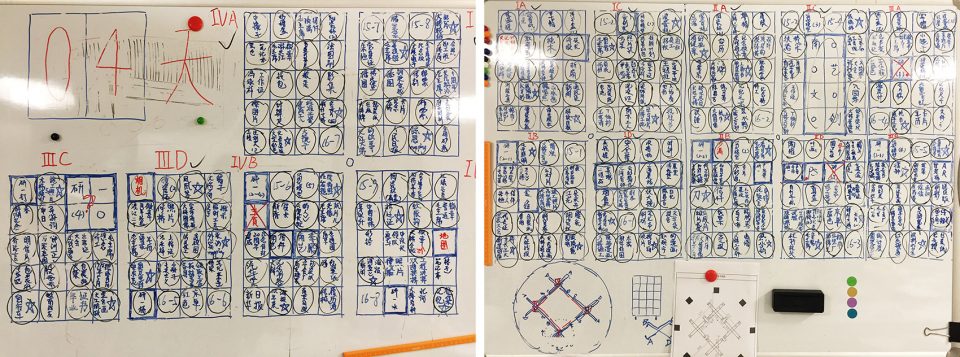
如何在记忆的碎片之间建立多元化且富有意义的叙事关系,从而诱发体验者的主动探索,进而形成他们对记忆的个人化理解?
How to establish diverse and meaningful narrative relationships between the pieces of memory in order to prompt the visitor’s exploration and further to formulate her/his own understanding of those memories?
每个盒子的左下角都有专属的索引编号和二维码,参观者可以通过扫描二维码去深度体验记忆在物质载体之外的丰富内涵;同时索引系统也使得体验者可以按照网页信息的指引反过来寻找具体的盒子。这种线上线下的交互形式使我们能够在记忆碎片和展览空间之间编织出更加微妙动人的关联。我们将记忆之间的潜藏叙事分为五类,即:时间性叙事、地理性叙事、主题性叙事、传记性叙事、互动性叙事。二维码指引着现场参观者顺着这些叙事线从一个盒子漫游到下一个盒子。
Each cube has its own customized index number and QR code. The visitor can scan the QR code to further explore the background stories and multimedia information beyond the actual agent. In the meantime, the index system allows the visitor to re-locate specific cube as s/he navigates the webpages. This form of interaction between online and offline information allows us to fabricate more intricate and subtle experience between the pieces of memory and the actual space of exhibition. We categorize the potential narratives between pieces of memory into five types: temporal narrative, geographical narrative, thematic narrative, biographical narrative and interactive narrative. The QR code will direct the visitor to navigate from one cube to another following various narrative threads.
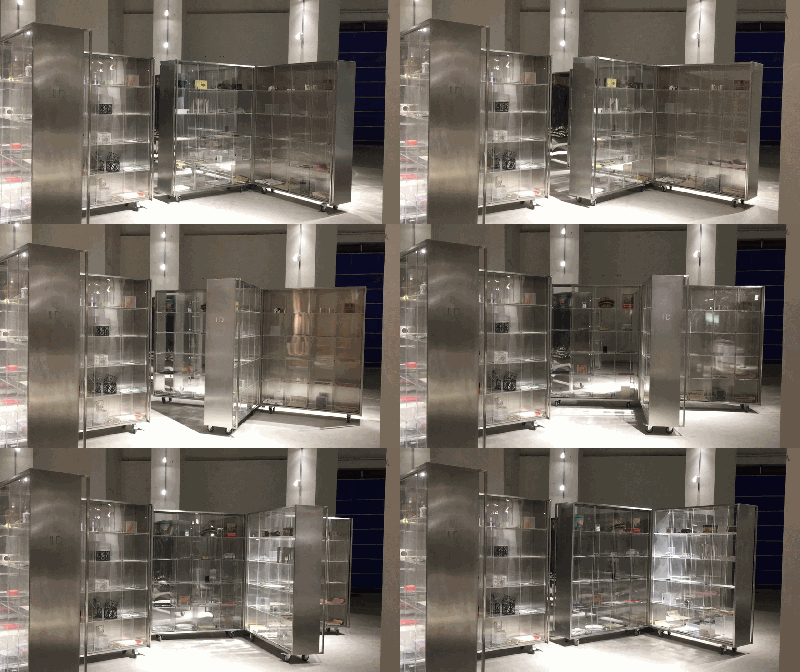
▼可转动的展架簇及其索引编码,a rotatable cluster of shelves and their index system
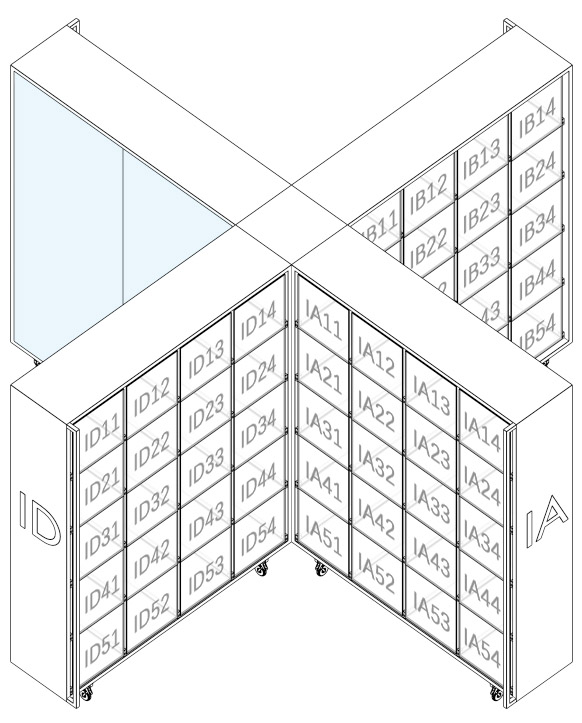
建筑形式在这里提供了一种连接索引系统和内容系统的空间秩序,它将展品视作记忆的实物媒介,由其进入背后数字化的记忆库漫游,再通过索引系统为自己感兴趣的记忆寻找相应的“物证”。我们借此提出了一种新的“记忆建筑”原型——现场的空间体验与在线的数字漫游彼此独立又互相指引,从而让体验者成为这一记忆景观中的真正主体。他不再是通过参观去接受给定的单一叙事,而是在漫游中创造属于其个人的独特记忆。
Here architectural form provides a spatial order that connects the index system and the system of contents. Architecture regards the objects on display as agent of memory, through which the visitor enters and explores the digitized landscape of memories, while the index system allows the visitor to find respective material ‘evidences’ for memories which s/he has found interesting during the navigation. Through this design, we would like to propose a new prototype of ‘memory architecture’, in which on-site spatial experience and online digital navigation are both independent and mutually indexed. It turns the visitor into spontaneous subject of a memory landscape. S/he is no longer the receiver of a singular given narrative, but rather a navigator who creates a distinctive memory out of her/his own trajectory of engagement.
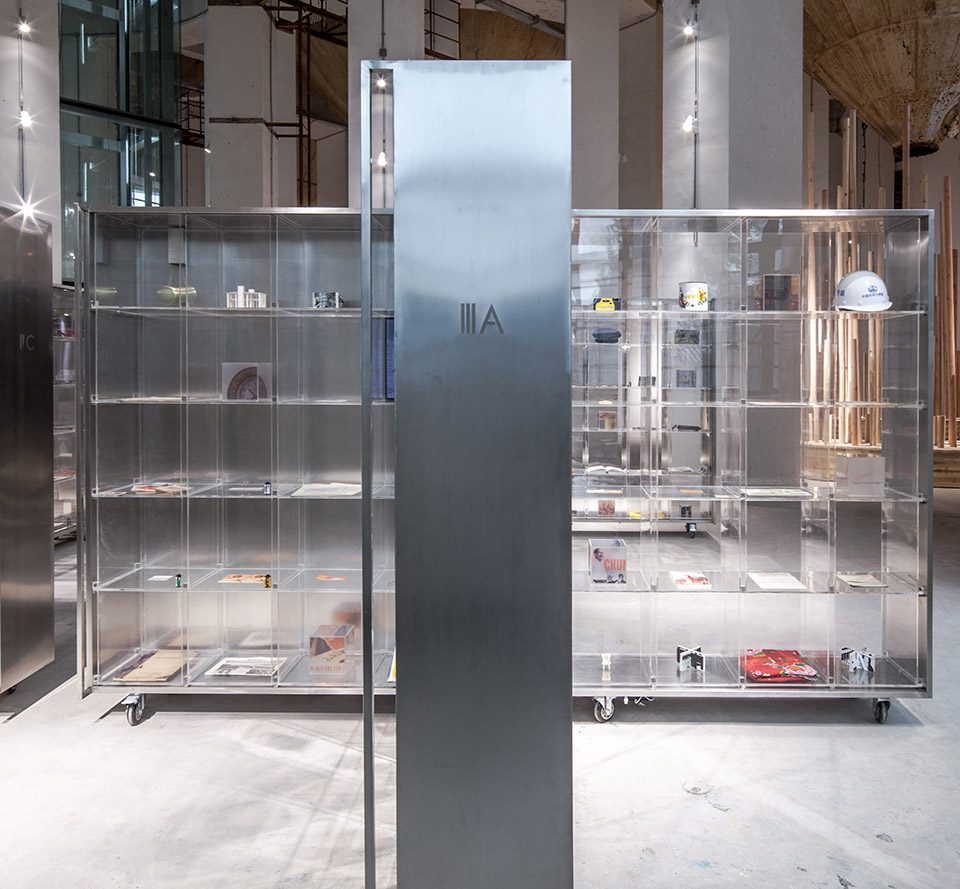
▼展架标识系统设计,VI design of the index
如何将SUSAS的临时展览与桥头堡博物馆的空间改造合二为一?
How to integrate the temporal exhibition in SUSAS’ silo and the permanent spatial design inside the museum of the bridge?
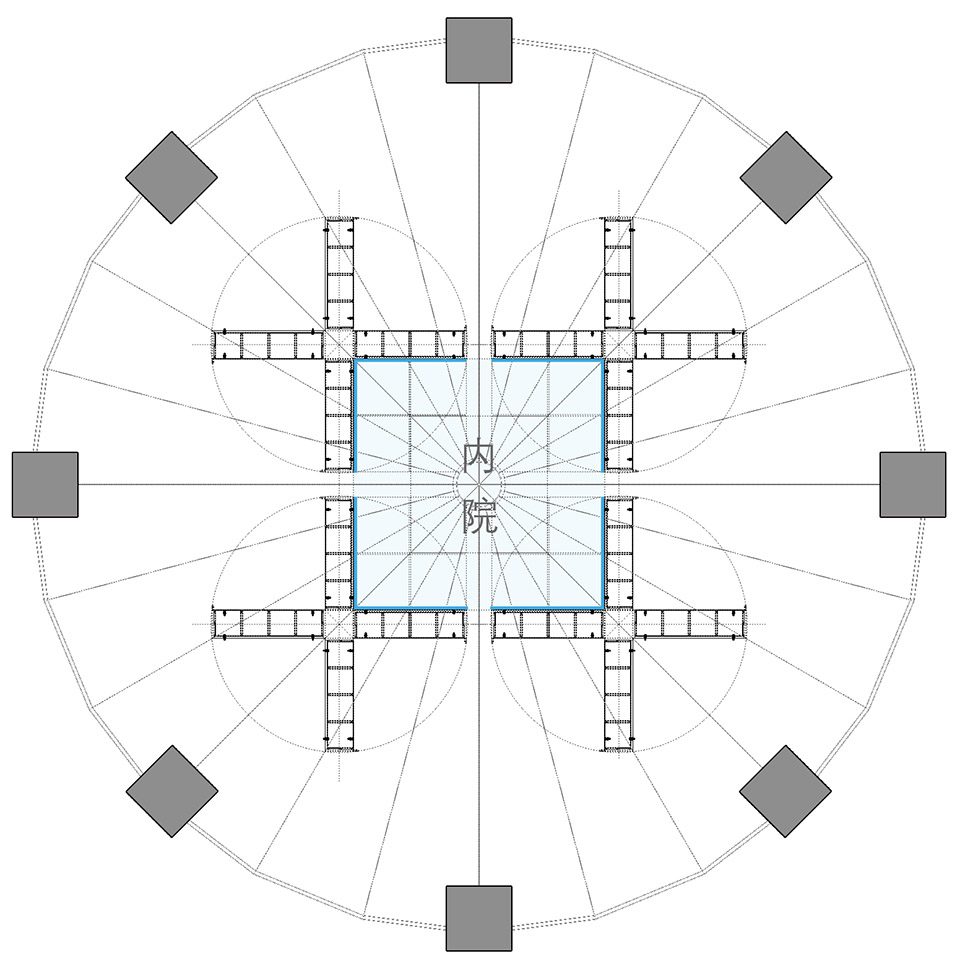
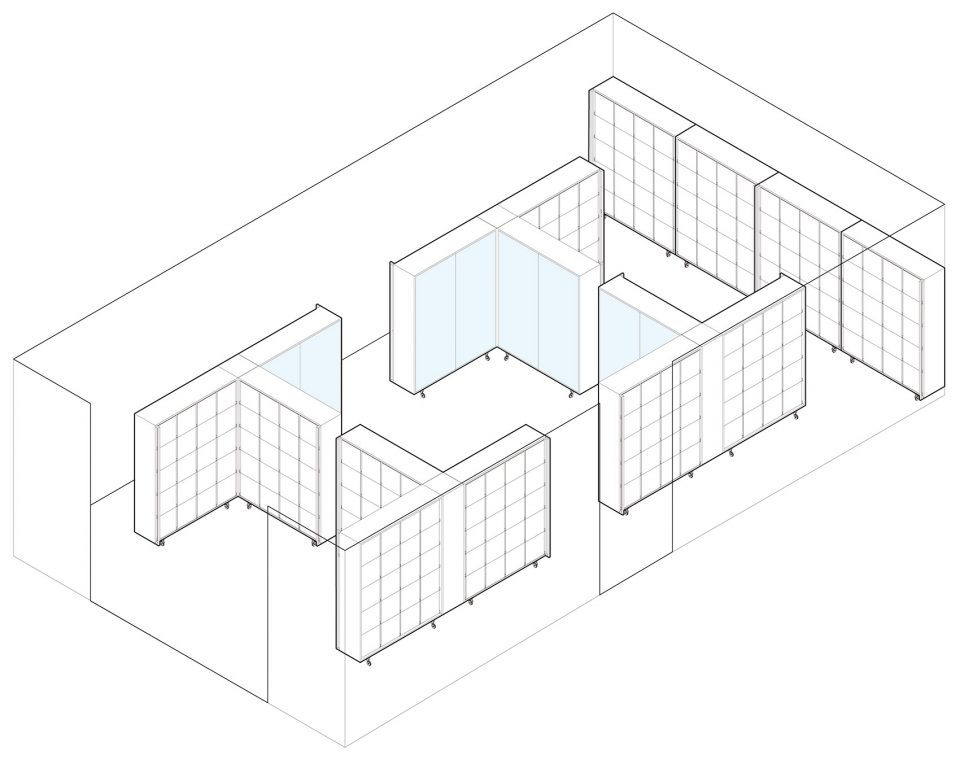
通过设计一个“可移动”装置,一方面可以避免浪费,另一方面它在不同地点之间的迁徙也使得记忆可以不断地附着和累积。为此我们设计了一个模块化的组合装置,它的预制单元可以在不同场合重新组装为不同形式,最终组成桥头堡内的一个永久展室。模块单元的尺度因此由桥头堡博物馆内展室的尺寸决定。展柜按簇进行组装,并且可以成簇旋转。为了增强现场的空间感,且不干扰对记忆盒子的体验,我们在展柜的背面使用了镜面不锈钢材料。四组展柜的背面可以围合成一个供人沉思的内向院落,与外侧透明、互动的体验形成对比。在充分体验了记忆漫游之后,你可以推动沉重的展柜,进入背后隐藏的冥想空间。
By designing a ‘portable’ installation, this project not only reduces on-site labor work and potential wastes, but also allows new memories to attach onto it and accumulate as the installation migrates from one place to another. For this purpose, we designed a modular installation, which can be recomposed into different forms in different places, before finally organized into a permanent exhibition room inside the bridge towers. The dimensions of the prefabricated units are defined by the size of the final exhibition room. The selves are assembled into clusters and each cluster of selves can rotate around a central axis. In order to enhance the actual spatial experience of the installation without disturbing the reading experience of individual cubes, we use polished stainless steel on the rear side of selves. When four clusters of selves were put together, they enclose an introversive courtyard, providing a reflective setting. It clearly contrasts with the transparent, interactive experience on the outside. After exploring the cubes and navigating the memories, one can push the heavy shelves and enters a hidden contemplative space lying behind.
▼SUSAS的“大桥云记忆”装置,wiki-memory installation at SUSAS
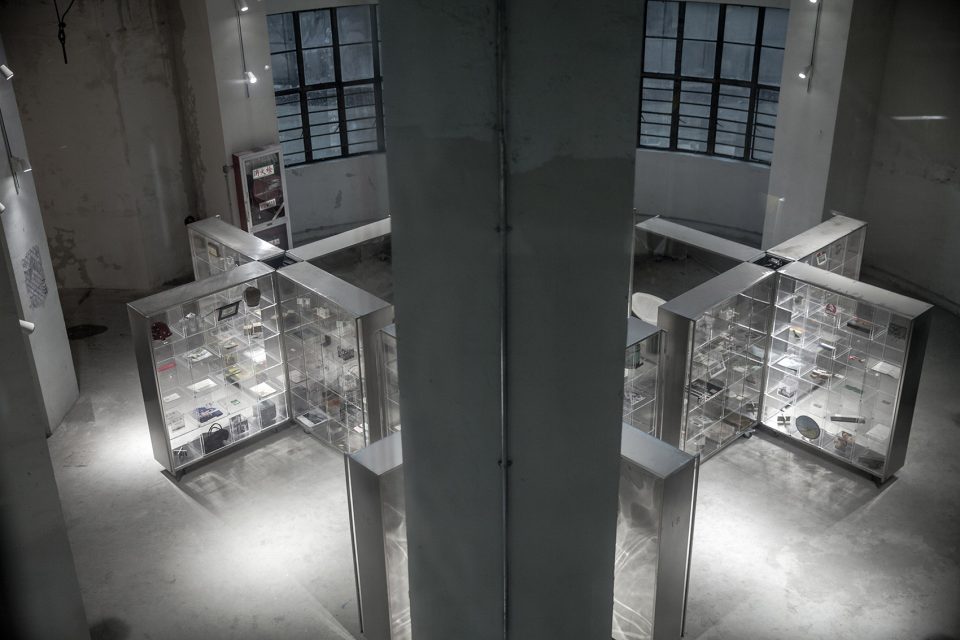
▼装置位于 SUSAS 筒仓一层的一角,the installation locates at a corner of the ground floor of SUSAS silo
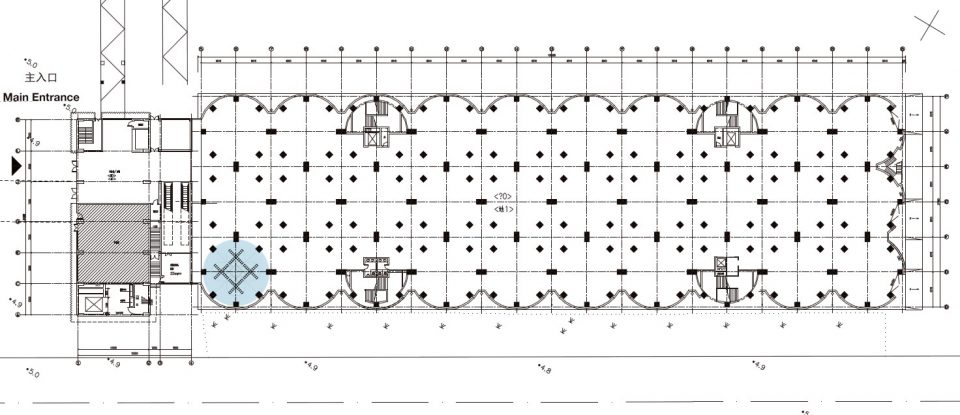
▼装置平面(左);冥想内院的效果图(右),installation plan (left); rendering of the inner courtyard of contemplation (right)
▼桥头堡展厅重组示意图,re-composition of the installation inside the bridge tower
项目概况
设计时间:2017
阶段:完成
地点:中国,上海,民生路3号,2017上海城市空间艺术季(SUSAS)一号筒仓
功能:展览空间
项目团队
装置设计:LanD Studio工作室
策展人:鲁安东
策展助理:桂喻、赵筱雅
装置设计:桂喻、朱凌峥、梅凯强、苏彤、袁希程
叙事设计:赵筱雅、蔡安妮、吴峥嵘、杨悦、黄楚如、王却奁、杜孟泽杉、王秋锐、陈辰、黄子恩、邱嘉玥、何劲雁
摄影:唐煜
展品捐赠人(按姓氏拼音顺序):常荣五、陈宗杰、冯永祥、顾桥生、马志方、钱学新、沈万华、王连、王世清、严尤金、杨洪建、钟训正、周璞
参展人(按姓氏拼音顺序):程惊宇、成乡、付伟佳、甘昊、顾方荣、韩旭、黄追日、季鹏、金鑫、李树、刘晨、刘信子、彭涛、孙冉、王克震、吴映月、肖卓赟、徐雅静
众筹及公益赞助:
本展览由上海华侨基金会、福美专项基金向社会发起“大桥记忆盒子”公益众筹活动,并得到了下列爱心企业的赞助:
母其弥娅传媒工作室、上海摘星堂广告有限公司、宁波中鑫建设集团、法国国际水秀有限公司(中国办事处)、上海颂唐房地产经纪有限公司、上海正家实业有限公司、上海伟龙企业有限公司、上海欧雅恩企家居有限公司、上海市徐汇区吉士餐厅
Information
Year: 2017
Status: Completed
Location: SUSAS, Silo No.1, 3 Minsheng Road, Shanghai, China
Typology: Spatial installation
Project Team
Installation design: LanD Studio
Curator: Andong Lu
Assistant Curator: Yu Gui, Xiaoya Zhao
Installation design group: Yu Gui, Lingzheng Zhu, Kaiqiang Mei, Tong Su, Xicheng Yuan.
Narrative design group: Xiaoya Zhao, Anni Cai, Zhengrong Wu, Yue Yang, Churu Huang, Quelian Wang, Mengzeshan Du, Qiurui Wang, Chen Chen, Zieng Huang, Jiayue Qiu, Jingyan He
Organizer of Crowd Funding: Fu Mei Fund, Shanghai Overseas Chinese Foundation
Photographer: Yu Tang
More: LanD Studio (联系方式:landstudio_media@163.com) 。更多关于他们:LanD Studio on gooood

“形式产生于人对记忆的参与和重连”vs文中强化表达的“去形式化”?没懂
无意义格物到极致就是这样。还有为什么相关人员这么多名字。
我没有很懂
自吹自擂
轴侧图 不应该只用于做柜子。。。
不就一柜子吗。。原来展品的学名叫 记忆之物 哈哈