感谢 2001 予gooood分享以下内容。更多关于他们,请至:2001 on gooood
Appreciation towards 2001 for providing the following description:
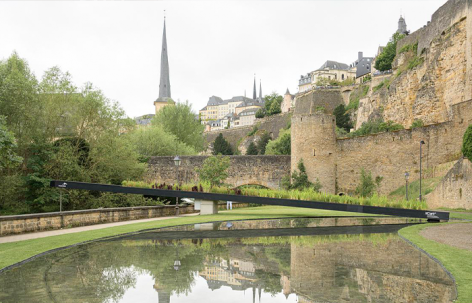
最初作为环绕卢森堡市绿带的区域战略构想,如今已具体化为一项自然水过滤装置,并在园艺展上展示。曾被视为一种限制性规划工具的绿带概念,正因应当代挑战而被重新诠释;其重心转向以共同规划、资源管理和生态系统韧性为基础的协作策略。
What began as a territorial strategy for a greenbelt encircling Luxembourg City materialized as a natural water filtration installation showcased at the Garden Exhibition. Once seen as a restrictive planning tool, the greenbelt concept is being reimagined for today’s challenges; shifting toward collaborative strategies rooted in shared planning, resource stewardship, and ecosystem resilience.
▼河岸生态装置,Riverside ecological installation © Ludmilla Cerveny
从自然汇水区与流域的视角来看,GRAND LUX呈现出一个完整连贯的生物区域;它以生态逻辑界定,直观易读,并反映了城市系统与自然系统之间深层的相互依存关系。这一视角指向一个由生态逻辑与合作机制共同塑造的未来大都市区域。
Viewed through the lens of natural catchments and watersheds, GRAND LUX emerges as a coherent bioregion; ecologically defined, intuitively legible, and reflective of the deep interdependence between urban and natural systems. It points to a future metropolitan region shaped by ecological logic and cooperation.
▼装置全景,Overall view of the installation © Ludmilla Cerveny
生物过滤
BIO FILTER
水论坛以 1:1 比例测试植物修复,探索基于植物的过滤系统在处理阿尔泽特河(Alzette River)水体中的潜力。阿尔泽特河是卢森堡主要水系之一。该装置由卢森堡大学植物修复专家Silvia Venditti博士协作开发,通过精心筛选的植物种类与基质,针对阿尔泽特河水中已识别的污染物进行过滤。在水资源管理部门的支持下,系统抽取5立方米河水进入装置,并持续监测过滤效果与植物生长情况,以收集数据并深化对这一过程的理解。
Water Forum tests phytoremediation at a 1:1 scale, exploring the potential of plant-based filtration to treat water from the Alzette River, one of Luxembourg’s main waterways. Developed in collaboration with Dr. Silvia Venditti, a phytoremediation specialist at the University of Luxembourg, the installation uses carefully selected plant species and substrates to target pollutants identified in the Alzette’s water. With support from the Administration de la Gestion de l’Eau, 5 cubic meters of river water are pumped into the system, where filtration performance and plant development are continuously monitored to collect data and refine understanding of the process.
▼装置鸟瞰,Installation aerial view © Ludmilla Cerveny
设计
DESIGN
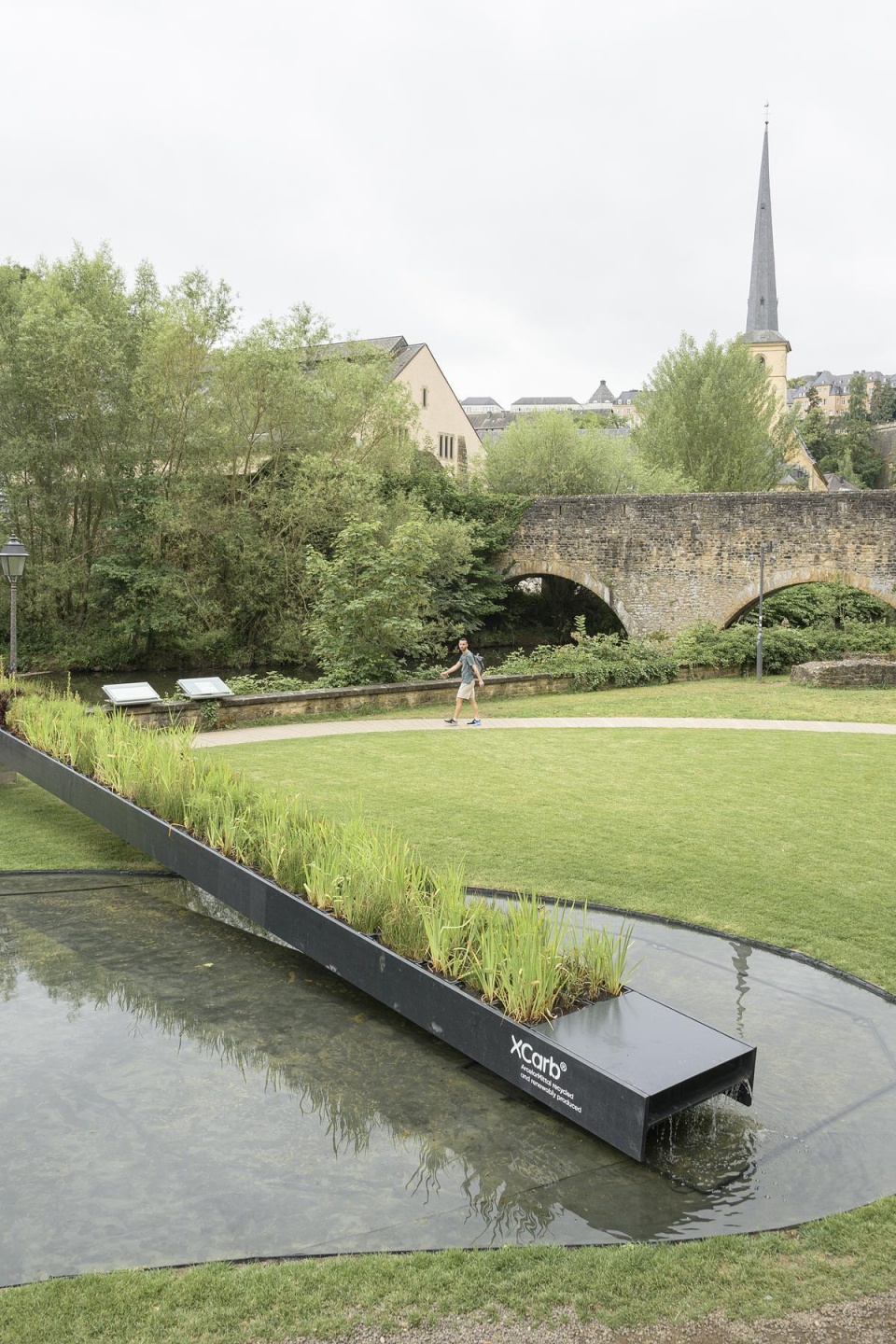
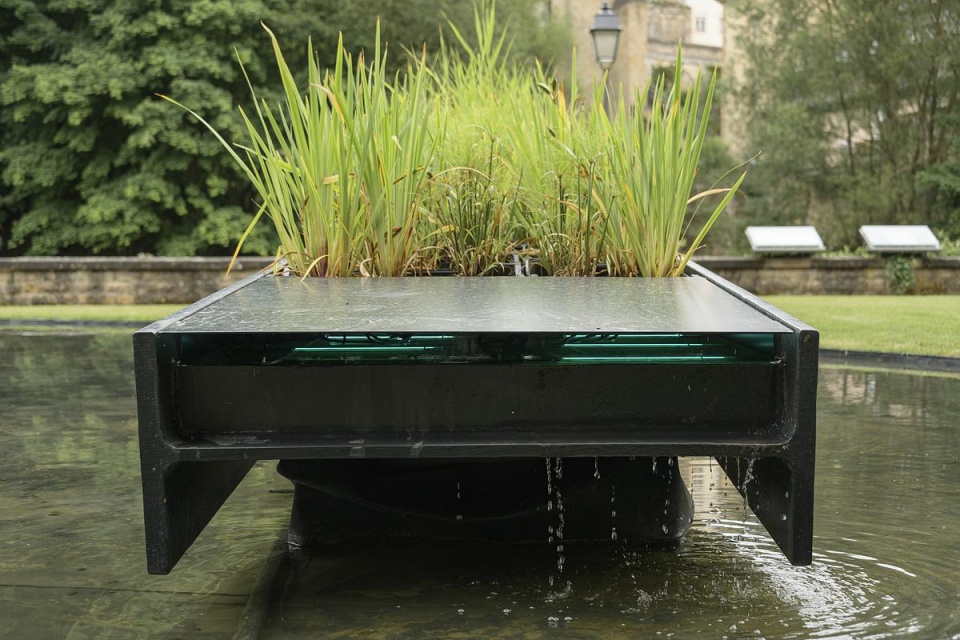
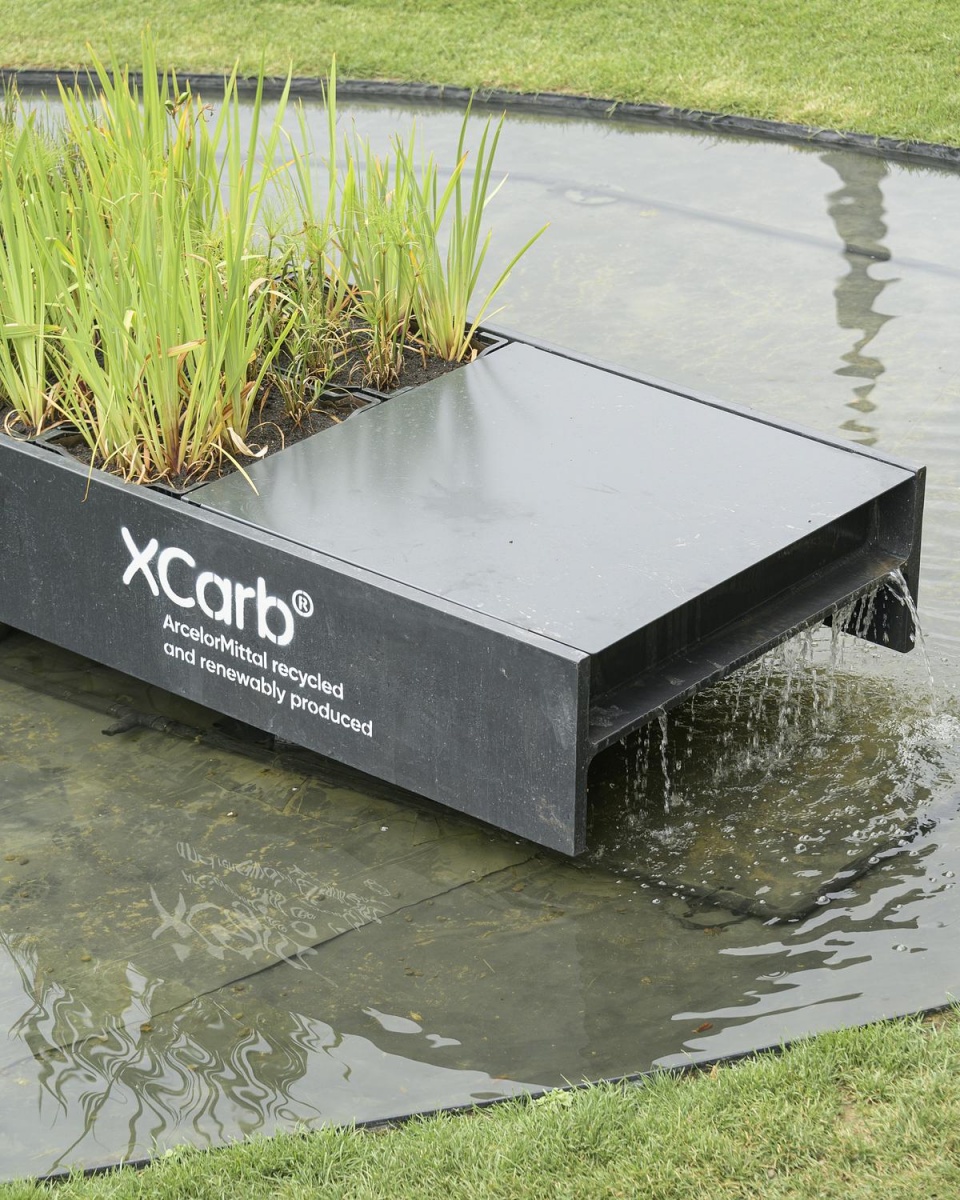
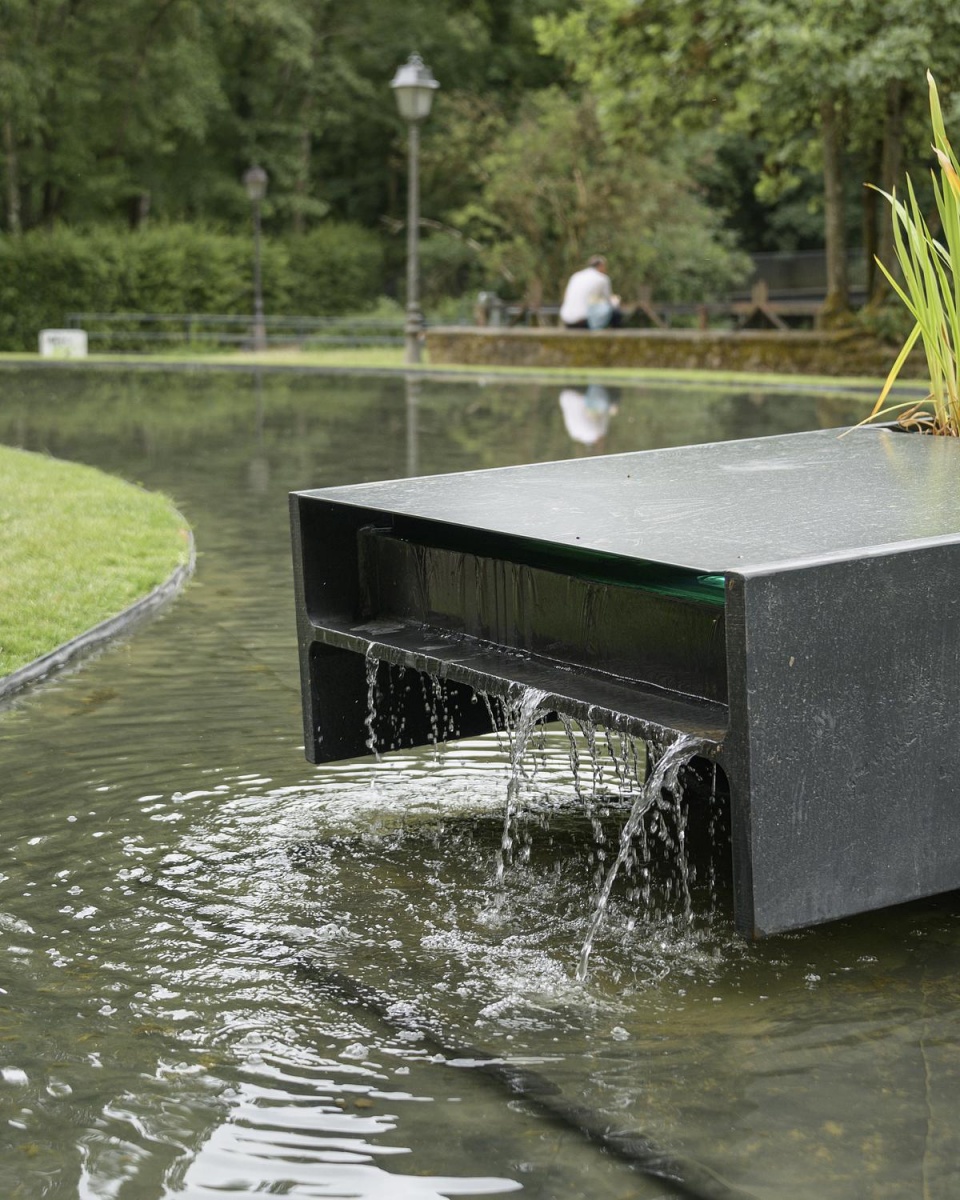
该装置体现了循环设计与最小干预的理念。ArcelorMittal提供了一根灰色钢梁作为结构主骨架,并以借用方式用于整个项目周期。钢梁未进行永久固定,从而使其在展览结束后能够完整回归工业循环体系。钢梁被设置为倾斜状态,使水能够缓慢渗透植物根系区与基质层,从而实现自然过滤。太阳能驱动的水泵将河水提升进入系统,紫外线则作为最终消毒环节,随后处理后的水被释放到浅水池中。
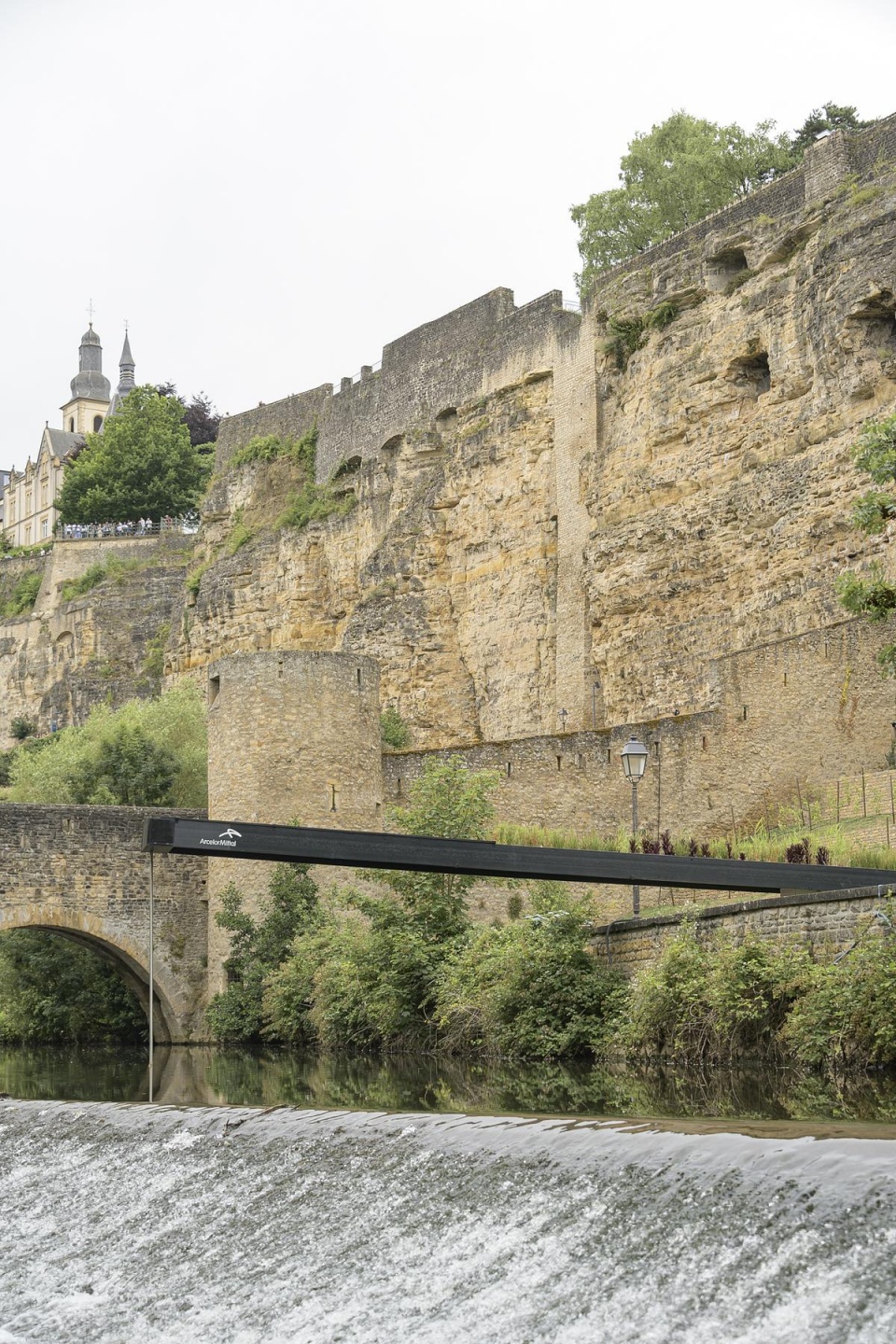
The installation reflects a commitment to circular design and minimal intervention. ArcelorMittal contributed a single Grey Beam—used as the structural backbone—on loan for the duration of the project. It is placed without permanent fixing, allowing for full reintegration into the industrial cycle post-exhibition. The beam is inclined to enable slow water percolation through the plant root zone and substrate, allowing for natural filtration. A solar-powered pump lifts water from the river, and UV light provides a final disinfection stage before the treated water is released into a shallow pond.
▼倾斜钢梁结构,Inclined steel beam structure © Ludmilla Cerveny
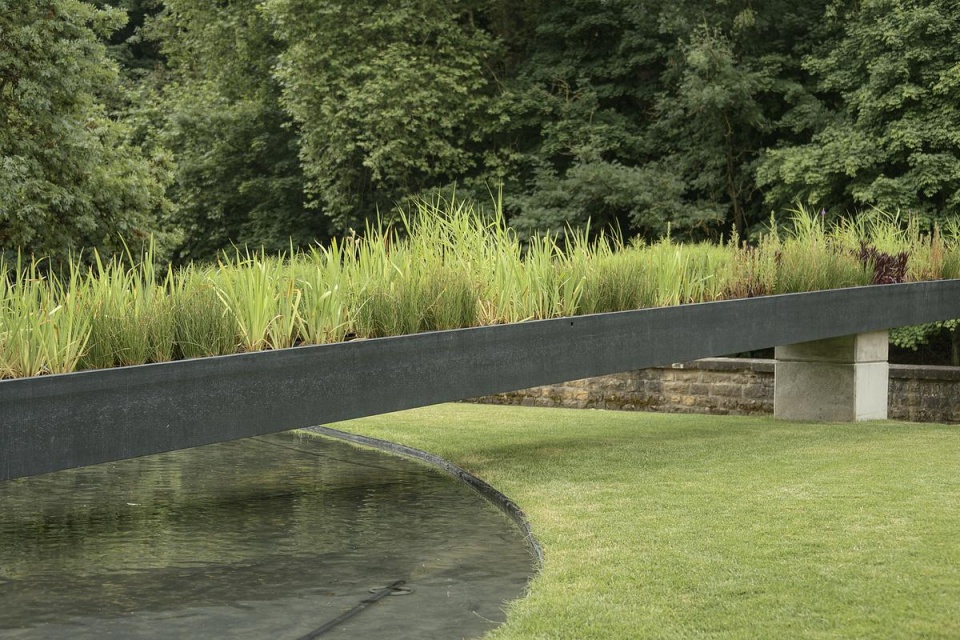
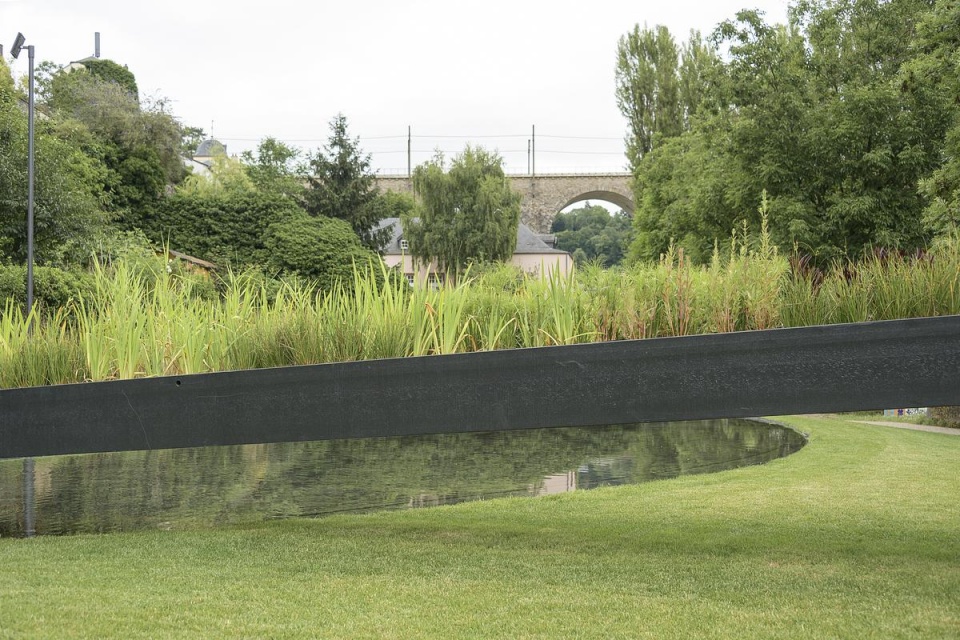
▼植物净化模块,Phytoremediation module © Ludmilla Cerveny
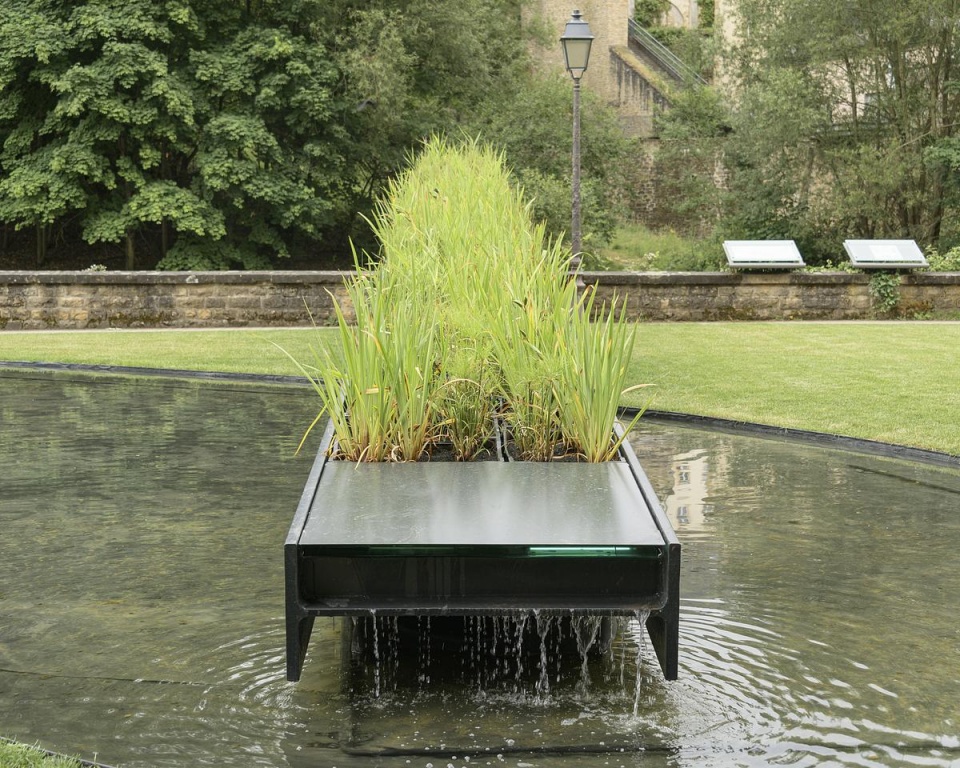
▼植物净化模块近景,Phytoremediation module close view © Ludmilla Cerveny
镜像与寓意
MIRROR & MESSAGE
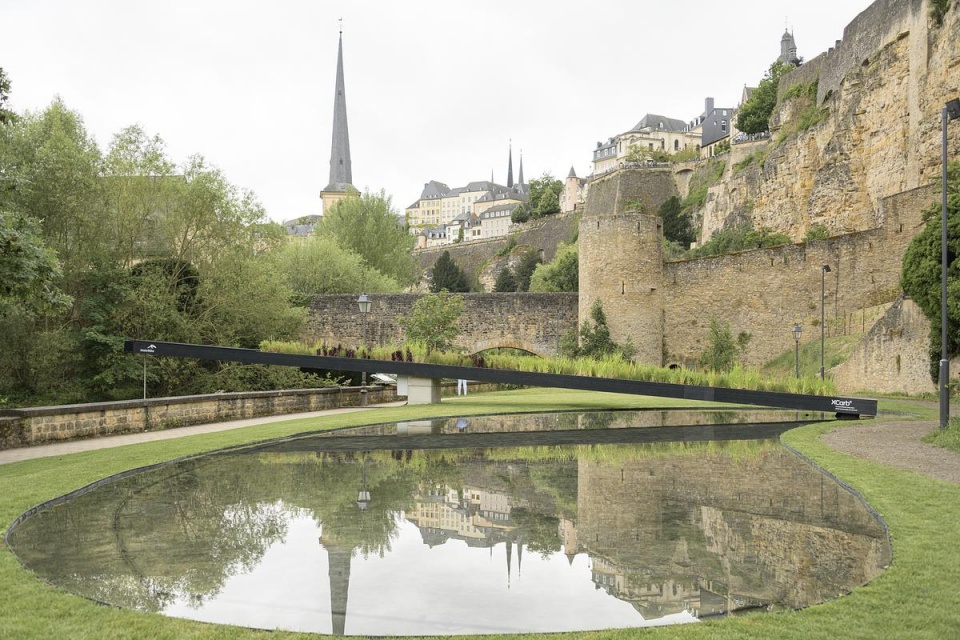
这片浅水池映照出城市以及其历史悠久、庄重而富有景致的堡垒基础设施形象:它象征性地提醒人们,修复河流、守护最重要的资源之一,需要持续的努力与承诺。
This pond reflects the image of the city and its historic, austere yet picturesque, fortress infrastructure: a symbolic reminder of the effort and commitment required to restore our rivers and safeguard one of our most essential resources.
▼装置与河流,Installation and river © Ludmilla Cerveny
Team:
2001 lu (architecture)
https://2001.lu
LOLA nl (landscaping)
https://lola.land
51N4E be (territorial)
https://51n4e.com
Dr Venditti (phytoremediation)
https://www.uni.lu/fstm-en/people/silvia-venditti/
Project size: 500 m2
Site size: 1000 m2
Completion date: 2025
Architect: 2001 TBSI
Photographers: Ludmilla Cerveny, Ludmilla Cerveny
Source: BowerBird
More: 2001,更多关于:2001 on gooood


发表评论
你需要先 才能发表评论
社交登录