非常感谢 STRESSTEST Team 予gooood分享以下内容。
Appreciation towards STRESSTEST Team for providing the following description:
行动刻不容缓!“STRESSTEST(压力测试)”是德国于第19届威尼斯国际建筑双年展的参展作品。该展由Nicola Borgmann、Elisabeth Endres、Gabriele G. Kiefer 和Daniele Santucci共同策展,直面全球变暖对城市生活所造成的剧烈影响。
The need for action is urgent! STRESSTEST is the German contribution to the 19th International Architecture Exhibition – La Biennale di Venezia. Curated by Nicola Borgmann, Elisabeth Endres, Gabriele G. Kiefer and Daniele Santucci, it illustrates the dramatic impacts of global warming on urban life.
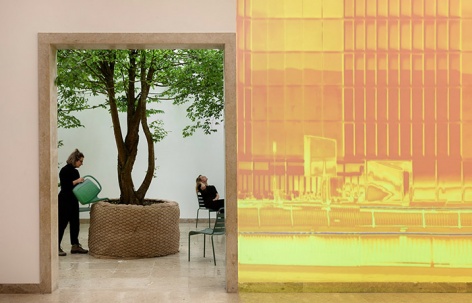
▼展馆入口,entrance of the pavilion ©Patricia Parinejad
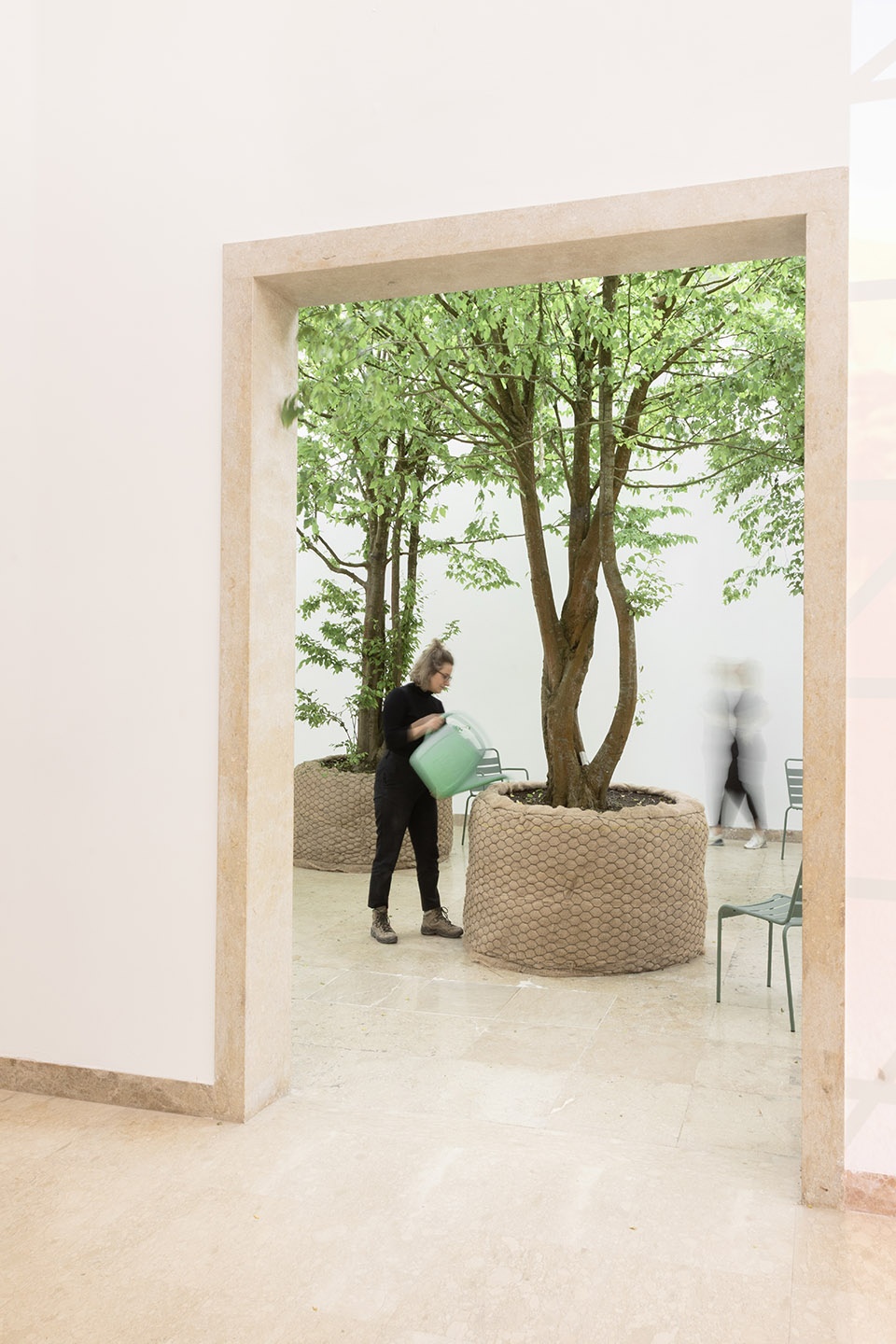
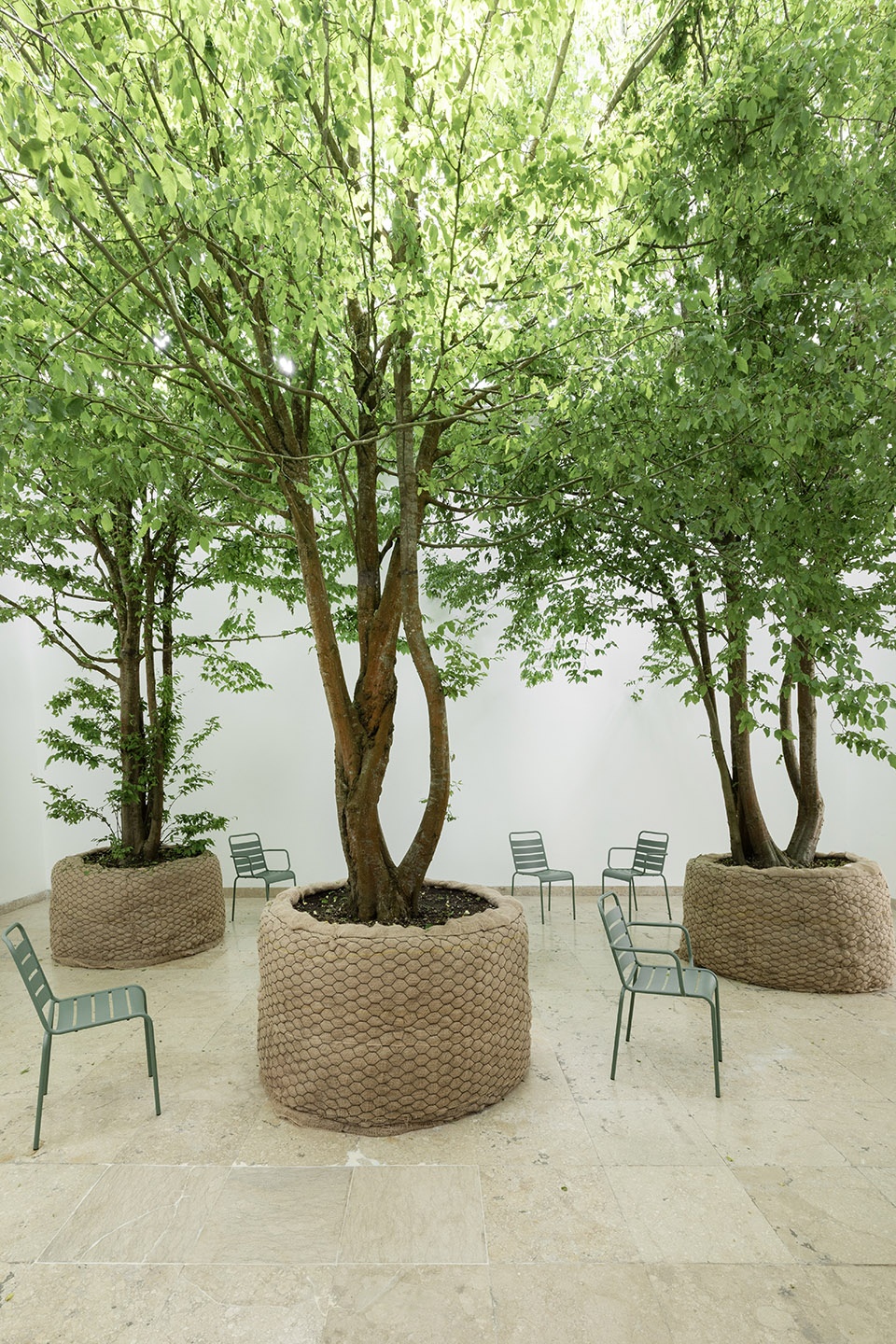
▼内部庭院,interior courtyard ©Josef Grillmeier
暴雨与洪水、热浪与干旱——气候变化在全球范围内以气温升高、极端天气事件及海平面上升等形式表现出来,其对地方城市层面的冲击尤为直接:城市空间正面临热应激的严峻考验。城市中被硬化、无荫的地面和过热的建筑体形成了热岛效应,即使在夜间也难以降温恢复。曾被视为庇护所、进步象征与交往场所的城市,如今却成为气候危机的灼热焦点。未来不远的某一天,欧洲的部分城市也将面临气温飙升至人类、动物、植物和基础设施难以承受的水平。这不仅威胁到城市的社会凝聚力与生产力,更危及居民的健康与生存。目前,城市人口已面临脱水与心血管疾病的高风险,因高温致死的人数持续攀升。在这种情况下,我们迫切需要一种具有韧性、负责任且整体性的城市发展策略——因为如果不采取有效对策,未来几十年内某些城市将变得不再适宜居住。
Heavy rains and floods, heat waves and droughts – while climate change is seen all over the world in increasing temperatures, extreme weather events and rising sea levels, its impacts at the local city level are directly felt: urban spaces are suffering from heat stress. Sealed shadeless surfaces and overheated building masses create heat islands that cannot cool down and regenerate even at night. Cities, once places of protection, progress and encounter, have become the burning focal points of the climate crisis. In the not-too-distant future, some European cities, too, will see temperatures rise to levels that people, animals, plants and infrastructure will barely be able to tolerate. This threatens not only the social cohesion and productivity of the city, but also the health and survival of its inhabitants. Today, urban populations are already exposed to increased risks of dehydration and cardiovascular disease; the number of heat deaths is on the rise. It is a situation that desperately calls for resilient, responsible and holistic urban development – because, absent effective countermeasures, some cities will be rendered uninhabitable in just a few decades.
▼庭院,courtyard ©Patricia Parinejad
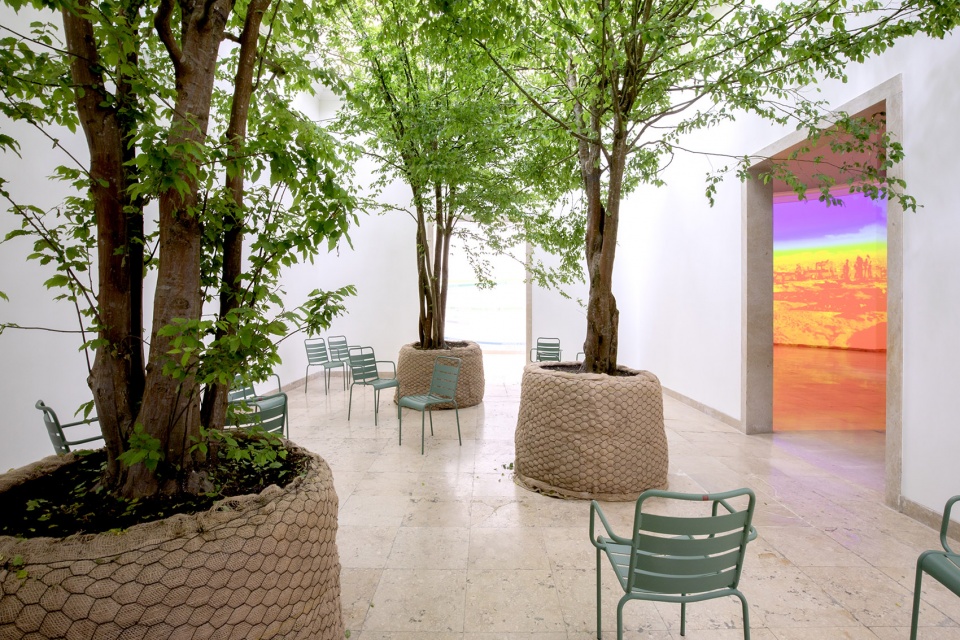
德国馆以这一具体的威胁为出发点。“STRESSTEST” 将未来的城市气候现实转化为可触可感的身心体验,强调建筑与景观设计不仅可以,而且必须推动气候友好型城市的构建。
The German Biennale entry takes this concrete threat as its starting point. The STRESSTEST exhibit turns the future reality of the urban climate into a physical and psychological experience and shows that architecture and landscape planning not only can but must create climate-friendly cities.
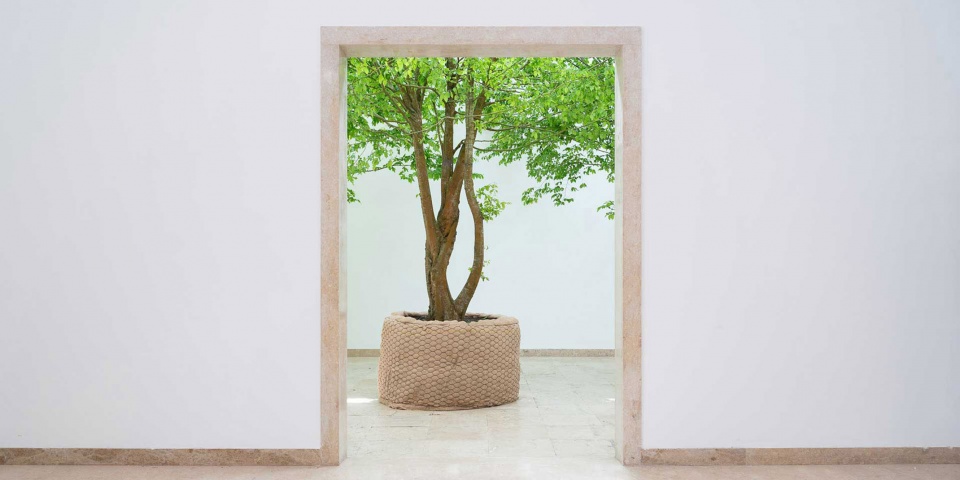
▼展馆入口,pavilion entrance ©Josef Grillmeier
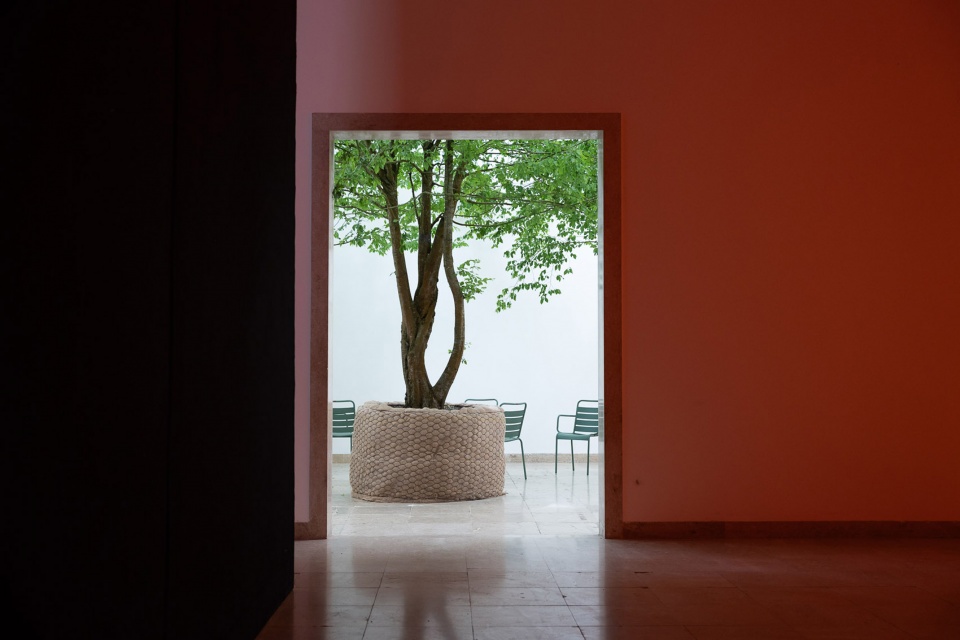
▼展馆入口,pavilion entrance ©Patricia Parinejad
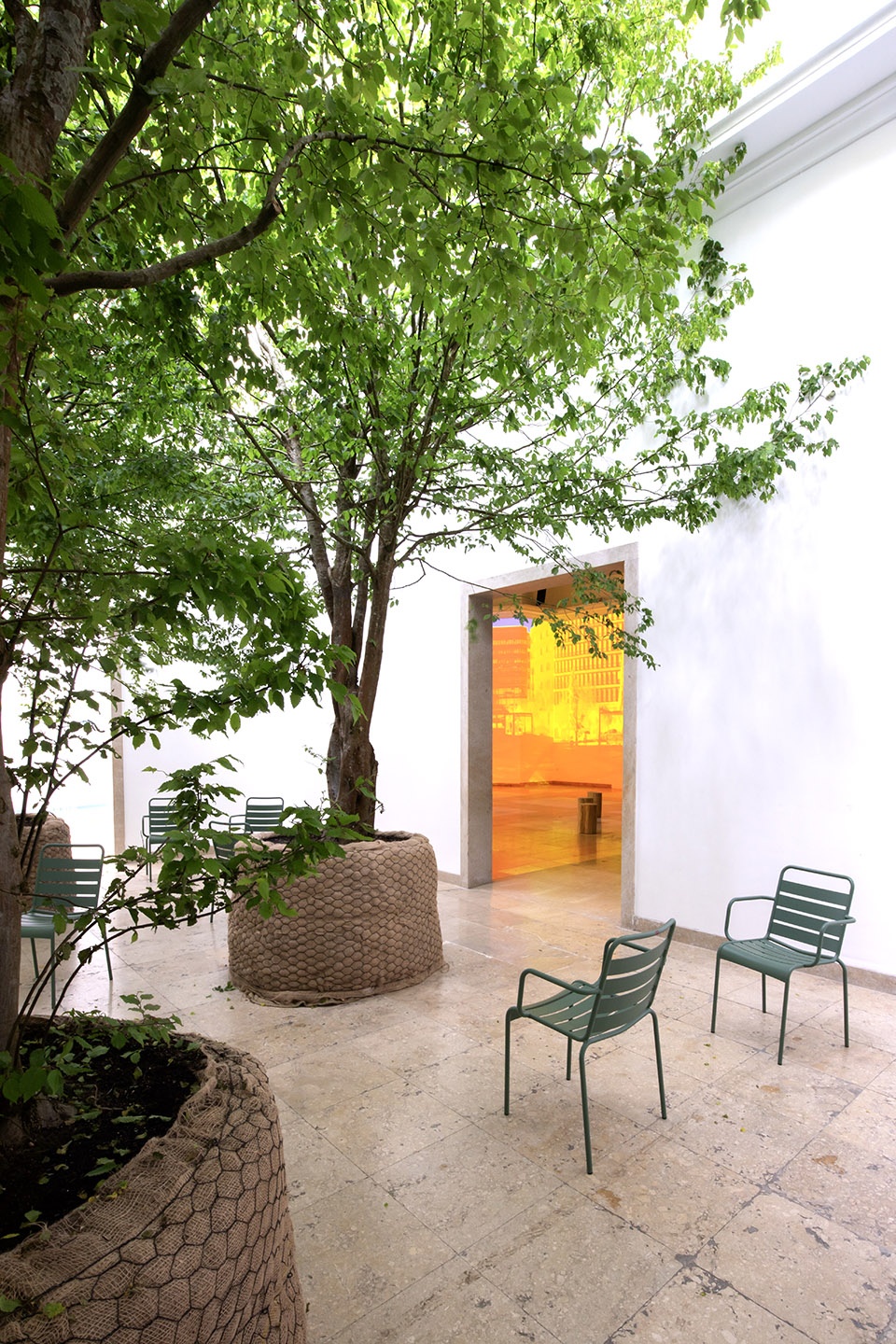
展览设计
Exhibit Design
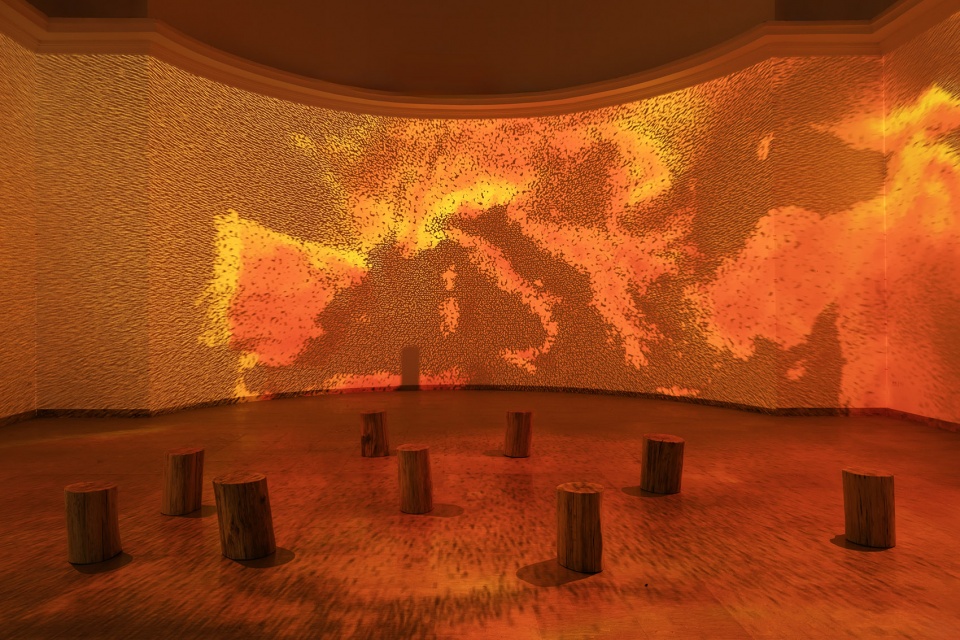
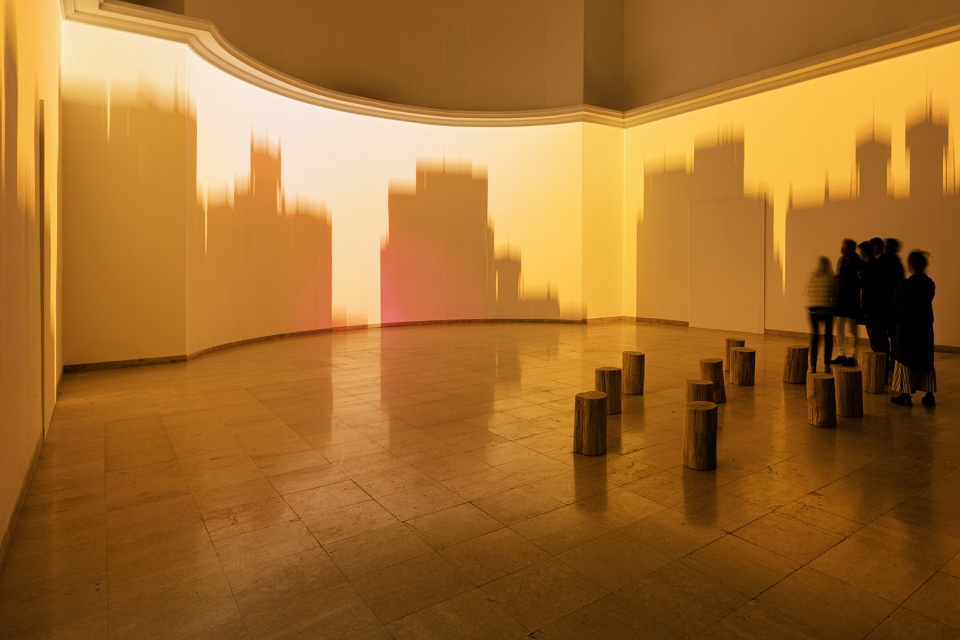
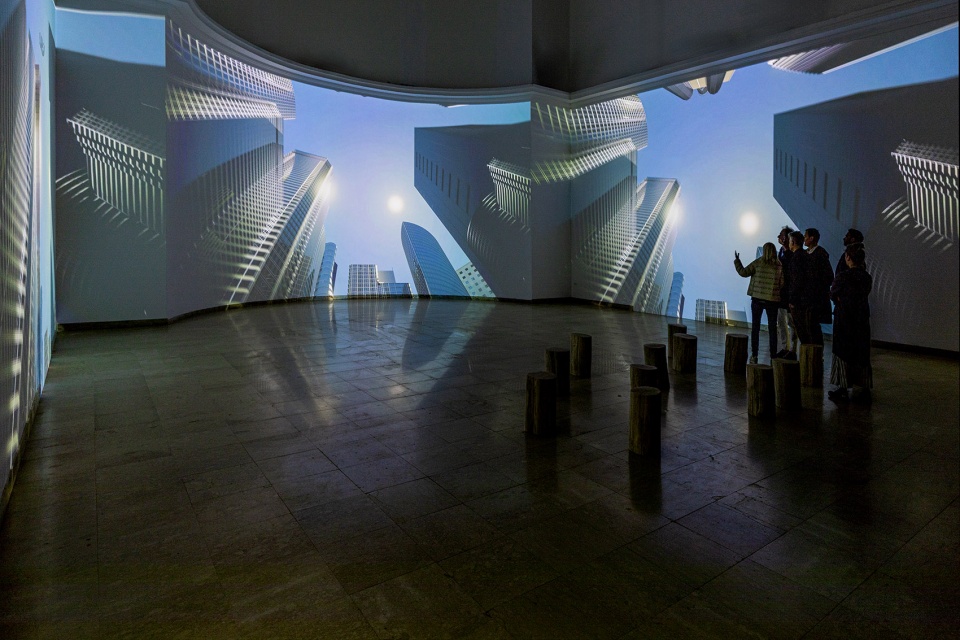
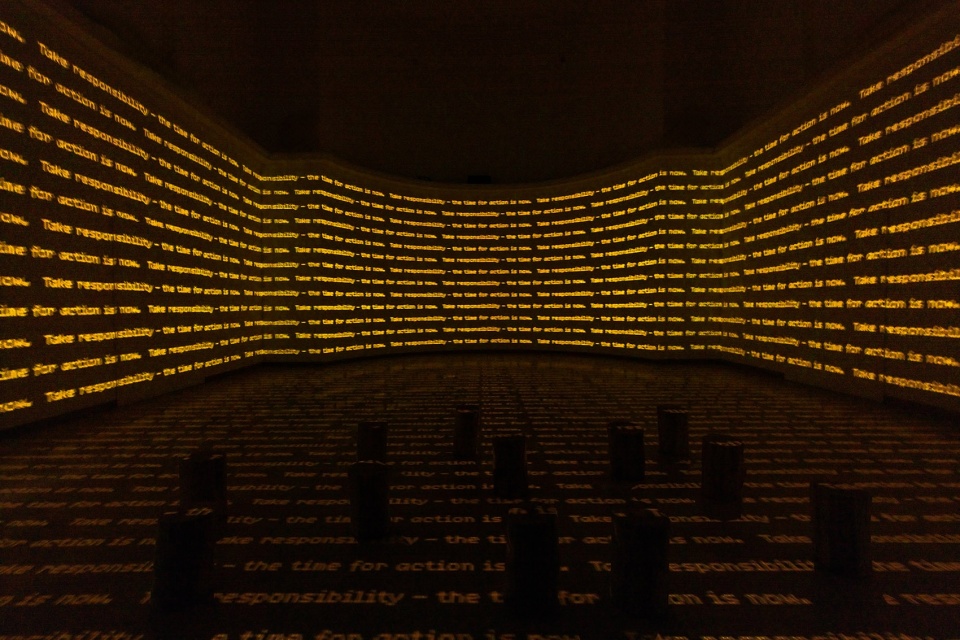
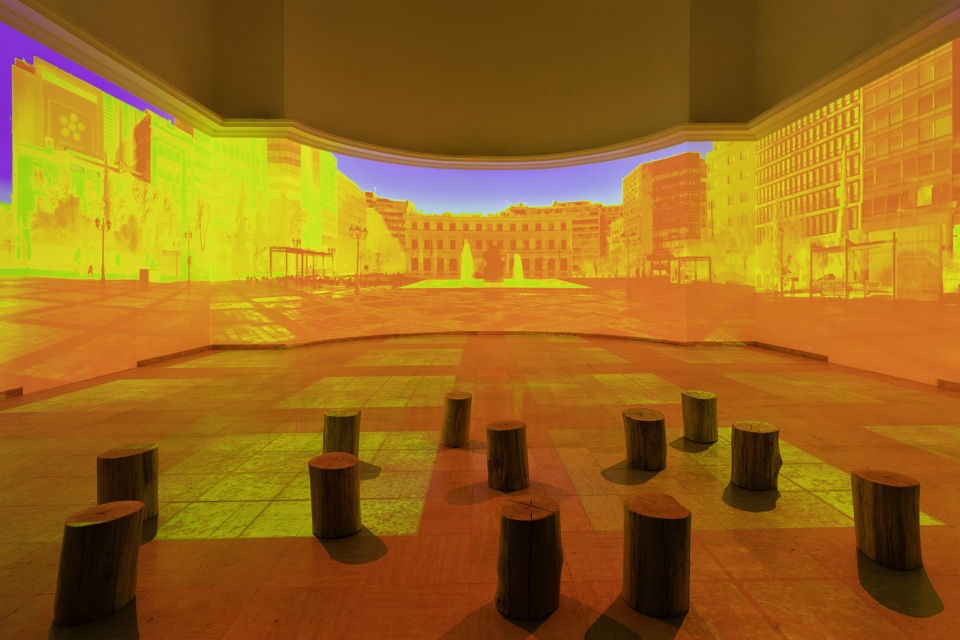
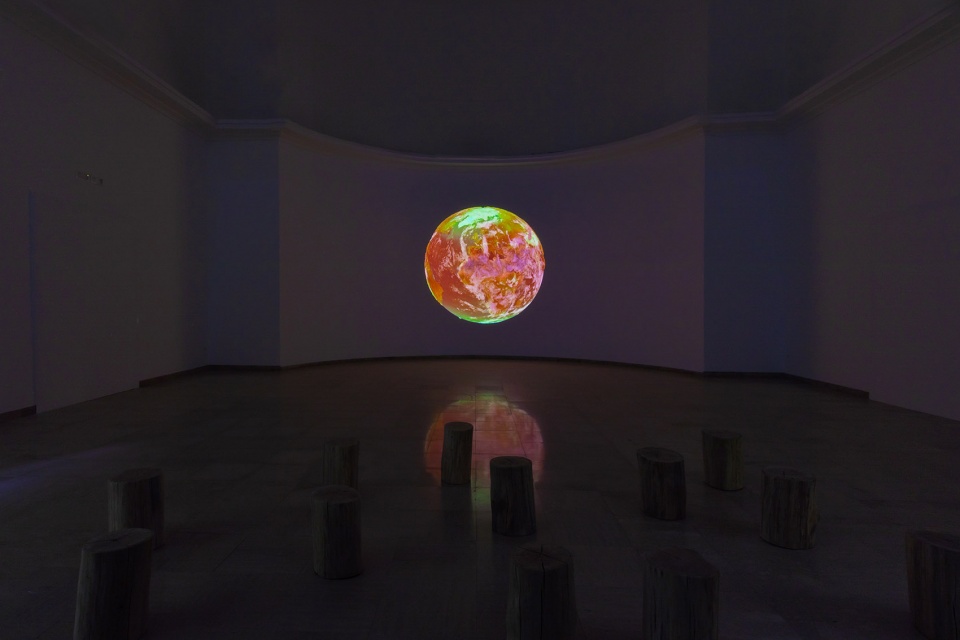
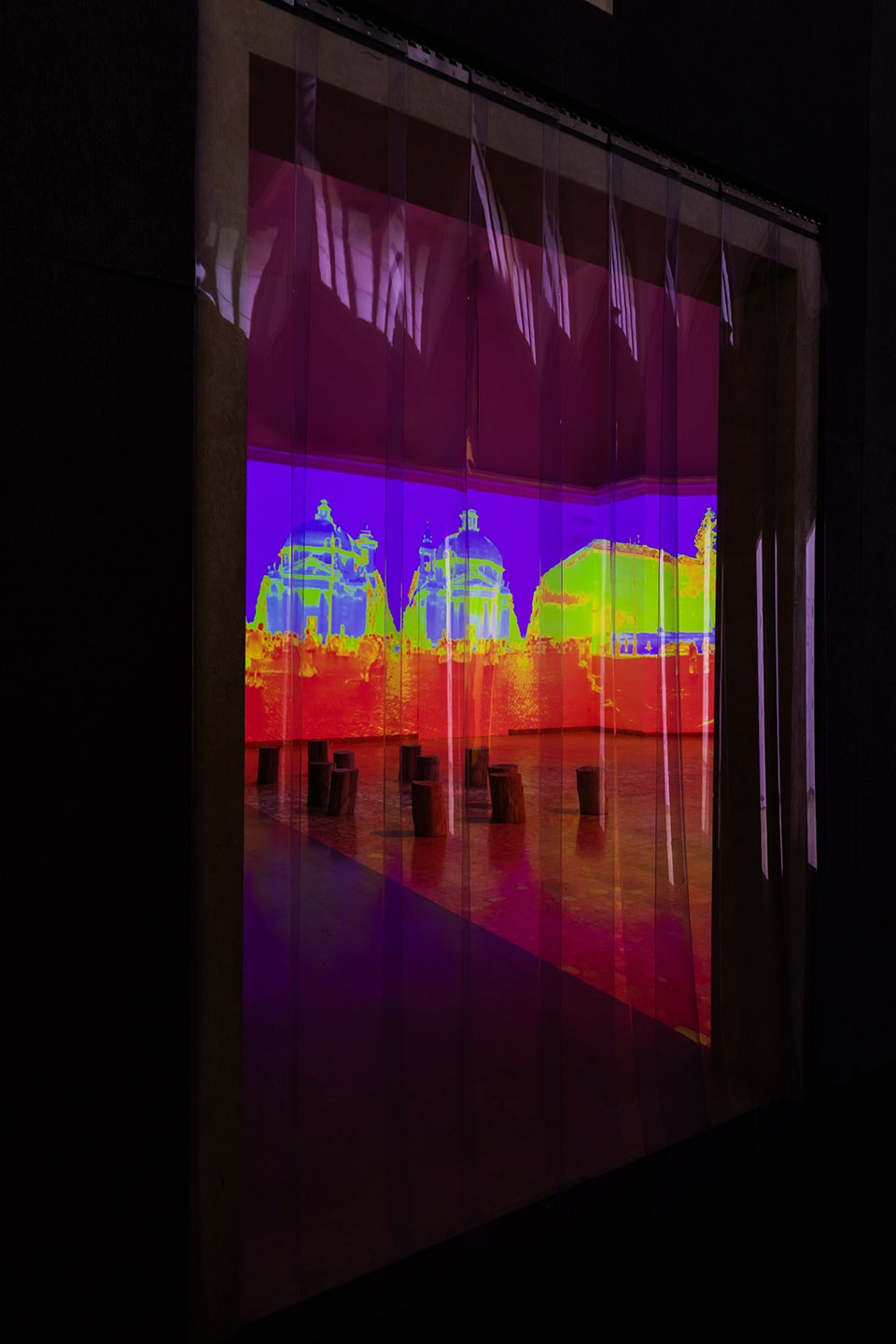
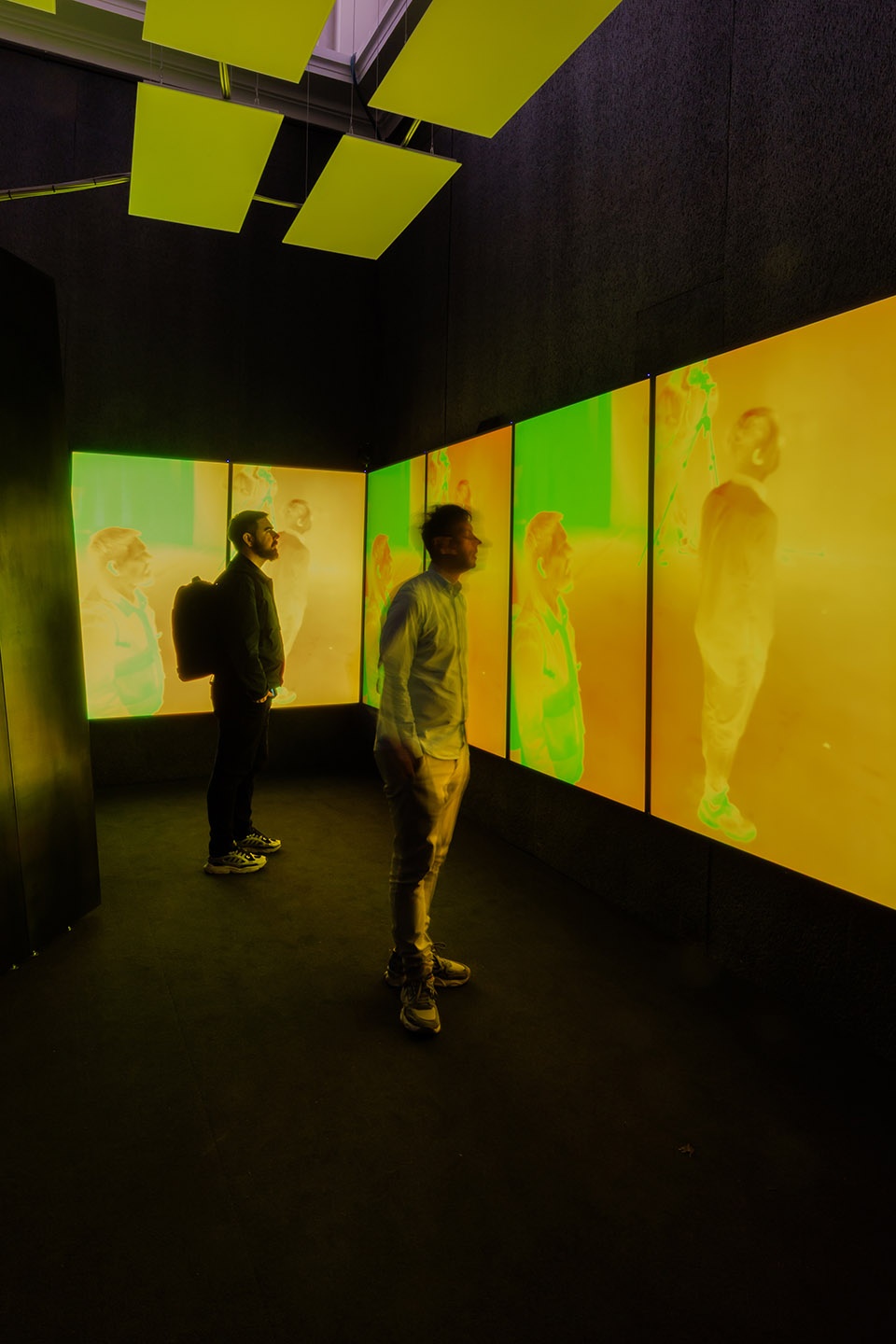
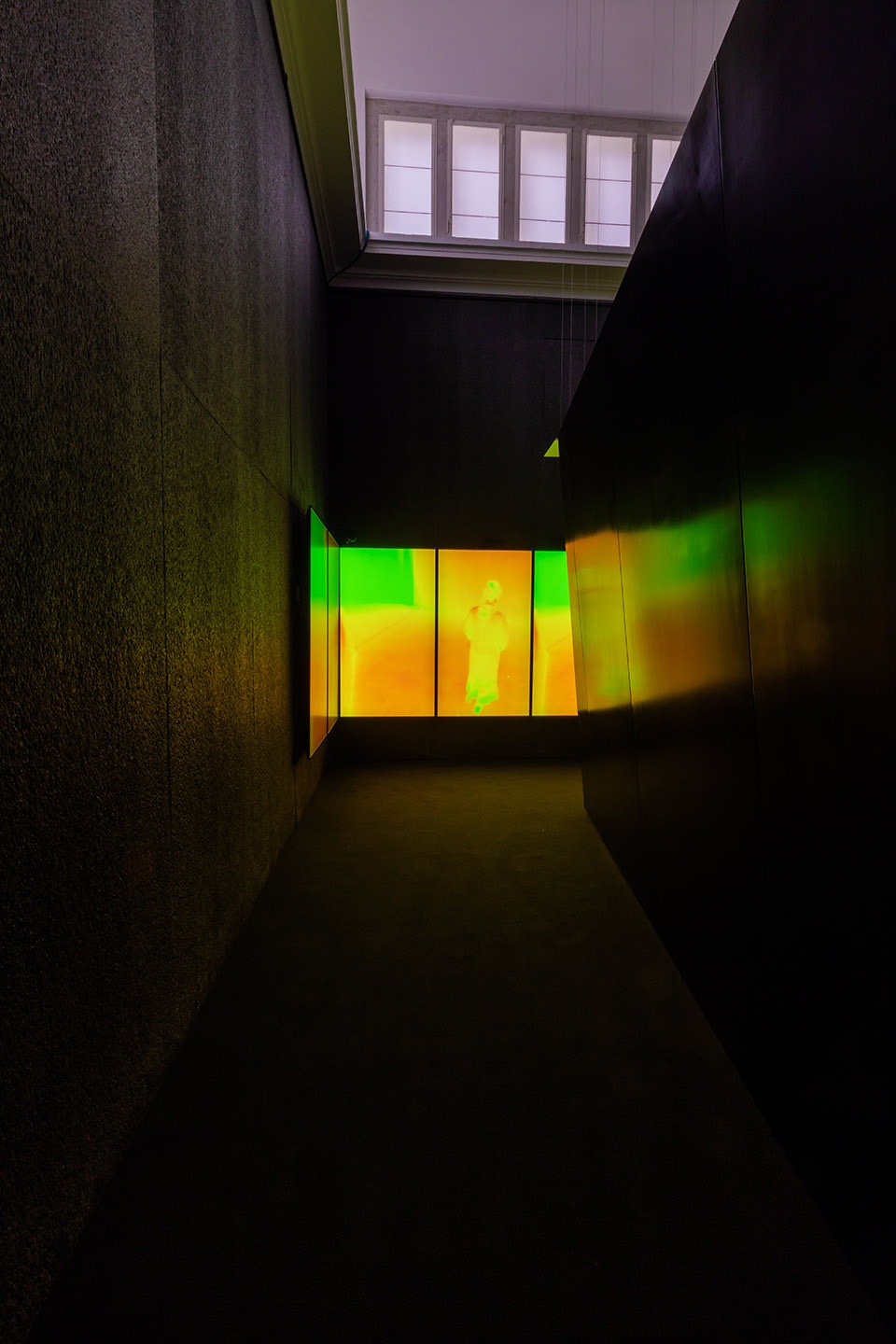
展览的“首个压力测试”在展馆中央空间展开——一场四面投影的影像装置。密集的影片拼贴毫不留情地揭示了城市气候危机背后的空间与物质成因。热力图、动画、照片与数据层叠交织,构成了一幅展示城市过热程度与广度的视觉蒙太奇。同时,影片也通过积极的城市转型案例,展示了许多简单而有效的策略亟待广泛落实。该影片由策展团队与制作人Corinna von Ortenburg共同开发,并由设计工作室flora & faunavisions打造为沉浸式空间装置。
An all-around projection in the central space of the pavilion provides the first “stress test”. A dense film collage unsparingly confronts visitors with the spatial-material causes and consequences of the urban climate crisis. Heat maps, animations, photographs and data overlay one another to form a visual montage showing the dimensions and breadth of the overheating in cities. At the same time, the film uses positive examples of urban transformation to illustrate how the broad implementation of simple and proven strategies is overdue. The STRESSTEST film was developed jointly by the curatorial team and producer Corinna von Ortenburg and realised as an immersive spatial installation in collaboration with the design studio flora&faunavisions.
▼揭示城市气候危机背后的空间与物质成因,reveal the spatial-material causes and consequences of the urban climate crisis ©Patricia Parinejad
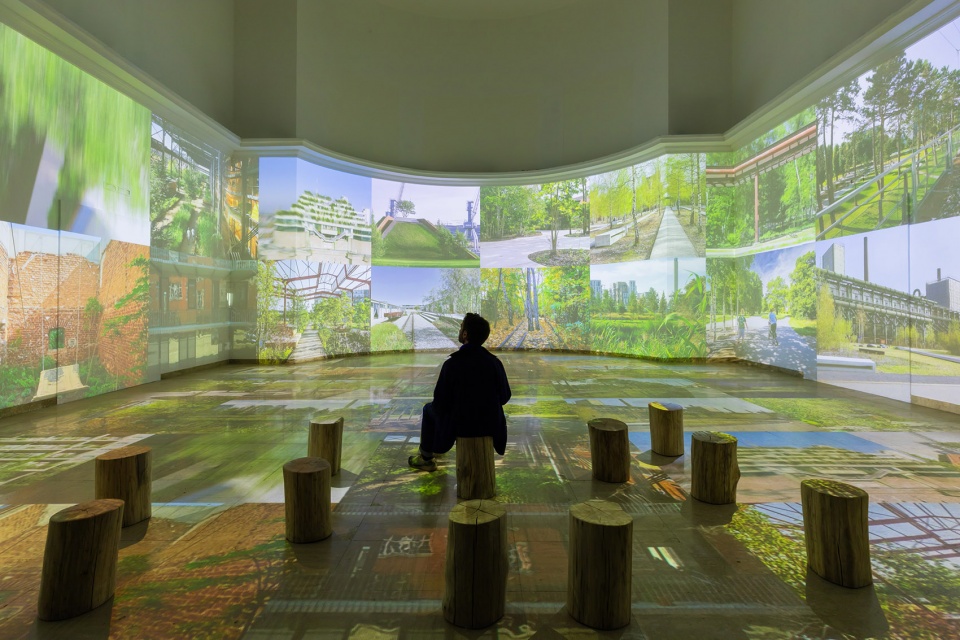
▼展示城市过热程度与广度的视觉蒙太奇,a visual montage showing the dimensions and breadth of the overheating in cities ©Patricia Parinejad
压力与解压
STRESS and DE-STRESS
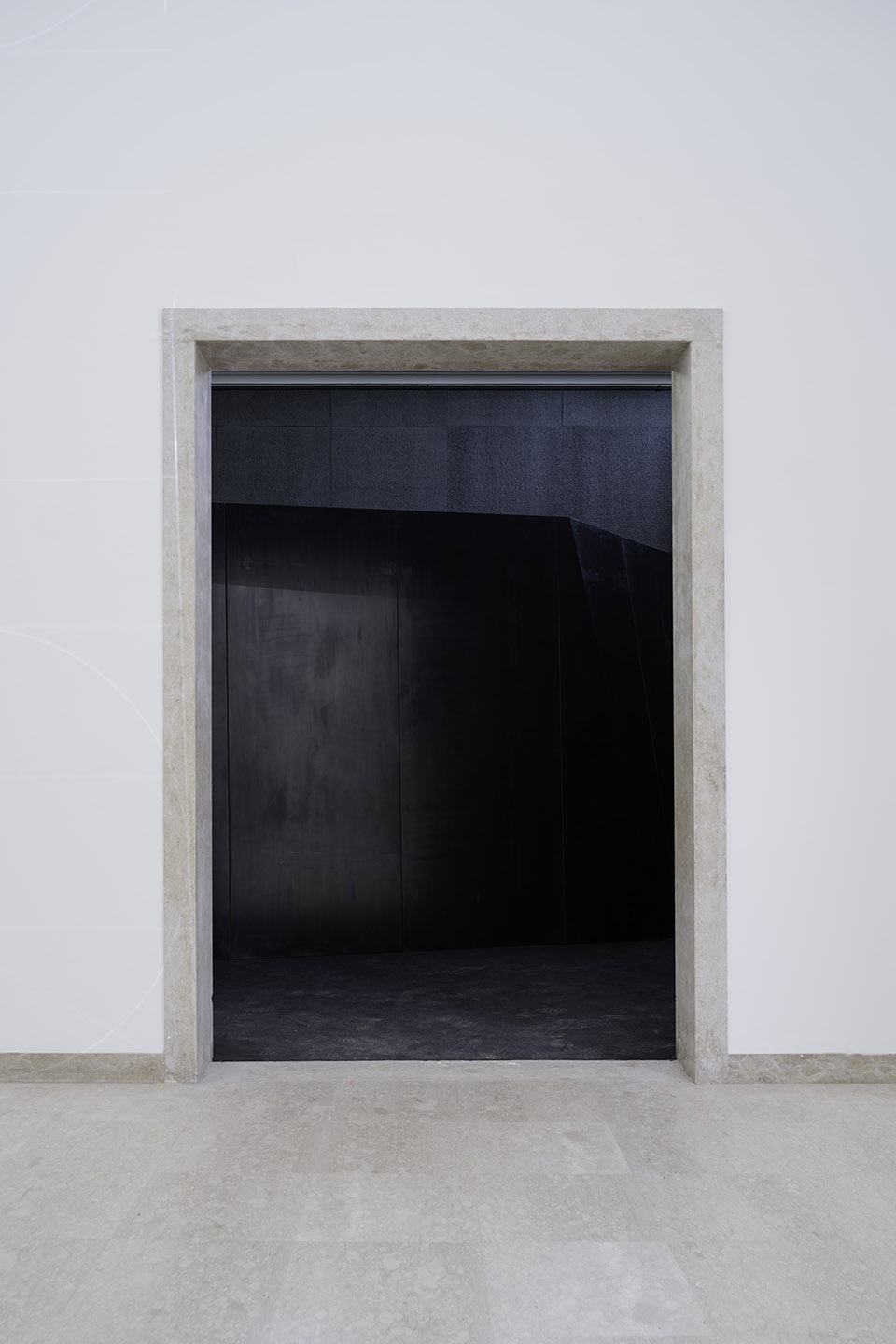
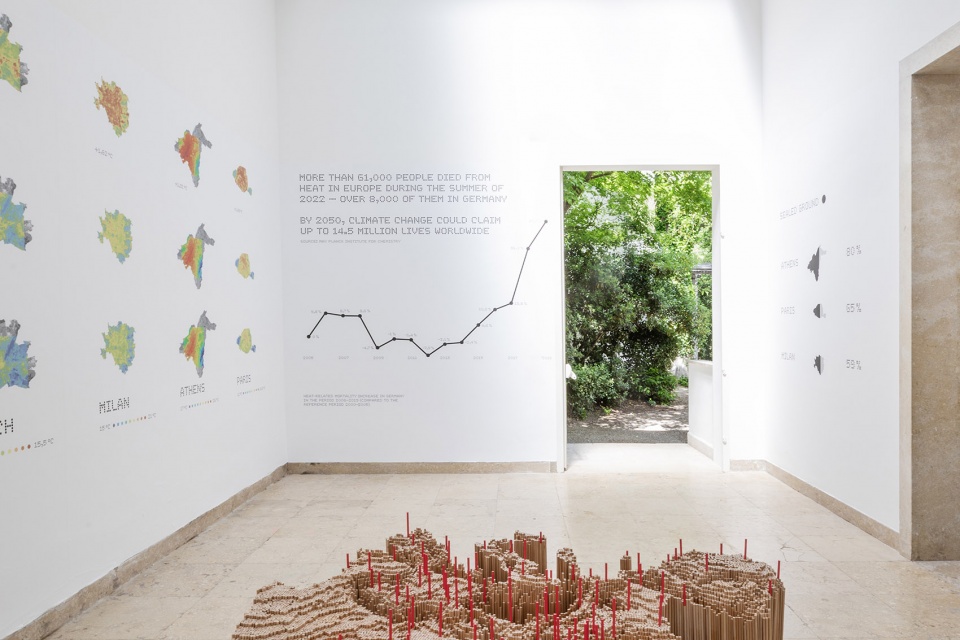
展览自影片延伸至两个对立的空间极端:“STRESS”与“DE-STRESS”。在“STRESS”空间中,观众将亲身感受到城市高温的现实体验。艺术家组合Rasthofer/Neumaier创作的一件粗犷钢制加热雕塑压迫空间、引导人流、阻滞空气、蓄积热量,营造出一种令人无法进行有效体温调节的环境。在大型屏幕上,红外摄像头实时呈现观众身体温度的变化。图表、地图与空间温度模型则进一步揭示气候、建筑与城市生活之间的复杂关系。这些内容直观清晰地传达了“继续维持现状”的严重后果。
Proceeding from the film, the exhibit expands toward two opposing poles: STRESS and DE-STRESS. In the STRESS spaces of the pavilion, visitors experience the reality of urban heat on their own bodies. A crude steel heating sculpture by the artist duo Rasthofer/Neumaier constricts the room, channels movements, stagnates the air and stores heat. It creates a congested and overheated climate, an atmosphere in which the body is barely able to thermally regulate itself. On large screens, an infrared camera provides images of how the visitor’s body temperature changes in response to the ambient temperature in real time. Diagrams, maps and a temperature model as a spatial depiction of heat illustrate the complex interrelationships among climate, built structures and urban life. The consequences of “more of the same” are tangibly and clearly conveyed to the visitors.
▼钢制雕塑,A crude steel heating sculpture ©Josef Grillmeier
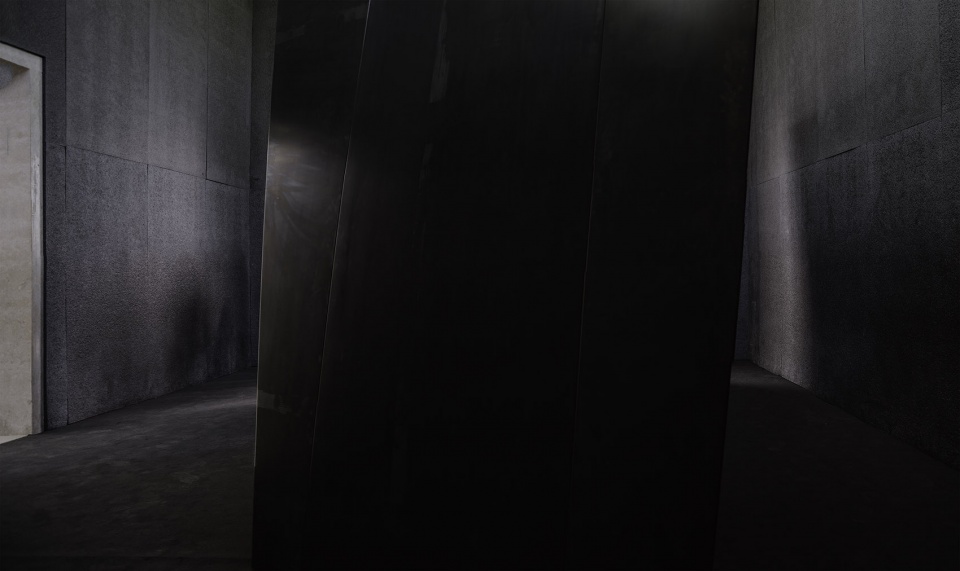
▼营造出令人无法进行有效体温调节的环境,creates a congested and overheated climate zone ©Josef Grillmeier
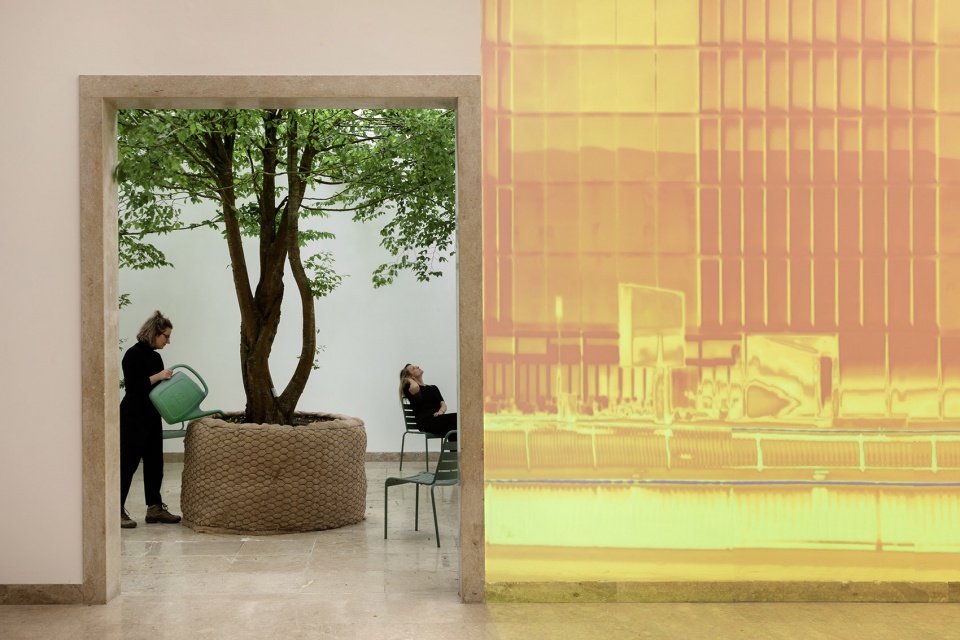
相对地,“DE-STRESS”空间则宛如一片绿洲:清凉、安静、治愈。在这里,观众可以冷静思考,了解让城市做好未来准备的相关策略。此处展示了自然如何重新成为城市结构的一部分:高大的树木提供阴凉,树叶过滤阳光,气温下降、空气流动,营造出宜人的微气候。DE-STRESS以具体案例阐明了解决方案:建筑、景观、城市规划、科技与科学不再是孤立的职能领域,而是共同构成一个气候韧性系统的有机组成部分。
In contrast, awaiting them in the DE-STRESS spaces is an oasis: cool, quiet, soothing – a place that invites them to learn about strategies for making our cities future-ready with a cool head. Here, it becomes apparent how effective simple measures can be when nature once again becomes part of the urban fabric: tall trees provide shade, their leaves filter the light, temperature decreases, air circulates, a pleasant microclimate is created. DE-STRESS clarifies concrete solutions in which architecture, landscape architecture, urban planning, technology and science are no longer thought of as purely functional or design disciplines but rather as integral parts of an overall climate-resilient system.
▼清凉、安静、治愈的城市绿洲,cool, quiet, soothing urban oasis ©Patricia Parinejad
群体与信号
SCHWARM and ZEICHEN
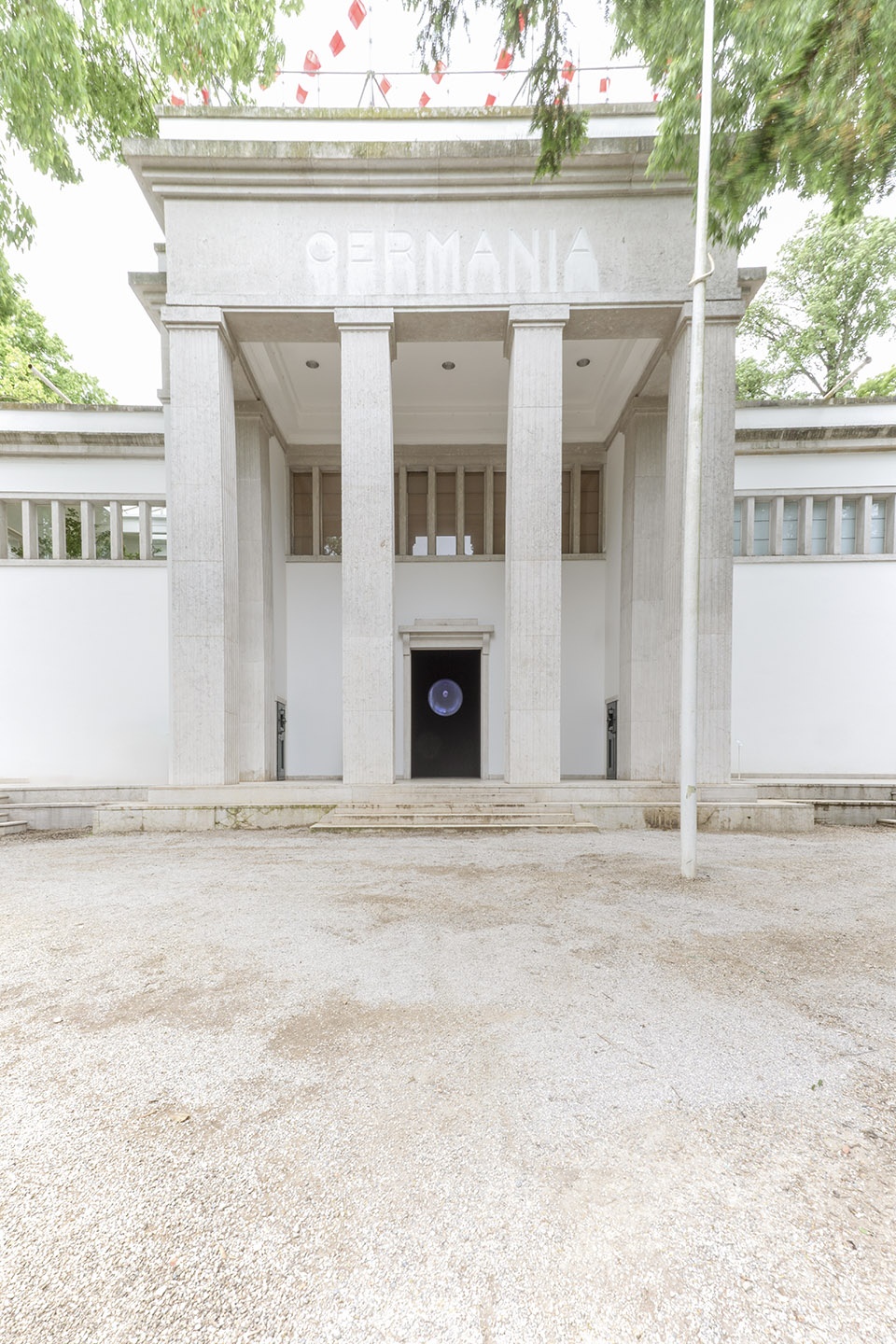
艺术在“STRESSTEST”中起到连接抽象知识与身体感知体验的作用。从德国馆屋顶升起的一簇红白相间的风向袋,高达七米,成为花园展区内远可见的国际通用信号。这件由艺术家Christoph Brech创作的精巧装置名为“Schwarm(群体)”,象征着气候变化的不确定性与动态变化。它让空气流动变得可视化,并以诗意的方式探讨气候现象的复杂交互过程。风作为媒介,本身即具有双重属性:有时带来清凉与生命,有时却具有破坏性。与屋顶装置相呼应,Brech 的视频作品“Zeichen(信号)”设置于展馆入口,伴随着钟声响起,提醒观众时间紧迫,必须立即行动。
Art provides the connecting link between the abstract knowledge and the physical experience of STRESSTEST. Rising from the roof of the German pavilion, a cluster of red-and-white-striped windsocks reaches a height of up to seven metres: an internationally legible signal in the Giardini that can be seen from afar. Every windsock follows its own rhythm, influenced by height, position and changing airflows. The filigree installation by artist Christoph Brech is called Schwarm (Swarm) and references the uncertainties and dynamics of a changing climate. It makes air currents visible and poetically grapples with the complex interplay of climatic phenomena. At the same time, it illustrates the ambivalent nature of wind: at times cooling and life-giving, destructive at others. Like the windsocks on the roof, Brech’s video composition Zeichen (Signs) at the entrance to the pavilion refers to the urgency of this moment. A bell tolls, its sound an admonishing reminder of the ticking clock, of the critical moment at which decisive action will become necessary.
▼从屋顶升起的一簇红白相间的风向袋,a cluster of red-and-white-striped windsocks rising from the roof ©Patricia Parinejad
自然、人工与共创
Natural, Artificial, Collective
德国馆的参展回应了本届策展人Carlo Ratti提出的主题:“Intelligens. Natural. Artificial. Collective.(智慧·自然·人工·集体)”,主张将建筑作为一个嵌入生态、技术与社会网络系统中的实践领域。顺应这一理念,“STRESSTEST”强调绿色基础设施、创新技术与跨学科协作是打造健康、韧性与宜居城市的关键杠杆。
The German contribution to the 19th Architecture Exhibition in Venice reflects Carlo Ratti’s theme “Intelligens. Natural. Artificial. Collective.”, which considers architecture as a practice within networked ecological, technological and social systems. Entirely in this spirit, STRESSTEST shows that green infrastructure, innovative technologies and interdisciplinary collaboration are the key levers for making cities healthier, more resilient and more liveable.
▼嵌入生态、技术与社会网络系统中的实践领域,a practice within networked ecological, technological and social systems ©Patricia Parinejad
▼嵌入生态、技术与社会网络系统中的实践领域,a practice within networked ecological, technological and social systems ©Patricia Parinejad
可持续性
Sustainability
“STRESSTEST”展览由太阳能驱动——所用的光伏系统是威尼斯首个安装于历史建筑上的此类设施,并将在展览结束后继续保留于德国馆屋顶。展览使用的所有材料皆属于循环资源系统:部分材料来自2024年艺术双年展,其他则为借用或已安排用于未来的再利用。种植于德国馆中的树木将在展览后继续扎根于威尼斯,为城市降温与集体韧性作出持久贡献。
The exhibition STRESSTEST is powered by solar energy from the first photovoltaic system ever installed on a historic monument in Venice. The system will remain on the roof of the German Pavilion beyond the exhibition. Every material used is part of a circular resource cycle: some originate from Biennale Arte 2024, others are borrowed or already destined for future reuse. The trees planted in the German Pavilion will take root in Venice after the exhibition — a lasting contribution to cooler cities and collective resilience.
▼嵌入生态、技术与社会网络系统中的实践领域,a practice within networked ecological, technological and social systems ©Patricia Parinejad
Commissioner:
Federal Ministry for Housing, Urban Development and Building
Curators:
Nicola Borgmann, Elisabeth Endres, Gabriele G. Kiefer, Daniele Santucci
Professional support:
Federal Ministry for Housing, Urban Development and Building / Anne Keßler, Stephan Mayer; Federal Institute for Research on Buildings, Urban Affairs and Spatial Development /
Dr. Olaf Asendorf
Coordination: Maike Volkmer
Artistic Works: Christoph Brech, Rasthofer/Neumaier
Film:
Concept, screenplay and direction: Team Stresstest, Nicola Borgmann, Elisabeth Endres, Gabriele G. Kiefer, Daniele Santucci with Corinna zu Ortenburg
Production: flora&faunavisions / Sebastian Grebing, Julian Kinces, Milena Mayer, Leigh Sachwitz Projection Technology: Luminaten / Andreas Schwarzburger, Steve Bendig
Camera: Felix Raitz von Fentz
Thermal images: Gustav Götze
Visual Identity: Designbuero Josef Grillmeier
Illustrations: Landscape for Architects / Anika Neubauer, ANICOWORKING, Nicolai Schlapps Communication: Katharina Neumann, Caroline Wolf
More: STRESSTEST Team



花池有意思
DK
想去看展